Tag: lifestyle

  • KoinWorks Indonesia Announces Investment From Quona Capital

    KoinWorks Indonesia Announces Investment From Quona Capital

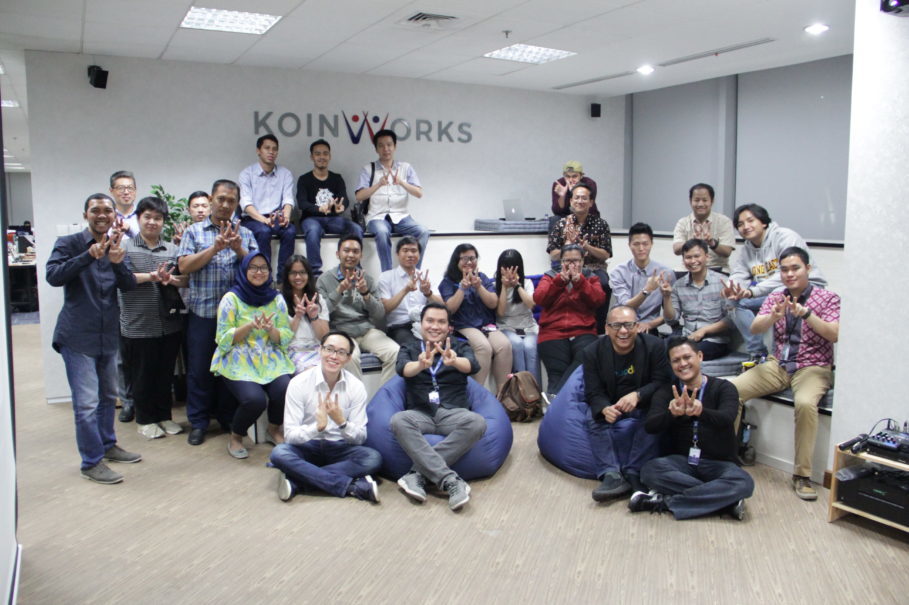
    Indonesian peer-to-peer lending platform KoinWorks said in a statement on Monday that it has received an investment from US-based venture capital firm Quona Capital. “We’re very happy we could collaborate with Quona as one of our investors,” said Benedicto Haryono, chief executive and co-founder of KoinWorks. “With the inclusion of Quona among our line of investors, it will further help develop KoinWorks in becoming a responsible peer-to-peer lending firm and continue to innovate and provide a positive impact for society,” Benedicto added.

    Quona Capital focuses on investment in financial technology companies it deems to have potential in facilitating access to financial products. The Washington-based company provides financial access in various regions, including Latin America, Africa, Britain and Asia.

    KoinWorks said in the statement that the collaboration between itself and Quona Capital is based on a mutual understanding that technology has a strong role in improving quality and access to financial access for those beyond the reach of traditional banks.

    The Jakarta-based fintech company, which has 100,000 investors on its platform, is one of the first fintech companies in the country to have obtained a license from the Financial Services Authority (OJK).

    KoinWorks bridges the gap between investors and investees through its online platform and provides unbanked individuals with access to financial services.

    The company focuses on business and educational loans. It won Bisnis Indonesia’s Most Innovative Fintech of the Year award in 2017.

  • Kutchina opens second store in Nepal

    Kutchina opens second store in Nepal

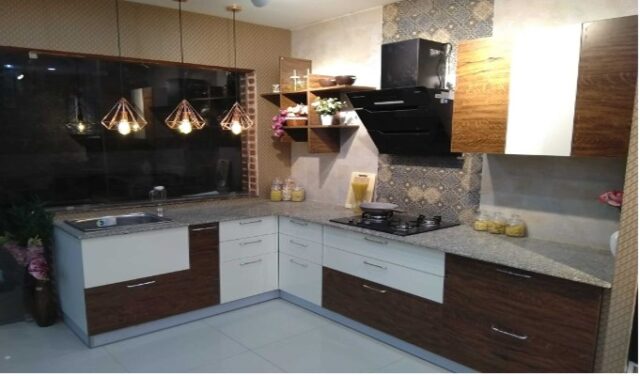
    Kutchina has opened its second store in Kathmandu spanning across 500 sq.ft. Targeting middle and higher income group customers, the store offers complete kitchen solutions including entire range of big appliances and modular kitchen. Look and feel of the store is a mixture of Kutchina’s modern concept with a traditional touch of Nepal’s rich culture. The walls of the store are given a look of Brick Mounting which resembles traditional houses of Nepal and adds that wow factor to the store.

    Designed by in-house designers, the store highlights all the elements of the products with the use of LED and Track lights. At present, the brand has 20 stores in India and 2 in Nepal.

  • Restaurant association questions deep discounts on Swiggy, Zomato

    Restaurant association questions deep discounts on Swiggy, Zomato

    The National Restaurant Association of India (NRAI) on Tuesday said it has raised concerns over deep discounting and data masking by food ordering and delivery startups such as Swiggy, Zomato and Ola’s Foodpanda. According to a report, The restaurants’ body said it flagged issues regarding misuse of dominant position, in a meeting with the app-based food ordering and delivery startups.

    “NRAI delivery task force had its first meeting with Swiggy, Zomato, Uber Eats and Foodpanda today (Tuesday). Concerns of the standalone and chain business operators regarding deep discounting, data masking, right to use own logistics, private labels and ad hoc campaigns were put forth,” NRAI president Rahul Singh said in a statement.

    Stating that the “concerns have been well taken”, he said, “we aim to continue these meetings on a bi-monthly basis for communicating feedback from the restaurant industry to the aggregators to ensure a healthy business environment for all stakeholders.” NRAI is the apex body of the Indian restaurant industry, representing over one lakh restaurants across the country.

  • Samsung plans to release robots this year

    Samsung plans to release robots this year

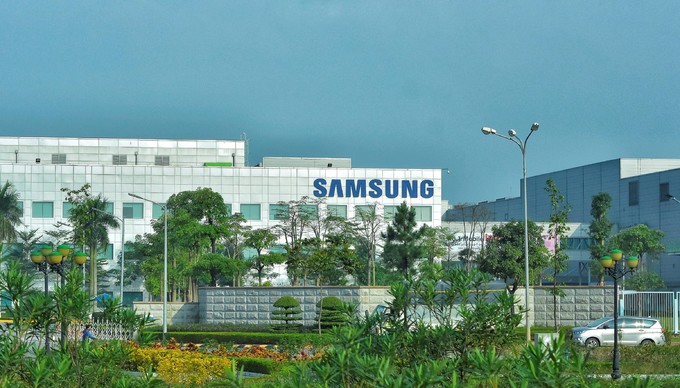
    Samsung robots are coming this year. Kim Hyun-suk, president and head of Samsung Electronics’ consumer electronics division, said the company has been conducting research on the robotics market and is now preparing to launch several robots this year during a press conference with reporters on Monday, a day prior to the opening of the Consumer Electronics Show (CES) in Las Vegas.

    Until now, Samsung Electronics has stayed mum on whether it is making robots. “To develop robots, it’s important to have an artificial intelligence [AI] platform ready [to mount on the robots],” Kim said. “That AI platform is almost ready.”

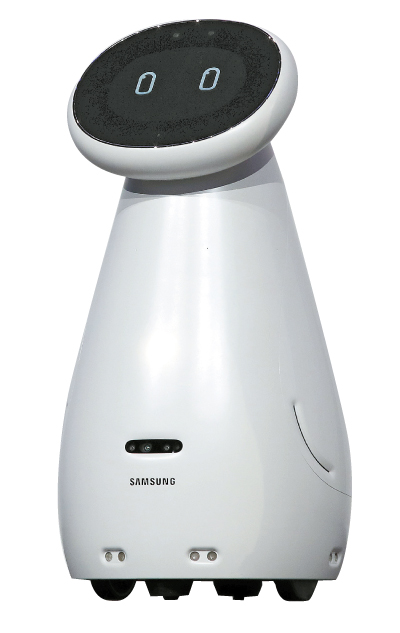
    Samsung unveiled three variations of its AI-based robot, dubbed Samsung Bot, at the briefing, revealing its robotics technology for the first time.

    The three Samsung Bots, labeled Care, Air and Retail, are designed to aid people’s health, and improve air quality and retail shop management. Samsung Bot Care, for instance, monitors users’ vitals like blood pressure and heartbeat and helps people take medicine at the right time. The robot can also call 119 and contact family members when it senses an emergency such as a heart attack.

    The electronics giant also introduced its wearable robot, dubbed GEMS. It assists people with difficulty walking due to weak muscles or injuries and reduces physical pain in the knees and ankles.

    “I can’t say for sure when the products introduced today will be commercialized,” Kim said. “There are possibilities that robot products not introduced yet could be commercialized first.”
    Kim added that demand for robots is expected to increase, especially due to societal aging, pointing out that robots like Samsung Bot Care will be useful for the elderly.

    “By exploiting Samsung’s know-how in AI, Internet of Things and developing multiple devices, we are considering our options for various types of robots,” Kim said.

    On concerns of whether Samsung’s own AI engine Bixby is losing ground due to the company’s AI partnerships with tech giants like Google and Amazon, Kim said that is a “misunderstanding.”

    Though Amazon’s Alexa AI assistant and Google Assistant may be a step ahead of Bixby in terms of technology and presence in the global market, Kim said partnerships make Bixby stronger, not weaker.
    The important thing, according to Kim, is that when people ask Bixby a question, the AI will be able to give out answers based on its own knowledge or by utilizing data from Google or Amazon.

    “No company has strengths in every aspect of business,” Kim said. “Though Bixby is a latecomer [to the AI assistant market], Samsung has relative strength in making devices compared to other tech companies, and Google and Amazon will focus on what they are good at.”

    Kim also commented on LG Electronics’ rollable TV that made headlines globally. LG’s rollable TV prototype can roll itself into a storage box that becomes a table with speakers.

    According to the Samsung president, there needs to be considerations on whether the product can be “economical.” He added that without the economic feasibility to commercialize the product, the prototype is a lot less meaningful.

    Brian Kwon, head of LG’s home entertainment division, said in a separate press briefing Tuesday in Las Vegas that the company will make rollable TVs its future growth engine.

    On concerns about the product’s cost, Kwon said while the price may be a barrier in widely expanding sales of the product right after launch, the company will strive to quickly improve the TV’s cost competitiveness.
  • 2018 a record-breaking year for Mercedes Malaysia

    2018 a record-breaking year for Mercedes Malaysia

    Mercedes-Benz Malaysia (MBM), the distributor of Mercedes-Benz marque in Malaysia, posted a record-breaking performance in 2018 spurred by the consumption tax holiday and customer-centric strategy. President and CEO Dr Claus Weidner said vehicle sales grew 9% to 13,079 units from 12,045 units recorded in the previous year, lifting the company’s market share to 2.4% from 2.3%, previously.

    “Our efforts to invigorate the brand experience for our increasingly diverse fans have been fruitful and we are happy to retain our position as the number one premium brand in Malaysia,“ he said at the company’s briefing on the 2018 full-year performance and outlook for 2019.

    In June last year, the first month of the tax holiday period following the government’s move to abolish the goods and services tax, MBM posted the highest monthly sales in the company’s history at 1,750 units.

    Weidner said other areas of business also showed improvement with total vehicles serviced last year growing by 16% from the previous year to 148,800 units and in-house financing increasing by 23% year-on-year to RM2.7 billion.

    “Four out of every 10 cars sold were financed by our in-house financing,“ he said.

    Five out of every 10 cars sold, meanwhile, were insured by its in-house service.

    A total of 20 new and facelift models were launched last year to further complement the company’s extensive product line-up, he said.

    Going forward, Weidner said MBM was confident of surpassing last year’s performance driven by demand for compact and premium sport utility vehicles as well as the company’s holistic approach and customer-centric strategy.

    “We will also continue to rejuvenate our models portfolio to continue making it desirable to customers,“ he said.

    On the number of launches for this year, he said it would be around last year’s figure.

    Weidner disclosed that the company planned to restructure its plant in Pekan, Pahang to increase the localisation of components and upgrade the technology to improve efficiency and quality.

    However, he did not disclose the amount of investment for the plant restructuring.

  • Chinese Smartphone Realme Eyes to Expand Southeast Asia

    Chinese Smartphone Realme Eyes to Expand Southeast Asia

    BBK Electronics’ budget smartphone brand Realme is eyeing expansion into Southeast Asia, Africa and Europe. The company’s online distribution strategy has brought it success in the Indian market and makes broader expansion possible, according to Realme global CEO Sky Li Bingzhong. “The company’s asset-light operations and focus on online sales allow it to keep costs low. That way, more young consumers can afford its products, which makes the brand more competitive in the market,” said Li.

    Realme launched in India in May last year with handsets priced at INR8,990 (US$129) – becoming the second top-selling smartphone brand during the Diwali festival season from October to November. The brand has joined a number of Chinese phone manufacturers seeking to build strength in the Indian market as they challenge more established international competitors in more saturated markets.

    BBK also owns the Oppo, Vivo and OnePlus brands, selling mid- to high-end models. Independent Realme runs its own R&D operations, but partners with Oppo in smartphone production. Its expansion moves are indicative of Chinese phone manufacturers’ larger strategy to deploy varying brands that each target specific markets globally.

  • United Colors Of Benetton appoints new Artistic Director

    United Colors Of Benetton appoints new Artistic Director

    Fashion designer Jean-Charles de Castelbajac has been appointed artistic director of the United Colors of Benetton men’s and women’s collections. “We are happy to welcome Jean-Charles de Castelbajac into our big family,” announced UCB Chairman Luciano Benetton.“His experience, charisma and ability to forecast tomorrow’s social and fashion trends will constitute a great asset for our brand.”

    Castelbajac has a long career that spans from design to painting, advertising and street art. He debuted in the fashion world in 1968, when he launched a brand created in collaboration with his mother. He then went on to inspire fashion trends such as the ‘anti-fashion’ movement and the alternative use of objects to decorate garments.

    In 1974 he co-founded Iceberg. In 1978 he founded maison Jean-Charles de Castelbajac, which he left in 2016. Over the years he has also collaborated with Max Mara, Ellesse, Courrèges, Rossignol, and Le Coq Sportif. Born from a mix of punk and pop, his style is characterized by the use of strong colors and pop icons, the mix of old and new and a whimsical and irreverent touch.

    “An iconic brand, United Colors of Benetton envisioned the world of today: a pop, colorful, affordable and universal fashion, enhanced by Oliviero Toscani’s powerful images,” commented Castelbajac. “United Colors of Benetton and I have always had a similar take on fashion, characterized by the passion for knitwear and the love of pop and rainbow colors.”

    Castelbajac and Benetton also share a passion for contaminating fashion with art. In his career, the French designer befriended and worked with artists such as Andy Warhol, Miguel Barcelo, Keith Haring, Jean Michel Basquiat, M.I.A and Lady Gaga. His creations have been displayed at New York’s Institute of Fashion and Technology, London’s Victoria & Albert Museum and the Galliera Museum in Paris. In 2018 he was guest artistic director at the Paris Biennale.

    “Thanks to social networks, fashion today is visible to everyone. But it remains affordable only to a few,” Castelbajac said, adding: “Together, United Colors of Benetton and I will seek to create tomorrow’s wardrobe, bringing beauty and style to everyday life, at prices that everyone can afford.”

  • LG H&H buys Avon factory in China

    LG H&H buys Avon factory in China

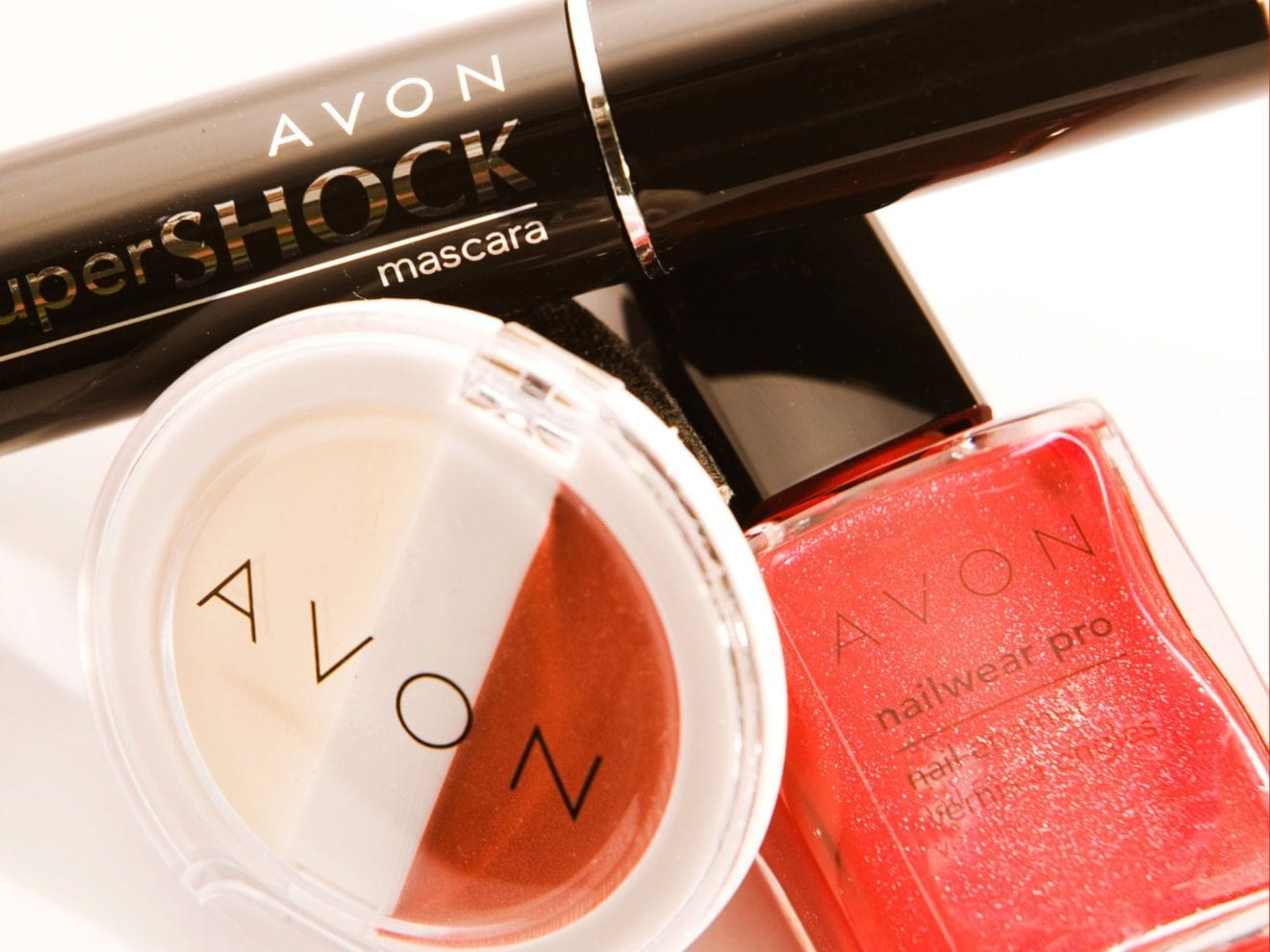
    LG Household & Health Care announced Wednesday it is buying Avon’s Chinese factory in an effort to expand production facilities. According to LG Household, subsidiary The Face Shop will purchase the London-based cosmetics firm’s factory in Guangzhou, China, for around 79.3 billion won ($70.8 million). Avon’s 49,500-square-meter (12.25-acre) factory in Guangzhou, China is capable of producing 13,000 tons of cosmetics and hair care and body products every year. Its facilities meet cGMP (current Good Manufacturing Practice) regulations, which are enforced by the U.S. Food and Drug Administration.

    LG Household will use the Guangzhou factory to manufacture LG products like The Face Shop branded goods for its Chinese and other Asian businesses while continuing to produce Avon products as well. Avon employees will remain at the factory.

    The buyout deal is expected to be finalized in February after Chinese authorities approve the transaction.

    The move comes less than a year after LG Household purchased Avon’s Japanese operation for around $96 million last April. Avon said it hopes the Guangzhou factory sale will help increase its operational flexibility.

    “This transaction is a significant step forward in our effort to ‘Open Up Avon’ by operating more efficiently, with a leaner, more agile global infrastructure,” said Jan Zijderveld, CEO of Avon. “We know [LG Household] well and believe that they will continue to be a strong partner for Avon.”

    “We are pleased to … add a state-of-the-art facility with powerful capabilities to deliver quality products for the fast-growing local market,” added Suk Cha, CEO of LG Household.

  • Tom n Toms plans Myanmar expansion

    Tom n Toms plans Myanmar expansion

    South Korean Cafe chain Tom n Toms has started to launch outlets in Myanmar. Tom n Toms Myanmar has opened two locations in Yangon so far, at the international airport and the Kantharyar Centre, with a third planned for Yankin Township. Information from Myanmar International Business Alliance Company operation director Aung Sithu Khant revealed a fourth planned outlet at the Secretariat Building in Yangon.

    “Myanmar people and coffee brands have been friendly for a long time,” said Khant.

    “We opened these outlets hoping that Myanmar people can taste a high-quality coffee with reasonable price. Next month, strawberries from south Korea will be selling in Myanmar. We will introduce a menu connecting with strawberries.”

    Khant said the third outlet will be opened soon. Future Tom n Toms cafes are expected to open in Mandalay, Taunggyi, and the capital city, Nay Pyi Taw next year.

    “The main thing is the customer is always first. Therefore, we will pay special attention to coffee and other foodstuffs”.

  • Korea’s KT 5G bus hits the road

    Korea’s KT 5G bus hits the road

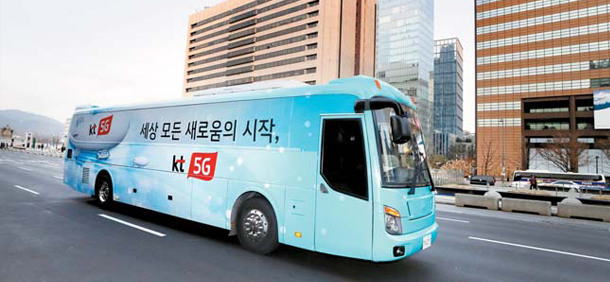
    Are you curious about all the hype over 5G? A ride on a 5G-powered bus may answer some questions. Mobile carrier KT announced Tuesday that people can sign up for free rides on its 5G bus. The bus will be connected to its ultra-fast 5G wireless network and will demonstrate devices that can be used to enjoy new media services like KT’s GiGA Live TV. GiGA Live is a head-mounted display – thick goggles with a screen embedded inside. GiGA Live supports virtual reality (VR) media services, including live sports broadcasts, as well as 360-degree films.

    VR and augmented reality (AR) are commonly cited as the technologies that have the most to benefit from 5G network. Because 5G promises up to 20 times faster speeds than LTE, it can transfer large volumes of data quickly in real-time, which is integral to the proper operation of VR and AR services.

    Those who want to take 30-minute sojourns on the 5G bus can apply online at www.kt5Gbus.com. The bus will run in the Gwanghwamun area from Jan. 15 to 24, and Gangnam Station from Jan. 25 to Feb. 2. Rides will be offered five times a day, excluding Sundays and Mondays.

    “5G network makes it possible to transfer huge volumes of information safely and in real-time,” said Park Hyun-jin, head of KT’s 5G business. “We will continue to offer innovative 5G services that can provide new experiences and value to consumers.”

    Earlier this month, KT added 5G-capabilities to its barista robot B;eat in Samsung Life Insurance’s Seocho District office. The robot, which looks like an advanced vending machine, can now recognize customers’ presence and send real-time footage of orders to human managers.

  • Rimowa opens in Tokyo first stand-alone store in Japan

    Rimowa opens in Tokyo first stand-alone store in Japan

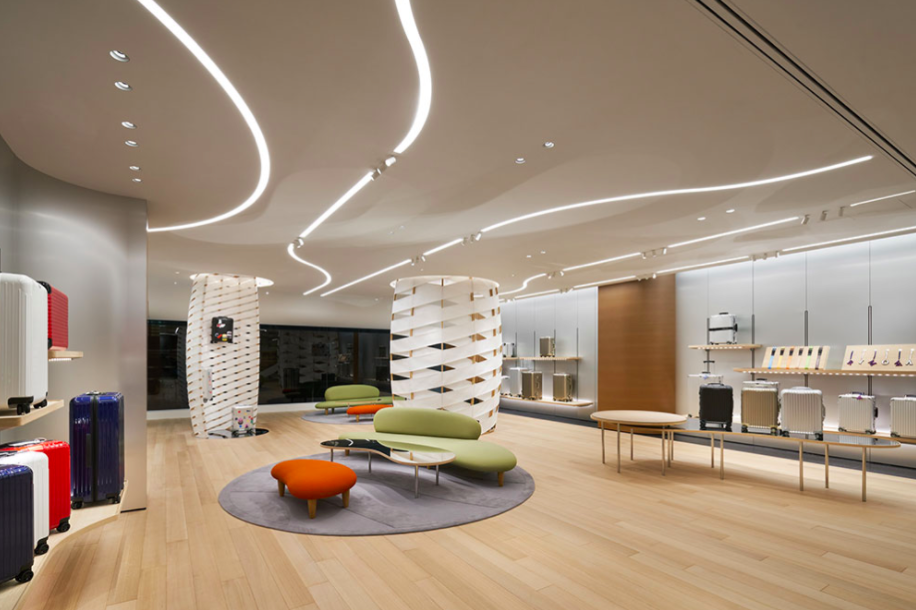
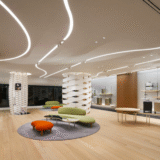
    Rimowa Japan has opened its first standalone store in Tokyo. The luxury luggage brand’s new 900sqm outlet in Ginza features a minimalist decor focused on a spiral staircase backed by a backdrop of basketweave, recalling a traditional Japanese craft design aesthetic. Rimowa Japan says the store is equipped to perform simple repairs, with staff speaking both English and Chinese, to cater for the tourist market.

    A heritage brand founded in Cologne, Germany, more than a century ago, the brand is primarily known for its aluminium and polycarbonate suitcase lines. LVMH owns a controlling 80 per cent stake in the brand.

    Browse the gallery below :

  • Temasek plans to sell AS Watson stake

    Temasek plans to sell AS Watson stake

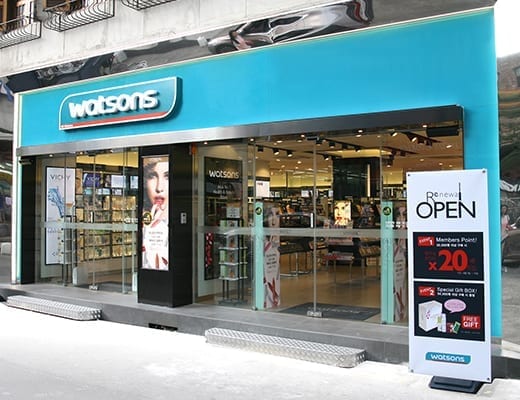
    Singapore’s Temasek Holdings is reportedly looking to quit its stake in Hong Kong-headquartered beauty products retailer AS Watson. Temasek spent US$5.6 billion to acquire a 25 per cent share of AS Watson in 2014 from Hong Kong’s CK Hutchison, which retains the majority stake. According to report, Temasek made the investment expecting the business to be listed within three years. But softening investor sentiment towards retail sector listings has weakened since that plan was first envisaged. Investors are spooked by the demise of a slew of brick-and-mortar-focused brands across developed markets.

    AS Watson has some 14,500 stores in 24 markets around the world, and has market leadership in 15 of those. That could make the business an attractive target for private equity funds, despite the company appearing to be focused more on opening new stores than migrating online, where consumers are buying more beauty and healthcare products.

    Bloomberg says in an analysis published online, that a private equity business would be among the more likely buyers for the Temasek stake, given the amount of industry money that’s sitting idle.

    “That said, any acquirer will still be in a minority position, even if the entire 25 per cent is sold. Along with the business’s poor growth prospects, the absence of control is likely to be reflected in the valuation. This is one retail sale that will need a discount to be attractive.”

  • China, Japan boost Brunello Cucinelli revenue growth

    China, Japan boost Brunello Cucinelli revenue growth

    Italian luxury house Brunello Cucinelli reported a leap in revenues for the 2018 fiscal year, with all geographic regions recording sales growth, particularly Greater China and Japan. For the year ending December 31, 2018, Brunello Cucinelli said total revenues increased 8.1% to €553 million, (+10.7% at constant exchange rates), compared to €511.7 million in 2017.

    The Solomeo-based company saw a significant rise in sales at 8.8% in the international markets and 4.2% in the Italian market, according to a press release published on the Italian stock exchange on Monday.

    By region, Greater China witnessed the biggest increase with an incredible 28.5% sales growth, followed by the Rest of the World region, up 10.7%, which was lead by Japan and the Middle East. Sales in Europe increased 8.5% and the U.S. saw growth of 3.9%.

    By distribution channel, Brunello Cucinelli’s retail sales gained 6.3% globally, with wholesale monobrand and multibrand up 19.4% and 9%, respectively.

    Capital expenditure for the twelve months was approximately €45 million, with “the objective of keeping the brand image extremely high in both the physical and digital channels,” said the company.

    Net debt narrowed €15 million, a slight improvement compared to 2017.

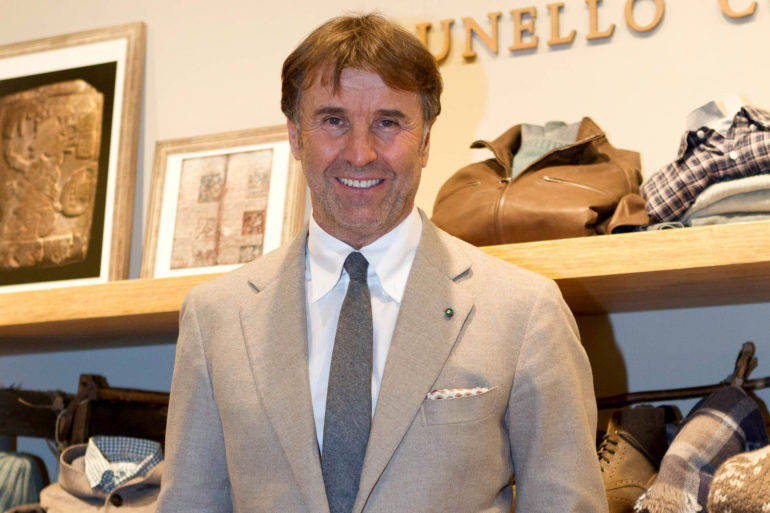
    “Another year has come to an end in a splendid manner, both in terms of numbers and from the standpoint of the general image of the brand at a global level,” said Brunello Cucinelli, Chairman and CEO.

    “We continue to support, believe in and invest in our beloved Italy, perceiving the great value this represents at a world level for the country’s creativity, quality and craftsmanship.”

    Following the stellar results, which included the sell out of the past winter collections, followed by strong spring/summer 2019 orders, the brand said it expects “another year ahead of gracious growth in line with 2018.”

  • Design Orchard mall to open end of the month

    Design Orchard mall to open end of the month

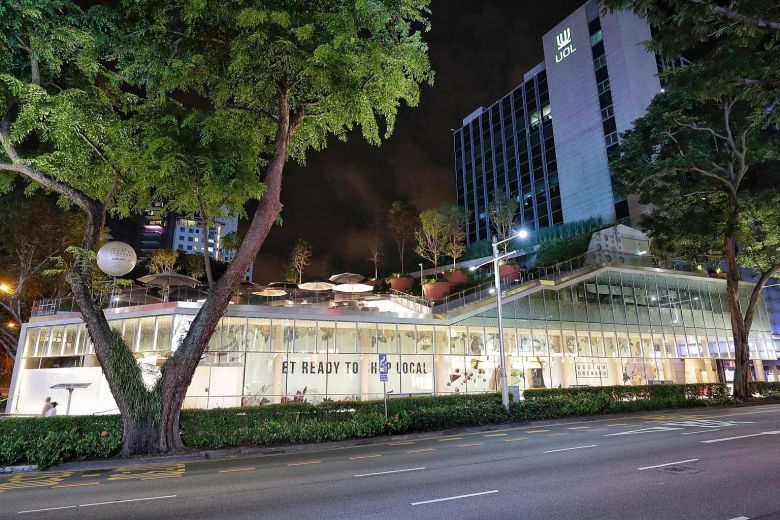
    Design Orchard mall is set to open on January 25 hosting 61 homegrown labels. The new Orchard Road mall, a joint venture between the Singapore Tourism Board (STB), JTC Corporation and Enterprise Singapore, is conceived of as a home and exhibition space for local design work. It features a 9000sqft first-floor retail showcase, second floor incubation spaces, and a rooftop events area. The first level is currently leased to local retailer Naiise.

    Featured supports for local designers include co-working spaces provided by Taff – equipped with professional sewing equipment, a fabric library and collaboration and networking opportunities with industry players – and a mentorship program from Naiise covering marketing and merchandising.

    “Singapore is home to many global brands,” explained STB’s director of retail and dining Ranita Sundra, of the rational behind Design Orchard mall.

    “As these brands become more ubiquitous, we noticed that more people are drawn to local products with a Singapore story. Design Orchard is thus an exciting opportunity for us to profile the best of Singapore talent under one roof.”

    “We hope that it will inspire local talents to join the community, where they can develop and grow their brands with access to mentors, programmes and facilities in a vibrant space along Orchard Road,” added director of products at JTC Wee Pei Yean.

  • Bamboo Airways cleared to take to the skies

    Bamboo Airways cleared to take to the skies

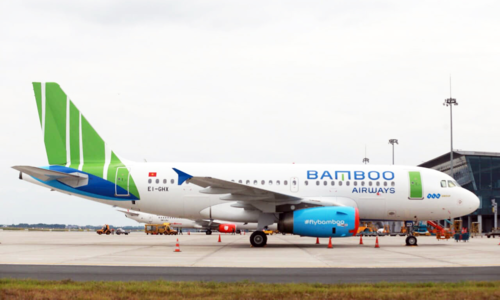
    Vietnam’s newest airline, Bamboo Airways, has received a certificate that allows it to operate aircraft for commercial purposes. The Vietnam Civil Aviation Authority Tuesday granted the Aircraft Operator Certificate (AOC) to Bamboo Airways. The AOC is a certificate approved by a regulatory authority that allows a carrier to operate aircraft for commercial purposes within a specified scope of activities. As such, the FLC Group’s startup airline has completed all necessary regulatory procedures for commencing commercial operations in Vietnam’s aviation market.

    “This AOC certification is a result of 4 years of effort, I believe it is an important first step for Bamboo Airways to serve passengers and devote themselves to the Vietnam aviation industry,” said Dang Tat Thang, CEO Bamboo Airways.

    After many delays, Bamboo Airways expects to start operating domestic flights with Airbus A321 NEO aircraft by mid-January. Bamboo Airways will prepare 20 planes for flight in the first quarter of 2019 and increase their fleet size to 40-50 aircraft by the end of the year.

    Thang said that at the moment, Bamboo Airways has fully prepared their personnel, technical and material assets and affirmed its fitness for operation through many activities including test runs, maintenance, engineering and other commercial transport activities.

    Bamboo Airways will operate 37 routes connecting all major cities and popular tourist destinations in Vietnam, as well as some international routes in 2019.

    The first routes of the country’s fifth carrier would connect Hanoi and HCMC, and from Hanoi and HCMC to central provinces of Quy Nhon and Quang Binh, and northern Quang Ninh Province.

    The new carrier plans start off with 60 domestic flights a day. Later this year, the company also plans to open international flights to Japan, Korea and Singapore.

    Bamboo Airways was founded in mid-2017 with a charter capital of VND700 billion ($30 million), which it increased to VND1.3 trillion ($55.68 million) recently.

    The airline has signed deals to buy 24 Airbus A320neo and 20 Boeing B787-9 Dreamliner aircraft worth a total of about $8.6 billion.

    The other four carriers in Vietnam currently are Vietnam Airlines, Vietjet Air, Jetstar Pacific and VASCO.