Tag: lingerie

  • Victoria’s Secret Q3 Sales Soar, Marking Successful Turnaround Strategy

    Victoria’s Secret Q3 Sales Soar, Marking Successful Turnaround Strategy

    Victoria’s Secret witnessed an escalating sales growth in its third fiscal quarter, suggesting that the company’s revamp strategies are gaining traction.

    The retail giant reported net sales of US$1.472 billion for the quarter ending November 1, marking a 9 per cent surge compared to a 3 per cent uplift in the second quarter. This follows a 6.5 per cent hike in the same period last year.

    During the quarter, comparable sales also rose by 8 per cent. This growth can be attributed not only to the restoration of the company’s website, which suffered an outage last quarter, but also to the successful implementation of the strategies devised by the management.

    Customer-Focused Business Model

    Victoria’s Secret has managed to transform itself into a customer-centric business in a short span of time, thereby proving to be a game-changer. The company witnessed significant growth internationally, registering a 33 per cent uplift. Furthermore, the North American market also experienced a 5.4 per cent increase in store revenue and a 4.3 per cent rise in digital sales.

    One of the key amendments implemented by the management was the renewed emphasis on innovation. As a specialist, Victoria’s Secret has demonstrated its commitment to manufacturing and delivering superior products. Especially in areas like bras, where the technicalities of fit, form, and function offer immense opportunities, the retailer seems to be making a difference to the customers.

    In the recent past, the company had somewhat lost its edge in this area but under the current leadership, it is being reintegrated into the core of the business through initiatives like FlexFactor.

    Investment in Stores & the Pink Brand

    Another factor driving growth was the investment in store improvements to ensure superior customer service and advice. The new store designs are lighter and more inviting, thereby making Victoria’s Secret a more approachable brand with broader appeal.

    Additionally, the Pink brand under Victoria’s Secret umbrella also made significant strides. It is evolving from a mere addition to Victoria’s Secret into a distinct segment of the business with its unique tone and essence.

    Improved Financial Performance

    In financial terms, the company managed to narrow its operating loss from $47 million last year to $19 million. The net loss also reduced from $56 million to $37 million.

    With an improved performance, the retailer has lifted its outlook for the full fiscal year. It now expects net sales to fall in the range of $6.45 billion to $6.48 billion, compared to the previous guidance of $6.33 billion to $6.41 billion.

    Questions & Answers

    What was the net sales for Victoria’s Secret in the third fiscal quarter?
    The reported net sales for the quarter ending November 1 was US$1.472 billion.

    What changes has the current leadership at Victoria’s Secret implemented?
    The current leadership has renewed the focus on innovation and customer service. It has also made store improvements and evolved the Pink brand to be distinct from the Victoria’s Secret.

    What is the revised sales outlook for the full fiscal year?
    Victoria’s Secret expects the net sales to be in the range of $6.45 billion to $6.48 billion.

  • Triumph Bids Farewell to China: Decades-Long Journey of Lingerie Giant Ends

    Triumph Bids Farewell to China: Decades-Long Journey of Lingerie Giant Ends

    The international lingerie brand, Triumph, has announced plans to exit Mainland China, one of the world’s largest retail markets, by the end of this year. This decision marks the end of a long-standing presence in the region, spanning over several decades.

    Gratitude for Loyal Customers

    In a recent statement, Triumph expressed its appreciation towards its Chinese consumers, acknowledging their support over the past three decades. The company expressed gratitude to all customers and members who trusted and supported the Triumph brand over the years.

    They further emphasized how fortunate they have been to grow alongside their customers in China. Ever since their initial venture into the Chinese market, Triumph states that it has been a privilege to work closely with their consumers, witnessing the brand’s growth and transformation in the country.

    Phased Withdrawal Strategy

    The brand has decided to employ a phased approach to its withdrawal, initially focusing on its digital ecosystem. Triumph’s WeChat mini-program, which offers after-sales services, will cease operation as of midnight, December 10.

    Other digital platforms that offer after-sales support, including Taobao, Tmall, Tmall Outlet, JD, Pinduoduo, Douyin, and VIPshop, will end their association with Triumph no later than midnight, December 5.

    Following the digital shutdown, Triumph’s physical presence will also be phased out. All offline locations are slated for closure by December 31.

    The decision was issued by Hainan Youmei Underwear and Yancheng International Women’s Fashion, the entities that manage Triumph’s operations in China.

    Questions & Answers

    When will Triumph’s WeChat mini-program cease operation?
    Triumph’s WeChat mini-program will stop offering after-sales services at midnight on December 10.

    What is Triumph’s strategy for exiting the Chinese market?
    Triumph is employing a phased approach to its withdrawal, first focusing on its digital ecosystem and then moving to its physical locations.

    When are all of Triumph’s offline stores set to close?
    All of Triumph’s physical stores in China are set to close by December 31.

  • Indian lingerie Clovia eyes international expansion over 5 years

    Indian lingerie Clovia eyes international expansion over 5 years

    Founder and Director, Neha Kant, says that apart from the 10 EBOs in Delhi, the brand has 2 EBOs in Gujarat and 1 in West Bengal. The average size of a Clovia store is between 275 and 400 sq. ft. “Aside from this, we are also present in 50+ shop-in-shops in these three states in India.” “We have also introduced a new distribution model – Clovia Partnership Program. Under this program, we invite women around the country to educate other women about sizing and fits and run their enterprise by selling Clovia products from the comfort of their home. At present, we have around 3,000 members on board,” she adds.

    Operating Model

    The lingerie brand sells through direct sales channels including exclusive brand e-store, partner websites like Myntra, Jabong, Flipkart and Amazon among others and also through offline retail outlets.

    “As a brand we want to be present at every customer touch point and offline was a natural progression for us. The intent was to make product touch-points that can be brand builders and self-sustaining at the same time. While online continues to grow profitably, offline helped us capture a completely complementary user base, while continuing to build the brand,” asserts Kant.
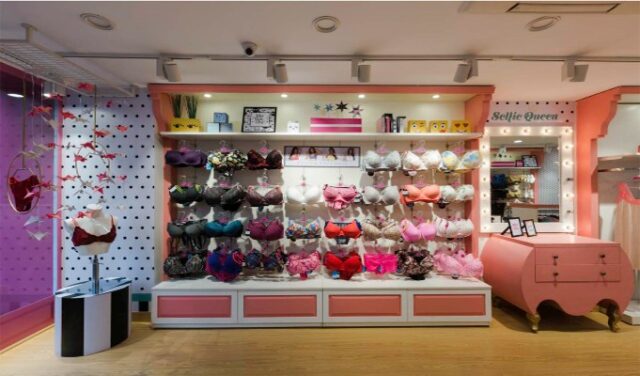
    “Our Noida office is also the central design hub. Designs and raw materials are shipped out to exclusive third party manufacturing units which have been incubated by us and work exclusively with us. Our skillful use of technology helps us ensure the industry’s most efficient mind-to-market and extremely tight inventory management. On the online front, we’ve innovated to deliver some of the best sales conversion rates. These innovations have ensured the company is operationally profitable since inception,” she adds.

    TG & Product Portfolio

    The brand’s target audience includes working women between the ages of 25-35 years and young girls aged between 18 to 24 who are either in college or have just entered the workforce.

    The brand designs, manufactures and sells premium fashion lingerie, innerwear, nightwear and shapewear. Tier II and III contribute to over 60 percent of Clovia’s orders.

    “Clovia has redefined the lingerie market by going beyond standard fits, colours and sizes. We offer customers a wide variety of choices in ‘everyday essentials’, along with ‘fashion solutions’ keeping up with customer’s evolving wardrobes,” says Kant.

    “As a brand which lives on feedback, and iterates its entire portfolio basis that, we are focused on a few major categories for now and have been slowly expanding our category focus. Clovia, started predominantly as a ‘bra & brief’ brand which extended into nightwear, shapewear and loungewear with time and demand. Within the categories, we’ve identified a lot of verticals for example: in bras, we have ranges for beginners and nursing mothers, as well as sizes till 44F. We launch 200+ new options including colours and prints per month across women’s bras, briefs, nightwear, shapewear, lounge wear, resort wear, swim wear, leisure wear and active wear categories,” she explains.

    The brand, which produces all its products in India, offers 2,000+ plus styles across categories.

    Supply Chain & Production Capacity

    Clovia is a full stack lingerie brand that controls every part of its supply chain from mind-to-wardrobe.

    “We procure raw material, design in-house, manufacture in third-party facilities working exclusively for us, ensure our own 4-level quality control and sell through a host of direct sale channels. Every product we create is first made in small quantities, monitored via state-of-the-art backend technology, which predicts future sales (based on sales patterns and customer feedback) and recommends what further quantities should be produced,” states Kant.

    At the moment, the brand is manufacturing almost a million units per month and ship close to 2 million units in a quarter.

    “We deliver pan India across 970 cities and to over 13,000 pin codes,” she says, adding, “Clovia has an established operating infrastructure with a 30,000 sq. ft. capacity warehouse and a wide distribution network with logistic partners pan India.”

    A Technology Forward Company

    Clovia uses smart technology and big data analytics for smart management of inventory ensuring that they have a highly consumer-relevant range all times with high sell-through rates resulting in industry best inventory holding.

    “We have set up a unique distribution system (both online and offline) which is based on direct interaction with customers, getting their direct feedback and using the same in planning the next product range. Big data played a big role here and this led to an extremely strong connect with our customers, leading to creation of a brand on the back of experience and not pure-play marketing,” she says.

    “We use smart technology and big data analytics to plan consumptions and purchase patterns. We stock the maximum number of SKUs in the industry with minimum inventory holding. Also, using technology for geographical understanding of tastes, we’re bringing structure to a traditionally unorganised market,” she further states.

    Future Plans

    The lingerie brand is expanding both in the online and the offline space with equal vigour. The brand is putting in the effort to understand audiences and nuances of each channel to ensure a true Omnichannel experience for customers and sellers. This is the key focus for Clovia over the next five to six quarters.

    “We have been operationally profitable,” she says.

    The brand currently generates around 15 percent of its revenue from offline channels and expects the revenue to witness a 50 percent growth in the current financial year.

    “Clovia gets over 55 percent of its total online sales through its own website which will maintain its share. The rest comes from online marketplaces such as Amazon,” Kant concludes.
  • Victoria’s Secret appoints new leaders for core brands

    Victoria’s Secret appoints new leaders for core brands

    Victoria’s Secret & Co has made several leadership changes as the company focuses on strengthening its core brands.

    The company said the move is part of its “Path to Potential” strategy, which aims to build momentum across its Victoria’s Secret, Pink and Adore Me banners.

    Anne Stephenson has been named brand president of the Victoria’s Secret brand, effective next month. She is currently the company’s chief merchandising officer and brings experience in product strategy, brand development and merchandising

    Meanwhile, Ali Dillon has been appointed president of Pink. Dillon previously held leadership roles in merchandising and brand development at several fashion retailers and most recently served as president of Alex Mill.

    Amy Kocourek took over as president of the beauty division in March. Before joining Victoria’s Secret, she was chief merchandising officer at jewellery and lifestyle brand Kendra Scott.

    All three brand presidents will report to CEO Hillary Super.

    In a separate appointment, fashion designer Adam Selman was named senior VP and executive creative director. He will report directly to Super until a new chief merchandising officer is named.

    “This is an exceptional team of product and creative leaders whose vision and operational expertise will drive new levels of growth, innovation and impact for our company,” said Super.

    “With their customer-centric approach, I’m confident they’ll help us unlock the full potential of our brands, capture the next generation of consumers and strengthen our market leadership.”

  • Victoria’s Secret swings to net income despite lower sales

    Victoria’s Secret swings to net income despite lower sales

    Victoria’s Secret swung to a net income despite lower sales in the fiscal second quarter, which an analyst attributes to better inventory management discipline and efficient cost control.

    The lingerie and perfume brand’s net income was US$32.1 million, while net sales fell 0.7 percent year over year to $1.42 billion.

    North America store sales decreased 2.1 percent to $800 million, and direct sales slid 0.9 percent to $430.2 million. International sales climbed 6.4 percent to $187 million.

    “Some better discipline around inventory management and strong cost control have both helped to boost the bottom line,” said Neil Saunders, GlobalData MD.

    “The better financial health of the business means that when Hillary Super takes the reins as CEO in early September she will, at least, inherit a company that has been stabilized.”

    The company forecasts net sales to increase low-single digits in the fiscal third quarter from the year-ago period.

    “We are encouraged our North America business trends have continued to improve as we’ve moved through August and the start of the third quarter,” said Timothy Johnson, Victoria’s Secret interim CEO, and chief finance and administrative officer.

    “While we are optimistic about the positive signs we’re seeing in our business, we recognize the consumer environment remains challenging and our customer is pressured economically.”

    For the full fiscal year, the company expects net sales to be down by about 1 per cent.

  • Victoria’s Secret launches a World Tour – its new ‘catwalk show’

    Victoria’s Secret launches a World Tour – its new ‘catwalk show’

    It was December 2018 when the last Victoria’s Secret Fashion Show aired on CBS. A year earlier, the show garnered a billion viewers worldwide, but its size and success had blinkered the company to both the cultural shifts being brought about by a born-online generation that demanded to see itself reflected in advertising and the upstart competitors who were building inclusion into their business plans. Rihanna’s debut Savage Fenty show in the fall of 2018 made Victoria’s Secret’s reliance on an impossibly narrow conception of beauty—all razzle-dazzle push-up bras, highly exercised abs, and angel wings, along with the occasional culturally appropriative headpiece or another accessory—seem out of touch. Then there was its owner’s entanglements with alleged sex offender Jeffrey Epstein. On an earnings call in November 2019, it was official: The Fashion Show was canceled.

    In the years since, the company has undertaken a sweeping, ambitious rebrand, removing the architects of the original Fashion Show; swapping the Angels for a VS Collective that includes Megan Rapinoe, Priyanka Chopra Jonas, and Paloma Elsesser; and expanding its size range and developing the kind of products it had long neglected to make—nursing bras and mastectomy bras, for instance—because they didn’t fit its male-driven definition of “sexy.” Leslie H. Wexner, the founder of Victoria’s Secret parent company L Brands, also stepped down as Chairman and CEO, and sold his majority stake. Today, Victoria’s Secret remains the leader in the U.S. for the intimates category and on a rolling 12 month basis the brand experienced slight growth in 2022 compared to 2021.

    Now, in its biggest and most visible move yet, the brand is reinventing its annual show, producing a feature-length documentary film set to premiere in September. Though it’s a fairly radical rethink, the company is billing it as every bit as spectacular as the Victoria’s Secret Fashion Shows of old—there might even be wings.

    “There’s no need to explain ourselves anymore,” said Raul Martinez, EVP, head creative director of Victoria’s Secret, who is spearheading the project. “We’ve evolved and we’ve moved on, but it’s not that we’re leaving anything behind. We’re touching both the storytelling, which is about our advocacy and celebrating female voices, but also that full-on, fashion entertainment experience, because that was quite iconic.”

    Dubbed “Victoria’s Secret World Tour,” the new show will bring together a cast of international women creators from four cities across the globe. The “VS 20” includes filmmakers, musicians, artists, and other creatives, with a quartet of fashion designers at its center. Using Victoria’s Secret resources, London’s Supriya Lele, Lagos’s Bubu Ogisi, Tokyo’s Jenny Fax, and Bogota’s Melissa Valdes will each produce collections, the behind-the-scenes makings of which will be captured in the doc. All four narratives will come together with a filmed fashion show featuring a fifth segment of Victoria’s Secret-designed pieces.

    Margot Bowman, the London-based director that’s been trailing Supriya Lele and her team, avoided the Victoria’s Secret Runway Show in her youth. “I didn’t aspire to that experience because I knew I was excluded from it,” she said. “I was an overweight kid. But I still remember the images; for better or worse they were iconic images, powerful images. And for me, I see this as an opportunity to create a new set of images that more people can find themselves in.”

    The company was the subject of a Matt Tyrnauer documentary Angels and Demons last year that investigated its former owner’s ties to Jeffrey Epstein. And a book penned by former Business of Fashion journalists, Selling Sexy: Victoria’s Secret and the Unravelling of an American Retail Icon that is scheduled for an early 2024 release, seems poised to keep the brand’s problematic history in the news cycle. Then there’s the fact that new rivals have emerged as the company has been reimagining itself. Kim Kardashian launched Skims in 2019. It’s now valued at over $3 billion, and thanks to her influence it’s sparked a shapewear craze on the runways. Lizzo launched the rival brand Yitty last year with a tagline about “self-love and radical inner-confidence” that exemplifies how the lingerie industry is changing.

    When Victoria’s Secret announced on an earnings in March that it would be investing in a new version of its Fashion Show, the pop star took to Twitter: “This is a win for inclusivity for inclusivity’s sake,” she wrote. “But if brands start doing this only because they’ve received backlash, what happens when the ‘trends’ change again? Do the CEOs of these companies value true inclusivity? Or do they just value money?”

    Convincing people of Victoria’s Secret’s new agenda of female empowerment is where the VS20 comes in. Supriya Lele, who brings her Indian heritage to bear on her draped designs, sees synergies between her own brand and Victoria’s Secret. The VS Collective member Paloma Elsesser, whose voice can be heard in the teaser video released today, has walked Lele’s London runway. “That was one of the reasons why I felt that I can identify with some aspects of this now—previously maybe less so—but now I feel their language is becoming more and more modern,” she said. “And after meeting with the team, I understood that this was a big decision to really push this female-centered point of view forward and I felt that was a really great opportunity.” (The company won’t be commercializing Lele or the other designers’ collections, rather the World Tour is a showcase of their talents.)

    The Victoria’s Secret call took Lagos’s Bubu Ogisi by complete surprise. “To be honest, I kind of ignored it,” said the designer with a laugh. “My pieces are not really that fixated on lingerie, so I was a bit confused. But for this World Tour they’re experimenting, and the core element in my work is experimentation. So I thought, okay, it would be an amazing idea to confront how they normally create and how we can edit, modify, or change that structure.” Ogisi’s work showcases artisanal crafts from across Africa. “With this collection,” she explained, “everything is fixated on the idea of Yoruba and Edo mythology. Each person is going to be a divine being, a supreme higher entity, a quote/unquote goddess.”

    Note that Ogisi said goddess, not “sex goddess.” So, will the Victoria’s Secret World Tour be sexy? “Yes, absolutely,” said Martinez, but with a caveat. “We are looking at it through a female lens.”

    The main difference between the Victoria’s Secret Fashion Shows of old and the World Tour of 2023 would seem to be that women won’t just be objects for the delectation of viewers, they’ll be subjects too—the makers, each one with a different point of view about what’s sexy. “Obviously, there’s been a huge shift in representation, but I still think it’s rare to see women on screen presented in a recognizable way, especially in the framework of fashion,” observed Bowman, the director of the London portion of the documentary. “I just want people to watch it and be like, wow, there’s so many different ways that you can be a woman.”

  • 6ixty8ight accelerates Southeast Asian expansion with Vietnam debut

    6ixty8ight accelerates Southeast Asian expansion with Vietnam debut

    At first glance, lingerie brand 6IXTY8IGHT’s retail store will draw you in with its pink facade, serving as a visual anchor. Its neonlight signages, with quirky quotes would make you want to whip out your phone for a quick snap; these are just the little details that will attract millennials. 6IXTY8IGHT was actually founded 2002 in Paris, by French lingerie designer, Marie Destombe, and Swedish business man, Erik Ryd. In the year 2003, Eric set up headquarters in Hong Kong, and launched the brand’s first store in Beijing.

    In an email interview with CEO of 6IXTY8IGHT, Ms. Jacqueline Porjé, she shared that the brand’s core audience is of the age between 15 and 25 years who love fashion and follow trends. But, “everyone who is young at heart can wear 6IXTY8IGHT!” she added.

    Porjé previously held the position of Assortment Director, a role she assumed since joining 6IXTY8IGHT in January 2015. In this position, she managed the brand’s overall product offering. She was promoted to Chief Executive Officer in 2017, where she now oversees the company’s assortment, finance, business development, operations, marketing and international expansion.

    So what makes 6IXTY8IGHT different from other lingerie brands out there? “We offer a wide selection of trending lingerie styles such as bralettes and wireless bras. We are also famous for offering pieces in a large array of colours, fun animal prints, comfortable modal fabrics, cotton-soft materials, feminine and girly lace and more,” Jacqueline stresses. 6IXTY8IGHT even recently launched their Lunar New Year offerings, paying homage to the Chinese horoscope with cute piglet motifs as well as a sizzling red collection.

  • 6ixty8ight launches first Philippines store

    6ixty8ight launches first Philippines store

    Lingerie is a category that has been faring well during the pandemic as more women are forced to stay home.

    In line with this, Hong Kong-based lingerie retailer 6ixty8ight has announced expansion of its e-commerce operations to other Asian countries after it forayed into the Japanese market in June this year.

    The customers in Thailand and Philippines will now be able to shop for the brand’s full range of lingerie, homewear, casualwear and accessories.

    The brand is also looking to introduce its new collections, including Modern Lace Collection and Summer Styles, with the launch of the online portal.

    The company said in a statement that the decision to expand to different countries with its e-commerce portal is a ‘top priority’ as more and more customers are shifting to online shopping during the pandemic.

    Within 2 months, the brand has set up base in 3 Asian countries – a move that will likely create more awareness ahead of the launch of physical stores in the markets.

    The brand currently has over 200 stores spread across countries like South Korea, Malaysia, Singapore and Greater China.

    Earlier this year, the 6ixty8ight had launched its first outlet in Mongolia in January with a plan to open 16 more outlets within a month.

  • Hop Lun founder sells majority stake to private equity

    Hop Lun founder sells majority stake to private equity

    Platinum Equity announced today the signing of a definitive agreement to acquire a controlling stake in international fashion lingerie and swimwear company Hop Lun from company founder Erik Ryd. Financial terms were not disclosed.

    Founded by Mr. Ryd in 1992 and headquartered in Hong Kong, Hop Lun is one of the world’s largest designers and manufacturers of intimate apparel and is a top provider of bra solutions in the US, UK and EU.

    “We have known Erik for a long time and have closely tracked Hop Lun’s growth and performance over the past several years,” said Jacob Kotzubei, the partner in Platinum Equity’s Los Angeles headquarters who oversees the firm’s Singapore-based team. “Erik is an energetic and passionate entrepreneur who cares deeply about the company’s employees and customers, and he has had a meaningful impact on the evolution of the industry.”

    The Hop Lun investment is being led by Platinum Equity’s Singapore office.

    “Our team in Asia has a lot of experience helping founder-owned businesses leverage Platinum’s operational expertise and M&A capabilities to maximize their potential,” added Mr. Kotzubei. “We are excited to work alongside Erik and his leadership team, and to bring those same resources to bear for Hop Lun.”

    Hop Lun employs more than 30,000 people and has manufacturing operations in BangladeshChinaEthiopia and Indonesia. The company produces products for many of the world’s largest global retailers as well as for its own in-house brands.

    “Hop Lun is an ideal platform with multiple ways to evolve and expand,” said Matthew Louie, managing director at Platinum Equity. “We are excited to work with Erik to accelerate investments in growing the company, both organically and through strategic M&A, that can expand Hop Lun’s production capabilities, customer base and portfolio of owned brands.”

    Mr. Ryd will retain a significant stake in Hop Lun and will continue to help lead the business going forward.

    “I am proud of everything we have built over the last three decades and am confident Platinum is the perfect partner for our next phase of growth,” said Mr. Ryd. “Platinum’s operations expertise is well suited to help us navigate the increasing complexity of the apparel business and take advantage of the sector’s continued consolidation.”

    The transaction is subject to customary closing conditions and is expected to be completed during the third quarter of 2022.

    BDA Partners and Goldman Sachs & Co. are serving as financial advisors to Hop Lun on the sale to Platinum Equity. Mayer Brown LLP is serving as Hop Lun’s legal counsel.

    Latham & Watkins LLP is providing legal counsel and Kirkland & Ellis LLP is providing debt financing counsel to Platinum Equity on the acquisition of Hop Lun.

  • Victoria’s Secret sells stake in China business to new JV partner

    Victoria’s Secret sells stake in China business to new JV partner

    In a statement, Victoria’s Secret CEO Martin Waters called Regina Miracle “a valued merchandise supplier partner for more than twenty years.”

    The brand is maintaining control of its business in China, but has turned to a local, known player to run it, and that makes sense, according to Jane Hali, chief executive at Jane Hali & Associates.

    “This seems to be a wise solution to distribution in China,” she said by email. “Companies are successful when they are consumer-centric and know their customers wants and needs. Victoria’s Secret was in China but it was unsuccessful under their management.”

    The brand’s results in China have nevertheless represented a bright spot in its global performance, according to UBS analysts led by Jay Sole. Victoria’s Secret’s international growth has been disappointing for the last five to seven years, possibly due to an over-emphasis on its Victoria’s Secret Beauty and Accessories stores in some places and because “the intimate apparel category is proving to be more nuanced than previously thought, in terms of what styles, sizes, price points, and brand messaging consumers want in each market,” according to the UBS research note. The analysts pointed to several ways that Victoria’s Secret has sought to gain traction abroad, including via joint ventures like the one announced Tuesday, along with franchising, wholesale and company-operated stores.

    Waters said the establishment of this joint venture finishes up a multi-year repositioning of the brand’s international operations. “We expect the partnership will positively impact the speed and agility of the business to benefit consumers and provide us with a platform for a strong future in this important market,” he said.

    UBS analysts do see room for growth in China. They crunched WeChat data and found the brand to be “on a solid path,” even improving among Chinese consumers while other U.S. brands weathered backlash there. Furthermore, Victoria’s Secret’s social media initiatives seem to be resonating with Chinese consumers, and the brand could probably add to the 63 stores it was running there as of October, UBS also said this week.

  • Victoria’s Secret joins JD with store

    Victoria’s Secret joins JD with store

    Victoria’s Secret is expanding its online presence in China with the launch of a flagship store on JD, the e-commerce platform.

    A representative from JD’s underwear business said the collaboration of the two companies not only expands JD’s cooperation with international fashion brands, but also provides additional choices for JD’s customers pursuing high-quality products.

    The JD flagship store offers Chinese customers Victoria’s Secret’s full range of classic bras, panties, lingerie and T-shirts. The launch came in time for the Chinese Valentine’s Day when sales are expected to boost as local consumers buy gifts for their loved ones.

    The online flagship follows the opening of the brand’s first China duty store in Hainan Tourism Duty-Free Shopping Complex earlier this month.

    The US lingerie brand closed its high-profile Victoria’s Secret flagship store in Hong Kong last year after two years of operation.

  • Playboy owner to acquire Aussie lingerie brand Honey Birdette

    Playboy owner to acquire Aussie lingerie brand Honey Birdette

    PLBY Group is to buy racy Australian luxury lingerie brand Honey Birdette for approximately US$333 million. PLBY Group CEO Ben Kohn said he is “thrilled by the brand’s potential to become a multi-million-dollar luxury lifestyle franchise”.

    “Our plan is two-fold: to leverage PLBY Group and the Playboy brand’s global operations to accelerate Honey Birdette’s expansion into new territories and product categories, and to take advantage of Honey Birdette’s superior product design, sourcing, and direct-to-consumer capabilities to accelerate our Playboy-branded lingerie, loungewear, swimwear, and sexual wellness go-to-market plans targeting the masstige consumer,” Kohn said.

    “This acquisition is expected to further our mission to become the leading pleasure and leisure lifestyle platform and our commitment to deliver long-term value to our shareholders.”

    Honey Birdette is forecast to generate $73 million in revenue this financial year, representing growth of over 40 percent. The acquisition will help the brand expand its leadership in the sexual wellness category and its shared sourcing and product design capabilities. The transaction is expected to close in the third quarter of 2021.

    Honey Birdette was first launched in 2006, when its first boutique opened in Brisbane, selling glamorous lingerie and adult toys. It has since expanded to more than 60 stores across Australia, the US, and the UK, and flagship stores are slated to open in the coming months in Dallas, Miami, and New York. Meanwhile, loungewear and swimwear will soon be added to the Honey Birdette product range.

    “When I founded Honey Birdette 15 years ago, my ambition was to build a brand for women, by women; a brand that would serve as a platform for confidence and sexual and body empowerment,” said Eloise Monaghan, founder and managing director of Honey Birdette.

    “Today is a momentous and proud day for the Honey Birdette team as we enter into partnership with one of the world’s most iconic brands and the lifestyle platform it represents. I’m thrilled to join Ben and the whole PLBY Group team on a mission to build a lifestyle of pleasure for all.”

  • Victoria’s Secret owner raises profit target again on stimulus boost

    Victoria’s Secret owner raises profit target again on stimulus boost

    VICTORIA’S Secret owner L Brands raised its current-quarter profit forecast for the second time this month as customers use stimulus checks to buy everything from scented candles to lingerie, sending its shares to a three-year high.

    The company on Friday also cited the unusual shifts in spending patterns and relaxation of COVID-19 restrictions for the upbeat first-quarter forecast.

    Analysts have said that retailers are set to benefit from the $1.9 trillion aid bill passed earlier this month that included $1,400 checks for eligible families.

    The company’s Bath & Body Works business has boomed in recent quarters as a sharper focus on hygiene standards and increased interest in skin-care by home-bound customers during the pandemic lifted demand for soaps, lotions, and sanitizers.

    This prompted L Brands to raise its profit target for the current quarter earlier this month.

    The Ohio-based company’s shares, which have gained about 60% since the start of the year, rose as much as 8% to a near three-year high of $64.08 on Friday.

    L Brands, which is separating its Victoria’s Secret business later this year, has managed its inventory well to avoid heavy discounting that has plagued some U.S. retailers.

    The company said on Friday it expects an adjusted profit of 85 cents to $1 per share in the first quarter, up from its previous raised forecast of 55 cents to 65 cents per share.

    Analysts were expecting 62 cents per share, according to IBES data from Refinitiv.

    Still, L Brands cautioned that it was not sure whether these improved trends would extend into the future.

    The company is scheduled to report its first-quarter results after markets close on May 19.

  • Indian lingerie model, age 52, hopes to inspire inclusivity

    Indian lingerie model, age 52, hopes to inspire inclusivity

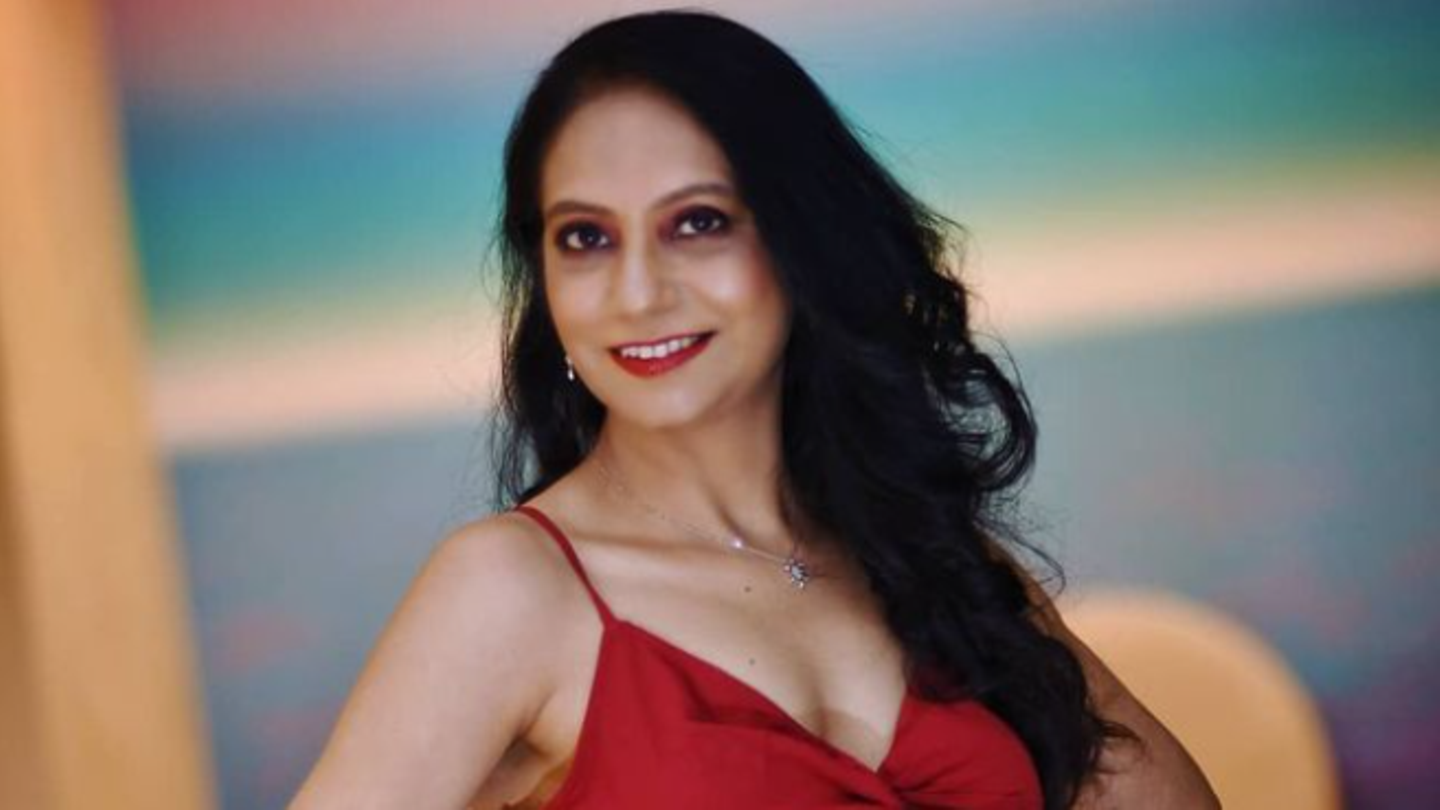
    A 52-year-old Indian lingerie model is pushing e-commerce firms to hire older women for their advertising campaigns, challenging what she says are the ageist norms practiced by many companies.

    Geeta J, a former teacher who took to modeling when she turned 50, says she wants innerwear companies in India to be more inclusive and avoid featuring only younger women in their promotion drives.

    “Are women no more fit to become a lingerie model past a certain age?,” Geeta has said in an online petition on Change.org, captioned with the hashtags ‘#AgenotCage’ and ‘#LingerieHasNoAge’, which she started this year.

    Her job is bold and unusual in the largely conservative Indian society where religious and cultural norms limit women’s freedom to dress the way they want.

    Such norms are even more restrictive for women over the age of 40, Geeta told Reuters in an interview.

    More than 11,000 people have signed up to support her petition, which is addressed to the chief executive of the popular innerwear company Zivame.

    “This will lead to a change in the mindset of people in our country who think that after 40, women should dress and behave in a certain way,” Geeta said in the petition, adding that she hoped it would lead to more companies following suit.

    Geeta began her career after winning a runners-up prize in a beauty pageant for older women. While her family and friends had been supportive of her switch in careers at 50, however, she said she was aware many Indian women her age would find it hard to do so.

    “I want to tell this to all women that they should care about the dreams of their husbands and loved ones and support them, but they should never think that their own life is not important or their wishes are not important,” Geeta said.

  • La Perla opens new boutique at Hong Kong’s Lee Gardens

    La Perla opens new boutique at Hong Kong’s Lee Gardens

    The Italian luxury lingerie label has opened their latest boutique at Lee Gardens in Causeway Bay, Hong Kong.

    Occupying an area of 710sq ft, the new store adorns La Perla’s usual elegant design and reflects the ‘brand’s unique aesthetic philosophy, merging distinctive Italian opulence and exquisite craftsmanship.’

    The leading luxury brand combines rich Italian artisanal heritage with revolutionary, intricate and unrivaled craftsmanship creating elegant and superior lingerie, swimwear and nightwear. The storehouses’ La Perla’s collections, including their Petit Macrame, Shapewear, Loungewear and the brand’s 25-year old Maison collection.

    The store’s façade is white marble whilst the interior presents soft pink colors, complemented with golden shelving units and wooden flooring, velvet sofas and textured carpets.

    Louis Pong Wai Yan, Chairman of La Perla Asia, commented: “We stay committed as ever to our brand values and hope to present La Perla’s authentic spirit, contemporary opulence and impeccable craftsmanship to even more customers.”