Tag: lingerie

  • Victoria’s Secret opens first flagship store in China

    Victoria’s Secret opens first flagship store in China

    US brand Victoria’s Secret has opened its first flagship store in China as it taps into the growing appetites of mainland women for high-end lingerie.

    Fronted by an iconic pink glass facade, the four-storey, 2,500 square meter Victoria’s Secret store opened its doors on Thursday in Huaihai Road, one of Shanghai’s most upscale shopping streets.

    The new shop, which is the first to sell the brand’s full range of products attracted thousands of visitors on the opening day. Previously, Victoria’s Secret had only operated concept stores in China, selling accessories.

    “Chinese women are now ready for more sophisticated bras,” said Pascal Martin, a partner with OC&C Strategy Consultants.

    As Chinese women have increasingly adopted western fashion trends and brands, many locally-owned bra offerings at the cheaper end of the spectrum and paying little heed to design and brand appeal have popped up.

    The US lingerie giant, which entered China in 2015, has unveiled an aggressive expansion plan in the fast-growing Chinese market.

    Besides launching another flagship store in Chengdu in southwest Sichuan Province soon, Victoria’s Secret will move its high-profile annual fashion show to Shanghai at the end of this year.

    The retailer will charge mainland customers between 300 and 600 yuan (US$44 -87) for a bra, a little higher than in the US.

    Joey Chio, senior associate director of Savills Shanghai Retail, which helped Victoria’s Secret select the location for its new store, said the opening of the flagship shop would satisfy Chinese women’s “desire to keep up with the forefront of international fashion”.

    Luxury lingerie and high quality functional products are becoming increasingly popular among Chinese women, and a more frequent topic of discussion on social media.

    The female underwear market in China is expected to have a retail value of US$25 billion by 2017 – double that of the United States – and will grow to US$33 billion by 2020, according to Euromonitor.

    Top Italian luxury lingerie maker La Perla, which has eight stores in China, said it planned additional outlets in Chengdu and Chongqing and aims to open a men’s store in Beijing.

    Canadian yoga brand Lululemon entered the Chinese market by opening its first shop in Shanghai last December.

    The penetration rate of the bra sector in China is still under 10 per cent, compared with around 40 per cent in the US and 20 per cent in Japan, Martin said. Most of the bra brands currently in China are still focusing on the traditional department store channel rather than malls, indicating opportunities for brands like Victoria’s Secret, he added.
  • Lingerie Maker Victoria’s Secret Looks to Uncover Supply Chain Issues in Indonesia

    Lingerie Maker Victoria’s Secret Looks to Uncover Supply Chain Issues in Indonesia

    Lingerie giant Victoria’s Secret, famed for its racy bras and thongs, has pledged to trace the sources of its wood-based fabrics, joining the ranks of fashion companies addressing human rights and deforestation, its parent company said. In a new policy statement, parent company L Brands said it aimed to eliminate sources of wood pulp, used to make rayon, viscose and modal, that contribute to rainforest destruction or violate the rights of local people.
    L Brands is the latest in a growing number of US fashion companies to commit to investigate its supply chain for products from destructive regions and stop using those sources by the end of 2017, according to Rainforest Action Network (RAN). Ralph Lauren, whose designs are popular on Hollywood’s red carpets, adopted a similar policy earlier this month. “Our Forest Products Procurement Policy is written to reduce threats to ancient and endangered forests and to avoid products that contribute to deforestation or human rights abuses,” said L Brands’ policy statement published on its website.
    “We will report on our progress publicly.” Production of wood pulp can involve clearing forests to build eucalyptus plantations and taking land traditionally used by indigenous communities, campaigners say. The issue is particularly acute in Indonesia, a major producer of wood pulp. The Victoria’s Secret catalog features voluptuous models clad in tiny thongs, push-up bras and “cheekini” panties, and its top models who appear in its popular fashion shows are known as its Angels. It is one of several companies owned by L Brands. Its other well-known brands include Henri Bendel, Pink and Bath & Body Works. L Brands did not respond to a request for comment.
    RAN said the new policy was posted on the company website late on Wednesday. RAN, which helped develop the sourcing policies for L Brands and Ralph Lauren, has been waging an “Out of Fashion” campaign to publicize the impact of forest-based fabrics and call on major US brands to adopt stringent sourcing systems. “It’s encouraging to see brands beginning to take responsibility for their supply chains,” said Brihannala Morgan, senior forest campaigner with RAN. “
    L Brands’ commitments and actions, following right behind Ralph Lauren and among more than 60 other brands who have developed policies, can have a real positive impact for forests and the people that depend on them.” H&M, Zara, Levi Strauss & Co and British fashion designer Stella McCartney have adopted similar policies, RAN said. Last year Stella McCartney partnered with environmental non-profit Canopy to encourage clothing companies to stop sourcing fabric from ancient and endangered forests.
  • Bottom line: brands chase China’s high-end lingerie market

    Bottom line: brands chase China’s high-end lingerie market

    High-end lingerie sales are outpacing China’s generally downbeat luxury market, and heating up competition between international brands and local rivals looking to go upmarket.

    U.S. brand Victoria’s Secret will open its first store, and companies including Italy’s ultra-luxury La Perla and Germany’s Triumph are adding stores and moving beyond China’s mega-cities to tap a lingerie market that has more than doubled in five years to $18 billion, according to Mintel Group.

    Chinese consumer tastes are maturing, women are more confident about buying for themselves and President Xi Jinping’s drive against conspicuous consumption is likely diverting spending from flashy branded bags and accessories to sports and ath-leisure wear and the more discreet lingerie.

    “Luxury is … not about buying to show off, it’s about buying items that make you feel good,” says Chiara Scaglia, La Perla’s Asia chief.

    China’s women’s underwear market is expected to have a retail value of $25 billion by next year – double that of the United States – and will grow to $33 billion by 2020, according to Euromonitor.

    Chinese firms such as Beijing Aimer, Maniform and Ordifen are also chasing that money, targeting higher-end customers and raising their quality.

    “That means foreign brands will have to out-compete local brands not just on quality, but also innovation,” said Matthew Crabbe, director at Mintel.

    For now, the market is highly fragmented, with none of the leading firms having more than around a 3 percent share. International brands see China as a priority to help bolster overall sales given a fairly bleak global outlook.

    La Perla, which sells bras priced around 2,000 yuan ($300), has eight stores in China and plans additional outlets in Chengdu and Chongqing within the year. It also aims to open a men’s store in Beijing.

    “The perception of the lingerie sector has changed,” Scaglia told Reuters. “At the beginning many people we spoke to were confused as to why anybody should spend over $1,000 on panties for something nobody sees.”

    EXPANDING FOOTPRINT

    Victoria’s Secret will open a 20,000 square foot (1,860 square meter) flagship store in Shanghai this year, taking over a prime downtown location that used to house a Louis Vuitton store. “I think it will announce our arrival in China in a very significant way, and should be the beginning of an enormous business for us,” said Martin Waters, L Brands International President.

    Triumph, which already has 1,000 China stores, plans to open in five new cities this year and up to 11 cities next year.

    Cosmo Lady (2298.HK), a Chinese firm that has focused on the mass market, selling bras from 50 yuan ($7.50), last year bought Ordifen to increase its presence in the luxury market.

    “We would like to gradually step into the high-end market,” said Peter Lam, Cosmo Lady’s assistant chief financial officer.

    Gao Qiannan, a 22-year-old Shandong student who says she spends upwards of 1,500 yuan a year on lingerie, doesn’t think there’s a big difference between Chinese and foreign brands.

    “If I can buy a domestic brand, I will, but if I particularly like the international brand’s style, I’ll get that,” she said.

    The international brands say they don’t offer products specifically for the Chinese market, though La Perla notes that some colors – red and baby pink – sell far better in Asia than in Europe or the United States. The Italian brand has also used Chinese supermodel Liu Wen in its campaigns.

    Japanese and South Korean brands are also growing in popularity in China.

    Yin Huijuan, 23, who spends 800 yuan ($120) on lingerie every three months, said she prefers Japanese brands such as Wacoal and Narue. “I feel foreign brands’ style is more detailed and diversified, these are areas where domestic brands fall short,” she said.

    CONSUMER CAUTION, ONLINE COMPETITION

    Even in the lingerie market, though, there are bumps.

    Cosmo Lady, which has 8,600 outlets including Ordifen’s 550 China stores, saw robust growth in its mass market sales last year, but has warned about its profits for the first half of this year, citing China’s slowing economic growth, consumer caution and competing online sales.

    Hong Kong-listed Embry Holdings (1388.HK), which owns the Embry Form lingerie brand, said its group retail sales slipped by nearly a fifth in April-June on tougher competition and the economy.

    Despite those bumps, the lingerie sector retains a strong appeal, said Eugene Mak, an analyst at China Merchant Securities in Hong Kong, and firms like Cosmo Lady are still outperforming other apparel retailers.

    He predicts the market will hit a consolidation phase at some time. “It’s a very young market, but in the near-term it’s going to be messy,” he said.

    (Reporting by Farah Master, with additional reporting by Giulia Segreti in Milan, Shanghai newsroom, and Sharon Shi and Joyce Zhou in Hong Kong; Editing by Ian Geoghegan)

  • Cosmo Lady to go global

    Cosmo Lady to go global

    Hong Kong-listed lingerie brand Cosmo Lady says it will venture into overseas markets to seek global business partners.

    The first Chinese underwear brand to go public, two years ago when it launched on the Hong Kong Stock Exchange, Cosmo Lady is seen in China as “the Oriental version of Victoria’s Secret”.

    In 2015, Cosmo Lady ranked number one in the overall China’s intimate wear market with a market share of 3.3 per cent and total revenue increased by 23.6 per cent to about RMB 4.95 billion. Cosmo Lady Group primarily focuses on the design, research, development and sales of its own branded intimate wear products including bras, underpants, loungewear, thermal clothes, hosiery and other items. While China’s underwear market been growing by 10 per cent year-on-year over the last few years, the company believes there are also big opportunities to expand offshore.

    Cosmo Lady opened 1032 retail stores 2015 and its distribution network now comprises 8050 retail stores in more than 330 cities.

    “Cosmo Lady will continue its progressive expansion strategy of retail network in five major types of locations, including commercial streets, residential neighborhoods, transportation hubs, school zones and supermarkets and its high-end retail network in malls, department stores and shopping centers,” the company said in a statement.

    Chairman and CEO Zheng Yaonan said the company will progressively expand in locations with not only the lower market share but also high growth potential, and continue to explore the industrial external growth opportunities.

    “At the same time, Cosmo Lady will also be committed to improve core competitiveness and outperform their competitors through a series of initiatives such as the expansion into overseas markets and the collaboration with other well-known underwear brands, which will the company’s long-term strategic plan.”

    This year, Cosmo Lady secured the rights to use Walt Disney characters on several specially-designed underwear lines.

    The brand launched its latest range last April, reaching more than 200 million people through live broadcasts on social media platforms such as Weibo and WeChat.

    “It is the company’s ambition that in the future Cosmo Lady will hold an Oriental version of the Victoria’s Secret fashion show in the US.”

  • Victoria’s Secret to Open First Full Retail Lingerie Store in China

    Victoria’s Secret to Open First Full Retail Lingerie Store in China

    Good news to all fashionitas out there! Premium lingerie brand Victoria’s Secret has announced that it will be launching its first full retail store in the mainland, offering its well-known bras and panties, its China-based office told China Daily.

    The firm is set to open a 1,475-square meter boutique at Lippo Plaza – the former house of one of Louis Vuitton’s four retail outlets in Shanghai. The lingerie shop is anticipated to make its debut by the end of the year. However, according to an insider, specific details have not been confirmed as the opening date largely depends on when the customs clears the company’s entire collection.

    Since last year, Victoria Secret’s parent company L Brands has opened 20 stores across the mainland including one in Shanghai, Guangzhou and Chengdu. But, these outlets are all advertised as “Victoria’s Secret concept stores,” with only accessories and beauty products such as shampoos, perfumes and canvas bags available.

    The insider revealed that although the company remains cautious of selling its prime products in China, L Brands will continue to widen its concept outlets in more cities.

    Despite plummeting sales in the luxury goods industry, the lingerie market has been experiencing soaring sales, with a double-digit growth rate. According to Frost and Sullivan, a consultancy firm, the lingerie market in China will reach approximately $240 million by the end of the year.

    Experts predict that apart from bags and shoes, tremendous amount of money will be splurged on intimate apparels as the spurring growth of the middle class will start bragging of their new wealth.

    Victoria’s Secret is globally known for its annually televised fashion shows. But those lacy apparels, which the company allocates millions to market with top models, are apparently only available in three countries, namely, Canada, the United States and the United Kingdom.

  • Thailand Lingerie Sales Rise As Temperatures Fall

    Thailand Lingerie Sales Rise As Temperatures Fall

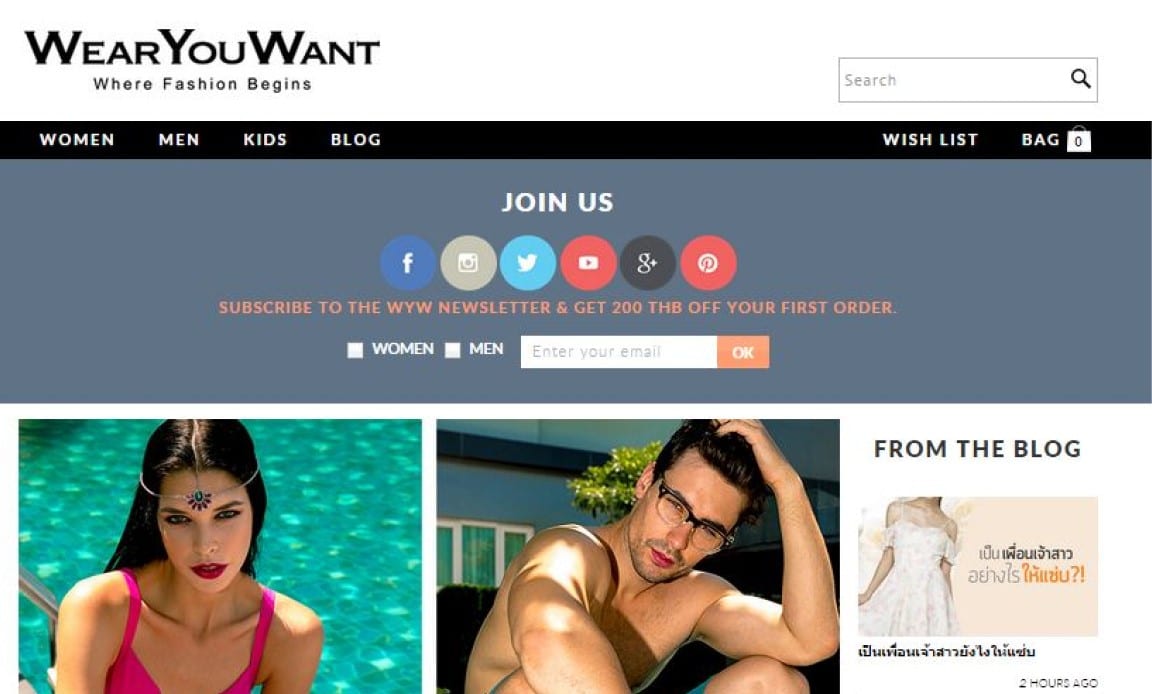
    WearYouWant, Thailand’s leading online fashion marketplace and beauty platform reports that far from adding on extra layers to guard against the sudden chilly weather, Thais could be doing the opposite – staying indoors more and wearing less!  With temperatures dropping the site has seen a sudden rise in lingerie traffic and sale in Thailand.

    It seems that instead of digging out an old sweater or cardigan, the cold weather is inspiring more cuddle-time with couples. Of course Thailand’s/Bangkok’s fashion conscious want to look great whether they are stepping out and about or snuggling up with a loved one at home…in their underwear.

    WearYouWant recorded a 70% increase in the sales of lingerie since the temperature plunged early this week.

    There are no doubt many who are hoping that the cold-blast continues for a little longer yet.  Many others are also now realizing that their undergarments need an upgrade and are logging on to WearYouWant to get their lingerie delivered straight to their door so they do not have to go out in the cold!

    WearYouWant’s CEO, Julien Chalté, finds the development amusing.

    “We cannot state whether this is related to the weather or not, but it is not difficult to imagine that the chilly temperatures may encourage certain indoor activities for which the lingerie would certainly be useful,” says the CEO with a smile.

  • Smart mirror checks your bust size in-store

    Smart mirror checks your bust size in-store

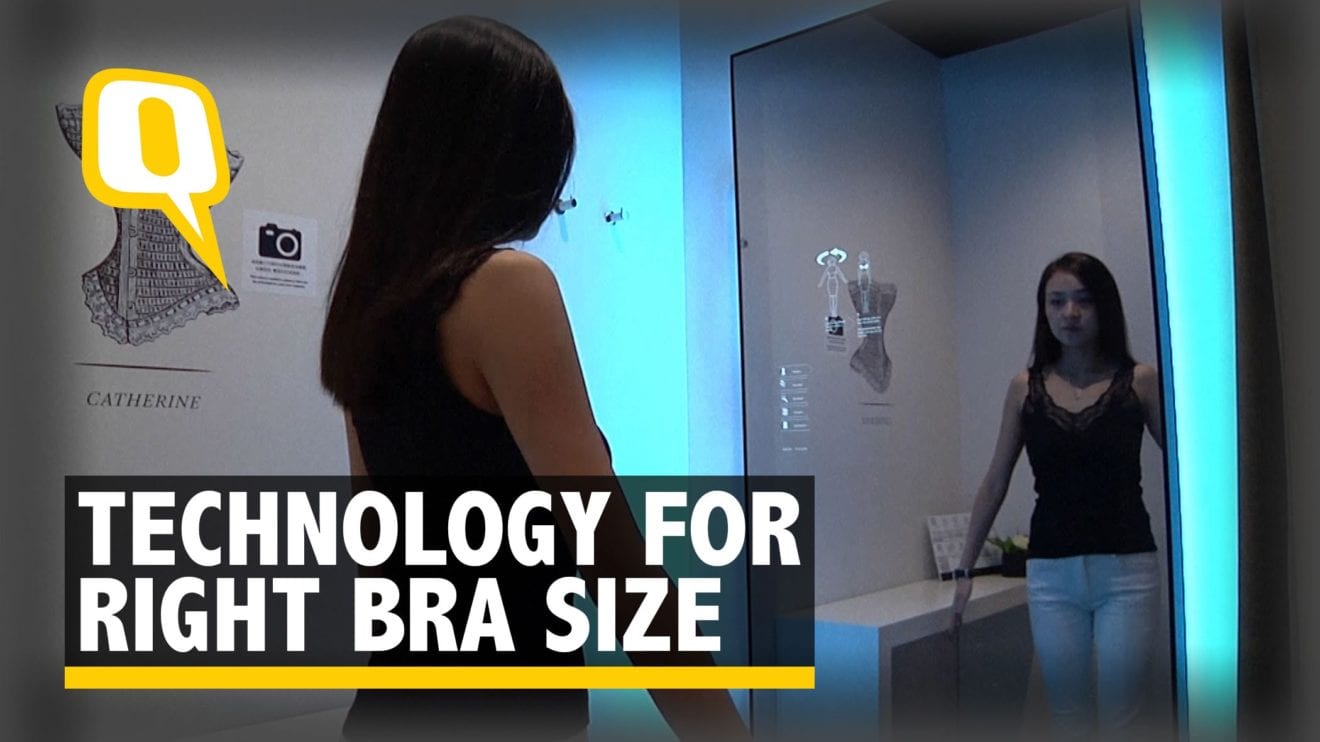
    The Hong Kong branch of Rigby and Peller is using a smart fitting room mirror to help customers work out their ideal bra size.

    For many women, especially young ones, being fitted for a bra is an embarrassing experience that they seek to avoid, often resolving to buying ill-fitted lingerie instead.

    Now, lingerie store Rigby and Peller is offering a high-tech alternative via a smart mirror, which scans the customer in the fitting room and calculates their ideal bra size.

    Rigby and Peller smart fitting room

    To begin, customers stand front of the changing room mirror and hold their arms out. Then, they rotate slowly, turning 360 degrees, while the inbuilt camera takes 140 body measurements.

    The technology then calculates the customer’s ideal bra size, giving them a unique shape ID.


  • Swimsuits drive Victoria ’s Secret sales

    Swimsuits drive Victoria ’s Secret sales

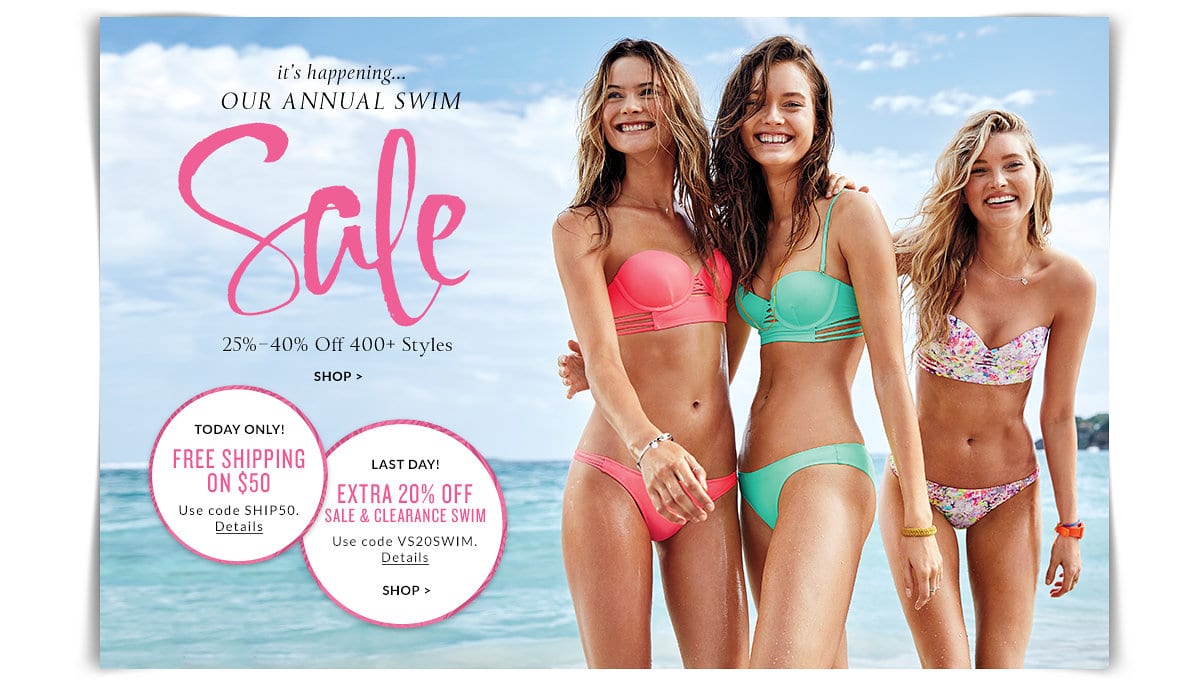
    Victoria’s Secret – which accounts for more than one third of the US lingerie market – says swimsuit sales are growing at twice the rate of its overall growth.

    In the first quarter of this year – not even summer season in the US – swimsuit sales soared 10 per cent, while the brand’s overall sales grew just five per cent. Swimwear was introduced in 2002 but only in the last few years has the range been widely stocked as a core line across the brand’s more than 1000 company-owned stores.

    CEO Sharen Jester Turney told an investor conference call that swimwear is not the only category driving growth.

    “We’re very excited and very pleased with our sport business, especially in our bra category,” she said.

    “That’s where we’ve been putting a lot of our emphasis and seeing tremendous growth.”

    In fact, sportswear was only on the company’s radar just a couple of years ago, yet sales are already nearing $250 million annually.

    Analysts predict the brand could eventually grow sportswear sales to $1 billion dollars (the brand’s total 2012 sales were more than $6 billion), with Victoria’s Secret set to launch its Sport offer into another 150 stores in the current quarter.

  • Fifty shades of lingerie to light up retail this year

    Fifty shades of lingerie to light up retail this year

    Retail experts are tipping women’s intimate apparel as one of the hot spots for the sector this year with the release of the steamy movie Fifty Shades of Grey expected to trigger a rise in sales of lingerie and related “items”.

    Being billed as the “movie event of 2015”, it is the adaption of the best-selling book and lingerie retailers can’t wait for its release.

    Although a discretionary category, lingerie sales have been higher in the past year, as consumers look to spoil themselves with a one-off purchase. This demand, which has also been out-pacing even jewellery sales, has led to the opening of more stores, including the overseas-based Victoria’s Secret outlets and the Agent Provocateur, both of which are on the hunt for more stand-alone stores across Australia.