Tag: Living

  • Carousell Expands Executive Team to Strengthen Operations and Leadership

    Carousell Expands Executive Team to Strengthen Operations and Leadership

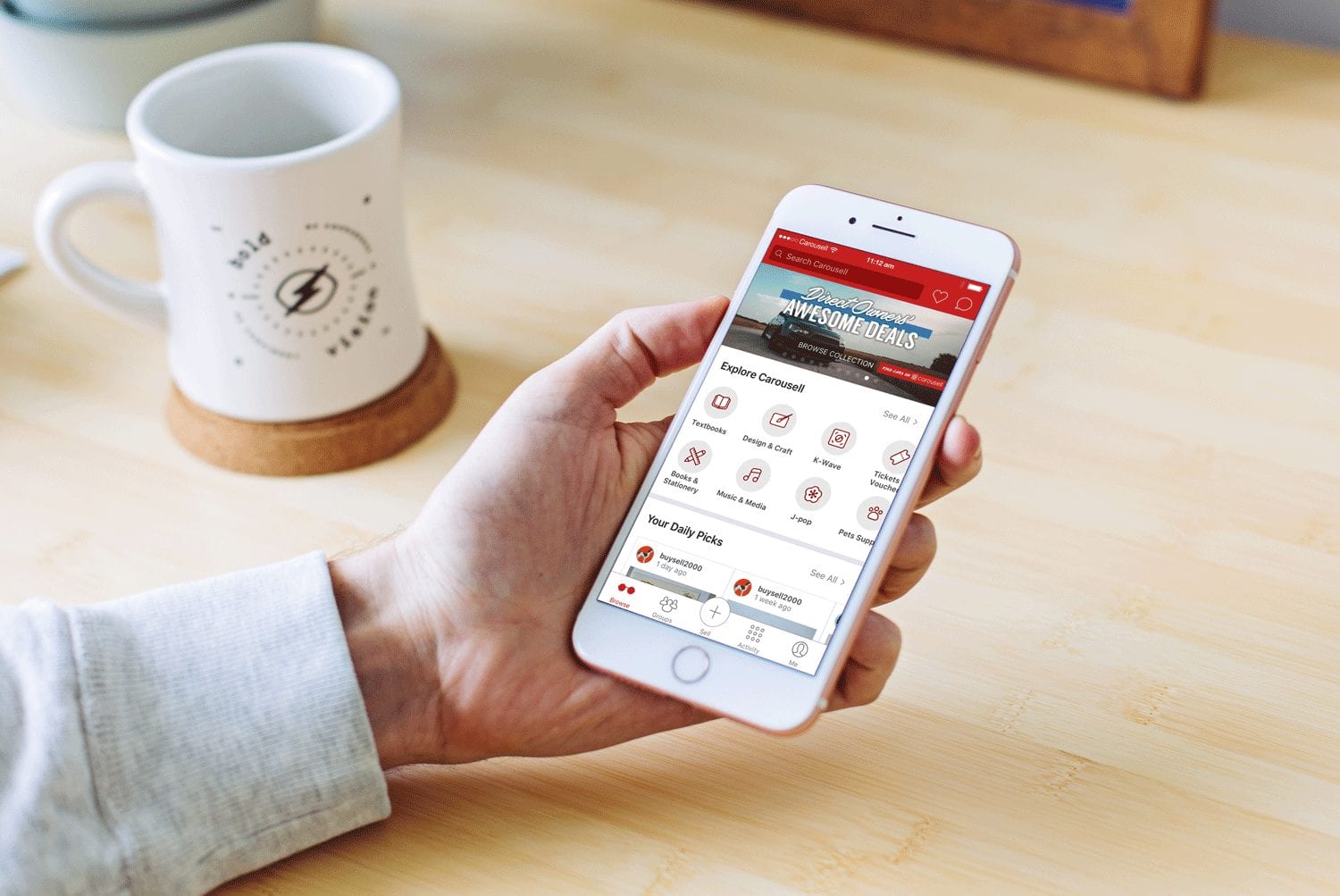
    Carousell, one of the world’s largest and fastest growing classifieds, announced the appointment of industry veteran Su Lin Tan as Vice President of Operations, while Colin Bryar has taken on an advisory role. The new additions reflect the company’s steadfast commitment to solidify its market-leading position in the classifieds industry and to continuously improve user experience of our marketplace in the region.

    “We are always on the lookout for world-class talent who shares our values and passion for solving meaningful problems with technology, and we are tremendously fortunate to have found that in Su Lin and Colin,” said Siu Rui Quek, Carousell Co-founder and CEO. “Their collective experience and proven track record in transforming organisations amidst complex digital environments will be invaluable as we power through our next chapter of growth. It is an absolute privilege and I look forward to learning from them as we continue to innovate classifieds in an AI-first world.”

    Su Lin, previously Deputy Chief Marketing Officer and Senior Vice President of Sales Strategy and Operations at Singapore Press Holdings (SPH), brings over two decades of leadership experience in digital strategy, marketing and the classified space to Carousell. Having overseen sizable advertising sales and digital organisations and working across complex organisational eco-systems, she was most recently associated with the launch of Singapore’s first and only digital publisher alliance, the Singapore Media Exchange, Su Lin serves as the Vice President of Operations to lead the teams in scaling up operations in Singapore and across the region. In her new role at Carousell, she reports to Co-founder and CEO, Siu Rui Quek.

    “I am deeply honoured and humbled at the chance to work alongside Carousell’s visionary founding team. I knew they were destined to achieve great things from the first time we met back when they had first started the company,” said Su Lin. “Despite their incredible success in a short span of six years, the leadership team’s deep commitment and mission-driven values to make an impactful change in the world have never wavered. Their humility and willingness to learn and grow, not only themselves but also their people, moved me. I am excited for the opportunity to help make the founders’ dream come true so that we might show the world what Singapore born and bred
    companies are capable of.”

    In his new advisory role to Carousell’s executive leadership team, Colin will focus on identifying opportunities for faster growth and providing a world-class customer experience for users across the region. Colin has successfully led digital platform businesses in all stages of evolution for over 25 years in various senior leadership roles at Amazon, IMDb and Alibaba-owned RedMart. He also served two years as Technical Advisor to Jeff Bezos. This unique blend of experience makes Colin a great fit for the next phase of Carousell’s growth.

    Colin shares his excitement for tackling new challenges at Carousell, “In my many years of working with major tech companies, the potential I saw in Carousell and the impact it can bring to many more millions of users around the world is something really special. I have profound admiration and respect for the founders and their vision for the company. It’s an exciting time to be part of a team that is aggressively expanding its capabilities to bring simpler and more trusted solutions to help people discover new possibilities when buying, selling and connecting with one another.”

  • MSIG Hong Kong names Philip Kent as new CEO

    MSIG Hong Kong names Philip Kent as new CEO

    General insurer, MSIG, has announced the appointment of Philip Kent to the role of Chief Executive Officer (CEO). He succeeds former CEO, Kenneth J. Reid, who has retired after 26 years with MSIG Hong Kong. Philip Kent most recently served as Executive Vice President of Planning for the Singapore-based regional holding company, MSIG Holdings Asia, over the last two years leading business development across the region and spearheading the regional digital strategy in Asia. With more than 28 years in the insurance industry, he has broad insurance market experience encompassing leadership and technical roles across Asia, including Indonesia, Thailand and Hong Kong.

    “We are pleased to have Philip lead MSIG Hong Kong as CEO. His accomplishments and track record of building strong partner relationships and inspiring colleagues make him an ideal leader. He is also very familiar with the market having worked in Hong Kong for 11 years,” said Alan J. Wilson, regional CEO, MSIG Holdings Asia.
    “The industry is dynamic with many insurers going digital and leveraging on new technologies. With Philip’s experience, he will be able to continue the digital transformation that Ken has started for MSIG, ensuring that we are well placed to continue serving the needs of our customers in Hong Kong,” he added.

    Outgoing CEO Kenneth J. Reid has retired after leading MSIG Hong Kong as CEO for 13 years and after a successful career of nearly 35 years with the Group. During his tenure, Mr Reid led MSIG Hong Kong to more than double its gross written premiums and played an instrumental role in forming a partnership with DUAL Asia in 2009, significantly expanding MSIG’s business portfolio. He also contributed to Hong Kong’s general insurance industry as Chairman of the Motor Insurer’s Bureau of Hong Kong from 2015 to 2017.

    “Ken’s vision, accomplishments and impressive track record of building strong client relationships, have materially strengthened MSIG Hong Kong. He leaves a firm foundation and a resilient company. I would like to sincerely thank him on behalf of the Board and the Group for his substantial contribution to MSIG,” Mr Wilson said.


  • Mr DIY mulls US$362 million float

    Mr DIY mulls US$362 million float

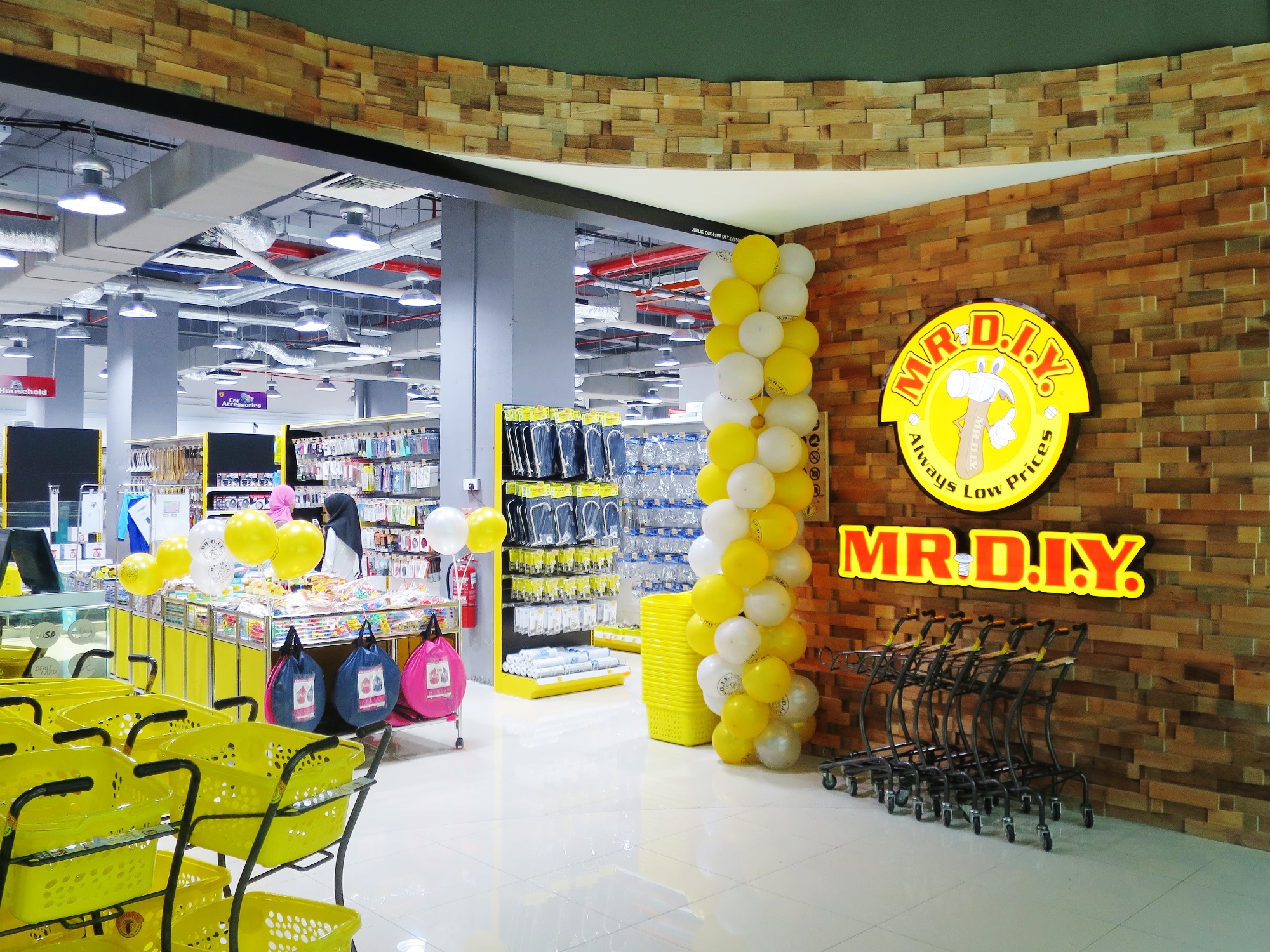
    Malaysian home improvement brand Mr DIY is considering an IPO to raise about MYR1.5 billion (US$362 million). An industry source has revealed that the firm intends to list its domestic operations later this year on either the Malaysian or Hong Kong exchange with backing from Malaysian private equity firm Creador, which invested in the brand over two years ago.

    A report stated the IPO could bring Mr DIY to a market value of MYR10 billion (US$2.426 billion).

    Mr DIY operates around 600 locations in Southeast Asia. Last October, the company revealed plans to open at least 1000 branches by 2020.

    Head of marketing Andy Chin said then: “We feel that our home improvement retail business model, offering a variety of goods at affordable prices, is suitable for better business growth in the country as well as the Asean market. At the end of this year, we target 700 global branches, and the number may reach 1000 or more by 2020. These will be based on an organic growth.”

    He added that the company’s prospect of Asean-level expansion will be focused on Indonesia, Thailand and the Philippines”.

    Mr DIY is the largest home appliance retailer in Malaysia with more than 20,000 SKUs.

  • Vietnam eyes green power, not to sacrifice environment for growth

    Vietnam eyes green power, not to sacrifice environment for growth

    The government Thursday reaffirmed Vietnam’s desire for a greener energy mix amid the risk of a power deficiency. Environment-friendly coal- and gas-fueled and renewable power plants would make up the mix. While Vietnam faces “obvious risks of an energy shortage in the coming years … it will not sacrifice the environment for economic growth,” Deputy Prime Minister Trinh Dinh Dung said in a meeting with the state-run Vietnam Electricity (EVN), the country’s largest power producer and monopoly distributor.

    Coal-fired power is vital to energy security, but “it must be clean,” he noted. Dung asked EVN to pioneer the use of modern technologies to reduce the environmental footprint of new coal-fired plants and handle the cinder and ash at existing plants.

    The country faces difficulty in increasing power generation since it has decided to put nuclear power on hold, many coal-fired plants are behind schedule and renewables could not be developed on a large scale due to “high costs” and transmission limitations.

    “Hydro power currently meets 40 percent of the country’s demand, but additional supply is almost impossible.

    “Our hydro power plant reservoirs, especially in the central region, are facing a serious water shortage, supply of coal for power development is erratic and gas supply is waning while power station projects for new supplies are being implemented slowly,” the deputy prime minister said.

    Dung said “EVN must also focus on investing in transmission systems to bolster the development of renewables.”

    The inadequate transmission system is now a bottleneck slowing down wind and power projects though a dramatically rising number of investors have shown interest in such projects following the recent increase in feed-in-tariffs (FITs).

    Dung also instructed the Ministry of Industry and Trade to hasten studies for the country’s investment in coal transshipment ports and regasification terminals to support development of gas-fuelled power, and quickly complete negotiations to buy power from overseas.

    He also asked EVN and other investors to speed up the delayed construction of major projects like Nhon Trach 3-4, O Mon 3-4, Tan Phuoc, Long Phuc 2-3, Quang Trach, and Quynh Lap.

    Vietnamese firms lack the resources for major projects while foreign loans are difficult to get due to government guarantee-related issues.

    The regional imbalance in power supply and demand is also a challenge. While the southern region accounts for more than half the demand (the north nearly 40 percent and the central region nearly 10 percent), power is being generated mainly in the north and central region (about 60 percent).

    To make it worse, the installation of transmission lines, both the main grid and branches, has been slow and failed to keep up with the pace of power generation, while negotiations to buy electricity from other countries have been going at a snail’s pace.

    The installed power capacity is around 48,000 MW. Under the revised Power Development Plan VII, a total of 60,000 MW is expected to be generated by 2020, with coal-fired plants accounting for 42.7 percent followed by hydropower (30.1 percent), gas-fired plants (14.9 percent), and renewables (9.9 percent).

    By 2030, the capacity will jump to 129,500 MW, with the ratios of coal and gas-fired power remaining almost unchanged, but renewables doubling to 21 percent.

  • Starbucks South Korea offers incentives using own cups

    Starbucks South Korea offers incentives using own cups

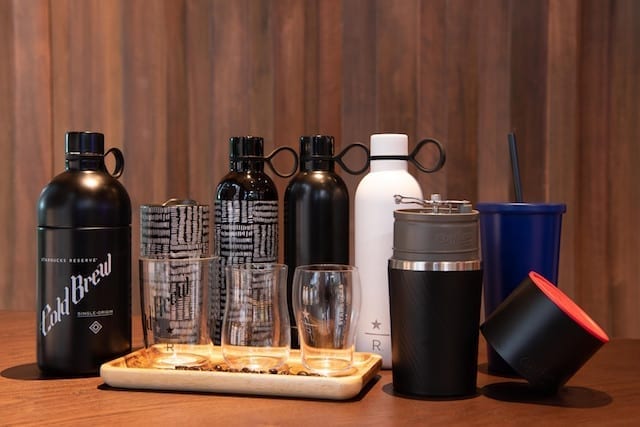
    Starbucks South Korea says the number of customers bringing their own cups to the store leapt 24 per cent in just one month. The boost is the result of its ‘Eco Bonus Star Program’ aimed at reducing waste and improving consumer awareness of sustainability issues. Through the Eco Bonus Star Program, customers of Starbucks South Korea can collect additional ‘stars’ – or bonus points – by bringing their own cups to cafes. The stars can be used for discounts and other benefits.

    Customers can choose to receive an immediate discount of 300 won (US27 cents) if they don’t want to collect stars.

    Starbucks said that, compared to 970,000 customers who brought their own cups in October, more than 1.21 million customers brought their own cups in December, the first full month of the program.

    Two-thirds of customers chose to save up stars, rather than receive the discount.

    “More than 1.81 million additional stars were given to customers just 50 days after the Eco Bonus Star program was implemented,” said Starbucks.

    “Gold members for My Starbucks can get a free drink for 12 stars, which also likely encouraged more customers to bring their own cups.”

    More than 8 million customers have brought their own cups this year, twice as many as last year.

  • Kathmandu Australia drops expectations after slow holiday sales

    Kathmandu Australia drops expectations after slow holiday sales

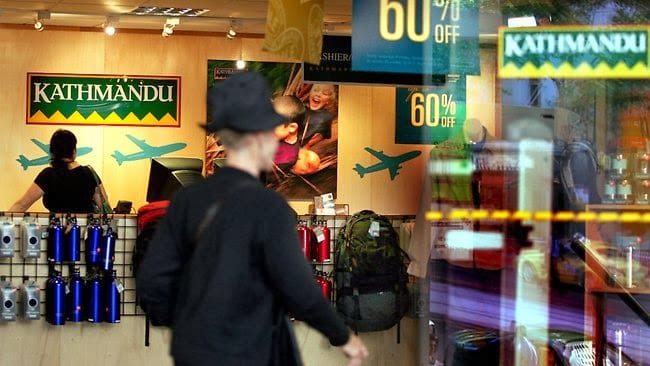
    Outdoor retailer Kathmandu has seen sales fall over the first 15 weeks of the 2019 fiscal year after sales during the December Summer Sale failed to reach expectations, deflating the retailer’s projections for 1H2019. Same store sales for the 22 weeks ending 30 December fell 1 per cent year on year, falling 0.2 per cent in Australia and 2.4 per cent in New Zealand.

    “Following strong same store sales growth in Q1, we are disappointed in trading results in Australia and New Zealand over the Christmas and Boxing Day period,” Kathmandu chief executive Xavier Simonet said.

    “Despite sales being below expectation it is pleasing to see the improvement in retail gross margin and continuing strong growth from the recently acquired Oboz business.”

    Gross margin improved to roughly 64 per cent over the period, partially offsetting the lower than expected sales to date for the 2019 year.

    First half sales in US footwear brand Oboz are now projected to grow 35 per cent to approximately $23.5 million (NZ$27.5 million), and see a gross margin of 40 per cent.

    Total group profits are expected to reach approximately 4 – 8 per cent above 1H2018, assuming current trends continue.

  • China’s first ‘Audio Library’ in a shopping mall opened

    China’s first ‘Audio Library’ in a shopping mall opened

    In the age of digitalization, shopping malls have evolved from a place for consumption to the “Third Space” in people’s everyday lives. Shopping malls provide a comfortable and relaxing environment with humanitarian touches by truly connecting with customers. CityOn.Xi’an has recently collaborated with the nationwide famous audio sharing platform Himalaya to build China’s first ‘Audio Library’ in a shopping mall, enabling customers to enjoy a literary cultural experience while shopping.

    As a well-known audio sharing platform in China, Himalaya currently has 480,000,000 mobile users and its market value grew 1,000 times since its establishment five years ago. As a typical unicorn company, the Xi’an Municipal People’s Government signed a strategic agreement with Himalaya in 2018, in which the ‘Audio Library’ created by CityOn.Xi’an and Himalaya has brought the consumption culture in Xi’an to the next level.

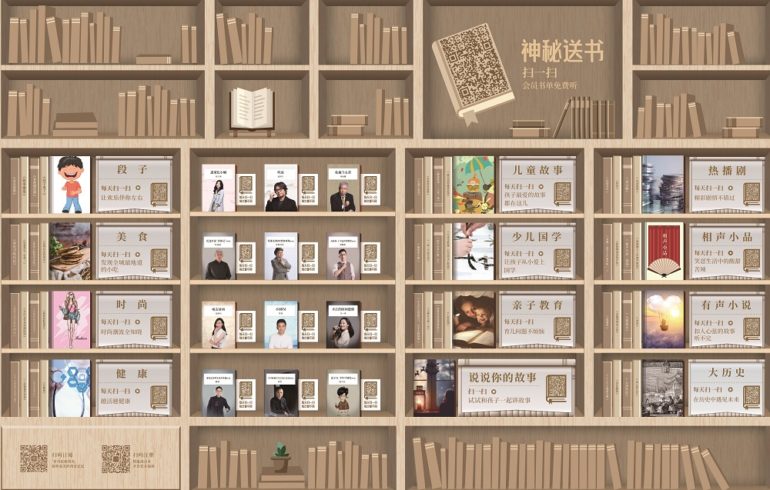
    CityOn.Xi’an creates a real-life library setting through its infrastructure development. Customers just need to scan the QR code upon entrance of the audio library, and they can gain access to Himalaya’s different free audio book channels created exclusively for CityOn.Xi’an customers. The wide variety of selection includes literature, education, food and beverage, travel, fiction, etc. allowing customers to enjoy extraordinary audio entertainment as they shop or dine.

    In addition, the best-seller reads that are popular among young customers that would normally require payment such as ‘Ma Dong’s Career Plan B’ or ‘Kevin Tsoi’s 201st EQ Lesson’ are free to listen for customers in CityOn.Xi’an. To provide a better interactive experience, CityOn and Himalaya exclusively created ‘audio card’, where customers at CityOn.Xi’an can design and customize their own audio greeting cards to send blessings to their loved ones just through a scan of the QR code.

    CityOn.Xi’an’s extensive collaboration extends beyond offline to online, where customers are offered a brand-new way to receive messages from the mall. CityOn.Xi’an utilizes Himalaya’s platform to create an exclusive radio channel for CityOn.Xian, enabling customers to receive messages, member benefits, brand details, and customer service information immediately. Customers can either use offline QR code scan or manual search on Himalaya APP to gain first hand information on the happenings of CityOn.Xi’an.

    The breakthrough approach completely transforms communication between a shopping mall and customers, where message delivery is now easier and livelier.

    CityOn.Xi’an’s General Manager Xu Jing Dong said, “CityOn.Xi’an has always been at the forefront of new retail and has achieved numerous firsts in the nation. For example, CityOn.Xi’an innovatively implemented APP technology in a wide variety of services, such as launching the world’s first offline experience store for DiDi, China’s first SF Express delivery customer service store, and the first to have a smart electric bike stop, motorcycle charging facility, and Ponycar flagship store in China’s north-west region.

    These O2O collaborations have brought CityOn.Xi’an and customers closer together, successfully converting online traffic to offline footfall and achieved record-breaking performance in customer traffic and sales.

    ‘Audio Library’ represents CityOn.Xi’an’s mission of being customer-centric and innovative, striving to be the commercial landmark of Xi’an and the whole of China’s north-west region. The collaboration truly reflects CityOn.Xi’an’s commitment and effort in bringing outstanding retail experience to customers through partnerships with different third parties, and to set the benchmark of customer service in the industry.

  • SsangYong Motor rehires 60% of its workers

    SsangYong Motor rehires 60% of its workers

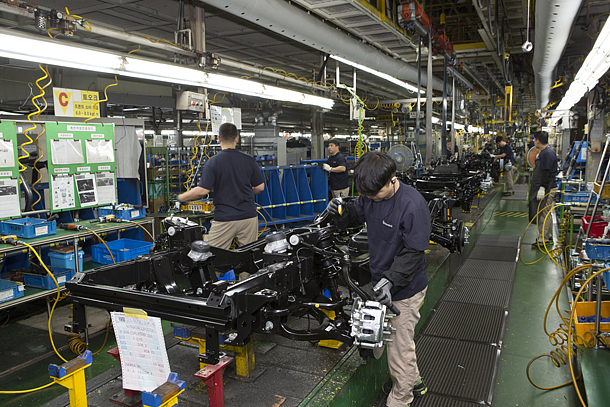
    SsangYong Motor said Monday that it has rehired 60 percent of workers who were sacked amid the carmaker’s restructuring efforts over a decade ago. The maker of the Rexton and Tivoli SUVs has been mired in protracted disputes with those who left the company against their will in 2009 after it was placed under court receivership. At that time, 900 workers who carried out a strike at the company’s main Pyeongtaek plant in Gyeonggi were ordered to choose between unpaid leave or voluntary retirement.

    Those who decided not to pick either option were later fired.

    In 2013, the 454 workers who had chosen unpaid leave were all reinstated, but the 165 fired workers were not permitted to return to work.

    After a series of negotiations in 2015, the company and its union agreed to gradually reinstate the fired workers, although some were left out of the agreement.

    In September 2018, the company and its union reached an agreement to rehire the remaining 119 fired workers by this year.

  • Samsung Heavy lands $189 million LNG carrier deal

    Samsung Heavy lands $189 million LNG carrier deal

    Samsung Heavy Industries said Monday that it has clinched a deal worth 210 billion won ($189 million) to build a liquefied natural gas (LNG) carrier. The contract, with a European shipper, calls for Samsung Heavy to deliver the vessel by March 2021, the company said in a regulatory filing.

    With the latest contract, Samsung Heavy has clinched deals valued at a combined $6.3 billion so far this year to build 49 ships, including 18 LNG carriers and 13 container vessels.

  • Korean drug companies anticipate a strong 2019

    Korean drug companies anticipate a strong 2019

    Korean pharmaceutical companies are entering 2019 with high expectations as several domestic drugs are expected to gain approval from overseas regulators this year. Though the Samsung BioLogics accounting fraud scandal made 2018 a less-than-stellar year for the pharmaceutical industry, bio firms are ready to get back on their feet with new drugs and licenses.

    Daewoong Pharmaceutical is one firm hoping to get the green light for sales of a product in the United States and Europe this year. Nabota, a botulinum toxin, or botox product, was submitted for approval to the U.S. Food and Drug Administration (FDA) and the European Medicines Agency in 2017.

    Last August, Nabota became the first domestic botox product to gain sales approval in Canada after Daewoong acquired the necessary permit from the country’s health authorities.

    Green Cross is another company awaiting FDA approval. Its I.V.-Globulin SN, an immunoglobulin product that treats immune deficiencies, is being reviewed by the agency.

    Though the FDA postponed approval of the drug last September when it requested supplementary documents from the company, Green Cross is optimistic that it will eventually get the go-ahead since I.V.-Globulin SN is already being sold in both Korea and overseas markets, such as Brazil.

    SK Biopharmaceuticals is waiting for the FDA to approve Cenobamate, an antiepileptic drug. Cenobamate is the first drug for which a Korean company has applied for FDA approval independently without going through global partner companies.

    If the drug is approved, SK expects that Cenobamate will become a huge cash cow that can generate up to 1 trillion won ($898.8 million) in annual sales just in the United States. The United States is the world’s largest market for epilepsy drugs.

    Last Thursday, Hanmi Pharmaceutical filed a license application for Rolontis, a drug intended to treat chemotherapy-induced neutropenia, with the FDA through Spectrum Pharmaceuticals. Hanmi is hoping to gain approval by the first half of 2020.

    Korean drug makers are hoping to make progress with clinical trials and technology exports this year.

    Yuhan is currently working with Janssen Biotech to conduct clinical trials for lung cancer drug Lazertinib. Two months ago, Janssen purchased out-licensing rights from Yuhan for Lazertinib in a deal valued at $1.25 billion.

    One of Chong Kun Dang Pharmaceutical’s most highly anticipated drug candidates is the CKD-702 bispecific antibody, an artificial protein used for cancer immunotherapy. Given the growing interest in bispecific antibodies around the world, industry experts predict Chong Kun Dang will be able to export the drug technology as early on as the pre-clinical stage.

    Hanmi and Jeil Pharmaceutical are also expected to complete Phase 2 clinical trials for their obesity drug HM15211 and stroke treatment JPI-289 this year, while SillaJen is due to complete Phase 3 clinical trials for its cancer treatment Pexa-Vec in the coming months.

    “Domestic pharmaceutical firms have tried to venture into the United States, the world’s biggest drug market, and their efforts will lead to real results next year,” said one spokesman from a pharmaceutical firm.

  • Korean Air’s jets get name of East Sea badly wrong

    Korean Air’s jets get name of East Sea badly wrong

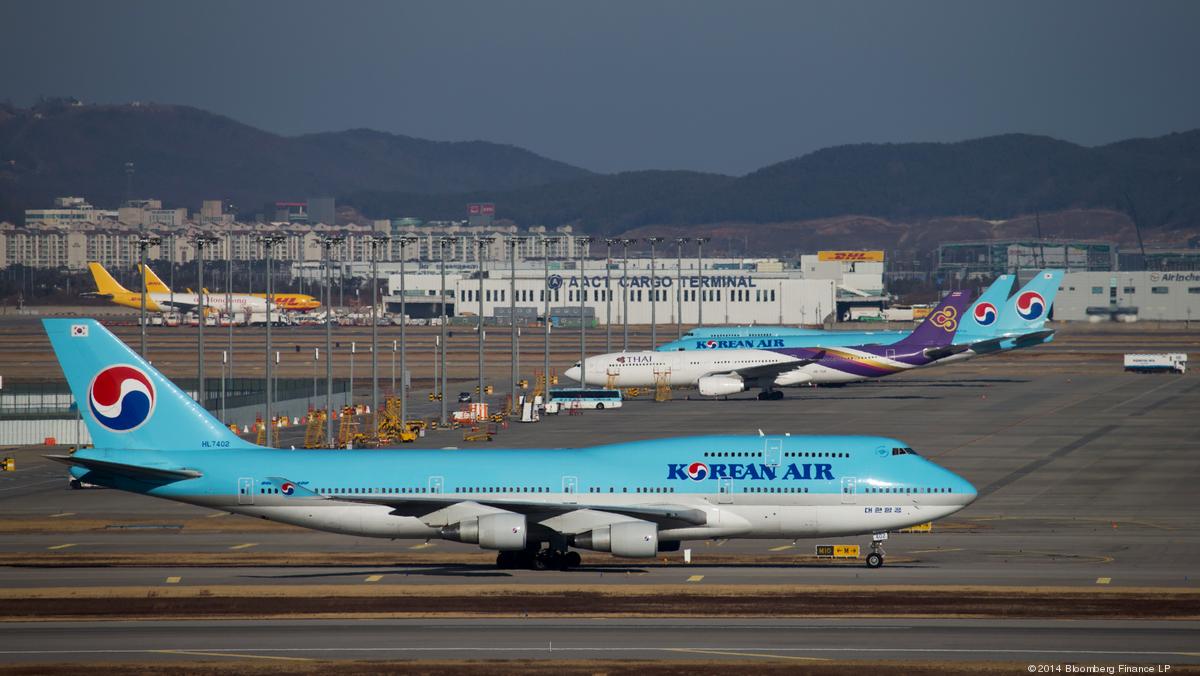
    Korean Air, the country’s flag carrier, displayed maps with the “Sea of Japan” aboard some its flights rather than the East Sea, the name supported by the Korean government. The Japanese name of the sea, which is opposed by Korea, was found on a number of passenger-entertainment monitors. According to news reports Sunday, 3-D maps on the displays aboard 787-9 Dreamliner aircraft were found to make the designation.

    Korean Air confirmed Monday that seven of its nine B787-9 planes had the problem. All other aircraft marked the location as the East Sea.

    A spokesman explained that a software upgrade was undertaken to change the maps into 3-D visuals, and that the company failed to notice the wording supplied by the developer.

    “The developer of the 3-D map is a company in the United States,” he said.

    Adjustments to replace the Sea of Japan by the East Sea in the seven aircraft were to be finalized Monday.

    “I was told that the modified version was sent to us today and delivered to the division in charge by 5 p.m,” added the spokesman, saying that the changes would be made by the end of the day.

    He said the company did not know why the other two B787-9 aircraft did not have the same problem.

    The controversy is the result of an ongoing dispute between Korea and Japan over the name of the sea located between the two countries. Both argue that their respective names had been used historically.

    Since South and North Korea first raised objection to the “Sea of Japan” name in 1992, the research on the subject has yielded conflicting conclusions.

    Korean Air received similar criticism in 2012, when its official homepage used the “Sea of Japan” name instead of the East Sea. The problem resulted from the company’s use of the Google Map service.

  • Average New Year bonuses in HCMC up 30 pct

    Average New Year bonuses in HCMC up 30 pct

    Average New Year bonus given by HCMC firms to an employee is VND3.4 million ($146), 30 percent higher than in 2018. For the 2019 Roman Calendar New Year, bonuses have been significantly higher than in 2018, Le Minh Tan, director of the HCMC Department of Labor, Invalids and Social Affairs said, citing a survey. The survey covered nearly 2,000 enterprises and 415,000 workers.

    On average, bonuses given by foreign invested enterprises for the New Year was VND9.4 million ($403.65), 70 percent higher than the last, the survey found.

    For this Roman Calendar New Year, the highest bonus was VND500 million ($21,470), given by a foreign-invested enterprise.

    For Lunar New Year (Tet), which falls in February, the highest reported bonus was VND1.17 billion ($50,343), coming from a bank headquartered in HCMC.

    The average reward for Tet offered by enterprises surveyed is over VND10 million ($430.78) per person. Only four respondent businesses reported facing difficulties and not giving Tet bonuses for employees.

    There are still some enterprises that have not announced Tet bonuses for workers, waiting for business results. These firms plan to announce their bonuses by mid-January.

    Last Tet, the highest Tet bonus in HCMC was VND855 million ($36,718), given by an unidentified private enterprise.

  • Bamboo Airways postpones maiden flight again

    Bamboo Airways postpones maiden flight again

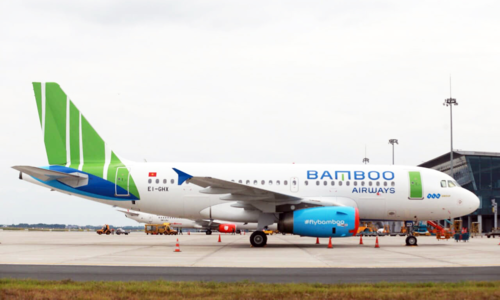
    Vietnam’s newest airline Bamboo Airways will not operate its maiden flight Thursday as scheduled, the second time it has been delayed. Its CEO Dang Tat Thanh said Bamboo Airways could not take off since it is going through “the most difficult examination ever.” “Bamboo Airways is currently going through the final stage of a tight examination by authorities before taking off,” he said, adding that the first flight would now be in mid-January. The airline aimed to launch the first flight on December 29, after failing to launch services in October as previously planned.

    The carrier, owned by conglomerate FLC, received a license last November but is still awaiting an aircraft operator certificate (AOC).

    It was established in May last year with a charter capital of VND700 billion ($30 million), which it increased two months later to VND1.3 trillion ($55.68 million).

    It has signed deals to buy 24 Airbus A320neo and 20 Boeing B787-9 Dreamliner aircraft worth a total of $8.6 billion. Earlier this month it took delivery of the first aircraft, an Airbus A319 leased from an Irish company.

    The airline plans to operate on 100 routes, connecting major cities and travel destinations in Vietnam with the rest of the world.

    FLC chairman Trinh Van Quyet said earlier that the first routes could be between Hanoi and Ho Chi Minh City and from the two cities to Quy Nhon.

    Vietnam has four other carriers still in operation: Vietnam Airlines, Vietjet Air, Jetstar Pacific, and VASCO.

  • Lifestyle-curation bookstores are changing

    Lifestyle-curation bookstores are changing

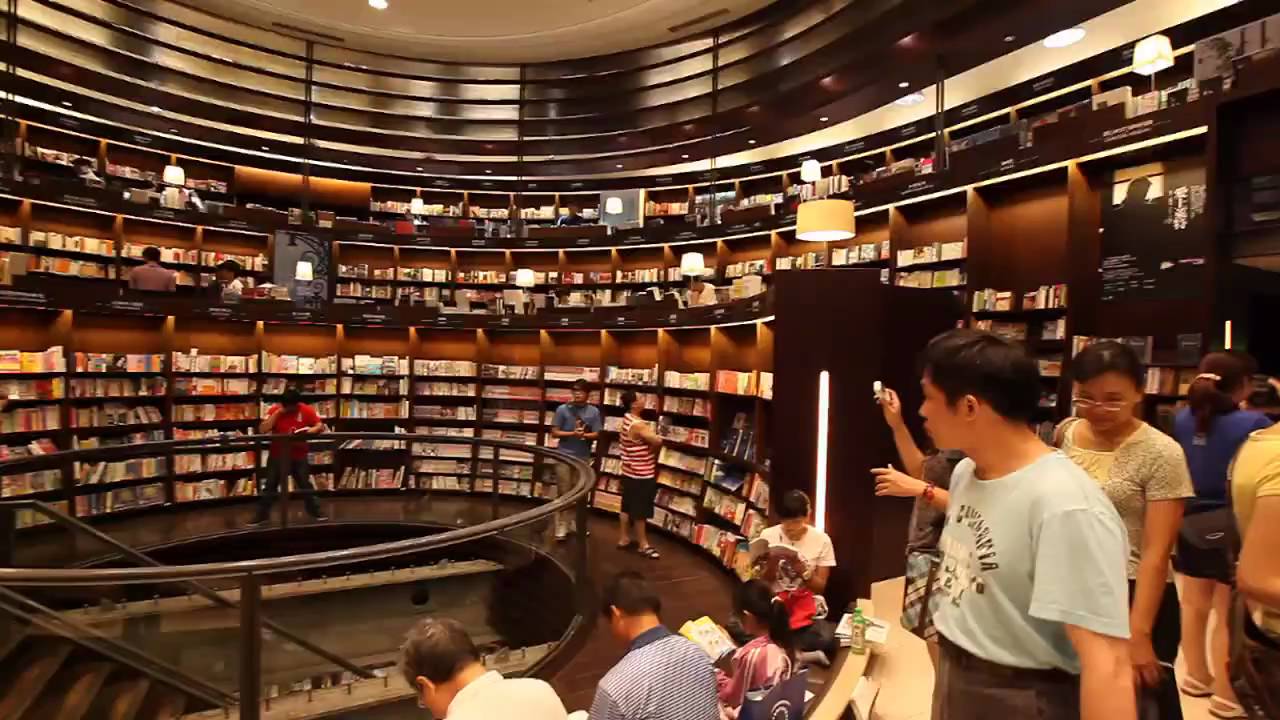
    In recent years, bookstores have been disappearing at a fast rate. Aside from major franchise bookstores in downtown areas, many small, neighborhood bookstores have closed, forced out in the digital era. But lately, bookstores have been returning in different forms. New bookstores sell more than just books, offering a wide range of goods from stationery, food and drinks to various merchandise — anything related to lifestyle.

    The trend started with the Kyobo Book Centre, the nation’s largest bookstore franchise, following the model of Tsutaya Books. The Japanese bookstore chain established a successful business model, attracting consumers who may not necessarily be interested in books with its retail products and in-store restaurants.

    The business went against the prejudice of a bookstore as a place where you a person just buys books. Providing comfortable seats for people to read, it helped create a larger reading population.

    Following Kyobo Book Centre’s success, more bookstores opened, offering more products and services than just books. They bill themselves as lifestyle-curation bookstores, or culture complexes.

    Arc N Book, which opened last month in central Seoul, deems itself as a city culture complex that introduces books and lifestyles.

    The bookstore has four themed sections: Daily, Weekend, Style and Inspiration. The themed sections provide related products. For instance, the Daily section’s theme is currently black tea. Along with related books, the section displays tea leaves and tea bags for sale.

    On Dec. 15, the bookstore bustled with visitors. While some lounged with books in hand, others photographed the well-decorated space. The “Harry Potter”-styled archway, a book tunnel, was the hottest photo spot.

    “We are strong in foreign books. Foreign-language books take up 7 percent of our books, while it is usually around 2 percent at other bookstores,” said Kim Ji-in, a representative from OTD Corp., which operates Arc N Book.

    “We have around 30,000 books, which may not be big compared to other bookstores. But we are more about curating special books that cannot be found easily,” Kim said.

    Looking at the crowded bookstore filled with people reading, taking photos or sharing quality time with friends, a question popped into mind: Do people really buy books here? You could just grab a book, sit on a comfortable sofa and read for hours.

    According to Arc N Book, sales have been steadily growing since its opening. With encouraging results, the corporation will open another bookstore in Seongsu-dong in eastern Seoul in January. The bookstore, however, aims to be about more than just sales.

    “As a business, we, of course, have to create profit. But it’s not just about that,” Kim said. “We hope to curate a lifestyle, to show people a new way of living and reading.”

    Another question: Does the popularity of such bookstores really mean the reading population is increasing? At Arc N Book, it is clear not everyone comes to read. Some lay not even a single finger on the books.

    “At least these kind of places make people actually go to bookstores. Without these places, people will not be exposed to books at all,” said an official from GimmYoung Publishers, a big player in the publishing industry here.

    “Though they might not buy books right away, they experience the reading culture and learn that people read for leisure. In the long run, they can become future consumers,” the official said.

    Though a similar bookstore, the atmosphere at Choi Ina Books is quite different from that of Arc N Book. It is much quieter, less crowded — more of a library-like atmosphere.

    The bookstore in Seolleung, southern Seoul, is small in size but that doesn’t mean that its book curation ability is weak. Rather, it is all about professional curation here.

    In the publishing industry, Choi Ina Books is one of the most popular bookstores in Seoul. Choi, who retired as a copywriter at Cheil Worldwide, a major advertising firm in Korea, opened the bookstore to share her perspectives and inspirations with the wider public.

    Books in the curated section have been selected by Choi and professionals in the advertising industry. The books also come with handwritten cards that explain why the particular book was chosen and a simple profile of the recommender.

    Here, only purchased books can be brought into the in-store cafe upstairs.

    For those who don’t seek ownership, though, another reading space is available downstairs. It’s a library decorated like the private study of a well-cultured intellectual.

    The library can be used at a price of 14,000 won (US$12.40) for an hour or 22,000 won for two hours. The price includes a cup of coffee and snacks. Though a bit pricey, the space is frequented by office workers in the area seeking some alone time during the day, according to the bookstore.

    Another example of this ilk could be the Hyundai Card libraries. The credit card company currently operates four library-concept establishments across Seoul, each centered on different themes: cooking, travel, design and music.

    Built to be hubs of inspiration and thought in their respective fields, the establishments curate diverse books, including foreign specialty publications that cannot easily be found in Korea. They are open exclusively to Hyundai Card members.

    Though billed as libraries, the establishments neither lend books nor sell them. The books can only be read at the libraries, which also run various programs related to their respective themes.

    For instance, the Cooking Library runs cooking classes as well as self-cooking sessions. The Design Library and Travel Library offer talk sessions. At the Music Library, visitors can also learn to use the deejay booth.

  • Saigonese spend $11.5 a month on convenient food and drinks

    Saigonese spend $11.5 a month on convenient food and drinks

    Each Saigon resident spends $11.5 on average per month on convenient foods and drinks, a consumer research firm says. The product groups most often chosen by consumers are non-alcoholic drinks, nutritional beverages, confectionery and snacks like instant noodles, sausages and pies, according to a study on Saigon consumers’ out-of-home (OOH) spending.

    The study was recently done by Kantar Worlpanel, an international company dealing in consumer knowledge and insights.

    On average, Saigon residents make around 8 or 9 out of home trips for these products a month.

    This study also shows that product selection and external spending patterns are clearly differentiated by gender. Women, especially students, often spend money on milk tea, while men and the seniors prefer coffee. Consumption of carbonated soft drinks, energy drinks and bottled water are highly skewed towards teenagers.

    Coffee shops and tea shops are the most popular places, chosen by 45 percent for those going out for OOH drinks, most of whom are aged 30-39. The remaining channels are convenience stores, restaurants, supermarkets, shopping malls and traditional channels such as markets and pavement shops.

    Previously, market research firm Decision Lab had published a report on spending trends of target groups born in 1995 and later (Generation Z). It is estimated that Vietnam has more than 14.4 million people in this age group, with above 56 percent of them having no income or earning less than VND3 million ($129.12) per month.

    Despite the modest income and large dependence relying on their families, average monthly OOH spending by this generation is VND892,400 ($38.41), almost four times that of the average Saigon resident, the report said.

    On average each month, the total amount spent by this age group on eating and drinking was nearly VND13 trillion ($559.56 million).