Tag: Living

  • Samsung to sell latest generation chip to IBM

    Samsung to sell latest generation chip to IBM

    Samsung Electronics will supply next-generation microprocessor chips to IBM, which will use the chips for artificial intelligence (AI) computing and cloud system applications, both companies said Friday. The product Samsung will manufacture for IBM is a seven-nanometer processor made by extreme ultraviolet (EUV) lithography technology. The seven-nanometers in the name refers to the width of the circuit through which electricity flows on the semiconductor. The dominant product until recently has been rated 10-nanometer.

    Narrower circuits ensure faster data processing speeds, less electricity consumption and higher area efficiency, with more transistors printed on a given amount of silicon, the base material for semiconductors.

    IBM said in a press release that the strategic partnership will position the two companies to lead “the new era of high-performance computing specifically designed for AI.”

    “IBM selected Samsung to build our next generation of microprocessors because they share our level of commitment to the performance, reliability, security and innovation that will position our clients for continued success on the next generation of IBM hardware,” said John Acocella, vice president of Enterprise Systems and Technology Development for IBM Systems.

    The U.S. company and Samsung have been research and development partners for 15 years.

    For Samsung, the deal is a significant milestone for its foundry business, which is to manufacture semiconductors for external clients that do not have chip fabrication facilities.

    The company is already a leader in DRAM and NAND memory chips, but it is now focusing on the fast-growing foundry market. IHS Markit estimates that the subsector will grow an average of 7.8 percent a year until 2021-which is faster than 5.3 percent expected for DRAMs and 6.1 percent for NANDs.

    Samsung is currently ranked global No. 4 among foundries, with a market share of less than 10 percent. As it works to climbing up the rankings, a client like IBM helps establish momentum for future deals.

    In February, Samsung signed a foundry deal with Qualcomm to supply seven-nanometer processors for 5G mobile devices. The company hopes the seven-nanometer processor chip will help as it works to expand its market share. It is currently one of two foundries known to manufacture the product. The other is Taiwan Semiconductor Manufacturing Company, the No. 1 semiconductor foundry with more than 50 percent market share.

    Samsung’s EUV lithography technology was developed earlier this year to mass produce seven-nanometer semiconductors, as the conventional way of printing circuits on 10-nano chips were not sophisticated enough to print thinner circuits.

    A new facility specializing in EUV lithography is under construction at Hwaseong, Gyeonggi, and is due for completion by the second half of next year. Samsung also revealed in May that it plans for the mass production of three-nanometer processors by 2020.

  • Grab eyes stake in Vinasun, taxi company refuses to play ball

    Grab eyes stake in Vinasun, taxi company refuses to play ball

    Grab’s surprise offer to buy a $2.78-million stake in top taxi company Vinasun has failed, with the latter asking to end negotiations. The negotiations between the two firms began earlier this month for compensation claimed by Vinasun from the Malaysian ride-hailing firm after the People’s Court of Ho Chi Minh City yet again adjourned hearing of a suit Vinasun had filed last year.

    A Vinasun spokesperson told the court following the latest resumption of the trial Wednesday that his firm had declined the offer since Grab had not made an appropriate offer. “We don’t want to continue the negotiations.”

    But Grab does not want the lawsuit to continue.

    Its spokesperson said: “We have become very tired during the 17 months of this trial for damages we did not cause. We do not want Vinasun to waste its time on this meaningless lawsuit. We consider the proposal to buy Vinasun’s stake an investment activity, and we expect to cooperate with Vinasun to end the case in a good way.”

    Vinasun filed the suit against Grab in June last year, accusing it of abusing the Ministry of Transport’s pilot scheme and committing violations.

    It said Grab’s illegal activities were responsible for nearly VND42 billion (nearly $1.8 million) of the VND76 billion ($3.25 million) worth of losses it had suffered in 2016 and the first half of 2017.

    The trial began last February, but was adjourned a month later to allow for more evidence to be gathered. Grab had protested against the value of Vinasun’s losses.

    Last October prosecutors asked the court to accept Vinasun’s petition for compensation of nearly VND42 billion, rejecting Grab’s claim it was a tech firm and not a taxi company.

    Grab responded by writing to Prime Minister Nguyen Xuan Phuc to say that identifying it as a taxi firm would be “a step backward from Industry 4.0.”

    The latest draft of a transport ministry decree requires firms offering taxi services to register as taxi firms before they can apply ride-hailing technologies.

    This means that Grab and other ride-hailing firms have to register afresh as taxi businesses and comply with legal requirements related to operating licenses, drivers’ profiles and taxes.

  • WeWork to hold big pitch contest

    WeWork to hold big pitch contest

    WeWork in Korea will hold the Creator Awards, a regional pitch competition, in partnership with the Seoul city government next February. It is the first time the global office-sharing company is hosting the competition with a city government. Seoul is expected to help in the event’s promotion.

    On Wednesday, WeWork announced the date and location for the Seoul Creator Awards, saying it will be held Feb. 28 at Dongdaemun Design Plaza, eastern Seoul.

    The award categories are performing arts, non-profit and business venture. Both WeWork and non-WeWork members can apply to participate in the competition, with a Jan. 10 deadline for submissions.

    In the performing arts and nonprofit categories, winners will be awarded up to $72,000. The entrepreneur award will top out at $360,000.

    ”We are all looking forward to be blown away by the innovative ideas and projects of enthusiastic creators at the Seoul Creator Awards that will make a real difference in the world,” said Matthew Shampine, general manager of WeWork in Korea.

    WeWork opened seven new locations in Korea this year and now has 11 buildings in the country. As of this month, it is an office provider to 1,500 companies in Korea. WeWork’s local team is growing rapidly, rising from 30 employees at the beginning of the year to around 160 today.

    “In 2019, we will continue to open new locations, such as WeWork Seomyeon [in Busan] and WeWork Hongdae, accelerating our expansion into new areas across Korea,” Shampine added.

  • Vietnamese prefer fresh food by far to processed items

    Vietnamese prefer fresh food by far to processed items

    Vietnamese citizens spend three times more on fresh food than fast-consumer moving goods (FMCG), a new survey says. A family in urban Vietnam spends about VND1.1 million ($47.12) on fresh food a month, according to the recent survey by market research firm Kantar Worldpanel Vietnam.

    The survey polled over 2,000 households in Hanoi, the central city of Da Nang, Ho Chi Minh City and southern Can Tho City, and over 1,000 households in various rural areas across Vietnam.

    Fruits top the spending category in fresh food, accounting for 19 percent of the total, while vegetables come second at 11 percent. The rest goes to meat, seafood and rice.

    The traditional market remains the favorite shopping outlet for Vietnamese people, accounting for 85 percent of total spending on fresh food.

    Vietnamese people spend VND930,000 ($39.81) per week on fresh food at traditional markets, mostly on meat and seafood.

    Although locals spend only VND220,000 ($9.42) per week on fresh food at supermarkets, the figure shows a 28 percent growth over last year. Most of the supermarket spending is on fruits and processed food.

    Fresh food and FMCG make up the majority of Vietnamese people’s spending at 26.8 percent last year in the cities and 25.9 percent in rural areas.

    With rising incomes, Vietnamese people, especially in the cities, have been spending more on education and health, the report finds.

    The share of spending on education by urban families increased from 10.8 percent in 2012 to 12.9 percent last year, while spending on health grew from 3.5 percent to 3.9 percent in the same period.

    The report also finds that Vietnamese consumers accord top spending priority to food safety, health and environmental issues/disease.

    The majority of survey respondents, 96 percent, are confident that their spending capability will be stable or increase in upcoming months, and 86 percent expect the Vietnamese economy to be stable or grow stronger in the near future.

  • LOTS to cheer for the Cash & Carry business in India

    LOTS to cheer for the Cash & Carry business in India

    LOTS Wholesale Solutions recently unveiled its second Cash & Carry wholesale distribution centre in India at Akshardham in East Delhi. The launch of LOTS’ second store follows closely on the heels of its first store three months ago. Inaugurated by Amitabh Kant, CEO, NITI Aayog, this is second of the fifteen distribution centres that the firm is aiming to open in India over the next three years.

    The newly launched store will cater to over 45,000 registered business customers, which include hotels, restaurants, and caterers (HoReCa), kirana stores, corporates, MSMEs and institutions such as government agencies, educational institutes, and hospitals.

    Spread over an area of more than 53,000 sq. ft., the newly opened store has all the facilities including automatic system orders forre-stocking, predicting the demand as per customer’s behaviour, and designated goods receiving and dispatching, live bakery, among many more. Other notable features are transparent pricing, round-the-year promotions, consistent product availability, customized last mile delivery and credit facilities, all of which are tailored to satisfy the needs of its registered members.

    “We had promised to open two wholesale distribution centres in India in 2018. Today, that promise has been fulfilled. From our first store, we have exceeded the expectations we had set for ourselves. We have been getting very good response and we are getting 600-1500 walk-in customers daily. We decided to open our second store in Akshardham in view of the unfulfilled potential of the area in terms of wholesale buying options. The facility is all set to cater to the requirements of our members in east Delhi and nearby catchment areas. Through this store, the business customers of LOTS Wholesale Solutions will have a wide range of more than 5,000 food and no-food products to select from. Besides, they will also benefit from customized delivery solutions, competitive pricing and personalized service through our business development associates,” Tanit Chearavanont, Managing Director, LOTS Wholesale Solutions, said commenting on the launch of the new store. With its expanding footprint in Delhi-NCR, LOTS Wholesale Solutions will generate 5,000 direct and indirect jobs over the next five years.

    The launch ceremony was presided over by the chief guest Amitabh Kant, CEO, NITI Aayog. Also present at the launch ceremony was Chutintorn Gongsakdi, Thailand’s Ambassador to India and LOTS’ global and Indian leadership team. “I congratulate LOTS Wholesale Solutions on opening its second store in Delhi-NCR. The Retail sector in India is poised for higher growth as we are growing at 8.2 percent. We have jumped 65 spot and moved up substantially in the ease of doing business. India is the only country to have repealed 1,300 regulatory laws as part of our efforts towards creating a better business environment. Indian FDI has grown 62 percent whereas globally the numbers have shrunk by 16 percent.

    This is a unique story for Indian retail and the government is pushing for greater financial inclusion and working closely with other stakeholders. Such enabling regulatory norms and liberalised FDI policy should make it easier for global companies like LOTS to invest in India and on mutually benefiting terms. We will act as a facilitator and assure them of all the support they need to excel and deliver on the demands and expectations of their customers,” said Kant.

    In recent years, India has emerged as one of the top destinations for FDI. The inflow of FDI into India has gone up significantly with receipts flowing in from across the world, which has given India access to the latest technology, best practices, and global innovations. The arrival of multinational companies like CP Wholesale Solutions in India, which has chosen a 100 percent FDI route to establish its operations in India, further vindicates the popularity of Brand India in the world. With India’s retail sector projected to grow to USD 1.3 trillion by 2020, the country is the land of opportunities for potential investors and companies looking to start operations here.

    There has been an overall growth of the Indian economy, which has increased the purchasing power of the people in rural areas opening development opportunities for the companies to expand their presence. This offers a huge potential for Cash & Carry players to target B2B customers – like kirana stores and catering to the rural audience. Also, the implementation of GST has created a favourable environment for companies like LOTS that aim to establish and expand operations across India. It rubs off positively on supply chain efficiency, uniform assortment of goods and in supporting the end consumers. Cash & Carry, also known as wholesale trade, is fast emerging in India, where Lots Wholesale competes with players such as Walmart, Metro Cash and Carry and Reliance Cash and Carry, a unit of Reliance Industries Ltd. According to Ambassador Chutintorn Gongsakdi, after the arrival of LOTS in India, business interest in the country has picked up substantially and many more companies from

    Thailand have begun making enquiries about starting operations in India. “As the Thai Ambassador to India, I have set an ongoing goal for India and Thailand to strengthen our economic relations. One target I had was to have at least two new businesses to come and start business in India during my term in office,” said the Ambassador. He remarked in a lighter vein that his task in India has already been accomplished within one and half years of taking up office. “With the registration ofCP Group’s LOTS Wholesale Solutions Pvt. Ltd. and SCG International Pvt. Ltd., I have already succeeded in meeting my target. I can go home but I have reset my target to bring in two new Thai companies per year.”

    Expressing his satisfaction and pleasure at India’s participation in Thailand’s eastern economic corridor, he observed: “Speaking on this occasion, I already know that two new businesses are in the process of registering their business in India. So things are very vibrant. I have witnessed all the hard work done by Tanit and his team with respect to LOTS’ first store. I would like to sincerely congratulate the LOTS team on the opening of the second store. To witness a Thai MNC such as CPGroup, known for great corporate governance and values, grow their business in India gives us great satisfaction and pride. India is a dynamic country with a great future and it is a moment of pride for the Royal Thailand government and myself that Thai companies are keen to play a contributory role in India’s economy.”

    Pointing out that the opening of the LOTS’ second store reflects the ongoing rise of Thai businesses in India and is proof of T ai investment successfully flowing into India, Ambassador Chutintorn Gongsakdi said: “LOTS and CP Group’s success will, in turn, have a halo effect on other companies in the CP Group and other Thai businesses wanting to enter India. As ambassador, I am pleased to see the full potential of Indo-Thai economic relations being developed through the engagement of CP Group and other Th ai MNCs and SMEs and also vice versa from the Indian side.We have now around 28 Thai companies in India and the 28 will soon be thirty and more. The trend is good and The Royal Thai embassy has been receiving many expressions of interest in doing business with Thailand from the Indian side as well. I will use my office as a business matching venue to put this act together. Thanks to the eff orts of Amitabh Kant, Niti Ayog, and others in team India, the government in India has been very successful in reforming the economy and making it friendly to investors. Th is is the right time for Th ai businesses to secure their place in India’s future. And this message is not only for Th ais but other ASEAN and other nationalities as well. It’s not too late to be in India and startnow but in another five years it will almost be too late. Thailand is ranked 26 in the ease of doing business and we also off er a very friendly setting for foreign investors wishing to set up operations in our country.”

    The Indian government, on its part, is actively favouring open-door policies in investment and trade. The government is pushing for financial inclusion and working closely with ministries like Commerce, DIPP and Food Processing to bring relief to farmers by doubling their income through better yield. “It is our vision to make India an ideal place for large format business groups to set up shop and contribute to the growing demands of our growing nation. I am impressed that LOTS with its values of “local love” and principles of 3Cs – country,community and company – is not just about profit making but also about focusing on contributing to the society in equal measure. My compliments to LOTS Wholesale Solutions for opening two wholesale stores within a span of three months,” Kant said.

    In India, LOTS is committed to invest over Rs 1,000 crore in the first five years and its plan of opening 15 wholesale distribution centres across northern India has already started taking shape. Within a span of one year of signing the Memorandum of Understanding (MoU) with the Ministry of Food Processing Industries, the company – CP Wholesale India Private Limited – was incorporated, LOTS brand was launched and two stores have started operations already. It plans to open a third one in Noida by the end of this financial year. Because of the real estate challenges in the country, the company has decided to open 25,000-50,000 sq. ft. stores inside the cities instead of outskirts. “If we build centres out of the city, it is very difficult for the people to travel. Th at is the reason why we continue to focus on building stores where the catchment is,” said Tanit.

    The company, which invests on average Rs. 60-70 crore in one centre, is also looking at opening stores in Lucknow, Kanpur, Varanasi, Jalandhar, and Kolkata. For the next 2-3 years, the company will continue to add more stores in north India as a part of its expansion plans and intends to have a national footprint in 10 years time. Besides, the company also plans to adopt the omni-channel system for integrating online sales channel with its brick and mortar stores and is also exploring the idea of having dark stores/fulfilment centre in India.

    “With regulatory changes like GST, demonetization, RERA and the Make in India policy bringing about a higher organization on the Indian retail scene, there is no time like the present for retailers from across the world to venture into the country and invest. Our parent company Siam Makro has defi nitive expansion plans in the ASEAN region and owing to a positive regulatory environment, India is the first on our list. We see a lot of potential and the right type of investing and retailing environment in the country, which is why we were ready to take the lead here,” said Sameer Singh, Director – Operations, Business Development and Expansion, LOTS Wholesale Solutions.

    He added that LOTS follows a cluster approach. The brand sets up stores basis the supplier/ customer base so that it can provide them with a hassle-free experience and build a robust supply chain and make the delivery process faster. “Our parent company Siam Makro has evolved into several separate store formats and we are bringing all these formats and this knowledge to India, ready to explore both large or small sizes and even multilevel sizes. We can look at different sizes, which could help us at different levels. It gives us that excitement to be part of the catchment itself, otherwise we might be stuck on a certain format,” explains Singh.

    This catchment-specific approach is extended to the daily needs and grocery sections of the product range of LOTS as well. All efforts are made to source fresh produce from local farming community, which helps farmers earn better while reducing wastage during transportation and storage.

    According to Singh, LOTS offers solutions to member companies, which help them undertake a path of sustainable growth. Our product selection is based on detailed research that is specific to the region as well as the community. A critical element is to provide support to the home-grown brands – an essential component of our region-specific business strategy. Therefore, apart from engaging with international brands, we are working very closely with Indian brands and local farmers.”

    Taking pride in working with the local community and giving back to society, LOTS has joined hands with farmers in Bhatinda to help them adopt progressive farming methodology. In addition to that, the company is committed to sourcing fresh produce from the local farming communities, share know-how and packaging and storage so that farmers can reduce wastage during transportation and storage and increase their income. The company hopes that its efforts will help to develop the agricultural sector in India.

    At the same time, LOTS is focused on customers’ needs and satisfaction. The company brings specially curated assortments, categorised into food and beverages, kitchenware, household appliances, home decor, furniture, bedding, textiles, stationery and office supplies, electronic products and others; making LOTS Wholesale Solutions a complete one-stop shop. Th e company also offers a varied set of benefits to its members, including a wide range of product selection at its stores, based on detailed research specifically catered to the catchment area and market demand. Th e company, which currently has a customer base of around one lakh members,will also offer its support to home-grown brands and local suppliers and is looking to turn profitable in the next five years.

    “We place our customers at the core of our business and aim to provide a hassle-free shopping experience, making LOTS Wholesale Solutions a one stop shop for all their business needs. We aim at sourcing our products from not only top international brands but also Indian brands as well. Additionally, we believe in supporting the local community so that they flourish without support,” emphasised Tanit Chearavanont.


  • Vietnam’s largest oil refinery begins commercial operations

    Vietnam’s largest oil refinery begins commercial operations

    The Nghi Son Refinery began commercial operation Sunday, and is expected to meet about 40 percent of domestic petroleum demand in 2019.

    Speaking at its inauguration, Prime Minister Nguyen Xuan Phuc emphasized the key role of the project.

    The refinery will process 200,000 barrels of crude per day in the first phase, equivalent to 10 million tons a year, double the capacity of Dung Quat, Vietnam’s only other refinery, in the central Quang Ngai Province.

    Situated in the Nghi Son Economic Zone, 200 km south of Hanoi in the central province of Thanh Hoa, Nghi Son is expected to hit 80 percent of capacity next year.

    According to the Thanh Hoa People’s Committee, last June the refinery was already capable of 10 refined petroleum products such as liquefied petroleum gas, gasoline A92, A95, diesel oil, and kerosene.

    As of December the plant has processed around five million tons of crude.

    Nghi Son together with Dung Quat is expected to meet 80-90 percent of domestic petroleum demand, reducing Vietnam’s dependence on imports.

    The $9 billion refinery is 35.1 percent owned by Japan’s Idemitsu Kosan Co, 35.1 percent by Kuwait Petroleum, 25.1 percent by state-run PetroVietnam and 4.7 percent by Mitsui Chemicals Inc.

  • H&M HOME to open concept store on London’s Regent Street in 2019

    H&M HOME to open concept store on London’s Regent Street in 2019

    H&M HOME will be opening the new Concept Store in central London in Spring 2019: at 208 Regent Street. The new H&M HOME Concept Store covers approximately 700 square metres across two floors and will offer the full assortment, the newly launched range of furniture, lighting and the Classic Collection.

    First launched earlier this year across five European markets – Denmark, Sweden, Norway, Germany and UK – including first stand-alone store in Westfield London (White City), the aim of H&M HOME concept store is to be an inspiring interiors destination that will bring together the latest products from the full H&M HOME assortment, as well as a selection of pieces from a curated selection of other brands.

    “Our H&M HOME concept stores complement to our digital offering by offering personal service from H&M HOME colleagues, and allowing our customers to interact with the products in an inspirational environment. We are investing in a next level customer experience, and we could not have hoped for a better location for our upcoming concept store. We are very proud to be a part of the legendary Regent Street,” says Anders Sjöblom, Managing Director of H&M HOME.

    The exact opening date and full details of the products, services and experiences that will be available at H&M HOME on Regent Street will be revealed in the new year.

  • Signify launches Interact IoT platform in India

    Signify launches Interact IoT platform in India

    Signify (formerly known as Philips Lighting), the world leader in lighting, has launched its new Internet of Things (IoT) platform, called Interact in India, which will enable its professional customers to unlock the full potential of connected lighting for the IoT.

    The platform delivers new insights to help customers drive operational efficiencies and take more effective decisions. It also supports the company’s strategy to deliver new data-enabled services as value expands from lighting products and systems to services.

    Signify has already installed 29 million connected light points worldwide and plans for every new LED product it produces to be connectable by 2020. This growing number of connected light points, sensors and devices, as well as systems, can collect large volumes of data for which Interact was designed to handle. The highly secure, scalable cloud-based Interact platform uses sophisticated and modern data management and data processing capabilities, including machine learning, to bring sense to all manner of data – creating data-enabled services for customers that will deliver benefits beyond illumination. It also offers a growing suite of licensed open application program interfaces (APIs) which will foster innovation from third-party developers, development partners and customers, enabling various data enabled services to be developed.

    A typical example of such a service is occupancy data from different buildings, combined and analyzed to help managers to understand and predict how people use office space. Such insights can help deliver savings by optimizing the use of existing office space and support better designed, more efficient buildings.

    In addition, data from authorized third-parties can also be analyzed by Interact. For example, for a municipal authority, news articles and social media posts, reacting to a new lighting installation on a bridge, can be analyzed and data sent to a social impact app dashboard that summarizes the public sentiment.

    Launching the platform in India, Sumit Padmakar Joshi, Vice Chairman and Managing Director of Signify’s operations in India said, “First, we led the way in energy efficient LED lighting, then in connecting lighting to deliver operational benefits for our customers. Now that light points are smart enough to collect data on their performance and the environment around them, we are tapping into that intelligence. By analyzing the data from our connected lights, devices and systems, our goal is to create safer cities, energy efficient buildings and industries and smarter retail stores in the country. We are confident that this platform will deliver immense value for our professional lighting customers in India”.

    Interact connected lighting systems

    These connected lighting systems, offering a unified user experience, feature applications that address industry-specific verticals. Available now are:

    – Interact Office – enables you to turn your office into a smart sustainable workspace with software that allows you to increase building efficiency and employee productivity.

    – Interact City – helps improve street lighting, safety, reduce energy consumption, improve efficiency and support your sustainability goals and beautify the urban landscape across roads.

    – Interact Retail – enables customers to group, zone and schedule connected lighting to create stopping power in stores. It also supports in-store location-based marketing services to increase shopper engagement and indoor navigation to improve staff productivity.

    – Interact Landmark – aids in managing and triggering light shows with dynamic architectural lighting to help increase tourism, regenerate downtown areas, and stimulate commerce.

    – Interact Sports – aids in monitoring, managing and coordinating across all lighting infrastructure from a single dashboard from pitch lighting, entertainment light shows, hospitality areas and exterior architectural lighting.

    – Interact Pro – an intuitive cloud-based software for small and medium enterprises that automates lighting and allows management via the Interact Pro dashboard.

    Signify became the new company name of Philips Lighting as of May 16, 2018. The legal name of Signify will be adapted in India in the beginning of 2019.

  • Garuda Indonesia Expects to Make Profit in 2018: CEO

    Garuda Indonesia Expects to Make Profit in 2018: CEO

    National flag carrier Garuda Indonesia expects to end 2018 in profit and is targeting a net profit of Rp 1 trillion ($69 million) for 2019, its chief executive said on Friday. Garuda saved $96 million by working with lessors to restructure the financing of its planes until November 2019, chief executive Ari Askhara told reporters.

    “Our net profit for 2018 is positive, even though it might be a small amount,” he said, attributing the result to cost-cutting, renegotiation of aircraft leases and new partnerships.

    The result would be a marked improvement for the airline, which reported a $116.86 million net loss for the first six months of 2018. Ari declared in September that Garuda had abandoned hopes of making a profit this year, after struggling with fuel costs and a rising rupiah versus the US dollar.

    The new partnerships include Garuda taking operational control of rival Sriwijaya Group in November, gaining a majority share of the fast-growing domestic aviation market.

    That partnership could be escalated to a 51 percent share ownership of Sriwijaya, depending upon discussion with Garuda advisors and the Ministry of State-Owned Enterprises, Ari  told a media briefing. Garuda’s profit had yet to see a positive boost from Sriwijaya, he said.

    “Garuda might also see a partnership with [Malaysia’s] AirAsia … through [Garuda unit] Citilink but it’s very early,” he said.

    AirAsia president director Dendy Kurniawan confirmed in a statement that early talks with Garuda were underway, with “various forms of cooperation to support the industry being discussed,” but noted no final decision has been reached.

    Garuda has been battling for market share against local market leader Lion Air, which in October suffered a crash of a Boeing 737 MAX jet, killing all 189 people on board.

    Ari said Garuda had 30 million passengers in 2018 and would expand its fleet to include a new Airbus SE 330neo in September 2019 and a 737 MAX jet at the end of 2020.

    New profitable routes domestically and internationally are planned for 2019, he said.

    Ari also said an intended private placement of shares from subsidiary Garuda Maintenance Facility AeroAsia to longtime partner Air France Industries KLM Engineering & Maintenance had been canceled.

    He said that he considered the current share price of GMF AeroAsia too low and wanted to increase the company’s valuation first.

    Ari said GMF Aeroasia would partner with Dunlop and China Construction Indonesia to build a tire plant in 2019, with the first stage seeing a $300 million investment from the companies involved.

    The plant would be for the domestic market and supply 50 percent of its output to Garuda, 48 percent to Lion Air and 2 percent to AirAsia Group.

    Domestic air traffic more than tripled in Indonesia over the past decade as rising prosperity and lower fares made flying affordable for more people.

    With 129 million passengers in 2017, the Southeast Asian country is the world’s 10th-largest aviation market and is projected to continue growing.

  • UK-based international chain bar Toy Room enters India

    UK-based international chain bar Toy Room enters India

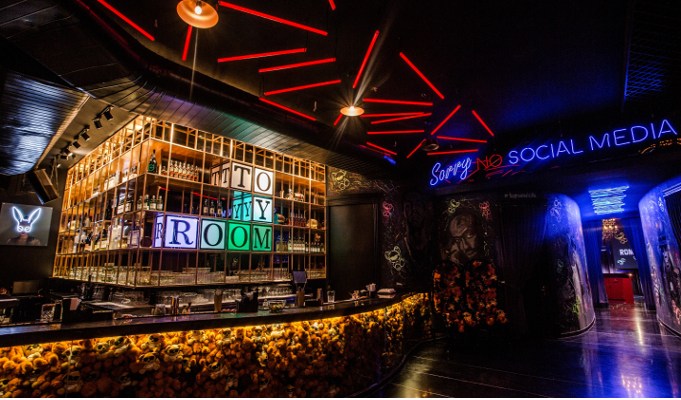
    Toy Room, one of the most talked-about premium and international brand which has attracted visits from A-listers around the world including Jessie J, Lindsay Lohan and Nicole Scherzinger, has opened its first outlet in India in Aerocity. According to Akshay Anand, Owner Toy Room India, “Present in eight different countries, Toy Room is one of the biggest and hottest UK-based international entertainment brands with outposts already operating in London, Dubai, Istanbul, Rome, Mykonos, Athens, São Paulo and now India.”

    “This was the right time to introduce the brand in the country as food service industry is at its full-bloom all thanks to the well-informed and frequent travelling consumers,” he adds.

    Toy Room is the first international nightlife brand to enter the Indian market.

    Elaborating more about the brand, Anand says, “Toy Room is a playful, provocative, unpretentious and sexy place with a special focus on intimate hospitality and service and that is going to set it apart from other brands in the same category.”

    “With capacity for over 400 guests and a Hip-hop/ Rock ‘n’ Roll only music policy, Toy Room is derived from an urge to create an intimate setting for people to have fun,” he adds.

    Spanning across 4,500 sq.ft. Toy Room has been positioned as a finest party place that delivers an upscale nightclub experience with a focus on delivering premium hospitality, while still retaining its brand of sexy and provocative playfulness, which made it a worldwide sensation.

    The Toy Room brand internationally is known for placing children’s toys and imagery in an entertaining setting for adults, bringing together the notion of innocence alongside deviant party behaviour.

    “We are eyeing Rs 25 crore per annum revenue from Toy Room and going ahead we will be opening more outlets in Mumbai and Goa,” Anand concludes.

  • Miniso to set up warehouses in Delhi, Mumbai, Kolkata and Bengaluru

    Miniso to set up warehouses in Delhi, Mumbai, Kolkata and Bengaluru

    Japanese retail brand Miniso plans to source India-made products for its stores in the US and Australia, said a top company official. According to a report: Miniso India is also investing to set up its own warehouses in Delhi, Mumbai, Kolkata and Bengaluru to cater to its expanding network.

    “We are looking into getting more local purchase and we also want to sell Indian products to other countries,” Yang Liu, Chief Business Development Officer, Miniso Indi said.

    He further said, “We have built up a system. We do not only want to import here but also export from here to markets like Australia and the US.”

    The initial line-up of products to be sourced from India include socks and snacks, he said.

    About the local purchase, Liu said by December 2019, around one third products at Miniso India would be sourced locally.

    As per FDI norms, it is mandatory to source 30 per cent goods from India in single brand retail trade.

    “The products which are selling are not only from China but some cosmetics are from South Korea and Thailand also, and I think before the end of next year, we would be able to put our local purchase to 30 per cent,” Liu said.

    He further added that the company is working in this direction and has already signed contract with some local manufacturers.

    The company would also set up small warehouses around tier II & III cities for its new franchise stores.

    Miniso launched retail operations in India in August 2017 and clocked Rs 700 crore revenue in one year. It plans to take its store count to 800 by 2019.

    It operates around 3,000 stores in over 70 markets.

  • IKEA signs MoU to open store in Noida; create 8,000 jobs

    IKEA signs MoU to open store in Noida; create 8,000 jobs

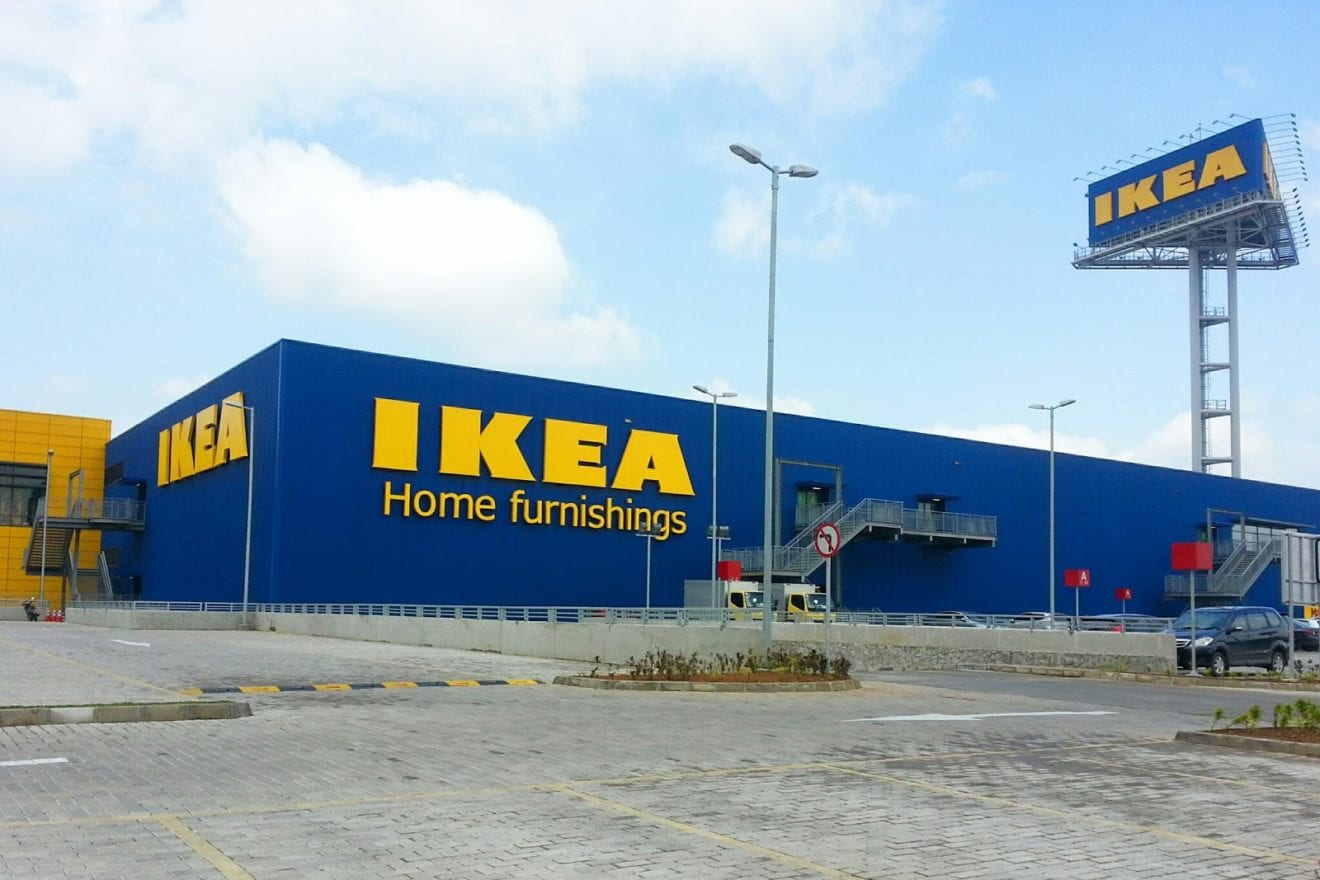
    Swedish furniture giant, IKEA, has signed MoU with the Uttar Pradesh government for the investment of Rs 5,000 crore to set up an integrated commercial project, including a store, in Noida. The MoU was signed between R K Singh, Principal Secretary, Infrastructure and Industrial Development Department, and David McCausland, Country Property Manager, IKEA.

    An integrated commercial project will be set up by Ikea at Noida, Gautam Budh Nagar. After the establishment, approximately 4,000 direct and 4,000 indirect employment opportunities will be created by this project.

    IKEA said the first store in the state is expected to come up in Noida for which the Swedish company has not yet signed any land deal.

    “The state government will provide all possible help to such investors,” the Uttar Pradesh government said in a statement on Wednesday.

    IKEA had, on September 24, 2015, signed an MoU with the UP government during the previous Akhilesh Yadav regime for launching three stores in Lucknow, Agra and Noida. The deal, however, did not move forward.

  • Vive cake boutique launches hot beverages this winter

    Vive cake boutique launches hot beverages this winter

    Embracing the joyous holiday season, celebrity-loved Vive Cake Boutique launches a selection of luscious winter drinks specially curated by Founder, Ms Vivien Lau, to pair with VIVE’s delectable sweet treats. A selection of premium organic teas sourced from Taiwan are also introduced to add to its repertoire of beverages.

    “The holiday season is one that inspires the sharing of love and joy between family and friends,” says Vivien Lau. “Our new hot drinks are ‘warm, comforting and the perfect thing to cozy up with as the weather gets colder. Pair them with our signature cakes; it is soul-warming.”

    The new non-alcoholic So Grape-ful (HK$68), is a sophisticated yet whimsical libation designed to emulate mulled wine. Made with grape juice, tangy orange and lemon zest, a dash of cinnamon, cloves, and star anise, this warm drink not only brings to mind a winter wonderland classic, but also inspires a sense of playfulness with its presentation in a classic Christmas bauble sitting in a Martini glass.

    Lovers of sweetness and tradition will enjoy the classic S’mores (HK$50) concoction. A classic hot chocolate topped with roasted marshmallows, featuring butter cake crumbs, the smooth and satisfying drink conjures the classic Christmas moment shared by family and friends in front of a fireplace.

    The chilly winter season need not only be a time exclusively for indulgences. VIVE introduces a repertoire of three organic premium teas personally sourced by Vivien Lau from Taiwan, unrivalled for its high quality teas.

    Each of these teas is recommended to be paired with VIVE’s repertoire of signature desserts. The long-lasting, mellow sweetness of the Golden Honey Black Tea (HK$42) which invokes a scent of honey, floral, fruity, and milky aroma is recommended to be paired with Berry Jolly (HK$58), a layered sponge cake with mascarpone mousse and strawberry fillings. The slight astringency of black tea will make that mascarpone mousse really sing.

    The sweet, floral, and honey-fragrant Oriental Beauty Tea (HK$42) with its unique flower and honey aroma is best paired with the Berry Almond Tart (HK$48), made with seasonal fruits set atop an almond cake base and a crisp, sweet tart shell.  The tea is light enough to not overpower the fruits, but flavorful enough to make this simple sweet treat shine.

    Tea lovers who fancy the classic clean and grassy aroma with a tinge of roast, will love the mellow and brisk taste of Alpine Roast Oolong Tea (HK$42), which leaves tea drinkers with a lingering sugar cane sweetness. This tea is best paired with Treasure Hunt (HK$58), a rich caramel glazed cake, layered with dark chocolate sponge, caramel & chocolate mousse, set on a crunchy base.  The fragrant florals of lightly oxidized oolongs will bring out the fruity and earthy flavors of dark chocolate.

    Tea-ophiles may also take these naturally grown, chemical-free teas home with them. Tea connoisseurs may enjoy Golden Honey Black Tea for a natural caffeine boost, Alpine Roast Oolong Tea, and Oriental Beauty Tea at the comforts of their own homes. The packaged tea box with priced HK$218, including 15 individual tea bags (each flavour of 5), is a perfect personal or corporate gift.

    Vive Cake Boutique has proved a roaring success story since being launched with online orders in 2014 by founder and creative director Vivien Lau, who discovered her passion and talent by chance, making her first cake for a friend’s birthday. Her signature ‘handmade with love’ cakes, cupcakes, macarons, cookies, confectioneries and tailor-made cakes for weddings and special occasions, are all made from scratch from finest ingredients sourced from all over the world.

    VIVE’s widespread acclaim includes Time Out’s listing among the “crème de la crème of Hong Kong’s bespoke dessert makers” – with a massive celebrity and socialite following including Aaron Kwok, Charlene Choi, Gillian Chung, Niki Chow, Sharon Chan, Miki Yeung, Ella Koon, Myolie Wu and more.

  • Lenovo achieves world records in fund raising event

    Lenovo achieves world records in fund raising event

    Lenovo achieves a new GUINNESS WORLD RECORDS™ title for the “Most people performing the warrior I pose (yoga) simultaneously (multiple venues)” on Sunday, 16 December 2018, across three cities doing a Warrior I Yoga pose simultaneously. Taking place at Boost in Yoga Style, a fundraising event co-organised by Lenovo and Pure Yoga, the event saw a turnout of over 600 participants across Singapore, Hong Kong and Taiwan region. Locally, 116 participated in setting the record at the National Gallery of Singapore.

    Boost in Yoga Style aimed to increase awareness on heart wellness and cardiovascular disease, and all proceeds from the event were donated to the Singapore Heart Foundation, totaling S$4,500.

    ‘This event represents a unique partnership between Lenovo and Pure Yoga and is aligned with our shared goal of enriching and enhancing lives in the community. We are glad to see such a positive turnout today and are delighted to have achieved the GUINNESS WORLD RECORDS™ title together with Pure Yoga. We hope that the money we’ve raised goes a long way in helping patients at the Singapore Heart Foundation,’ said Eddie Ang, Country General Manager, Singapore, Lenovo. ‘Partnering with a consumer-focused brand like Lenovo is important for us to deliver a differentiated experience for our members, and Boost in Yoga Style was a great way to drive awareness by leveraging the power of yoga to benefit the community,’ said Miryam Acosta, Pure Yoga Singapore.

    The GUINNESS WORLD RECORDS™ achievement is aligned with Lenovo’s shift toward becoming a customer-centric organisation with the belief that ‘different is better’, exemplified through partnerships that deliver better value and unique experiences to users.

  • GSK plans to split into 2 as part of Pfizer joint venture

    GSK plans to split into 2 as part of Pfizer joint venture

    GlaxoSmithKline (GSK) plans to split into two businesses – one for prescription drugs and vaccines, the other for over-the-counter products – after forming a new joint venture with Pfizer’s consumer health division. The revamp is the boldest move yet by Emma Walmsley, the GSK chief executive who took over last year.

    It will lead to the creation of a consumer health giant with a market share of 7.3 percent, well ahead of its nearest rivals Johnson & Johnson, Bayer and Sanofi, all at around 4 percent.

    Walmsley has previously played down the idea of breaking up the group, something that a number of investors have called for over the years.

    On Wednesday, however, she announced that GSK and Pfizer would combine their consumer health businesses in a joint venture with sales of 9.8 billion pounds ($12.7 billion), 68 percent owned by the British company, in an all-equity transaction.

    GSK said the deal laid the foundation for the creation of two new U.K.-based global companies focused on pharma, vaccines and consumer health care within three years of the transaction closing.

    For Pfizer, the deal resolves the issue of what to do with its consumer health division, which includes Advil painkillers and Centrum vitamins, after an abortive attempt to sell it outright earlier this year.

    GSK – whose consumer products include Sensodyne toothpaste and Panadol painkillers – had withdrawn from that earlier Pfizer auction process, but Walmsley said the opportunity to strike an all-equity deal cleared the way for the new agreement.

    “It’s something we’ve been able to do quickly and quietly,” she said.

    “What this deal is all about is the opportunity to strengthen two businesses – a world-leading consumer health care business, and a new GSK that is focused on pharma and vaccines.”

    Shareholders welcomed the news and the shares jumped 7 percent, with Jefferies analysts saying the future separation could crystallize value.

    The new joint venture with Pfizer is expected to generate total annual cost savings of 500 million pounds by 2022 for expected total cash costs of 900 million and non-cash charges of 300 million. GSK plans divestments of some 1 billion pounds.