Tag: Living

  • Ikea in talks to buy city-centre retail property in big European cities

    Ikea in talks to buy city-centre retail property in big European cities

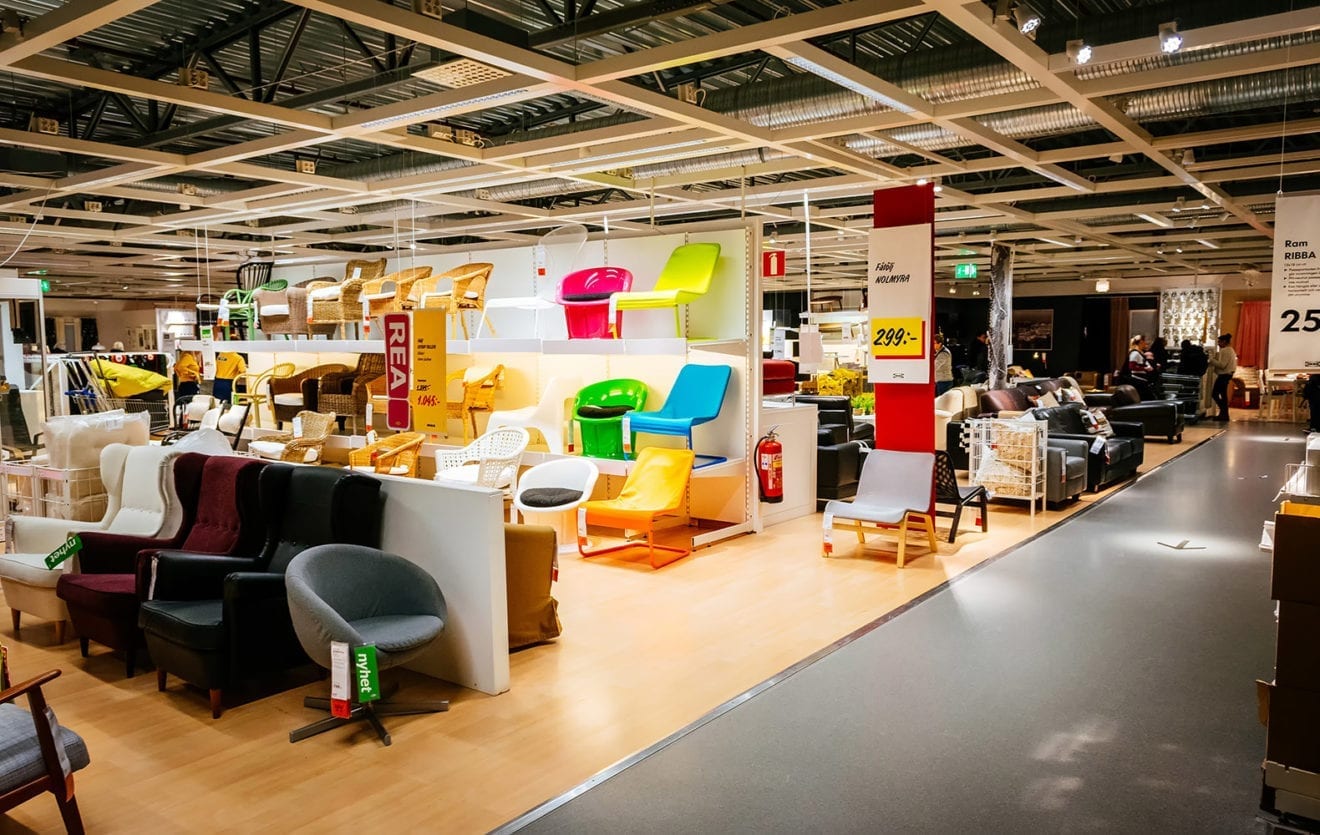
    IKEA’s Ingka Investments is in talks to buy commercial property in prime locations in several big European cities after it finalised its first-ever such acquisition last month, its managing director said.

    The investment arm of Ingka Group, which owns most IKEA stores, is pushing into the real estate market as part of IKEA’s shift towards big city-centres from out-of-town. So far, such locations are leased.

    Scouting for city-centre retail property more or less ready to house IKEA stores across Europe’s main cities, Ingka Investments’ first deal was in Paris’ Rue de Rivoli.

    “We have ongoing discussions in big European cities,” Ingka Investments Managing Director Krister Mattsson said in an interview. “It takes time to buy properties, but there is a lot in the pipeline,” he told Reuters.

    Inkga Investments is pushing ahead with the new strategy despite the wider retail market uncertainty caused by the pandemic.

    Despite the exodus from high streets prompted by the coronavirus, price tags for the kind of properties that Ingka Investments is hunting for have not tumbled, Mattsson said.

    “For good locations in big cities, which is what we are looking at to meet our customers, there is always demand,” he said. “We haven’t seen any big impact yet on prices for such properties – which one may have expected when the crisis came.”

    Besides good space for the IKEA store, buildings could also include other retail, office and even residential space, and Ingka Group would take over as landlord.

    The decision to build up a real estate portfolio stems from privately held IKEA’s long-standing strategy not to rent. Acquisitions, as IKEA’s other investments, are self financed.

    Separately, Ingka Group’s malls arm Ingka Centres is also shopping for inner-city property, albeit targeting bigger developments aimed at housing IKEA-store anchored malls. Scouting Europe, Asia and the United States, it has so far made two such acquisitions.

    Ingka Investments’ portfolios also include renewable energy and forests.

    Starting in 2017 with the purchase of handyman services platform TaskRabbit, Ingka Investments also buys into startups that may help IKEA speed up its digital transformation, improve its services, and become more sustainable. The latest addition is a stake in logistics solutions and delivery platform Mover Systems.

    Ingka Investments has to date made 23 such minority stake investments totalling more than 200 million euros ($238 million), it said. It has not disclosed the price tag for TaskRabbit and two more full acquisitions.

    Ingka Group is a franchisee to brand owner Inter IKEA.

  • Ikea proposes one-third price cut by boosting local sourcing

    Ikea proposes one-third price cut by boosting local sourcing

    Ikea India is proposing an economical solution by sourcing materials from the local market to cut down the budget, according to The Economic Times.

    The company said it is talking to the government and other players in the market to form furniture hubs. By sourcing wood locally, including Sheesham and bamboo, Ikea expects to cut prices by a third.

    The home-furnishing giant has been using wood imported from Europe.

    “We have had to accelerate our work to new categories and have had good success with metal, plastic and comfort categories, such as mattresses and sofas,” Kavitha Rao, country commercial manager of India, told The Economic Times.

    As part of its strategy to boost affordability in the India market, the brand has lowered product prices in certain categories, including chairs, toys, sofas, and bookshelves.

    “Local sourcing remains a key driver of affordability and over a third of the products under new lower prices are made in India,” he said.

    Entering India in 2018, Ikea India has increased its local sourcing from single digits to 20-25 percent. Local sourcing is a condition for many multinational companies to gain approval to open retail stores in India.

  • Ikea Korea sales growth

    Ikea Korea sales growth

    Ikea’s business in South Korea has reported 32.6-per-cent sales growth over the past fiscal year despite the impact of the coronavirus outbreak.

    The success of the retail business over the period has been attributed to a surge in interest in home furnishings as people remain at home to avoid the pandemic, according to Ikea Korea country retail manager Fredrik Johansson.

    Customer numbers at Ikea stores also increased by 31 percent during the period to 12.3 million people, with online shoppers increasing by 14 percent to 44.7 million.

    The firm has made concerted efforts to market goods at affordable prices and engage in remote sales efforts. It is also about to commence a new sustainable home-furniture marketing campaign to support climate action within Korea, along with strategies to buy back and resell used furniture to replace 20 percent of the firm’s delivery vans with electric vehicles by the end of the next fiscal year.

  • Pandemic causes steep drop in Asics revenue

    Pandemic causes steep drop in Asics revenue

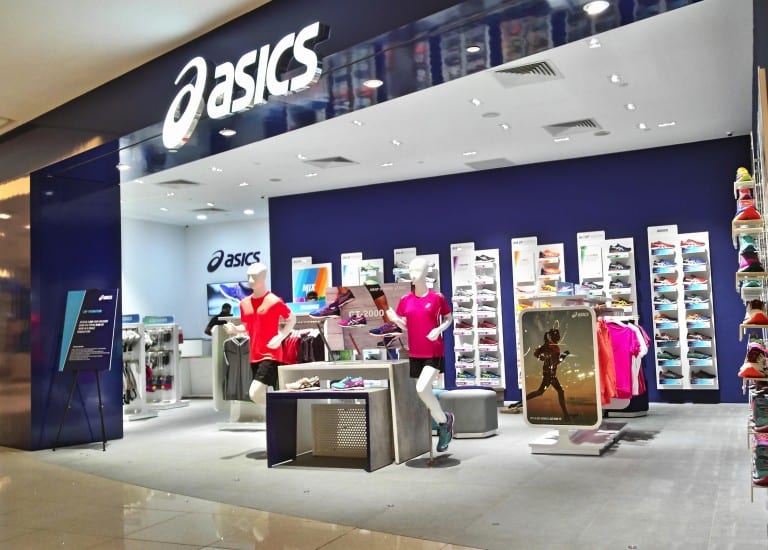
    Japanese sportswear retailer Asics has posted a steep drop in revenues as a consequence of the coronavirus pandemic.

    The firm has seen a 21.5-per-cent dip in global sales to the equivalent of US$1.4 billion in this year’s second financial quarter, and operating losses of $36.6 million against an $81.2 million profit last year.

    In keeping with a global rise in e-commerce trade heavily influenced by lockdowns and stay-at-home orders internationally, Asics saw an uptick in online sales of 139 percent for its European market – but that was not enough to prevent a fall in gross profits of 20.7 percent to $667 million.

    In its home market sales fell by 24 percent to $444.6 million, while in European sales were down 20.5 percent to $350.9 million.

  • What Makes An Amazing Neighborhood

    What Makes An Amazing Neighborhood

    When choosing a place for your new home, one of the major features to consider is the neighborhood. You’re not only just buying or renting an apartment but your lifestyle will be affected one way or another based on the surrounding environment.

    A perfect neighborhood doesn’t exist but it can be well suited to your various needs and desires. However, there are some common components to good neighborhoods that can be interpreted universally to all home movers.

    Matching Your Lifestyle

    Consider your current lifestyle. Many people with similar needs tend to gravitate to the same areas. While a suburban neighborhood in a gated community might seem like a dream to some of us, it may not be a good fit for a young single professional that is looking to champion his career. Similarly, small families may not be suitable for a small apartment in a downtown neighborhood due to the noise and excitement.

    Perhaps instead of matching your current lifestyle, you can think of the lifestyle you would like to try out or experience, or even settle down with. For example, if you’re getting married and you are getting a job in the suburban neighborhood, you might want to consider your schedule. You will probably want to spend less time having to travel to work so that you can get enough rest and start a family. In that case, it might be a good idea to choose to stay in the suburbs. If you’re in the LGBT community, you’ll want to live in a neighborhood that’s LGBT-friendly. In that case, you may want to find Fort Lauderdale, Florida Gay Realtors to help you select a neighborhood you want to live in. Surround yourself with the people you want to learn from, and have the courage to pursue that chapter in your life.

    Having Pride in Living in The neighborhood

    When you and your soon-to-be neighbors are proud of your living residences and physical surroundings, the chances for some of you to connect and create small communities are high. This can be a good sign of a good neighborhood environment as its residents are concerned about the betterment of the area.

    Safety First

    Safety will always be one of the top priorities as we want to have peace of mind in our daily activities. A neighborhood with low crime rates can provide you a form of tranquility and assurance that you and your family members can get home safe every day. While not every neighborhood may be crime-free, it will always be a good idea to check out neighborhoods with decreasing crime rates as it is a telltale sign of transitional or improving ones.

    To find out how safe your neighborhood is, do some quick research online to see what kind of crime takes place in the area and how often it happens to see if it is a neighborhood suitable for you.

    Education

    For those with children, you will need to factor in the schools in the vicinity. Good schools often make good neighborhoods. They are essential for your children to grow and mature in, add significant value to the neighborhood and push the property prices up. 

    Available Outdoor Facilities

    Having access to an exciting outdoor adventure can sweeten your experience living in your neighborhood, especially when it’s just a short walk away. Some common outdoor activities include jogging, sailing, or cycling that can help you stay healthy. Meanwhile, there are some neighborhoods that provide access to tennis or badminton courts, swimming pools, and golf courses to spice up your weekly exercise routine.

    Culture

    One of the less popular features of a good neighborhood is its culture. There’s something about a town with a history that makes it more attractive. They often have very stable longtime residents and provide support to the community, which helps keep crime rates at bay. The tree-lined streets can also provide a more established and charming feel to your daily walk home.

    Healthcare

    We’ve all experienced a terrible experience waiting in line to see a doctor. But this feeling of anguish could be made worse if there are no available hospitals or clinics in the vicinity. Try to look for neighborhoods that are close to some form of healthcare services especially when you have seniors or young children living with you.

    Family-friendly

    For those with children, it will be a good idea to find a neighborhood with lots of families. This can help make your lives a little happier as there are opportunities for your children to socialize and make lifelong friends with their neighbors. On the other hand, you will be able to have an easier time with carpooling groups and a bunch of children’s programs to provide you some time off from your kids.

    Access to Public Transportation

    Not all of us have the luxury of owning a car or a vehicle, which makes public transportation exceptionally important in this case. A commuting millennial or a retiree who prefers keeping his or her car at home might be pleased to know that there are other alternatives to traveling.

    Eat, Drink, Play!

    If you’re always finding things to do out of your home, it will be a good idea to find out if there are some restaurants nearby for a quick date option or some shopping outlets to spend your weekends at. Sometimes, it might be a bore to cook dinner every day and a change in environment will be nice.

    You should also see what facilities are near your apartments such as shopping malls, movie theatres, bars, and nightlife. This can spice up your life and a huge priority for someone that loves to enjoy a night out. It will also be pleasing to know that you will be able to get home quickly and safely from the near proximity.

    Conclusion

    Whether you’re a young adult moving out of your home or a large family, it’s always a good idea to think of your circumstances and needs before choosing which neighborhood to move into. There’s no such thing as a bad neighborhood but certain features will definitely make it or break it for you based on your needs.


     

  • Ikea Manila opening delayed after construction issues

    Ikea Manila opening delayed after construction issues

    Construction interruptions have delayed the expected opening date of the long-awaited Ikea Manila store.

    Ikea Southeast Asia has released a short video on LinkedIn summarising the company’s progress in various markets. It says that the advent of the Covid-19 pandemic meant construction had to be suspended.

    The new store, the first Ikea in the Philippines and located next to SM’s Mall of Asia, was announced two years ago and due to open this year. No set date has been given as yet, only “by next year”.

    Work has now resumed on the site after several weeks of closures due to Covid-19 situation. It appears from the video that the construction is already at the third floor of the project.

    Located in the Manila Bay area, the Ikea Pasay City occupies a 67,760sqm area which will make it the biggest Ikea store in the world.

    Meanwhile, Ikea says after a review of the Vietnam market, it now plans to open its first store there in Ho Chi Minh City, rather than Hanoi as originally planned. The country’s home-furnishing market is estimated at US$4.4 billion a year, with Ho Chi Minh accounting for a 18 percent share and Hanoi a lesser 11 percent.

    The company is also working on other infrastructures at other stores around the region such as the development of a multi-story car park and “foodwalk” at its Mega Bangna store in Bangkok.

  • Centara offers sneak preview of Centra by Centara Cha Am Beach Resort Hua Hin

    Centara offers sneak preview of Centra by Centara Cha Am Beach Resort Hua Hin

    Centara Hotels & Resorts, Thailand’s leading hotel operator, releases first details of its debut hotel in Cha-Am – Centra by Centara Cha Am Beach Resort Hua Hin.

    Opening on 24 July 2020, one week before schedule, the 190-key beachfront resort is poised to become a sought-after choice for travellers seeking a contemporary beachfront escape just two hours from Bangkok.

    The former Beach Garden Hotel was completely reimagined and underwent a full floor-to-ceiling renovation and now features brand new room types including pool access rooms and spacious seaview suites.

    Families, groups of friends, and couples have a choice of activities at their fingertips, with facilities including two swimming pools complete with fun water slides, children’s pool with water play area, a kids’ club, fitness centre and full-service spa.

    To celebrate its opening, Centra by Centara Cha Am Beach Resort Hua Hin is offering an introductory offer with rates starting at THB 1,120 net per night, plus 20% off F&B at the resort’s three restaurants and bars. 

  • Japanese department store Odakyu launches service to serve Chinese at home

    Japanese department store Odakyu launches service to serve Chinese at home

    Japanese department store Odakyu has partnered with Taeltech marketplace to launch service in China.

    Through the Taeltech ecosystem, Odakyu Department Store will trial a selection of products including Japanese accessories, apparel and cosmetics, in the first few months in a pilot before the official launch in more than 500 cities in China.

    Shuji Kawate, business creation department GM at Odakyu Department Store, explained the reason for the partnership with Taeltech is that Odakyu saw a “unique business opportunity” as most inbound tourism revenue is generated by Chinese tourists. The company also saw “the potential to provide the best customer service, in this partnership with Chenggan (Taeltech) by catering to their continued needs, thus expanding the department store experience into China in the future.”

    Taeltech has also created a “Odakyu Zone” in its marketplace, which functions as an extension of the department store experience for customers who have returned home. In return, the department store will provide promotional opportunities in prime locations to Taeltech.

    “Not only does this partnership give Chinese consumers the opportunity to order high quality and verifiable authentic Odakyu Department Store products from their homes, in the future it also introduces the Tael Ecosystem to Chinese tourists within Japan, connecting our target market both domestically and internationally,” said Alex Busarov, CEO at Taeltech.

    Founded in 2014, Taeltech’s ecosystem has more than 50,000 users across China.

  • HBO Now waves goodbye to older Apple TVs

    HBO Now waves goodbye to older Apple TVs

    The HBO Now app waves goodbye to 2nd- and 3rd-gen Apple TVs. The company has removed the app from the devices above after extending the deadline for two additional weeks. Initially, the deadline was set for the end of April, but after complaints from users, the date was pushed back to May 15.

    Third-gen Apple TVs launched eight years ago, and HBO thinks it’s time for an upgrade. However, people don’t buy set boxes as frequently as other gadgets (mobile phones, for example), and many of them are still using these older Apple TV models. The timing is not perfect either – there are rumors of a tvOS hardware refresh later this year, so don’t rush to the stores yet.

    HBO Go will have to go, too – it will be available for a couple more months and then follow HBO Now’s fate. The upcoming HBO Max streaming service will also be supported on the 4th-gen and later Apple TVs. All in all, everything points toward an upgrade, but if new hardware is in the pipeline, a little patience can be a wiser choice.

  • Ikea calls for recommitment to climate change

    Ikea calls for recommitment to climate change

    Home furnishings giant Ikea has joined an alliance of key industry and political groups in calling for a renewed commitment to long-term climate change initiatives despite the immediate urgency of the coronavirus pandemic.

    The European Green Recovery Alliance includes more than 180 political decision-makers, business leaders, trade unions, NGOs and think tanks working to reinforce commitments to addressing climate change.

    “Even if the outbreak of the Covid-19 virus calls for urgent measures to mitigate the effects on people and business, we will not lose sight of our long-term goals,” said Inter Ikea Group CEO Torbjorn Loof. “We will continue to be long-term in everything we do and remain committed to our ambitious sustainability goals for 2030. This is not an ‘either/or’ situation, the challenging situation today makes us even more determined to accelerate our efforts to tackle climate change.”

    In a newsletter published on its website, Ikea reiterated its commitment to “continue to share knowledge and experience to help accelerate the transition toward a green economy in the wake of the coronavirus crisis”. The firm pledged to “share knowledge, examples and experience with lawmakers and participate actively in the Green Deal discussion for new policy and regulatory initiatives”.

  • More Headwinds for Bangkok’s Already Hollowing Condos

    More Headwinds for Bangkok’s Already Hollowing Condos

    There are an estimated 100,00 vacant condominiums in and around Thailand’s capital as a plunge in Chinese demand hits the property sector.

    Foreign buyers accounted for one-fifth of the Bangkok’s real estate purchases two years ago, according to estimate from local consultancy Agency for Real Estate Affairs, but the ongoing coronavirus outbreak is set to cut the figure in half. This is especially due to the fact that the majority of foreign demand is from Chinese buyers who are being hindered by travel curbs in addition to economic risks at home.

    The projections if materialized will further exacerbate damage being felt in Bangkok’s real estate market especially in the condominium segment where the consultancy estimates up there are up to 100,000 vacant units.

    In addition to the real estate sector, Thailand’s broader economy was already feeling the pressure in 2019 from a strengthening baht and an ongoing U.S.-China trade war. Gross domestic product growth is projected to grow as little as 1.5 percent in 2020 – a six-year low – according to the government.

    Local authorities are already rolling out measures to support the property market including loosened mortgage lending rules from the Bank of Thailand to encourage domestic purchases. Still, the outlook remains gloomy and a report citing an estimate by global real estate consultant Collier places the number of newly developed condo units at 6,000 in the first quarter of 2020, a 40 percent year-on-year drop.

    To date, the coronavirus outbreak has infected nearly 80,000 individuals with a kill count of 2,495.

  • Inter Ikea names new leader as long-term CEO steps down

    Inter Ikea names new leader as long-term CEO steps down

    Inter Ikea group chief executive Torbjörn Lööf announced on Tuesday he would step down from leading the furniture business after seven years at the helm and more than 30 years with the business.

    Head of Ikea franchising Jon Abrahamsson Ring was named as Lööf’s successor and will step up as group deputy chief executive as of 1 March before taking full control on 1 September.

    Under Lööf’s leadership, the business has expanded into more than 15 new markets and launched a new long-term direction to become more affordable, sustainable and accessible to its customers.

    “I have had more than 30 fantastic years with Ikea and the privilege to have many exciting assignments,” Lööf said.

    “I will always carry with me the memories from all the wonderful meetings with Ikea colleagues and partners from around the world. It is the people working at Ikea that makes us unique.”

    Ring joined the business in 1998, and formerly served as assistant to Ikea founder Ingvar Kampred before coming deputy retail manager for Ikea China. Ring briefly left Ikea to become chief executive of fashion brand Filippa K and later gardening brand Plantagen, before returning to Ikea in 2017.

    “Ikea is on a great journey, which is only the beginning, and we will continue to stay true to who we are and what makes us unique: our culture and values, our vision and our business idea,” said Ring.

    “I am humbled by this opportunity, but also very proud and happy.”

    Ring said that he didn’t have any plans to radically change the furniture chain’s direction, with Ikea’s key tenants of affordability, accessibility and sustainability remaining at the top of his agenda.

    However, Ring did note that the new materials, production techniques, and distribution methods could be utilized to make the products more affordable.

  • Vietnam’s Pharmacity eyes 1000 stores by end of 2021

    Vietnam’s Pharmacity eyes 1000 stores by end of 2021

    Vietnam’s largest pharmacy retailer Pharmacity has raised VND730 billion (US$31.8 million) in a fresh funding round as it ramps up its expansion plans.

    According to a statement, the new funding will be used for further store network expansion. However, the identity of the investors was not revealed.

    Pharmacity, which previously has received backing from Mekong Capital, aims to open 350 new stores this year and reach 1000 stores by the end of next year.

    The company is targeting more than VND3 trillion (US$130 million) in revenue.

    Last year, Pharmacity achieved revenue growth of 129 percent year on year, it said in a statement.

    Prior to the latest funding round, Pharmacity had successfully raised VND150 billion (US$6.44 million).

  • Japanese drug stores Matsumotokiyoshi and Cocokara Fine joined forces

    Japanese drug stores Matsumotokiyoshi and Cocokara Fine joined forces

    Japanese pharmacy chains Matsumotokiyoshi and Cocokara Fine are entering into a merger.

    Under the terms of the new agreement – if approved by the boards of both sides – shares in the two firms will be transferred to a new business entity, with the transaction expected to be completed by October next year

    The company that emerges from the new deal will lead the health and beauty market, with 3000 outlets trading at around ¥1 trillion (US$9.2 billion).

    Cocokara was previously courted for a merger by Sugi Holdings, although the firm ultimately decided to partner with Matsumotokiyoshi.

  • Ikea China shuting most stores in wake of coronavirus

    Ikea China shuting most stores in wake of coronavirus

    Swedish furniture and homewares chain Ikea has closed all of its mainland Chinese stores in the wake of the coronavirus outbreak.

    The decision, announced Thursday, came just hours after the company said it would shutter half its 30-strong network in the country.

    Ikea China is the latest in a long line of international retail groups to announce a curtailment of activities in the country as the death toll and infections from the Wuhan-centred virus rose rapidly this week.

    McDonald’s CEO Chris Kempczinski said the chain has closed “several hundred” stores in Hubei, but outlets in other parts of the country would remain open for now.

    On Wednesday, Starbucks said more than 2000 stores would close indefinitely, including its flagship Shanghai Roastery, although delivery services would continue from some of those locations. KFC, Pizza Hut and Haidilao Hotpot were among other restaurant chains to close part of their network.

    Tech giant Apple has closed three stores to date: Rainbow City in Nanjing, Tahoe Plaza in Fuzhou, and Vientiane City Qingdao. The company said it would reopen the stores by February 4, however, this is likely to depend on further advice from government authorities.

    Uniqlo, the Japanese fast-fashion chain, has closed about 100 stores, mainly in Hubei province where Wuhan is situated, its remaining 650 stores in Mainland China continuing to trade at the time of writing. Muji has closed about 10 stores in Wuhan’s inner-city district.

    Some of the Wuhan stores have been closed because the staff is unable to travel to work due to travel restrictions imposed by government authorities.

    Selected supermarkets are continuing to trade in affected areas of China to allow locals to purchase food and daily essentials, although some suppliers are encountering difficulty delivering products to retailers, due to traffic restrictions and a shortage of staff.

    Anne Ling, an equity analyst at Jeffries, says she expects food retailers will be relatively more resilient under the current situation. “Online delivery capability and strong fresh-produce capabilities are highlighted from this incident.”

    By retail category, fresh produce like vegetables, meat and cleaning products are selling well, with strong double-digit increase while liquor and beverage sales have declined by double digits as sales are driven by gatherings and events. “Non-food products experienced a substantial decline.”

    Ling anticipates landlords will offer tenants rental relief. “Hypermarket chains might also consider rental relief for tenants at their shopping areas.”