Tag: Living

  • Spotify finally adds long-requested feature to its Android app

    Spotify finally adds long-requested feature to its Android app

    To fend off increasingly aggressive competition from the likes of Apple, Amazon, Google, and Deezer, the global leader of the music streaming industry is constantly trying new things, going so far as testing in-house hardware that could allow it to control and monitor your in-car listening patterns.

    It’s therefore pretty mind-blowing (and certainly not in a good way) that it’s taken Spotify this long to add an incredibly basic sleep timer feature to its Android app. After all, the platform has been around since 2008, and users haven’t exactly been shy in expressing their impatience and dissatisfaction with the lack of this handy functionality over the years.

    To get a sense of how badly people wanted to go to sleep while streaming their favorite tunes on Spotify, you only need to do a quick Google Play search. It will take you just a few seconds to discover that there are multiple third-party apps available through the search giant’s official Play Store with the sole purpose of enabling sleep timer capabilities for your favorite music streaming service. The aptly titled “Sleep Timer for Spotify, Music, and Video” has over 500,000 installs to its name, while another “Sleep Timer” app that works with YouTube, Google Play Music, TuneIn Radio and “many more” in addition to Spotify has even managed to break the 1 million download barrier.

    At long last, there’s no need to go through that trouble anymore. The native Spotify for Android sleep timer feature is as simple to use, straightforward, and convenient as you would expect.

    You should easily find it by tapping on the three-dot icon in your Now Playing screen (below the “share” option), with settings for different times when your phone can automatically stop your audio (ranging from 5 minutes to an hour), as well as an option to “go to sleep” after streaming a single track. If you can’t find the feature yet, you should just wait for a wider rollout of the latest Spotify version.

    It’s also worth pointing out that the app doesn’t technically support this functionality on iOS yet, but iPhones come with a Clock app pre-installed that can essentially and effortlessly do the same thing already.


  • Caltex profit falls amid rising competition

    Caltex profit falls amid rising competition

    Increased competition and the rising price of crude oil had a negative impact on convenience and petrol station owner Caltex’s first quarter earnings.

    The retailer announced that earnings from both its fuels and infrastructure business and its convenience business were down in Q1 on the same period in 2018, which contributed to a net profit of $94 million, a 42.7 per cent drop on the $164 million in net profit it saw last year.

    Fuel earnings before interest and tax (EBIT) fell to $109 million, down from $156 million last year, while convenience retailing fell by over 50 per cent to $40 million, compared to an EBIT of $90 million in the three months to March 31, 2018.

    “Our result shows the impact of both lower refiner margins and a challenging retail environment this quarter,” said Caltex chief executive and managing director Julian Segal.

    “Our businesses’ strengths, including a strong balance sheet and our extensive network, as well as our steady focus on the execution of our strategy provide the foundation for delivery of our strategy in 2019.”

    Caltex said it will move ahead with the transition of franchise sites into company-owned operations, with over 70 per cent of the retail network now owned internally. The retailer also noted that agreements are in place for it to operate 99 per cent of sites by 2020, allowing the business to “better standardise and optimise the site’s performance.”

    Segal laid out the retailer’s growth plans for the remainder of 2019 for shareholders at its annual general meeting on Thursday, May 9, stating a focus on execution and discipline would assist both facets of its business deliver a stronger result in a challenging retail environment.

    “Fuels and infrastructure will continue to grow its earnings through its international business, [and] we will continue to run Australia’s largest transport fuel network safely and reliably,” Segal said.

    “Convenience retail is refocusing on our core fuel offer and will improve the in-store experience across our network to ensure we attract and retain more customers in a competitive fuels market.”

  • Ikea’s first small-format store Without Check-Outs

    Ikea’s first small-format store Without Check-Outs

    Ikea Australia officially opened its first small-format store on Friday at Warringah Mall on Sydney’s Northern Beaches.

    The 98sqm store is the retailer’s first Home Planning Studio, where customers can book one-on-one planning sessions with staff to design their dream kitchen or bedroom storage solution.

    The store lacks many of the signature features consumers have come to associate with the Swedish flatpack giant, including a warehouse, blue plastic ‘Frakta’ bag and meatballs, not to mention checkouts.

    Instead, customers purchase their kitchen or storage solutions online at the studio, with the items delivered directly to their home. Customers can also shop a digital wall of homewares, which they can add to their virtual bag and transfer to their mobile device for checkout.

    This digital-first, highly personalised shopping experience is geared towards a different type of customer than the typical Ikea shopper, according to Jan Gardberg, country manager of Ikea Australia.

    “With the Ikea Home planning studio we have reinvented the traditional Ikea experience for a different audience, with different shopping needs putting digital at the heart of the customer’s journey. However, the digital experience is delivered in our most personalised approach yet,” he said.

    “The customer’s wants and needs for their kitchen or bedroom storage solution are the starting point, and the experience they will receive in the Home Planning Studio will be personalised from there.”

    Customers are advised to book their kitchen and storage consultations in advance, but they can also drop in and browse. It costs $99 for a two-hour kitchen planning session, which is refunded on the purchase of a kitchen within the session.

    The studio also includes a projector tool, which allows customers to envision what their ideal wardrobe will look like by projecting it onto a wardrobe front.

  • Low-cost imports challenge Furniture Retailers

    Low-cost imports challenge Furniture Retailers

    The furniture retailing industry may face a tough trading environment in 2019-20 with revenue expected to decline by 3.3 per cent during the period, according to IBISWorld analysts.

    Mounting internal and external competition is expected to continue to threaten the viability of furniture operators in the current year, with revenue expected to decline to $890.0 million as the industry continues to struggle with a challenging operating environment.

    Bao Vuong, IBISWorld senior industry analyst, said the rising volume of low-cost furniture imported into New Zealand is also forecast to hinder the industry’s performance in the current year.

    “The availability of low-cost furniture imports is projected to heighten industry competition,” Vuong said.

    Industry revenue is also likely to be suppressed by slower growth in residential building construction, which will reduce retail demand for furniture items.

    An IBISWorld furniture retailing industry report last year showed it has faced a tough trading environment over the past five years, with revenue growth stifled by increasing competition.

    Within the industry, players typically compete on the basis of price and product range.

    External competition comes from a range of other operators that sell furniture as part of their operations, including department stores, auction websites and online-only players.

    In the next five years through 2023-24, IBISWorld analysts forecast the furniture retailing industry to be operating within a challenging environment .

    “Mounting internal and external competition is projected to continue threatening the viability of operators over the period,” analysts said.

    The report also showed softer real household discretionary income growth could hinder retail demand for furniture products during the period.

  • Credit growth limited at 15% for best banks in 2019

    Credit growth limited at 15% for best banks in 2019

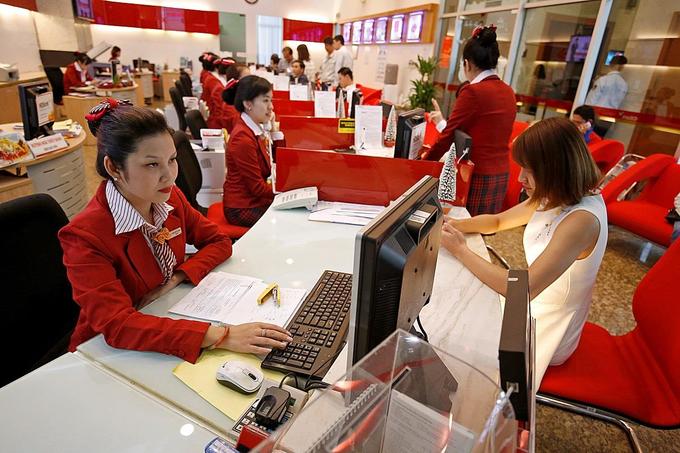
    HÀ NỘI The State Bank of Vietnam (SBV) has assigned a credit growth limit to each commercial bank in 2019, with priority given to those who met Basel II’s capital safety and risk management standards ahead of schedule.

    According to the current regulation, the SBV sets a credit growth limit for the entire year for each bank – depending on its health – to ensure the credit growth target of the entire banking system during the year (14 per cent for 2019).

    This year, the highest credit growth limit of 15 per cent was assigned to the group of banks which met the Basel II’s standards earlier than the SBV’s deadline of 2020. The remaining banks, meanwhile, were allocated a lower rate of below 12 per cent.

    Last year, most banks were assigned higher credit growth limits, ranging from 14 per cent to 16 per cent.

    The credit growth target of the entire banking system and of each bank has tended to slow in the past two years. Experts attributed the slowdown to the SBV’s policy changes. Previously, due to the underdevelopment of the local stock market, banks, which should act only as intermediaries in the monetary market, had to function to fund medium- and long-term capital for the economy.

    However, the SBV has tried to gradually change the role of banks so as to make them fund only short-term capital for the economy through the provision of working capital loans for businesses and households.

    To make the change, the SBV required banks to lower the ratio of short-term funds for medium and long-term loans from 45 per cent in 2018 to 40 per cent since early this year.

    Experts have also agreed with the credit growth slowdown, saying it was necessary to improve banks’ credit quality and risk management.

    Nguyễn Xuân Thành from Fulbright University Vietnam said currently, the pressure on credit growth to support economic growth was not so high, so the allocation of a credit limit to each bank depending on its health was reasonable. Accordingly, banks should only boost credit in case of good control of risks, in order to ensure sustainable growth.

    To offset the revenue reduction from lending activities, banks said they plan to increase profits through cutting operating costs and promoting digital services.

    Đỗ Minh Phú, chairman of TPBank, said digital banking would play a major role in reducing operating costs and increasing the cost-to-income ratio (CIR) efficiency, contributing to improving the bank’s profits this year.

    Phú said the biggest costs in banking operations were the costs of network investment and development, along with the costs for personnel, which could be solved by the application of digital banking. Attracting customers to non-credit services and service fee collection was also becoming a trend.

    Sharing the same view, Nghiêm Xuân Thành, chairman of Vietcombank, said that 2019 would be the year of digital banking for Vietcombank. In the past three years, the bank had focused on investment and implementation of a new core banking system to boost service development and shift the revenue structure instead of relying heavily on credit.

    Developing digital banking combined with retail banking in a potential market of 95 million with a high percentage of young people means commercial banks were quickly accumulating a customer base and large payment needs, Thành said.

    The focus on digital banking combined with retail banking has also helped some banks, like Vietcombank, Techcombank and HDBank, increase their number of individual customers rapidly in recent years, which has also contributed to raising the banks’ current account savings accounts (CASA) significantly.

    Reports showed some banks last year raised CASA to 28-30 per cent in the total structure of deposits. The large proportion of low-interest rate deposits has helped banks reduce mobilisation and operating costs, increasing profits and improving marginal interest in lending.

  • King Living Opens Shanghai Flagship Store

    King Living Opens Shanghai Flagship Store

    Australian furniture and lifestyle brand King Living has opened a flagship retail store in Shanghai, continuing its global expansion into China.

    The new 400sqm space will showcase King Living’s sofa designs, dining ranges, contemporary bed and mattress ranges, and outdoor collections.

    The brand has been a prominent player in Australian furniture design for more than 40 years, and is now continuing to seek a global audience with the opening of the new showroom in the design district of Xuhui in Shanghai.

    As King Living moves into China, it further expands its global reach with existing stores in Singapore, Malaysia, New Zealand and Canada, with a showroom opening in Vancouver slated for later this year.

    The brand represents the deep quality and barefoot luxury of the Australian lifestyle that is in high demand across China, which has been the driving force behind for its expansion.

    “Shanghai is key to King Living’s global growth strategy,” said King Living’s CEO Anna Carrabs. “China provides us with an unparalleled growth opportunity that doesn’t exist in slower-moving markets of developed countries. A key advantage for King Living is that one of our manufacturing facilities is in Shanghai, which allows us to implement initiatives and increase market penetration.

    “Being from Australia, we have a reputation for quality, and I think that sets us apart from some of our global competitors. This is a very exciting time for King Living and we look forward to seeing the Shanghai showroom thrive in what we hope will be the first of many stores in the region.”

    King Living is also one of the first Australian furniture retailers to offer Alipay and WeChat Pay as a payment option throughout all their showrooms in Australia and abroad. These platforms are the preferred payment method for Chinese consumers both domestically and internationally, enabling more customers to transact with their mobile wallet.

  • Ashley Furniture HomeStore Opens Largest Flagship Store in Kuala Lumpur

    Ashley Furniture HomeStore Opens Largest Flagship Store in Kuala Lumpur

    World No.1 selling furniture store brand, Ashley Furniture HomeStore, celebrated the grand opening of its largest flagship HomeStore in Quill City Mall today.

    Owned and operated by HAUSLIFE Furniture Sdn Bhd (HAUSLIFE), the sole licensee and operator of Ashley Furniture in Peninsular Malaysia, Ashley Furniture HomeStore at Quill City Mall marks the company’s fourth store in Malaysia.

    The 1300 square meter HomeStore’s interior architectural design include Ashley Lifestyle collections – ‘Family Spaces’. ‘Vintage Casual’, ‘Urbanology’, ‘New Traditions’ and ‘Contemporary Living’; meandering walkway through the showroom as well as unique and inspiring wall finishes. Product categories include upholstery set, bedroom set, dining room, home office, recliners, mattresses and accessories.

    Yu Kong Ching, Founder and CEO of HAUSLIFE, said, “Clearly, Ashley’s brand of furniture products have struck a chord amongst Malaysian consumers and this is reflected in the tangible growth of the brand’s presence here in Malaysia.”

    “The opening of this flagship store is also a testament to HAUSLIFE’s commitment, dedication and know-how in strengthening Ashley Furniture’s continued success in Malaysia in terms of market share and brand recognition.”

    According to Yu, HAUSLIFE aims to open eight (8) Ashley Furniture HomeStores by 2022. “There is still a lot of room for us to grow in the Malaysian market, more so as we see an ever-growing demand for quality, value, style and excellent service by discerning consumers in the retail furniture market,” Yu added.

    Speaking at the launch of Ashley Furniture HomeStore Quill City Mall today, Mr Robin Lim, VP sales of Asia for Ashley Furniture HomeStore, said, “We are excited to see the Ashley brand expanding aggressively in Malaysia. The ASEAN region, including Malaysia, is essential to Ashley Furniture’s global growth plans.”

    Comprehensive E-commerce platform

    In tandem with the global trend towards embracing the digital lifestyle, Ashley Furniture HomeStore recently launched its e-commerce platform only for the Malaysian market. Developed to be user-friendly yet feature-packed with great deals, this online platform allows Ashley’s customers from all over Peninsular Malaysia to purchase Ashley products from authorized retailer online.

    Exclusive Affiliate Program for Interior Designers

    HAUSLIFE Interior Designer Affiliate (HIDA), an incentive program custom-built by HAUSLIFE for interior designers, was launched in 2015 With over 215 affiliates, HIDA aims to empower interior designers today to have the mean to realise their creative vision and make life better. The program brings lots of benefits including exclusive deals on Ashley and HAUSLIFE products as well as access to new and selected products.

  • Consolidation to accelerate in APAC pay TV market

    Consolidation to accelerate in APAC pay TV market

    The Asia-Pacific pay TV market is set to experience a period of accelerated consolidation in the face of deteriorating subscriber and revenue growth, according to research from Media Partners Asia.

    The latest edition of the research and consulting group’s Pay TV Networks Channel Database finds that aggregate revenues across 13 of Asia’s major pay TV networks grew by a mere 1% in 2018 to around $4.9 billion. This compares to a 5% growth in 2017.

    Meanwhile aggregate ebitda across the 13 operators declined by 5% for the second straight year to $900 million.

    “Consumer demand for traditional pay-TV has been impacted forever by high-speed broadband, which is driving rapid increases in online video consumption as well as piracy,” Media Partners Asia executive director Vivek Couto said.

    “These trends have intensified downward pressure across Asia’s pay-TV ecosystem, especially in Southeast Asia, led by Singapore and Malaysia, alongside secular shifts in

    Australia and New Zealand. This will accelerate consolidation as well as major shifts in how channels and content are marketed and sold.”

    The company is predicting that a wave of consolidation will sweep Asia-Pacific over the next year.

    “Future consolidation and rationalization will be defined by global moves and M&A possibilities involving large assets in India,” Couto said.

    “Major players such as Discovery, CBS, Viacom, A+E, Sony and Universal are now competing for the consumer wallet with an increasingly scalable Disney and a newly integrated WarnerMedia within AT&T.”

  • Electricity hike hits industry hard

    Electricity hike hits industry hard

    Vietnamese manufacturers are set to increase their selling prices following the 8.36 per cent hike in electricity price that launched from March 20.

    Việt Nam Cement Industry Corporation (VICEM) Bút Sơn announced it would increase the price of its cement by VNĐ30,000 (US$1.29) per tonne immediately after the power price increase.

    Đỗ Tiến Trinh, VICEM Bút Sơn’s general director, said that in addition to the electricity tariff hike of 8.36 per cent, the price of coal sold to cement producers also increased by 2.3 to 5.8 per cent depending on the kind of coals.

    The coal price increase came because electricity accounts for 10 per cent of production cost. In addition, the Việt Nam National Coal and Minerals Industry Holding Group (Vinacomin) has not provided enough coal to cement producers, making them import the product at high prices.

    Trinh said the firm could not afford to offset the rise in input costs and had to increase retail prices to ensure sustainable production.

    VICEM Tam Điệp Company also had the same increase in the selling price.

    According to Phạm Văn Minh, the company’s general director, no business wants to increase retail prices, but electricity and coal make up a big portion of input material costs for cement production.

    Công Thanh Cement Joint Stock Company in the central region did not raise its retail prices but is charging distributors VNĐ30,000 more per tonne.

    Nguyễn Quang Cung, chairman of Việt Nam Cement Association said cement producers were not surprised by the power tariff hike and had been preparing for the change.

    Its calculations showed if the electricity price was increased by 8.36 per cent, cement production cost would rise by VNĐ14,000 to VNĐ15,000 per tonne.

    Steel producers also said they would increase their selling prices.

    SSE Steel Company said it doubled its steel selling price to VNĐ200,000 per tonne, while Thái Nguyên Steel and Iron Corporation (Tisco) increased its selling prices by VNĐ150,000 to VNĐ200,000 per tonnes.

    The Việt Nam Steel Association said it was unavoidable for steel producers to raise their prices as power accounted for 8 to 9 per cent of total production costs. In addition, the import prices of iron ore and steel billets were also rising this year, affecting steel production costs.

    Nguyễn Anh Tuấn, head of the Electricity Regulatory Authority of Việt Nam (ERAV) under the Ministry of Industry and Trade (MoIT) told a press meeting last week that there were about 1.4 million manufacturing businesses in Việt Nam who spend on average VNĐ12.39 million per month on electricity. The average increase in their power bills would be VNĐ870,000 a month.

    While electricity prices have almost doubled in the last decade, the MoIT said Việt Nam’s electricity prices were 8.1 per cent lower than that of China and India, 18 per cent lower than Laos and 26.5 per cent lower than Indonesia. Even with the latest increase, the prices would only be on par with China and India.

    “Việt Nam’s electricity prices are lower than other countries. It is the reason that foreign investors are not interested in investing in electricity projects in the country,” said deputy minister Hoàng Quốc Vượng.

    However, chief economist of the Bank for Investment and Development of Việt Nam (BIDV) Cấn Văn Lực suggested the Government needs to eliminate cross-subsidising mechanisms for units using electricity.

    At present, industrial sectors consuming large amounts of electricity, accounting for 55 per cent of electricity density, such as cement, iron and steel, are being compensated for electricity prices and only subject to the lowest price of 6.8 cents per kWh. Meanwhile, electricity costs households 8.7 cents per kWh.

    “Currently, consumers using electricity for domestic use as well as service enterprises are compensating a certain amount for industrial production enterprises – that is unfair. When there is fairness, people and businesses will agree and are willing to pay more reasonable electricity prices,” Lực said.

    Read more at https://vietnamnews.vn/economy/507842/electricity-hike-hits-industry-hard.html#CEgTqP3b4CrxPzgm.99

  • Fritz Hansen Opens First Store in China

    Fritz Hansen Opens First Store in China

    Furniture firm Fritz Hansen has launched a Jaime Hayon-designed showroom in the Chinese city of Xi’an.

    The new 1000sqm gallery, represents a stage in the brand’s ambition to become the largest Danish brand in China, is Fritz Hansen’s first store in China and its largest in the world.

    “You always need to find a way to be new, never done before – you need to create an experience,” said Fritz Hansen’s Asia CEO Dario Reicherl in an interview with Dezeen. “Through a series of steps, I believe we can be the biggest Danish brand in China in a couple of years.”

    The gallery/store is designed to resemble a temple with high ceilings, warm-hued walls and vaulted walkways created by the Spanish designer. Furniture on display is arranged in living room-style set-ups. Fourteen more intimate show spaces are accessible by a grand staircase.

    “Like in a labyrinth, you start to discover the little areas and each one has the furniture of Fritz Hansen,” said designer Jaime Hayon, “from the historical ones to the new ones I have designed, and pieces from other designers. The lighting and everything has been composed together with some art, carpeting, plants and small objects. So in this way we can inspire the client.”

    “China is the second biggest luxury market in the world, soon overtaking the US,” according to the brand’s executive VP of sales and marketing Lars Hardboe Galsgaard. “It will definitely be the biggest market and economy in the world in terms of private consumption and commercial consumption within a few years. So if you look at that marketplace, we needed to move here. We need to be part of that and we need to be part of defining design, furniture and lifestyle in China.”

  • Apple Watch’s ECG became finally available in Europe

    Apple Watch’s ECG became finally available in Europe

    The Apple Watch is the world’s most popular line of smartwatches right now, holding about 50% of the global market. When Apple announced the Apple Watch Series 4 last year, there was one feature that stood above all. It wasn’t the larger display or the Digital Crown with tactile feedback.

    Instead, it was the addition of ECG (electrocardiogram) capabilities without any additional hardware needed (besides the Apple Watch itself, of course). The feature allows the user to quickly and easily take an ECG and then, if need be, send the results to their doctor. Even without having the results looked at by a specialist, the device’s own algorithms would alert the user if they notice something out of the ordinary. Since then, reports are showing up regularly about how the Apple Watch helped one person or another notice an issue with their heart that was later confirmed by a cardiologist. This allowed proper measures to be taken a lot sooner than if the patient had waited until the problems became obvious.

    Unfortunately, despite the Apple Watch being loved all around the world, the ECG functionality was limited only to the United States. Not anymore!

    Select European countries and Hong Kong are getting ECG

    Apple’s watchOS 5.2 is now available for all Apple Watch models and adds a couple of features for users in 19 European countries and Hong Kong. The more important one is ECG, which comes only to the Apple Watch Series 4. Here’s the full list of European countries that are getting the new feature:

    Austria, Belgium, Denmark, Finland, France, Germany, Greece, Hungary, Ireland, Italy, Luxembourg, Netherlands, Norway, Portugal, Romania, Spain, Sweden, Switzerland, the UK.

    Despite the ECG app and the Irregular Rhythm Notification (more on it below) being cleared for use in the European Economic Area, according to Apple, there are several countries that are part of the EEA and won’t be getting these features yet: Bulgaria, Croatia, Czech Republic, Estonia, Iceland, Latvia, Lithuania, Poland, Slovakia, Slovenia.

    The reason for that is unknown. It could be due to additional regulatory approval needed or, alternatively, those are just markets Apple isn’t as interested in right now.

    A more notable country that’s also missing from the expansion list, although not in Europe, is Canada. It was expected to be one of the first countries besides the US to get the ECG app, but it appears that Canadians will have to wait at least until the second wave of expansion.

    ECG on a smartwatch, how does that work?

    For those of you that are just hearing about the Apple Watch’s ECG, here’s a quick rundown. Electrodes inside the Apple Watch Series 4 measure the electrical impulses your heart is releasing when beating. To do that, the user must touch the Digital Crown (the rotating bit on the side of the watch) in order to close the circuit, creating an effect similar to a single-lead electrocardiogram.
    After 30 seconds of measuring your rhythm, the ECG app will classify it as either AFib or sinus rhythm. If you get AFib as a result, you might want to get a consultation from your general practitioner or cardiologist. Of course, the results won’t be nearly as accurate as those taken by professional medical equipment, but the Apple Watch feature is far from a gimmick. Medical trials have shown that the wearable device is classifying the different heart rhythms with very high accuracy.
    The watchOS 5.2 update is also bringing a health-related feature to older Apple Watches as well. Called Irregular Rhythm Notification, this feature is coming to Apple Watch Series 1 and newer models. It checks the user’s heart rhythm on regular intervals using the optical sensors of the device and sends a notification if five irregular rhythms are detected over the span of at least 65 minutes.

    Sinus rhythm notification on the left (in Spanish) and an irregular heart rhythm warning on the right (in Italian

    To start using the new features, users have to enable them from the Health app on their iPhones. Obviously, the Apple Watch must be updated to watchOS 5.2, but to do that the iPhone itself must be updated to iOS 12.2.

  • Yunnan Baiyao Group to Bring Traditional Chinese Medicine to a Global Audience with Manhattan Associates

    Yunnan Baiyao Group to Bring Traditional Chinese Medicine to a Global Audience with Manhattan Associates

    Yunnan Baiyao Group, one of China’s largest pharmaceutical and healthcare companies, has selected Manhattan Associates  Warehouse Management System (WMS) to transform its digital supply chain and power the next phase of its growth strategy. The solution will help the manufacturer optimise its distribution operations and meet rising demand for its products across the globe whilst ensuring compliance with stringent production and traceability regulations.

    Founded in 1971, Yunnan Baiyao has established itself as one of China’s most important pharmaceutical companies, selling a broad range of medicinal and personal care products. Thanks to its unique ability to combine traditional Chinese medicine with new product innovations, the company has doubled revenues over the last five years to CNY24.3 billion (US$3.5 billion) in 2017. With its sights firmly fixed on continuing this trend, it recently set out to modernise its manufacturing and distribution operations.

    The pharmaceutical giant selected Manhattan’s industry-leading WMS solution to help it optimise fulfilment and throughput. The company will initially deploy Manhattan’s WMS in a new distribution centre (DC) adjacent to its toothpaste factory in Kunming, Yunnan province in southwest China. Yunnan Baiyao’s toothpaste is its most important healthcare product and the most popular in the Chinese market with a leading market share. Manhattan’s solution will play a key role in Yunnan Baiyao significantly increasing its toothpaste production to fulfil the growing market demands.

    Xia Feng, General Manager of Yunnan Baiyao’s Engineering System Centre, said, “Manhattan’s WMS will ensure on-time replenishment of our production line, accelerate the shipment of finished goods to our wholesale customers, drive efficiency improvements across our warehouse and factory floor and provide us with the scalability we need for growth. It will also provide real-time visibility of all inventory flows, ensuring we are fully compliant with the Good Manufacturing Practice (GMP) and Good Supply Practice (GSP) codes governing the traceability requirements of pharmaceutical products.”

    Stone Chen, General Manager of Manhattan Associates, Greater China, said, “Yunnan Baiyao is taking the lead in the pharmaceutical sector to replace its legacy systems with state-of-the-art technology that improves the productivity, efficiency, and competitiveness of its manufacturing and supply chain functions. Manhattan’s WMS will play a pivotal role in Yunnan Baiyao’s digital transformation and provide it with the scalable fulfilment platform it needs to be able to fully capitalise on the growth opportunities presented by rising global demand for traditional Chinese medicine.”

  • Tumi powers solid Samsonite sales growth, focus in Asia

    Tumi powers solid Samsonite sales growth, focus in Asia

    Hong Kong-listed luggage giant Samsonite International has achieved its seventh consecutive year of sales growth following its listing in 2011.

    Net Samsonite sales were up 8.4 per cent on a constant-currency basis to US$3.797 billion in the year to December 31. Profit attributable to shareholders rose by 23.9 per cent before extraordinary items saw that figure reversed into a 29.2 per cent decline to $236.7 million.

    Net sales in Asia increased by 10.2 per cent year on year to $1.324 billion, driven by the Tumi, American Tourister, Samsonite and Kamiliant brands. Tumi’s sales increased by 29.5 per cent, due in part to the full-year contribution from having taken direct control of Tumi distribution in certain Asian markets during 2017, as well as increased brand penetration in key Asian markets.

    A boost in marketing saw American Tourister’s net sales increase by 8.9 per cent in Asia, while Samsonite sales rose by a more modest 2.1 per cent. The group’s entry-level brand Kamiliant achieved a 44.1 per cent increase in sales in Asia as it continued to take market share from other entry-level brands across the region.

    Overall, Asia recorded second-half net sales growth of 6.5 per cent and full-year growth of 10.2 per cent.

    CEO Kyle Gendreau said sales in Japan rose by 14.1 per cent and in India by 28.5 per cent, in the second half, but these gains were partially offset by slower growth in China, which recorded just 3.2 per cent growth as consumer sentiment weakened amid concerns about trade relations with the US; and in South Korea where net sales decreased by 1.5 per cent in the second half.

    “Our growth was underpinned by positive performances from our core brands,” said Gendreau. “Tumi continued to perform ahead of expectations, making great strides in enhancing its international presence, with strong growth in Asia and Europe.”

  • Wehkamp Plots Double-Digit Growth Trajectory with Manhattan Associates

    Wehkamp Plots Double-Digit Growth Trajectory with Manhattan Associates

    Manhattan Associates today announced that leading Dutch online retailer Wehkamp has selected Manhattan’s Warehouse Management System (WMS) to manage its new distribution centre (DC) in Zwolle, Netherlands. The project, part of a €40 million investment Wehkamp is making in expanding and modernising this DC, will eventually extend to Wehkamp’s other DCs in the country. Wehkamp chose Manhattan’s WMS because of its industry-leading functionality, because it can orchestrate and maximise the performance of both human and automated resources, and because it will allow the retailer to scale order line volumes at a 20 percent growth clip.

    With 2.7 million regular customers and more than 11 million orders processed annually, Wehkamp is the Netherlands’ online market leader in fashion, lifestyle, beauty and baby/childrenswear. Its Zwolle DC, already one of the world’s largest automated DCs for online retail at 360,000 sq. ft. is being extended to 650,000 sq. ft. Once this expansion is completed, Wehkamp will have almost 1.5 million sq. ft. of warehousing capacity in the Netherlands and is able to process more than 250,000 orderlines per day.

    Once it began this DC expansion and modernisation project, Wehkamp executives concluded that their incumbent WMS would not be able to keep up with the company’s rapid growth or the additional associated complexity. The company set out to find a single, future-proof solution that could be deployed across its DCs, could efficiently orchestrate workflow across both automated and manual resources, and could maximise product flow-through velocity.

    Manhattan’s state-of-the-art WMS will provide Wehkamp with more flexibility in terms of how it processes orders and returns, maximise asset utilisation and support mobile workflows within its DCs. The solution’s order streaming capabilities will allow the retailer to simultaneously process wave, waveless and flow-through orders, whilst its embedded Warehouse Execution System (WES) capabilities will orchestrate workflow between its human workforce and its various automated technologies, which include 550 shuttle robots.

    “Wehkamp has grown rapidly because we have made ‘offering the ultimate customer experience’ our number one priority,” said Maarten Tibosch, Chief Operations Officer at Wehkamp. “Manhattan’s WMS will help us develop a supply chain that is effective, efficient, flexible and scalable to support our customers’ evolving needs. This solution will maximise asset utilisation, accelerate inventory flows and get goods to consumers faster.”

    Pieter Van den Broecke, Managing Director, Benelux and Germany, Manhattan Associates commented, “Manhattan currently works with the top brands and retailers across the globe to help them navigate the complexities of omnichannel fulfilment. With Manhattan’s WMS, Wehkamp can be confident it will be able to deliver on its growth and efficiency improvement goals so that it can make the lives of all families in the Netherlands ‘easier and more beautiful’.”

  • 7-Eleven Malaysia predicts improved trading conditions

    7-Eleven Malaysia predicts improved trading conditions

    7-Eleven Malaysia CEO Colin Harvey believes the company can do ever better this year after a modest improvement in sales last financial year. The company’s revenue crept up 1.3 per cent last year to RM2.22 billion (US$546 million), with after-tax profit up 2.4 per cent to RM51.3 million ($12.6 million). Harvey says sales growth was driven by new stores and an improvement in same-store sales and consumer-promotion activity.

    “We continue to see opportunity for improvement. We are confident that our strategy roadmap focussed on strengthening the key areas of assortment, supply chain, operational excellence, store base, and digitally enabling the organisation will bear fruit in terms of financial performance, and overall customer shopping experience.”

    7-Eleven Malaysia’s board believes the trading conditions for the next quarter will improve,  driven by domestic demand and anticipated heighted consumer sentiment. The group plans to “continue to refresh the 7-Eleven brand in the mind of the customer” through innovative promotions, products and pricing.