Tag: L’occitane

  • Revolutionizing Retail: How Meta, L’Occitane and Omnichat are Using WhatsApp to Drive Customer Loyalty

    Revolutionizing Retail: How Meta, L’Occitane and Omnichat are Using WhatsApp to Drive Customer Loyalty

    Omnichat, a notable omnichannel AI platform, recently conducted the third iteration of the Commerce Leadership Forum at Meta Singapore’s facility. The forum saw an assemblage of high-ranking leaders across various sectors, arranged to discuss the transformative influence of AI-empowered business messaging in retail, beauty, and lifestyle industries in the Asia Pacific.

    The Impact of WhatsApp on Commerce

    Prominent leaders from Meta and L’Occitane spoke about the swift adoption of WhatsApp as a crucial commercial platform, underscoring its evolution from a simple customer support tool to an engaging platform catering to committed customers, driving conversions, and establishing long-lasting loyalty.

    L’Occitane disclosed that WhatsApp has become the primary mode of customer communication across Asia Pacific markets, accounting for over 80% of inbound and outbound customer interactions. The brand further revealed that personal, conversational interactions have resulted in profitable outcomes compared to traditional channels. This increase in commercial success, coupled with real-time engagement, has enabled L’Occitane to extend relationship-building beyond transactional interactions, resulting in lasting brand loyalty.

    Terrence Siu, chief information officer of APAC at L’Occitane, stated, “Loyalty begins the moment a customer chooses to stay connected with the brand. Using WhatsApp as a unified touchpoint allows us to move customers smoothly from online discovery to in-store engagement without losing context. Customers receive a consistent and personalized experience wherever they interact with us, be it on Facebook, Instagram, or WhatsApp.”

    L’Occitane has extended this seamless experience into a complete loyalty journey by utilizing Omnichat and WhatsApp to deliver sample products, VIP privileges, and post-purchase experiences. This ensures that customers feel guided and appreciated long after their initial transaction. The distribution of samples and exclusive VIP offers directly through WhatsApp has elevated their coupon redemption rate to 87%.

    Messaging-led Commerce and Loyalty

    Messaging-led commerce has been further reinforced by YouGov’s new regional insights. The data showed that 32% to 43% of Asia Pacific shoppers now utilize business messaging to track orders, complete purchases, and maintain contact with brands throughout the sales cycle. WhatsApp has effectively become the default loyalty channel for high-intent engagement in Asia.

    Vicky Yiu, APAC strategic partnership manager for business messaging at Meta, asserted, “WhatsApp is increasingly becoming the commerce layer for brand engagement in Asia. When businesses move to a messaging-led experience, they shift from campaigns to relationships – and that is where long-term loyalty is earned.”

    Omnichat, powering these loyalty journeys, has illuminated how brands can evolve membership from a static database into an active relationship engine. By consolidating multi-channel identity into a unified customer profile and harnessing AI to trigger personalized re-engagement flows, Omnichat aids brands in converting one-time buyers into loyal members.

    CEO and founder of Omnichat, Alan Chan, emphasized, “Loyalty only works when it’s active, not passive. By linking QR codes to product samples, in-store touchpoints, and messaging-based rewards, brands can proactively engage members in real time. This is the difference between a loyalty database and a loyalty journey.”

    Questions & Answers

    How is AI-powered business messaging transforming the retail and lifestyle sectors?
    AI-powered business messaging is transforming these sectors by personalising customer interactions, driving profitable outcomes, fostering long-term loyalty, and reducing customer acquisition cost.

    How has WhatsApp influenced L’Occitane’s customer engagement?
    WhatsApp has become L’Occitane’s primary mode of customer communication. It has enabled the brand to provide a seamless experience, from online discovery to in-store engagement and beyond. It also allows L’Occitane to distribute samples and VIP offers directly, resulting in a high coupon redemption rate.

    What role does Omnichat play in this transformative process?
    Omnichat powers the loyalty journeys of brands, transforming membership from a passive database into an active relationship engine. It helps brands remain present in the customer’s daily routine, enabling real-time rewards and VIP benefits, and consolidates multi-channel identity into a unified customer profile.
  • L’Occitane’s sales soar as multi-brand strategy pays off

    L’Occitane’s sales soar as multi-brand strategy pays off

    Soaring sales in the Americas and a growing brand portfolio helped drive beauty retailer L’Occitane International’s global sales up by 17.9 percent in the year to March 31, to US$2.356 billion.

    Sales surged 80.4 percent in the region – or 62.8 percent at constant exchange rates – mainly thanks to the US performance of the group’s Sol de Janeiro brand acquired 18 months ago, and Elemis.

    In contrast, the group’s core L’Occitane en Provence brand saw sales decline 0.5 percent over the full year, despite a 0.8 percent improvement in the fourth quarter as Chinese sales rebounded after the Covid impact. The brand was hit by the closure of the Russian business and China’s retail trading restrictions.

    Elemis recorded 18.1 percent growth in the fourth quarter, to end the full year at 8.9 percent, driven by a 34 percent improvement in the US and what L’Occitane described as “outstanding e-commerce and cruise ship businesses” and a 29.2 percent boost in Asia Pacific, where the brand has been a development focus during the past year.

    Sol de Janeiro became the group’s second-largest brand during the March year, accounting for $295 million in sales after surging 267.5 percent in the fourth quarter and 135.2 percent over the 12 months. “[This was] fuelled by the highly anticipated launches of the Bum Bum Firmeza body oil, in tandem with its bestselling Brazilian Bum Bum Cream, and the Rio Radiance fragrance mist,” the company said.

    Andre Hoffmann, vice-chairman & CEO at L’Occitane, said the company is well-positioned to sustain growth during the coming year as it introduces its newer brands into new markets and channels, underlying the success of the group’s strategy to develop multiple brands.

    “We also continued to make solid progress in the ESG space having recently announced a roadmap for achieving a science-based net-zero target across all of our brands, with a focus on reaching 100 percent renewable electricity by 2025, reducing our greenhouse gas emissions by 2031 and achieving net-zero emissions by 2050.”

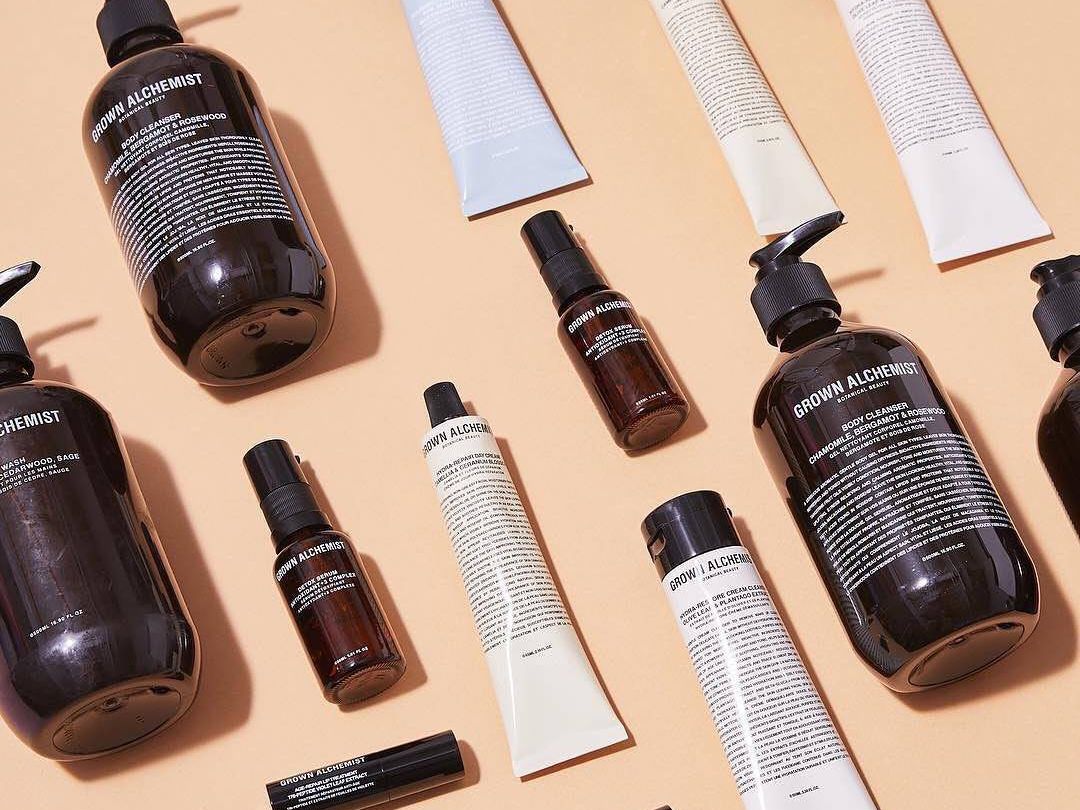
    The next results from L’Occitane will include the performance of Australian brand Grown Alchemist which L’Occitane announced in March it had bought to add to its growing brand line-up.

  • L’Occitane buys Australian skincare brand Grown Alchemist

    L’Occitane buys Australian skincare brand Grown Alchemist

    Hong Kong-listed beauty giant L’Occitane Group has acquired a majority stake in Australian-based clean skincare brand Grown Alchemist for an undisclosed sum.

    Grown Alchemist was founded in 2008 by Melbourne siblings, Jeremy and Keston Muijis, with a focus on futuristic anti-aging technology and unique botanical skincare formulas for optimal skin health. The brand opened a flagship store in Melbourne in 2020, “gearing for the next phase of [our] journey with a full-scale omnichannel presence to further augment global sales”.

    “With a unique and inspiring brand story and international fan base, Grown Alchemist is poised for international scalability and rapid growth,” said Andre Hoffmann, vice chairman & CEO of L’Occitane Group.

    The acquisition of Grown Alchemist is part of L’Occitane’s plan to further broaden its health-conscious beauty portfolio, attracting influential millennial and Gen Z customers.

    The deal follows L’Occitane’s acquisition of Sol de Janeiro’s 83-per-cent stake last November, which is known for the Brazilian Bum Bum Cream brand.

  • L’Occitane takes majority stake in beauty brand Sol de Janeiro

    L’Occitane takes majority stake in beauty brand Sol de Janeiro

    The L’Occitane group has acquired an 83 percent stake in Brazilian-inspired body care brand Sol de Janeiro as part of a strategy to expand its premium beauty offer.

    Upon the deal’s closure, Sol de Janeiro will become a majority-owned subsidiary of L’Occitane group. The value of the deal has not yet been disclosed.

    L’Occitane said Sol de Janeiro is a strategic fit in terms of brand recognition and identity, product quality, management capability, as well as growth, profitability, and cash generation prospects.

    “With a compelling brand story and an experienced and entrepreneurial management team, Sol de Janeiro reflects our values and premium beauty image,’ said Andre Hoffmann, vice chairman & CEO of L’Occitane.

    “Sol de Janeiro’s digital presence and established body care business are complementary to the group’s balanced geographical strategy to build a portfolio of strong brands in all major geographical regions,” the company said in a statement.

    Sol de Janeiro is expected to strengthen L’Occitane’s international presence to expand into new markets.

    Founded in 2015 in the US, Sol de Janeiro has become one of the fastest-growing premium skincare brands in North America and is known for its body care, fragrance, and hair care products designed for multi-generational consumers.

  • L’Occitane opens world-first green store concept in Australia

    L’Occitane opens world-first green store concept in Australia

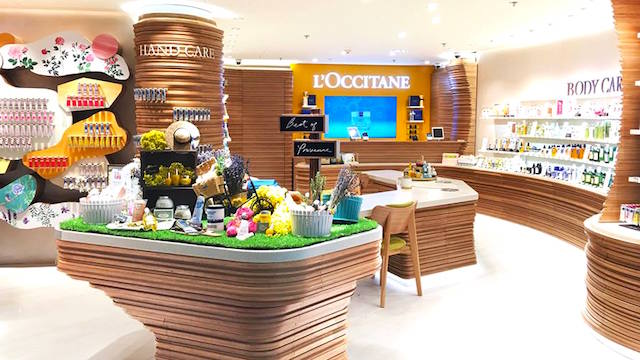
    If you’re a fan of the French skincare brand L’Occitane, then you’ll be happy to know that the retailer has just launched their first eco-friendly shop in the city, as part of their efforts to embrace sustainability and reduce local plastic waste. Located in Pacific Place Mall, the new store is designed to appeal to the growing eco-conscious consumer market. The shop offers products that come in 100 percent recycled bottles, and refillable shampoos, conditioners, shower gels, and hand wash. The new store also launches a new limited edition body care product series called the Happy Shea collection which is exclusively available in the shop and their online store.

    The store aims to engage the public in environmental protection through fun activities with their #MEGA (Make Earth Green Again) Sustainability Reward Program, where shoppers can earn rewards by achieving green tasks such as dropping their empty beauty container – from L’Occitane or other beauty brands – in the store’s recycle bins. Shoppers can also participate in other activities like completing a three-minute personal carbon footprint evaluation or adding their ‘green new year wish or commitment’ to the store’s Tree of Wishes.

    Working in partnership with various eco-conscious organizations, L’Occitane’s MEGA concept store will host a series of sustainability-focused workshops that raise recycling awareness. The company is currently collaborating with A Plastic Ocean Foundation (APO) – a Hong Kong-based charitable organization dedicated to raising awareness against plastic pollution. All PET containers collected through L’Occitane stores go to APO for future recycling into rPET products. L’Occitane has already provided APO with 40kg of PET containers collected from customers for future recycling. Today, APO has created 1,000 pieces of #MakeEarthGreenAgain sandwich bags made from rPET and 1,500 pieces of rPET towels, made from PET plastic waste. Shoppers can receive a complimentary rPET sandwich bag for purchases of over $400 in L’Occitane’s eco-store until February 28, 2021.  L’Occitane’s MEGA concept storefront

    As part of the company’s dedication to lessening environmental carbon footprint and protecting biodiversity, L’Occitane’s Hong Kong and Macau general manager Nathaëlle Davoust signed the Ellen MacArthur Foundation New Plastics Economy Global Commitment. In collaboration with the UN Environment Programme, The Global Commitment ‘unites businesses, governments, and other organizations behind a common vision and target to tackle plastic waste and pollution at its source.’ Companies that signed the commitment represent businesses responsible for 20 percent of all plastic packaging produced globally. So, if you’re dropping by the store and purchasing goods, make sure you bring your own bags as the shop will not be providing you with any plastic or paper bags.

  • L’Occitane posts record profit as China becomes its largest market

    L’Occitane posts record profit as China becomes its largest market

    Beauty products retailer L’Occitane International has reported sales and profit beyond expectation after successfully adapting to the challenges of selling products during a global pandemic.

    Despite the Covid crisis, like-for-like net sales of US$1.83 billion were down just 1.1 percent against the previous year, but net profit grew by 36.3 percent to a record $187 million, representing 10.2 percent of net sales.

    China is now the company’s largest market, with year-on-year growth of 36 percent.

    The overall performance was largely driven by a strong focus on online sales in the absence of travel retail business and long periods of physical store closures – more than 75 percent of the company’s outlets were closed at the peak of the pandemic. Global e-commerce turnover soared 69.2 percent and accounted for more than one-third of overall sales.

    Social selling was a key component of the online push, with 68 projects in Europe alone, including personal shopping concierge services, live streaming, and online consultation services.

    “Thanks to the group’s agility and adaptability in a socially distant world, the strong sales recovery in the second half of the year helped recover most of the ground lost earlier in the year, resulting in only a slight sales decline,” said chairman Reinold Geiger in a Hong Kong stock exchange filing.

    “Importantly, the group made tremendous progress in expanding its bottom line – recording an operating margin of 14.3 percent with contribution from its online channels, excellent performance in key markets in Asia, strong results from its newer brands, as well as greater operational efficiency.”

    He put the strong performance down to the group adhering to five pillars of its strategy to build trust, sustainable growth and profitability: empowering teams; executing fundamentals, especially in a retail context; adopting an omnichannel, mobile and digital approach; engaging customers; and strengthening brand commitments.

    Geiger said China was undisputedly the group’s best-performing market, coinciding with it being among the first to emerge from Covid-19. During the fourth quarter, L’Occitane International’s China sales grew by more than 50 percent, boosted by successful Chinese New Year and Women’s Day promotional campaigns, as well as a low base the previous year. Physical roadshows during Chinese New Year encouraged product sampling and conversion.

    Meanwhile, Geiger says two major restructuring activities will help the business achieve greater efficiency in future years.

    Last October, the company announced a reorganization that led to the loss of some 300 positions globally from its 9000-strong workforce, mostly at corporate offices. And in January, its US subsidiary, L’Occitane, Inc, commenced voluntary Chapter 11 bankruptcy protection in order to accelerate its store rationalization process. By the end of March, 25 underperforming US stores were closed. The Chapter 11 process is expected to achieve savings of up to $12 million annually for the next four to five years.

  • L’Occitane files for bankruptcy in US

    L’Occitane files for bankruptcy in US

    L’Occitane U.S. filed Chapter 11 bankruptcy protection in New Jersey on Tuesday, seeking to close stores. The business cited declines in brick-and-mortar sales and the ongoing coronavirus pandemic as the reasons for the filing.

    “Like most retailers in the United States, the debtor has been impacted by the COVID-19 pandemic, which has significantly limited retail operations throughout the country and suppressed consumer willingness to shop in person,” L’Occitane regional managing director Yann Tanini wrote in a declaration for the court.

    “Even prior to the pandemic, the debtor was experiencing a decline in sales revenue from its brick-and-mortar boutiques, while its e-commerce revenue has dramatically increased,” Tanini said in court papers.

    L’Occitane had already starting downsizing its real estate footprint but wants to further reduce lease obligations due to the pandemic, the company said in court papers. The company hired Hilco Real Estate as a consultant to negotiate with landlords, but they have been reluctant, which prompted the bankruptcy filing. L’Occitane intends to reject 23 leases and “right-size its brick-and-mortar footprint,” it said.

    The company is the U.S. subsidiary of L’Occitane Groupe SA which is publicly listed in Hong Kong and also owns Erborian, LimeLife, and Elemis. U.S. operations account for about 9.1 percent of total company sales, the company said in court papers.

    The U.S. operations have 166 stores in 36 states and Puerto Rico, mostly in regional malls. Net sales have declined during COVID-19, the company said. Between April and December 2020, net sales dipped 21 percent year-over-year to $111 million. Brick-and-mortar sales made up 34 percent of that total, while e-commerce sales skyrocketed.

    L’Occitane has about 1,051 U.S. employees and furloughed and laid off certain workers during the pandemic. The company said that of 325 furloughed employees, 165 have come back, and 40 have been let go.

    The company has $161 million in assets and almost $162 million in liabilities, per court papers. L’Occitane U.S.’s biggest unsecured creditor is its parent company, which is owed $26 million related to loans and $4.5 million related to inventory.

  • L’Occitane launches first sustainability #MEGA concept store in Hong Kong

    L’Occitane launches first sustainability #MEGA concept store in Hong Kong

    The new Sustainability Concept Store focuses on reducing plastic waste and supporting local sustainability projects.

    Located at Pacific Place in Hong Kong, the new store aims to engage the public in a fun way by undertaking green tasks and earning points through the new #MEGA Sustainability Reward Program. Tasks as simple as recycling their beauty empties in the on-site recycling bins or making a commitment with the Tree of Wishes will earn customers rewards.

    As part of the brand’s ongoing commitment to sustainability and recycling, the new #MEGA Sustainability Concept Store offers customers low waste products, such as soaps and Aromachologie hair care. Alongside this, the new store will host a number of sustainability-focused workshops to encourage customers and the wider public to engage in recycling.

    Nathaëlle Davoust, General Manager of L’Occitane Hong Kong and Macau, commented: “In L’Occitane, our societal and environmental commitment focuses on the protection of biodiversity and reduction of our environmental carbon and plastic footprint. The #MEGA Sustainability Concept Store is like our invitation to the Hong Kong public to explore how we can reduce plastic pollution together.”

  • L’Occitane sales recover fast in APAC

    L’Occitane sales recover fast in APAC

    Beauty products brand L’Occitane saw sales momentum improve significantly in the September quarter as consumers resumed shopping in the wake of Covid-19 lockdowns in much of the world.

    The year-on-year decline in sales improved from 22.2 percent in the June quarter to a more modest 4.5 percent in the subsequent three months.

    Sales for the combined first half-year reached US$726.2 million, down 13.1 percent in the same period a year earlier. Growth in South Korea was the most spectacular – up 37.4 percent year on year, with China close behind, up by 30.5 percent, and Taiwan up by 15.3 percent.

    While foot traffic into physical stores began to recover, the company’s online channels outperformed brick and mortar shops, soaring 80.8 percent to account for 40.7 percent of total sales in the September quarter.

    L’Occitane chairman Reinold Geiger said all of the company’s brands saw significant improvements in sales momentum in the second quarter, compared to the first. L’Occitane en Provence was particularly resilient — its sales decline narrowing from 25.7 percent to 4.1 percent. The travel retail business also showed some improvements, particularly in Asia.

    The group recently commenced a reorganization process aiming to be more efficient and flexible, which will likely lead to the loss of about 300 jobs, primarily in corporate roles, from its global workforce of 9000.

  • Asia outperforms for Groupe L’Occitane as pandemic decimates European sales

    Asia outperforms for Groupe L’Occitane as pandemic decimates European sales

    Strong sales across Asia and rapid online growth helped beauty-products retailer Groupe L’Occitane contain its sales decline during the June quarter to a comparatively respectable 22 percent.

    The Hong Kong-listed company singled out China, South Korea, and Taiwan as its strongest-performing markets, which “bounced back rapidly” after lockdowns, recording year-on-year sales growth of 24.9 percent, 27.4 percent, and 11.5 percent respectively.

    That helped compensate for huge reductions in turnover in Japan, Europe, and the Americas which were impacted by store closures and lockdowns resulting from the pandemic.

    Online sales – including the group’s own sites, marketplaces, and digital direct-selling – soared by 95.8 percent and accounted for 52.6 percent of the group’s total sales of €274.2 million for the quarter.

    Groupe L’Occitane chairman Reinold Geiger said all of the company’s brands, except for LimeLife, were heavily impacted by travel bans and lockdowns, posting sales decreases ranging from 25 percent to 35 percent.

    “LimeLife, however, posted strong growth of 51.6 percent at constant exchange rates, thanks to its resilient online-only business model, as well as successful new product launches, a flash sale and initiatives to recruit beauty guides.”

    The company permanently closed 52 stores during the quarter, mainly due to the closure of underperforming kiosks run by its Brazilian subsidiary L’Occitane au Brésil.

  • L’Occitane sales down in Hong Kong

    L’Occitane sales down in Hong Kong

    L’Occitane sales plunged by nearly one fifth in Hong Kong and Macau during the June quarter.

    According to a stock exchange filing, the Hong Kong-listed retailer’s sales in the two territories, which includes Asian travel retail wholesale business, fell by 18.8 per cent on a currency-neutral basis. That contrasts with 9.3 per cent growth in the same quarter last year.

    On the mainland, L’Occitane sales rose by 8.3 per cent which, given the higher store count of 190 versus just 36 in Hong Kong and Macau, somewhat compensated. Sales in Japan were up by 6 per cent with sales stable in Taiwan, the other Asian market the company breaks out.

    Globally, group sales rose 18.8 per cent at reported rates and by 16.2 per cent at constant exchange rates.

    The company’s standout market was the UK which recorded a massive 253 per cent increase in sales, driven by the inclusion of the Elemis business in the quarter-on-quarter data, and recovery of the core L’Occitane en Provence brand there.

    L’Occitane sales globally reached €352.5 million. Elemis became a subsidiary of the group in March and its sales are consolidated from April.

    Globally, L’Occitane finished the quarter with 1575 stores, up a net three during the quarter.

  • L’Occitane profit rose after Restructuring

    L’Occitane profit rose after Restructuring

    Hong Kong-listed beauty-products retailer L’Occitane is reaping the benefits of a restructure with profit up 21.8 percent last financial year to €117.6 million.

    And chairman Reinold Geiger says even better results are in the pipeline. “The group now operates as a multi-brand entity, where unique brand identities are celebrated and common values shared — respecting nature, creating authentic and genuine experiences, promoting entrepreneurship, and bringing a human approach to beauty,” he said in a statement.

    “The group encourages its brands to stay agile and autonomous, yet synergies are also being identified and capitalized. With the material improvements delivered by the core L’Occitane en Provence brand, combined with the largely accretive consolidation of Elemis, the group expects to see enhanced profitability in 2020 and beyond.”

    Group net sales were €1.427 billion for the year to March 31, up 8.7 percent at constant exchange rates. Gross margin remained high at 83.2 percent and operating profit rose by 6.9 percent.

    L’Occitane’s Hong Kong net sales were €137 million, an increase of 9.9 percent year on year, or 8.6 percent at constant exchange rates. However, same-store sales fell 2.6 percent.

    “Macroeconomic uncertainties continued to erode consumption sentiment, reflected in a marked downturn in the Hong Kong retail market after the first quarter of {last year}, notably in the average ticket value,” the company said in its earnings review. “Meanwhile, the increase in mainland tourist traffic brought by new infrastructure did not uplift Hong Kong retail sales.”

    Sales in China reached €178.1 million, an increase of 11.9 percent, or 12.1 percent on a constant-exchange-rate basis.

    “Sales momentum in China was dynamic throughout the whole year,” the company said. “Sell-out sales remained strong even though trading with seven fewer stores than last year, posting a growth of 9.6 per cent at constant exchange rates, and with same-store sales growth at 6.9 percent. The marketplace channel continued to drive growth, with impressive performances recorded during key festivals such as Singles’ Day, Chinese New Year and Women’s Day. Sell-in sales also posted encouraging results, with the growth of more than 30 percent, thanks to the launch of JD and dynamic B2B sales.”

    In Japan, net sales rose 1.5 percent to €222.1 million, however in the local currency, the growth was just 0.1 percent. “The flattish performance was due to a sluggish retail market. Nonetheless, retail sales of L’Occitane en Provence grew at a low single-digit rate as compared to last year, thanks to the new stores opened, the large-scale “Balloon Journey” marketing event and successful face care campaigns during the year.”

    Taiwan net sales of €38.2 million represented a decline of 3.2 percent at reported rates, or 2.7 percent at constant exchange rates.

    “The Taiwan retail market remained competitive,” the company said. “The decrease in sell-out was largely explained by the negative 2.7 percent same-store sales growth, together with the typhoon hits and poor weather during the summer season. Web sell-out channel, however, recorded double-digit growth, thanks to the revamped own e-commerce platform as well as the development of the marketplace.”

    Most other markets remained static for L’Occitane, with the exception of Brazil, where sales fell by 4 per cent, and the US, where they soared 35 per cent.

  • L’Occitane adds Elemis to portfolio

    L’Occitane adds Elemis to portfolio

    Hong Kong-listed cosmetics retailer L’Occitane International is to buy privately owned beauty and skincare brand Elemis for about US$900 million. “This is L’Occitane’s largest acquisition since listing and a major step forward in building a group of premium beauty brands,” said CEO Reinold Geiger in a statement.

    The move is part of a strategy to boost L’Occitane’s sales in the UK and the US. In a statement, the company said the the deal will allow Elemis to expand into new markets and boost L’Occitane’s business in markets in which it is not so strong as yet.

    L’Occitane has agreed to buy the Elemis brand from Steiner Leisure, which owns the US business, and Nemo UK, which owns the European business.

    The deal, to be funded by cash and bank loans, will be closed in the first quarter of this year.

    L’Occitane, which listed in Hong Kong in 2010, currently has 3285 outlets in 90 countries, including 1555 stores it owns and operates directly. Last financial year it achieved a profit of €141 million on sales of €1.3 billion.

  • L’Occitane might be an interest for Advent

    L’Occitane might be an interest for Advent

    Hong Kong-listed beauty products retailer L’Occitane may be taken private after at least one expression of interest in the business from a private equity investor. London-based private equity group Advent International has reportedly enquired about acquiring the company, which has an estimated US$2.7 billion market value.

    L’Occitane’s appeal has grown since listing on the HKSE eight years ago in a move to pursue Asian customers. While none of the parties involved have commented, sources close to L’Occitane have confirmed to European business media that “a number of potential buyers” are showing signs of interest.

    L’Occitane is thought to be well-positioned to take advantage of a fast-growing cosmetics and skincare market in the region, brought on by the expansion of the middle class and the Chinese tourism boom.

    L’Occitane’s is chaired by Austrian investor Reinold Geiger, who has overseen its growth internationally to 1555 outlets in 90 countries. The firm is experiencing sales growth in Hong Kong and China, as well as the US.

    It recently unveiled new concept stores in Canada and New York showing its future direction.

  • LimeLife acquisition helped boost L’Occitane sales

    LimeLife acquisition helped boost L’Occitane sales

    Hong Kong-listed, Luxembourg-headquartered beauty products retailer L’Occitane has reported healthy sales growth on the back of a key acquisition. Same-store L’Occitane sales in Hong Kong rose 18.6 per cent on a currency-neutral basis in the six months to September 30, and by 14.1 per cent in Mainland China.

    Chairman Reinold Geiger said the Hong Kong growth was primarily driven by “dynamic” travel retail sales.

    But that was far less dramatic than the 65.8 per cent boom in the US, driven by the LimeLife by Alcone business which became part of L’Occitane in January, and the continued recovery of the core L’Occitane en Provence brand.

    Global group sales rose 8.6 per cent at reported rates and 12.4 per cent at constant exchange rates. After excluding the LimeLife business, like-for-like sales growth rose 4.9 per cent, which was higher than the 3.6 per cent of the first quarter.

    Global L’Occitane sales reached €595.4 million for the six months. It finished the period with 1555 of its own stores.