Tag: Logistics

  • Philippines billionaire Sy’s group counts on logistics as next growth engine

    Philippines billionaire Sy’s group counts on logistics as next growth engine

    Almost 60 years after turning a shoe shop in Manila into a banking-to-property conglomerate that’s made him the richest man in the Philippines, billionaire Henry Sy has found the next growth engine for his group: logistics.

    Mr Sy’s SM Investments Corp. is counting on logistics affiliate 2GO Group to fuel earnings growth as e-commerce and economic growth boosts demand for deliveries, chief executive officer Ricky DyBuncio, 57, said in an interview. Logistics may even become the company’s fourth business pillar after banking, real estate and retail, he said. The logistics company’s shares surged to a record Tuesday in Manila trading.

    “As economic growth spreads nationwide, you will see a more and more increasing need for logistics operations,” Mr DyBuncio, the first person from outside the Sy family to lead SM Investments, said in Manila May 25. “It definitely could grow by double digits for many, many years to come.”

    SM Investments, the country’s most valuable company after Sy-controlled residential and malls builder SM Prime Holdings, has said it needs to expand in high-growth sectors to complement its main businesses. Investments in logistics will help boost earnings as the core businesses reach a scale that makes double-digit percentage growth no longer the norm, Mr DyBuncio said. SM stands for Shoemart, the name of the original store Mr Sy opened in 1958.

    Mr DyBuncio, who took over from the founder’s son Harley Sy last month, has said he’ll look to the company’s share price as a measure of his performance. He will need fast-growing businesses to continue driving the stock higher as his predecessor oversaw a more than a six-fold increase since the shares began trading in 2005.

    Logistics can grow at least two times faster than the economy, according to Mr DyBuncio, who has been looking at investment opportunities in logistics over the past two years. Economic growth is boosting demand for shipping, warehouses and port facilities nationwide.

    Shares of 2GO climbed as much as 21 per cent to 25 pesos, the highest since the company’s 1995 listing, before paring gains to trade at 23.40 pesos as of the midday trading break in Manila on Tuesday. The stock has tripled so far this year. SM Investments fell 0.2 percent to 775.50 pesos.

    The Philippines plans to spend as much as 9 trillion pesos (S$249.1 billion) on infrastructure from this year to 2022 to boost Southeast Asia’s fastest growing economy. The economy grew 6.4 per cent in the first quarter, its weakest expansion in six quarters and is forecast to grow 6.6 per cent this year, according to economist estimates compiled by Bloomberg.

    “You can’t have faster economic growth without logistics,” said Gonzalo Bongolan, vice president at Philippine Commercial Capital Inc., a Manila-based investment bank. “Logistics and the last mile of distribution will become more critical as commercial activities multiply.”

    2GO is the largest provider of so-called end-to-end logistics services in the Philippines, a nation of more than 7,000 islands. The company, which has a fleet of 24 ships, had a 90 percent passenger market share and cornered 38 percent of cargo that passed through the ports where it operated. Customers include SM Investments’ department stores and grocers, Procter & Gamble, and Lazada Group, a Southeast Asian e-commerce operator whose Philippine clients include an SM’s online store.

    Net income will jump about 14 per cent this year to 35.4 billion pesos, based on the average of seven analyst estimates compiled by Bloomberg. That would be the fastest growth since the 16 percent advance in 2012.

    SM Investments indirectly owns about 30 per cent of 2GO. It’s part of portfolio investments amassed to diversify beyond core businesses that include BDO Unibank Inc., the biggest Philippine lender by assets, and China Banking Corp. SM Investments’ two other major units are SM Prime, the nation’s largest shopping mall operator, and SM Retail Inc., the biggest Philippine retailer with 2,303 outlets.

    Return on equity, which fell to about 11 percent last year from the 14.3 percent peak in 2012, will rebound in the next couple of years as returns from its investments, including property assets, improve, DyBuncio said.

    As for the logistics business, DyBuncio said he’s still not certain it will become a core business on the scale of the banking, property and retail mainstays.

    “Is it going to be big enough that we can say it’s a fourth leg? We need to see what happens in the next few years,” DyBuncio said. “We might be able to find the fourth leg but it will probably be a short leg given the size of the group’s three core businesses.”


  • Mighty Jaxx wins FedEx small business grant contest

    Mighty Jaxx wins FedEx small business grant contest

    Khoo Seng Thiam, managing director, FedEx Express Singapore congratulates Jackson Aw, Founder, Mighty Jaxx International Ptd Ltd who placed first in the 2017 Small Business Grant Contest in Singapore.

    FedEx Express recently announced the winners of the 2017 FedEx Small Business Grant Contest in Singapore. The winner of the contest was Mighty Jaxx International Pte Ltd, a design studio that specialises in developing art collectibles. The company was awarded a grant of S$25,000.

    Born out of pure love for designer toys, founder Jackson Aw has always been curious about the manufacturing process behind the toys he collects. Since their launch in 2012, the company has over produced 200 designs and delivered thousands of products to collectors in over 50 countries. Their limited-edition collectibles are designed in collaboration with world renowned artists and international brands such as DC Comics, Cartoon Network and New Balance. Mighty Jaxx International plans to use its grant to build new universes with original characters and to expand overseas to large-scale international events such as Comic-Con International.

    The First runner-up is E-TracX, a DJ academy. Its goal is to change people’s lives for the better through music. The company was awarded a grant of S$10,000. The second runner-up prize, worth S$5,000, was awarded to Xtreme DSP Global Pte Ltd, a company that sells lightweight, user-centric wireless communication headsets. The winning businesses were selected by a panel of industry leaders.

    “Small businesses make up the backbone Singapore’s economy and continue to play a vital role in an increasingly globalised marketplace. With the rise of e-commerce, it is a testament to the resilience of local SMEs that they continue to stay ahead, despite facing stiff competition within and outside the region,” said Khoo Seng-Thiam, managing director, FedEx Express Singapore. “In its second year, we hope that the FedEx Small Business Grant Contest can continue to encourage innovation and inspire small businesses in Singapore to dream big.”

    The contest was open to all for-profit small businesses that met the entry criteria, such as the number of employees in the organization and the length of time the companies had been established. Eligible SMEs were required to register online and outline their business plans to “go global”.

    Originally conceived in the US five years ago, the FedEx Small Business Grant contest has since expanded to include Brazil, France, Germany, Hong Kong, Singapore and the UK. This year, the contest made its debut in India, Italy, and China.

  • Reebonz opens S$40m e-commerce hub in Tampines

    Reebonz opens S$40m e-commerce hub in Tampines

    With both local and regional consumers increasingly buying luxury goods online, homegrown e-retailer Reebonz on Tuesday opened an eight-storey e-commerce hub in Tampines to ramp up its cross-border operations and meet the evolving demands of their customers.

    “The Reebonz e-commerce hub will be a platform for us to scale across the region in terms of having a centralised distribution centre that will distribute our products across 17 countries around the world,” said Reebonz CEO Samuel Lim. “We’ve invested heavily into warehouse management systems, distribution management systems, being able to integrate the whole operations within one central location – I think that’s important to scale.”

    The 200,000-square-foot space, which cost around S$40 million to build, is four times larger than its previous office and distribution centre and now stock more than 500,000 types of products – more than 11 times its previous capacity.

    Reebonz also plans to house an incubation hub for local luxury startups and designers in future.

    Speaking at the official opening of the hub, Minister of Trade and Industry (Industry) S Iswaran said players like Reebonz serve as “shared platforms that uplift the entire retail sector”.

    “Smaller companies might be reluctant to start due to lack of scale or technical skills,” he said. “Others may face challenges in reaching out to new customers and coordinating processes for e-commerce fulfilment.

    “Here, players like Reebonz can serve as shared platforms that uplift the entire retail sector. Smaller companies can leverage e-marketplaces like ‘Reebonz Boutiques’ to list their products, which requires less resources than a standalone platform and eases access to global markets.”

    He also highlighted how Reebonz’s e-marketplace has emerged as an online incubation space for emerging designers and local entrepreneurs.

    “Emerging designers and local entrepreneurs have a simple, less risky space to refine their branding and test new products,” he said. “I urge more local brands to take advantage of such platforms to scale up and enter new markets.”

    TAPPING GROWTH

    Since its launch eight years ago, the local brand has expanded its sourcing channels from distributors to individual sellers and boutiques around the world.

    The business-to-consumer retailer branched out to a consumer-to-consumer platform and a merchants’ marketplace last year, allowing consumers to buy and sell pre-loved items to others and giving consumers access to products from boutiques around the world.

    “It definitely helps to have a space where we can tap into the larger clientele base that Reebonz obviously has,” said shoe designer Mashizan Masjum, whose eponymous shoe label joined its marketplace platform in April.

    “As part of an emerging brand, it can be quite lonely at times as well as you’re trying to make a name for yourself regionally and globally.”

    Mr Iswaran said that the Government would help local retailers tap growth opportunities on the e-commerce front, as part of the Retail Industry Transformation Map’s target to grow e-commerce’s share of total retail receipts from 3 per cent to 10 per cent by 2020.

    This includes helping companies to enter foreign markets through e-commerce platforms and prioritising initiatives relating to the digital economy.

    “E-commerce is going to be a defining aspect of the retail industry in Singapore, the region and the world,” he said. “So we want to make sure that our companies have the capabilities to embrace this trend, ride on its growth and benefit from it. Which means capabilities in terms of the technology, business model and market access.

    “And on the other side, we want to make sure that our people have the skills to participate in the new job functions and careers that are being created.”

    According to Mr Iswaran, an estimated one in every five sales in the Asia Pacific would be conducted through an e-commerce platform, while an estimated 3.9 million users – or nearly three-quarters of residents in Singapore – will turn to e-commerce by 2020.

  • DHL launches China – Belarus rail freight service

    DHL launches China – Belarus rail freight service

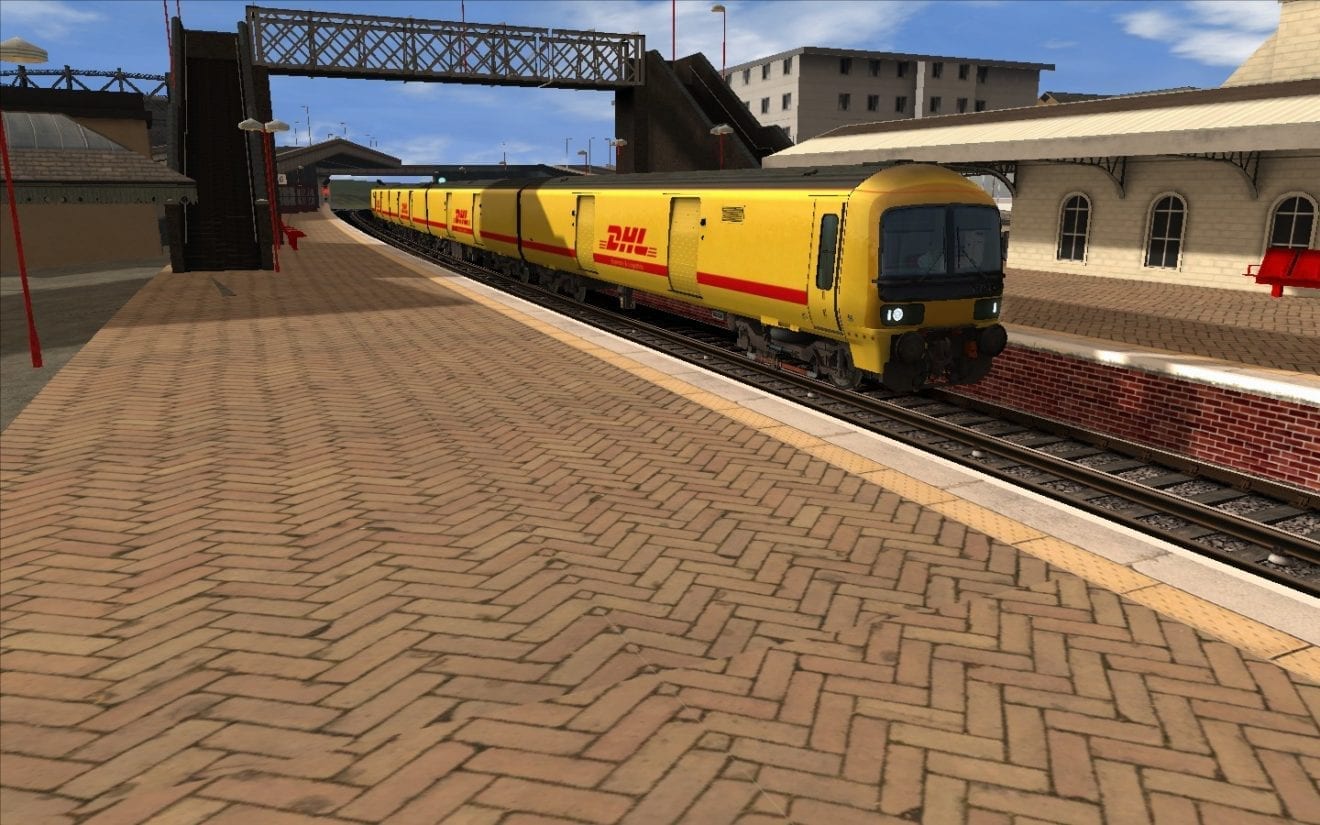
    DHL Global Forwarding launched a new rail freight service between Shenzhen, China, and Minsk, Belarus, on May 22 with a transit time of less than 12 days.

    The new service passes through Alatau Shankou – Dostyk on the Chinese-Kazakhstan border which is already used by several other intermodal services, including rail connections from Chengdu, Zhengzhou, and Lianyungang to continental Europe.DHL will manage the new route together with China Brilliant, an integrated service provider in manufacturing and consumption with which DHL signed a memorandum of understanding in 2016. The service offers both less-than-container load (LCL) and full container load (FCL) for electronics, industrial and automotive parts, and fresh food from both both Eastern Europe and China.

    “Eastern Europe’s economies are growing faster than almost any others worldwide, with significant export opportunities arising from the region’s rising wages and disposable income levels,” says Mr Steve Huang, CEO, DHL Global Forwarding Greater China. “Minsk offers Chinese businesses an efficient gateway into the Baltic States and Nordic countries in addition to other European destinations like Warsaw, Hamburg and Tilburg via Brest. With Shenzhen’s economy exceeding expectations to grow by 9% last year, the route also opens sizable opportunities for European exporters.”

    “The partnerships that DHL has with governments and businesses globally, coupled with our market strength in Shenzhen-based supply chains, have come together to create a solution that directly meets the needs of China’s expansion-hungry manufacturers and producers,” says Mr Zhang Chunhua, founder of China Brilliant Group.

    DHL has been offering intermodal rail services connecting China, Japan, and southeast Asia with Europe since 2010 on the following corridors:

    • North Corridor: Suzhou – Warsaw connecting Chinese engineering and manufacturing hubs to Europe in 14 days
    • South Corridor: Lianyungang and Chengdu to Istanbul via Kazakhstan, Azerbaijan, and Georgia including two water crossings in 14 days, and
    • West Corridor: Zhengzhou – Hamburg (electronics), Chengdu – Lodz (high-tech and automotive products) and now Shenzhen – Minsk (electronics and consumer products).

  • Bolloré Logistics Singapore Unveils Plan for S$10 Million Logistics Automation Facility

    Bolloré Logistics Singapore Unveils Plan for S$10 Million Logistics Automation Facility

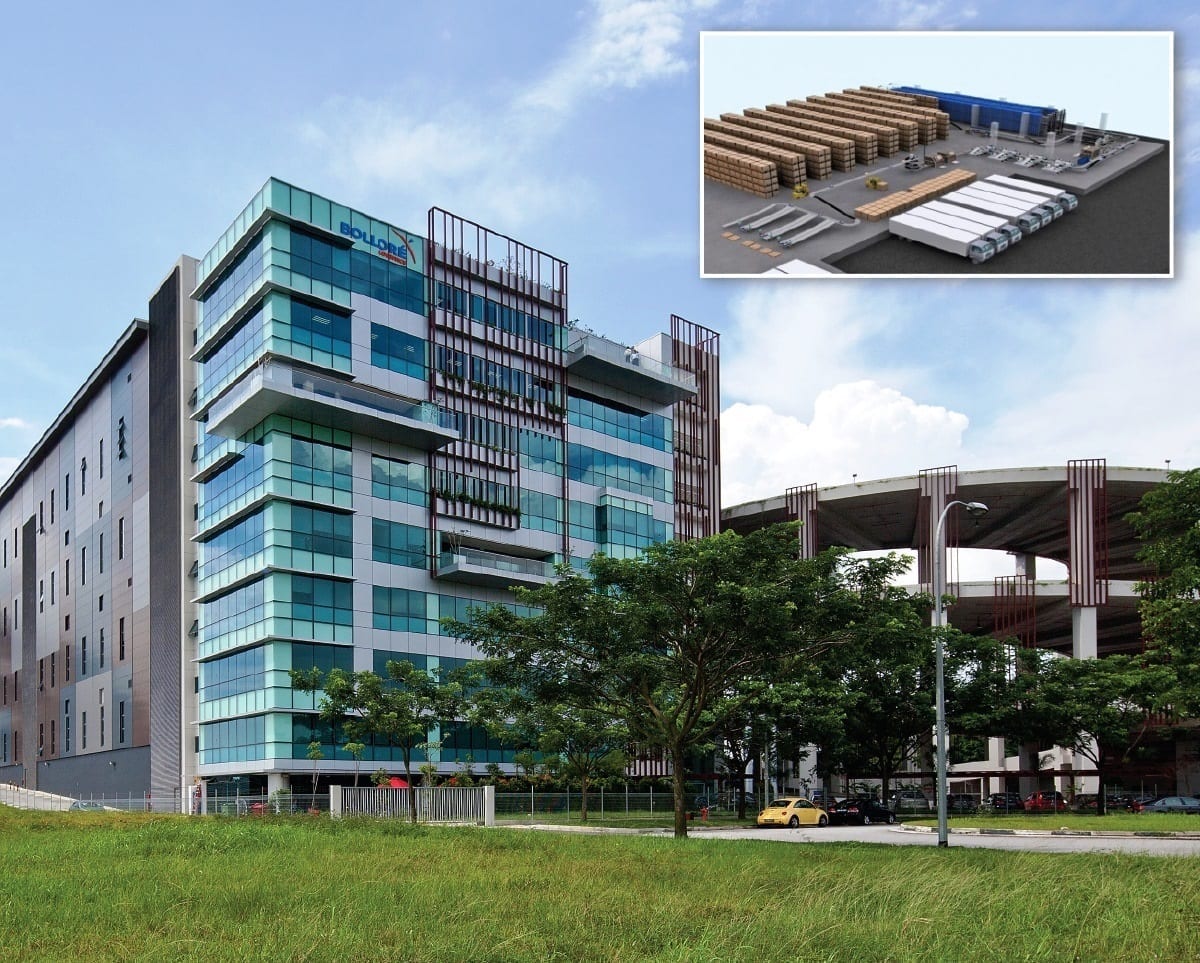
    Bolloré Logistics Singapore, a major player in international logistics and freight forwarding, announces plan for its first automation facility with one of the world’s leading luxury products group LVMH today.

    Supported by the Singapore Economic Development Board (EDB), the new 20,000 square meter automation facility will be built with an investment of S$10 million between Bolloré Logistics and LVMH as part of a long-term partnership to significantly drive productivity and increase space efficiency.

    “Automation is the key for Singapore’s logistics sector to cope with emerging patterns globally. The setup will be housed in Bolloré Logistics Green Hub, our high-tech logistic facility in Pioneer Turn, and we are happy to announce that the co-development of this automation has secured a long term commitment from LVMH. Bolloré Logistics strives to be at the forefront of innovation and prides itself in developing advanced supply chains for its customers,” says Mr. Cyril Dumon, Chief Executive Officer of Bolloré Logistics Asia Pacific.

    “The close partnership between LVMH and Bolloré Logistics has strongly supported the growth of the business in the last 15 years. With the introduction of automation, it further reinforces our connections and emphasizes our expertise on safety, quality, service and efficiency for the next 10 years,” says Mr. Guillaume Mechain, Supply Chain Director of LVMH, Asia Pacific.

    Collectively designed by Bolloré Logistics, LVMH and Dematic, this combination of multi-shuttle system and picking technology is the first of its kind to be deployed in Singapore and the region.

    The state-of-the-art facility will bring significant transformation to tackle supply chain operations – from the order preparation process, inbound to final dispatch of the orders, to integrating control checks that ensure greater accuracy.

    It also allows Bolloré Logistics to meet new challenges arising from the emergence of e-commerce and increase of future distribution channels globally, by bringing with it the capability to prepare e-commerce orders with a high level of accuracy while reducing the time to market, thus increasing its agility and capacity to absorb peak level of activity.

    “Working closely together with Bolloré Logistics, we have developed an innovative automated solution that will bring tremendous improvements in productivity, accuracy and space efficiency. This project represents a number of industry firsts both in Singapore and in the Region and we are delighted to be involved with the Bolloré Logistics team in designing, delivering and supporting the project,” says Mr. Michael Bradshaw, Director Dematic SEA.

    The facility will allow for higher storage density to make efficient use of limited warehouse space in Singapore. In terms of productivity, it will achieve throughput levels up to 10 times as compared to conventional methods, and will improve order lead time while using only half of the existing manpower resources.

    “Bolloré Logistics strongly believes that innovation starts from the bottom and has invested in various training and developmental programs within the company over the years. Our objective is to empower our staff. As part of Change Management, Bolloré Logistics has initiated several HR initiatives and a dedicated pilot development program known as ‘Level Up’. The program which includes a variety of technical and soft skill training, is specifically designed to equip our staff with necessary skills to cope with challenges that may come with automation,” note Mr. Fabien Giordano, Managing Director of Bolloré Logistics Singapore.

    “The ground staff is looking forward to this automation facility. Early communication is already in place to assist the staff so they are prepared for what’s coming. Although staff skills need to be upgraded through training, they can use this chance to expand their skillset and integrate flexibility to increase productivity,” note Mr. Tan Kok Xiong, Supervisor, Bolloré Logistics Singapore.

    With Singapore as the company’s regional hub, the new facility through its adaptable and scalable world-class system aims to create a future-ready infrastructure to support the demands of the Asia Pacific region. The plan is also in line with the government’s direction towards a future-ready Singapore and is supported by EDB.

    “Bolloré Logistics’ partnership with LVMH is an excellent example of the supply chain collaborations that EDB wants to help grow in Singapore. Such investments in operations excellence support Singapore’s efforts to transform the industry and create better jobs for Singaporeans,” says Mr Lee Eng Keat, Executive Director of Logistics, Singapore Economic Development Board.

    This project sets as a flagship and creates a model for Bolloré Logistics globally as the future of warehousing in land-scarce countries once it is slated to complete in January 2018.

    Starting Innovation at the Heart of Asia Pacific

    This initiative is just one of the many in the pipeline under the Bolloré Logistics vision to shift the paradigms of the logistic industry through innovation and technologies starting from the heart of Asia Pacific in Singapore.

    Bolloré Logistics created B.Lab, an internal innovation community in 2016 in order to accelerate the digitization of the supply chain. The objective is to improve our value proposition with existing clients by creating new products, services and innovative processes in relation with the digital.

    Their flagship logistic facility Green Hub in Pioneer Turn – a 42,000 square meter Bolloré Logistics high-tech warehouse facility has achieved remarkable accolades since its launch in 2012. The integrated logistics center also serves as a regional distribution center for multinational corporations. As an eco-friendly solution to reduce CO2 emissions, the group also introduced its first hybrid shuttle in 2015. And in 2016, BlueSG, a subsidiary of the Bolloré Group, has been awarded a 10-year car-sharing contract by the Singapore government to operate a fleet of 1,000 electric cars by 2020 under the national electric vehicle (EV) car-sharing programme, a major step towards Singapore’s vision of a car-lite and an environment friendly society.

  • Lalamove Pick-Up Price Drops Down

    Lalamove Pick-Up Price Drops Down

    Hong Kong based on-demand delivery app Lalamove is moving its moves upwards to a new high. Lalamove is offering its growing customer base a special new cut-price for its pick-up rentals at just THB 450 plus THB15 per kilometer for the first 100 kilometers; with rates dropping down even further with distances exceeding this and attracting out-of-town movers who need a pick-up and driver beyond Bangkok. Currently, Lalamove door-to-door delivery services are available from Bangkok to the capital as well as Chonburi, Rayong, Chanthaburi and Nakhon Ratchasima.

    More and more customers are taking advantage of Lalamove’s quality pick-ups, experienced drivers and professional delivery services. Customers are increasingly using Lalamove to move home, transport goods bought and sold between individuals advertised online as well as office moves.

    Capable of transporting one ton per pick-up with additional services such as the driver and extra hands helping with the load, Lalamove is perfect for moves both near and far.

    Easy to use and customer-friendly, the Lalamove app has also recently been redesigned to enhance the user experience with scope for adding more features too.

    Lalamove now hosts the largest delivery service area across Asia with operations in Hong Kong, Singapore, Bangkok, Taipei, Manila and 43 cities in China with over 50,000 drivers. The number of registered users regionally has grown to more than 5 million in the past three years. In Thailand, the number of download is currently 210,000 with over 17 thousands of registered drivers.

  • Arvato scores two awards for its logistics solutions in China

    Arvato scores two awards for its logistics solutions in China

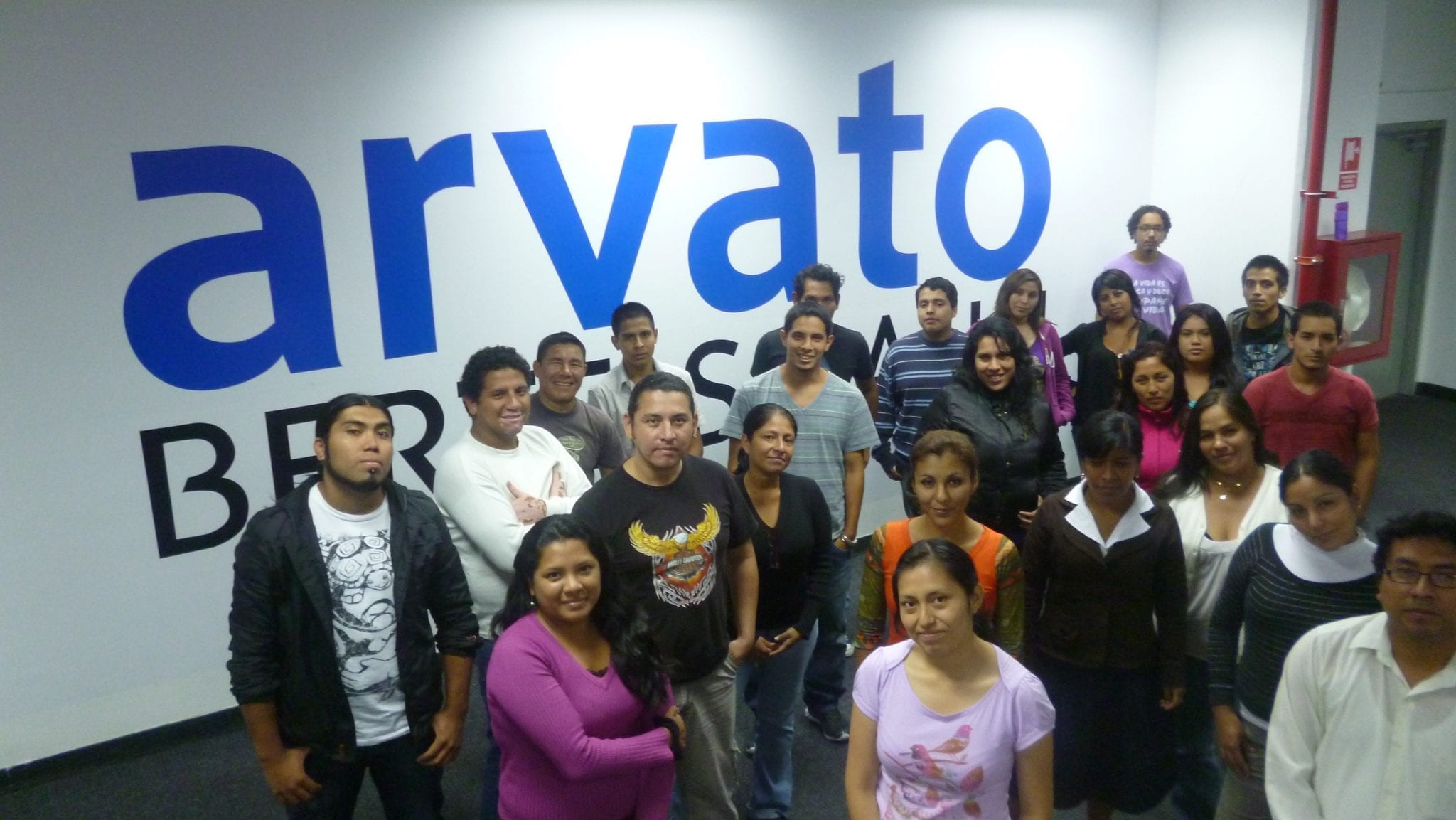
    Arvato SCM Solutions was honoured with “Best Partner” and “Service Award” by Oriflame – one of the world’s leading direct selling beauty companies. The awards recognise Arvato’s exceptional contributions in developing and executing an agile B2B and B2C domestic fulfillment system for Oriflame’s China business.

    “Oriflame’s vision has always been to be the top direct selling beauty company and China is a key growth market.” says Jason Dong, operations director at Oriflame China. “To support and further build upon our expanding network of consultants and customers, we rely on partners like Arvato that are able to innovate in its solutions and adapt swiftly to our needs.”

    Arvato was commended for the implementation of digital solutions that enhanced the efficiency and quality of its domestic fulfillment model. This includes automation of the order management process and utilisation of computerised tools such as the Pick-by-Light system; with all data integrated into one centralised IT back-end system. The result is end-to-end visibility, better accuracy and control that are critical for managing Oriflame’s wide portfolio of Swedish, nature-inspired beauty products.

    For Oriflame’s consultants and customers, the seamless flow of information allows them to track their orders in real-time via the Oriflame app, WeChat app, or Short Message Services (SMS). Because of the scalability and flexibility built into the system, Oriflame’s customers can be sure that they receive their orders timely even during extreme promotional peak periods such as during China’s annual 11.11 Global Shopping Festival. Their customer journey with Oriflame is further enhanced with an efficient returns management process through Arvato’s reverse logistics solution; and receipt of the most up-to-date promotional materials through Arvato’s value-added services.

    “The ‘Three-Year Service Award’ also marks a significant milestone in the partnership between Arvato and Oriflame,” says Li Zhang, head of the consumer products business unit at Arvato SCM Solutions China. “Over the span of three years, Arvato has expanded its services to three sites across China – Beijing, Shenzhen and Shanghai; in support of Oriflame’s rapidly growing business.”

    Arvato received both awards at Oriflame’s 2017 Summit for Service Providers.

  • UPS and SF Holding To Establish a Joint Venture

    UPS and SF Holding To Establish a Joint Venture

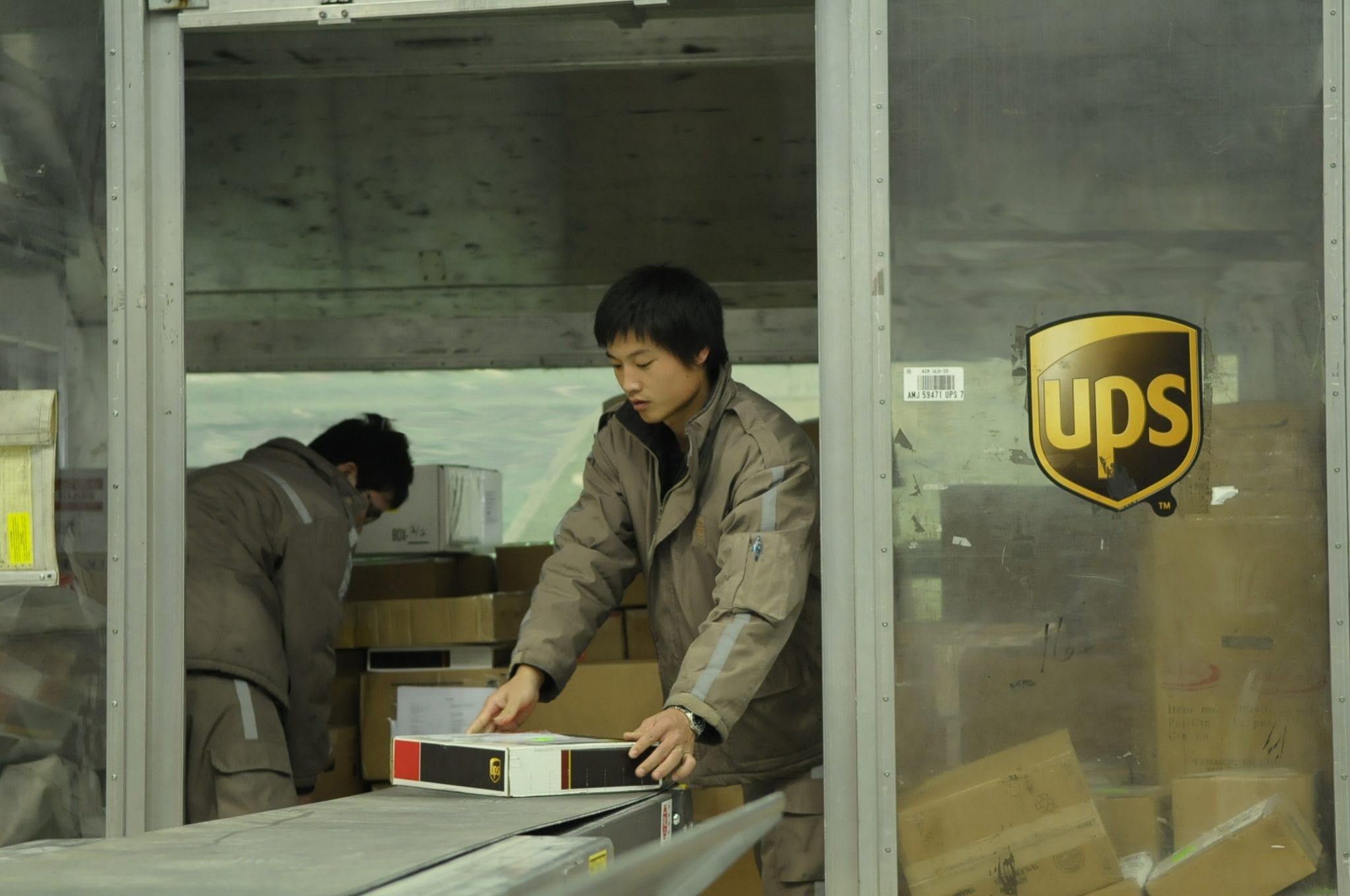
    UPS and SF Holding, the parent company of SF Express, today announced plans to establish a joint venture and collaborate to develop and provide international delivery services initially from China to the US, with expansion plans for other destinations. Through this agreement the parties will leverage their complementary networks, service portfolios, technologies and logistics expertise. The joint venture is subject to regulatory approval.

    UPS is the world’s largest express delivery company and a leading global supply chain integrator. SF is a market leader in express delivery in China, with extensive China-wide network coverage, comprehensive service capabilities, and the highest brand recognition in the Chinese small package market.

    “UPS is excited to form a joint venture with SF.  This joint venture will support products that provide competitive benefits to our Chinese customers who trade or seek to trade internationally,” said Ross McCullough, President of UPS Asia Pacific. “Our combined efforts will result in new logistics products and services to simplify and accelerate B2B and B2C customers’ cross-border trade.”

    The joint services offerings combine the strengths of SF’s extensive Chinese network, encompassing more than 13,000 service points in the world’s largest and fastest growing package delivery market, with UPS’s market leading globally integrated network with coverage between more than 220 countries.

    Alignment of the partners’ shipping networks will provide customers with greater coverage, additional routing options, increased capacity, and more choice in transit times and service options.  The joint venture will initially focus on supporting these highly competitive joint service offerings on the China-to-US lane, with planned expansion to markets in the rest of the world.

    “China is leading the world in terms of e-commerce market size, growth, penetration and mobile business usage[i]. Coupled with a rapidly growing and internet-savvy consumer base, it’s imperative thatSF and UPS collaborate to revolutionize the logistics sector.  Together, we aim to bring greater competitive advantages to our customers in China, to succeed globally,” said Alan Wong, Group Vice President of SF.

    The joint venture supports the creation of competitive synergies for UPS and SF through the combined scope and scale of both companies’ complementary networks.  Both companies will utilize their own assets to enhance operational effectiveness and efficiency while aligning business processes in order to provide seamless customer care for all parties shipping out of China.

  • K+N supports Shanghai to Taicang Express

    K+N supports Shanghai to Taicang Express

    Kuehne + Nagel signed a strategic cooperation with Jiangsu Taicang Port Authority and Shanghai Port Authority Zhenghe Terminal to promote a sea link between the Shanghai and Taicang ports.

    The Port of Taicang, located at the south bank of the Yangtze River estuary near Shanghai, is widely considered to be a significant satellite port to Shanghai’s Yangshan megaport. Under the agreement, K+N will cooperate with both port authorities to support the shuttle service which is in line with the Jiangsu Provincial Government strategic development plan to bring greater attention to the Taicang Port area. The sea-link aims to reduce CO2 emissions and improve efficiency by serving as a greener alternative to trucking between Jiangsu and Shanghai. This will have the added benefit of reducing vehicles on Shanghai’s heavily congested roads. The cooperation also intends to showcase Taicang as an international satellite port within the Shanghai Yangtze river estuary area, helping to aggregate high traffic at Shanghai Yangshan port.

    Shao Jian Lin, director of Taicang Port Authority said: “We are very pleased to enter this strategic agreement with K+N, a market leader in global logistics solutions, to support the development of the “Shanghai to Taicang Express” shuttle. We hope this cooperation will place a spotlight on the capabilities and ongoing expansion of Taicang port, ensuring market awareness on an even greater international scale.”

    Markus Johannsen, senior vice president seafreight North Asia, K+N, said: “By leveraging Kuehne + Nagel’s position as a leader in international seafreight, we are well placed to cooperate with the Taicang and Shanghai Port authority. Furthermore, the agreement will enable us to provide our customers a more cost effective, efficient service in the South Jiangsu area, adding even more value to their international supply chains. We are delighted to enter this agreement with Taicang and Shanghai Port authorities and look forward to more opportunities for cooperation in the future.”

  • Unisys launches software to enhance visibility of pharma supply chain

    Unisys launches software to enhance visibility of pharma supply chain

    Unisys Corporation has launched PharmaTrack, new software that combines security, advanced data analytics and compliance technology in a single, unified platform to provide life sciences and healthcare companies enhanced visibility and oversight of the entire global pharmaceutical supply chain and thus help combat theft and counterfeit drugs.

    This newest addition to the Unisys ActiveInsights suite of solutions arose from an overlap of industry needs between two industries in which Unisys has deep domain expertise: life sciences and healthcare, and travel and transportation.

    “When we started talking to people involved in pharmaceutical supply chain management, we quickly realised that Unisys already had developed the technologies in other industries required to address longstanding problems in pharmaceuticals,” said Jeff R. Livingstone, PhD, vice president and global head, Life Sciences and Healthcare, Unisys. “We then started right away to work with the Unisys Travel & Transportation group and other teams to successfully adapt their technologies for our Life Sciences clients.”

    According to the World Health Organisation, dangerous counterfeit drugs make up more than 10 percent of the drug market worldwide. In addition, supply chain theft and materials erroneously compromised by poor environmental quality controls can cost manufacturers billions of dollars annually and likewise put their patients at risk. PharmaTrack helps secure the supply chain by leveraging Unisys’ leading cross-platform analytics to identify and pre-empt fraudulent activity, issuing immediate alerts when product authentication fails.

    PharmaTrack also enables track-and-trace capabilities so companies can verify product shipping information, monitor temperature issues and other environmental factors affecting drug viability and flag potentially counterfeit product at any point in the supply chain. All data tracked and transmitted through PharmaTrack is protected by Unisys’ state-of-the-art Unisys Stealth micro-segmentation security software, preventing unauthorized access while maintaining the confidentiality of shipping contents.

  • New APAC Forwarding Index

    New APAC Forwarding Index

    Air and ocean volumes on Asia-Europe trade lanes eastbound and westbound are expected to surge in the coming months, according to the latest survey results for The New APAC Forwarding Index being developed by Mike King & Associates and Logistics Trends & Insights LLC.

    Higher air freight volumes are expected on key lanes to and from APAC, and the outlook for intra-Asia trade is also optimistic. The survey results, compiled by consultants Mike King and Cathy Roberson, are the first step towards the creation of a new Index for Asia forwarding markets which will be published in the coming months. The second survey is open to anyone with insight or business linked to key trade lanes to and from APAC used by forwarders and third parties.

    APAC Ocean Forwarding Markets
    Sixty per cent of survey respondents said ocean freight volumes to and from APAC in April were higher than March, while 54 per cent predicted they would handle higher volumes three months from now.

    “Demand has been higher than we’d anticipated from Europe to Asia, and there has also been some disruption to liner services following blank sailings around Chinese New Year and changes to alliances,” said one respondent. “We expect capacity to be tight well into Q2.”

    Seventy per cent of respondents expect APAC to Europe ocean freight volumes to increase three months from now, while 66.7 per cent forecast that volumes will rise from APAC to North America. However, optimism for the North America – APAC trade was hard to discern. Only 28.6% of respondents saw higher volumes on the lane in April compared to March, while only 43 per cent expect volumes to increase three months from now.

    “Despite uncertainty surrounding liner Alliances leading up to April 1 and the various bedding issues we have seen including terminal congestion in China and a lack of capacity in Europe, optimism is high for the APAC ocean freight market,” said Roberson. “The Europe to APAC trade lane had the highest percentage rate of month-to-month volume gains according to respondents to our first survey. The next most dynamic lanes were APAC to Europe and APAC to North America.

    “The North America to APAC liner trade reported the lowest percentage of respondents recording volume increases in April compared to March which could be the strength of the Greenback catching up with exporters. On most lanes the majority of respondents expect to see higher volumes over the next three months than at present, which bodes well for forwarders and lines.”

    APAC Air Markets
    Fifty-four per cent of survey respondents predicted APAC volumes across all lanes will be higher in three months than at present, with 37 per cent expecting them to remain the same and just 9 per cent lower. Fifty-two per cent of respondents reported that volumes in April compared to March were higher while only 11 per cent said they were lower. As with ocean trades, the most dynamic air cargo lanes in April compared to March were APAC to Europe (73 per cent experienced higher volumes month-on-month), Europe to APAC (55 per centhigher m-o-m) and APAC to North America (63 per cent higher m-o-m).

    “Concerns of a possible protectionist import tax on goods entering the US may be holding some shippers back in the North America region,” said Roberson. “Still, a respectable showing for North America as the economy remains healthy as the first half of the year progresses. Emerging markets volume appears strongest to APAC for air freight with more than half of respondents anticipating higher volumes on the lane three months from now. This is likely due to food imports from such locations as Africa, Chile, Argentina and elsewhere.”

  • Yusen Logistics standardises global fulfilment operations on Manhattan Associates

    Yusen Logistics standardises global fulfilment operations on Manhattan Associates

    Yusen Logistics is deploying Manhattan Associates, warehouse and distribution management solution Manhattan SCALE as the fulfilment engine to power its expanding global logistics services operation. The Manhattan solution being implemented on the Microsoft Azure cloud platform, is driving revenue, profitability and efficiency improvements for Yusen Logistics and its customers and will support Yusen Logistics’ ongoing business growth across the Europe, Middle East and Africa (EMEA), Asia-Pacific (APAC) and Americas regions.

    Yusen Logistics serves a broad spectrum of industry sectors, offering an extensive range of capabilities including air, sea and road freight services. One of the key business imperatives for Yusen Logistics is an unwavering commitment to delivering solutions that meet the unique requirements of each client. Having operated previously with a number of vendor systems, Yusen Logistics made the decision to standardise on a single Warehouse Management Solution (WMS) that could be deployed globally and provide the requisite level of consistency in service levels its customers increasingly demand.

    Tony Gudger, CIO at Yusen Logistics Europe explains: “We chose Manhattan SCALE as our strategic fulfilment solution based on a number of factors including functionality, extensibility, ease and speed of implementation, global support capability and total cost of solution ownership. Our long-term partnership with Manhattan, which stretches back 14 years and has involved multiple deployments of its various WMS technologies across the globe, also counted significantly in our selection process.”

    Having relied on Microsoft Azure as a cloud services platform since 2012, the deployment of Manhattan SCALE on Azure was a logical decision. During the initial implementations in Southern Europe, Yusen Logistics reported zero issues relating to either Azure or Manhattan SCALE. The company plans to use Manhattan SCALE for the full gamut of local and global customer order fulfilment operations, spanning relatively small, single site distribution hubs to multi-site, multi-channel, high volume throughput supply networks.

    Henri Seroux, senior vice president, EMEA, at Manhattan Associates, commented, “Yusen Logistics’ customers across the globe are increasingly pressured to fulfil orders profitably across multiple sales channels and geographies while simultaneously maximising product availability and customer satisfaction. We are excited to provide the technology, services and support capabilities to drive the next phase of Yusen Logistics’ global success story.”

  • Infor M3 integrates to GT Nexus supply chain network

    Infor M3 integrates to GT Nexus supply chain network

    Infor, a provider of business applications specialised by industry and built for the cloud, announced the availability of a standard Infor ION integration between Infor M3 and GT Nexus Order Collaboration. This integration will better support fashion and distribution companies in sourcing discrete products by providing more visibility and a single version of purchase order information with suppliers.

    Infor M3 is an enterprise resource planning (ERP) solution that offers ultimate flexibility in operations, technology, and scale. As a multi-site, multi-country, and multi-company solution, Infor M3 empowers organisations to adapt to changing business needs and provides flexibility in managing mixed-mode and complex environments, with the agility to make quick adjustments at any time. GT Nexus is a supply chain network platform that leading companies use to orchestrate their supply chains. GT Nexus connects companies to their supply chain partners (suppliers, manufacturers, 3PLs, carriers, etc.) to enable visibility, collaboration, and automated execution of supply chain processes.

    GT Nexus Order Collaboration is ideal for companies that operate globally or internationally, and are looking to better align with their suppliers. By integrating GT Nexus Order Collaboration with Infor M3, organisations can instantly connect with suppliers to share, confirm, and negotiate purchase orders. In addition, users can track the status of their suppliers’ negotiations and confirmations directly on the Infor M3 order screen. By electronically sharing, confirming, and negotiating purchase orders, companies have the tools to reduce time-to-market and the risk of errors.

  • Yusen Logistics taps into CargoSmart for ocean route planning

    Yusen Logistics taps into CargoSmart for ocean route planning

    CargoSmart Limited, a global shipment management software solutions provider that leverages big data for greater visibility and benchmarking, announced that Yusen Logistics Co., Ltd., a global supply chain logistics company, is using Route Master to gain insights to optimise its ocean route planning.

    Providing extensive information about 29 ocean carriers’ available services, Route Master helps Yusen Logistics discover the best routing options to prepare for carrier contract negotiations, make shipment plan recommendations to its customers, and establish routing guides for its internal teams based on the insights.

  • Vietnam logistics firms increase cross-border transport

    Vietnam logistics firms increase cross-border transport

    Amid a growing interest in Vietnam from global garment and technology companies, foreign logistics firms are expanding cross-border transport services between Vietnam, China, and other countries in the region to meet the growing demand.

    Dao Trong Khoa, head of the Vietnam Logistics Business Association’s (VLA) transport division, said at last week’s international seminar on cross-border transport (CBT) between Vietnam and China that CBT has great opportunities to develop.

    Khoa said these opportunities will be driven by the development of regional cross-border e-commerce and transport networks.

    Attention is focused on the development of Shenzhen-Hanoi-Bangkok, and Kunming-Lao Cai-Haiphong networks, which have promising full truckload (FTL) and less truckload (LTL) potential.

    So far, the Chinese-invested ZhenYang Logistics Group (ZYL), which focuses on the ZhenYang-Nanning-Hanoi route and routes between southern China and northern Vietnam, has opened offices in Hanoi and Lang Son province.

    ZYL is the first Chinese logistics firm that has been permitted to cross the border directly without any trans-load at the border.

    “We focus on electronics and high-tech products. Our customers are mainly foreign-invested firms such as Samsung, Foxconn, and global forwarders. We have witnessed the volume of containers grow from 70-80 containers a month in 2013 to 400 containers currently,” Nguyen Quang Tung, branch manager of ZhenYang Logistics Group, said.

    “As the demand continues to increase, ZhenYang is planning to develop LTL services to Vietnam in the third quarter of 2017, while also developing additional multimodal transportation hubs that link Vietnam, China and Europe,” Tung said.

    In another significant move to develop regional CBT routes, Malaysian-invested Overland Total Logistics Services Vietnam JSC (OTL)-which focuses on the Singapore-Malaysia-Thailand-Laos-Vietnam-China route-has partnered with Japan’s Yamato Transport to strengthen its market position.

    Trinh Manh Cuong, general manager at OTL, said “our volume of CBT goods has grown significantly, reaching 700-800 containers per month. We will invest in more facilities, open more hubs, and develop multi-model sea, rail, and cross-border road services in the future.”

    CBT between Vietnam and China is becoming increasingly more popular among international groups and Vietnamese firms alike. The popularity of this market is being driven by the expensive cost of air transport, and the huge risks inherent in sea-based routes.

    According to VLA’s statistics, in 2016, cargo shipped by land transit in Vietnam totalled 19,475 vehicle loads. Cargo shipments between China and Vietnam reached 107,600 loads. The shipping amount between China and Laos, China and Thailand, and China and others is estimated at 2,020, 128,000, and 1,076 loads respectively.

    Notably, cargo throughput at PingXiang and Huu Nghi rose from 1.1 million tonnes in 2013, to 1.5 million tonnes in 2015. At the same time, throughput at HeKou and Lao Cai rose from 650,000 tonnes in 2013, to 1.1 million in 2015.

    As Vietnam is now considered the destination for technology and garments by many multinationals, developing new transport routes has become a lucrative endeavour for CBT firms.

    Multinationals that are currently heavy users of CBT services are the electronics manufacturers Samsung Electronics, LG Electronics and its subsidiaries, Foxconn, Canon, and Foster and its subsidiaries.

    Heavy CBT players in the garment sector include Lear, Adidas, Nike, and Levis, while in the automotive sector Honda, Toyota, Yamaha, and GMV are the primary users of CBT.

    These groups have been expanding their investment in Vietnam, which has led to an exponential increase in their CBT usage.