Tag: Logistics

  • UPS expands Chinese operations

    UPS expands Chinese operations

    UPS has expanded its presence in 13 additional cities in China improving transit times and extending cut-off times.

    Customers in the cities, situated in Jiangsu, Shandong, Zhejiang, Guangdong provinces, and in Chongqing Municipality, will have direct access to UPS’ full portfolio of services.

    Nando Cesarone, president of UPS Asia Pacific, said: “As China continues to liberalise its economy, balance growth across the country, and improve its infrastructure through initiatives such as ‘One Belt, One Road’, UPS is committed to expanding our presence in China and enabling more businesses to achieve their cross-border pursuits. This expansion is part of UPS’ long-term Asia Pacific strategy to facilitate trade growth within and beyond Asia.”

  • Logistics firm 21Express to tap Indonesia’s e-commerce boom for higher growth

    Logistics firm 21Express to tap Indonesia’s e-commerce boom for higher growth

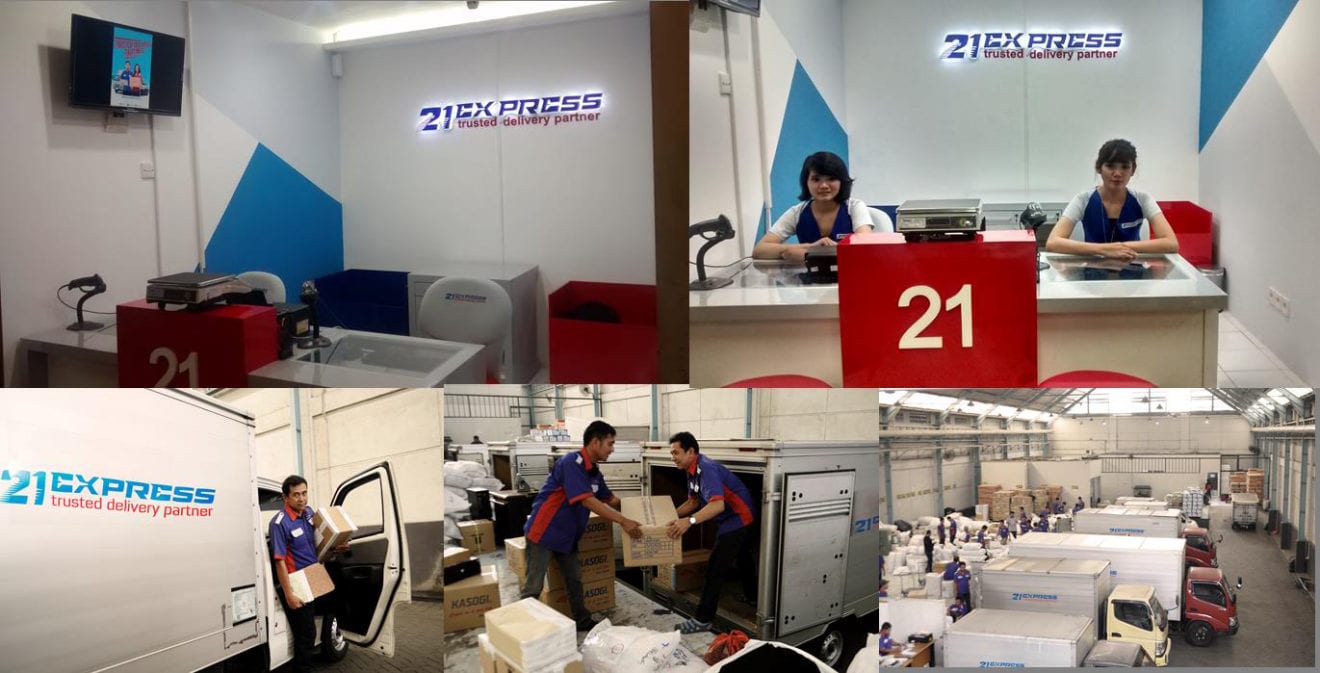
    Founder and CEO 21Express Tjia Anastasia told reporters on Wednesday that the company’s plan to enter the retail courier business is driven by the high demand from retail sector for domestic and international shipments.

    “We have seen a fast growth in e-commerce since about 2010.This growth has really impacted the logistics business as companies have to send packages to Indonesia regularly,” Fany Wyadi, managing director of 21Express, said.

    As online shopping becomes increasingly popular in smaller cities, the Jakarta-based company expects to see shipments growth double or even treble in the next year from the current 130,000 packages each month, said Fany. 21Express’ clientele is dominated by corporates who account for 70 per cent of the business while it has already signed up three of the country’s top e-commerce players as clients, Fany said, declining to divulge further.

    According to independent research body IDC, e-commerce market in Indonesia grew by 42 per cent from 2012 to 2015.

    The high growth is encouraging e-commerce businesses to find reliable partners so that the delivery of goods and documents can be done in time. For example, one of the leading retail optical networks of the country Optik Melawai, has partnered with 21Express to send stock glasses and sales tools to hundreds of outlets in Indonesia. Tjia explains that its first partner is serving the retail customers of a communication equipment distributor firm to distribute its high value products.

    “We are the pioneer company behind the successful sales and distribution of mobile phones in Indonesia and one of the companies that is believed to transmit the tools and medical material to the corners of Indonesia,” Fany said.

    Backed by more than 200 units in its fleet, the company currently has 30 official outlets in Indonesia with an additional 50 partners that franchise the service. The company said, it was in the process of adding 200 new outlets by the end of the year.

  • Global Logistics Properties sets up US$7 billion China-focused fund

    Global Logistics Properties sets up US$7 billion China-focused fund

    Singapore-listed GLP has secured US$3.7 billion in equity commitments from seven unnamed investors, six of them national pension or sovereign wealth funds, for the CLF II fund. The largest China-focused logistics infrastructure fund so far, it will have an investment capacity of US$7 billion after adding leverage.

    “We continue to see strong demand from China,” GLP chief executive Ming Z. Mei said. “Despite the recent headlines about the GDP growth slowdown, 7 per cent is by definition a healthy rate anywhere in the world. Retail consumption, which is more relevant to logistics demand, maintains a double-digit growth rate.”

    Retail consumption, which is more relevant to logistics demand, maintains a double-digit growth rate

    Ming Z. Mei, GLP chief executive

    CLF II is an add-on to the US$3 billion CLF I, whose capital was fully allocated more than two years ahead of the planned investment horizon. GLP, created from a spin-off of US industrial property developer Prologis, dominates industrial property markets in China, Japan and Brazil. It is 36 per cent controlled by Singapore’s sovereign wealth fund GIC.

    The US$7 billion in funds will be channelled to develop 13 million square metres of warehouses in four years. GLP, the fund manager, holds a 56 per cent stake.

    China’s burgeoning industrial property market has lured investors from around the world – most recently Carlyle Group, Glodman Sachs and RRJ Capital – who believe a shifting economic pattern has created vast demand for modern warehouses, where courier firms, e-commerce outlets and third-party logistics service providers store, distribute and process goods.

    “Over the last few years, many people make noises about raising capital. Actually raising capital is not the hard part. Executing on the ground is,” Mei said. “As the market gets heated up, it requires deeper knowledge of logistics patterns.”

    As capital flocked in, oversupply had started to surface in certain locations, he said.

    “The market is no longer the way it used to be five, six years ago,” Mei said. “Supply and demand is more balanced now, with some markets oversupplied in the short term.”

    CLSA senior analyst Yew Kiang Wong said: “The big question mark here is demand. These investments are in anticipation of future demand. Third-party logistics companies represent large demand potential and are GLP’s bread and butter. But there’s also some cannibalisation from e-commerce companies which are now trying to develop their own warehouses, such as Alibaba. So there’s some risk in that respect.”

    GLP’s top tenants in China include e-commerce powerhouses JD.com and Amazon, and logistics firms Sinortans and Best Logistics.

    Mei said it was getting harder to source new land. Due to lower tax and employment contributions, local governments are less willing to release land for logistics use.

    In order to gain better access to land reserves and customers, GLP last year sold a 34 per cent stake in its China portfolio for US$2.5 billion to a consortium of state-owned investors including China Life Insurance, China Development Bank and Bank of China.

  • TCC opens megamarket in Nong Khai

    TCC opens megamarket in Nong Khai

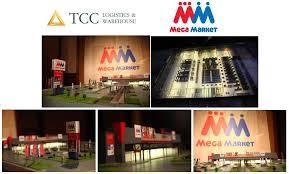
    TCC Logistics and Warehouse, a subsidiary of TCC Group, has opened the MM Mega Market in Nong Khai province to cash in on growing consumption spurred by increasing border trade with neighbouring countries.

    The company has leased space at Asawann Shopping Complex II for 30 years to open the MM Mega Market, which has a new concept blending a hypermarket and wholesale store under the same roof. Customers can but products either in bulk or just one piece.

    The market, covering 10,000 square metres, is 4.4 kilometres from the Thai-Lao Friendship Bridge, enabling it to attract customers from Laos.