Retail News CRM

Tag: Lotte group

  • Lotte Group’s Bold Investment In E-commerce: Reshaping Asia’s Online Shopping Landscape

    Lotte Group’s Bold Investment In E-commerce: Reshaping Asia’s Online Shopping Landscape

    In a move that has captivated the retail landscape, Lotte Group, a titan in South Korea’s retail industry, is making waves with its latest investment in the e-commerce sector. This ambitious strategy could well reshape the dynamics of online shopping in Asia. The company recently announced a significant investment in the rapidly growing e-commerce platform, Wowma!, as part of its overarching plan to bolster its digital presence and compete with regional rivals.

    E-commerce Expansion: Lotte’s Strategic Play

    This investment in Wowma! isn’t just about numbers; it’s a bold statement of intent. As Lotte Group dives deeper into online retail, this move allows them to tap into the burgeoning demand for e-commerce in Asia. With internet penetration skyrocketing and consumer shopping habits shifting, their goal seems clear: to solidify a commanding lead in the online marketplace. Wowma!, owned by the Japanese entity ASKUL Corporation, has been swiftly gaining traction, and Lotte’s involvement is likely to enhance its capabilities and reach significantly.

    Moreover, this collaboration brings together Lotte’s extensive logistics and retail networks with Wowma!’s established e-commerce ecosystem. Imagine a world where your online orders arrive quicker than you can say “cart checkout!” It’s not a stretch to think that this partnership could redefine delivery standards.

    The Numbers Behind the Vision

    Reports indicate that Lotte Group has allocated a substantial investment of approximately 100 billion Korean won, translating to around $90 million USD. This financial influx aims to elevate Wowma!’s technological infrastructure, improve user experience, and expand product offerings. For shoppers, this could mean a wider selection and faster delivery options, an enticing prospect for those who indulge in impulse purchases online.

    Changing Consumer Behavior and Market Trends

    The ongoing pandemic has accelerated the shift toward online shopping across Asia, creating a frenzy of digital impulse-buying. Lotte Group is keenly aware of these trends and aligns its strategy to address the evolving consumer preferences. As convenience becomes king, retailers who adapt swiftly stand to reap the rewards. Lotte’s proactive investment seems to be a strategic response to an environment where consumers are increasingly drawn to brands that blend online convenience with offline experiences.

    Interestingly, this move also hints at a rising trend—partnerships between established retail giants and agile e-commerce platforms. As traditional retailers evolve, those who choose to innovate rather than merely react may very well write the future rules of retail.

    Conclusion

    In a world where every click counts, Lotte Group’s significant investment in Wowma! underscores the critical importance of e-commerce in today’s retail landscape. This partnership not only enhances their digital ambitions but may also set new expectations for speed and convenience in online shopping throughout Asia. As the alliance unfolds, consumers eagerly await the potential benefits that could come from this merging of retail powers.

    Questions & Answers

    What is the main purpose of Lotte Group’s investment in Wowma!?
    The investment aims to strengthen Lotte’s digital presence, enhance Wowma!’s capabilities, and meet the growing demand for e-commerce in Asia.

    How much has Lotte Group invested in Wowma!?
    Lotte Group has invested approximately 100 billion Korean won, or around $90 million USD, to enhance Wowma!’s infrastructure and product offerings.

    How could this investment affect consumers in Asia?
    Consumers may benefit from a wider selection of products and faster delivery options, enhancing the overall e-commerce experience as shopping habits continue to shift towards online platforms.

  • Lotte Group acquires Ministop South Korea

    Lotte Group acquires Ministop South Korea

    South Korea’s Lotte Group has agreed to acquire a 100% stake in Ministop Korea for 313.4 billion won ($263 million), the country’s fifth-largest convenience store chain, from Japan’s Aeon Co., Lotte said on Jan. 21.

    With the purchase in cash, Lotte’s convenience store operator 7-Eleven will be able to take on the two sector leaders —  CJ Group’s CU and GS Group’s GS 25, while further widening the gap with fourth-ranked Shinsegae’s E-Mart 24.

    “Competition is heating up in the quick commerce market for short-distance services, based on convenience stores,” said an official of the group’s holding company Lotte Corp.

    “We are now adding Ministop Korea’s 2,600 stores and 12 logistics centers to the list of our stores, which will expand our points of customer contact in the near term.”

    Lotte’s 7-Eleven runs 10,500 outlets nationwide. By comparison, CU boasts 14,900 stores, trailed by second-ranked GS 25 with 14,600 stores.

  • Lotte Group forced to drop $4.5bn IPO

    Lotte Group forced to drop $4.5bn IPO

    Following a 30 per cent drop in duty-free sales last month and the virtual closure of more than 100 supermarkets and discount shops in China, the Lotte Group has cancelled its US$4.5 billion IPO.

    Its woes are fallout from the mainland’s objection to South Korea’s new THAAD missile defence system, designed to knock out missiles from North Korea in the event of a war. China’s military claims the system can snoop on its installations as well. China is also angered that the system is on land sold by the Lotte Group to the South Korean government.

    These political moves have put the brakes on Lotte Duty Free’s booming South Korean sales, which rose a record 36 per cent last year to US$5.7 billion.

    Meanwhile, South Korea has protested to the World Trade Organisation (WTO) in an effort to persuade China to relax its stance.

    This means the Lotte Group will now dip out on funding for its expansion programs while its key competitor, Shilla Duty Free, has continued to expand its duty-free business overseas, including Hong Kong International Airport (HKIA), as reported.

  • Lotte founder’s 50-year reign comes to an end

    Shin Kyuk-ho, founder and general chairman of the Korean retailer Lotte, has been removed from his company by shareholders, solidifying the succession of his second son, Shin Dong-bin, and coming closer to ending a family feud that started in 2015.

    Lotte is the country’s fifth-largest family controlled conglomerate, with 90 affiliates here and abroad.

    The shareholders voted in favor of denying the 95 year-old patriarch the position of board director of Lotte Shopping on Friday, which he has held since the affiliate was founded in 1970.

    The elder Shin’s term was terminated on March 20.

    Kang Hee-tae, CEO of Lotte Department Store, and Yoon Jong-min, Lotte Group’s human resource director, were newly appointed to the directors’ post at Lotte Shopping. Friday’s decision has completed the full control of the younger son, Dong-bin, who took his current role in 2011.

    “Lotte Group was able to grow with Shin Kyuk-ho’s leadership until now, but it is time for a new era under the new leadership of Shin Dong-bin,” said Lotte Group spokesman.

    Despite taking the role of chairman, Dong-bin was not allowed to make independent business decisions without the final call coming from his father, who held the board director position at most of Lotte’s affiliates.

    The father has been losing his board director position starting with Lotte International in 2015, followed by Lotte Confectionery and Hotel Lotte in March 2016.

    Lotte Confectionery is the founding company and the foundation of Lotte Group, while Hotel Lotte is the de facto holding company.

    Shin Kyuk-ho has been losing his title since he sided with his older son, Shin Dong-joo, who was trying to take full ownership of the group, and fired Dong-bin and six other executives at Lotte’s key operation in Japan.

    The founder still has several director positions, but his tenure is coming to an end and is unlikely to be extended. His role at Lotte Engineering & Construction is poised to be terminated on Sunday, followed by Lotte Aluminum and the Lotte Giants in coming month.

    Unlike his father, Dong-bin on Friday was appointed as the new director of Lotte Chilsung Beverage during the shareholders’ meeting, which industry insiders say is a necessary step to realigning the organization under his new leadership.

    Hwang Kak-gyu, who has worked with Shin Dong-bin for 27 years, was newly appointed as the CEO of Lotte Confectionery, a position that he will share with Dong-bin and Kim Yong-soo. The company said the decision was made to strengthen the company’s overseas business.

    Meanwhile, Dong-bin has been increasing his efforts to appease China, which has been bombarding Lotte’s business there as a retaliation against the Korean retail conglomerate’s decision to offer its golf course for the deployment of the U.S. antimissile defense system known as Thaad.

    In an interview he had with the Wall Street Journal on Thursday, Dong-bin said, “We definitely want to continue our business in China.”

    He added that he “loves” China and believe there has been a “misunderstanding.

    “If the government asks a private corporation like ours to give up land, then I don’t think we have the luxury of rejecting the government,” Dong-bin was quoted as saying in the Wall Street Journal.

    Lotte Mart, which runs 99 local branches in China, shut down 90 of them in the past couple weeks, partly forced by the Chinese government, which cited safety concerns, and also because of fierce protests in front of its stores.

    Lotte Shopping on Friday announced it will issue new shares worth 230 billion won and borrow 130 billion won in order to maintain its Chinese Lotte Mart branches.

    “Due to the suspension of Lotte Mart operations in China, there is no revenue generated, which we plan to compensate through capital increase,” Lotte Mart explained. “We need to pay local staff and purchase products.”

    Shares of Lotte Shopping jumped 2.61 percent on Friday, closing at 216,500 won.


  • Lotte agrees to leverage IBM’s Watson for retail

    Lotte agrees to leverage IBM’s Watson for retail

    IBM has signed an agreement with the Lotte Group to provide cloud-based IBM Watson solutions to help the Group deliver innovation across the business and become a world-class retail company.

    Lotte Group represents the country´s largest retailer in a highly competitive retail market and is one of Korea´s top five companies, providing products and services to its customers through online channels, mobile services and offline department stores, marts, convenience stores and duty-free shops.

    Lotte Group will use Watson technologies to maximize insights from the huge amount of structured and unstructured customer data collected through its various channels, including the Lotte Members program, deriving valuable learnings about customer preferences and product feedback. With a deeper understanding of its data, Lotte will be enabled to offer more personalized services to customers, consistent product information and expert advice tailored to individual customer needs.

    This agreement prioritizes two “Artificial Intelligence Innovation Themes” for which to apply Watson. Lotte and IBM will team to create an ´Intelligent Shopping Advisor´ for customers and an internal employee ´Cognitive Business Decision Advisor´ for the Group´s retail affiliates.

    The ´Intelligent Shopping Adviser´ will be first introduced to Lotte´s department stores. Customers will have their own virtual personal assistant offering help from product recommendations, shop location guidance, to support for online pickup service. Customers will benefit from greater convenience and an enhanced customer experience as they interact, in natural language, with a service that understands the questions asked, in the context of the individual shopper´s needs.

    IBM will collaborate with teams from the Lotte Information & Communications and the Lotte Members affiliates for IT system support services, data integration and data analysis. Within the next five years, Lotte plans to build and upgrade its artificial intelligence-based application for business innovation to support personalized services throughout the customer life cycle. These initiatives are part of Lotte Group´s technology roadmap to expand the introduction of IBM Watson to all affiliates from retail to food, chemical, tourism and finance.

    Lotte is based in Korea and has nine affiliates and 120,000 employees.

    Watson represents a new era in computing called cognitive computing, where systems understand the world in a way more similar to humans: through senses, learning, and experience.

  • South Korea prosecutors to indict Lotte chairman, father and brother in corruption probe

    South Korea prosecutors to indict Lotte chairman, father and brother in corruption probe

    South Korean prosecutors will file charges on Wednesday against Lotte Group’s chairman, Shin Dong-bin, father and brother alleging they committed offences such as embezzlement and breach of trust worth hundreds of millions of dollars at the family-owned conglomerate, as reported on Tuesday.

    Closing a wide-ranging probe into corruption that has convulsed Korea’s fifth-largest conglomerate, prosecutors will announce the results of their investigation into the retail-to-chemicals group on Oct. 19, a prosecution source with direct knowledge of the matter told Reuters.

    The person, who requested anonymity as he was not authorized to speak to the media, declined to comment on whether Shin, 61, will be indicted.

    Shin’s father, the 93-year-old Lotte Group founder Shin Kyuk-ho, and his brother Shin Dong-joo, will also be charged with offences such as tax evasion and breach of trust.

    A Lotte Group spokeswoman declined to comment.

    The probe has constricted management at Lotte, a household name in Korea, since it flared into public in June, derailing plans for billion-dollar deals and freezing expansion of a group with assets worth 103 trillion won (US$92 billion). It also served as the backdrop to the apparent suicide of a leading executive at the group.

    While Shin would be charged with embezzlement of about 50 billion won and breach of trust involving about 175 billion won, he would not be arrested.

    Last month the Seoul Central District Court turned down prosecutors’ request for an arrest warrant for Shin after he appeared at a court hearing, saying it didn’t view detaining the executive as necessary.

    Once indicted, appeals processes could mean Shin potentially faces trial in court for many months.

    A spokesman for the Seoul Central District Prosecutors’ Office could not be immediately reached for comment.


  • Lotte jumps into Shanghai retail

    Lotte jumps into Shanghai retail

    Lotte Department Store has signed on to a joint venture with Citic Group, a state-owned Chinese company, to operate a shopping mall in Shanghai and to build three more in the region between 2017 and 2019, the Korean company announced Monday.

    The joint venture will operate the already-existing Citic Square Mall in the bustling commercial district of Jing’an on West Nanjing Road. The mall is currently run by Citic Group, and Lotte’s participation in the joint venture with the Chinese company will allow the Korean retail giant to step foot into the Shanghai market without having to navigate through China’s byzantine business regulations.

    Lotte will hold approximately 49 percent of the joint venture’s shares and will focus on operations, while Citic Group will help with property development.

    The partnership was first offered by Citic Group, which makes 60 trillion won ($52.6 billion) in annual sales from financial services, energy and property development. “In China, companies in property development have started to launch businesses in retail because they already have the land to build new facilities,” a Lotte Department Store spokesman said.

    Although Citic Group is an influential company in China, it lacks expertise in retail, as it wasn’t the group’s main business in the past. Competition is also tough, as Shanghai is currently home to over 50 department stores and 80 shopping malls.

    Lotte Department Store, on the other hand, already has five branches across China and has experience with merchandising, store design and employee training in the country. Sales at Lotte’s five department stores rose 28 percent last year from the previous year.

    The Korean retail giant said it plans to use the partnership to create more opportunities for Korean brands to enter Shanghai. Consumers in the metropolis have shown particularly high interest in Korean popular culture, making it a good starting point for Korean fashion companies looking to set foot in China.

    “We believe the partnership with Citic Group will strengthen our stance in the Chinese market,” Lotte Department Store CEO Lee Won-jun said. “Our plan is to use this opportunity to help other domestic companies with potential to expand to China as well.”


  • Lotte Group vice chairman found dead, suicide suspected

    Lotte Group vice chairman found dead, suicide suspected

    A local news agency reports that a suicide note was found in the executive’s car.

    A senior executive at South Korea’s Lotte Group was found dead on Friday, a suspected suicide, hours before he was to be questioned by prosecutors conducting a criminal probe into the family-run conglomerate, news reports said.

    Lotte Group, in a text message to reporters, said it confirmed the death of Vice Chairman Lee In-won through police and other sources. It did not elaborate further or give the cause of death.

    South Korea’s Yonhap News Agency, citing unnamed sources, reported a body believed to be Lee’s was found on a walking path outside Seoul on Friday morning. Police were trying to confirm the body was Lee’s, Yonhap said, adding that a suicide note was found in the executive’s car.

    Prosecutors raided Lotte offices in June, looking into a possible slush fund as well as breach of trust involving transactions among the group’s companies, sources said at the time.

    Lee, who was 69, had been scheduled to appear before prosecutors on Friday morning for questioning, Yonhap said.

    Park Ju-gun, head of corporate analysis firm CEO Score, said Lee’s death is a blow to prosectors given his high rank in the group.

    “Lee’s standing within Lotte was almost on par with that of the owner family members,” he said.

    Lee had been with the group since 1973 and was a top lieutenant of Chairman Shin Dong-bin, who last year saw off a bitter challenge from his older brother for control of the conglomerate founded by their 94-year-old father, Shin Kyuk-ho.

    “He oversaw Lotte Group’s overall housekeeping and core businesses and accurately understood the minds of Chairman-in-Chief Shin Kyuk-ho and Chairman Shin Dong-bin to be carried out well in subsidiary companies,” Lotte Group said in a statement.

    Lee was also engaged in finding new growth opportunities for Lotte, the group said.

    “Vice Chairman Lee has always emphasized improving Lotte employees’ sense of ethics as he believed ethical management directly translates to improving company value.”

    The investigation had already exacted a devastating toll on Lotte’s business, which ranges from hotels to retail to chemicals. Its Hotel Lotte unit was forced in June to shelve an initial public offering to raise up to 5.7 trillion won ($5.12 billion), which would have made it the world’s largest this year.

    Also in June, its Lotte Chemical unit withdrew from bidding for U.S.-based Axiall AXLL 0.09% , citing its difficulties in South Korea. Rival Westlake Chemical WLK -0.58% ended up with a $2.33 billion deal for Axiall.

    Fire department staff and police found a body believed to be Lee’s, an official at the Yangpyeong fire department near Seoul told Reuters, declining to be named as he was not authorized to speak to media. Police officials could not be immediately reached for comment.

    A South Korean prosecution official, who declined to be identified as he was not authorized to comment on the matter, expressed condolences for Lee’s death and said prosecutors planned to reconsider the schedule for the ongoing investigation.

  • Lotte seeks calm waters after family turbulence

    Lotte seeks calm waters after family turbulence

    The fate of Lotte Group hung in the balance several months ago, as the fraternal battle over control of the retail giant reached its peak.

    However, a year into the family battle, Chairman Shin Dong-bin managed to settle the dispute and strengthened his grip over the country’s fifth-largest conglomerate, which has operations in Korea and Japan.

    Most shareholders of Lotte Holdings in Japan voted in support of the younger son, who heads both the Japanese and Korean operations, despite efforts by his older brother, Shin Dong-joo, to oust the chairman as CEO of the Japan-based unit.

    In the second shareholders meeting on March 6, Shin Dong-joo even suggested that he would give 2.7 billion won ($2.3 million) worth of shares to members of the association of Lotte Holdings workers – the second-largest shareholder after Kojyunsya, with a 27.8 percent stake – should he win the vote. But the agenda failed to win a majority of shareholders’ votes, and the meeting finished only in about 30 minutes.

    “We figured that the meeting’s result shows firm support for the chairman, and the succession battle has actually ended,” a Lotte Group spokesperson said.

    Shin Dong-joo may have used up most of his maneuvers to nullify the leadership of Shin Dong-bin, though the result of a lawsuit to determine the legitimacy of Shin Dong-bin’s reign at Lotte Holdings has yet to come.

    As the highly publicized feud appears to be coming to an end, Chairman Shin Dong-bin is seeking to revamp the group through three key initiatives: corporate restructuring, global expansion through mergers and acquisitions, and empowering female executives.

    Cleaning up the corporate structure

    Of all things, the chairman placed the improvement of Lotte’s corporate structure high on the agenda since the fraternal battle exposed an opaque governance structure and the founding family’s strong hold over the group.

    Founded in 1948 in Japan, Lotte has gone from a small chewing-gum maker to a major business unit with interests encompassing retail, chemical and car rental services. Today, Lotte Group has a total of 86 affiliates with annual sales hitting 81 trillion won. Still, only eight affiliates, or 9.9 percent, are listed on the Kospi market, making credible information on the unlisted units hard to come by. This type of backward system is linked with founder Shin Kyuk-ho’s business principle that keeps most of the businesses unlisted.

    The feud and ensuing investigation revealed that a handful of unlisted units based in Japan – with obscure functions and business areas – are at the top of the corporate governance structure.

    Chairman Shin Dong-bin is trying to fix the system through the listing of key Lotte affiliates.

    The first target is Hotel Lotte, the de facto holding company of Korean Lotte affiliates. Lotte Group said last year that it will take the hospitality operator public in the first half of this year. The hotel unit passed a preliminary screening for its planned initial public offering (IPO) in January, according to the Korea Exchange.

    After the group’s core affiliate goes public, more affiliates, including some of the Japan-based Lotte units, as well as Lotte Data Communication Company, Korea Seven and Lotteria, are expected to go public, according to the Korea Exchange.

    Alongside the IPO efforts, the business tycoon has sought to ease the group’s complex cross-shareholding system by purchasing shares of key Lotte units at the center of the cross-holding web.

    Last year, the chairman acquired a 1.3 percent share in Lotte Confectionery, which was held by Lotte Construction & Engineering.

    The move cut Lotte’s cross-shareholding links by 34 percent from 416 to 276, and the number has since been further reduced to 67, according to Lotte Group and a report from the Fair Trade Commission.

    To speed up structural governance reforms promised by the chairman, the group launched a task force last year that will be entirely focused on a structural overhaul. Lee Bong-chul, head of the group’s support department, leads the team.

    Another area of focus by the chairman is business expansion through different mergers and acquisitions. When he took the helm at Lotte Group, Shin Dong-bin clinched a number of big deals to acquire different units, including electronics store chain Hi-Mart, car rental service operator KT Rental and a liquor unit of Doosan Group.Global expansion

    Most recently, he has set his sights on the global market beyond the Asian continent.

    Last May, Hotel Lotte bought the New York Palace Hotel in Manhattan for $805 million from real estate management firm Northwood Investors.

    But the purchase of the landmark hotel was only part of Hotel Lotte’s broader efforts to extend its properties.

    Song Yong-dok, CEO of Hotel Lotte, said last year that the hospitality chain will acquire 33 more hotels outside of Korea by 2020, a move to become an international hotel chain.

    The CEO specifically cited hotels in Los Angeles, Chicago, London, Paris and Frankfurt as potential bases for new hotels in the coming years.

    The CEO’s interest reflects the hotel operator’s intention to further move into European and U.S. markets, since the unit’s global operations currently center on Asian countries such as Vietnam and Uzbekistan and other regions such as Russia and Guam.

    Five months after the hotel purchase, Lotte announced the largest acquisition deal to date in the conglomerate’s history.

    Lotte Group agreed to buy a sizable stake in Samsung’s petrochemical units for around 3 trillion won, extending its business beyond retail and hotels.

    Under the deal, Lotte Chemical will absorb the businesses of the new units.

    “Lotte Chemical, which specializes in basic petrochemical materials and synthetic fibers, has been on the lookout to include future-oriented chemical businesses and products to create synergies with existing products,” the group said.

    When the deal is completed in the first half of this year, the Lotte affiliate is expected to boost its competitiveness in plastic materials such as polycarbonate, acrylonitrile butadiene styrene and polystyrene, where Samsung’s chemical units are strong.

    Lotte expected the deal to raise Lotte Chemical’s total annual sales to 20 trillion won from 14.9 trillion won in 2014.

    The group also looks to bolster its presence, with the surging population in high-growth markets in Southeast Asia, including Vietnam and Indonesia.

    Earlier this month, Lotte Group submitted a bid to buy retail chain Big C in Vietnam from French retailer Groupe Casino.

    Big C is the second-largest supermarket chain in Vietnam, and also operates in Thailand and Laos with 600 stores. The extensive retail network of the discount chain will help Lotte cement its position in the Southeast Asian market.

    Groupe Casino’s sale of its Vietnam units attracted multiple bids in Asia, including offers from Thai tycoon Charoen Sirivadhanabhakdi and Japan’s Aeon as well as Lotte.

    The value of the deal is estimated to be over $ 1 billion.

    Also joining the bid are Central Group, Thailand’s biggest retailer, and Vietnamese companies Co.opmart and Masan Group, according to reports in the Wall Street Journal.

    Another region that draws Lotte’s interests is Russia, with its enormous potential in untapped natural resources and land.

    The group recently established farming and logistics networks along the Black Sea and Maritime Province.

    The move is expected to create synergies with the existing Lotte Confectionery plant in Kazakhstan.

    “The chairman pays attention to the region because the current economic slowdown in Russia could translate into benefits for those interested in investment in the region,” said a source at Lotte Group who declined to be named.

    Empowering female leaders

    Chairman Shin Dong-bin has reiterated that increasing the number of female workers and executives is one of his priorities.

    The group openly said that its affiliates should hire more women to enhance gender diversity.

    Now, the proportion of new female workers accounts for 35 percent, and the company plans to increase the ratio to 40 percent.

    The chairman also acknowledged that generally perceived characteristics of women, such as sensitivity, fit Lotte’s major business areas centered on shopping and retail segments.

    “We have many customers who are women,” Chairman Shin Dong-bin said during a meeting with female executives at Lotte affiliates last year. “And I am sure that women know best what women really want, so hiring more women workers and putting them in executive posts is one of the most important tasks for Lotte.”

    Empowering women workers has emerged as a major social issue, as few women are found at the senior level of big companies.

    In Korea, women represent a miniscule 1.9 percent of board directors, according to a GMI Ratings survey.

    The ratio puts South Korea at the bottom of the ranking out of 45 countries surveyed.

    The chairman has set the target of filling 30 percent of its executive posts with women.

    “Following the direction of Chairman Shin Dong-bin, we have been focused on hiring women since 2006,” a representative of Lotte Group said. “Now, 11 percent of senior workers, whose rank is above senior manager, consist of women. But we will expand the proportion to 30 percent by 2020.”

    Lotte’s efforts are reflected in major personnel changes that saw more women promoted to the executive level.

    At the end of last year, Lotte announced the promotion of two women to executive positions.

    At the time, the company appointed its first female executive to have risen through the ranks from an entry-level employee and also the first non-Korean female executive.

    “We don’t want to just say that we want more women,” the representative said. “Our efforts will be shown in numbers by hiring and promoting more women.”

    Chairman Shin Dong-bin, left, describes the 123-story Lotte World Tower to Hugh Trenchard, a member of the British Parliament, last July ;The Lotte World Tower, built by Lotte Group, is the tallest building in Korea. [LOTTE GROUP,JOINT PRESS CORPS]President Park Geun-hye, center, and Lotte Chairman Shin Dong-bin, left, tour the Busan Center for Creative Economy and Innovation run by the group in March;CEO Song Yong-dok of Hotel Lotte, second from right, poses outside the New York Palace Hotel in Manhattan after Lotte acquired the American hotel last May.


  • Takashimaya Tokyo going duty free

    Takashimaya Tokyo going duty free

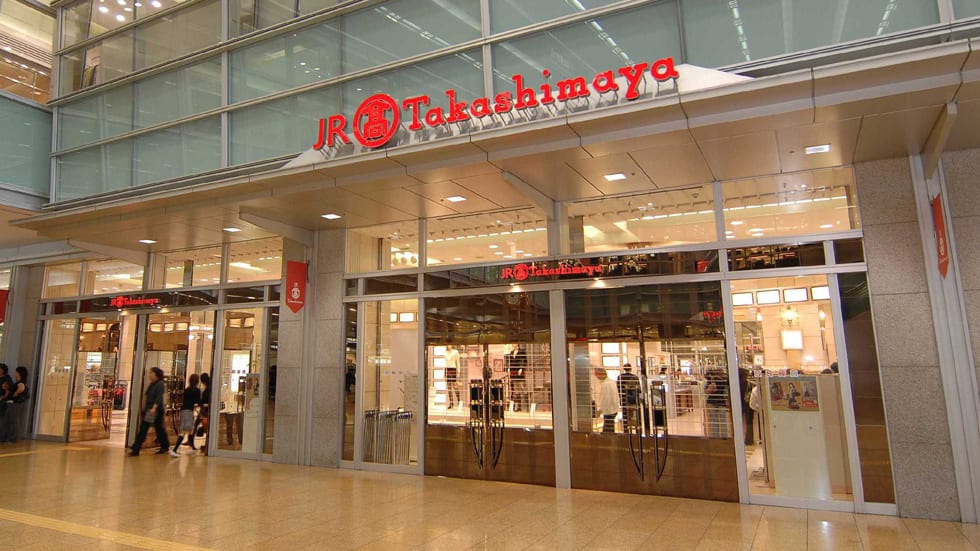
    Eyeing the growing tourist market, Japanese department store Takashimaya is going duty free with an airport-style store in Tokyo.

    Not only sales tax, but also alcohol and tobacco duties will be waived under the venture, in which the Takashimaya Tokyo store is partnering with ANA Holdings and South Korea’s Samsung Group.

    Takashimaya will contribute more than half of the capital for the outlet, establishing an oversight company with All Nippon Airways Trading and Hotel Shilla of the Samsung Group. Scheduled to open next spring, the store will probably be on an upper floor of Takashimaya’s Shinjuku branch. Depending on its performance, the partners may roll out further stores.

    Shoppers will be able to buy items in-store to pick up later at Haneda or Narita airport after completing departure procedures.

    Hotel Shilla, which runs hotels and duty-free stores, generated sales of 3.25 trillion won (US$2.73 billion) last year. The company is second only to the Lotte Group for duty-free stores in South Korea, and its international presence includes Singapore’s Changi Airport.

    ANA Trading runs airport souvenir shops.

    Visitors to Japan increased 47 per cent last year to 19.73 million, according to the Japan National Tourism Organization. More people are travelling there multiple times a year and visiting localities outside greater Tokyo via train and bus. A major bus terminal is slated for completion in Shinjuku this spring.

    Takashimaya rival Isetan Mitsukoshi Holdings opened a similar duty-free store in Tokyo’s Ginza area in late January.

  • South Korean retailers eye overseas push

    South Korean retailers eye overseas push

    The largest South Korean retailers, faced with cut-throat competition in the rapidly saturating domestic market, are turning their attention to overseas markets in conjunction with small and mid-sized businesses to secure a new growth driver.

    The country’s three major retail conglomerates – Shinsegae Group, Lotte Group and CJ Group – are targeting to sell more of their ‘private brand’ products or help small and medium-sized enterprises (SMEs) promote their products both in emerging and developed markets, they said.

    Of the three, Shinsegae’s Emart, the nation’s largest discount store chain by sales, appears to be the most aggressive player given its latest moves and announcements.

    On Wednesday, Emart outlined its 2016 plan not only to increase shipments of its products to overseas branches in China and Vietnam but also to supply them to local retail companies in the US, Europe and Oceania.

    “We have set an ambitious target of US$20 million in overseas earnings this year, sharply up from $1.72 million the year before. What we earn outside the country still accounts for a tiny portion of our overall sales. But we expect it to grow over time,” Emart spokeswoman Hur Chae-jeong said.

    For all of 2015, Emart saw its net profit jump 57 per cent to 455.9 billion won ($374 million) from 290 billion won a year earlier. Sales rose 4.1 per cent to 15.3 trillion won from 14.7 trillion won during the same period.

    The dominant discount store company seeks to fill more than 40 per cent of its total products to be exported with price-competitive PB products. In Korea, in partnership with SMEs, big retailers provide ‘less-recognised’ private label products to customers at lower prices compared to existing brand names.

    Moreover, Emart signed an initial agreement with the Korea Trade-Investment Promotion Agency (KOTRA) in November to help SMEs find ways to export their products. The move was in line with the government’s broad efforts to support them amid falling exports.

    Exports have been on a losing streak over the past 14 months, posting a 12 per cent on-year decline in February at $36.4 billion, according to government data.

    Lotte Department Store and CJ O Shopping, the nation’s biggest department store chain and home shopping channel by sales, respectively, have taken similar moves to go overseas.

    Lotte said Thursday it had arranged meetings between Korean SMEs and their Vietnamese and Indonesian counterparts in those countries to help them find bilateral business opportunities there.

    “The Korean SMEs supply their products to our department store chains. If they successfully enhance their brand awareness among overseas customers, it will lead to an increase in sales. So we will jointly conduct a market survey with the SMEs and offer them a variety of support programs,” a Lotte spokesman said.

    Lotte currently operates department store outlets in Vietnam, Indonesia, Russia and China.

    CJ O Shopping said it has partnered with Kotra to help Korean SMEs advance into Latin American markets on top of its current China and Southeast Asian markets.

    “In June last year we set up a joint venture with Mexico’s main broadcasting company Televisa to sell Korean products through a local home shopping channel. We will sign such partnerships with other Latin American countries in coming years,” CJ spokesman Hong Seok-woo said.

    CJ O shopping is in talks with daily deals website operator Groupon  and US retailer Walmart Stores to have Korean products available in their online shopping malls, Hong said.

    CJ has signed with 10 countries, largely in emerging markets, to sell Korean goods through local home shopping channels.

    “We are seeing a burgeoning demand for Korean beauty and fashion products in Latin America helped by the boom of ‘hallyu,’ or the Korean wave, there,” he added.

  • Tough battle brews in Indonesian eCommerce

    Tough battle brews in Indonesian eCommerce

    Three Indonesian eCommerce platforms are about to be launched – by Astra Graphia, CT Corp and a joint venture formed by the Salim and Lotte Groups.

    This comes after forays into eCommerce in the past 12 months by such Indonesian conglomerates Lippo Group (MatahariMall and Venturra Capital), Sinar Mas Group (SMDV) MNC Group (BrandOutlet) and MAP Group (eMall), reports E27, which says Indonesia’s eCommerce market is predicted to grow to US$130 billion by 2020.

    Salim Group has signed an agreement with South Korea’s retail giant Lotte Group to form a joint venture for eCommerce business. Launching next year, it is the second such collaboration followingElevenia.
    Lotte Group’s portfolio in Indonesia includes a department store, 41 retail stores and 31 fast-food franchise outlets. Salim Group owns businesses in the F&B, infrastructure, logistics, telco, media and real estate sectors. It also has 11,000 Indomaret minimart outlets.
    “We expect ourselves to champion the market as soon as we walk into it, says CT Corp founder Chairul Tanjung, who has yet to reveal a launch date for the group’s online venture.

    CT Corp owns hypermarket chain Carrefour, the department store chain Metro, hotels and theme parks managed by TransStudio, media companies Detik and TransTV, and fashion and F&B outlets.

    Its new eCommerce platform will be a separate business entity from the group’s TransRetail subsidiary, which covers its retail businesses.
    Meanwhile, a subsidiary of Astra International specialising in office equipment and services, Astra Graphia has spent about IDR50 billion (US$3.6 million) on developing its Axiqoe platform.
    “The online shop will display thousands of items, initially for business-to-business,” says Astra Graphia’s chief of finance Panji Nurfirman.

  • Lotte Group in Indonesian confectionery push

    Lotte Group in Indonesian confectionery push

    South Korean confectionery manufacturer Lotte Group is planning an eCommerce joint venture with one of Indonesia’s largest conglomerates, the Salim Group, within the next few months with the aim of being up and running by early next year.

    This follows a new government policy on eCommerce that opens up a market of nearly 250 million people to foreign brands. According to the Korean media, the deal was formalised when Lotte Group chairman Shin Dong-bin met with Salim Group chairman Anthony Salim in Singapore during an Asia Business Council meeting.
    Under Shin, Lotte has been aggressively expanding its overseas businesses, and the Indonesian confectionery market is considered a key strategic opportunity, reports Deal Street Asia. The company hopes to secure a strong foothold in the eCommerce market through an omni-channel retailing strategy and establishing a stable delivery service via the partners’ offline stores.
    Also planning to introduce products popular in Korea, Lotte first became involved in the Indonesian market in 2008 when it acquired 10 stores of the Dutch discount chain Makro. Lotte has one department store in Indonesia and 41 retail outlets, while Salim Group has 11,000 Indomartconvenience stores. The Salim Group’s businesses cover such sectors as food, distribution, telecommunications, media, automobile manufacturing and property development.

    An eCommerce roadmap has been drafted by the Indonesian government as a basis for guidelines regulating the sector. It covers such aspects as funding, taxation, communication infrastructure, logistics, cyber security, consumer protection and education, with the aim of achieving eCommerce transaction value of $130 billion by 2020.

  • Lotte’s Japan unit to jack up stake in Korean affiliate

    Lotte’s Japan unit to jack up stake in Korean affiliate

    Lotte Confectionery Co., a unit of South Korean retail giant Lotte Group, said Wednesday that Lotte’s Japan operation will increase its stake in the affiliate, a move seen as part of efforts to cement the incumbent group chairman’s grip in the conglomerate amid a succession feud.

    In a regulatory filing, Lotte Confectionery said that Tokyo-based Lotte Holdings will buy 7.9 percent of its shares at 2.3 million won ($1,950) per share during trading hours by Dec. 28, a deal worth about 258 billion won.

    Last week, Lotte Holdings bought a 2.1-percent stake in Lotte Confectionery through block deals in after-hour trading.

    If the transaction is completed, Lotte Holdings’ stake in the confectionery unit will rise to 10.3 percent to become the No. 2 stakeholder after Lotte Aluminum.

    “Lotte Holdings will increase its stake in Lotte Confectionery to step up cooperation in the confectionery business for a synergy effect,” Lotte said in a release.

    The move comes as Lotte Group chairman Shin Dong-bin and his elder brother Dong-joo have been involved in a succession feud over the group whose business portfolio ranges from food to retail, mostly based in South Korea and Japan.

    The latest share purchase is interpreted as an effort to strengthen Dongbin’s grip on Lotte Confectionery, which stands at a critical position in the group’s cobweb-like structure.

    The confectionery unit has stakes in other key Lotte affiliates, including Lotte Shopping, Lotte Chilsung and Lotte Food, serving as a critical link in South Korea’s fifth-largest conglomerate.

    Shin Dong-bin also owns an 8.8-percent stake in Lotte Confectionery, followed by Shin Kyuk-ho’s 6.8 percent and Shin Dong-joo with 4 percent.

    Founder Shin Kyuk-ho has sided with Dong-joo, who has waged several suits against his brother in Japan and Korea after being fired from his senior executive position at Lotte Holdings earlier this year.

  • Lotte seeks more female managers

    Lotte seeks more female managers

    Lotte Group, a leading South Korean retail giant, vowed Thursday to nurture its female leaders to provide equal opportunities in its workforce.

    Group chairman Shin Dong-bin said in a forum that his conglomerate would increase female leaders to 30 percent of managers by 2020 from the current rate of 11 percent.

    “The group expects to have the first female CEO by 2020,” the chairman said, adding the group would continue to invest in building a family-friendly working environment.

    “More female talents are necessary for Lotte’s affirmative action plan to provide equal opportunities for members of minority groups,’’ Shin said during the fourth Way of Women, an internal annual event for female employees.

    About 500 female staff and executives in the group and its affiliated firms joined the event and shared their experiences and views for the development of female leaders.

    The conglomerate has adopted women-friendly policies, such as flexible working hours and support for career building.

    In its efforts to increase female talents, the company has continued to allocate 40 percent of annual job openings to women for the past few years, which has so far raised the rate of female managers to 11 percent from 1 percent in 2005.

    Lotte announced the new policy amid no signs of easing feuds among owner family members, including chairman Shin, over control of the conglomerate.

    Lotte said its Japanese shareholders support the current leadership despite the ongoing succession feud, in an effort to clear up uncertainties surrounding the preparation for listing its hotel unit.

    The listing of Hotel Lotte is one of the reform pledges that chairman Shin has made to assuage public disgust over a bitter family feud over control of the retail-focused conglomerate, which has sprawling business interests both in South Korea and Japan.

    The Korea Exchange, South Korea’s main bourse in charge of reviewing its initial public offering application, has demanded Lotte prove whether its corporate governance structure is stable enough to proceed with the current process.

    In response, Lotte said it has submitted a document showing that 60 percent of Lotte Holdings’ shareholders support the current leadership. Japan-based Lotte Holdings is the largest shareholder of Hotel Lotte with a 19.1 percent stake.

    “The Hotel Lotte IPO is expected to proceed without delay as major concerns have been cleared up,” a senior Lotte official said.

    “We will make efforts to complete its listing by the first half of next year.”

    The latest move came as Lotte has been mired in a leadership dispute between the group founder’s two sons ― Shin Dong-joo and Shin Dong-bin ― since last summer.

    The two sons had respectively controlled the company’s operations in Japan and Korea until earlier this year.