Retail News CRM

Tag: LTE

  • Nokia’s partnership ecosystem prepares for local 5G and private wireless LTE in Japan

    Nokia’s partnership ecosystem prepares for local 5G and private wireless LTE in Japan

    Nokia has announced that its partnership ecosystem is preparing to introduce local 5G/private wireless LTE to industrial as well as government customers in Japan.

    By the end of December, the spectrum designated for local 5G will be released for enterprise use. The firm will help to boost IoT for industries in Japan by uniquely offering an end-to-end industrial-grade private wireless portfolio. By the end of 2019, the Japanese government will be launching the 5G spectrum specially designated for individual companies and local governments.

    The company has also formed a partnership ecosystem with five leading firms spanning a number of segments that includes Hitachi Kokusai Electric for smart social infrastructure and smart cities with video solutions, NS Solutions for factory IoT, Internet Initiative Japan for Full MVNO, Equinix for multi-cloud and global data centers and Marubeni for global IoT. With the help of these strategic alliances, enterprise customers get the opportunity to explore end to end, reliable, secure, low-latency connectivity powered by Nokia’s technologies and solutions.

    Earlier, Nokia and AT&T announced their partnership on a new innovation studio in Germany in order to boost the growing worldwide adoption of current and next-generation Internet of Things solutions. The studio will offer a chance to business to meet with experts and work together on solutions to global business challenges.

    Sanjay Goel, president of global services at Nokia said: “The collaboration will help set the stage for the evolution to global 5G and network slicing that allows a single network to be partitioned into multiple networks and deliver specific capabilities to certain IoT customers without impacting their entire network.”

  • KT and Samsung to develop 5G-powered medical service

    KT and Samsung to develop 5G-powered medical service

    KT Corporation, along with with Samsung Medical Center (SMC), has announced the launch of a 5G-enabled medical service as an initial step to set up a 5G-based smart hospital. The pilot project, which is developed by the Seoul-based South Korean telecom giant, developed service environments in operating and proton therapy rooms and performed a test operation.

    Based on the results from the pilot, both KT, formerly Korea Telecom, and SMC are planning to continue the development of smart patient care and 5G-powered new medical practices and better the hospital operational efficiency. Park In-Young, vice president of KT’s ICT convergence business department, said: “KT, in partnership with the Samsung Medical Center, is pioneering innovative medical services for the new 5G era. We will continue to further refine 5G-powered medical technology by applying VR and AR technologies for real-time education.”

    In the coming years, 5G-enabled medical services would, in theory, speed up surgery and other treatment processes by allowing uninterrupted access to surgeons that will help them obtain pathological data that is critical in determining the serious conditions of patients. The network would also provide quick access to CT and MRI data on proton therapy.

    Last September, KT entered into roaming agreements with Italy’s TIM, Switzerland’s Sunrise, and Finland’s Elisa, allowing the company’s 5G subscribers to use the 5G networks provided by the three European operators. The Korean operator has standing agreements with operators in 185 countries for 3G and LTE roaming and now is extending those contracts to 5G as soon as 5G services go live in those countries.

    According to reports from the South Korean Ministry of Science and ICT, the country hit the milestone of four million 5G subscribers last December. As of October, the Ministry reported 3.98 million 5G subscribers in the country and in September, it said that 516,000 more people subscribed to the 5G services.

  • Nokia, Hitachi union will support local enterprises through 5G and private LTE solutions

    Nokia, Hitachi union will support local enterprises through 5G and private LTE solutions

    As part of the collaboration, the Nokia Digital Automation Cloud platform with its secure, reliable and low-latency connectivity will be used for applications including video analytics, AI, machine learning and IoT, as well as drones, group communication, and AR/VR. It will also enable autonomous transport vehicles, such as trucks, trains, forklifts and straddle carriers, to increase productivity at factories, utilities, airports and ports.

    The Japanese government is releasing 5G spectrum designated for individual companies and local governments (known in Japan as local 5G) at the end of 2019. This will enable enterprises, regional authorities and other organizations in Japan to deploy the next-generation of industrial-strength wireless connectivity based on LTE and 5G technologies to create local private, reliable networks.

    Nokia and Hitachi Kokusai Electric will collaborate to provide an eco-system of solutions to support the deployment of new digital automation services. Hitachi Kokusai Electric will share its expertise as a leader in driving the adoption of private LTE networks for industry use and disaster prevention in Japan. Nokia will lend its private LTE/4.9G and 5G wireless connectivity solutions, which have established a global marketplace footprint across energy, transportation, public sector, manufacturing and logistics.

    Kaichiro Sakuma, Representative Director, President and Chief Executive Officer of Hitachi Kokusai Electric, commented, “Industrial grade private wireless networks will be very important for our industry customers, helping them to become more efficient, automating dangerous operations, and improving worker safety. Our collaboration with Nokia is helping to speed the delivery of these innovative capabilities to the Japanese market.”

    John Harrington, Head of Nokia Japan, said, “Partnerships such as this help us to better serve the increasing needs of local 5G and digitalization technology in Japan. Collaborating with partners with in-depth knowledge and expertise across industry segments is critical to the widespread adoption of digital automation and private wireless solutions in industrial settings. Thanks to our comprehensive end-to-end-portfolio, we are ideally placed to support Hitachi Kokusai Electric and its customers to benefit from secure, highly reliable, ultra-broadband wireless networking.”

  • KT taps Samsung to expand PS-LTE coverage in South Korea

    KT taps Samsung to expand PS-LTE coverage in South Korea

    Samsung has signed an agreement with KT to help expand the telco’s public safety LTE (PS-LTE) network in South Korea, the vendor announced.

    The expansion deal will see Samsung provide KT with LTE network solutions based on 3GPP Release 13 in 10 major metropolitan regions in South Korea including Seoul by 2020.

    The expanded deal will also see the pair deliver what they say is the world’s first narrowband Internet of Things (NB-IoT) service over the PS-LTE network to help prevent and respond to natural disasters such as fires and people stranded in remote, mountainous areas.

    In addition to LTE radio base stations that support 700-MHz, Samsung is providing KT with a virtualized core and features such as MCPTT solutions, RAN sharing, evolved Multimedia Broadcast Multicast Service (eMBMS), Isolated eUTRAN Operation for Public Safety (IOPS), and device to device (D2D) network solutions.

    For instance, D2D allows direct and undisrupted communications between any two devices without traversing radio base stations or core networks, even in areas where bases stations are not provided.

    Samsung said D2D and NB-IoT technologies will play crucial roles in public safety network by ensuring stable, seamless, and reliable network in unfavorable environments.

    “By acquiring innovative wireless communications from Samsung, we are able to aid in life-threatening situations where data traffic is severely congested or connection is completely out of reach,” said Yoon-Young Park, senior executive vice president and head of enterprise business group at KT. “These first-of their-kind networks help responders connect with those in need.”

    KT and Samsung have been collaborated since 2016. The pair deployed the first PS-LTE network in 2016 throughout Gangwon (Pyeongchang) province of South Korea.

    In 2017, the companies delivered LTE-railway service on a high-speed train traveling at up to 250 km/hour (155 mph) using MCPTT solutions.

    The two companies are now aiming to expand the PS-LTE network further into the metropolitan areas around the country, including Seoul, Gyeonggi, Gangwon, Jeolla, Gyeongbuk and Chungnam provinces.

    South Korea’s three major carriers-KT, SK Telecom and LG Uplus- launched full-fledged commercial 5G services in early April and racked up over 260,000 5G subscribers that month.

  • Telenor Myanmar expanding reach of LTE network

    Telenor Myanmar expanding reach of LTE network

    Telenor Myanmar has announced it has nearly reached 100% of the nation’s townships with its LTE network, having rolled out over 6,100 LTE sites nationwide.

    The company’s LTE network now covers 307 townships, with the company having expanded to seven more townships during the first quarter.

    “Since the first quarter, the company has deployed 856 additional sites and aims to increase this to more than 1,100 by the end of the month,” according to Telenor Myanmar CTO Jai Prakash.

    “As per our commitment to bring the best possible things for Myanmar citizens, we have achieved our ambitious goal of establishing a network with 6100+ LTE sites in 2019,” he said.

    “We will keep upgrading our network for our customers with our best data network and also educating the population on how to use our service effectively and efficiently.”

    Meanwhile the operator has been working with Ericsson to prepare its network for 5G, having conducted a joint trial last year achieving 1Gbps downlink rates over its LTE network.

    In late November, the companies also commenced a pilot study involving the provision of IoT connectivity in Mandalay City.

  • Qualcomm support China Unicom’s 5G announcement

    Qualcomm support China Unicom’s 5G announcement

    U.S. based chip designer Qualcomm announced on Monday that it supports the introduction of  China Unicom’s 5G services in the largest smartphone market in the world. Qualcomm’s latest and greatest Snapdragon 855 Mobile Platform and Snapdragon X50 5G modem chip were used on 5G phones from manufacturers like (in alphabetical order) nubia, OnePlus, Oppo, Vivo, Xiaomi and ZTE. Devices from these companies were part of Monday’s event. China Unicom said that it is the first Chinese carrier to announce that it will offer 5G wireless service to consumers in the country.

    Starting tomorrow and running through April 25th, Qualcomm, China Unicom and the aforementioned phone manufacturers plan on showing live demonstrations of 5G at the 2019 China Unicom Partner Conference in Shanghai. These demonstrations will show OTA connections made using China Unicom’s 5G network and devices powered by Qualcomm’s 5G solutions. Consumers in China hope that 5G phones and service will be made available later this year. Those attending the conference will get to see HD video streaming, cloud gaming, web browsing and realtime sharing of data between devices and the cloud all over a 5G network.

    “For the past decades, our technology has been a foundation for the wireless evolution. It takes many years of R&D, specification, prototyping, testing, trials and product development to bring a new generation of mobile technology to China and the world. Like previous generations, 5G is the result of more than a decade of collaborative efforts by Qualcomm Technologies and our ecosystem partners, with the mission of preparing the mobile industry for 5G rollout starting this year. We’re excited for Chinese consumers to experience 5G’s truly transformative wireless experience in 2019.”-,” said Frank Meng, Chairman, Qualcomm China.

    5G data speeds run up to 10 times faster than 4G LTE speeds. The next generation of wireless connectivity is expected to lead to the launch of new services and businesses world wide in the same way that 4G LTE networks gave rise to new businesses. For example, the ride sharing industry was born thanks to the replacement of 3G data with faster 4G LTE service. The creation of this industry helped birth multi-billion dollar companies like Uber and Lyft.

  • Apple’s 5G iPhone Using Samsung Modems to be released in 2020

    Apple’s 5G iPhone Using Samsung Modems to be released in 2020

    In one fell swoop, Apple cut the Gordian knot of 5G modem supply and it is smooth sailing from here, as it paid Qualcomm undisclosed amount to settle the patent litigation and secure a multi-year contract for 5G iPhones.

    “It’s personal. I don’t see anybody who can bridge this gap,” tipped the WSJ recently about Apple and Qualcomm CEOs relationship but the big boys ironed out their differences quickly. Apple could have tried Intel, Samsung or Huawei, but each of those choices comes with drawbacks.

    Intel threw in the towel on 5G modem development when it learned that Qualcomm resolved its patent issues with Apple, while America’s homeland security institutions would balk at Huawei’s involvement due to geopolitical considerations. Despite all rumors, Huawei company reps said during its Analyst Summit 2019 yesterday that they have “no communication with Apple on 5G modems.”

    Samsung, on the other hand, simply can’t make enough of its own 5G modems to exclusively supply huge customer like Apple. It recently declined Apple’s advances for its Exynos 5100 5G modem. Not only does the company need its production for the Galaxy S10 5G that is now shipping, but it could very well need it for the Note 10 Pro, too, and others down the line.  According to one “electronics industry official” there:

    Apple inquired about the supply of 5G modem chip from Samsung Electronics System LSI division. However, we know that Samsung Electronics System LSI answered that the supply volume of its smartphone 5G modem chip is insufficient.

    Well, the most renowned Apple supply chain analyst, Ming-Chi Kuo of TF International Securities, has spoken, and Apple will seemingly hedge its Qualcomm bets with Samsung as a side dish. If you are wondering why, Apple is most likely planning to use the more advanced Qualcomm modems in placed where mmWave spectrum 5G networks are being established, while Samsung’s likely cheaper solution will remain for the sub-6 GHz crowd.

    Apart from all these juicy dual supplier predictions, Ming-Chi Kuo is advocating for a fall 2020 release date of the future 5G iPhones. That’s the same timeframe as before but this time around, Apple is in a position to use the best that the 5G market can offer without triggering the NSA, CIA and other three-letter agencies’ wrath.

    South Korea just launched its nationwide 5G network, with the Galaxy S10 5G being its poster child. Upon the phone’s release there, Korea will have all of its largest networks offering 5G plans. In fact, Korea Telecom announced three 5G price tiers. Among those, there is a “Super Plan” that offers truly unlimited 5G data without speed caps, and this one will go for the equivalent of $70, a pretty good price no matter how you slice it. In fact, the Super 5G Plan is somewhat cheaper than the current unlimited 4G LTE plans in Korea, so the 5G future seems bright, and we are expecting more and more 5G handsets to enter the fray this year, especially towards the tail end of 2019.

    A true nationwide shift to 5G networks is not happening this year in the US anyway, so iPhone users won’t be missing all that much until then. Next year, however, most of the flagship phones of the spring season will probably have some sort of 5G connectivity support, be it with a Qualcomm, Samsung or Huawei modem, and Apple could feel the pinch in that regard.

    Had Apple gone alone in developing a 5G modem, either by acquiring Intel’s wireless modem assets, or starting from scratch, it would have taken it years to reach a sufficiently good unit that is worthy to put in millions of iPhones. Wireless connectivity modems are perhaps the most complex of chips in a phone, and 5G ones require so much filters and software control to avoid interference and still be backwards compatible that this option would have meant either a lot of extra expenses for Apple in order to deliver a 5G iPhone in 2020, or falling behind the competition by launching one that is a cycle or two behind.

    “Apple knows our phone number, we are still in San Diego,” tipped Qualcomm recently, giving a glimmer of 5G hope, and patching thing up with Qualcomm turned to be the smartest solution, just as we expected. There you have it – Apple resolves the bad blood between the companies, Qualcomm is likely to assist it with the 5G push, and Samsung will be its sidekick. The 5G future is so bright, we have to wear shades. According to Kuo, the launch of the 5G iPhone is expected to unleash a big upgrade cycle for Apple, and he upped his forecast for iPhones sold in 2020 to the whopping 200 million, from the current 190 million prognosis.

  • Indians bought 50% more 4G devices in 2018 says CMR

    Indians bought 50% more 4G devices in 2018 says CMR

    The latest CMR report, the Annual 4G LTE Devices India Market Review Report 2018, revealed that Indian consumers purchased 50% more 4G LTE devices in 2018 year-on-year, with shipments surpassing 200 million units. 4G devices include mobile phones, tablets and data cards. In 2018, 4G devices had a 64% market share.

    While 4G LTE enabled mobile device shipments crossed 60%, the 4G LTE tablets accounted for 44% of the total tablet shipments. 4G LTE contributed for 100% of the data cards shipped in calendar 2018.

    “4G is enabling Indians everywhere to raise above their social and economic challenges and connect with new possibilities. The 4G device penetration in India continues to gain traction, with 4G mobile phone and 4G tablet shipments on the rise. Reliance Jio Infocomm has been the X-factor,” said Prabhu Ram, head – Industry Intelligence Group (IIG), CMR.

    During the year, LYF led in the 4G LTE mobile handset segment with 33% market share, while Lenovo dominated the 4G LTE tablet market with 40% market share. LYF is the only Indian brand in the leaderboard shipping 4G LTE mobile handsets.

    Narinder Kumar, lead analyst-IIG, CMR, predicts 4G adoption will continue in CY2019 driven by 4G feature phones and bundled offerings at the entry level contributing to growth in 4G device shipments. Video and music streaming will fuel this 4G growth. “Over the long run, we anticipate 4G to play a major role in smart cities, and especially smart homes,” said Kumar.

    CMR analysts see 4G continuing to dominate the Indian market until 2024. That said, 5G should see a spike in adoption in India by 2023. CMR anticipates a modest spike for 5G by 2023, with CMR internal estimates pointing to 5G smartphone shipments in India to top 140M by 2025.

    “At CMR, our internal research estimates point to the 5G enabled devices contributing to 3% of the total smartphone shipments by 2021, and potentially reaching 16% by 2025. The course of 5G in India will be driven by how Jio plays its cards,” added Prabhu.

  • ZTE, China Mobile, Ericsson conduct 5G-4G VoLTE call

    ZTE, China Mobile, Ericsson conduct 5G-4G VoLTE call

    ZTE, the Guangzhou branch of China Mobile and Ericsson have announced a joint demonstration of a VoLTE voice and video call between 5G and 4G smartphones.

    The successful call, completed at the end of March, utilized non-standalone 5G networks provided by different vendors, as well as China Mobile Guangzhou’s existing 4G network.

    It used ZTE’s 5G and 4G smartphones for the VoLTE voice and video call, as well as network equipment from the two vendors.

    Guangzhou is one of five 5G pilot cities for China Mobile, which is investing the most heavily in 5G among China’s big three mobile operators.

  • Airtel contracts Ericsson for VoLTE upgrade

    Airtel contracts Ericsson for VoLTE upgrade

    India’s Bharti Airtel has contracted Ericsson to expand its voice over LTE (VoLTE)services to cater to growing demand.

    Under the agreement, Airtel will deploy Ericsson’s Cloud VoLTE solution, which is used to deliver HD voice enabled VoLTE services onto a customer data center.

    Ericsson Cloud VoLTE includes a virtual IMS and supporting nodes to add VoLTE services onto existing LTE data networks.

    The upgrade forms part of Bharti Airtel’s network transformation program, Project Leap, and is aimed at helping Airtel carve out a larger share of the growing Indian VoLTE market. Ericsson’s latest Mobility Report predicts that there will be 780 million VoLTE subscriptions in India by 2023.

    “We remain committed to building a state-of-the-art future-ready network as part of…Project Leap, and delivering best-in-class digital experiences to our smartphone customers,” Bharti Airtel CTO Randeep Sekhon commented.

    “This partnership with Ericsson will allow us to rapidly increase VoLTE capacity to serve our growing traffic, and make our network prepared to easily introduce new communication services today and in 5G.”

  • LTE device ecosystem grew 26% in the last year

    LTE device ecosystem grew 26% in the last year

    The LTE device ecosystem has expanded by 26% over the past year to reach 13,700 devices, according to the Global Mobile Suppliers’ Association (GSA).

    The LTE Ecosystem report published by the industry body found that devices have been launched by 705 manufacturers, including devices supporting the FDD LTE and TD-LTE standards and the LTE-related cellular IoT standards LTE Cat-M1 and narrowband IoT.

    Meanwhile the nascent 5G device ecosystem is taking shape. As of mid-March, the GSA had identified 34 announced devices – including regional variants, including 11 smartphones.

    This is an improvement on the 22 5G devices identified by mobile industry consultancy Hadden Telecoms in a report issued earlier in the month

    According to the GSA, devices have been announced across seven form factors – phones, hotspots, indoor customer premises equipment, outdoor customer premises equipment, modules, dongles or adapters, and USB terminals.

    The industry body said it expects the global 5G device ecosystem to grow rapidly as more commercial 5G services are launched.

  • Ericsson to provide 5G NR equipment for KT

    Ericsson to provide 5G NR equipment for KT

    South Korea’s KT has awarded Ericsson a 5G contract aimed at allowing the operator to launch commercial 5G services early next month.

    South Korean operators have agreed to launch 5G services at the same time in April at the request of regulator KCC.

    Under the contract with Ericsson, the vendor will provide 5G new radio hardware and software for KT’s 3.5-GHz non-standalone 5G network.

    KT selected Ericsson as a key 5G supplier in November last year as part of its preparations for a commercial launch.

    “Having worked successfully with Ericsson on 4G LTE, we are pleased to continue that partnership to make our 5G ambitions a reality with Ericsson’s leading 5G technology,” KT VP of access network design Jinho Choi said.

    “Korea is one of the most competitive and technology-advanced markets in the world. By taking a global lead to enable nationwide commercial 5G services through commercially available 5G smartphones, KT is demonstrating our commitment to our customers and showing how we can drive a global 5G ecosystem where Korea plays a key role.”

  • Vodafone Idea contracts Nokia for LTE expansion

    Vodafone Idea contracts Nokia for LTE expansion

    India’s Vodafone Idea has awarded Nokia a contract to improve the operator’s LTE coverage and capacity.

    Under the contract, Nokia will provide Single RAN Advanced, massive MIMO and small cell technology across multiple Indian telecoms circles to support the operator’s network consolidation and modernization program.

    The small cell deployment will help improve both indoor and outdoor coverage and capacity in the circles. Vodafone Idea will also adopt dynamic spectrum sharing technology to make the most productive use of the converged company’s spectrum.

    “Vodafone Idea is undertaking the world’s biggest telecom network integration in India [following the merger between Vodafone India and Idea Cellular], and creating India’s most advanced, secure and cost-efficient network,” Vodafone Idea CTO Vishant Vora said.

    “Extensive use of UBRs, dynamic spectrum sharing, massive MIMO and HetNets are key to our plan in this integration exercise, and we are very happy to partner with Nokia to deploy these futuristic, next generation technologies to prepare a future-proof network for the digital era.”

    Last month Vodafone Idea also contracted Ericsson to deploy LTE equipment for the network integration program, including radio systems and transport equipment from Ericsson’s 5G-ready Ericsson Radio System portfolio.

  • SK Telecom using quantum cryptography for 5G security

    SK Telecom using quantum cryptography for 5G security

    South Korean mobile carrier SK Telecom said it will use quantum cryptography technology to ensure security of its 5G mobile networks.

    The mobile carrier said Monday it has completed applying Quantum Random Number Generator (QRNG) technology of ID Quantique (IDQ), to its 5G subscriber authentication center. The move is designed to prevent hacking and ensure quantum-safe security.

    “The subscriber authentication process is the first and essential step in verifying a mobile device user before he/she is granted access to any voice and video data service, SMS, etc,” SK Telecom said in a statement.

    “Security in this process is crucial since the leakage of authentication key value can lead to serious crimes such as eavesdropping and hacking.”

    In February 2018, SK Telecom invested $65 million into IDQ to accelerate development of quantum technologies for the IoT and telecoms markets.

    SKT plans to expand the use of QRNG in its long-term evolution (LTE) networks in April.

    The mobile carrier will also strengthen security further by applying IDQ’s quantum key distribution (QKD) technology to its 5G and LTE networks between Seoul and Daejeon – the area which has highest mobile data traffic in the country- next month.

    QKD provides cryptographic security based on the laws of quantum mechanics. It enables two parties to produce a shared random secret key known only to them, which can then be used to encrypt and decrypt messages, the mobile carrier noted.

    “As security emerges as one of the most important issues in the 5G era, SK Telecom is determined to provide the most secure 5G network and focus on expanding the ecosystem by developing quantum cryptography technologies,” SK Telecom CTO Park Jin-hyo said.

    SKT will further enhance the safety and security of its mobile networks by expanding the application of quantum cryptography technologies by stages, Park added.

  • Mass-production of a key component for 5G Apple iPhone about to Start

    Mass-production of a key component for 5G Apple iPhone about to Start

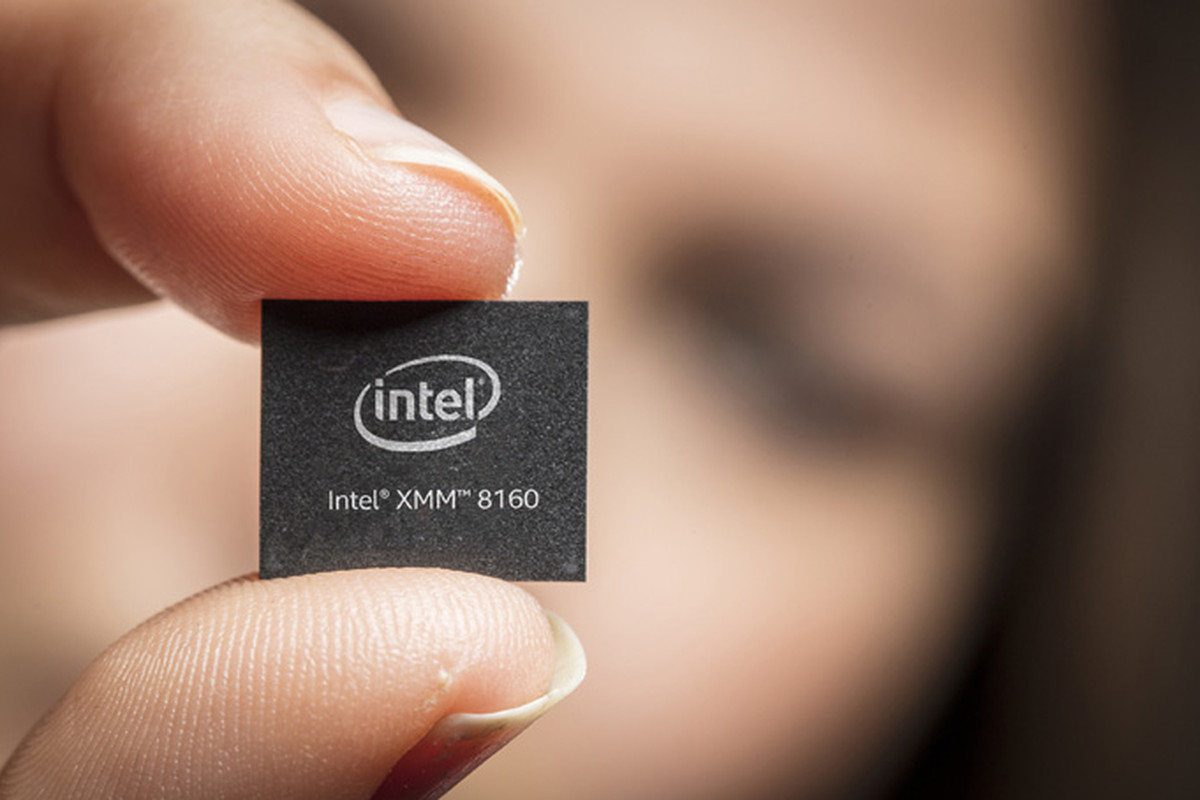
    Since Apple is expected to use Intel’s modem chips for its first batch of 5G compatible phones, we know not to expect 5G iPhones to be unveiled until 2020. That’s because Intel won’t have its modem chip for the next generation of wireless connectivity ready until next year. The chip maker will start work next quarter on the engineering projects it needs to finish in order to begin volume production of its 5G modem.

    Once Intel starts producing its 5G modem chip in 2020, it will compete with Qualcomm’s recently introduced Snapdragon X55 5G modem, the sequel to the Snapdragon X50 5G modem. The latter will be used on most 5G Android phones this year. It also will go up against the 5G modem chip designed by MediaTek. All three firms could still be in play to become the source of Apple’s 5G modem chips, although previous reports state that Intel has already won this battle. Sources cited in yesterday’s report say that Intel will also continue to generate revenue from selling its 4G modem chips to Apple for older iPhone 7 and iPhone 8 models.

    Apple currently has a contentious relationship with Qualcomm; over the last few months both sides have squared off in court on issues ranging from patent infringement to royalty payments. Just yesterday, one judge ruled that Qualcomm owed Apple close to a billion dollars in royalty payments it promised to rebate to the company (the actual figure is much. much higher says FOSS Patents). Meanwhile, a jury in San Diego yesterday ordered Apple to pay Qualcomm $31 million after it found Apple liable of infringing on a trio of patents. On March 26th, the International Trade Commission will rule on Qualcomm’s request for an exclusion order to be imposed on the iPhone in the U.S. Such an order would result in a sales and import ban of certain iPhone models in the states.

    Intel is now the exclusive source of modem chips for the iPhone

    During yet another trial held earlier this year (FTC v. Qualcomm), the plaintiffs called Apple supply chain executive Tony Blevins to the stand. Blevins testified that Apple had looked at sourcing 5G modems from Samsung and MediaTek. There is also speculation that Apple will design its own 5G modem chip, like it does for the A-series chipset that powers the iPhone and iPad. But Apple isn’t expected to deliver an in-house 5G modem design until 2021 at the earliest.

    From 2011 to 2015, Qualcomm was the exclusive provider of modem chips for the iPhone. That changed in 2016 when both Qualcomm and Intel were responsible for the modems used on the iPhone. That continued in 2017, and last year Apple sourced all of the modem chips used on the latest iPhone models from Intel.

    Apple is expected to be among the last major phone manufacturers to produce a 5G phone. Samsung has already unveiled its first 5G phone, which will debut on Verizon this summer. Huawei, LG and Oppo should also release 5G phones this year, and the 5G Moto Mod will allow the Motorola Z3 to support the faster data speeds as soon as Verizon flips the switch to turn on its new service. Once 5G service becomes more mainstream and less a curiosity, the faster data speeds will allow new services and businesses to be created. With 5G, a television series that takes 10 minutes to 15 minutes to download over 4G, will take only seconds to complete the task.

    When the industry transitioned from 3G to 4G LTE, Apple was one of the last major manufacturers to deliver a phone that supported the then-new technology. While a number of Android phones were launched with support for 4G LTE in 2011, Apple didn’t release a 4G LTE enabled handset until 2012’s iPhone 5.