Tag: luckin coffee

  • Asia-Pacific Foodservice Outpaces Global Peers with 4% Real Growth

    Asia-Pacific Foodservice Outpaces Global Peers with 4% Real Growth

    The Asia-Pacific restaurant sector expanded 4% in real terms through 2026, outpacing 1% growth across North America and Europe to lead global foodservice performance, according to Technomic Ignite data presented in November 2026 at the Global Restaurant Leadership Conference in Cannes, France.

    Worldwide industry turnover is tracking toward approximately 5.2% nominal growth, or 1.9% adjusted for inflation, even as supply-side shocks, geopolitical disruption, and accumulated food inflation between 25% and 40% curb discretionary purchasing.

    Dining frequency remains heavily weighted toward Asian markets: 92% of consumers in China, 85% in Thailand, and 80% in Singapore eat at restaurants at least once weekly, contrasting sharply with a global average that slipped from 74% before Covid-19 to 66% today.

    Chinese Chains Scale Footprints at Record Speed

    Top international chains based outside the United States are now dominated by Asian headquarters, taking seven of the top ten positions. Five of those seven operators are Chinese concepts: Luckin Coffee with 7 billion dollars in 2025 sales, hotpot operator Haidilao at 6 billion dollars, beverage chain Gu Ming at 4.9 billion dollars, Chagee at 4.7 billion dollars, and Mixue Ice Cream & Tea generating 3.5 billion dollars.

    Expansion figures across the sector show Chinese operators widening the footprint gap against Western legacy peers. Luckin lifted sales 48.9 per cent in 2025 while adding a net 8,708 stores. Gu Ming added a net 3,640 outlets on a 46.1 per cent sales rise. Value-focused chain Mixue posted 33 per cent sales growth while opening 10,996 net locations in a single calendar year.

    Overall sales for the world’s top 150 restaurant brands reached 637.4 billion dollars in 2025 across 596,561 units, up 5.7 per cent in sales and 8.8 per cent by store count. Chinese chains generated an aggregate sales lift of 19.1 per cent, while Japanese operators grew 10.8 per cent. Philippine brands expanded sales by 8.8 per cent, Thai groups registered 7.4 per cent, and South Korean companies posted 7.2 per cent, all exceeding the 4.6 per cent recorded by US-based chains.

    Beverage Formats Take Global Market Share

    Specialised tea chains have emerged as the fastest-growing foodservice category worldwide, posting a 20.9 per cent sales jump to 17.7 billion dollars. Chinese beverage groups accounted for all six of the world’s leading restaurant systems ranked by net store openings in 2025.

    Technomic noted that modern tea concepts were unclassified as a distinct cuisine category in its reporting just one year prior. Rapid rollouts by players like Chagee have formalised the segment across domestic and overseas retail real estate. Coffee shops placed third in worldwide category performance, gaining 7.3 per cent in sales to hit roughly 100 billion dollars.

    Asian and noodle dining concepts took second place among fast-growing menu types, climbing 9.4 per cent. Japan-based udon operator Marugame expanded its footprint beyond domestic sites into Indonesia, China, and the United States, illustrating the export viability of focused single-item models.

    Margin Pressures and Commercial Read-Across

    For landlords, franchisees, and commercial suppliers across Asia, this volume growth masks intensifying margin competition. Foot traffic remains stable across Asian capitals, yet global ingredient costs sit 25 to 40 per cent higher than levels recorded five years ago. Western groups operating in the region are turning to international franchise master agreements to sustain unit growth, as domestic Asian competitors capture mall leases through smaller, tech-enabled store formats with lower fit-out costs.

    The rapid network buildout of discount beverage chains creates direct operational challenges for traditional coffee and quick-service operators. Mixue and Luckin rely on tightly integrated supply chains and app-based ordering that depress average ticket sizes, forcing competing food courts and high-street retailers to rethink rental structures tied to turnover.

    Projections for Regional Foodservice Volumes

    Global consumer demand remains restrained by accumulated food price inflation, keeping discretionary budgets tight across mature and developing territories. Technomic senior principal David Henkes outlined the regional divide during the conference presentation:

    “The Asia-Pacific region is growing like crazy … [with] 4% growth, and again, this is real [growth], so this does not include any type of price increase or inflation,” Henkes said. “There’s no question that, like for a lot of the global economies, Asia Pacific is really driving restaurants and broader food service.”

    Technomic forecasts Asia-Pacific real foodservice growth will moderate slightly to 3.4 per cent in 2027. That projection leaves the region ahead of expected real growth of 1.3 per cent in North America, 0.8 per cent in Latin America, and 0.6 per cent across Europe.
  • Luckin Coffee Shares Rise to $33.20 After Beating Quarterly Earnings

    Luckin Coffee Shares Rise to $33.20 After Beating Quarterly Earnings

    Shares of Luckin Coffee Inc. Surged before Tuesday’s opening bell after the company reported quarterly earnings of $0.89 per share, beating consensus estimates of $0.83 by $0.06.

    The stock opened at $32.90 following a previous close of $31.20, eventually changing hands at $33.20 with 781,481 shares traded, which lifted the beverage chain’s market capitalization to $9.52 billion.

    Margins and Returns Hold Firm

    The China-based chain posted a net margin of 6.78 percent for the quarter alongside a return on equity of 24.91 percent. The company trades at a price-to-earnings multiple of 19.76, with a price-to-earnings-growth ratio of 0.46 and a beta of -0.34.

    Its 50-day simple moving average sits at $33.68, hovering slightly above its 200-day simple moving average of $33.47. Investors reacted by driving an immediate morning price gap, reflecting operational resilience in a competitive mainland drinks market where rivals continue to slash prices on freshly brewed coffee.

    Digital Fulfillment Anchors Growth

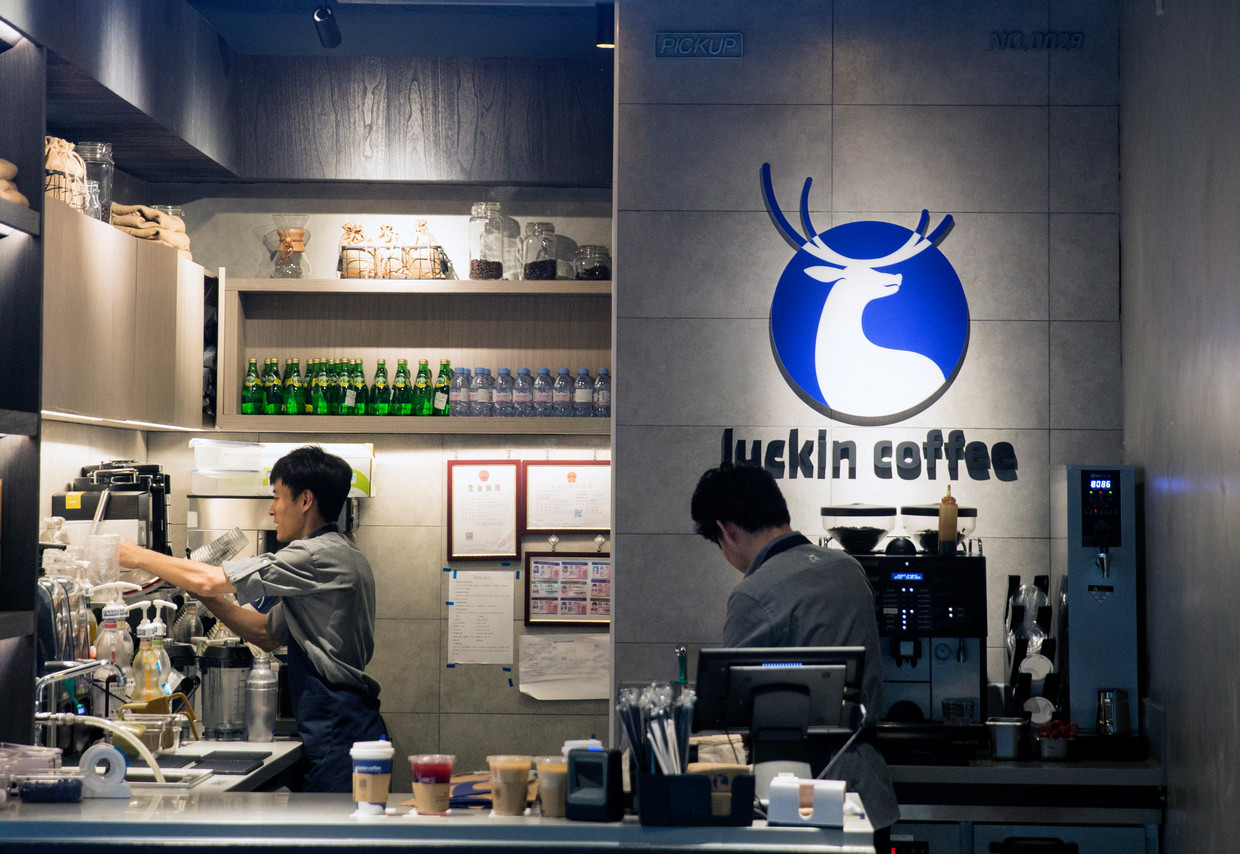
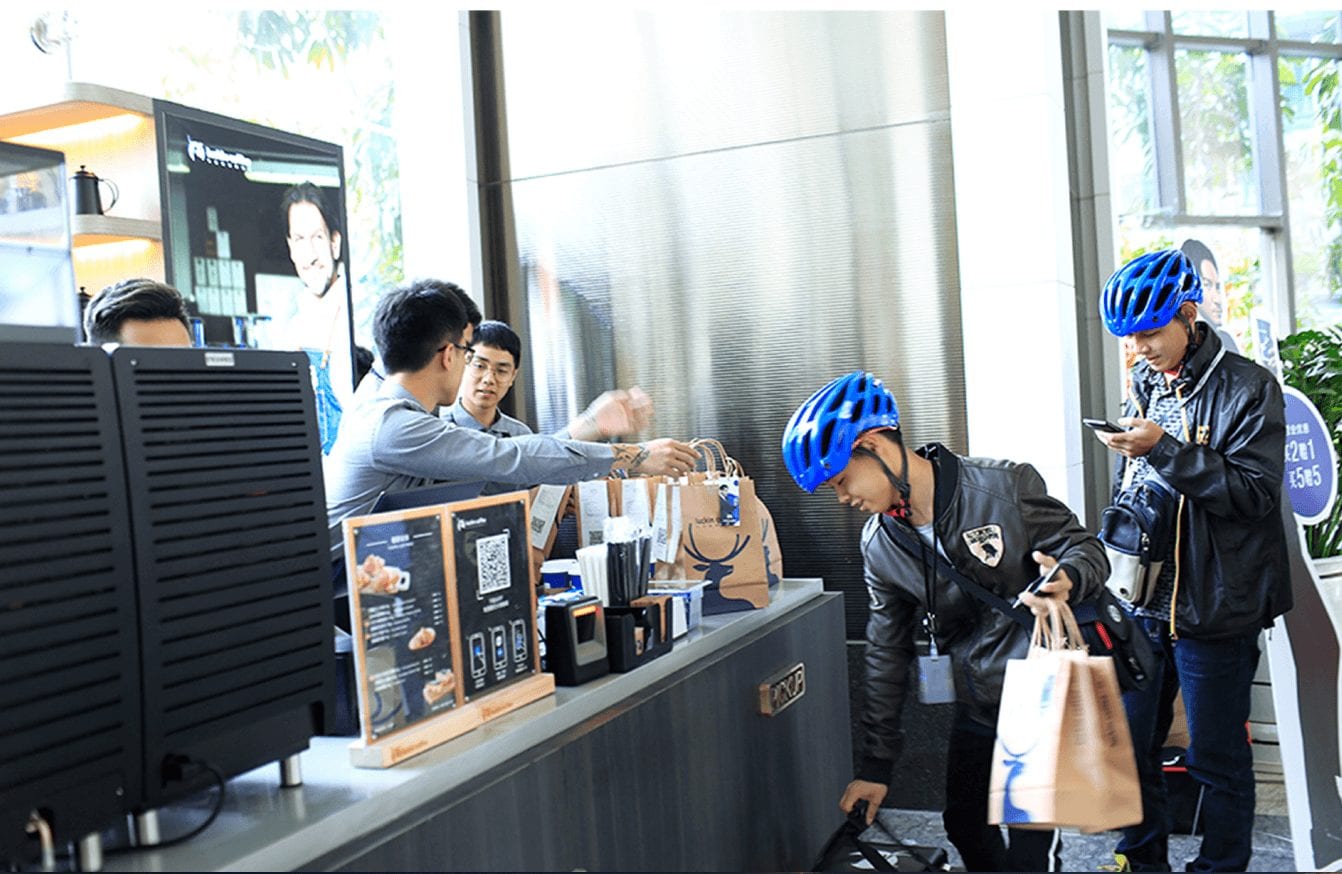
    Founded in 2017, Luckin Coffee built its footprint around small-format pickup booths and app-driven orders. Customers buy freshly prepared coffee, tea drinks, fruit juices and packaged light snacks almost exclusively through mobile software rather than traditional seated cafe counters.

    Fulfillment relies on a dual setup of self-operated flagship sites and franchised partner locations that keep overhead costs low. By sidestepping large floorplans and prime street-level seating, the chain protects unit profitability even when competing beverage chains launch aggressive discount coupons.

    Broker Sentiment Diverges

    Wall Street research desks hold divided stances on the stock’s runway. BNP Paribas Exane upgraded the company to an outperform rating on September 15 with a price target of $48.00 per share.

    Zacks Research moved in the opposite direction on October 5, cutting its view from strong-buy to hold. MarketBeat tracking shows four analysts covering the firm, yielding an average target of $46.87 alongside an overall buy consensus.

    Discounter Pressure on Mainland Operators

    The margin performance creates immediate headaches for competing coffee and milk-tea chains operating in tier-one and tier-two Chinese cities. Retail operators fighting for commercial real estate face high customer acquisition costs, but Luckin’s app ecosystem delivers repeat orders without retail concessions or heavy landlord rent burdens.

    The principal risk sits in domestic pricing fatigue. Sustaining a 6.78 percent net margin requires steady ingredient supply pricing and disciplined wage controls across thousands of pickup points, especially if consumer spending tightens further across China’s urban centers.

    Trading desks now track whether Luckin’s share price can clear its 50-day moving average barrier of $33.68 and push toward the consensus target of $46.87 as year-end transaction numbers roll in.

  • Luckin Store Count Hits 36,310 as Franchisee Margins Squeeze

    Luckin Store Count Hits 36,310 as Franchisee Margins Squeeze

    Luckin Coffee expanded its global network to 36,310 outlets by June 30, 2026. The chain added more than 5,000 net new locations in six months despite falling same-store sales.

    China accounts for 36,087 of those stores, or 99.4 per cent of the total, leaving overseas operations with a negligible share of overall sales. Top-line revenue keeps climbing, but store-level economics are tightening. Same-store sales at self-operated locations fell 5.3 per cent year on year in the second quarter. That widened the decline recorded in the first quarter. Partner-operated units faced even sharper pressure on single-store receipts.

    Store Density Dilutes Franchise Returns

    At the end of the second quarter, the brand operated 23,734 self-managed locations and 12,576 franchised partner stores. Franchises made up 34.6 per cent of the global estate. That stayed close to the 34.8 per cent share logged at the close of 2025, but represents a net increase of 1,762 shops from 10,814 outlets six months earlier.

    Revenue from partner stores reached 36.68 billion RMB in the second quarter, up 27.9 per cent year on year to generate 23.1 per cent of Luckin’s total net revenue. In the prior-year period, partner stores brought in 28.67 billion RMB across 9,238 locations. Store count jumped 36.1 per cent over that span while partner revenue grew only 27.9 per cent, showing dilution on the ground. In dense urban districts, new openings siphon foot traffic from established shops under the same brand.

    This shift alters the math for prospective franchisees. Store construction and fit-out costs remain flat. However, longer payback windows mean operators face limited downside alongside lower profit ceilings.

    Operational Friction in the Tea Shift

    Management has pushed beyond coffee to build a broader ready-to-drink beverage platform. The pivot began in August 2024 when the chain launched Light Jasmine Light Milk Tea with a morning-coffee, afternoon-tea promotion. Diversification gathered pace throughout 2025. The company rolled out more than 140 new products that year and lifted non-coffee sales past 20 per cent of total cups sold.

    Menu rollouts accelerated in the second quarter of 2026 with 28 ready-to-drink items and more than ten snacks. Non-coffee items made up nearly half of all new and returning drinks across the network during the first six months of the year.

    Adding milk tea complicates daily operations for front-line staff. Standard coffee relies on automated, uniform inputs like beans and syrups. Fresh tea requires brewed bases, fruit prep, milk foams, and short shelf-life dairy. That increases waste and inventory oversight. Baristas now juggle dual workflows across morning and afternoon rushes, which pushes up labor hours and training needs. Franchisees also have to buy tea extractors, larger ice makers, and dedicated refrigerated displays.

    Tea Chains Push Fresh Grinds

    The boundary between coffee chains and tea specialists in China has collapsed entirely. While Luckin branches into milk tea, leading tea franchises are installing espresso machines to capture morning commuters.

    Guming installed commercial coffee equipment across roughly 13,500 outlets by June 30, 2026, topping 90 per cent store penetration. The brand introduced 12 coffee items in the first half of 2026, pushing coffee past 20 per cent of total sales volume. Mixue Ice City upgraded to freshly ground coffee across its network, using heavy subsidies to replace older drip drinks.

    Cha Baidao launched 15 coffee items in the first half, installing fresh-grind machines in more than 2,700 locations. Hushang Ayi added espresso stations to its core stores to boost breakfast tickets. Most tea chains sell coffee between 8 and 15 RMB. That overlaps directly with Luckin’s core price band while tapping deeper reach in third- and fourth-tier cities.

    Narrowing Spreads for Store Partners

    For landlords, Luckin remains a high-volume anchor tenant that pulls heavy foot traffic with standardized fit-outs. But the commercial risk has shifted onto operators. Prime business districts still generate steady yields. Outlying suburban sites and lower-tier municipal markets, however, are squeezed by internal cannibalization and tea rivals selling 10 RMB lattes.

    Luckin’s central supply chain protects input costs, but it cannot stop localized sales erosion. Tea rivals use existing counter space to serve fresh coffee at low incremental equipment costs. In contrast, Luckin franchisees spend significantly more retrofitting coffee bars for fruit tea prep.

    With the domestic network nearing 40,000 locations heading into late 2026, management must now protect the returns of its 12,576 franchise partners as store saturation sets in.

  • Luckin Coffee Opens 100Th Singapore Store in Bugis Expansion

    Luckin Coffee Opens 100Th Singapore Store in Bugis Expansion

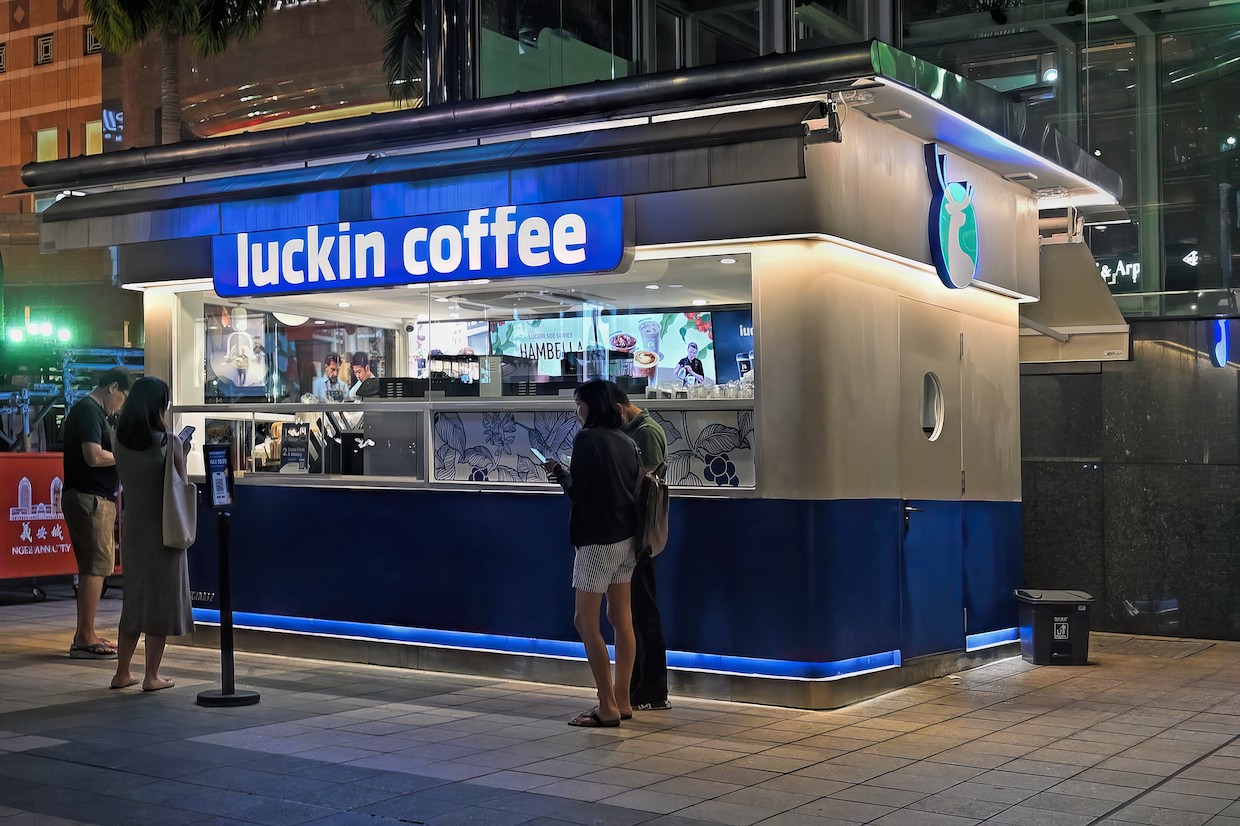
    Luckin Coffee opened its 100th store in Singapore on September 29, 2026, setting up in the commercial and transit hub of Bugis. The milestone establishes the Chinese chain as the city-state’s second-largest coffee operator by store count three years after its local launch.

    Customer volumes drove the physical expansion. More than 1.9 million cumulative transacting customers have bought drinks through the brand’s app-led ordering system in Singapore since the first outlet began trading in 2023.

    Footprint Strategy in Transit Nodes

    The Bugis site follows Luckin’s standard format across Southeast Asia: compact footprints near high-density commuter pathways and retail developments. Placing locations directly inside transport interchanges and office basements reduces seating overhead while maintaining order throughput during morning and lunch rush hours.

    Digital pickups handle the bulk of transactions. By requiring customers to order and pay via mobile application before collecting at the counter, the chain keeps queue times low and processes hundreds of drinks per hour with small front-of-house teams.

    Shifting Market Dynamics for Local Operators

    Reaching 100 outlets in three years puts immediate pressure on established mid-market chains and legacy regional brands. Fast store rollouts backed by aggressive digital discounting force competing operators to protect market share by upgrading their own mobile ordering apps and matching promotional drink pricing.

    Commercial landlords benefit from the format’s flexibility. Luckin takes micro-units and irregular floor plans that sit outside traditional full-service cafe requirements, generating steady rental income from transit corridors that previously housed service kiosks or sat vacant.

    International Growth Beyond the Domestic Base

    Singapore served as Luckin’s first international testing ground when the company entered the market in early 2023. Building a profitable operating model outside mainland China required adapting supply chains and menu profiles for Southeast Asian consumer tastes while retaining its core low-cost automated store design.

    Sustained transaction growth in Singapore validates the exportability of the grab-and-go model across high-rent Asian cities. The rapid climb to 100 units demonstrates that digital-first coffee retail can secure substantial market penetration even in mature, highly competitive metropolitan markets.

    Next Steps for Southeast Asian Expansion

    Attention now turns to whether Luckin can sustain repeat purchase frequency without deep promotional couponing. As the network reaches saturation in central commercial districts, subsequent sites must extract volume from suburban housing estates and secondary retail malls.

    Market watchers will track upcoming company filings for unit-level margins and regional store target updates across neighbouring Southeast Asian markets.

  • Fast-Food Chains Cross Borders as McDonald’s Plans 1,000 New Outlets in China

    Fast-Food Chains Cross Borders as McDonald’s Plans 1,000 New Outlets in China

    American fast-food brands and Chinese restaurant chains are accelerating cross-border expansion, trading burgers and bubble tea across both markets despite trade friction.

    McDonald’s plans to open 1,000 new Chinese restaurants this year on its way to a target of 10,000 locations by 2028. Burger King expects to triple its Chinese footprint to 4,000 stores by 2035, while Wendy’s aims to open 1,000 restaurants in the country over the next decade.

    Church’s Texas Chicken entered the market last month with an opening in Shanghai that drew long queues in the rain, with plans for at least 600 outlets nationwide. At the same time, Chinese beverage and fast-food operators are pushing into North America to build alternative revenue streams away from intense domestic discounting.

    American giants target lower-tier Chinese cities

    China remains the largest market for Yum China’s KFC, which operates roughly 13,000 outlets in the country compared with 3,750 in the United States. Having entered Beijing in 1987, followed by McDonald’s and Pizza Hut in 1990, western quick-service brands are now looking beyond saturated top-tier cities.

    Growth is shifting into smaller, inland municipalities where lower operational costs and rising disposable incomes support store additions. Even with high consumer familiarity, foreign operators increasingly rely on regional joint ventures to manage site selection and financial commitments. Starbucks restructured its mainland operations earlier this year by selling a 60 per cent stake to Boyu Capital following several years of softer store traffic.

    Menu adjustments remain essential for western chains looking to protect customer volumes. KFC menus across mainland outlets feature localized breakfast congee and egg tarts alongside fried chicken, balancing core imports with domestic dining habits.

    Chinese operators push abroad to escape price wars

    Sluggish domestic consumer spending and a property slump have squeezed margins across China’s 16 million food and beverage outlets, where the average operational lifespan was projected to drop to 15 months last year. After expanding across Southeast Asia, Chinese brands are taking their supply chains directly into the United States.

    Drink and ice cream giant Mixue, which operates more than 53,000 stores globally, entered the US market in December with three locations, including a store in New York’s Herald Square. The chain has outlined plans for at least 24 additional sites across four American states.

    Tea and coffee specialists are scaling alongside them. Heytea now runs 40 US branches, while Luckin Coffee has established 20 locations in New York after overtaking Starbucks by store count in China.

    Value positioning and operational friction

    Chinese entrants rely heavily on aggressive price points to gain market share against entrenched western competitors. At a Mixue store in Hollywood, a medium matcha latte sells for $6.83, undercutting nearby Starbucks pricing by nearly a dollar. Fast-food operator Wallace, which runs over 20,000 hamburger and fried chicken restaurants in China, opened its second California restaurant selling three chicken sandwiches for $10.

    For landlords and retail operators, the influx provides active leasing demand in suburban strip centers and urban transport hubs. However, maintaining aggressive pricing abroad introduces margin pressure, particularly if supply chains rely on imported ingredients exposed to tariff adjustments.

    Data governance and consumer perception present additional operational hurdles for Chinese operators abroad. Wallace does not highlight its Fujian headquarters on its American web pages, reflecting the brand sensitivity required as trade ties face political scrutiny.

    Scale tests across both retail markets

    The cross-border push represents a clear divergence in operational objectives. Western chains need China’s massive consumer base to meet long-term unit growth targets, while Chinese chains need the high-margin dollar revenues of the US market, which accounts for one-third of global restaurant industry sales.

    Luckin Coffee chief executive Jinyi Guo told investors the American market represents an important long-term target that the group will pursue with disciplined capital allocation. Industry attention now turns to Mixue’s next round of store openings across the US West Coast and McDonald’s pace of store rollouts across inland Chinese provinces through the end of the financial year.

  • Heytea Expands US Footprint with Philadelphia Store as Chinese Chains Scale Up

    Heytea Expands US Footprint with Philadelphia Store as Chinese Chains Scale Up

    Staff deployed crowd-control barriers at 10th and Arch Streets as Heytea opened its first Philadelphia store. Lines for its chilled fruit teas stretched down the block.

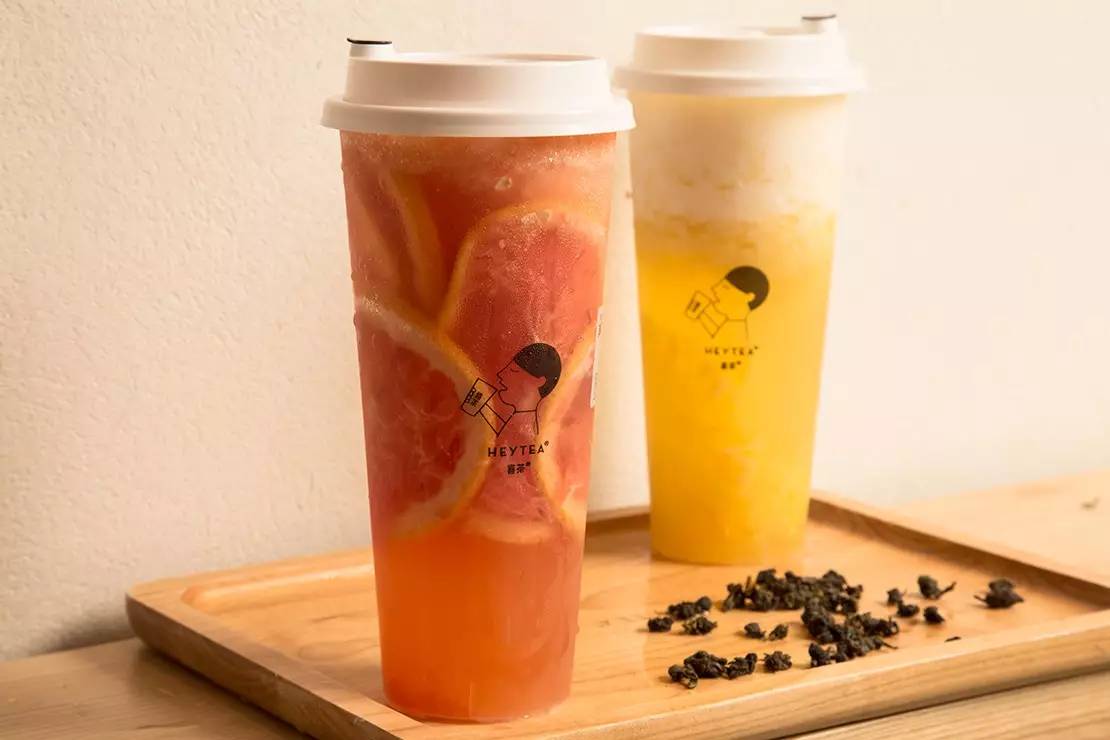
    Headquartered in Shenzhen, the chain operates more than 4,000 stores worldwide. It sells drinks like King Jasmine Guava tea for $7.99 while ramping up its international footprint.

    That debut follows a launch on New York’s Upper West Side weeks earlier. Heytea press representative Yinnan Shen said more than 600 people lined up across three city blocks for that opening. Founded in Guangdong in 2012, the company specialises in what it calls new-style tea. It blends brewed whole-leaf tea with fresh fruit rather than powdered mixes.

    Challenging the First Generation of Boba Retailers

    This expansion reflects a broader shift across North American beverage retail. Scaled mainland Chinese operators are pushing past first-generation Taiwanese bubble tea concepts. Early entrants like Vivi Bubble Tea, Kung Fu Tea, and Mr. Wish established US footprints between 2015 and 2017, alongside Gong Cha, Chi Cha San Chen, and Tiger Sugar. Most of those networks operate between 80 and 300 locations globally. That leaves them exposed to rivals backed by deeper capital and larger supply chains.

    Mainland brands rely on industrial throughput and heavy digital marketing. Smaller franchise networks and independent operators now face rising rents across prime Chinatown strips. In those corridors, quick-service and beverage chains continue to displace legacy family restaurants, pharmacies, and dry goods merchants.

    The Scale Race Led by Chinese Coffee and Tea

    Scale gives these mainland chains their chief advantage. Luckin Coffee entered Manhattan in 2025 and already operates 25 outlets in New York City out of 36,310 stores globally. Its buyout of specialty roaster Blue Bottle earlier this year strengthened that network. Budget rivals Cotti Coffee and Mixue run more than 18,000 and nearly 60,000 global stores respectively. Both entered New York in 2025.

    Western cafe chains build around seating and customer dwell time. By contrast, these Chinese operators design compact stores for fast mobile app pickups. High transaction volume and lean store footprints allow them to absorb steep urban rents.

    Franchise Proliferation Across East Coast Hubs

    Standardised franchise systems are multiplying across the East Coast. Over the past twelve months, Philadelphia has absorbed a string of mainland franchise concepts. Arrivals include dessert and snack operators Kyo Matcha and Yin Ji Rice Roll, alongside yogurt drink chain Hey I Am Yogost.

    Taiwanese brands spent the past decade establishing Asian tea across Western metropolitan centres. Now, mainland competitors are testing whether volume models built in tier-one Chinese cities can generate profit on expensive American real estate.

    Heytea is scouting further locations across the US Northeast corridor. Future sites will target high-density student and commercial districts in New York and Pennsylvania.

  • Mubadala Invests $1 Billion in Luckin Coffee Alongside Centurium

    Mubadala Invests $1 Billion in Luckin Coffee Alongside Centurium

    Abu Dhabi sovereign wealth fund Mubadala Investment Company agreed to invest about US$1 billion for a minority stake in Luckin Coffee. The Chinese chain operated more than 36,000 stores globally by June 30, with customer rolls reaching nearly 500 million transacting buyers.

    Mubadala is injecting the capital alongside Centurium Capital, the private equity firm that holds controlling shareholder control over the retail group. Fresh funding will finance store buildouts across mainland China while bankrolling new retail sites in overseas target markets.

    Gulf Capital Backs China Network

    The transaction directs Gulf sovereign money into high-frequency Chinese retail at a time when global private equity deployment in the country has cooled. Mubadala head of Asia private equity Mohamed Albadr pointed to data integration across product cycles and unit operations as the driver for the commitment.

    “Luckin Coffee has built a differentiated, technology-enabled business with data embedded across customer engagement, product development and store operations,” Albadr said.

    Securing US$1 billion gives the chain a balance sheet buffer that rivals cannot easily match in current fundraising conditions. The cash injection strengthens Luckin against low-price challengers like Cotti Coffee while intensifying lease competition for small-format commercial spaces across regional retail corridors.

    Scale Shifts Pressure to Rivals

    For multinational operators including Starbucks, the capital infusion signals that price competition and unit expansion in secondary Chinese cities will not slow down. Landlords in transport hubs, office basements, and shopping malls gain an aggressive, well-funded tenant capable of taking small footprints on short turnaround schedules.

    Risk now centers on unit-level profitability outside top-tier shopping zones as store density increases in mature urban markets. Expanding into international markets will also test whether the chain’s app-driven, low-labor operating model transfers effectively into markets with higher real estate and staffing overhead.

    International Footprint Next in Line

    The deal follows a rapid store buildup through the first half of 2026, when Luckin crossed the 35,000-location threshold before adding another 1,000 stores by the end of the second quarter. Centurium had previously taken operational control to restructure the company and reorient unit economics around small-format pickup counters and digital orders.

    RetailNews Asia will track the pace of the group’s overseas site selection and store openings over the coming quarter as capital deployment begins.

  • China Instant Retail Reaches 1.2 Trillion Yuan as Platforms Trade Subsidies for Warehouses

    China Instant Retail Reaches 1.2 Trillion Yuan as Platforms Trade Subsidies for Warehouses

    China’s instant-retail market will reach 1.2 trillion yuan (US$178 billion) this year as Alibaba, Meituan and JD.com pivot from discount subsidies to physical logistics networks.

    Ministry of Commerce data projects the sector to expand at an average annual pace of 12.6 per cent through 2030, driven by consumer demand for one-hour delivery on non-food goods including cosmetics, electronics and pharmaceuticals.

    The shift follows heavy margin erosion across the sector last year, when billions of dollars spent on consumer coupons and merchant incentives drove Meituan into a net loss and sharply reduced earnings at Alibaba and JD.com. Market regulators intervened with multiple summons and levied 3.6 billion yuan in penalties in April over safety violations, halting the aggressive discounting cycle.

    Shifting Shares and Margin Pressure

    Merchant earnings reveal the fallout from the promotional pullback. Luckin Coffee reported a 5.3 per cent drop in same-store sales at self-operated outlets for the April to June quarter, reversing a 13.8 per cent gain a year earlier when platform subsidies artificially lifted order volumes.

    Market share numbers have tightened as a result. Data from Analysys for the second quarter shows Alibaba’s Taobao Instant Commerce leading the market with 45.7 per cent, closely followed by Meituan at 45.3 per cent, while JD.com holds 7.7 per cent. That represents a sharp retreat for Meituan, whose meal-delivery share stood between 75 and 80 per cent before the latest price war began, according to Goldman Sachs estimates.

    The operational pivot is already repairing platform balance sheets. Instant-retail revenue at Alibaba jumped 45 per cent year on year to 53.3 billion yuan in the second quarter, while Meituan returned to profitability for the first time in nearly a year as subsidy budgets shrank.

    Dark Stores Replace Cash Handouts

    Platform operators are now spending their capital on property and fulfillment networks instead of digital vouchers. Meituan is constructing dedicated supermarkets to support grocery operations, while Alibaba and JD.com are rolling out urban dark stores and neighborhood lightning warehouses to guarantee sub-60-minute dispatch times.

    For retailers across the Asia-Pacific region, China’s quick-commerce evolution demonstrates that high-frequency food delivery functions primarily as an expensive customer acquisition tool. The sustainable profit pool sits in converting those app users into repeat buyers of higher-margin general merchandise through dedicated local fulfillment hubs.

    Platform operators now face the task of defending order volumes in the third quarter as promotional discounts expire completely across tier-one cities.

  • Chinese Coffee Powerhouse Luckin Bids for Premium Leap with Potential Blue Bottle Acquisition

    Chinese Coffee Powerhouse Luckin Bids for Premium Leap with Potential Blue Bottle Acquisition

    Luckin Coffee, a major Chinese coffee company, is planning to upscale its operations. The company is currently exploring potential acquisitions to establish a premium coffee business parallel to its mass-market core.

    Acquisition Ambition

    The company is contemplating a bid for Blue Bottle Coffee, a Nestle-owned entity. If successful, such an acquisition would be a considerable leap for Luckin in their pursuit of the specialty coffee market. Additionally, it would provide an opportunity for them to enhance their brand identity beyond their current value-driven model.

    Blue Bottle Coffee, established in 2002, manages over 100 cafes across the United States and East Asia, with 12 in mainland China and four in Hong Kong. It enjoys a reputation as a reputable name in the specialty coffee sector.

    Earlier this month, it was reported that Nestlé, with the assistance of investment bank Morgan Stanley, was considering selling Blue Bottle Coffee. The premium roasting company was acquired by the Swiss food and beverage group in 2017 in a transaction that valued the business at approximately $700 million.

    Luckin Coffee, along with Beijing-based private equity firm Centurium Capital, is also said to be considering a bid for Lucky Ace International. Lucky Ace International possesses the exclusive master franchise rights for the Japanese specialty coffee brand % Arabica, operating in China and Hong Kong.

    Luckin Coffee’s Growth

    Founded in 2017, Luckin Coffee has rapidly become one of China’s largest coffee chains, boasting over 24,000 locations worldwide.

    Questions & Answers

    What is Luckin Coffee’s current initiative?
    Luckin Coffee is planning to upscale its operations and is considering potential acquisitions to establish a premium coffee business.

    Which companies is Luckin Coffee considering for acquisition?
    Luckin Coffee is contemplating a bid for Blue Bottle Coffee, a Nestle-owned entity. It is also reportedly weighing a bid for Lucky Ace International, which holds the exclusive master franchise rights for the Japanese specialty coffee brand % Arabica in China and Hong Kong.

    What is the significance of these potential acquisitions for Luckin Coffee?
    If successful, these acquisitions would represent a significant leap for Luckin’s push into the specialty coffee segment. Additionally, it would provide an opportunity for them to enhance their brand identity beyond their current value-driven model.

  • Explosive Growth: Luckin Coffee Revenue Skyrockets by 50% as 3,000 New Stores Open Worldwide

    Explosive Growth: Luckin Coffee Revenue Skyrockets by 50% as 3,000 New Stores Open Worldwide

    In the third quarter, China’s Luckin Coffee Inc. experienced a significant revenue boost, supported by an impressive number of new store openings. The chain saw its total net revenue surge by 50.2% year-on-year to RMB15.287 billion (US$2.14 billion) by the end of September. This boost primarily resulted from an increase of 48.1% in gross merchandise value, following a 47% growth in the second quarter.

    Store Expansion and Revenue Boost

    Luckin Coffee Inc. added 3008 new outlets to its chain during the third quarter, including 2979 stores in China, five in Singapore, 21 in Malaysia and three in the United States. This growth brought the total number of stores up to 29,214, comprising 18,882 self-operated stores and 10,332 partnership locations.

    The coffeeshop chain saw same-store sales in self-operated outlets rise by 14.4%, while the number of average monthly transacting customers grew by a substantial 40.6%.

    A Successful Strategy

    Jinyi Guo, Luckin’s co-founder and CEO, credited the company’s positive performance to its strategy of scale expansion. He noted that the expanding store network had improved the chain’s fulfilment capabilities, allowing it to meet growing customer demand successfully. The company also reached a significant milestone, surpassing 100 million average monthly transacting customers for the first time. According to Guo, these achievements further solidified Luckin’s competitive edge and market leadership position.

    While the company’s operating income grew by 12.9% to RMB1.776 billion, there was a slight decrease of 2.7% in net income, which totaled RMB1.278 billion.

    Questions & Answers

    What was the total net revenue of Luckin Coffee Inc. in the third quarter?
    The total net revenue of Luckin Coffee Inc. in the third quarter was RMB15.287 billion (US$2.14 billion).

    How many new stores did Luckin Coffee Inc. open in the third quarter?
    Luckin Coffee Inc. opened 3008 new stores in the third quarter.

    What was the growth rate of average monthly transacting customers for Luckin Coffee Inc.?
    The number of average monthly transacting customers for Luckin Coffee Inc. grew by 40.6%.

  • Record Q2 Revenue For Luckin Coffee Amid Global Expansion And Increased Customer Engagement

    Record Q2 Revenue For Luckin Coffee Amid Global Expansion And Increased Customer Engagement

    Luckin Coffee reported an unprecedented revenue of $1.72 billion in the second quarter, representing a 47 percent year-on-year increase. This performance coincides with the expansion of the Chinese coffee chain’s global footprint to 26,206 outlets, including more than 2100 new store openings.

    Global Expansion and Growth in Numbers

    Luckin Coffee expanded its network by adding 2085 stores in mainland China and Hong Kong during the second quarter. Additionally, the company opened six new stores in Singapore, 16 in Malaysia, and two in the United States. Of the total number of stores, 16,968 are directly operated by Luckin Coffee, while 9,238 outlets are run in partnership with other entities.

    The company saw a notable surge in customer engagement, with monthly transaction numbers reaching an all-time high of 91.7 million customers during the quarter, marking a 31.6 percent increase compared to the corresponding period last year.

    Financial Performance and Business Prospects

    Revenue generated from directly operated stores shot up by 45.6 percent to $1.27 billion, propelled by a same-store sales growth of 13.4 percent. This indicates a notable improvement from the 8.1 percent growth recorded in the preceding quarter, and a significant rebound from a 20.9 percent decline experienced a year ago.

    Luckin Coffee’s operating profits at store level surged by 42.3 percent to reach $268 million. Revenue from partnership stores also saw a substantial increase, reaching $399.8 million, which translates to a 55 percent year-on-year increase.

    Jinyi Guo, co-founder and CEO of Luckin Coffee, attributed the robust financial performance to the company’s strategic focus on scalability. He emphasized that by capitalizing on the company’s strengths in areas such as operational efficiency, fulfillment, and supply chain, Luckin Coffee has managed to achieve double-digit same-store sales growth in its directly operated stores.

    As for the future, Guo reaffirms that the company remains resolute in its commitment to expanding its market share.

    Questions & Answers

    What was Luckin Coffee’s recorded revenue for the second quarter?
    The company recorded a revenue of $1.72 billion for the second quarter.

    How many new stores did Luckin Coffee open in the second quarter?
    The coffee chain opened more than 2100 new stores globally in the second quarter.

    What was the growth rate in Luckin Coffee’s same-store sales?
    The company reported a same-store sales growth of 13.4% during the quarter.

  • China’s largest coffee chain Luckin Coffee establishes exclusive coconut island in Indonesia

    China’s largest coffee chain Luckin Coffee establishes exclusive coconut island in Indonesia

    China’s largest coffee chain Luckin Coffee has signed an agreement with Indonesia’s Banggai Islands Regency, making it the exclusive premium origin of coconut milk for its flagship Coconut Latte.

    The memorandum of understanding it signed with the regency provides Luckin Coffee and its partners with exclusive rights to procure coconuts from the region, the firm announced earlier this month. The Banggai Islands are among the world’s top coconut-producing regions.

    According to Global Times, the islands will be named “Luckin Exclusive Coconut Island ” under the agreement.

    The chain intends to source roughly one million tons of raw coconut materials, which comply with its quality standards, over the next five years.

    Li Shan, senior director of the firm’s supply chain center, said the region’s high-quality coconut will bolster the company’s supply chain.

    Luckin Coffee, headquartered in Xiamen, a port city in southeastern China, was established in 2017 and grew rapidly before it was discovered to have falsified half of its 2019 sales. The scandal led to its delisting from Nasdaq and subsequent filing for bankruptcy protection in the U.S. in 2021, Reuters reported.

    It has since made a strong comeback and now dominates China’s coffee market with over 21,000 stores nationwide as of September, outselling U.S giant Starbucks.

    It has also been expanding overseas, setting up its first Southeast Asian store in Singapore in April 2023 and later increasing its number of outlets in the city-state to 38.

    According to Nikkei Asia, it opened its first two stores in Malaysia this January and plans to have 200 outlets there in the next two years.

    Since its launch, Luckin has sold over 1.2 billion Coconut Lattes as of January.

  • Luckin Coffee may launch in the US as early as next year

    Luckin Coffee may launch in the US as early as next year

    Chinese coffee chain Luckin Coffee is exploring potential expansion into the US, with a launch possibly as early as next year.

    During an earnings call, Luckin Chairman and CEO Guo Jinyi emphasised both the promise and challenges of overseas growth.

    “The international market is filled with opportunities, but also presents significant challenges that require patience, time, and continuous investment,” Guo said.

    “We remain both patient and confident in our ability to succeed. We are actively evaluating opportunities in the US and other markets.”

    A report from the Financial Times suggests that Luckin may target cities in the US with sizeable Chinese student populations and tourist presence, such as New York.

    The company also aims to undercut major US coffee brands by offering drinks priced around US$2 to $3, potentially attracting budget-conscious consumers.

    Luckin has already begun overseas expansion in Singapore, opening eight new stores last quarter, taking its total in that market to 45. It also has stores in Malaysia.

    Although initial operations in the country incurred financial losses, Guo said these experiences provided valuable insights into the complexities of managing international ventures.

    The company plans to expand abroad, focusing on store network growth, supply chain management, and brand building.

    “Considering the maturity and competitiveness of the US coffee market, Luckin intends to approach its expansion strategy there with careful consideration and a disciplined execution plan,” Guo added.

    However, the potential US expansion may face reputational challenges.

    Jason Yu, GM at consumer research firm Kantar Worldpanel China, pointed out that Luckin’s past scandal, involving inflated sales data, could impact its brand image in the US.

    In 2020, Luckin admitted to fabricating approximately $310 million in sales in 2019, leading to multiple short-selling attacks and ultimately its delisting from NASDAQ.

    “With fierce competition in the Chinese coffee sector, overseas expansion and the possibility to regain trust from the capital market might be strategic options for Luckin,” Yu said.

  • Luckin Coffee to launch in Malaysia

    Luckin Coffee to launch in Malaysia

    Chinese chain Luckin Coffee will launch its first location in Malaysia, its second overseas market after Singapore.

    According to local sources, the launch is in collaboration with a Bursa Malaysia-listed company. Luckin Coffee intends to grow its market footprint over the next five years, with stores opening nationwide.

    Luckin Coffee, founded in 2017, is one of the fastest-growing coffee chains, surpassing Starbucks as China’s largest.

    The brand operates more than 18,000 stores in China and 32 locations in Singapore.

    Last year, Luckin Coffee sold more than 5.42 million cups of the alcohol-infused latte it launched with Kweichow Moutai on its first day of business, setting a new sales record for the Chinese coffee company.

    In May, the coffee company stated that its first-quarter revenues increased 41.5 percent yearly to US$869.5 million, owing to increased product sales and additional shop openings. The coffee business opened 2342 net new outlets over the year, including two in Singapore, bringing the total number of stores to 18,590 by the end of March.

  • Luckin Coffee to make Southeast Asia debut in Singapore this month

    Luckin Coffee to make Southeast Asia debut in Singapore this month

    Luckin Coffee, the once-troubled Chinese coffee chain, is slated to open up locations in Singapore as early as this month.

    The development follows the coffee chain’s job postings earlier this year looking for store managers in the city-state. It also aims to fill marketing, project management, and engineering roles.

    The firm also previously told Chinese media that it was conducting preliminary testing in Singapore and reiterated its core focus in its home country.

    Luckin Coffee was once considered China’s answer to Starbucks. However the US Securities and Exchange Commission slapped the company with a US$180 million fine after it was revealed that the firm had misreported financial statements. It went into restructuring and emerged in April last year.

    In its most recent financial report, Luckin Coffee said it logged US$1.9 billion in total net revenue for its 2022 financial year. It has over 8,200 stores in China.