Retail News CRM

Tag: LVMH

  • LVMH Navigates Middle East Tensions: Q1 Revenue Slips but Expansion and Innovation Remain Steady

    LVMH Navigates Middle East Tensions: Q1 Revenue Slips but Expansion and Innovation Remain Steady

    In the first quarter, LVMH reported revenues of €19.1 billion (US$22.4 billion), marking a decrease of 6%. This decline is largely attributed to various geopolitical tensions impacting business operations across the globe.

    Geopolitical Impacts on Revenue

    LVMH noted that its robust presence in key markets, specifically in the US and Asia, significantly helped in mitigating the disruptions arising from economic instability and conflict in the Middle East.

    Performance Across Different Business Segments

    Looking at the performance of various business segments, wines and spirits showcased revenues of $1.49 billion, showing a decrease of 2% as compared to the previous year. The fashion and leather goods segment, which is the largest division of the group, witnessed a revenue of $10.8 billion, marking a decline of 9%.

    Simultaneously, revenues from perfumes and cosmetics amounted to $2.39 billion, representing a drop of 6%, while watches and jewellery brought in $2.86 billion, a decrease of 2%.

    Expanding Retail Network and Portfolio Optimization

    Furthermore, LVMH has been proactive in expanding its retail network, especially in the UK, and advancing portfolio optimization initiatives within its duty-free business. DFS, a division of LVMH, entered into an agreement with China Tourism Group Duty Free to vend its Greater China operations, which includes the Gallerias located in Hong Kong and Macau. The group also offloaded airport concessions in Los Angeles and San Francisco to Duty Free Americas.

    In spite of the challenging geopolitical and economic environment, mainly due to the conflict in the Middle East, the company remains watchful yet confident.

    LVMH said, “The group stays committed to the growth of its brands, propelled by a consistent policy of innovation and investment along with a continuous pursuit for quality in its designs, their appeal, and their selective distribution.”

    Questions & Answers

    What was LVMH’s reported revenue in the first quarter?
    LVMH reported revenue of €19.1 billion (US$22.4 billion) in the first quarter.

    Which business segment is LVMH’s largest division, and how did it perform?
    LVMH’s largest division is its fashion and leather goods segment, which reported a revenue of $10.8 billion, marking a decline of 9%.

    What is LVMH’s outlook amidst the challenging geopolitical and economic environment?
    Despite the challenging conditions, LVMH remains vigilant yet confident. The group is committed to the growth of its brands, propelled by a consistent policy of innovation and investment and a continuous pursuit of quality in its designs.
  • Beatrice Goasglas Takes the Helm at Tag Heuer: LVMH’s New CEO to Drive Innovation and Elevation

    Beatrice Goasglas Takes the Helm at Tag Heuer: LVMH’s New CEO to Drive Innovation and Elevation

    Luxury goods multinational corporation LVMH has announced the appointment of Béatrice Goasglas as the new CEO of its premium watch label, Tag Heuer. The appointment will take effect from May.

    Professional Background of the New CEO

    Goasglas has been with Tag Heuer since 2018, during which time she has occupied several pivotal positions. Her most recent role was that of the president of Tag Heuer Americas, which followed tenures as the vice president of digital and client experience and the managing director of Tag Heuer Asia Pacific.

    Role Expectations and Responsibilities

    In her new capacity as CEO, Goasglas is expected to leverage her considerable understanding of the brand’s legacy and workforce to further its ongoing development and innovation initiatives. These efforts will be directed at enhancing the brand’s collections and strategic partnerships. One of the key relationships under Goasglas’s stewardship will be with Formula 1.

    Executive Statements

    Stéphane Bianchi, the managing director of LVMH Group and CEO of LVMH Watches & Jewelry, expressed his enthusiasm for Goasglas’s new role. Bianchi believes that Goasglas’s comprehensive understanding of the brand, along with her leadership skills and unwavering dedication, will empower Tag Heuer to scale new milestones. Bianchi is confident that Goasglas will guide the brand to continue representing the finest standards of watchmaking quality and the innovative spirit that is so integral to the brand’s identity.

    Earlier this year, LVMH named Francois Kohler as president of South and Southeast Asia. Kohler took over the role from Chris Chong.

    Questions & Answers

    Who is the new CEO of Tag Heuer?
    Béatrice Goasglas has been appointed as the new CEO of Tag Heuer.

    When does Béatrice Goasglas’s tenure as CEO commence?
    Goasglas’s appointment as CEO of Tag Heuer will be effective from May.

    What role did Béatrice Goasglas hold at Tag Heuer prior to becoming CEO?
    Before stepping into her new role as CEO, Goasglas was the president of Tag Heuer Americas.

  • Francois Kohler Takes the Helm at LVMH: New Chapter for Luxury in South & Southeast Asia

    Francois Kohler Takes the Helm at LVMH: New Chapter for Luxury in South & Southeast Asia

    Francois Kohler has been named the new president for South and Southeast Asia by luxury giant LVMH, effective February 23. Kohler succeeds Chris Chong, who is venturing into new professional pursuits.

    In his new role, Kohler will be reporting directly to LVMH Group MD, Stephane Bianchi. His key responsibilities will encompass overseeing the group’s operations and expansion across the dynamic and strategically crucial regions of South and Southeast Asia. LVMH identifies these regions as integral to the growth of its Maisons.

    Bringing Experience and Expertise to the Role

    Kohler is set to utilize his extensive experience at both group and Maison levels, with a particular emphasis on retail network development and client strategy. He is expected to significantly contribute to the ongoing growth of LVMH’s presence in the region.

    Bianchi has expressed his confidence in Kohler’s leadership abilities, entrepreneurial spirit, and cultural adaptability. He also commended Kohler’s proven track record in retail network development as an asset to maximize developmental opportunities.

    Bianchi also took this opportunity to extend his gratitude towards Chris Chong for his significant contributions to the group’s regional presence. He credited Chong for strengthening local synergies to stimulate and maintain growth in South Asia.

    Optimism Amid Challenges

    Earlier this year, LVMH reported that its fourth-quarter sales had surpassed initial predictions. This instilled a sense of optimism about a potential rebound in the luxury sector. However, the sector continues to face challenges such as trade tensions, a depreciating dollar, and high gold prices.

    Questions & Answers

    What is the new role of Francois Kohler?
    Francois Kohler has been appointed as the new president for South and Southeast Asia by LVMH.

    What responsibilities will Kohler undertake in his new role at LVMH?
    Kohler will be in charge of overseeing LVMH’s operations and driving its expansion across the South and Southeast Asia region.

    What are the challenges facing the luxury sector as per LVMH’s recent reports?
    According to LVMH, the luxury sector is grappling with issues such as trade tensions, a weakening dollar, and high gold prices.

  • “LVMH Shatters Q4 Sales Predictions: Luxury Sector Sees Hope with China’s Uptick”

    “LVMH Shatters Q4 Sales Predictions: Luxury Sector Sees Hope with China’s Uptick”

    LVMH, the conglomerate which owns luxury brands Louis Vuitton and Tiffany, outperformed fourth-quarter sales projections on Tuesday. This development has raised expectations of a revival within the luxury sector, despite challenges including trade conflicts, a depreciating dollar, and elevated gold prices impacting profit margins.

    In the final quarter, the leading luxury firm posted overall sales of 22.7 billion euros (US$27.1 billion). This represents a 1 per cent increase on a comparable basis, outperforming predictions of a 0.3 per cent decrease as per Visible Alpha’s consensus forecast.

    Signs of Recovery in Asia

    The France-based conglomerate revealed indications of resuming growth in Asia, with domestic Chinese sales seeing an uptick in the quarter. This supports the trend of recovery that the retail giant has been witnessing over the last few months.

    The watches and jewellery division of LVMH experienced a sales growth of 8 per cent in the quarter, surpassing expectations. However, revenue from its main fashion and leather division, which contributes most to the overall profits, saw a 3 per cent decline when adjusted for currency fluctuations – a figure that was in line with projections.

    The luxury sector is slowly recovering from a prolonged slump, and recent positive results from industry peers Richemont and Burberry, bolstered by a rebound in China, have been encouraging.

    Caution Moving Forward

    However, despite the promising results, LVMH’s CEO and billionaire owner, Bernard Arnault, signaled caution for the future, stating plans to restrict costs and expenses. Arnault cited ongoing geopolitical crises, economic uncertainty and certain state policies, including those in France, aimed at maximizing taxation, as reasons for adopting a cautious approach.

    The conglomerate’s operating profit for 2025 dropped by 9 per cent, with margins affected by a range of factors including currency movements, US tariffs impacting alcohol exports, and record gold prices escalating import costs for jewellery.

    Strategies Amid Challenges

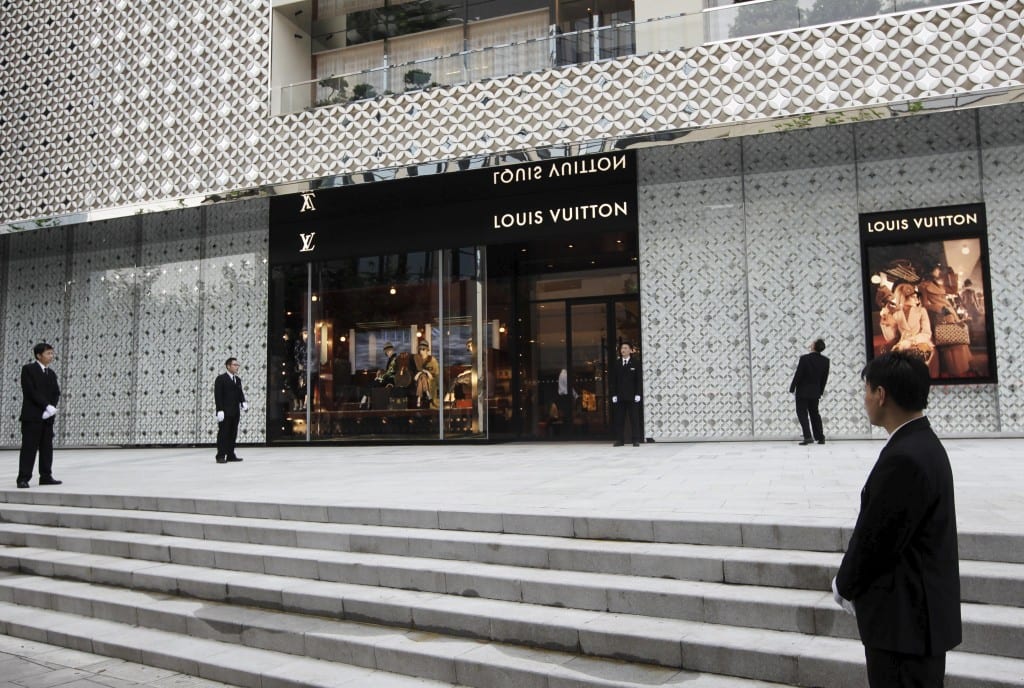
    Amid a real estate crisis and stiff local competition in China, LVMH has been strategically leveraging its financial strength to gain an edge. This approach has seen the opening of a large, ship-shaped Vuitton store in Shanghai and a new Dior flagship store in Beijing, among other initiatives.

    The ship-shaped store has proven to be a “great success” for the prominent Louis Vuitton brand, according to Arnault. Chinese customers, including international tourists, comprise nearly one-third of LVMH’s fashion and leather sales, as per UBS estimates.

    During its last trading update, LVMH’s positive remarks about slightly improved Chinese demand led to a rally in the luxury stock market, adding nearly $80 billion to combined company valuations.

    The company stated that the weaker dollar had resulted in US tourists spending less in Europe, with regional sales dropping 2 per cent last quarter. Conversely, US sales rose by 1 per cent in the same period. Sales in Asia, including China, increased by 1 per cent.

    Questions & Answers

    What was the overall sales of LVMH in the fourth quarter?
    The company recorded overall sales of 22.7 billion euros (US$27.1 billion).

    How did the sales of LVMH’s watches and jewellery division perform?
    The watches and jewellery division experienced an 8 per cent growth in sales in the quarter.

    What factors are affecting LVMH’s operating profit?
    The operating profit was impacted by a range of factors including currency movements, US tariffs impacting alcohol exports, and record gold prices escalating import costs for jewellery.

  • CTG Duty Free Acquires DFS: LVMH’s Strategic Luxury Retail Sale Boosts China’s Travel Market

    CTG Duty Free Acquires DFS: LVMH’s Strategic Luxury Retail Sale Boosts China’s Travel Market

    Global luxury travel retailer DFS, which is owned by LVMH and Robert Miller, DFS’ co-founder and shareholder, has revealed they are set to sell their retail business across Greater China to the China Tourism Group (CTG) Duty Free. According to the agreement, CTG Duty Free is set to acquire businesses in Hong Kong, Macau, and Greater China.

    Acquisition of DFS Brands

    Aside from acquiring businesses, CTG Duty Free will also obtain a variety of DFS brands and intellectual properties exclusively for usage across Greater China. The proceeds from this transaction will be received in cash. Post-transaction, DFS will maintain operations of its other luxury travel retail businesses worldwide.

    Luke Chang, executive director and president of CTG Duty Free, shared that this move is expected to broaden the service network of CTG Duty Free across the Greater Bay Area. The goal is to establish a platform for promoting China-influenced brands globally while setting up an international business mid-platform.

    Chang also emphasized CTG Duty Free’s commitment to provide superior travel retail experiences to both domestic and international tourists. This aligns with their responsibility as a central state-owned enterprise-controlled listed company to facilitate the high-quality development of the retail economy in Hong Kong and Macau.

    A Significant Step for DFS

    DFS has described the sale as a significant step for the company. Ed Brennan, chairman and CEO of DFS, stated that the company is proud of its well-established presence and operational excellence in Hong Kong and Macau. The DFS shopping experience is expected to improve and progress with the fresh skills and perspectives that CTG Duty Free will introduce.

    Michael Schriver, president of LVMH for North Asia, expressed that the move highlights LVMH’s confidence in the long-term potential of the Chinese market. The transaction is anticipated to be finalized in approximately two months.

    Questions & Answers

    What is the agreement between DFS and CTG Duty Free about?
    The agreement is about the sale of DFS’ retail business across Greater China to CTG Duty Free.

    What will CTG Duty Free acquire from DFS?
    CTG Duty Free will acquire businesses in Hong Kong, Macau, and Greater China as well as a series of DFS brands and intellectual properties for exclusive use in Greater China.

    What will be the impact of this transaction on DFS?
    After the transaction, DFS will continue to operate its other luxury travel retail operations worldwide. The sale is seen as an important step for DFS and is expected to enhance the shopping experience they offer with new skills and perspectives from CTG Duty Free.

  • Gentle Monster, Backed by Google and LVMH, Fights Copycat Designs with Legal Firepower: Blue Elephant under Scrutiny

    Gentle Monster, Backed by Google and LVMH, Fights Copycat Designs with Legal Firepower: Blue Elephant under Scrutiny

    Gentle Monster, an eyewear brand under the ownership of Iicombined, has initiated legal proceedings against a fellow Korean eyewear company, Blue Elephant. The controversy revolves around accusations that Blue Elephant has been replicating Gentle Monster’s product designs and conceptual designs used in physical retail spaces.

    Alleged Copying of Product Designs

    Iicombined has confirmed that Gentle Monster, a brand that has garnered financial support from investment firms connected to Google and LVMH, does not maintain any business or production affiliations with other eyewear corporations. During an internal probe, it was discovered that Blue Elephant had a minimum of 30 eyewear items bearing a significant likeness to those of Gentle Monster.

    It has been noted that Blue Elephant’s products, similar in design, are retailed at a fraction of the price of those produced by Gentle Monster.

    Legal Responses and Actions

    In response to the alleged infringements, a design invalidation trial was lodged with the Korean Intellectual Property Trial and Appeal Board in March 2025. The board’s decision on the matter is still awaited.

    Iicombined is taking a two-pronged legal approach in its pursuit of justice. In December 2024, a criminal complaint was registered against Blue Elephant with investigative authorities. This was followed by a lawsuit in October 2025, in which Iicombined sought an injunction and damages under the Unfair Competition Prevention Act.

    Questions & Answers

    What are the allegations against Blue Elephant?
    Blue Elephant is accused of replicating Gentle Monster’s product designs and physical retail space concepts.

    What legal actions has Iicombined undertaken?
    Iicombined has initiated both civil and criminal legal proceedings against Blue Elephant, including filing a design invalidation trial and a criminal complaint. In addition, they have sought an injunction and damages under the Unfair Competition Prevention Act.

    What was the outcome of the internal investigation conducted by Iicombined?
    The internal investigation by Iicombined revealed that Blue Elephant had at least 30 eyewear items that bore a significant resemblance to Gentle Monster’s designs.

  • LVMH Battles Billion-Euro Lawsuit: Luxury Leader Denies Claim of Misappropriating Hermès Heir’s Shares

    LVMH Battles Billion-Euro Lawsuit: Luxury Leader Denies Claim of Misappropriating Hermès Heir’s Shares

    Luxury conglomerate LVMH has publicly denied allegations that it illicitly acquired shares now valued in the billions of euros from Hermès heir, Nicolas Puech. LVMH has been named in a lawsuit alongside its CEO, Bernard Arnault, and ex-wealth manager Eric Freymond.

    The Allegations

    Puech has claimed that he was wrongfully deprived of Hermès shares, now worth billions of euros, due to the actions of Arnault, LVMH and Freymond. He has lodged a civil lawsuit against these parties, leading to an ongoing criminal investigation in France.

    In response to Puech’s claims, LVMH released a statement stating, “LVMH and its (controlling) shareholder firmly reaffirm that they never, at any time, misappropriated shares of Hermès International, in any way whatsoever or without anyone’s knowledge, and that they do not hold any ‘hidden’ shares, contrary to what Mr Nicolas Puech suggests.”

    Puech, previously one of Hermès’ largest individual shareholders, shared in a recent interview that he was unaware of any movement of Hermès shares in his name, purportedly for Arnault’s advantage.

    The Investigation

    Reports have circulated that Arnault will soon be questioned by investigative judges in Paris. However, no specific date has been provided, and Arnault’s spokesperson has not responded to requests for comment.

    The Paris public prosecutor’s office has clarified that, to date, only Freymond has been formally placed under investigation. Neither Arnault nor his companies have been subjected to a formal investigation.

    Questions & Answers

    What are the allegations against LVMH?
    Nicolas Puech, an heir to Hermès, has claimed that LVMH, its CEO Bernard Arnault, and former wealth manager Eric Freymond wrongfully deprived him of Hermès shares worth billions of euros.

    Has LVMH responded to these claims?
    Yes, LVMH has denied any wrongdoing, stating that they have not illicitly acquired any shares of Hermès International.

    Who is currently under formal investigation?
    At this time, only Eric Freymond, the former wealth manager, has been formally placed under investigation. The Paris public prosecutor’s office has confirmed that neither Bernard Arnault nor his companies are currently under formal investigation.

  • Singapore’s Aupen, Adored by Taylor Swift, Partners with LVMH for a Stellar Debut Jewelry Collection

    Singapore’s Aupen, Adored by Taylor Swift, Partners with LVMH for a Stellar Debut Jewelry Collection

    Aupen, a luxury bag brand from Singapore whose designs have been sported by renowned personalities like Taylor Swift and Selena Gomez, is eager to unveil its debut fine jewelry collection. This exciting event, scheduled for Saturday, is happening in collaboration with the French fashion powerhouse LVMH.

    The New Collection

    The upcoming collection features exquisite pieces, adorned with gold and diamonds. These intricate designs are deeply influenced by the life experiences of Aupen’s founder, Nicholas Tan. Tan, a former Southeast Asian Games swimming gold medalist and a Harvard graduate, founded Aupen with a vision to create products that resonate with his personal journey.

    The successful collaboration with LVMH has been facilitated by LVMH Metiers d’Art, a creative initiative under the umbrella of the LVMH group.

    Exclusive Website Launch

    The new jewelry line will be exclusively available on Aupen’s website, and this launch will be accompanied by the re-release of select bags from the brand’s archives. One of these iconic designs includes the Joy bag, recently made popular by American actress and singer, Selena Gomez.

    Established in November 2022, Aupen is known for its asymmetrical leather bag designs that pay homage to the beauty of life’s imperfections. The brand’s design ethos revolves around minimalistic and authentic styles, with a strong emphasis on superior craftsmanship.

    High-End Production

    The manufacturing process of Aupen’s products involves top-tier facilities. The hardware is produced at the Paris-based Jade Groupe, while the handbag leather is sourced from Tanneries Roux, a company known for its specialization in calfskin.

    Aupen has captured the attention of global celebrities. Taylor Swift, the American billionaire singer, was seen with an Aupen Nirvana bag in August 2023. Other stars like Emily Blunt, Jennifer Aniston, and Ana Taylor-Joy have also been photographed with Aupen products.

    Questions & Answers

    What is the inspiration behind Aupen’s new fine jewelry collection?
    The collection draws inspiration from the life experiences of Aupen’s founder, Nicholas Tan, a former Southeast Asian Games swimming gold medalist and a Harvard alumnus.

    Where can consumers purchase the new jewelry line from Aupen?
    The fine jewelry collection will be exclusively available on Aupen’s official website.

    Who are some of the celebrities seen with Aupen products?
    Well-known celebrities seen with Aupen products include Taylor Swift, Selena Gomez, Emily Blunt, Jennifer Aniston, and Ana Taylor-Joy.

  • LVMH Experiences First Growth Of 2020 Amidst Rising Demand In China

    LVMH Experiences First Growth Of 2020 Amidst Rising Demand In China

    LVMH, the world’s largest luxury goods group, has reported a 1% increase in sales in the third quarter. This uptick, the first instance of growth this year, was largely driven by an enhanced demand in China. With a diverse portfolio spanning fashion, alcohol, and retail, LVMH is considered a reliable indicator of the overall health of the luxury goods sector.

    Encouraging Signs From Asia

    According to a statement from LVMH, the Asian market, excluding Japan, saw a “noticeable” improvement during the first nine months of the business year. The company’s CFO, Cecile Cabanis, further highlighted that “Mainland China turned positive in Q3.”

    However, Cabanis also pointed out potential challenges for the fourth quarter. These include unfavourable currency rates and ongoing economic uncertainties. Yet, she expressed confidence in the new creative direction the group’s brands are adopting.

    In terms of financial improvement, Cabanis explained that it would be a gradual process that will “take time” and will involve “gradual sequential improvement.”

    Stock Market Response

    In response to the improved sales figures, LVMH’s US shares leapt by 7.5% on Tuesday. Analysts observed a combination of self-help measures and increased demand from China, suggesting a U-shaped recovery trajectory for the luxury goods giant.

    However, it was not all good news. LVMH’s fashion and leather goods division, which includes flagship brands Louis Vuitton and Dior and accounts for over two-thirds of the company’s profits, saw a 2% drop in sales compared to the previous year.

    Overall Performance of the Luxury Sector

    The luxury sector, worth $400 billion, has been struggling following the end of the post-pandemic boom. Rising prices, tariffs, and the ongoing real estate crisis in China have all contributed to the sector’s problems. However, the third-quarter sales update from LVMH, the first significant player in the industry to report, has led to increased optimism among investors.

    Industry analysts have expressed positive sentiments, suggesting that the sector’s focus on more affordable products and a “burst of creativity” from new designers may signal an end to the downturn.

    A Time of Change for LVMH

    Facing challenging business conditions, LVMH has recently made several personnel changes. Bernard Arnault, the French billionaire who controls the conglomerate, has repositioned some of his key personnel and designers, including those at Dior, Celine, Loewe, and Fendi.

    Since the company’s last trading update on July 24, its share prices have increased by 13%. This rally has elevated LVMH to the top spot, surpassing rival Hermes as France’s most valuable company, as analysts began to see positive signs for luxury sales beyond the very high end.

    Questions & Answers

    What contributed to LVMH’s sales growth in Q3?
    The main factor was an improved demand in China, which turned positive in the third quarter.

    What challenges does LVMH face in the fourth quarter?
    The company is grappling with unfavourable currency rates and ongoing economic uncertainties.

    What changes has LVMH made in response to the challenging business climate?
    LVMH has made significant personnel changes, repositioning key staff and designers across its various brands, including Dior, Celine, Loewe, and Fendi.

  • LVMH’s Bernard Arnault Challenges Proposed Billionaire Tax, Sparking Controversy in France’s Wealth Debate

    LVMH’s Bernard Arnault Challenges Proposed Billionaire Tax, Sparking Controversy in France’s Wealth Debate

    In a robust defense of wealth and economic freedom, Bernard Arnault, the chairman and CEO of LVMH and France’s wealthiest individual, has vehemently criticized a proposed 2% tax targeting billionaires, labeling it a direct threat to the nation’s economic stability.

    The proposed tax aims to levy a charge on fortunes exceeding 100 million euros (around $117 million) and has garnered increasing political momentum in France. Prime Minister Sébastien Lecornu is under pressure from the Socialist Party to integrate the measure into the 2026 budget, with failing to do so possibly leading to a confidence vote that could destabilize his government.

    Arnault did not hold back in an interview asserting, “This is clearly not a technical or economic debate, but rather a clearly stated desire to destroy the French economy.” He directed his ire at the proposal’s main architect, economist Gabriel Zucman, dismissing him as “first and foremost a far-left activist” leveraging “pseudo-academic competence” to undermine the economic system he believes is essential for societal welfare.

    In a spirited rebuttal, Zucman, who teaches at France’s École Normale Supérieure and the University of California, Berkeley, defended his position. “I’ve never been an activist for any movement or party,” he stated on X, emphasizing that his research is based on empirical analysis rather than ideological bias.

    Though Zucman has been affiliated with left-leaning economic initiatives, he has consistently argued that the super-wealthy are often paying a disproportionately lower share of taxes compared to average citizens. The proposed tax, according to Zucman, seeks to bridge that widening divide.

    Public sentiment appears to sway in favor of the tax, with an Ifop poll commissioned by the Socialist Party revealing an impressive 86% approval rate among respondents. This support highlights a growing desire for equity in the tax system, indicating a potential shift in societal perspectives toward wealth distribution in France.

    Questions & Answers

    What is the proposed billionaire tax in France?
    The proposed 2% tax would apply to fortunes exceeding 100 million euros ($117 million) and is aimed at addressing perceived inequities in the tax burden among the ultra-wealthy.

    Who is Gabriel Zucman, and what is his stance on the wealthy’s tax contributions?
    Gabriel Zucman is a prominent economist advocating for the tax, arguing that the ultra-rich pay a lower tax rate relative to their wealth compared to average citizens, and he believes the proposed tax would help close this gap.

    What level of public support does the tax have?
    Recent polling indicates strong public backing for the tax, with 86% of respondents approving of the initiative, reflecting a potential shift in attitudes toward wealth distribution and tax fairness in France.

  • Giorgio Armani Guides Heirs on Strategic Sale of Fashion Empire to LVMH and L’Oréal

    Giorgio Armani Guides Heirs on Strategic Sale of Fashion Empire to LVMH and L’Oréal

    The fashion world is in mourning following the death of Giorgio Armani, who passed away on September 4 at the age of 91, leaving behind an empire that industry analysts value between 5 billion and 12 billion euros (approximately US$5.9 billion to US$14 billion). Known as “King Giorgio,” the designer had no children to inherit his renowned label.

    Legacy in the Hands of Influential Players

    According to his will, priority for the estate is to be given to luxury giant LVMH, beauty behemoth L’Oréal, eyewear leader EssilorLuxottica, or another qualified group identified by a foundation he established to preserve his legacy. Notably, this was done in collaboration with Armani’s business and life partner, Pantaleo Dell’Orco. All three companies acknowledged their openness to exploring potential arrangements.

    The mention of stake sales and the inclusion of well-known French companies as possible buyers came as a surprise, considering Armani’s longstanding commitment to maintaining control over his fashion group—a brand that continues to retain significant prestige, even amid a global luxury slowdown.

    Potential Partnerships Spark Excitement

    LVMH, led by billionaire Bernard Arnault, expressed gratitude to be mentioned in Armani’s will. “Giorgio Armani honors us by naming us as a potential partner for the exceptional fashion house he has built,” Arnault stated. He suggested that if a partnership were to materialize, LVMH would be dedicated to bolstering its presence globally.

    EssilorLuxottica, closely linked to Armani through commercial partnerships, also indicated a willingness to consider a potential deal. Meanwhile, L’Oréal, which currently holds a licensing agreement with the Armani group until 2050, revealed plans to explore this new opportunity. It’s quite the fashion ‘who’s who’ vying for a piece of the pie, with all eyes on the future.

    A Shift in Control and New Directions Ahead

    Analysts believe that LVMH is likely the most interested party in acquiring a stake in Armani, emphasizing the strategic alignment between their businesses. They estimate that a stake could be valued between 5 billion and 7 billion euros, and LVMH appears well-positioned financially to proceed if an opportunity arises.

    Armani’s will, comprised of two documents filed earlier this year, stipulates that heirs should sell an initial 15% stake in the fashion house within 18 months of his passing. A further transfer of an additional 30% to 54.9% stake is to follow three to five years thereafter, emphasizing a structured approach to the transition of control. Alternatively, an initial public offering (IPO) may be pursued if the heirs prefer different exit strategies.

    These provisions are largely binding and could be subject to challenges in court if unmet, according to Italian legal experts. Known for revolutionizing modern fashion with his minimalist approach to jackets and suits, Armani had rebuffed several acquisition attempts over the years, including approaches from Gucci and John Elkann of the Agnelli family.

    The Future of Armani’s Vision

    Maintaining a firm grip on both creative and operational leadership, Armani has left a business generating stable revenues—an impressive 2.3 billion euros (around US$2.7 billion) in 2024—but one struggling with shrinking profits, now less than 3% of revenue according to Berenberg’s calculations.

    The will details various share types with different voting rights, ensuring that the Fondazione Giorgio Armani and Dell’Orco together control a significant 70% of the company. The foundation is committed to holding no less than 30% of the capital, serving as a safeguard of Armani’s founding principles, and is tasked with proposing a successor to lead the group.

    While the world waits to see what direction Armani’s heirs will take, one thing is clear: the legacy of Giorgio Armani will continue to influence fashion on a global scale.

    Questions & Answers

    What are the estimated values of Giorgio Armani’s fashion empire?
    The fashion empire is estimated to be worth between 5 billion and 12 billion euros (approximately US$5.9 billion to US$14 billion).

    Who are the potential buyers mentioned in Armani’s will?
    The potential buyers include luxury conglomerate LVMH, beauty giant L’Oréal, and eyewear leader EssilorLuxottica, with the possibility of other equally qualified groups being considered.

    What does Armani’s will stipulate regarding the transfer of ownership?
    The will requires heirs to sell an initial 15% stake within 18 months of Armani’s death, followed by an additional 30% to 54.9% stake within three to five years, or to pursue an IPO if preferred.

  • Aupen, Singapore’s Buzzing Bag Brand, Faces Trademark Woes with Target: Staff Cuts and Product Withdrawal Announced

    Aupen, Singapore’s Buzzing Bag Brand, Faces Trademark Woes with Target: Staff Cuts and Product Withdrawal Announced

    Aupen, a burgeoning handbag brand founded by former national swimmer Nicholas Tan, announced layoffs on Monday as the company navigates mounting legal challenges. The spokesperson confirmed that staff were informed of the cutbacks, which affect over ten employees in Singapore as of last December.

    Operating solely online with no physical storefronts, Aupen specializes in asymmetrical leather handbags, with most pieces priced under US$600. The brand has gained significant traction since its founding in 2022, quickly capturing the attention of celebrities like Taylor Swift, Beyoncé, and Kylie Jenner. However, it remains unclear if the company will continue its operations amid these turbulent circumstances.

    Legal Showdown with Target

    The layoffs come on the heels of a letter from retail giant Target, opposing Aupen’s attempt to register its trademark internationally, including in the U.S. The communication, shared by Aupen on Instagram last month, raised concerns over “source confusion” due to the phonetic and visual similarities between Aupen and Target’s own label, Auden, which has been utilized since 2019 and was relaunched last July.

    In its letter, Target sought clarification on Aupen’s use of its brand name for products and services, questioning why any confusion is unlikely. With nearly 2,000 stores across the U.S. and recently reporting net sales of US$25.21 billion for the second quarter of 2025, Target’s weight in the retail realm is formidable.

    Aupen’s Climb to Fame

    Aupen’s rapid ascent has been nothing short of impressive. From its inception, the brand has established a cult following and even partnered with LVMH Metiers d’Art, an arm of the esteemed luxury conglomerate LVMH. It’s almost as if the fashion gods conspired for a perfect storm of success—until now.

    The Intellectual Property Office of Singapore (IPOS) has stepped in to support Aupen during this tumultuous time, advising the brand to seek independent legal counsel. Despite Aupen’s characterization of Target’s challenge as a lawsuit, IPOS clarified that they do not recognize it as such, confirming that Aupen’s existing trademark in Singapore remains intact. “IPOS maintains a registration regime that ensures equal and fair access for all companies seeking trademark protection in Singapore,” the agency stated.

    A Personal Plea

    Amid this legal fray, Tan has taken to social media to voice his concerns. He described the situation as a David versus Goliath struggle, stating, “a $100 billion giant is crushing an independent brand.” He highlighted the potential for long, costly court battles that could stifle Aupen’s product launches while allowing larger competitors to mimic designs at a fraction of the cost. “This will erase us. And when we are gone, people may think that Auden is Aupen,” he lamented in an Instagram story. Further complicating matters, he attributed the recent staff layoffs to the overwhelming legal pressures, dedicating himself to honoring the salaries of his team and suppliers amidst the turmoil.

    Questions & Answers

    What triggered Aupen’s layoffs?
    The layoffs at Aupen were driven by ongoing legal challenges with Target, which oppose the brand’s attempt to register its trademark internationally, including in the U.S.

    How has Aupen gained popularity since its inception?
    Founded in 2022, Aupen quickly amassed a following through its unique asymmetrical leather handbags, garnering attention from high-profile celebrities and even collaborating with LVMH Metiers d’Art.

    What is the stance of the Intellectual Property Office of Singapore regarding Aupen’s trademark?
    The IPOS has reached out to Aupen for support and confirmed that, while they are aware of Target’s opposition, Aupen’s existing trademark in Singapore remains valid.

  • LVMH Targets Asia: Luxury Market Expansion Amid Shifting Retail Landscape

    LVMH Targets Asia: Luxury Market Expansion Amid Shifting Retail Landscape

    In a move that underscores the ever-evolving world of retail, French luxury goods giant LVMH Moët Hennessy Louis Vuitton has set its sights on expansion in Asia. The company recently announced plans to increase its investment in the region, aiming to capture a larger share of the burgeoning luxury market. With a growing middle class and an appetite for high-end products, Asia has emerged as a hotspot for luxury retail, prompting LVMH to adapt its strategy and deepen its footprint.

    Luxury Frenzy: A Golden Opportunity

    This latest initiative aligns seamlessly with LVMH’s ongoing effort to cater to the region’s affluent consumers, who are increasingly favoring homegrown experiences over international travel. Notably, China remains at the forefront of this luxury boom, with more than 35% of global luxury sales now occurring within its borders. This trend showcases not just resilience but also a vibrant enthusiasm for luxury brands that many thought would wane. Spoiler alert: it hasn’t!

    A Blazing Trail in Retail Innovation

    To strategically position itself within this competitive landscape, LVMH plans to boost its digital presence. As online shopping transforms how consumers interact with brands, the company is shifting gears to enhance its e-commerce capabilities, making luxury shopping as easy as a click. It’s no coincidence that they are investing heavily in technology to create engaging platforms and luxurious online experiences that resemble their flagship stores.

    Tailored Approaches for Diverse Markets

    Each market within Asia offers unique opportunities and challenges, prompting LVMH to tailor its approach for various consumer preferences. While wealth is concentrated in urban centers, shopping behaviors fluctuate wildly between regions. With this understanding, LVMH is conducting in-depth market studies to customize both product lines and marketing strategies accordingly. This meticulous attention to detail could be the key to winning over luxury aficionados from Tokyo to Mumbai.

    The Road Ahead: Sustaining Growth

    As LVMH ramps up its investment in Asia, the company faces the challenge of maintaining sustainable growth amid shifting economic landscapes. Market analysts are closely monitoring how both local and global factors will influence consumer spending habits. The retailer’s leadership remains optimistic, betting that strong brand loyalty and innovative marketing will prevail in attracting the discerning customers lined up at the entrance of their luxurious establishments.

    Questions & Answers

    What is LVMH’s plan for expanding in Asia?
    LVMH aims to boost its investment in Asia to capture a larger share of the luxury market, enhancing their digital presence and focusing on tailored approaches for diverse regional markets.

    How significant is the luxury market growth in Asia?
    Asia, particularly China, represents over 35% of global luxury sales, highlighting its status as a key player in the luxury retail landscape with a rapidly growing middle class.

    What strategies is LVMH employing to reach consumers?
    The company is increasing its digital capabilities and conducting detailed market studies to adapt its product lines and marketing strategies to the distinct preferences of consumers across various Asian markets.

  • LVMH Sees Sales Dip: Fashion And Wine Departments Hit Hardest Amid Economic Uncertainty

    LVMH Sees Sales Dip: Fashion And Wine Departments Hit Hardest Amid Economic Uncertainty

    LVMH Moet Hennessy Louis Vuitton experienced a decrease in sales during the first half of the year, primarily due to weaker performance in its fashion and wine departments.

    Decreased Revenue

    The distinguished luxury conglomerate reported a 4 per cent decline in revenue, which totaled EUR39.8 billion (US$46.7 billion) over a six-month period. This figure represents a 3 per cent decrease in sales on an organic basis, including a 3 per cent decrease in the first quarter and a 4 per cent reduction in the second quarter.

    Impact on Different Divisions

    The major contributors to this decline were an 8 per cent drop in sales in both the fashion and leather goods division and the wine and spirits division. The group attributes the dip in fashion revenue to the strong growth it enjoyed last year, which was largely spurred by increased tourist spending in Japan, owing to a weaker yen. As for the wine segment, it suffered due to the influence of trade tensions impacting the critical markets of the US and China.

    Furthermore, perfume and cosmetics and watches and jewellery departments also reported a 1 per cent decline in sales. In contrast, the selective retailing segment remained flat, a result of continued growth at Sephora and the streamlining of operations at DFS.

    Profit Decline

    In terms of profit, there was a 15 per cent slide in profit from recurring operations which amounted to EUR9 billion, and the net profit was down 22 per cent to EUR5.6 billion.

    Despite these figures, the group maintains its confidence in the prevailing uncertain geopolitical and economic climate. It plans to continue focusing on bolstering the appeal of its brands.

    Questions & Answers

    What were the major contributors to LVMH’s decline in sales?
    The major contributors were an 8 per cent drop in sales in both the fashion and leather goods division and the wine and spirits division.

    What factors affected the fashion and wine segments?
    The dip in fashion revenue can be attributed to the strong growth it experienced last year due to increased tourist spending in Japan, owing to a weaker yen. The wine segment suffered due to trade tensions impacting the crucial markets of the US and China.

    What are LVMH’s plans moving forward amidst the economic downturn?
    The group plans to maintain its focus on enhancing the desirability of its brands, expressing confidence in the prevailing uncertain geopolitical and economic environment.

  • LVMH Explores Sale of Iconic Fashion Brand Marc Jacobs Amid Strategic Refocus

    LVMH Explores Sale of Iconic Fashion Brand Marc Jacobs Amid Strategic Refocus

    Rumors are swirling around LVMH’s Marc Jacobs label, as the luxury giant engages in discussions with interested buyers, including Authentic Brands Group, known for their acquisition of Reebok, and WHP Global. Sources close to the negotiations, who wished to remain anonymous due to the sensitive nature of the talks, suggest that a deal could be on the horizon.

    While Authentic Brands has declined to comment, WHP Global has yet to respond. Adding to the mix, Bluestar Alliance, the current owner of Brookstone, is also vying for the Marc Jacobs brand, which analysts estimate could fetch around $1 billion, according to a recent report by the Wall Street Journal.

    Neither LVMH, Marc Jacobs, nor Bluestar Alliance provided comments regarding the report from the WSJ. Previously, in 2024, Bloomberg revealed that LVMH was looking into strategic options for the Marc Jacobs brand after attracting interest from potential buyers, though the company denied such claims at that time.

    Founded by American designer Marc Jacobs in 1984, the brand is celebrated for its vibrant and eclectic designs that marry high fashion with street style. In a pivotal moment for both parties, LVMH appointed Jacobs to oversee Louis Vuitton in 1997 and subsequently acquired a stake in his own label.

    According to the Journal, a deal might be finalized soon, provided that discussions do not stall. This potential offloading of Marc Jacobs aligns with LVMH’s recent efforts to streamline its brand portfolio. Last year, the luxury conglomerate sold Off-White—initially established by Virgil Abloh—to Bluestar Alliance, although the sale price was not disclosed.

    In another notable move, Stella McCartney, who previously sold a minority stake of her brand to LVMH, reacquired that stake this year, just five years after the luxury group’s investment. McCartney has pledged to continue advising LVMH’s chief executive, Bernard Arnault, on sustainability issues—a topic she passionately champions.

    The luxury retail sector has been a hotbed for dealmaking recently, particularly in Europe. In a significant move, Prada acquired Versace from Capri Holdings in a staggering $1.4 billion deal, highlighting the competitive and dynamic nature of high-end fashion.

    While LVMH’s second-quarter sales, which encompass iconic products like Louis Vuitton handbags and Moët & Chandon champagne, fell slightly short of market expectations, analysts remain optimistic. The group’s shares have risen, buoyed by signs of recovering demand in the critical Chinese market, a beacon of hope amid challenging conditions.

    Analyst Adam Cochrane from Deutsche Bank noted that, despite the second-quarter results lacking brilliance, there were “glimmers of hope” on the revenue horizon. French luxury brands continue to navigate a tricky landscape, grappling with economic downturns and the looming specter of U.S. import tariffs.

    Questions & Answers

    Which companies are interested in acquiring Marc Jacobs?
    Authentic Brands Group and WHP Global are among the potential buyers, with Bluestar Alliance also expressing interest.

    What is the estimated value of the Marc Jacobs brand?
    Analysts estimate the brand could be valued at around $1 billion.

    What recent strategic move did Stella McCartney make concerning her brand?
    Stella McCartney has repurchased the minority stake that LVMH held in her label, five years after LVMH’s initial investment.