Tag: M1

  • M1-Simba Merger: A Groundbreaking Moment for Singapore’s Telco Landscape After Liberalization!

    M1-Simba Merger: A Groundbreaking Moment for Singapore’s Telco Landscape After Liberalization!

    Keppel Ltd. has embarked on a significant shift in Singapore’s telecommunications landscape by announcing its divestment of an 83.9% stake in M1 Ltd. to Simba Telecom. This landmark deal, valued at SGD 1.43 billion (USD 812 million), marks the first telecom consolidation in Singapore’s history. The arrangement involves Keppel selling its stake in M1 for approximately SGD 1.0 billion (USD 778 million) in cash while retaining the company’s ICT business. This move allows Keppel to sharpen its focus on high-growth connectivity sectors like data centers and subsea cables.

    A New Strategic Direction for Keppel

    As a founding shareholder of M1 since 1994, Keppel’s CEO, Loh Chin Hua, views this transaction as part of a broader strategy to transform the company into an asset-light global asset manager and operator. The merger will synergize M1 and Simba, currently positioned as the third and fourth largest telecom operators in Singapore, respectively, placing them in a better position to compete against giants Singtel and StarHub.

    Synergies Galore

    Loh emphasized the benefits of this strategic maneuver, stating that the partnership represents a “strategic path to sustainable growth” for Singapore’s telecom sector. He expressed confidence in the efficiencies the combined entities will achieve, saying:

    M1 and Simba are a highly synergistic combination. Together, they can scale more efficiently, optimize infrastructure, and accelerate 5G and digital investments, greatly enhancing service quality while contributing to a more resilient, future-ready telco industry.

    Competitive Edge and Growth Opportunities

    In a landscape where competition is fierce, Keppel cited Simba, owned by Australia’s Tuas Ltd., as having submitted the best all-cash offer among bidders, which underscores the attractive valuation for the acquisition. Interestingly, the two companies share minimal resource overlap, opening up avenues for new revenue streams and job creation within the industry.

    Enhancing the Consumer Experience

    According to Keppel’s statement, the upcoming transaction will bolster Singapore’s telco sector, delivering advantages to both industry players and consumers alike. The newly combined entity promises to accelerate investments in 5G and digital infrastructure, ultimately enhancing service quality. It’s a tale of merging to thrive, as the collaboration aims to create a resilient digital ecosystem rich in future technology investments, including cybersecurity, artificial intelligence (AI), and sustainability.

    Regulatory Approval in Process

    The Infocomm Media Development Authority (IMDA) has confirmed that both parties have signed the sale and purchase agreement (SPA) and will conduct a thorough assessment under the Telecom and Media Competition Code. This scrutiny is crucial to ensuring the transaction is advantageous for consumers, sustains market competition, and supports ongoing growth in the sector.

    Questions & Answers

    What does Keppel’s divestment of M1 represent for the telecommunications sector in Singapore?
    This divestment marks a historic consolidation in Singapore’s telecom landscape, allowing M1 and Simba to form a powerful entity to compete more effectively against market leaders like Singtel and StarHub.

    How does Keppel plan to benefit from this transaction?
    By restructuring its involvement with M1, Keppel aims to turn into an asset-light global asset manager, concentrating on high-growth sectors like data centers and subsea cables while still retaining a stake in M1’s ICT business.

    What are the potential benefits for consumers following this deal?
    Consumers could see enhanced service quality and a more resilient digital ecosystem, as the merged entity is expected to accelerate investments in 5G technologies and future innovations such as AI and cybersecurity.

  • M1 Launches Cloud Gaming Service Zolaz

    M1 Launches Cloud Gaming Service Zolaz

    M1 has announced that it is launching Zolaz, a cloud gaming subscription service that allows customers to play anywhere, anytime and on any device.

    Zolaz caters to both mid-core and casual gamers with an “all-you-can-play” on-demand gaming experience. Subscribers will gain instant and unlimited access to over 400 high-quality PC and console titles, including those by AAA publishersSimilar to Netflix and Spotify’s click-and-play models, games are streamed directly to users’ preferred devices without the need to wait for download and installation. A single account can be shared with up to four other profiles.

    Games in the catalog include the BAFTA Games Award-nominated first-person shooter, Metro Exodus; the action RPG co-op shooter from the Warhammer world, Warhammer: Chaosbane; and the popular party game, Overcooked. Individual high scores and game history can also be stored directly in the cloud, freeing up device data storage.

    “Cloud gaming has always been a possibility, but its potential has so far depended on network speeds, data tariffs and latency. M1’s True 5G network resolves this with its high speed and low latency so that graphically intensive games can now be seamlessly played on-the-go and without need for expensive hardware,” said Manjot Singh Mann, chief executive officer, M1. “M1 is on track to roll-out nationwide 5G outdoor coverage by the end of this year. Zolaz is part of our 5G ambitions to develop and launch 5G commercial use cases across consumer, enterprise and government sectors.”

  • M1 Debuts 5G Offshore Coverage for Singapore’s Southern Coast

    M1 Debuts 5G Offshore Coverage for Singapore’s Southern Coast

    M1 Limited has announced that it will undertake an ambitious multi-year project that aims to provide ubiquitous 5G standalone (SA) offshore coverage for the southern coast of Singapore, including the surrounding waters of the southern islands.

    Extending 5G offshore coverage enhances connectivity in the larger maritime ecosystem and unlocks new use cases and applications. This is an important step in the maritime industry’s digital transformation efforts and its goal of becoming the next engine of growth for Singapore.

    In collaboration with, and with co-funding from, the Maritime and Port Authority of Singapore (MPA) and the Infocomm Media Development Authority (IMDA), M1 will provide a 5G standalone (SA) network to trial, develop and deploy new maritime 5G use cases under the IMDA Innovation and Ecosystem Testbed Programme and the MPA Innovation Lab – making this the world’s first public and largest maritime testbed at sea.

    The potential 5G use cases are targeted at enhancing the efficiency and safety of maritime operations and management. The use of 5G connectivity includes telemedicine to enable crew welfare at sea, delivery drones, maritime surveillance, and autonomous vessels as well as remotely controlled task-based robots, such as ship inspection and autonomous fire-fighting robots, that are used for more dangerous and labor-intensive tasks.

    “The launch of M1’s 5G standalone network provides low-latency, responsive, secured and high-throughput mobile connectivity to ensure more precise and reliable communications between the ships and the port. 5G has the capability to resolve long-standing pain points, and it will become the natural technology of choice for the maritime industry. As the first country to extend 5G standalone coverage to sea for maritime operations, M1 is excited to partner  MPA and IMDA to co-develop 5G solutions that will not only transform the industry but benefit the whole of Singapore’s maritime economy,” said Manjot Singh Mann, CEO of M1.

  • M1 Onboards ZΩH as New MVNO Partner

    M1 Onboards ZΩH as New MVNO Partner

    M1 has announced ZΩH as its latest Mobile Virtual Network Operator (MVNO) partner. As a telecommunication service offering from enterprise network and ICT provider Lifeway Singapore, ZΩH will leverage M1’s advanced mobile network infrastructure to offer mobile services specifically to enterprise customers.

    ZΩH provides a diverse range of mobile and data roaming plans to corporate as well as SMEs. For M1, the collaboration gives it access to ZΩH’s customer base and enables the telco to expand its reach within the enterprise ecosystem.

    “M1 is proud to be the platform of choice for MVNOs in Singapore. We are delighted to be hosting ZΩH’s services on our network and ensuring that their customers are able to receive excellent coverage, reliability and speed. With our 5G roll-out, we look forward to supporting ZΩH’s enterprise customers and bringing state-of-the-art features to them,” said Alen Ng, head, corporate development, M1.

    “Partnering with M1 is an exciting step forward for Lifeway Singapore, to broaden customer reach and footprint as well as to improve customer experience in today’s digital world. Beyond that, the partnership gives us an opportunity to provide exciting offers and innovative bundles to meet customers’ specific needs,” added head of sales & marketing, Chris Loh, Lifeway Singapore.

    M1 continues to support MVNOs with new and unique value propositions that add to the telco industry’s overall development and infrastructure. M1 is the first telco in Singapore to establish a series of successful partnerships with MNVOs, beginning with Circles.Life in 2015 and more recently with Changi Recommends, MyRepublic and Geenet, enabling the MVNOs to deliver quality network services and experience.

  • M1 Jointly Implements Southeast Asia’s First Maritime 5G AR/VR Smart Glasses

    M1 Jointly Implements Southeast Asia’s First Maritime 5G AR/VR Smart Glasses

    Keppel Offshore & Marine Ltd (Keppel O&M), in partnership with M1, has implemented a 5G augmented and virtual reality (AR/VR) smart glasses solution at its yard in Singapore, the first in Southeast Asia’s maritime industry. The pilot project is part of Keppel O&M’s strategy to leverage digitalization and virtual technology to enhance the efficiency of remote operations for its tech-enabled workforce. The project received a grant from IMDA’s 5G Innovation Program for the development of virtual platform solutions.

    Smart Glasses can have multiple applications. It can be deployed in different phases of a project’s construction as well as to optimize the use of resources in shipyard settings. Versatile virtual platform solutions such as smart glasses can help to improve the overall efficiency of production processes in the maritime industry.

    Equipped with a camera lens, microphone, micro speaker and cellular or WIFI reception, smart glasses are powered by leading-edge software that can perform real time analyses and provide data to the wearer. The device also enables the wearer to communicate seamlessly with a receiver or control room. Smart glasses are also equipped with a micro projector, which can project a digital overlay of text and images within the wearer’s field of vision.

    Chris Ong, CEO of Keppel O&M, said, “As a provider of leading-edge solutions for the maritime industry, Keppel O&M is pleased to partner M1 in leveraging digital technologies to enhance yard operations and safety. During the Covid-19 pandemic when safe management measures limited physical inspections and site surveys, we were the first to officially conduct remote inspections for a newbuild vessel with a classification society using smart glasses.

    “Today, we are further expanding its use to not only improve the efficiency of delivering projects and enhancing yard operations but also widening our capabilities to provide digital solutions for our customers’ assets. This is part of Keppel O&M’s Yard of the Future initiative, which harnesses digitalisation to transform our products, services, and operations.”

    Keppel O&M worked with M1 to test-bed applications for smart glasses, harnessing M1’s 5G high-speed and low latency connectivity to enable quicker and more effective responses.

    Manjot Singh Mann, CEO of M1, said, “We are pleased to collaborate with Keppel O&M to pilot 5G-enabled wearables such as smart glasses, which can help solve critical challenges in Singapore’s maritime industry.

    “Through M1’s robust 5G network, smart glasses can provide high-bandwidth immersive AR/VR environment that enables highly detailed representations and real time information to be relayed to users and control centres. The successful introduction of the smart glasses solution at Keppel O&M is a useful test case that can be scaled and replicated to boost operational efficiency and safety across businesses and industries.”

  • Apple’s VR/AR headset to use standalone design

    Apple’s VR/AR headset to use standalone design

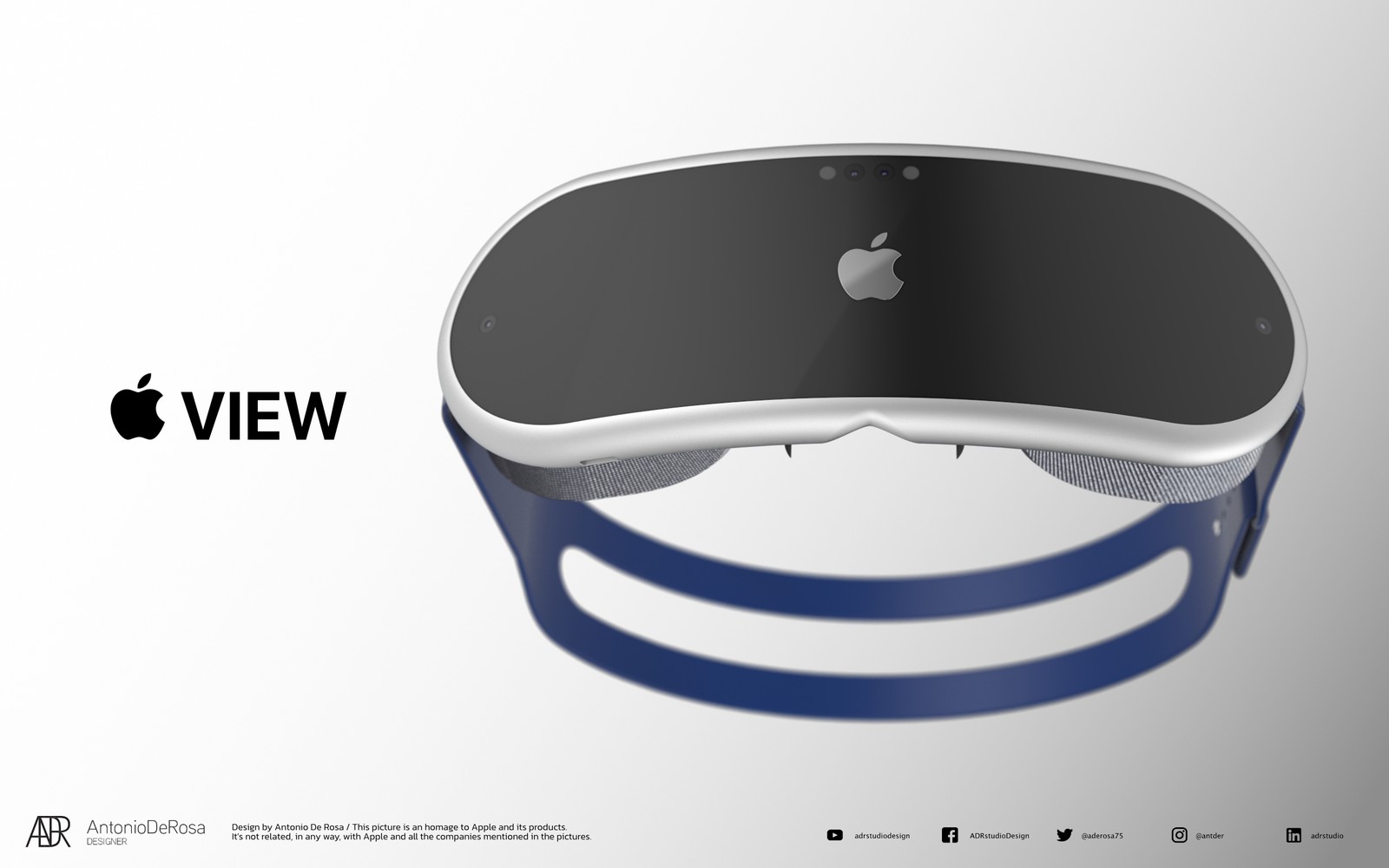
    Apple’s mixed reality headset was recently shown to the company’s board of directors. With mixed reality, the device will support both VR (virtual reality) and AR (augmented reality). The former creates an environment that is all made up while the latter places a layer of data on top of a real-world image. For example, with VR you might find yourself in a room with a large screen television that you can use to play video games.
    The thing is, this room does not exist and neither does the television set. You’ll see it only when you have your mixed reality headset on. Augmented Reality (AR) is currently used on Google Maps. With Live View, the camera on the back of the phone sends images to the display that shows you where you are while arrows are superimposed on the screen showing you which way to turn and pointing out famous landmarks that you’ll be walking past.
    By the time the decision was made to go with the standalone headset, the device’s multiple chips had already been in development for several years. This made it impossible for Apple to start from scratch and go back to the drawing board to produce a single chip to handle all the capabilities of the headset. Other issues have created headaches for hardware and algorithm engineers such as many as 14 cameras on the device.
    The report also delves into former Apple design chief Jony Ive’s continued work on the project which has continued long after Ive left Apple. While Ive prefers a wearable battery for the mixed reality headset (“the best Apple mixed reality headset yet,” as Ive might have said on the new product video), prototypes of the device reportedly have the battery hidden inside the headband of the VR headset.
    Still, it is not known where the battery will be found in the final design of the device. We do expect the headset to use a new operating system called realityOS which was a name we first heard used in conjunction with Apple headgear years ago.
    The mixed reality headsets check off a few flattering and unflattering boxes. Expensive? The price could be above $3,000 and include as many as a dozen cameras to help track hand and head movements. There could be two 4K micro OLED displays and an AMOLED low-resolution display for peripheral vision. Analyst Ming-Chi Kuo says that Apple does not pigeon-hole the device as a gaming platform and that it will sport the best industrial production to date.
    Bloomberg’s Mark Gurman wrote, “Gaming should be a strong focus of the machine, especially given that it will have multiple processors, a fan, extremely high-resolution displays, and its own App Store. Look for Apple to position the device as a dream for game developers. Next, media consumption. I expect Apple to work with media partners to create content that can be watched in VR on the device. Third, communications. Look for Animojis and a VR FaceTime-like experience to be the new-age Zoom.”
    And a few years after the mixed reality device is released, Apple is expected to launch what many have been expecting to be its next big product replacing the iPhone, Apple Glass. With a design that resembles traditional glasses, Apple Glass would allow users to employ AR to see data through their glasses as they go about their average day.
    At Google I/O last week, Google showed off a pair of smart glasses that looked nothing like Google Glass, the device that helped coin the phrase “glass holes.” The glasses displayed at the event allow a user to slip one on and instantly engage in a conversation with someone speaking another language. If Apple and Google can prove the worth of using smart glasses for this type of content (which would also benefit the hard of hearing) instead of recording copies of first-run movies and selling bootlegged copies of them, then AR glasses could very well be the next big thing.


  • Telenor Myanmar subsidiary sold to Lebanese M1

    Telenor Myanmar subsidiary sold to Lebanese M1

    Myanmar’s junta has approved the sale of Norwegian telecoms giant Telenor’s Myanmar subsidiary to Lebanese conglomerate M1 Group, in a move activist groups warn could put sensitive customer data in the hands of the military.

    The Southeast Asian nation has been in chaos since a coup last year sparked huge protests and a bloody military crackdown on dissent, sending its economy into freefall.

    In July, Telenor announced that it planned to sell its subsidiary Telenor Myanmar and later cited junta demands that it installs monitoring equipment on the network as a reason for leaving the country.

    After months of stalled negotiations, Telenor and M1 – which is helmed by current Lebanese prime minister Najib Mikati – both said the sale had been approved by junta authorities.

    “M1 Group has been informed that the Myanmar Investment Commission has approved Telenor Group’s application for the sale of Telenor Myanmar to Investcom PTE Ltd, an M1 Group affiliate,” M1 said in a statement.

    A separate statement from Telenor said the sale had been given “final regulatory approval”.

    M1 will partner with local consortium Shwe Byain Phyu to take ownership of the new entity, according to the group’s statement.

    Founded in 1996, Shwe Byain Phyu started out distributing petroleum products for the then-military government, and employs more than 2,000 people in Myanmar.

    It has interests in petroleum trading, manufacturing, commodities trading and marine products, according to its website, which lists no previous telecoms experience.

    “Sanctions screening from external consultants has assured Telenor that Shwe Byain Phyu and its owners are not subject to any current international sanctions,” the Norwegian firm said in a statement.

    Last year, 474 civil society groups in Myanmar called Telenor’s decision to pull out irresponsible, saying it had not sufficiently considered the impact on human rights.

    Activist groups say any new owner could comply with future requests from the junta to provide cellphone data of dissidents protesting against the putsch that ousted Aung San Suu Kyi’s government last year.

    “There are still many things Telenor can do to mitigate harm,” said Joseph Wilde-Ramsing, senior researcher at SOMO, a Netherlands-based non-profit that conducts research and advocacy on corporations.

    “If they won’t take any steps to minimise the data transfer, they can still do things like set up a fund to help victims, remediate some of the harms they are going to be contributing to with the sale.”

  • Apple VR headset may come with Micro LED display, M1 chip

    Apple VR headset may come with Micro LED display, M1 chip

    Apple’s VR headset’s due date at the end of the year is inching ever closer, and the rumors surrounding the new device have been flowing in at a faster rate than usual. A mysterious new tip has made its way to us today, supposedly revealing details about the headset’s display and processing chip.

    The leak comes from Korean tech site ET News, and claims it has insider info that Apple is developing a Micro OLED chip for the device with TSMC:

    The parts industry expects Apple to release virtual reality (VR) headset terminal for the metaverse market as early as this year. It was understood that the performance test for VR headset production has been recently completed. Apple VR devices are equipped with micro-organic light-emitting diode (OLED) displays.

    Apple cooperated with Taiwan’s TSMC with developing OLED displays for VR devices. Micro OLED displays do not require color filters since OLEDs are deposited directly on the chip wafer. Micro OLED is smaller, thinner, and more efficient.

    The same article also states that Apple is equipping the VR headset with an M1 chip, which also powers Apple’s latest iPads and MacBooks.

    Although the ET News leak has made its way into the tech mainstream media, it wouldn’t be too fast to put much stock in it. It further claims that Apple will be using the iPhone’s iOS operating system for the headset, despite an earlier fairly credible GitHub code leak showing clear references to a separate “Reality OS” operating system that the company is developing.

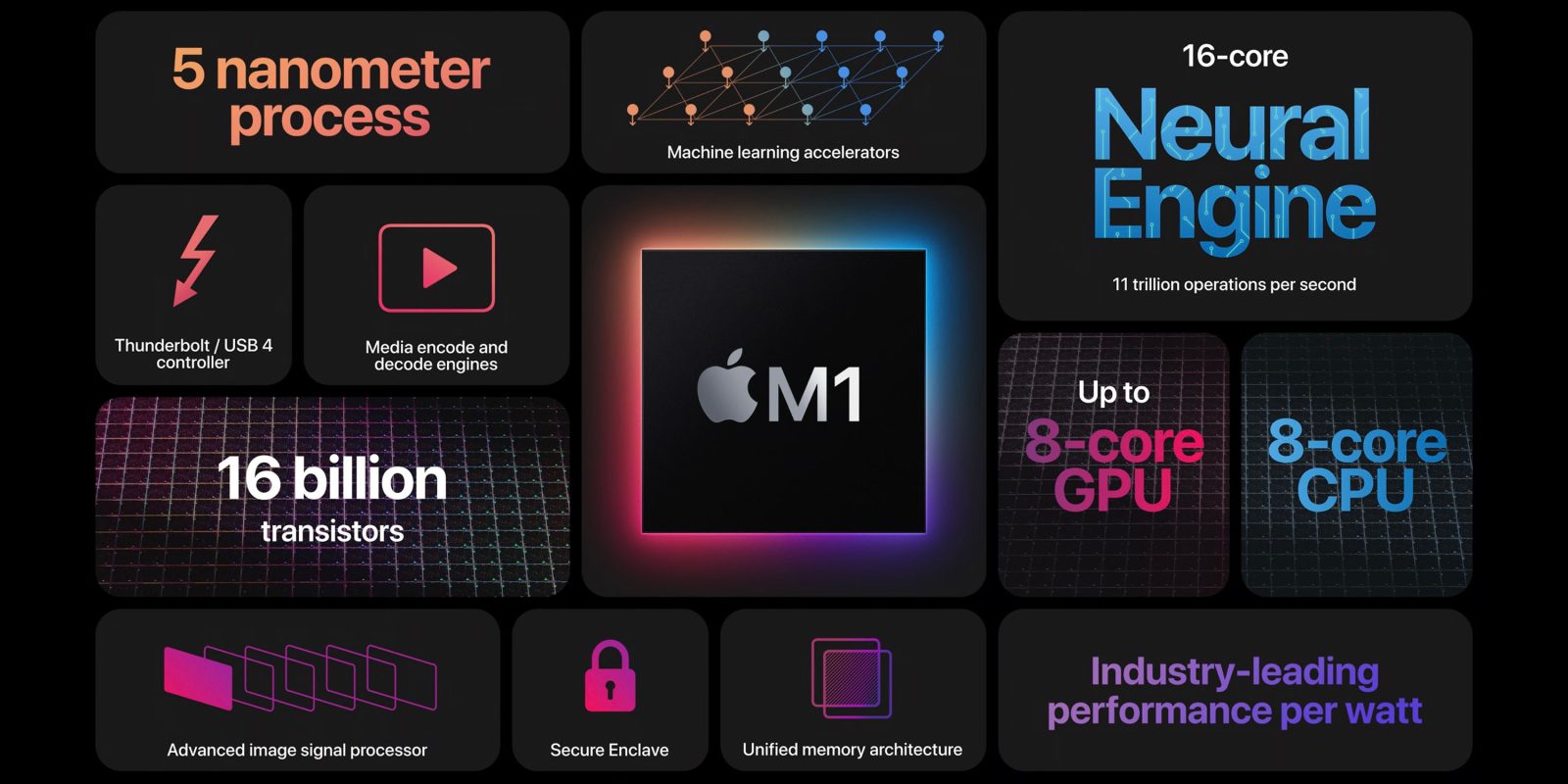
    The M1 chipset claim is slightly more credible, as we know that the device has already been tested with the processor Apple designed to replace Intel components on certain Mac models. In power, the M1 processor is comparable to the 5nm-node A14 Bionic chip that powers the iPhone 12 series but is complete with all of 16 billion transistors for maximum compact power and efficiency.

  • M1 and Blacknut to deliver 5G-powered cloud gaming services in Singapore

    M1 and Blacknut to deliver 5G-powered cloud gaming services in Singapore

    M1 Limited (M1) has announced an exclusive partnership with market-leading cloud gaming specialist Blacknut, to bring an all-you-can-play 5G-powered cloud gaming service to Singapore.

    Boasting the world’s largest catalog for cloud gaming, Blacknut has a unified gaming platform that is fully integrated within the M1 ecosystem, enabling users to have unlimited access to more than 450 high-quality PC and console titles, including renowned hits like Overcooked, Lord of Fallen, Modern Combat 5, Asphalt9 and more. Serious and casual gamers will soon be able to discover a seamless “click & play” experience, anytime and anywhere, regardless of their device – television, PC, tablet, or mobile.

    Leveraging the high speed and ultra-low latency of M1’s True 5G network, this upcoming cloud gaming service ensures seamless and uninterrupted gaming experiences for subscribers.

    “True 5G not only transforms businesses but also consumer experiences. We are excited to show the game-changing prowess of 5G through our partnership with Blacknut, to level up gaming experiences for Singaporean gamers. Powered by 5G connectivity, M1 is on track to create an inclusive gaming ecosystem by enabling affordable and accessible gaming options,” said Manjot Singh Mann, chief executive officer, M1.

    “We are very proud to support M1 in their 5G deployments with Blacknut Cloud Gaming. We are pleased that our platform is a great fit and fully aligned with M1’s 5G ambitions. Pairing Blacknut with M1’s 5G connectivity delivers ultra-responsive cloud gaming backed by a fast, reliable network and the best market solution to fulfil M1’s vision for Singapore,” said Olivier Avaro, chief executive officer, Blacknut.

    Since its launch in July, M1’s True 5G network coverage has expanded to about 65% of Singapore, and with the continual growth of the infrastructure, customers can expect to soon enjoy more innovative and diversified digital experiences and even more OTT offerings.

    M1 has been a frontrunner in Singapore’s 5G development and was the first telco in the nation to embark on 5G trials as early as 2018. To date, M1 has a record of more than 15 5G use cases and trials across consumer, enterprise and government sectors. To further the 5G ambition and fully unleash the power of True 5G for all, M1 is also working with Workforce Singapore (WSG) to upskill and train close to 10% of the entire workforce to build a pool of talent with up-to-date skills in 5G and emerging technologies.

    Details of the cloud gaming subscription plan will be announced during the official launch in Q2 2022.

  • M1 partners with AWS to improve customer experiences

    M1 partners with AWS to improve customer experiences

    M1 Limited (M1), one of Singapore’s leading Mobile Network Operators (MNO), announced its collaboration with Amazon Web Services (AWS), to launch Maxine, a VoiceBot for M1’s hotlines.

    Maxine is built on Amazon Connect, AWS’s omnichannel cloud-based contact center service that helps improve contact center agent productivity and end-user customer experiences. Powered by AWS Artificial Intelligence (AI) technologies such as automatic speech recognition and natural language understanding, Maxine is able to engage in more lifelike conversations with customers. Combined with M1’s Session Initiation Protocol (SIP) trunk services for high quality digital voice communication, Maxine will help improve end-user customer experiences by engaging them in open-ended conversations instead of menu-driven interfaces.

    Since Maxine’s rollout in the last quarter of 2021, M1 is seeing an improved performance to the existing call system with the VoiceBot performing sophisticated functions such as authentication of callers with a One-Time Pin (OTP), or sharing the customer’s position in the call queue and estimated waiting time. In comparison with December 2020, M1’s Net Promoter Score (NPS) for December 2021 has seen a marked 40% increase, largely attributed to Maxine’s ability to capture callers’ intentions which then improves call agent productivity by freeing them up to focus on more complex cases.

    The deployment of Maxine is part of M1’s continuous transformation journey to be a digital platform. As a cloud native solution, M1 is able to regularly develop and deploy new and incremental features and capabilities that enhance Maxine’s services.

    The easy to use and quick to deploy solution enables M1 to scale up and down in a short period of time. It also provides call center agents the flexibility they need to work remotely, without compromising the customer experience.

    M1 has its 1627 (Bespoke), 1622 (Business) and 1800-843-8288 (Prepaid) hotlines operating on the Amazon Connect platform. This will be progressively rolled out to other hotlines. M1 is also supporting other members of the Keppel Group that are making the transition to adopt Maxine, starting with Keppel Electric.

  • M1 grows enterprise digital services and regional expansion with acquisition

    M1 grows enterprise digital services and regional expansion with acquisition

    M1 announced that it has signed an agreement to acquire up to 70% stake in Glocomp Systems (M) Sdn Bhd (Glocomp), as well as its affiliated companies, Global Computing Solutions Sdn Bhd (GCS) and GCIS Sdn Bhd (GCIS). All three companies are Malaysia-based digital solutions providers. The remaining 30% stake will continue to be held by its founders.

    M1, through its wholly-owned subsidiary based in Malaysia, AsiaPac Technology (M) Sdn Bhd, will pay a total purchase consideration of up to SGD$36 million. As part of this transaction, GCS and GCIS will be restructured as wholly-owned subsidiaries of Glocomp and managed by a unified management team. The founders of Glocomp, including – Joseph Giam, Managing Director; Alex Liew, Executive Director; Chan Tze Ming, Executive Director; and Chan Yue Mun, Executive Director will continue to play active roles as senior management of Glocomp.

    Glocomp has been operating for more than 24 years in the industry and is one of the region’s pioneer Information and Communications Technology (ICT) solution providers, with a comprehensive portfolio of solutions. Glocomp’s strong competencies in the areas of computing and information management, IP communications, security and privacy, automation and analytics, chart the path to strategically position the company to meet the growing demand in digital services. The company’s excellent track record, broad coverage across multiple industry verticals and close collaboration with key technology and channel partners, provide Glocomp with the robust foundation needed to be competitive in the enterprise digital solution market.

    The investment into Glocomp marks M1’s continued expansion of its cloud and managed services business, following the acquisition of AsiaPac Technology Pte Ltd (AsiaPac) in 2018. This transaction is the initial strategic expansion into other regional markets starting with Malaysia. The Glocomp acquisition is a natural extension of M1’s cloud services business and provides strong synergies with AsiaPac’s hybrid multi-cloud competencies and established partnerships. Glocomp also adds new capabilities and talent resources to M1 with certified competencies in cybersecurity, enterprise systems and multi-cloud infrastructure.

    M1, a subsidiary of Keppel Corporation, is a key pillar of Keppel Group’s connectivity business. By building upon its enterprise capabilities, M1 aims to strengthen innovation to enhance Keppel’s suite of connectivity offerings for sustainable urbanization. Additionally, this investment into Glocomp will not only provide recurring revenue contribution to the Group, but also generates overseas revenue for M1.

    “The addition of Glocomp to our portfolio marks another milestone for M1 as we continue to strengthen our enterprise digital service capabilities while accelerating growth in the region. We are thrilled to have Glocomp, a pioneer in the ICT industry with over two decades of experience, to be part of our growing team. Importantly, Glocomp’s expertise in the ICT sphere helps M1 to advance Keppel Vision 2030 and continuously create value for enterprises through innovative technology and digital solutions,” said Mr. Manjot Singh Mann, Chief Executive Officer, M1.

    “Glocomp has established itself as one of the premier enterprise solutions providers in Malaysia and remains committed to developing in-country ICT talent capital while fostering regional investment in the country. We are excited to be part of M1, leveraging its competencies in connectivity and cloud infrastructure and look forward to driving strong synergies with M1 as well as enhancing our overall suite of offerings. This opportunity will equip Glocomp with the necessary support to expedite growth in the region, and strengthen our position in the ICT sector with major global technology partnerships,” commented Mr. Joseph Giam, Managing Director, Glocomp.

  • Qualcomm’s Apple M1-rivalling silicon arriving in 2023

    Qualcomm’s Apple M1-rivalling silicon arriving in 2023

    Qualcomm revealed plans to bring to the market an Apple M1-beating chip by 2023 during its 2021 investor conference.

    The processor will be based on technology from Nuvia, a chip startup that was founded by ex-Apple engineers who had worked on Apple A and M series chips and was bought by Qualcomm earlier this year. We can hope to see Nuvia’s tech in smartphone chips too at some point in the future.

    For now, the focus is on the next generation of Arm-based processors which Qualcomm claims will set a new performance benchmark for Windows PCs. The chip will offer industry-leading sustained performance and battery life, or so Qualcomm hopes. It will feature Arm-based CPU cores, Adreno graphics, 5G modem, Hexagon DSPs, and Spectra imaging core.

    If you look at what Apple has done with the M-series, on the upper hand it even has the performance of an [Nvidia] RTX 3080 at discrete graphics.” – Qualcomm CEO Cristiano Amon.

    Qualcomm will also work on improving its Adreno GPUs to offer a desktop-like gaming experience on PCs. The chip giant is aiming to have samples out for customers in around nine months, with the official launch planned for 2023.

    Whether the chip will be able to live up to the claims or see the same fate as the Qualcomm Snapdragon 8cx and Microsoft Surface SQ2 PC chips that failed to make a mark remains to be seen.

    Apple meanwhile has already launched even more powerful versions of the M1 chip, the M1 Pro and M1 Max, and is now reportedly working on the third-generation of Mac chips that will likely offer significantly better CPU performance than the latest chips. The M series chip power a slate of new Apple products, including some of the best tablets that money can buy.

  • M1 battery life was so good, Apple marketing thought it was a bug

    M1 battery life was so good, Apple marketing thought it was a bug

    The Apple M1 chip is probably one of the hottest new things to come out in the world of mobile tech in the last year. We are used to being excited about stellar cameras or pristine screens, but when Apple announced that the M1 is coming to the latest iteration of the iPad Pro, we were pumped.

    What’s the big deal with Apple M1? Well, there are two things that are really exciting. For one, it’s powerful — in fact, it’s so powerful that it was first introduced in the MacBook Air, MacBook Pro, and Mac mini, then added to the new iMac and then installed in the iPad Pro (2021).

    But what it’s really valued for is its low power consumption. The M1 MacBook Air became an instant hit and users love it for the massive boost it provides in battery life over the Intel chip models. The new iPad Pros are also really, really tough to kill, regularly giving us 10 hours of heavy (multitask) usage.

    Battery life is an extremely important quality for devices meant to be worked on the go, so with the M1 having such an amazing performance per watt ratio, it quickly became a hit.

    The guys over at Tom’s Guide recently posted their breakthrough and device awards for 2021 and M1 is at the very top. The team spoke with Mr. Bob Borchers — VP of worldwide product marketing for Apple — and Mr. Borchers recollected a fun story from when the team first got their hands on a prototype M1 system.

    “When we played with it for a few hours and the battery didn’t move, we thought “Oh man, that’s a bug, the battery indicator is broken” — he said. However, Tim Cook was in the room with him and found the reaction pretty funny. “Nope, that’s the way it’s supposed to be”, Mr. Cook replied.

    The Apple M1 is the logical evolution of Apple’s work with processors. The company has been making its own Apple A chips since the acclaimed iPhone 4 — powered by the good old Apple A4. The chips are the main driving force behind the iPhones — often climbing to the top of benchmark scores for that year. Since the chips are so powerful, the iPhones have a lot of headroom to work with, which is why they can usually receive major iOS updates for years on end and still work without a hitch (but you will very probably need a battery refresh a couple of years in).

    After seeing the success of the Apple A silicon, Cupertino got to work on the M1 with a very clear goal in mind — it needs to be noticeably better than what Intel has to offer. After all, why spend all the time on R&D and making your own silicon if it will make little difference in the end?

    Well, the M1 arrived with a splash. The tech community is currently excited over rumors about a possible Apple M1X chip, which would allegedly power the next 16″ MacBook Pro, and we’ve been hearing whispers about an Apple M2 in 2022. Will they deliver a massive performance boost compared to the M1? I would wager not, but who knows — we might be pleasantly surprised yet again.

  • Telenor sells Myanmar operations to Lebanon’s M1 Group for $105 million

    Telenor sells Myanmar operations to Lebanon’s M1 Group for $105 million

    Telenor Group has entered into an agreement to sell 100 percent of its mobile operations in Myanmar to M1 Group for a total consideration of US$105 million USD, of which US$55 million is a deferred payment over five years. The transaction corresponds to an implied enterprise value of approximately US$600 million USD. M1 Group will acquire all the shares in Telenor Myanmar and continue the current operation.

    On 4 May, Telenor Group announced an impairment of Telenor Myanmar. Telenor underlined at the time that the operations in Myanmar continued and that the future presence would depend on the developments in the country and the ability to contribute positively to the people of Myanmar. Further deterioration of the situation and recent developments in Myanmar form the basis for the decision to divest the company. In the present situation, it has not been possible for Telenor to conduct an ordinary sales process.

    “The situation in Myanmar has over the past months become increasingly challenging for Telenor for people security, regulatory and compliance reasons. We have evaluated all options and believe a sale of the company is the best possible solution in this situation. The agreement to sell to M1 Group will ensure continued operations. Telenor entered Myanmar because we believed that access to affordable mobile services would support the country’s development and growth. I wish to thank all employees and partners who have taken significant efforts to build a company that has impacted the people of Myanmar and has provided state of the art telco services during Telenor’s years in the country,” says Sigve Brekke President and CEO of Telenor Group.

    Since operations started in 2014, Telenor’s funding to Myanmar has been around 5.3 billion NOK. After turning cash flow positive in 2017, Telenor Myanmar has distributed approximately 3.2 billion NOK in dividends. With effect from the second quarter of 2021, Telenor Myanmar will be treated as an asset held for sale and discontinued operations. The gain/loss calculation arising from the transaction will be impacted, inter alia, by the accumulated translation differences related to the Myanmar operation and will be finally determined at closing. The transaction is subject to regulatory approvals in Myanmar.

  • Nokia deploys first 5G standalone RAN in Southeast Asia to M1-Starhub JV in Singapore

    Nokia deploys first 5G standalone RAN in Southeast Asia to M1-Starhub JV in Singapore

    Nokia announced the first 5G standalone (“SA”) Radio Access Network (“RAN”) Sharing network in South East Asia. The company has been selected by Antina Pte. Ltd. (“Antina”), a joint venture formed by mobile network operators M1 and StarHub, following a competitive tender process, to deploy 5G SA networks across Singapore. The commercial deployment of a 5G SA network will introduce compelling new use cases and cater for the growing data demand in the country, putting Singapore at the forefront of 5G standalone technology in the region.

    The partnership will enable Antina’s customers – M1, StarHub and other mobile service providers on wholesale arrangements – to benefit from a game-changing ultra-high speed, low-latency and highly secure 5G SA network that will reduce complexity and increase cost efficiencies. It will also enable new use cases across entertainment, cloud gaming, transportation, education and healthcare.

    Nokia will provide equipment from its comprehensive AirScale portfolio and CloudRAN solution to build the Radio Access Network (RAN) for the 5G SA infrastructure, utilizing the 3.5GHz spectrum band. Nokia will supply 5G base stations and its small cells solution for indoor coverage, as well as other radio access products. Nokia’s 5G SA technology will provide Singaporean enterprises with the opportunity to explore multiple new use cases due to the network’s higher bandwidth, higher uplink speeds and lower-latency.

    Nokia CloudRAN solution is designed to enable Antina to build a more agile business, meet new traffic demands, make better use of spectrum as well as optimize performance and mitigate costs. Nokia’s CloudRAN technology is expected to provide Antina with the flexibility to meet customer demands in the evolving 5G era. Nokia’s NetAct network management, CloudBand Application Manager and CloudBand Infrastructure Software will streamline operations and securely manage Antina’s networks.

    The commercial launch of this 5G SA network in Singapore will underpin the infrastructure for a vibrant 5G ecosystem.

    Tommi Uitto, President of Mobile Networks, Nokia, said: “This is an important win for Nokia that demonstrates our leadership in commercial-grade Cloud RAN as well as mobile operators’ trust in our capabilities for rapidly transitioning to 5G standalone networks. We look forward to supporting Antina in the deployment of a successful rollout of the 5G SA network in Singapore which aligns with the country’s vision of creating a world-class 5G infrastructure. We hope other global markets considering making the move to 5G SA will take note of Antina’s success.”