Tag: macroeconomics

  • Japan Household Spending Drops 3.6% in July as Inflation Bites

    Japan Household Spending Drops 3.6% in July as Inflation Bites

    Japanese household spending dropped 3.6 per cent year-on-year in July, falling at its fastest annual pace in 30 months as persistent inflation squeezed family budgets.

    The contraction exceeded the 1.6 per cent drop projected by economists and extended a losing streak that has run for eight straight months. It represents the sharpest annual pullback since January 2024, when outlays tumbled 6.3 per cent. On a seasonally adjusted month-on-month basis, spending ticked up 0.5 per cent, falling far short of the 2.6 per cent gain expected by the market.

    Food and Transport Budgets Shrink

    Data from the internal affairs ministry reveals clear shifts in how shoppers manage everyday expenses. Families cut back sharply on groceries and transportation while directing remaining discretionary yen toward entertainment and select household goods.

    The squeeze shows that higher price tags are eating through recent pay increases across the country. Wage gains secured during spring negotiations have not translated into stronger checkout tallies, leaving merchants to navigate cautious foot traffic and smaller baskets.

    Masato Koike, senior economist at Sompo Institute Plus, noted the challenge facing household balance sheets: “Although large wage hikes were achieved again in this year’s spring wage negotiations, downward pressure on consumption is expected to intensify as higher prices become more pronounced going forward.”

    Rate Hike Scrutiny

    Weak private consumption complicates the immediate policy path for the Bank of Japan, which meets this month to review borrowing costs. Central bank officials are weighing whether the domestic economy can absorb higher interest rates while consumer demand stays sluggish.

    Price pressures continue to build across metropolitan centers. Annual core consumer inflation in Tokyo accelerated for a third consecutive month in August, pointing to persistent living costs that will keep retail spending under pressure heading into the final quarter.

  • Yen Traders Brace for Silver Week Intervention as BOJ Decision Looms

    Yen Traders Brace for Silver Week Intervention as BOJ Decision Looms

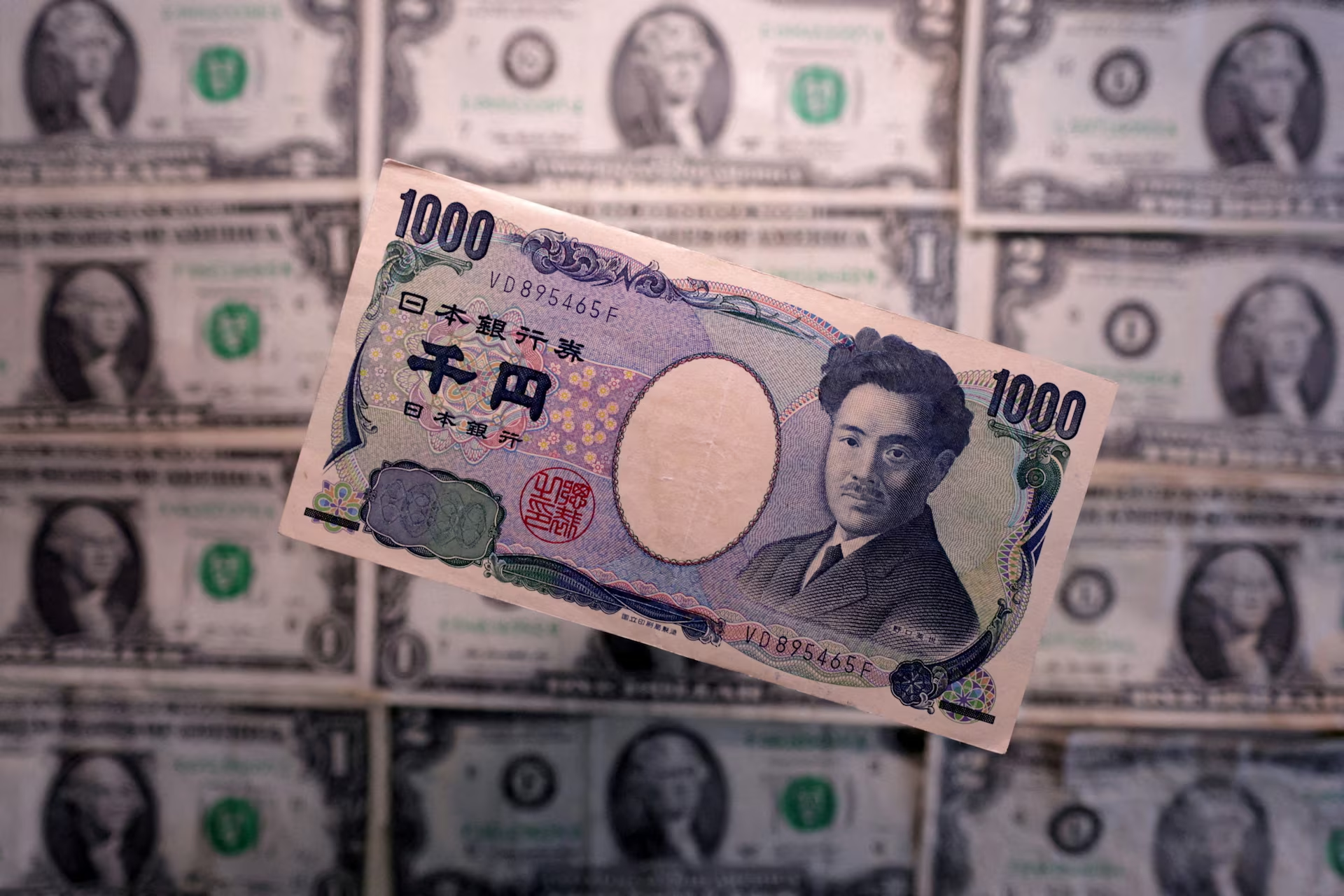
    Currency traders in Tokyo are bracing for official market intervention around the Bank of Japan’s September 18 policy meeting, eyeing the upcoming three-day holiday for sudden yen buying.

    The Japanese yen climbed 0.5 per cent to 157.99 against the US dollar on Thursday as markets began pricing in an interest rate increase larger than 25 basis points.

    Trading desks expect sharp swings during Silver Week, a long holiday weekend starting immediately after the central bank convenes. Thin liquidity during national holidays gives authorities greater traction when buying yen, echoing April when the government stepped in during an extended break for the first time since 2024.

    Holiday Liquidity and Rate Gaps

    Tokyo deployed a record $96.4 billion over the past month to prop up the currency, backed by coordination with Washington. Japanese Finance Minister Satsuki Katayama and US Treasury Secretary Scott Bessent both confirmed readiness to enter foreign exchange markets without hesitation.

    Hedge funds have nevertheless started rebuilding short bets against the yen. Elevated crude oil import bills and a persistent interest-rate gap with the United States continue to drag the currency down toward the 160 line, where SBI FX Trade president Marito Ueda warned fresh intervention becomes probable.

    Pressures Across Asian Balance Sheets

    For retailers and consumer brands across Asia, rapid currency swings disrupt cross-border supply chains and contract pricing settled in dollars. Japanese store operators face relentless cost increases on imported food and inventory, while regional exporters must recalibrate margins against an unpredictable yen.

    Attention now shifts to the US Federal Reserve’s rate decision days before the Bank of Japan meets on September 18, with traders watching whether the exchange rate tests the 160 level before holiday trading begins.

  • Singapore Core Inflation Accelerates to 2% in July on Rising Utilities

    Singapore Core Inflation Accelerates to 2% in July on Rising Utilities

    Singapore core consumer inflation accelerated to 2 per cent in July, driven by higher utility bills alongside rising food and service costs.

    The figure climbed from 1.6 per cent in June, logging the highest reading since October 2024, according to figures released by the Department of Statistics. Even with the pickup, the print remained below the 2.2 per cent median estimate projected in a Bloomberg survey of economists.

    Surging energy and food expenses

    Utility bills served as the primary catalyst for the monthly increase. Electricity and gas costs surged 8.7 per cent year on year in July, reversing a 2.9 per cent contraction recorded previously.

    Headline inflation, which includes accommodation and private transport alongside underlying consumer goods, climbed to 2.2 per cent from 1.9 per cent in June. Rising housing expenditures contributed to that broader increase alongside the pickup in core categories.

    Margin pressures for local operators

    For retail tenants, food outlets, and service providers across the island, sharper utility swings immediately feed into commercial overheads. Higher operating power expenses arrive just as consumer baskets adjust to persistent service inflation, testing pricing flexibility across dining and discretionary retail.

    Market attention now turns to upcoming third-quarter monetary policy reviews, with operators watching whether central bank settings adjust to keep import costs and service inflation anchored.

  • China Shifts Property Market to Completed Homes in Broad Policy Overhaul

    China Shifts Property Market to Completed Homes in Broad Policy Overhaul

    China ordered local governments on Friday to prioritise sales of completed homes over presales, overhauling the housing model to halt a property downturn that has dragged on domestic consumer spending.

    The joint directive from the housing ministry, the natural resources ministry and the National Financial Regulatory Administration targets newly transferred residential land alongside parcels sold without construction planning permits.

    Rules on land and developer financing

    Projects on newly transferred plots must adopt the finished-home sales structure, while sites with existing permits are encouraged to make the transition. Two accompanying notices from financial regulators cleared commercial banks to issue revised development loans and gave securities authorities room to back mergers and restructurings among listed property firms.

    The policy overhaul directly attacks the off-plan financing structure that left millions of buyers waiting for unfinished apartments and froze household balance sheets across mainland cities. “The policies announced today are stronger than what the market expected,” said Zhang Zhiwei, chief economist at Pinpoint Asset Management, noting that weak domestic demand stemmed largely from real estate distress.

    Impact on consumer confidence and household wealth

    Property accounts for the bulk of Chinese household wealth, making housing stability essential for any rebound in retail sales, automotive purchases and consumer services across second-tier and third-tier markets. For consumer brands operating in China, weak property valuations have consistently translated into cautious discretionary spending and higher promotional discounting over the past two years.

    Municipal governments must now issue local execution timetables for the finished-home rules, with developers waiting for commercial banks to publish specific loan quotas under the updated development guidelines.

  • China Sovereign Bond Yields Drop to 1.69 per Cent as US Gap Widens

    China Sovereign Bond Yields Drop to 1.69 per Cent as US Gap Widens

    China’s 10-year government bond yield fell to 1.692 per cent on Monday, widening the policy divergence with the United States as domestic economic growth slowed.

    The yield sits near a 12-month low after July retail sales, industrial output, and fixed-asset investment all missed analyst forecasts.

    Brokerages including Great Wall Securities project the 10-year yield will drop further to 1.65 per cent. The slide reflects rising domestic calls for borrowing cost cuts to counter deflation and a prolonged property slump.

    In contrast, long-term borrowing costs in the United States remain elevated. The US 30-year Treasury yield hovered near a two-decade high of 5.304 per cent. Federal Reserve Chairman Kevin Warsh indicated at the Jackson Hole symposium that inflation control remains the primary focus over employment, while eliminating forward policy guidance. US Treasury Secretary Scott Bessent pledged to double a bond buyback programme, yet investors continue demanding higher yields for long-dated American debt.

    Foreign Inflows and Diverging Policies

    Overseas investors purchased 9.5 billion yuan ($1.4 billion) in Chinese government bonds in July, logging their third consecutive month of net buying. Total foreign holdings in China’s nearly 200 trillion yuan debt market stand at approximately 4.3 trillion yuan, representing roughly 2 per cent of the market.

    A stronger yuan alongside lower local yields has helped attract offshore capital seeking insulation from volatile global equities. While the US central bank confronts energy price pressures and heavy fiscal debt issuance under the Trump administration, Beijing faces the opposite challenge of stimulating dormant consumer demand.

    Capital Flows Across Asian Markets

    For corporate borrowers and retailers across Asia, the widening interest-rate spread alters funding strategies. Chinese issuers are leaning harder into yuan-denominated debt to capture ultra-low domestic borrowing costs, while dollar-denominated debt servicing grows heavier.

    Markets now watch whether the People’s Bank of China will deliver an official policy rate cut before the third quarter ends, testing the projected 1.65 per cent floor on sovereign yields.

  • Philippine Central Bank Lifts Key Rate to 5% to Tackle Sticky Inflation

    Philippine Central Bank Lifts Key Rate to 5% to Tackle Sticky Inflation

    The Bangko Sentral ng Pilipinas raised its benchmark policy rate by 25 basis points to 5 per cent on Thursday. The decision targets persistent price pressures across consumer staples and fuel.

    Overnight deposit and lending facilities climbed to 4.5 per cent and 5.5 per cent. That brings a third straight quarter of tightening, following rate increases in April and June.

    Headline inflation dropped to 6.2 per cent in July from 6.4 per cent in June, easing for a third consecutive month. Core inflation, which strips out volatile energy and food items, edged down to 4.2 per cent from 4.4 per cent. Both figures remain above the government target corridor of 2 per cent to 4 per cent.

    Pressures across food, fuel and wages

    Monetary officials warned that broader price pressures continue to build across supply networks. Volatile global oil benchmarks, potential crop losses from El Niño, and rising agricultural input costs threaten retail food prices nationwide.

    Labor expenses also sit high on the central bank’s monitoring list. A pending minimum wage increase for Metro Manila remains frozen in court. Even so, authorities noted that higher payroll expenses will filter into consumer prices if businesses pass on the cost.

    Bank of the Philippine Islands lead economist Emilio Neri Jr. Pointed out that monetary tightening cannot fix supply bottlenecks. Extreme weather, elevated fertilizer costs, and currency weakness threaten to drive import bills higher for retail operators and food manufacturers.

    Slower growth tests consumer demand

    Higher borrowing costs arrive at a delicate moment for consumer spending and commercial investment. Philippine gross domestic product expanded by 2.3 per cent in the second quarter, decelerating from 2.8 per cent in the first quarter. Gross capital formation shrank 9.2 per cent year-on-year.

    Across Southeast Asia, central bankers are balancing household purchasing power against softening corporate investment. While regional peers have paused rate adjustments to protect domestic commerce, Manila is prioritizing price stability. The focus is on preventing inflation expectations from taking root in retail checkouts.

    Average inflation will exceed the 4 per cent upper boundary through both 2026 and 2027 before settling near the 3 per cent target in 2028, according to central bank forecasts.

  • Japan Warns Natural Disasters Threaten Automotive and Chip Supply Chains

    Japan Warns Natural Disasters Threaten Automotive and Chip Supply Chains

    Japan flagged supply chain risks from recent natural disasters on Thursday, even as the government maintained its assessment that the broader economy continues a moderate recovery.

    The Cabinet Office added the warning to its August report following a magnitude 7.1 earthquake in Kumamoto Prefecture on July 28 and torrential rain across Chiba Prefecture on Aug. 13. Kumamoto forms a major manufacturing hub for semiconductor and automotive components across East Asia. While plants have begun restarting production lines, disruptions to component flow still pose risks to industrial output.

    Supply Chain Knots and Farming Losses

    Kumamoto’s cluster of chip and automotive parts plants feeds assembly networks across Japan and regional export channels. Factory operators resumed output in stages throughout August, but the government warned that bottleneck risks persist. Heavy rain in Chiba damaged regional farming operations, threatening short-term supply for agriculture, forestry, and fisheries.

    Capital expenditure showed resilience despite the disruptions. Corporate investment picked up steadily across the technology sector, driven by data infrastructure spending and demand for artificial intelligence hardware.

    Spending Holds as Rental Housing Stabilises

    Private consumption showed movements of picking up, leaving the official assessment unchanged for the month. Retailers and consumer brands continue to benefit from stable domestic demand, though high material costs kept new builds for owner-occupied houses and condominiums subdued. Stronger demand for rental properties helped lift the overall housing assessment from sluggish to generally flat.

    Corporate earnings delivered solid numbers for the April to June quarter, prompting the Cabinet Office to upgrade its stance on business profits to improving. Wholesale inflation showed signs of cooling, with corporate goods price growth slowing as petroleum-related input costs eased.

    Manufacturers and retail networks now face the test of third-quarter earnings to show whether component delays in Kyushu and agricultural losses in Chiba hit operating margins.