Retail News CRM

Tag: macy’s

  • Macy’s, Tmall contract completely over

    Macy’s, Tmall contract completely over

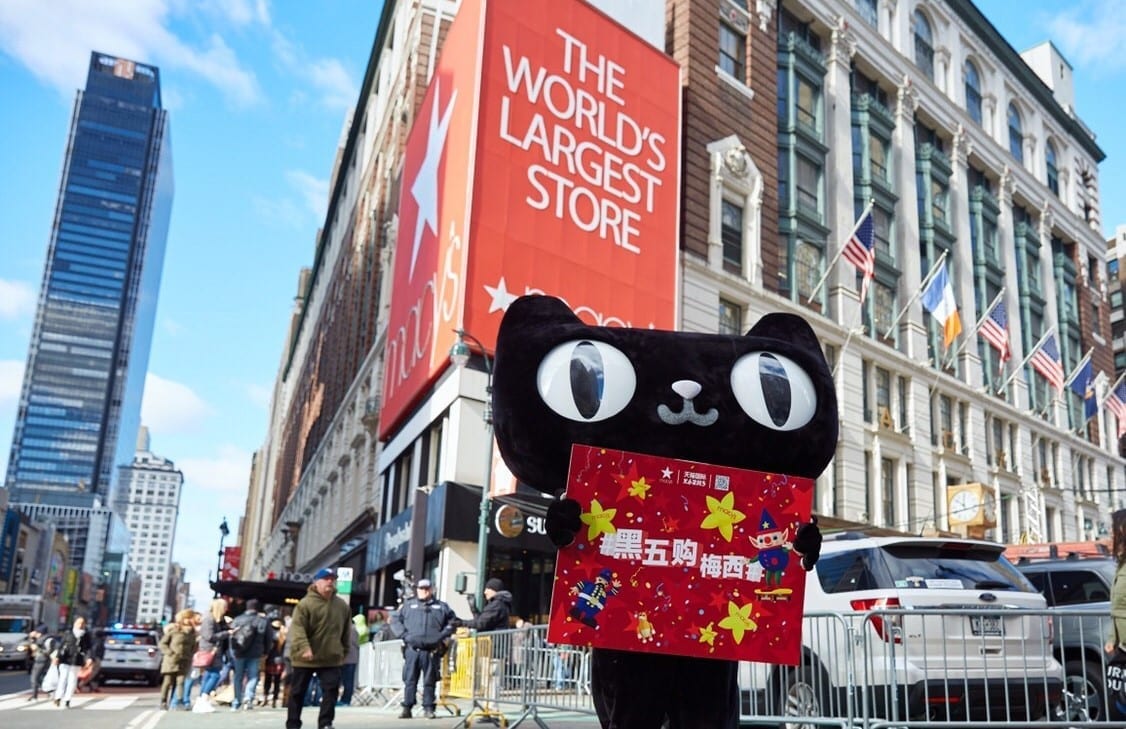
    Macy’s China stopped taking orders on Tmall this week and will close its operations by the end of the month. The US department store business said it chose not to renew the contract with Alibaba’s Tmall which ends on December 31. “We sincerely thank you for your support and love of Macy’s, and we will continue to provide services to you through the American website Macys.com,” the US retailer said in a statement.

    Just two years ago, in an interview, Macy’s China president Dustin Jones assured customers that the company would not leave China. “We will become [a] Chinese Macy’s,” he said.

    That comment followed the closure of the company’s brick-and-mortar stores in Mainland China. Macy’s subsequently closed its own China website last June.

    Since 2015, the Macy’s China business has been operated in partnership with Hong Kong-based Fung Retailing.

    Beijing-based retail analyst Liu Dingding said that Macy’s China failed because it could not keep up with the fast-changing and diversified demands of Chinese consumers.

    “The market in China is changing much faster than those in the US and Europe. These Western giants seem to react a bit slower than their Chinese counterparts,” said Liu.

    Securing a local partner was one way of ensuring success in the market – as WalMart and Carrefour’s partnerships with Tencent have shown, said Liu. That way they can localise their offer and learn from Chinese experience.

    “[Western retailers] have built up operating experience with years of success back home. But before applying this experience in their Chinese operations [they should] respect Chinese culture, hire more Chinese executives and try to adjust the way that they have operated for years back home.

    “That’s the first step to gaining a foothold in the Chinese market,” Liu said.

  • Macy’s partnering with Facebook to bring e-commerce brands to stores

    Macy’s partnering with Facebook to bring e-commerce brands to stores

    US department store retailer Macy’s has teamed up with Facebook to bring 150 e-commerce brands and digital native brands on Facebook and Instagram into its retail stores ahead of the holidays.

    Macy’s has launched The Market @ Macy’s, a pop-up marketplace concept that curates more than a hundred brands on a two-week rotation at nine Macy’s stores for the holiday season. The company will add more locations towards the end of the month. The brands range from apparel, accessories and beauty to home decor, technology and more.

    The Market @ Macy’s is just one of several experiential concepts the retailer has rolled out to drive in-store traffic. The company recently announced plans to use virtual reality to boost furniture sales. It will pilot the experience in two of its stores by the end of November.

    According to GlobalData, the department store chain is showing signs of recovery. Macy’s recently reported good sales numbers in the quarter and a growing number of people say they plan to visit the stores, suggesting the retailer is succeeding in creating stronger appeal.

    Macy’s yesterday posted healthy sales growth for the quarter ending November 3 with same-store sales seeing a 3.1 per cent increase. Including licensed departments, the figure increased 3.3 per cent.

    Total sales rose 2.3 per cent to US$5.4 billion. Net income more than doubled to US$62 million from US$30 million a year earlier, boosted by asset sales, higher credit income and lower taxes.

    Company CEO Jeff Gennette said the recently improved results showed that turnaround plans are working.

    The department store chain has been investing in a group of stores it calls ‘magnets’, adding new lighting, fixtures, a better assortment of merchandising and technological innovations to its locations, while experimenting on shrinking other less promising stores.

  • ‘Healthy’ sales for Macy’s physical stores

    ‘Healthy’ sales for Macy’s physical stores

    “Healthy” physical store sales for US department store have  exceeded expectations, prompting the retail giant to lift its business outlook for the year.

    Macy’s posted an overall sales increase of 3.6 per cent increase for the quarter compared to the same period last year to $5.5 billion.

    The company has raised its outlook for 2018 and is now expecting earnings to be between $3.75 and $3.95 a share, which is five per cent more than in 2017.

    “Macy’s Inc.’s results for the first quarter of 2018 reflect continuing momentum in the business,” said Jeff Gennette, Macy’s, Inc. chairman and chief executive officer.

    “We exceeded our expectations and saw strong performance across all three brands—Macy’s, Bloomingdale’s, and Bluemercury—as well as across all geographic regions and families of business. We are maintaining a healthy inventory position, which helped us deliver improved gross margin.”

    Gennette said the winning formula for Macy’s, Inc. is a healthy brick and mortar business, robust e-commerce and a great mobile experience.

    “While we have more work to do, the continuing improvement in our stores is encouraging and we once again achieved double-digit growth in the digital business,” he said.

    “Our best customer is responding well to the improvements we’ve made to her experience in our stores, on .com and through the Macy’s app.”

    Neil Saunders, managing director of GlobalData Retail, said Macy’s results showed a positive answer to the question on whether Macy’s could continue to deliver a recovery.

    “The sales uplifts are particularly impressive, with a 3.9 per cent rise in comparables (4.2 per cent on an owned plus licensed basis) suggesting that Macy’s recovery is gaining momentum,” Saunders said. “That said, there are a few caveats that need to be addressed in order to provide a balanced view.”

    Saunders said the first of these is the shift of the Friends and Family promotion to this period; last year this fell into the second quarter.

    “This event is a big driver of sales and added 250 basis points to the comparable numbers. Stripping this out means that comparables rose by a respectable, but more modest, 1.7 per cent on an owned plus licensed basis,” he said.

    “To be fair, this still represents progress from the 1.4 per cent increase Macy’s posted last quarter.”

    The second consideration, according to Saunders, is the very weak prior year comparative when sales dropped by 5.2 per cent on a comparable basis and by 7.5 per cent on a total basis. While beating prior year sales was never guaranteed, with a little effort it has been relatively easy for Macy’s to engineer a better performance. This is especially so given that many underperforming stores which dragged down the same-store figures have been shut.

    The third point relates to the general consumer economy which has been strong over the period. Tax cuts, bonuses and good tax refunds have all been a windfall to consumers who have responded by increasing spending.

    “This rising tide has floated most retail boats, Macy’s among them,” he said. “This does not mean that Macy’s deserve no credit for its advancement, but it does mean that the process of re-engineering the business is being carried out against a favorable backdrop.”

    The future danger, Saunders said, is that many of these dynamics will not hold as Macy’s moves through the fiscal year.

    “Prior year numbers become tougher, the second quarter will lose an important event, and the consumer finances will likely tighten,” he said. “Taken in concert, this suggests that performance may well deteriorate.”

    Saunders said the reason for their pessimism is that they believe Macy’s still has many fundamental issues that it needs to work through. These include sub-optimal ranges, a store experience that leaves a lot to be desired, and many locations where traffic is likely to decline over the medium term. On top of all of this, competition remains tough.

    “There are many tempting raw ingredients in Macy’s strategy,” he said. “Our main concern is that these need to be mixed together into a more coherent dish. And this dish needs to be served up at more of Macy’s stores across the country. In short, progress is being made, but Macy’s needs to up the pace if it is to maintain momentum.”
  • JD Sports in Deal to Acquire Finish Line

    JD Sports in Deal to Acquire Finish Line

    British retailer JD Sports Fashion is to pay US$558 million to acquire America’s Finish Line, one of the country’s largest upmarket sportswear chains.

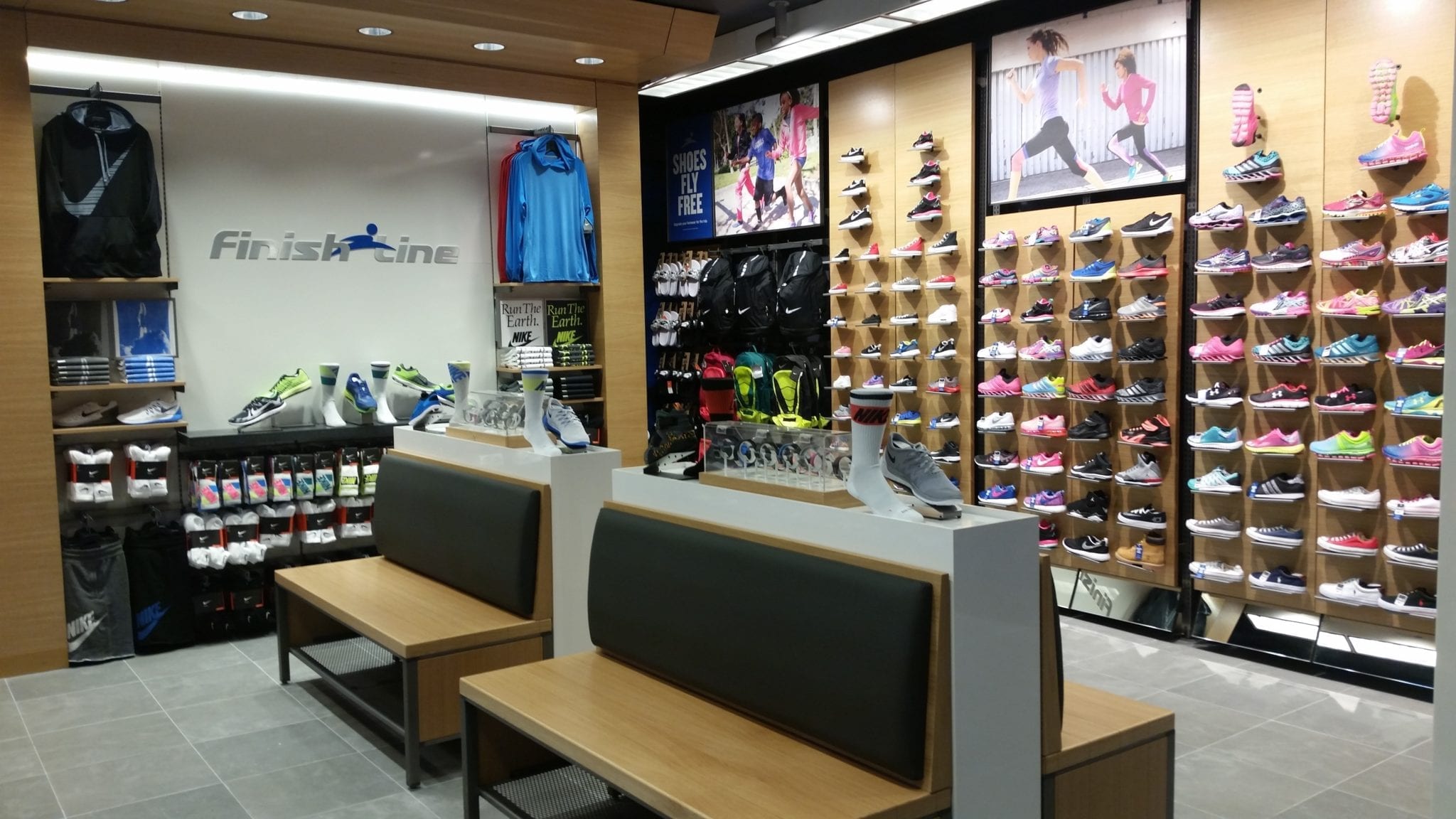
    Finish Line, whose sales reached $1.84 billion in the year to March 3, is listed on the Nasdaq. It sells multi-brand apparel and accessories from 556 branded retail stores across 44 states and Puerto Rico, and online.

    Besides its own stores, Finish Line sells athletic shoes through 375 branded and 188 unbranded concessions within Macy’s stores and on the company’s website.

    JD Sports, which recently overtook UK rival Sports Direct as the nation’s largest sportswear retailer by market value, has previously expanded in to South Korea, Spain and France, with other Asian markets on the horizon. This is its first foray into the US market.

    “This is a landmark day for JD and will be transformational for the business. It immediately offers a major presence in the US, a clear next step to further increase our global scale,” said executive chairman Peter Cowgill in a statement.

  • Macy’s shares jump at first sign of sales turnaround

    Macy’s shares jump at first sign of sales turnaround

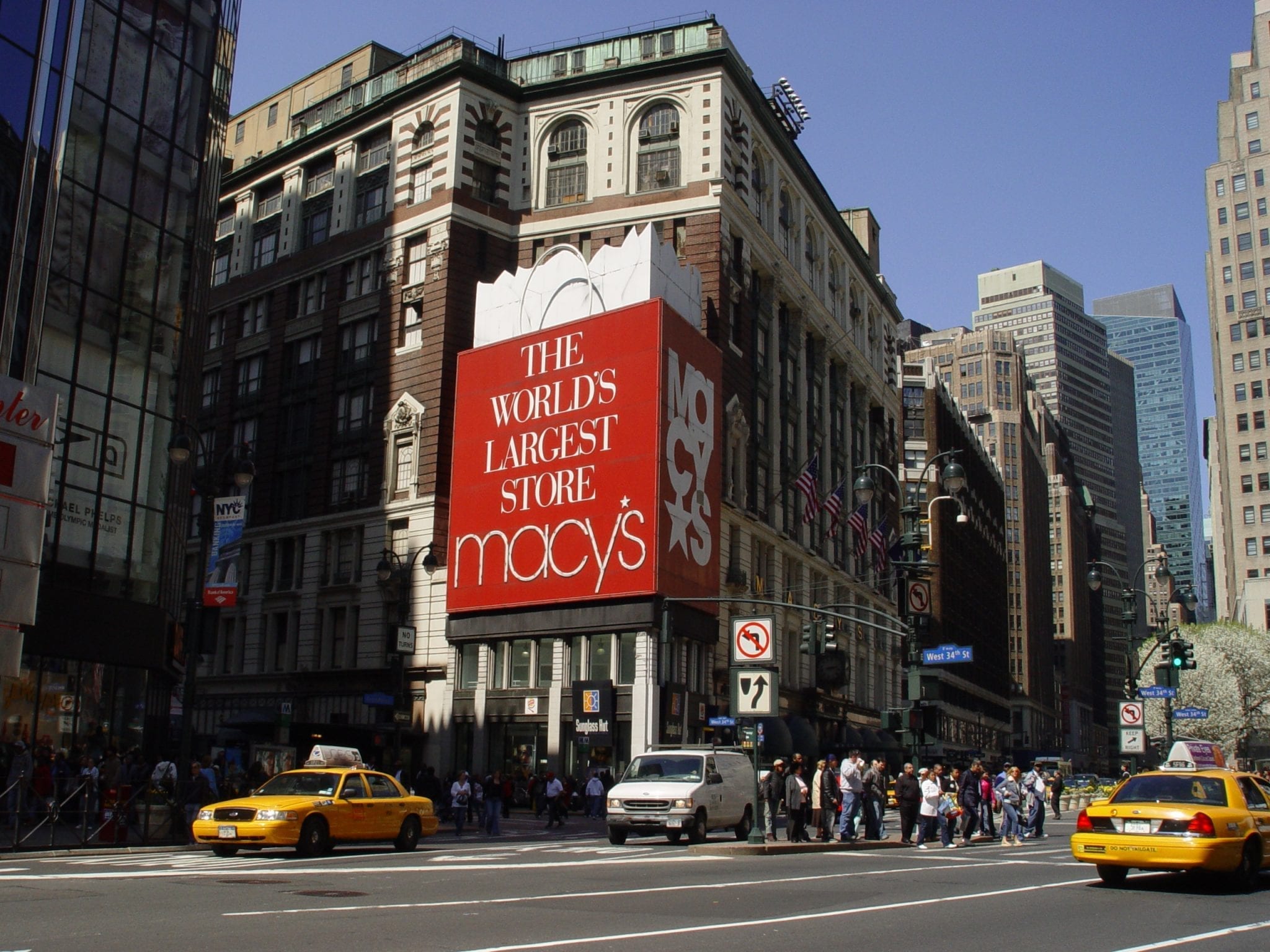
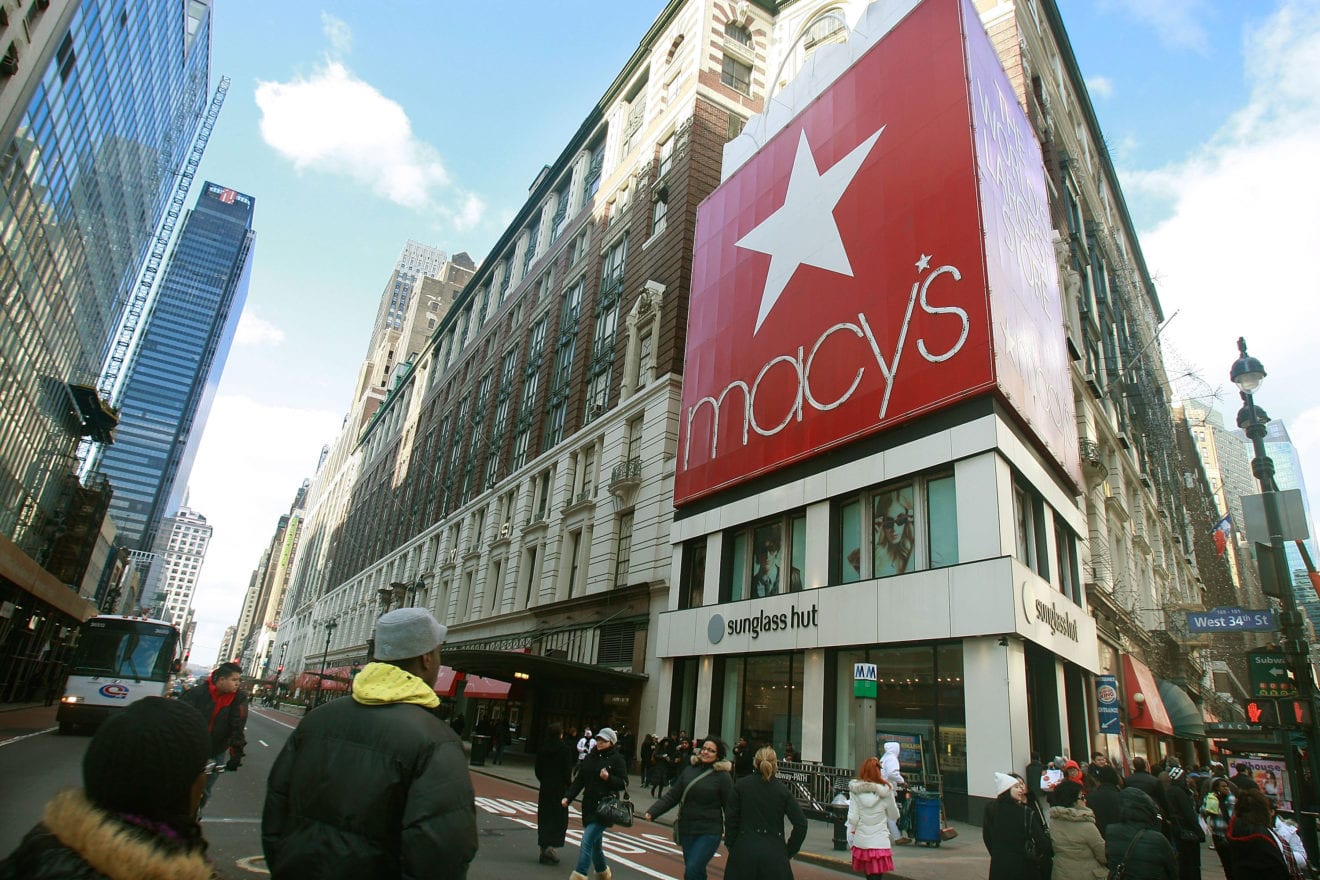
    While the latest Macy’s sales figures do not suggest there is a miracle on 34th Street – or at any other Macy’s location – they do provide a little cheer.

    Comparable sales are now positive after an extended period of decline, meaning Macy’s gets to end its fiscal year on a positive rather than a gloomy note.

    That said, the note sounded is rather faint. And these results are by no means a clarion call that Macy’s is firmly back on track. This is not pessimism, but realism about Macy’s situation and the context of the latest numbers.

    A total Macy’s sales uplift of 1.8 per cent is aided by an additional week of trading. When this is removed, we estimate that total sales shrunk. Admittedly, much of this relates to the prudent store closure program, but it nevertheless provides a more balanced picture of Macy’s current position.

    The comparable Macy’s sales figures account for the additional week of trade, so are an accurate reflection of underlying performance. However, while we applaud the 1.3 per cent growth, it is essential to unpick how much of this is down to Macy’s strategy and how much is attributable to the general uplift in external conditions.

    A simple way of assessing this is to look at whether Macy’s is gaining or losing market share. Unfortunately, on this basis, Macy’s growth is well below retail spending growth of 3.9 per cent over the same period. So, Macy’s has lost ground both at an overall level and, by our calculations, within a number of key categories like apparel and home. This view is backed by our consumer data, which shows no real recovery for Macy’s in terms of shopper share or shopper opinion about its proposition.

    None of this is to suggest that Macy’s is standing still. We know that the business has many initiatives in play, and we recognise that it is making changes. However, as we have noted before, that change is not yet established enough nor is it ambitious enough to drive a step up in performance. One of the main reasons for this is that although Macy’s highlights improvements to its proposition, there are many stores where this cannot be seen or felt by shoppers. In essence, there is a long tail of shops that look dated, are in sub-optimal locations, and where the customer experience is poor. Macy’s must remedy this if it is to transform the business.

    Thankfully, we believe Macy’s is in a position to make and create the more widespread change required. Finances are in a sound state, with asset and property sales are helping to provide capital for investment. Smaller divisions like Bluemercury and Backstage have potential and can become much more significant contributors to profits and sales. The refurbishment of departments such as home furnishings and footwear in some stores have shown that where Macy’s makes an effort, sales results follow. And the digital operation is still growing and puts Macy’s in an excellent position to meet the omnichannel needs of consumers.

    The latest boost to performance affords Macy’s more space and time to enact its plans. Hopefully, it will also give management the confidence to be bolder and more ambitious – especially as the near-term trading environment looks positive and should cushion performance. In short, Macy’s cannot just wait around for a miracle; management needs the strength and will to engineer one.

  • Macy’s New Verona Collection Includes Hijabs

    Macy’s New Verona Collection Includes Hijabs

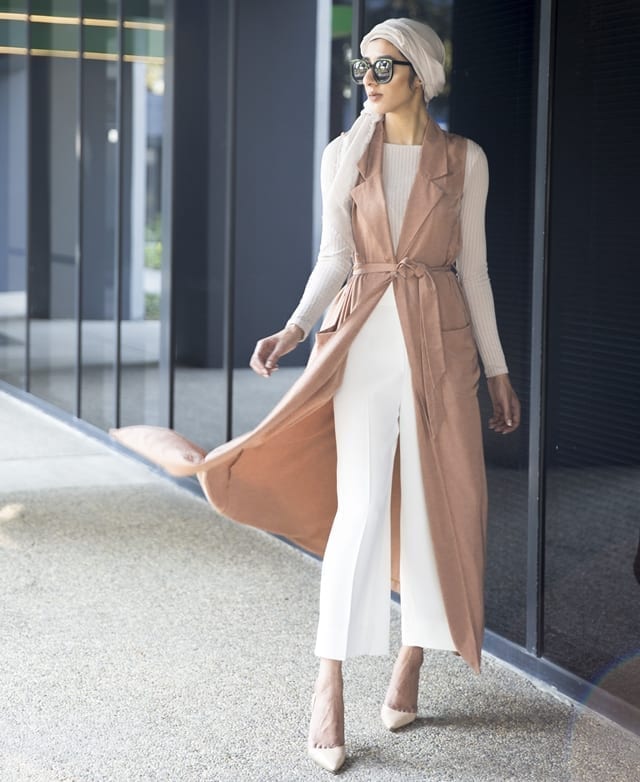
    Macy’s has launched what it describes as a “modest clothing brand” – the Verona Collection – targeting Muslims and women seeking conservative styling.

    The brand was founded by Lisa Vogl and finds its way onto Macy’s online store this month after Vogl graduated from the US department store’s incubator program The Workshop at Macy’s.

    “Verona Collection is more than a clothing brand. It’s a platform for a community of women to express their personal identity and embrace fashion that makes them feel confident on the inside and outside,” said Vogl. “Macy’s has been an amazing partner, helping us strengthen the foundation of our business through The Workshop at Macy’s and now introducing our brand to their consumers through this collaboration.”

    The Verona Collection will feature a curated selection of versatile, ready-to-wear pieces including dresses, tops, cardigans, pants and hijabs in a variety of colors and fabrics.

    Inspired by Vogl’s personal experience looking for fashionable and modest clothing, the modest clothing brand’s standout pieces include maxi dresses, versatile cardigans and hand-dyed hijabs. Accented with asymmetric buttons, the maxi dress is a modern take on a timeless classic and cardigans come in sleeveless and full sleeve styles for layering-look options. The hijabs are hand-dyed in versatile fabrics making them perfect for any occasion.

    “Through The Workshop at Macy’s, Lisa shared her vision to create a collection that speaks to a community of women looking for a solution to their fashion needs,” said Cassandra Jones, senior VP of Macy’s Fashion. “Verona Collection offers a unique and understated elegance through everyday essentials designed for versatility and comfort, and through our partnership, we can better serve our customer looking for modest fashion.”

    Shawn Outler, Macy’s executive VP– licensed businesses, food services and multicultural initiatives, says The Workshop at Macy’s, founded in 2011, nurtures and supports minority- and women-owned businesses to build their capabilities and become the next generation of retail partners.

    Items in the Verona Collection range in price from $12.95 to $84.95 and go on sale on macys.com from February 15.

  • Macy’s to feature collection for Muslim women

    Macy’s to feature collection for Muslim women

    Brands have been paying attention to Muslim women as they often set up new trends in their own communities.

    Recently, different brands have launched products to target them, and even cosmetics brands have been shifting their production towards halal ingredients to engage them.

    Catching momentum, retailing giant Macy’s announced that it is partnering with clothing brand Verona Collection to feature a selection of ready-to-wear pieces geared toward Muslim women.

    The collection’s dresses, tops, cardigans, pants and hijabs will be available beginning 15 February 2018 on Macys.com.

    “Verona Collection is more than a clothing brand. It is a platform for a community of women to express their personal identity and embrace fashion that makes them feel confident on the inside and outside,” Lisa Vogl, founder of Verona Collection, said in a news release.

    The Verona Collection is a product of The Workshop at Macy’s, the retailer’s minority- and women-owned business development program.

    “Through The Workshop at Macy’s, Lisa shared her vision to create a collection that speaks to a community of women looking for a solution to their fashion needs,” Cassandra Jones, senior vice president of Macy’s Fashion, said.

    “Verona Collection offers a unique and understated elegance through everyday essentials designed for versatility and comfort, and through our partnership, we can better serve our customer looking for modest fashion.”

    Vogl, a single mom, converted to Islam in 2011, according to an article on Verona’s website. She launched the collection after realizing simple and fashionable clothing was hard to find and difficult to afford.

    “After doing a bit of research, she realized that many other women, both Muslim and non-Muslim, felt the same way,” the article said.

    Among the items in the collection are maxi dresses and hand-dyed hijabs.

    Macy’s has about 670 locations in 45 states, the District of Columbia, Puerto Rico and Guam.

  • Macy’s taps VR, live video in China push

    Macy’s taps VR, live video in China push

    Macy’s, the iconic US bricks-and-mortar retailer, has taken a digital-first approach in its effort to crack the complicated China market by using innovative virtual reality and influencer strategies.

    “When we came into China, we started digital first, and we started building big digital homes,” Dustin Jones, Executive Vice-President and Managing Director of Macy’s China, told an audience at the World Retail Congress Asia Pacific event in Hong Kong.

    “We view ourselves as not a player or an instrument in China but an orchestrator of a better, more simple, more entertaining consumer transaction,” he added.

    To make a splash with Chinese millennials, Macy’s turned to virtual reality. In late October, Alibaba sold 150,000 cardboard VR headsets for just 1 yuan (about US$0.15) on Taobao, China’s equivalent to eBay. In the days leading up to Singles Day – 11 November – customers could use the headsets with Taobao’s app to shop a virtual reality version of Macy’s iconic New York flagship store.

    “We created the first virtual reality department store,” said Jones. “We launched that virtual reality department store last year on (Single’s Day) – five million people shopped that virtual reality store with us. We filmed it all in New York in Macy’s Herald Square and made all those products shoppable.”

    Macy’s has also tapped live streaming to bring New York fanfare to Shanghai, with a local twist.

    “We did a fashion show even last year for what we would call ‘grand opening’ on Tmall. That fashion show was live-streamed in New York with an after-party by a Chinese host. And also, then a talk show was created in Shanghai where we did a fashion show down the side of the very tall building and showed the product in a completely different way, and we sold all of the product through live video,” Jones said.

    “On that event, 150m people participated in our live show, and on the two events combined, 300m people participated.”

  • Macy’s sales performance gets better

    Macy’s sales performance gets better

    US department store retailer Macy’s has reported positive sales for the festive trading season, after improved sales on and offline.

    Macy’s comparable sales on an owned basis increased 1.0 percent in the months of November and December 2017 combined, compared to the same period last year. On an owned plus licensed basis, comparable sales increased 1.1 percent in the combined November/December period.

    “Macy’s had a solid holiday shopping season, and we are pleased that our November/December performance resulted in positive comp sales for the period, setting us up for a positive fourth quarter,” said Jeff Gennette, Macy’s CEO.

    “Consumers were ready to spend this season, and we delivered with solid execution, fresher inventory, a curated gift assortment and a focus on customer experience.

    “We saw improved sales trends in our stores and continued to see double-digit growth on our digital platforms. We intend to close the fourth quarter in a good position and head into 2018 with momentum.”

    Macy’s has completed 81 of its approximately 100 planned store closures announced in August 2016. The company intends to close approximately 19 additional stores as leases or operating covenants expire or sale transactions are completed.

    “These closures are part of a multi-year effort by the company to ensure the optimal mix of brick & mortar stores and digital footprint,” the retailer stated.

    Neil Saunders, managing director of data and analytics firm GlobalData Retail said the holiday sales growth at Macy’s is a welcome change from the red numbers it usually posts and sends a positive signal that other retailers are on course for a solid holiday season.

    “That said, in our view, Macy’s success comes with a few caveats,” he said.

    “The first is that growth remains relatively weak and comes off the back of soft prior year comparatives when comparable sales fell by 2.1 per cent. The second is that while Macy’s grew, it did so by far less than the overall sector; as such it is still losing market share both in total and within a number of key categories. The third is that the growth is more a function of a robust market where consumers were willing to spend than a consequence of the various actions Macy’s has taken to-date.”

    “Indeed, the company’s announcements of further store closures and more cost-streaming underscore the need for more surgery to restore the business to health.

    “In our view, Macy’s still has an enormous amount of work to do here. In short, these results are a step in the right direction, but Macy’s has a very long journey ahead of it before it can declare itself to be on the path to prosperity.”in

  • Macy’s bad days in third quarter

    Macy’s bad days in third quarter

    Department store chain Macy’s has posted disappointing third quarter earnings, but tighter inventory controls has helped boost profit margins for the retailer.

    Macy’s posted a drop in sales of 6.1 per cent from $5.6 billion to $5.3 billion. Comparable store sales including licensed sales has seen a 3.6 per cent decrease. Gross margin increased from 39.8 per cent in FY 2016 to 39.9 per cent in the current year. Selling cost has remained high and has increased from 37.5 per cent to 37.8 per cent.

    Macy’s also reaffirmed its full-year outlook, citing heightened momentum heading into the all-important holiday shopping season.

    “We are excited about our plans for holiday, which is when Macy’s truly shines as a gifting destination,” said Jeff Gennette, Macy’s CEO.

    “The loyalty program, special in-store experiences and a strong mobile and online presence will help drive holiday sales.”

    During its third quarter, Macy’s opened eight new freestanding Bluemercury beauty specialty stores for a total of 135 stores and seven new Macy’s Backstage off-price stores within existing Macy’s stores for a total of 45 locations.

    During the quarter, the company announced that it will close the following stores in early 2018: Laguna Hills Mall in Laguna Hills, CA; Stonestown Galleria in San Francisco, CA; and Westside Pavilion in Los Angeles, CA.

    Neil Saunders, managing director of GlobalData Retail, said Macy’s has presented a rather mixed bag of results, with gains on the bottom line overshadowed by the continuing slide in sales.

    “Admittedly, total sales have been affected by the program of store closures, but the comparable number – which worsened since the last quarter – cannot fall back on the same excuse,” Saunders said.

    Saunders said in their view, one of the central issues with Macy’s is the patchiness of its turnaround program.

    “While there is no doubt that the company has made progress across some areas, change is far from comprehensive or far-reaching,” he said. “We get the sense that Macy’s fixes issues in a piecemeal way and that it lacks a unified vision for the future of the business.”

    Saunders said on the ground, this means it is hard for shoppers to see any material change, which is one of the reasons why Macy’s continues to suffer from customer defections.

    “None of this is to suggest that there have not been pockets of advancement: in shoes and jewellery, for example, Macy’s has enhanced its offer. However, on their own, these are insufficient to swing the top-line into growth.”

    According to Saunders, as a department store, the reinvigoration of Macy’s business means it must reinvent not only each department but the way in which all of those individual elements fit together.

    “In our opinion, the company is a very long way from achieving this and, more worryingly, seems to lack the will or the ability to do so,” he said. “Instead, Macy’s is focusing on smaller scale initiatives like the revamping of its loyalty scheme and improved marketing. As much as these things are valuable, they do not address the fundamental issues facing the business.”

    Saunders said all in all, Macy’s has made some progress, especially on the bottom-line where cost-saving initiatives are helping profit. However, the company needs to move further, faster and in a more coordinated way if it is to transform its fortunes.

  • What US department stores can learn from China

    What US department stores can learn from China

    Lucy Kruse loved the smell of perfume enveloping her as she entered the department stores of her youth. She remembers trying on soft leather gloves, and following a splash of color to the store’s elaborate hats with their feathers and veils. At Sakowitz in Houston, she peered into the Sky Terrace restaurant to see fashion models  sashay past the tables.

    From the Christmas windows of Marshall Field’s in Chicago to the extravagance of Neiman Marcus in Dallas, department stores once defined the modern retail experience. Created to be emporiums of pleasure, however, today they are falling off the map.

    This month, Macy’s announced the closing 100 of stores nationwide and layoffs for about 10,000 workers. The closings include three stores in Houston: Greenspoint Mall, Pasadena Town Square and West Oaks Mall.

    During the same month, Sears announced that it will close 150 stores by April — 10 percent of its locations. The company shuttered 78 stores last year and more than 200 in 2015. JCPenney, meanwhile, has announced it will be closing branches too.

    The cause, most experts say, is online shopping. “The short answer is Amazon.com,” said Harold Livesay, a professor of business history at Texas A&M University and author of Andrew Carnegie and the Rise of Big Business. “The long answer is FedEx, UPS and the Internet. The infrastructure is reliable and so is the ease of delivery. You can shop from home, and don’t have to schlep to the store.”

    In Chongqing, 20 couples compete in a kissing contest at the New Century Department Store in Yongchuan Shopping Center. The winning couple beat others with 56 minute of kissing in seven rounds with different postures. Photo: Getty Images, Visual China Group / 2015 Visual China Group

    There’s no doubt that e-commerce plays a substantial role in the demise of department stores. But customers may not be abandoning department stores just because they want to shop in their pajamas from the couch. Yet there may be more to the story.  Paradoxically, while department stores are failing in the U.S., in China many are thriving.

    According to recent research, about a third of China’s urban dwellers shop at department stores more than once a week.

    “Department stores in China are suffering from online competition too, but they are doing better than in America because they have a different kind of concept of what a department store is,” said Haiyang Li, professor of strategic management at Rice Business in Houston. “They have added different entertainment elements, like ice skating rinks and cinemas and children’s playgrounds and restaurants. Shopping is more experiential in China. It is not just grab something and go.”

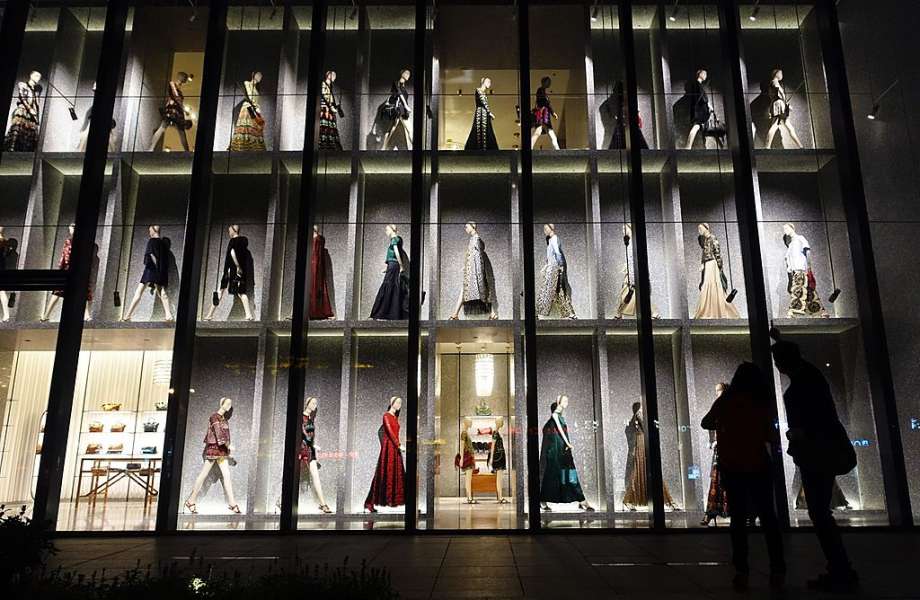
    A shop window in Shanghai. Photo: Getty Images, Johannes Eisele / AFP

    Department stores in the U.S. once offered this sense of excitement. Even small towns boasted department stores that were destinations. When Kruse, now 94, was growing up in Kingsville, she found it thrilling to take the area’s only escalator up to the tea room for lunch at Ragland’s.

    But Kruse doesn’t shop much at department stores anymore, even though she is healthy and fit. Instead, she shops online or orders out of catalogues.

    “Department stores used to be more elegant, and the staff was well-versed about the products,” she said. “The clerks really aren’t very helpful anymore. Shopping has become a chore and there is almost too much to choose from.”

    Shoppers test a bed at Ikealand in Shanghai. In China, IKEA is not only a place for shopping but also place to play. go on dates, and even sleep. Photo: Getty Images, Olivier Chouchana/Gamma-Rapho / 2011 Gamma-Rapho

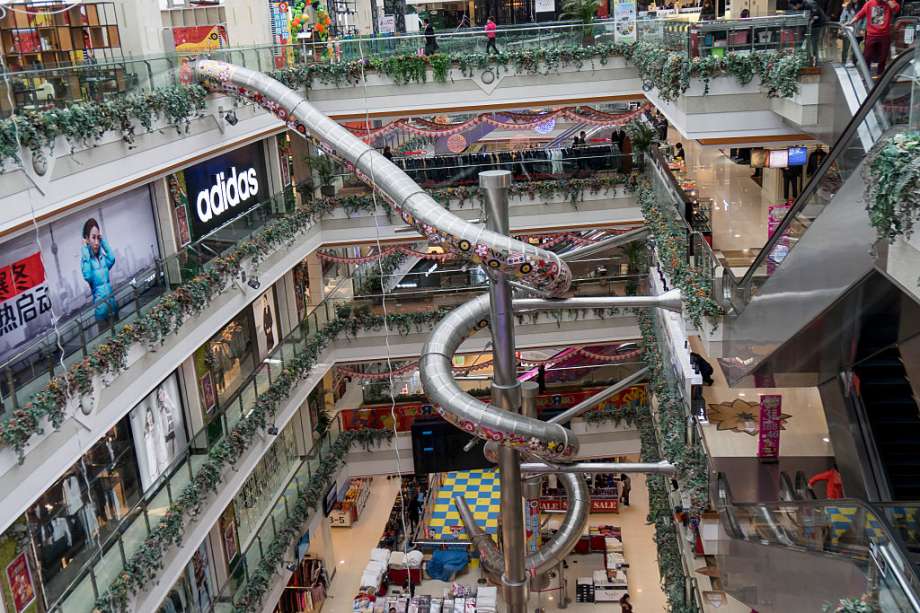
    In contrast, the Beijing-based Shimao department store recently reduced its retail floor space from 80 to 20 percent and added restaurants and entertainment areas. In Hong Kong’s Crawford Lane, concierges assist customers on every floor and 60 personal stylists stand ready to help shoppers craft their own individual chic looks.  And in Shanghai, when the upscale French department store Printemps opened a branch it included a five-story high-speed slide in the shape of a dragon so shoppers could swish from the top floor to the bottom.

    The Chinese stores hark back to a time when service, extravagance and play characterized European and American department stores. The department store became the epitome of elegance and luxury in the late 19th century, as entrepreneurs invented a new style of consumption in which shopping equaled pleasure.  French author Emile Zola set his novel Au Bonheur des Dames (The Ladies’ Delight) in the Paris department store Le Bon Marche. As the owner enticed his female customers into purchasing an exotic array of appealingly arranged goods, the dramatic customs of this new institution unfolded among the staff.

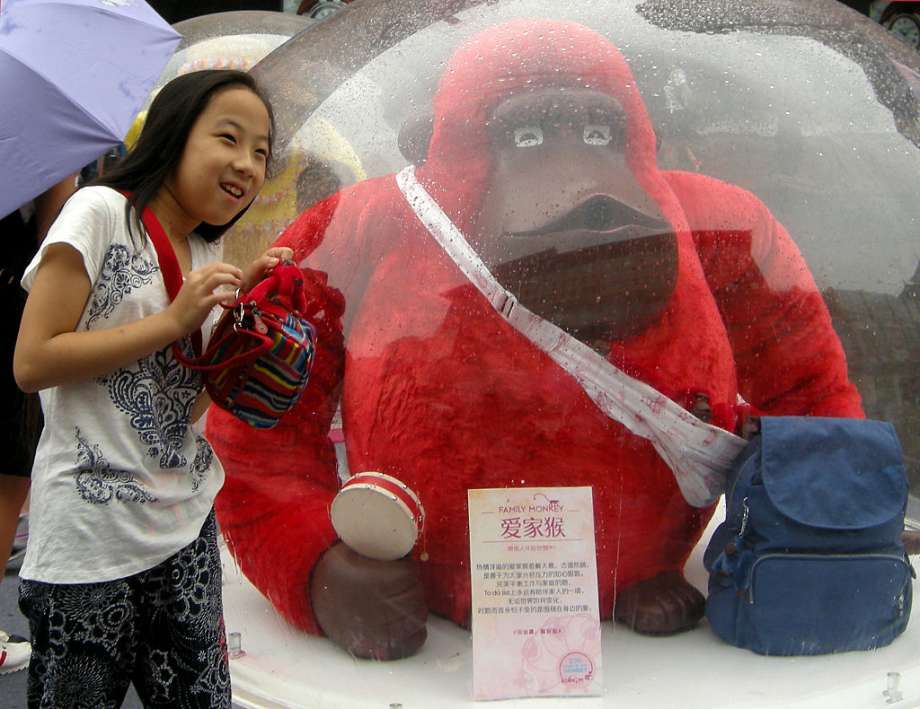
    In Beijing, a girl poses with a cartoon monkey in front of Wangfujing department store. The leisure bag brand Kipling's monkey exhibit was a hit with tourists. Photo: Getty Images, Visual China Group / 2016 VCG

    In the United States, from the 1890s into the 1960s, American department stores hired the best architects to design their flagships on prime downtown real estate. Each store’s restaurant boasted a signature dish, from deviled crab to chicken velvet soup. Filene’s offered a health menu, from which weary shoppers could refresh themselves with potassium broth, acidophilus milk or a cold glass of kraut juice.

    These stores played a central role in a city’s identity, too. Their tall clocks were meeting places where memories began. Any child born in Georgia received a birthday card from Rich’s.”  In Dallas, the Neiman-Marcus offered its famous his and hers gift at Christmas, with offerings ranging from airplanes to mummies to live camels. In Chicago, Marshall Field’s was such an institution that after the bombing of Pearl Harbor, one woman reportedly exclaimed, “Nothing is left anymore, except, thank God, Marshall Field’s.”

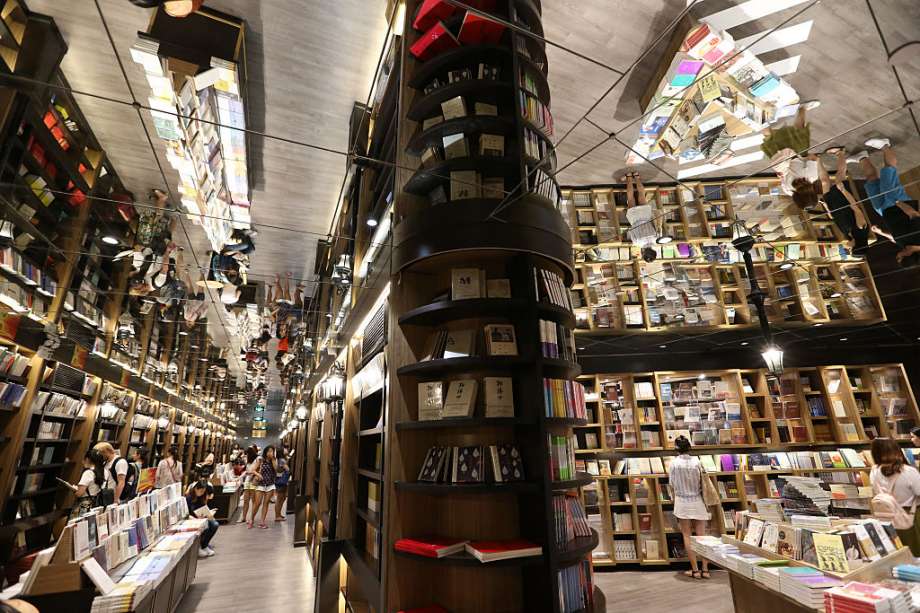
    The new Zhongshuge bookstore at Reel Department store in Shanghai, China. The bookstore chain goes to great lengths to make itself attractive: Interior wooden shelves are painted in a spectrum of bright colors, and ceiling lights are arranged to suggest a starry sky. Photo: Getty Images, Visual China Group / 2016 VCG

    Chinese department stores, where shopping tends to be a group activity, today play a similar communal role, Li said. The stores offer a stage for the new middle and upper class to parade their status and a familiar hub where family and friends to reconnect. They’re even associated with romance.  Chinese branches of IKEA have become such popular places for Chinese in their 70s and 80s to go on dates that IKEA has made new rules limiting the length of their stays.

    “My thought is there is differentiation in China,” Li said. “People go online for some kinds of things, but they also want to go shopping so they can enjoy the unique environment the stores create. In the United States, there is no need to go to Macy’s. You don’t add any value by going there.”

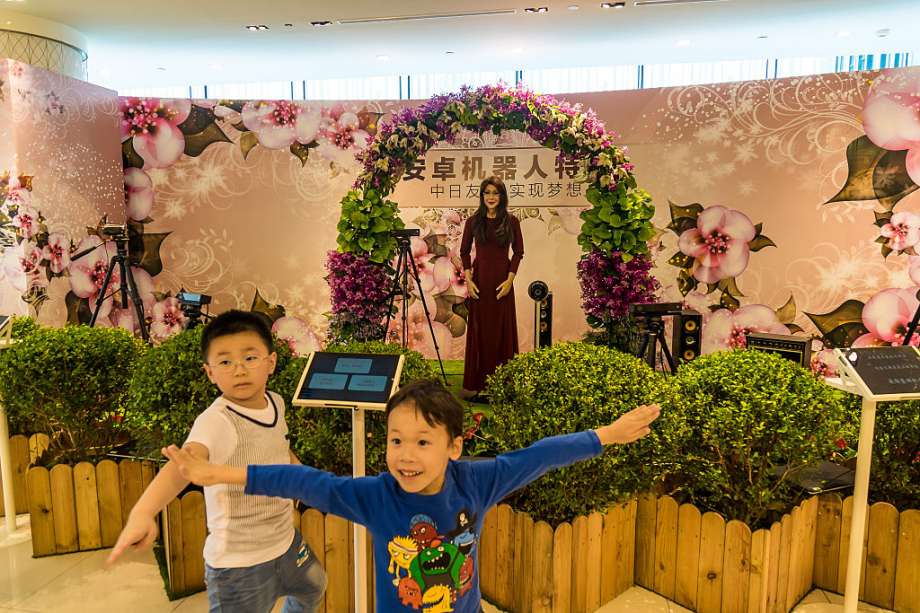
    At the Takashimaya Department Store in Shanghai, children react in front to an android that could speak, sing, shake hands and hug with people. Photo: Getty Images, Visual China Group / 2015 Visual China Group

    At least for now, Chinese retailers seem to think both shopping styles can coexist. The same week Macy’s and Sears announced their closures,  Chinese online retail giant Alibaba revealed that it would become the controlling shareholder of the Chinese department store and mall company, Intime, and would begin integrating its enormous e-commerce assets with  Intime’s brick and mortar stores.   Rather than foreseeing competition with physical stores, Alibaba plans to tap the latest technology to draw customers to stores, including artificial intelligence, virtual reality and Internet-of-Things.

    If department stores in the West are to survive, they may have to somehow recapture a time when they were destinations in themselves — a time when women like Lucy Kruse were excited to ride the escalator and savor lunch in luxurious surroundings. They may have to revive the art of customer service. And they will have to figure out how to blend the convenience of technology with the real-life scent of perfume and the warmth of crowds.


  • BCBG Maxazria plans restructure

    BCBG Maxazria plans restructure

    Women’s fashion retailer BCBG Max Azria plans to close some of its stores to focus more on eCommerce, licensing and wholesaling.

    “BCBG has been negatively impacted by the growth in online sales and shifts in customer shopping patterns, and as a result has too large a physical retail footprint,” says PR company Sitrick & Co spokesman Seth Lubove.

    “To remain viable, the company must realign its business to effectively compete in today’s shopping environment.”

    BCBG hired AlixPartners consultancy, replacing Berkeley Research Group, to restructure its debt, reports Bloomberg.

    Many US retailers, especially department stores, struggled through the latest holiday season, including H&M and Target. Payless has announced it is restructuring to deal with its US$665 million debt, and department store Macy’s has cut more than 10,000 jobs as it closes branches and downsizes.

    BCBG has 570 global stores, with 175 in the US. It opened new stores in Munich and Paris last year, and plans to open a store in Quebec this year.

  • Macy’s looks to downsize with 68 store closures

    Macy’s looks to downsize with 68 store closures

    American retail giant Macy’s Inc. has announced the closure of 68 stores as part of a plan to streamline its store portfolio and increase cost efficiency.

    The measures, which have already seen three stores close and will see a further 63 closed by early spring in the US, will save the struggling retailer approximately $550 million in 2017. $250 million of those savings will be reinvested back into the company’s digital presence, store-related growth and other related ventures.

    “Over the past year, we have been focused and disciplined about making strategic decisions to position us to gain market share and return to growth over time,” said Terry J. Lundgren, Macy’s chairman and CEO.

    “We continue to experience declining traffic in our stores where the majority of our business is still transacted,” he continued. “Our omnichannel strategies continue to evolve based on the changes in our customers’ shopping behaviours, including a focus on buying online, pickup in store and mobile-enabled shopping.”

    The company has also announced a raft of organisational changes, designed to drive greater productivity, including the elimination of management layers, reducing non-payroll costs and changes to field infrastructure. The company estimates that the initiatives will result in a staff reduction of approximately 6,200.

    Retail analyst and CEO of Conlumino Neil Saunders said the jury is still out on whether Macy’s can reinvent itself, but that the store closures are a necessary evil on the path to getting the company back on track.

    “There is an argument to be made that Macy’s has, for too long, neglected its store base and has failed to develop a compelling proposition to pull in shoppers in the digital era. However, what is done is done and the company is right to take action to put it on a firmer financial and commercial footing,” he said.

    “In our view, it is vital that the consequent reduction in costs and the proceeds from property disposals resulting from this action are used to bolster the remaining bits of the business. It would be folly to simply use the gains to fund day-to-day operations or to return to shareholders.”

  • Stores push deals in bid to lure holiday shoppers

    Stores push deals in bid to lure holiday shoppers

    Nearly 156 million people — or 66 percent of Americans — plan to or are considering taking advantage of Saturday sales to complete their holiday gift lists, according to a survey released Friday by the National Retail Federation and Prosper Insights & Analytics. The survey found that more people said they planned to shop on Saturday than those who aimed to shop over Thanksgiving weekend in an earlier survey.

    Still, given the quirk in the calendar that makes this weekend the last full weekend before Christmas, retailers including Best Buy, Gap and J.C. Penney, have set an earlier deadline to order holiday gifts this year, according to StellaService, which tracks online services at retailers. Wal-Mart, along with others, is encouraging online shoppers to pick up their merchandise at the store.

    Target will be offering last-minute shoppers deals that are good only for a day on certain in-demand products like children’s sleepwear and fragrance sets.

    Still, plenty of shoppers plan to take their time.

    Christine Bunker Tobia of Queens says she mostly shops at Macy’s but likes to wait to get the best deals. She’s been stopping by Macy’s New York Herald Square store often to check the prices.

    “I’m looking for a special sale,” she said last weekend. “I may wait another week.”

  • Cross-border eCommerce ‘set to skyrocket’ in China

    Cross-border eCommerce ‘set to skyrocket’ in China

    Cross-border eCommerce (CBEC) is set to skyrocket in China according to a new report from international think tank Fung Global Retail & Technology.

    To capitalise on this, international retailers need to complement their existing expansion strategy with online sales platforms, says Fung Global MD Deborah Weinswig.

    Cross-border eCommerce is the most efficient platform to reach increasingly affluent and sophisticated Chinese shoppers seeking products from overseas, says the report, The International Retailers’ Guide to Cross-Border E-Commerce in China.

    With Chinese authorities relaxing the rules, online purchases of overseas products are expected to increase to US$285 billion in value in 2018, up from US$136 billion last year.

    As well as authenticity being less of a concern, eCommerce purchases attract less taxes so are cheaper for consumers, writes Weinswig. As a result, it is projected that a quarter of the population will shop on foreign sites or through third parties in 2020, up from 15 per cent this year.

    “We expect CBEC will drive the next leg of eCommerce growth as Chinese eCommerce companies and international retailers launch globalised versions of their portals. By selling through CBEC, international retailers can reach Chinese shoppers regardless of whether or not they have a physical presence in China.”

    China is already the largest eCommerce market in the world, with the use of CBEC via such marketplaces as JD Worldwide and Tmall Global being attributed to the continuing rise of the upper middle class with its growing use of the internet and belief that international brands are of higher quality.

    Regulations formalised

    Most shoppers seek items related to wellbeing such as cosmetics and organic foods, expensive or hard to find domestically, says the report. Many foreign eCommerce companies have launched Chinese websites, and since late 2014 authorities have been formalising regulations including tax reforms and expediting customs clearances.

    Japanese companies in particular are targeting Chinese CBEC shoppers, using mobile apps such as Rakuten and China’s Wandou.

    Choosing the right platform is crucial, writes Weinswig. Options include…

    • Online marketplaces such as Alibaba’s Tmall Global, a third-party eCommerce platform that lets brands open a storefront. International distributors using this platform include Macy’s, Metro, Shiseido and Uniqlo.
    • Online direct sales such as Amazon.cn, Jumei Global Store, Kaola.com (for smaller brands) and Vipshop. Distributors buy from the retailers to resell to consumers.
    • Hybrid eCommerce platforms such as JD Worldwide that combine elements of an online marketplace and online direct sales. JD Worldwide partners include eBay, Lotte, Rakuten and Unilever.
    • Overseas shopping platforms.

    “To succeed in the Chinese market, international retailers are advised to have a strategic plan for CBEC that complements their China strategy,” writes Weinswig. “International retailers will need to decide which cross-border channels to sell on, driven by considerations of each platform’s targeted clientele and product category, costs, track record and suite of value-added services.”

    Fung Global Retail & Technology is based in Hong Kong, London and New York.