Tag: Malaysia Airlines

  • Malaysia Airlines sees decline in Q4 load factor, passengers carried

    Malaysia Airlines sees decline in Q4 load factor, passengers carried

    Malaysia Airlines Bhd’s (MAB) passenger load factor for the fourth quarter (Q4) ended Dec 31, 2017 dipped to 77% from 81% a year ago with a 10.5% drop in the number of passengers carried from 3.8 million to 3.4 million.

    Despite that, Q4 passenger yield was the highest during the year at 23.6 sen, which offset the slight reduction in load factor and also resulted in a 2% improvement in revenue per available seat kilometre (RASK) from 21.6 sen to 22.1 sen.

    Domestic and international passenger load factor stood at 70.5% and 78%, respectively.

    Malaysia Airlines Group (MAG) CEO Izham Ismail said in a statement that the group is firmly anchored to the MAS Recovery Plan and he is happy to see steady progress continue in the fourth quarter.

    “A concerted focus on yield in the second half of the year has seen an overall improvement in yield and RASK bucking the general downward trend of other regional players.”

    Overall he said the airline underperformed against budget compared to the previous year, due to a weaker first half impacted by a weak pricing strategy as well as the hike in exchange rates and fuel.

    “MAB did recover in the second half with closer oversight on yield management and ended the year in a stronger position. Moving forward, we will continue to focus on and drive yield to cushion the group from rising fuel costs and forex volatility,” he added.

    On outlook, Izham said Southeast Asia has strong traffic growth, but overcapacity remains a challenge, pressuring yields.

    “MAB maintains its cautious outlook in the fiscal year of 2018. While the economy is anticipated to be resilient, MAG anticipates that supply and capacity pressure will continue to put a stress on yields although the effect for 2018 is expected to be moderate. The group will continue to be prudent and agile in controlling capacity and has already scaled back on domestic route frequencies allocating aircraft where the best potential returns are seen.”
  • Malaysia Airlines moves fully to the cloud

    Malaysia Airlines moves fully to the cloud

    Tata Consultancy Services has implemented an industry-first transformation project to migrate Malaysia Airlines’ data center to a 100% hybrid cloud model.

    To better enable a competitive-edge and future readiness for the airline, TCSorchestrated the large and complex project to migrate the airline’s core mission-critical data center infrastructure and myriad applications to a hybrid-cloud model operating 80% on Microsoft Azure and 20% on a private cloud.

    The pioneering move makes Malaysia Airlines the world’s first full-service airline to completely replace its existing data centers and adopt full-scale cloud solutions for its entire range of nearly 200 applications running mission critical commercial, operations and corporate systems.

    “We set out with an ambitious goal to digitally transform core IT operations to an as-a-service model, to achieve a quantum leap in cost savings, scalability, efficiencies, agility, and other key factors,” Malaysia Airlines CIO Tan Kok Meng said.

    The cloud-centric model is achieving exemplary results, including a 51% cost reduction forecast over the a 5-year period from mid-2016; productivity improvements up to 80% for core applications; application delivery times accelerated from days to hours in some cases; enhanced security and compliance capability and reporting.

    TCS Asia Pacific president Girish Ramachandran said this industry-first transformation not just drives improved value and enhanced operational efficiencies, but equally important, it enables Malaysia Airlines to deliver a better customer experience that results from a digitally-reimagined all-cloud IT model.

    As primary service partner, TCS collaborated with Microsoft, SAP, and numerous other vendors to ensure Malaysia Airlines’ current phase of digital evolution is seamless and cost-efficient and delivered without business disruption.

    The project scope included re-platforming of legacy applications for cloud compatibility and network service provisioning for large and complex airline operations. See the cloud transformation story in a single snapshot here.

  • New routes to help Malaysia Airlines turn around next year

    New routes to help Malaysia Airlines turn around next year

    The expansion of new routes to China, India and North Asia, which is expected to happen in the second half of financial year ending Dec 31, 2018, would be the key to the turnaround story of Malaysian Airlines Bhd (MAB), said chief executive officer Peter Bellew.

    Bellew said MAB was making good progress in its restructuring and the airline just needed another few percentage upside on the yield to be into profit.

    “Our recovery plan is half-way through. In fact, we can say we are little bit ahead (of schedule). And it’s all about revenue and cost control.

    “Taking the right routes, improving the sales and marketing and by increasing the load factors, we should increase the revenue. Next year, we are expected to be able to break even across some of the quarters, start making profit and to show consistent profit in the following year,” Bellew told reporters on the sidelines of Malaysia Aviation Group’s Hari Raya celebration in Sepang on Monday.

    The group comprises its ground-handling unit, AeroDarat Services Sdn Bhd and MAB’s units -–MASWings Sdn Bhd, Firefly Sdn Bhd and MASkargo Sdn Bhd.

    Bellew said expansion of selected new routes throughout this year till 2019 would be a significant step forward for the airline, capitalising on a booming population, increasing middle class and incredible growing economies of China, India, as well as in Japan, South Korea and Taiwan.

    “We are quite optimistic our fleets would increase a little bit next year and we should improve products on board as well, and overall, would result in beneficial impact to the airline,” he said.

    MAB was reportedly half-way through its US$1.39bil (RM6bil) restructuring exercise which is likely to be completed in five years.

    The exercise was put into place in 2015 during the time of Bellew’s predecessor, Christoph Mueller.

    Bellew took over as MAS CEO on July 1, 2016, after Mueller left citing personal reasons.

    The second phase of the MAB’s restructuring, according to Bellew, involved adding new routes, including 11 routes to China. It launched new routes to Nanjing and Fuzhou last month.

    The coming routes include Chengdu, Chongqing, Wuhan, Tianjin, Shenzhen and Shanghai from Penang, Kuala Lumpur and Kota Kinabalu, while the expansion of other new routes are also being considered.

  • Malaysia Airlines Extends Cooperation With AFI KLM E&M

    Malaysia Airlines Extends Cooperation With AFI KLM E&M

    Malaysia Airlines has decided to extend its long-running component support contract with AFI KLM E&M covering its fleet of Boeing Next-Generation 737-800 aircraft. The initial agreement was intended to cover 35 aircraft. The support provided by AFI KLM E&M today covers 54 aircraft and will involve a wider range of Part Numbers (P/N). The Malaysian Carrier has also extended the contract duration for the coming years.

    The component support solutions supplied to Malaysia Airlines are implemented via the Component Services Program (CSP) operated jointly by AFI KLM E&M and Boeing. Services include component repair and access to the local and main AFI KLM E&M spares pools located respectively in Kuala Lumpur and Amsterdam.
    The high quality of CSP, which combines the complementary expertise of an Airline MRO and the Airframer, along with the component availability solutions deployed in close proximity to the Malaysia Airlines facilities, have hitherto given the airline complete satisfaction.

    Paul Kear, Technical Director Malaysia Airlines, said: “The support implemented by AFI KLM E&M for our fleet of 737-800s stands out both for its service quality and its responsiveness. The Group has deployed tailored solutions, guaranteeing our operational continuity, so it was a logical decision to extend our cooperation.”

    Ton Dortmans, Executive Vice President KLM E&M, added: “We are delighted to see that Malaysia Airlines has maintained and even extended its trust in AFI KLM E&M services. This testifies to the quality of our services and foregrounds our ability to provide services backed by a global logistics network built around local facilities on our clients’ doorsteps.”

  • Malaysia Airlines closes Kuala Lumpur lounges for upgrades

    Malaysia Airlines closes Kuala Lumpur lounges for upgrades

    Malaysia Airlines is temporarily closing two of its home hub lounges in Kuala Lumpur as it completes extensive refurbishment works to breathe new life into the spaces.

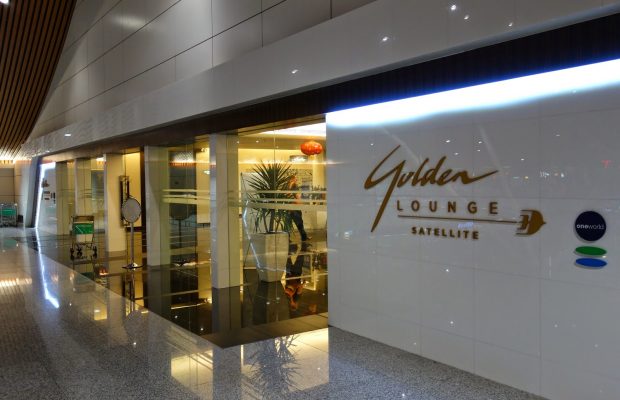
    MAS’ regional Golden Lounge in KLIA’s Main Terminal is up first – primarily used by passengers on shorter international flights such as to Singapore – closing its doors from May 12 until August 15 2017, with eligible passengers instead directed to the airport’s Satellite Terminal for lounge access.

    There, business class guests and Oneworld Sapphire/Emerald frequent flyers (including Qantas Gold and Platinum cardholders) can choose to visit either Malaysia Airlines’ international Golden Lounge (open 24 hours) or the Malaysia Airport CIP Lounge near gates 31-37 (open 6am-10am and then 6pm-10pm).

    Under Oneworld’s lounge access rules, a third option is also available in the Cathay Pacific First and Business Class Lounge: again found in the Satellite Terminal, which is accessible from the Main Terminal via Aerotrain.

    Malaysia Airlines’ domestic Golden Lounge will also be shuttered from June 2 until August 15 2017, but as these passengers cannot access the airport’s international departures area where the other lounges are located, a temporary lounge space will be created at gate B3.

    There, lounge-eligible travellers will find light refreshments available along with dedicated seating, wireless Internet, newspapers, magazines and flight information screens.

    Toilets, showers and prayer rooms won’t be offered within this temporary space, although the nearest restrooms can be found just outside the gate area, with the closest prayer room aside the Malaysia Airlines Gate A transfer desk.

    Refurbishments to these lounges were originally due for completion by “late 2016”, being approximately eight months behind schedule.

    Qantas partner Malaysia Airlines will reinvigorate its business class and first class airport lounges in Kuala Lumpur and at London’s Heathrow Airport over the coming year with an all-new design and premium amenities for business and high-end leisure travellers.

    Central to the Golden Lounge upgrades are new demonstration kitchens, where chefs will whip up Malaysian and international gourmet dishes while interacting with guests and customising meals to their personal tastes.

    Joining that is a “bistro service” in the business lounges and a revamped fine dining experience in the Kuala Lumpur first class lounge, with all locations also receiving faster wireless Internet and additional universal power sockets, allowing visitors to easily recharge their devices without an adaptor.

    Adopting a design created by internationally-renowned firm Duoz – the same company behind the Ritz-Carlton Kuala Lumpur and the Marriott Sydney Harbour at Circular Quay – guests will notice patches of greenery for a touch of colour throughout.

    “Delivering a holistic experience for our guests which starts from the lounge lies at the heart of the redesign,” said Malaysia Airlines’ CCO Paul Simmons.

    “We want the space to encapsulate the richness of travel with the airline, a luxurious contemporary Malaysian style that our guests will be able to experience when they enter any Malaysia Airlines Golden Lounge around the world,” Simmons added.

    Malaysia Airlines’ regional and domestic lounges at Kuala Lumpur will be first with the new design and amenities by late 2016, followed by the international business and first class lounges in the KLIA Satellite terminal and also the airline’s London Heathrow lounge in mid-2017.

    The carrier’s ambitious lounge overhaul follows the debut of all-new business class seats on Malaysia Airlines’ Airbus A330 flights between Australia and Kuala Lumpur, with the fully-flat seats fitted to all MH A330s by late September this year.

  • Malaysia Airlines Signs the First-Ever Deal to Track Its Fleet From Space

    Malaysia Airlines Signs the First-Ever Deal to Track Its Fleet From Space

    Malaysia Airlines has become the first airline to sign a deal for space-based monitoring of its aircraft’s flightpaths. It’s a coup for the carrier, which is still reeling from the loss of the missing MH370 three years ago.

    The agreement, signed with three aerospace companies—Aireon, SITAONAIR, and FlightAware—will allow Malaysia Airlines to track its flights via satellite as they cross remote oceans, pass over polar regions, or travel anywhere else in the world, citing a press release from Aireon.

    Malaysia Airlines Chief Operating Officer Izham Ismail said in the release: “Real-time global aircraft tracking has long been a goal of the aviation community. We are proud to be the first airline to adopt this solution.”

    The location of most international-bound planes can already be monitored via a type of signal periodically broadcast from the aircraft called ADS-B (Automatic Dependent Surveillance Broadcast). These signals can be received by air traffic control ground stations and by other aircraft. They can also be tracked from space. Aireon, which is launching a new satellite network with a company called Iridium Communications, expects to complete its space-based monitoring system in 2018.

    However, it is unclear that such a network would have been able to track Malaysia Airline’s Flight 370, which disappeared with 239 people aboard on March 8, 2014. Because the plane’s location transmission system went dead, the signals that would have been received by a satellite network would not have been broadcast, Bloomberg reports.

    Although debris from MH370 has washed up onto African beaches and islands in the Indian Ocean, the main wreckage was never found.

  • Malaysia Airlines’ recovery plan on track

    Malaysia Airlines’ recovery plan on track

    Malaysia Airlines Bhd (MAB) has performed well in 2016 and the momentum is expected to continue in the year ahead, backed by its 12-point MAS Recovery Plan (MRP), said Khazanah Nasional Bhd.

    Managing director Tan Sri Azman Mokhtar expressed confidence that the five-year recovery plan, after its 28 months of implementation, was on track and on schedule.

    “They (MAB) are making good progress. Insya Allah (God willing), next year or the year after, (even MAB) have come out publicly to say they are on track to break even and be profitable,” he told a press conference on Khazanah’s financial and strategic performance for 2016 and outlook for 2017 in Kuala Lumpur on Friday.

    Khazanah is the sole shareholder of MAB.

    In August 2014, the Government investment arm unveiled its RM6bil MRP in the quest to return MAB to sustained profitability and revive the flag carrier of Malaysia.

    The plan included cutting 30 per cent of its workforce of 20,000 employees and introducing a new restructured entity which is now called MAB.

    On July 1, 2016, MAB appointed its chief operating officer, Peter Bellew, to replace Christoph Mueller as chief executive officer.

    On the ringgit performance throughout 2016, Azman believes that the currency is “clearly undervalued”.

    “Whether (the depreciation rate is) 10%, 8% or 12%, we believe that our ringgit is undervalued,” he said, adding that Khazanah had also undertaken internal research on the currency performance.