Retail News CRM

Tag: Marks & Spencer

  • Marks & Spencer shuts store in Singapore

    Marks & Spencer shuts store in Singapore

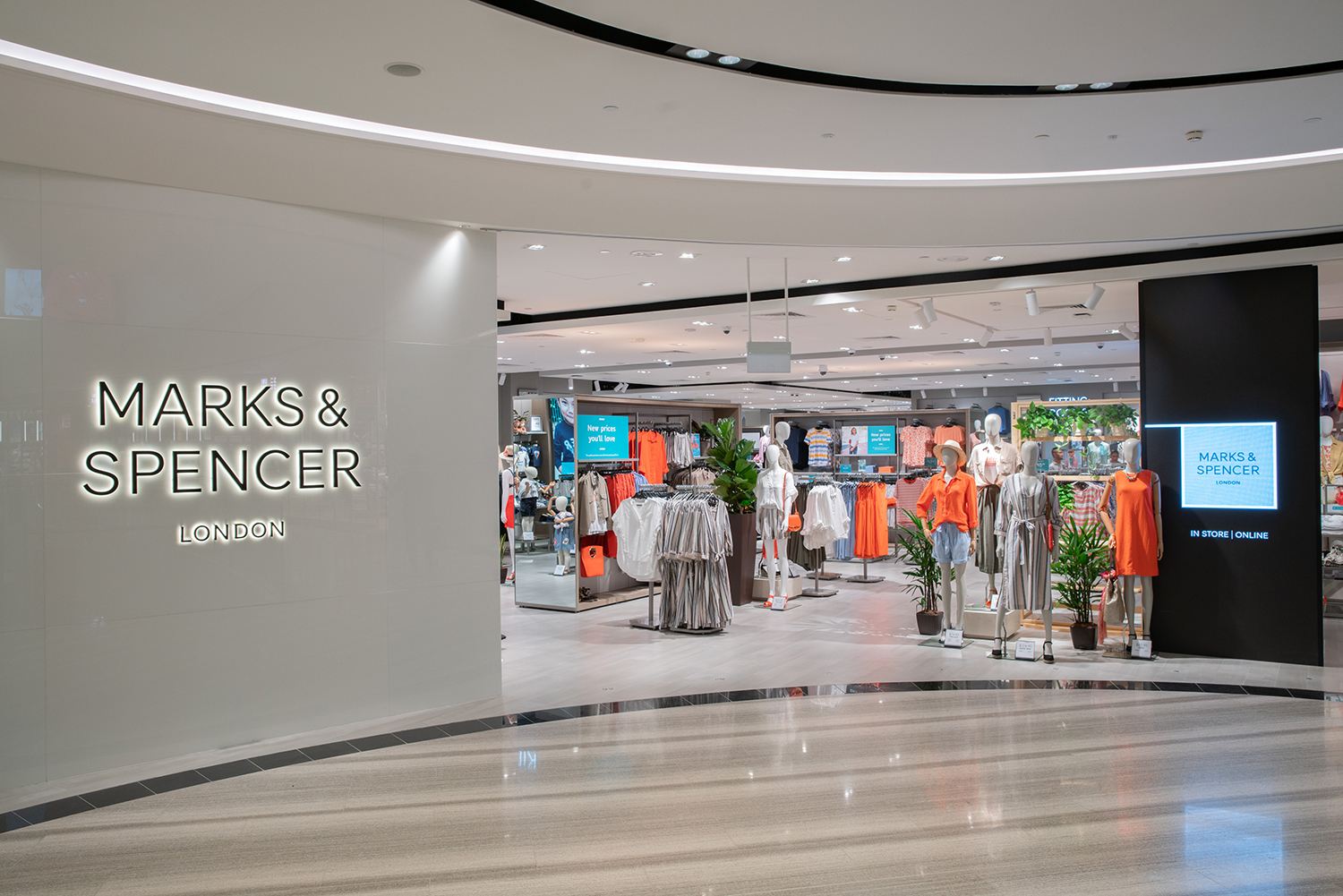
    British retailer Marks & Spencer will be closing its outlet at Raffles City Shopping Centre on Dec 31, but its 10 other stores islandwide will remain open.

    In the advertisement, it said that there are discounts of up to 70 percent for its items. The closure on Dec 31 will bring to an end 34 years of operation in the location.

    “Marks & Spencer remains fully committed to the local market, and is continuing to explore growth opportunities of our business in Singapore. We are continually enriching our services and product catalogs, and are eagerly looking for ways to advance our business with store upgrades,” the retailer’s spokesman told The Business Times on Thursday.

    Both Marks & Spencer and Robinsons are part of the Dubai-based Al-Futtaim group, owned by Emirati tycoon Abdulla Al Futtaim and run by his son Omar, according to Forbes.

    In October, Robinsons announced its exit after 162 years of operations in Singapore. It has continued to keep its last two stores at The Heeren and Raffles City open for closing-down sales.

    Its liquidators told BT that Robinsons’ flagship store at The Heeren will close on Dec 16, but said that they are still in talks with the landlord at Raffles City.

    The Marks & Spencer branch at Raffles City is the only one closing as the lease is signed under Robinsons, BT reported.

    When The Straits Times visited the outlet at about 6.30pm on Thursday, there was no queue to enter the store, which had sales posters displayed at the entrance and in many spots in the shop.

    Ms Marilyn Ng, who works in the finance sector, was there with her husband to buy clothes. Ms Ng said she happened to be doing some Christmas shopping in the area, and chanced upon the sale at Marks & Spencer. Mr Ng, who is in her 40s, said that she has been shopping at Marks & Spencer for about 20 years, and regularly buys clothes and food from the retailer.

    As for the moving out sale, Ms Ng said it did not appear unusual to her, since it is the festive season and many shops are having sales.

    The shop’s staff said that the department store is just moving out of the Raffles City outlet, but is not closing down and that its other outlets will stay open.

    The retail chain had opened a pop-up outlet on the first floor of Waterway Point in Punggol in late October, which will operate for six months.

    Marks & Spencer also said that it had no intention of closing its “thriving business” in Singapore, although the franchise has not been making as much recently, recording earnings of $101,613 in 2018, down from $2.9 million in 2017.

  • Marks & Spencer Singapore store opens at Jewel Changi

    Marks & Spencer Singapore store opens at Jewel Changi

    Marks & Spencer Singapore will open its Jewel Changi store this Wednesday.

    The 13,000sqft space offers M&S’s clothing and accessories across womenswear, menswear, lingerie and kidswear.

    The store also features Food Hall which will include nearly 3000 lines of food and drinks, including international award-winning wines.

    Customers can expect a variety of chilled food and drinks including fresh sandwiches, prepared salads, fruit and vegetables, meat and dairy, prepared meals, inspired by world cuisines.

    The new store also features an M&S in-store bakery, selling coffee-to-go and patisserie goods.

    “Our new store at Jewel Changi Airport will combine the best of our clothing collections and high-quality food with an inspiring shopping environment and exceptional customer service, offering a truly special experience,” said Christine Choi, Marks & Spencer Asia CEO.

    A new feature of the Jewel Changi store will be unique name badges for staff which bear ‘Singlish’ taglines such as ‘I am Stylo Milo, ‘I am Tok Kong’, and a few other variations embracing local culture.

    From April 17 to June 11, shoppers can enjoy special offers including lucky draws and free M&S cooler bags.

  • Marks & Spencer India to open six more stores in next 60 days

    Marks & Spencer India to open six more stores in next 60 days

    British multinational retailer Marks & Spencer (M&S) is on an aggressive pace here and is opening six more stores in the next two months alone, a top company official has said.

    According to a report, Marks & Spencer has opened its first store here way back in 2001 and in April 2008 signed a joint venture agreement with Reliance Retail to form Marks & Spencer Reliance India.

    It now has 71 stores across 30 cities like New Delhi, Amritsar, Mumbai, Pune, Kolkata, Bangalore, Chennai, Kochi, Bhopal, Kanpur, Hyderabad and Chandigarh among others.

    “India has become increasingly an important market for us. We are now the largest market for M&S outside of our home market. We are 71 stores today and we continue to invest in this market. We opened nine stores in the last six months and it is our intention to open six more in the next 60 days,” James Munson, managing Director, Marks & Spencer Reliance India said in an interview.

    Internationally, Marks & Spencer hawks its products in 57 markets across 400 stores and an online presence in 33 markets.

    Munson further said they would look to maintain that expansion pace in the next year as well and said, “there are no other markets which are expanding the way we are expanding here”.

    Of the 71 stores here, 10 are standalone beauty and lingerie stores , including two it opened in the last nine months and said half of the stores it plans to open in the next 60 days would also be for the same.

    The company clocked a revenue of Rs 908 crore last year and has been growing at a CAGR of 24 percent over the last five years, Munson said.

    It had clocked a 9 percent growth in the same store sales last year.

    A fifth of the turnover comes from outside the major metros, he said.

    It sources 30 percent of its products from locally and India is a sourcing base for the wider British market as well.

    M&S has partnered with other e-commerce players like Amazon and Flipkart over the last few years and he said its a strong area of growth and this year they are expecting 75 percent growth in online sales.

    However, the contribution from online to its revenues is still quite small here, unlike in Britain where it’s targeting 30 percent online sales.

    M&S has developed a rethink campaign specifically for this market, a first globally where a campaign has been designed for the local market.

    In Britain, food is a popular segment for the company but Munson said there are no plans at present to introduce food here.

  • Providing agile recovery solutions for Marks & Spencer

    Providing agile recovery solutions for Marks & Spencer

    Marks & Spencer (M&S) is a British multinational retailer which households across the world. With an annual turnover of over £10.6 billion and global operations, keeping such a large business moving requires a balancing act of behind-the-scenes logistics and planning. To ensure they can deliver the quality items its customers expect even in the event of a business emergency like inclement weather or political unrest, M&S partners with flexible workspace provider Regus for business continuity solutions utilising their workplace recovery services.

    Regus offers M&S’s critical business functions, such as payroll and logistics, the security of having somewhere to go if they couldn’t access their normal offices due to interruptions, including natural disasters, fire, flood and/or cyberthreat. M&S kicked off an international partnership with Regus in 2015, covering back office functions located worldwide, and are now expanding their business continuity partnership in the UK.

    This partnership allows M&S to recover in an agile way, and test their recovery processes at their convenience – just a few of the benefits of using flexible workspace providers for such a service.

    Workspace recovery: a retail necessity

    Retail businesses like M&S play an important role in UK infrastructure and the day-to-day lives of people living in the country. From food to clothing, M&S deliver the necessities. What’s more, because these products often need to be delivered fresh and sold quickly, if critical business functions go down in a company like M&S, it has less than 24 hours before the delivery of these services are compromised for the general public. Nobody likes to run out of bread and milk. Workplace recovery is one way that retail businesses like M&S can make sure its operations can continue running.

    Cambodia – workplace recovery in action

    When union protests – unrelated to M&S – broke out near one of the company’s infrastructure support offices in Cambodia, employees felt unsafe to go into work for two weeks. Given the risk to critical business functions managed by that location, such as paying employees and managing the supply chain, M&S relocated staff to Regus centres.

    Regus immediately supported M&S in secure offices, hosting 15 employees while the protests continued – just one example of the backing that Regus provides M&S with internationally.

    Mindset change – finding an agile solution

    While most large organisations have a workplace recovery plan in place, few have made the shift from a traditional provider to a flexible provider like Regus. Historically, workplace recovery firms operated by having empty space available, ready for the company that needs it. However, this led to long periods of buildings going vacant, and if for some reason multiple companies needed the space at once – a local flood, for instance – they would be overbooked.

    Flexibility is one of M&S’ core values, so the company was looking for a more agile approach that matched its business strategy and current corporate thinking. Regus doesn’t require all client employees to reach one central location, but can accommodate staff across a city, in multiple centres, or even multiple cities and countries if required.

    John Frost, Head of Business Continuity at M&S said: “For us, turning to Regus for workplace recovery was part of our whole business shift towards being more agile. The Regus approach has allowed us to support our head office “smarter working initiative” in London and our multiple-location approach fits the issues we face in the modern world. Their dynamic and fluid approach to recovery fits our purpose and our mindset, allowing our staff to be safe while at work during a crisis event and continue business as usual.”

    Testing

    Another benefit for M&S of this new partnership was an easy-to-use testing system. Any partnership needs checks and balances, which is why M&S and Regus work together to trial their workplace recovery process at least once a year in several locations. Tests are standard protocol, Regus provides free annual test time and makes it very simple to book through their dedicated Workplace Recovery Operations Team.

    During a test, Regus provides the client private office space, laptops, and IT capabilities – just like they will have if a crisis happens. Additionally, Regus can also offer day-to-day access to business lounges so that employees can experience a Regus workspace. These services help employees to ensure they are prepared and to feel more familiar with their surroundings before they need to use it in a real-life recovery scenario.

    Frost adds, “Internationally the service really worked for us and they have made the testing process genuinely enjoyable – a first for our industry! Their team knows me. I’m not just a number – I’m a customer and the service is personal. Regus have always been proactive about testing, and will check in about whether we require a service even before we’ve had to ask for an activation. In recovery scenarios, being able to work quickly in this way and have people who understand you and your business is crucial.”
  • Marks & Spencer UK plans to cut 351 management jobs

    Marks & Spencer UK plans to cut 351 management jobs

    Marks & Spencer UK reportedly plans to axe more than 300 jobs across the UK as it continues its restructure to counter falling sales.

    As reported seeing documents proposing 351 job cuts, almost all of them in management roles, including operations, section managers and “visual managers”.

    Marks & Spencer, which is flourishing in Asia under a franchise agreement with Middle Eastern-based Al Futtaim, has seen sales fall by 7.5 per cent in its home market over the last two years, which has reduced store profitability. That decline is behind a plan announced in May to close 100 stores by 2022.

    Earlier this month, chairman Archie Norman and CEO Steve Rowe warned there may be further closures, with Norman describing the scale of the Marks & Spencer store network as “a drag” on performance.

    Rowe is eyeing savings of £350 million by 2021, a target likely to lead to more redundancies. However to date, the company says 86 per cent of staff affected by the closure of stores so far have been relocated to new positions within the company.

    Marks & Spencer’s pre-tax profit nin the year to March 31 fell 62.1 per cent to £66.8 million, largely the result of £321.1 million in costs associated with store closures.

  • Marks and Spencer set to close 40 more stores

    Marks and Spencer set to close 40 more stores

    British department store retailer Marks & Spencer will close a further 40 stores in its home market as it struggles to improve its bottom line.

    According to reports, M&S will announce which of its 140-strong full-store network will close on Wednesday UK time, adding to the 20 already shuttered. The full stores stock both fashion and food.

    Rationalising the store network was a key plank of a turnaround program announced 18 months ago by CEO Steve Rowe, which also included retrenching from overseas markets. Since then, the company’s Mainland China operations have been closed down and its profitable Hong Kong business divested to Middle East-based Al-Futtaim under a franchise arrangement.

    The decision to accelerate the closure program was prompted by early results from the closure of a store in Warrington town centre which led to increased sales in a newer off-high-street store nearby.

    “We have been clear about our plans to accelerate our store closure program and the action we must take to build a business with sustainable, profitable growth,” an M&S spokesperson said.

    On Wednesday, M&S is expected to report further under performance in its food arm, with analysts projecting a drop in sales, but an improved bottom line.

  • M&S sells Hong Kong business to Dubai conglomerate Al-Futtaim

    M&S sells Hong Kong business to Dubai conglomerate Al-Futtaim

    Marks & Spencer has confirmed the sale and franchise of its retail business in Hong Kong and Macau to its long-established franchise partner Al-Futtaim.

    The two companies all but confirmed the sale in August  and settlement took place on December 30.

    Al-Futtaim is now the sole franchisee for Marks & Spencer Hong Kong and Macau, but the deal does not extend to the mainland where M&S has a presence on Tmall, having closed its department stores there.

    The two companies have a partnership dating back to 1998 when Al-Futtaim opened Dubai’s first M&S store in the UAE.

    The addition of 27 Marks & Spencer Hong Kong and Macau stores takes Al-Futtaim’s M&S network to 72 shops in 11 markets in Asia and the Middle East.

    “We have substantially reshaped our International business, which has improved profitability and positioned us for growth,” observed Paul Friston, Marks & Spencer’s international director in a statement confirming the sale.

    “As one of the world’s leading retail operators, with strong logistics capabilities and local expertise, Al-Futtaim is the ideal partner for us to develop and grow our business in Hong Kong and Macau.”

    Stephen Rayfield, VP of M&S and sports & lifestyle with Al-Futtaim said the company is looking forward to “enriching our customers’ lives and aspirations through the provision of quality products and services in Hong Kong and Macau”.

    Pascal Martin, partner with OC&C Strategy Consultants, said the decision to sell and franchise the Marks & Spencer Hong Kong business is consistent with the shift to an asset-light business model that the UK company has adopted for its international business.

    “It did not make sense to support only Hong-Kong and Macau as directly operated international businesses after having pulled out from all other direct markets, such as China and France. By selling its Hong Kong and Macau business to Al-Futtaim, M&S can also raise cash to continue to invest in its core, including product quality, the UK market and e-commerce.”

    At the same time, Al-Futtaim has a strong track record in operating M&S stores in many other markets and a solid investment capacity to continue to expand the M&S international store network, said Martin.

    “Another key factor is that Al-Futtaim’s M&S business is led by ex-M&S’ senior executive, Stephen Rayfield, who knows the business inside-out and can fully optimise daily operations between Al-Futtaim and M&S.”

    M&S now has a simple homogeneous international business: all wholesale to local partners, with the exception of a joint venture in India with Reliance.

    “The brand will be able to leverage Al-Futtaim’s strong investment capacity to accelerate the International expansion. Al-Futtaim can benefit from adding a strong profitable business (HK and Macau) to its already strong international M&S portfolio. They may be able to exert more control on M&S Asia logistics network to achieve better integration across Singapore, Malaysia, Hong Kong and Macau. Al-Futtaim will likely have increased negotiation power with M&S on product, store format, pricing and more,” said Martin.

  • Marks & Spencer to close more stores

    Marks & Spencer to close more stores

    UK department store chain Marks & Spencer is about to announce further store closures along with reduced profits amid worsening high-street trading conditions.

    Last year, the company announced the closure of 30 stores, but The Guardian newspaper reports a plan has been devised by CEO Steve Rowe and incoming chairman Archie Norman for a bolder store rationalisation plan.

    The company is struggling to regain market share in its apparel division, which is almost exclusively own-label and has failed to keep pace with design and innovation of branded rivals.

    Analysts are tipping the company to announce a further 10 per cent decline in profits for the six months to September 30, to around £201 million. That’s a far cry from the £1 billion full-year profit back in 2008.

    In place of apparel, the company is redirecting its focus onto its successful food category, with some of the full-line stores to be converted into food-only stores.

    Last year, the company exited the China market and this year began preparations to sell its Hong Kong business to Al-Futtaim under a franchise agreement.

    The Guardian suggested that if M&S decides to close more stores it will deal a blow to the towns involved, where the retailer is often the main destination store, especially following the demise of BHS.

    “But with more purchases made online, stores in smaller or less attractive town centres and shopping centres are finding life difficult especially amid rising costs for retailers.”

  • Amazon India proposes $500m food venture

    Amazon India proposes $500m food venture

    Amazon India has applied to the government to invest US$500 million in a wholly owned venture that will allow the US eCommerce giant to stock locally produced food items and sell them online.

    If successful, it would become the first foreign retailer to enter the segment.

    Amazon already has an eCommerce marketplace in India, but while 100 per cent overseas capital is permitted for such platforms, they cannot sell products of their own. Last year, the government allowed for 100 per cent foreign investment in the retailing of processed foods made in India.

    Amazon has filed its application with the Department of Industrial Policy & Promotion (DIPP), which handles foreign investment in retailing and e­Commerce. The company plans to invest $500 million over five years and could start selling locally produced food items within six months of obtaining approval, says an insider.

    “We are excited by the government’s continued efforts to encourage foreign direct investment in India for a stronger food-supply chain,” says an Amazon spokesperson. “We have sought an approval to invest and partner with the government in achieving this vision.”

    Only Indian grocery delivery companies Big­Basket and Grofers have applied under
    the category, prompting the government to invite companies including CP Foods (Thailand), Heinz, Nestle and Walmart to provide feedback and investment plans.

    This followed the minister for food-processing industries Harsimrat Kaur Badal visiting London with a team of officials last year to meet representatives of such companies as Cobra Beer, Harrods, Marks & Spencer, Sainsbury’s and Tesco to drum up support for the policy.

    Amazon’s current online platform is open to Indian-­owned entities, and similar platforms are run by Flipkart, the country’s largest eCommerce company, and Snapdeal.

  • John Lewis fashion sales soar

    John Lewis fashion sales soar

    John Lewis fashion sales rose a tremendous 7.2 per cent over Christmas – eclipsing the UK department store’s rivals, even robust performances by Debenhams, M&S and House of Fraser.

    Own brand collections continued to strengthen throughout 2016, with the inclusion of Modern Rarity filling a gap in its private label brand portfolio by appealing to a stylish, design-led shopper and taking Cos on as a direct rival. John Lewis should consider taking this brand into menswear, given the outperformance of menswear in 2017 versus other clothing sectors, and the current gaps in the market for brands targeting the 30-45 year old male shopper.

    Its Electricals Home & Technology division was up against the strongest comparative, rising 4.8 per cent against a 9.6 per cent rise last Christmas. The department faced huge discounting pressure from rivals Amazon, Argos and Dixons Carphone, particularly over Black Friday when promotions were offered over a week ahead of the main event. However, John Lewis’ strategy of selling the latest models across technology categories will have limited its exposure to the breadth of discounts available elsewhere.

    As one of the leading players in selling affordable smart home technology, John Lewis can expect to see a greater uptake in demand in 2017 following its significant investment in the department during 2016 and increasing consumer awareness.

    Home reported the slowest sales growth at 2.7 per cent against a 5.1 per cent rise last year, though this is outperforming both the home and furniture markets and is resilient given the fall in housing transactions.

    Paula Nickolds takes over the reins this month from Andy Street, marking the start of a new era for the department store. Nickolds’ understanding of the business will ensure Street’s legacy and strategy will be carried forward, but her new appointment begins at the start of what will be a challenging and unpredictable three year (at least) period, so new initiatives will be important to stimulate demand.

    -Honor Strachan

  • Fashion chain Next faces crossroads

    Fashion chain Next faces crossroads

    Fashion chain Next needs to carefully rethink who its customers are and how best to attract them to avoid falling into the same trap as M&S, says a retail analyst.

    The UK-based retailer has released its fourth quarter results for 2016, described by Emily Stella, analyst with Verdict Retail, as “poor” against a weak comparative.

    “The retailer admits it expected more from its Christmas sales. Next’s underwhelming performance was not isolated to the fourth quarter: 2016 has been a difficult year for the retailer, with full price sales for the year to date down 1.1 per cent on last year.”

    The company said it expected profits to fall in its 2017-18 financial year by between 2 per cent and 14 per cent due to “tougher times” ahead. A 0.4 per cent quarterly increase in total sales was achieved purely through discounting, which means narrower margins. Price rises, already flagged, may reduce revenue in the year ahead by a further 0.5 per cent.

    “Next has long been a retail star, seemingly unable to do wrong,” observed Stella. “However, the retailer acknowledges that 2017 could be a challenging year as consumers continue to restrict spending and a devalued pound forces price rises.”

    She said the recent results may mark the start of a difficult period for the retailer.

    “As it stands, Next’s current shoppers aren’t buying into its proposition – perhaps an indication that Next is failing to identify with its target market. To avoid falling into the same trap as M&S, Next will need to carefully rethink who its customer is and how to best attract them.”

    Next’s share price fell by 14 per cent after its gloomy projections.

  • US investor buys into Mitra Adiperkasa

    US investor buys into Mitra Adiperkasa

    US private-equity company General Atlantic has made its first investment in Indonesia by buying into lifestyle retailer Mitra Adiperkasa (Map).

    It has subscribed for Rp1.08 trillion (US$80.5 million) in bonds issued by Map which are convertible into shares in its F&B subsidiary Map Boga Adiperkasa (MBA), which runs Cold Stone Creamery, Godiva, Krispy Kreme, Pizza Express and Starbucks in Indonesia. It has more than 300 stores across 24 cities, and has more than doubled its store count over the past five years.

    Map runs multi-channel retail concepts in Indonesia across a diversified portfolio of department stores, sportswear, specialty fashion, F&B, and lifestyle products. It has nearly 2000 retail stores.

    “We believe the rapid rise in Indonesia’s middle and young working classes, the increase in this population’s disposable income, and the continued rural-to-urban migration represents an opportunity for us to strengthen our international food brands and cement our leadership position in the F&B market,” says Map CEO V.P.

    Sharma. A portion of the investment money will be used to accelerate the F&B division’s network expansion.
    “Indonesia’s domestic consumption comprises more than half of gross domestic product, and consumption patterns are increasingly shifting toward modern and aspirational lifestyle brands,” says General Atlantic Southeast Asia head Wai hoong Fock. “These secular trends position MBA’s food & beverage portfolio well for further expansion.”

    Regional commitment

    The partnership, General Atlantic’s first investment in Indonesia, indicates its commitment to long-term market prospects in South-east Asia,” says Fock, who joined General Atlantic from CVC Capital Partners last year to lead its South-east Asia investing program. He is based in the firm’s Singapore office.
    General Atlantic has 18 investment professionals in Asia, based in offices in Beijing, Hong Kong, Mumbai and Singapore. The firm opened its Singapore office in 2011, investing three years later in Singapore-based online mobile entertainment/communication Garena platform. It has also supported the growth of retail and F&B companies including lifestyle brand Tory Burch, luxury fashion brand Zimmermann, restaurant group Barteca Holdings, urban juice-bar concept Joe & The Juice, community accommodation marketplace AirBNB and transportation network company Uber.

    Map has 1921 retail outlets in 68 cities throughout Indonesia. Its retail concepts include department stores (Debenhams, Galeries Lafayette, Seibu and Sogo), fashion and lifestyle (Crabtree & Evelyn, Kipling, Lacoste, Marks & Spencer, Massimo Dutti, Nautica, Sephora, Swarovski, Topman, Topshop and Zara), sports (Converse, Golf House, Oakley, Payless ShoeSource, Reebok, Rockport, Skechers, The Athlete’s Foot and The Sports Warehouse), F&B (Burger King, Cold Stone Creamery, Domino’s Pizza, Godiva, Krispy Kreme and Starbucks), kids (Kidz Station and Oshkosh B’Gosh) and bookstore Kinokuniya.

  • Marks & Spencer plans to close all stores in Chinese mainland after profits plunged

    Marks & Spencer plans to close all stores in Chinese mainland after profits plunged

    UK retailer Marks & Spencer announced on Wednesday that it will pull out of the Chinese mainland market and close all the 10 stores amid shrinking profits, according to a statement the company sent to the Global Times on Wednesday.

    “Our review has shown that our stores in Chinese mainland continue to make losses and as result we can no longer trade with a store presence in the Chinese market,” Adam Colton, managing director of Greater China at Marks & Spencer, said in the statement.

    The company didn’t disclose sales revenues in the Chinese mainland market.

    An employee at an Marks & Spencer store in Beijing told the Global Times on Wednesday that he feels sorry about the closures because business in Beijing was quite good and there were a lot of loyal customers. He did not know when his last day of work would be. The 1,500-square Beijing flagship store at the Place shopping mall was opened in December 2015.

    Intensified competition and relatively high prices were the main reasons behind Marks & Spencer’s retreat from Chinese mainland, experts noted.

    “In Chinese mainland, the traditional UK brand did not have much appeal for Chinese consumers. For example, the prices in its food shops were a bit more expensive than even imported food stores,” Wang Xinmiao, a Beijing-based retail industry analyst, told the Global Times on Wednesday.

    In addition, the company did not have much time to cultivate brand awareness and a loyal customer base because the Chinese apparel market had already been saturated with “fast fashion” international brands, such as Zara, H&M, GAP, and Uniqlo, which marched into the Chinese mainland market much earlier than Marks & Spencer, Wang said.

    In contrast, the UK retailer has built a profitable wholly-owned business in Hong Kong in large part because it entered the market as early as 1988, the statement noted. Marks & Spencer is planning to expand its business in Hong Kong by opening more food stores in the near future.

    A customer said he came on purpose to the Beijing shop here after he has known the closure news. He has lived in UK for years and he trusts M&S, and he will shop in Hong Kong after the end of business here.

    The UK retailer has been losing ground in other international markets. In addition to its closures on the Chinese mainland, the company outlined plans to shutter 53 stores in 10 international markets, including seven in France, while pulling out of Belgium, Estonia, Hungary and Lithuania.

    In the first half of 2016, the company’s pre-tax profit plummeted 88 percent to 25.1 million pounds ($ 31.39million), down from 216 million pounds in the same period a year ago, as reported by BBC on Wednesday.

  • Marks & Spencer’s China stores risk closure

    Marks & Spencer’s China stores risk closure

    Marks & Spencer is reportedly due to announce the closure of some of its Chinese shops when it releases its trading update next week.

    There is speculation that chief executive Steve Rowe will reveal his plans to help bring the department store chain back into business when the company’s half-year results are published.

    M&S currently has 10 stores in China, and according to Bloomberg some of them could be in the firing line.

    The news comes just a week after speculation that M&S’ Paris flagship would also close down, as part of Rowe’s plans to move away from loss-making international operations.

    The department store chain will reveal its interim results on November 8.

  • Can This British Retailer Conquer China?

    Can This British Retailer Conquer China?

    New Look, a fast-fashion retailer bearing a striking similarity to Forever 21, is aiming to boldly go where many chains have gone before but few have succeeded.

    The British retailer’s chief executive officer, Anders Kristiansen, has made no secret of his intentions in China, announcing plans in June to open 50 more stores there by March, which would bring its total number of locations in the Asian nation to 150. That’s 10 times the number of stores it had in China in 2015. But a Reuters report last Thursday revealed that New Look’s owner, South African billionaire Christo Wiese, has a more ambitious expansion in mind—500 stores within three years.

    New Look currently has more than 850 stores around the world, two-thirds of which are in the U.K. Despite a challenging first quarter that saw revenues fall 4.2% to 354.2 million pounds ($431.9 million), Kristiansen insisted the retailer would stay the course in China, where there had been a “strong local reaction to our affordable, fast-fashion offer.”

    According to Reuters, Wiese plans to conquer the Chinese market using a local-for-local manufacturing model, meaning most of the clothing it will sell in China will be made there to ensure locally relevant products are delivered to stores quickly. It’s a sourcing strategy that Zara owner Inditex has down to a tee and many other companies, including Under Armour, are trying to replicate around the world.

    “South Korea and Japan drive a lot of the trends that the Chinese customer seeks, so our ability to be able to identify those trends, source them locally and get them into our stores quickly is key,” Sven Gaede, managing director of New Look’s international business, told Reuters, adding that 85 percent of what the retailer already sells in China is made there.

    Local sourcing aside, some experts are skeptical about the retailer’s bullish growth plans. Franklin Yao, managing partner at strategy consultants Smith Street, described them as “virtually impossible,” noting that New Look is unlikely to find 500 empty retail stores, given the fact that H&M and Uniqlo also want to open hundreds more locations in China in the coming years.

    That being said, Chinese consumers are notoriously fickle and several big-name brands have failed to gain a foothold there, including Gap, Marks & Spencer and Walmart. In an effort to test the waters before committing to a brick-and-mortar presence, most international retailers first launch on the likes of JD.com or Alibaba’s Tmall and Taobao.

    But New Look appears to be covering all its bases in China: After opening its first locations in Shanghai and Beijing in February 2014, it launched an online store on Tmall seven months later and debuted on JD.com earlier this year.