Retail News CRM

Tag: Marks & Spencer

  • Sprooki platform to launch in Indonesia

    Sprooki platform to launch in Indonesia

    Shopper-engagement platform Sprooki will launch in Indonesia next month at the 125,000 sqm Supermal Karawaci retail precinct in western Jakarta.

    It will be integrated with the precinct’s touchpoints and mobile apps, allowing retailers to offer customers individualised content such as vouchers, special offers, event alerts and store information.

    Sprooki Michael Gethen and Claire Mula

    Sprooki Michael Gethen and Claire Mula

    Customers will be able to share content on social media including Facebook, which has more than 60 million users in Indonesia. Sprooki is available in both English and Bahasa languages.

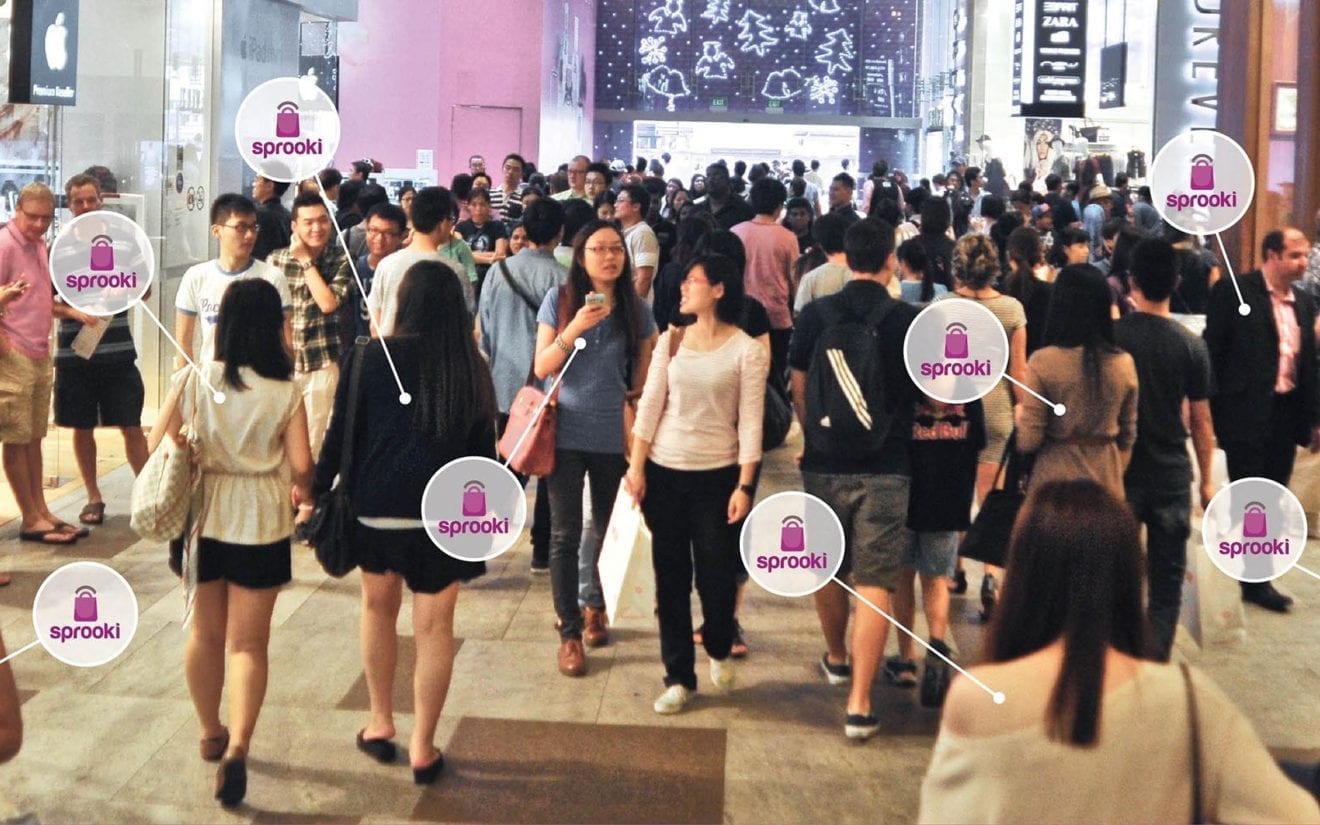
    Based in Singapore, Sprooki uses customer location, profile and behaviour data to help retail outlets, shopping malls and department stores engage with their customers via smartphones and other devices.

    Supermal Karawaci is the largest shopping centre in Banten province, west of Jakarta, with more than 1000 stores, three cinemas and the largest Timezone arcade in Southeast Asia – complete with an indoor rollercoaster.

    Sprooki CEO/co-founder Michael Gethen says the deployment will help Supermal Karawaci’s retail tenants improve sales and give the mall unprecedented insight into shopper habits and behaviour.

    Sprooki

    “By implementing the Sprooki platform, our mall will be one of the first shopping precincts in Indonesia to incorporate a data-driven mobile platform to improve shopper experience,” says Supermal Karawaci marketing and leasing GM Pipih Tjandra.

    Sprooki’s mobile platform is already being used by Southeast Asian shopping malls such as a Lend Lease’s 313@Somserset in Singapore and Crescent Mall in Ho Chi Minh City, Vietnam, as well as thousands of retailers and major brands such as Coffee Bean and Tea Leaf, Forever 21, Gap, GNC, Marks & Spencer and Pie Face.

  • M&S Singapore launches table-service restaurant

    M&S Singapore launches table-service restaurant

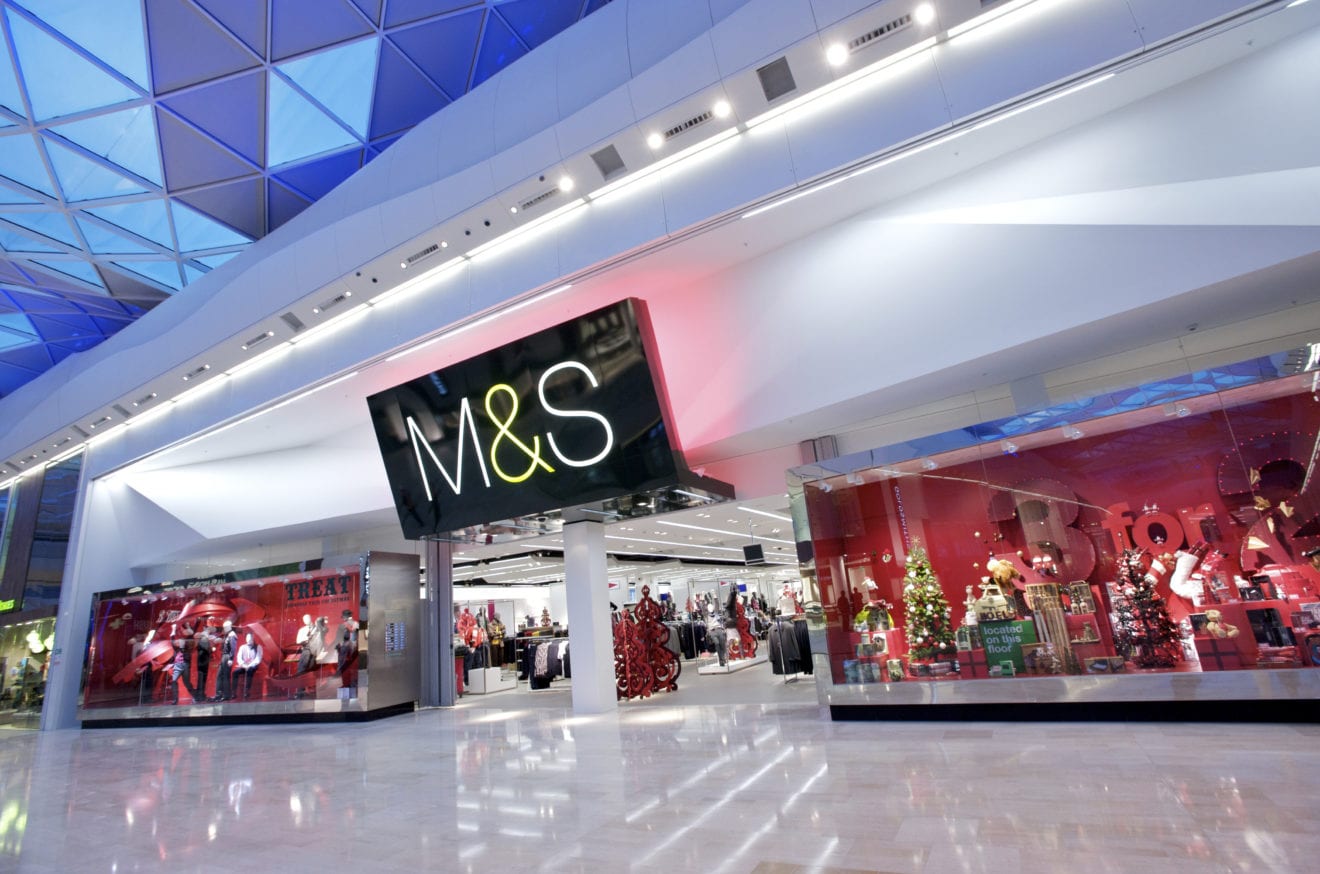
    M&S Singapore has opened a table-service restaurant at Wheelock Place.

    As well as the M&S Cafe, the flagship store has introduced M&S chilled food, making it the first Asian outlet outside of Hong Kong to offer the range of more than 600 products.

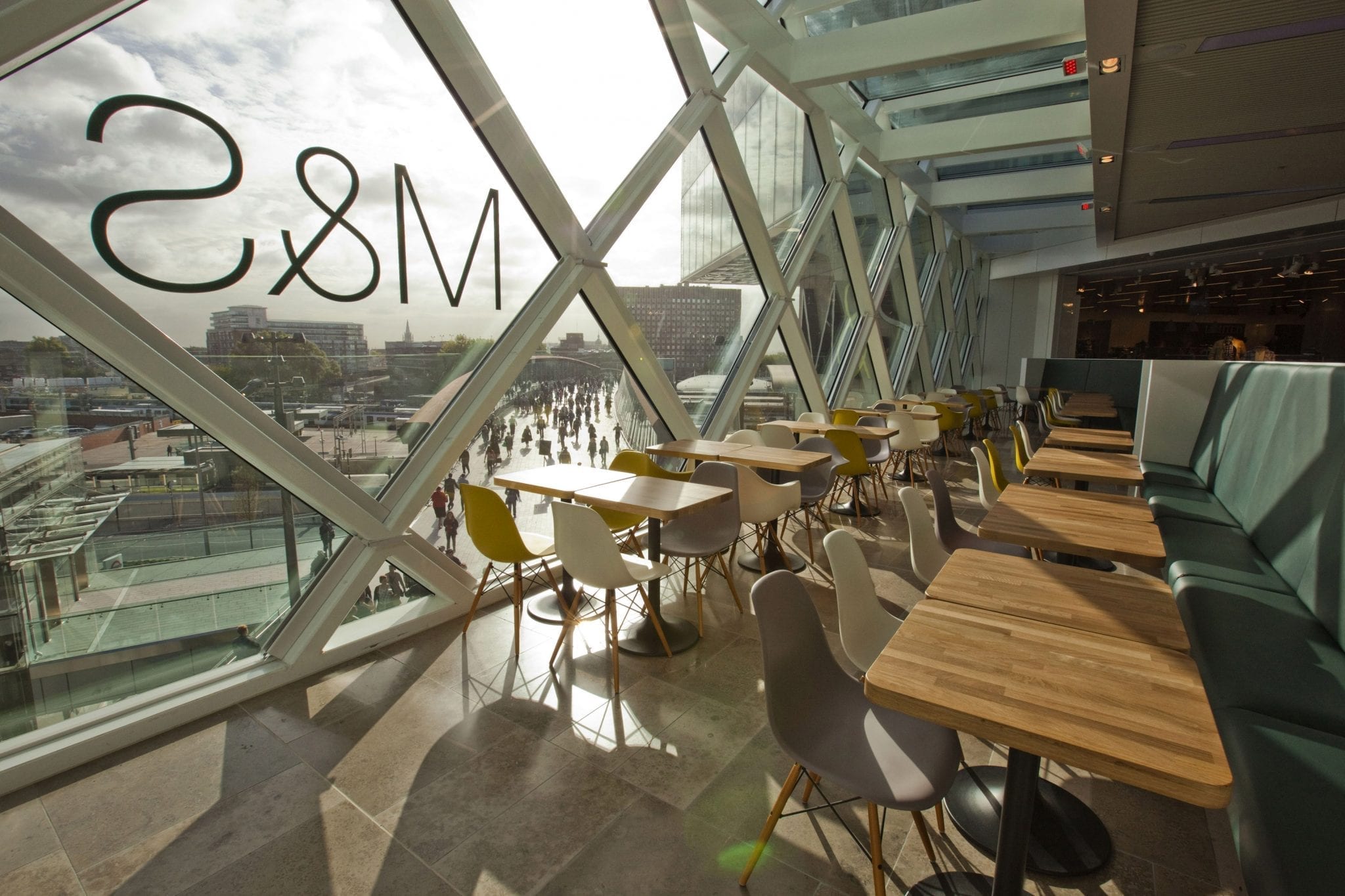
    With 60 seats, M&S Cafe is near the Food Hall, its menu including drinks, snacks and hot meals plus British classics such as fish and chips and afternoon tea. Global favourites include Indian curries and Italian pasta.

    In the Food Hall, the chilled food range offers soups, salads, cheeses, dips, salmon, fruit, vegetables, cheesecakes, yoghurts and puddings such as Apple Crumble.

    M&S has nine stores across Singapore run by long-standing franchise partner Al-Futtaim Group.

  • Narrow the range, increase retail sales

    Narrow the range, increase retail sales

    It’s counter-intuitive, but less choice, fewer options and a smaller range of products can often help increase retail sales and customer satisfaction. Who would have guessed?

    Simplified, narrower product ranges are contributing to accelerated customer and corporate purchase decisions, improved productivity, velocity and volume, and, interestingly, fewer instances of buyer remorse.

    Marks & Spencer in Britain has taken the plunge, being rewarded with enhanced performance outcomes. It simply followed the lead of several coffee lounge networks there that introduced a singular, standardised “medium”-sized cup of coffee, regardless of whether a customer wanted a latte, cappuccino, macchiato or something else. Some fast-food outlets are following suit with a single-size burger.

    Consumer responses have been overwhelmingly positive – queues at the ordering counters have shortened and the speed of service improved. There has been some resistance, though. Custom has been lost to those who prefer smaller or larger options.

    However, that leakage in sales was not because of the fewer choices, but rather a disagreement with the single choice imposed by management. There is little evidence of long-term brand damage or negative sentiment about quality or value.

    Fulfils demand

    Simplifying the buying process has long been valued by customers as it fulfils the demand for convenience. Moreover, the policy can be an effective means in the market positioning of brands, companies, products, services or applications. Importantly, it can be, and has proven to be, an effective way to differentiate between competitors and substitutes.

    Single-brand motor vehicle dealerships consistently attain and maintain higher key performance measures than multi-brand outlets. That is important in an industry where much of the “shopping” is done online, with the average time spent on the forecourt of a new-vehicle dealership by intending purchasers being as little as 46 minutes. One outlet visitation is now the industry norm.

    Making the buying process easier is often rewarded with typically higher conversion rates and volumes. Narrowing the range of throat lozenges from an average nine to just three at the pay consoles of service stations did not discerningly affect sales. Moreover, the sales from the freed-up space with alternative products were attractively high.

    Hardware, electrical appliance and toy retailer references to having and promoting the biggest range is seldom attractive to an individual whose needs will usually be fulfilled by one product, service or application – the right, specific product they have visited the store to purchase.

    Choice is, and should be, a measured and subjective assessment based on research, intelligence, judgement and experience.

    Attractive proposition

    Astute business owners and managers are taking the risk of narrowing stock ranges, brands and sizes. They are tolerating some leakage of revenue, but welcoming the increase in profits, customer satisfaction, productivity, velocity and volume.

    The measurement of stock turns is an established monitor of business efficiency. Sadly, too many people in retail are unaware of the principle, and therefore do not monitor and quantify sales and profits performance.

    Narrowing and simplifying choice, appropriately applied, can reduce inventory, shrinkage, insurance premiums, logistics costs and capital-servicing expenses. All round, it is an attractive proposition.

    Fear of the possibility of losses in marginal and incremental sales to isolated and tertiary customer groups can, and does, induce inertia. Decisions have consequences – good and bad, upside and downside. Those seeking to service and satisfy heighten their chances of failure. The alternative is to identify, isolate, analyse and relate to choice customers and choice clients. Most have narrow and specific preferences.

    • Barry Urquhart runs Marketing Focus in Perth, Australia, and is a business strategist, consumer behaviour analyst and keynote speaker. He can be contacted at [email protected].
  • M&S profit to take a hit

    M&S profit to take a hit

    After poor quarterly performances from Marks & Spencer’s general merchandise division, the full year results come as no surprise, with UK full-year like-for-like sales falling 1.1 per cent.

    That followed a drop of 1 per cent the previous year.

    Today sees the new CEO take to the stand to reveal his strategy to return M&S profit to growth and regain its position in the market, a tall challenge given the retailer’s share of the UK clothing market has been eroded year on year, falling from 10.5 per cent to 8.7 per cent between 2010 and 2015.

    The announcement that incoming CEO Steve Rowe is willing to take a short term hit on profitability in an effort to restore turnover growth is an essential action, which his predecessor was unprepared to implement. Investment in price, product quality, availability and customer service is a message we have heard before from M&S, but the sacrifice of profitability signals a stronger commitment this time round.

    As well as focus on price positioning and style authority to improve its clothing business, both of which are essential in driving footfall back into stores and online, M&S has put a large emphasis on the importance of customer experience. It hopes to slim down its clothing offer further and reduce duplication across ranges to remove shopper confusion.

    Again, this was addressed a few years ago but under Rowe’s new management structure and shift in its buying strategy (buying by product category, not by sub brand), issues of repetitiveness across collections should be prevented – though communication between product buying teams is vital to ensure final ranges are coherent and the sub brands target their core customer segments.

    Despite facing a tough economic climate and a potential weakening in consumer confidence in 2016, expect to see initial sales improvements filter through in M&S’ half year results in November.

  • Reliance retail business thrives

    Reliance retail business thrives

    Indian retailer Reliance Industries has reported a 50 per cent growth in sales in its consumer electronics category for the quarter to December 31.

    Reliance Retail also consolidated its leadership in the grocery category, optimising its network to enhance profitability. Several private-label products were launched in the grocery and general merchandise categories during the quarter. The contribution of private-label sales to overall sales increased to 14.6 per cent from 8.6 per cent in the same period the previous year.

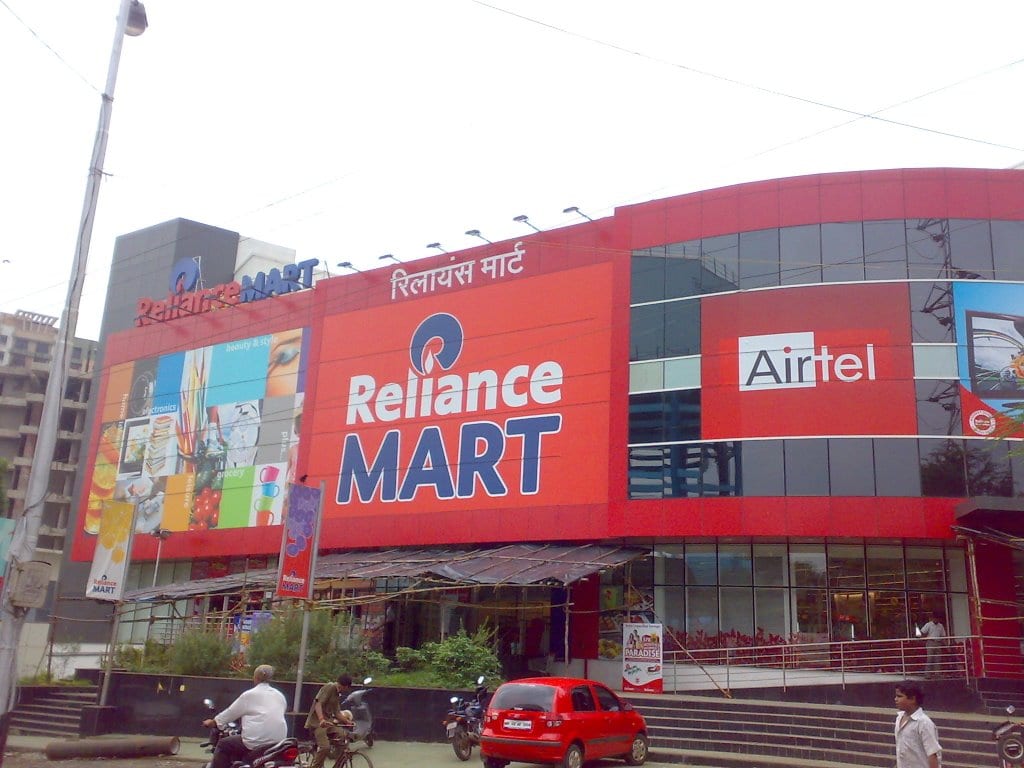
    There are now more than 2 million registered members across 37 countries for Reliance Mart stores. These 1537 outlets specialise in consumer electronics. Strong year-on-year growth in this category was helped by Digital Express Mini rapidly scaling up during the quarter to reach more than 1250 outlets across the country in a short time since launch.

    Also delivering a strong performance, the fashion and lifestyle category was 16 stores opened byReliance Trends during the quarter.

    A Reliance Retail joint venture with Marks & Spencer continued to grow with new store openings, whileReliance Brands launched Dutch lingerie brand Hunkemöller, and also opened the first airport store in India for UK games and toys retailer Hamleys, in Delhi.

    Initiatives encompassing fashion and lifestyle e-commerce are also proceeding through beta testing. The development of a marketplace platform and distribution ecosystem for 4G devices are on track and being rolled out. It will be the largest distribution reach for devices in India, says the company.

    Meanwhile, the company is training 4G sales specialists while integrating supply chain and service centres. Reliance Retail also launched its own brand of 4G LTE smartphones, under the brand LYF, during the quarter.

  • First Marks & Spencer Beijing store opens

    First Marks & Spencer Beijing store opens

    UK department store operator Marks and Spencer has opened its first store in Beijing.

    The new 1500 sqm M&S Beijing store has opened in The Place shopping centre, selling clothing and food.

    M&S operates 10 stores in Shanghai and the move to Beijing is in line with a strategy to gradually expand in China’s tier 1 cities, albeit at a slower pace than originally forecast.

    “We’re looking at places which are very much ‘tier 1’… where you have an upper middle class consumer base… where we will do well even in the context of a slowdown in the economy,” executive director of marketing & international, Patrick Bousquet-Chavanne said last September.

    M&S has closed some smaller stores in China and is now focusing on larger stores in major cities.

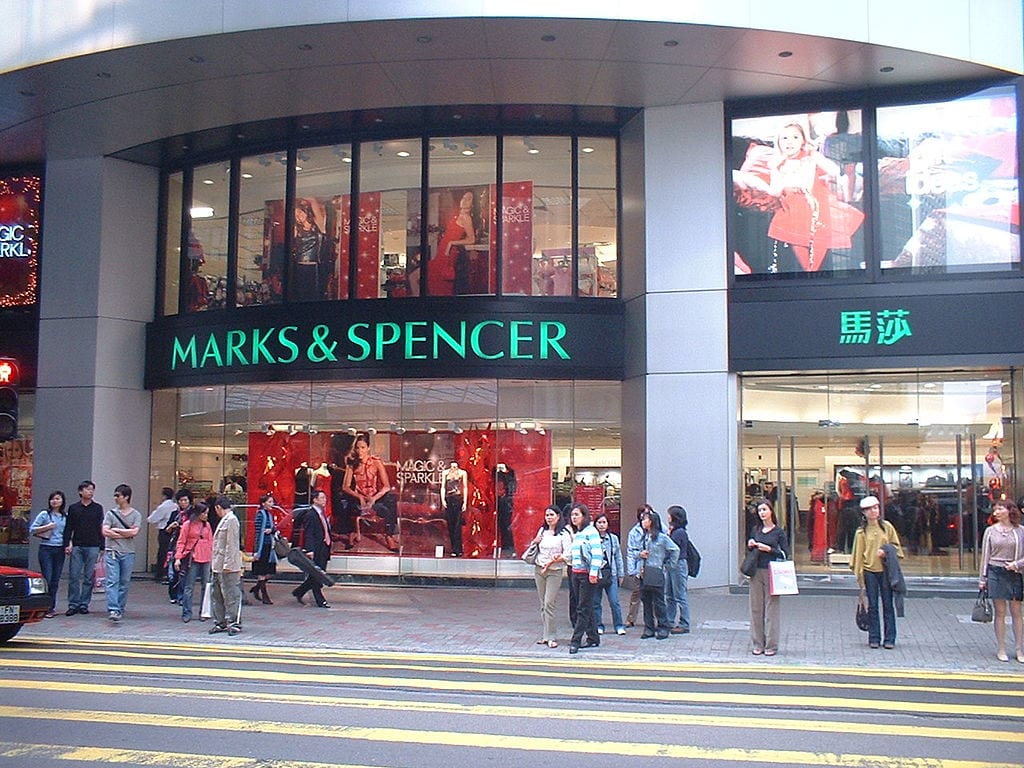
    It has 20 in Hong Kong.

  • Marks & Spencer Hong Kong plans giant new store

    Marks & Spencer Hong Kong plans giant new store

    UK department store Marks & Spencer is planning to open one of its largest stores in Hong Kong early next year in Cheung Kong Property’s Wonderful Worlds of Whampoa centre in Hung Hom.

    According to a report in the South China Morning Post, California Fitness is vacating its space in the centre to make way for the new Marks & Spencer Hong Kong store, which will take up at least 40,000 sqft (3700 sqm). Other smaller tenants will also be moved to make way for what will be M&S’ 24th store in the territory.

    Helen Mak, senior director of retail services at Colliers International, told the SCMP Whampoa has been “a missing district for international brands” in the past.

    “With the new MTR station in place very soon, the landlord sees more chances for retail business.

    “It is more of a consideration of adding diversity to the existing mall, from landlord’s point of view,” Mak said.

    The Whampoa MTR station, part of the Kwun Tong extension line from Yau Ma Tei, is currently under construction and scheduled to open late next year.

    Fast fashion brands Uniqlo and H&M recently opened in the Wonderful Worlds of Whampoa centre and Mak says she expects more international brands to follow as the mall morphs into more of a regional mall.

  • M&S opens new store in China

    M&S opens new store in China

    Marks and Spencer has opened its first store in Beijing. In 2014 the high street stalwart earmarked China, Russia, India, the Middle East and Western Europe for international expansion. Chief Exec Marc Bolland cited plans to open 250 new stores overseas in three years. The aim was to boost international sales by a quarter and increase profit up by 40%.

    Patrick Bousquet-Chavanne, M&S’s Executive Director of Marketing & International, told Reuters the company was still committed to both Russia and China but that those overseas targets were now unattainable. The plans changed.

    “We’re looking at places which are very much ‘tier 1’… where you have an upper middle class consumer base… where we will do well even in the context of a slowdown in the economy,” Bousquet-Chavanne said in September.

    The new store in Beijing follows a change in company policy which outlines the closure of stores in ‘secondary cities’ across China, and a focus on flagship stores in major cities instead.

    The 1,500 sq m store opened at The Place shopping centre, and will sell selected food and drink as well as M&S clothing.

    Although this will be its first venture into Beijing, M&S has 10 stores in the Shanghai region and 20 in Hong Kong. Its empire covers over 1,300 stores, 852 of which are in the UK.

  • Western retail giants restrict travel to Bangladesh after attacks

    Western retail giants restrict travel to Bangladesh after attacks

    Business executives from global clothing giants H&M Inditex and Gap have canceled trips to Dhaka this month after the killings of two foreigners, industry sources said, causing anxiety for Bangladesh’s $25 billion garment export sector.

    Bangladeshi suppliers to the world’s top brands said they didn’t expect the disruptions to hurt their orders for the year-end Christmas season.

    But the attacks, claimed by the Islamic State, increase the pressure on an industry which faces competition from other low-wage countries and is trying to repair its safety image after several fatal accidents.

    The United States and Canada have asked their diplomats to restrict their movements, and Britain warned of more attacks after an Italian aid worker and a Japanese man were shot dead a few days apart. Australia canceled a cricket tour.

    Bangladesh’s government, however, rejected the claim by the Islamic State and blamed the growing violence in the country on its domestic political opponents trying to show it in poor light. The attacks on foreigners, while rare, follow the killings of four Bangladeshi bloggers this year by machete-wielding assailants, and have spawned fear among the foreign community.

    Shahidullah Azim, a garment exporter who supplies to Sears, Loblaws and Perry Ellis among others said one of his buyers asked him to come to Dubai instead, along with the clothing samples.

    Other foreign business executives asked for video conferences with their Bangladeshi counterparts, saying they couldn’t travel to Dhaka because of the warnings issued by their governments.

    “We are monitoring the situation in Bangladesh closely and we are taking the appropriate security measures. We are also in close dialogue with other brands regarding the situation,” H&M spokeswoman Anna Eriksson said.

    Marks & Spencer said the firm stopped travel to Bangladesh for seven days a few weeks ago. Travel has since resumed, a spokeswoman said, and added there was no impact on business orders.

    MASKED MEN ON BIKES

    Bangladesh has deployed paramilitary soldiers on nighttime patrols in the diplomatic quarter of Dhaka and issued a nationwide ban on people riding pillion after the two attacks were carried out by masked men riding bikes.

    Home Minister Asaduzzaman Khan, who has dismissed claims that the Islamic State was operating in the Muslim majority country of 160 million, said on Wednesday that police were close to a breakthrough on the killings.

    “We have taken these attacks very seriously. We won’t spare the killers,” he said.

    Prime Minister Sheikh Hasina has blamed the rising tide of violence on the opposition Bangladesh Nationalist Party and its key ally, Jamaat-e-Islami, many of whose leaders are being prosecuted for war crimes during the 1971 war of independence.

    The opposition denies any involvement.

    A Dhaka-based garment manufacturer said the government had increased security in the area where foreigners lived, police had spoken to them and confidence was returning. Business was strong, but if there is another attack on a foreigner, it could hurt the sector.

    Azim warned of an even broader impact. “If this Islamic State issue persists for long it will not only hurt our businesses, it will destroy the country’s image,” he said. “The government should act promptly to bring the perpetrators to justice and let the world know that Bangladesh is safe.”

    The readymade garments industry is the economic lifeblood of the country, employing around 4 million people, most of them women. It is in the midst of a massive safety overhaul after the collapse of the Rana Plaza in 2013 in which more than 1,100 workers were killed and exposed the unsafe working conditions.

    In recent years, Bangladesh has also faced competition from Vietnam, Cambodia and Myanmar, although its wages remain low.


  • Marks & Spencer to slow China expansion

    Marks & Spencer to slow China expansion

    UK department store chain Marks & Spencer says it will slow its expansion plans in Greater China due to the economic and political turmoil in the two markets.

    The British retailer currently has 20 stores in Hong Kong and 10 in China and had been planning significantly more.

    Back in 2014, CEO Marc Bolland set a target of opening 250 new overseas stores within three years – an ambitious goal even in favourable economic climate.

    This week, M&S’s executive director of marketing & international Patrick Bousquet-Chavanne told news agency Reuters in an interview that while the company remained committed to both markets, the 2014 targets were unreachable.

    “The world has shifted, is a different place… The Syrian situation was very different from what it is today… Putin had not invaded Ukraine and China was growing at close to nine per cent,” he said.

    “It’s reasonable in that context that you would expect a different outlook on the next three years for the company.”

    Last March M&S said it would close five underperforming stores in China to focus on flagship stores and online – and expanding its food offer in Hong Kong.

    He told Reuters M&S still planned a Beijing flagship store during the 2015-16 financial year and that it still planned to open in the cities of Guangzhou and Dalian, but gave no timetable.

    He said the company had seen a softening in its store sales in China as the economy slowed, but no dramatic effect.

    “The sectors in which we trade are not luxury, so we haven’t seen the same dramatic slowdown as some might have,” Bousquet-Chavanne said.

  • Marks & Spencer Vietnam opens second store

    Marks & Spencer Vietnam opens second store

    UK-based department store retailer Marks & Spencer has opened a second store in Vietnam’s largest city, Ho Chi Minh.

    Marks & Spencer Vietnam plans to have 20 stores trading in the country by 2020, focused on selling womenswear and menswear.

    The new store is at Crescent Mall in Ho Chi Minh City’s District 7, a four year old mall which also hosts a newly opened Robins Department store.

    It is operated by Marks & Spencer’s long-term franchise partner, Thailand-based Central Retail Corporation, a member of Central Group, which also owns Robins.

    The first Marks & Spencer Vietnam store opened in a 1200 sqm space in the Vincom Center in downtown Ho Chi Minh City last year, the site previously occupied by UK rival Debenhams.

    M&S now has over 800 stores in the UK and more than 460 international stores across 56 markets in Europe, the Middle East and Asia.

  • British brands invading Philippines

    British brands invading Philippines

    Asif Ahmad, the UK ambassador to the Philippines, is one of the busiest diplomats in the country, as he leads, almost on a weekly basis, the opening of new outlets put up by dozens of British companies which are taking advantage of the rapidly growing consumer market and improved purchasing power of Filipinos.

    Ahmad, the 59-year-old diplomat who has been assigned in the Philippines since July 2013, says while several British companies have established their presence in the country for several decades now, more are expected to land in the Philippines soon.

    “We have done it in fashion.  We have done it in cars. We have done it in films and music.  The next story is eating and drinking,” says Ahmad, during the opening of the second outlet of Costa Coffee in the Philippines at Robinsons Place in Ermita, Manila.

    Costa Coffee, the leading coffee chain in the United Kingdom, is the latest British brand setting its sights on the Philippine market, which Ahmad says offers a lot of opportunities for foreign companies.

    The ambassador says the expansion of British firms in the country is a part of a deliberate effort of the London government to triple its exports to the world to 1 trillion pounds by 2020.

    Unilever, an Anglo-Dutch company, is one of the biggest distributors of consumer products in the Philippines while Royal Dutch Shell Plc. is one of the three largest petroleum players in the country.

    The last couple of years saw dozens of UK firms opening outlets or expanding their presence in the Philippines.  In November 2013, London opened its airspace to Philippine Airlines via Heathrow Airport, with the help of Ahmad.  This has triggered a faster movement of people, including investors and tourists, between the two countries.

    British financial giants HSBC, Standard & Chartered, Barclays and Pru Life UK have strong presence in the Philippines while UK companies that are expanding in the country include Pearson Plc., Ashmore Group, British American Tobacco, British Petroleum, ECR Minerals Plc., CRH Plc., Arup, Nectar Group Ltd., MacKay Green Energy Inc., Forum Energy, Pitkin Petroleum Plc., Eaton Corp. Plc. and Weir Engineering Services Ltd.

    Top British brands opening or adding outlets in the Philippines include Rolls Royce, Range Rover, Jaguar, Mini Cooper, Morgan Motors, Tesco, The Body Shop, Fitness First, Toni & Guy, Remington UK, Marks & Spencer, Debenhams, Lee Cooper, F&F, John Lewis, Burton, Reiss, Speedo, Hamleys, Burberry, Topshop, Topman, Dorothy Perkins, Mitre Sports, Berghaus, Kangaroos, Superdry, Warehouse, Clarks Shoes, Paul Smith, Mothercare, Hackett London, Lush, TM Lewin, River Island, Cath Kidston, Pepe Jeans London, Savile Row, Lyle & Scott,  Whyte & Mackay, Twinings, Diageo, Union Jack Tavern, Wolf & Fox, Chuck’s Grub, Waitrose and Yummy Organics.

    Ahmad says more brands will expand in the Philippines soon. “We have a strong presence of British brands that is gonna grow.  My government, the UK, has said that we must triple exports to 1 trillion [pounds]. My mission here is to grow three times more than before.  That is a very strong target to have,” he says.

    The UK is already the largest investor among European countries in the Philippines.  “The easy target that we have met is being the number one investor in the Philippines from the European Union. We have achieved that already,” he says.

    “In terms of trade, we have a long way to go.  If we added it both ways, it [bilateral trade] adds up to $2 billion.  We have to make it $6 billion,” says Ahmad.

    He says the UK embassy is working with the British Chamber of Commerce to help more companies navigate the Philippine market.  British investors are looking at infrastructure, public-private partnership projects, water, healthcare, education, information technology and defense sectors, he says.

    The British Chamber of Commerce is arranging more trade missions to bring more British brands in the Philippines this year to look at opportunities, given the country’s improving economy.

    “What we are seeing is that the government has more money.  The infrastructure projects are now speeding up, after a difficult start.  We are seeing people consuming more, spending money more, not just in houses and cars, but also in their lifestyle,” Ahmad says.

    Ahmad says Filipinos can afford to buy British brands.  “It [local market] has been ready for quite some time.  That’s why we have been very successful here.  If you go back, they [British companies] have been here for a long time and they are expanding still.  New ones are coming onboard.  What Costa Coffee does is something different.  It is in food and beverage segment, which has much more to offer,” he says.

    Costa Coffee opened its first outlet at Eastwood Citywalk 1 in Libis, Quezon City in June and plans to open three more branches this year at Tera Towers in Fort Bonifacio, E. Rodriguez Jr. Ave. in Quezon City and Robinsons Antipolo in Rizal.

    “We plan to open 70 Costa Coffee branches in the Philippines over the next five years,” says Costa Coffee Philippines general manager Corinne Milagan, who heads a new unit of Robinsons Retail Holdings Inc. to guide the expansion of the Costa brand in the country.

    Among those who attended the opening of the Costa Coffee branch at Robinsons Place Manila are Ahmad, Milagan, Robinsons Retail Holdings president and chief operating officer Robina Gokongwei-Pe, Costa Coffee International managing director Chris Rogers, Robinsons Land Corp. president and chief operating officer Frederick Go and Costa Coffee franchise manager for Southeast Asia and India Matt Kenley.

    RRHI formed a new company called Robinsons Gourmet Food and Beverage Inc. to operate the Costa Coffee chain in the country. Robinsons Gourmet teamed up with Whitbread Plc. of the United Kingdom to bring the British coffee brand to the Philippines.

    “The Philippines has fantastic opportunity for the Costa brand.  It brings something different to the market. A different coffee, a different environment and a great people.  And it brings a little taste of London to the Philippines,” says Rogers.

    “We have been looking forward to the next 20 to 30 years. The Philippines is an exciting place to be, because of the potential growth.  The economy is growing strongly. The consumer population is growing. There are good dynamics,” says Rogers, who joined Whitbread eight years ago.

    Rogers has been leading the international expansion of the Costa Coffee brand since July 2012.

    Robinsons Retail plans to open 70 Costa Coffee stores in the Philippines over the next five years, with an average cost of P10 million per outlet.

    Rogers says Costa Coffee has found its niche in the competitive coffee market.  “Our difference is our coffee.  We have the Mocha Italian blend.  We are very particular with the beans we choose–high-quality beans with a particular taste. The environment is also very different,” he says.

    Milagan says the Philippine coffee market is now prepared for a British brand.  She says coffee lovers, including British expatriates, were lining up hours prior to the opening of the Costa Coffee branch at Robinsons Place Manila on July 31.

    “The [coffee] market is not yet saturated. The Philippine market has matured in terms of  food and drinking preference. We are graduating now from instant coffee and we are now shifting to coffee made in a hand crafted way,” says Milagan.

    Milagan says “the Filipino taste has become discriminating, as they travel abroad.”

    Costa Coffee was founded by Italian immigrants Sergio and Bruno Costa in 1971 in Lambeth, London. The Costa brothers were known for creating their unique blend of coffee, a combination of Arabica and Robusta beans. They called it Mocha Italia, a blend that is a closely guarded secret to this day.

    The brand was acquired by Whitbread Plc. in 1995.  The UK firm continues to serve the original Mocha Italia recipe, which is slowly roasted in the Old Paradise Street Roastery in London.

    Milagan says Costa coffees are all handcrafted and espresso-based.

    Costa Coffee now has 3,000 stores in more than 30 countries. Costa employs Master Genarro Peliccia as the official coffee master who ensures that the taste remains consistent to the original blend.

    Gokongwei-Pe says Costa Coffee is the second British brand brought to the Philippines by Robinsons Retail, the first being the fashion brand Topshop.  She says her company will bring more foreign brands, depending on the performance of Costa Coffee.

    “We have to make sure this works first,” she says, adding that the outlook for the Costa brand in the Philippines is promising.

    “I believe in good luck.  I believe in good vibrations,” she says.
     

  • UK retailers to launch online d-store in China

    UK retailers to launch online d-store in China

    A group of former executives of high profile British retail brands are planning to launch a department store online in China, via JD.com.

    The creators of the virtual department store to be called The Jack Russell Emporium are ex Marks & Spencer, Burberry and Jonathan Saunders. The new store will go live in September.

    It will stock goods from brands such as Hackett, Reiss and Jigsaw, targeting the rising ranks of China’s middle class who aren’t yet quite cashed up enough to splurge on Louis Vuitton.

    “That emerging market has disposable income for the first time; they are cultured and may have travelled to the UK once or twice so they don’t want domestic product, but they cannot afford luxury brands like Burberry and Louis Vuitton,” co-founder Jamie Powell, told Drapers.

    The Jack Russell Emporium will launch with 10 brands initially and expand to 25 by Christmas, before adding a further 75 brands next year.