Tag: McDonald

  • McDonald’s Malaysia Invests $250M in Expansion: 100 New Franchises and Tech Upgrades Projected

    McDonald’s Malaysia Invests $250M in Expansion: 100 New Franchises and Tech Upgrades Projected

    McDonald’s Malaysia has announced its ambitious plans to invest RM1 billion (US$255 million) in the expansion and modernization of its operations over the coming years. This investment will encompass the opening of new stores, refurbishment of established outlets, and substantial technology enhancements.

    Investment Breakdown

    The company’s Managing Director and local operating partner, Datuk Azmir Jaafar, has provided a detailed breakdown of this substantial investment. Around RM600 million will be allocated to the establishment of new McDonald’s locations. A further RM200 million will be devoted to the refurbishment and modernization of existing stores. Finally, an equivalent amount of RM200 million will be spent on technological upgrades and digitalization efforts.

    New Beginnings

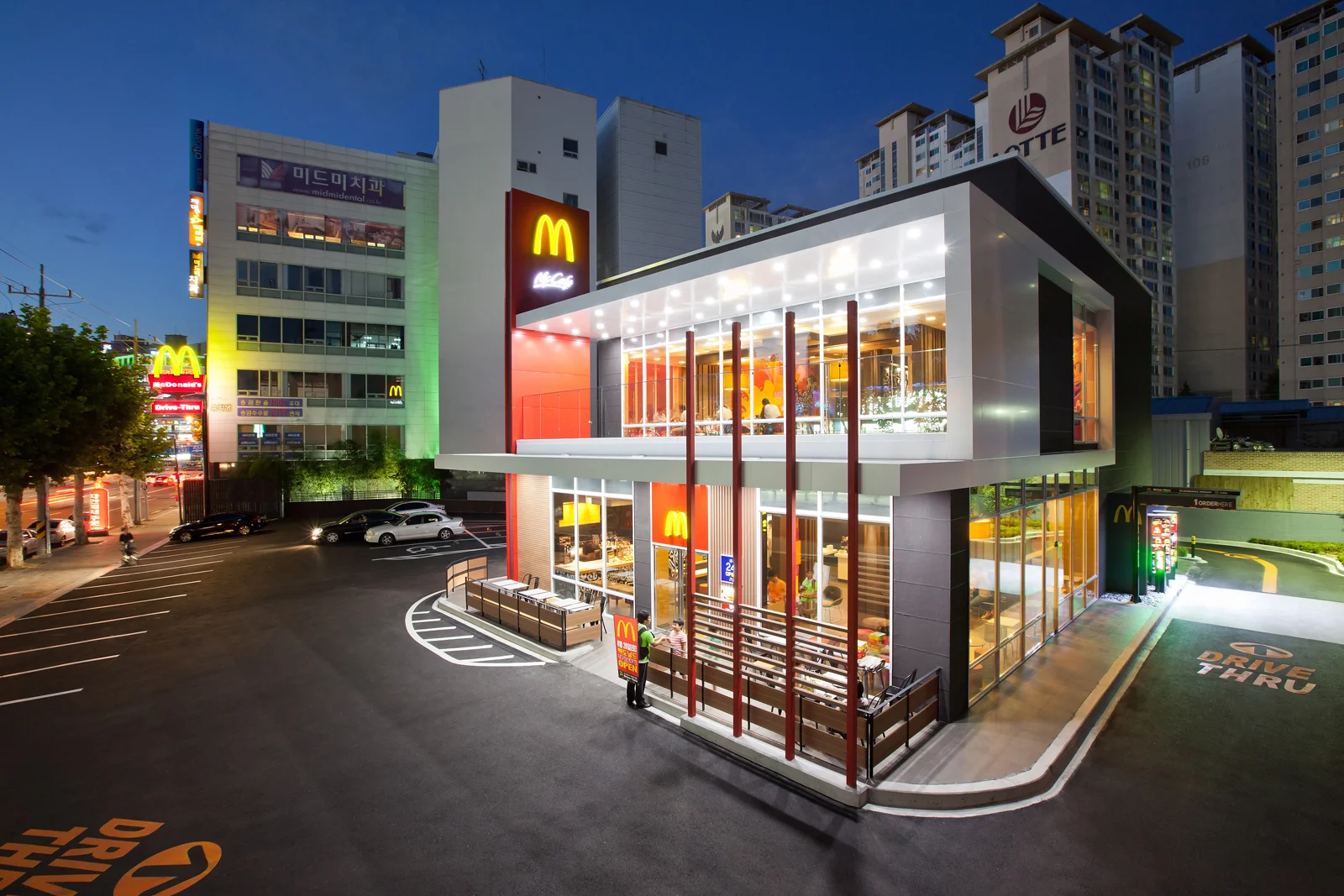
    Jaafar unveiled these future plans during a press conference held to mark the reopening of McDonald’s Titiwangsa Drive-Thru, located at Jalan Pahang. This location holds historical significance as the first McDonald’s drive-thru restaurant in Malaysia.

    Strategic Expansion

    Further outlining the operational strategy, Jaafar stated that the company aims to fortify its presence in Sabah and Sarawak, as well as across Peninsular Malaysia. Special emphasis will be placed on areas with high demand and those driven by the tourism industry.

    McDonald’s, as a quick-service restaurant operator, currently operates a network of over 370 restaurants nationwide. This includes 25 franchise outlets run by 11 franchisees.

    Goals for Growth

    Looking ahead, McDonald’s Malaysia aims to increase its number of franchise locations to between 70 and 100 in the next five to ten years. This expansion is forecasted to yield over 10,000 new employment opportunities, adhering to the company’s commitment of 100% local hiring.

    Jaafar also shed light on the franchise model, stating that franchising demands a significant investment in the range of RM5 million to RM7 million per restaurant. However, he also highlighted a promising return on investment as the payback period usually spans between three to five years.

    Questions & Answers

    What is McDonald’s Malaysia’s investment plan?
    Their plan involves an investment of RM1 billion (US$255 million) in opening new stores, refurbishing existing ones, and upgrading technology.

    Where does McDonald’s Malaysia plan to expand?
    The company intends to strengthen its presence in high-demand areas and tourism-driven locations across Sabah, Sarawak, and Peninsular Malaysia.

    What is the company’s franchising model?
    McDonald’s Malaysia’s franchising model requires a significant investment of about RM5 million to RM7 million per restaurant, with a typical payback period of three to five years.

  • McDonald’s Vietnam Amplifies Expansion Strategy: Aiming for 100 Stores in Three Years

    McDonald’s Vietnam Amplifies Expansion Strategy: Aiming for 100 Stores in Three Years

    McDonald’s Vietnam is reigniting its goal of expanding its presence in the country to 100 outlets within three years. This ambitious plan comes after the fast-food giant fell well short of its target, with only 35 locations in 2024 and 39 this current year.

    Revamping the Expansion Strategy

    The Director of Development at McDonald’s Vietnam, Dan Ta, revealed a number of strategies the company is considering to revamp its image, pricing, and expansion strategy. Emphasizing a shift towards a wider consumer base, he said, “Our brand is currently perceived as a premium establishment, but we want to be able to serve a wider range of customers.”

    Targeting Key Cities for Expansion

    McDonald’s is setting its sights on several key cities for growth, including Phu Quoc, Da Nang, Hue, Nha Trang, Da Lat, and Vung Tau, building on its existing presence in Hanoi and Ho Chi Minh. Phu Quoc, in particular, has emerged as a significant focus for expansion, given its new airline launch and the upcoming hosting of the Apec Summit next year.

    Challenges Ahead

    However, the road to McDonald’s expansion in Vietnam may be fraught with challenges. The popularity of local staples such as bánh mì, cheaper and deeply rooted in the eating habits of Vietnamese consumers, poses a significant challenge.

    Moreover, the competitive landscape of the Vietnamese fast-food market also presents a hurdle. According to recent data, some of the top fast-food chains in the country, include Lotteria, with 222 outlets, Jollibee, with 213 outlets, and KFC, with 172 outlets.

    Ralf Matthaes, CEO of IFM Research, located in Ho Chi Minh City, pointed out that McDonald’s Vietnam has not localized its offerings as deeply as some competitors. He stated, “Vietnamese people aren’t typically burger eaters. Essentially, a Big Mac is still a Big Mac – you can’t change that.”

    Questions & Answers

    What is McDonald’s Vietnam’s expansion goal?
    McDonald’s Vietnam aims to expand its presence in the country to 100 outlets within three years.

    What challenges does McDonald’s face in its expansion in Vietnam?
    McDonald’s faces challenges in its expansion in Vietnam due to the popularity of local staples such as bánh mì and a highly competitive fast-food market.

    What cities are targeted in McDonald’s Vietnam expansion plan?
    McDonald’s Vietnam is targeting expansion in several key cities, including Phu Quoc, Da Nang, Hue, Nha Trang, Da Lat, and Vung Tau, in addition to its existing presence in Hanoi and Ho Chi Minh.

  • Lululemon CEO McDonald Bows Out, Shares Soar Amid Hunt for New Leader

    Lululemon CEO McDonald Bows Out, Shares Soar Amid Hunt for New Leader

    Calvin McDonald, the current CEO of Lululemon Athletica, is scheduled to resign from his position on January 31. He plans to continue serving as a senior advisor until March 31. The company, known for its athletic leisure-wear, has launched a comprehensive search to identify a suitable successor for the CEO role.

    Company Performance Under McDonald

    Since McDonald’s appointment in 2018, the Canadian-based company has experienced significant global growth. However, the latest quarterly sales figures indicated a year-on-year decline in the Americas.

    In the third quarter earnings report for the fiscal year 2025, Lululemon’s diluted earnings per share (EPS) fell by 10 per cent and store revenues remained steady. Despite this, total revenues grew by 7 per cent due to a 33 per cent surge in international markets.

    Neil Saunders, the Managing Director of analytics firm GlobalData, described these figures as “soft.” He outlined three issues Lululemon is facing in the North American market: a softer market for athletic leisure-wear with little organic growth available, increasingly fierce and high-quality competition, and faltering execution against this challenging backdrop.

    McDonald’s Departure Statement

    Despite the criticisms, McDonald expressed pride as he announced his departure. McDonald acknowledged that his tenure as Lululemon’s CEO has been the pinnacle of his career. He conveyed immense pride in the team’s achievements over the past seven years, highlighting the transformation of the athletic apparel industry and the substantial opportunities that lie ahead for Lululemon.

    He expressed confidence in the product pipeline and action plan developed during his term, assuring that they would yield positive results and provide value to shareholders. McDonald committed to supporting the transition and guiding the leadership team in his advisory role.

    Under McDonald’s leadership, Lululemon expanded into over 30 countries and boosted its mainland China business into becoming the company’s second-largest market. The board also recognized his efforts in broadening Lululemon’s product portfolio.

    Following the announcement of McDonald’s departure, Lululemon’s stock (LULU) rose by 20 points after hours.

    Leadership Transition

    In the interim period, Chair Marti Morfitt will assume the expanded role of executive chair effective immediately.

    Morfitt expressed gratitude for McDonald’s contributions and appreciated his support for ensuring a smooth transition over the coming months. As the board anticipates the company’s future, it is committed to finding a leader with a proven track record of guiding companies through growth and transformation.

    Questions & Answers

    Who is Calvin McDonald?
    Calvin McDonald is the outgoing CEO of Lululemon Athletica who has led the company since 2018.

    What has been the impact of McDonald’s leadership on Lululemon?
    Under McDonald’s leadership, Lululemon expanded into over 30 countries, and its mainland China business became the company’s second-largest market. He also broadened Lululemon’s product portfolio.

    Who will be taking over after McDonald’s departure?
    Marti Morfitt, the current Chair, will assume the expanded role of executive chair immediately. The company is conducting a comprehensive search for a new CEO.

  • Mcdonald’s To Boost Ai Investment By 2027, Eyes India As Data Governance Hub

    Mcdonald’s To Boost Ai Investment By 2027, Eyes India As Data Governance Hub

    McDonald’s, the renowned fast-food chain, has announced its intention to significantly increase its investment in artificial intelligence (AI) by 2027, foreseeing India as a principal center for data governance, engineering, and platform architecture. The news was delivered by Deshant Kaila, McDonald’s Head of Global Business Services Operations, last Friday.

    India as a Key Player

    McDonald’s, which made its foray into India in 1996, has a wide network of restaurants across the nation. The company recently opened a global office in the southern city of Hyderabad, which they plan to expand into their largest international office outside of the United States.

    While the company is still in the early phases of this AI-focused initiative, the exact amount of intended investment remains undisclosed. However, Kaila has given some insights into how McDonald’s is utilizing AI technologies to enhance its operations and services.

    Artificial Intelligence in Operations

    At present, McDonald’s is leveraging AI to corroborate orders at 400 of its restaurants, mitigating errors before orders reach customers. The company has set ambitious plans to extend this AI-driven order verification system to 40,000 of its locations worldwide by 2027, as revealed by Durga Prakash, Head of Technology (Global Offices).

    Moreover, AI tools are being employed by McDonald’s to project sales, determine pricing, and evaluate product performance. The fast-food chain is also developing a personalized app that customers can use globally. As per Kaila, the strategic push in India will be primarily focused on building its AI team, with more investment directed towards technology and tools rather than personnel.

    Expansion of Global Offices

    McDonald’s is also considering establishing another global office in Poland, similar to the ones in India and Mexico. Earlier this year, it was reported that the company would inaugurate a global capability center in Hyderabad, India, which is expected to employ about 2000 individuals.

    India’s global capability centers, formerly cost-effective outsourcing hubs for global businesses, have evolved and now provide support to their parent organizations across diverse areas, including operations, finance, research, and development.

    Questions & Answers

    What is McDonald’s strategy for AI investment by 2027?

    McDonald’s plans to significantly increase its investment in artificial intelligence (AI) by 2027. The company aims to utilize AI to improve operations, predict sales, set pricing, and evaluate product performance.

    How does McDonald’s plan to utilize AI in its operations?

    The fast-food chain is currently using AI to verify orders at certain locations to prevent errors before handing them over to customers. It is also using AI tools for sales forecasting, pricing decisions, and product performance assessments.

    Why is India a focus in McDonald’s AI strategy?

    India is a key focus in McDonald’s AI strategy due to its potential as a hub for data governance, engineering, and platform architecture. In addition, the company has recently opened a global office in Hyderabad, India, with plans to make it the largest outside the U.S.

  • McDonald’s to sell Hong Kong retail spaces valued at US$153 million

    McDonald’s to sell Hong Kong retail spaces valued at US$153 million

    Fast-food giant McDonald’s has announced plans to sell eight top-tier retail properties in Hong Kong, collectively estimated to be worth HK$1.2 billion (US$152.89 million). Jones Lang LaSalle (JLL), appointed as the exclusive agent for the sale, reported the news earlier this week.

    The properties will be sold via public tender, with the process scheduled to conclude on September 16. Buyers will have the flexibility to purchase the properties either separately or as a comprehensive portfolio. All the properties come with enduring leases with McDonald’s, which adds to their appeal.

    Previously, there had been reports that McDonald’s was considering selling all of its 23 stores in Hong Kong, the total market value of which is roughly HK$3 billion (US$382 million). The current sale of eight stores represents the first phase of this broader asset disposal strategy.

    This move is part of McDonald’s larger efforts to refine its asset base in the region. In 2017, McDonald’s sold its 20-year master franchise rights for China and Hong Kong to a consortium led by Citic Group and private equity firm Carlyle, while maintaining ownership of its real estate portfolio.

    Questions & Answers

    What is the estimated market value of the eight Hong Kong properties that McDonald’s plans to sell?
    The total market value of the eight properties is estimated to be around HK$1.2 billion (US$152.89 million).

    How will the sale of these properties be conducted?
    The sale will occur via public tender and is scheduled to conclude on September 16.

    What is McDonald’s broader strategy for its assets in the region?
    This sale is part of McDonald’s larger efforts to optimize its regional asset base. The company previously sold its 20-year master franchise rights for China and Hong Kong to a consortium, while retaining ownership of its real estate portfolio.

  • CITIC Offloads McDonald’s Stake

    CITIC Offloads McDonald’s Stake

    CITIC has plans to sell a 22 percent stake in McDonald’s Chinese mainland and Hong Kong business to its parent group’s private equity arm.

    The main listed arm of the Chinese state-owned CITIC Group, CITIC Ltd., will aim to raise at least 2.17 billion yuan, according to a report citing a Beijing bourse filing.

    The report also underlined CITIC Capital, the group’s alternative investment arm, as the likely buyer of the stake, adding to its $26 billion in assets already under management. Finalization of the deal is earmarked for early February, one of the sources added.

    McDonald’s said that strategy and daily operations at its mainland and Hong Kong business would be unaffected by the deal. CITIC also provided assurances, noting that the deal was a purely «commercial decision» and that it would continue cooperation with McDonald’s business in China.

    CITIC will be selling the 22 percent stake through Fast Food Holdings Ltd., a holding firm set up with CITIC Capital to hold the combined 52 percent stake of McDonald’s mainland and Hong Kong business. Following the deal, CITIC Ltd. will still hold 10 percent of the regional McDonald’s business.

  • McDonald’s renews 20-year franchise deal in the Philippines

    McDonald’s renews 20-year franchise deal in the Philippines

    McDonald’s has renewed its 20-year master franchise agreement in the Philippines, extending its partnership with Golden Arches Development Corporation (GADC) until 2045.

    Under the new agreement, the company retains exclusive rights to own, develop, operate and sub-franchise McDonald’s restaurants nationwide.

    GADC, led by founder and chairman George Yang, has operated the fast food giant’s Philippine business since opening the first McDonald’s store in 1981.

    The chain operates 792 stores in the Philippines, with the majority in the National Capital Region.

    Reflecting on the franchise’s early days, Yang recalled applying for the rights in the late 1970s.

    “I confidently said 10 stores,” he continued. “This year, we’ll be opening our 800th store.”

    McDonald’s Philippines has introduced several firsts to the local quick-service restaurant sector. It was the first in the country to launch an online delivery platform in 2009, followed by the McDelivery app in 2014.

    The brand was also an early adopter of third-party delivery aggregators such as Grab and Foodpanda, where it is now one of the largest merchants.

    Last year, McDelivery accounted for 19 per cent of the company’s total sales.

    Kenneth Yang, GADC president and CEO, said digital transformation has played a key role in McDonald’s growth in the market.

    “These platforms have helped scale the business and improved how we operate,” he said.

    “We are not stopping here. Our teams constantly work on new opportunities driven by evolving customer preferences and behaviours.”

    GADC is 51 percent owned by the Yang family, with the remaining 49 percent held by Alliance Global Group Inc, chaired by tycoon Andrew Tan.

  • Singapore McDonald’s faces backlash over new extra sauce charge starting 2025

    Singapore McDonald’s faces backlash over new extra sauce charge starting 2025

    Singapore McDonald’s has faced online criticism after announcing a new charge for extra sauce tubs, set to take effect on Jan. 2, 2025.

    Customers will be charged up to 70 S$cents (US$0.52) for additional sauces beyond the standard portion for certain menu items.

    “What a horrid start to 2025,” said a commenter. “Outrageous,” said another.

    McDonald’s explained on its website that the “nominal charge” is meant to manage food waste and rising food costs

    While ketchup and garlic chilli sauce will remain free, additional charges will apply to other sauces. For example, sauces for Chicken McNuggets (barbecue, curry, honey mustard), hotcakes syrup, and whipped butter pads will cost 50 S$ cents per tub. Japanese roasted sesame dressing will be priced at 70 S$ cents per packet.

    This change follows a similar policy from 2012, when McDonald’s began charging 30 S$cents for extra sauce with nugget meals.

  • McDonald’s to shut down 10-year-old HCMC store

    McDonald’s to shut down 10-year-old HCMC store

    American fast food chain McDonald’s is set to close one of its oldest stores in Ho Chi Minh City.

    The Ben Thanh location in District 1, which opened in 2014, would stop operations at 2 a.m. Thursday, the chain said in a Facebook post without revealing the reason for it.

    It was the chain’s second restaurant in the city.

    After its closure, McDonald’s will have 35 stores in Vietnam, including 17 in HCMC.

    Another major American F&B chain, Starbucks, shut down a store at a prime location in District 1 last month after seven years.

    Rents for high-end retail property in HCMC surged to a record US$280 per square meter on average in the first half of the year due to limited supply.

    It represented increases of 18% increase year-on-year and 60-70% from five years ago, according to property consultancy CBRE Vietnam.

  • McDonald’s Japan names Thomas Ko as next president

    McDonald’s Japan names Thomas Ko as next president

    McDonald’s Japan has selected Thomas Ko as its next president, following the departure of former chairperson Sarah Casanova.

    Ko has previously held leadership positions in the company. He joined McDonald’s in 2010 as director of consumer strategy for the Asia-Pacific, Middle East, and Africa regions. He then worked in senior positions at McDonald’s in South Korea and Portugal.

    The new president will succeed Tamotsu Hiiro, who will become chairman of McDonald’s Japan.

    Last month, former president Sarah Casanova resigned as chairperson of both the holding firm and the operating subsidiary, as she wanted to spend more time with her family.

  • McDonald’s Malaysia files $1M lawsuit against Israel boycott movement

    McDonald’s Malaysia files $1M lawsuit against Israel boycott movement

    McDonald’s Malaysia has filed a lawsuit seeking US$1.31 million in damages from a movement promoting boycotts against Israel for “false and defamatory statements.”

    Gerbang Alaf Restaurants Sdn Bhd (GAR), which is the licensee of McDonald’s in Malaysia, is suing the Boycott, Divestment and Sanctions (BDS) Malaysia movement, claiming that BDS had made a series of social media posts linking the fast-food franchise with Israel’s military offensive in Gaza?

    It said the BDS campaign has encouraged a public boycott of McDonald’s Malaysia, resulting in financial losses, employment reductions and other adverse effects due to the shutdown and reduced operational hours of its establishments.

    In response, BDS Malaysia said it “categorically denies” defaming the fast-food company and would leave the matter to the court.

    “Boycotting companies like these is a personal choice and it is up to that individual consumer,quoted social media user Sheryl Ho as saying.

    “That being said, anyone in their right frame of mind who wasn’t boycotting [McDonald’s] before this, sure would be doing it now.

    “They terminated their staff to save cost and they are making other people pay for it?” X user Syafiq Fadli asked.

  • McDonald’s to buy Carlyle’s stake in China business

    McDonald’s to buy Carlyle’s stake in China business

    Fast food chain McDonald’s Corporation has agreed to acquire Carlyle’s 28 percent stake in the consortium that operates the McDonald’s business in Mainland China, Hong Kong and Macau.

    Through its equity affiliate Citic Capital, the Citic Consortium will maintain a 52 percent controlling stake while McDonald’s will increase its ownership in the business to 48 percent.

    “Our strategic partnership with CITIC and Carlyle has been extremely successful in growing McDonald’s presence in the region since it began. China is now our second largest market; we’ve doubled our restaurants to more than 5500 since 2017,” said Chris Kempczinski, McDonald’s president and CEO.

    “We believe there is no better time to simplify our structure, given the tremendous opportunity to capture increased demand and further benefit from our fastest-growing market’s long-term potential.”

    The acquisition comes amid the consortium’s target to reach more than 10,000 McDonald’s stores in the region by FY28 and nearly six years after the burger chain agreed to sell 80 percent of its China and Hong Kong businesses to Citic and Carlyle for up to $2.1 billion.

    “As McDonald’s China’s controlling shareholder, we are thrilled by McDonald’s Corporation’s continued commitment to our long-term partnership and the China market,” said Yichen Zhang, Citic Capital CEO and McDonald’s China chairman.

    The deal is expected to close in the first quarter of next year.

  • McDonald’s Korea launches voice-guided kiosks

    McDonald’s Korea launches voice-guided kiosks

    McDonald’s Korea has introduced voice-guided self-service kiosks at some of its Seoul locations, making it the first fast-food chain in South Korea to do so. They did this to make it easier for visually impaired customers to order.

    These special kiosks, equipped with voice guidance software and touch pads, were first installed at 15 McDonald’s stores near centres that assist visually impaired individuals and schools for the blind. People with vision problems can plug in their own earphones to hear instructions and menus, even in noisy environments.

    This move by McDonald’s in South Korea is the second of its kind, with the first being in the US. It’s also a groundbreaking step for fast-food restaurants in South Korea. McDonald’s Korea plans to extend this service to all of its stores in the country.

    A company representative emphasised their commitment to meeting the needs of visually impaired customers, noting that they had been working on this service for a long time.

  • McDonald’s Korea launches voice-guided kiosks, a first in Asia

    McDonald’s Korea launches voice-guided kiosks, a first in Asia

    McDonald’s Korea has introduced voice-guided self-service kiosks at some of its Seoul locations, making it the first fast-food chain in South Korea to do so. They did this to make it easier for visually impaired customers to order.

    These special kiosks, equipped with voice guidance software and touch pads, were first installed at 15 McDonald’s stores near centers that assist visually impaired individuals and schools for the blind. People with vision problems can plug in their own earphones to hear instructions and menus, even in noisy environments.

    This move by McDonald’s in South Korea is the second of its kind, with the first being in the United States. It’s also a groundbreaking step for fast-food restaurants in South Korea. McDonald’s Korea plans to extend this service to all of its stores in the country.

    A company representative emphasized their commitment to meeting the needs of visually impaired customers, noting that they had been working on this service for a long time.

  • McDonald’s Korea fined for breach of customers’ personal data

    McDonald’s Korea fined for breach of customers’ personal data

    McDonald’s Korea was given a fine of 696 million won ($532,110) on Wednesday after the personal data of 4.87 million customers was leaked to hackers due to the firm’s lax data management.

    The Personal Information Protection Commission handed out the fine to the Korean branch of the American fast food chain, along with a financial penalty of about 10 million won for the data breach.

    According to the commission’s findings, McDonald’s Korea did not perform sufficient access control, leaving a backup file containing the personal data of its restaurant and McDelivery customers accessible via protocols for file sharing.

    As a result, the personal data of more than 4.87 million customers was hacked and leaked. McDonald’s Korea was also found to have not destroyed the personal data of 766,846 customers for whom the data retention period had expired, and belatedly notified authorities and customers of the data leakage.