Although incomes have fallen because of the pandemic, a survey has found living standard improvements with Vietnamese people consuming less rice but more beer and meat.
The GSO estimates per capita monthly income fell 2 percent from the previous year to VND4.2 million ($182), because of the Covid-19 pandemic, according to the 2020 living standards survey conducted among 47,000 households nationwide by the General Statistic Office (GSO).
The survey found that per capita monthly rice consumption declined from 9.7 kilograms in 2010 to 7.6 kilograms last year.
On the other hand, per capita meat consumption rose from 1.8 kilograms per month in 2010 to 2.3 kilograms last year. Per capita beer and alcohol consumption reached 1.3 liters per month last year from 0.9 liters in 2018.
The GSO reported that there were significant wealth discrepancies between urban and rural areas. The per capita monthly income in urban areas last year was VND5.5 million, 1.6 times higher than that in rural areas.
A HCMC-based economist said that farmers should reduce rice farming and shift to produce with higher returns in order to increase per capita income in rural areas.
Experts say the government will find it difficult to rein in inflation this year as surging food and materials prices hurt citizens and businesses.
Loan and her husband in HCMC’s District 5 spent around VND120,000- 200,000 ($5.22-8.70) per day last month on feeding their family of three, almost double that of the same time last year. They say the prices of vegetables and meat have been increasing since the beginning of the year.
Hoa, another HCMC resident, has seen her spending on family meals increased by 65 percent to VND5 million per month. She says the prices of cooking gas and many ingredients she needs have been rising.
“The prices of some products have doubled since the beginning of the year. I’m spending out of my savings.”
Ngoc Chau, head accountant for a construction company in Tan Binh District, has seen prices of a bowl of noodle soup rising nearly 20 percent to VND65,000 the past few months.
“I have been reluctant to eat out these days.”
In the first four months of this year, the prices of materials and ingredients have risen by 4.64 percent year-on-year, with the surge strongest in the agriculture, forestry and fisheries sector, up 6.77 percent, according to the General Statistics Office.
The GSO has cautioned that although inflation was 0.29 percent in the first quarter, the lowest in 20 years, keeping it under the targeted 4 percent this year won’t be easy as many economies including the U.S. have introduced economic stimuli to boost recovery.
The Ministry of Agriculture and Rural Development said that animal feed prices have surged 30 percent since the beginning of the year and is set to rise further in the second quarter.
Fuel prices, meanwhile, have increased by 19 percent since the beginning of the year.
Do Van Khuoi, director of supplies at Saigon Food, said that prices have been rising due to the limited supply of goods domestically and shortage of materials globally.
There are signs that some suppliers are increasing their reserves to indulge in speculative pricing, he added.
“Disrupted supply chains due to difficulties in transporting goods amid the pandemic have also pushed up prices.”
Khuoi said that in recent months, the prices of spices have risen by 5-10 percent, rice and seafood by 5-20 percent and material for plastic production by 15-70 percent.
A spokesperson for food processor Vissan also said that many food companies were facing “headaches” because of rising material prices. Some suppliers have requested a 15 percent increase starting this month.
Most businesses say they are trying to look for alternative sources of materials and ingredients to lower prices.
Authorities have also been working to stabilize prices.
Pham The Anh, head economist of the Vietnam Institute for Economic and Policy Research (VEPR), said that Vietnam and many other economies face high risks of rising inflation this year as prices of some products like steel and fuel have been surging at around 20-30 percent.
Economist Nguyen Duc Thanh said that authorities are facing difficulties in controlling inflation, as keeping prices low will hurt businesses that are already hit by the Covid-19 pandemic, while allowing prices to rise will hurt low-income people.
The domestic department market under the Ministry of Industry and Trade said it has been working with businesses to ensure adequate supply to keep prices from surging suddenly.
It has also been working with customs and agriculture authorities to ensure the stable delivery of goods, especially between localities with a high number of Covid-19 cases.
Deputy Prime Minister Le Minh Khai has also ordered relevant government bodies to take keep fuel prices stable.
Indian online fresh fish and meat retailer FreshToHome has raised US$11 million in funds led by Hong Kong-based CE Ventures.
FreshToHome, which currently operates in Bengaluru, Delhi/NCR, Kerala, Chennai and Dubai, now intends to grow its business throughout all tier-I Indian cities. It will use the fresh capital to develop its supply chain by extending its proprietary sourcing technologies to farmers and fishermen nationwide.
“We are disrupting the food-supply chain in India with our patent pending commodities exchange technology offering food that is free of added chemicals to end consumers and a fair price to the producers,” said FreshToHome founder and CEO Shan Kadavil. “Most of our capital has gone into re-inventing the food supply chain.
We currently sell meat and fish sourced from more than 1500 fishermen and farmers on our platform, using our state-of-the-art technology backed with cold chain infrastructure, a fleet of dedicated refrigerated trucks, using the hub and spoke distribution model from four large processing factories to ensure traceability and food safety.”
The business claims more than 400,000 customers within four cities, trading in fish sourced from 125 Indian coastlines. It reports a turnover of more than ₹12 crore ($1.72 million) GMV per month.
“The meat-and-seafood segment in India is pegged to be a $30 billion market, but we have to keep in mind that it’s a highly fragmented industry,” said CE Ventures director Tushar Singhvi.
“FreshToHome.com is not only trying to streamline the industry, but they’re also using technology to revolutionize the way the industry functions by disintermediating the supply chain, eliminating the middleman, and working directly with the fishermen and farmers in a marketplace model to make fresh and chemical free food accessible to the masses at large.”
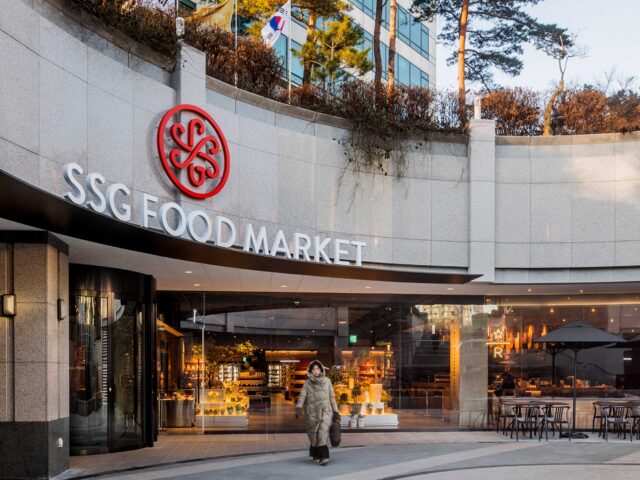
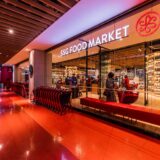
Nestled in the upmarket suburb of Dogok, Seoul, sits the newly opened reinvention of Emart’s “Star Super”: “the SSG Food Market”, designed by Landini Associates. Emart is the leading business of the Shinsegae group, the largest retailer in South Korea, operating multiple brands including department stores, discount to premium supermarkets, and the mighty Emart hypermarkets.
The brief was to create a world class premium supermarket and food hall fusion, and Landini Associates were entrusted to redesign every detail of the new store experience. This included: the built environment, naming and identity, furniture and fixtures, signage and communications, ticketing, menus, POS, advertising style guides, packaging and uniforms. In fact every customer touchpoint.
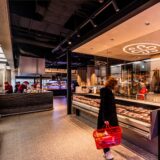
The result is a modern market, a convenient and accessible food lover’s heaven, where locals can do a daily or weekly shop, or dine in with friends at one of the many in-store restaurants and cafes. Attracting a newer younger audience, whilst rewarding its existing, the SSG Food Market is a community epicentre to meet, eat and shop in, throughout the day.
The offer
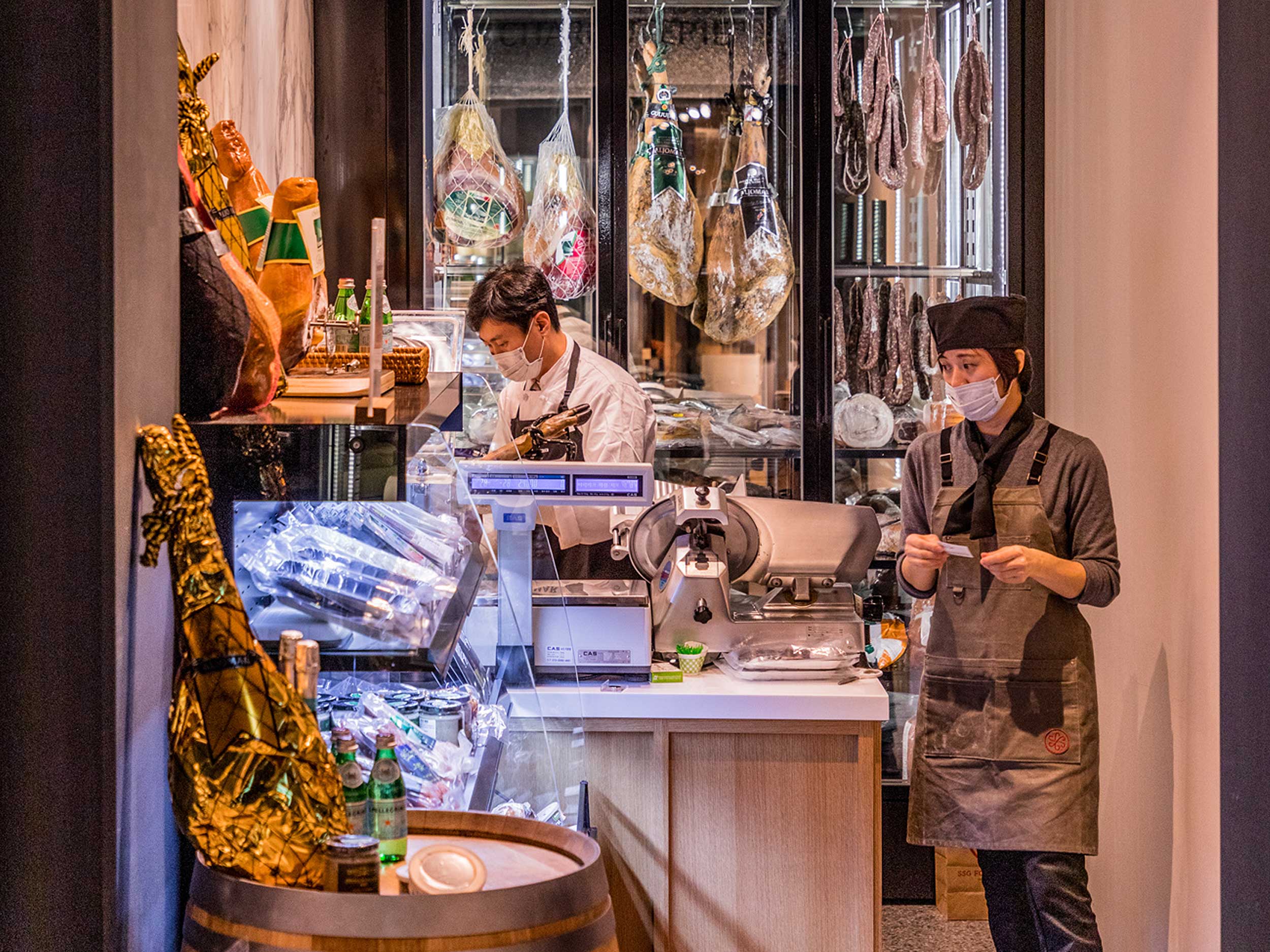
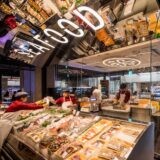
The reinvention enriched and upscaled the existing food and beverage offer to include an extensive fresh department, vegie butcher serving house-made salads and juices, take home meals, Korean deli, bakery (run by hip San Francisco brand Tartine), fishmonger, butcher, Korean traditional street food, café, 200 seater restaurant, sushi restaurant, specialist cheesemaker, western charcuterie, wine and beer department, coffee roastery, dry goods, florist and homewares.
The result is a curated selection of quality products, and a onestop-shop supermarket and refined specialist items. In addition the market is a wonderful meeting place to dine with friends and family, further enriching the retail and community experience.
SSG Food Market Landini Associates Trevor Mein Fruit and Vegetables 45
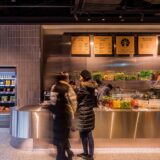
The offer is made up of both SSG run departments, franchises (such as Starbucks, a premium brand in Korea), and third-party retailers. Ensuring that these were all presented as a tangible whole required the design team to be sensitive to multiple design briefs, whilst ensuring that the customer had a seamless experience.
Additionally, the site has a low ceiling which created some challenges for the reticulation of services, and multiple entrances, including a pre-trading public access to a subway station through the heart of the store; a gift to residents from Shinsegae.
Landini’s solution creates a space of intrigue, transparency and exploration by celebrating the food, the people who make it, and its preparation.
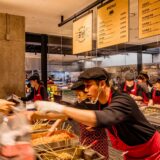
Specialist departments are visible across the restaurant’s open kitchen and include: Korean Traditional Street Food, Korean/ Chinese Noodles and a grill. All the production is exposed, and chefs work in glazed pavilions serviced by counters showcasing this theatre whilst you order. There are also take home meals in the Korean deli prepared daily in its kitchen, or fresh fish and meat cooked to order at the Grill, to take home, or eat in.
As always, and especially because the market is in a basement, the lighting plays a key role in Landini’s design. Chiaroscuro, the contrast between light and shade, creates areas of interest and calm, gently guiding customers on a journey of discovery throughout the store. Perimeter departments use pavement lights to create space, and give sense of the world above.
In the main market hall the interior is paired back, functional yet classic. This “bare bones beauty” of exposed steel beams and concrete bulkheads contrasts with fine marbles, glass and blackened steel, and is balanced by timber fixtures and details. This subtle, considered and classic material palette allows the food to be the hero, and merchandising plays a major role. Long-life departments such as wine and dry-goods have a warmer, more earthy and textural palette, utilising brick and added timber. In the carpark, red floors and walls add vibrancy to the market experience before customers even get out of their car.
The basement site is located below two high-end residential apartment buildings. Visitors can enter from the sunken courtyard on street level, or via the red carpark inside. SSG has created a residents pre opening pedestrian route through the store, a shortcut to the train station to save locals from the blistering cold in winter. Landini designed a set of messaging icons for this route, also.
The graphics
Landini Associates established a tone of voice for the brand to reflect their new food experience. This influenced all store communications including: naming and identity, signage and communications, ticketing, menus, advertising style guides, packaging and uniforms.
The entire site required an ownable, easy to understand signage and graphic messaging system to reflect the brand’s new established tone of voice. The Landini design team evolved the existing SSG logo mark, developing an adaptation on communications applications to collateral and signage.
The design is simple, contemporary yet classic; impacting not overwhelming. The palette is one of debossed concrete, timber, black and whites, and complimentary hits of the brand’s colour, red.
Impossible Foods launches its plant-based meat at three Hong Kong restaurants today: Beef & Liberty, Happy Paradise and Little Bao. They’re the first eateries outside the US to feature the artificial meet on their menus.
Introduced in 2011 by Stanford biochemistry professor and former pediatrician Dr Patrick Brown, Impossible Foods makes meat, fish and dairy products directly from plants. It uses science and technology to create wholesome food with the aim of restoring natural ecosystems while sustainably feeding a growing global population.
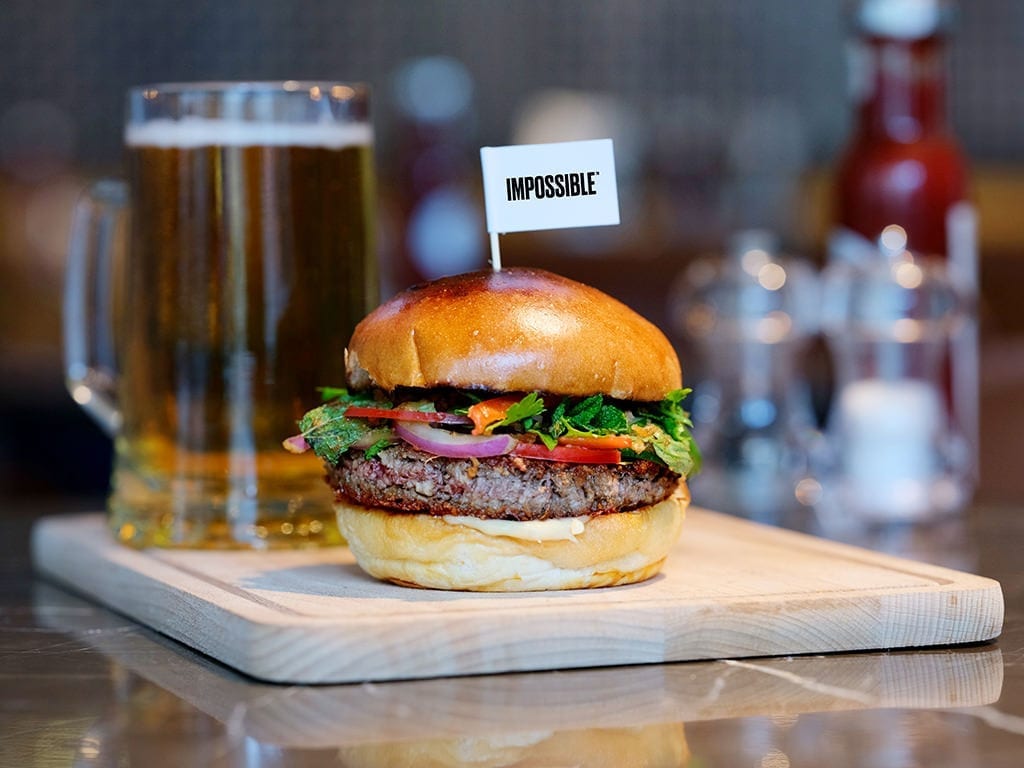
Hong Kong is the first place outside the US to have the Impossible Burger, which cooks, smells and tastes like ground beef but is made entirely from plants. It is served in more than 1400 outlets in the US from award-winning restaurants to diners to the nation’s original fast-food chain White Castle. In Hong Kong, diners can try the product as a traditional burger or as the central filling of savoury streetfood.
“We’re confident that Hong Kong – Asia’s crossroads of ideas and influences both modern and traditional – will be home to the most innovative Impossible recipes yet,” says Impossible Foods CEO/founder Brown.
Twist on tradition
Named Asia’s top female chef last year, chef May Chow heads Happy Paradise and Little Bao, which both present a 21st-century approach to traditional Cantonese dining. A Toronto native who trained and worked in Bangkok, Los Angeles and Boston, Chow gained fame in Hong Kong’s streetfood markets.
From today at Little Bao, Chow and her team are serving the Impossible Bao, a traditional sandwich made with Impossible meat, black-pepper teriyaki sauce, salted-lemon kombu salad, and fermented tofu sauce, between two house-made steamed buns. The Impossible XinJiang Hot Pocket, another Chinese street snack debuts at Happy Paradise, served with pickled daikon and XinJiang spices.
Another award-winning chef in Hong Kong, Uwe Opocensky, who worked in Spain’s El Bulli when it was voted best restaurant in the world, spent a decade as executive chef at Hong Kong’s Mandarin Oriental before joining Beef & Liberty as group executive chef in 2016. Beef & Liberty is serving the Impossible Thai Burger with chili, coriander, mint, basil, spring onion, soya mayonnaise, crispy shallots and garlic. The restaurant group is also featuring Impossible Chili Cheese Fries.
“We are obsessed, in a good way, with burgers and doing what we can for the environment,” says Opocensky. “We love the way the Impossible Burger has created new excitement in the global burger scene and opportunities to be more sustainable.”
Impossible products have been made available in Hong Kong on a limited and exclusive basis through importer/distributor Classic Fine Foods.
Ingredients of the Impossible Burger include water, wheat protein, potato protein and coconut oil, with special ingredient heme contributing the characteristic taste of meat. Heme is a molecule that is especially abundant in animal tissue. The burger is produced without abattoirs, hormones, antibiotics, cholesterol or artificial flavours. Its production uses about 75 per cent less water, generates about 87 per cent fewer greenhouse gases, and needs about 95 per cent less land than conventional ground beef.
Investors in Impossible Foods include Bill Gates, Google Ventures, Temasek, UBS and Open Philanthropy Project.
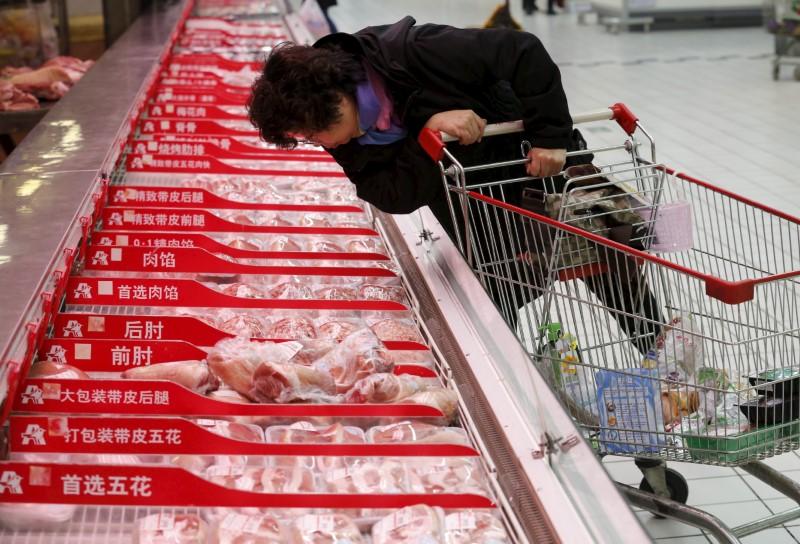
Some of China’s largest food suppliers have pulled Brazilian beef and poultry from their shelves in the first concrete sign that a deepening scandal over Brazil’s meat processing industry is hitting business in its top export market.
The moves by Sun Art Retail Group, China’s biggest hypermarket chain, and the Chinese arms of global retail giants Wal-Mart Stores and Metro AG come days after China temporarily suspended Brazilian meat imports. Safety fears over Brazilian meat have grown since police accused inspectors in the world’s biggest exporter of beef and poultry of taking bribes to allow sales of rotten and salmonella-tainted meats.
A spokeswoman for Sun Art Retail, which operates 400 Chinese hypermarkets, said on Wednesday the chain had removed beef supplied by top Brazilian exporters BRF SA and JBS SA from its shelves from Monday. Brazilian beef accounts for less than 10% of Sun Art’s beef supply, she said. Wal-Mart has also removed Brazilian meat products from its stores, a person familiar with the matter said. He declined to be quoted because of the sensitivity of the matter.
Germany’s Metro has withdrawn Brazilian chicken legs and wings from its Chinese stores, said a manager, who declined to be named as he was not allowed to speak to media. The retailer, with 84 stores in China, does not sell Brazilian beef. JD.com, one of China’s biggest online retailers, said in an emailed statement it had also removed all listings for imported Brazilian meat and is reviewing orders in process.
While Brazilian officials sought late on Tuesday to reassure consumers that the investigation had revealed only isolated incidents of sanitary problems, the reaction by Chinese retailers suggests that the probe could have far-reaching repercussions for the world’s top meat exporter. Chinese consumers appeared largely unconcerned or unaware of the scandal in Brazil, with few people commenting on the issue on the country’s vibrant social media networks.
But the country has been hit by its own safety scandals in the past, making retailers sensitive to any potential risks.
“We removed the product already on March 20,” said Sun Art’s spokeswoman, noting it was ahead of the Chinese government’s first official comment on the issue. Brazil is the top supplier of beef to China, accounting for about 31 percent of its imports in the first half of 2016. Much of it is used in canteens and foodservice and branded Brazilian beef is less prominent in supermarkets than Australian beef.
Importers are expected to wait a few more days before seeking out alternative supplies, which will likely be more costly than Brazil’s. “It’s a 45-day lead-time to get any product here. What if they lift the ban by the end of the week?” said an industry source who declined to be identified. Hong Kong, the second-biggest buyer of Brazilian meat in 2016, has also issued a ban on imports, following similar steps by Japan, Canada, Mexico and Switzerland.
Major Hong Kong supermarket chain PARKnSHOP said it had removed Brazilian pork, beef and chicken from shelves. “To cater for the needs of customers, we will increase the supply of meat and poultry products from other countries,” it said in a statement, without elaborating.
Vietnam is considering whether to ban imports of livestock and poultry products from Brazil as the Latin American country investigates the quality of its meat exports.
The animal health department said on Wednesday meat imports from Brazil have been low so far this year, but it has asked the agriculture ministry to halt imports if any low-quality products are found.
Following a two-year investigation, Brazil’s federal police last week accused more than 100 people, mostly health inspectors, of taking bribes and allowing the sale of rancid products, falsifying export documents and failing to inspect meat packing plants, as reported. Brazil is the world’s top producer of beef and poultry.
BRF and JBS, the world’s biggest meat producers, are among dozens of firms targeted in the police investigation into what would be the biggest scandal to hit Brazil’s agricultural sector. Both companies have denied any wrongdoing.
The trade office at the Vietnamese Embassy in Brazil has called on agencies in Vietnam to tighten inspections of livestock and poultry products from Brazil.
Hong Kong, Japan, Canada, Mexico and Switzerland all announced partial or all-out bans on Brazilian meat imports on Tuesday, following steps taken a day earlier by China, the European Union, South Korea and Chile, Reuters reported.
But South Korea said on Tuesday it will lift the ban on poultry imports from BRF, the world’s largest exporter of the meat.
Vietnam has imported around 3,000 tons of meat and meat products from Brazil so far this year, the animal health department said.
“The amount is very small compared to the 6 million tons that Brazil exports every year to countries around the world,” said an official from the department.
Brazil, recognized by the World Organization for Animal Health for doing a good job in controlling animal diseases, exports livestock and poultry products to 150 markets around the world.
Last year, it took the lead in beef and chicken exports with outbound sales of the two products hitting 1.8 million tons and 4 million tons, respectively. Its major buyers are the E.U., Russia, Japan, China and Singapore.
Two-way trade between Vietnam and Brazil stood at $2.29 billion in the first nine months of last year, down 15.7 percent against the same period in 2015, with Vietnam’s imports totaling $1.35 billion, Vietnam Customs data showed.