Tag: meta

  • Phishing attacks are deceiving Facebook, Messenger, Instagram, and WhatsApp users

    Phishing attacks are deceiving Facebook, Messenger, Instagram, and WhatsApp users

    In an attempt to stop ongoing phishing attacks, Meta, formerly known as Facebook, filed a federal lawsuit in California court. Meta says that the attackers were trying to steal the login credentials of Facebook, Messenger, Instagram, and WhatsApp users.

    The attackers created fake login pages that looked like Meta’s social media platforms to obtain Meta’s users’ login credentials. The goal was to deceive the users into entering their credentials, like usernames and passwords.

    Here’s what Jessica Romero, Meta’s director of platform and litigation, said about the phishing scheme: “Reports of phishing attacks have been on the rise across the industry, and we are taking this action to uncover the identities of the people behind the attack and stop their harmful conduct.”

    According to Meta’s lawsuit blog post, the phishing scam included more than 39,000 fake websites. In order to mask their attack, the deceivers used a relay service that redirected the internet traffic to their phishing pages while simultaneously concealing their real location and identities. The relay service also masked the online hosting providers of the defendants.

    In a statement about the case, Meta noted that phishing assaults have increased since March and that Meta has suspended thousands of URLs to such phishing sites. Although Meta doesn’t know who made the phishing sites, the lawsuit, according to Meta, is another step in its actions to protect people’s safety and privacy. The filed lawsuit by Meta shows the position of the company against those trying to abuse its platforms.

    In its blog post about the lawsuit, Meta stated that it would continue to fight the phishing attacks that try to deceive its customers and that it shares the phishing sites with other platforms so that they can block the attackers as well.

  • Major new features coming to Meta’s Portal smart display

    Major new features coming to Meta’s Portal smart display

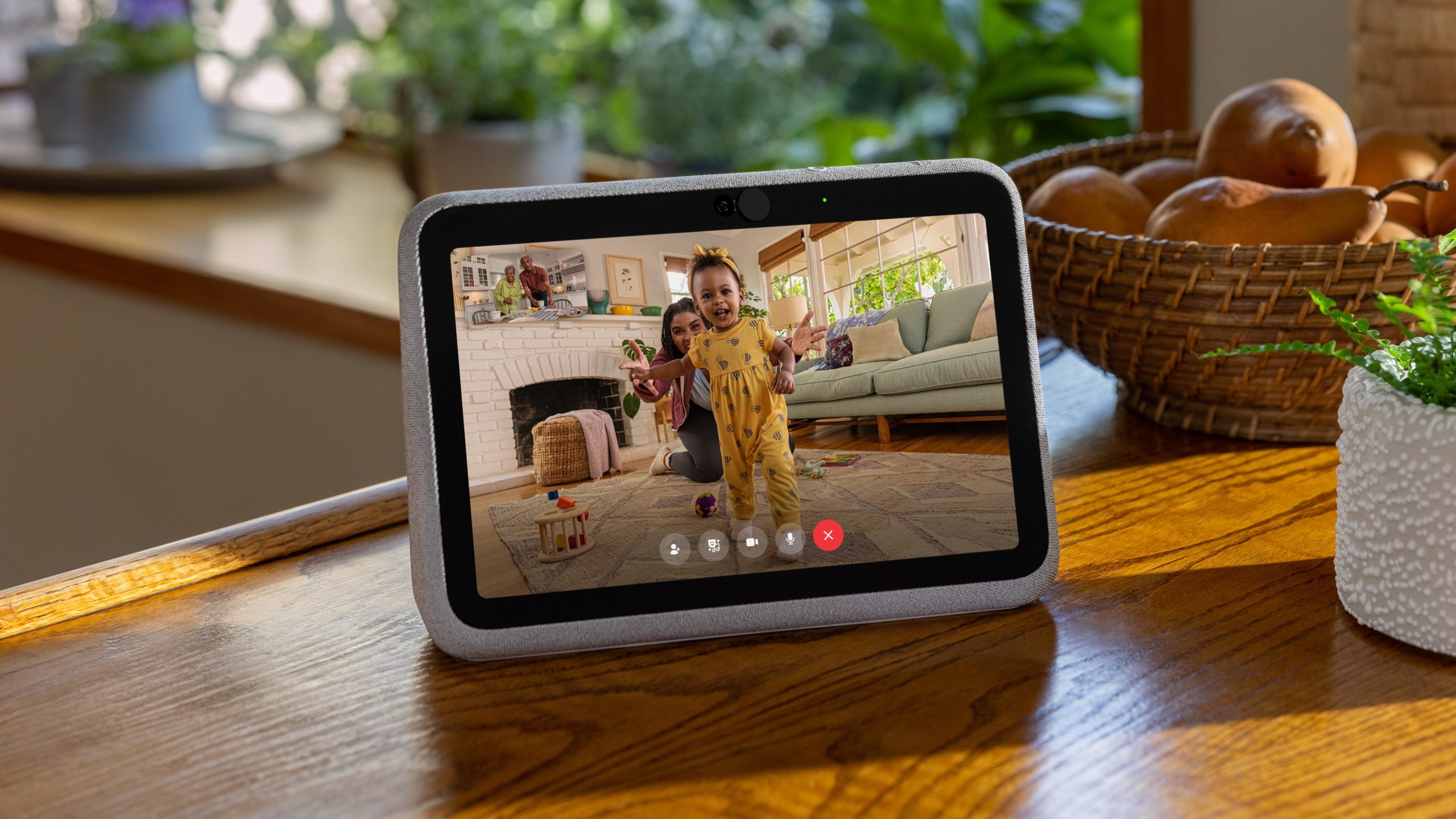
    The Portal smart display has been updated quite a few times with new features. After rebranding itself from Facebook to Meta, the social network has decided to turn its attention to the device once again.

    Earlier today, Meta announced that it has added new ways for Portal owners to use Facebook Assistant on the device. A new ability to let the Portal capture a moment during a Messenger call is now available for users, and the best thing is that it can be used hands-free by saying “Hey Portal, take a photo.”

    The update also adds the Alexa touch interface, which allows users to manage smart home devices, routines, alarms, music, smart doorbells and more by touch or directly from the Alexa app.

    As mentioned earlier, Meta is now rolling out new ways for users to stay connected with their Facebook friends on Portal, hands-free. Facebook Assistant can pull up a friend’s profile or recent posts. Portal owners can now say “Hey Portal, show me Stories” or ask about recent posts, responses and photos.

    Meta is adding group AR Effects that let people on a Messenger call to experience the same effects at the same time. Additionally, three new augmented reality games will be available for Portal owners via Facebook Assistant: Quizbee, Sequencer, and Port-a-Pet.

    Furthermore, Meta announced that starting today support for Microsoft Teams will be available on Portal, Portal+ and Portal Go. Finally, later this month, ESPN will expand from Portal TV to include Portal, Portal+ and Portal Go in the United States.

  • Microsoft to partner with Samsung over HoloLens 3 development

    Microsoft to partner with Samsung over HoloLens 3 development

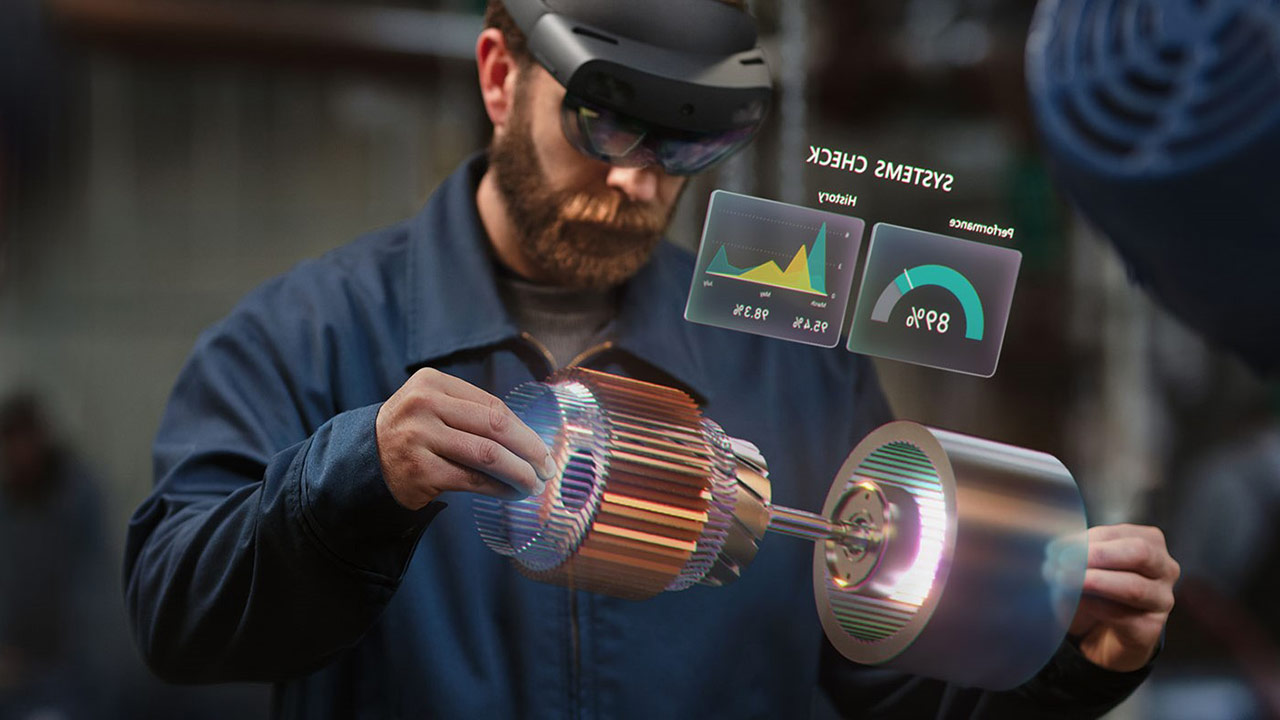
    This summer, Samsung has apparently entered into a partnership with Microsoft over its HoloLens augmented reality project, and the two companies are expected to work on the next generation of the VR headgear for at least two years.

    Microsoft already has a strong partnership with Samsung over preinstalled Office Mobile and other apps on the handsets of the world’s largest phone maker, so taking advantage of its hardware expertise could only be beneficial, too.

    Back in March, Samsung reportedly assembled a task force to probe the viability of the HoloLens partnership, involving multiple departments and has subsequently been given the green light to take on the challenge to be Microsoft’s AT/VR gear maker.

    Commercialization of Microsoft’s HoloLens wearable that takes advantage of Samsung’s engineering prowess will happen after the end of the development contract, in 2024, report the insiders. Samsung’s purchase of AR company DigiLens, along with its display expertise may be what prompted Microsoft to partner with it over the next HoloLens endeavor.

    DigiLens was known for its waveguide technology “used to bend the light from the video playing on a display to the glasses, which is transparent in AR display devices as users need to see the real surrounding around them simultaneously with the virtual items on display.”

    This strongly suggests that the HoloLens 3 may be conceived as a direct answer to the purported Apple Glasses AR/VR headset which is expected to land as soon as next year. Microsoft sold about 200,000 HoloLens 2 devices this year, and it will have to pour a lot of resources to make the third edition stand out as not only Apple, but also Facebook’s Meta, are expected to release their own augmented reality contraptions very soon.

  • Apple and Meta/Facebook war is coming

    Apple and Meta/Facebook war is coming

    There is no denying that Apple and Google are rivals. Think of all the battles they have fought on the field over the dead wallets and credit cards of consumers. There is the iOS vs. Android battle which has been turned by consumers posting on tech forums into the Uncivil War. There are competing apps such as the up-and-coming Apple Maps vs. the currently reigning champion, Google Maps.
    And now that Google has taken the Pixel to a new level for hardware, the Pixel 6 series is a true iPhone challenger. But as Bloomberg’s Mark Gurman reminds us in the latest edition of his weekly Power On newsletter, Apple has a newer rivalry that might lead to another tech war. This rival is Meta Platforms Inc., the company you probably still think of as Facebook.
    It’s not that Facebook and Apple haven’t had verbal battles before and we all remember when Apple CEO Tim Cook told the media that he would never make his customer the product like Facebook does (this came in the aftermath of the Cambridge Analytica scandal that saw 87 million Facebook subscribers have their personal data sold without their permission). Facebook CEO Mark Zuckerberg criticized Apple’s App Tracking Transparency feature for damaging small businesses.
    But now it appears as though the Facebook-Apple skirmish will be more than just a war of words. Back in October, we passed along a photo of a smartwatch that Meta is supposedly going to release next year. With looks borrowed from Apple, the upcoming wearable will also include a camera for video chats. As Gurman points out, if Meta can successfully integrate video chat with its timepiece, Apple will have no choice but to add a similar feature for the Apple Watch using its FaceTime platform.
    Both Apple and Facebook are rumored to release mixed-reality headsets next year. Mixed reality includes both virtual realities (VR) and augmented reality (AR). Facebook, which already makes the Oculus brand of VR headsets, calls its mixed reality device by the codename of Project Cambria. Apple’s mixed-reality product is expected to be a premium device sold at a premium price (in the area of $2,000 Gurman forecasts) vs. the Meta device which will probably be more affordable than Apple’s headset.
    Virtual reality immerses the headset wearer and makes him feel as though he is in a different location and even a different time period. Augmented reality places an overlay over a real-time image. Both companies could feature content for their mixed reality headsets that would allow users to exercise at different venues using VR. As Gurman suggests, Apple could make its Fitness+ exercise app available for its mixed reality headset.
    One area where Apple may or may not decide to get in Meta’s face is with home products. Meta has its smart display and video chat products that it calls Portal and even offers a battery-powered mobile unit called Portal Go. These devices use Facebook Messenger and WhatsApp for video chat and Alexa as its voice-activated digital assistant.
    Apple has its HomePod smart speakers. The full-sized model was released at a ridiculously high price of $349 before Apple slashed the price. A year ago it launched the HomePod mini, which at $99 has seen more demand than the OG model ever did. Gurman says that Apple is about to get more involved in such devices and points out two such products that Apple is rumored to be working on.
    One of the two devices is a smart screen that might end up competing with the Portal lineup, and the Amazon Echo Show. The other product reportedly combines a speaker and a TV set-top box with a camera.
    While the Apple-Google battles have been genteel for the most part, the Apple-Meta battles should be closer to a rough and tumble street fight.
  • Meta looking into launching its own retail stores in the US

    Meta looking into launching its own retail stores in the US

    Facebook’s parent company Meta is looking into opening its own retail stores in the United States, according to a report.

    The stores will largely be used to show off the business’ physical goods, such as its virtual reality headsets and video chat tablets which are already sold in other chains across the country, and allow customers to try them out in a bid to get them hooked into Meta’s forthcoming ‘metaverse’.

    “Today we are seen as a social media company, but in our DNA we are a company that builds technology to connect people, and the metaverse is the next frontier just like social networking was when we got started,” Meta CEO Mark Zuckerberg said when announcing Facebook’s name change.

    The first Meta flagship store is likely slated for Burlingame, California. The store was likely going to be called the ‘Facebook Store’, though it remains to be seen if this will still be the case after the business’ rebrand last week.

    Meta is late to the party on launching its own physical stores, with fellow tech giants Amazon and Google both having launched their own stores in the last few years.

    However, with its roughly 2.9 billion monthly active Facebook users globally as of the third quarter of 2021 (according to Statista), the business has a large pool of potential consumers to market itself toward.

  • Facebook has a new corporate name and vision

    Facebook has a new corporate name and vision

    As expected, Facebook today announced a new corporate name. Earlier today during the Facebook Connect event, the company said that it will now be known as Meta. Keep in mind that the website and the app will not have a new name and will still be known as Facebook.

    CEO Mark Zuckerberg said that the Facebook name isn’t a valid reflection of what the company does now and said that Facebook is only one of its products. “We are a company that builds technology to connect. Together, we can finally put people at the center of our technology. And together, we can unlock a massively bigger creator economy.”

    The executive added that “But over time, I hope we are seen as a metaverse company.” A metaverse is “a virtual-reality space in which users can interact with a computer-generated environment and other users.”

    In a blog post disseminated today, Zuckerberg wrote, “The next platform will be even more immersive — an embodied internet where you’re in the experience, not just looking at it. We call this the metaverse, and it will touch every product we build.”

    Zuckerberg added, “The defining quality of the metaverse will be a feeling of presence — like you are right there with another person or in another place. Feeling truly present with another person is the ultimate dream of social technology. That is why we are focused on building this. In the metaverse, you’ll be able to do almost anything you can imagine — get together with friends and family, work, learn, play, shop, create — as well as completely new experiences that don’t really fit how we think about computers or phones today.”

    In the blog, the beleaguered executive writes about a future where you can teleport as a hologram and arrive at your office without a commute. Or attend a concert, or even visit your parents without losing the time it takes to travel and deal with traffic. Many of the things that are part of the physical world right now could end up being holograms in the future such as “your TV, your perfect work setup with multiple monitors, your board games and more — instead of physical things assembled in factories, they’ll be holograms designed by creators around the world.”

    According to the Facebook co-founder, “You’ll move across these experiences on different devices — augmented reality glasses to stay present in the physical world, virtual reality to be fully immersed, and phones and computers to jump in from existing platforms. This isn’t about spending more time on screens; it’s about making the time we already spend better.” He repeated a comment made in his original founder’s letter: “We don’t build services to make money; we make money to build better services.”

    That last comment may not be sincere. Recently, Facebook whistleblower Frances Haugen said that the company would rather make money than change its algorithm and make the world a safer place. Haugen stated, “Facebook makes more money when you consume more content. People enjoy engaging with things that elicit an emotional reaction. And the more anger that they get exposed to, the more they interact and the more they consume.”

    Zuckerberg appears to realize the need for change, and not just changing the company’s name. He says that privacy and safety need to be built into the metaverse from the beginning. And from now on, the company will be metaverse first instead of Facebook first. Eventually, you won’t need to have a Facebook account to use the company’s other services. He says, “As our new brand starts showing up in our products, I hope people around the world come to know the Meta brand and the future we stand for.”

    By the way, for you Facebook stock traders, the company’s stock symbol will change from FB to MVRS.