Retail News CRM

Tag: microsoft

  • Microsoft Copilot app can now be your next default assistant app on Android

    Microsoft Copilot app can now be your next default assistant app on Android

    Android users currently have a slew of options for choosing an assistant app on their devices. Where previously Google Assistant and Bixby were the ones that reigned, the rise of AI-powered chatbots saw these evolve as more than just text fields you can use on a browser. Currently, depending on the apps you have installed, you have fresh new options, and Microsoft’s Copilot is shaping up as one of them.

    As reported by Android expert Mishaal Rahman on X (Twitter), the newest beta version of the Microsoft Copilot app (v. 27.9.420225014) now gives you the ability to set it as your default assistant app. This makes the chatbot accessible from anywhere on your device with a simple swipe or button press.

    While this is a nice addition for Android users, don’t expect a seamless experience yet. Currently, activating Copilot mainly opens the app, meaning that it won’t immediately start listening like some other assistants, nor will it offer to analyze what is on your screen.

    However, this doesn’t mean that feature won’t be as helpful as Google Assistant or Bixby currently are, or perhaps even what Gemini could be. It’s still in beta, and Microsoft is likely to continue working on the app in order to make Copilot a truly integrated Android assistant. Microsoft has yet to officially announce this, but our guess is that by the time it moves on to the stable version of the app, more capabilities will be in tow.

  • Apple and Microsoft discussed selling Bing to Apple in 2020

    Apple and Microsoft discussed selling Bing to Apple in 2020

    You might already know that Google pays Apple some obscene amount of money to have Google’s search engine be the default option on the iPhone. But according to Bloomberg, in 2020 Apple and Microsoft held talks to discuss the possibility of Apple acquiring Microsoft’s Bing search engine. Apple’s Services VP Eddy Cue represented the Cupertino-based company in the talks. Bloomberg called the talks “exploratory” and said that they “never reached an advanced stage.”

    The talks with Microsoft stalled had much to do with the large amount of money Apple was receiving and still receives from Google each year. We’ve seen estimates of this payment ranging from $4 billion to as much as $20 billion. The DOJ believes the actual range is $4 billion to $7 billion annually. Apple did not want to lose this cash flow. Considering that Google is not in the business of giving away money, you can imagine how much the company and its parent Alphabet must make from being the default search engine on the iPhone.

    However, some of the reasons Apple had for not acquiring Bing had nothing to do with the big check Apple receives from Google every year. While it was the main reason, Apple was also said to be concerned that Bing could not compete with Google Search in quality and capabilities.

    Interestingly, when Microsoft first added Generative AI feature ChatGPT to Bing, there were rumors that Samsung would drop Google as its default search engine for the Galaxy line of handsets and replace Bing. Google has been the default search engine on Galaxy handsets since the first Galaxy S device was released in 2010. A month after this rumor started spreading, it was reported that Samsung decided to suspend an internal review dealing with this possible change.

    Google’s deal with Apple for its search engine has become part of the testimony heard during the trial now underway between the Justice Department and Google over antitrust issues. Microsoft VP Jon Tinter said under oath that in 2016 Microsoft CEO Satya Nadella met with his counterpart at Apple, Tim Cook, to discuss Bing replacing Google everywhere on iOS. Since Bing was much smaller than Google Search, Tinder said on the stand that Microsoft would have “had to offer Apple a far larger percentage of the revenue than Google.”

    As a result, a deal with Apple to replace Google Search with Bing would have resulted in a multi-billion loss for Microsoft. Executives at Microsoft met with the company’s Board to try and figure out how they could explain to stockholders why it was in the company’s best interest to take a hit on such a deal.

    Under oath, Tinder told the court, “In the short term, it would have been highly negative. We told the board we are considering making a multi-billion negative investment to support this. It was all around trying to make them confident that we could make the switch.” Two years later, in 2018, Microsoft and Apple discussed using Bing instead of Google on iPhone units outside of the U.S. But once again, nothing came of it. And after another two years had gone by, the aforementioned exploratory talks between the two tech giants about Apple acquiring Bing started and quickly ended.

    Even though Microsoft seems to acknowledge that Apple will never buy Bing, another Microsoft executive, Mikhail Parakhin, in charge of ads and web services at Microsoft, said that Apple makes more money from Bing than Bing does if only because keeping Bing around keeps Google worried enough to continue cutting those big checks to Apple. The guys in Redmond still continue to speak to Apple about replacing Google with Bing, with the last conversation taking place in 2021.

    From time to time, there have been reports about Apple developing its own search engine, and last November, designer Tom Hyoos shared on Twitter his design concept for an Apple search engine called ViewPoint.

    The DOJ vs. Google trial started on September 11th and will run for a total of 10 weeks. U.S. District Judge Amit Mehta is presiding over the trial and after a break in November, more papers will be filed with the court; the judge is expected to make a ruling early next year. If the judge rules against Google, another trial will be held to determine what penalties Google should face. The company might be required to break up some of its search-related businesses along with other business units that generate advertising revenue for the company.
  • Microsoft extends AI-powered Bing Chat to Chrome and Safari mobile

    Microsoft extends AI-powered Bing Chat to Chrome and Safari mobile

    Six months ago, Microsoft announced its AI-powered Bing search engine and Edge browser, and the tech giant certainly does not intend to stop there. Microsoft has the ambition to implement AI in all of its products and services, and not only that but also to go beyond its own products.

    Microsoft shared that Bing Chat will soon be available in Chrome and Safari on both web and mobile. Bing Chat is also available as a standalone Android and iOS app, which will also receive some new features. The company’s goal is to allow more people to access Bing’s capabilities, such as summarized answers and image creation.

    While Microsoft may open Bing Chat for usage in third-party browsers, it still recommends using the Microsoft Edge browser if you want to experience the AI chatbot capabilities at their best. Chrome and Safari will have limitations, such as offering only 2,000 words per prompt on Chrome and Safari, compared to 4,000 on Edge. Features such as longer conversations and chat history will be available only on Edge.

    Along with announcing the availability of Bing Chat for Chrome and Safari, Microsoft also shared that the AI-powered Bing mobile app will now have a dark mode option. The company also reminded users of the newest Bing Chat features that were recently added, such as Visual Search.

    Visual Search is a feature powered by AI that allows you to enter a visual prompt. For example, you can take a picture of the inside of your fridge with all the products you have at the moment and ask Bing Chat to give you some ideas on what to cook. In other words, Bing Chat can understand the context of an image, interpret it, and answer questions about it.

    These new features and updates to Bing Chat availability were announced in a blog post celebrating 6 months of the new AI-powered Bing. Microsoft shares that during this time, more than 1 billion chats were initiated, and people generated over 750 million images.

    AI is undoubtedly developing rapidly, entering more and more products daily. One of the most popular AI chatbots, OpenAI’s ChatGPT-4, actually powers Bing Chat, but the latter offers even more accurate and up-to-date information since it has access to Bing Search. With Microsoft working hard to improve its AI products, its biggest competitor, Google is also stepping up its game with its Google Bard and updating its Assistant using AI.

  • Samsung and Microsoft team up to offer improved phone security for enterprises

    Samsung and Microsoft team up to offer improved phone security for enterprises

    Samsung and Microsoft have just announced they signed a strategic partnership to enhance phone security for business customers. The new solution is called “device attestation” and it’s supposed to ensure a device’s identity and health, verifying that it has not been compromised.

    Device attestation is now available on Samsung Galaxy devices and combined with protection from Microsoft Intune to add enhanced security and flexibility. Aimed at enterprises, the new solution is an extra layer of protection against compromised devices falsely claiming to be known and healthy, gaining access to sensitive corporate data.

    According to Samsung, device attestation is supported on select Galaxy smartphones and tablets, including “Security by Knox” devices with Android 10 or later. The company also notes that in order to be eligible for the solution, devices must have run Android 9 or later at the time of launch.

    “Samsung is committed to meaningful innovations that are as secure as they are versatile and optimized. As work habits evolve and people are working from virtually anywhere on any device, we are paving the way for the future of enterprise device security and democratizing the means for businesses to better protect their information,” said KC Choi, EVP and Head of Global Mobile B2B Team, MX Business at Samsung Electronics.

    Last but not least, the solution provided by the two giants works on both managed and unmanaged devices regardless of ownership. This is unusual since traditional device attestation mainly works on managed devices because it is server-based and requires network connectivity.

    Since this is a mobile hardware-backed attestation, enterprises will be able to verify a device’s integrity and allow access to the corporate system whether it’s managed or unmanaged. Furthermore, the user experience is also streamlined to make it easier for employees to bring their personal devices to work and safely access the corporate system without extra security steps.

  • Microsoft finally brings Phone Link to iOS users

    Microsoft finally brings Phone Link to iOS users

    It’s been years since Microsoft supported Android users with Phone Link, the app that allows them to connect smartphones to their PCs. Starting today, the same app is available for iPhone users, Microsoft revealed in a blog post. However, the experience is quite limited and pales in comparison with the features Phone Link for Android provides users.

    Announced back in February, the expansion of the Phone Link app to iOS is finally happening, as Microsoft announced the app is now rolling out globally in 39 languages across 85 markets.

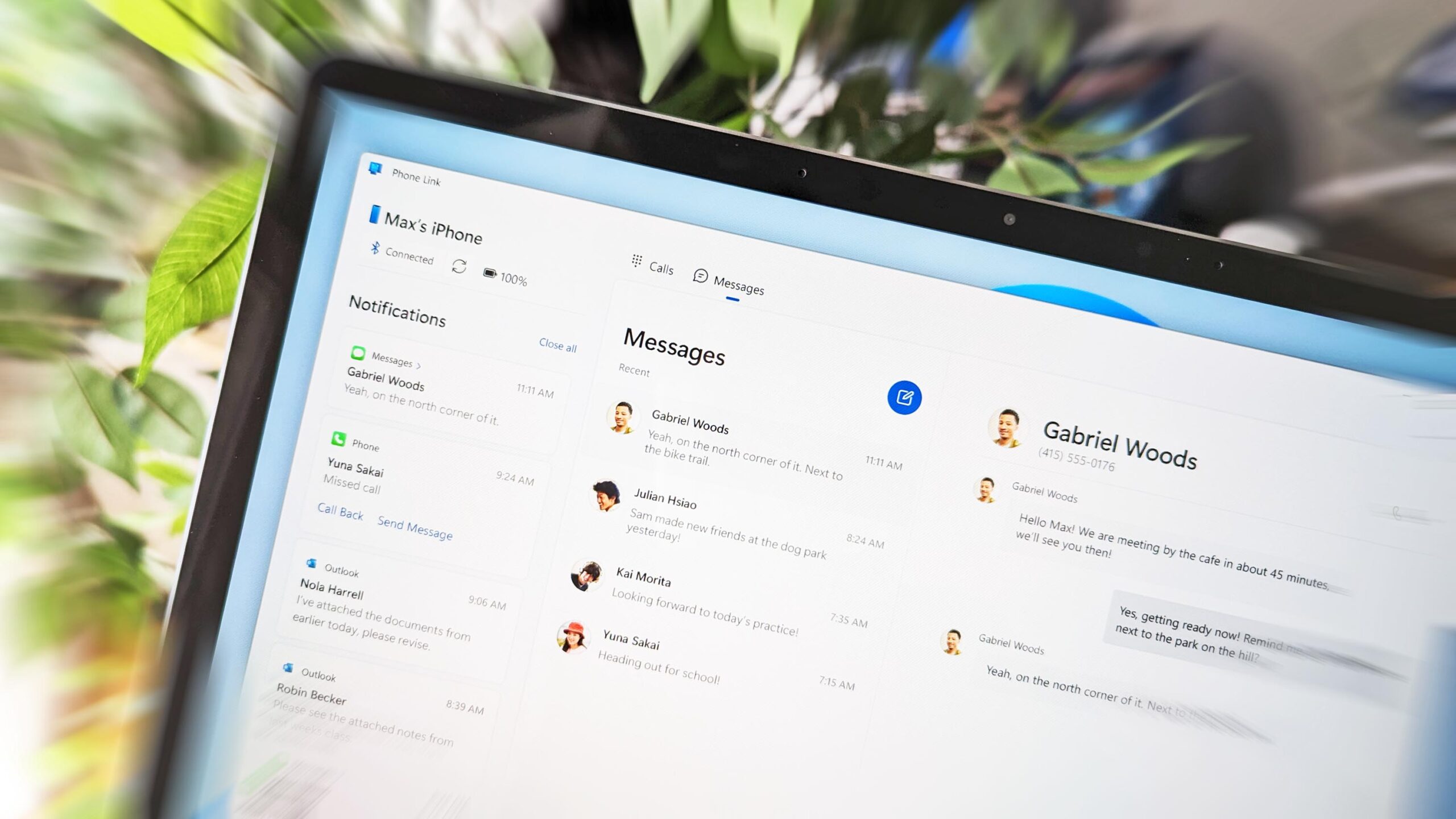
    As per the company’s statement, once Phone Link is enabled on a Windows 11 PC, the app should provide some basic iOS support for calls, messages and access to contacts. iOS users can also access their iPhone photos on their PC thanks to Microsoft’s iCloud integration with Photos. Basically, you’ll be able to see your iPhone photos in the Photos app in Windows 11.

    While the rollout of the app has already begun, it may take a few weeks to be visible on all PCs. To start using Phone Link for iOS, use the Search box on the Windows taskbar to find Phone Link, and then follow the step-by-step guide to set it up.

    Regarding requirements, Microsoft confirmed that Phone Link for iOS is compatible with iPhones running iOS 14 or higher. The app will only work on Windows 11 devices and requires Bluetooth connection. Keep in mind that iPads and macOS are not compatible with this version of Phone Link.

    It’s also worth mentioning that iOS limit the messaging feature, and image/video sharing, as well as group messaging will not be supported. Microsoft notes that all messages are sessions based and will only be received when the phone is connected to PC.

  • Microsoft is testing an app that will allow the iMessage platform to be used on your PC

    Microsoft is testing an app that will allow the iMessage platform to be used on your PC

    Imagine using Apple’s highly-regarded iMessage messaging platform on your Windows computer. Microsoft is making this happen via an update to its Phone Link app, which will allow you to send messages to your PC contacts (who also use an iPhone) through your Windows computer although there are some caveats. Phone Link cannot enable group messaging nor allow photos or videos to be sent.
    Yusuf Mehdi, Microsoft’s head of consumer marketing, said, “We send the messages back and forth via Bluetooth, Apple, I think in turn, sends those as iMessage once it gets onto their system.” The version of the iOS Messages app that is brought to your Windows computer is basic and you won’t see the entire history of a conversation. Only messages sent or received using the Phone Link app will appear.
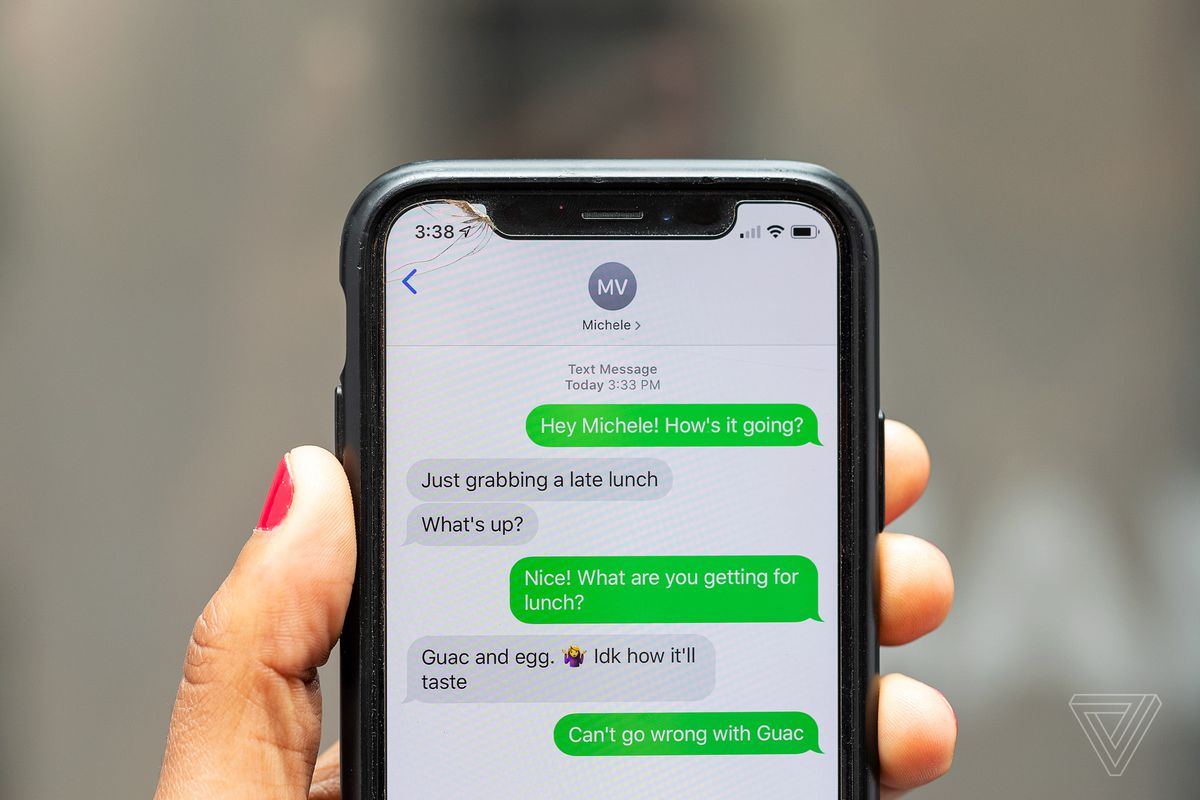
    Because Phone Link can’t tell the difference between a regular text message and one sent using iMessage, there are no blue or green text bubbles. On an iPhone, blue bubbles indicate a conversation where everyone is using an iPhone and thus it is handled on the iMessage platform. A green bubble reveals that at least one of the parties in the conversation is using an Android phone and all of those great iMessage features (like higher-quality images, read receipts, typing indicators, and more) are not available.
    But as we said, group messaging is not allowed using the Phone Link app and with no difference between texting and sending an iMessage, there is no reason to use different colored text bubbles. While on the subject of Android, the version of Phone Link for this platform has more capabilities. With the Phone Link app on your PC and an Android phone, you can get “instant access to everything you love on your phone, right from your PC,” says Microsoft.
    Linking your Android phone and your PC with this app will allow you to read and reply to text messages, make and receive calls (requires a Windows 10 computer with Bluetooth connectivity), view your notifications, and more. Instead of sending emails to yourself to save content, you can easily share content between your PC and phone. “Copy, edit, and even drag and drop photos without ever touching your phone.” You can even see your phone apps on your PC with a Surface Duo phone, certain Samsung handsets, and some Honor devices.
    Phone Link is bundled with Windows 11 and the new support for the app comes with a major Windows 11 update that includes the new AI-powered version of Bing on the taskbar, improved touch capabilities, and a new feature that records the screen.
    The version of Phone Link with iOS support will be available for Windows Insiders in the Dev, Beta, and Release Preview channels, but only for a small percentage of users. Microsoft says, “We will increase the availability of the preview to more Insiders over time and based on feedback we receive with this first set of Insiders.”
    Microsoft’s Medi explains why Microsoft has added iPhone support for the Phone Link app. He says, “It’s something we’ve been wanting to do for a long time. The experience with Android is quite good, and we felt like we needed to get something out [for iPhone].”
  • Microsoft launches its all-new AI-powered Bing on mobile

    Microsoft launches its all-new AI-powered Bing on mobile

    After introducing its new Bing and Microsoft Edge apps powered by AI, Microsoft announced the launch of the new Bing preview and Edge on mobile. The Redmond-based company figured out that most of the searches occur on mobile phones these days and decided to bring the new AI capabilities to smaller screens around the same time as PC.

    The new Bing and Edge mobile apps are now available for those who wish to try them out. Along with a new experience, Bing mobile offers a fresh design as well. Tapping the Bing icon allows users to engage in a chat session asking simple or complex questions.

    Another important change added, one of the preview community’s most requested features, is voice. Voice search is now available not just on desktop, but also on mobile too. For those who have access to the preview, the new Bing experience will be available from the homepage of the Microsoft Edge mobile app.

    Additionally, Microsoft announced the launch of the AI-powered Bing for Skype. Starting today, the new Bing in Skype is available worldwide in preview. While Microsoft is fine-tuning the app, Skype users who use Bing will still get real-time answers to their questions.

    The new AI-powered Bing for Skype experience includes personalization options that allow users to choose how they want answers to be displayed such as bullet points, text or simplified response. According to Microsoft, Bing can translate text from more than 100 languages, so that’s another plus. Although Skype user interface will vary during initial rollout, these features will remain available to everyone who has access to the preview.

    Those who wish to try these out must sign up for the Bing preview. Keep in mind though that you may occasionally find connectivity issues when your network signal is low. Microsoft is aware of these problems are will probably fix them sooner rather than later.

  • Microsoft’s big AI announcement means that Bing could replace Google as top search app

    Microsoft’s big AI announcement means that Bing could replace Google as top search app

    Microsoft announced tonight that it is integrating its Bing search engine and Edge web browser with the AI superstareveryone is talking about, ChatGPT. Microsoft is investing billions in OpenAI, the developer of ChatGPT, so it makes sense that Microsoft’s search engine and web browser get first crack at adding the conversational AI experience to its mobile apps.

    While Bing currently has about 9% of the online search market, Microsoft expects to generate $2 billion in additional advertising revenue for each percentage point of market share it adds. For Q4 2022 Google Search generated revenue of $42.6 billion compared to “only” $3.2 billion for Microsoft’s search and news advertising revenue. That’s a gap Microsoft is hoping to close and more.

    During a press briefing at Microsoft headquarters in Redmond, Washington, CEO Satya Nadella said, “This technology is going to reshape pretty much every software category.” ChatGPT is available on the Bing website for a limited number of users and will be ready for mobile users via the Bing app in the weeks ahead. But before you get too excited, during the “limited preview stage,” only pre-set queries will be allowed. At a later date in the future, free-form queries will be answered.

    You first need to join a waitlist to get the Bing app with ChatGPT integration. You can jump ahead in the line by making Microsoft apps the default choice on your PC and scanning a QR code to install the new Bing app on your phone.

    Bing will use OpenAI’s most powerful Prometheus model which will use real-time web data from Bing. That means Bing’s chatbot will be able to give answers based on current events rather than post answers that are limited to 2021 data. And with ChatGPT, Bing users will be able to get a summary of the articles they are reading, compose emails, and translate them to reach more readers. Microsoft warns that ChatGPT, like most AI chatbots, is apt to give incorrect information which it calls a hallucination. The company says more user feedback will help reduce hallucinations.

    Not all analysts see Microsoft’s move as a big one for consumers. Gartner analyst Jason Wong said Microsoft’s “partnership with OpenAI is more relevant for its business customers.” Even so, Wong stated that Microsoft could offer “disruptive opportunities” in consumer businesses as well. The analyst said, “Except for gaming, Microsoft has not been a leader in key consumer technologies, such as search, mobile and social media.”

    Microsoft says that the AI-driven Bing will no longer simply disseminate links. Instead, it will give users clear answers in simple language combining answers that Bing found on the web and from its collection of data. On the Edge web browser, ChatGPT could be used to help users understand long and complex documents.

    Google tossed its hat into the conversational AI era yesterday by announcing Bard. Google CEO Sundar Pichai wrote that AI is “the most profound technology we are working on today. AI helps people, businesses and communities unlock their potential.”

    ChatGPT was forecast back in December to replace Google in a couple of years. Now it seems possible that this is going to happen earlier than expected. The chatbot can “write computer code, create complex essays, decorate your home, come up with a winning marketing idea, and more.” Teaching professionals are concerned that students will turn to AI chatbots to write essays instead of using their own brains.

  • France fines Microsoft $64M over advertising cookies

    France fines Microsoft $64M over advertising cookies

    France’s privacy watchdog said Thursday it has fined US tech giant Microsoft 60 million euros ($64 million) for foisting advertising cookies on users.

    In the largest fine imposed in 2022, the National Commission for Technology and Freedoms (CNIL) said Microsoft’s search engine Bing had not set up a system allowing users to refuse cookies as simply as accepting them.

    The French regulator said that after investigations it found that “when users visited this site, cookies were deposited on their terminal without their consent, while these cookies were used, among others, for advertising purposes.”

    It also “observed that there was no button allowing to refuse the deposit of cookies as easily as accepting it.”

    The CNIL said the fine was justified in part because of the profits the company made from advertising profits indirectly generated from the data collected via cookies — tiny data files that track online browsing.

    Bing offered a button for the user to immediately accept all cookies, but two clicks were need to refuse them, it said.

    The company has been given three months to rectify the issue, with a potential further penalty of 60,000 euros per day overdue.

    The fine was issued to Microsoft Ireland, where the company has its European base.

    In a statement Microsoft said that it had “introduced key changes to our cookie practices even before this investigation started.”

    “We continue to respectfully be concerned with the CNIL’s position on advertising fraud,” it said, adding that it believes the French watchdog’s “position will harm French individuals and businesses.”

    Cookie control

    Cookies are installed on a user’s computer when they visit a website, allowing web browsers to save information about their session.

    They are hugely valuable for tech platforms as ways to personalise advertising — the primary source of revenue for the likes of Facebook and Google.

    But privacy advocates have long pushed back.

    Since the European Union passed a 2018 law on personal data, internet companies have faced stricter rules that oblige them to seek consent from users before installing cookies.

    Last year, the CNIL said it would carry out a year of checks against sites not following the rules on using web cookies.

    Google and Facebook were sanctioned by the French regulator with fines of 150 million and 60 million euros respectively for similar breaches around their use of cookies.

    The two firms also face scrutiny over their practice of sending the personal data of EU residents to servers in the United States.

    And tech giants continue to face a slew of cases across Europe.

    Earlier this month, Europe’s data watchdog imposed binding decisions concerning the treatment of personal data by Meta, the owner of Facebook, Instagram and WhatsApp.

    The European Data Protection Supervisor said in a statement that the rulings concerned Meta’s use of data for targeted advertising, but did not give details of its ruling or recommended fines.

    The latest case follows complaints by privacy campaigning group Noyb that Meta’s three apps fail to meet Europe’s strict rules on data protection.

  • Microsoft Surface tablet that iPad aspires to be when it grows up is a whopping $412 off

    Microsoft Surface tablet that iPad aspires to be when it grows up is a whopping $412 off

    We have almost made it to the end of the year and surely deserve to treat ourselves to a little something with a lot of power. The Microsoft Surface Pro 8 is one device that fits this description and the best part is that it’s currently on sale.
    The Surface Pro 8 is a versatile portable device that easily morphs from a tablet to a laptop. It is very lightweight, ultraportable, and sturdy, and sports a 13-inch screen with a fluid refresh rate of 120Hz. The screen has a tall aspect ratio so there is more vertical room for viewing articles and working on text documents. There is also a kickstand for multiangle viewing.

    The Intel 11th Gen Intel Core i5-1135G7 processor powers the variant that Amazon has discounted. It provides ample performance for everyday tasks, including moderately heavy workloads, so it’s easy to recommend to students and professionals.

    There are two USB-C ports with support for USB4 and Thunderbolt 4, ensuring fast data transfer rates.
    Microsoft promises a battery life of 16 hours, and while it may not last this long for everyone, it will easily get you through a whole workday. The tablet’s cameras and microphone are also impressive and the device also has the Windows Hello facial recognition system.

    What makes the Surface Pro 8 special is that it comes from a company that has a long history of making productivity-centric devices. Microsoft has successfully taken the best bits from laptop and tablet form factors for the ultimate portable experience, giving the Surface Pro 8 an edge over other top 2022 tablets.

    The Core i5 model with 8GB of RAM and 256GB of storage has been marked down by 34 percent, meaning you can currently get it for $787.99 instead of $1,199.99.
    That’s a seriously chunky discount for a modern-looking standalone productivity machine with a beautiful screen and promising battery life. This deal has been going on for a while and other variants have already sold out, so get this model while you can.
  • Microsoft tells regulators that it wants to create an Xbox mobile app store

    Microsoft tells regulators that it wants to create an Xbox mobile app store

    When it comes to the smartphone business, Microsoft could have been a contender. Windows Mobile was the operating system on many popular pre-iPhone handsets like the Motorola Q. It also ran some post-iPhone touchscreen models like the HTC Touch Diamond, the HTC Touch Pro, and the HTC HD2, to name a few.
    Many consumers favored Microsoft’s Windows Phone over iOS and Android due to its buttery smooth scrolling. But the Lumia handsets running the software, whether made by Nokia or Microsoft, never caught on, and as a result, developers never felt compelled to develop apps for the platform. Eventually, Microsoft put the kibosh on its plans to challenge iOS and Android, and when Microsoft launched the Surface Duo dual-screened handset in 2020, it was powered by Android.
    Microsoft does have ownership of a vast amount of intellectual property related to Android, and it made much more money each year with the success of Google’s mobile operating system than it did having ownership of Microsoft’s Windows Mobile and Windows Phone.
    The UK’s Competition and Markets Authority (CMA) is doing its due diligence in investigating Microsoft’s $68.7 billion acquisition of game maker Activision Blizzard. In responding to questions posed by the regulatory agency, Microsoft mentioned that the acquisition would allow it to take on the Google Play Store and the Apple App Store.

    Microsoft’s response included these comments: “Building on Activision Blizzard’s existing communities of gamers, Xbox will seek to scale the Xbox Store to mobile, attracting gamers to a new Xbox Mobile Platform. Shifting consumers away from the Google Play Store and App Store on mobile devices will, however, require a major shift in consumer behavior. Microsoft hopes that by offering well-known and popular content, gamers will be more inclined to try something new.”

    The report names two popular video games, Activision’s Call of Duty: Mobile and King’s Candy Crush Saga that Microsoft could use to help it build a mobile app storefront that could compete with the Play Store and App Store. Microsoft, noting the popularity of mobile games and the revenue it drives of in-app purchases, sees Apple and Google making a fortune and wants a piece of the action.
    Discussing the proposed purchase of Activision Blizzard, Microsoft explains to the CMA that “The transaction gives Microsoft a meaningful presence in mobile gaming. Mobile gaming revenues from the King division and titles such as Call of Duty: Mobile, as well as ancillary revenue, represented more than half of Activision Blizzard’s … revenues in the first half of 2022.”

    Microsoft adds that it “currently has no meaningful presence in mobile gaming and the Transaction will bring much-needed expertise in mobile game development, marketing, and advertising. Activision Blizzard will be able to contribute its learnings from developing and publishing mobile games to Xbox gaming studios.”

    The software giant has put up a website for its Activision Blizzard acquisition and has posted a giant graph showing the history of the gaming industry. The graph shows a valuation for the entire gaming business of $165 billion in 2020 with consoles valued at $33 billion (20% of the market), PCs worth $40 billion (24%), and mobile gaming valued at $85 billion (51% of the market).
    The CMA happens to be focused on how Microsoft’s proposed acquisition would impact the console market. The smallest tier of the industry, the purchase would represent a larger chunk of this market which could make the regulatory agency concerned enough to block the deal. Microsoft would prefer that the CMA look at how a possible purchase of Activision Blizzard would be a small drop in the mobile gaming market.
    Even if Microsoft gets the green light to close on the purchase of Activision Blizzard, becoming a challenger to the App Store and Play Store is going to be tough. On Android, games found on an Xbox mobile app store could be sideloaded on a mobile device. But that still won’t work on iOS where Apple’s walled garden prevents users from sideloading apps in the name of security.
  • Pay TV firm AVG appoints new CEO

    Pay TV firm AVG appoints new CEO

    Vu Minh Tri, former CEO of Microsoft Vietnam, is the new CEO of pay TV firm AVG. Tri, 49, replaces Mai Duy Long, also 49, who helmed AVG for nearly two years. Tri, who became the CEO of Sony Ericsson Vietnam in 2006, has since taking top positions in the Vietnam operations of Yahoo, Qualcomm and Microsoft.

    He is now the CEO of telecom firm Asim Group and two other companies.

    State-owned MobiFone, the country’s third largest telecommunications firm, had made headlines early in 2016 when it announced it was breaking into the pay TV market with the acquisition of a 95 percent stake in AVG.

    But government inspectors concluded that the deal had violated public investment laws and caused an estimated loss of about VND7 trillion ($307 million) to the state budget.

    In 2019, several senior officials implicated in the MobiFone case were arrested and sentenced to varying jail terms.

  • Apple to cut working hours for retail staff, Microsoft open to unionisation

    Apple to cut working hours for retail staff, Microsoft open to unionisation

    Apple has agreed to make work schedules at its retail stores more flexible, according to employees with knowledge of the plans, part of a push to improve conditions in the face of unionisation efforts.

    The company informed staff at some stores that scheduling changes will take effect in the coming months, according to the workers, who asked to not to be identified because the plans aren’t public.

    Some retail employees have voiced their frustrations with managers and labour groups about their schedules, and Apple’s retail chief recently signaled that changes could be coming.

    “I am deeply committed to making Apple the best it could be for you, from scheduling to pay and benefits to development to the experience and environment in the stores,” Deirdre O’Brien told staff in a recent video message.

    The company is planning the following changes, according to the employees: A minimum of 12 hours in between shifts, an increase from the current minimum of 10 hours.

    A maximum of three days per week when employees can work past 8 pm, unless they choose to work late shifts.

  • Microsoft files patent for a phone that folds both ways

    Microsoft files patent for a phone that folds both ways

    When we are talking book-type foldable phones, the market has gone two separate ways. There’s the Samsung Galaxy Z Fold 3 way, where the big display folds in and stays inside the phone’s shell, with a secondary screen on the outside, which you can use for quick operations, a-la “regular smartphone”. Then, there’s the Huawei Mate Xs 2 way, where the display folds on the outward side of the device — so, when folded, you are still using that big screen as your main source for viewing and use.

    Both concepts have their pros and cons, and many find themselves wondering “Do I want an inwards-folding or outwards-folding phone?”. Well, Microsoft would like to ask “Why not both?”.
    A patent was recently filed by the team at Redmond, which outlines a foldable phone with a flap that can go 360 degrees around its hinge — so, it can both fold in and fold out. Yes, the Microsoft Surface Duo 2 can absolutely do this, however, the Duo phones are very obviously 2-screen devices that are bolted together by a hinge in the middle. The patent that was discovered here shows a phone with a seamless screen, from one side to the other.
    That sounds pretty tough — a screen that can fold in and out straight through its middle, and still withstand all that physical strain. Is it even possible?
    Well, as Android Headlines kindly points out, LG recently demonstrated one such display panel. Yes, the same LG that quit the smartphone game is still going strong in other areas, display manufacturing being one of them.
    LG Display was at SID 2022 (Society for Information Display expo) and showed its vision for the future of OLED. A few concept devices were on the show floor — both smartphone- and laptop-shaped ones — with flaps that were able to fold all the way in and out to a 360-degree angle.
    The screens are made with ultra-thin glass technology and have special oleophobic coating that should be at least a bit better at keeping fingerprints away from the glossy screen. So, in theory, this could be the exact tech Microsoft might be planning to use for its outwards-folding phone.
    Will this be the Surface Duo 3? That’s possible. The rumor mill is quite mum on another Surface Duo right now, and it seems Microsoft may be skipping this year in order to refine its foldable concept. So, it’s very possible that we are going to see a high tech Surface Duo 3… a year or two from now.
  • Skype now supports emergency calls in the US

    Skype now supports emergency calls in the US

    Skype has received a new update. Currently, the most recent version of Skype is 8.80, and along with some bug fixes and stability improvements, Microsoft has introduced a few new features and modifications to Skype.

    Along with a bunch of smaller improvements to the platform, Microsoft has added the ability to call 911 in the US using Skype. Not only that, but Skype can now also share your location with emergency operators. The share location option is disabled by default, but you may activate it in the app’s privacy settings if you like.

    Let’s hope Skype doesn’t end up like Microsoft Teams. Last year, a bug in the Teams app rendered users unable to call emergency services due to the software interfering with the OS’s ability to choose a telephony client, blocking the call altogether.

    A Pixel user had reported that when they tried to call 911, their phone froze, and the call was unsuccessful; only because the user had access to a landline did they manage to get help. Good thing Microsoft and Google issued a fix for the problem caused by Microsoft in Android 10 and later.

    Along with the ability to make emergency calls, Skype now also offers various reactions during calls if you are on Windows, Mac, Linux, or Web. Also, with the latest update, you can zoom in on a shared screen during a meeting on computers and mobile devices. So, now you can better express yourself in a video call, and you will no longer need to squint your eyes in order to see what is presented during a meeting. Microsoft has also increased the time limit on voice messages from 2 minutes to 5 minutes.