Tag: microsoft

  • Microsoft launches Azure IoT Hub

    Microsoft launches Azure IoT Hub

    Microsoft has announced the wide-scale launch of the  Azure IoT Hub, which allows users to connect, provision and manage billions of IoT devices.

    Microsoft says Azure IoT Hub acts as the bridge between customers’ devices and solutions in the cloud enabling storage, analyzing and acting on data in real time.

    The hub also enables secure two-way communication over open protocols such as MQTT, HTTPS and AMQPS, and is designed to make it easy to connect with other Azure services such as Azure Machine Learning and Azure Stream Analytics.

    In addition to the launch, Microsoft also announced the expansion of Microsoft Azure Certified for IoT program. The program was launched to ensure IoT solutions from global technology leaders are fully interoperable from the start.

    By offering trusted solutions from verified partners that work with multiple operating systems, including Linux, mbed, ROTS and Windows, Azure Certified for IoT accelerates IoT deployments.

    Over the past three-plus months, nearly 30 industry leaders have joined the program, said Microsoft. Now even more have announced their participation, including: Advantech, Dell, HPE and Libelium. Previous certified partners include: Arduino, Beagleboard, Freescale, Intel, Raspberry Pi, Samsung, Texas Instruments and others.

    “IoT is poised for dramatic growth in 2016 and we can’t wait to see what our customers and partners will continue to build on our offerings. We’re just getting started and will have much more to share in the coming months,” said a Microsoft blog post.

  • Virtual reality in retail stores

    Virtual reality in retail stores

    Virtual Reality, as a concept, has been around for over 50 years.

    In the beginning, it was literally the stuff of science fiction.  Then in the early 90’s it actually became reality, when physical prototypes were developed, using the modern technology of the era.  The results were underwhelming – imagine pixelated graphics and heavy, nausea inducing headsets. The concept lay dormant for 20 years before anyone thought to revisit its feasibility.

    That person was Palmer Luckey, the young inventor and founder of Oculus VR. What he discovered is that without anyone realising it, technology had quietly caught up with the requirements of VR. There were now low-latency head orientation sensors and small, high-refresh rate OLED displays which didn’t exist just five years ago.

    Using these off the shelf parts, he constructed a rudimentary hardware proof-of-concept which delivered an immersive experience far beyond what had been seen before.

    From this initial prototype, Oculus was founded, bringing on board many high profile experts in the field of computer graphics, alongside millions of dollars in funding. Their inaugural consumer VR product is about to be released to the public, and many smart people consider this to be a watershed moment.

    Will this be the event that introduces practical VR to the masses?

    Oculus (now owned by Facebook) is leading the way, but Apple, Google, Microsoft and Sony are all working on their own implementations of VR. There’s a full-on VR technology arms race happening, with the usual suspects involved.  They recognise the huge potential of the medium, and the unique ways it can complement their existing product offerings.

    VR 2.0

    This new generation of VR technology is in its infancy, and as with any nascent platform, pundits try to predict the types of experiences it will enable. Stereotypically, new mediums are often projected (interpreted) through the lens of the incumbent platforms which precede it.

    The first automobile was considered a “horseless carriage”. The first motion picture content was essentially just televised theatre. Simply re-imagining the experience of an old medium through a new one may be the path of least of resistance, but it ignores the unique elements of the new.

    So the theory goes, in order to fulfill its true potential, a new medium needs to abandon previous biases and embrace the characteristics and constraints which are unique to it.

    But does this calculus apply to VR? Perhaps not. Unlike all previous mediums, it is has no baked-in constraints. It is not simply a proxy for storytelling or communication. Its ambition is to replicate the reality we natively experience. It is, by design, the last medium.

    The obvious question becomes, what are the scenarios for which diving into an alternate reality becomes preferable to the “real” reality someone is experiencing. As mature as the underlying technology becomes, VR, for the foreseeable future, will forever be chasing the tail of “real life”.

    So what is the individual incentive to temporarily replace what we already (if we’re so lucky) get for free? Understanding the motivations that drive these virtual experiences can uncover the opportunities and jobs to be done of the medium.

    Applications

    In the context of VR, the virtual “reality” is simply “content”. As with all previous mediums, the success of this one will be intrinsically tied to the abundance and quality of content created for it. In this respect, authors and the tools they use to create with will be just as important as the technology that audiences use to consume with.

    These creation tools are also nascent, and consist of both hardware and software solutions.  Let’s explore a potential use-case for this technology within the realm of current domains.

    Virtual reality in retail: eCommerce and virtual stores

    A common current trend in the eCommerce space is the realisation that an online presence alone is not enough to deliver the ideal consumer experience. Even Amazon, the largest pure-play online commerce company has recently opened a “bricks and mortar” physical presence near its headquarters in Seattle.

    What is the impetus for taking this step “backwards” into the 20th century? Well, these companies have discovered that even with an (essentially) limitless online catalogue, the experience of browsing their catalogues online doesn’t compare to the act of literally walking down the aisles of a physical store. It is no substitute for the physical discovery process we take for granted.

    This applies not only to the type of merchandise that Amazon became famous for, like books, but especially so for more visual products like clothing and fashion. There is no substitute for the tactile experience of wandering through a curated store.

    But providing a physical presence requires sacrificing one of the key advantages of online commerce; having an effectively infinite reach, with the ability to target any consumer, wherever they are, independent of their physical location. Reaching global penetration at this physical scale is beyond the reach of all but the largest retailers.

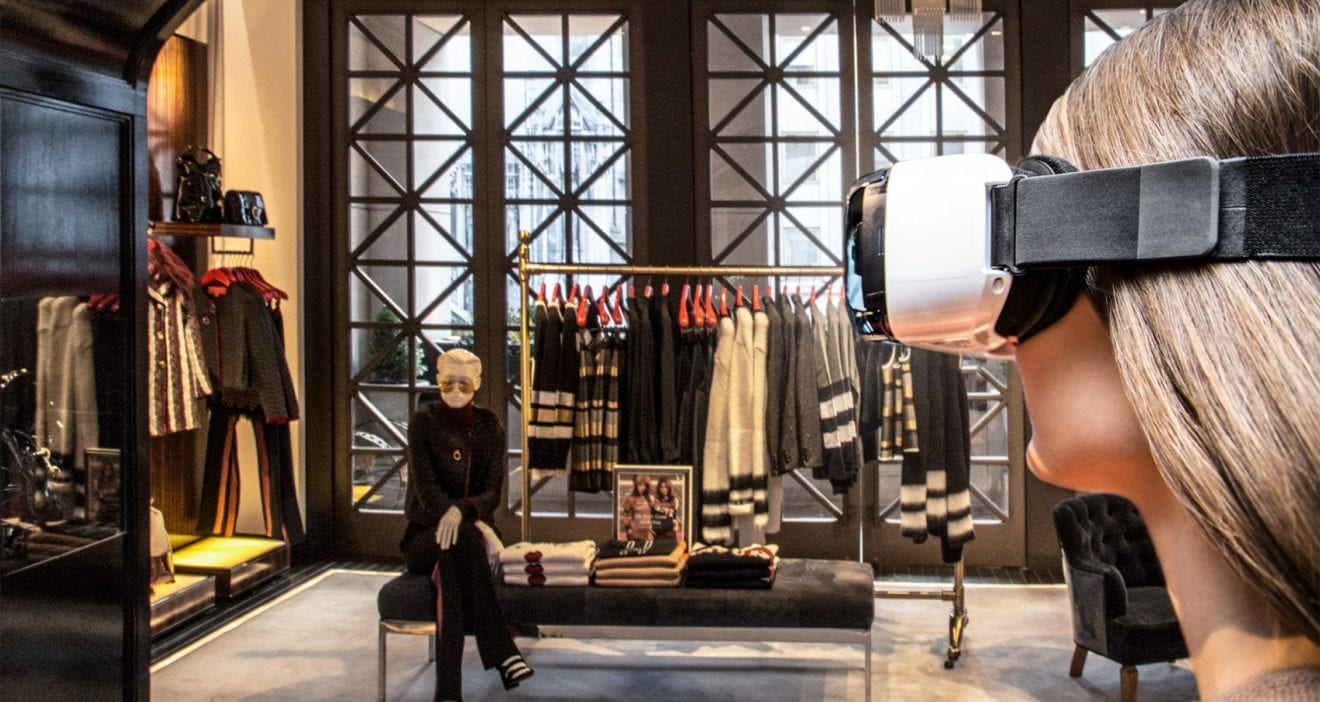
    Imagine consumers using VR to browse a virtual physical store, representing the catalogue (or a subset of) the online inventory. Even brands that have an existing physical retail footprint would benefit from the ability to amplify this bricks-and-mortar experience across markets they don’t have the scale or reach to address.

    Sizing has been an eternal struggle for online clothing retailers and consumers alike. How to know if the shirt you’re purchasing online will actually fit properly when it arrives?  Sizing charts are not standardised, and even if they were, there is no single reference body type to target a perfect fit.

    So how do you try before you buy? A virtual fitting room could come very close to replicating the experience of trying on clothes in a real physical fitting room. Imagine associating detailed physical dimensions of your body with your online shopping persona.

    Using this information, alongside similarly detailed sizing information for the individual clothing items could let you try on pieces of clothing in a virtual mirror. As you raise your arms or tilt your hips, you could see the fabric as it contours and hangs off your virtual body.

    Future opportunities

    This is just one creative application of VR hardware and virtual environments. The potential is almost limitless, and there isn’t a field or industry that won’t be touched in some way by this technology.

    While the incumbent hardware/software companies have all planted their stakes in the ground, there will be massive opportunities for all players in the ecosystem, especially content creators who understand how to create experiences on this new canvas.

    Once again, this illustrates the competitive advantage which exists for companies who can master the intersection of design and technology. Organisations who successfully combine these two disciplines will be in a unique position to benefit from the enormous future demand for virtual experiences.

    written by Marc Lamothe, Technical Director at Start Hong Kong

  • Microsoft Malaysia builds phone store network

    Microsoft Malaysia builds phone store network

    Microsoft Malaysia will convert 39 Nokia retail stores into a network of Microsoft authorised reseller smartphone shops.

    The company’s GM of mobile devices sales for Malaysia, Singapore and Brunei, Bruce Howe, revealed the plan during the opening ceremony of the first Microsoft Malaysia store at the Suria KLCC shopping centre in downtown Kuala Lumpur.

    Malaysia is the first country in the Asia-Pacific region to see the new telco store format and the conversions are scheduled to be complete by the end of the year.

    “This transition is a big leap for our brand besides giving opportunity in terms of scaling up the retail footprint and widen the Microsoft range in Malaysia,” he said at the launch..

    Microsoft Malaysia chief marketing and operation officer Rukmani Subramaniam described the launch as a “significant development” for the brand.

    “We get feedback from Microsoft customers that its hard to find Microsoft stores in Malaysia, so we ran this transition to give more chances for them visit and learn how to make the most of Microsoft technology,” she said.

    Microsoft, the world’s largest computer software company, acquired the Finnish Nokia telecommunications technology company’s devices and services division business in April 2014, forming a wholly owned Finland-based subsidiary Microsoft Mobile Oy. That company has the rights to use Nokia branding on some phones, but not on the popular Lumia range, which is now sold as a Microsoft handset.

  • Microsoft to open flagship Pitt Street Mall store in Sydney

    Microsoft to open flagship Pitt Street Mall store in Sydney

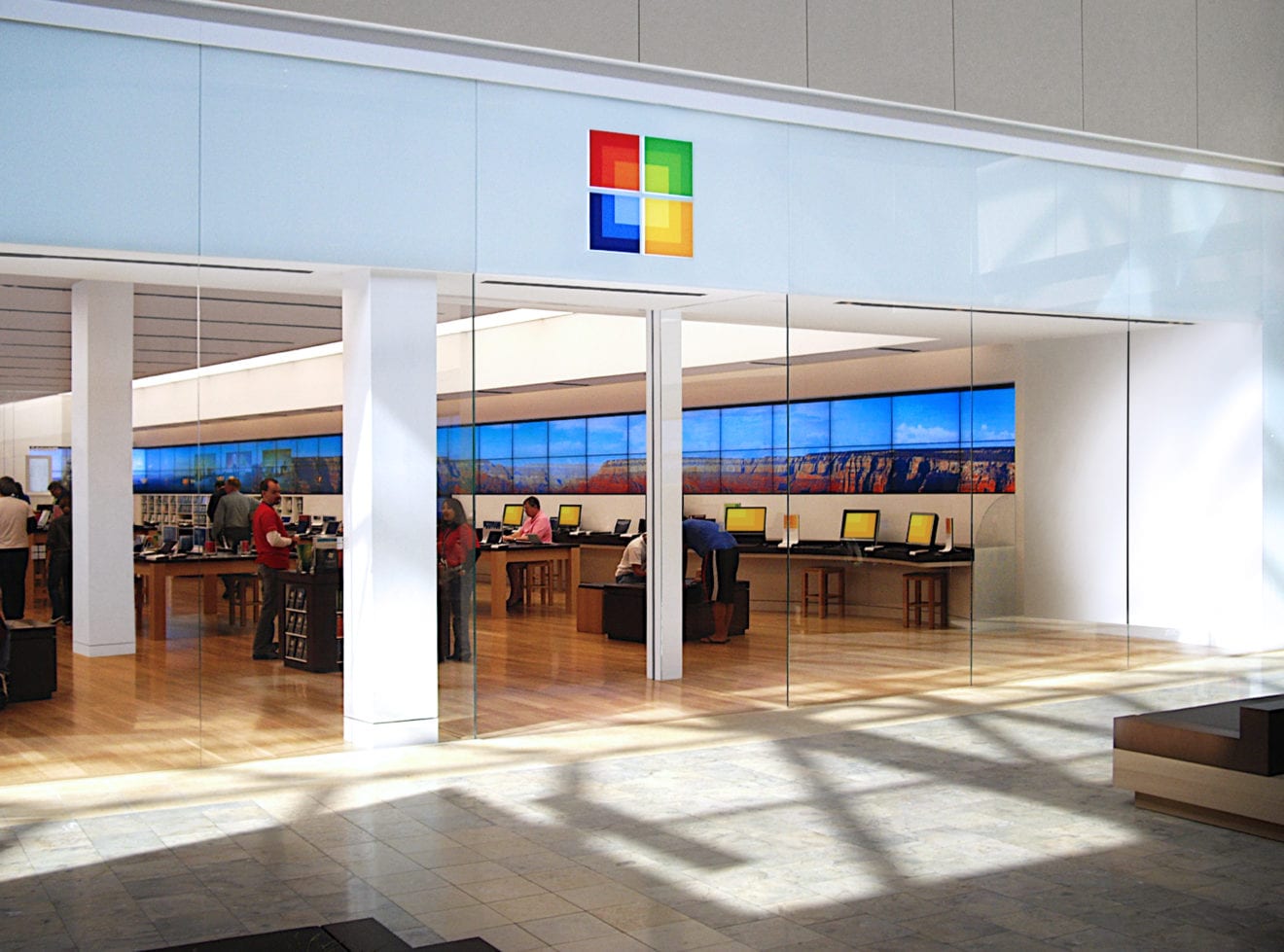
    Pitt Street Mall in Sydney has morphed into the playground of the rich and famous, with Microsoft, founded by Bill Gates, said to be the latest international name to have signed up a flagship store along the strip.

    In the most recent Main Streets Around the World survey by Cushman & Wakefield, Pitt Street Mall was named the fifth most expensive strip in terms of rent, and only sits behind New York’s Upper Fifth Avenue, London’s Bond Street and Hong Kong’s Causeway Bay. The average rent is about AUD10,000 (USD7787) per square metre, per annum.

    It is said the computer giant’s first major site in the country will be where the Guess was and could even spill over to the next-door space which was, until recently, leased by Cue. If the two stores are leased the site will total about 650 square metres over two levels.

  • Alibaba: Microsoft, Amazon are friends – not rivals

    Alibaba: Microsoft, Amazon are friends – not rivals

    Amazon and Microsoft are “friends” not rivals of Alibaba in the cloud computing space, a top exec at the Chinese e-commerce giant told CNBC.

    The comments come just a few days after Alibaba opened a data centre in Silicon Valley – its first on US turf in a cloud market dominated by Amazon, Google and Microsoft.

    But Ethan Yu, the international head of Alibaba’s cloud division, Aliyun, told CNBC that the company was not in competition with its US counterparts.

  • Microsoft helps Big C to deploy cloud solution at its supermarkets

    Microsoft helps Big C to deploy cloud solution at its supermarkets

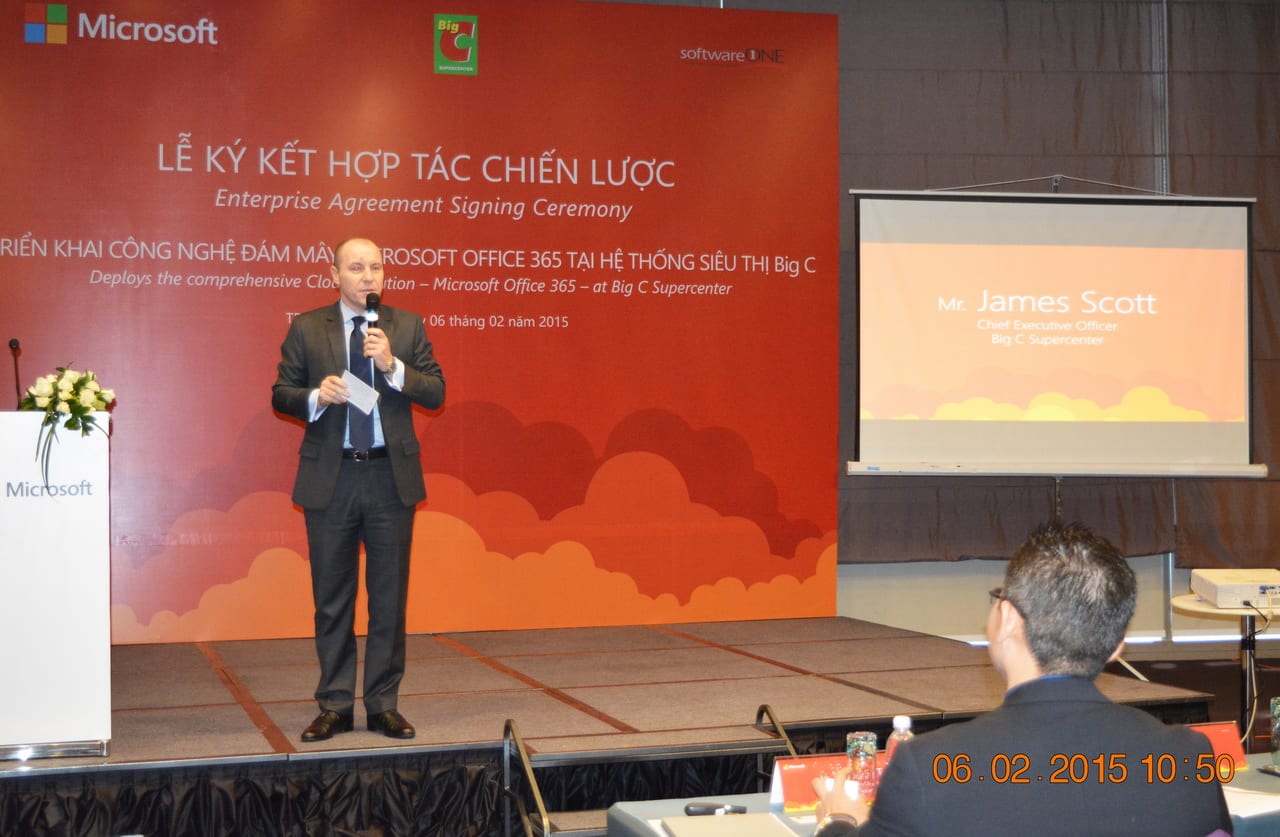
    US technology giant Microsoft Corp signed an enterprise agreement with Big C in Ho Chi Minh City on 6 February to deploy cloud solution “Office 365” in Big C’s supermarket chains.

    The cloud solution is expected to enhance the quality of customer service by optimising operation costs and boosting system capacity, while ensuring safety and security at the same time.

    Starting in Vietnam in 1998, the Big C supermarket chain currently has 30 commercial centres and supermarkets in 20 cities and provinces in the country.

  • TGI Fridays partners with Microsoft on tablets to streamline orders

    TGI Fridays partners with Microsoft on tablets to streamline orders

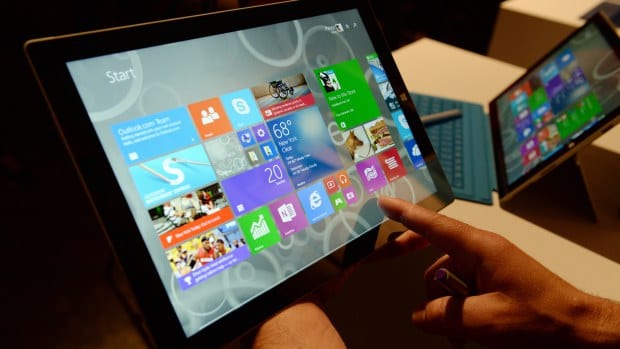
    TGI Fridays Inc. is equipping servers with 8-inch tablets so they can quickly and accurately process orders and payments while at the table.

    The devices use Windows 8.1, running Oracle’s MICROS Restaurant Enterprise Solution (RES) 5.4 on Oracle’s MICROS mTablet E-Series mobile point of sale devices.

    Servers can carry these tablets from table to table to take orders and respond promptly to guest requests. It improves table wait and helps regulate the pace of orders sent to the kitchen.

    “TGI Fridays is rethinking how technology can lead to restaurant innovation,” said Tracy Issel, general manager of Worldwide Retail, Consumer Goods, Hospitality and Travel for Microsoft. “We are helping it change the way food orders are processed and wait staff and managers do their jobs, reinventing the customer experience, one restaurant at a time.

    Many restaurant technology solutions rely on proprietary hardware or custom ruggedized devices, built to withstand the abuse of a kitchen environment. Such solutions can be expensive and take a long time to develop and deploy.

    Oracle’s MICROS RES 5.4 allows TGI Fridays to manage the various aspects of running a restaurant, from tableside ordering to traffic and queue management, all from one solution and in a much more cost-effective way.

    “Windows 8 gave us a platform that allowed us to develop a new user interface, which gives our servers even better tools to delight our guests and make their experience even more enjoyable,” said TGI Fridays Vice President and CIO Tripp Sessions.

  • Microsoft partners with Alibaba to enhance IP protection for its products

    Microsoft partners with Alibaba to enhance IP protection for its products

    An agreement between Microsoft (China) and Alibaba Group Holding Limited (Alibaba Group) is expected to enhance the protection of Microsoft’s intellectual property rights (IPR) on the two most popular e-commerce platforms in China operated by Alibaba – Taobao Marketplace and Tmall.com.

    The cooperation is also expected to strengthen anti-counterfeit measures already in place on both platforms.

    Both sides said they will work to raise awareness among consumers about the threats posed by counterfeit and unlicensed software to their information security, privacy and personal data.

    Tim Cranton, Microsoft’s Associate General Counsel and Greater China Region’s Chief Legal Counsel, said legitimate businesses and innovators in China will also benefit from a safer and more robust e-commerce marketplace with safeguards to protect intellectual property rights.

    Under the agreement, Taobao and Tmall will remove product listings suspected of offering counterfeit or unlicensed Microsoft products. Alibaba Group and its associated companies like Alipay will cooperate with relevant parties and provide necessary information to those consumers who mistakenly buy unauthorized software to receive compensation from the sellers according to relevant laws.

    Microsoft’s cooperation with Alibaba Group dates back to April 2007 when Microsoft signed a memorandum of understanding with Alisoft as the two parties joined hands in providing information service for small- and medium-sized businesses.

    In December 2013, Microsoft launched its flagship online store on Tmall.com, the largest e-commerce platform in China with to promote genuine Microsoft software.