Retail News CRM

Tag: microsoft

  • Microsoft and FPT develop strategic partnership

    Microsoft and FPT develop strategic partnership

    Microsoft and FPT last week signed an Enterprise Agreement focusing on digital transformations and cloud deployments. The agreement tightens the long-term strategic partnership that has been in place for almost 20 years between the two leading IT corporations.

    Specifically, FPT will be the first and largest business in Việt Nam to put in place Microsoft’s cloud computing for all operations of the corporation, in a bid to optimise operational efficiencies and improve competitiveness. FPT will also promote Microsoft’s advanced cloud services to the corporation’s clients.

    “As two global and local IT corporations, Microsoft and FPT want to continuously strengthen this long-term, sustainable relationship via cooperation in technology. The move to the cloud by Microsoft technology will surely help FPT further develop, complete its mission to adapt technology, and develop the knowledge to enable Việt Nam to reach its potential and partly address socio-economic issues,” stressed Vũ Minh Trí, CEO of Microsoft Việt Nam.

    In the first phase, FPT will adopt Microsoft Office 365 and move its entire system and all data to the cloud, at the same time deploying One Drive for Business and Skype for Business to optimise operating performances. In the next phase, FPT and Microsoft will develop the cloud to digitally transform their clients in Việt Nam.

    Nowadays, most of the world’s large tech companies have adopted cloud computing. However, in Việt Nam the majority of businesses are still reluctant to move their system and data to the cloud, particularly large companies.

    Such a large tech corporation as FPT, as it becomes a pioneer in adopting Microsoft Office 365 advanced cloud services for a large number of users, will contribute to encouraging other businesses to adopt cloud technologies. With the strength of Việt Nam’s leading provider of IT services, FPT and Microsoft will jointly develop the cloud market segment in Việt Nam and other countries.

  • Laos teams with Microsoft on digital transformation

    Laos teams with Microsoft on digital transformation

    The government of Laos has teamed up with Microsoft to advance the adoption of emerging technologies for sustainable economic development, with focus on projects with social impact.

    At a Government Solution Day event held in collaboration with the Laos Ministry of Post and Telecommunications (MPT) and attended by key government officials and partners, Microsoft showcased how the government can use technology to digitally transform and support economic development.

    Vivek Puthucode, GM for the public sector for Microsoft Asia-Pacific, said the benefits of the digital economy remain out of reach for many in emerging markets despite the enormous untapped opportunities across various industry sectors.

    “As part of Microsoft’s National Empowerment Plan, our approach is to work closely with governments and public sector agencies to support them in overcoming challenges and building more cloud-enabling environments to accelerate their competitiveness, productivity and modernization of operations through trusted technology,” he said.

    This cloud-based, digital transformation roadmap is especially aimed to enable emerging markets, such as Laos, harness the power of technology to embark on a digital transformation journey, aligned with their national priorities.

    “Embracing trusted technology, particularly the power of emerging ICT, will be key to enabling Laos’ growing economy to take a giant leap forward, propelling our nation into a digital enabled community and economy,” said Dr. Thansamay Kommasith, minister of post and telecommunications of Lao PDR.

    “Government Solution Day affirms our vision to drive inclusive growth, a smart government, and transform the way both public and private sectors operate – not only by ensuring accessibility of tools, but also by establishing the right processes and building the digital skills of our citizens,” he added.

    Besides having access to the right tools, people must also know how to use them, according to Michelle Simmons, Microsoft APAC’s GM for new markets in Southeast Asia.

    “Looking ahead, what will be critical for Laos to thrive is digital literacy. We are working with the government to not only deliver educational programs, but also to support the educators themselves with the right resources to impart science, technology, engineering, and mathematics (STEM) skills to local youth, preparing them for jobs of the future,” she said.

    Microsoft had previously inked a memorandum of understanding (MoU) with the Ministry of Education and Sport in Laos to develop a holistic plan to leverage technology for education, covering a range of programs that will support the development of 21st century skills and employability of students.

  • Microsoft extends CityNext project to Hong Kong

    Microsoft extends CityNext project to Hong Kong

    Microsoft has extended its global CityNext smart city initiative to Hong Kong and is seeking local partners to collaborate.

    Through the CityNext initiative, Microsoft is working with partners including system integrators to deliver smart city offerings to businesses and governments.

    Microsoft held an industry event in Hong Kong last week to discuss the transformative potential of intelligent systems and data analytics in smart city applications. Over 100 channel partners and potential customers attended.

    Speaking at the event, Microsoft Hong Kong national CTO Fred Sheu said the CityNext program will help governments deliver digital services to ensure their citizens enjoy healthier lives, as well as access to high-quality education and other critical needs.

    “Together with our partners, we can transform a city’s operations and infrastructure, engage citizens and accelerate innovation to create truly sustainable cities — where citizens, businesses and governments work alongside one another for a better tomorrow,” he said.

    “Through CityNext, we provide solutions that focus the most powerful modern technology — cloud, big data, mobile, and social technologies — on the city’s most pressing issues. For example, two critical components of any smart city are machine learning and IoT, which we are proud to offer to our partners via our much-heralded Azure cloud platform.”

    Microsoft CTO for data insights John Nisi added that the use of intelligent systems is helping businesses and governments re-imagine the value chain.

    “Modern businesses faced with economic uncertainty and disruptive competitors can leverage analytics and predictive data to create new revenue streams and opportunities that will allow them to thrive in the digital era,” he said.

    According to Sheu, more than 300 partners worldwide have already signed up for the CityNext program. In Hong Kong, over 10 partners have joined the program to provide smart healthcare, smart building, smart government and geographical information system (GIS) offerings and the like.

  • Microsoft opens IoT innovation center in Taiwan

    Microsoft opens IoT innovation center in Taiwan

    Microsoft has opened its first IoT Innovation Center for the APAC region in Taiwan.

    The center aims to offer cross-discipline technology transfer, strategic alliances, business model transformation and innovation opportunities. Taiwan was chosen because of its renowned high-tech and hardware manufacturing sectors.

    The center will act as a link between regional IoT partners and the world, covering R&D project integration, technology development, and international collaboration.

    As IoT solutions will need to be tested, verified, and improved via actual clients’ projects, the Innovation Center will also include an IoT Community Lab that provides partners with IoT technology training, professional consultation, and three IoT Scenario Labs, delivering tailor-made services, such as technology development, architecture design, and business consultation.

    “The Microsoft IoT Innovation Center in Taiwan is our starting point for capturing the booming IoT opportunity in Asia,” Microsoft Cloud Enterprise GM Chris Phillips said during the Microsoft IoT Expo held in Taiwan.

    “We aim to do this by accelerating the collaboration between Taiwan-based companies and global partners. We are already collaborating with close to 50 companies at the Innovation Center and based on the initial interest, we expect to have many more join us before the end of the year.”

    Microsoft’s regional ecosystem consists of 370 partners from Taiwan, Singapore, Hong Kong, Thailand, Malaysia, Australia, Philippines, India, Japan, Korea and China and encompasses industries including manufacturing, healthcare, transportation and retail.

    The company has been investing in growing the IoT ecosystem in Asia. About 50% of all companies that are Microsoft Azure Certified for IoT exist within the region.

    Since the signing of a memorandum of understanding (MOU) on IoT with the Ministry of Economic Affairs (MOEA) in Taiwan last October, Microsoft has actively promoted several IoT related industry and talent development programs. For example, the first DevDays Asia took place in Taiwan last April with presentations from over 10 scientists and architects.

  • Standard Chartered and IBM back Byte Academy’s Singapore fintech school

    Standard Chartered and IBM back Byte Academy’s Singapore fintech school

    Standard Chartered Bank, IBM, Insead, Thomson Reuters and Microsoft are backing a fintech school at New York-based Byte Academy’s first international venture, in Singapore.

    The firms have come together to form a fintech skills charter that will guide Byte Academy’s 12-week and eight-week courses for students focussing on fintech and software development.The 12-week full-time courses will provide the fundamentals for students to work on real, industry-specific problems and allow for interaction with industry partners to prepare for direct placement and job matching upon graduation. Students that graduate receive guaranteed job placements at the bank and tech partners.

    Shameek Kundu, global head, data, architecture and innovation, Standard Chartered, says: “The establishment of Byte Academy is another progressive initiative which will help to fuel Singapore’s Smart Nation ambitions by adding to the country’s great ecosystem of financial institutions, technology companies, universities and research organisations.”

    Nobuhiro Ito, director, developer experience and evangelism, Microsoft Singapore, adds: “Byte Academy’s presence here in Singapore will help accelerate skills development that will help contribute to a more vibrant FinTech ecosystem and build a stronger Singapore core.”

  • Lenovo launches transit app in China

    Lenovo launches transit app in China

    Lenovo has commercially launched its transit application in China with the electronic payment and settlement service provider BMAC (Beijing Municipal Administration and Communications Card).

    The service is supported  on Lenovo X3 smartphones driven by the eSE PEARL by OT (Oberthur Technologies).

    Thanks to OT’s NFC embedded Secure Element, end-users can now use their Lenovo X3 smartphone to install the Beijing Municipal Administration Traffic Card in their Lenovo Transit application and commute simply by waving their phone in front of contactless transit terminals.

    PEARL by OT is described as  the most advanced embedded Secure Element on the market, offering a yet unattained level of security and the largest memory on the market. It allows easy deployment of secure mobile contactless payment, transit, governmental and automotive applications, as well as secure access to online services for enterprise and consumer markets.

    In addition to its eSE, OT provides its Key Management System to Lenovo to manage security domains on the eSE in which partners can securely load, install and run their applications.

    Via its China Secure Hub, a platform used to connect handset makers and their partners in different cities in China, OT also securely ensures the connectivity between Lenovo and BMAC’s TSM provider, Beijing eNFC science and technology.

    “China is often at the forefront of new technologies and we are happy to offer Lenovo users with a convenient, secure and easy-to-use way of commuting with the BMAC application” said Viken Gazarian, deputy managing director of the connected device makers business at OT.

    “PEARL by OT is the best eSE on the market to address the fragmented market of transport systems throughout the world and is the sole component to support international as well as Chinese transit technologies,” said Gazarian.

  • BT, Microsoft “simplify” hybrid cloud

    BT, Microsoft “simplify” hybrid cloud

    BT has announced the availability of BT Compute for Microsoft Azure, a new service that allows BT customers to order Microsoft Azure alongside BT’s own cloud services.

    The service enables customers to build hybrid cloud infrastructure with a single service wrap, contract and on a single bill.

    BT customers already use private and public cloud services – also known as hybrid cloud – hosted in BT Compute’s 48 data center globally.

    With BT acting as their cloud services integrator, and by using CMS, customers can manage their cloud services end-to-end from data center to network, maximizing the benefits and minimizing the complexity, risk and costs of moving to the cloud. Using local delivery with global scale allows BT to meet the evolving needs of organizations for cloud services and at the same time address the complexity of regulatory requirements.

    Integration of Microsoft Azure into the CMS expands the choice for BT customers. They gain access to Microsoft’s rapidly growing collection of integrated cloud services, including Infrastructure as a Service (Iaas) and Platform as a Service (PaaS) computing capabilities.

    Neil Lock, VP BT compute at global services, said “Hybrid cloud has become a major focus for many large enterprises as they choose a variety of cloud solutions to suit their complex business needs.”

    “In fact, BT research suggests that 90% of its largest customers expect to be using a combination of public and private cloud in the next few years. Through our relationship with Microsoft, customers can build their own hybrid cloud environment and enjoy the benefits of Azure whilst removing costly management concerns from the equation,” the executive said.

    The service will be available during the final quarter of the year.

  • New Zealand’s Ministry of Health approves MS cloud services

    New Zealand’s Ministry of Health approves MS cloud services

    New Zealand’s Ministry of Health has officially approved the use of cloud services for advancing the country’s electronic health service capabilities.

    Specifically, Microsoft’s core cloud services Azure, Office 365 and Dynamics CRM Online have been deemed to meet the ministry’s requirements for storage of personal health information.

    Barrie Sheers, Managing Director for Microsoft New Zealand, said the government’s decision to use Microsoft’s Trusted Public Cloud services will be transformative for the eHealth agenda in New Zealand.

    “New Zealand’s health tech industry is today worth $1.3 billion to the local economy, and our country significantly punches above its weight on the international stage with health tech innovation,” he said.

    “With leading exporters like Orion Health and more than a hundred other smaller independent software vendors, the health tech sector in New Zealand is one that continues to grow and provide a burgeoning opportunity for export to the fast growing global health market.”

    With the advent of personalized medicine, genomics, intelligent sensors, advanced diagnostics and laboratory tests, data usage by health organizations will also increase as the sector builds ever more advanced models of the human body, according to Gabe Rijpma, senior director of health and social services Asia at Microsoft.

    “Being able to process all this data, store it, analyze it and make intelligent predictions on the results will usher in a new era of healthcare that will radically transform the way care is both diagnosed and delivered,” he said.

    Rijpma who is based at Microsoft NZ’s Christchurch office, said the local health tech sector has already been rapidly adopting the public cloud to develop futuristic solutions, but they have not been able to sell those solutions in international markets until now.

    “Now the local health tech sector will be able to use New Zealand as a fertile ground for new innovation and also deliver their world firsts here, too,” he added.

  • Upgrade broadens Pantip Plaza’s appeal

    Upgrade broadens Pantip Plaza’s appeal

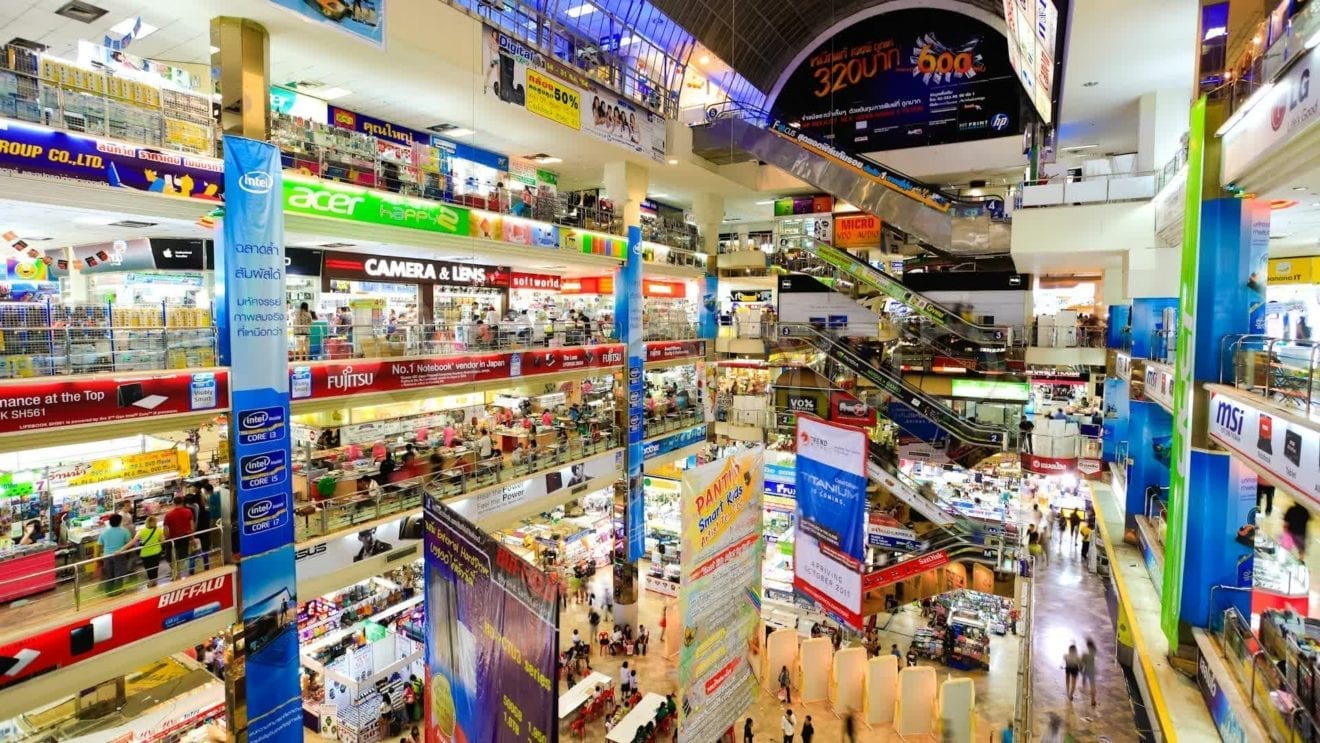
    Two years of renovation have breathed new life into Bangkok IT hub Pantip Plaza, on Phetchaburi Road.

    It re-opens on Monday as Tech Life Mall, offering wider aisles and spaces where customers can try balance wheels, scooters and drones.

    “We position ourselves as a fun place for shopping, and we broaden the target groups to kids and teenagers,” says asset manager Sansern Na Patthalung of Asset World Estate, which runs Pantip Plaza.

    The 36,000 sqm mall will have 300 IT dealers offering gadgets, gaming and business products, as well as a co-working space. Companies represented include local brand Intel Microelectronics, which sponsors an e-sports arena, while Google and Microsoft showcase their innovations at the Experience Zone.

    Syn Hub, the co-working space, will provide innovative technologies ranging from 3D printers, mechanics supporting the industrial internet of things, embedded electronics and radio frequency identification (RFI) systems.

    Over the past months different parts of the new development have been opened, attracting about 20,000 visitors a day. However, the aim is to attract 35,000 to 40,000 people a day by the end of this year.

  • Cloud computing can help firms cut costs

    Cloud computing can help firms cut costs

    With the rise of cloud computing in business practices worldwide, Microsoft is encouraging Indonesian industries and businesses to take advantage of this technology in their day-to-day operations, mainly due to the cost-cutting advantages that it offers.

    Microsoft Indonesia’s national technology officer Tony Seno Hartono explained that by using public cloud services, such as the ones Microsoft offers through its Azure service, Indonesia’s businesses could significantly increase their operational efficiency, by 25 to 50 percent.

    This is due to the fact that cloud services provide many streamlined features such as server management, data storage and even the electricity to keep the data-storing servers alive. “It can help businesses decrease their operational costs, because using cloud services is basically like outsourcing. Microsoft has a huge data center, capable of storing data and managing it for you. Why not utilize our services?” he said on Monday.

    Microsoft, he continued, is in talks with an unspecified telecom operator to build a data center in Indonesia, but says the negotiations are still ongoing. Indonesian users of Azure currently have their data stored in Microsoft’s data centers abroad, such as in Singapore and the US.

    Adding to the virtues of cloud computing, Tony elaborated that the local creative industry could also harness the benefits of Microsoft’s multiple data centers for creating works of art. One example is in the animation industry, where higher quality animations require massive amounts of time and data to be rendered.

    During the making of James Cameron’s blockbuster film Avatar, Cameron collaborated with Microsoft to render the CGI animations using their public cloud services, thus saving the film production time and costs.

    Tony said that if Cameron had not utilized Microsoft’s multiple data centers, the animations from Avatar would have taken many years to render properly due to the film’s scale and size.

    Within the film industry in Indonesia, many have expressed interest in using Microsoft servers but none have used them so far, because the industry still remains small, and large-scale animation jobs in Indonesia tend to be taken to foreign animation studios to be worked on, Tony added.

    From the perspective of Winastwan Gora, chief operating officer of tech education start-up Kelase, the usage of Azure cloud services has benefitted his company’s operations and has helped cut costs.

    Kelase signed up for Microsoft’s BizSpark service, for three years of Azure usage with a usage cost limit of US$150 per month. The move guaranteed them space on Microsoft’s data centers abroad for storing and processing their information.

    “By utilizing the Azure cloud, we were able to improve our communications and marketing efforts and also, our analytical and source control mechanisms became easier to carry out compared with other means. In other words, it’s now easier for the company to be run digitally,” Gora said.

  • Facebook, Microsoft team for mid-Atlantic cable

    Facebook, Microsoft team for mid-Atlantic cable

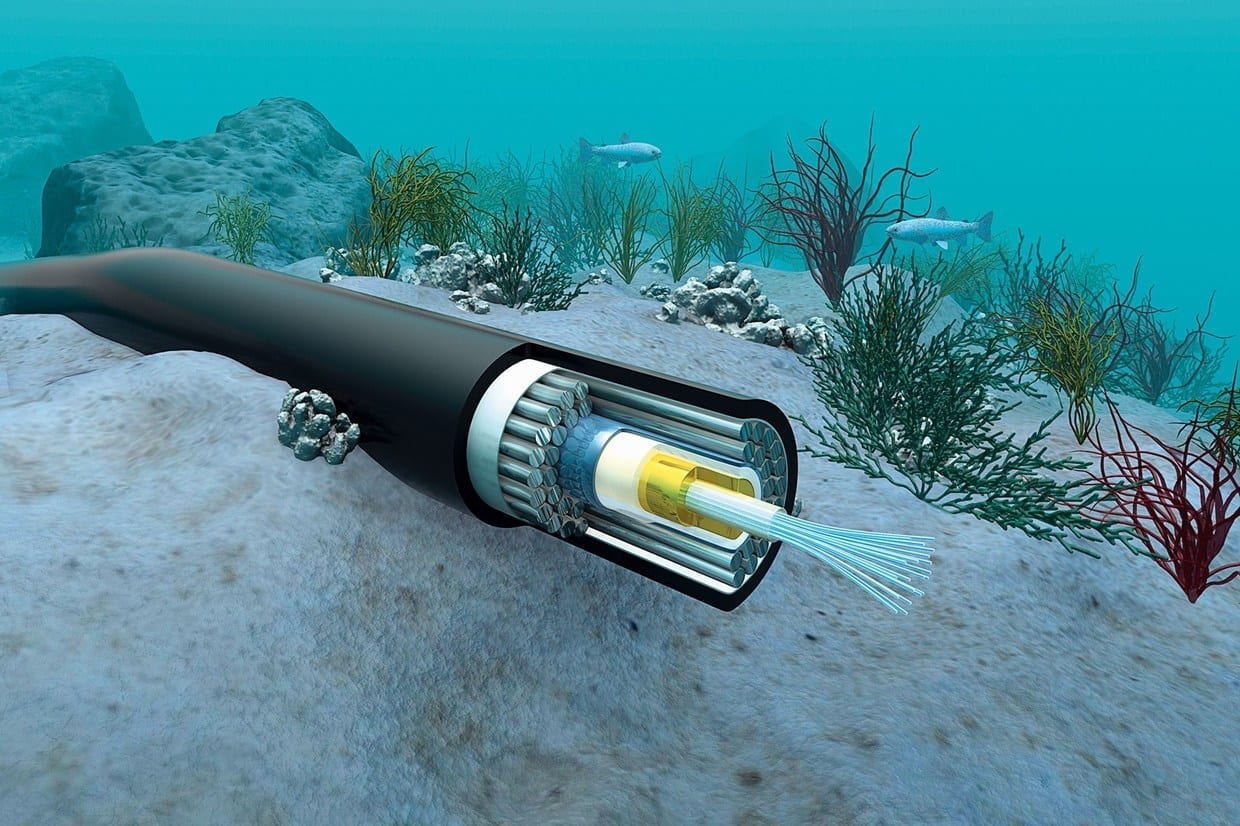
    On what do Facebook and Microsoft agree? Apparently, on the need for a new transatlantic cable between Spain and Virginia in the US. The MAREA cable system was announced yesterday, with the software and social networking giants working with Telefonica’s Telxius subsidiary to make it happen.

    MAREA will supposedly feature 8 fiber pairs and have an initial theoretical capacity of a whopping 160Tbps. It will stretch 6,600km and land in Bilbao in northern Spain and in Virginia Beach. That route takes a less popular southern route to Europe a bit north of the one taken by the aging Columbus system.

    The Virginia Beach landing can be better understood if one recalls that Telefonica’s BRUSA cable hooking up North and South America will also be landing there.

    Just last week we learned that Telefonica has already bought a 3.5 acre site there for a 20,000 square foot building for its cable landing station and data center there. In addition, fiber operators like SummitIG and Lumos Networks have been adding fiber infrastructure throughout southern and central Virginia that will surely help with the backhaul.

    Telxius will operate and manage the cable system itself. Telefonica launched Telxius as its infrastructure arm earlier this year, shifting ownership of towers, subsea cable systems, and other assets into it.

    They hope to monetize those assets in the wake of the blocking of the sale of O2 in the UK, and supposedly this week added several banks to prepare for a $4 billion to $5 billion IPO. That could happen as soon as July.

    This past year has seen the most submarine activity ever from the content guys, and they are increasingly taking the lead on new cable systems they feel are needed to meet their own bandwidth demand.

    Construction of the MAREA cable system is expected to begin in August and finish in October of 2017, although I’m sure they’ll have to time the actual cable laying operations around the Atlantic hurricane season.

  • Microsoft Store opens in Lazada Thailand

    Microsoft Store opens in Lazada Thailand

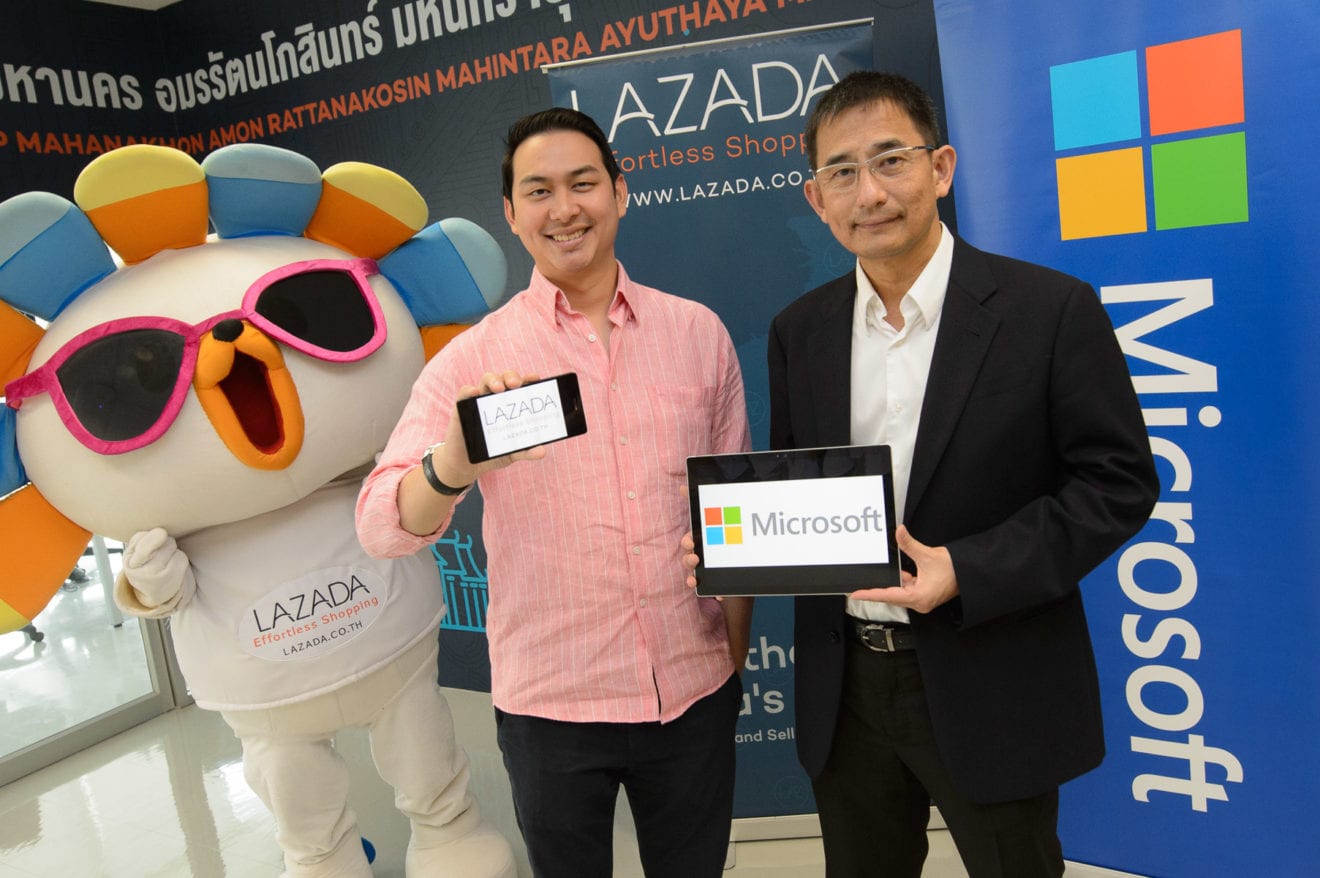
    Microsoft Thailand recently announced the official launch of its Microsoft Online Store on Lazada Thailand.

    The store is envisioned to be a one-stop shop for Microsoft’s products and a destination for exclusive offers and deals, giving Thai consumers access to the full lineup of devices, software, and services, including Surface, Lumia smartphones, Windows 10-powered laptops, tablets, and 2-in-1 devices, various hardware accessories, and the Office productivity suite.

    Following a similar partnership between Microsoft and Lazada in Malaysia last year, Thailand becomes the second country in the region to welcome the Microsoft Online Store on the Lazada platform.

    “The launch of the Microsoft Online Store on Lazada is an important milestone for Microsoft Thailand as the explosion of social and mobile technology has enabled the era of online shopping in Thailand,” said Orapong Thien-Ngern, General Manager, Microsoft Thailand. “Partnering with Lazada gives Microsoft an opportunity to build on our customer-centric approach and deliver our products and services to Thai customers via a platform that is already familiar to them.”

    The Microsoft Online Store opening comes just days before Lazada celebrated its fourth anniversary in Thailand. Lazada has seen rapid growth in the country since its launch in March 2012.

    “We are delighted that Microsoft is launching its online store with Lazada. Together with Microsoft, we are making exciting, aspirational innovative products accessible to more consumers in Thailand,” said Tarin Thaniyavarn, Chief Commercial Officer, Lazada Thailand.

  • Microsoft launches Azure IoT Hub

    Microsoft launches Azure IoT Hub

    Microsoft has announced the wide-scale launch of the  Azure IoT Hub, which allows users to connect, provision and manage billions of IoT devices.

    Microsoft says Azure IoT Hub acts as the bridge between customers’ devices and solutions in the cloud enabling storage, analyzing and acting on data in real time.

    The hub also enables secure two-way communication over open protocols such as MQTT, HTTPS and AMQPS, and is designed to make it easy to connect with other Azure services such as Azure Machine Learning and Azure Stream Analytics.

    In addition to the launch, Microsoft also announced the expansion of Microsoft Azure Certified for IoT program. The program was launched to ensure IoT solutions from global technology leaders are fully interoperable from the start.

    By offering trusted solutions from verified partners that work with multiple operating systems, including Linux, mbed, ROTS and Windows, Azure Certified for IoT accelerates IoT deployments.

    Over the past three-plus months, nearly 30 industry leaders have joined the program, said Microsoft. Now even more have announced their participation, including: Advantech, Dell, HPE and Libelium. Previous certified partners include: Arduino, Beagleboard, Freescale, Intel, Raspberry Pi, Samsung, Texas Instruments and others.

    “IoT is poised for dramatic growth in 2016 and we can’t wait to see what our customers and partners will continue to build on our offerings. We’re just getting started and will have much more to share in the coming months,” said a Microsoft blog post.

  • Virtual reality in retail stores

    Virtual reality in retail stores

    Virtual Reality, as a concept, has been around for over 50 years.

    In the beginning, it was literally the stuff of science fiction.  Then in the early 90’s it actually became reality, when physical prototypes were developed, using the modern technology of the era.  The results were underwhelming – imagine pixelated graphics and heavy, nausea inducing headsets. The concept lay dormant for 20 years before anyone thought to revisit its feasibility.

    That person was Palmer Luckey, the young inventor and founder of Oculus VR. What he discovered is that without anyone realising it, technology had quietly caught up with the requirements of VR. There were now low-latency head orientation sensors and small, high-refresh rate OLED displays which didn’t exist just five years ago.

    Using these off the shelf parts, he constructed a rudimentary hardware proof-of-concept which delivered an immersive experience far beyond what had been seen before.

    From this initial prototype, Oculus was founded, bringing on board many high profile experts in the field of computer graphics, alongside millions of dollars in funding. Their inaugural consumer VR product is about to be released to the public, and many smart people consider this to be a watershed moment.

    Will this be the event that introduces practical VR to the masses?

    Oculus (now owned by Facebook) is leading the way, but Apple, Google, Microsoft and Sony are all working on their own implementations of VR. There’s a full-on VR technology arms race happening, with the usual suspects involved.  They recognise the huge potential of the medium, and the unique ways it can complement their existing product offerings.

    VR 2.0

    This new generation of VR technology is in its infancy, and as with any nascent platform, pundits try to predict the types of experiences it will enable. Stereotypically, new mediums are often projected (interpreted) through the lens of the incumbent platforms which precede it.

    The first automobile was considered a “horseless carriage”. The first motion picture content was essentially just televised theatre. Simply re-imagining the experience of an old medium through a new one may be the path of least of resistance, but it ignores the unique elements of the new.

    So the theory goes, in order to fulfill its true potential, a new medium needs to abandon previous biases and embrace the characteristics and constraints which are unique to it.

    But does this calculus apply to VR? Perhaps not. Unlike all previous mediums, it is has no baked-in constraints. It is not simply a proxy for storytelling or communication. Its ambition is to replicate the reality we natively experience. It is, by design, the last medium.

    The obvious question becomes, what are the scenarios for which diving into an alternate reality becomes preferable to the “real” reality someone is experiencing. As mature as the underlying technology becomes, VR, for the foreseeable future, will forever be chasing the tail of “real life”.

    So what is the individual incentive to temporarily replace what we already (if we’re so lucky) get for free? Understanding the motivations that drive these virtual experiences can uncover the opportunities and jobs to be done of the medium.

    Applications

    In the context of VR, the virtual “reality” is simply “content”. As with all previous mediums, the success of this one will be intrinsically tied to the abundance and quality of content created for it. In this respect, authors and the tools they use to create with will be just as important as the technology that audiences use to consume with.

    These creation tools are also nascent, and consist of both hardware and software solutions.  Let’s explore a potential use-case for this technology within the realm of current domains.

    Virtual reality in retail: eCommerce and virtual stores

    A common current trend in the eCommerce space is the realisation that an online presence alone is not enough to deliver the ideal consumer experience. Even Amazon, the largest pure-play online commerce company has recently opened a “bricks and mortar” physical presence near its headquarters in Seattle.

    What is the impetus for taking this step “backwards” into the 20th century? Well, these companies have discovered that even with an (essentially) limitless online catalogue, the experience of browsing their catalogues online doesn’t compare to the act of literally walking down the aisles of a physical store. It is no substitute for the physical discovery process we take for granted.

    This applies not only to the type of merchandise that Amazon became famous for, like books, but especially so for more visual products like clothing and fashion. There is no substitute for the tactile experience of wandering through a curated store.

    But providing a physical presence requires sacrificing one of the key advantages of online commerce; having an effectively infinite reach, with the ability to target any consumer, wherever they are, independent of their physical location. Reaching global penetration at this physical scale is beyond the reach of all but the largest retailers.

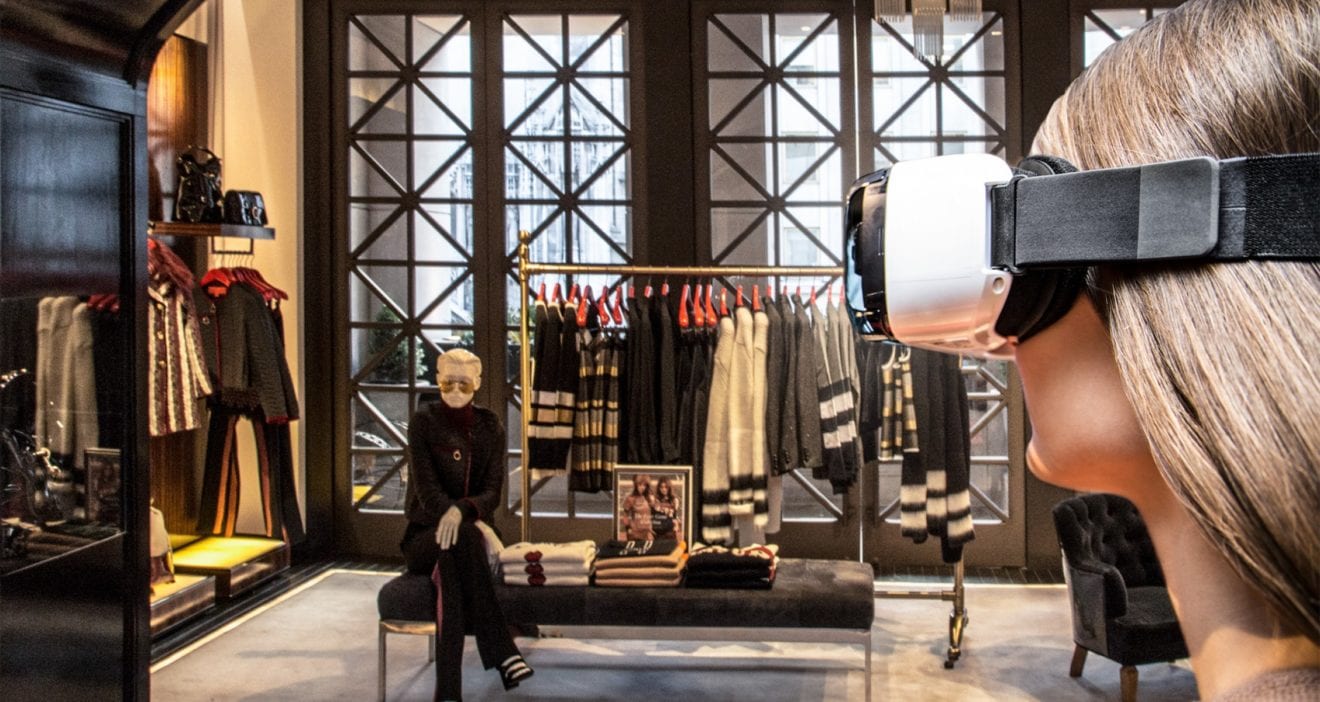
    Imagine consumers using VR to browse a virtual physical store, representing the catalogue (or a subset of) the online inventory. Even brands that have an existing physical retail footprint would benefit from the ability to amplify this bricks-and-mortar experience across markets they don’t have the scale or reach to address.

    Sizing has been an eternal struggle for online clothing retailers and consumers alike. How to know if the shirt you’re purchasing online will actually fit properly when it arrives?  Sizing charts are not standardised, and even if they were, there is no single reference body type to target a perfect fit.

    So how do you try before you buy? A virtual fitting room could come very close to replicating the experience of trying on clothes in a real physical fitting room. Imagine associating detailed physical dimensions of your body with your online shopping persona.

    Using this information, alongside similarly detailed sizing information for the individual clothing items could let you try on pieces of clothing in a virtual mirror. As you raise your arms or tilt your hips, you could see the fabric as it contours and hangs off your virtual body.

    Future opportunities

    This is just one creative application of VR hardware and virtual environments. The potential is almost limitless, and there isn’t a field or industry that won’t be touched in some way by this technology.

    While the incumbent hardware/software companies have all planted their stakes in the ground, there will be massive opportunities for all players in the ecosystem, especially content creators who understand how to create experiences on this new canvas.

    Once again, this illustrates the competitive advantage which exists for companies who can master the intersection of design and technology. Organisations who successfully combine these two disciplines will be in a unique position to benefit from the enormous future demand for virtual experiences.

    written by Marc Lamothe, Technical Director at Start Hong Kong
  • Microsoft Malaysia builds phone store network

    Microsoft Malaysia builds phone store network

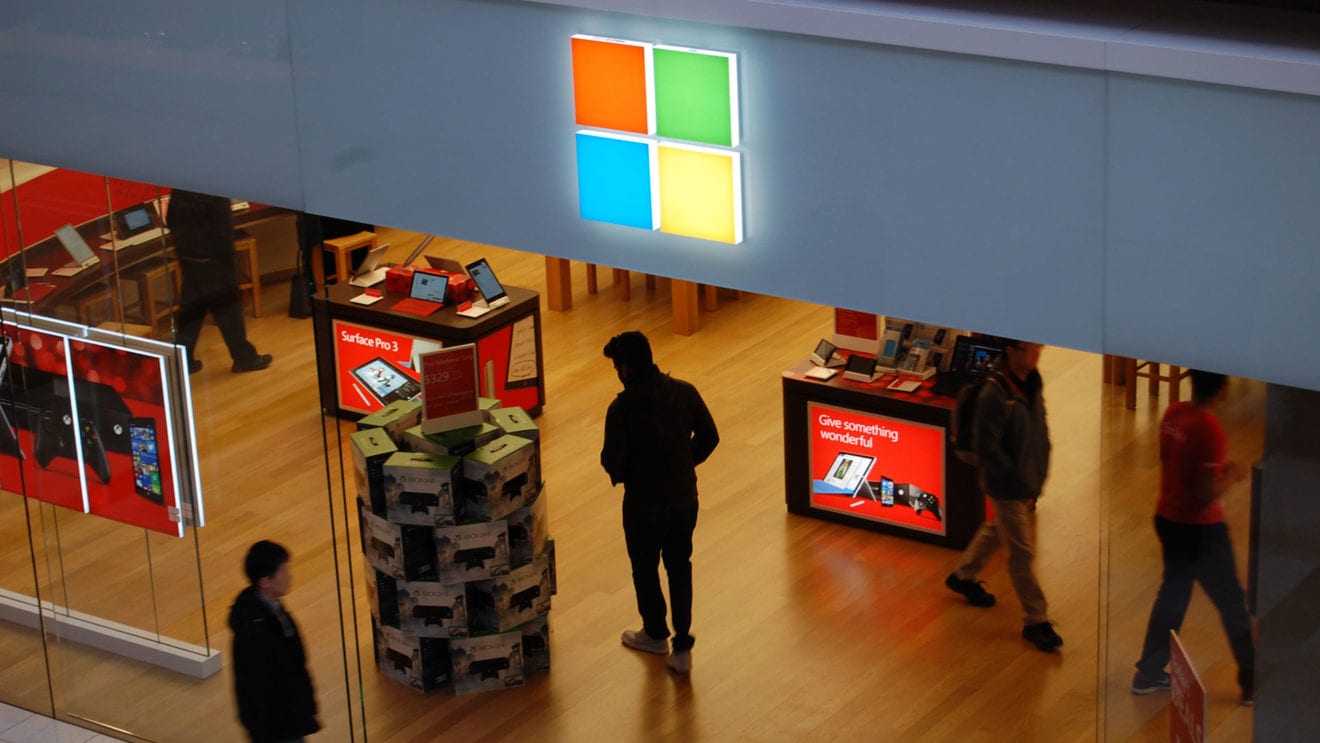
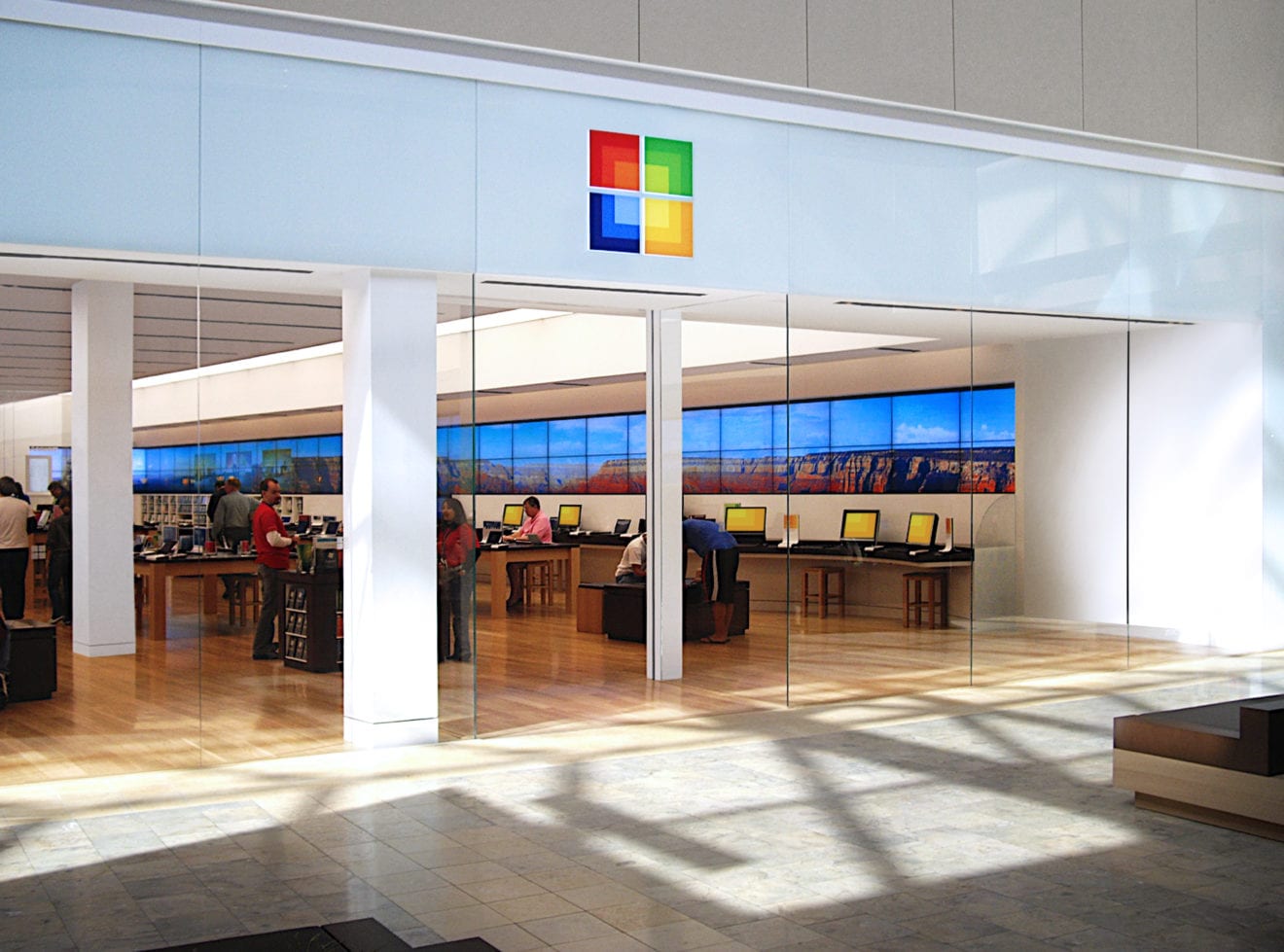
    Microsoft Malaysia will convert 39 Nokia retail stores into a network of Microsoft authorised reseller smartphone shops.

    The company’s GM of mobile devices sales for Malaysia, Singapore and Brunei, Bruce Howe, revealed the plan during the opening ceremony of the first Microsoft Malaysia store at the Suria KLCC shopping centre in downtown Kuala Lumpur.

    Malaysia is the first country in the Asia-Pacific region to see the new telco store format and the conversions are scheduled to be complete by the end of the year.

    “This transition is a big leap for our brand besides giving opportunity in terms of scaling up the retail footprint and widen the Microsoft range in Malaysia,” he said at the launch..

    Microsoft Malaysia chief marketing and operation officer Rukmani Subramaniam described the launch as a “significant development” for the brand.

    “We get feedback from Microsoft customers that its hard to find Microsoft stores in Malaysia, so we ran this transition to give more chances for them visit and learn how to make the most of Microsoft technology,” she said.

    Microsoft, the world’s largest computer software company, acquired the Finnish Nokia telecommunications technology company’s devices and services division business in April 2014, forming a wholly owned Finland-based subsidiary Microsoft Mobile Oy. That company has the rights to use Nokia branding on some phones, but not on the popular Lumia range, which is now sold as a Microsoft handset.