Tag: microsoft

  • Walmart to boost digital footprint

    Walmart to boost digital footprint

    Aiming to make shopping faster and easier for millions of customers, cash-and-carry major Walmart on Tuesday announced a five-year strategic partnership with Microsoft.

    Already using Microsoft services for critical applications and workloads, Walmart will now embark on a broad set of Cloud innovation projects that leverage Machine Learning (ML), Artificial Intelligence (AI) and data platform solutions for a wide range of external customer-facing services and internal business applications.

    “Walmart’s commitment to technology is centred around creating incredibly convenient ways for customers to shop and empowering associates to do their best work,” Doug McMillon, CEO, Walmart, said in a statement.

    “Whether it’s combined with our agile cloud platform or leveraging machine learning and artificial intelligence to work smarter, we believe Microsoft will be a strong partner in driving our ability to innovate further,” McMillon added.

    Walmart has selected full range of Microsoft Cloud solutions, including Azure and Microsoft 365, for enterprise-wide use to help standardise across the company’s family of brands.

    “The world’s leading companies run on our Cloud, and I’m thrilled to partner with Walmart to accelerate their digital transformation with Microsoft Azure and Microsoft 365,” said Satya Nadella, CEO, Microsoft.

    Under the partnership, Walmart and Microsoft engineers will collaborate on the assessment, development and support phase of moving hundreds of existing applications to Cloud native architectures.

    To grow and enhance the online experience, the company will migrate a significant portion of walmart.com and samsclub.com to Azure, including its Cloud-powered check-out, thus, enabling Walmart to grow and reach more global markets than before.

  • Rise of robots fuels slavery threat for Asian factory workers

    Rise of robots fuels slavery threat for Asian factory workers

    Drastic job losses due to the growth of automation in the region – a hub for many manufacturing sectors from garments to vehicles – could produce a spike in labour abuses and slavery in global supply chains, said risk consultancy Verisk Maplecroft on Thursday.

    More than half of workers in Cambodia, Indonesia, Thailand, Vietnam and the Philippines – at least 137 million people – risk losing their jobs to automation in the next two decades, the United Nations’ International Labour Organization (ILO) says.

    The risk of slavery tainting supply chains will spiral as workers who lose their jobs due to increased robot manufacturing will be more vulnerable to workplace abuses as they jostle for fewer jobs at lower wages, said Alexandra Channer of Maplecroft.

    “Displaced workers without the skills to adapt or the cushion of social security will have to compete for a diminishing supply of low-paid, low-skilled work in what will likely be an increasingly exploitative environment,” she said.

    “Without concrete measures from governments to adapt and educate future generations to function alongside machines, it could be a race to the bottom for many workers,” the head of human rights at Britain-based Maplecroft said in a statement.

    Farming, forestry and fishing, manufacturing, construction, retail and hospitality are the sectors in Southeast Asia where workers are most likely to be replaced by robots, Maplecroft said in an annual report, with Vietnam the country at most risk.

    Workers in the garment, textile and footwear industry – mostly women in countries such as Cambodia and Vietnam – face the biggest threat from automation in the region, Maplecroft said.

    The five countries the report lists are already considered high-risk for modern slavery as labour abuses are rife, wages low and the workforce dependent on low-skilled jobs, the firm said, with automation set to make things worse.

    “Automation has always posed a risk to low-skilled jobs, but governments and business can determine how it impacts on workers,” said Cindy Berman of the Ethical Trading Initiative, a group of unions, firms and charities promoting workers’ rights.

    “Technology can be disrupting, but it can also be part of the solution by creating opportunities for better jobs,” its head of slavery strategy.

  • Microsoft opens up a flagship store in Taiwan, the 9th in Asia

    Microsoft opens up a flagship store in Taiwan, the 9th in Asia

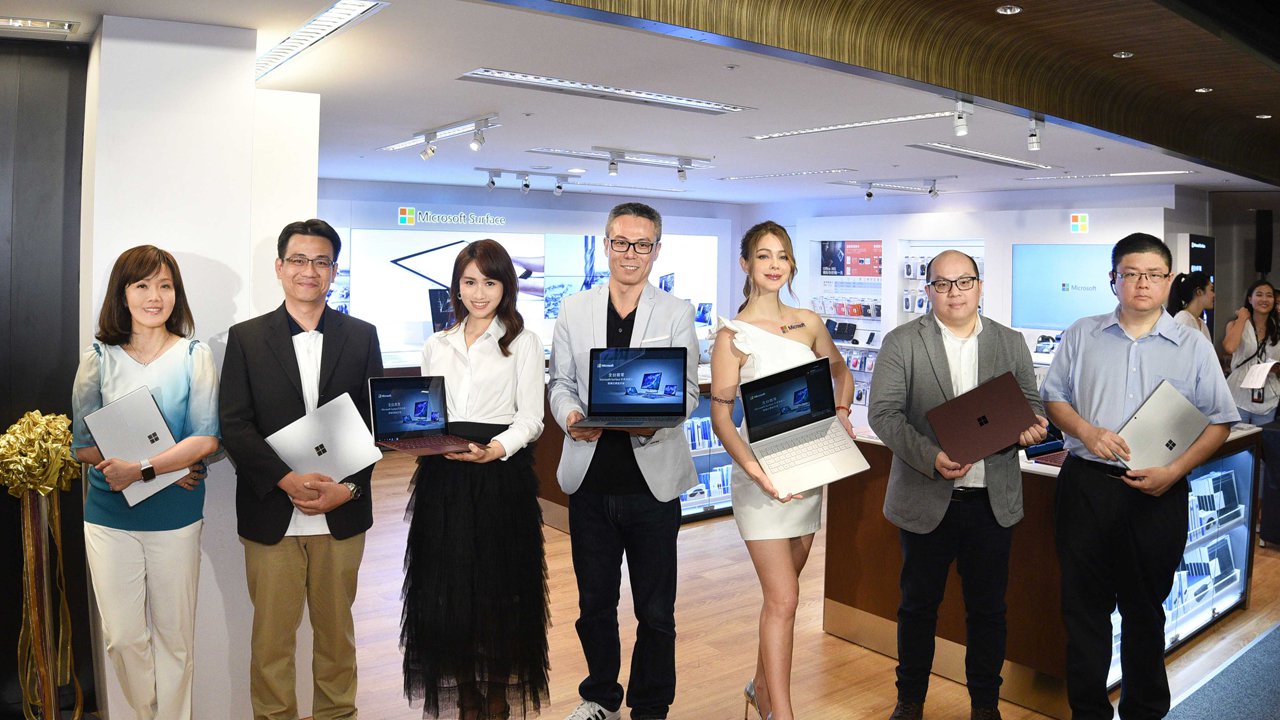
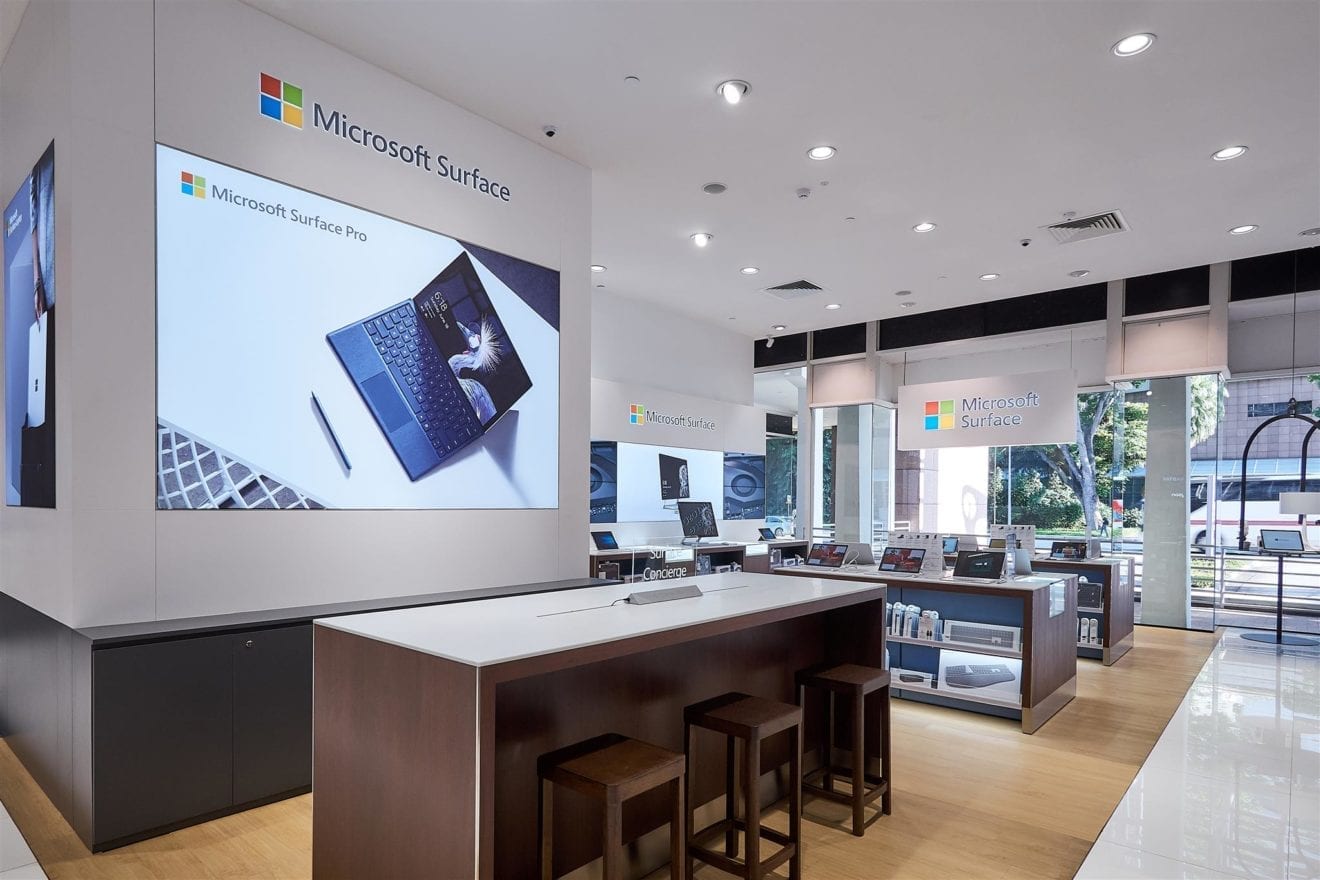
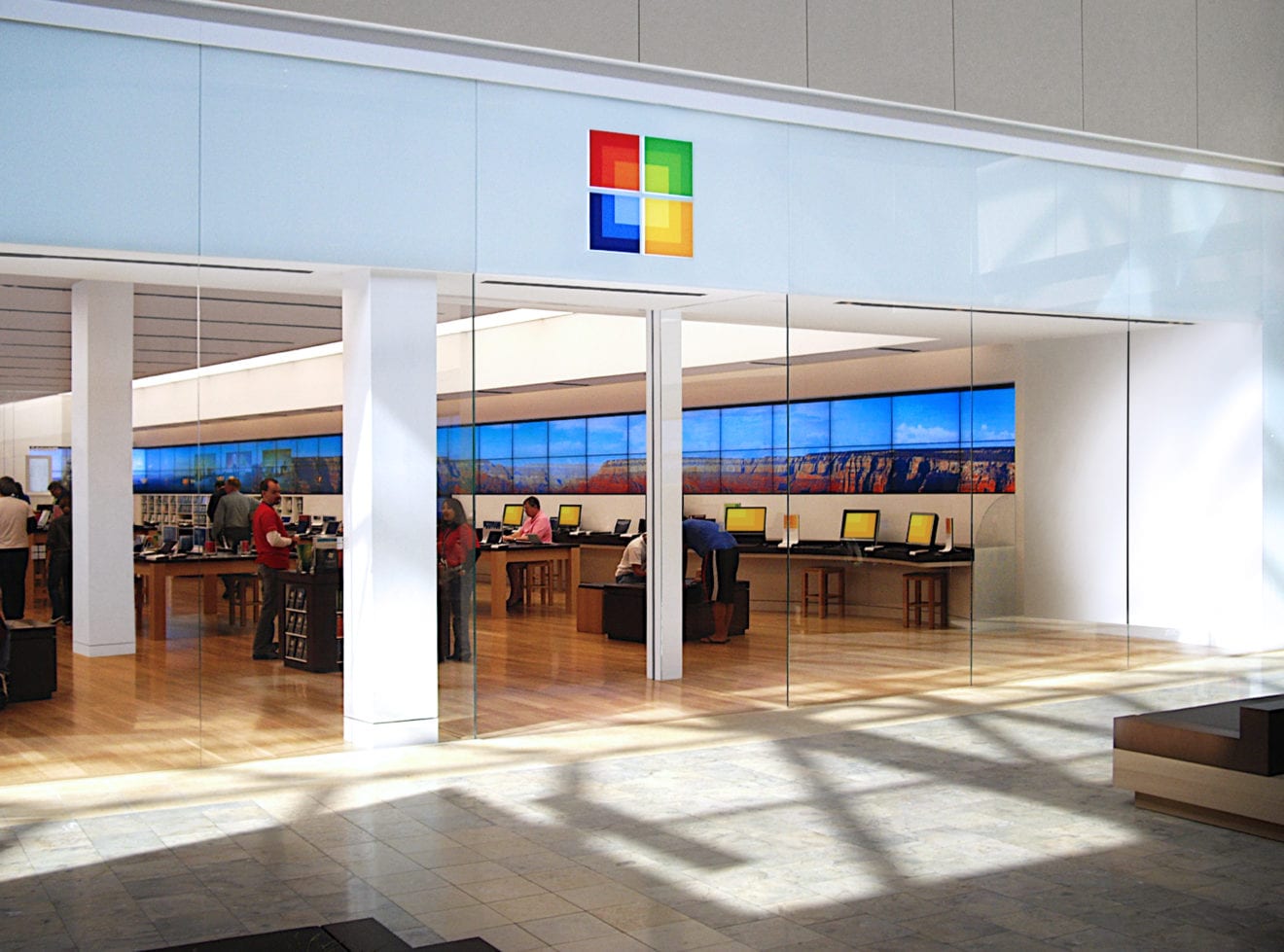
    Microsoft has opened its ninth Surface store in Asia, its first in Taiwan.

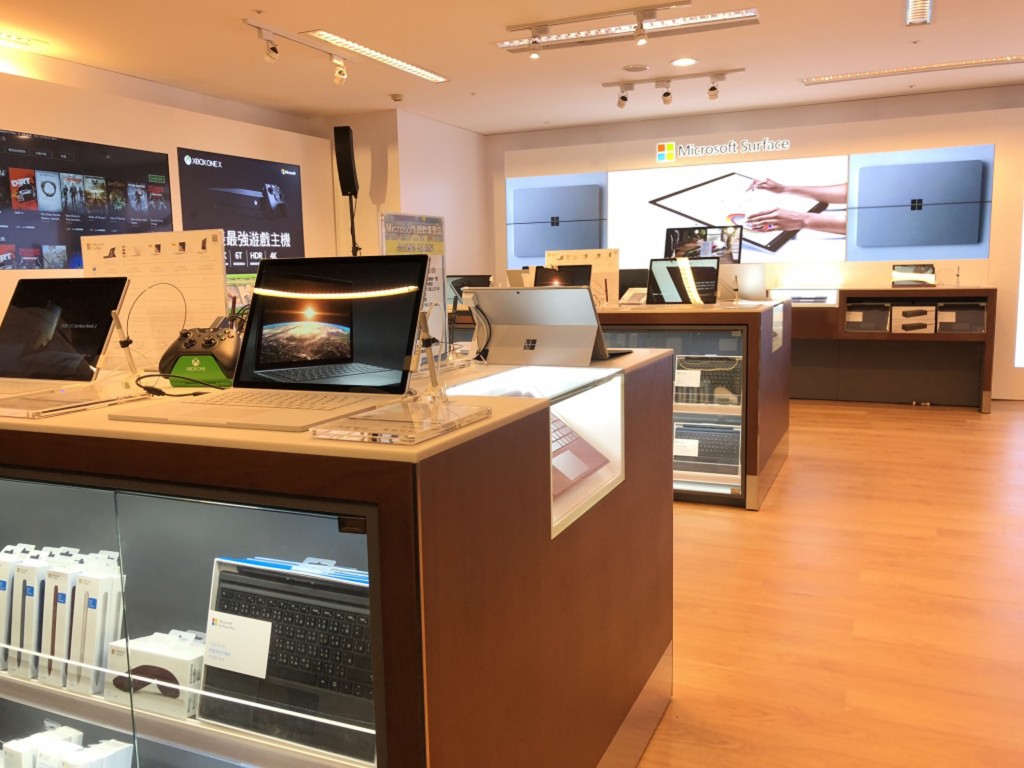
    The new outlet is located in the Xinyi District of Taipei, and like the others in the slowly growing international Surface store network, it ranges Microsoft’s touchscreen Surface PC series and peripherals along with Xbox gaming console and related software and peripherals.

    The 70sqm store is the 14th worldwide. In Asia-Pacific it follows five outlets in Japan and one each in Singapore, China and Australia.

    Microsoft says sales of its Surface range have been growing by between 10 and 20 per cent annually since it launched there five years ago and the opening of a dedicated Surface store underlines the value of the market to the US tech giant.

  • Microsoft and Amazon compete in checkout-free retail

    Microsoft and Amazon compete in checkout-free retail

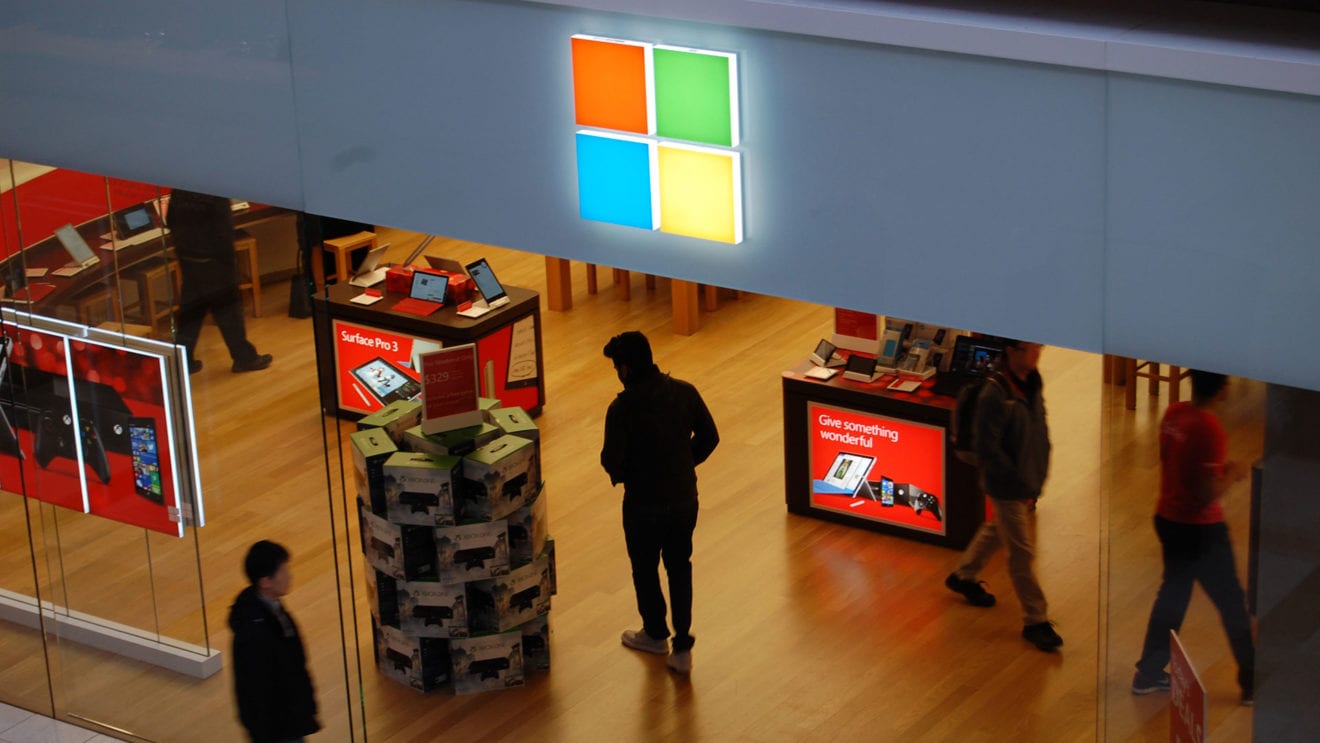
    Microsoft is taking aim at Amazon.com with the development of technology that would eliminate the need for cashiers and checkout lines.

    It’s a challenge to Amazon’s automated grocery shop.

    Microsoft has shown the idea to retailers around the world and has had talks with Walmart about a potential collaboration on the technology that tracks what shoppers add to their carts.

    In January, Amazon introduced Amazon Go, an automated brick-and-mortar store that opened in Seattle.

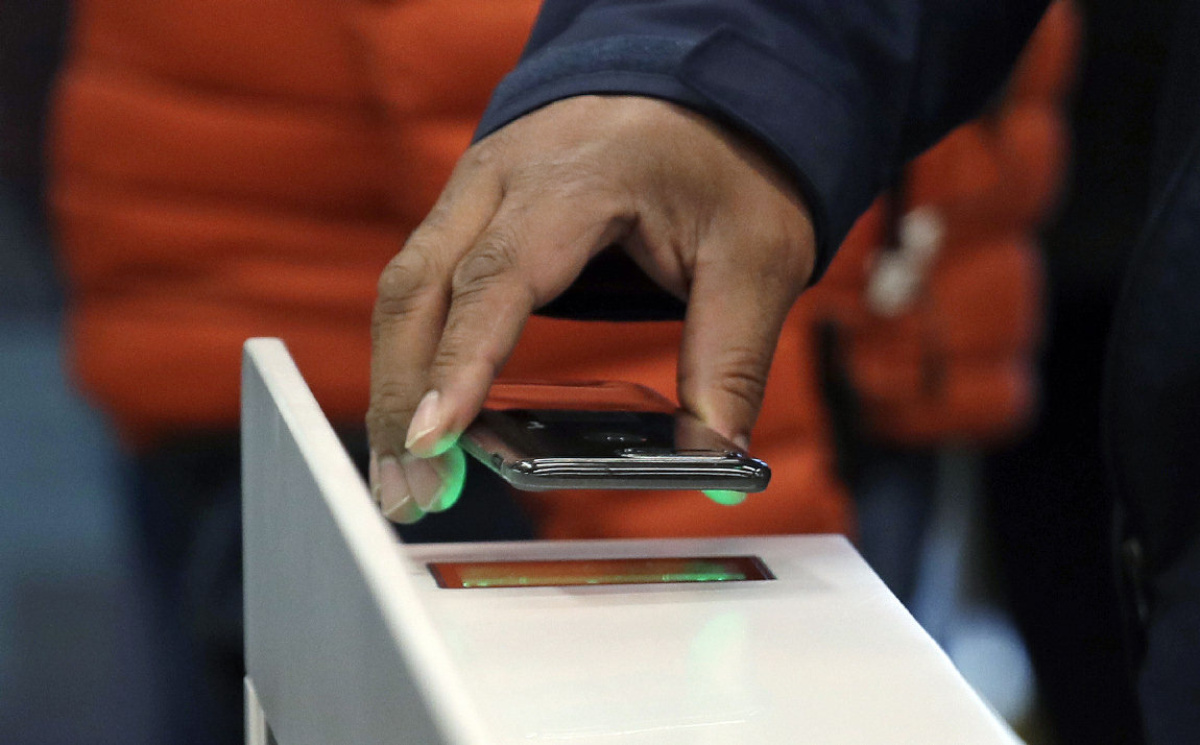
    Technology used at the store scans customers’ smartphones at a turnstile as they enter. Sensors then keep track of items that enter or leave a customer’s cart.

    As customers leave the store, Amazon automatically bills their credit card.

    Microsoft already competes with Amazon in selling cloud services that are important for running e-commerce sites.

    It is not clear how soon Microsoft would bring an automated checkout service to market, if at all, or whether its technology would be the answer retailers are looking for.

    “This is the future of checking out for convenience and grocery stores,” Gene Munster of Loup Ventures said.

    The venture capital firm estimates the U.S. market for automated checkout is potentially worth $50 billion. Cashier is one of the most commonly held jobs in the United States.


  • Microsoft predicts digital gains

    Microsoft predicts digital gains

    Microsoft Korea said Tuesday the ongoing digital revolution will add roughly $42 billion to Korea’s gross domestic product by 2021 and push up the country’s growth rate by 0.5 percent annually.

    The projection was based on research conducted with market tracker IDC Asia Pacific. IDC surveyed 1,560 decision makers in mid- and large-sized business organizations across 15 economies in the Asia-Pacific region on the economic impact of digital technologies.

    According to Microsoft, application of digital technologies like the cloud, big data and artificial intelligence to business processes will increase profit margins and productivity, and create new sources of revenue for companies.

    The study predicted that while about eight percent of Korea’s GDP was derived from digital products and services created directly though the use of digital technologies last year, that percentage is expected to surge to around 65 percent by 2021.

    “Digital transformation has a positive and measurable impact on Asia Pacific’s economy,” said Andrea Della Mattea, president of Microsoft Asia Pacific, in a press briefing during the Digital Transformation Summit hosted by the computer software company on Tuesday.

    “In fact, organizations are seeing tangible improvements from their digital transformation initiatives today between the ranges of 15 to 18 percent, which shows digital transformation is no longer an idea, but a reality.”

    According to the study, about 77 percent of companies in Korea are in the midst of digital transformations while only seven percent can be classified as so-called leaders. The leaders in digital transformation have full or progressive digital transformation strategies with at least a third of their revenue from digital products and services.

    Microsoft introduced Korean partners that are rapidly adapting to digitization by using the software company’s AI and cloud platforms, such as 365mc Hospital, which is known for liposuction surgeries.

    “Until recently, liposuction procedures depended almost entirely on the surgeon’s experience and capability,” said Kim Nam-chul, CEO of 365mc Hospital.

    “Hence our motion capture and artificial intelligence-assisted liposuction system was built to collect data and enhance precision and safety of liposuction procedures.”

    Other Korean partners of Microsoft include Samsung Electronics, LG CNS, NH Investment & Securities, Hyundai Motor and Asiana Airlines.

  • Microsoft Surface Family unveiled in Singapore

    Microsoft Surface Family unveiled in Singapore

    Microsoft Singapore has opened a Surface Store at the Harvey Norman Millenia Walk Flagship Superstore, featuring the full range of the technology.

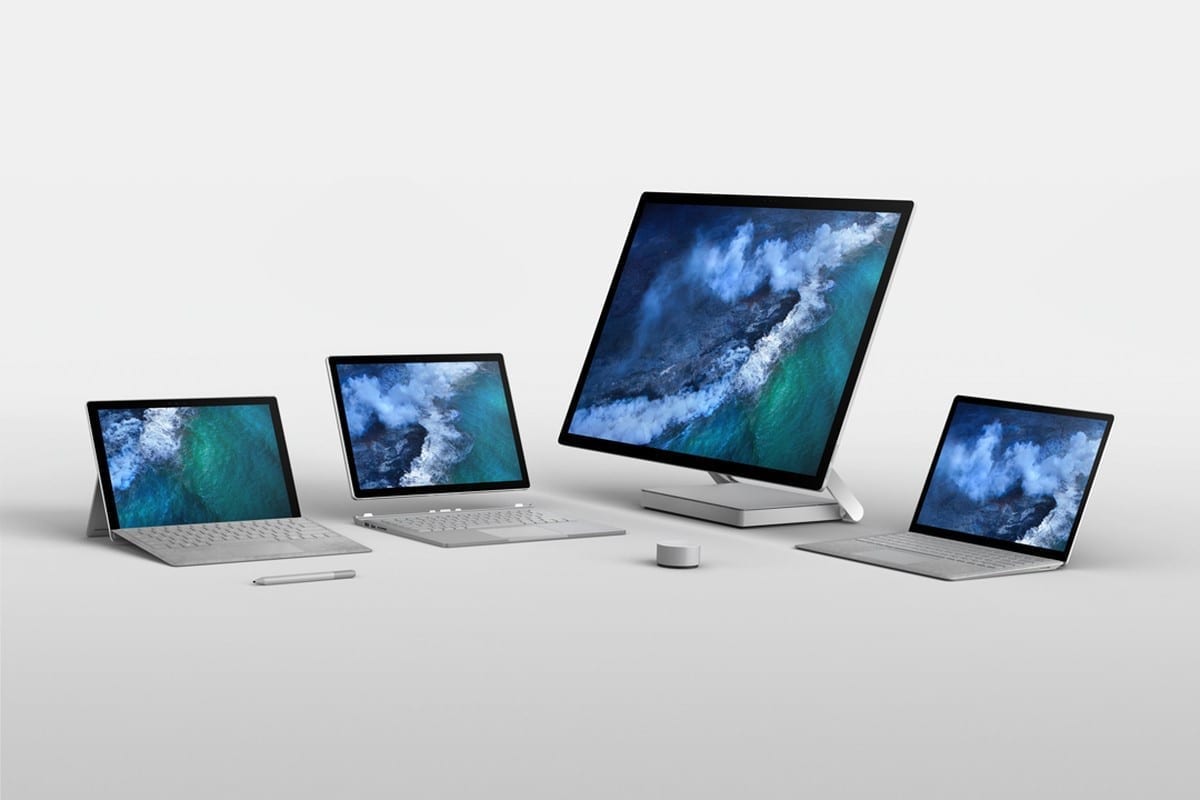
    New devices include Surface Book 2, Surface Laptop and Surface Studio, which will join Surface Pro already available.

    The line-up will be available for commercial customers via Authorised Device Resellers including AsiaPac Distribution, JK Technology and UIC Asian Computer Services.

    “The new Surface Store is a commitment to deliver a one-stop experience for customers to experience the ultimate Windows devices,” says Microsoft Singapore Windows and devices business group lead Veronica Chiu.

    Shipping with Windows 10S, Surface Laptop starts up and runs faster with InstantOn and an OS optimised for sustained performance.

    A feature of the store is its Surface Concierge service which offers customer support regardless or where or when they bought their Surface device. Microsoft plans to add extra concierge services over time.

  • Microsoft says security patches slowing down PCs, servers

    Microsoft says security patches slowing down PCs, servers

    Microsoft said on Tuesday that software patches released to guard against microchip security threats slowed down some personal computers and servers, with systems running on older Intel Corp processors seeing a noticeable decrease in performance.

    The comments in a blog post were the clearest signal from Microsoft that fixes for flaws in microchips from Intel and rivals described last week could meaningfully degrade performance. The topic is of keen interest to large data center operators, which could incur significant cost increases if computers slow down.

    Microsoft also said that security updates froze some computers using chipsets from Intel rival AMD, dragging AMD’s shares down nearly 4 percent.

    Shares in Intel, which reiterated on Tuesday that it saw no sign of significant slowdown in computers, fell 2.5 percent taking the loss since the issue surfaced last week to about 7 percent or around $15 billion in market value.

    AMD shares have gained nearly 20 percent in the last week as investors speculated that the chipmaker could wrest market share from Intel, whose chips were most exposed to the security flaws.

    Security researchers disclosed the flaws on Jan. 3 that affected nearly every modern computing device containing chips from Intel, AMD and ARM Holdings, owned by Japan’s SoftBank Group Corp.

    “We (and others in the industry) had learned of this vulnerability under nondisclosure agreement several months ago and immediately began developing engineering mitigations and updating our cloud infrastructure,” Microsoft executive Terry Myerson wrote in a blog post on Tuesday.

    Internet and networking equipment maker Cisco Systems Inc said in a security advisory updated on Tuesday that it has identified 18 vulnerable products, including some of its blade servers, rack servers and routers, and expects to have patches for servers in about five weeks, on February 18.

    Cisco said it is also looking for problems in nearly 30 other products, including switches and routers. The majority of Cisco’s products were not vulnerable because they are “closed systems that do not allow customers to run custom code on the device,” it said.

    The memory corruption flaws, named Meltdown and Spectre, could allow hackers to bypass operating systems and other security software to steal passwords or encryption keys on most types of computers, phones and cloud-based servers.

    ARM Holdings estimated that around 5 percent of more than 120 billion chips its partners have shipped since 1991 was impacted by Spectre. It said the number of chips affected by Meltdown was significantly less.

    “ARM will address Spectre in future processors but there will need to be an ongoing discipline in the design of secure systems which needs to be addressed through both software and hardware,” a company spokesman said in an emailed statement.

    Intel and AMD have not disclosed the number of chips affected by the security flaws.

    Intel said a typical home and business PC user should not see significant slowdowns in common tasks such as reading email, writing a document or accessing digital photos.

    The chipmaker said last week that fixes for security issues in its microchips would not slow down computers, rebuffing concerns that the flaws would significantly reduce performance.

    Rival AMD had also played down the threat, saying its products were at “zero risk” from the Meltdown flaw, but that one variant of the Spectre bug could be resolved by software updates from vendors such as Microsoft.

    But on Tuesday AMD said it was aware of an issue with some older-generation processors following the installation of a Microsoft security update that was published over the weekend.

    Microsoft said it was working with AMD to resolve the issues.

    Apple Inc also released an updated version of its operating system software on Monday to fix the security flaw.

  • A.S. Watson announces slew of new tech vendors to support its digital transformation

    A.S. Watson announces slew of new tech vendors to support its digital transformation

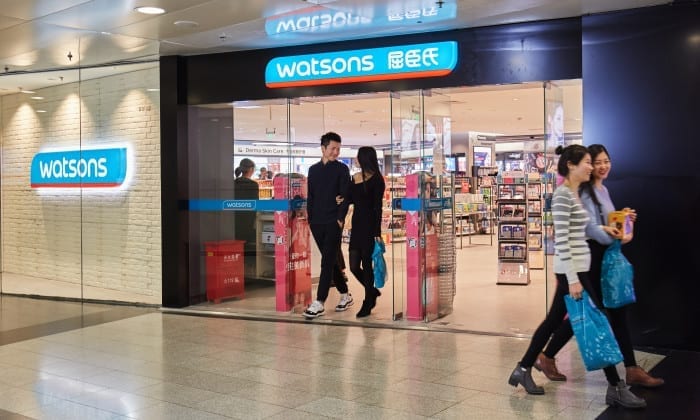
    Health and beauty retailer AS Watson (ASW) has launched a Technology Partnership Programme as part of a move to speed up its digital transformation globally.

    The program brings together a wide range of international technology providers and recognises them as strategic partners rather than suppliers, explained Malina Ngai, group COO of ASW.

    “We believe every technology partner whom we have chosen to work with is more than just a vendor. Traditional client-vendor relationship is short-term. There is lack of transparency and continuity in the way we work with each other. Besides, project base contract makes it difficult for their resource planning.

    “The partnership program is designed to transform the short term contractual relationship to a longer term strategic relationship to create a win-win for both parties. Our tech partners will have access to senior management, visibility on our growth strategy and technology roadmap, as well as a longer term financial commitment from us. We can benefit from their commitment in providing consistent resources, expert advice and services, as well as first hand access to innovation they develop,” said Ngai.

    ASW, which has more than 15,000 stores globally, embarked on its digital transformation journey in 2011 when it introduces its Customer Strategy initiative. The company invested US$70 million initially, dedicated to CRM, eCommerce and mobile experience.

    It subsequently established eLab in 2015, an in-house digital agency focusing on supporting all operating businesses to develop e-commerce and digital marketing.  This year, ASW kicked off a further $70 million investment in big data to build new capabilities in analytics and machine learning.

    “The goal of our digital transformation is to enable AS Watson Group to build on our solid retail foundation to fuel further growth through a smarter and more efficient organisation,” said Ngai.

    “Our purpose of putting customer first and putting a smile on their faces continues. We recognise that our customers are changing rapidly and technology has become an ever more critical ingredient to deliver our purpose.”

    The first batch of tech partners comprises expertise in the areas of e-commerce, store systems, data science, AI, data visualisation, technology ecosystem and services.

    The partners include Microsoft, Epam, Ovolab, Rubikloud, Mtel, Infosys, NCR, Zebra Technologies, SAP and Oracle.

  • Microsoft supports Mitsubishi in digital transformation of trucks, logistics operations

    Microsoft supports Mitsubishi in digital transformation of trucks, logistics operations

    Microsoft Japan Co., Ltd. is leveraging its AI, mixed reality and other cutting-edge technologies to support Mitsubishi Fuso Truck and Bus Corporation (MFTBC) in an initiative to enhance its customer relations, boost employee productivity and drive the digital transformation of its business through digitalising its truck and logistics operations.

    MFTBC is pursuing digital transformation based on its Connected X concept. Connected X seeks to boost productivity and offer further added value through seamlessly connecting employees, customers, devices, trucks and factories. MFTBC launched its Connected X project in July 2017, and is pursuing a wide range of digitalisation initiatives with the goal of becoming a 100 per cent digital manufacturing company by June 2019. At present, the following three key components are in progress.

    1.    AI chatbot

    MFTBC plans to streamline its operations by deploying an Azure-based internal helpdesk chatbot to respond appropriately and promptly to frequently asked questions. The chatbot will enable queries to be answered more uniformly in less time. MFTBC aims to enhance customer services, productivity, and maintenance quality by deploying the chatbot across the whole company and enabling it to also handle customer inquiries and converse with drivers and mechanics.

    2.    Truckonnect operation management system

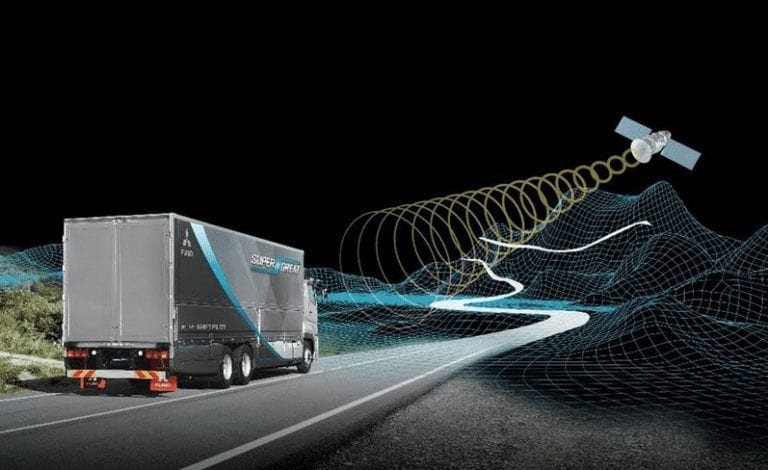
    MFTBC is using Microsoft Azure IoT Hub for its Truckonnect operation management system that connects trucks and buses to the cloud so as to enable vehicle location and remaining fuel to be monitored in real time, thereby preventing problems before they occur and enabling more efficient transport and smooth vehicle maintenance by sharing information with vehicle dispatch centres.

    3.    Utilisation of Microsoft HoloLens to transform development and maintenance

    MFTBC and Microsoft Japan will make concrete preparations for deploying Microsoft HoloLens, a self-contained Windows 10-powered holographic computer, by the end of this year to revolutionise conventional vehicle design and development, preventive maintenance and other processes by enabling users, engineers, and designers to simultaneously share visualised 3-D data. HoloLens will unlock new possibilities in digital experiences, collaboration and workstyle by leveraging Mixed Reality (MR) technology that combines real and virtual worlds to utilise the best of both worlds by overlaying holograms (3-D virtual objects) on the real world in front of the viewer’s eyes.

    Microsoft Japan’s Enterprise Services will provide full backup for this project. Digital advisors belonging to a special unit dedicated to supporting the digital transformation of Microsoft Japan’s customers will assist with all aspects of the project up to deployment, including identifying issues and suggesting solutions that leverage the latest technology.

  • Microsoft tops forecasts with 16 percent profit growth

    Microsoft tops forecasts with 16 percent profit growth

    The tech giant saw growth in its ‘productivity and business process’ and ‘intelligent cloud’ units.

    Microsoft on Thursday delivered stronger-than-expected earnings for the past quarter, lifted by gains in cloud computing and other business services.

    For its first fiscal quarter to September 30, the tech giant said profit was up 16 percent from a year ago to $6.6 billion.

    Revenue meanwhile rose 12 percent to $24.5 billion for the one-time tech sector leader which has shifted its focus away from consumer software to a range of enterprise services.

    Shares in Microsoft jumped 3.2 percent to $81.35 for in after-hours trade following the release.

    Microsoft chief executive Satya Nadella said: “Our results reflect accelerating innovation and increased usage and engagement across our businesses as customers continue to choose Microsoft to help them transform.”

    Microsoft’s “more personal computing” division which produces the ubiquitous Windows operating system, saw revenues virtually unchanged from a year ago at $9.4 billion.

    But it showed sharp growth of 28 percent from its “productivity and business process” unit, which brought in revenues of $8.2 billion.

    The “intelligent cloud” unit that delivers artificial intelligence to a wide range of products saw its revenues grow 14 percent to $6.9 billion in the quarter.

    LinkedIn, the professional social network acquired by Microsoft last year, contributed revenue of $1.1 billion during the quarter.

    Microsoft said its “cloud technologies” operations now accounts for some $20 billion annualized and is a key to the company’s future.

    “Across major industries — from finance and energy sector to retail and professional sports — organizations are betting on Microsoft to help them transform their customers’ experiences, employee productivity, operations and products,” said executive vice president Judson Althoff.

    “In fact, 96 percent of Fortune 500 companies have at least one of our cloud offerings, and 90 percent have at least two.”

  • Orange Business, Microsoft sign IoT partnership

    Orange Business, Microsoft sign IoT partnership

    Orange Business Services and Microsoft have teamed up to deliver large-scale, end-to-end Internet of Things (IoT) solutions for the manufacturing sector.

    The Orange modular IoT solution, Datavenue, accompanied by Microsoft Azure IoT Suite, aims to help enterprises transition to Industry 4.0 and optimize the entire manufacturing value chain.

    Through this collaboration, companies can take advantage of the combined expertise of Orange and Microsoft regarding data protection, as well as device and data management.

    This includes the opportunity to leverage Orange Business Services’ many IoT connectivity options, in particular LoRa. Use cases range from supply chain and smart inventory management to digital operations, such as predictive maintenance, employee safety and facility and equipment management.

    For its long-term customer e.l.m. leblanc, Orange delivered a customized IoT platform on Microsoft Azure, which provides a tailored solution for remote monitoring, along with curative and predictive maintenance.

    A subsidiary of the Bosch Group, e.l.m. leblanc manufactures gas boilers and water-heaters since 1932. The company is a major player in the French housing and industrial markets for heating and cooling systems and hot water for sanitary use.

    “Using the Azure Cloud allows for high-level scalability and efficient machine learning solutions with reasonable costs,” of e.l.m. leblanc CEO Philippe Laforge said.

    The remote monitoring solution collects the boiler’s data and alerts technicians of any malfunction. This allows for more efficient maintenance intervention, with fine-tuned predictions on the probable causes of failure based on real-time data analytics.

    Preemptive alerts can also be raised by the platform through predictive maintenance algorithms. Benefits include optimization of intervention processes, and increased end-customer satisfaction, thanks to innovative and responsive customer support.

    In order to accelerate the roll out of industrial projects, Azure IoT Suite provides pre-packaged solutions and allows companies to swiftly get familiar with the set-up and explore the most common IoT project scenarios, including remote monitoring, predictive maintenance and connected factories.

    The software environment provided by Microsoft will allow for the use of advanced solutions such as Cortana Intelligence Suite (advanced analytics and AI), Power BI (data visualization) and Mobile Apps (Xamarin) to ensure a flawless mobile user experience.

  • Microsoft, Bosch replace local CEOs with foreigners in Vietnam

    Microsoft, Bosch replace local CEOs with foreigners in Vietnam

    Bosch’s former Vietnamese CEO is taking charge of Vingroup’s new automobile venture, while Microsoft Vietnam’s ex-chief also has a new job.

    American tech giant Microsoft and German engineering and electronics company Bosch have both assigned new foreign CEOs for their branches in Vietnam following the departures of their long-term Vietnamese executives for “personal reasons”.

    Microsoft Vietnam announced the personnel change last Thursday, saying Aung San Maung from Myanmar has been appointed as its new CEO in Vietnam, a position which had been held by Vu Minh Tri for seven years.

    The group’s communications representative said Tri officially left last month after accepting an offer to work for another company, which has not been identified yet.

    Microsoft entered the Vietnamese market in 1996. Under Tri’s management, the company has become an active investor in local information technology and education development, it said.

    Aung San Maung has been with Microsoft Vietnam since early 2013 as head of its Enterprise and Partner Group. He studied computer science in Canberra and has more than 30 years of experience working at global technology corporations, including IBM.

    Several days ago, Bosch Vietnam also announced that Vo Quang Hue had left his 10-year position as CEO. Guru Mallikarjuna from India, who has been working with the group for 12 years, has been charged with leading the company forward.

    “Hue built a strong foundation for the company in Vietnam, turning it from a representative office into one of the biggest European investors with more than 3,100 employees,” said the company, which entered Vietnam in 1994.

    While Tri’s new workplace has not been revealed, Hue has been appointed deputy CEO of Hanoi-based conglomerate Vingroup, and will take charge of its newly-established automobile venture.

    The private company, which is already a top property developer in Vietnam, has launched the construction of a $1.5 billion factory in the northern city of Hai Phong and is expected to deliver its first cars in two years.

    Hue said the new job will continue his dream of helping Vietnam become an outstanding technology center in Southeast Asia.

  • Microsoft expands local presence

    Microsoft expands local presence

    Microsoft is looking to extend its local retail footprint, yesterday launching a virtual store on Ebay.

    The tech giant said it is looking to tap into the 11.3 million monthly visitors that visit the online marketplace, with one in two online shoppers visiting the site.

    It represents a three-fold tilt at Aussie consumers with the Ebay store joining its own e-commerce platform and flagship store at Pitt Street mall in the Sydney CBD.

    “With the launch of the Microsoft store on Ebay, we’re making it easy for the millions of Australian Ebay users to discover and purchase their favourite Microsoft products with the assurance of the same safe online shopping experience, return policy and free shipping that they have come to expect from microsoft.com,” said Fiona Sims, online store manager, Microsoft Store ANZ.

    Operated by Microsoft Australia, the Ebay store will feature Surface, Xbox, a full range of PCs, accessories, software and similar deals and promotions to those found at the flagship Pitt St location, where there are over 178 digital panels throughout the store with 38 different video feeds, and two large external screens.

  • VMware to integrate Horizon Cloud with Azure

    VMware to integrate Horizon Cloud with Azure

    Virtualization company VMware has announced plans to deliver VMware Horizon Cloud on the Microsoft Azure public cloud platform.

    The integration is designed to help customers accelerate the move to Windows 10 and brings VMware virtual desktops and applications to the increasing global presence of Azure in the enterprise – available in 38 regions globally.

    “The addition of VMware Horizon Cloud on Microsoft Azure puts VMware in a unique position to offer customers several infrastructure options for virtual desktops and applications with the flexibility to move between different platforms,” said Sumit Dhawan, senior vice president and general manager for end-user computing at VMware.

    “This is an example of VMware executing against its cross-cloud strategy and bringing innovation to the desktop-as-a-service (DaaS) category it pioneered in 2009.”

    Horizon Cloud uses a single cloud control plane to let customers choose their preferred infrastructure for delivering and managing virtual desktops and applications.

    Customers can choose from several deployment options and can dynamically switch options if use cases change, employees move or economics shift. The options include fully managed public cloud infrastructure from either VMware or Microsoft, as well as bring your own on premise infrastructure.

    VMware Horizon Cloud on Microsoft Azure is expected to be available in the second half of 2017.

  • Wanda Partners With Microsoft Accelerator To Empower Digital Transformation

    Wanda Partners With Microsoft Accelerator To Empower Digital Transformation

    Wanda Group, one of the Fortune Global 500 List companies, is tapping into the resources of Microsoft Accelerator to enable the next wave of digital transformation of the retail industry and commercial properties in China.

    For the past four and a half years, Microsoft Beijing Accelerator has accelerated 140 startups in China with alumni in the areas of hybrid cloud, IoT, big data, artificial intelligence, etc. These startups have strong strengths in technology innovation. Combining Wanda Group’s customer resources and Microsoft Accelerator’s alumni, startups will be empowered to do more for digital transformation in China.

    “As an entrepreneur myself, I’ve seen many technology startups face the same challenges. They focus on technology innovation and product development without much customer insight and user data,” said Hanna Lavy, head of Microsoft Global Accelerator Program. “Partners like Wanda Group can provide in-depth business insights and rich customer data to startups. Microsoft Accelerator looks forward to working with Wanda Group to enable startups to transform retail companies and commercial properties into digital businesses.”

    “Wanda Group and Microsoft share the same views on digital technology and business. Cloud computing, big data, IoT and artificial intelligence are the main drivers of the digital transformation of business,” said Jennifer Feng, Deputy GM of IT Center at Wanda Group.” Wanda Group has rich insights and user data as the leader of commercial property and retail business in China and we will partner with Microsoft to bring startups closer to end customers. Microsoft Accelerator will also provide qualified startups to be enlisted as vendors for Wanda Group. ”

    As the world’s largest commercial property enterprise, Wanda Group has opened 189 Wanda Plaza projects in China and plans to open 50 more in 2017. Three years ago, Wanda Group began its fourth business model transformation from commercial property to modern services with the result of forming four sub business groups including Commercial Properties, Cultural Industry Group, Internet Technology Group and Financial Group. Digital transformation is at the core of Wanda Group.

    Wanda Group IT embarked on enabling digital transformation of Wanda Group three years ago. For the past three years, Wanda Group IT has developed Wanda Building Information Modeling(BIM) System and Wanda Intelligent Building Management System in this endeavor with the adoption of Microsoft Azure and HDInsight big data analysis. Wanda BIM system seamlessly integrates the end-to-end information management process from project bidding to delivery for commercial property developers, designers, builders and supervisors.