Tag: microsoft

  • Cloud fueled data center spending growth to $150b in 2018

    Cloud fueled data center spending growth to $150b in 2018

    Synergy Research Group (SRG) says a 30% spike in public cloud spending the data center hardware and software market grow to $150 billion in 2018. In addition, the requirement for ever-richer server configurations also drove up enterprise server average selling prices.

    Spending on enterprise data center infrastructure grew by 13% in part driven by the 23% growth in private cloud or cloud-enabled infrastructure, which helped to offset a marginal decline in traditional, non-cloud infrastructure.

    In terms of market share, ODMs in aggregate account for the largest portion of the public cloud market, with Dell EMC being the leading individual vendor, followed by Cisco, HPE and Huawei. The 2018 market leader in private cloud was Dell EMC, followed by Microsoft, HPE and Cisco.

    Private cloud or cloud-enabled infrastructure accounted for a little over a third of the total. Servers, OS, storage, networking and virtualization software combined accounted for 96% of the data center infrastructure market, with the balance comprising network security and management software.

    “Cloud service revenues continue to grow by almost 50% per year, enterprise SaaS revenues are growing by 30%, search/social networking revenues are growing by almost 25%, and e-commerce revenues are growing by over 30%, all of which are helping to drive big increases in spending on public cloud infrastructure,” said John Dinsdale, chief analyst at Synergy Research Group.

    “We are also now seeing some reasonably strong growth in enterprise data center infrastructure spending, with the main catalysts being more complex workloads, hybrid cloud requirements, increased server functionality and higher component costs,” added Dinsdale.

  • Microsoft reportedly builds Surface Pro prototypes

    Microsoft reportedly builds Surface Pro prototypes

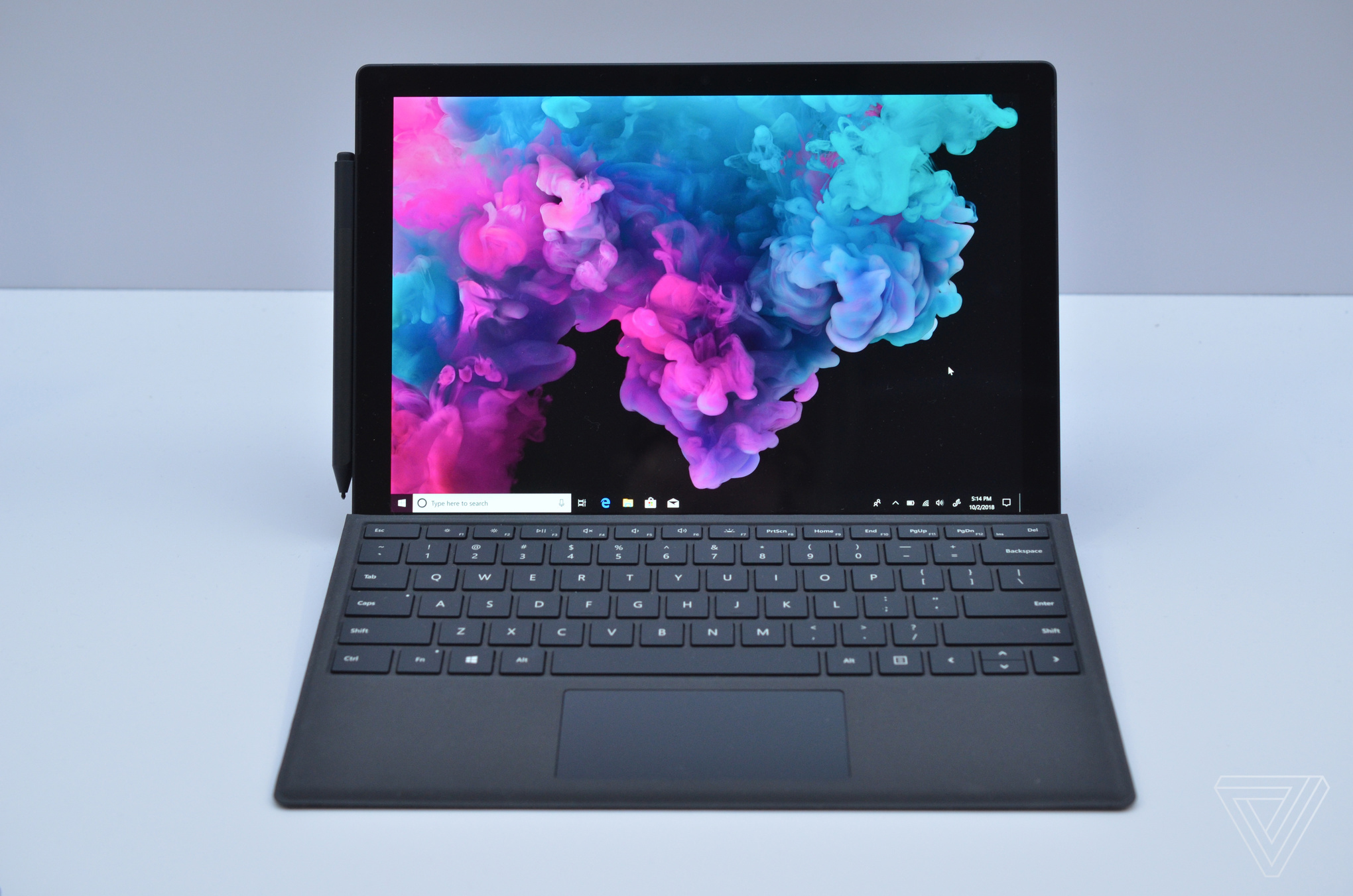
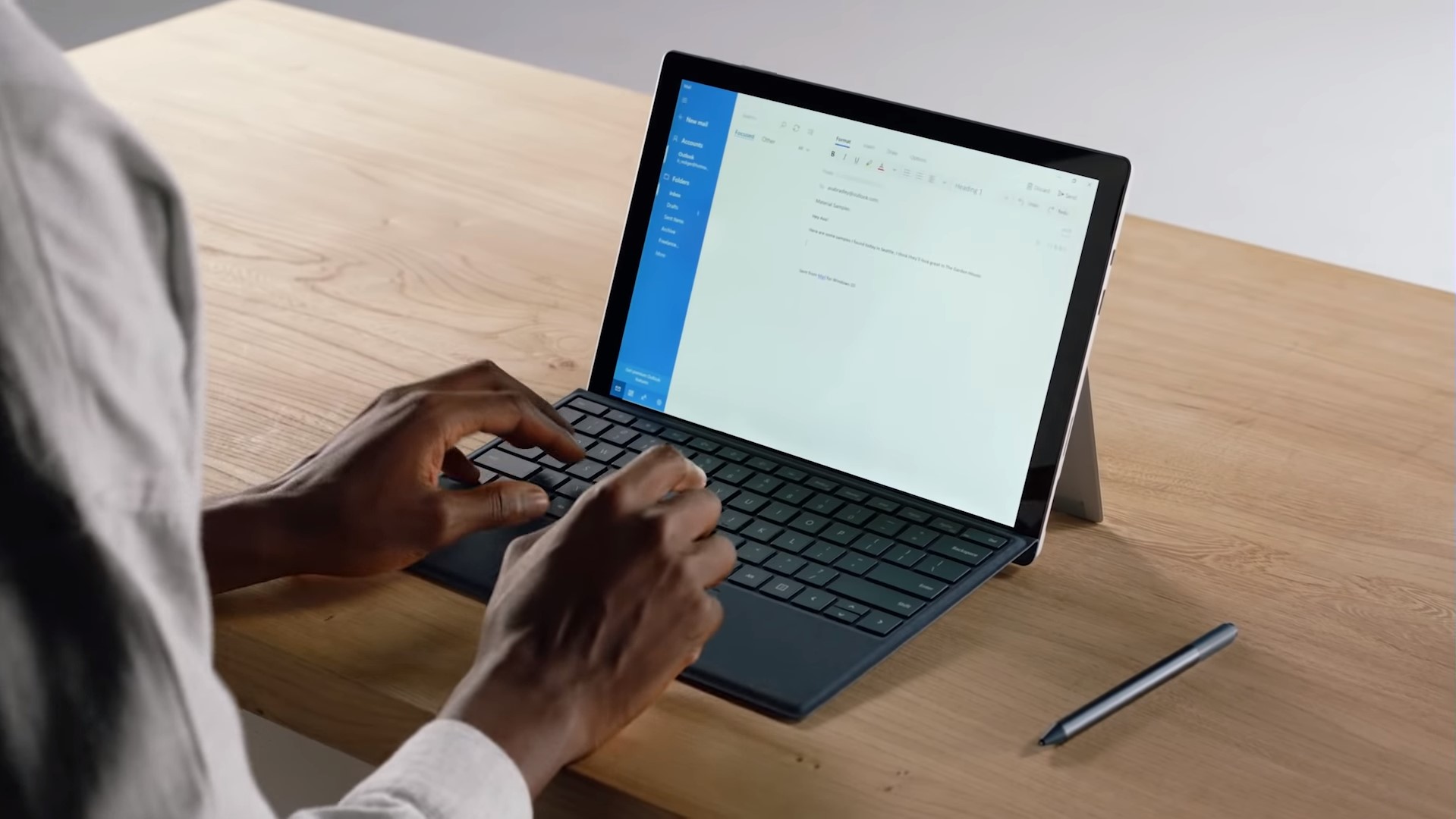
    Microsoft has apparently become more serious about offering at least some versions of its Surface Pro tablets powered by ARM-based processors. Right now, the Surface Pro 6 runs on an Intel Core i5 or Core i7 processor. According to Thurrott, Microsoft has built prototypes of the Surface Pro that run on Qualcomm’s Snapdragon chips. The report says that Microsoft has considered stuffing some of its low-end Surface Pro models with a Snapdragon processor.

    There also is speculation that the original plans for Microsoft’s iPad competitor, the Surface Go tablet, called for the device be powered by Qualcomm’s Snapdragon chips. Intel reportedly pressured Microsoft to have the lower priced tablets run on Intel’s Pentium Gold Processors instead. If Intel doesn’t put the squeeze on Microsoft so hard this year, the second generation Surface Go models could end up with Intel outside and Qualcomm inside.

    The Surface Pro line is supposed to get a major redesign with new models to be unveiled during the fourth quarter of this year. Thurrott’s Brad Sams says to expect thinner bezels, the long awaited USB-C port, new color options and some other changes. That would be the time to expect Microsoft to make the change to Snapdragon chips for the Surface Pro, starting with the lower-end variants of the tablet.

    In a related piece of news, testing has started on the Firefox for Windows 10 ARM browser.

  • Verizon launches collaboration service in 80 markets

    Verizon launches collaboration service in 80 markets

    US-based telecommunications operator Verizon has launched a new collaboration service which will enable the company’s network customers to integrate their voice infrastructure to a Microsoft Teams environment across 80 markets.

    The new service will take advantage of Direct Routing and Verizon’s SIP Trunk connectivity to give users access to Microsoft Teams’ collaboration features, which include the ability to call to and from traditional phones, VoIP or mobile phone lines using the platform.

    Verizon is using its Session Border Control as a Service (SBCaaS) solution to deliver the virtualized, cloud-based service.

    Other capabilities within the Microsoft Teams unified communications platform include persistent workplace chat, video meetings, file storage and collaboration, and application integration.

    Teams is built on the Office 365 Groups subscription-based office productivity suite, and is now in use by 500,000 organizations worldwide.

    “Enterprises are always looking for tools and solutions for better productivity and collaboration,” Verizon SVP of business products Shawn Hakl said.

    “By integrating Verizon’s SIP Trunking into Microsoft Teams, users get the best of both worlds. They are able to have reliable communication services from Verizon, seamlessly integrated into their Microsoft Teams collaboration software.”

  • Microsoft Launcher major update brings widget redesign

    Microsoft Launcher major update brings widget redesign

    Microsoft is making major changes to its Android launcher, many of which have been tested for about a month in the beta channel. Most of the new features and improvements are cosmetic, but there are some important under the hood enhancements included as well.

    Microsoft Launcher version 5.3 comes with a completely redesigned Time/Weather widget, which allows users to have multiple widgets for multiple locations. The detail page has been redesigned as well.

    The update brings many refinements to the app, but the most important are those made to the Home Screen, Dock and Search widget. If you’re a long-time user, you’ll most likely notice them once you start using the new version.

    Furthermore, the News tab now supports “Technology” as a news interest, while the Tasks card now features “My Day” and “Flagged Emails” features from Microsoft To Do. With the latest version of Microsoft Launcher, work profile users will be able to access their work apps fast and easy.

    Although it’s less important, you’ll probably want to know that the beta community link in Settings has been changed to Microsoft Tech Community. Microsoft Launcher 5.3 is already available for download via Google Play Store, so make sure to install the update to benefit from the latest improvements.

  • OneDrive for iOS update brings deeper functionality

    OneDrive for iOS update brings deeper functionality

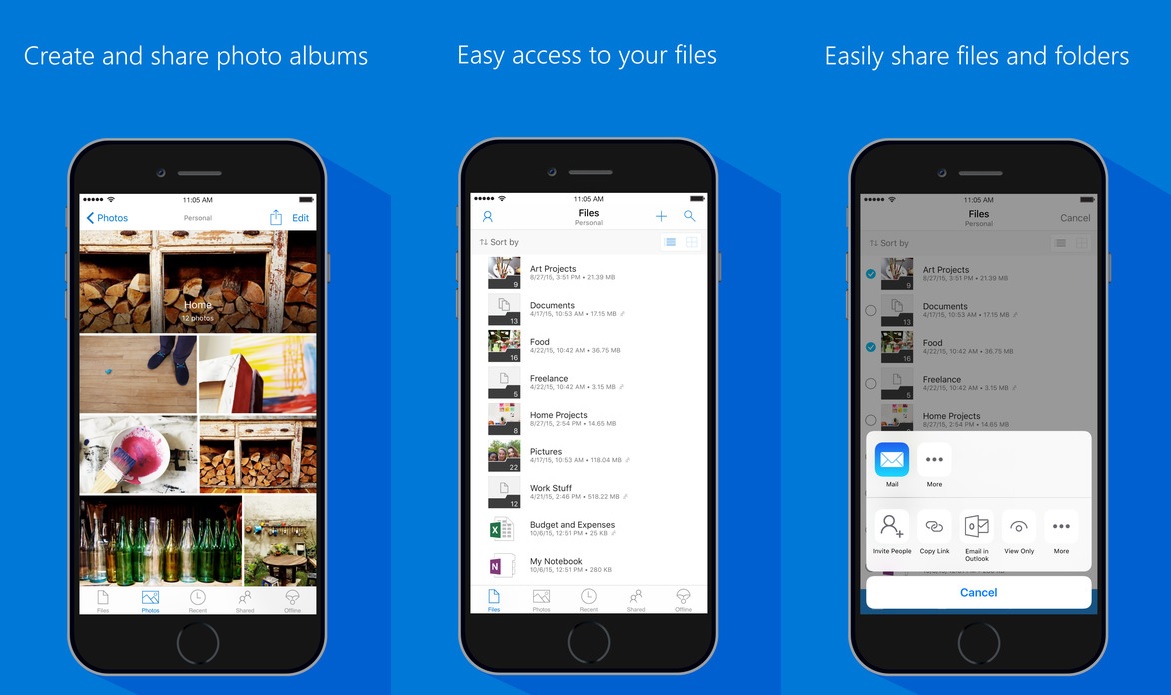
    In between bug squashing and adding new features, OneDrive benefits from a steady flow of updates meant to enhance user experience. The latest update brings support for specific features aimed at iPhone users like Siri Shortcuts. You can turn on shortcuts by heading to Settings / Siri & Search, which will allow you to use your voice for various tasks.

    For example, you can say “Hey Siri, scan a business card” and the app should do it for you. Of course, you can scan anything from a document or photo to a whiteboard if the need arises. But Siri Shortcuts is not the only new addition to this OneDrive build.

    The official changelog mentions that the VoiceOver experience in the Shared paged has been fine-tuned, which means it should now behave a little more human and more accessible. Also, a minor issue in the iMessage where the app’s icons were showing up pixelated has been addressed.

    The final change introduced in the update targets business users, but something rather minor. The name of the Sites view has been changed to Libraries, but that’s about all there is, the feature should work the same.

  • Skype automatically answers calls on Android due to a bug

    Skype automatically answers calls on Android due to a bug

    If you’re using Skype for your day to day communication with friends, co-workers or business partners, there’s a high chance that you’ve been affected by a nasty bug that makes the app automatically answer all calls on Android devices.

    Microsoft is probably the only one that can tell for sure when exactly the issue started to manifest for the first time, but reports go back as far as January, probably soon after the developers updated the app. Sadly, it appears that the issue now affects even more users, as we’re seeing lots of recent reports posted on Microsoft’s support forum.

    For the time being, there’s no workaround to prevent Skype from answering calls that you want to ignore, so the only way to avoid the issue is to uninstall the app until Microsoft fixes it. Not even having the “Answer incoming calls automatically” option disabled will not stop Skype from doing just that.

    The good news is Microsoft has already identified the issue and managed to patch it, but only in the latest Skype preview app. If you want to continue to use the app without being affected by the bug, you can download the beta until the final version gets updated later this month.

  • Google yanks controversial app from the Play Store

    Google yanks controversial app from the Play Store

    Axios revealed last week that Google has removed the Living Hope Ministries app from the Google Play Store. Those who installed the app could listen to recordings of sermons and view texts of devotionals for men, women, parents and their children. However, despite the Ministry’s denial, the app was also known for offering gay conversion therapy. This is a controversial method that some (including Vice President Mike Pence) believe will convert gay and bisexual men and women to a heterosexual orientation. The conversion is done by a brainwashing-like technique that uses psychology and religious belief to pound messages into subjects over and over again. Some say that this technique is harmful, ineffective, and could lead to depression, drug use and suicide.

    Meanwhile, Google’s action came after 142,212 people signed a petition on Change.org that called for the app’s removal. Several LGBTQ organizations also demanded that the app is removed. But Google did not respond immediately; it took months of protesting before the company finally followed the lead of other tech firms that had already removed the app from their storefronts such as Apple, Microsoft and Amazon.

    “It took months of activism by Truth Wins Out and Change.org, and today Human Rights Campaign, to get Google to pull a conversion therapy app. I called Google out in the press about this in January. They took no action. Credit is due for finally acting — but Google now needs a serious internal audit examining why it delayed so long.”-Sen. Brad Hoylman.

    “After consulting with outside advocacy groups, reviewing our policies, and making sure we had a thorough understanding of the app and its relation to conversion therapy, we’ve decided to remove it from the Play Store, consistent with other app stores.”-Google

    Before the Human Rights Campaign fought for the removal of the app, it had given Google a perfect 100% score for its annual Corporate Equality Index. The score was based on Google’s offering of health benefits for same-sex couples, and for providing health care to Transgender employees. However, the organization pulled its support for Google because it would not originally remove the Living Hope Ministries app.

  • Microsoft’s foldable ‘Surface Phone’ could be back

    Microsoft’s foldable ‘Surface Phone’ could be back

    The foldable Microsoft device that was dubbed “Project Andromeda” and believed to be the Surface Phone, was put on hold last summer by Microsoft. But a recent patent published by the World Intellectual Property Organization (WIPO) spotted by Windows United (via MSPoweruser) focuses on the hinge that could be used on the device. The hinge will allow the Surface Phone to be used like a laptop in landscape orientation; one display on top would be used as the screen with the bottom display used as a virtual QWERTY keyboard.
    The hinge also allows the display to rotate a full 360 degrees, and lets the user turn the device into a mobile phone. An illustration that was part of the patent application shows how a user can open the fold just a tad to see notifications and reminders. In general, the illustrations show how complex the hinge is, something that can be deduced just by reading some of the application.
    Late last year technology writer Brad Sams said that Microsoft’s plan is to release the foldable product near the end of this year. However, Sams says that it will be larger than previous renders showed, and may not be pocketable after all. Still, if the device offer telephonic capabilities and uses a version of Windows 10, it could be a big hit for the gang in Redmond.
  • Microsoft offers free keyboard and Surface Pen with select Surface Pro 6

    Microsoft offers free keyboard and Surface Pen with select Surface Pro 6

    It’s been raining sweet deals of late at Microsoft and third-party retailers like Best Buy on both 2018’s Surface Pro 6 and fifth-gen models released the previous year, but if you don’t want to make any processing power compromises, today’s the day to pull the trigger and score a discount of up to $259.

    Five different Surface Pro 6 variants are currently eligible for a pair of cool freebies on their manufacturer’s official US e-store. If you’re wondering what this fast five has in common, the answer is actually quite simple: a state-of-the-art 8th Generation Intel Core i7 chipset. That makes this tablet a very worthy replacement for essentially any conventional laptop out there, so it’s definitely fitting (and nice) that Microsoft lets you bundle these powerhouses with a keyboard and Surface Pen at no extra cost.

    You can get the complimentary stylus in your favorite color from a quartet of options including black, platinum, cobalt blue, and burgundy, while the gratis keyboard can be an older Surface Pro Type Cover model, normally worth $129.99, or a newer, fancier Signature Type Cover in platinum, blue, or burgundy, which separately fetches $159.99. All in all, after also taking the $99.99 retail value of that productivity-enhancing Surface Pen into consideration, you’re looking at maximum savings of around 260 bucks.

    Of course, you’ll have to cough up a pretty penny to get a Surface Pro 6 with Intel Core i7 inside in the first place and qualify for the two extremely valuable and popular gifts. We’re talking at least $1,499 if you can “settle” for a 256GB SSD/8GB RAM configuration and up to a whopping $2,299 for a Windows 10 tablet/laptop hybrid pulling out all the stops, with 16 gigs of memory and a full 1TB of storage space.

    The most “affordable” model on sale today is available in black and platinum paint jobs, while the costliest version can only be purchased in platinum. Finally, black and platinum models with 16GB RAM and 512GB storage will set you back $1,899 a pop in combination with a pen and keyboard that you need to add to your cart before checking out.

  • Microsoft Asia’s senior director of comms Andrew Pickup to exit after many years

    Microsoft Asia’s senior director of comms Andrew Pickup to exit after many years

    Microsoft Asia’s senior director, communications, Andrew Pickup (pictured) will be leaving the company after 26 years of service. Pickup said that in June 2019, he will be leaving Singapore for personal reasons and is looking forward to new adventures in the UK. He said, “I can honestly say I’ve enjoyed every day of my long career at Microsoft (not necessarily every minute or hour because there are always challenges in any job). But every day? Yes.”

    Helming the role of a senior comms director for six years, Pickup was in charge of leading the communications for Microsoft in Asia. He covered the Asia Pacific region, as well as Japan, India and China. According to his LinkedIn, his responsibilities included managing all media relations, analyst relations, internal and executive communications, crisis and change management and government/citizenship outreach. He was also managing the regional team in Singapore and led a community of 40 communications professionals across 17 countries in Asia. 

    Previously, Pickup was chief marketing and operations officer, a role he held for five years focusing on the ASEAN and ANZ markets. He was responsible for the revenue, market share and P&L performance of all Microsoft Business Groups for the Asia Pacific region and the overall orchestration of regional go-to-market sales, marketing and services plans.

    Pickup also oversaw the long-term growth planning, the management of the regional core business processes – business and marketing planning, target setting, marketing budget management – market intelligence, competitive initiatives, integrated marketing communications and public relations. He had a team of 32 reporting directly to him.

    Prior to this, he was chief of staff, Microsoft Asia Pacific, for over two years. The role tasked him to establish core process infrastructures to support executive decision-making(fiscal-planning, process-management, governance and operational models) and manage large-scale projects (geographic expansion). Before this, in 2003, he was chief marketing and operations officer of Singapore operations. 

    Some of his previous accolades with the company include head of desktop marketing, group marketing manager and relationship marketing manager in the UK. Before joining Microsoft, Pickup had a stint with Saatchi & Saatchi in 1988. Helming the role of senior account director, he was responsible for maximising revenue, profitability and client satisfaction from existing blue-chip accounts, as well as identifying and winning new business. At that point in time, he handled clients such as British Airways, Vodafone and Avis.

  • SK Telecom to launch data analyzer with Microsoft

    SK Telecom to launch data analyzer with Microsoft

    Korea’s No. 1 mobile carrier SK Telecom said Wednesday it will collaborate with U.S. software giant Microsoft for big data solutions to expand its presence in the global market. SK Telecom said it signed a development and global business cooperation agreement with Microsoft in Silicon Valley to step up development and global marketing in big data analysis.

    Under the partnership, SKT will launch its real-time big data analyzer, Metatron, on Microsoft’s public cloud platform Azure.

    Metatron provides quick and easy data analysis, which also includes data collection, storage and visualization processes. Azure is the world’s second-largest public cloud provider, used in 140 nations across the globe.

    The two companies agreed to launch the big-data-based asset performance-management service for the commercial market in July.

    “The partnership is expected to set the ground for Metatron’s footprint in the global market,” Choi Yong-jin, SKT’s data labs director, said in a release.

    Already well-established in its domestic market, SK Telecom has focused on leveraging its mobile network technology expertise and increasing revenue in content, software and security.

    During MWC Barcelona, set to open next Monday, the company plans to demonstrate its 5G technology, including quantum-safe cryptography solutions and mobile edge computing.

    Quantum-safe technology encrypts transmitted data using special quantum keys, which prevents interception or theft.

    Edge-computing systems process data locally, in nearby data centers or on devices, which eases the strain on networks and improves data reply times.

  • Apple again the most valuable US company

    Apple again the most valuable US company

    Apple won back its crown as the most valuable publicly listed US company on Wednesday, ending the session with a market capitalization above recent leaders Microsoft and Amazon.com. Apple edged up 0.03%, putting its market value at $821.5 billion. Microsoft’s market capitalization ended at $813.4 billion after its stock dipped 1.11%, while Amazon’s stock market value finished the day at $805.7 billion, in third place, after its shares slid 1.12%.

    Apple’s stock has risen about 13% since its quarterly earnings report on Jan 29, with investors betting it was oversold following months of concern about a slowdown in iPhone demand and the company’s rare revenue warning on Jan 2 related to soft demand in China.

    But slowing iPhone sales have led to lower expectations for Apple’s stock. The average analyst price target for Apple has fallen from $240 three months ago to $175, less than a dollar more than its current stock price of $174.24.

    After touching a record $1.1 trillion last October, Apple’s market capitalization fell gradually, and it was overtaken in December by Amazon and Microsoft, which have taken turns in the top position since then.

    Apple’s stock market value hit a low of $675 billion on Jan 3 after its revenue warning, but then steadily recovered, helped in part by a quarterly report that was better than feared by investors.

    While Apple has gained in recent sessions, Microsoft and Amazon’s shares fell after their quarterly reports. Amazon has declined almost 5% since Thursday, when it forecast first-quarter sales below Wall Street estimates and said it would step up investments in 2019.

    “That has raised some eyebrows, it’s a perception that Amazon may be settling into a more mature phase in terms of growth,” said Dan Morgan, a senior portfolio manager at Synovus Trust in Atlanta.

    Morgan owns shares in Apple, Amazon and Microsoft, but he said that if forced to choose, he would favor Amazon because of its lead in cloud-computing market share.

    Microsoft’s stock is about flat from last Wednesday, when the software maker met targets for its quarterly results and forecast.

  • LG to utilize Azure for autonomous systems

    LG to utilize Azure for autonomous systems

    LG Electronics will be utilizing a Microsoft product in the development of autonomous vehicle systems, LG said Wednesday. Under the agreement between the two companies, LG has gained access to Microsoft’s Azure cloud-computing platform for its self-driving car systems. Apart from storing vast amounts of data, the Azure platform also offers immense computing power for data-based applications and services.

    The two companies met Monday to sign a memorandum of understanding at the Consumer Electronics Show (CES) in Las Vegas. LG will connect with Azure in developing driver-support systems, cameras and a virtual assistant that can answer vocal commands.

    “Developing software for self-driving car components – whether it’s for navigation or infotainment – requires an enormous amount of data processing,” explained an LG spokesperson.

    “The agreement with Microsoft Azure is basically aimed at helping our software save and utilize as much data as possible in the shortest amount of time.”

    LG plans to use Azure’s high-performance computing and graphics processing units. According to the company, these tools can slash the time required to learn roads and traffic patterns from more than a full day to a few minutes. Higher processing speeds will also help the software learn patterns gathered from cameras regarding the driver, pedestrians and other objects on the streets.

    Another tool offered on the Azure platform is a voice assistant. LG plans to incorporate this into its infotainment system so that the car’s software can answer questions and receive commands.

    It could, for example, check traffic conditions, search for a restaurant nearby or call up favorite songs.

    The large amounts of data LG collects from self-driving cars will be saved in the Azure system, including photos of roads, obstacles and road signs collected from all over the world. LG will be able to utilize the data collected for further development. In the past, before cloud services existed, international data had to be shipped to Korea in hard drives.

    LG Electronics has been supplying components to self-driving carmakers since late 2016. The field is considered a future growth engine for the company.

    “In the upcoming age of autonomous vehicles, LG Electronics will shift the definition of cars from a means of transportation to a mobile space, which can turn into a conference room, a theater or a shopping mall,” said the company’s chief technology officer, Park Il-pyung, during a pre-show keynote speech on Monday.

  • Amazon briefly edges out Apple to top Nasdaq

    Amazon briefly edges out Apple to top Nasdaq

    Amazon briefly became the most valuable company on Wall Street in intraday trade on Monday, days after Microsoft dethroned long-time leader Apple. Amazon rose by 4.7 percent at one point, putting its market capitalization at $865.0 billion. At the same time, Apple traded up 2.1 percent, giving it a market capitalization of $864.8 billion.

    Microsoft, which on Friday closed above Apple’s market capitalization for the first time in eight years, was up 0.9 percent, leaving its stock market value at $859.0 billion, third in the group.

    Amazon’s lead lasted only a few seconds. At the close, Apple was back on top with a 3.49 percent increase in its stock that put its total value at $877 billion. It was followed by Amazon, up 4.86 percent with a market capitalization of $866.6 billion, and then Microsoft, up 1.08 percent and a stock market value of $860.4 billion.

    The tight race between the trio of high-powered technology stocks coincided with a broad stock market rally after the United States and China agreed on a temporary truce in their ongoing trade dispute.

    Apple in August became the first U.S. publicly listed company to reach a $1 trillion market capitalization, but its share price has fallen sharply in recent months as investors worried that demand for iPhones was losing steam.

    Its market capitalization overtook Microsoft’s in 2010 as Microsoft struggled with slow demand for personal computers, due in part to the explosion of smartphones like the iPhone.

    Amazon’s stock has recovered most of the ground it lost after the online retailer in October forecast disappointing sales for the holiday quarter.

  • Samsung steps up Microsoft cooperation

    Samsung steps up Microsoft cooperation

    Samsung Electronics Vice Chairman Lee Jae-yong met with Microsoft CEO Satya Nadella in Seoul Wednesday and vowed to increase cooperation with the U.S. company in artificial intelligence and cloud computing. Nadella is visiting Seoul this week for the first time in four years and delivered a keynote speech at Microsoft Korea’s “Future Now” artificial intelligence (AI) conference Wednesday.

    The two met in the morning before the conference and agreed to step up partnership in artificial intelligence, cloud computing and big data, said a Samsung spokesman.

    Microsoft currently uses Samsung’s semiconductors for cloud servers, and Samsung could sell more of its chips to the American partner in the near future.

    Media reports in Seoul say, as a result of the meeting, some Samsung devices, including smartphones, will be embedded with Microsoft cloud services in the future. Samsung already uses Azure, a Microsoft cloud computing platform, for its system air conditioners to collect data on the surrounding environment, including temperature and humidity, so the machines run more efficiently.

    The two executives might meet on a regular basis and exchange ideas on tech development, according to reports. The two leaders met in Seoul four years earlier.

    During his keynote speech at the conference at a hotel in western Seoul, Nadella mentioned Samsung as one of several Korean companies that had developed offerings based on Microsoft’s Azure platform.

    “Take the example of Samsung Electronics’ IoT [Internet of Things]-based air conditioner that runs on Azure. By taking into account environmental factors, like the number of people, the smart air conditioner can save up to 25 percent in energy and 30 percent in costs,” he said.

    Other sections of the Microsoft CEO’s speech were centered around the need to use artificial intelligence responsibly.

    “We need to ask ourselves not only what computers can do, but what computers should do,” he said, addressing an audience of over 1,500 programmers and businesspeople.

    He also spoke of the necessity to find ways to develop AI for “people who don’t have the ability to participate” in the digital economy.

    As an example, Nadella shared the case of Korea University Prof. Lee Seong-whan using Microsoft’s deep learning Cognitive Toolkit. Lee, who heads the brain and cognitive engineering department, analyzes brain signals in the development of computer systems that amputees can use to move prosthetic arms or robotic arms.

    Earlier on Tuesday, Samsung hosted “Tech Forum 2018,” an event for developers in Silicon Valley. Around 150 developers and designers were invited to the Samsung Research America center there.

    Kim Hyun-suk, president and CEO of Samsung’s consumer electronics division, said in opening remarks that the company was developing many “unfamiliar acquaintances,” which he believes will shape Samsung’s future innovation.

    “Samsung encounters a vast number of customers, rapidly changing technologies and new staff from various backgrounds,” he said. “Our strength is in selling more than 500 million consumer devices a year. We will expand contact points with our customers to reach into the smallest corners of their living spaces and bring innovation to their lifestyles in general.”

    Kim added that in terms of working with various employees, the company will continue to develop a corporate culture where global staff can cooperate and freely suggest ideas. Samsung also introduced the company’s developments in future technologies and held open discussions.