Retail News CRM

Tag: Mitsubishi

  • Faulty Takata airbags force Mitsubishi to make car recall in Vietnam

    Faulty Takata airbags force Mitsubishi to make car recall in Vietnam

    The defective airbag inflators have been linked to 19 deaths and more than 180 injuries worldwide. Mitsubishi is recalling 2,519 of its Pajero models in Vietnam to replace potentially deadly defective airbag inflators.

    All cars imported between 2007 and 2016 should be taken to the company’s showrooms to receive free replacement inflators, it said. The service can take more than two hours.

    The cars were installed with parts from Japanese supplier Takata, which announced that there were faults with its products in April 2013.

    Takata said that propellant chemicals were mishandled and improperly stored during assembly, which supposedly caused the metal airbag inflators to burst open due to excessive pressure inside. It also blamed humid weather for making the situation worse.

    The announcement came in the wake of massive global recalls, including those made by Toyota in June and October.

    The defective inflators have touched off the largest automotive recall in U.S. history, involving 42 million vehicles. The fault has been linked to 19 deaths and more than 180 injuries worldwide, it said.

    Takata, which filed for bankruptcy protection in June, expects 125 million vehicles fitted with the faulty parts to be recalled worldwide by 2019.

  • Mitsubishi to accelerate R&D, capital spending

    Mitsubishi to accelerate R&D, capital spending

    Japanese automaker Mitsubishi is planning to inject more than 600 billion yen ($5.35 billion) in capital spending and research and development (R&D) over the next three years through fiscal 2019 in a bid to turn around its business after recent scandals, the Nikkei said.

    The new plan calls for spending 5 percent of annual sales on equipment and the same proportion on R&D.

    Funds will be used by the company for the development of electrified vehicles and for production in China and Indonesia.

    Mitsubishi Motors will release the specifics of the capital injection in a new medium-term plan due Wednesday, the business daily said.

  • Mitsubishi, Audi recall cars in Vietnam due to safety concerns

    Mitsubishi, Audi recall cars in Vietnam due to safety concerns

    The automakers said the technical faults could cause serious damage, and they will be fixed free of charge.

    Mitsubishi Motors Vietnam has recalled 4,218 cars due to technical faults, official reports said.

    The majority of the recalled models are Pajero Sports manufactured between 2011 and 2016, but around 20 percent are Outlander Sports produced from 2014-2016.

    Explaining the recall, which may take until July 2019, Mitsubishi Motors Vietnam said the hinges on the rear doors were prone to rust because they were not completely coated in anti-corrosion paint. This meant they could fall off and injure people.

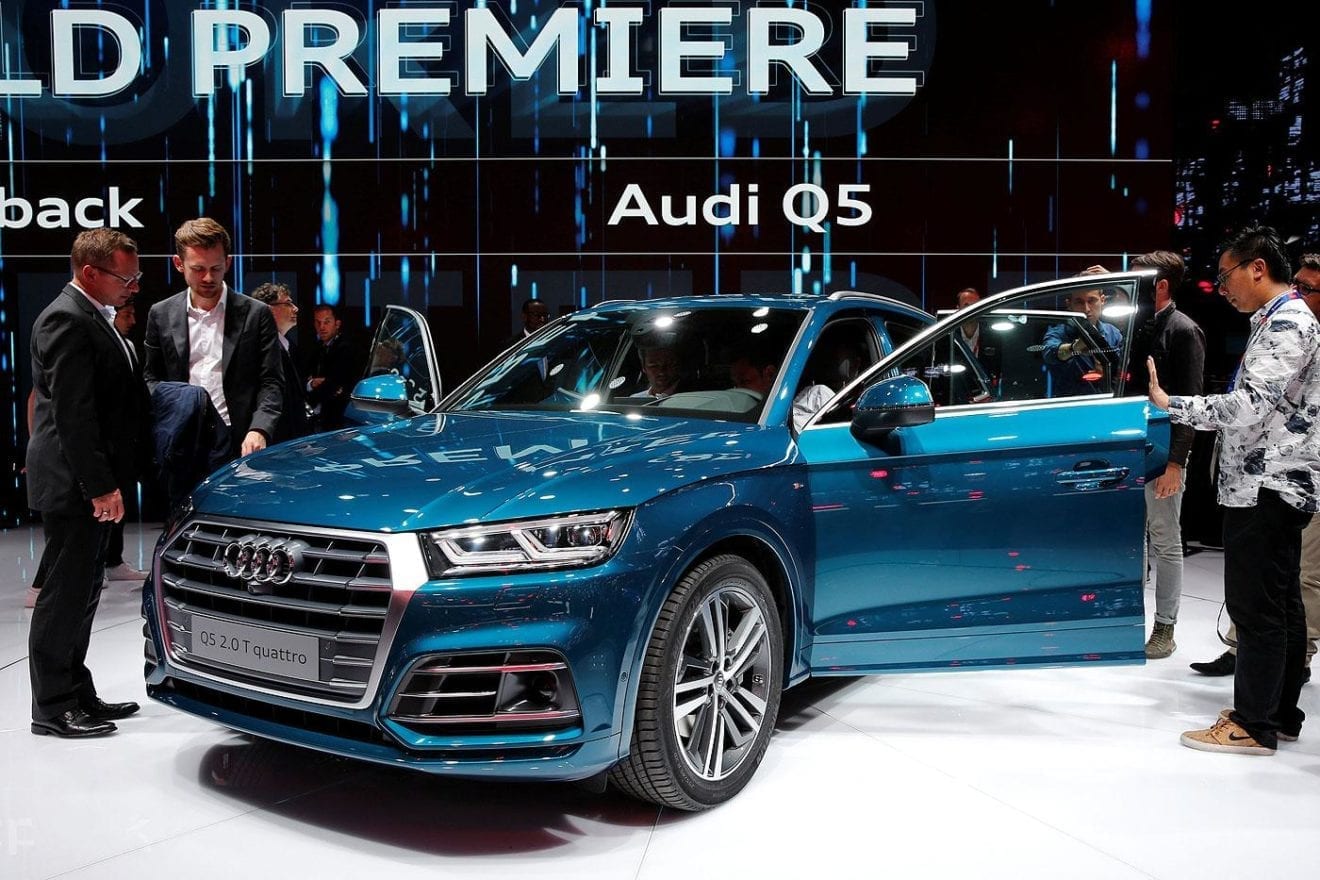
    In a separate move, Audi Vietnam has recalled 33 of its Q3 models manufactured between June 2014 and November 2016 due to a problem with their brake lights.

    Audi said the brake lights could fail if the handbrake was used to make an emergency stop.

    Official data shows Vietnamese customers bought more than 134,200 cars in the first half of this year, down 1 percent against the same period last year.

  • Mitsubishi open to helping Renault in Southeast Asia

    Mitsubishi open to helping Renault in Southeast Asia

    Mitsubishi is open to rebadging and selling models from alliance partner Renault in Southeast Asia. It’s one way the newest member of the Renault-Nissan alliance could create synergies with its partners, Mitsubishi Chief Operating Officer Trevor Mann told Automotive News Europe.

    “Renault is almost non-existent in Southeast Asia,” Mann said at the auto show here this month. “If it made sense for Mitsubishi to cross badge a Renault product in Southeast Asia that could be an interesting discussion.”

    Mitsubishi also has a more dominant presence than Nissan in much of Southeast Asia. Mann said the company’s strength in places such as Thailand, where it has three factories that have produced more than 3 million vehicles, could be used to help boost Nissan’s market share and its bottom line.

    For instance, Mann told Reuters the two companies are studying joint production of pickup trucks in Southeast Asia. Mitsubishi, which builds the Triton pickup in Thailand, could supply Nissan with its next-generation Navara pickup. Nissan currently builds the Navara for local sales in Thailand.

    “If you look at our cost performance in that region, we are the benchmark within the alliance,” Mann said. “Our cost-base on pickups is better than Nissan’s.”

    Mitsubishi’s pickup architectures are likely to become the basis for future alliance models, added Mann, who was formerly Nissan’s chief performance officer but was dispatched by CEO Carlos Ghosn to help turn around Mitsubishi after Nissan paid $2.3 billion for a 34 percent controlling stake in the scandal-hit company last October.

    Mitsubishi’s admission that it cheated on fuel-economy ratings for several nameplates sold in Japan opened the door for Nissan to make the move. The two companies expect the deal to lead to combined savings of 49 billion yen ($473.2 million) in the 2017 fiscal year that ends in March 2018.

  • Mitsubishi-Nissan’s Cooperation Rapidly Extend to Countries Including Indonesia

    Mitsubishi-Nissan’s Cooperation Rapidly Extend to Countries Including Indonesia

    Mitsubishi Motors and its new parent Nissan are studying joint production of pickup trucks in Southeast Asia as they look for savings within the broader Renault-Nissan alliance, a senior executive told.

    The Japanese groups may pool technical underpinnings and production of future replacements for the Thai-built Nissan Navara and Mitsubishi Triton, Mitsubishi Chief Operating Officer Trevor Mann said in an interview at the Geneva car show.

    Mitsubishi’s pickup architectures are likely to become the basis for future alliance models, said Mann, who was despatched by Chief Executive Carlos Ghosn to help turn Mitsubishi around after Nissan paid US$2.3 billion for a 34 percent controlling stake in the scandal-hit company last October.

    “If you look at our cost performance in that region, we are the benchmark within the alliance,” Mann said. “Our four-by-four technology, our cost base on pickups is better than Nissan’s.”

    Nissan snapped up Mitsubishi last year after the company admitted in April it had falsified fuel consumption data, triggering a sales slump and steep losses expected in the current fiscal year, which ends this month.

    Mitsubishi expects sales to bounce back above 1 million vehicles next year, Mann said, almost reversing their 8 percent decline from 1.05 million before the outcry. Nissan and Mitsubishi currently produce frame-based pickups and cars – which have fundamental design and manufacturing differences – on separate lines at each of their Thai plants.

    Moving to common architectures could potentially allow the Mitsubishi factory to specialize in pickups while the Nissan plant builds cars and SUVs, increasing productivity at both sites, Mann said, while stressing that nothing had been decided.

    Cooperation will rapidly extend to other countries in the region including Indonesia and the Philippines, where the companies have plants, Mann said. But pickups are likely to stay based in Thailand, where they account for 40 percent of sales.

    The current Navara and Triton models were launched in 2014 and are not due for replacement before 2022, which means development and production decisions may still be two or more years away. In the meantime, Nissan and Mitsubishi are already pooling car transport and other logistics while stepping up efforts to find more savings from joint purchasing.

    Renault and Nissan, whose 18-year-old alliance is cemented by reciprocal minority shareholdings, are also likely to use Mitsubishi’s plug-in hybrid technologies, Mann added. “That’s an obvious opportunity.” But Renault may have to wait longer than its alliance partner for the market access and savings that their new affiliate can bring.

    “What we have to do is prioritize,” Mann said. “We have the capital share with Nissan, so it’s logical to start there.” Under Nissan ownership, Mitsubishi is still “cleaning house” in the wake of the fuel-economy data scandal, he added.

    “We’re introducing a proper delegation of authority, risk control and business ethics in the company,” Mann said. “If we did uncover anything (else) which was not correct, we would disclose in an appropriate manner.”

  • Japanese leasing firm expands in Indonesia

    Japanese leasing firm expands in Indonesia

    Mitsubishi UFJ Lease & Finance Company Limited (MUL) has announced its subsidiary in Indonesia, MULI, has opened a branch in Bandung, in a bid to capture new business as the country’s economy improves.

    The Bandung Branch is MULI’s second branch in Indonesia following the opening of its Surabaya Branch in October 2014. Since establishing a subsidiary in Jakarta in 1995, MUL has provided financing services focusing on mechanical equipment leasing and other activities for over 20 years.

    MUL says it aims to tap into growing demand in Indonesia, which is experiencing high economic growth in the ASEAN region, and expand the business opportunities. To this end, MUL is actively working to develop its business through such measures as acquiring an auto lease company, diversifying funding sources with the issuance of Indonesian rupiah-denominated notes, and providing asset management services that attract strong demand in Indonesia.

    Located about 150 km southeast of the capital Jakarta, Bandung, site of the latest branch, is the third largest city in Indonesia where the manufacturing and fiber/sewing industries are thriving. As a growing number of domestic and foreign companies are setting up their business there, growth is expected in the region. Through the establishment of the Bandung Branch, MULI will expand business bases in the West Java area and provide tailor-made services to meet the diverse needs of companies in Bandung and the surrounding areas.

  • New Mitsubishi Distributor to Boost Sales Operations in Indonesia

    New Mitsubishi Distributor to Boost Sales Operations in Indonesia

    Mitsubishi Motors Corporation (MMC) and business partners Mitsubishi Corporation (MC), PT Krama Yudha (KY) and Mitsubishi FUSO Truck and Bus Corporation (MFTBC) reached a basic agreement on restructuring MMC-brand vehicle sales operations in Indonesia in order to strengthen their Indonesian operating base.

    Under the basic agreement, the current distributor PT Krama Yudha Tiga Berlian Motors (KTB) will be split into MMC and MFTBC brands and a new distributor dedicated to the MMC brand will be set up. The new distributor will enhance MMC’s passenger car sales organization in Indonesia through promoting areas such as branding, sales personnel training, improving the quality of after-sales services and building up the dealer network. The new company is due to start sales operations in April 2017.

    MMC, in partnership with MC and KY began automobile production and sales in 1970 and since then business has grown focusing mainly on commercial vehicle sales.

    To meet further expected growth in the Indonesian passenger car market, MMC is preparing to commence production in April 2017 in a new factory at Mitsubishi Motors Krama Yudha Indonesia (MMKI). In October 2017, MMC also plans to start production of a new compact MPV segment model for which there is a large demand in Indonesia.

    MMC will work to further expand profits in Indonesia through expanding its model lineup, moving its focus from small commercial vehicles to passenger vehicles, strengthening the sales aspect with the new MMC brand-focused distributor in addition to production through the new factory at MMKI and new product.

  • Japan’s Mitsubishi Motors to resume sales after latest cheating scandal

    Japan’s Mitsubishi Motors to resume sales after latest cheating scandal

    Japanese automaker Mitsubishi Motors Corp (7211.T) will resume domestic sales of eight vehicle models on Oct. 1, the company said on Friday, after correcting overstated mileage readings in its second cheating scandal this year.

    Japan’s sixth largest automaker has admitted it falsified the mileage on 12 models, including the Pajero and Outlander SUV, taking a blow to its reputation.

    The latest suspension came after a two-month suspension in sales of four minivehicle models this year, including two produced for Nissan Motor Co. (7201.T), following the initial admission of incorrect fuel economy readings.

    The market value of the company has tumbled since that scandal broke, prompting it to seek financial assistance from Nissan, which agreed to buy a controlling one-third stake for $2.2 billion.

    Japan is Mitsubishi’s fifth-largest market, following markets including Asia ex-Japan, Europe and other regions. Its home country comprised roughly 10 percent of its vehicle sales during 2015/16.

  • Mitsubishi Motors overstated fuel economy on eight more models

    Mitsubishi Motors overstated fuel economy on eight more models

    Mitsubishi Motors Corp overstated the fuel economy on eight of its vehicle models, in addition to four others the embattled Japanese automaker admitted to earlier this year, the Nikkei newspaper reported on Tuesday.

    Japan’s transport ministry, which had been investigating the fuel economy on Mitsubishi models including the Pajero SUV, would report its findings as early as Tuesday, the Nikkei said, citing an unnamed source.

    The Nikkei said the company would likely withdraw the affected vehicles from the market to revise its catalogs, a process which could take about two to three weeks. Compensation to customers was a possibility, it added.

    Both Mitsubishi and the transport ministry declined to comment on the report. Shares in the automaker slipped 0.8 percent in early trade.

    Japan’s sixth-largest automaker has been struggling to recover after admitting in April that it had falsified the fuel economy on two of its minivehicle models, along with two similar models produced for Nissan Motor Co (7201.T).

    The scandal led to a suspension of sales for nearly three months, and prompted a slump in Mitsubishi’s market value. The company sought financial assistance from Nissan, which agreed to buy a controlling one-third stake for $2.2 billion.

    An internal investigation has uncovered poor communication, slack governance and pressure on resource-starved engineers at the root of Mitsubishi’s problems.

    Mitsubishi said last month that the resulting slump in domestic sales led to a 75 percent plunge in first-quarter operating profit, while the company said it booked an extraordinary loss of 125.9 billion yen ($1.24 billion) in the first quarter as a result of the cheating.

  • Mitsubishi Motors reveals XM Concept crossover SUV in Indonesia

    Mitsubishi Motors reveals XM Concept crossover SUV in Indonesia

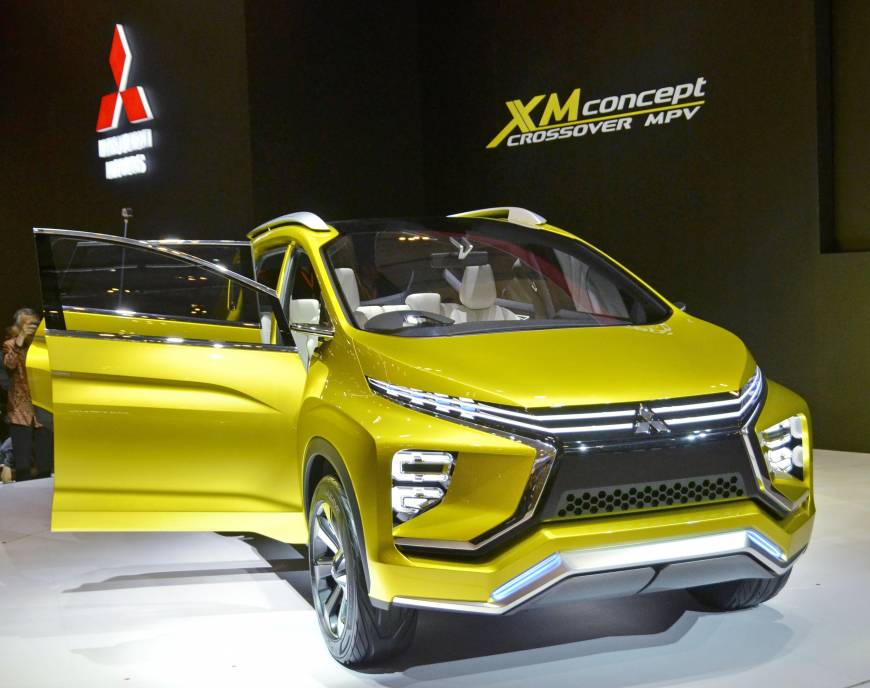
    Mitsubishi Motors Corp. on Thursday revealed its new XM Concept crossover at the Gaikindo Indonesia International Auto Show.

    The XM Concept denotes X for crossover and M for multipurpose vehicle (MPV). Mitsubishi considers the vehicle a combination of the power, design and utility of a SUV with the spaciousness and comfort of an MPV.

    The model will enter production at the company’s new plant in Indonesia in 2017. It will be a rival of best-selling models such as the Toyota Avanza, Daihatsu Xenia, Suzuki Ertiga and Honda Mobilio.

    Mitsubishi Executive Vice President Kozo Shiraji said about 60 percent of vehicle demand in Indonesia was for MPVs. The automaker believed this “will increase rapidly.”

  • Mitsubishi Estate to build Myanmar’s ‘Marunouchi’

    Mitsubishi Estate to build Myanmar’s ‘Marunouchi’

    Major real estate firm Mitsubishi Estate Co. is planning to start a roughly 50 billion yen (about $438,616,000) redevelopment project featuring office buildings, apartments and hotels in what is now a run-down district in front of a central train station in Yangon, Myanmar.

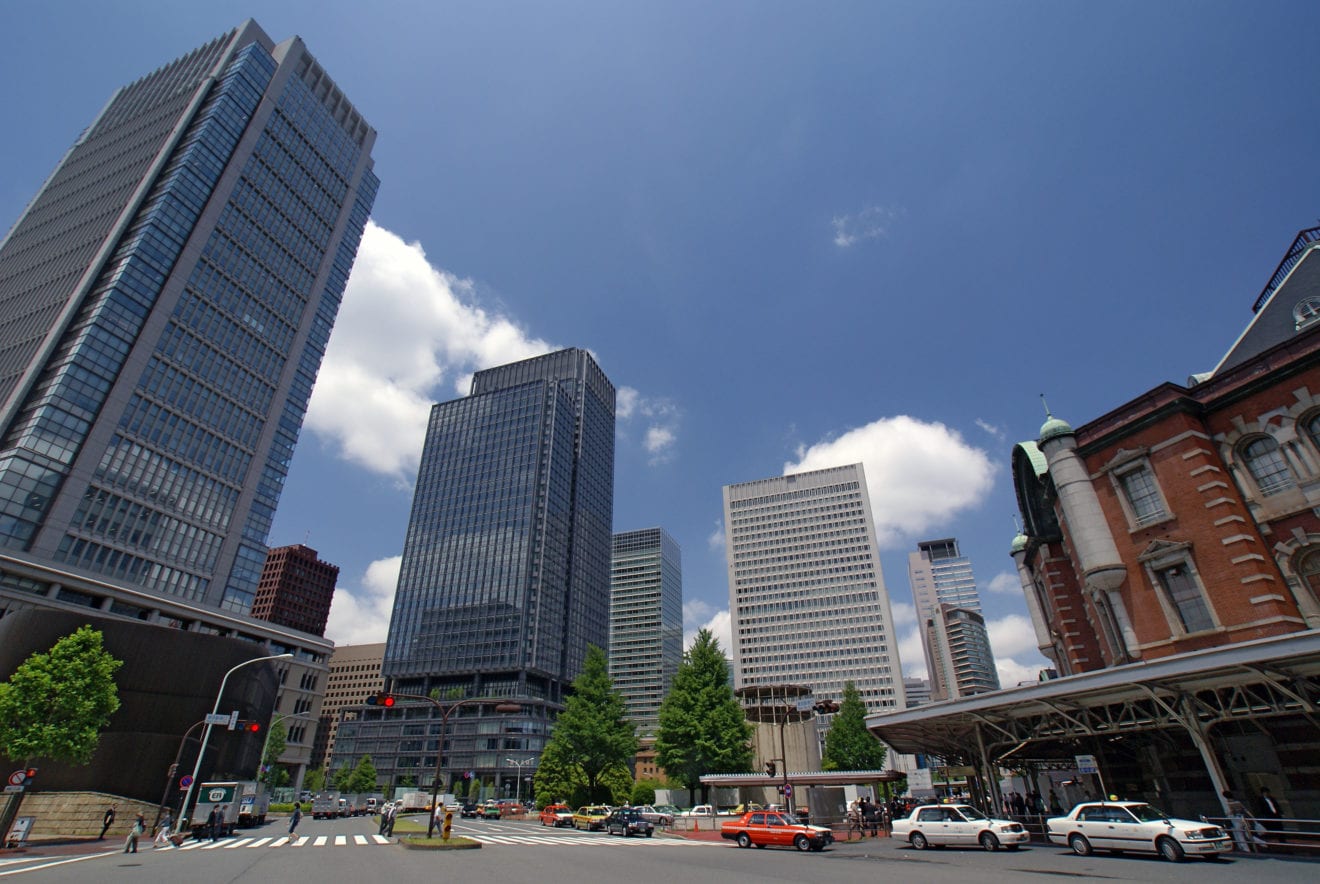
    Mitsubishi Estate plans to draw on its experience of developing Tokyo’s Marunouchi into a world-class business district to create a Myanmar version in Yangon. The company is also planning similar projects in other Southeast Asian nations.

    Mitsubishi Estate is looking into a 40,000-square-meter site(about 9 acres) in front of Yangon’s central railway station, which serves as a gateway to Yangon. The district is currently filled with dilapidated offices and other buildings.

    Mitsubishi Estate is working with Mitsubishi Corp. and a local real estate firm in Myanmar for the project, which is now under way, to build multiple high-rise buildings that will house offices, commercial facilities, apartments and hotel accommodations. The total project is estimated to cost about 50 billion yen.

    Myanmar is facing real estate development woes, including office shortages stemming from its rapid economic growth. The landscape of the Marunouchi district in front of Tokyo Station, which was rapidly developed from the Meiji era (1868-1912) through the rapid postwar growth period, has been cited as a good model for the Yangon development project.

    Marunouchi grew into a town that attracts many visitors as a gateway to Japan, home to the offices of leading companies as well as retail stores, restaurants and hotels.

    Mitsubishi Estate is aiming to work on similar development projects in other South Asian countries by promoting its approach to build complex facilities on prime urban real estate.

    “We will export our urban development system,” Mitsubishi Estate President Hirotaka Sugiyama told The Yomiuri Shimbun. “The Yangon project will be an opportunity to introduce our approach.”

    Investment in Myanmar has sharply risen since the country made its transition in 2011 from military rule to a democratic government.

    According to the Japan External Trade Organization, foreign investment in fiscal 2014 stood at $8 billion (about 940 billion yen) – twice as much as the previous fiscal year.

    Japan-affiliated firms have entered into business in Myanmar one after another during its economic expansion period. There are now more than 280 companies belonging to the Japan Chamber of Commerce and Industry, Myanmar.

    Buildings are rapidly sprouting up, concentrated in the Yangon area. There are also more and more businesspeople visiting Myanmar, resulting in expensive rent for office buildings even for Southeast Asia as well as relatively high hotel charges.

  • Yoma to distribute Mitsubishi cars in Myanmar

    Yoma to distribute Mitsubishi cars in Myanmar

    Mainboard-listed Yoma Strategic Holdings announced on Wednesday a 50:50 joint venture with Mitsubishi Corp to distribute the Japanese cars in Myanmar.

    The joint venture company, MM Cars Myanmar Ltd, will be responsible for the distribution (wholesale), retail sales, after-sales services, and maintenance services of Mitsubishi cars and spare parts. It will also take over the running of two Mitsubishi Motors After-Sales Service Centres set up in 2013 and currently being operated by Yoma.

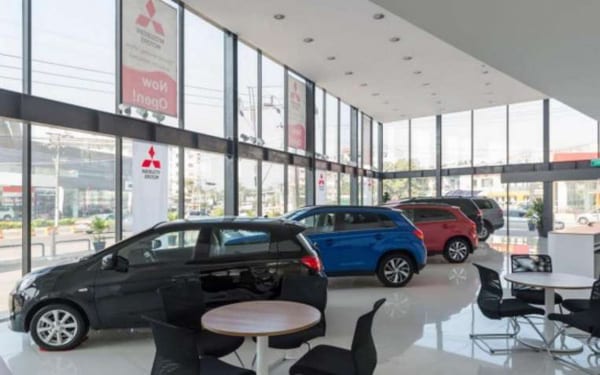
    The joint venture will also operate the first Mitsubishi Motors showroom in Yangon, which opened on Tuesday. Said Mr Melvyn Pun, Yoma Strategic CEO: “The joint venture with Mitsubishi Corporation formalizes our collaboration in developing the Mitsubishi Motor business in Myanmar over the past year.” “Our automotive segment is experiencing strong growth, and we are confident that the Mitsubishi Motors business will contribute meaningfully in the medium term.”

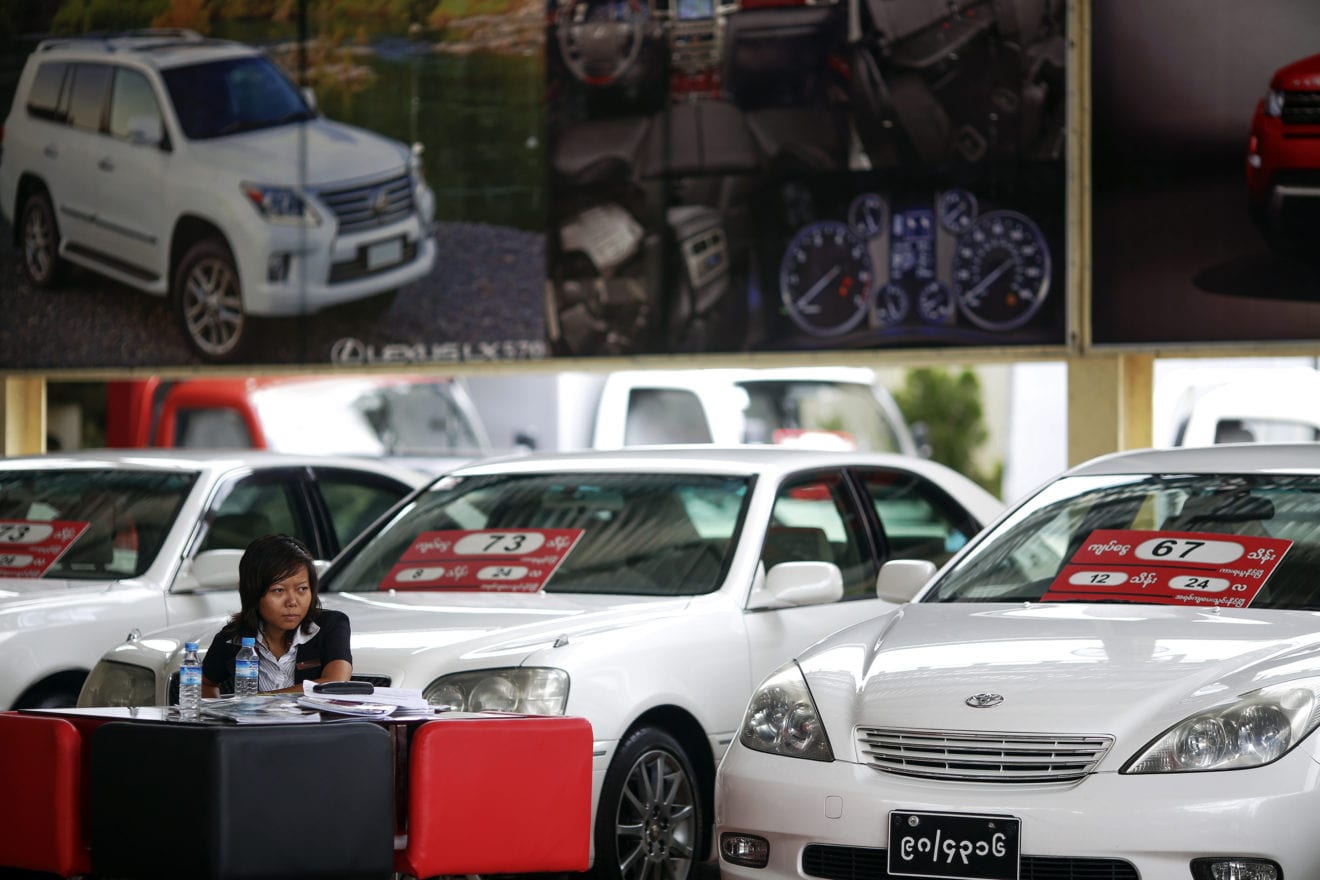
    Yoma said that since the Myanmar government announced a relaxation of vehicle import regulations in 2011 as a part of its “democratisation” policy, the number of used vehicles from Japan has seen a notable increase, making Myanmar the number one destination for used vehicles from Japan in 2014. Import regulations for new vehicles have also been gradually eased since 2012 with the Myanmar government announcing the approval of new vehicle imports and sales by joint ventures established between Myanmar and foreign companies, the company said.

    These developments are expected to generate further growth in the Myanmar vehicle market, it said. Yoma Strategic already has several partnerships with Mitsubishi Corporation, including an elevator related business, a tyre business and the operation of the Mandalay International Airport.

  • Mitsubishi Shifts Focus to Smaller, Emerging Economies

    Mitsubishi Shifts Focus to Smaller, Emerging Economies

    With its decision to end auto production in the U.S., where Detroit’s Big Three and global giants dominate, Mitsubishi Motors Corp. has become the latest second-tier car maker to shift its focus away from crowded, mature markets to smaller emerging economies where there is less competition and more chance to grow.

    Japan’s sixth-biggest car maker—which produces about 1.1 million cars a year—said last week that it is ending production at its only U.S. plant, in Normal, Ill. At the same time, Mitsubishi Motors is ramping up its operations in Southeast Asia, building a plant in Indonesia and starting production this year at a factory in the Philippines that the company acquired from Ford Motor Co.
    Other small auto makers have taken a similar approach, including Suzuki Motor Corp., which largely withdrew from the U.S. market in 2012 to concentrate on places such as India, where it is the market leader, and Daihatsu Motor Co., which abandoned the U.S. two decades ago to focus on markets such as Indonesia.

    “We have a long history in Thailand, Indonesia and the Philippines, a larger market share compared to other regions, and a strong brand image, which are very big advantages,” Mitsubishi Motors Chief Executive Osamu Masuko said in an interview earlier this year.

    The expanding population and growth potential in the region are also attractive, he said. In addition to fast-growing markets such as Indonesia, he cited future prospects in countries such as Myanmar, Cambodia and Laos, which until now have barely featured in auto makers’ global strategies.

    Mitsubishi Motors will continue selling cars in the U.S. by importing vehicles from Thailand and Japan, a move analysts say will likely boost profitability because a weakening yen is letting Japanese auto makers make vehicles more cheaply at home than in the U.S.

    The U.S. factory, however, last year produced fewer than one-third of the 222,000 vehicles it made at its peak in 2000, because of slow sales in the U.S. as well as dwindling exports to Russia. Mitsubishi Motors said Monday that it would work with the United Auto Workers union, which represents employees at the Illinois plant, to try to find a buyer.

    “The reality is that the scale of the [U.S.] plant is very small compared with manufacturing plants of other companies,” Mitsubishi Motors’ president and chief operating officer, Tetsuro Aikawa, said during a news conference Monday. “It was becoming clear that the plant didn’t have an economic rationale.”

    Mitsubishi Motors’ shift highlights the economic realities for smaller car makers, some of which are choosing to concentrate their limited financial resources on emerging markets to tap demand for new cars. That focus lets the car makers design and build models better suited to consumers in their selected markets. Mitsubishi, for example, is developing a new compact multipurpose vehicle for Indonesia, where such cars, with high capacity and low operating costs, are popular.

    Emerging markets also tend to have fewer competitors than mature ones. Although Japanese car makers, led by Toyota Motor Corp., have been operating in Southeast Asia for decades and dominate the market, U.S. and German auto makers have struggled. In Indonesia, Japanese auto makers together hold about 90% of the market share. This year, General Motors Co. shut its assembly plant in Indonesia. It is now shifting strategy to team with a Chinese joint-venture partner, SAIC Motor Corp., to manufacture and sell low-cost minivans in Southeast Asia’s most populous nation.

    In recent years, Mitsubishi Motors has been increasingly oriented toward Southeast Asia, which now accounts for roughly 20% of the auto maker’s annual global sales. Thailand, where Mitsubishi has three factories, has become an export hub for the company.

    Shares in Mitsubishi Motors rose 5.5% on Monday, as analysts said the company could reap savings by ending U.S. production. Mitsubishi currently manufactures the Outlander Sport at the U.S. plant, but it plans to shift output of that model to a plant in Japan.

    Masataka Kunugimoto, an analyst at Nomura Securities, estimates that costs to make the Outlander Sport in Japan would likely be at least ¥200,000 ($1,615) lower per vehicle than in the U.S., because of a weaker yen.

    Some analysts say that if the yen strengthens, Mitsubishi Motors might pull out of the U.S. altogether.

    “If current foreign-exchange levels continue, it can continue exporting” from Japan to the U.S., said Koji Endo, an automotive analyst at Advanced Research Japan. “But in the case that the yen strengthens again in the future, there’s a possibility that it won’t be able to export.”