Retail News CRM

Tag: Miu Miu

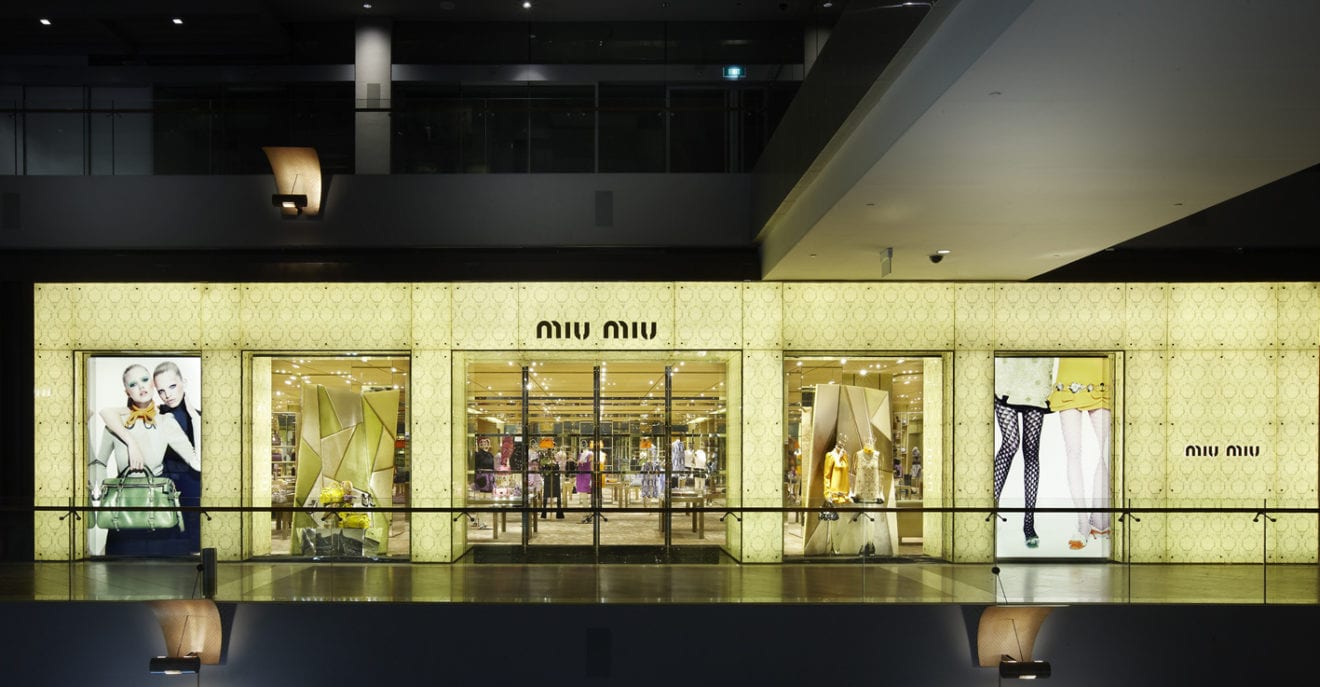
  • Miu Miu Unveils Stunning Redesign at Landmark Atrium Flagship Store, Ushering New Era of Luxury Retail in Hong Kong

    Miu Miu Unveils Stunning Redesign at Landmark Atrium Flagship Store, Ushering New Era of Luxury Retail in Hong Kong

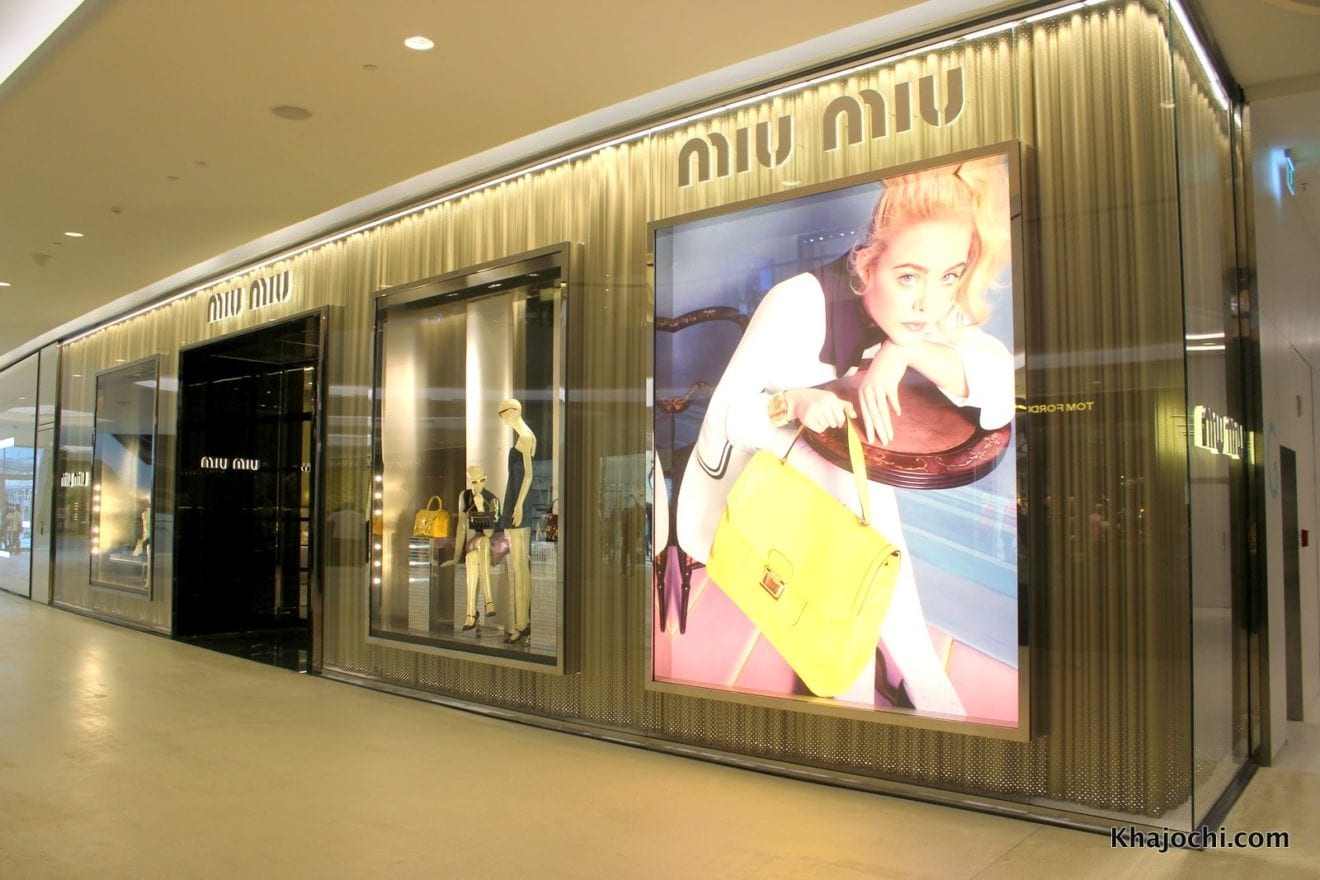
    Miu Miu, the renowned luxury brand, recently christened its revamped flagship store located at the Landmark Atrium. This opening not only showcases a fresh store design concept but also aims to fortify the brand’s presence in the region.

    The New Store Design Concept

    The store now spans about 220 square meters, distributed over two levels. This revamped space mirrors the brand’s latest worldwide retail layout, encompassing dedicated zones for various product categories including ready-to-wear, handbags, footwear, and accessories.

    In addition, the store now houses a private salon for exclusive appointments. This feature underscores Miu Miu’s constant commitment towards providing personalized service and fostering a more intimate connection with its clientele.

    Landmark Portfolio Upgrades

    This reopening aligns with ongoing upgrade efforts from the landlord, Hongkong Land, across its Landmark portfolio. This is part of an overarching strategy aimed at bolstering the precinct’s standing in the high-end retail market of Hong Kong.

    Looking ahead to 2024, an assortment of premier luxury brands like Louis Vuitton and Prada have pledged their participation in a luxury redevelopment project worth US$1 billion, spearheaded by Hongkong Land. The project is slated for a phased roll-out over the forthcoming three years.

    Questions & Answers

    What is the size and layout of the newly redesigned Miu Miu store at the Landmark Atrium?
    The store covers approximately 220 square meters across two floors, with sections dedicated to different product categories like ready-to-wear, handbags, footwear, and accessories.

    What new feature has been added to the Miu Miu store to enhance customer service?
    A private salon has been introduced for personalized appointments, aiming to deepen engagement with clients.

    What is the future plan for the Landmark portfolio of Hongkong Land in terms of luxury retail?
    In 2024, a luxury redevelopment project worth US$1 billion is planned, with commitments from major luxury brands like Louis Vuitton and Prada. This project is expected to further reinforce the precinct’s status in Hong Kong’s high-end retail market.

  • Luxottica and CDFG/Sunrise launch new Miu Miu colour

    Luxottica and CDFG/Sunrise launch new Miu Miu colour

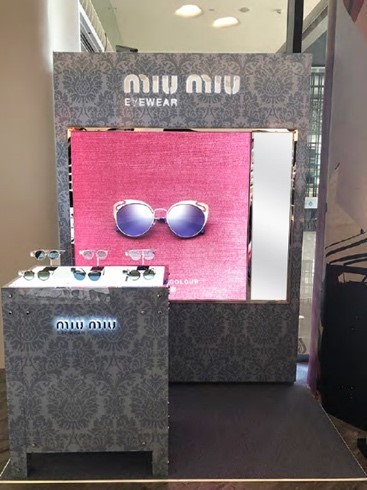
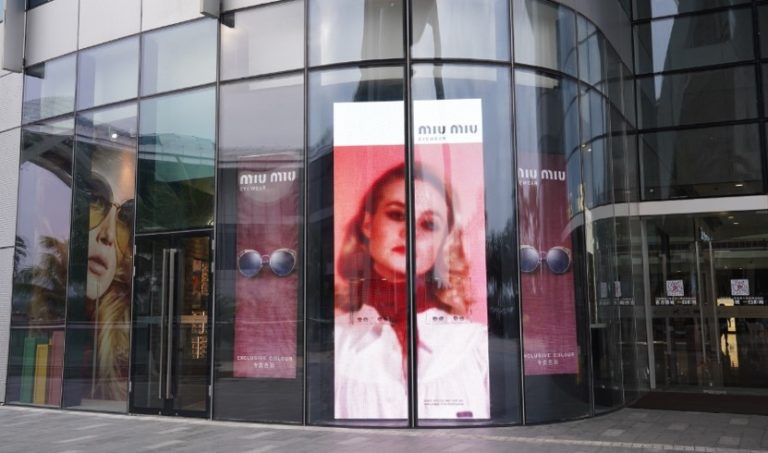
    Italian eyewear firm Luxottica Group has entered its second partnership with China Duty Free Group and Sunrise Duty Free to offer the latest Miu Miu sunglasses collection. The travel retail exclusive has opened in selected airports and other Chinese travel retail stores, trading a reinterpreted version of Miu Miu’s Noir collection. Pop-up sites and personalised backwalls have been prominently installed in the selected locations amplified by customised brand furniture and trained staff.

    “It is a privilege to partner with China Duty Free Group and Sunrise Duty Free on a second China travel retail exclusive color from Miu Miu,” said Luxottica’s travel retail director Enrico Destro. “Both retailers bring our brands to the heart of the Chinese travelling consumer, presenting the opportunity to collaborate on projects to truly capture Chinese spending power and sophisticated appetite for luxury brands, as well as respond to these consumers increasing demand for unique and exclusive products.”

    “At CDFG, our sunglasses category is growing in sophistication very quickly,” added China Duty Free Group’s fashion department director Lee Meili. “We see a large growth opportunity for the category and we will continue on our path to bring newness and exclusivity to our offer … This exclusive Miu Miu color was specially selected with Chinese travellers in mind, and has been presented in a very compelling launch package.”

  • Miu Miu Siam Paragon boutique reopened

    Miu Miu Siam Paragon boutique reopened

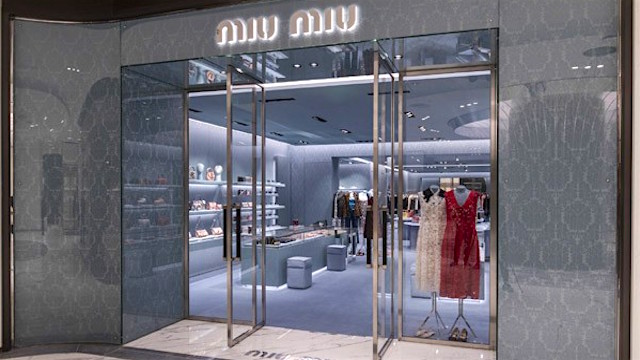
    Italian fashion brand Miu Miu is reopening its Siam Paragon boutique as the first Thai location to introduce its new concept store. The new 140sqm outlet strengthens the brand’s presence in Bangkok with a refreshed interior design and new collections of its signature accessories, bag, shoe and ready-to-wear collections.

    Among Miu Miu’s current offerings are evening dresses enhanced by Swarovski crystals and garments featuring 60’s-inspired elements.

  • Prada Group opens seven stores in Xi’An China

    Prada Group opens seven stores in Xi’An China

    Prada China is boosting its retail presence by opening seven stores in the city of Xi’an.

    The Italian luxury fashion group plans three Prada stores for the SKP Mall, plus two Miu Miu boutiques and two outlets for its Church’s brand.

    Xi’an is an expanding city, with its luxury shopping scene including boutiques for brands including Chanel, Dior and Gucci as reported.

    SKP Mall is seeking to replicate its successful model in Beijing with its new location in Xi’an, which has just opened. Designed by London architecture firm Sybarite, SKP Xi’an is a 19-storey structure.

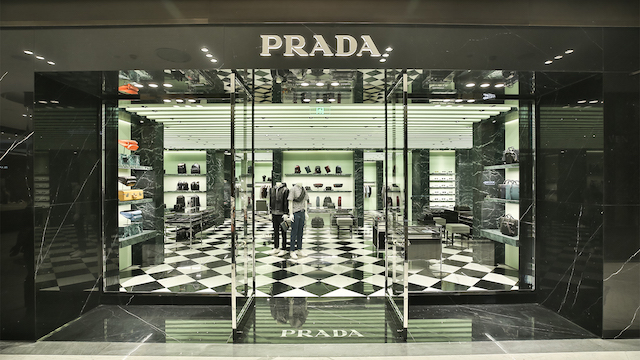
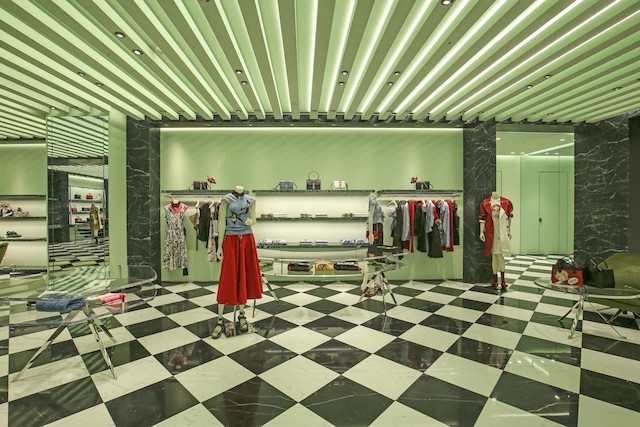
    For SKP, Prada is opening spaces for its menswear, womenswear and women’s footwear. The apparel boutiques are on the ground floor, while the shoes boutique is on the fourth floor. The stores are representative of Prada’s codes, with architectural details such as green marble, black-and-white checkered floors and mid-century Italian furniture.

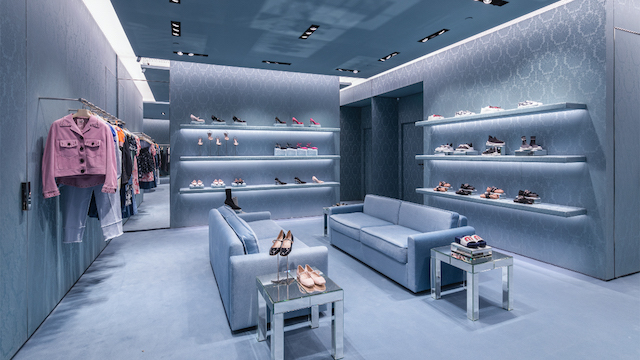
    Miu Miu is also setting up on SKP’s ground level with a store for its apparel, accessories, handbags and shoes. The second Miu Miu store in SKP is a footwear-focused boutique on the fifth floor. Both spaces feature elements such as blue damask fabric and velvet sofas.

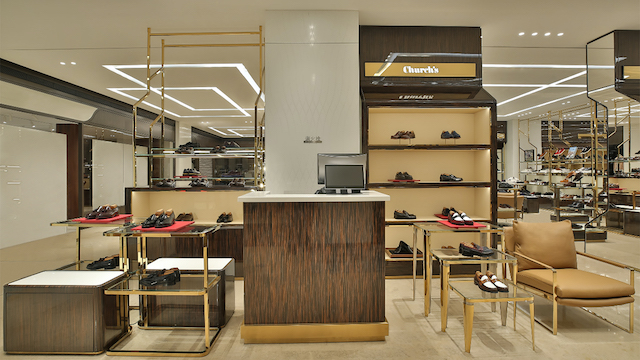
    Church’s, meanwhile, will retail men’s and women’s footwear on the second and fifth floors, respectively.

    To mark the openings, Prada is taking its Silver Line pop-up to SKP – the installation is inspired by train travel and offers shoppers products that serve purposes for different parts of the journey.

  • Prada not looking good outside China

    Prada not looking good outside China

    Global Prada sales fell 3.8 per cent last year – but rose 4.6 per cent in greater China.

    For all of Asia, the Italian luxury fashion brand’s sales were down 1.2 per cent, but in Japan, which it treats as a separate regional market, sales slumped 14.6 per cent.

    The group’s net income for the 12 months was €248.9 million, or 8.1 per cent on net revenues.

    Prada says it has made further progress on updating Prada and Miu Miu stores to meet the brands’ new aesthetic concepts; Church’s stores are next in line for restyling.

    Meanwhile, the group says its sales plan was supported by bold action on the digital front even as physical retail remained at the centre of its omnichannel strategy. During the year the group strengthened its partnerships with major online sales outlets.

    “Moreover, the direct e-commerce channel is growing: it has been enlarged in scope and the new graphic and functional version of the Prada.com website, unveiled in China in December, will be gradually expanded to all countries this year.

    In various markets the group has been promoting “pop-up” events in shopping malls to launch products and emphasise brand identity.

    As well as the Prada, Miu Miu, Church’s and Car Shoe brands, the group also works in the eyewear and fragrance industries under licensing agreements, and has entered the food industry with the acquisition of Pasticceria Marchesi 1824.

    Prada products are sold in 70 countries through a network that includes 625 directly run stores and a network of luxury department stores, independent retailers and franchise stores.

  • Miu Miu pop-up lands at Harbour City

    Miu Miu pop-up lands at Harbour City

    The Miu Miu Lady pop-up exhibition is in the midst of its Hong Kong stop, part of a global tour.

    At the centre of the Miu Miu pop-up are two giant handbags decorated with the jewel buckle for which the Prada-owned brand is renowned.

    The Hong Kong pop-up is located at Harbour City where it will remain until November, before the installation is packed up and shipped to Macau where it will be erected at Galaxy macau Resort from November 25 to December 10.  Already, the display has run at Kuala Lumpur, Shanghai and Nanjing.

    Readers can watch the time-lapse video of the Miu Miu pop-up being built here.

    In Hong Kong, a limited edition green version of the bag is exclusively available at the pop-up shop.

    Miu Miu hosted a cocktail party to launch the pop-up early this week.

    Besides the oversized bags, the pop-up features a series of short movies portraying the history of the Miu Lady bag.

  • Prada sales slip 10 per cent to US$3.3 billion

    Prada sales slip 10 per cent to US$3.3 billion

    Sales for luxury group Prada slipped 10.4 per cent for its fiscal year to January 31 to reach €3.1 billion (US$3.3 billion).

    The result is disappointing coming just 24 hours after LVMH reported a 15 per cent increase in sales across its multitude of brands in the latest quarter, albeit that Prada’s figures are for a full year.

    Royalties rose by 3.1 per cent to €44.8 million compared with the previous 12 months, and pre-tax earnings reached €431.2 million, or 13.5 per cent on net revenues. The group’s net income was €278.3 million.

    Prada says it was a challenging 12 months as it made concrete plans for brand development and launched an overhaul of its main processes. This transition phase coincides with the completion of a long-term plan for geographical expansion of its retail network and a bid to achieve an innovative form of integration with the digital universe.

    “The business climate was mired in uncertainty because of ongoing geopolitical tensions of
    global impact, as well as new events that have suddenly changed economic balances around the world,” says the Hong Kong-listed group.

    Meanwhile, stabilisation of some currency trends paved the way for a recovery in domestic consumption, as in China and Russia, although growth in these markets has not yet compensated for the drop in cross-border tourism.

    New designs

    Against this backdrop, the group says it took the initiative on several fronts, starting as always from the development of innovative products. Items were designed for Prada and Miu Miu in every category, particularly leather goods, including iconic handbags and special editions.

    The group also focussed on store renovation with a massive restyling program to create more intimate, exclusive environments, updated to meet new aesthetic guidelines for Prada and Miu Miu.

    During the year the group also made industrial changes under a three-year plan adopted in 2015, which aims to strengthen control over the production process by insourcing “some of the most delicate phases”. These investments are aimed to help preserve the craftsmanship at the heart of the group’s business model, while underscoring its ties to the Italian community and the sustainability of its manufacturing cycle.

    Based in Milan, Prada works with the Prada, Miu Miu, Church’s and Car Shoe brands in the design, production and distribution of luxury handbags, leather goods, footwear, apparel and accessories. The group also works in the eyewear and fragrance industries under specific licensing agreements. Its products are sold in 70 countries through a network including 620 directly run stores and select luxury department stores, independent retailers and franchise stores.

  • MyTheresa.com takes aim at Korea

    MyTheresa.com takes aim at Korea

    European luxury online retailer MyTheresa.com is launching a Korean-language site.

    Selling luxury womenswear and accessories from such brands as Chloe, Gucci, Miu Miu and Stella McCartney, the e-tailer says it has seen “huge growth potential” in South Korea.

    “The Korean luxury market is moving quickly to digital. Ever since our first activities in Korea we have seen a massive consumer shift to digital and a triple-digit growth in the market,” says MyTheresa.com president Michael Kliger.

    The online fashion destination’s Korean website will offer free exchanges and returns within 30 days, including a free collection service, as well 72-hour deliveries. It aims to offer a more personalised service with a Korean-speaking customer care team.

    Korean customers will be able to pay in euros if using American Express, MasterCard or Visa.

    Launched in 2006, MyTheresa.com was acquired by American company Neiman Marcus Group in 2014. The German multi-brand retailer delivers to more than 120 countries with websites available in Arabic, Chinese, English, French, German and Italian.

  • DFS Group completes City of Dreams store

    DFS Group completes City of Dreams store

    Luxury travel retailer DFS Group has unveiled the final phase of T Galleria by DFS, City of Dreams store in Macau following a year-long expansion.

    DFS Group chairman/CEO Philippe Schaus says the the store offers travellers the breadth of a luxury shopping mall with the personalised service of a high-end department store.

    An expanded jewelry offering was also unveiled in December, bringing key luxury jewelry brands Tiffany & Co. and Van Cleef & Arpels to T Galleria by DFS, City of Dreams as well as new watches boutiques from Audemars Piguet and Vacheron Const
    An expanded jewelry offering was also unveiled in December, bringing key luxury jewelry brands Tiffany & Co. and Van Cleef & Arpels to T Galleria by DFS, City of Dreams as well as new watches boutiques from Audemars Piguet and Vacheron Constantin

    Opening in 2009, T Galleria by DFS, City of Dreams expanded throughout last year to more than three times its original size. Stretching across 173,000 sqft (16072 sqm), the expanded store includes the group’s debut shoe hall. The largest shoe floor in Hong Kong and Macau, it features more than 50 men’s and women’s shoe brands across two levels, including exclusive-to-Macau brands such as Aquazzura and Rupert Sanderson.

    Men can also enjoy a dedicated multi-branded, lifestyle area that mixes ready-to-wear, accessories, shoes, watches and grooming all in one space to allow shoppers to complete a head-to-toe look with ease
    Men can also enjoy a dedicated multi-branded, lifestyle area that mixes ready-to-wear, accessories, shoes, watches and grooming all in one space to allow shoppers to complete a head-to-toe look with ease


    There are more than 40 fashion and accessories brands in the outlet, including Dior, Fendi, Louis Vuitton, Miu Miu and Prada. The expanded beauty offering comprises two wings across 23,000 sqft and nearly 70 beauty and fragrance brands, making it the largest beauty hall in southern China. Highlights include Korean brands Hera, Laneige and Sulwhasoo.

    DFS Macau, City of Dreams – beauty

    For men there is a multi-branded lifestyle area that mixes ready-to-wear, accessories, shoes, watches and grooming in one space.

    DFS Macau. 1

    DFS Macau. 3

    An expanded jewellery offering was unveiled in December, bringing in such brands as Tiffany & Co and Van Cleef & Arpels. There are also new watch boutiques from Audemars Piguet and Vacheron Constantin.

    DFS Macau, City of Dreams - WJA Event

    T Galleria by DFS, City of Dreams is one of four T Galleria stores in Macau, including T Galleria by DFS, Shoppes at Four Seasons; T Galleria by DFS, Studio City; and the standalone beauty hall T Galleria Beauty by DFS, Galaxy Macau.

  • Prada Asia fortunes wane

    Prada Asia fortunes wane

    Prada Asia is the Italian luxury label’s achilles heel with the company reporting  a 16 per cent decrease in sales in the region in the year to January 31.

    “The economic situation of the Chinese market remains negative although there was some improvement in the final quarter,” Prada said in its earnings statement.

    “Consequently, in the 2015 financial year, the entire Asia Pacific area (excluding Japan) recorded a 4 per cent revenue decrease at current exchange rates and a 16 per cent decrease at constant exchange rates.”

    Japan proved a better market, for the label: for the fifth consecutive year, sales rose, this time by  11 per cent at current exchange rates, or 4 per cent at constant rates.

    Global sales changed little – for the second year in a row – largely due to the strengthening US dollar.  Total revenue was 3.552 billion euros (US$3.96 billion) in 2015. Sales in the US fell 9 per cent excluding currency fluctuations.

    “Throughout 2015, we had to deal with an economic environment characterised by extreme volatility in currency markets, as well as by the deteriorating geopolitical situation in many world regions,” commented said CEO Patrizio Bertelli, in a clear reference to the falling demand for luxury goods in China and the Paris terrorist attacks.

    “These two factors have made prices fluctuate wildly and diverted tourist traffic in sudden and unpredictable ways. Our retail network – now truly global thanks to investment in recent years – enables us to keep developing a direct relationship with our ever more demanding customer all over the world. In the coming months, the group will be focusing its energies on the development of new commercial and marketing initiatives to sustain organic growth, also by means of an extensive digital project to strengthen dialogue with our customers. These actions, taken against the background of rigorous and disciplined cost control, will enable us to consolidate our market position with satisfactory margins and returns on investment.”

    Prada is listed in Hong Kong.

  • Is Time Running Out For Luxury in China?

    Is Time Running Out For Luxury in China?

    In 1992 Louis Vuitton made its debut in China with a store in Beijing’s bustling shopping district of Wangfujing, becoming the first luxury brand to set foot in the Middle Kingdom. The timing was perfect. The Chinese economy was just coming into its own, embarking on a spectacular journey of double-digit economic growth. This was the start of the consumerist boom that would shape the fortunes of many Western brands in China.

    Louis Vuitton’s signature monogram soon became ubiquitous in China as the company expanded its footprint across the country, first in all the major cities like Beijing, Shenzhen and Guangzhou, and then in second and third-tier cities. Gradually China became a big contributor to Louis Vuitton’s revenues globally. In a 2009 interview with Reuters, Jean-Marc Lacave, the then North Asia chief executive for LVMH Watches & Jewelry, said that the company aimed to strengthen its presence in China’s third- and forth-tier cities and gain market share.

    Several years have gone by, and now the legendary Louis Vuitton monogram seems to be losing some of its sheen in China.

    In 2015, Louis Vuitton closed three of its stores in China, including its flagship store in Guangzhou. Rumor has it that the Paris-headquartered company will continue to shutter more stores in the country.

    Louis Vuitton is not the only luxury brand that has run into rough weather. For most luxury brands, China is no longer the cash cow it once was. Multiple reports suggest that the luxury retail business in China is shrinking, leaving several big brands in a quandary.

    Two decades ago, when the likes of Louis Vuitton and Prada entered China, they had the much-coveted first-mover advantage in a market that was just starting to come into its own. Data from Euromonitor shows that the retail luxury market in China has grown from a very low base to $135 billion by 2013. But the tide seems to be turning. The size of the retail luxury market in China contracted slightly to $134 billion in 2014. And by all indications, this is just the beginning of a bigger slump.

    The top 10 global luxury brands as per market research company Millward Brown’s latest BrandZ report—a list that includes names like Louis Vuitton, Hermes, Gucci and Chanel—saw 6% of their total brand valuation evaporate in 2015. “Following a strong recovery from the global financial crisis, the pace of sales flattened for several reasons, including the economic slowdown in China, Brazil and Russia. In addition, China’s anti-corruption regulations trimmed luxury gift giving in that country,” the report said.

    In the first quarter of 2015, Italian luxury brand Prada experienced a 19% slump in sales from the Greater China region. The group also reported a 23% plunge in net profit in the first half of 2015. Similarly Burberry has hit upon hard times. According to a Financial Times report, the Greater China area contributes 25% to the classic English luxury brand’s sales numbers. But in 2015, demand in China (and from China) has been hit. “Burberry’s like-for-like sales in Hong Kong fell by more than 20 per cent in the three months to the end of September as fewer Chinese shoppers travelled to the region. Like-for-like sales in China fell by a mid single-digit percentage in the quarter,” said the report. The company blames the overall disappointing performance to an “increasingly challenging environment for luxury, particularly Chinese customers”.

    Confronted with an unstable market performance, several luxury companies have started shrinking their store numbers. In the past two years Burberry, Armani and Prada have reportedly shut down four, five and 16 stores respectively. Hugo Boss shut seven stores in China and Chanel is down to 11 stores in China, half the number it had during the good days.

    End of a Dream Run?

    Some of the reasons for China’s luxury slowdown are obvious, such as the Chinese government’s crackdown on corruption under President Xi Jinping’s regime. Cases of bribery, gifting, lavish purchases and ostentatious show of wealth have come under the scanner hurting luxury good manufacturers. The overall slowdown in the Chinese economy is also leading to belt-tightening measures further slowing luxury sales.

    But there’s another less obvious reason for the slowdown in China’s luxury market, according to Benoit Garbe, Senior Partner at Millward Brown. Till the slowdown hit China, this was a market on steroids and brands were expanding like crazy resulting in oversupply. “It’s been an easy ride for many luxury brands over the past 5-10 years when there was fast growing demand. [For brands] it was all about growing their distribution footprint, opening new stores. Now the market is a real market with more intense competition, more sophisticated demand,” says Garbe. “The best brands would think strategically in terms of differentiation and building relevance, and will be the brands that win.”

    As Chinese luxury buyers become more sophisticated, they don’t want to have the same luxury brand being used by every second person on the street. They are looking for more exclusivity. Adds Timothy Coghlan, Associate Director of Luxury Retail at Savills, “There’s a lot of evidence that the Chinese customer isn’t loyal. They will change between brands depending on which brand is trendy.”

    Another big factor that has been denting the China sales numbers is the trend of consumers shopping for luxury overseas in order to avoid paying high import taxes in China. “High import taxes within China are a big incentive for shopping abroad—the same luxury handbag can often cost a third more in Beijing than in Paris, for example. But, holidays also encourage more extravagant spending habits,” writes Fflur Roberts, Head of Luxury Goods at Euromonitor, in an email response. If you look at the annual reports of several luxury brands, you may find weakened sales performance in China, but improved performance in neighboring countries like Japan and Korea, or even the brands’ countries of origin, such as France. Some of this is due to demand from Chinese travellers. Roberts adds that “wealthy Chinese tourists have been key drivers of global luxury goods sales for more than a decade. According to Euromonitor International, the Chinese made over two million trips to the US in 2014, an increase of almost 12% on 2013 and a massive 286% increase since 2009….”

    However, getting a good bargain doesn’t always require travel. Thanks to China’s e-commerce revolution, haitaos and daigous, or cross-border buying agents, have become popular. In the case of daigous (literally translated as “substitute buyers”), individual professional buyers usually stationed abroad can fulfill customized orders for consumers in China. Usually the daigous are Chinese students studying overseas, tour guides or air hostesses, in short, people who fly in and out the country frequently. Professional daigous will usually first take orders from customers and then procure and send the goods to China. In the case of haitaos, instead of individuals, companies do the buying. According to a report from Bain & Company, luxury purchases through daigous amounts to up to 15% of Chinese consumers’ total spending on luxury.

    Daigous and haitaos exist in a legal grey area as they skirt the government’s tariff regulations. The goods they ship to China somehow skirt Chinese import tax regulations. Daigous are not licensed sellers, which leaves issues of consumer rights in a grey area as well. While the Chinese government is starting to crack down on daigous, it will be a while before it has any serious impact on luxury sales via the proper channels.

    Luxury market infographoic

    Engineering a Bounceback

    Clearly, the problems luxury brands are facing in the Chinese market aren’t going away anytime soon. So what can brands possibly do to ease the pain? A few suggestions:

    Narrow the Price Differential:

    In March 2015, Chanel shocked onlookers by announcing its decision to increase prices in Europe by 20% and reducing them by a similar percentage in China. Prada was quick to follow suit by lowering prices in China. While it is hard to predict the impact this will have, it can be safely assumed that it will undo some of the damage done by high import taxes in China, and hence, help brands narrow the price differential between China and overseas. After all, in some cases, goods are 60% more expensive in China than they are in Europe. This will also help brands counter daigous who have been undercutting them with a vengeance.

    Customized Offerings:

    For the super rich price may not matter all that much. Some Chinese customers probably don’t feel that they are being overcharged: as long as they enjoy good customer service here, they won’t bother going overseas for a better bargain. “Buying a luxury product is more emotional than functional,” says Millward Brown’s Garbe. As Chinese customers become mature, they want exclusivity, privacy and service, and it’s not so much about price anymore. This is where brands need to think in terms of tailoring the experience accordingly. As Garbe puts it: “How do you make sure you know the customer very well, and then you deploy strategy and operations that allow you to, in-store, instantly recognize them? So they walk in the stores, [and] automatically on your iPad you know them, you know what they’ve bought, and you can really tailor your offer.”

    Adds Coghlan from Savills, “One of the things that I think is very important for brands is to set up a CRM program so they can track their customers globally. They can do it to some degree through WeChat or things like that.”

    Abroad at least, some brands are going out of the way to make important customers feel special. In some US stores, brands like Gucci, Prada and Louis Vuitton have created a special space for important customers. One of the Louis Vuitton outlets has “a rooftop area where guests can sun themselves and enjoy Champagne”.

    ‘Affordable’ Luxury:

    High net worth individuals are a very small group of people but the biggest consumers of luxury brands. There’s another demographic that cannot be categorized as super rich but is affluent nevertheless and aspires for luxury. Luxury brands can think of catering to this target group by rethinking their portfolio. The big three luxury groups, LVMH (owner of Louis Vuitton and Moët & Chandon Champagne), Richemont Group (owner of Cartier and Chloe) and Kering Group (owner of Gucci and Yves Saint Laurent) have all created or acquired lower profile brands for those who still want luxury, but a little more affordable and understated. Affordable luxury brands include the likes of Baume & Mercier (Richemont), Pomellato (Kering) and Loewe (LVMH). Another benefit of having a diversified portfolio, apart from profits coming from different streams, is offering the customer greater exclusivity. A Miu Miu, after all, can be far more exclusive than a Prada.

    Aligned Businesses:

    Some brands are going a step further and tapping into new categories altogether. Gucci, for instance, opened a full-service restaurant  in Shanghai. 1921 Gucci Café, as the restaurant is called, is connected to the Gucci store in the mall by an elevator. After browsing in the store, customers can stop by for an Italian lunch or dinner. Globally, Prada and Chanel have tapped into food as a category too. In 2014, Prada bought a stake in iconic Milan cafe Pasticceria Marchesi. The café “serves everything form breakfast and lunch to aperitifs, with custom-made fine china, it aims at creating a very luxurious experience for its customers.” Restaurants and cafes might help improve the customer experience or add to the brand, though not everyone agrees with this view.

    Tapping E-Commerce:

    A couple of years back the widespread notion was that e-commerce is not for luxury, mostly because e-commerce was associated with discounts, something that doesn’t go with the idea of luxury. “For many years there was this belief that digital was not for luxury brands… and there [was] a lot of resistance to it,” says Garbe. Also, shopping online almost certainly meant sacrificing the customer experience. As Garbe puts it, for lots of luxury brands “digital and e-commerce was all about price and discounts, it [was] not experiential as a store experience”. The tide, however, is starting to turn.

    The reality is that given Chinese customers penchant for shopping online, luxury brands can no longer afford to ignore e-commerce. According to a Bain study on luxury behavior, 73% of luxury buyers search online before they purchase. “If you think of Tmall or how consumers actually behave, they really seek for peer inducement or they seek for recommendation or reviews. In a way e-commerce is very important because consumers now shop based on the reading or what is being said on the brand. You need to start those conversations as well to be able to get the positive review from people.” says Garbe.

    The e-commerce or digital space also give brands opportunities to experiment with different scenarios. “I think Tmall or any online platform allows you to try different things, some of which will be added value offers, some of it will be experiential offers, maybe pricing. But again you try multiple ones and you see what works and you adapt and you change. That’s the beauty of online platforms: that you can really learn and experiment,” says Garbe.

    Once a luxury brand sets up an online shop, the physical and online stores will play separate roles in tandem with each other. “One of the opportunities is making your retail (physical store) as a full experiential center, where consumers get to touch, feel, be transported,…. Maybe you don’t need to have as much inventory in the store, you use the store as a brand building platform where people can go and buy online, but it should be the same price (as the physical store), and vice versa people could go screen [the] shop [online], but they still want to touch the product and then they can go and pick it up at a store and make sure this is what they want.”

    Tailor to China:

    For some brands, tailoring their products or experiences to China might work wonders for their sales. Tiffany has a “tailor for China” strategy. “The Tiffany Keys Collection, a jewelry collection tailored for China, [has] been one of their fastest growing items [here]. Again it’s tapping into that Chinese value of the key representing the possibility to unlock which is very relevant to many women who want to wear the keys for what it means and what it stands for in the mind of Chinese consumers.”

    Relating your products to Chinese culture is another way to get Chinese customers interested. Dolce and Gabbana (D&G) did this in their 2016 Spring & Summer collection, which was inspired by Chinese motifs from the 17th century. “They were using all those visual Chinoiserie or Chinese motifs to really bring into the DNA of D&G. In a way it’s a European brand saying: ‘How do we win in China?’” Designers of Burberry were also inspired by Chinese culture, and customized their products especially for the Chinese consumers. During the 2015 Spring Festival, they launched a scarf collection with the Chinese character for ‘prosperity’ embroidered on it. That move, however, backfired as Chinese consumers felt it made the scarf look like a knockoff. So while tailoring for China is great in theory, it needs to be done carefully.

    The bottomline is that the Chinese market is too big for luxury brands to ignore. They just need to find new ways to tap the opportunity here.
  • Hong Kong a drag on Prada

    Hong Kong a drag on Prada

    Luxury fashion group Prada says the Asia Pacific market continued to decline during the first nine months of the new financial year.

    And Hong Kong and Macau have taken the blame – again.

    During the last three quarters, sales in the region fell 4.9 per cent at current exchange rates.

    “This is due to reductions in both local consumption and tourist flows within the region, with Hong Kong and Macau particularly affected,” Prada said in its results statement.

    But Japan helped ease the pain. Prada sets Japanese sales apart from Asia Pacific sales, reporting a 10.4 per cent increase in sales at current exchange rates and 4.6 per cent at constant exchange rates, driven largely by the rising number of Chinese tourists – many of whom in previous years would have visited Hong Kong to shop for luxury goods.

    In Europe, too, the influx of Asian tourists boosted sales, which rose 8.6 per cent at current exchange rates and 7.6 per cent at constant exchange rates. The Italian market continued to stand out among the various European countries and recorded growth rates well above the average for the area.

    On the American market sales increased at current exchange rate by 8.5 per cent, but showed a negative underlying trend, down 7.6 per cent at constant exchange rates.

    “The significant strengthening of the US dollar over the period had an adverse impact on tourism, mainly from China and South America, but, at the same time, it encouraged a shift in American consumer spending towards Europe,” Prada said.

    By brand, Prada recorded a 2.1 per cent global sales  increase which was entirely attributable to the exchange rate effect. Miu Miu has grown with revenues up at both current exchange rates (+11.8 per cent) and constant exchange rates (+1.9 per cent). Church’s has also achieved sales growth (+17.6 per cent), a positive trend also on a like-for-like base.

    The licensing business (eyewear and fragrances) performed very well, with royalties for the nine months to October 31, totalling Euro 33.5 million, a 16.2 per cent increase, in large part thanks to the launch of the first Miu Miu fragrance.

    Prada Group’s consolidated revenue for the nine months was Euro 2.583 billion. This represents a 1.2 per cent  increase at current exchange rates on the corresponding period in 2014, entirely thanks to directly operated store sales. Wholesale revenues decreased as the group continues to reduce its presence in that channel.

    Net profit was Euro 235.1 million or 9.1 per cent of net revenue.

  • Retail landlords headed for another horrible year in 2016, says CBRE

    Retail landlords headed for another horrible year in 2016, says CBRE

    Retailing landlords will likely continue to feel the pinch in coming times, as the ongoing slump in tourism is poised to weigh negatively on capital values in prime shopping districts, thumping prices a further 20 per cent next year, on top of an expected 20 per cent drop this year, according to CBRE.

    But CBRE predicts the office market will be a bright spot next year as the potential launch of Shenzhen-Hong Kong Stock Connect will drive up demand from mainland firms.

    “Retail rents will continue to trend down as leases expire, but given a lower base of comparison, the pace of decline is expected to decelerate,” according to CBRE’s Hong Kong Commercial Real Estate Review & 2016 Preview.

    It predicts that rents will track the decline in capital values, tumbling as much as 35 per cent this and next.

    “Sales momentum of upmarket goods will remain slow but mass market sales should continue to have more resistance,” CBRE said.

    Symptomatic of the woes facing the luxury retail sector, on Friday high-end brands Prada, Miu Miu and Gucci unexpectedly offered up to 50 per cent discounts as a way to drum up sales and attract long queues of shoppers, including those from the mainland.

    In a stark contrast to the depressed retail market, CBRE expects overall office rents to increase 10 per cent for 2015, and a further 10 per cent next year.

    “Next year will be another year of landlords’ market but the rental cycle is approaching the peak,” CBRE said.

    In 2016 office rents in Central would register the largest year on year growth, climbing 10 per cent, after rising an estimated 15 per cent this year.

    The sector would also benefit from the limited supply with just 1.4 million square feet due for completion next year, it said.

    CBRE also expects the capital value of office real estate could rise as much as 10 per cent next year, after 5 per cent growth this year.

    Two noticeable office transactions in November offered an indication of the upwards momentum in the sector. Mainland developer Evergrande Real Estate agreed to buy the 26-storey Mass Mutual Tower in Wan Chai from Chinese Estates Holdings for a record-breaking HK$12.5 billion.

    On the same day, China Life, the mainland’s largest insurer, announced the purchase of an entire office tower with a two-storey retail block at One HarbourGate in Hung Hom for HK$5.85 billion from Wheelock & Co.

  • Miu Miu moves in after Marc Jacobs quits space

    Miu Miu moves in after Marc Jacobs quits space

    Fashion brand Miu Miu is taking up a shop formerly occupied by Marc Jacobs on Canton Road in Tsim Sha Tsui, in the musical chairs of Hong Kong’s retail real estate as thinning crowds of shoppers force brands to look for cheaper alternatives.

    But experts are not convinced that there are enough brands willing to fill the space vacated by their peers given the dull outlook for the industry.

    Miu Miu, controlled by Prada, will take up the space formerly occupied by LMVH’s Marc Jacobs at Harbour City, according to sources.

    The new shop is expected to open next month.

    It is not clear if Miu Miu will continue to keep its shop at Peking Road, also in Tsim Sha Tsui.

    Landlord Wharf (Holdings) declined to comment. Miu Miu was unavailable for comment on Tuesday.

    The news of the relocation comes a month after sports brand Adidas leased the shop in Central that used to be occupied by US luxury brand Coach. Coach closed the shop in August in the wake of a drop in the number of mainland Chinese visitors to the city.

    Adidas has rented the 13,000 sq ft shop for HK$4.34 million a month, according to the Land Registry – 22.5 per cent less than the HK$5.6 million Coach was paying.

    “For prime areas like Canton Road, landlords do not worry about finding tenants,” said Michael Chik, the managing director of agency Sheraton Valuers, which focuses on retail shops transactions.

    But there are some landlords – especially those who do not own first-tier street shops – who are failing to attract tenants. “The fact is that some companies are consolidating their network in Hong Kong,” he said.

    Hit hard by slower growth in tourist arrivals and a drop in luxury sales, retailers are facing a challenging environment. Some have asked landlords to cut rents while others are opting to relocate.

    Since last year, luxury retailers have been struggling in the wake of Beijing’s anti-corruption measures, economic slowdown on the mainland, a weakening of Asian currencies and changing travel patterns of mainland Chinese.

    The city’s retail sales by value fell 5.4 per cent in August from a year earlier, after a decline of 2.9 per cent in the previous month as tourist arrivals slowed.

    “Despite several movements in the market, this is a fantastic opportunity for fast-fashion and sports-fashion-related sectors to capture some prime opportunities that have not been available in the market for many lease cycles,” said Tom Gaffney, the head of retail at consultancy JLL.

    Gaffney said he believed such “movements” would lead to a more sustainable retail landscape in Hong Kong.

    Chik said he expected landlords at Canton Road to come under pressure to cut rents when a number of leases expire at the end of the year and early next year.

    Leases of at least 10 shops on Canton Road will expire between next month and next year.

    Lease of the Puyi shop at 116-120 Canton Road will expire next month. Chik said the retailer, which has another shop on the same street, would give up the shop when the lease expired. Puyi leased the 1,000 sq ft shop three years ago for a monthly rent of about HK$1.7 million.

    Asia Commercial Holdings rented three shops at Manley House on 86-89 Canton Road in 2011 for a monthly rent of about HK$6.3 million. The retailer has been planning to sublet one shop with an asking rent of HK$1.3 million aimed at reducing rental pressure. But it had yet to find a replacement, said Chik.

    “When there is vacant shop, landlords of shops on that street will feel the pressure,” said Chik, who said he believed rents for new leases on Canton Road would be 30 per cent below the old leases.

    Retail high street rents in Causeway Bay, Tsim Sha Tsui, Central and Mong Kok went down by 26 to 43 per cent in the third quarter from their peak levels in the fourth quarter of 2013 and during lease renewals compared to the last rent a few years ago, according to a report by DTZ/Cushman & Wakefield.

    This article appeared in the South China Morning Post print edition as Miu Miu moves in as Marc Jacobs quits space

  • Sports fashion demand drives Stella sales

    Sports fashion demand drives Stella sales

    Shoe marketer Stella International has reported increased sales in the second quarter on the back of growing demand for sports fashion footwear.

    In the three months to September 30, consolidated revenue from its China retail business and its manufacturing operations amounted to US$569 million, up 4.3 per cent year on year. For the nine months to September 30, revenues totalled US$1.366 billion, an increase of 7.9 per cent.

    “Looking forward, the group expects orders for the group’s footwear products will pick up further towards the end of this year and the beginning of 2016, as its customers continue to expand their global presence and as demand for sports fashion footwear continues to grow,” the company said in a stock exchange filing.

    “Order levels will also be supported by greater efficiency and improved utilisation at the group’s production facilities in inland China and Southeast Asia.

    “The group cautiously expects shipment volumes to reach 58 million pairs by the end of 2015.”

    Stella produces shoes for brands including Clarks, Deckers, Ecco, Rockport, Timberland, Wolverine, Cole Haan, Guess, Jones Group, Kenneth Cole and Michael Kors. It also designs, develops and manufactures footwear for high-fashion brands including Alejandro Ingelmo, Alexander Wang, Armani, Bally, Balmain, Brian Atwood, Givenchy, Kenzo, Marc by Marc Jacobs, Marciano, Miu Miu, Paul Smith, Prada, Sigerson Morrison, Via Spiga and Y3.

    And taking advantage of its manufacturing expertise, the wide acceptance of Stella’s products by brand customers, the company has successfully expanded into the Chinese and global footwear retail market through its own brands Stella Luna, What For, JKJY by Stella and joint-venture brand, Pierre Balmain.

    Stella says it will continue to implement strict cost controls and efficiency improvement measures to preserve its profitability. This includes placing a renewed focus on leveraging its competitive strengths to pursue new promising product segments, such as sports fashion footwear.

    “The group also remains committed to building the long-term competitiveness of its retail business with the opening of new standalone stores and shops-in-shops in quality locations. It will also continue to boost its branding efforts in Europe to further grow the value of its brands among Chinese consumers.”