Tag: Miu Miu

  • Retail landlords headed for another horrible year in 2016, says CBRE

    Retail landlords headed for another horrible year in 2016, says CBRE

    Retailing landlords will likely continue to feel the pinch in coming times, as the ongoing slump in tourism is poised to weigh negatively on capital values in prime shopping districts, thumping prices a further 20 per cent next year, on top of an expected 20 per cent drop this year, according to CBRE.

    But CBRE predicts the office market will be a bright spot next year as the potential launch of Shenzhen-Hong Kong Stock Connect will drive up demand from mainland firms.

    “Retail rents will continue to trend down as leases expire, but given a lower base of comparison, the pace of decline is expected to decelerate,” according to CBRE’s Hong Kong Commercial Real Estate Review & 2016 Preview.

    It predicts that rents will track the decline in capital values, tumbling as much as 35 per cent this and next.

    “Sales momentum of upmarket goods will remain slow but mass market sales should continue to have more resistance,” CBRE said.

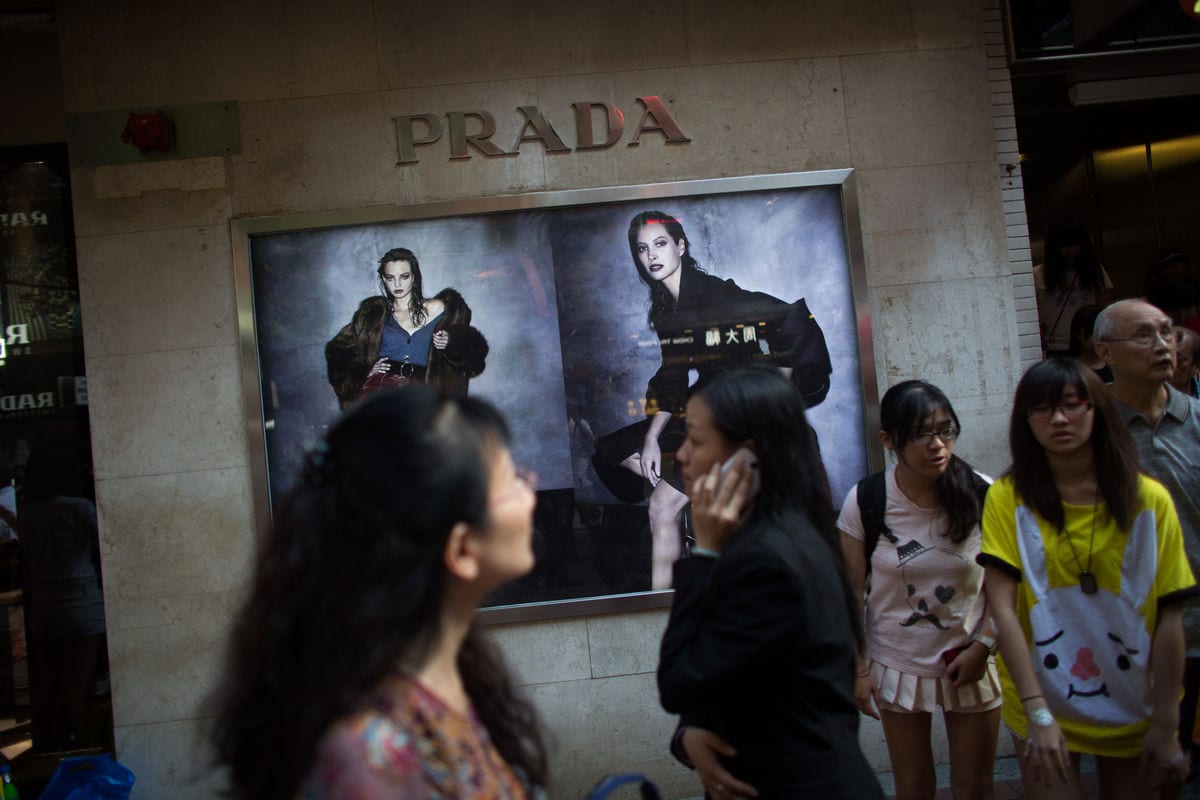
    Symptomatic of the woes facing the luxury retail sector, on Friday high-end brands Prada, Miu Miu and Gucci unexpectedly offered up to 50 per cent discounts as a way to drum up sales and attract long queues of shoppers, including those from the mainland.

    In a stark contrast to the depressed retail market, CBRE expects overall office rents to increase 10 per cent for 2015, and a further 10 per cent next year.

    “Next year will be another year of landlords’ market but the rental cycle is approaching the peak,” CBRE said.

    In 2016 office rents in Central would register the largest year on year growth, climbing 10 per cent, after rising an estimated 15 per cent this year.

    The sector would also benefit from the limited supply with just 1.4 million square feet due for completion next year, it said.

    CBRE also expects the capital value of office real estate could rise as much as 10 per cent next year, after 5 per cent growth this year.

    Two noticeable office transactions in November offered an indication of the upwards momentum in the sector. Mainland developer Evergrande Real Estate agreed to buy the 26-storey Mass Mutual Tower in Wan Chai from Chinese Estates Holdings for a record-breaking HK$12.5 billion.

    On the same day, China Life, the mainland’s largest insurer, announced the purchase of an entire office tower with a two-storey retail block at One HarbourGate in Hung Hom for HK$5.85 billion from Wheelock & Co.

  • Miu Miu moves in after Marc Jacobs quits space

    Miu Miu moves in after Marc Jacobs quits space

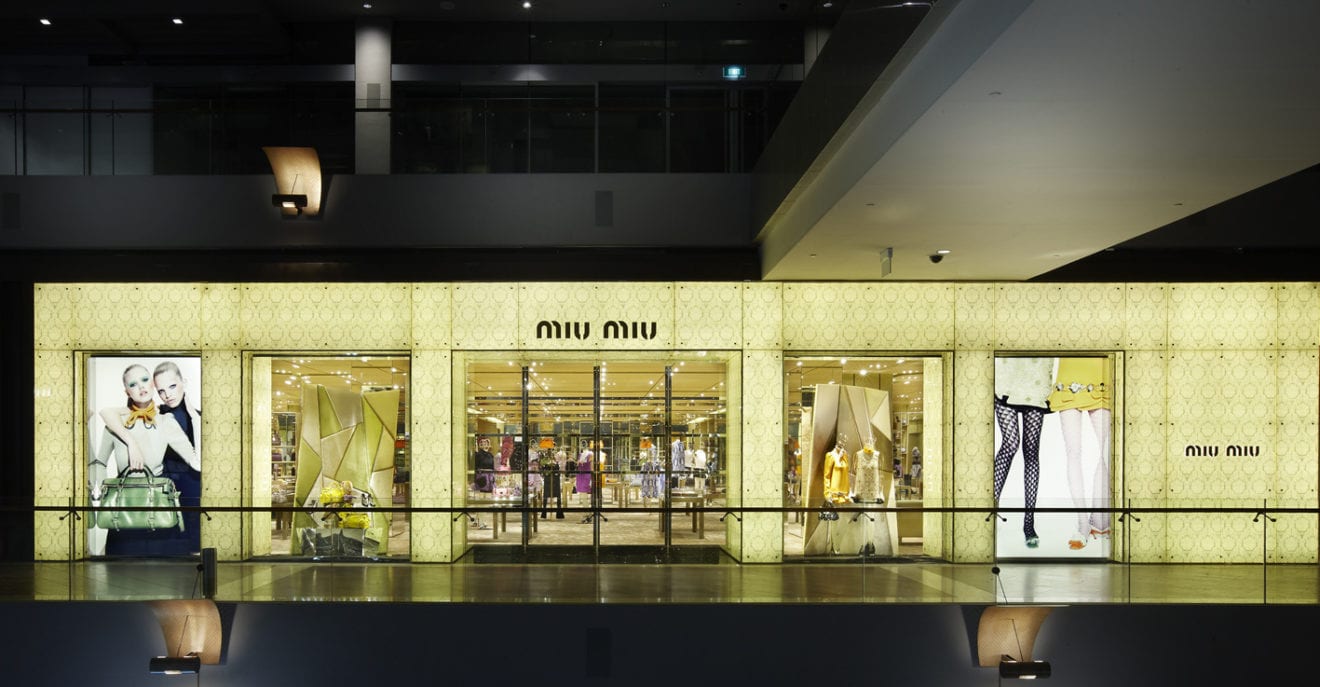
    Fashion brand Miu Miu is taking up a shop formerly occupied by Marc Jacobs on Canton Road in Tsim Sha Tsui, in the musical chairs of Hong Kong’s retail real estate as thinning crowds of shoppers force brands to look for cheaper alternatives.

    But experts are not convinced that there are enough brands willing to fill the space vacated by their peers given the dull outlook for the industry.

    Miu Miu, controlled by Prada, will take up the space formerly occupied by LMVH’s Marc Jacobs at Harbour City, according to sources.

    The new shop is expected to open next month.

    It is not clear if Miu Miu will continue to keep its shop at Peking Road, also in Tsim Sha Tsui.

    Landlord Wharf (Holdings) declined to comment. Miu Miu was unavailable for comment on Tuesday.

    The news of the relocation comes a month after sports brand Adidas leased the shop in Central that used to be occupied by US luxury brand Coach. Coach closed the shop in August in the wake of a drop in the number of mainland Chinese visitors to the city.

    Adidas has rented the 13,000 sq ft shop for HK$4.34 million a month, according to the Land Registry – 22.5 per cent less than the HK$5.6 million Coach was paying.

    “For prime areas like Canton Road, landlords do not worry about finding tenants,” said Michael Chik, the managing director of agency Sheraton Valuers, which focuses on retail shops transactions.

    But there are some landlords – especially those who do not own first-tier street shops – who are failing to attract tenants. “The fact is that some companies are consolidating their network in Hong Kong,” he said.

    Hit hard by slower growth in tourist arrivals and a drop in luxury sales, retailers are facing a challenging environment. Some have asked landlords to cut rents while others are opting to relocate.

    Since last year, luxury retailers have been struggling in the wake of Beijing’s anti-corruption measures, economic slowdown on the mainland, a weakening of Asian currencies and changing travel patterns of mainland Chinese.

    The city’s retail sales by value fell 5.4 per cent in August from a year earlier, after a decline of 2.9 per cent in the previous month as tourist arrivals slowed.

    “Despite several movements in the market, this is a fantastic opportunity for fast-fashion and sports-fashion-related sectors to capture some prime opportunities that have not been available in the market for many lease cycles,” said Tom Gaffney, the head of retail at consultancy JLL.

    Gaffney said he believed such “movements” would lead to a more sustainable retail landscape in Hong Kong.

    Chik said he expected landlords at Canton Road to come under pressure to cut rents when a number of leases expire at the end of the year and early next year.

    Leases of at least 10 shops on Canton Road will expire between next month and next year.

    Lease of the Puyi shop at 116-120 Canton Road will expire next month. Chik said the retailer, which has another shop on the same street, would give up the shop when the lease expired. Puyi leased the 1,000 sq ft shop three years ago for a monthly rent of about HK$1.7 million.

    Asia Commercial Holdings rented three shops at Manley House on 86-89 Canton Road in 2011 for a monthly rent of about HK$6.3 million. The retailer has been planning to sublet one shop with an asking rent of HK$1.3 million aimed at reducing rental pressure. But it had yet to find a replacement, said Chik.

    “When there is vacant shop, landlords of shops on that street will feel the pressure,” said Chik, who said he believed rents for new leases on Canton Road would be 30 per cent below the old leases.

    Retail high street rents in Causeway Bay, Tsim Sha Tsui, Central and Mong Kok went down by 26 to 43 per cent in the third quarter from their peak levels in the fourth quarter of 2013 and during lease renewals compared to the last rent a few years ago, according to a report by DTZ/Cushman & Wakefield.

    This article appeared in the South China Morning Post print edition as Miu Miu moves in as Marc Jacobs quits space

  • Sports fashion demand drives Stella sales

    Sports fashion demand drives Stella sales

    Shoe marketer Stella International has reported increased sales in the second quarter on the back of growing demand for sports fashion footwear.

    In the three months to September 30, consolidated revenue from its China retail business and its manufacturing operations amounted to US$569 million, up 4.3 per cent year on year. For the nine months to September 30, revenues totalled US$1.366 billion, an increase of 7.9 per cent.

    “Looking forward, the group expects orders for the group’s footwear products will pick up further towards the end of this year and the beginning of 2016, as its customers continue to expand their global presence and as demand for sports fashion footwear continues to grow,” the company said in a stock exchange filing.

    “Order levels will also be supported by greater efficiency and improved utilisation at the group’s production facilities in inland China and Southeast Asia.

    “The group cautiously expects shipment volumes to reach 58 million pairs by the end of 2015.”

    Stella produces shoes for brands including Clarks, Deckers, Ecco, Rockport, Timberland, Wolverine, Cole Haan, Guess, Jones Group, Kenneth Cole and Michael Kors. It also designs, develops and manufactures footwear for high-fashion brands including Alejandro Ingelmo, Alexander Wang, Armani, Bally, Balmain, Brian Atwood, Givenchy, Kenzo, Marc by Marc Jacobs, Marciano, Miu Miu, Paul Smith, Prada, Sigerson Morrison, Via Spiga and Y3.

    And taking advantage of its manufacturing expertise, the wide acceptance of Stella’s products by brand customers, the company has successfully expanded into the Chinese and global footwear retail market through its own brands Stella Luna, What For, JKJY by Stella and joint-venture brand, Pierre Balmain.

    Stella says it will continue to implement strict cost controls and efficiency improvement measures to preserve its profitability. This includes placing a renewed focus on leveraging its competitive strengths to pursue new promising product segments, such as sports fashion footwear.

    “The group also remains committed to building the long-term competitiveness of its retail business with the opening of new standalone stores and shops-in-shops in quality locations. It will also continue to boost its branding efforts in Europe to further grow the value of its brands among Chinese consumers.”

  • Shilla launches Miu Miu global travel-retail first in Singapore

    Shilla launches Miu Miu global travel-retail first in Singapore

    The Shilla Duty Free has launched the global travel-retail first Miu Miu fragrance at Singapore Changi International airport.

    The global travel-retail exclusive launch from August 1-31 is part of the The Shilla Duty Free’s commitment to continuously present unique and coveted travel exclusives, and to provide world-class shopping experiences to its consumers, according to the retailer.

    Strong partnerships with key brands have resulted in a series of global launches in the form of brand outposts in Changi airport. Similarly, for the launch of Miu Miu’s signature fragrance, a special outpost has been set up beside the terminal one perfumes and cosmetics central store in the transit departure area from August 12 to September 6. Travellers can be among the first to experience the Miu Miu fragrance as have bottles personalised with their initials at the Miu Miu outpost.

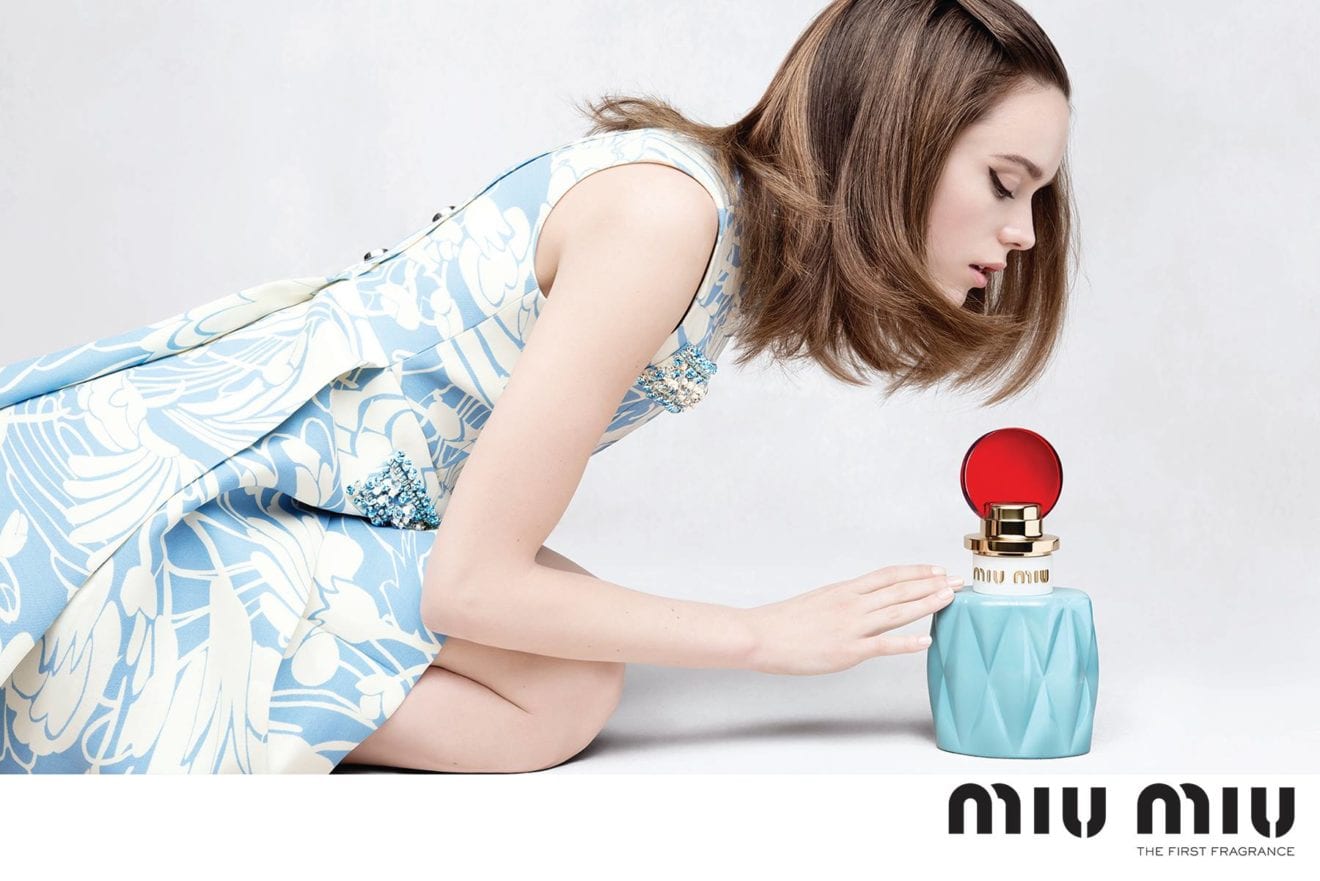
    According to the retailer, perfumer Daniel Andrier creates a scent beginning with an elegant, sensual floral, lily of the valley, composed of real jasmine, real rose absolute, and synthetic green notes. The bottle is also described as simultaneously traditional and pop.

    Miu Miu Eau de Parfum (50ml and 100ml) retails at S$113 and S$152 ($80 and $108). Miu Miu Body Lotion (200ml) retails at S$58 ($41).

  • Prada Japan flourishes

    Prada Japan flourishes

    Prada Japan has posted a strong sales lift in the first half thanks to a burgeoning number of inbound tourists.

    Sales in the Japanese market grew by 12 per cent year on year current exchange rates and by five per cent on constant exchange rates. Tellingly, growth was stronger in the second quarter than in the first.

    In its half year results issued Friday, Prada reported net revenue for the six months to July 31 of euro 1.823 billion, a four per cent increase over the corresponding period in 2014. Wholesale sales fell 14 per cent, reflecting Prada’s strategy of rationalising its network of retail partners in favour of selling from its own stores.

    While Japan was a standout market, sales in Asia Pacific fell, offset by a positive rate exchange effect.

    “Hong Kong and Macau remain the main drivers affecting the performance in this geographical area,” Prada said.

    At current exchange rates, sales increased 15 per cent in both the Americas and in the Middle East.

    The European market has continued to grow with revenues up at both current exchange rates up 12 per cent and constant exchange rates up 11 per cent, thanks to a steady flow of tourists together with a recovery in consumption by domestic customers.

    By brand, Prada recorded five per cent growth at current exchange rates which is entirely attributable to the exchange rate effect, mainly because of the adverse economic situation in the Asian market.

    Miu Miu continues to grow with revenues up at both current exchange rates up 19 per cent and constant exchange rates up six per cent, showing an acceleration in the second quarter of the year. Church’s achieved sales growth of 19 per cent, with the volumes trend also remaining largely positive. Car Shoe has performed broadly in line with prior year.

    Prada Group CEO Patrizio Bertelli said sales in the first half of 2015 reflect an economic and exchange rate landscape that remains “rather volatile with the continuing weakness of important markets like Hong Kong and Macau and the uncertainty that is looming on other Asian markets”.

    “Our distribution structure, which has achieved an appropriate global presence, together with our awareness of the specific needs of the various markets, has enabled us to compensate for the drop in sales in Asia Pacific thanks to growth on markets which are currently more dynamic like Europe and Japan. We will continue to prioritise measures intended to sustain long-term growth focusing on our manufacturing tradition and innovation, as again confirmed recently by the success of our latest collections.”

  • Miu Miu Japan opens new flagship

    Miu Miu Japan opens new flagship

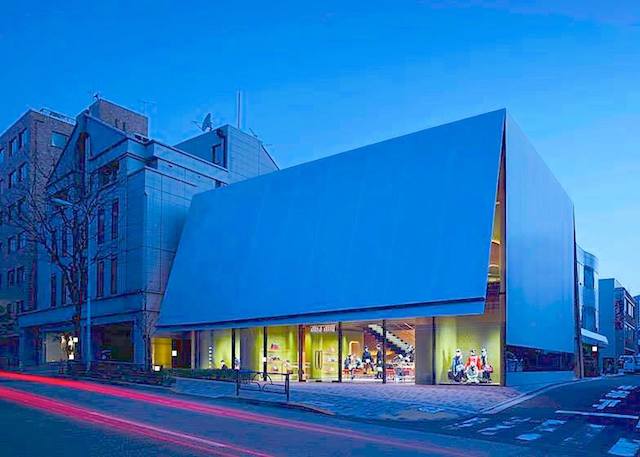
    Prada brand Miu Miu has unveiled a new project with Swiss architects Herzog & de Meuron, the centrepiece of its Japanese operations.

    The 720 sqm building on Miyuki St in the Aoyama District of Tokyo will be the cornerstone of the brand’s Japanese activities. Based in Paris, Miu Miu was established by Miuccia Prada in 1993 as a platform for design explorations beyond her legendary Prada line. Since opening its first boutique in Aoyama in 1999, Miu Miu has maintained a significant presence in Japan and now has 23 boutiques across the country including nine in Tokyo.

    Miu Miu Aoyama Tokyo 415

    Prada says the new building continues the company’s tradition of collaboration with world-class architects and re-emphasises Miu Miu Japan’s dedication to the Japanese market.

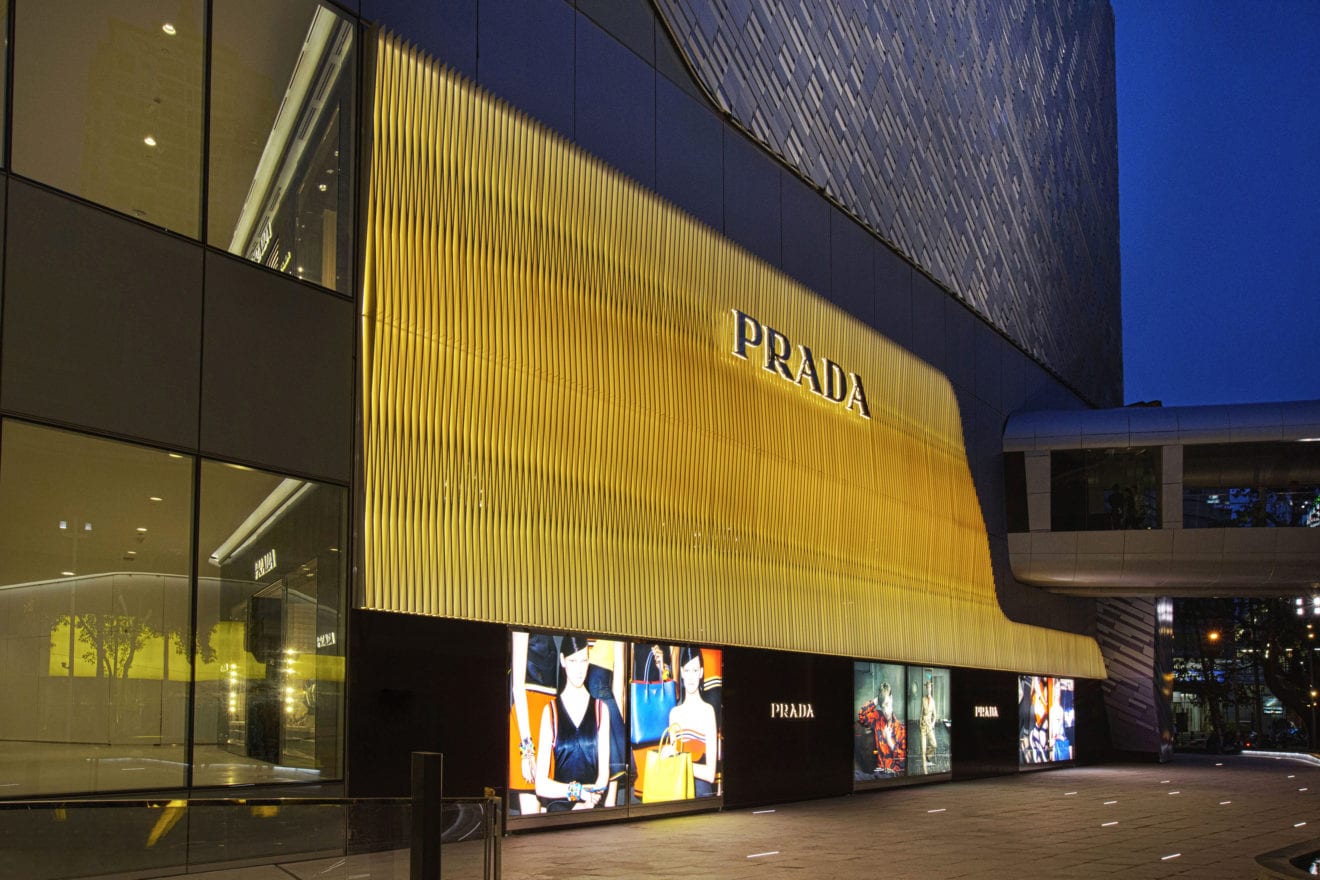
    The project for Miu Miu is sited diagonally across the street from the Prada Tokyo Epicenter – also designed by Herzog & de Meuron – in an elegant neighborhood that has, over the past two decades, become a showplace of architectural invention. In contrast to the transparency of the all-glass Prada building, however, the understated metallic surface of the Miu Miu façade is opaque, which lends a more intimate feel.

    Miu Miu in Aoyama Tokyo 415

    The architects say: “Contrary to expectations for a site that is home to so many luxury brands, Miyuki St in Aoyama Tokyo is not particularly beautiful or elegant. The architecture is heterogeneous – a hodgepodge of freestanding buildings of different heights and shapes, with neither historical tradition nor common standards.

    “Never meant to be a space of its own, the street is a purely technical and functional link between Omotesando and the Aoyama Reien cemetery farther down the road. Despite single trees here and there, the atmosphere is not inviting, like a boulevard or a plaza. Tokyo is pure, quintessential city, its territory exploited to the full with absolutely no leeway for the individuality that we take for granted in European cities.

    Miu Miu in Aoyama Tokyo.415

    “We already noticed this over 10 years ago when we were planning the glass building for Prada Aoyama,” they continued.

    “At that time, we were interested in counteracting the situation – on one hand, by placing a small plaza to the side of the building, and on the other, by making the structure completely see-through so that one can see into the interior from all sides and can also look out from inside at specifically targeted views of the city.

    “Over the past decade, the distinctive building has become a much-frequented location and it was therefore important to Prada, our client Prada Japan and also to us as architects to take this into account in planning the Miu Miu store located in the immediate vicinity on the opposite side of the street. We started out by trying several different architectural typologies. Since zoning regulations called for less height, we explored the potential of a smaller, more intimate building. We used the following thoughts to channel our ideas: more like a home than a department store, more hidden than open, more understated than extravagant, more opaque than transparent.

    Miu Miu in Aoyama, Tokyo 415

    “The typological model that best suited these considerations and specifications was a box placed directly at the level of the street, its cover slightly open to mark the entrance and allow pedestrians to look inside. Only then do they realise that the building is a shop.

    “Here, under the oversized canopy, the two-storey interior is visible at a single glance, as if the volume had been sliced open with a big knife, turning the inside out. The rounded, soft edges of the copper surfaces inside meet with the razor-sharp steel corners on the outside of the metal box, while the cave-like niches clad in brocade face the central space of the shop like loges in a theatre.

    “The shop on two tall storeys not only presents enticing goods on tables and in display cases; it is also like a spacious and comfortable home with inviting sofas and armchairs.”

    The façade has neither logo nor pomp; it is a polished, mirror-smooth surface, as if one single giant brushstroke had swept smooth the ordinarily matte surface of the steel panelled façade. This surface attracts the gaze and curiosity of passing pedestrians. But instead of affording a view inside, as in a shop window, the gaze is inverted; instead of the anticipated see-through window, viewers encounter self-reflection.

    Miu Miu in Aoyama Tokyo 415.