Tag: mobility

  • AI Revolution: The Blossoming Era of Robotaxis Redefining Urban Mobility in Asia

    AI Revolution: The Blossoming Era of Robotaxis Redefining Urban Mobility in Asia

    In Asia, the evolution of urban mobility is accelerating with the advent of robotaxis, which are autonomous vehicles that offer ride-hailing services with minimal to no human involvement. The progress in this field is fueled by advancements in artificial intelligence (AI), machine learning (ML), sensor technology, and supportive regional policies. Due to these factors, Asia is rapidly emerging as a global hub for autonomous vehicle (AV) research, trials, and initial commercial launches.

    Unlike traditional ride-hailing services, robotaxis offer advantages such as reduced operational costs, increased safety, and wider access to transportation. This is especially beneficial for densely populated cities grappling with driver shortage, traffic congestion, and growing transportation needs.

    China: At the Vanguard of Robotaxi Development in Asia

    China is at the leading edge of robotaxi development in Asia, and possibly globally, with substantial governmental support that has elevated autonomous technology to a national strategic priority. As part of initiatives like the 14th Five-Year Plan, Chinese authorities have integrated autonomous vehicles into broader digital economy objectives, promoting pilot programs, regulatory frameworks, and infrastructure development in numerous cities.

    By the middle of 2024, authorities had issued 16,000 test licenses and designated over 32,000 kilometers of public roads for autonomous vehicle testing, marking the largest testing area among all countries.

    Tech behemoths and AV specialists in China, including Baidu, Pony.ai, WeRide, Didi, and others, are fiercely competing to expand robotaxi operations in major cities like Beijing, Shanghai, Guangzhou, Shenzhen, and Wuhan. Baidu’s Apollo Go service has alone completed millions of driverless trips and logged substantial commercial mileage through its app-based ride-hailing service. Similarly, Pony.ai offers commercial robotaxis in multiple Tier-1 cities and has significantly reduced hardware costs for autonomous stacks, a trend influencing scalability.

    The progress of China’s autonomous mobility sector is closely linked to its prowess in AI and data processing. Firms heavily invest in machine learning systems that integrate sensors (LiDAR, radar, cameras) and AI models for perception and decision-making. These systems allow vehicles to navigate complex urban environments, a significant challenge in cities with dense traffic, mixed road users, and variable conditions.

    Singapore: An Incubator for Autonomous Shuttles and Robotaxis

    Singapore is becoming a regional center for autonomous mobility experiments, supporting robotaxi and automated shuttle projects in line with its Smart Nation and sustainable transport strategy. Authorities have teamed up with Chinese robotaxi specialists WeRide and Pony.ai to introduce autonomous shuttle services in residential areas like Punggol, slated to begin in early 2026, pending regulatory approval and mapping preparations.

    These initial services will feature autonomous vehicles navigating fixed routes and providing travel options complementary to existing public transportation. Singapore’s regulatory ecosystem, often viewed as efficient and innovation-friendly, makes the city-state a top pilot zone for AV integration in Southeast Asia.

    Partnerships and Strategic Expansion

    Beyond Singapore, the broader Southeast Asian region is starting to attract commercial robotaxi ventures. Notably, Grab, Southeast Asia’s leading ride-hailing and super app, has revealed a strategic investment in China’s WeRide to expedite the deployment and commercialization of autonomous vehicles across the region, integrating WeRide’s Level 4 robotaxis with its ride-hailing platform.

    The partnership between Grab and WeRide is anticipated to broaden access to autonomous mobility in high-density urban areas, addressing labor limitations and mobility gaps.

    Regional ride-hailing operators are recognizing AI-driven mobility as a supplement to traditional driver-based services, particularly in markets where driver shortages and surging labor costs present challenges.

    Malaysia and Beyond: Commercial Expansion from China

    Key Chinese companies, such as Baidu, are also eyeing cross-border expansion in Southeast Asia. Baidu has declared plans to introduce its Apollo Go robotaxi services to Singapore and Malaysia as early as late 2025, marking the first commercial robotaxi launches in Southeast Asia outside China.

    If executed as planned, these deployments signify crucial milestones in the regional adoption of advanced autonomous mobility services, and illustrate how AI-driven transport can be integrated into existing urban transit networks.

    Japan and South Korea: Testing and Future Markets

    While not as advanced in commercial deployment as China or Singapore, Japan and South Korea are strategically evaluating autonomous technologies and creating ecosystems for future robotaxi operations. In Japan, prominent players like Waymo (operated by Alphabet) have started testing autonomous vehicles in Tokyo, which could be the first step toward commercial robotaxi operations there.

    In South Korea, government-backed pilot initiatives, such as the National Strategic Smart City Program (NSSCP) in Seoul, suggest a growing interest in autonomous solutions, with wider commercialization anticipated in the coming years.

    In Japan, an aging population and robust demand for accessible transportation are driving policy momentum for autonomous mobility solutions, as driverless vehicles can potentially address labor shortages in traditional taxi and delivery services.

    Economic Impact and Challenges

    Market research indicates that the Asia Pacific robotaxi market is poised for substantial expansion. Forecasts predict the sector’s regional value to surge to over USD 60 billion by 2034, growing at a compound annual growth rate (CAGR) exceeding 50%.

    This brisk growth is spurred by strong governmental policy support, particularly in China, coupled with the rise of strategic partnerships between tech companies and ride-hailing platforms. Rising AI capabilities are also reducing hardware costs and enhancing safety, making autonomous mobility more viable. Meanwhile, pressures of urbanization are driving cities toward scalable and efficient transport solutions, whereas labor shortages in driver-based services are hastening the shift toward automation as a practical alternative.

    In spite of the clear momentum, considerable challenges persist across Asia:

    Regulatory Frameworks: Autonomous mobility operates in regulatory gray areas in many jurisdictions. While China and Singapore have established frameworks that encourage testing and limit commercial use, other countries are still formulating safety and liability standards, especially for fully driverless (Level 4/5) operations.

    Safety and Public Perception: AI-powered robotaxis depend on intricate sensor and decision-making systems that must function safely in dynamic urban conditions. Public skepticism about safety, accident liability, and data/privacy concerns can hinder adoption. Effective regulation, robust testing, and transparent reporting will remain key to building trust.

    Infrastructure and Costs: Urban infrastructure, from detailed HD maps to roadside connectivity, must evolve to support reliable autonomous operations. Integration with existing traffic systems and communication networks (vehicle-to-everything technologies) will be crucial for scaling robotaxi services.

    With ongoing progress in AI, machine learning, and regulatory frameworks, robotaxis have the potential to revolutionize how millions of city dwellers commute, creating safer, more efficient, and more accessible transportation networks.

    However, technological advancements must be balanced with inclusive policy development, ethical AI standards, and infrastructure planning to ensure that autonomous mobility benefits society at large. As Asian cities balance swift innovation with public safety and economic impact, robotaxis could not merely reshape transportation, but also redefine urban life in the future.

    Questions & Answers

    What are the advantages of robotaxis over traditional ride-hailing services?
    Robotaxis promise lower operating costs, improved safety, and broader access to mobility, especially in densely populated cities dealing with driver shortages, congestion, and increasing transportation demand.

    Why is China considered a leader in the development of robotaxis?
    With substantial government support, China has integrated autonomous vehicles into its broader digital economy objectives. It has also issued a large number of test licenses and designated a significant amount of public roads for autonomous vehicle testing, which has bolstered its position in the field.

    What challenges do autonomous vehicles face in Asia, and how can they be addressed?</b

  • Vietnam Mobility Show 2025: Pioneering Green Technology In The Automotive Industry

    Vietnam Mobility Show 2025: Pioneering Green Technology In The Automotive Industry

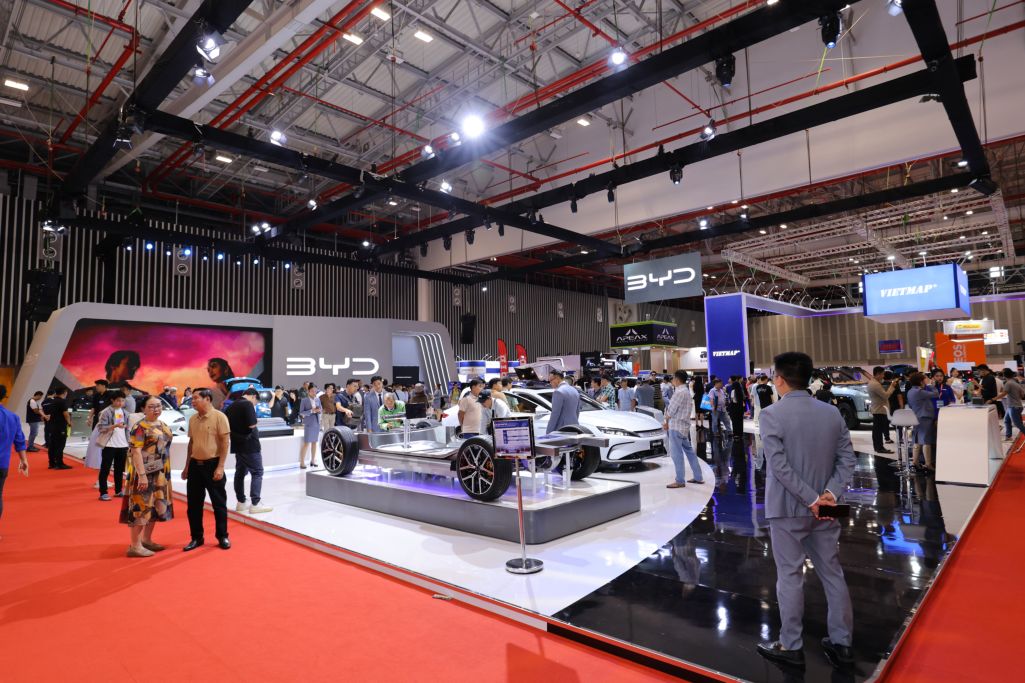
    The Vietnam Mobility Show 2025 is slated to take place in Hanoi from December 26 to 28. This event will present the latest models of cars, motorbikes, and accessories, showcasing cutting-edge technologies and sustainable practices in the automotive industry.

    Eco-friendly Focus

    The show will prominently feature car brands that are employing green technologies and utilizing environmentally friendly materials in an effort to decrease emission and fuel consumption. Aiming to address the pressing environmental issues of our time, the event will also host a seminar titled “Removing Barriers to Accessing Green Vehicles”. This session will gather car manufacturers, distributors, and authorities to discuss viable solutions, goals, and roadmaps for the widespread use and development of electric, hybrid, and other eco-friendly vehicles in Vietnam.

    Experience the Latest Models

    One of the most eagerly awaited components of the exhibition is the test-drive program. Visitors will have the opportunity to experience the latest models, especially those with high performance, on specially designed tracks. Each brand is set to bring a broad range of vehicles for test drives, minimizing wait times for participants.

    Highlighting Electric Motorbikes

    Electric motorbikes will be a vital part of the event, as cities like Hanoi and Ho Chi Minh City are planning to restrict the use of internal-combustion vehicles. This focus on sustainable transportation options aligns with the exhibition’s broader goal of assisting consumers in making educated decisions about their vehicle preferences by blending viewing with test-drive experiences.

    A Celebration for Enthusiasts

    Not just an exhibition, the Vietnam Mobility Show 2025 is also a festival for vehicle enthusiasts and families. The event will feature a dedicated zone for high-performance vehicles, alongside areas for services, accessories, and food. With safety and education in mind, demonstrations on safe charging and how to assist children in escaping from a locked car will be conducted. The event is expected to draw hundreds of thousands of visitors.

    Questions & Answers

    What is the aim of the Vietnam Mobility Show 2025?
    The show aims to present the latest models of cars and motorbikes, spotlighting brands that employ green technologies and sustainable materials. It also seeks to educate visitors, offering test-drive experiences and safety demonstrations.

    What is the focus of the seminar “Removing Barriers to Accessing Green Vehicles”?
    The seminar will bring together manufacturers, distributors, and authorities to discuss strategies, goals, and roadmaps for the development and adoption of electric, hybrid, and other eco-friendly vehicles in Vietnam.

    What experiences will be offered at the event?
    Visitors will have the opportunity to see and test drive the latest car and motorbike models, especially electric and high-performance vehicles. The show will also provide safety demonstrations and various services, accessories, and food options.

  • Hyundai To Take Stake In German Hydrogen Fuelling Group H2 Mobility

    Hyundai Motor will invest in Germany’s H2 Mobility network of hydrogen fuelling station operators, it said on Thursday, as it looks to support infrastructure for fuel cell-powered vehicles.

    A partner in the project since 2017, Hyundai Motor’s German subsidiary will become a seventh shareholder shortly, it said, having received approval from Germany’s cartel office.

    The South Korean company did not disclose financial details.

    It joins investors including France’s Total, Shell, OMV, industrial gas makers Linde and Air Liquide, and carmaker Daimler.

    “In Germany, a lot of money is flowing into the topic of hydrogen through the European Union Green Deal and national funding, and we believe that we are at the forefront,” said Ronald Grasman, vice president of fuel cell business development at Hyundai Motor Company.

    Hyundai, the biggest-selling Asian carmaker in Germany, had a 3.7% share of the market in January-July 2021 supplying a mix of conventional, electric and fuel-cell vehicles.

    Fuel cell cars are far from mass market production.

    But Hyundai, which is introducing fuel cell trucks in Switzerland, believes hydrogen technology could also play a bigger role in small vehicles further down the road.

    H2 Mobility operates 91 hydrogen filling stations and is expanding.

    H2 Mobility Managing Director Nikolas Iwan said the group was looking for anchor customers to bring big volumes to the stations, hoping this will allow them to reach break even within two to three years.

    “This is why Hyundai is so important. They have the lead when it comes to scaling effects, especially in the area of commercial vehicles,” he said.

    Hyundai, the biggest-selling Asian carmaker in Germany, had a 3.7% share of the market in January-July 2021 supplying a mix of conventional, electric and fuel-cell vehicles.

  • Shared services models fuel demand for mobility-as-a-service

    Shared services models fuel demand for mobility-as-a-service

    Shared mobility business models that focus on integrated and digitally connected ecosystems that offer unified multi-modal mobility services and personalized user experiences will find high adoption all over the world.

    “Globally, companies are planning to commercialize autonomous shuttles between 2020 and 2022, backed by favorable government initiatives in North America, the UK, China, Japan, and Dubai,” said Abhishek Iyer, research analyst, Mobility at Frost & Sullivan.

    “There will be an increase in the number of partnerships and rollouts of new technologies such as autonomous shuttles, blockchain, and Artificial Intelligence (AI), which will enhance user experience and operation.”

    Iyer noted that governments across developed cities are building testing infrastructure and piloting autonomous shuttles to evaluate viability and user experience. “Approximately 10 to 15 cities can be expected to conduct autonomous shuttle trials on public roads in 2019. Cross-industry collaborations for connected technologies, integrated payment capabilities, shared mobility insurance and financial services will also prove to be critical for future success,” he commented.

    The researcher suggested that further growth opportunities will come with industry participants partnering with stakeholders from other industries such as banking and financial services (BFS) and insurance to lower costs and generate fresh revenue streams.

    Other opportunities include adopting business models such as vehicle subscription services, demand responsive transit (DRT), ride-hailing and carsharing to create opportunities for data monetization. This will also allow them to leverage their investments and partnerships to develop autonomous and emission-free vehicle technologies.

  • Mobility driving China’s economic growth

    Mobility driving China’s economic growth

    China’s mobile ecosystem added 5.2 trillion yuan ($750 billion) in value to the country’s economy in 2018, according to a new GSMA report.

    Mats Granryd, director general of the GSMA says the report confirms how China’s mobile industry has been a key driver of economic growth, inclusion and modernization – creating a new generation of digital consumers and transforming industry and society.

    Grandryd says China’s mobile operators will invest a further 401 million yuan with the rollout of 5G.

    Numbers speak volumes

    • China is the largest mobile market in the world with 1.2 billion unique mobile subscribers at the end of 2018, about 82% of the country’s population;
    • 69% of mobile connections in China are smartphones, with smartphone adoption expected to reach 88% by 2025;
    • 4G networks cover 77% of China’s connections peaking in the coming years before falling as consumers migrate to 5G services;
    • By 2025, there will be 460 million 5G connections – this will, however, only account for 28% of China’s total network connection;
    • By 2023, mobile connection will contribute 6 trillion yuan to the economy, up from 5.2 trillion yuan in 2018;
    • China’s mobile ecosystem directly and indirectly supported 8.5 million jobs in 2018 and contributed 583 yuan in tax revenue;
    • The number of licensed cellular IoT connections in China stood at 672 million at the end of 2018, supporting various industrial and smart cities applications.


  • Alipay Hong Kong promotes Smart Mobility to enable Boundless Living

    Alipay Hong Kong promotes Smart Mobility to enable Boundless Living

    As a fast emerging TechFin brand, AlipayHK has led and driven the adoption of the e-wallet in application in Hong Kong. Since the formation of Alipay Payment Services (HK) Limited (“APSHK”), the joint venture between CK Hutchison Holdings Limited (“CK Hutchison”) and Ant Financial Services Group (“Ant Financial”) in March 2018, the company’s flagship product AlipayHK has extended its coverage to 50,000 merchants and more than two million users. This year AlipayHK will focus on widening the e-wallets adoption across public transportation providers and expand its cross-border payment services by strengthening collaboration among merchants. Its overarching goal is for people in Hong Kong to enjoy the benefits of smart mobility and the convenience that comes with using its e-wallet.

    AlipayHK revealed the e-wallet’s new features, EasyGo, at the Smart Mobility, Boundless Living exhibition which marked the first anniversary of the company. Guests were amazed by the speed and convenience of using EasyGo to pass through tickets gates and AlipayHK for cross-border payments. By simply scanning a QR code users could also enjoy special currency exchange rates and the additional perk of a HK$20 Guangdong-Hong Kong- Macao Greater Bay Area discount on cross-border purchases during the promotion period.

    Special guests who officiated the ceremony included: Mr. Canning Fok, Group Co-Managing Director of CK Hutchison and Chairman of APSHK, Mr. Eric Jing, Chairman and CEO of Ant Financial, Mr. Howard Lee, Deputy Chief Executive of Hong Kong Monetary Authority and Ms. Jennifer Tan, CEO of APSHK.

    Smart Mobility expands local coverage and goes global

    Smart Mobility is an important initiative of AlipayHK to drive the development of Smart Cities. As part of this, AlipayHK is widening the adoption of smart mobility solutions to a range of public transport providers. For example, in January it launched EasyGo on a minibus line and AlipayHK will now be extending this service to other minibus routes and transportation providers.

    Smart Travel is another major initiative for AlipayHK as part of its strategy to offer Hong Kong people a premium consumption experience when they travel overseas. Last month, AlipayHK launched its innovative connection service across the Greater Bay Area which covered popular shopping destinations, as well as essential services such as medical and education and provided a more convenient experience for people living in and traveling to the Greater Bay Area. When travelling to Japan, a popular destination for Hong Kong travelers, AlipayHK users can now use their e-wallets in the Daimaru Tenjin store in Fukuoka and the service will soon expand to the whole country. AlipayHK aims increase the coverage of this service to other retailers around the world so Hong Kong people can enjoy the convenience they experience from their e-wallets at home, and also when they travel overseas.

    Mr. Canning Fok said, “It is encouraging to see such a growth in the number of AlipayHK users in only a year. AlipayHK was the first e-wallet to become an official partner of the MTR Corporation and this disrupted the traditional payment methods for public transportation. As the Greater Bay Area develops, AlipayHK is poised to capture the opportunities from cross-border payment services among the nine cities within its cluster with the aim extending our coverage to the whole country. I hope the continuous development of AlipayHK will bring more innovative retail experiences to users as we broaden its application and user base across the globe.” Mr. Eric Jing said, “Hong Kong is a key market for Alipay’s globalization. We will continue to support AlipayHK by bringing the best products and technology know-how to Hong Kong, in order to create unique value for users and merchants. In the future, we will also connect e-wallets from other regions around the world with merchants in Hong Kong, enabling them to benefit from mobile payment.”

    Ms. Jennifer Tan said, “As an e-wallet provider in Hong Kong, AlipayHK always aims to pioneer positive change for Hong Kong citizens in order to make their lives easier. We would like to thank people in Hong Kong for their support. Without it, we would not have achieved such an impressive growth in users and merchants. We will continue to further develop solutions for public transportation service and cross-border payment to enable smart mobility and living.”

  • Softbank, Toyota form JV for mobility services in Japan

    Softbank, Toyota form JV for mobility services in Japan

    Japan’s Softbank and automaker Toyota announced plans to form a joint venture by April 2019 to provide launch Mobility-as-a-Service (MaaS) in the country. The company, called Monet Technologies, will combine Toyota’s mobility services platform and information infrastructure for connected vehicles with Softbank’s Internet of Things platform, the companies said in a joint statement.

    Initially, Monet plans to roll out just-in-time vehicle dispatch services for Japanese public agencies and private companies to meet user demand. Those services include on-demand transportation service and corporate shuttles.

    By the second half of the 2020s, Monet intends to launch an autono-MaaS (autonomous mobility as a service) businesses, using Toyota’s e-Palette battery electric vehicles.

    These vehicles will deliver meals with food prepared in the vehicles, provide hospital shuttles where onboard medical examinations can be carried out onboard.  These vehicles can also serve as mobile offices, Softbank said.

    Softbank said Monet will roll out its mobility services in Japan before focusing on future expansion to the global market.

    The joint venture will have initial capital of 2 billion yen ($17.49 million), and this will be increased to 10 billion yen in future.

    Softbank will own 50.25% of the JV and Toyota take the remaining 49.75%.

    SoftBank Corp representative director and CTO Junichi Miyakawa will be president and CEO of the new joint venture.

  • Mobility is the top priority in corporate travel

    Mobility is the top priority in corporate travel

    Four in five travel managers now believe mobility to be the biggest priority in managing corporate travel, according to Sabre Corporation‘s 2017 Asia Pacific Corporate Traveller study.

    According to the study conducted on corporate travel professionals from across 19 countries in the region, more than 43% of corporate travelers are also deviating from company policy ahead of the trip and 42% are making changes while traveling.

    When asked what it is they considered to be the biggest priority in managing corporate travel in their organization, 80% of travel managers said they believe mobility – from making a booking through a mobile device, to itinerary management, to staying in touch with their traveller via instant messaging – is their top priority.

    Two in three (66%) also quoted looking at alternative forms of payment technology as a high priority area for them.

    Today, new technologies are emerging at a rapid pace, ultimately opening up countless new revenue channels for travel companies to tap into. Travel managers have an opportunity to engage their corporate travelers on multiple devices at all points of the journey for a truly seamless trip.

    Product solutions that can seamlessly integrate booking, itinerary management, messaging, virtual payments, expenses reporting and travel risk management will help corporate travelers improve their traveller experience, whilst helping their organizations maximize efficiency, streamline expenses and improve compliance.

  • Motorola scores managed mobility win in Australia

    Motorola scores managed mobility win in Australia

    Victoria Police in Australia will adopt a new managed service mobility solution for at least 10,000 police officers across the state.

    The A$50 million ($37.6 million) solution from Motorola Solutions will help increase situational awareness, safety and productivity for frontline officers.

    Motorola Solutions will lead a consortium of service providers to deliver the contract, including Optus, the second largest mobile operator in the country, as well as local IT provider CompNow. The managed service contract will run for a minimum of five years.

    The service will place real-time information at the fingertips of at least 10,000 police officers equipped with iPads and iPhones, helping them manage their daily work more safely, efficiently and productively.

    The solution is designed to help reduce the duplication of data entry by officers while increasing workforce collaboration by sharing vital information between frontline personnel and their colleagues working in control rooms.

    The technology will also help Victoria Police to preserve its mission-critical radio communications for essential emergency communications by removing lower priority traffic from the radio network.

    This investment represents a major goal within Victoria Police’s Capability Plan 2016-2025, which highlights the way the force will transform its service delivery to be more “agile, responsive, people-focussed and connected.”

  • BluJay acquires mobility solutions provider Blackbay

    BluJay acquires mobility solutions provider Blackbay

    BluJay Solutions, a provider of supply chain software and services powered by the ‘world’s first’ Global Trade Network, has acquired Blackbay Ltd. Blackbay is a provider of mobility-enabled solutions for the transport and logistics industry. With the acquisition, BluJay expands its mobile offerings with comprehensive shipment tracking and proof-of-delivery capture.

    “Intelligent mobility solutions have become an indispensable part of delivering a world-class experience for our customers and their customers,” said Doug Braun, CEO of BluJay Solutions. “Adding Blackbay to our Global Trade Network is a highly valuable and ideal extension of BluJay’s offering, expanding customers’ visibility into the supply chain and each stage of delivery.”

  • China’s Future Mobility plans $1.7 bln electric car plant in Nanjing

    China’s Future Mobility plans $1.7 bln electric car plant in Nanjing

    Chinese electric car venture Future Mobility plans to build an 11.64 billion yuan ($1.7 billion) factory in Nanjing, aiming to capitalise on rising demand for electric cars in the world’s second-largest economy and elsewhere.

    The investment announced on Thursday comes despite a delay to planned funding from technology giant Tencent Holdings and Taiwan manufacturing heavyweight Foxconn , with Hong Kong-registered Future Mobility citing stricter implementation of China’s capital flow controls.

    China has ratcheted up controls on money leaving the mainland since last year in an effort to bolster a weakening yuan and prevent capital flight as the pace of economic growth slows.

    Future Mobility said it is in “close communication” with relevant parties, while a source with direct knowledge of the matter told Reuters that the company has been able to find ample funding from other investors.

    Tencent and Foxconn did not respond to requests for comment outside of business hours.

    The Tencent and Foxconn money currently sits in a China-based fund established before the tightening of capital controls and Future Mobility is working with lawyers to devise mulitiple options to “find a smart way” to complete the investment, the source said.

    The source added that Foxconn and Tencent remain as backers despite the hiccup.

    “We didn’t (initially) find a way to get the funds to come from China to the company outside of China,” the source said. “The money is there.”

    The new factory will eventually have capacity to produce 300,000 cars a year. The company did not give an indication of when it expects to reach that output but said that the first phase of the plant’s construction will be completed by 2019.

    After that initial phase, the factory should be able to produce 150,000 vehicles a year, it said.

    China, struggling with high pollution levels in major cities, is aggressively pushing plug-in vehicles. Its carrot-and-stick approach combines heavy investment and research funding with subsidies, as well as regulations designed to discourage the driving of fossil-fueled cars in big cities.

    Future Mobility said the first product it plans to produce is expected to be a pure-electric medium-sized smart SUV and that vehicles produced at Nanjing will be sold globally.

    A company spokeswoman said that the first car is likely to have a price tag of about 300,000 yuan ($43,700) and is expected to hit the Chinese market in 2019.

  • TV, video viewing shifts rapidly towards mobility

    TV, video viewing shifts rapidly towards mobility

    Average viewing times on mobile devices has grown by more than 200 hours a year since 2012, driving up overall TV and video viewing by an additional 1.5 hours a week, according to the latest Ericsson ConsumerLab TV & Media Report.

    The surge in mobile viewing is offset with a decline in fixed screen viewing of 2.5 hours a week, however the appetite for TV and video is not waning.

    Weekly share of time spent watching TV and video on mobile devices has grown by 85% (2010-2016). On fixed screens it has gone down by 14% over the same period.

    Also, 40% of consumers globally are “very interested” in a mobile data plan that includes unrestricted video streaming.

    In the US, 20% of mobile viewing is paid-for content using services such as Netflix, Hulu, and Amazon Prime.

    A major issue is low consumer satisfaction when trying to find something to watch, 44% of US consumers say they can’t find anything to watch on linear TV on a daily basis, an increase of 22% compared with last year (36%).

    In contrast, US consumers spend 45% more time choosing what to watch on VOD services than linear TV.

    Paradoxically, 63% of consumers claim that they are very satisfied with content discovery when it comes to their VOD service, while only 51% say the same for linear TV.

    The findings suggest that although the VOD discovery process is more time consuming than with linear broadcast TV, consumers rate it as less frustrating, as it implicitly promises the opportunity to find something they want to watch, when they want to watch it.

  • Renault, Nissan buy French tech firm to develop mobility apps

    Renault, Nissan buy French tech firm to develop mobility apps

    Renault SA and Nissan Motor Co announced on Tuesday they would buy French software development company Sylpheo as they compete with global automakers and tech firms to develop new services including ride hailing and car sharing.

    The French and Japanese automakers said that the acquisition, under which they would absorb Sylpheo’s 40 engineers and consultants, would boost their software development and cloud engineering expertise.

    “The Sylpheo team of software developers and cloud engineers joining the Alliance will have a unique opportunity to work on our next generation of connected cars and other advanced technologies,” said Ogi Redzic, Renault-Nissan’s senior vice president of Connected Vehicles and Mobility Services.

    “They will be playing a critical role in this new era of tremendous change for the global auto industry.”

    Automakers from Toyota Motor Corp (7203.T) to General Motors (GM.N) have been investing in software firms and mobility start-ups to position themselves for the rise of autonomous driving, ride-sharing and other connected services which threaten the traditional vehicle ownership model that has dominated the past century.

    Sylpheo will develop the applications for the alliance’s connected car service platform, a Renault spokeswoman said. She said the acquisition was part of the alliance’s recruitment push to hire 300 technology experts to better compete in the fast-growing mobility services sector.

    These services will be integrated with autonomous driving technologies. In July, Nissan launched a suite of semi-autonomous driving functions in one of its Japanese minivan models which enables the vehicle to drive on single lane motorways and navigate congestion.

    The two companies plan to launch more than 10 vehicles with autonomous drive technology by 2020. Nissan is aiming to develop autonomous multiple-lane driving functions, including lane changes, by 2018, and functions for full urban driving, including intersection turns, by 2020.