Retail News CRM

Tag: NEC

  • Revolutionizing Telecom Growth: NEC’s Vision for AI-Extended Society through Optical Networks

    Revolutionizing Telecom Growth: NEC’s Vision for AI-Extended Society through Optical Networks

    At the 19th edition of the Telecom Review Leaders’ Summit, the topic of discussion was ‘Tech Intelligence Beyond Mobility’. This event convened in Dubai, UAE, from December 10-11, 2025. One of the key speakers was Kageshima Hideo, Director of NEC’s Open Optical Transport Network Solution. In his presentation titled ‘Redefining Optical Networks as Catalysts for Telecom Growth’, Hideo shed light on the pivotal role optical innovation will play in propelling an AI-extended society by 2030.

    NEC’s Vision for the Future

    Hideo initiated his address by outlining NEC’s long-term vision, which revolves around its corporate purpose and five societal aspirations for the year 2030. These aspirations encompass the environment, society, and human life. At the core of this vision lies the integration of AI and robotics as true human partners. NEC envisions a future where AI collaborates seamlessly with humans and robotics offer tangible real-world solutions. These technologies are anticipated to substantially extend human potential, bringing about increases in productivity, intelligence, and the quality of life.

    Progression Towards an AI-Extended Society

    Hideo traced the progression towards this future through three distinct stages. The initial stage, 2025, saw the rise of agentic AI, which began diminishing the barriers between humans and machines and launched standalone AI data centers that largely operate independently.

    By 2027, AI is expected to permeate everyday work and life, backed by multi-AI data center networking and site-to-site optical interconnections, thereby dramatically increasing connection points.

    By the year 2030, it is predicted that AI will fully amplify human potential through accelerated innovation. This will be facilitated by edge-AI networking, thing-to-thing optical connections, and a surge in network endpoints, leading to a profound evolution in AI networks.

    Optical Networks by 2030: Convergence and Intelligence

    Hideo painted a picture of a future characterized by a blend of computing and network convergence through the concept of ‘optical everywhere.’ Advancements like wavelength optimization, dynamic path provisioning, and on-demand optical networking are expected to maximize resource utilization while offering unparalleled flexibility.

    This view aligns with the Innovative Optical and Wireless Network (IOWN) concept, which rests on three pillars: the all-photonics network, a cognitive foundation, and digital twin technologies. Collectively, these will offer ultra-low latency, high-capacity, and intelligent network operations to cater to the demands of AI.

    Open Optical Networks for the AI Era

    NEC’s answer to these forthcoming challenges is its Open Optical Network Solution. This new-generation data center interconnect model is built for openness and sustainability in the AI era. The strategy lays emphasis on disaggregation and modularity, enabling operators to scale as per their requirements, thereby boosting cost efficiency and agility.

    Key components include multi-vendor whitebox transponders to alleviate supply chain risks, comprehensive multi-vendor system integration, and world-first Linux-based network operating systems that provide server-like operability. Features such as zero-touch provisioning, programmability via TIP MUST controllers, and integrated server-network management aim to streamline operations while optimizing performance.

    Sustainability by Design

    Sustainability was another cornerstone of Hideo’s presentation. NEC’s disaggregated solutions are engineered to support eco-friendly AI data centers, especially in scenarios constrained by power and space. Hardware longevity through modular upgrades and network and power optimization services were underscored as key to minimizing environmental impact while attending to growing AI workloads.

    Hideo concluded his keynote by reinforcing NEC’s strategy through real-world deployments. With global centers of excellence and extensive expertise in multi-vendor, multi-layer integration, NEC is dedicated to continuing the advancement of optical networks to amplify human potential in the forthcoming AI-driven decade.

    Questions & Answers

    What is NEC’s Open Optical Network Solution?
    NEC’s Open Optical Network Solution is a new-generation data center interconnect model designed for openness and sustainability in the AI era. It emphasizes disaggregation and modularity, allowing operators to scale as they grow, therefore improving cost efficiency and agility.

    What are the three stages of progression towards an AI-extended society as proposed by NEC?
    NEC proposes three stages towards an AI-extended society: the rise of agentic AI in 2025, AI becoming pervasive in everyday life by 2027, and AI fully enhancing human potential by 2030 through accelerated innovation.

    How does NEC’s vision for optical networks align with the IOWN concept?
    NEC’s vision aligns with the IOWN concept, which is built on three pillars: the all-photonics network, a cognitive foundation, and digital twin technologies. These elements together aim to provide ultra-low latency, high-capacity, and intelligent network operations to meet AI-driven demands.
  • NEC Boosts Japan’s Cyber Defense with Cutting-Edge Innovations at Locked Shields 2025

    NEC Boosts Japan’s Cyber Defense with Cutting-Edge Innovations at Locked Shields 2025

    NEC Corporation has made a significant leap in enhancing its cybersecurity expertise by taking part in Locked Shields 2025, a premier international cyber defense exercise organized by the NATO Cooperative Cyber Defense Center of Excellence (CCDCOE).

    A Global Cyber Defense Showcase

    From May 6 to 9, this annual exercise brought together approximately 40 countries, including NATO allies, to gauge their readiness against intricate, real-time cyberattacks. Seventeen multinational teams participated, with Japan and Australia joining forces in a joint delegation. Notably, the Japanese team was a melting pot of talent, including representatives from the Ministry of Defense, various government agencies, private companies, and other significant organizations.

    An Interactive Defensive Landscape

    In its pivotal role, NEC spearheaded the design and construction of the exercise environment for the Japanese team, equipping them with essential network and analytical infrastructure. The scenarios simulated tested technical resilience and strategic decision-making, tackling legal, technical, and operational responses to a myriad of sophisticated cyber incidents. Think of it as a chess game where every move could deter a cyber adversary.

    Investing in Future Security

    NEC is not just playing catch-up; it is actively fueling its growth by merging advanced cybersecurity technologies with hands-on training experience that bolsters Japan’s economic security and safeguards crucial infrastructure. As a testament to this commitment, the company plans to launch a Cyber Intelligence & Operation Center in Japan in October 2025. This center will offer vital services to the Japanese government, critical infrastructure providers, and Japanese companies navigating the international landscape.

    Paving the Way for Digital Security

    Looking ahead, NEC is poised to play a crucial role in fostering a secure digital society. By bolstering cyber defense capabilities and supporting economic security through sophisticated cybersecurity services, the company is not merely reacting to threats but actively shaping a safer future for the digital economy.

    Questions & Answers

    What was the purpose of NEC’s participation in Locked Shields 2025?
    NEC’s involvement aimed to enhance its cybersecurity capabilities and support Japan’s economic security by engaging in one of the world’s largest international cyber defense exercises.

    Who were part of the Japanese delegation at the exercise?
    The Japanese contingent included representatives from the Ministry of Defense, various government agencies, private enterprises, and other organizations, showcasing a collaborative effort in cybersecurity.

    What future plans does NEC have to strengthen cyber security?
    NEC plans to establish a Cyber Intelligence & Operation Center in Japan by October 2025, aiming to provide essential cybersecurity services to the government and critical infrastructure stakeholders.

  • NEC ANZ Welcomes Keith Morrison as Its New CEO, Marking a Fresh Chapter for the Company

    NEC ANZ Welcomes Keith Morrison as Its New CEO, Marking a Fresh Chapter for the Company

    NEC Australia & New Zealand (ANZ) is set to undergo a leadership change as President and CEO Jason Price announces his resignation effective at the end of July 2025. After nearly three years at the helm, he will hand over the reins to Keith Morrison, whose appointment as CEO will take effect on August 1, 2025.

    Leadership Through Transformation

    During his tenure, Price has been a guiding force in steering NEC ANZ through substantial transformation, enhancing operational efficiencies, emphasizing customer engagement, and laying a strong groundwork for future growth. His leadership has ushered in modernization, setting the stage for the company’s next chapter.

    The Incoming CEO’s Vision

    Morrison joined NEC in 2024 as Senior Vice President and played a key role in developing the organization’s strategy for fiscal years 2025 to 2027. With over 25 years of experience in telecommunications, IT services, and business transformation, he has held senior positions at Datacom and Kinetic IT. His rich background positions him well to lead NEC into a promising future.

    Continuity and Change in Leadership

    Morrison’s promotion signals a commitment to delivering value to customers, strengthening strategic partnerships, and expanding NEC’s footprint across Australia and New Zealand. The transition promises continuity in leadership, facilitated by a collaborative handover process backed by Price and NEC’s regional and global stakeholders.

    A Solid Foundation for Growth

    Reflecting on his time, Price remarked, “It’s been a privilege to lead NEC through a defining period. I’m proud of the progress we’ve made—reshaping the business, strengthening our culture, and setting a clear path for the future. I am confident that Keith is the best person to guide the business through its next phase. He brings the right mix of deep experience, energy, clear vision, and a strong understanding of NEC’s strategy and values.”

    Morrison’s Exciting Challenge

    Morrison is optimistic about the company’s prospects in the region. “This is an exciting time for the business. We’ve laid the groundwork for something significant,” he said, eager to lead NEC’s next chapter. His focus will be on accelerating growth, enhancing value, and building upon the solid foundation established by Price and the team.

    Based in Perth, Western Australia, Morrison’s ascent to CEO emphasizes NEC’s commitment to investing in and growing within this strategically vital region. The company expressed heartfelt gratitude for Price’s leadership and contributions while wishing him every success in his future endeavors. After all, leading a company through transformation can sometimes feel like juggling flaming torches—daring, indeed, but captivating for those who know how to handle it.

    Questions & Answers

    What were some key accomplishments during Jason Price’s tenure?
    During his time as President and CEO, Jason Price guided NEC ANZ through significant transformational changes that improved operations, enhanced customer focus, and set the company up for sustainable growth.

    What experience does Keith Morrison bring to his new role as CEO?
    Keith Morrison has over 25 years of experience in telecommunications, IT services, and business transformation, training his sights on expanding NEC’s presence in Australia and New Zealand since joining the organization as Senior Vice President in 2024.

    How does NEC view the transition in leadership?
    The transition ensures continuity and is supported by both outgoing and incoming leaders, with a shared vision for accelerating growth and enhancing customer value in the region.

  • NEC Reveals Solution to Modernize Telco Infrastructure

    NEC Reveals Solution to Modernize Telco Infrastructure

    By leveraging cloud-native technology and virtualization, the new solution promises to reduce the time required to build mobile infrastructure—from Radio Access Network (RAN) to core—by approximately 60%, compared to traditional methods.

    As the need for faster, more reliable networks grows, telecom companies are adopting 5G virtualization technologies like v-RAN, O-RAN, and NFV. To keep up, network infrastructure construction must be modernized to improve efficiency and productivity.

    NEC’s new solution is designed to address these challenges, driving greater automation, efficiency, and quality in the construction of virtualized mobile infrastructures.

    Service News: NEC Thailand Partners with Umong to Improve Elderly Care

    Key Features

    • Network Infrastructure Modernization: NEC’s solution provides expert services to help telecom companies analyze their network building processes, from design to operation. NEC’s experience with virtualization platforms helps identify issues, create modernization strategies, and develop implementation plans. The service also offers guidance on improving processes, measuring performance, and boosting efficiency and quality.
    • Automation Technologies: The solution includes a suite of technologies designed to automate each stage of network construction. Fully compatible with cloud-native technologies, it is built on a microservice architecture that enables the integration of applications as small, independent services. This architecture supports open, multi-vendor environments, allowing telecom operators to modernize their networks while ensuring compatibility with a wide range of equipment.
    • Real-Time Data and Feedback Cycles: One of the standout features of NEC’s solution is the ability for network operations staff to access real-time data from all base stations. This feature accelerates feedback loops, improving base station performance and ensuring superior communication quality. The result is increased operational efficiency and a faster response to infrastructure needs.

    Exclusive: Kenji Takemura Discusses NEC’s Role in Enabling Future-Ready Connectivity

    NEC’s solution forms part of its goal to drive digital transformation in network operations. The ‘Network and Cloud-Native Orchestrator’ helps telecom companies modernize and automate their networks, improving the entire lifecycle from construction to operation. It supports virtualization, containerization, and cloud design, enabling carriers to expand quickly and cost-effectively.

    The solution also supports NEC’s new approach, NEC BluStellar, which focuses on being a “value driver” rather than just a systems integrator. NEC aims to transform business models, address social issues, and solve management challenges using advanced technologies and industry expertise.

  • NEC Completes Asia Direct Cable, Boosting Regional Connectivity

    NEC Completes Asia Direct Cable, Boosting Regional Connectivity

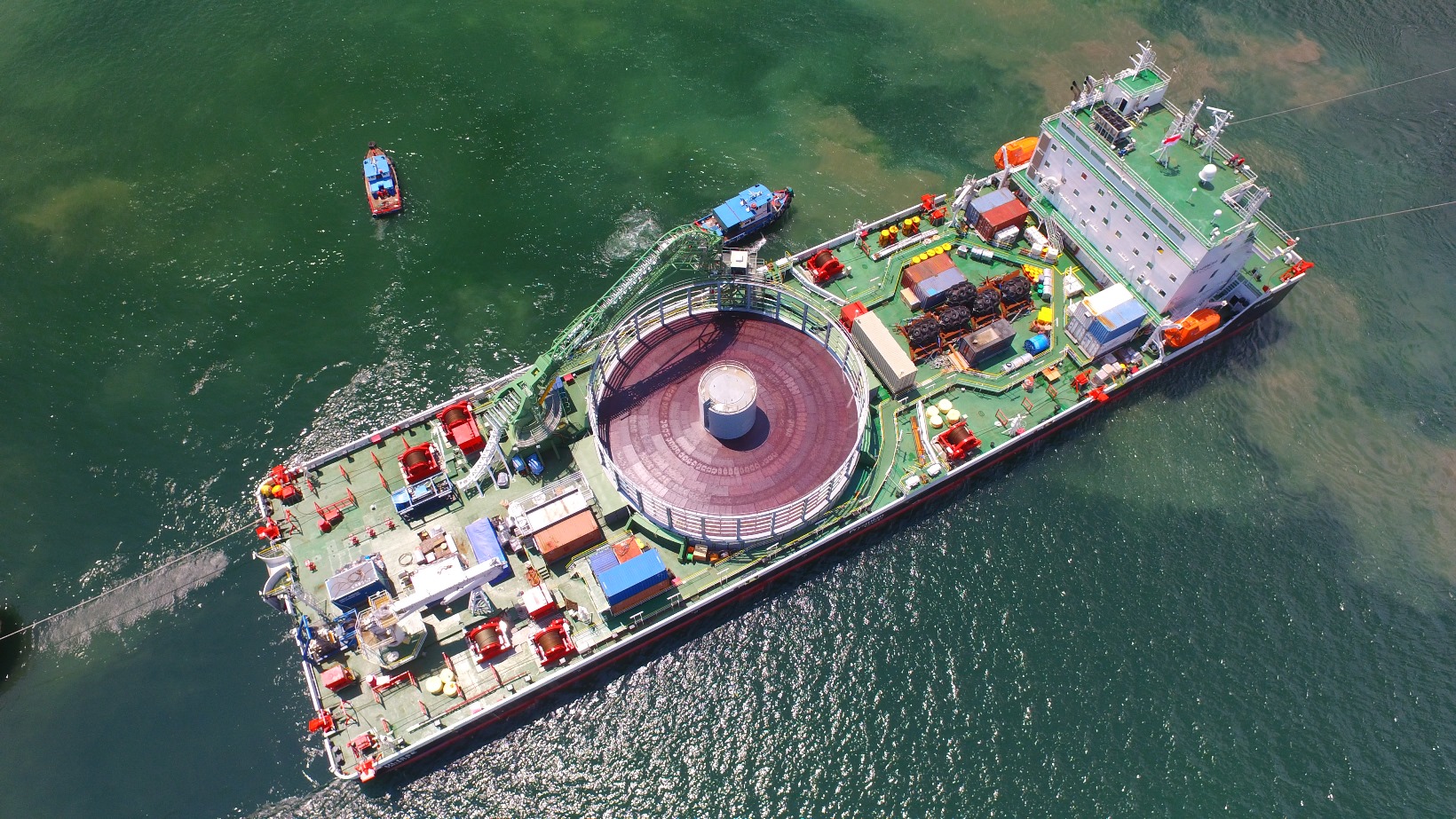
    The ADC submarine cable is owned by the ADC Consortium and consists of multiple pairs of high-capacity optical fibers. It is designed to handle over 160 Tbps of traffic, allowing for the efficient transmission of data across East and Southeast Asia.

    This new cable is a significant achievement as it’s the most recent Intra-Asia cable connecting China (Hong Kong SAR), Japan, and Singapore in the last eight years. It provides essential infrastructure to meet the growing demand for data transmission in the region and creates new opportunities for communication and society’s future.

    This milestone marks a crucial step in supporting the increasing communication needs of Asia and the world. It represents the culmination of collaborative efforts and partnerships with stakeholders from various countries, including NEC.

    Koji Ishii, MC Chairperson of the ADC Consortium noted that this cable system will greatly benefit the development of the AI industry in Asia.

    Billy Li, MC Co-Chairperson of the ADC Consortium, highlighted that the cable offers the necessary capacity and diversity for Asia’s major information hubs, allowing telecom carriers and service providers to enhance their networks and service planning to achieve sustainable growth.

    Tomonori Uematsu, Senior Vice President at NEC Corporation added that the partnership with the consortium will overcome the challenges that have previously inhibited this project from coming to fruition.

    NEC has a long history of supplying submarine cable systems and has built over 400,000 km of cable, making it a reliable partner in the field. NEC’s subsidiary, OCC Corporation, manufactures optical submarine cables capable of withstanding extreme water pressures at ocean depths exceeding 8,000 meters.

  • NEC Buys Aspire Technology

    NEC Buys Aspire Technology

    The acquisition now enables NEC to expand its capacity to bring end-to-end Open RAN ecosystems, as well as system design and integration for legacy networks, to international operators.
    In a statement, NEC’s 5G Strategy and Business General Manager, Naohisa Matsuda said, “NEC has made a strong, public commitment to providing leadership in the rollout of Open RAN. Part of that commitment is building out our ability to serve as the prime system integrator for global operators as they adopt Open Networks at their own pace. The SI business is all about people and expertise. The strong capabilities and the deep pool of talented engineers at Aspire Technology, combined with their portfolio of technology solutions and applications, is a big step forward for our NEC Open Networks strategy. NEC is now better prepared than any supplier to integrate disaggregated network components into a well-tuned ecosystem.”

    NEC has already established a footprint in the OpenRAN ecosystem, offering hardware, software and systems integration services to major telecom companies across the globe.

    Meanwhile, Aspire Technology’s Founder and CEO  Bill Walsh said that this acquisition will be an advantage to their customers: “We believe the combination of NEC and Aspire Technology will provide tremendous benefits to our customers, both legacy network-based and those evolving to the more Open environment, and also to the broader 5G and Open RAN marketplace, which is growing rapidly. We share a common vision of the 5G and Open RAN market, and a history of delivering complex integration projects with some of the largest carriers in the world. Together, we create a compelling and comprehensive 5G solutions portfolio.”

    This new development also improves NEC’s capabilities by extending its portfolio of technology solutions  as well as its experienced resources and expertise.


  • NEC to deploy CCTV and traffic management system in India

    NEC to deploy CCTV and traffic management system in India

    NEC Corporation Technologies India (NECTI), an IT and network technologies integrator subsidiary of NEC, has been awarded a contract as the master system integrator for installing CCTV surveillance and traffic management systems in India’s Gurugram City.

    Under the project, selected locations in Gurugram will be fitted with a variety of CCTV cameras to perform traffic enforcement and general surveillance across 115 sectors of Gurugram and Manesar. The project was awarded in March 2019 and is expected to be implemented within this year.

    To support the implementation of a comprehensively integrated video surveillance system, NECTI will set up IP-based outdoor security cameras across various identified locations in the city. The video surveillance system from NEC will help in enforcing traffic discipline through the use of AI-based analytics software such as Automatic Number Plate Recognition (ANPR) and Red Light Violation Detection (RLVD).

    The system will monitor traffic junctions and other sensitive areas to identify traffic offenders and issue alarms. Subsequent e-challans (electronic fines) can be issued to offenders who are captured flouting traffic rules with the help of these systems.

    In the first phase of the project, approximately 1,200 high definitions (HD) and ultra high definition (UHD) cameras are expected to be deployed in over 200 traffic junctions, sending video feeds to monitoring centers 24 hours a day. The project will utilize the dedicated Optical Fiber Backbone currently being laid out by the Guwahati Metropolitan Development Authority (GMDA) using robust ring network topology.

    Cameras deployed in key selected locations will be equipped with facial recognition technology featuring NeoFace Watch, NEC’s flagship facial recognition software platform, to identify persons of interest and other suspicious elements to support law enforcement efforts.

    Commenting on the occasion, Takayuki Inaba, Managing Director, NEC Technologies India, said, “Gurugram, one of Delhi’s major satellite cities, is host to many leading brands and representatives from across the world and is widely acknowledged as a finance and technology hub. We are honored to be awarded this project and contribute to Gurugram’s smart city ambitions.

    The Gurugram Municipal Development Authority added, “The current population of Gurugram is estimated to be close to 2.5 million and is expected to grow rapidly over the next few years. We need to constantly aim and strive to work towards enhancing public welfare, and NEC’s leading position in the field of public safety is paramount behind our decision to work with them. We are hopeful that the successful implementation of this project will propel Gurugram into an attractive city to live, work and visit.”

  • 7-Eleven tests facial-recognition technology

    7-Eleven tests facial-recognition technology

    7-Eleven Japan has opened an experimental concept store in Tokyo offering payment through facial-recognition technology developed by NEC. The trial is a precursor to a planned rollout of unmanned convenience stores in locations such as office buildings, car parks and factories allowing consumers to purchase essential items where it may not be commercially viable to operate a full-scale staffed store.

    The test store is located inside a building which is home to companies from the NEC group and can be accessed only by employees.

    Facial-recognition technology identifies shoppers when they enter the store and again when they make payment. The cost of purchases is deducted from their salaries.

    Rival retail groups including Aeon and FamilyMart have already adopted self-service payment checkouts and Lawson is trialling a scheme using barcodes scanned by smartphones.

  • CITIC Telecom CTC opens cloud centers in London and Moscow

    CITIC Telecom CTC opens cloud centers in London and Moscow

    CITIC Telecom CPC, a subsidiary of CITIC Telecom International Holdings Limited, is launching new connected SmartCLOUD Services Center in Moscow and London. Stephen Ho, CEO of CITIC Telecom CPC, said the ‘Europe & Russia Cloud Ring’ will be crucial for European-based enterprises who are looking to invest in and explore the emerging market and business opportunities in mainland China.

    The two new sites will provide enterprise customers with scalable multi-cloud connectivity with full disaster recovery capability and intra-city, inter-city and cross-boundary redundancies. They will also provide round-the-clock professional support optimizing customers’ IT investment, achieving a faster response time and ensuring business continuity.

    The move follows the company’s recent debut of two cloud centers in Frankfurt, Germany, and Cape Town, South Africa. The company now has 18 cloud centers across Asia Pacific, America, South Africa, Europe and Russia.

    Mavenir creates open RAN ecosystem

    Mavenir has announced an Open RAN partner ecosystem that includes MTI, Tecore Networks, Baicells, NEC, AceAxis, KMW, Benetel, CommScope, Blue Danube Systems and Airrays.

    The move aims to provide more options and makes it easy for operators to deploy an innovative, flexible cloud-based Open RAN solution, the company said.

    Mavenir will act as the end-to-end systems integrator simplifying the engagement for operators and creating an offering that is on par with the traditional, hardware centric proprietary vendors.

    Juniper Networks invests $2m in Corero

    Corero Networks said it has secured a $2 million investment from Juniper Networks.

    The investment follows the pair’s recently signed multi-year global resale partnership, under which Juniper will resell and support Corero’s SmartWall DDoS protection software products and services.

    ServiceNow taps NTT Com to launch two data centers in Japan

    ServiceNow is building two new data centers in Tokyo and Osaka through a partnership with NTT Communications to provide high-performing and high-availability cloud services to enterprises in Japan.

    The two data centers being built by NTT Com are expected to be ready in the first half of 2019.

    The new Japanese data centers are expected to enhance the ServiceNow Nonstop Cloud, which has been designed to support the availability and scalability of services and processes for global enterprises.

    The new data centers will add to ServiceNow’s existing nine data center pairs, which are set up across five continents to meet customers’ location and data sovereignty needs.

  • NEC  launches Open Innovation Centre in Singapore

    NEC launches Open Innovation Centre in Singapore

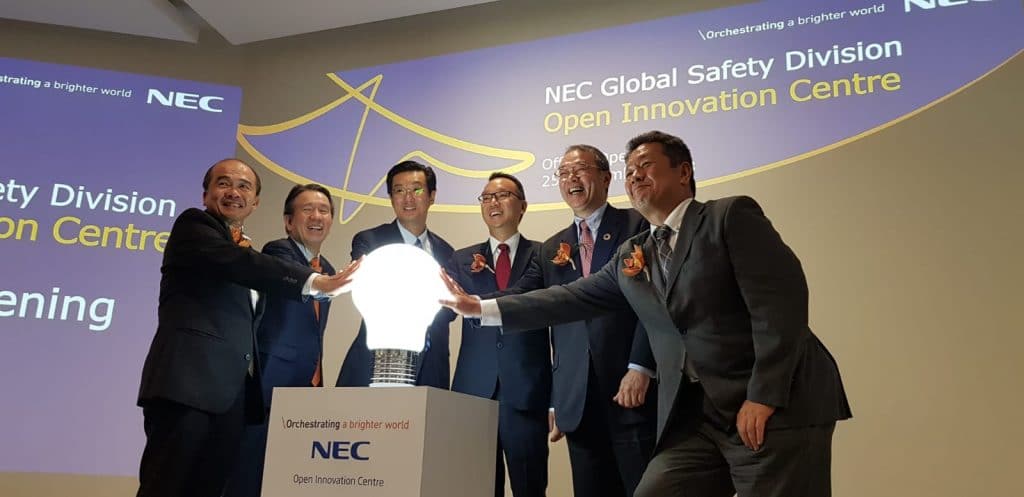
    NEC Corporation announced the opening of the NEC Open Innovation Centre (OIC) in Singapore which forms a part of the wider NEC innovation eco-system, and reaffirms NEC’s commitment to foster open innovation and partnerships with private and public sectors.

    Supported by the Singapore Economic Development Board (EDB), the OIC is part of NEC’s $100 million investment over the five years from 2017 in research and innovation in the Asia Pacific region.

    The Centre, operated by Global Safety Division, is NEC’s first of its kind facility outside Japan which infuses market-leading NEC technology and a deep partner ecosystem to offer cutting edge solutions in areas such as public safety, transportation and aviation.

    The Centre provides a platform where solutions can be translated into realistic and relatable use cases. It houses various revolutionary thematic zones which allow an immersive experience in AI and biometric solutions within the context of daily life. For example in the “home” zone, visitors will be shown how our face can be utilized as a powerful and trusted digital identity to securely access government and commercial services with NEC’s Trusted Digital Identity solution.

    NEC is also at the forefront of advanced ICT solutions for safety, security and efficiency in air travel. With more people flying today as well as heightened security threats, passengers are asked to go through more checks and screenings. All this leads to earnest needs of frictionless travel experience.

    NEC One ID-Single token technology takes travel experience to new heights by providing integrated identity management across the travel process that allows passengers to authenticate their identity online or in person for all stakeholders, ensuring an efficient flow within the airport.

    “We are delighted that NEC has chosen Singapore to establish its first Open Innovation Centre outside of Japan. Singapore’s strong base of enterprises, partners and digital talent offer NEC an ideal location to forge collaborations and translate its strong biometric identification technology into new applications for public safety and commercial domains for Singapore and beyond,” said Ms. Lily Phua, Director of New Businesses, EDB.

    Mr Vinoop Goel, Regional Director in Asia-Pacific from International Air Transport Association (IATA), comments, “With the number of travelers expected to double in 20 years time, the use of technology will be critical for increasing passenger throughput in the existing airport terminals. NEC’s OIC is a good showcase of the technologies that can make air travel more efficient, including IATA’s OneID initiative, and we look forward to implementations of these technologies to improve the passenger experience and enhance the efficiency of airline and airport operations.”

    “The vision of the Open Innovation Centre is to orchestrate a smart and safer city in collaboration with governments and businesses. With a digitally disruptive team at the heart of OIC’s operations, new ideas of approaching public safety can be prototyped and launched within the centre and further deployed in global markets. This is only possible with strong support from our industry partners who are already on board the OIC ecosystem,” said Mr Tan Boon Chin, Managing Director, Global Safety Division, NEC Corporation. “We believe that a trusted digital identity based on biometrics such as facial recognition technology can transform businesses so as to provide secure and frictionless experience across home, city and aviation.”

    NEC has been developing biometric identification technologies for more than 40 years, and systems using NEC’s Bio-IDiom biometrics have been introduced through more than 700 systems in 70 countries and regions around the world. Moreover, earlier this year, NEC’s iris recognition was named the world’s most accurate by the U.S. National Institute of Standards and Technology, which has also recently named NEC’s face recognition and fingerprint recognition technologies as the most accurate.

  • NEC completes construction of SACS cable

    NEC completes construction of SACS cable

    Japanese vendor NEC has announced it has completed the construction of the first subsea cable crossing the south Atlantic ocean for Angola Cables.

    The South Atlantic Cable System (SACS) has been deployed and is now ready for commercial service. The cable system spans between Angola with Brazil, connecting the African continent to Latin America directly for the first time.

    The system uses a four fiber pair configuration to deliver an initial design capacity of 40Tbps. In Angola, it will land at the existing Sangano cable landing station, while in Brazil it will land in a newly constructed data center constructed for SACS and another cable system connecting Brazil with the US.

    SACS was partly funded through a loan provided by the Japan Bank for International Cooperation to Angola state-owned development bank the Banco de Desenvolvimento de Angola.

    “NEC is honored to have been selected as a partner for SACS, the world’s first optical submarine cable system crossing the South Atlantic, directly connecting two Portuguese speaking nations of Angola and Brazil,” NEC GM for submarine networks Toru Kawauchi said in a statement issued on Monday.

    “Yesterday, all communication between the two continents had to go up north and cross the North Atlantic. From today, this new cable will bring information at the speed of light, improving the connectivity between the two nations and two continents.”

  • NEC applies AI to subsea cable networks

    NEC applies AI to subsea cable networks

    NEC has announced it has applied AI to subsea cable networks to push the capacity limits of the transmission networks.

    During joint research with Google, NEC applied AI and probabilistic shaping using 64 quadrature amplitude modulation (64QAM) to the FASTER subsea cable linking Taiwan, Japan and the US west coast.

    The study demonstrated that the 11,000km FASTER cable can be upgraded to a spectral efficiency of 6 bits per second per hertz. This would represent a capacity of more than 26Tbps, over two and a half times the capacity originally planned for the cable.

    According to NEC, the team used probabilistic shaping techniques that near the Shannon limit, the theoretical maximum transmission speed over a telecoms network before the signal is drowned out by noise, at a modulation of 64QAM.

    For the first time on a live cable, AI was used to analyze data for the purposed of nonlinearity compensation (NLC). The trial used an NEC developed compensation algorithm based on deep neural networks to accurately estimate signal nonlinearity.

    “Other approaches to NLC have attempted to solve the nonlinear Schrodinger equation, which requires the use of very complex algorithms,” NEC GM of submarine networks Toru Kawauchi said.

    “This approach sets aside those deterministic models of nonlinear propagation, in favor of a low-complexity black-box model of the fiber, generated by machine learning algorithms. The results demonstrate both an improvement in transmission performance and a reduction in implementation complexity.”

  • NEC to help Docomo upgrade to 5G

    NEC to help Docomo upgrade to 5G

    Japan’s NTT Docomo has entered an agreement with NEC covering the supply of control units for 5G base station equipment to help commercialize 5G services.

    NEC plans to develop technology to enable existing telecoms equipment such as high density base station equipment to be fully compatible with 5G. Docomo plans to leverage this technology to meet its goal of launching 5G services in 2020.

    Under the agreement, NEC will achieve 5G compatibility through software upgrades and a minimal replacement of hardware to maximize the use of existing high-density base station equipment, using the base station technology NEC first launched in February 2015.

    The upgrade will allow Docomo to continue providing LTE and LTE-Advancedservices even after the equipment is upgraded to be made compatible with 5G.

    “Docomo aims to deploy and expand our commercial 5G services efficiently by maximizing the use of existing communications equipment,” NTT Docomo CTO and board member Hiroshi Nakamura said.

    “This agreement with NEC is in line with that policy and we expect it to make a significant contribution to our 5G services. Going forward, Docomo accelerates co-creation of new services and businesses with vertical industry partners.”

    The operator has separately announced that its board of directors has proposed a number of changes in executive positions for approval at next month’s shareholders meeting aimed at further developing the company.

    Among the proposed changes include the appointment of five senior executives to the board, the hiring of a new executive vice president, and the promotion of four candidates to senior vice president.

  • NEC Asia Pacific launches the NEC SL2100 Smart Communications System in Singapore

    NEC Asia Pacific launches the NEC SL2100 Smart Communications System in Singapore

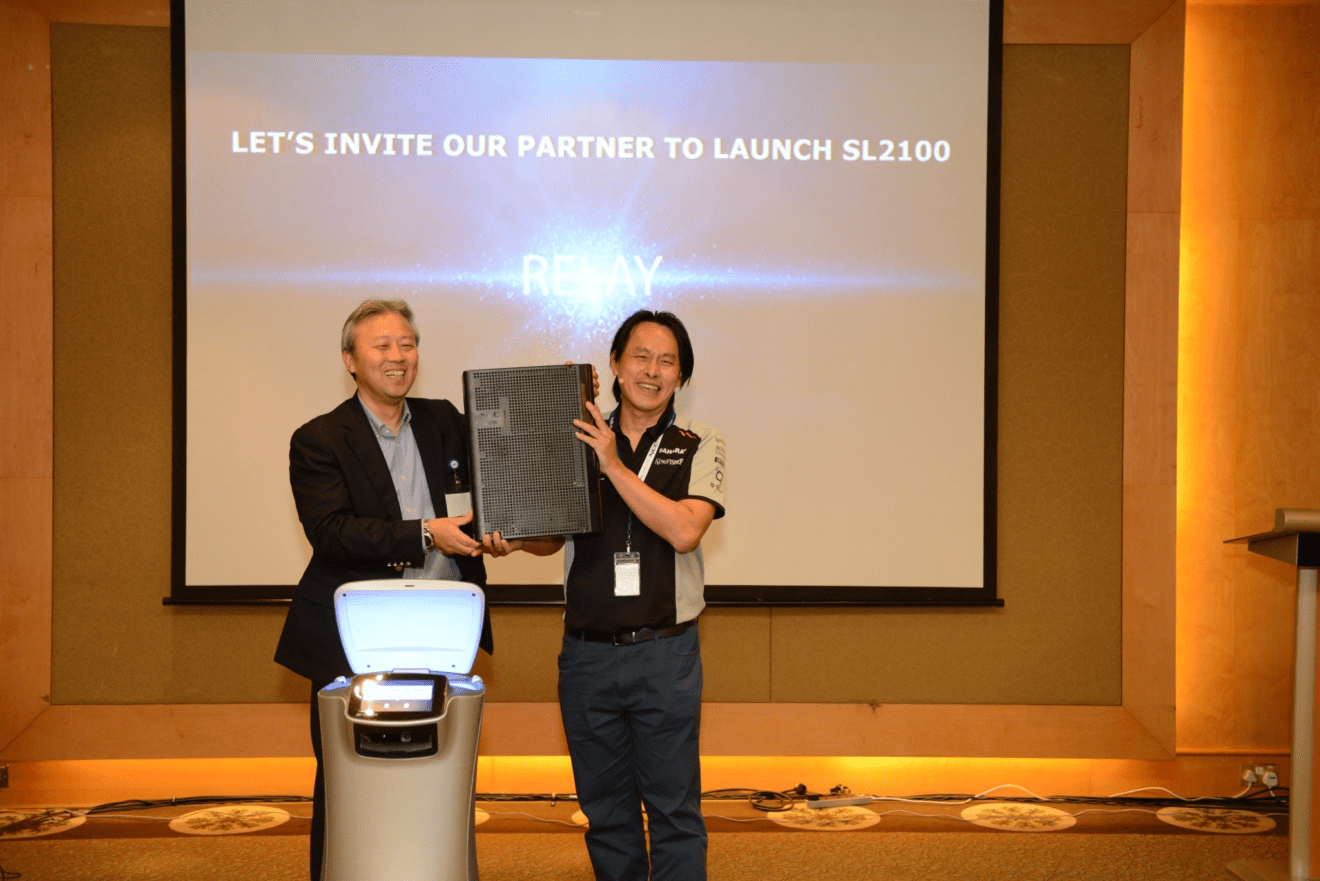
    NEC Asia Pacific held an event to officially launch the NEC SL2100 Smart Communications System in Singapore on 25 January 2018. The event was attended by over 70 participants consisting of partners and customers.

    The NEC SL2100 Smart Communications System is the newest and most advanced Server Message Block (SMB) communications platform that offers wide-ranging support for Voice over IP (VoIP), mobility and Unified Communications and Collaboration (UCC) features.

    “NEC’s new SL2100 offers industry specific features to meet the demands of small- and mid- sized businesses and to maintain high service levels. We are very excited to launch our Smart Communications System in the APAC region,” said Pablo Narata, Senior Manager, Global Platform Division, NEC Corporation.

    “NEC’s latest offering provides businesses with a powerful communication tool that is scalable and customized for each stage of the business. Through this launch event, we hope to influence more businesses to move to the Smart Enterprise Platform in order to generate a great customer experience,” said David Ooi, Vice President, Server and Networks Division, NEC Asia Pacific.


  • NEC’s facial recognition system elevates customer experience at OCBC Bank

    NEC’s facial recognition system elevates customer experience at OCBC Bank

    NEC Asia Pacific and NEC Corporation today announced the successful testing and roll-out of a facial recognition system at OCBC Bank’s Holland Village branch to identify Premier Banking customers. OCBC Bank is one of the first in Singapore’s banking sector to adopt such a system as part of its digital efforts to improve service excellence.

    Facial recognition is a growing form of biometrics used to identify and authenticate persons in a wide range of industries. With the widespread usage and acceptance in immigration systems, and secured identity card systems, biometrics is now expanding into commercial applications (e.g. banking, retail etc.).

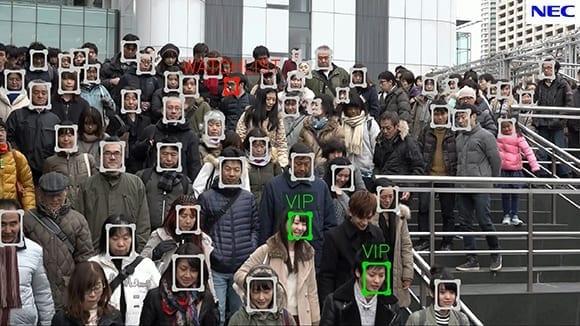
    Implemented since 4 December 2017, the system instantly identifies OCBC Premier Banking customers in real-time as they approach the lounge in the branch without needing to stop to look at the camera.  This is a very unintrusive approach for the bank to identify them.

    Based on the VIP identification, the system allows the Premier Service Manager (PSM) to promptly identify and greet customers by their preferred name, offer them their preferred drinks and magazines, and, understanding their visit records to promptly deliver services, giving the client a more personalized and pleasant customer journey.

    The Bank can record the purpose of a customer’s visit, gather feedback to help improve services, and understand customer behavior patterns, such as the frequency of their visits.

    The system utilizes NeoFace, NEC’s AI engine for face recognition.

    NeoFace is recognized as the fastest and most accurate algorithm in the world by the National Institute of Standards and Technology in the United States*, greatly exceeding all other vendors in both accuracy and speed.

    The NeoFace engine can be used for a variety of applications and scenarios such as:

    -Access control and attendance tracking for staff and visitors in different areas

    -Workstation/console login for more secured access

    -Customer authentication for transactions as a 2nd factor on different channels of financial institutions

    – Seamless online transaction experience using facial recognition for payment authentication

    – For safety reasons; monitoring for individuals on watch lists or tracking people who loiter on the premises

    -Fraud prevention with NEC’s “liveness”** detection

    -Tailored advertising signage and marketing material using facial recognition to understand the age and gender of patrons

    “OCBC is committed to our service quality and implementing facial recognition to elevate the customer experience is one of the first steps that we are doing in the digital economy. Since introducing it, we received positive feedback from customers who were impressed by the personalized hospitality enabled by fast and accurate identification. Going forward, we will evaluate and consider the extension of the capability beyond customer service,” said Mr. Pranav Seth, SVP, Head of E-business, Business Transformation and Fintech & Innovation group, OCBC Bank.

    “We are pleased to work with OCBC Bank to provide this cutting-edge facial recognition solution to help improve the overall delivery of services to their valued clientele. We hope that through this co-creation we have helped OCBC Bank stay competitive in this fast-paced industry where customer experience is key. Moving ahead, we look forward to exploring more innovative and meaningful ideas to help customers digitally transform their businesses through artificial intelligence that includes biometrics and facial recognition,” said Lim Kok Quee, Managing Director and Deputy CEO (ASEAN Sub-Region) of NEC Asia Pacific.

    NEC has been engaged in the development of facial recognition technology for over 30 years. NeoFace® is currently implemented in more than 40 countries by a wide range of public and private organizations.