Tag: netflix

  • Netflix partners with Indonesian carriers

    Netflix partners with Indonesian carriers

    Netflix has arranged to participate in the video data plans offered by Indonesian operators XL Axiata, Hutchison 3 Indonesia and Bolt.

    The new plans offer customers either an unlimited or designated amount of streaming of content over Netflix and other participating OTT video providers without incurring additional charges or counting against the plan’s data quota.

    Eligible plans include Bolt’s Ultra Streaming packages, XL Axiata’s Xtra Kuota 30GB plan and Hutchison 3’s Get More plan.

    “We’re thrilled to make Netflix more accessible to consumers in Indonesia through working with Bolt, XL Axiata, and Hutchison 3,” Netflix VP of business development Tony Zameckowski said.

    “Ultimately, Netflix is all about giving consumers the control to watch their favorite shows and movies at home and on-the-go, and expanding these partnerships in Indonesia will delight consumers with the diversity of global content that Netflix has to offer.”

    “With Netflix’s extensive content library of TV series and films, we are offering more mobile video streaming options for consumers through our 4G LTE and 3G networks, as part of our commitment to continuously improve and provide a better experience for our customers,” added XL Axiata CMO David Arcelus Oses.

  • Samsung starts selling 2018 QLED TVs in Singapore

    Samsung starts selling 2018 QLED TVs in Singapore

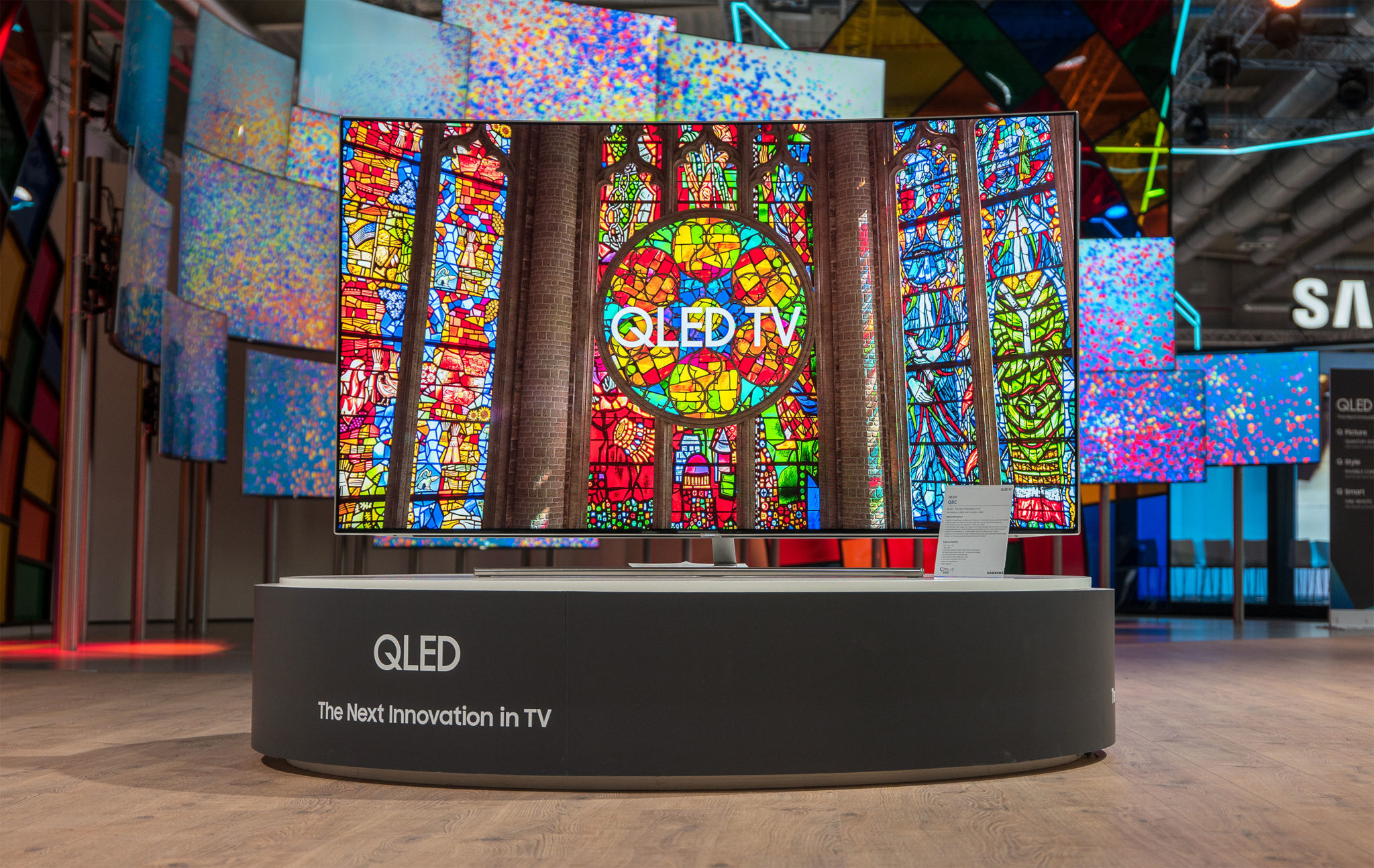
    Samsung showed off its 2018 range of QLED or quantum dot light-emitting diode TVs this week in Singapore, seeking to win over users with its technology as rival OLED TVs start gaining traction.

    The new TVs promise more vibrant colours and with a higher dynamic range by using the QLED technology that the Korean manufacturer has kept to in recent years.

    It relies on what are known as quantum dots, or individual diodes or dots on a screen, that are able to offer a wider range of colours and improve brightness over regular LED or LCD TVs.

    That said, Samsung’s QLED TVs are still LED TVs. They are just the very best or souped-up versions available. To many premium TV buyers, however, the rival technology OLED used by LG, Sony and Panasonic has become more attractive because it offers deeper blacks and smoother motion.

    I did not have a chance to compare the two technologies side by side at this week’s Samsung launch. Just by looking at the new QLED lineup, I can say they are impressive as well.

    I certainly can see details in the bright and dark areas in the demo footage. This is an improvement over traditional LCD or LED screens that require a layer of colour filters, back-lit by white LEDs. Perhaps the biggest draw for Samsung’s QLED TVs is being able to integrate well with the interior design of your home.

    The company has improved on its Invisible Connection solution with the use of a single fibre optic cable to send visual and audio signals to the TV from a single box.

    It gives you four HDMI inputs, one Ethernet port, component inputs and a coaxial cable port. There’s one fibre optic audio output to send audio signals to the living room’s speaker system.

    Having this single fibre optic cable certainly makes it easier to hide all the home AV components. With a 15-meter cable included, Samsung certainly increases the number of options when it comes to placing your AV devices.

    The other new feature is the Magic Screen where the TV can show the latest weather forecast and stream music with the on-screen wallpaper matching the wallpaper that TV has covered. This creates an illusion that it is a transparent screen instead of a black rectangular abyss if we switch off the TV.

    I feel this will be a useful screen for the reception of an office, a meeting room where you can leave the screen on the whole day.

    For those who are sensitive to electricity bills, switching off the TV is definitely a better idea. Besides I can just get a quick audio weather update or stream music from Google Home if there’s a need.

    The top-range Q9F starts goes up to S$12,999 for a 75-inch version. If you prefer QLED on the budget, there’s a Q7F version costing S$10,499 for a 75-incher, S$6,399 for 65 inches and S$4,499 for 55 inches.

  • YouTube most dominant video platform in APAC

    YouTube most dominant video platform in APAC

    According to the research firm, YouTube has a penetration of 81 per cent across the region, higher than anywhere else in the world and the global average, which stands at 78 per cent.

    Nearly half of of digital video viewers, or 576.8 million people, will regularly watch video via the YouTube app or website this year, a number that is expected to grow by 13.4 per cent this year.

    Both India and Indonesia were said to be the fastest growing mobile video markets in the region this year, increasing by 25.3 per cent  and 18.2 per cent respectively.

    EMarketer pinned YouTube’s rapid ascension on the growth of video mobile usage over the past five years. The number of people watching videos on their mobile is expected to increase by 14.5 per cent this year after encountering double-sigit growth over recent years.

    However, China, a market where YouTube is banned, remains the gaping hole in YouTube’s APAC growth.

    There, video viewership remains dominated by Youku, Tencent, iQiyi, LeTV and Sohu, while penetration is expected to reach 65.8 per cent in 2018.

    “YouTube usage is on the rise and has become the most popular video streaming service throughout Asia-Pacific, except in China where it is censored,” said Oscar Orozco, senior forecasting analyst at eMarketer.

    “While regional Netflix adoption is still low, awareness and intent to subscribe is growing. We expect Netflix adoption will continue to expand, while at the same time providing much-needed competition and influence on local streaming providers.”

  • Netflix adds 5 mln subscribers, doubles profit

    Netflix adds 5 mln subscribers, doubles profit

    Netflix said Monday it added some five million new subscribers over the past three months as profits doubled, in a quarterly update that sent shares of the streaming video giant higher.

    California-based Netflix ended the third quarter with more than 104 million paid subscribers, with international memberships hitting 52.7 million and overtaking the number of U.S. subscribers.

    Net profits meanwhile jumped to $129 million, more than double the figure from the same period a year ago for the video giant known for “House of Cards,” “The Crown” and other original shows that are part of its library.

    Revenues in the quarter rose 30 percent from a year ago to $2.98 billion, Netflix said.

    “We are growing nicely across the world and are on track to exceed $11 billion in revenue in 2017,” a letter to shareholders said.

    “Internet entertainment is delighting consumers, and we are staying at the forefront of this once-in-a-generation opportunity.”

    Netflix has been aggressively expanding around the world, and is now present in some 190 markets, making it the leading service for streaming or on-demand television.

    Shares in the company jumped 1.7 percent in after-hours trade on the stronger-than-expected results.

    Earlier this month Netflix said it was increasing prices for customers in the U.S. and parts of Europe to help fuel investments in original shows and boost expansion.

    “We spend disproportionately in the U.S. to generate media and influencer awareness for our programming which we believe, in turn, is an effective way to facilitate word of mouth globally,” Netflix’s letter said.

    “In our international segment, we are on track to generate positive contribution profit for the full year. As we move into 2018, we aim to achieve steady improvement in international profitability and a growing operating margin as our success in many large markets helps fund investments throughout Asia and the rest of the world.”

    Netflix said it remains aware of the competition in the segment and noted that new streaming options are available or in the works from CBS, Disney and others.

    “Since 2013, we’ve taken the long term view that we’re in the early stages of the worldwide, multi-decade transition from linear TV to internet entertainment,” the statement said.

    “We have a good head start but our job is to improve Netflix as rapidly as possible to please our members by earning their viewing time and to stay ahead of the competition in the decades to come.”

  • Netflix shares jump as subscriptions top 100 million

    Netflix shares jump as subscriptions top 100 million

    Netflix ended the rencent quarter with 103.95 million subscribers.  Netflix on Monday reported that its number of subscribers climbed more than expected, topping 100 million worldwide and sending shares in the leading on-demand television service soaring.

    Netflix shares leapt more than 10 percent to $178.75 in after-market trades that followed release of earnings figures showing the Silicon Valley-based company added 5.2 million subscribers in the recently ended quarter to raise the total to 103.95 million for its streaming service.

    Most of the subscriber growth came from outside the U.S., where Netflix has invested heavily in establishing itself as a global television service.

    “That is what you want to see, subscriber growth,” said Silicon Valley analyst Rob Enderle. “Their international efforts are paying dividends right now.”

    Netflix ended the quarter with slightly more than half of subscriptions coming from outside the US, a first for the company.

    Profit was up 61 percent to $66 million, Netflix said. Revenue increased 32 percent to $2.78 billion from the same quarter last year.

    “We underestimated the popularity of our strong slate of content which led to higher-than-expected acquisition across all major territories,” Netflix said in a letter released along with the earnings figures.

    Culling content

    Netflix told investors that it was determined to balance boldness and financial discipline as it continued to bolster its programming slate.

    The company has cut shows that weren’t attracting sufficient numbers of viewers, taming costs as it boosted subscriber numbers in a combination that played well with investors, according to analyst Enderle.

    The company remained committed to investing in original programming. Netflix said it will release 40 feature productions this year ranging from “big-budget popcorn films to grassroots independent cinema.”

    Netflix and rival Amazon Prime have been pumping money into original shows to win fans and set themselves apart in an increasingly competitive bid for viewers’ time.

    “The competition for entertainment time is always intense, but the silver lining is that the market is vast and diverse,” Netflix said.

    More than a billion hours of video is viewed daily at Google-owned YouTube, while Netflix streams a similar amount of video to subscribers over the course of a typical week, according to the company.

    “The shift from linear TV to on-demand viewing is so big and there is so much leisure time, many internet TV services will be successful,” Netflix said.

    “The internet may not have been great for the music business due to piracy, but, wow, it is incredible for growing the video entertainment business around the world.”

    Netflix and Amazon have proven they can break into a market against intimidating entrenched positions of cable companies, according to Enderle.

    Netflix forecast that it would add 3.65 million more subscribers around the world in the current quarter.

    “We are making good progress with our international expansion as improving profitability in our earlier international markets helps fund significant investment in our newer territories,” Netflix said.

    Netflix reported a loss of $13 million outside the U.S. in the recently ended quarter, but said it expected to end this year with an overall profit in its international operations.

  • Iflix is going to live stream soccer games in a move to outflank Netflix

    Iflix is going to live stream soccer games in a move to outflank Netflix

    Southeast Asian Netflix competitor Iflix is playing a new game: it’s going to start streaming live sports events. That’s uncharted territory for the Malaysian on-demand video platform. Netflix, which launched in several Southeast Asian countries late last year, has so far avoided going down that route.

    Iflix announced today it will launch this feature in Indonesia first – its largest market, where it launched in June 2016. Iflix will live stream all matches of Indonesia’s first and second soccer league, in partnership with local broadcaster TVOne. It’s not the only tech startup associating itself with the sport.

    TVOne is a free-to-air channel known in Indonesia for its news and sports programming.

    Live streaming runs against what on-demand platforms typically stand for, as they’re fixed to a particular time and schedule.

    In 2015, Netflix content boss Ted Sarandos told that live events don’t fit with Netflix’s watch-anytime model. Users subscribe to Netflix to watch movies, TV shows, or documentaries whenever they please.

    But Sarandos didn’t rule out the possibility of Netflix eventually changing its attitude.

    Amazon’s already doing it

    Amazon recently entered live TV broadcast territory in the US by live-streaming 10 NFL games, in a deal that cost US$50 million.

    Major social networks like Facebook and Twitter are also showing interest in the event live-streaming business.

    Outrunning Netflix

    What Iflix plans to gain from streaming sports events was not addressed in today’s press release. It may be an incentive for users to give the service a try – but the first and second league matches are also available on free TV, and live streams are found on YouTube and other sites, for those who prefer to watch on computers or smartphones.

    But while streams of some matches may be available on other sources online, “these are not always consistent nor reliable,” argues an iFlix spokesperson.

    The startup last reported 5 million subscribers across all markets – but raising that figure isn’t the most important target for now. “Iflix is focused on measuring viewership and usage, rather than subscriber numbers,” says the spokesperson. By introducing the soccer league, the startup intends to demonstrate its commitment to offer localized content for Indonesian viewers.

    Soccer, especially the local league, is growing in popularity in Indonesia and seems to have overcome some of its major challenges, like corruption.

    Iflix isn’t the only tech startup associating itself with the sport. Local unicorn startups Go-Jek and Traveloka are the main sponsors of the first and second league.

    Founder Patrick Grove is likely happy that his firm is outpacing Netflix in this regard. In an interview with us, he said his main weapon to stay competitive is speed. He wants to secure a firm footing in emerging markets, one that’s impossible to dislodge.

    Iflix and other Southeast Asia-focused streaming sites like Hooq have been able to address regional customer demands faster than their US competitor. Knowing internet connections in the region are often slow and unreliable, both sites offered subscribers the option to download a few titles for offline viewing.
  • Lazada loyalty program link to other ecommerces

    Lazada loyalty program link to other ecommerces

    A Lazada loyalty program for Singapore shoppers looks set to be expanded to other Asian markets.

    Alibaba-owned Lazada has teamed up with Netflix and Uber Technologies – the first time the companies have jointly created an online rewards program, according to Lazada CEO Maximilian Bittner.

    The program is aimed at consumers who primarily go online for shopping, entertainment, transportation and food delivery.

    Alibaba acquired a controlling stake in Singapore-based Lazada for US$1 billion last year. The “LiveUp” program links their online services, from Netflix and UberEats to grocer RedMart and Taobao marketplace.

    Consumers pay S$28 (US$20) a year for such benefits as six months of Netflix streaming, discounts on Uber rides and free delivery on Lazada or Taobao purchases. A mobile app will be rolled out in the second half of the year.

    “Singapore is the market on the cutting edge of validating what we think consumers might want, so we will focus on Singapore first,” says Bittner, who expects to add more partners.

    E-commerce in Singapore, which accounted for 0.9 per cent of total retail there in 2003, has grown from 2.4 per cent in 2013 to 4.8 per cent last year, according to Euromonitor data.

    Bittner and RedMart co-founder Vikram Rupani hatched the loyalty program over breakfast on Christmas Eve before approaching Netflix and Uber. “Their decision to do it was very fast because they have the same goal,” says Bittner.

    Uber, which entered Singapore four years ago, will offer members benefits including free rides and promotions. “This is just the beginning,” says Uber Singapore GM Warren Tseng.

  • Alibaba’s Singapore unit enlists Uber, Netflix to lure customers

    Alibaba’s Singapore unit enlists Uber, Netflix to lure customers

    Alibaba Group Holding has created a loyalty program for online shoppers in Singapore that it may expand to other markets, teaming up with Uber Technologies Inc. and Netflix to lure customers.

    It’s the first time Uber and Netflix have jointly created an online rewards program, said Maximilian Bittner, chief executive officer of Lazada Group SA, the Singapore-based e-commerce operator Alibaba acquired for $1 billion in 2016.

    The trio’s LiveUp programme starts Thursday and links their services, from UberEats and Netflix to online grocer RedMart and Alibaba’s Taobao online marketplace.

    Consumers pay S$28 ($20) a year to get benefits such as six months of Netflix streaming, discounts on Uber rides and free delivery on Taobao or Lazada purchases. A mobile app will be rolled out in the second half of the year.

    “Singapore is the market on the cutting edge of validating what we think consumers might want, so we will focus on Singapore first,” said Bittner, who expects to add more partners. He drew a comparison with code-sharing among carriers, which gives consumers a range of benefits like flight redemptions.

    Alibaba and its US partners are betting on the growth of online retail in Singapore.

    The city-state’s internet retailing market, which accounted for just 0.9% of total retail there in 2003, went from 2.4% in 2013 to 4.8% in 2016, according to data compiled by Euromonitor.

    Faced with the prospect of Amazon making a big push into Southeast Asia, Lazada has been seeking ways to defend its slice of the region’s e-commerce market.

    Bittner and RedMart co-founder Vikram Rupani hatched the loyalty programme over breakfast on Christmas Eve before approaching Netflix and Uber to get involved. “Their decision to do it was very fast because they have the same goal,” Bittner said.

  • TiVo, Netflix ink product, IP deals

    TiVo, Netflix ink product, IP deals

    TiVo and Netflix have signed licensing agreements that allow both companies to deliver a better entertainment experience to consumers.

    A product agreement calls for TiVo to continue integrating Netflix into TiVo set-top boxes available to consumers through a select, but growing number of pay-TV providers and retail stores.

    Customers will benefit from the integrated offering, which includes unified search across the content catalog and a Netflix button on remote controls.

    “The partnership between Netflix and TiVo dates back to our early days of streaming video,” said Bill Holmes, Netflix global head of business development. “Building on this history, the agreements provide consumers freedom to watch their favorite TV shows and movies whenever and wherever, with an integrated experience across more devices.”

    A separate intellectual property agreement provides Netflix a license to the TiVo patent portfolios and a license to the Intellectual Ventures patent portfolio for over-the-top offerings.

    This agreement represents one of the first licenses granted under the exclusive partnership with Intellectual Ventures announced earlier this year.

    “Our agreements with Netflix represent a major milestone for TiVo as we expand our offerings for the fast-growing OTT space, and further demonstrates our commitment to delivering innovative technologies to new and emerging markets,” said Tom Carson, CEO, TiVo.

    “From products to patented technologies, TiVo is helping companies quickly adapt to a rapidly changing media industry and create beautiful user experiences that keep consumers connected to their favorite entertainment,” said Carson.

  • Netflix, Amazon top spenders on programming

    Netflix, Amazon top spenders on programming

    Netflix and Amazon have ramped up their investment in programming, spending $7.5 billion last year—more than CBS, HBO, Turner and most countries, including South Korea and Australia.

    According to IHS Markit, Netflix and Amazon more than doubled their annual expenditure on programming between 2013 and 2015.

    Amazon spending jumped from $1.2 billion in 2013 to $2.7 billion in 2015. In the same timeframe, Netflix spending rose from $2.4 billion to $4.9 billion.

    “The levels of investment we are seeing from Netflix and Amazon are only topped by Disney ($11.8 billion) and NBC ($10.3 billion),” said Tim Westcott, senior principal analyst at IHS Technology.

    Other online platforms like Hulu in the US and China’s Youku Toudu, iQifyi and Tencent have also increased their investment in original programming and acquisitions.

    “In what Netflix calls the era of internet TV, more and more consumers are watching content online, shaking the foundations of the traditional TV industry,” Westcott said. “However, it’s premature to declare that the era of linear TV is already over, and Netflix and Amazon have come hard on the heels of a boom in production of original drama and comedy by the likes of AMC and FX in the US.”

    After the US, the mature Western European region is the next most important, investing $38.6 billion, or just under one-third of the total. The biggest markets in Western Europe were the United Kingdom with $10.7 billion, Germany ($7.3 billion), France ($6.6 billion) and Italy ($4.6 billion).

    “Notably, China is now the second-largest market in the Asia-Pacific region, with $8.4 billion invested last year,” Westcott said.

    Japan is the largest in the region with $9.8 billion, followed by South Korea ($2.6 billion), Australia and India—both on $2.4 billion. Leading Latin American markets are Mexico ($1.5 billion) and Brazil ($1.4 million). Canada invested $3.4 billion last year. Russia and Turkey were both around the $900 million mark.

  • TV, video viewing shifts rapidly towards mobility

    TV, video viewing shifts rapidly towards mobility

    Average viewing times on mobile devices has grown by more than 200 hours a year since 2012, driving up overall TV and video viewing by an additional 1.5 hours a week, according to the latest Ericsson ConsumerLab TV & Media Report.

    The surge in mobile viewing is offset with a decline in fixed screen viewing of 2.5 hours a week, however the appetite for TV and video is not waning.

    Weekly share of time spent watching TV and video on mobile devices has grown by 85% (2010-2016). On fixed screens it has gone down by 14% over the same period.

    Also, 40% of consumers globally are “very interested” in a mobile data plan that includes unrestricted video streaming.

    In the US, 20% of mobile viewing is paid-for content using services such as Netflix, Hulu, and Amazon Prime.

    A major issue is low consumer satisfaction when trying to find something to watch, 44% of US consumers say they can’t find anything to watch on linear TV on a daily basis, an increase of 22% compared with last year (36%).

    In contrast, US consumers spend 45% more time choosing what to watch on VOD services than linear TV.

    Paradoxically, 63% of consumers claim that they are very satisfied with content discovery when it comes to their VOD service, while only 51% say the same for linear TV.

    The findings suggest that although the VOD discovery process is more time consuming than with linear broadcast TV, consumers rate it as less frustrating, as it implicitly promises the opportunity to find something they want to watch, when they want to watch it.

  • LeEco India ready to roll out 1000 stores

    LeEco India ready to roll out 1000 stores

    Chinese tech firm LeEco India plans to open 1000 outlets across the subcontinent by the end of this year.

    Expecting half of its revenue in India to come from physical stores, LeEco filed an application five months ago with the Foreign Investment Promotion Board (FIPB) to open single-brand retail stores.

    These will be a mix of company-owned stores as well as franchise outlets, says LeEco India COO for smart electronics business Atul Jain. “This is in line with our aim to be among top three brands in the country by 2018.”

    LeEco, which also has an offline presence in China, has not revealed the cost of setting up the stores. However, it will be spending nearly US$10 million on marketing in the three months starting October.

    Already the company has tied up with multiple distributors across organised and unorganised channels in India and is already available in about 3000 outlets in cities including Bengaluru, Chennai, Delhi, Mumbai, Pune and Varanasi. It expects to reach 65 cities and have a presence in 6000 to 8000 outlets by December.

    No longer exclusive

    Launched exclusively on Flipkart, LeEco’s products will now be available on other eCommerce marketplaces such as Amazon India and Snapdeal. Flipkart has contributed nearly 75 per cent of LeEco’s sales in India.

    LeEco has invested Rs.50 crore (US$500 million) in setting up a smartphone assembly plant in the Greater Noida area, in partnership with Compal Electronics. The factory has an initial capacity of 60,000 units a month but this will be ramped up to 200,000 by the end of December.

    By the second half of next year, the company plans to start exporting products to Hong Kong, Indonesia, Malaysia, Russia and Singapore, says Jain. LeEco sold more than 70,000 phones and 2000 televisions last month alone.

    Other plans include a partnership with Hungama to offer music services from next month.
    Founded by billionaire Jia Yueting in 2004, LeEco positions itself as the Apple, Netflix and Tesla of China. Apart from smartphones and online content, the company sells TVs, electric vehicles and virtual-reality headsets.

  • Iflix wants to become a social media platform for TV

    Iflix wants to become a social media platform for TV

    Emerging subscription-based streaming video service iflix intends to set itself apart from Netflix by becoming a social media platform for television, according to company executive.

    “Netflix is very much into an original production base… they are really focusing their investment on content and user experience and interface,” Cam Walker, chief executive of iflix Indonesia, told telecomasia.net at the sidelines of Communic Indonesia and Broadcast Indonesia 2016, which kicked off Wednesday at the Jakarta International Expo in Kemayoran, Central Jakarta.

    “We have just most recently decided to venture beyond entertainment into becoming a truly social platform for television.”

    To do that, Walker said the company is planning to introduce more social media components and interactive features to the service. For instance, the company will offer a social feature later this year where users can chat with others or interact with local celebrities who have drawn up movie playlists for them.

    Iflix launched its service in Indonesia in mid-June this year and garnered 250,000 activations in about two-and-a-half months.

    Walker said the Indonesian market is relatively new from an OTT perspective and doesn’t see other streaming services as competitive, as they are all heading in different paths.

    “We’re the new kid on the block. We started a couple of years as a cool internet TV concept, with a vision to provide a better service to piracy and a viable alternative at an affordable price point,” he said.

    iflix is now offering 2,000 seasons of 900 programs, 5,000 episodes of 200 kids programs and local content acquired from partners for its Indonesian viewers.

    Walker said iflix will soon produce its first local Indonesian content that will open more opportunities for local actors, producers, directors, scriptwriters and “the new breed of Indonesian talents.”

    “We’re going to be investing heavily in local productions and local acquisitions as well, which I think will differentiate us from the major international players,” he said.

  • Netflix beams ‘Star Trek’ in 188 countries

    Netflix beams ‘Star Trek’ in 188 countries

    Netflix has signed a licensing agreement with CBS Studios International to be the exclusive premiere home of “Star Trek” in 188 countries, excluding the United States and Canada.

    Each episode of the new series will be available globally within 24 hours of its US premiere.

    The all-new Star Trek will begin production in Toronto in September for its January 2017 premiere. The iconic and influential global franchise will return to television for the first time since 2005 with a new ship, new characters and new missions, while embracing the same ideology and hope for the future that inspired a generation.

    “The launch of the new Star Trek will truly be a global television event,” said Armando Nuñez, president and CEO of CBS Studios International. “Star Trek is already a worldwide phenomenon and this international partnership will provide fans around the world, who have been craving a new series for more than a decade, the opportunity to see every episode virtually at the same time as viewers in the US.”

    In the US, the new Star Trek will launch with a special premiere episode on the CBS Television Network in January 2017. The premiere episode and all subsequent episodes will then be available in the United States exclusively on CBS All Access, the Network’s digital subscription video on demand and live streaming service.

  • Netflix teams with Globe in the Philippines

    Netflix teams with Globe in the Philippines

    Netflix has entered into a partnership with Globe Telecom, to provide access to viewers the Philippine telco’s mobile or broadband service.

    Globe customers will be able to subscribe to Netflix through Globe, and enjoy its content anytime, anywhere, on nearly any internet-connect screen, while conveniently charging the monthly subscription to their Globe mobile or broadband accounts.

    “The Filipino’s swift adaption to the digital lifestyle and our shift to smartphones also changed the way we enjoy entertainment,” said Globe chief commercial officer Albert de Larrazabal.

    “Our partnership with Netflix gives us this extensive library that will allow us to give our customers their much-awaited TV and movie titles whether they are at home or on-the-go,” said Larrazabal.

    Tony Zameczkowski, Netflix VP of business development in Asia Pacific, said Netflix content is now available to over 81 million members in 190 countries.

    “Our partnership with Globe brings us closer to consumers who love entertainment and enables us to connect even more Filipinos to our top-quality Netflix original shows and movies like Marvel’s Daredevil, Orange is The New Black, Narcos and many more,” said Zameczkowski.

    Netflix will also soon be available to customers on Globe’s new customized Broadband plans. Customers can now mix and match their preferred internet speeds that can be bundled with access to  content and entertainment devices ranging from smart HD TVs, speakers, streaming devices, gaming consoles and even security cameras.