Tag: nissan

  • Nissan India Celebrates Export of 1.2 Million Vehicles: Triumph for Made-in-India Cars Globally

    Nissan India Celebrates Export of 1.2 Million Vehicles: Triumph for Made-in-India Cars Globally

    Nissan India Reaches Export Milestone

    Nissan India has marked a significant achievement with the announcement of its 1.2 millionth vehicle export. The Japanese automotive company has primarily centred its focus on the Magnite model, with occasional offerings of fully imported models such as the X-Trail. Nissan India exports vehicles to the AMIEO region, comprising Africa, Middle East, India, Europe, and Other markets.

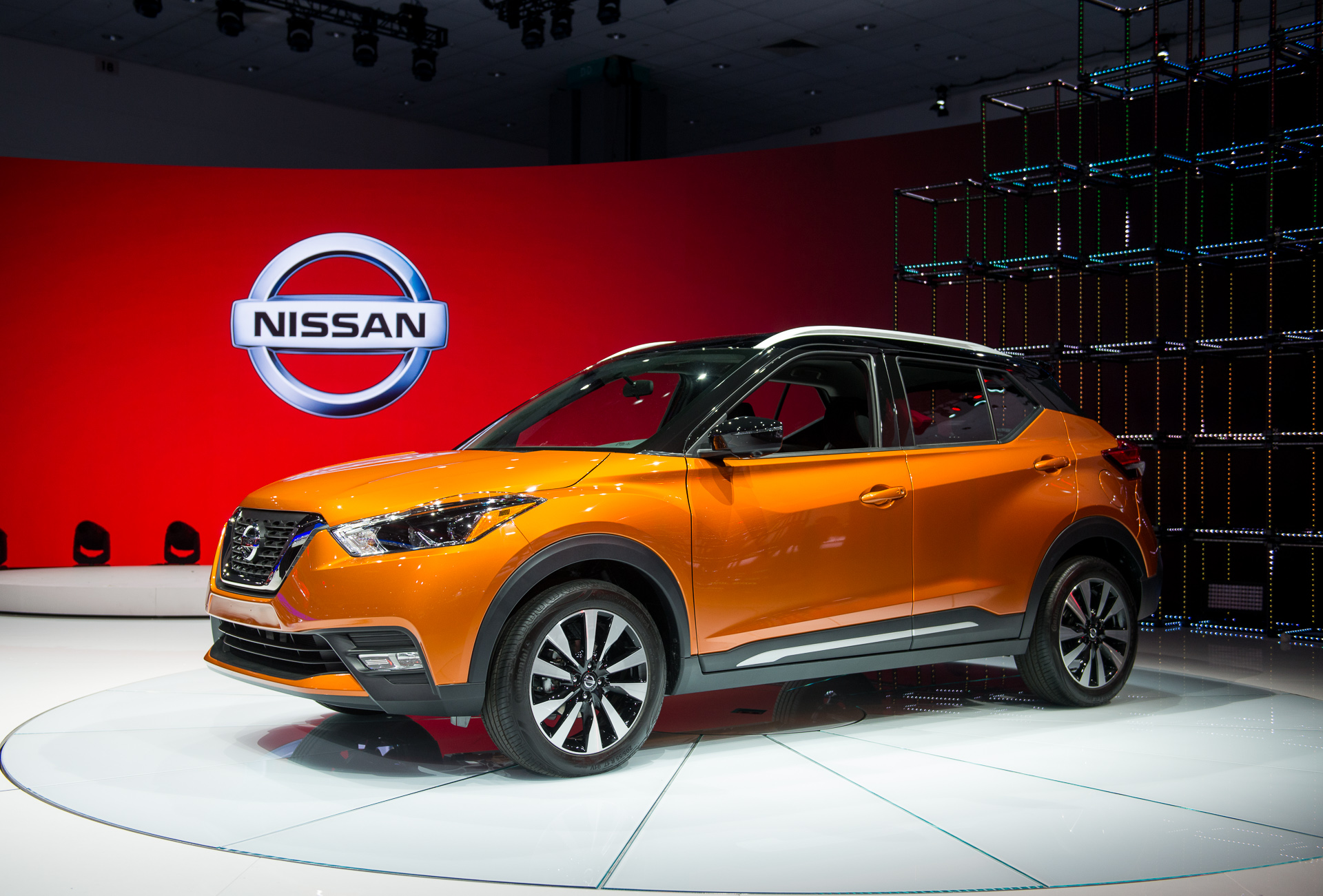
    The milestone vehicle, a Magnite, is destined for the Gulf Cooperation Council (GCC) region. It was officially unveiled by Saurabh Vatsa, the Managing Director of Nissan Motor India, at Kamarajar Port in Ennore, Tamil Nadu. While the Magnite has been the mainstay, Nissan India has a history of exporting various models. These include the Sunny, Kicks, and Micra, which have been shipped to regions such as Africa, the Middle East, Latin America, and Southeast Asia.

    Changes in Model Exports Over Time

    Over time, however, these models were phased out due to lacklustre sales performance following the introduction of BS6 emission standards. At present, the Magnite is exported to 65 countries and is available in both left-hand (LHD) and right-hand (RHD) drive versions.

    Saurabh Vatsa, Managing Director, Nissan Motor India, commended this achievement, attributing it to the collective efforts of their teams and the global trust in their Made-in-India cars. He stated, “The Nissan Magnite continues to be a global success story, representing our focus on design, quality, and innovation that transcends borders.”

    Updates to the Magnite Model

    In December of the previous year, Nissan introduced a minor facelift to the Magnite, including subtle cosmetic changes and additional features. However, the mechanical aspects of the vehicle remain the same. The Magnite is offered with two petrol engine options: a 1.0-litre naturally aspirated engine and a 1.0-litre turbocharged engine. The former delivers 72 bhp and 96 Nm of peak torque, while the latter offers 99 bhp and 160 Nm (or 152 Nm with automatic transmission) of torque.

    Questions & Answers

    What milestone has Nissan India recently achieved?
    Nissan India has recently announced the export of its 1.2 millionth vehicle.

    Which regions does Nissan India export its vehicles to?
    Nissan India exports its vehicles to the AMIEO region, which includes Africa, the Middle East, India, Europe, and other markets.

    What changes were made to the Nissan Magnite in its latest update?
    In its latest update, the Nissan Magnite received a mild facelift with subtle cosmetic enhancements and additional features. The mechanical aspects of the vehicle, however, remain unchanged.

  • Nissan Expands Retrofitting Program To Include Br10 Ez-shift, Enhances CNG Systems For Customer Convenience

    Nissan Expands Retrofitting Program To Include Br10 Ez-shift, Enhances CNG Systems For Customer Convenience

    Nissan Motor India recently extended its Compressed Natural Gas (CNG) retrofitting program to include the new Nissan Magnite BR10 EZ-Shift (AMT). This move comes in light of the successful implementation and positive customer reception of a similar program for the Nissan Magnite BR10 Manual Transmission earlier this year. This move is a reflection of Nissan’s ongoing dedication to providing efficient, customer-focused, and accessible mobility solutions.

    Expanded Retrofitting Program

    The BR10 EZ-Shift (AMT) variant’s certification makes it possible for a broader customer base to choose a factory-approved, high-quality retrofit solution. The retrofit solution combines the reliable performance of Nissan with the cost-effectiveness of CNG.

    Nissan also integrated a revamped fueling system, guided by customer feedback, response, and international best practices. The CNG filling valve has been relocated from the engine compartment to within the fuel-filling lid. This alteration is expected to offer better convenience, faster refueling, and enhanced ergonomics for daily users. The CNG retrofit comes with a three-year or 100,000 km warranty for the new Nissan Magnite.

    Affordable Retrofitting Kit

    Boosting its value proposition, Nissan announced a Maximum Retail Price (MRP) of ₹71,999/- for the CNG retrofitting kit. This price reduction comes after the recent Goods and Services Tax (GST) rate cut from 28% to 18%. As of September 22, 2025, the revised price has been effective across all authorized Nissan CNG retrofitting centers in India and remains stable despite the upgrade.

    Safety Measures and Warranty Plan

    The new Nissan Magnite is recognized as the safest B-SUV, equipped with six standard airbags across all models. It has been awarded a prestigious 5-star rating in overall passenger safety from GNCAP, which includes a perfect score in Adult Occupant Protection (AOP) and a 3-star rating in Child Occupant Protection (COP).

    Furthering their commitment to customer satisfaction, Nissan Motor India has introduced a unique 10-Year Extended Warranty Plan for the new Nissan Magnite.

    Questions & Answers

    What is the new development in Nissan’s CNG retrofitting program?
    The program has been expanded to include the new Nissan Magnite BR10 EZ-Shift (AMT), following the program’s successful implementation for the Nissan Magnite BR10 Manual Transmission.

    What changes have been made in the CNG filling system of the new Nissan Magnite?
    The CNG filling valve has been relocated from the engine compartment to within the fuel-filling lid for greater convenience, quicker refueling, and improved ergonomics.

    What safety measures does the new Nissan Magnite have?
    The new Nissan Magnite has been recognized as the safest B-SUV, featuring six airbags as standard across all models, a 5-star rating in overall passenger safety, a perfect score in Adult Occupant Protection, and a 3-star rating in Child Occupant Protection.

  • Nissan to start robotaxi tests in China’s Suzhou in March

    Nissan to start robotaxi tests in China’s Suzhou in March

    Nissan (China) Investment Co., Ltd. (NCIC) today announced the establishment of Nissan Mobility Service Co., Ltd., a dedicated mobility service company, as part of its efforts to continue transforming its business in China. The announcement was made at the 5th China International Import Export (CIIE) show which opened on Nov. 5th here.

    The new company, headquartered in Suzhou, will be committed to investing in mobility services and deploying robotaxi services. By working with the Suzhou High-Speed Rail New Town, it will support intelligent transport initiatives in the country.

    “Introducing future technology, mobility solutions and products that enrich the lives of customers in China are an important part of Nissan’s long-term strategy in China,” said Shohei Yamazaki, Nissan Motor Co., Ltd. senior vice president and NCIC chairman. “The new company represents another milestone of Nissan’s nearly 50 years of development in China and a new commitment to the market.”

    “Leveraging our mobility services experience and expertise from the Japan market, we are transforming our business in China by tapping into the future mobility service sector,” said Hideki Kimata, president of NCIC. “Through the new company, we are aiming to provide all-new riding experiences with easier, more convenient mobility services for more consumers in China.”

    Nissan has a strong foundation in electrification for mobility services, a cornerstone of the company’s long-term strategy in China. Nissan is among the first international OEMs to establish a dedicated robotaxi company in China.

    “Suzhou High-speed Railway/Xiangcheng District was chosen for Nissan Mobility Service due to its strong support for business development, availability of collaborative opportunities, and its proximity to our existing Alliance joint innovation hub in Shanghai,” said Kimata.

    Zhiyao Liang, a senior official from Xiangcheng District, Suzhou City said: ”As one of the first global automakers that entered the Chinese market, Nissan has witnessed and participated in the growth and development of China’s auto industry. It has continuously introduced advanced technologies and products to actively contribute to market development since 1973. As an industry-leading company in the field of electrification, autonomous driving, connectivity and shared mobility services with rich technological expertise and powerful corporate presence, Nissan once again showcases exciting new products that will shape new trends for the industry.”

    WeRide, a leading, global autonomous and mobility service company that develops Level 4 autonomous driving technologies and that has a successful mobility service history in Guangzhou, will provide technology support to the Suzhou project.

    Li Zhang, COO of WeRide said: “WeRide will extensively participate and fully support the R&D, test and operation of Nissan Mobility Service’s robotaxi fleet, particularly in autonomous driving technologies. WeRide always puts safety as our top priority, and will work with Nissan to provide safer, more efficient and comfortable autonomous driving mobility experiences to Suzhou residents and improve quality of life with innovative technologies.”

    The 5th CIIE will be convened from November 5 to 10 at the National Convention & Exhibition Center, Shanghai, with Nissan’s booth at Hall 2.1. Nissan will fully demonstrate its latest achievements and practices in sustainability and showcase its innovation aimed to deliver diversified mobility solutions for customers in China seeking sustainable transportation options.

  • Nissan Exits Russian Market

    Nissan Exits Russian Market

    Japanese auto giant Nissan has announced its exit from the Russian market. The automaker’s Executive Committee approved the sale of its Russian operations to the state-owned NAMI, the Central Research and Development Automobile and Engine Institute. Nissan had stopped operations in Russia in March this year, following the invasion of Ukraine. It then ceased operations at the company’s St. Petersburg plan later the same month citing parts shortages. Nissan said it will book a loss of 100 billion Yen (around $686.2 million) with the sale of its local unit in Russia. The sale will be formalised in a couple of weeks following approvals from local authorities.

    The sale transfer will include all of Nissan’s Russian operations under the Nissan Manufacturing Russia LLC (NMGR) legal entity to NAMI for future passenger vehicle projects. This includes the manufacturing and R&D facilities in St. Petersburg, and Sales & Marketing centre in Moscow, which will operate under a new name. The company further said that all of Nissan employees will receive employment protection of 12 months. The terms of sale allow Nissan with the option to buy back the entity and operations within the next six years.

    Speaking about the exit from Russia, Makoto Uchida, President and CEO – Nissan, said, “On behalf of Nissan, I thank our Russian colleagues for their contribution to the business over many years. While we cannot continue operating in the market, we have found the best possible solution to support our people.”

    The automaker said it will maintain its full-year guidance. More details on the exit will be reported after further assessment during the second quarter results in November 2022.

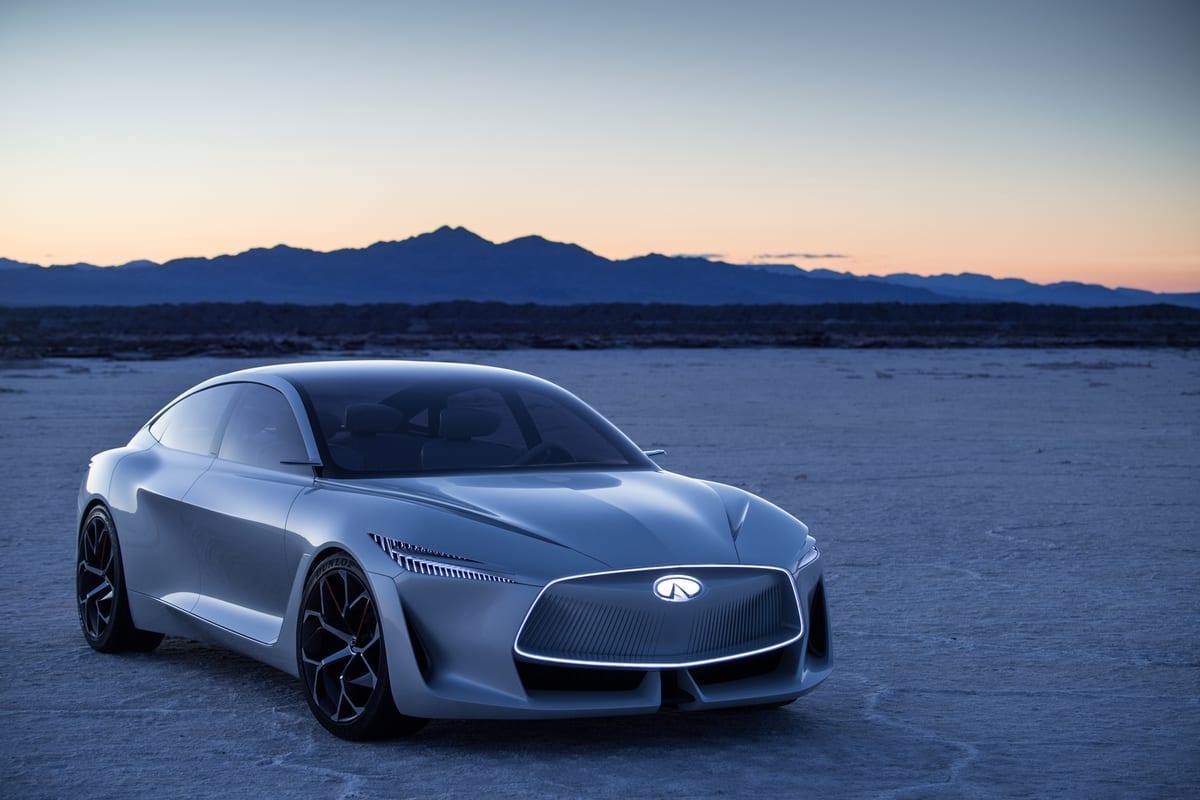
  • Infiniti Teases Electric Concepts, Commits To Being EV First By 2030

    Infiniti Teases Electric Concepts, Commits To Being EV First By 2030

    Infiniti has joined the pantheon of US-based automakers which have pledged to transition mostly to electric powertrains by 2030. In its video, Infiniti also hinted that it will be also be leveraging hybrid powertrains, “we will not let the size of our battery alone define us, but rather, empower customers to choose the power source that fits their lifestyle,” said the company in its video.

    In the video, Infiniti shows off three unnamed vehicles, one of which is a crossover, though it is not known that these cars have some flow over with Nissan’s out concept vehicles. Of course, Infiniti is owned by Nissan, which has for years pushed electric cars along with Renault.

    The concept cars shown off are low-slung and even have a tachometer which means these are likely hybrid cars. Infiniti now joins the likes of many muscle and sports car brands that have pushed electric and hybrid powertrains. Recently, we have heard from the likes of Dodge which has also hinted that it will be going all-electric and will be retiring its iconic hellcat motors.

  • Nissan Unveils Lunar Rover Prototype

    Nissan Unveils Lunar Rover Prototype

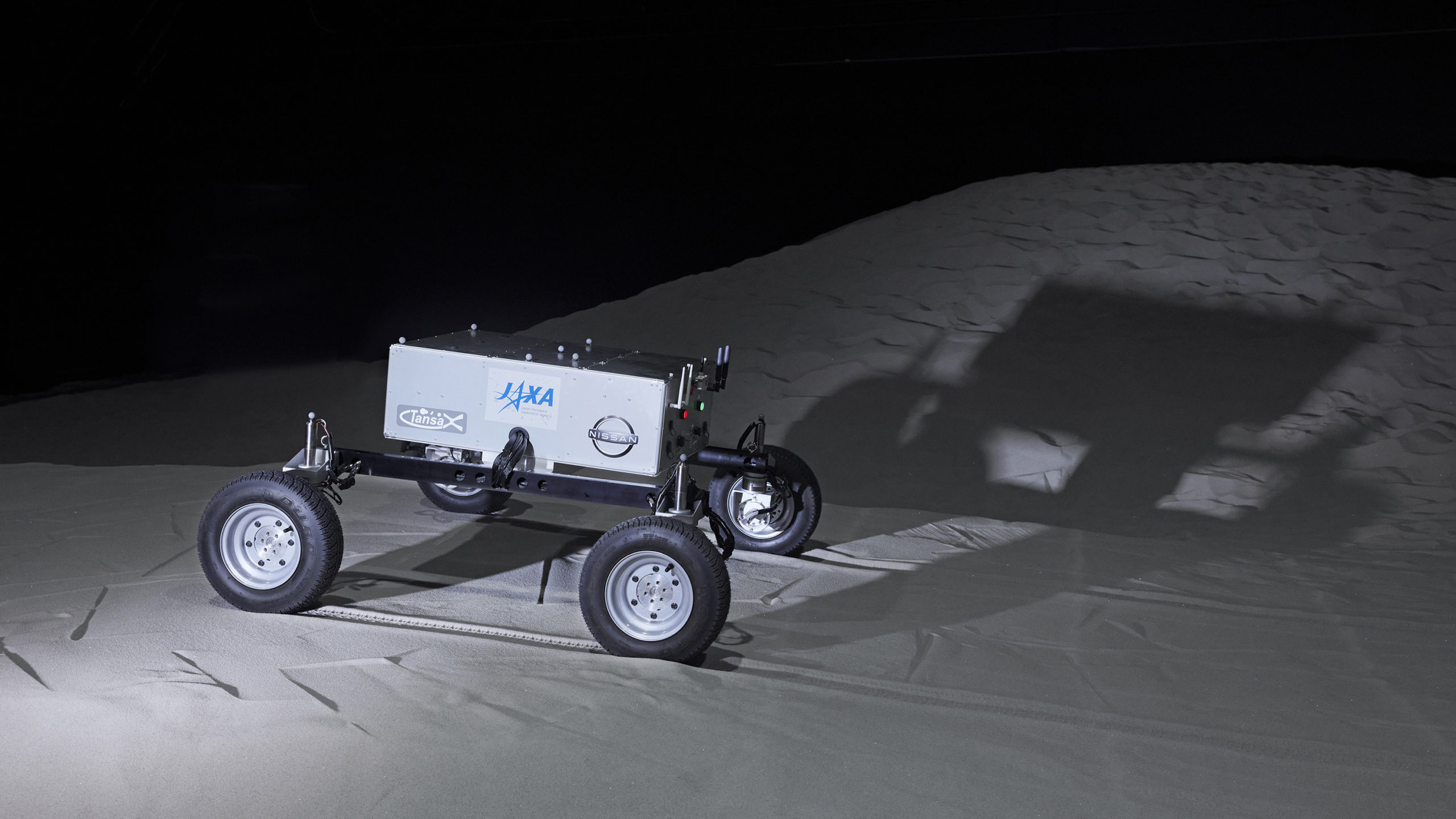
    Nissan unveiled a lunar rover prototype jointly developed with the Japan Aerospace Exploration Agency (JAXA). The JAXA Space Exploration Innovation Hub Center is conducting research on lunar rovers for space exploration. Nissan has been working with JAXA on driving the controllability of the rovers since January 2020.

    A lunar rover must be able to traverse the Moon’s powdery, rocky and undulating terrain and be energy efficient. Furthermore, energy sources for operating vehicles in space are limited. Nissan’s research applies the motor control technology it has developed through its production of mass-market electric vehicles such as the LEAF as well as the e-4ORCE all-wheel control technology featured on the all-new Ariya electric crossover. In particular, it is e-4ORCE that is boosting the lunar rover’s performance over tricky terrain.

    Nissan has focused on the development of stable driving performance that enables customers to drive their cars with greater confidence. Nissan’s e-4ORCE technology precisely controls all four wheels independently, providing the driver with confidence in various conditions.

    In its joint research with JAXA, Nissan is evolving e-4ORCE technology to improve its performance in sandy terrain and other harsh conditions. When cars are driven in sand their wheels frequently spin and dig in, impeding progress. A high level of driving skill is required to avoid getting stuck. To meet this need, Nissan has developed driving-force controls that minimize the amount of wheel spin in accordance with surface conditions.

    Through the joint research, Nissan aims to contribute to the technological evolution of automotive technology and space exploration technology by sharing know-how gained from test-vehicle development and combining it with JAXA’s knowledge of rover research

  • Nissan Plans 50% Electric Vehicle Sales By 2030

    Nissan Plans 50% Electric Vehicle Sales By 2030

    Automaker Nissan wants half its global sales to be electric or hybrid vehicles by 2030 and plans to plough billions of dollars into the effort, it announced Monday. The move follows in the footsteps of other major global automakers, which have increasingly signaled a move towards electric and hybrid vehicles as concern about climate change grows.

    Unveiling its new long-term plan, Nissan said it will launch 23 new models, including 15 new electric vehicles, in a bid to reach the 2030 goal.

    Last year, only around 10 percent of Nissan’s global sales were EVs or hybrids, and the firm said the new target would help it achieve carbon neutrality across the lifecycle of its products by 2050.

    Nissan has been battered by a series of problems in recent years, ranging from weak demand even before the pandemic, to the fallout from the arrest and subsequent escape of former boss Carlos Ghosn.

    Last year, only around 10 percent of Nissan’s global sales were EVs or hybrids

    After falling behind rivals during the pandemic, it has begun clawing back performance, tripling its full-year net profit forecast earlier this month despite the impact of a global chip shortage.

    In a statement, Nissan CEO Makoto Uchida said the long-term plan announced Monday would “transform Nissan to become a sustainable company.”

    It’s a move seen across the auto industry with Sweden’s Volvo pledging to switch all sales away from traditional fuel cars by 2030, and Japan’s Honda setting the same target by 2040.

    Top-selling Toyota says by 2030 all the vehicles it sells in Europe will be electric or hybrid models, with a goal of 70 percent in North America and 100 percent in China by 2035.

    Nissan said 20 of its new electric models would hit the market in the next five years, setting a target for electric cars to make up 75 percent of sales in Europe by fiscal 2026.

    The Japanese automaker said it will invest two trillion yen ($17.5 billion) over the next five years to speed up electrification, aiming to launch electric vehicles with its proprietary batteries by 2028.

    Electric and hybrid vehicles are being increasingly adopted in the face of concern about climate change, with Britain moving to ban new sales of diesel and petrol cars in the UK from 2030.

    US President Joe Biden earlier this year announced a target for half of all ears sold domestically by 2030 to be zero-emission.

    At present, around 10 percent of European car sales are EVs, but the US figure is just two percent.

  • Nissan Triples Profit Forecast On Strong Quarterly Results

    Nissan Triples Profit Forecast On Strong Quarterly Results

    Nissan tripled its full-year net profit forecast on Tuesday as it rebounded from the impact of the pandemic with a strong quarterly performance, saying it expected to withstand challenges including the global chip crunch and rising raw material prices. The firm now projects 180 billion yen ($1.6 billion) in net profit for the fiscal year to March 2022, up from an earlier estimate of 60 billion yen. Nissan’s last yearly net profit in the black was in 2018-19.

    For the three months to September, Nissan logged a 54.1 billion yen net profit, reversing a 44.4 billion yen net loss for the same period last year. “Our strong results are the outcome of diligent financial management, improved quality of sales and continuing product offensive. This has helped us withstand several headwinds,” Nissan CEO Makoto Uchida said in a statement.

    The firm has faced a series of trials in recent years, including weak demand during Covid-19 lockdowns and the fallout from the arrest of former boss Carlos Ghosn, now a fugitive in Lebanon.

    On Tuesday, the company revised down its full-year sales forecast to 8.8 trillion yen from 9.75 trillion yen, partially because of the impact of a semiconductor shortage plaguing auto firms worldwide. Supply disruptions have compounded the mismatch between demand for and availability of chips, a key component in modern cars.

    Nissan plans to slash its production by around 30 percent from its original plan in October and November because of the chip shortage, public broadcaster NHK reported.

  • Nissan Raises Earnings Outlook, Optimistic Chip Crunch Will Ease

    Nissan Raises Earnings Outlook, Optimistic Chip Crunch Will Ease

    Japanese automaker Nissan Motor Co on Wednesday raised its earnings outlook for the year, helped by a weaker yen and favorable demand in the United States and China, after reporting a surprise first-quarter operating profit. The company also warned that a global shortage of semiconductor chips will significantly hurt sales volume in the July-September quarter, but added that demand for its newly launched, pricier models will mitigate the impact on profits.

    Nissan hopes to make up for production and sales losses during the latter half of the fiscal year ending March 2022 and expects semiconductor shortages to ease during that period, Chief Operating Officer Ashwani Gupta told reporters.

    “Nobody has got a crystal ball. Nobody. But there are some assumptions,” he said, referring to an expected easing of the crisis, partly because a fire-hit Renesas Electronics chip plant in Japan is functioning again.

    Nissan, Japan’s No. 3 carmakers, maintained its global sales target of 4.4 million vehicles that it had set for the year in May.

    Nissan sold 1.048 million vehicles in April-June, up 63% from a year earlier, when global demand was hit by the COVID-19 pandemic. It sold 378,000 vehicles in North America (U.S., Canada and Mexico), up 70% from a year earlier, while sales in China totaled 352,000 vehicles, a 71% increase.

    Sales in the United States totaled 298,000 vehicles, up 68% from a year earlier.

    Chief Executive Makoto Uchida said Nissan will have to live with business uncertainties, including higher raw materials costs, for the remainder of the year.

    The auto industry has been grappling with a months-long shortage of semiconductor chips, which has forced them to cut production and delay car deliveries.

    Some companies such as Stellantis, owner of brands including Peugeot and Jeep, have said they expect the shortage to easily drag into next year.

    Some, though, like Taiwan chipmaker TSMC and Volkswagen said they are seeing some signs that the crunch is easing.

    Despite that, Nissan had a good start to the year, Gupta said, attributing the surprise first-quarter profit partly to the company efficiently managing supply chains and strategically using its chip stockpile, minimizing the impact of the shortage.

    Nissan reported an operating profit of 75.68 billion yen ($688.6 million) for the first quarter ended June 30. Analysts had expected a loss of 42.72 billion yen, according to Refinitive SmartEstimates.

    For the year ending March 2022, Nissan now expects an operating profit of 150 billion yen. In May, the company had forecast that it would break even in the period.

  • Nissan Bets On UK ‘Renaissance’ With Battery Plant And New Vehicle

    Nissan Bets On UK ‘Renaissance’ With Battery Plant And New Vehicle

    Nissan Motor Co bet on Britain to supercharge its European electric future on Thursday, pledging $1.4 billion with its Chinese partner to build a giant battery plant that will power 100,000 vehicles a year including a new crossover model.

    Facing the most profound technological shift in a century, the titans of the auto industry are racing to secure battery supply close to the factories where they will make the new cleaner electric vehicles of the future.

    Nissan cast its backing for the 9 gigawatt-hour (GWh) plant as illustrative of rejuvenation of Britain’s automotive industry, which has for five years grappled with the fear that Brexit could cut off the rest of the European market.

    “This project is the demonstration of the renaissance of the British car industry,” Ashwani Gupta, Nissan’s chief operating officer, told reporters at the Sunderland plant, which exports 70% of its vehicles to the European Union.

    British Prime Minister Boris Johnson said Nissan’s move was “a major vote of confidence in the UK and our highly skilled workers in the North East”. Nissan said Britain had backed the plan, but did not detail any guarantees or incentives.

    The 1 billion-pound ($1.4 billion) investment by Nissan, its Chinese partner Envision AESC and local government in northeast England will create 6,200 jobs at the Sunderland plant and in British supply chains.

    Nissan will spend up to 423 million pounds to produce a new-generation all-electric crossover vehicle at the plant, where it already produces the LEAF electric vehicle and the Qashqai crossover SUV. The new vehicle has yet to be named and there is no launch date.

    As world powers try to slash carbon emissions by scrapping the fossil-fuel guzzling internal combustion engine, Britain has pledged to ban the sale of new diesel and petrol cars from 2030.

    Going electric, though, is hard.

    China dominates the production of electric vehicle batteries and the processing of the minerals used to make them, though the United States and Europe are trying to catch up.

    Western leaders, including Johnson, are loath to sacrifice hundreds of thousands of automotive jobs – often in politically sensitive constituencies – by importing batteries from China, rather than manufacturing domestically.

    And unless Britain can build both battery production and supply chains, it risks losing its four-decade reputation as the investor-friendly gateway for top companies seeking to export to the rest of Europe.

    Envision could invest an additional 1.8 billion pounds in the battery plant to expand generating capacity to up to 25GWh and create 4,500 new jobs in the region by 2030. There is potential on-site for up to 35GWh.

    “We also want to build the supply ecosystem in the country – but you do need critical mass,” Zhang Lei, Envision Group founder and chief executive, told Reuters.

    Zhang said the battery plant could supply other manufacturers and hoped that, once it expanded capacity, it would be able to export, including to Europe.

    Still, Britain is far short of the installed battery capacity it will need to power electric cars in the long term and there are risks the technology will be superseded.

    “Battery development and production is currently in a complete state of flux – chaos even,” said Bob Hancké, associate professor of political economy at the London School of Economics. “Any investment now runs the risk of closing of technologically more advanced options a few years from now.”

    Nissan said the new crossover, to be built on the Alliance CMF-EV platform shared by partners Renault and Mitsubishi, would be exported to European markets.

    Japan’s capital has used Britain as a gateway to Europe since the early 1980s, when then Prime Minister Margaret Thatcher persuaded Nissan to build a plant in Sunderland on an old airfield.

    Japanese investors worried the Brexit vote – which was particularly strong in Sunderland – would scupper their bets.

    A new trade deal agreed with the EU last year allows the free trade of cars but with a dangerous twist about rules of origin – at least 40% of the value of a car has to be produced in the United Kingdom or EU to be sold in the bloc.

    That requirement rises to 55% from 2027 – a crucial detail that would mean an imported battery, which can make up half the vehicle’s sale price, would close off the European market to British-based car factories.

    The new model takes Nissan’s total capital investment in the Sunderland plant past 5 billion pounds.
  • Nissan Will Build The First EV Factory In UK

    Nissan Will Build The First EV Factory In UK

    Japanese automotive giant Nissan will be making the first battery facility in the UK as per Sky News. The factory is slated to open in Sunderland in 2024 and is expected to produce batteries in 200,000 electric cars every year. Nissan will be partnering with Chinese specialist Envision AESC to build the batteries. It will produce 6 gigawatts of battery capacity per year which is far more than 1.9-gigawatt-hours of capacity that an existing Envision AESC Sunderland plan has. Of course, all of this is made to look tiny compared to what Tesla has in the US with the 35-gigawatt hour Gigafactory in Nevada.

    Of course, the cost is in the hundreds of millions and the British government will be contributing to the cost. The cost, however, is not known.

    “It is hoped the new plant will be producing batteries in time for 2024 when the level of UK-made components in UK-made cars is required to start increasing in line with the terms of the UK’s trade deal with the European Union – where most of Nissan’s Sunderland-assembled cars are sold,” reported the BBC.

    “Industry sources expect the scale and size of the new facility may closely match that of a new facility in Douai, France, recently announce by Renault – which is a major shareholder in Nissan and a partner in a global manufacturing alliance,” the report added.

    Nissan of course is known for the Leap EV which is also made in Sunderland. It could be there is a new electric car launch on the cards.

  • Renault-Nissan Workers In India To Strike Over COVID Fears

    Renault-Nissan Workers In India To Strike Over COVID Fears

    Workers at Renault-Nissan’s car plant in southern India will go on strike on Wednesday as their COVID-related safety demands have not been met, a union representing the workers told the company in a letter on Monday. The strike threat at the plant in Tamil Nadu, jointly owned by Nissan Motor and alliance partner Renault, comes ahead of a court hearing over allegations from workers that social distancing norms were being flouted and factory health policies did not sufficiently address the risk to lives.

    “Due to unsafe working conditions and as the union demands have not been met … members of this union will not report to work from the first shift on Wednesday,” the union said in a letter dated May 24. The letter added that workers would not return until they felt safe.

    The union represents around 3,500 workers at the plant.

    Nissan, which owns a majority stake in the plant, declined to comment, saying the matter was in court.

    Renault-Nissan told an Indian court last week it rejected claims that COVID-19 safety protocols were being ignored at the factory, adding it needed to continue production to meet orders.

    The legal battle highlights the challenges companies face in India amid a huge wave of COVID-19 infections.

    Several Hyundai Motor Co employees, fearing for their health, have halted work at the automaker’s plant in Tamil Nadu state and are staging a sit-in protest, two sources at the Hyundai Motor India Employees Union told Reuters.

    Hyundai Motor India did not immediately respond to a request for comment.

    The legal battle highlights the challenges companies face in India amid a huge wave of COVID-19 infections.

    It was not immediately clear how long the protest would continue and the extent of production disruption for Hyundai.

    Tamil Nadu is one of the worst-hit states of India’s surge in COVID-19 infections, with more than 30,000 cases a day.

    The state, an auto hub known as India’s Detroit, has imposed a lockdown until May 31 but has allowed some factories, including auto plants, to continue operating.

    Hyundai’s union told the company on May 15 its workers feared for their lives and should be given fully paid leave while the state lockdown is in place.

  • Nissan To Focus On Fuel-Sipping Technology And Electrification In China

    Nissan To Focus On Fuel-Sipping Technology And Electrification In China

    Japan’s financially challenged Nissan Motor Co is expected to show off a new “must-succeed” car and explain its green-car strategy for China at the Shanghai auto show which starts on Monday, two company officials told Reuters. The car Nissan plans to show off at the motor show is the significantly redesigned X-Trail sport-utility vehicle (SUV). A similar SUV called the Rogue hit the U.S. market last year. The new X-Trail will be available in China later this year.

    The new car is powered by a fuel-sipping three-cylinder, petrol-powered turbo engine, which one of the sources said might face an uphill battle in gaining acceptance in China where similar technologies have proven unpopular.

    The car is a “must succeed, a must-win car for us,” one of the two sources said. Both sources spoke on the condition of anonymity because they are not authorized to speak with reporters.

    In addition to the X-Trail’s China debut, Nissan’s chief operating officer Ashwani Gupta is expected to tell reporters in Shanghai virtually from Japan on Monday that Nissan’s green car strategy is two-pronged: the company will focus on fuel efficiency-enhancing petrol-electric hybrid technology, as well as battery-electric cars to make its lineup of vehicles in China greener.

    Nissan will focus on fuel efficiency-enhancing petrol-electric hybrid technology, as well as battery-electric cars to make its lineup of vehicles in China greener.

    In January, Nissan said all its new vehicles in key markets, including China, would be electrified by the early 2030s, as part of its efforts to achieve carbon neutrality by 2050.

    The strategy comes as regulatory pressure in China grows on carmakers to slash emissions.

    China is a key pillar of Nissan’s turnaround strategy, which involves focusing on producing profitable cars for China, Japan and the United States, rather than chasing all-out global growth pursued by ousted boss Carlos Ghosn.

    The company is scrambling to slash its production capacity and model line-up by a fifth and to cut fixed costs by 300 billion yen ($2.8 billion). Nissan aims to achieve a 5% operating profit margin and a sustainable global market share of 6% by the end of fiscal year 2023.

    It wasn’t immediately clear how much detail Nissan plans to share on its China strategy on Monday.

    The two sources said Nissan nonetheless plans to start taking “pre-orders” in China for its upcoming electric Ariya SUV before the end of this year.

    Nissan also plans to launch a hybrid “e-Power” version of the Sylphy compact car this year and an e-Power X-Trail as early as next year.

    A company spokeswoman said Nissan plans to showcase in Shanghai the redesign X-Trail crossover, as well as the introduction of Nissan’s e-power petrol-electric hybrid technology to China. She declined to comment otherwise.

  • Nissan Appoints Guillaume Cartier Chairperson Of The AMIEO Region

    Nissan Appoints Guillaume Cartier Chairperson Of The AMIEO Region

    Nissan Motor announced Guillaume Cartier as its new Chairperson for the Africa, Middle East, India, Europe and Oceania (AMIEO) region. Effective April 1st, Cartier will lead all Nissan operations in the region, which covers more than 140 markets across four continents with a population of around 3.8 billion people, representing more than 30 percent of global vehicle sales.

    With over 25 years’ experience at Nissan and in the Alliance in global and regional leadership positions, Cartier will lead the new region as the Nissan NEXT transformation plan continues to gather pace and with key models in Europe including Qashqai and Ariya launching soon, and as the brand continues to grow in the AMIO markets, thanks to a powerful vehicle line-up ranging from the iconic Patrol to the recently launched Magnite in India.

    Cartier said: “I am thrilled to be leading this culturally rich and diverse region into a period of unprecedented change for the automotive industry and with a refreshed range of Nissan models and technologies coming to the market.”

    Currently Vice-Chairperson of the AMIEO region and AMI President, Cartier first joined Nissan in 1995 as after-sales manager and went on to hold a number of senior management positions in the Alliance, including AMI Chairperson, head of the Global Datsun Business Unit, Executive Officer and Senior Vice President for Mitsubishi Motors, and Senior Vice President for Sales and Marketing in Europe. Cartier will report to the vice-chief performance officer and chief quality officer, Christian Vandenhende. Cartier will replace Gianluca De Ficchy, who served for three years as Chairperson of Nissan Europe and latterly of the expanded AMIEO region.

  • Nissan Plans To Invest Heavily In China Luxury Segment, COO Says

    Nissan Plans To Invest Heavily In China Luxury Segment, COO Says

    Japan’s Nissan Motor plans to invest heavily in China’s luxury auto segment, its chief operating officer said on Monday.

    Ashwani Gupta made the comment in an interview during the Reuters Auto Summit teleconference. He also said that while he was satisfied with the automaker’s business in the United States, it wasn’t enough.