Tag: noodles

  • Japanese operator plans 50 Myanmar noodle restaurants

    Japanese operator plans 50 Myanmar noodle restaurants

    Japanese noodle restaurant operator Toridoll Holdings plans to open 50 outlets in Myanmar with a local joint venture partner.

    The Myanmar noodle restaurants, in partnership with YKKO, will target the nation’s growing middle class.

    The first has already opened in Yangon, selling bowls of noodles for as little as US48 cents, with serving sizes to suit budgets and appetites. Ingredients are sourced locally and from neighbouring Thailand to minimise overheads.

    Toridoll, based in Kobe, already operates about 900 eateries in Japan and another 380 across 30 offshore markets, including Vietnam, the Philippines, China, Cambodia and Indonesia. Japan’s perpetually shrinking population has prompted the company to look abroad for growth – it has ambitious plans to operate 4000 restaurants abroad in 2025.

    Meanwhile,

    YKKO is an abbreviation of its the name of its first restaurant, Kyay-Oh, which opened in Yankin.

  • Hokkaido Ramen Santouka opens Quezon branch

    Hokkaido Ramen Santouka opens Quezon branch

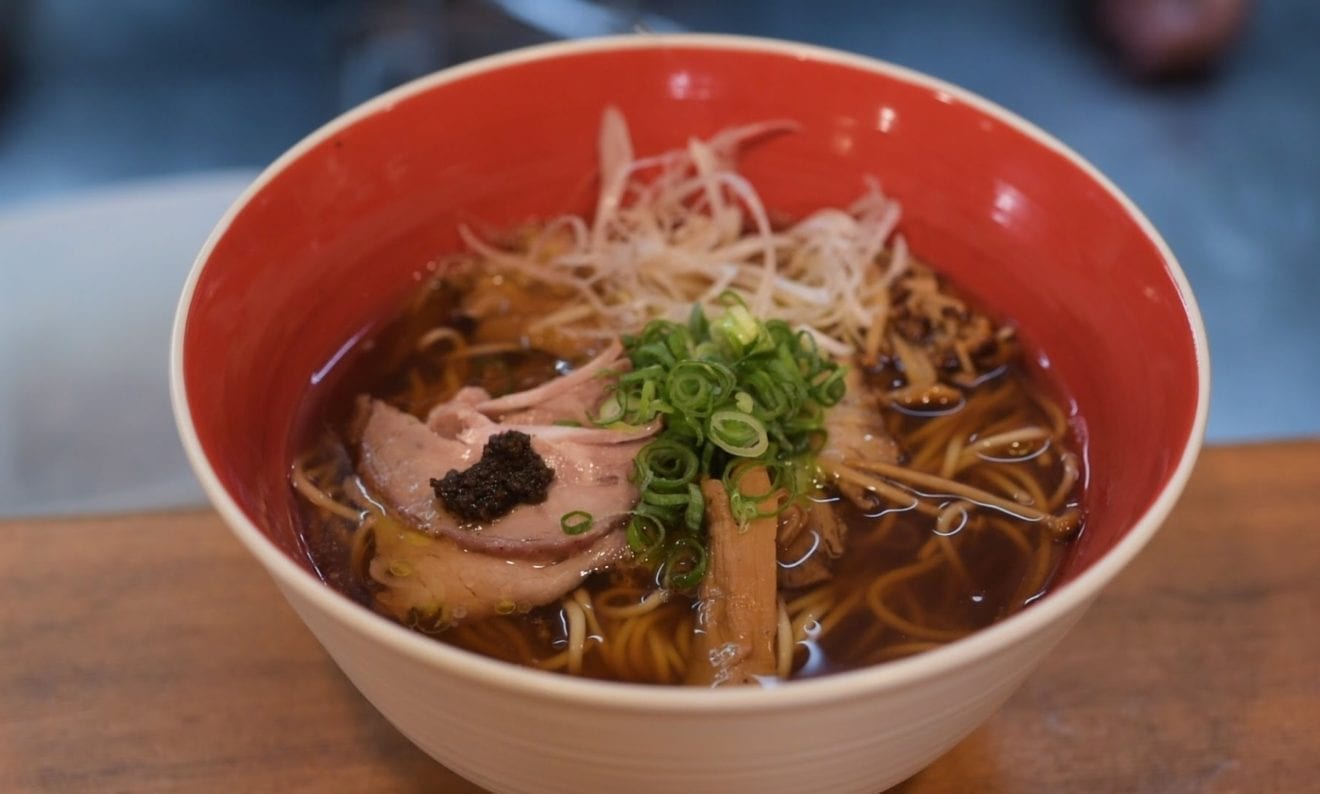
    Hokkaido Ramen Santouka, which arrived in the Philippines in 2013, has opened its 11th branch, in Up Town Center in Quezon City.

    Launching in Japan in 1986, the brand is known for its meticulous preparation of its tonkotsu broth, a tradition if follows in the Philippines. Hokkaido Ramen Santouka Manila president Annaliza Lim says all its branches have a full kitchen that takes up about 40 per cent of the store’s space.

    “We make all our broths in house at every branch to ensure freshness. A Japanese chef goes to our different branches to check the tonkotsu broth to make sure the quality is at par,” says Lim.

    All ingredients are imported from Japan, with the soup being cooked for 20 hours daily.

  • Turnover dips as Ajisen (China) under pressure

    Turnover dips as Ajisen (China) under pressure

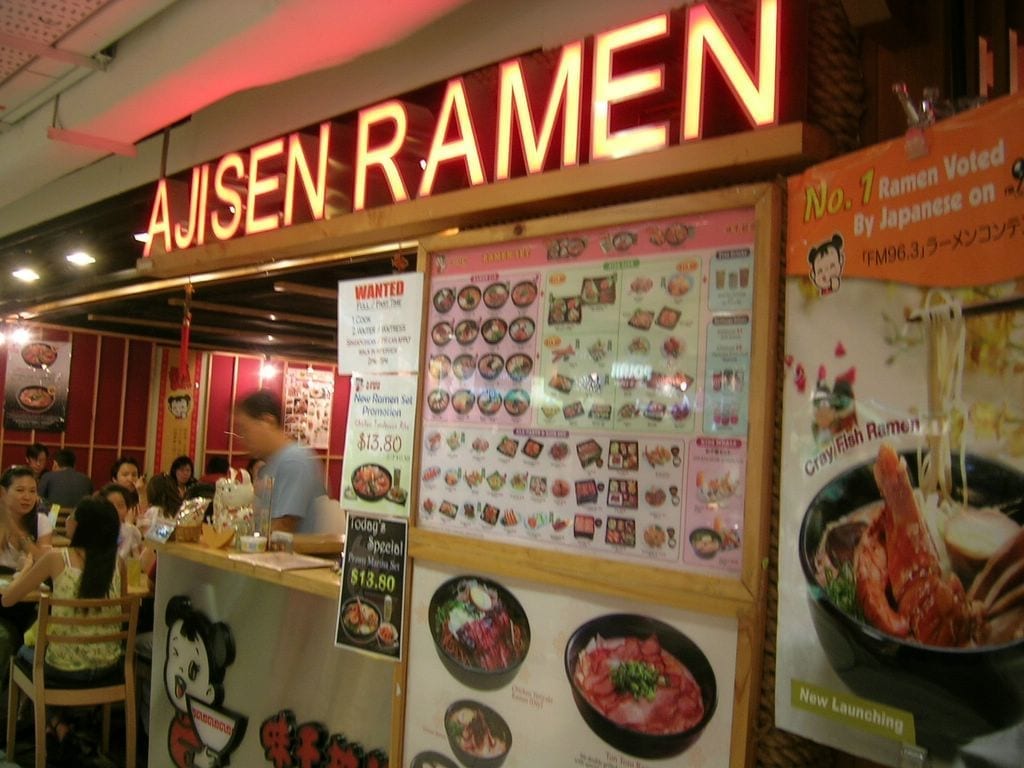
    While half-year turnover edged down 2.5 per cent for restaurant group Ajisen (China) Holdings, its core profit grew 36 per cent.

    Its turnover was RMB1.1 billion (US$165.2 million) while the profit reached RMB135 million.
    Gross profit margin, up 2.3 points, was 73.1 per cent, while the gross profit reached about RMB841 million, up 0.7 per cent. Profit attributable to the owners of the company fell by about 80.9 per cent to RMB108 million.

    Ajisen says competition in the foodservice industry has intensified, with high opening and closing rates emerging as the new norm. As an example, it cites a surge of new restaurants in Beijing, Shanghai, Guangzhou and Shenzhen being accompanied by a higher rate of take-over with a monthly closure rate of 10 per cent, and a compound annual closure rate exceeding 100 per cent.

    Also the shopping centre/catering model is under pressure, says the company, as a result of lower flow aggregation and insufficient customer numbers because of the homogenisation of shopping centres. Catering outlets in shopping malls in 10 cities recorded a closure rate of more than 30 per cent.

    Meanwhile, the takeaways segment of the industry is growing rapidly with an accent on healthy eating. Statistics for last year show that overall transactions in the segment sharply increased to more than RMB150 billion in value, accounting for 4 per cent of the catering industry total.

    Ajisen says its management will actively explore and seek opportunities to transform, adopting a lean management approach and establishing smart stores to enhance the customer experience.

    At the end of June the group had 649 fast-casual chain restaurants, down 13 from the same time last year. However, its network extended its reach to 31 provinces and municipalities in China, amounting to 133 cities, 11 more than last year.

    Four major production bases were launched – in Shanghai, Chengdu, Tianjin and Dongguan – to support the group’s expansion.

    As well as China, the group has 29 restaurants in Hong Kong, down eight from last year, and one in Rome, Italy.

  • Apple Greater China has new leader

    Apple Greater China has new leader

    Wireless technologies team leader Isabel Ge Mahe has been appointed to the newly created role of VP/MD of Apple Greater China, reporting to CEO Tim Cook and COO Jeff Williams.

    “Apple is strongly committed to invest and grow in China, and we are thrilled Isabel will be bringing her experience and leadership to our China team,” says Cook. “She has dedicated a great deal of her time in recent years to delivering innovation for the benefit of Apple customers in China, and we look forward to making even greater contributions under her leadership.”

    As VP of Apple’s wireless technologies software engineering division for nine years, Ge Mahe has been involved in the development of cellular, Wi-Fi, Bluetooth, NFC, location and motion technologies for nearly every Apple product. She has also overseen the engineering teams developing Apple Pay, HomeKit and CarPlay.

    In China, she has worked with Apple’s R&D team and carrier partners to develop China-specific features for iPhone and iPad, including QR Code support, SMS fraud prevention and enabling the use of a phone number as an Apple ID.

    Born in Shenyang and fluent in Mandarin, Ge Mahe earned Bachelor and Master of Electrical Engineering degrees from Simon Fraser University in British Columbia. She holds an MBA from the University of California, Berkeley. She takes up her new role, in Shanghai, in the next few months.

  • Noodle firm earnings plunge

    Noodle firm earnings plunge

    Colusa-Miliket Foodstuff Joint Stock Company’s (Miliket) audited financial report for 2016 showed a 40 per cent drop in pre-tax earnings compared with the previous year, indicating a loss of market share.

    The report showed revenue of VNĐ461 billion (US$20.7 million) and pre-tax earnings of VNĐ25 billion ($1.12 million), declining by 3.5 per cent and 39 per cent, respectively, from 2015, and currently the lowest since 2012.

    The noodle company’s market share reduced to only 2-4 per cent in total.

    In 2016, despite the company’s effort to introduce a new line of products with better packaging and another line with flavour diversity, it failed to attract customers and accumulated 15 per cent more inactive stock compared with 2015.

    The stock of VNĐ23.3 billion ($1.04 million) caused the company’s liabilities to increase from VNĐ61.1 billion ($2.74 million) to VNĐ72.8 billion ($3.27 million).

    In total, Miliket’s total capital in 2016 was VNĐ196 billion ($8.8 million), with cash flow of VNĐ122.3 billion ($5.5 million).

    According to financial experts, the company will soon be depleted of cash if it fails to increase quantity consumed.

    At present, Miliket’s instant noodles is in the lowest price bracket on the market, at VNĐ3,000 ($0.13) per package. This allows the company to focus on low income customers and cheap restaurant chains, both market segments neglected by larger companies.

    Miliket is one among several large noodle producers on the scene in Việt Nam today facing challenges. Other brands such as Acecook, Masan and Asia Food are also facing problems generating revenue.

    Although Acecook holds nearly 50 per cent of domestic market share, it experienced continuous drop in earnings between 2013 and 2015, whereas Masan’s 2016 revenue dropped by 20 per cent from the previous year.

    According to the World Instant Noodles Association, the amount of instant noodles consumed annually in Việt Nam has gradually declined since 2013, from 5.2 billion packages to 4.8 billion in 2015. The country has the fourth largest quantity of instant noodles consumed per annum.
    Read more at https://vietnamnews.vn/economy/373605/noodle-firm-earnings-plunge.html#ZMULl4oFsddSQVRI.99

  • New food truck dishes out noodles at Hong Kong Disneyland’s doorstep

    New food truck dishes out noodles at Hong Kong Disneyland’s doorstep

    Hong Kong’s latest food truck may have found its sweet spot on Disneyland’s doorstep after its first location was deemed too remote.

    Mein by Maureen, which offers lo mein (noodles in seafood sauce), has made its new home on Park Promenade, the only thoroughfare between the public transport drop-off points and the theme park’s entrance.

    Although existing rules prohibit visitors from bringing in outside food, the new food truck effectively competes with more expensive restaurants inside the park. It is a stone’s throw away from the MTR station and next to the luggage valet counter.

    Some food truck operators had complained that the original site, near the parking lot for coaches, was too remote, prompting the park to designate a new location last month.

    Mein by Maureen started taking orders from hungry customers at 10.40am on Tuesday, after a 40-minute delay.

    Operator Maureen Loh Mo-lin explained that her staff were still experimenting with the operation.

    Traffic heading into Sunny Bay on Lantau Island was also an unexpected hiccup.

    “Last week it was smooth and perfect … but this morning there was a big traffic jam crossing the harbour,” she said, referring to her commute from Wan Chai at about 7.30am.

    “Maybe people were heading back for work.”

    One of Loh’s first customers was Mika Shimizu, a Japanese expatriate and Disney fan who visits the park once a week.

    She and her friend forked out HK$48 each for a serving of lo mein. They both felt the price was reasonable.

    “It was tasty, and the portion was right. I think I would visit again,” she said.

  • Nissin joins up with Final Fantasy XV for awesome “Cup Noodle XV” promotion

    Nissin joins up with Final Fantasy XV for awesome “Cup Noodle XV” promotion

    Put together by the XV development team, this is being billed by its producers as the first-ever official mashup TV commercial in the history of Final Fantasy.

    It was just a few days ago that we heard news of a possible collaboration between Final Fantasy XV and Nissin, the maker of Cup Noodles. After the developers of XV, Square Enix, received a delivery of ramen to congratulate their hard-working team on the game’s release, they responded by promising to return the favour with a special collaborative commercial. We didn’t have to wait long to find out what type of ad they had in mind, because the “CUP NOODLE XV” PR team have now revealed all the details of the collaboration, with the arrival of the special commercial below.

    The first half of the clip, endorsed with the Square Enix logo, shows the current ad for the game, while the second half, which opens with the noodle maker’s name, Nissin Shokuhin, shows Cup Noodles “bringing chaos” to the ad, which features some of the game’s famous scenes. In this part of the video, characters like Ardyn and Luna are pictured holding the well-known instant snack.

    final-fantasy-nissin-4

    final-fantasy-nissin-2

    Regis can now be seen telling an oversized cup of noodles to stand tall.

    final-fantasy-nissin-5

    While Noctis is surrounded by forks with the noodles on his head.

    final-fantasy-nissin-1

    In a particularly dramatic moment, our heroes defend Cup Noodles against the flames.

    final-fantasy-nissin-6

    Could the mystery meat in Cup Noodles actually be made from Leviathan?

    final-fantasy-nissin-3

    To coincide with the release of the new commercial, Nissin will be offering a box of 15 different Cup Noodle varieties to 150 lucky customers who enter a competition on the newly created Cup Noodle XV website.

    final-fantasy-nissin-10

    While the noodles don’t appear with any special limited-edition packaging, unfortunately, the 15 “characters” to be won still look delicious.

    final-fantasy-nissin-11

    Nissin and Square Enix enjoy a close relationship both professionally and geographically, given that the two companies are located a short four-minute walk from each other in Tokyo’s Shinjuku neighbourhood. This new collaboration is actually said to have been created out of their “neighbourly friendship” for each other.

    What started as an in-game collaboration featuring Cup Noodles looks set to grow even stronger now, given this latest promotion. The campaign website even reveals that another 30-second “Special Edition” commercial will be arriving soon, so there’s still more to look forward to from these two iconic Japanese companies!

  • Instant noodles sales slumps in China

    Instant noodles sales slumps in China

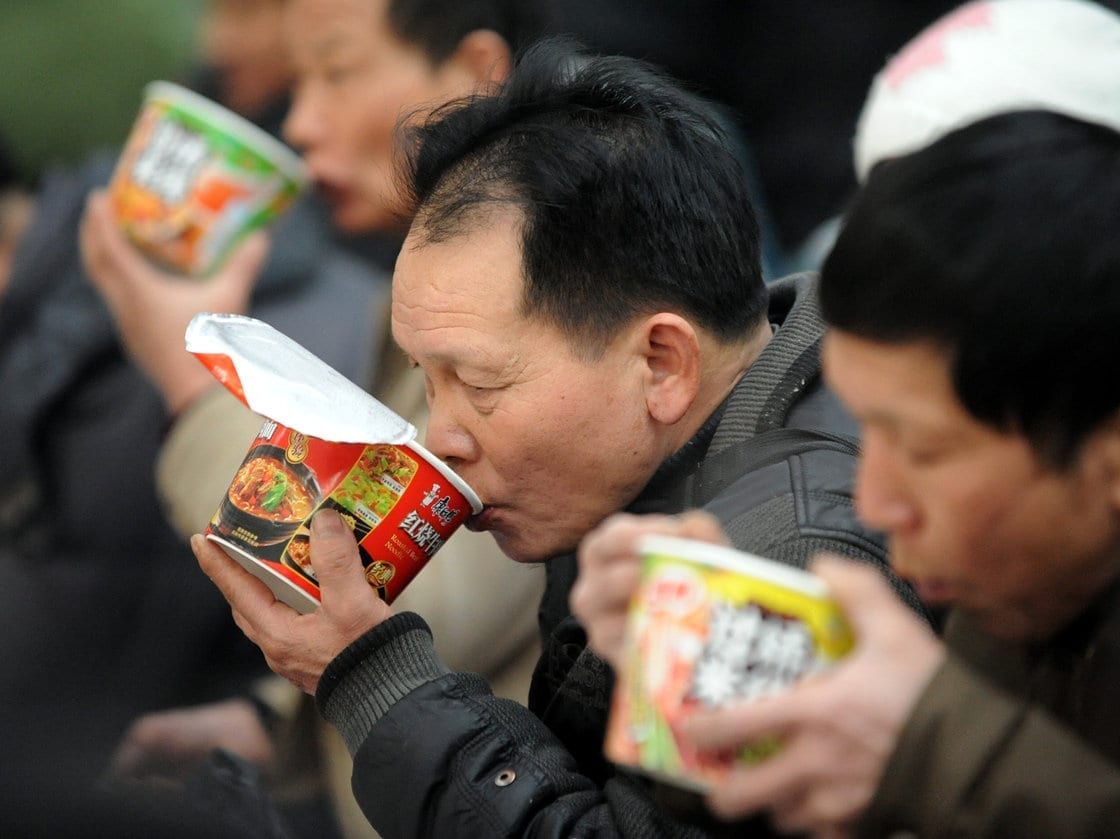
    Instant noodles, once an easy meal for millions of Chinese workers, is getting less popular. Workers scrapping instant noodles are seen as a symbol of the chaining lifestyle of the working class. The sales of instant noodles fell 12.5 percent last year. The King of noodles in China, Taiwanese Tingyi, known for its brand Master Kong (Kong Shifu), was evicted from the Hang Seng Index on the Stock Exchange of Hong Kong in September. Its profits declined by 60 percent last year. According to Bloomberg, this is a classic example of the economic and demographic transition in China.

    Between 2003 and 2008, the instant noodle market has exploded in China, from $ 35 billion to 59 billion yuan ($ 4.7 billion to EUR 7.9 billion). At the time, Chinese growth exceeded 10% of the average (14.2% in 2007). The industry flourished with the boom of construction, heavy industry, and the low-end factories, which needed cheap labor. The coast provinces attracted millions of migrant workers, who relied on these convenient meals.

    Unfortunately for the noodle industry, China has developed. Today, the 25 cents noodle is less exciting. Because of the policy of one-child, the Chinese population of working age began to decline in 2010. And by 2015, for the first time in 30 years, the population of migrants has declined, after having exceeded 250 million.

  • Indofood commissions instant noodle factory in Serbia

    Indofood commissions instant noodle factory in Serbia

    PT. Indofood Sukses Makmur, the largest instant noodle producer in Southeast Asia has expanded operation to Europe setting into operation its factory in Serbia.

    Serbian President Tomislav Nikolic officially commissioned the factory in Indjija, around 80 kilometers from Beograd on Friday, the Indonesian embassy in the Serbian capital city said.

    The factory, which produces ready for consumption Indomie noodles, was already operational in August opening hundreds of jobs for the Serbians .

    Construction of the factory in Serbia, would be the first step of the company in market expansion in Europe, an embassy official said.

    The factory, occupying a five hectare plot of lands was built with an investment of 11 million euro. It has a production capacity of 500,000 carton boxes per month for distribution not only in Serbia but also to other countries Europe.

    Free trade adopted by Serbia with various other countries in Europe would facilitate the company in market expansion giving it greater optimism in its ambition to dominate the European market of instant noodle.

    The official commissioning ceremony was attended by other Serbian leaders, members of the diplomatic Corps , business leaders and local journalists.

    Support shown by the Serbian government is a big factor in the success of the Indofood investment in that country.

    President Tomislav Nikolic said he appreciated and supported the Indonesian investment in Serbia as a concrete step to expand economic cooperation between the two countries.

    Indonesian Ambassador Harry R.J. Kandou said the presence of Indofood in Serbia constituted a concrete proof of Indonesian initiative in strengthening economic cooperation between the two countries.

    Anthony Salim, the Executive Director of the Salim Group, which owns Indofood, said he hoped that factory would provide gateway for the Indofood to reach the rest of Europe.

  • YLKI Protests Indecent Bikini-brand Snack

    YLKI Protests Indecent Bikini-brand Snack

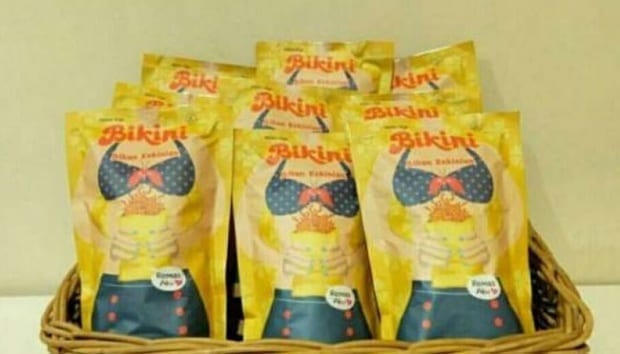
    Chairman of Executive Committee of the Indonesian Consumers Organization Foundation (YLKI) Tulus Abadi protested on a Bikini-brand snack product. Tulus said the brand sold in social media is considered as indecent.

    “That is a snack (fried noodle) product with a non-educational, even indecent, brand name”, Tulus said Wednesday, August 3, 2016.

    Recently, information of the Bikini snack circulates through chain messages. The product shows a woman’s body from shoulder to hip with just wearing a bikini. The worst part is the package has “remas aku” (squeeze me) slogan written on it.

    YLKI protested the circulation of the product and asked to recall the product from the market. Tulus requested the National Drug and Food Agency of Indonesia (BPOM) to reprove the manufacturer and demand to shut down any form of sales through social media.

    “Online selling, particularly via e-commerce Olx.com and Bukalapak.com, must be immediately stopped. Consumers must not purchase the product, especially the children,” said Tulus.

  • Indonesia exports instant noodle to Palestine

    Indonesia exports instant noodle to Palestine

    Indonesia has opened an opportunity to export instant noodles to Palestine after it has successfully shipped 15 containers to West Bank.

    Foreign Minister Retno LP Marsudi said at the presidential palace compound here on Tuesday following the official opening of the Indonesian Honorary Consulate in Ramallah, economic cooperation between the two countries should increase.

    “The honorary consul is tasked with increasing the economic cooperation. Although it is still very small our trade with Palestine has shown an increasing trend,” she said.

    From 2012 to 2015 the volume of trade between the two countries have jumped remarkably by 300 percent.

    “Yesterday I talked with an importer of eastern noodle to Palestine. Indonesia has shipped 15 containers of instant noodle to the West Bank,” she said.

    Retno said the volume of trade between the two countries has continued to increase and so the presence of the honorary consulate is needed very much to develop the potential.

    “Madam Abu (Maha Abu Shusheh, the Indonesian consul in Ramallah), is a business person who represents a good working network and has been successful not only in Palestine but also in other Arab countries,” she said.

    Minister Retno said she also saw that empowering must be done so that the honorary consulate in Ramallah could also send business men from Palestine to Indonesia.

  • Japanese noodle firm ready for halal certification

    Japanese noodle firm ready for halal certification

    A Japanese noodle firm in Hyogo Prefecture has expressed readiness to meet administrative requirements such as halal certification for its food products to be sold to Indonesian consumers.

    The Japanese company notified the representative office in Tokyo of the Indonesian Capital Investment Coordinating Board (BKPM) on its readiness to meet the halal certification for its noodle products.

    “I have received reports that several Japanese food companies are contemplating to enter Indonesia after observing the spurt in the number of Japanese restaurants and grocery stores in the country. This means that they already have market segments to sell their products in Indonesia,” Franky Sibarani, the BKPM head, noted in a press statement here on Wednesday.

    He affirmed that the Hyogo Prefecture was included in the areas covered by the Indonesian Consulate General in Osaka. It often conducted promotional activities in cooperation with the Tokyo office of the BKPM.

    Franky lauded the interest shown by the Japanese noodle firm to invest in Indonesia. He remarked that it was an interesting development as, so far, Japanese companies making investment in Indonesia were mostly doing business in the automotive and component industries.

    “This indicates that the interest of Japanese companies to invest in Indonesia is increasingly varying,” the BKPM chief pointed out.

    According to data at the representative office of the Japan External Trade Organization (Jetro), there were 1,199 students enrolled in Japanese schools in Jakarta in 2014. The institution also recorded that at the national level, there were 16 thousand Japanese expatriates living in Indonesia of which 10 thousand were in Jakarta.

    “Data on Japanese expatriates in Jakarta is the main factor that has led to new investment interest in Indonesia,” he claimed.

    Saribua Siahaan, the BKPM representative for investment promotion (IIPC) in Tokyo, stated that companies from Japan were so far mostly doing business in the electronics, automotive, and components sectors in addition to garment products.

    “Other fields of business that have attracted Japanese investors include semiconductor production and electrical appliances. The IIPC is ready to help the Japanese investor who came from Hyogo Prefecture,” Saribua remarked.

    In line with the implementation of the ASEAN Economic Community (AEC), the Japanese investors have begun showing interest to invest in the food sector in Indonesia.

    “The Japanese investors view this as an opportunity since over 40 percent of the ASEAN population resides in Indonesia,” noted Saribua.

    Based on the BKPM data, the realization of Japanese investment in Indonesia in 2015 increased by six percent compared to that in 2014.

    The Japanese investment realization in 2015 stood at US$2.87 billion, with 2,030 projects absorbing 115,400 workers.

    The manufacturing sector, particularly the automotive, electronics, machinery, chemical, and pharmacy sectors, constituted the main contributors to the Japanese investment in Indonesia.

    Japanese investment commitment in 2015 reached US$8.1 billion, up 95 percent from that in the previous year. Japan came third on the list of foreign countries having investment commitment in Indonesia.

    The countries topping the list of foreign investment above Japan were China, with US$22.2 billion, up 42 percent compared to the same period in the previous year, and Singapore, with investment increasing by 69 percent to US$16.3 billion.

    Following Japan was South Korea, which recorded an increased investment of 86 percent that reached US$4.8 billion.