Tag: NVIDIA

  • Indosat, Nokia, and NVIDIA Unveil AI-RAN Research Center: Pioneering AI-Driven Telecom Networks in Indonesia

    Indosat, Nokia, and NVIDIA Unveil AI-RAN Research Center: Pioneering AI-Driven Telecom Networks in Indonesia

    Indosat Ooredoo Hutchison (IOH), in collaboration with Nokia and NVIDIA, has initiated a research center in Surabaya that concentrates on developing AI-powered radio access networks (RAN). This project marks the first Nokia-NVIDIA AI-RAN research site in Asia and is aimed at fostering AI-integrated telecommunications networks. It aligns with Indonesia’s Golden Indonesia Vision 2045 which is focused on promoting digital transformation and nurturing local AI talent.

    Facility Comprising Advanced RAN Technologies

    The research center comprises Nokia’s advanced RAN technologies, NVIDIA’s accelerated computing platforms, and IOH’s commercial network, creating AI-driven network capabilities. It will also connect to IOH’s current NVIDIA-powered sovereign AI Factory, which acts as a distributed computing hub. This hub will enhance network performance, improve energy efficiency and increase scalability, all while bringing AI closer to users.

    Developing AI-Driven Optimization for Wireless Networks

    The research and development at the center will focus on AI-driven optimization for wireless networks, utilizing AI/ML-powered radio signal processing techniques. It will support AI and RAN workloads on the NVIDIA Aerial RAN Computer 1 (ARC-1). It is expected to prepare the ground for commercial-grade AI-RAN deployment using NVIDIA ARC-Pro and Nokia CUDA-accelerated anyRAN software. These technologies aim to deliver more dynamic, adaptable, and intelligent mobile networks for IOH customers.

    Building an AI Grid

    IOH, Nokia, and NVIDIA are planning to establish an “AI Grid” that connects IOH’s central AI Factory with AI-RAN hubs across Indonesia. The grid is designed to host AI applications from data centers to distributed 5G networks, enabling broader access to AI-powered services for millions of Indonesians.

    Supporting Aivolusi5G Strategy

    IOH’s Aivolusi5G strategy is supported by the AI-RAN Research Center with the aim to provide intelligent connectivity for individuals and businesses. It plans to unlock AI-powered applications across sectors such as education, agriculture, and healthcare, transforming how Indonesians learn, work, and live.

    Nurturing the Next Generation of AI Specialists

    The center will serve as a hub to foster Indonesia’s next generation of AI and telecom specialists through hands-on research, mentorship, and training. This effort aligns with Indonesia’s ambition to become among the top five economies globally by 2045.

    Questions & Answers

    What is the role of the AI-RAN Research Center in Surabaya?
    The AI-RAN Research Center, a collaboration between IOH, Nokia, and NVIDIA, focuses on developing AI-powered radio access networks (RAN). It’s designed to foster AI-integrated telecommunications networks and nurture local AI talent.

    What are the AI-RAN Research Center’s areas of focus?
    The center will focus on developing AI-driven optimization for wireless networks, utilizing AI/ML-powered radio signal processing techniques. The goal is to deliver more dynamic, adaptable, and intelligent mobile networks for IOH customers.

    How does the AI-RAN Research Center align with Indonesia’s future goals?
    The center aligns with Indonesia’s Golden Indonesia Vision 2045, which aims to promote digital transformation and nurture AI talent. It also supports Indonesia’s ambition to become among the top five economies globally by 2045.
  • Revolutionizing Radio Networks: SoftBank and NVIDIA’s Triumph in AI-Driven Massive MIMO

    Revolutionizing Radio Networks: SoftBank and NVIDIA’s Triumph in AI-Driven Massive MIMO

    A successful demonstration recently utilized an AI-RAN (Artificial Intelligence Radio Access Network) that performed radio signal processing entirely on NVIDIA’s graphics processing unit (GPU). This is a major shift from traditional systems that heavily relied on dedicated hardware, specifically field-programmable gate arrays (FPGAs) or application-specific integrated circuits (ASICs), for processing at the Physical Layer (PHY).

    Performance Under Real-World Conditions

    In the outdoor trial, SoftBank exhibited top-tier performance under real-world circumstances. They used a cutting-edge, virtualized RAN (vRAN) structure that performs this processing by using large-scale CUDA-accelerated parallel computation on NVIDIA’s GPU. This architecture also incorporates AI processing.

    Throughout the trial, AITRAS exploited the GPU’s efficient parallel processing skills to carry out extensive matrix computations crucial for Massive MIMO and PHY-layer signal processing. This was achieved entirely in software within the Distributed Unit (DU). Consequently, SoftBank affirmed the stable function of a 16-layer MU-MIMO downlink in outdoor settings. In comparison to the standard four-layer setup, both spectral efficiency and throughput improved by about three times.

    Significant Validation

    This success serves as a substantial validation of the PHY-layer execution on a GPU. It enables stable Massive MIMO operations within the specified processing time of the RAN. This is an important technical milestone that leads the commercialization of AI-RAN.

    In the AITRAS model, the connection between the DU and O-RAN-compliant Radio Unit adheres to O-RAN Split Option 7.2x. While some Massive MIMO implementations transfer parts of the uplink channel estimation and equalization processing from the DU to the O-RU, AITRAS uses a fully software-based approach within the DU. This uses the GPU computing power and aids in creating a Massive MIMO ecosystem using general-purpose O-RUs without needing extra functions.

    Uplink Radio Signals and AI Processing

    By combining uplink radio signals from various O-RUs into a single DU, equipped with an integrated AI processing unit, AI-based coordinated control for radio signal quality can be effectively executed across multiple O-RUs. This improves radio signal quality through uplink channel interpolation and boosts capacity through advanced beamforming techniques.

    The aim with the development of AITRAS is to speed up the practical implementation of AI-RAN, contributing to a more sustainable and flexible next-generation network infrastructure. The plan is to continue field trials and introduce AITRAS into commercial networks by 2026.

    Questions & Answers

    What is the significance of the recent demonstration by SoftBank?
    The demonstration is significant as it showed that radio signal processing can be performed entirely on NVIDIA’s GPU using AI-RAN, shifting away from the traditional reliance on dedicated hardware.

    What is the anticipated impact of AI-RAN in real-world conditions?
    AI-RAN demonstrated high performance under real-world conditions, improving both spectral efficiency and throughput by about three times. This could significantly enhance communication quality and overall capacity of base stations.

    What is the long-term goal for the development of AITRAS?
    The goal is to accelerate the practical implementation of AI-RAN, thereby contributing to the creation of a more sustainable and flexible next-generation network infrastructure. SoftBank plans to introduce AITRAS into its commercial network by 2026.

  • Nvidia’s $100 Billion Investment In Openai: A Game-changer For Ai Development And Market Dynamics

    Nvidia’s $100 Billion Investment In Openai: A Game-changer For Ai Development And Market Dynamics

    On Tuesday, Nvidia’s shares fell by $5.18 or 2.82%, closing the regular trading session at $178.43. The stock retreated, losing more than half of the 4% increase it saw on Monday. This came after the technology company announced its plans to invest up to $100 billion in ChatGPT parent company, OpenAI. The partnership will enable OpenAI to construct data centers powered by 10 gigawatts of “compute capacity” from Nvidia’s AI systems.

    The Advantage of GPUs in AI Systems

    Nvidia’s AI systems run on the company’s GPU (Graphics Processing Unit) chips. The reason GPUs are favored over CPUs (Central Processing Units) in AI systems is due to their proficiency in parallel processing. This means that GPUs can have multiple cores working on the same data simultaneously. On the other hand, a CPU processes data sequentially, handling tasks one at a time.

    Future Developments

    The first phase of this partnership is expected to begin implementation in the latter half of 2026 using the Nvidia Vera Rubin platform. This represents Nvidia’s next iteration of AI and data center platform, set to replace the existing Blackwell architecture. Named after a pioneer in the field of astronomy, the Vera Rubin platform is designed for large rack systems as opposed to single-chip options. The platform’s design allows it to manage and process vast amounts of data concurrently.

    The Excitement Surrounding the Partnership

    Jensen Huang, Nvidia’s founder and CEO, expressed his enthusiasm about the partnership, asserting that Nvidia and OpenAI have been challenging and pushing each other forward for a decade. He believes that this investment and infrastructure partnership marks a significant leap forward by deploying 10 gigawatts to enable the next era of intelligence.

    Echoing Huang’s sentiments, OpenAI cofounder and president Greg Brockman stated that the organization had been closely collaborating with Nvidia since OpenAI’s early days. They have utilized Nvidia’s platform to develop AI systems that hundreds of millions of people use every day. The deployment of ten gigawatts of compute with Nvidia signifies an exciting phase in extending the frontier of AI and scaling its benefits to everyone.

    The AI Landscape

    OpenAI currently boasts over 700 million weekly active users, and its partnership with Nvidia is set to benefit humanity by developing innovative AI solutions. The deal is expected to be finalized in the coming weeks.

    In the tech sector, AI continues to be a prevalent topic, and as a result, Nvidia’s shares have become a new standard for the industry. Nvidia’s market value now stands at $4.34 trillion, surpassing the likes of Apple ($3.78 trillion) and Microsoft ($3.79 trillion).

    Microsoft has invested $13 billion in OpenAI, but instead of acquiring a specific percentage of ownership, Microsoft entered into a profit-sharing agreement, receiving 49% of OpenAI Global, LLC’s profits annually until a certain limit is reached.

    Additionally, Alphabet, the parent company of Google, has also established itself as a leader in AI with a market value of $3.06 trillion. Over the past year, Alphabet’s shares have seen a 55% increase, even outpacing Nvidia’s 47% year-on-year gain.

    Questions & Answers

    Why are GPUs preferred over CPUs in AI systems?
    GPUs excel at parallel processing, which allows multiple cores to work on the same data simultaneously. In contrast, CPUs handle tasks one at a time, processing data sequentially.

    What is the significance of Nvidia’s partnership with OpenAI?
    The partnership marks a significant progression in the field of AI. With Nvidia’s investment, OpenAI can build data centers powered by 10 gigawatts of compute capacity, extending the frontier of intelligence and scaling the benefits of AI to everyone.

    How does the Nvidia-OpenAI deal impact the AI landscape?
    The deal, among others, signifies a change in leadership within the AI industry. It further cements Nvidia’s position as a market leader, with its shares now emerging as the new standard for the sector, surpassing even tech giants such as Apple and Microsoft.

  • Meet Lori Huang: The Woman Behind Billionaire Nvidia CEO Jensen Huang’s Success.

    Meet Lori Huang: The Woman Behind Billionaire Nvidia CEO Jensen Huang’s Success.

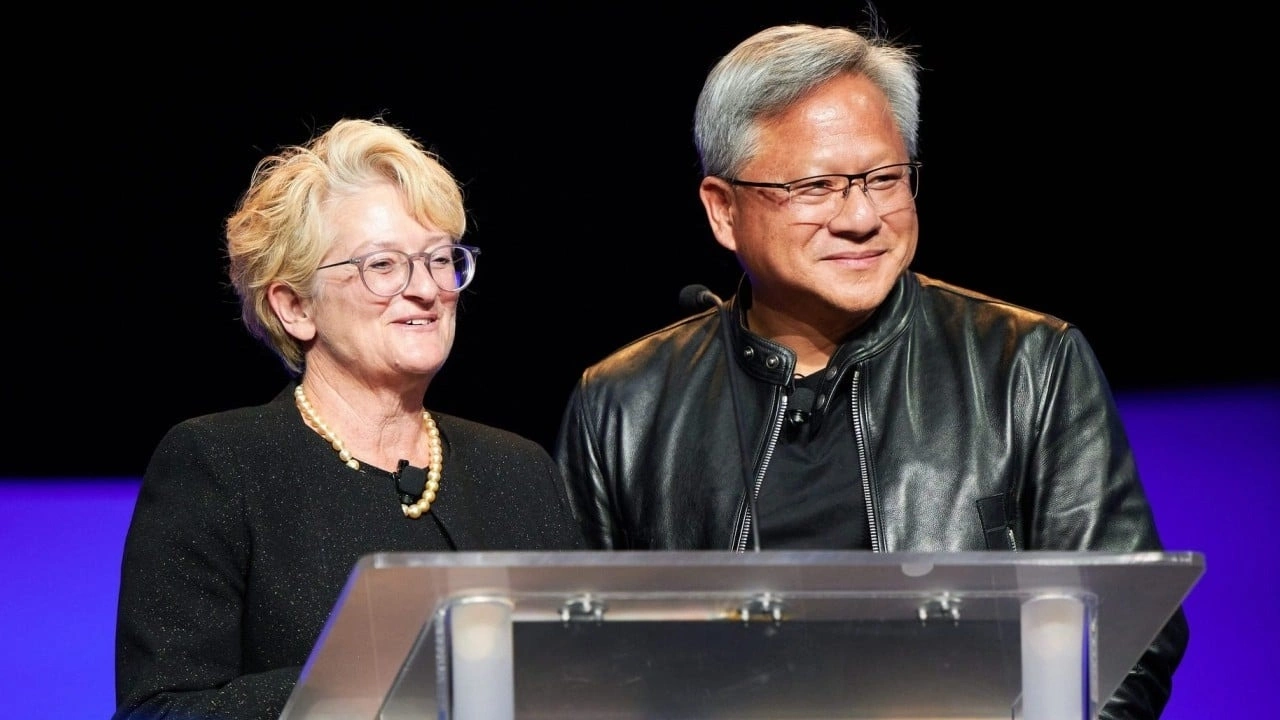
    Lori Huang, known for her steadfast support of her husband Jensen since their college days, plays a vital role alongside him in the Jen-Hsun and Lori Huang Foundation, which focuses on various public health initiatives. This partnership dates back to Oregon State University, where in a male-dominated engineering class, she shone brightly as one of only three women among 250 students.

    At the age of 17, Jensen vividly remembers their first meeting: “I was the youngest kid in school. I walked up to her and I said, ‘Do you want to see my homework?’” Their bond grew from there into a weekly study session, during which Jensen boldly proclaimed that he would become a CEO by age 30—a promise he fulfilled with the founding of Nvidia in 1993.

    Both Lori and her time at Oregon State significantly influenced Jensen’s career trajectory. Reflecting on his education, he remarked, “I enjoyed computers growing up, but Oregon State University opened my eyes to the magic behind them.” It was at this institution that he first fell in love with technology, mentored by exceptional professors who ignited his passion. “Everything I have learned over the past decades is built on the strong foundation I gained here,” he added.

    While Lori prefers to lead a private life, her philanthropic spirit is well recognized. The couple’s philanthropic efforts include a staggering US$60 million donation in 2023 and US$66 million in 2022, primarily through their charitable vehicle, The Huang Foundation. Notably, they contributed US$10 million to Oregon State University and US$900,000 to the American Friends of Magen David Adom.

    A spokesperson for the Huangs explained, “The Huang Foundation supports higher education, public health, and STEM initiatives across the U.S., alongside local community organizations in the San Francisco Bay area. By taking a long-term approach, the foundation ensures that its resources will continue to support critical causes well into the future, maximizing its charitable impact over time.”

    The couple shares two children: Madison, who serves as a director of marketing at Nvidia, and Spencer, a senior product manager. Jensen humorously attributes his iconic black leather jacket look to his family’s influence: “I’m happy that my wife and my daughter dress me.”

    After four decades of partnership, Lori remains Jensen’s steadfast supporter. Reports illustrate their foresight in wealth management, as they’ve been strategizing to shield their assets from estate taxes since at least 2012. Today, Forbes estimates Jensen’s fortune at an astounding US$113 billion.

    Questions & Answers

    What is the significance of the Huang Foundation?
    The Huang Foundation plays a pivotal role in supporting higher education, public health, and STEM initiatives throughout the U.S., emphasizing long-term impact and community engagement.

    How did Lori and Jensen Huang first meet?
    The couple met at Oregon State University when Lori, an engineering student, caught Jensen’s attention—in a charmingly nerdy way—by asking if she wanted to see his homework.

    What are the educational and professional paths of their children?
    Their daughter Madison is a director of marketing at Nvidia, while their son Spencer contributes as a senior product manager at the same company, showcasing a legacy of innovation in the family.

  • Nvidia looking to hire engineers and managers in Hanoi

    Nvidia looking to hire engineers and managers in Hanoi

    Chipmaker Nvidia is recruiting engineers and managers for its operations in Hanoi, where it seems set to design and produce graphic processing units.

    It is seeking to fill nine positions, including those of IT, senior production support and system test design engineers and two senior managers, according to job posts on recruitment platform LinkedIn.

    One position is in a factory in Bac Ninh, an industrial province next to Hanoi. The senior manager for manufacturing operations requires the candidate to “spearhead the development of an impactful team in Vietnam from the ground up.”

    Applicants for this position need a bachelor’s or master’s degree in engineering, business or equivalent experience along with 15 years of overall experience and five years of specific management experience.

    Hanoi HR professional Dam Trang said Nvidia’s moves indicate that it is in the process of starting operations in Hanoi.

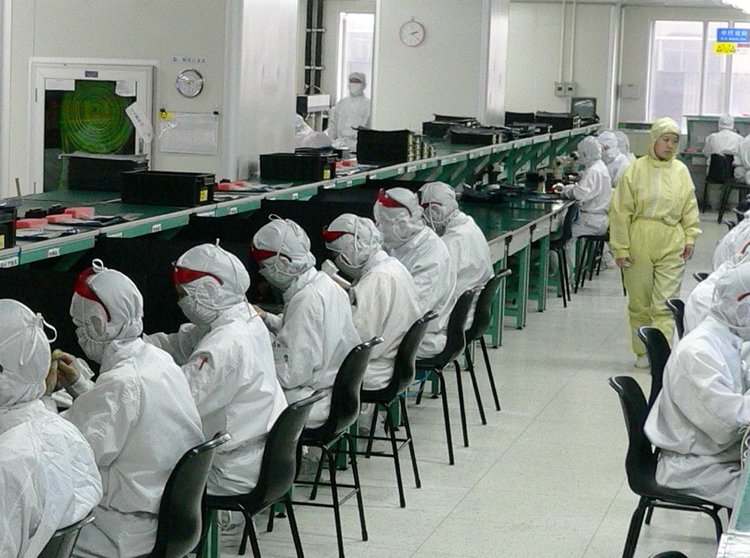
    As Nvidia is a chip designer and does not own factories, the fact that it is looking for manufacturing personnel shows it wants its own people to supervise suppliers’ production, she said.

    Though most of the requirements for the candidates are typical for a large company, finding individuals with more than 10 years’ experience in semiconductors would be challenging as the industry has only seen significant growth in Vietnam in the last few years, she said.

    During his visit to Vietnam on Dec. 5, Nvidia CEO Jensen Huang signed an agreement with the government to establish an AI research and development center and an AI data center.

    He praised Vietnam’s strengths in STEM and its potential to produce AI talent.

    He also vowed to promote the local AI industry through infrastructure development, training and fostering an AI startup ecosystem.

  • Nvidia aims to set up a base in Vietnam

    Nvidia aims to set up a base in Vietnam

    Nvidia wishes to establish a base in Vietnam to develop the country’s semiconductor industry as it considers the Vietnamese market an important one, the Vietnamese government said, citing the U.S. chipmaker’s chief executive.

    In his first visit to the Southeast Asian country, Nvidia’s CEO, Jensen Huang, said the company viewed Vietnam as its home and affirmed its plans to set up a center in the country.

    “The base will be for attracting talent from around the world to contribute to the development of Vietnam’s semiconductor ecosystem and digitalization,” the Vietnamese government statement cited Huang after his meeting with Prime Minister Pham Minh Chinh.

    Nvidia, which has already invested $250 million in Vietnam, is set to discuss cooperation deals on semiconductors with Vietnamese tech companies and authorities in a meeting on Monday, Reuters reported on Friday.

    Vietnam, which is home to large chip assembling factories including Intel’s biggest globally, is trying to expand into chip designing and possibly chip-making.

    The chipmaker has already partnered with Vietnam’s leading tech companies to deploy AI in the cloud, automotive and healthcare industries, a document published by the White House in September showed when Washington upgraded diplomatic relations with Vietnam.

  • Samsung rumored to begin mass production of 3nm chips next week

    Samsung rumored to begin mass production of 3nm chips next week

    Right now there are only two independent foundries that are able to manufacture cutting-edge chips. The companies are TSMC and Samsung Foundry. Independent foundries take chip designs created by other firms and build the actual chips off of that design. Both TSMC and Samsung are working on building chips using their 3nm process nodes. The smaller the process node used, the larger the number of transistors found inside a chip.
    This is important because the more transistors employed in a chip, the more powerful and energy-efficient that chip can be. Every two years or so, the process node gets smaller and more transistors fit inside an integrated circuit. This is the famous “Moore’s Law” that you’ve heard about, named after Intel and Fairchild semiconductor co-founder Gordon Moore. Remember, this is not an actual law and as smaller and smaller components are being built, this “observation” no longer can be fully counted on to double the transistor count every other year.
    Still, over time, you can see how “Moore’s Law” has forecast the incredible increase in processing capabilities over the years. Let’s take the iPhone X, which was released in November 2017 powered by the Apple A10 Bionic chipset. The latter carried 4.3 billion transistors in each chip. Now let’s move ahead to the 2021 iPhone 13 series which sports the A15 Bionic chipset. The A15 Bionic contains 15 billion transistors, up 27.1% from the 11.8 billion transistors employed by the A14 Bionic chip.
    So now Samsung and TSMC are battling for supremacy in the business of building chips for third-parties. TSMC is number one in most metrics and its customer list includes top tech firms such as Apple (its number one customer), MediaTek, Nvidia, Qualcomm, and others. But it appears, according to ExtremeTech, that Samsung will soon beat out TSMC by starting mass production of chips made using its 3nm process node next week with TSMC starting 3nm mass production later this year.
    Additionally, Samsung is going to use a new transistor structure on its 3nm chips called GAA or gate-all-around. With this structure, the flow of current is controlled by gates that contact the transistor on all four sides. TSMC will continue to use the FinFET structure which has been in place since the 22nm process node debuted. TSMC will finally scrap FinFET for GAA when it starts shipping 2nm chips in 2026.
    Samsung’s GAA design is called Multi-Bridge Channel Field Effect Transistor (MBCFET) also known as nanowires. This is one of only two different gate-all-around designs currently available with the second one known as GAAFET or nanowire.
    The report cites a major Korean news agency that says Samsung is expected to make a major announcement about its 3nm chip production shortly. It also notes that the move to gate-all-around from FinFet will reduce the area of a chip by 45% to help deliver a performance bump of 30% while reducing energy consumption by 50%. However, there is a big problem. Samsung was reportedly getting yields of only 10% to 20% at 3nm meaning that the vast majority of its 3nm chip dies cut from a wafer could not pass quality control.
    Back in February, a report indicated that Samsung’s yield on 4nm production was only 35% resulting in Samsung losing some business from chip designer Qualcomm. The latter supposedly moved some of those orders to TSMC. However, if Samsung Foundry is about to announce the start of high volume manufacturing (HVM) at the 3nm process node, one could come to the conclusion that Samsung Foundry has improved its 3nm yield.
    Speaking of 3nm, TSMC’s major customers such as AMD, Apple, Broadcom, Intel, MediaTek, Nvidia, and Qualcomm, have started to queue up for 3nm capacity. And next on the horizon, of course, is the 2nm process node that both TSMC and Samsung are working on. Another name is expected to join TSMC and Samsung on the list of  cutting-edge foundries. Intel Chief Executive Pat Gelsinger has announced that the American company will regain process leadership from Samsung and TSMC by 2025.


  • NVIDIA SHIELD TV’s latest update adds support for the newest controllers

    NVIDIA SHIELD TV’s latest update adds support for the newest controllers

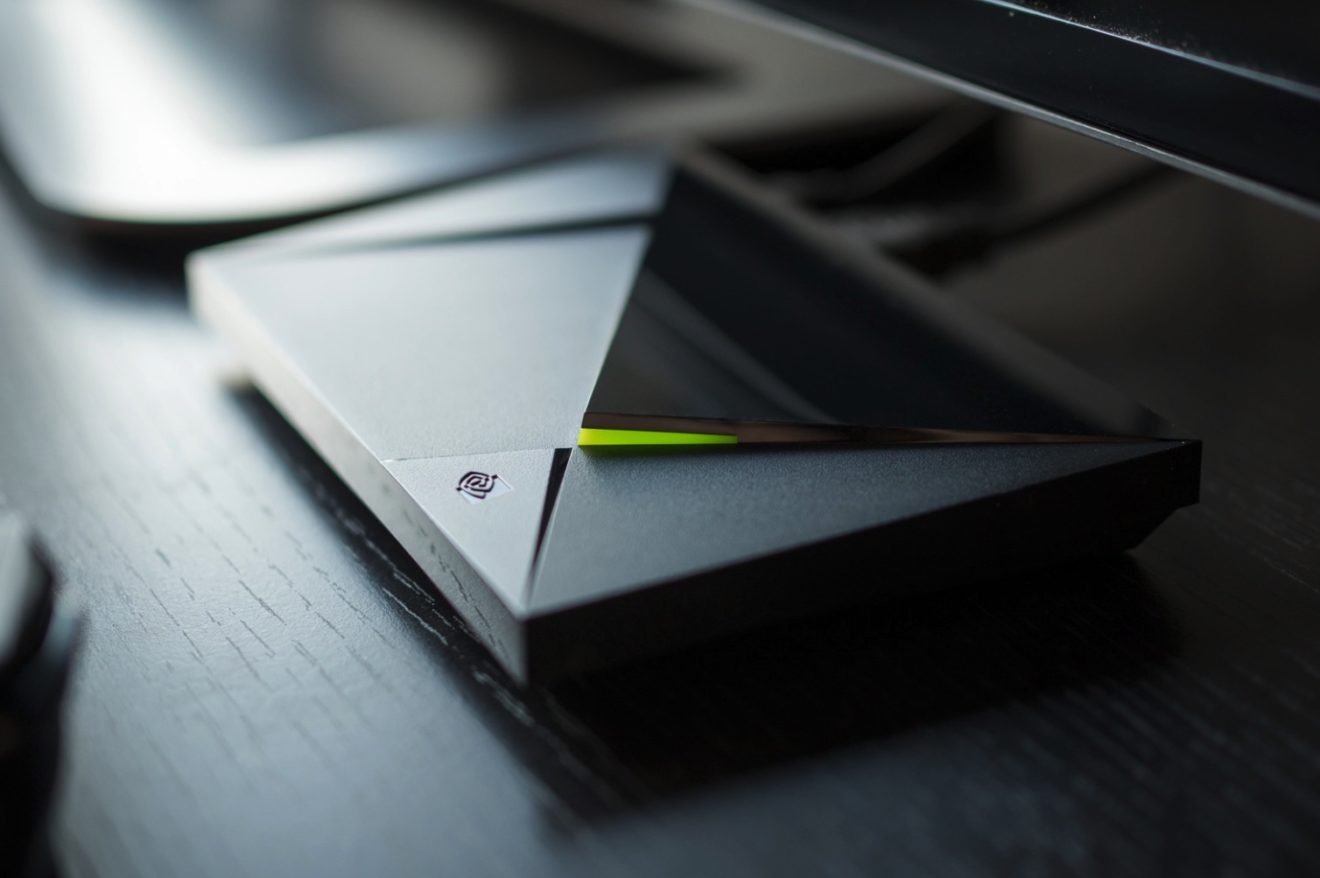
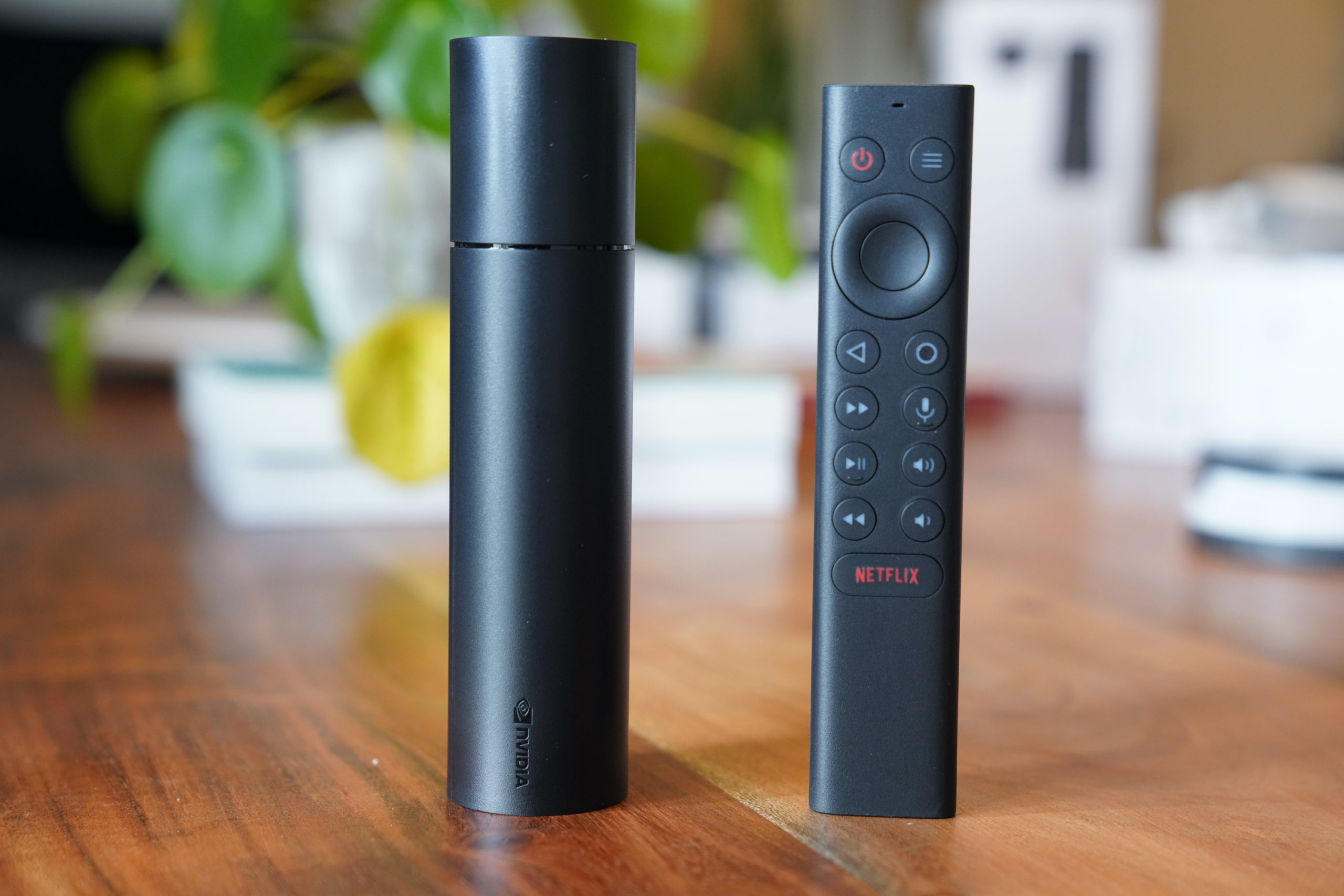
    NVIDIA’s SHIELD Android TV box has gone through a few iterations, but the base model was launched more than five years ago. During that time, the device received numerous updates that further expanded its functionality making it one of the most reliable of its kind.

    If you own one of these digital boxes, you’ll be happy to know that NVIDIA is now rolling out another of those important updates that usually adds major new features and improvements. In this case, it’s support for both DualSense and Xbox Series X/S controllers.

    With update 8.2.2, NVIDIA SHIELD TV users will be able to connect current-gen console (PlayStation 5 or Xbox Series X/S) controllers and start playing Android or GeForce NOW games. The new feature uses Bluetooth connectivity to pair the controllers with the NVIDIA SHIELD TV, so here is how it’s done:

    Besides that, NVIDIA announced that the SHIELD TV now supports Control4 for users with home theaters. And if you’re into gaming, you’ll be happy to know that you can now play new titles on your NVIDIA SHIELD TV via GeForce NOW, including Cyberpunk 2077, Destiny 2: Beyond Light, Assassin’s Creed Valhalla, Among Us, and Watch Dogs: Legion.

  • NVIDIA rumored to pay $40 billion for ARM Holdings

    NVIDIA rumored to pay $40 billion for ARM Holdings

    Back in July, we told you that Japan’s SoftBank was talking to American GPU manufacturer NVIDIA about selling it ARM Holdings. The latter’s main business is the design of CPU cores such as the 64 bit Cortex-A78 CPU core. Both sides are closing in on a deal that would be valued at over $40 billion. The deal would give SoftBank a multi-billion dollar profit after it purchased the company for $32 billion. NVIDIA is the world’s third-largest GPU supplier and ARM is the third-largest in the world thanks to its Mali line of graphic chips.

    The Journal report noted that ARM and NVIDIA have been talking on an exclusive basis over the last few weeks and a deal could be announced as soon as early next week. NVIDIA’s shares have soared over 100% this year thanks to heavy demand for its GPUs which are used in video games, cloud computing, and in other devices that have taken off thanks to the coronavirus. If a deal can be agreed to not only would it be one of the biggest transactions of the year, it could also be the largest deal of all time involving the purchase of a semiconductor company.

    However, as with most tech-related deals these days, the purchase of ARM by NVIDIA could set off antitrust alerts. Regulatory agencies could put such a deal under intense scrutiny and ARM customers like Samsung and Apple could try and put the kibosh on the transaction. If the merger closes, NVIDIA would control the pricing on ARM’s CPU cores and Adreno GPU chips along with the pricing of the Mali GPU line.

    According to the Journal, SoftBank has been working with a small team on the final terms of the ARM deal. The team includes ARM CEO Simon Segars and Chief Financial Officer Yoshimitsu Goto.

  • Upcoming NVIDIA Shield TV to feature Google Stadia support

    Upcoming NVIDIA Shield TV to feature Google Stadia support

    News about NVIDIA working on a new Shield TV set-top box emerged over the weekend, but not many details on the device were mentioned at that time. We only learned that the Android TV box will include a more powerful processor and that it will run Android 9.0 Pie. NVIDIA’s plans that the upcoming Shield TV will be centered on Google’s Stadia service, which allows users to stream games on just about any device with a display.

    On top of that, NVIDIA wants to release a new controller with the upcoming console and a more advanced remote. Also, the cheapest version of the console will come without the controller to allow those who ordered the Stadia controller to save some money when they buy the new NVIDIA Shield TV.

    Embracing Google Stadia’s game streaming service is a bold move from NVIDIA, as the company will most likely see a decrease in market share for its own GeForce NOW cloud gaming service that aims to do the same thing for subscribers.

    Finally, while we don’t have a price for the upcoming NVIDIA Shield TV, it appears that the new console is expected to be launched on the market by the end of this year, so there’s still time for NVIDIA to change its strategy for whatever reason.

  • Nvidia Boosts Self-Driving AI Business With Volvo Trucks Deal

    Nvidia Boosts Self-Driving AI Business With Volvo Trucks Deal

    Sweden’s AB Volvo is joining forces with Nvidia to develop artificial intelligence used in self-driving trucks, in a boost for the U.S. chipmaker that was ditched by Tesla last year. The agreement announced on Tuesday by Nvidia and Volvo, the world’s second-biggest truckmaker after Daimler, is a long-term partnership spanning several years. Work will begin immediately in Gothenburg, Sweden and Santa Clara, California. Volvo, which demonstrated its first autonomous truck last year, said the partnership would develop a flexible, scalable self-driving system, which is planned to be used first in pilot schemes before commercial deployment.

    “The resulting system is designed to safely handle fully autonomous driving on public roads and highways,” Volvo said in a statement. Nvidia, known for its powerful gaming graphics chips, has been aggressively expanding into the automotive sphere, where trucks – with their regular routes that are easier to automate than cars navigating traffic – may lead the way in self-driving.

    Potential demand is strong in the United States in particular, where a shortage of truck drivers has been pushing up freight costs. Together with Intel, Nvidia dominates the fast-growing AI chip market.Nvidia, which has previously announced technology partnerships with automakers including Volkswagen, Mercedez-Benz and Toyota, said it was thrilled to team up with Volvo.

    “The latest breakthroughs in AI and robotics bring a new level of intelligence and automation to address the transportation challenges we face,” said Nvidia Chief Executive Jensen Huang.

    Volvo said last week its self-driving truck, “Vera”, would begin transporting goods from a logistics center to a port terminal in Gothenburg in collaboration with logistics firm DFDS, in a first step toward operations on public roads here.Nvidia’s so-called Drive Constellation chips often power the machine learning used to refine self-driving car software algorithms inside data centers, and the company has also been working to build its Drive chips into cars. Automotive chips accounted for $641 million of Nvidia’s $11.7 billion in revenue in its most recent fiscal year.

  • Telkomsel to adopt Kinetica analytics platform

    Telkomsel to adopt Kinetica analytics platform

    Indonesia’s Telkomsel has arranged to adopt the Kinetica advanced analytics platform to help it transform the customer experience for its users.

    The operator will use the Kinetica engine and NVIDIA graphics processing units (GPUs) to enable real-time analytics, location-based visualization and AI capabilities.

    Telkomsel plans to use thee capabilities to deliver data-driven customer experiences and to enable real-time financial and business reporting.

    “The rapid growth in mobile devices, digital users, and the micro-services nature of prepaid across the Indonesian market has led to exponentially more data generated than ever before,” Telkomsel CIO Montgomery Hong said.

    “This influx of extreme data presents a massive opportunity to develop new, personalized, digital lifestyle experiences for Indonesian consumers. Unlike traditional database solutions, the Kinetica engine is purpose-built for extreme data and provides real-time data analysis and location intelligence across our business, from prepaid and postpaid mobile, to digital lifestyle services (video, gaming, music), to mobile financial services, and digital advertising for starters.”

  • Nvidia says Toyota will use its AI technology for self-driving cars

    Nvidia says Toyota will use its AI technology for self-driving cars

    Nvidia announced a partnership with Toyota Motor Corp on Wednesday, saying the Japanese car maker would use Nvidia’s artificial intelligence technology to develop self-driving vehicle systems planned for the next few years.

    Toyota will use Nvidia’s Drive PX artificial intelligence platform for its autonomous vehicles planned for market introduction, Nvidia Chief Executive Jensen Huang said in his opening keynote at the company’s GPU Technology Conference in San Jose.

    Nvidia came to prominence in the gaming industry for designing graphics processing chips, but in recent years has been a key player in the automotive sector for providing the so-called “brain” of the autonomous vehicle.

    Nvidia, which also has partnerships with Audi and Mercedes, is among the more popular technology partners in the self-driving car race. Its partnership with Toyota is the latest in a string of alliances between tech companies, automakers and suppliers in the fast-growing sector.

    Nvidia’s Drive PX supercomputer fuses incoming data from the car’s hardware such as cameras and radar and uses artificial intelligence to help the car understand and react to its environment.

    “We’re talking about not just development now but the introduction of vehicles into the market,” said Danny Shapiro, Nvidia’s senior director of automotive. “Now we have the biggest (automaker) in Japan using our Drive PX platform.”

    In January, Nvidia and Audi (VOWG_p.DE) said the German automaker would use the Drive PX to help it put autonomous vehicle on the road starting in 2020. Nvidia is also co-developing with Mercedes a project to come to market within the next 12 months, both companies said in January.

    Toyota, which last year set up a U.S.-based Toyota Research Institute (TRI) to focus on AI and robotics, envisions a dual-track development of autonomous technology. It is simultaneously developing full self-driving cars while also working on what it calls “guardian angel” partially autonomous technology that may still require involvement from drivers.

  • NVIDIA, Facebook team up on AI

    NVIDIA, Facebook team up on AI

    NVIDIA and Facebook are working together to advance artificial intelligence with Caffe2, a new AI deep learning framework contributed by Facebook to the open-source community.

    Facebook is developing new AI systems to help manage this information so people can better understand the world and more effectively communicate, even as the volume of information increases.

    Caffe2 allows developers and researchers to create large-scale distributed training scenarios and build machine learning applications for edge devices.

    Increasingly, the processing of lightning-fast AI services requires GPU-accelerated computing, such as that offered by Facebook’s Big Basin servers, as well as highly optimized deep learning software that can leverage the full capability of the accelerated hardware.

    “NVIDIA and Facebook are delivering AI acceleration through our work on the Caffe2 deep learning framework,” said Kristin Bryson, PR director for the data center business at NVIDIA.

    “Thanks to our joint engineering, we’ve fine-tuned Caffe2 from the ground up to take full advantage of the NVIDIA GPU deep learning platform,” said Bryson.

    Caffe2 uses the latest NVIDIA Deep Learning SDK libraries — cuDNN, cuBLAS and NCCL — to deliver high-performance, multi-GPU accelerated training and inference.

    Bryson said Caffe2 is designed to be a fast, scalable and portable deep learning framework. It delivers near-linear scaling of deep learning training with 57x throughput acceleration on eight networked Facebook Big Basin AI servers with 64 NVIDIA Tesla P100 GPU accelerators. This means developers can train and iterate AI models faster than ever.

    As part of the two companies’ collaboration, the NVIDIA DGX-1 AI supercomputer will be the first AI system to offer Caffe2 within the optimized software stack for deep learning. Together, DGX-1 and Caffe2 deliver high performance and fast training.

    “Through NVIDIA’s Deep Learning Institute, we’ve helped more than 10,000 developers worldwide learn to use frameworks to design, train and deploy neural network-powered machine learning for a variety intelligent applications and services,” said Bryson.

  • Nvidia launches AI-focused incubator in India

    Nvidia launches AI-focused incubator in India

    American graphics processing unit (GPU) technology giant Nvidia has launched the Nvidia Inception program in India, in recognition of the country’s budding innovation ecosystem surrounding Artificial Intelligence (AI).

    Inception is a virtual incubator program to support startups with revolutionary ideas in AI. Members will receive a custom set of benefits, from hardware grants and marketing support to access to the latest Nvidia deep learning technologies and training with deep learning experts.

    The Inception Program was launched in India at the inaugural Nvidia Emerging Companies Summit India, part of the GPU Technology Conference (GTCx).

    The momentum around AI among Indian innovators is so significant that, at launch, the Inception Program already has close to 100 Indian startups as members.

    “Artificial Intelligence has gone from science fiction to reality thanks to a new computing model: GPU-accelerated deep learning,” Nvidia MD for South Asia Vishal Dhupar said.

    “We believe the next generation of breakthroughs in technology and business will be driven by the AI startup community. Young India’s aspirations, ideas and potential are global in scale, and we are excited to amplify the imagination and intelligence of the country’s brightest minds.”