Tag: O2O

  • Bukalapak Posts IDR 821 Billion Half-Year Loss on Investment Decline

    Bukalapak Posts IDR 821 Billion Half-Year Loss on Investment Decline

    PT Bukalapak.com Tbk reported a net loss of IDR 821 billion for the first half of 2026 in Jakarta, dragged down by an IDR 1.74 trillion investment loss.

    The result followed a loss of IDR 426 billion in the first quarter and a further shortfall of IDR 395 billion in the second quarter. Top-line performance moved in the opposite direction, with revenue rising nearly 30 percent year on year to IDR 3.99 trillion across the six-month period.

    Gaming Carries Top-Line Growth

    Gaming generated IDR 3.48 trillion during the half, making up 87.31 percent of total revenue. The division delivered an operating profit of IDR 76.3 billion, anchoring the company’s core earnings.

    Online-to-offline operations brought in IDR 326 billion in revenue and generated an operating profit of IDR 10.45 billion. Retail revenue contributed IDR 139 billion, while investment income added IDR 44.4 billion and corporate revenue stood at IDR 1.83 billion.

    Investment Portfolio Weighs on Corporate Segment

    Losses in non-core units offset the gains made by gaming and merchant networks. The corporate division posted the steepest deficit at IDR 885 billion, primarily reflecting the IDR 1.74 trillion drop in the value of its investment holdings.

    Financial statements showed a net cash outflow of IDR 2.32 trillion from investing activities during the half. Bukalapak directed IDR 3.07 trillion toward additional investments and allocated IDR 70 billion in capital injections to associated entities.

    Shift Away From Marketplace Operations

    Bukalapak exited its traditional e-commerce marketplace in early 2025. That decision eliminated the heavy merchant subsidies and logistics spending that weighed on cash flow for years, reorienting the business toward digital item distribution and treasury management.

    The pivot leaves the Emtek Group-backed company operating more like an asset allocator with a digital entertainment distribution engine than a conventional shopping platform. While gaming provides cash generation, corporate earnings remain exposed to public equity valuations and mark-to-market adjustments.

    Digital Banking Exposure and Market Pressure

    Much of that valuation pressure stems from listed holdings acquired during the tech boom. Bukalapak has held an 11.49 percent equity stake in PT Allo Bank Indonesia Tbk since January 2022, when the digital lender traded above IDR 5,000 per share.

    Shares in the digital bank have fallen to IDR 900 each, dropping almost 40 percent since the start of 2026. Investors will watch whether the board adjusts its marketable securities portfolio before third-quarter financial results are filed later this year.
  • Suning to open 10,000 new China stores next year

    Suning to open 10,000 new China stores next year

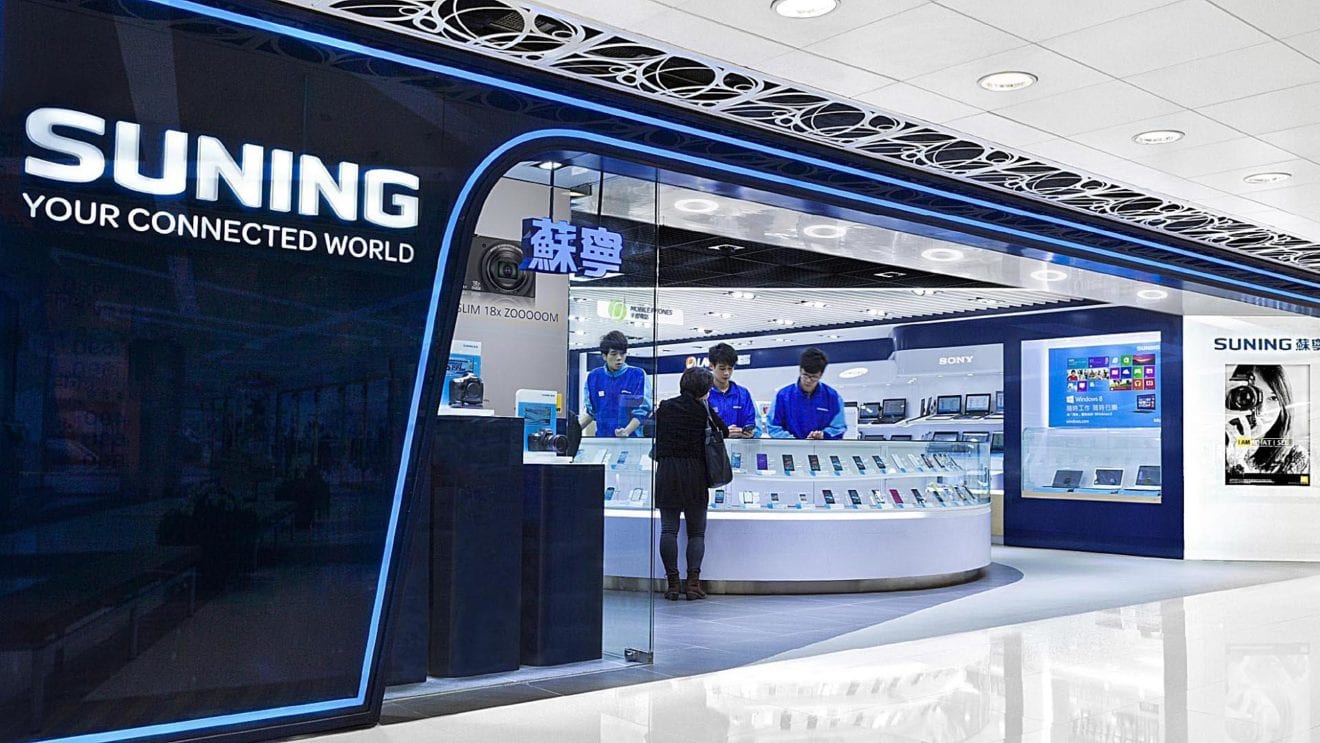
    Chinese O2O retailer Suning plans to open 10,000 new stores next year, capitalizing on ‘consumption upgrade’ in China.

    Founder and chairman Zhang Jindong said the company will invest 40 billion RMB (US$5.7 billion) to support its expansion spree, estimated to create 8000 new jobs.

    According to the company, the increase in consumer spending with the emergence of new, more aspirational and affluent consumer groups is driving the consumption upgrade in China. The increased purchasing power in China’s lower-tier cities is also emerging as an investment magnet.

    The expansion is part of the company’s ‘open from 1 to N and integration from N to 1’ strategy.

    “Opening from 1 to N refers to how Suning is opening up its core business of retail through multi-channel, full-scenario categories to empower the industry and society at large. Integrating from N to 1 refers to the integration of Suning’s scenarios and supply chain, converging online and physical retail to focus on consumer experience and providing diversified services of a consistent quality for every consumer,” it says.

    Earlier this year, Suning acquired 37 Wanda department stores and bought an 80-per-cent stake in Carrefour’s Chinese operations. The company is recognized as one of the top three among the top 500 non-state-owned enterprises in China.

  • Pomelo launches first Beauty Line

    Pomelo launches first Beauty Line

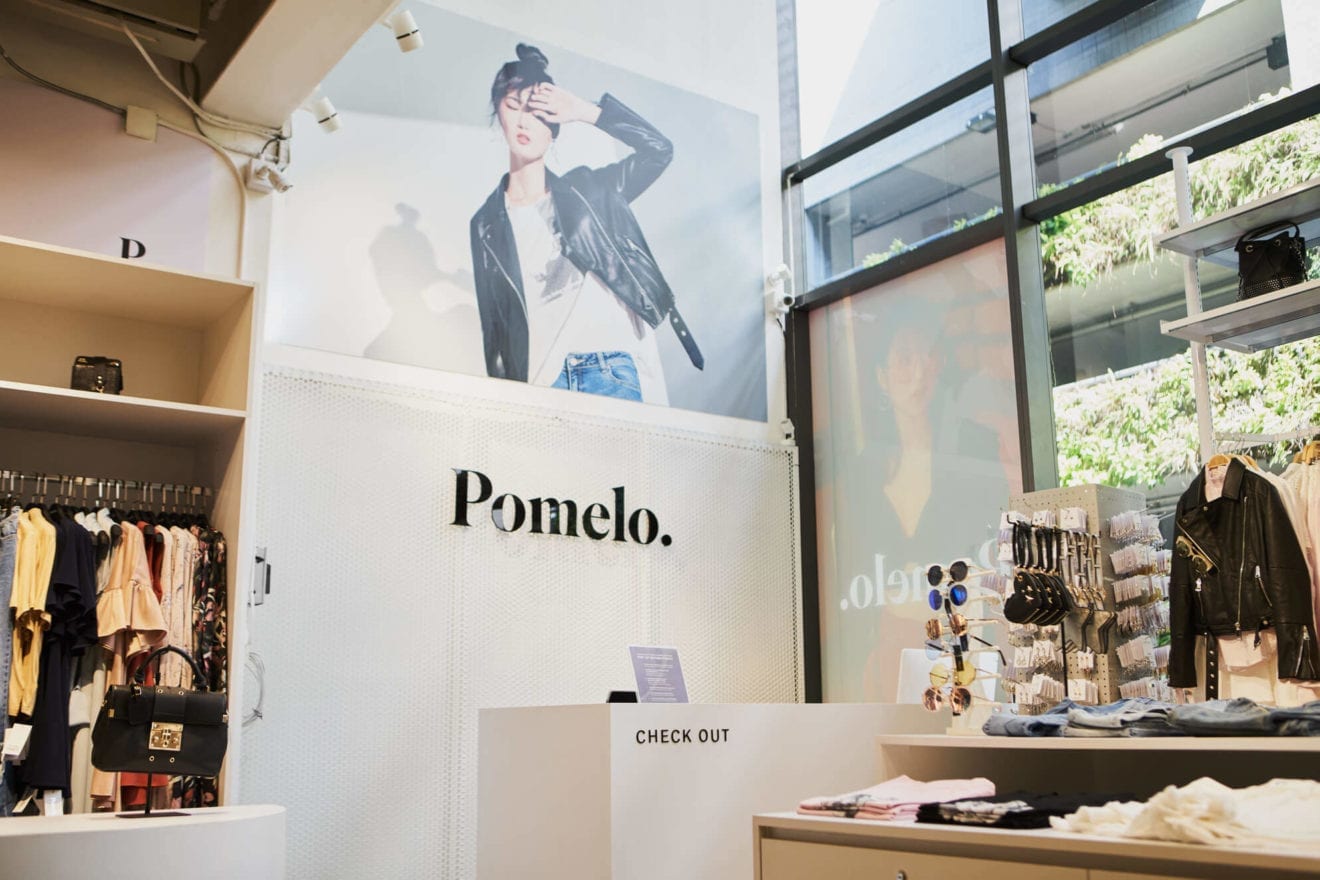
    O2O fashion brand Pomelo has launched its first cosmetics line, Beet, solidifying its identity as a one-stop lifestyle brand.

    Created with women on-the-go in mind, Beet comprises 17 products across four categories – Liquid Blush, Liquid Lipstick, Lip Gloss and Liquid Shimmer.

    All products are priced at S$10 per item and feature paraben-free and cruelty-free formulations.

    “For consumers today, beauty is integral to style,” said David Jou, Pomelo CEO, signalling the company is taking “a step in the right direction”.

    “As a fashion brand that wants to offer women everywhere their best look to become their best selves, we cannot ignore that.”

    With Beet, Pomelo provides another touchpoint for a seamless customer experience that prioritises modern consumers’ demand for convenience.

    Last month, Pomelo launched its second sustainable collection, Purpose.

  • Second Pomelo Purpose collection Ready to Take Off

    Second Pomelo Purpose collection Ready to Take Off

    Three collections of Pomelo Purpose sustainable clothing will be launched this year. Pomelo, the O2O fashion brand, says all pieces in the collections will be made entirely from ethically sourced fabrics, including organic cotton from the Better Cotton Initiative, and use natural-colour dyes.

    From production to packaging, the Pomelo Purpose lines incorporate eco-friendly practices.

    Manufacturing factories undergo an independent audit to ensure products are made in humane and safe working conditions.

    Pomelo customers will also receive their Purpose purchases in packaging that uses 60 per cent less plastic.

    “The Pomelo Purpose collection is so named because it provides us with a meaningful opportunity to lead the way by bringing sustainable materials and processes to the fashion industry and the increasingly eco-conscious consumers in the region,” said David Jou, Pomelo Fashion CEO.

    The company will also provide a free clothing pickup service that customers can access by scanning the QR codes stitched into their Purpose products with the Pomelo app on iOS and Android. Clothes can also be dropped off at collection boxes in Pomelo’s offline stores.

    All collected clothes are then redistributed to underprivileged partner communities in Thailand, Singapore and Indonesia.

    Launched in 2013, Pomelo now operates in five markets, with Malaysia and Hong Kong the most recent debuts.

  • Lifestyle deploys new retail technologies

    Lifestyle deploys new retail technologies

    A part of Dubai-based retail and hospitality conglomerate Landmark Group, Lifestyle has been enhancing its Omnichannel experience for its customers at a very fast pace in the recent years. With 75 stores at present, Lifestyle is now also available online through www.lifestylestores.com where customers can shop from the convenience of their home.

    Offering men’s, women’s and kids’ apparel, footwear, handbags, fashion accessories, beauty products and much more, all under the same roof, the fashion retailer has added features such as ‘Self-Checkout Kiosk’, ‘Mobile POS’, Fitting Room Assistance’, etc., to augment its in-store experience.

    “Lifestyle has always endeavored to provide its customers the best-in-class shopping experience. With technological advancements, the shopping experience has evolved and we, as a progressive retailer, have embraced many of these technological advancements to further enhance the shopping experience we off er our customers,” says Vasanth Kumar, Managing Director, Lifestyle International.

    New Tech-Advancements

    Lifestyle has introduced ‘Self- Checkout Kiosk’ in a few key stores, a facility that allows customers to bill their merchandise and complete the payment transaction in a few simple steps on their own with no or very little intervention from the staff thereby greatly solving the long queue by enabling quicker checkouts. Another initiative to further ease checkouts is the ‘Mobile POS’, which was introduced for billing products such as watches, fragrances or cosmetics.

    Using insights from customer shopping behavior, the retailer has also launched ‘Fitting Room Assistance’ program that allows for size retrieval with the help of technology where the store assistants are alerted on the size and style required in the fitting room. “This initiative has helped in enhancing our conversions and is now being scaled up across key stores,” Kumar says.

    “Several of our initiatives are technological solutions to real customer problems which we discovered through our interaction with customers as well as staff . Using this feedback, we have created simple yet impactful solutions leveraging technology. These have led to positive impact on our overall customer experience and helped increase engagement with the brand,” he further adds.

    At the same time, with features like ‘Click & Collect’ and ‘In-store Endless Aisle’, Lifestyle is offering a true Omnichannel experience to its customers. An Omnichannel initiative, ‘Click & Collect’ allows customers to order online and collect merchandise from a Lifestyle store of their choice. ‘In-store Endless Aisle’ helps customers find missing in-store sizes on the e-commerce channel. Also, the retailer has introduced visual search and enabled voice-based search for its mobile applications which has helped in creating a more personalised and convenient shopping experience. Lifestyle has also implemented the ‘Put-to-Light’ system for effective storing and distribution at its warehouses. It has enabled single view of inventory for its e-commerce portal, www.lifestylestores.com, making the entire inventory across all warehouses accessible to the online customers thereby enhancing the merchandise availability and online conversion.

    “We are continuously evolving our stores with new technologies. To fully enable our customers to enjoy these new introductions, it is important for our sales personnel to understand, communicate and comfortably operate all new innovations. Before implementing any new technology or introducing product innovation, our entire store team goes through an extensive knowledge session, which enables them to understand the product/technology being introduced,” says Kumar.

    Lifestyle regularly tracks consumer satisfaction through NPS (Net Promoter Score) in store, by the virtue of offering, staff interactions, store ambience and consistently deliver an overall delightful shopping experience thereby winning customer trust and loyalty.

  • What is the hot new “Boundaryless Retail” trend?

    What is the hot new “Boundaryless Retail” trend?

    Chinese consumers are quickly adapting to buying groceries online for immediate delivery from local offline stores, according to a new joint study conducted by JD, Walmart, Tencent and JD Daojia. In China, where over 15% of consumption takes place online, compared to just 9% in the US, consumers have been faster to embrace online grocery shopping.

    Over 67% of Chinese consumers actively use services like JD Daojia, which can deliver goods from local offline shops, including Walmart, to customers in under an hour.

    An increasing number of online shoppers in China view a guarantee of product authenticity as the most important factor when buying goods, with price often viewed as secondary in importance to considerations like product variety, speed of delivery and after-sales service.

    Consumers carefully consider purchases that can improve their lifestyle, reflect their individuality and be delivered in a convenient way that fits in with their busy modern lives.

    Omnichannel integration in the Chinese supermarket industry is expected to be a major trend going forward, as online and offline players in the industry are increasingly combining resources to meet the diverse needs of modern-day shoppers: bringing together the convenience and diversity of online shopping with offline retail’s immediacy of service and superior user experience.

    Boundaryless Retail is a reality gaining in popularity as “The increasingly diverse needs of consumers require a correspondingly dynamic approach” said Kenny Li, VP of JD.com.

  • ‘Physical and online retail will co-exist in the future in India’

    ‘Physical and online retail will co-exist in the future in India’

    The retail sector in India has been evolving at a swift pace. Rapid urbanisation and digitisation, rising disposable incomes and lifestyle changes – of particularly the middle-class – are major contributors to the revolution of the retail industry.

    In a freewheeling chat, Anuj Puri, Chairman – ANAROCK Property Consultants talks about what canbe expected from the Indian retail industry going ahead. Excerpts:

    How do you see retail industry shaping up in India?

    Retail is back with a big push. A lot of foreign brands are looking to enter India, a number of Indian brands are expanding rapidly, a number of new Indian brands are opening up retail stores. Equally, I see a huge amount of promptness within the Indian retail real estate on the bounce back of organised retail in India. Modern retail is growing fast. 10 years ago, the contribution of modern retail format was only 2 percent and today it is getting into the double digits.

    Which retail format will come out clear-cut winner in future?

    There will be newer formats that will be very important to get into the retail real estate spaces. F&B and new formats in entertainment will continue to do very well.

    Anything which is experiential and cannot be bought online and has an ability to touch, feel, taste, hear and smell, those formats in the physical space will continue to do well.

    With e-commerce expanding at a rapid pace, what is future of malls in India?

    Expanding e-commerce in India has a positive impact on the physical retail real estate. E-commerce space cannot divulge into physical space. Both of them are integrating with each other like Walmart has recently bought Flipkart, Amazon in setting up its physical stores, there are number of e-commerce players which are planning to set up their retail stores and many e-retailers are also investing/ buying existing physical stores. We can say it is an integration of e-commerce and physical space.

    What is the future of malls a few years from now?

    Going ahead, technology is going to play a big role for both retailers and mall developers. The taste of the consumer coming in, the ability to drive the footfalls to the right stores, to understand the demographics of the people who are coming into mall are all going to be important learnings which the mall developer will pass on to his partners – the retail brands.

    In future, technology will integrate the experience, partners and will help in driving the sales, deriving right retail formats in the malls. Just like in the more mature markets, where technology plays a huge role in the mall operation, similarly it will be replicated in India as well.

    How can the malls stay relevant to the consumers for years?

    It is true that a mall has to continue to change its skin. It is necessary to bring something new to attract different retailers. Change is a perennial process. Malls must continue to attract footfalls by adapting to change.

    What is your outlook on retail spaces in Tier II cities and beyond?

    Big retailers are occupying a huge space in Tier II cities as the profit margins are very high and the rentals are low. Also, since consumers coming to these stores have more time to spend, they have an ability to experience on the entertainment, leisure, retail and food. We are not only bullish on Tier II cities but Tier III cities as well. Retailers are often seen complaining about lack of good retail real estate spaces in India.

    How do you see this changing in the future?

    At this point of time, we are starved for good quality retail spaces. It is absolutely true that there are more retailers who want to get into the malls which are successful. We are hopeful that over the next 2-3 years there will be a better equilibrium because there are number of malls that are under-construction and it is expected that these malls will be able to cater to the increasing requirement of retailers.

    I also think that these mall developers who are building up the malls have also learnt that how to build, operate good quality malls and how to attract right kind of retailers within those malls.

  • The RealReal store showcases newest O2O innovation

    The RealReal store showcases newest O2O innovation

    Luxury consignment retailer The RealReal has opened a brick-and-mortar concept store on the US West Coast.

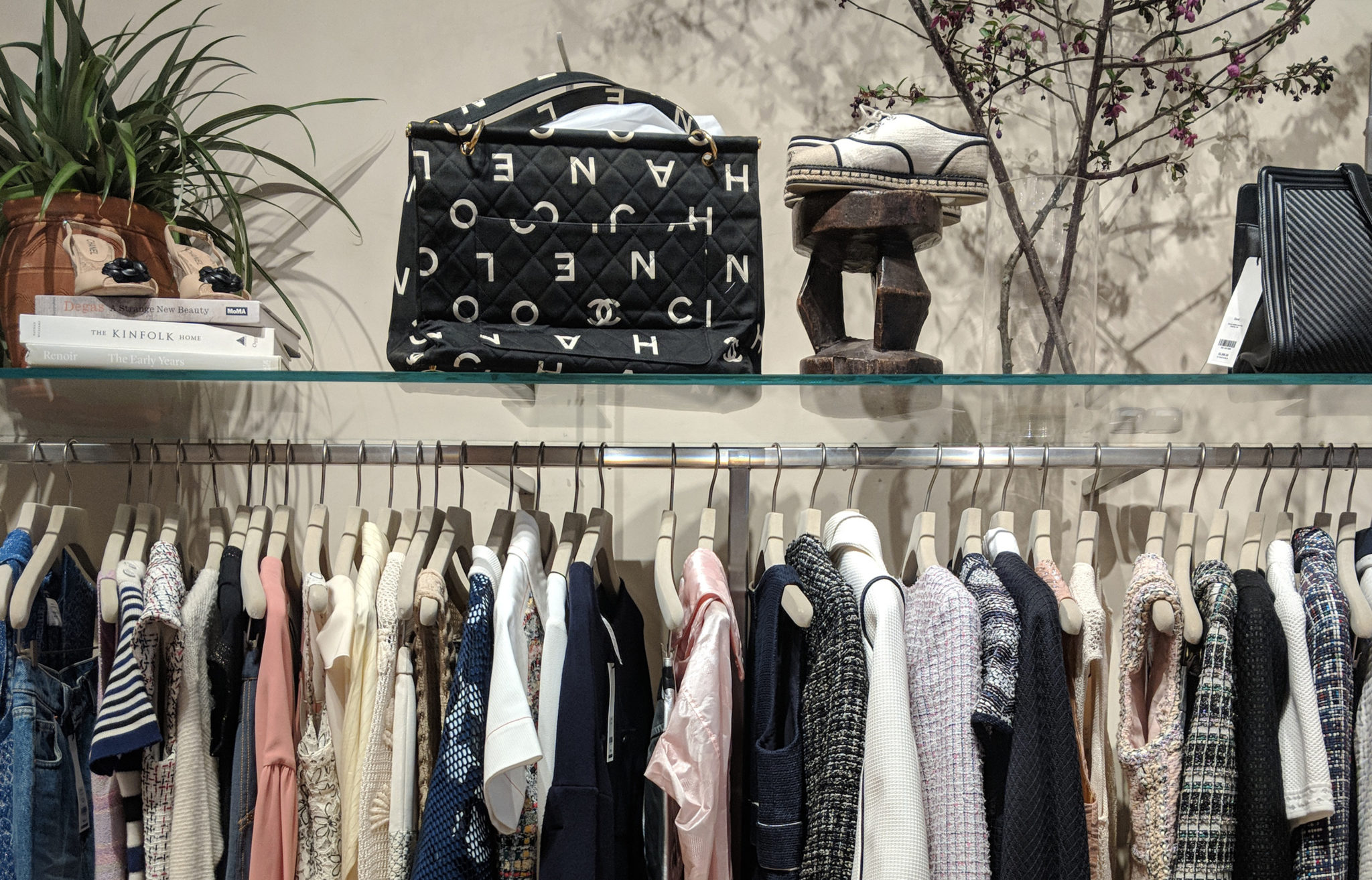
    The 12,000sqft Los Angeles store encompasses The RealReal’s entire brand offering, from one-of-a-kind luxury goods through to accepting consignment through to face-to-face consultations with its luxury experts. It includes a separate 5500sqft men’s department featuring a “sneakerdome”, watch bar and tailoring area, as well as a 1500sqft “handbag vault”.

    The concept store has installed a proprietary technology solution called RealReal 360, which provides a unified view of all inventory and customer behaviour across channels – brick-and-mortar, desktop, mobile, e-commerce centers, and luxury consignment offices.

    RealReal CEO and Founder Julie Wainwright said, “With the continued success of our SoHo flagship and pop-up shops, we’re excited to expand our brick-and-mortar footprint and give The RealReal another permanent home – on the West Coast. We’re excited to give shoppers and consignors in LA and surrounding areas access to our omnichannel business, unique brick-and-mortar experience and services, and team of experts.”

    The store offers free valuations, seamless consignment drop-offs, personal styling services, expert workshops, item repairs, alterations, and authentication of all luxury goods.

    View the gallery below (4 images) :

  • SK Telecom to build O2O platform with Bluebell

    SK Telecom to build O2O platform with Bluebell

    SK Telecom has signed a memorandum of understanding (MOU) with Bluebell Korea to cooperate on bringing cutting-edge ICT to the luxury retail industry.

    Bluebell Group is a leading operator of luxury brands in Asia, which also specializes in consulting, and has eight branches in Asia distributing products from over 100 brands. Bluebell Korea is in charge of distributing luxury goods to duty free shops and shopping malls in Asia.

    Under the MOU, SK Telecom and Bluebell Korea will work together to build an O2O (offline to online) platform to enhance travelers’ shopping convenience; bring innovative changes to luxury goods stores and distribution channels; and develop luxury goods based on ICT.

    SK Telecom plans to apply its industry-leading ICT – including its cloud-based digital signage platform “Smart Signage” and IoT-based location tracking solution – to luxury brand stores and goods so as to increase customer loyalty and sales of luxury brands.

    The luxury industry has so far strictly adhered to the craftsmanship of products and traditional sales channels – that is, offline stores. However, a slowdown in market growth coupled with the rise of young, tech-savvy consumers who are taking up a growing share of luxury spending is driving new changes in the conservative industry.

    “Through the MOU with Bluebell Korea, SK Telecom expects to bring innovative changes to the luxury market through the application of its state-of-the-art ICT including IoT technologies,” said Cha In-hyok, EVP and head of IoT business division at SK Telecom.

    “The convergence between ICT and the luxury retail industry will not only create new business opportunities for both parties but also deliver enhanced value and experience for customers.”

  • O2O Start-up HEMA Fresh Opening 2 Stores in January

    O2O Start-up HEMA Fresh Opening 2 Stores in January

    On January 13, HEMA Fresh, a start-up O2O fresh produce retailer, launched its seventh store in Shanghai, one week after its sixth store was opened for business in the city. Emerged in early 2016 and quickly captured a lot of attention in China’s retail trade, HEMA is apparently speeding up its expansion.

    It has indicated the intention to open another 5-10 new stores in Shanghai in 2017 and to penetrate all first-tier cities such as Beijing, Guangzhou, and Shenzhen etc. It would then gradually roll out to second- and third-tier cities. HEMA’s innovative business model is being closely watched by people in the industry.

    HEMA’s newest store occupies a total floor space of 4,500 square meters. Besides reflecting HEMA’s special character and visual identity, the whole store’s layout was designed for the purpose of delivering unique shopping experience to patrons who would be ordering their goods online.

    On the weekends, shoppers can bring their families to browse around the spacious isles and check out the wide varieties of high quality fresh fruits, vegetables, meat, and seafood.

    At designated sections, they can also enjoy cooked food prepared with the fresh produce sold in the store. During the week, however, shoppers can purchase HEMA’s fresh produce via their mobile APP whenever they have 10 minutes to spare.

    The purchased items would be picked from the store front and consolidated and packed at the depot at the back. Deliveries to homes within a 5-kilometer circumference would be completed within 29 minutes.

    Online purchase has now accounted for 50% of HEMA’s total sales.

    Another key feature of HEMA Fresh is that its shoppers are all subscribers of Alipay which is the only mode of payment accepted for any purchase at HEMA’s stores or via mobile APP. It is the first O2O retailer of its kind.

    It is said that 80-90% of all HEMA’s patrons are among those aged between 25-40, with higher education levels, higher income, and who enjoy high quality of life. Repeat purchase rate among this group of upmarket shoppers is around 50%, indicating that HEMA enjoys good customer loyalty.

    HEMA’s innovation is not confined to its sales approach. Most of the 3,000 types of products it carries are food products. According to HEMA’s management, sales of imported fruits account for more than 60% of HEMA’s total fresh fruit sales. Many of the fresh fruits are shipped to China directly from the growing regions in consumer packing, significantly enhancing the protection of product quality.

    As for vegetables, HEMA offers different choices including organic vegetables, vegetables that are also supplied fo Hong Kong (generally with higher quality), and those produced in Shanghai’s rural areas. HEMA is planning to introduce imported vegetables in future, to give its patrons even wider varieties to choose from.


  • eBay Korea Partners With GS25 to Offer Online-Offline Services

    eBay Korea Partners With GS25 to Offer Online-Offline Services

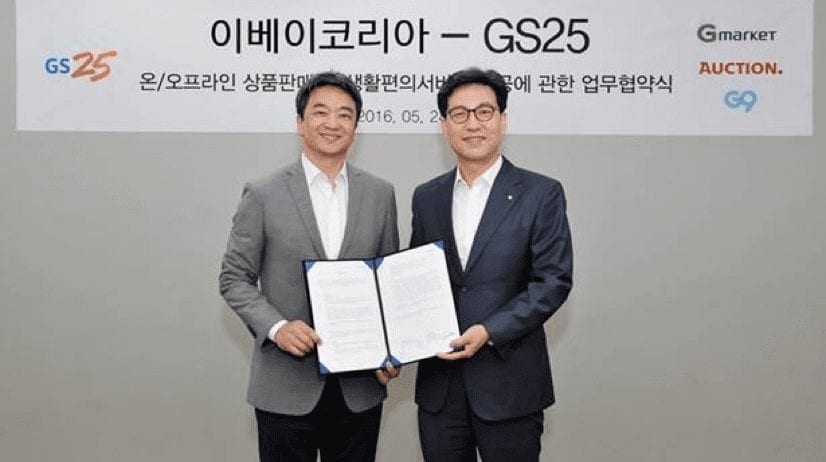
    eBay Korea has joined forces with nationwide convenience store chain GS25 to offer consumers a combined online-offline sales service.

    The partnership will see the launch of the “Smile Box” service, in which deliveries are made to an unmanned box for single-person households and female customers. The service is available 24 hours a day, and customers will be able to receive their deliveries ordered online from Gmarket, Auction and G9 at their nearest GS25 store.

    The service will begin in August with a trial installation of Smile Boxes across 50 GS25 stores in Seoul, with the plan to gradually expand it nationwide. The boxes will be installed in areas with a high number of deliveries (determined through analysis of Gmarket and Auction delivery information) that have a large concentration of single-person households.

    This “customer-centric endeavour is the future for online and mobile shopping,” said an eBay Korea representative. “We hope to build an enhanced, more convenient shopping environment for our customers.”

  • Awakening giant: E-commerce in China

    Awakening giant: E-commerce in China

    With the largest population and the most Internet users of any country in the world and the rise of its middle class, it is not surprising that China is also the world’s largest and fastest-growing e-commerce market. However, capitalizing on this huge market is becoming increasingly difficult for a variety of reasons.

    Recently, McKinsey, the consulting giant, released a new report on this burgeoning market that holds “enormous potential”.

    A growing market

    Two years ago, China’s online retail market overtook the United States’ online retail market. In 2015, China’s online retail market was approximately USD $630 billion of sales, the world’s largest and nearly 80 percent bigger than the US’.

    E-commerce in China accounts for 13.5 percent of all of its retail spending.  Although in the near term Chinese e-commerce is forecast to increase significantly, McKinsey’s survey shows that companies need to prepare for major changes in the Chinese market.

    Major changes coming

    From new customer segments to new product categories and sales channels, China’s online market is set for huge future growth. Representing 30 percent of total retail sales, the categories of consumer electronics and small appliances are well-established online categories, as is apparel.

    On the other hand, Food (including packaged and fresh food), is a category that faces more challenges and opportunities. Though 50 percent of respondents have purchased some food online, online spending represents only five percent of the total food spending.

    The category of food holds promise for companies that can attract consumers to do their regular grocery shopping online stand to capture a lot of business.

    Online-to-Offline (O2O)

    Consumers in China are accustomed to buying through O2O services companies—they are attracted to the website or app, then buy offline. The top sectors for O2O seem to be travel, dining, and mobility, where respondents who use O2O vendors report spending much more than they did before.

    Huge Opportunities

    McKinsey’s survey of China’s digital consumers tells us that growth in e-commerce and O2O is shifting to new areas. “Succeeding in this market is a matter of keeping pace with changes that are playing out across geographies, product categories, and channels.”

    The opportunities are huge for companies willing to look closely into these aspects of the market to find them, then move quickly to take advantage of them before their competitors can.

  • Credit card companies collaborate to lift fee income

    Credit card companies collaborate to lift fee income

    Local credit card companies are launching offline-to-online (O2O) service businesses by collaborating with various sectors to increase transaction fee income.

    KB Kookmin Card reached an agreement with Uber Korea on Monday to jointly develop card products and take part in joint promotion campaigns in and outside Korea.

    “We hope to offer a wider variety of membership benefits to our credit card customers and expand in new sharing economy businesses like Uber,” said Shin Seong-hoon, head of the marketing division of KB Kookmin Card.

    The joint venture not only helps Uber expand its customer base in Korea against competition with Kakao Taxi, but also assists Kookmin Card to seek a future growth engine by developing taxi reservation services that are offered in association with credit card membership benefits. It may allow Kookman Card to expand its payment service to 400 cities where Uber operates.

    KB Kookmin Card is not alone moving towards such services.

    Shinhan Card has collaborated with four companies, including Kyobo Bookstore, GS Retail, Korea Smart Card and the car sharing service start-up Socar, since last year to offer O2O services and foster a loyal customer base.

    Shinhan also plans to launch a chauffer service this month in Seoul and Gyeonggi by affiliating with existing dispatch companies. It profits from a transaction fee of 2 to 2.5 percent.

    It also has been offering an easy payment services on flower delivery, quick-delivery and tutoring payment, after agreements with six companies.

    Shinhan aims to expand the O2O services by joining hands with 14 more companies by the end of the year.

    Local credit card companies aim to beef up their transaction fee income, which accounts for nearly 50 percent of their total annual income.

    ?However, analysts say it won’t be so easy for the credit card companies to grab market share by winning the competition with IT giants like Kakao and start-ups like Baedal Minjok, which have so far dominated the market share based on their broad customer base.

    “It is true that the credit card companies also have a large customer base, as well as broad affiliated retail shop networks,” said Yoon Jong-moon, a researcher at the Credit Finance Research Institute. “However, such a network is not enough to compete against the IT platform operators, because the card companies will see only a limited growth in profits by doing O2O services among their own customers and affiliated shops.”

  • IKEA Will Open First PUP Store In China

    IKEA Will Open First PUP Store In China

    Ikea’s first pick-up and order point in China is currently being built in Wenzhou and is expected to officially open at the beginning of this summer.

    Ikea PUP store is a new model established by the company in 2015. With an area of about 1,800 square meters, the Ikea Wenzhou PUP store will display about 2,500 kinds of products. Meanwhile, local consumers can order most of Ikea’s products at the order point. It is reportedly a small-sized Ikea and the extension of the Ikea Ningbo store.

    Consumers can first experience Ikea products in the display zones and choose to buy the products directly from Wenzhou PUP store or place an order to the Ikea Ningbo store in eastern China. The ordered products will then be delivered to the Wenzhou order point or to consumers’ homes. In addition, the Wenzhou PUP store will have professional staff to provide home solution planning and purchase services. However, no food and beverage area is available at the PUP store.

    A representative from Ikea China said that the establishment of the Wenzhou order point will make consumers’ shopping experience more convenient. Meanwhile, it will lay a foundation for the future expansion of Ikea’s online businesses. Ikea started the operation of this new PUP model from 2015. So far, it has launched such stores in London, Toronto, and Phuket.

    Ikea’s financial report for 2015 revealed that the company’s total sales for 2015 were EUR31.9 billion, a year-on-year increase of 11.2%. Its sales increase was mainly contributed by store sales, especially new stores integrating e-commerce functions.

  • Kakao launches Hair Shop O2O

    Kakao launches Hair Shop O2O

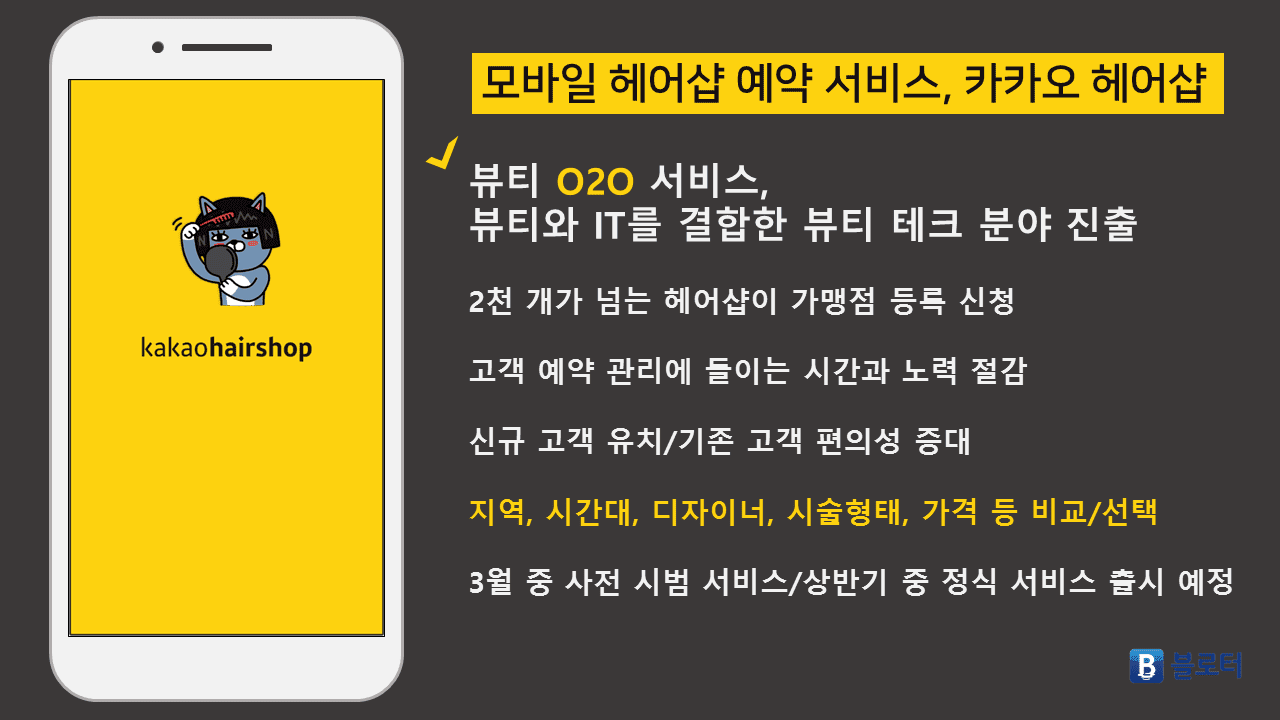
    Kakao, the Korean internet pioneer, has  selected ‘Hair Shop’ as its first O2O (online to offline) business in the beauty sector.

    Kakao plans to expand its O2O business by releasing new services  – relief drivers and the hair industry.

    According to industry analysts, Kakao is planning to launch ‘Kakao Hair Shop’ (working title) during the first half of the year through its affiliate Hasys.

    If Kakao’s Hair Shop is launched, related businesses could use Hasys solutions such as ‘Hair Zzang’ or ‘Beauty Zzang’ to easily build online and mobile reservation systems. Research on consumer satisfaction and marketing education could also be supported.

    Customers could have access to information about various hair shops through a Kakao-based platform, and compare prices at each salon.

    Some predict that Kakao will charge a commission for providing the platform when a user makes a reservation through the Hair Shop application and pays through Kakao Pay. However, Kakao claims that the details of the service have yet to be confirmed.

    Hasys is a beauty solution business Kakao took over in October 2015 through K-Venture Group, an affiliate of Kakao specialising in investments. Hasys has developed and is providing solutions such as ‘Hair Zzang’ and ‘Beauty Zzang’, which manage clients of beauty salons, skin care parlors and nail shops.

    Hasys has 10,000 beauty businesses as members, and ranks at the top of the industry with 69 per cent market share as of September 2015.

    Kakao revealed its intentions to launch O2O services related to the beauty industry at the time it took over Hasys. As a first step, Kakao officially entered the hair industry.

    Kakao officials said the company is planning to concentrate on the Hair Shop business, as it could be a service that is attractive to people of all genders and ages. “We have no other plans to expand our offerings into other beauty businesses.”

    Hasys is currently meeting with owners of hair shops across Korea, explaining about the launch of Kakao Hair Shop. Currently 2000 shops have agreed to become members of the service.