Tag: online shopping

  • Vietnamese Online Shopping Soars: Consumers Shell Out $16B, Leading Southeast Asia’s Retail Surge!

    Vietnamese Online Shopping Soars: Consumers Shell Out $16B, Leading Southeast Asia’s Retail Surge!

    Vietnamese consumers spent an estimated US$16 billion on online purchases via platforms such as Shopee, Lazada, and TikTok Shop in 2024, placing the country among the top three e-commerce markets in Southeast Asia.

    The recently unveiled Southeast Asia E-commerce 3.0 report from Momentum Works highlights a booming digital shopping landscape in the region, which saw a total gross merchandise value (GMV) of $128.4 billion in 2024—marking a 12% year-on-year increase. Remarkably, Southeast Asia processed an average of 43.6 million online orders daily, nearing the scale of the U.S. market, a fact that could make any retailer’s heart race.

    Shopee, Lazada, and TikTok Shop dominate the market, accounting for over 90% of all orders, while Vietnam joins the ranks of top five e-commerce powerhouses, alongside Thailand, which leads with $23.5 billion, Malaysia at $11.5 billion, the Philippines matching Vietnam at $16 billion, and Singapore standing at $4.9 billion. Thailand and Malaysia stand out for their impressive growth figures, with increases of 22% and 20%, respectively.

    Indonesia remains the titan of the region, boasting a staggering $56.5 billion in GMV and a commanding 44% market share. However, its growth has tempered to just 5%, a reflection of ongoing platform mergers that have caused a few hiccups.

    In Vietnam, e-commerce is predominantly led by three major platforms. Shopee significantly leads the charge with a 65% market share, translating to about $10.4 billion in GMV. TikTok Shop follows with a growing presence at 28% ($4.5 billion), while Lazada holds 6% ($1 billion) and Tiki trails with 1% ($200 million). This online tussle illustrates a dynamic market, indicative of a region that is rapidly evolving.

    Beyond these major players, other digital channels like brand websites, multi-brand retailers, and social media platforms, including WhatsApp, have contributed an impressive $16.8 billion to the region’s total e-commerce value.

    The report also indicates a noteworthy comeback for Chinese consumer brands in Southeast Asia. These businesses are returning with revitalized products and localized strategies aimed at seizing essential market segments, proving that what goes around comes around—especially in retail.

    Looking ahead, Momentum Works projects that Southeast Asia’s e-commerce sector could generate an additional $131 billion in transaction value by 2030 if companies effectively leverage artificial intelligence across sales, operations, logistics, and customer service.

    Questions & Answers

    How much did Vietnamese consumers spend on online shopping in 2024?
    Vietnamese consumers spent approximately US$16 billion on online purchases in 2024.

    Which platforms dominated e-commerce in Vietnam?
    Shopee, TikTok Shop, and Lazada were the dominant platforms, accounting for over 90% of the total order volume.

    What future growth is anticipated for Southeast Asia’s e-commerce sector?
    Momentum Works forecasts that the sector could generate an additional $131 billion in transaction value by 2030, driven by the adoption of artificial intelligence.

  • JD to hire 15,000 new employees

    JD to hire 15,000 new employees

    Chinese e-commerce giant JD has announced it plans to recruit up to 15,000 staff this year – just a week after saying it would let go 10 per cent of its senior executives. The majority of positions expected to be filled this year will be in logistics, with up to 10,000 delivery and low-level management positions being recruited. Other staff will be hired to improve user experiences in the firm’s retail arm.

    JD pledged in its announcement to promote competent staff and offer more leadership training to young people as part of its contribution to society. The firm currently hires around 170,000 full-timers, according to last year’s estimates, and is moving to extend its supply network throughout every one of China’s county-level territories.

    Some 20,000 R&D staff were hired last year in an RMB8.64 billion (US$1.29 billion) investment in technology research.

  • Korean wave fuel 25% growth in Korean e-commerce exports

    Korean wave fuel 25% growth in Korean e-commerce exports

    South Korea’s online exports surged 25 percent in 2018 from a year ago on the back of growing demand for K-beauty and K-pop related items such as album records and stationery supplies, government data showed. According to Korea Customs Service, Korea’s electronic commerce (e-commerce) exports or reverse overseas direct purchase volume reached US$3.25 billion last year, up 25 percent from a year earlier. The total number of online export cases also jumped 36 percent to 9.61 million during the same period.

    E-commerce growth is staggering when compared to the modest 5 percent annual growth in total Korean exports last year.

    The customs agency said that the rapid growth of online exports comes amid growing demand for Korean items on the back of hallyu or Korean Wave, as well as simplified retail procedure, and aggressive overseas marketing integrated with offline stores.

    By item, apparels and cosmetics accounted for 69 percent of total online export. In particular, the number of export cases for clothing surged a whopping 162 percent last year from a year ago, becoming the top pick after beating out cosmetics. Online exports of cosmetics jumped 43 percent last year from a year ago, recovering to average level after falling in 2017 as a result of diplomatic tension between Korea and China over Seoul’s deployment of U.S. anti-missile system.

    The customs agency said that exports of K-pop related items such as albums and stationery items surged significantly last year amid hallyu or Korean Wave overseas. In particular, sales of items related to K-pop icon BTS rose sharply.

    Data from Korea Customs Service, meanwhile, showed that overseas direct purchases of foreign goods amounted to US$2.75 billion last year, up 31 percent from a year ago. There were a total 32.25 million purchases last year, up 37 percent from a year ago.

    By region, the United States accounted for the largest 50.5 percent of Koreans’ direct purchases, followed by China with 26.2 percent, European Union with 12.5 percent, and Japan with 8 percent. The U.S. share fell from the previous year’s 56.4 percent while that of China jumped almost 10 percentage points from the previous year’s 17.3 percent.

  • 8 trends set to shape Southeast Asian e-commerce

    8 trends set to shape Southeast Asian e-commerce

    Southeast Asia’s e-commerce market is set to exceed US$102 billion by 2025, according to a study by Google and Singapore’s Temasek. As more and more consumers are attracted to shopping online for convenience and they build trust in the channel, investors in the e-commerce industry are gaining confidence and seeking opportunities. That helped startups raise and estimated $9.1 billion in the first half of last year, almost as much as for the whole of 2017.

    If last year was dubbed ‘The Year of E-commerce’ for Southeast Asia, what can the industry expect this year? We speak to industry leaders to discover the anticipated trends for online retailers and brands in Southeast Asia.

    1. Brands shift their focus from data gathering to data use

    The biggest differentiator between online and offline retail is the ability to track, collect, monitor, and manage information, all in real time. Through online channels, brands are able to access customer data through chats, social media, and their own websites. This information can be used to devise online strategies. Globally, 73 per cent of brands plan to allocate their e-commerce budget on data and analytics services this year.

    However, despite general agreement of its importance, many brands have no concept of how to use data to their advantage.

    “Even today, not all retailers have embraced data fully to the point where they think of themselves as data companies, and this might be why many companies are suffering,” observes Harvard Business School Professor Srikant M Datar.

    Data collection is easy but having and optimising the analytics capability to use it is a completely different ball game.

    A survey by ecommerceIQ identified data analysis as one of the most difficult skills to find among the digital talents in Southeast Asia. Brands are constantly searching for data aggregators to consolidate information into one place for convenient retrieval and use to target, retarget, and personalise products and services.

    Reagan Chai, head of regional business intelligence and business development at Shopee said that data acquisition enables the company to map out and optimise buyer and seller user experience while pre-empting customer demand and anticipating future potential. The company has seen an increase of website traffic in the past year that even surpasses the other regional players.

    In China, Alibaba and JD have taken this a step further by using the data gathered online to improve inventories and experiences at their physical stores. Alibaba chief marketing officer Chris Tung said the company wants to help brands find the right consumers by tracking them throughout Alibaba’s system.

    “We’re finding all data that has to do with people, their behaviour, what they like, what they buy and binding this online data to real people,” concluded ChrisTung.

    Last year, the region’s leading brand ecommerce enabler, aCommerce, launched a data analytics platform BrandIQ to enhance their capabilities as a data partner to help brands centralise their customer data and offer customised products or services to each target group.

    This leaves brands with two options: find an economical way to use the data or continue looking for a needle in a haystack.

    1. Social-commerce channels are brands’ new sales outlets  

    Social commerce in this region boomed before the rise of e-commerce as we know now. Facebook groups have long established as an online space where people connect to buy and sell goods, even before the launch of Facebook’s Marketplace feature. The rapid growth in Southeast Asia is propelled by the mobile adoption and smartphone, where 90 per cent of the online population access the internet via smartphones. For some, Facebook even defines the internet itself.

    With multitudes of potential customers gathered via social media platforms, brands naturally saw alternative sales channels. Following Facebook’s footsteps, social platforms like Instagram and Pinterest have also developed their own shoppable features.

    “Brands will miss out if they don’t have a social media presence. The best way to get feedback from consumers is by having a direct conversation,” Deb Liu, VP at Facebook Marketplace in an interview with Forbes.

    Line recently acquired social-commerce management startup Sellsuki in Thailand, where it has the second-biggest user base, to build a strong foundation for its e-commerce business. The company has also formed a joint venture with three local banks to offer personalised loans to SMEs.

    A few big brands like L’Oreal have already equipped their social media page with ‘Shop’ feature that allows consumers to purchase the order directly on the page and it is only a matter of time before more brands activate the platforms as one their sales channels and remove another layer between them and the consumers.

    1.  E-marketplaces launch new services to differentiate

    Looking at the successful existing e-commerce players in more developed markets, one thing they have in common is full control over their supply chain.

    JD’s investment to the development of its own supply chain allows it to scale its technology and offer a Retail-as-a-Service proposition to help other retailers or brands sell online. Alibaba is unrivalled for its extensive ecosystem beyond commerce, including its logistics network Cainiao and payment firm Ant Financial, not to mention its recent foray into the entertainment industry.

    The same practice has infiltrated down to Southeast Asia where Alibaba subsidiary Lazada has strengthened its logistics arm FBL (Fulfilled by Lazada) post-acquisition, and although no concrete plans have been disclosed, Shopee has expressed an intention to build its own logistics network.

    More e-marketplaces are coming up with new services to get more sellers onboard. Singapore’s Qoo10 is set to launch its blockchain-based ecommerce site QuuBee this year, using blockchain technology to eliminate the transaction and listing fee which in turn increase the retailers’ profit margin and make a more sustainable commerce approach.

    In Indonesia, Tokopedia is set to offer “Infrastructure-As-a-Service” with a fresh funds injection of $1.1 billion. It also plans to use AI for customer-care services and to run credit checks on merchants seeking loans to expand their businesses.

    Facebook is also showing more intention to jump onto the region’s e-commerce bandwagon. The social network has launched Marketplace feature in Thailand and Singapore without much fanfare, but its recent partnership with Kasikorn Bank in Thailand to allow in-app payments might be the start of the company’s effort to bulk up its commerce capabilities and cater to those that use the platform for their business.

    The practice is not exclusively done by the general e-marketplaces. Fashion e-marketplace Zilingo scored $226 million in funding due to its focus on building a fashion supply chain network that any merchant – small or large – can tap into.

    “It is imperative for us to build products that introduce machine learning and data science effectively to SMEs while also being easy to use, get adopted and scale quickly,” said Zilingo CTO Dhruv Kapoor in an interview with TechCrunch.. “We’re rewiring the entire supply chain with that lens so that we can add most value.”

    In a bid to recruit more brands to sell on their platforms, we anticipate that e-marketplaces will continue to go head-to-head with each other through new services, acquisitions, and partnerships. But are the e-marketplaces ready to burn more cash to win in this battle?

    1. Brands to reinforce reviews and fund user-generated content to win e-commerce consumers

    E-marketplaces in Southeast Asia have been upscaling and building add-ons which provide consumers with the utmost convenience. The search for better technology and assistance for the consumers is constant and never-ending.

    Online consumers begin their online purchasing journeys by searching for product information or reading reviews, usually on e-marketplace platforms, before making their purchase decision. They are looking for real opinions and user-generated reviews to validate the products.

    The habit of leaving product reviews on an e-commerce platform is not as common in Southeast Asia as it is in the US where Amazon even has a dedicated page for its most prolific reviewers. When they do, the reviewers usually left little information about the product and more about the other aspect of the purchase (for example, comments about the delivery time or packaging).

    Platforms like ReviewIQ are used by brands to increase their ratings and reviews engagement on their e-marketplace listings to help consumers make their decision. While the use of chatbots is an increasingly popular solution to help smooth the online customer experience, it is more suitable for generic questions such as “where is my order?” or “is this product available?” instead of personalised questions such as “will this lipstick look good on a yellow-undertone skin?”.

    Community-crowd models like one popular with travel platforms such as Airbnb might also be suitable for e-commerce in the region, to help consumers overcome their apprehension about online shopping. This is something that Edouard Steinert, aCommerce Thailand’s director of channel management, is investigating to help the company’s clients as this model has proved to save time, increase results, and keep costs low.

    “Consumers today want to hear genuine feedback and reviews about a product and they are becoming more averse to hard-sell methods. User-generated reviews, especially from people who share the same passion with them, drive better conversion for the brand,” he adds.

    1. Brands use direct-to-consumer strategies to acquire direct consumer data

    Some 89 per cent of companies are now competing mostly on a customer-experience playing field. The direct-to-consumer (DTC) approach is becoming more important for these brands because it allows them to gain insights into their end users and anticipate their needs.

    One trend observed among brands to promote DTC is e-commerce subscriptions. From a consumer perspective, subscriptions offer a convenient, personalised, and often cheaper way to buy what they need. For brands, it is a subtle method to create customer loyalty in the digital landscape.

    One brand adopting subscription e-commerce in the region is Nescafe Dolce Gusto, which offers free coffee machines in exchange for a minimum 12-month subscription of coffee. Besides witnessing sales growth, Nescafe Dolce Gusto also noticed that consumers continued to purchase goods from its brand despite dropping out of the subscription plan.

    “They may have dropped out of the subscription, but not the brand,” says Bhuree Ackarapolpanich, brand director & digital expert at Nescafe Dolce Gusto. “They still buy capsules from different channels: e-commerce websites, online marketplaces and supermarkets. A subscription strategy is not just a long-term consumption enabler but also a consumer acquisition channel for the whole brand,” he says.

    Acommerce’s regional director of project management, Mandy Arbilo said e-sampling is a popular strategy used by brands to evaluate demand, especially for e-commerce.

    While normal sampling techniques used by offline retailers are expensive, e-sampling saves brands up to 40 per cent as well as providing essential customer data.

    As DTC becomes widely adopted, consumers will see brands coming up with attractive gimmicks using digital tools to gain insights and entice consumers to spend more on their brands.

    1. This year will finally see regulation of e-commerce across the region

    E-commerce has remained largely unregulated across the region until now, but as the industry grows, it is only a matter of time until governments step in to tax this fast-growing segment, levelling the playing field for foreign companies to offer digital services and goods locally.

    Discussion of the implementation of e-commerce tax regulations in Southeast Asian countries has been noticeable since the beginning of last year but nothing concrete has yet materialised.

    Late last year, economic ministers from ASEAN signed an agreement to facilitate cross-border e-commerce transactions within the region.

    While nothing has yet been written in stone, predictions abound concerning the impacts of an e-commerce tax on goods imported into the region. In Indonesia and Thailand, e-commerce tax is predicted to bolster the growth of social commerce because, unlike marketplaces, they are uncontrolled.

    “If tax regulations restrict e-commerce platforms, making selling in Bukalapak complicated, there will be an exodus of people who prefer selling on Instagram and Facebook,” said Bukalapak co-founder and CFO Muhamad Fajrin Rasyid. “These platforms are uncontrolled and not chased for tax because they sell through the back door.”

    Singapore might also see a decrease in cross-border shopping as prices increase with the introduction of GST)on goods and services bought online from overseas. Currently, 89 per cent of all cross-border transactions in Asia Pacific are conducted by Singaporeans.

    Another e-commerce market with strong potential, India is to introduce new e-marketplace laws that indicate the prohibition of marketplace “owners” to sell products on their own marketplace through vendor entities in which they have an equity interest. It also prevents marketplaces from making deals with sellers that grant the marketplace exclusive rights to the product. Could we see such laws be applied in Southeast Asia?

    Regardless, brands will have very little influence on how the new tax policies take root but they will be behoven to anticipate the ruling and adjust online strategy accordingly to mitigate the impact of a shift in customer behaviour. This ASEAN agreement will encourage more local entrepreneurs to create new products and venture online to access a larger and more diverse market. Brands will now need to be nimble and innovative to adapt to local nuances and preferences.

    1. Grab and Go-Jek challenge logistics providers to capture e-commerce and online food delivery

    Since Uber’s Southeast Asian exit last March, Grab has inherited a monopoly in countries like Thailand, the Philippines and Malaysia, leading to complaints about falling service standards and increasing prices.

    But with the recent regional expansion of Indonesia’s Go-Jek, the competition between the two will only get more fierce. Go-Jek has successfully carved niches in Vietnam, Singapore and Thailand last year alone. In addition, Grab’s competitor in Malaysia, Dacsee, has also hinted at  expanding into Thailand.

    Neither company is racing to be the best ride-hailing provider; they are aiming for something much bigger: superapps. Go-Jek has secured $1 billion in funds from Google, Tencent and JD, already halfway towards its goal of raising $2 billion for the venture. Meanwhile, Grab recently secured a $200 million investment from Thailand’s Central Group, boosting its valuation to $11 billion to date.

    This year, these two competitors will steer towards the same goal of food and e-commerce delivery, which Google and Temasek predicts will grow 73 per cent on a CAGR basis this year. By 2025, they predict online food delivery growth of 36 per cent CAGR with online transport only growing by only 23 per cent.

    “We will be expanding our GrabFood and delivery business and deepening our relationships with restaurant merchants and key partners in some markets,” said Grab’s head of regional operations Russell Cohen.

    Same-day delivery providers can expect more competition during the next year. The impact of Grab and Go-Jek on market vibes will definitely raise the bar for the logistics and delivery sector.

    1. Brands and retailers will double down on omnichannel as Southeast Asians prefer pure-play e-commerce

    The omnichannel shopping experience is not a new concept, but companies do have diverse interpretations of the concept. Headlines reveal that online retail behemoths such as Amazon and Alibaba are moving into physical retail.

    Alibaba’s decision to venture offline reflects its determination to solve core problems of the shopping experience, such as scattered operations and lack of payment transparency.

    JD, meanwhile, pipped Alibaba in Indonesia by opening the first unmanned convenience store in the region. Its goal was to use and refine its enormous database by offering beneficial insights to brands such as the best products to stock and advertise. Through their joint venture with Central Group in Thailand, JD Central is planning a similar concept there this year.

    Pure-play e-commerce retailers and brands recognise drawbacks in online marketing channels with fragmented infrastructure and a limited pool of shoppers. That is why they began to promote offline as an attractive option to push sales growth.

    Elsewhere in Southeast Asia, companies are slowly but surely adopting this strategy across all categories. E-commerce fashion players like Thailand’s Pomelo and Singapore’s Love, Bonito have opened physical stores in their respective countries.

    Last year, Pomelo opened five new outlets, initially away from Bangkok’s prime shopping areas before moving into CBD locations like Asoke and residential areas like Bangna, once it refined the model. Love, Bonito has 17 retail outlets spread across Singapore, Malaysia, Indonesia and Cambodia.

    Rachel Lim, co-founder of Love, Bonito said, “Data can tell you what’s selling but being on the ground tells you why something is not selling and what the customer is looking for.”

    Visiting shopping malls is a popular social activity in Southeast Asia and this trend is not set to disappear anytime soon.

    Brands should take advantage of dual physical and online presence.

  • Western Union Debuts New Payment Option for Amazon

    Western Union Debuts New Payment Option for Amazon

    Cross-border, cross-currency money-movement firm Western Union has unveiled a new payment option that allows Amazon customers in Hong Kong and other Asian markets to pay in local currency for their purchases. The service is being offered initially in 10 countries – Chile, Colombia, Hong Kong, Indonesia, Kenya, Malaysia, Peru, the Philippines, Taiwan and Thailand – enabling customers who prefer to pay in cash to shop Amazon.com’s vast product selection.

    The new platform is called Amazon PayCode, which processes the complex foreign exchange, settlement and money movement requirements for international e-commerce transactions. After selecting PayCode on the Amazon.com checkout page, customers will be sent a code along with instructions on how to pay in person at a participating Western Union agent location.

    The move by Western Union and Amazon will provide greater access to online goods for customers who have largely been excluded from e-commerce shopping due to lack of accepted payment methods.

    “We’re helping to unlock access to Amazon.com for customers who need and want items that can only be found online in many parts of the world,” said Khalid Fellahi, SVP and GM of Western Union Digital.

    “This is a great example of two global brands innovating and collaborating to bring customers more convenience and choice. In a world where cross-border buyers and sellers are often located on different continents and in completely different financial ecosystems, our platform is ideally suited to solving the complexity of collecting local currency and converting it into whatever currency merchants need on the other end.”

    “Amazon is committed to enabling customers anywhere in the world to shop on Amazon.com, and a big part of that is to allow customers to pay for their cross-border online purchases in a way that is most convenient for them,” said Ben Volk, director of payment acceptance and experience at Amazon. “Amazon PayCode leverages the reach of Western Union to make cross-border online shopping a reliable and convenient experience for customers who do not have access to international credit cards, or prefer to pay in cash.”

  • Tencent-backed AI startup checks students’ math homework

    Tencent-backed AI startup checks students’ math homework

    In China, there is a big culture of ‘practice makes perfect’. As such, school homework is a battlefield not only for Chinese children, but also for their parents, and teachers, who have the task of reviewing assignments. Technology is increasingly lending a helping hand, though, and now, a Beijing-based online education startup has developed an artificial intelligence-powered math app that can check children’s arithmetic problems through a simple snap of a photo. Based on the image and its internal database, the app automatically checks whether the answers are right or wrong.

    Known as Xiaoyuan Kousuan, the free app launched by the Tencent Holdings-backed online education firm, has gained increasing popularity in China since its launch a year ago. It claims to have checked an average of 70 million arithmetic problems per day, saving users around 40,000 hours of time in total.

    Yuanfudao is also trying to build the country’s biggest education-related database generated from the everyday experiences of real students. Using this, the six-year-old company, which has a long line of big-name investors, including Warburg Pincus, IDG Capital, and Matrix Partners China, aims to reinvent how children are taught in China.

    “By checking nearly 100 million problems every day, we have developed a deep understanding of the kind of mistakes students make when facing certain problems,” said Li Xin, co-founder of Yuanfudao (which means “ape tutor” in Chinese) in a recent interview. “The data gathered through the app can serve as a pillar for us to provide better online education courses.”

    Yuanfudao is China’s second largest online education unicorn by valuation, according to CB Insights. It is behind VipKid, which uses an online platform to connect Chinese students with North America-based teachers to learn English via livestreaming.

    Yuanfudao’s flagship app covers different subjects including math, English, and chemistry. Li said the firm has built a database with student answers to 6 billion questions. He said this know-how has enabled Yuanfudao to better analyze individual students, helping it towards the ultimate goal of providing tailor-made courses and homework.

    Li said the company’s aim is to “dramatically improve education efficiency in China.”

    “Giving different homework to different students even if they study in the same class is even more difficult than providing different news to different readers based on their individual interests and tastes,” said Li. “What we do requires a more accurate profiling of students.”

    Li said that the company’s flagship online tutoring app can produce a basic profile of a student’s strengths and weaknesses based on their answers to three to five questions.

    Founded in 2012, Yuanfudao, which has 200 million users (2 million of whom are paid users) bagged US$300 million in a round of funding in late December, valuing the company at more than US$3 billion. The Chinese online education market is hot, attracting increased interest from technology giants such as Tencent, Baidu, and NetEase in recent years.

    “We don’t really need money, but investors insist […] [on offering more funds]. We still had US$100 million in our bank account before landing this round,” said Li. He said the company was immune to the so-called tech winter, which has seen the venture capital pool almost dry up in China recently.

    Despite a recent slowing of China’s economy, the country’s online education market – covering children from kindergarten age to high school – is set to triple to 150 billion yuan (US$22.33 billion) by 2022, according to data from iResearch, fueled by ambitious “tiger” parents who are prepared to invest heavily in their children’s after-school education.

    Li said it was not his intention to make children work harder.

    “We don’t want children to drown in a sea of homework,” he said. “In the old days, you needed to put in lots of work and practice to stand out. But now technology can make a change.”

    Using AI technologies, the company has already made it possible to recommend different courses to students based on their individual progress on a certain subject. Li said the company can even help to close the educational gap between developed and underdeveloped regions in China through a deep analysis of students’ homework.

    The company has another popular homework assistant app, Xiaoyuan Souti, which uses similar image recognition technology to find answers to student questions across a range of subjects, guiding them through the steps needed to solve particular problems.

    “Through the app, we know exactly what kind of questions teachers in Shanghai assign as homework to students,” Li said. “By collecting the information and studying it, we can enable students in the rest of China to have access to Shanghai’s education resources, in the long run [providing] a fair education environment for all children.”

    “At the end of the day, the only thing that matters in education is one’s curiosity and cognitive ability,” he said.

  • Foreign e-tailers must have registered entity in India: Draft policy

    Foreign e-tailers must have registered entity in India: Draft policy

    E-commerce sites or apps available for download in India must have a registered business entity in the country, according to latest draft e-commerce policy, which also proposes regulation of cross-border flow of data collected by sector players in India.

    According to analysts, the move to make it mandatory for foreign online retailers to register entities in India follows the relatively recent spread and expansion in the country of Chinese e-commerce platforms which do not have an Indian presence.

    These include Chinese portals such as Shein, Romwe and AliExpress and the proposed registration norms come after complaints made to the government by traders’ bodies like the All India Online Vendor Association about Chinese online operators shipping cheaper products to Indian customers as gifts in order to avoid customs duty.

    As per the proposed norms, all foreign e-commerce sites must have a registered business entity in India as the importer on record or as the entity through which all sales in India are transacted.

    The draft policy has also proposed a ban on all parcels designated as gifts, with the exception of life-saving drugs.

    Moreover, as per the draft policy, all data collected by e-tailers in India and stored abroad should not be made available to other business entities outside the country, for any purpose, even with customer consent.

    However, the government will have the right to access the data of Indian consumers stored abroad.

    Restrictions on cross-border flows of data would not apply to data which is not collected in India, business-to-business (B2B) data sent to India as part of a commercial contract between a business entity located outside India and an Indian business entity.

    Software and cloud computing services involving technology-related data flows, which have no personal or community implications and multi-national companies, moving data across borders, which is largely internal to the company and its ecosystem, would not have to follow the regulations.

    New foreign direct investment (FDI) norms, which prohibit the e-tailers from selling products of companies in which they have stakes, came into effect on February 1 despite both Amazon and Walmart seeking a six-month delay in their implementation.

    The second e-commerce draft policy has been welcomed by sector players like Snapdeal and trader associations such as the Confederation of All India Traders (CAIT).

    Snapdeal said the draft policy’s rejection of inventory based e-commerce must be followed by effective implementation of FDI norms to ensure marketplaces do not own or control inventory, directly or indirectly.

    “The recognition of data as a strategic national asset is well-timed and will lead to the development of required regulation in this regard,” a Snapdeal spokesperson said.

    US giants Amazon and Walmart, which recently acquired a 77 percent majority stake in the Indian e-retail major Flipkart, said they are reviewing the draft e-commerce policy and will share their inputs on the proposals in course of time.

    Amazon has been forced to remove an array of products from its India website in order to comply with the new FDI regulations in e-commerce.

  • Amazon to train Vietnamese small firms in e-commerce

    Amazon to train Vietnamese small firms in e-commerce

    Amazon will train 100 Vietnamese businesses to develop their business on its platform. According to the Department of Trade Promotion, Amazon Global Selling will identify 100 small and medium-sized enterprises (SMEs) for its “Supporting Vietnamese enterprises to boost exports via Amazon” program. It will train the businesses in promoting exports and build brands through its website.

    According to Amazon Global Selling, the program will support businesses with comprehensive export solutions and logistics infrastructure, its 175 fulfillment centers and presence in 185 countries.

    “In the context of evolving global markets, Vietnam has more than 700,000 businesses, of which 98 percent are SMEs, so in addition to traditional trade promotion methods such as going to international trade fairs, promoting e-commerce is extremely necessary,” Vu Ba Phu, head of the department, said.

    Bernard Tay, director of Amazon Global Selling in Southeast Asia, said his company chose Vietnam to run this program because it sees great potential for development, especially with the entrepreneurial spirit of Vietnamese youth.

    “Vietnamese businesses are well known for their top production capabilities. When combined with our worldwide resources, it will create conditions for them to develop and build brands in the international market.”

    But he said they need to adapt to global product trends, improve their proficiency in foreign languages and brand building expertise to derive the most from the e-commerce platform.

    Vietnam’s e-commerce value climbed to about $4 billion in 2016, becoming one of the fastest-growing markets in the world.

    Revenue from online retail in the country is forecast to hit $10 billion by 2020, accounting for five percent of the country’s retail market.

  • JD.com and Rakuten to collaborate on drone delivery

    JD.com and Rakuten to collaborate on drone delivery

    Chinese online retailer JD and Rakuten, the Japanese e-commerce firm, will collaborate on developing unmanned delivery solutions in Japan. According to a new agreement signed between JD and Rakuten, JD’s drones and autonomous delivery robots will be used in Rakuten’s unmanned delivery services, which the firm launched in 2016. The two companies will collaborate on Rakuten’s lineup of unmanned delivery services to suit a wide range of applications and situations.

    Rakuten has already gained experience through providing delivery services and trials in collaboration with corporate partners and local governments. In 2018, its first delivery trial was conducted using a combination of drones and autonomous delivery robots, a step toward solving the last mile challenge for the logistics sector in Japan.

    “We are delighted to begin this collaboration with JD, which boasts the most cutting-edge proprietary delivery network in China as well as a track record and knowhow in delivery with drones and UGVs,” said Koji Ando, group managing executive officer of Rakuten. “By using JD’s drones and UGVs with the unmanned delivery solutions created by Rakuten, we hope to accelerate innovation in the Japanese logistics sector and contribute to building a society that can offer greater convenience to all citizens.”

    JD began developing its drone program in 2015, and launched the world’s first commercial drone deliveries in 2016 in rural China. It currently operates drones in Jiangsu, Shaanxi and other provinces.

    Since then, JD’s drones have logged more than 400,000 minutes of flight time. In January this year, the company announced the success of Indonesia’s first government-approved drone test flight, opening the door for future commercial drone use in Indonesia and Southeast Asia.

    On the ground in China, its autonomous delivery robots are being used in urban areas in several cities and are becoming frequent sights on a number of university campuses and in office parks. JD has also launched two smart delivery stations in the cities of Changsha and Hohhot, transforming last-mile logistics and further increasing delivery speed for customers.

    “We have been using drones and autonomous delivery robots for real deliveries in China for more than two years,” said Jun Xiao, president of JD-X, JD’s logistics innovation lab. “This is one way we are innovating to make logistics more accessible, reliable and cost-effective.

    “In Japan, there are many opportunities for drones to make deliveries in mountainous areas, remote islands and in emergency situations. As we push the bounds of what our autonomous delivery technology can do, and explore its use in a wide range of applications from e-commerce to humanitarian support, we believe it will continue to bring significant benefit to people around the world.”

  • Rising active customer count gives Vipshop good impact

    Rising active customer count gives Vipshop good impact

    Chinese online discounter VIPShop is reaping the benefits of a 13 per cent increase in active customers last quarter to 32.4 million – well ahead of the 5 per cent full-year improvement. Its annual results released overnight showed net revenue soared 15.9 per cent last year to RMB84.5 billion (US$12.3 billion) and net income attributable to shareholders rose 9.2 per cent to RMB2.1 billion ($309.6 million). VIPShop says its Gross Merchandise Volume (GMV) for the full year rose 21 per cent to RMB131.0 billion.

    “We are pleased to have finished the fourth quarter of 2018 with solid operational results,” said chairman and CEO Eric Shen.

    “Going forward, we will continue to strengthen our core capabilities, aiming to bring highly desirable selections of products to our valued customers on a daily basis, which will drive our long-term growth and profitability.”

    CFO Donghao Yang said the fourth quarter saw “a healthy sequential recovery” of VIPShop’s bottom-line, which was mostly attributable to a focus on the highly profitable apparel category.

    “During this quarter, we began to shift some low-margin categories from our first-party business into the marketplace platform, reducing their drag on our bottom-line while still delivering a solid GMV growth of 15 per cent year over year. We remain focused on stabilising our margins, aiming to drive enhanced shareholder return in the long run.”

    During the fourth quarter of last year, VIPShop added about 86,000sqm of warehousing space, taking its capacity to 3 million sqm.

    For the first quarter of the new year, the company expects net revenue to grow by up to 5 per cent, to between RMB19.9 billion and RMB20.9 billion.

  • Coupang, HP Korea sign MOU to strengthen sales

    Coupang, HP Korea sign MOU to strengthen sales

    E-commerce company Coupang said Thursday it signed a memorandum of understanding (MOU) with HP Korea Wednesday to strengthen sales channels for the technology company’s products. Through the agreement, Coupang will directly acquire HP products from the company, providing customers with better deals. HP Korea will also ensure faster delivery times and improve product services. The two companies plan to cooperate on online marketing and advertisements.

    James Lee, Coupang’s senior director, said, “By establishing long-term partnerships, [Coupang] will work harder to expand cooperative businesses.”

    Coupang currently offers a range of HP products, such as its gaming PCs and printers through its fast “rocket delivery” service.

  • Amazon enjoys positive performance with increases in sales, profit

    Amazon enjoys positive performance with increases in sales, profit

    Global online shopping platform Amazon reported growth in both net sales and profit for the fourth-quarter 2018 and full-year, adding its Alexa use and Prime membership continues to thrive, particular in the all-important holiday season. For the fourth quarter ending December 31, net sales increased 20% to $72.4 billion in the fourth quarter, compared with $60.5 billion in fourth quarter 2017. Excluding unfavourable foreign exchange rates, sales increased 21%.

    Amazon said net income for the quarter increased to $3 billion in the fourth quarter, or $6.04 per diluted share, compared with net income of $1.9 billion, or $3.75 per diluted share, in 2017.

    For the twelve months ending December 31, Amazon’s net sales increased 31% to $232.9 billion, up from $177.9 billion in 2017. Excluding the $1.3 billion favorable impact exchange rates, net sales increased 30% compared with 2017.

    For the full-year 2018, Amazon’s net income increased to $10.1 billion, or $20.14 per diluted share, compared with net income of $3 billion, or $6.15 per diluted share.

    In the earnings announcement, Amazon’s founder and CEO Jeff Bezos, praised the recent holiday season, in particular, the Amazon customer uptake of Alexa, the voice activated shopping device and its associated Echo products.

    “Alexa was very busy during her holiday season. Echo Dot was the best-selling item across all products on Amazon globally, and customers purchased millions more devices from the Echo family compared to last year,” said Bezos.

    “The number of research scientists working on Alexa has more than doubled in the past year, and the results of the team’s hard work are clear. In 2018, we improved Alexa’s ability to understand requests and answer questions by more than 20% through advances in machine learning, we added billions of facts making Alexa more knowledgeable than ever, developers doubled the number of Alexa skills to over 80,000, and customers spoke to Alexa tens of billions more times in 2018 compared to 2017. We’re energized by and grateful for the response, and you can count on us to keep working hard to bring even more invention to customers,” he added.

    Other highlights for Amazon in 2018 included the increase in Prime memberships. During the holiday season alone, tens of millions of customers worldwide started Prime free trials or began paid memberships. More customers signed up for Prime worldwide in 2018 than ever before, said Amazon.

    In Asia, Amazon Fashion launched Prime Wardrobe in Japan, allowing Prime members to order clothing, shoes, and accessories and only pay for what they keep.

    Looking ahead to the first quarter 2019, net sales are expected to be between $56 billion and $60 billion, up 10% to 18% compared with first quarter 2018. Meanwhile, operating income is expected to be between $2.3 billion and $3.3 billion.

  • Farfetch announces the first chief fashion officer

    Farfetch announces the first chief fashion officer

    The close relationship between luxury e-tailer Farfetch and Browns, the physical store that it acquired back in 2015, has become even closer with Browns’ CEO Holli Rogers having taken up a new role at the parent company. Rogers will stay on as the senior manager at Browns but has also become chief fashion officer at Farfetch, which will see her working closely with the e-tailer’s marketing, styling and VM teams “to ensure the company’s fashion approach is incorporated into the DNA of the overall customer experience of the brand”.

    Rogers, who was formerly Net-a-Porter fashion director, has had an impressive career at the cutting edge of both luxury physical retail and high-end e-tail. She has also worked at Neiman Marcus and Chanel.

    Farfetch CEO and founder José Neves said she “could bring her unique experience to the broader Farfetch business at an executive level. [Her] reputation, high regard among fashion CEOs, influencers and the wider industry, her relationships and her incredible aesthetic will be a huge benefit to Farfetch.”

    It is clear that she’s highly regarded at the company after having overseen a number of success for Browns from the opening of the Browns East location to the revamped visual image, launching collaborations at home and abroad and continuing to nurture new names.

  • Kerry Logistics expands e-commerce fulfilment through E-Services Group JV

    Kerry Logistics expands e-commerce fulfilment through E-Services Group JV

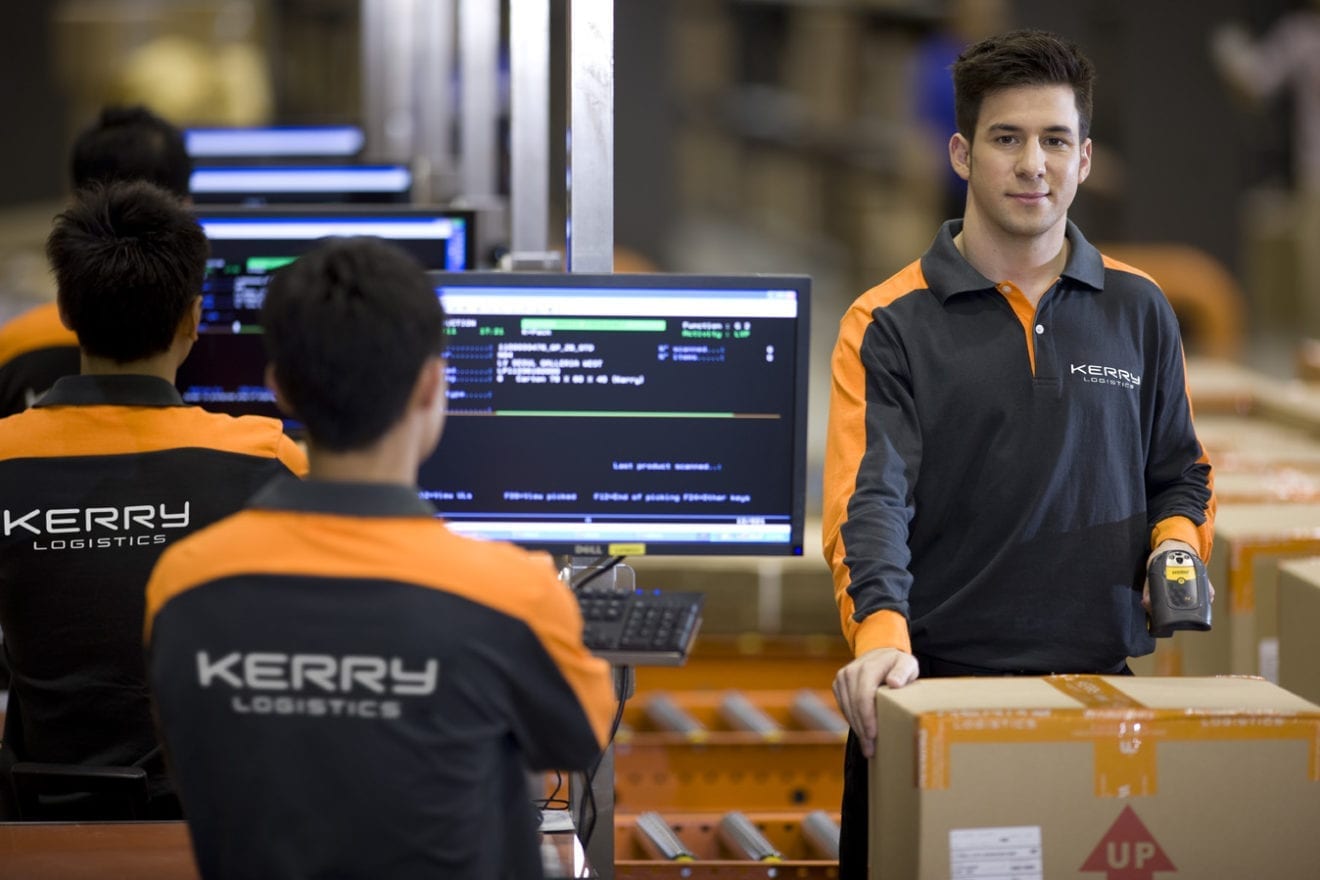
    Hong Kong-based Kerry Logistics is expanding its e-commerce fulfillment capabilities through a joint venture with Asian e-commerce specialist E-Services Group. Their joint venture, Kerry ESG (HK) Company Limited, will combine Kerry Logistics’ global supply chain capabilities with ESG’s technology platform, global marketplace networks, and e-commerce expertise to offer etailers cost-efficient solutions internationally.

    ESG, founded in 2002, claims to be ‘the leading international end-to-end e-commerce company in Asia’, headquartered in Hong Kong, with offices in China, Singapore, and Taiwan. As the strategic partner to over 20+ leading global marketplaces such as Rakuten, JD.id, and Cdiscount, ESG not only enables its 28,000+ etailers to grow their businesses internationally through marketplaces, but also supports them with comprehensive shipping solutions.

    Kerry ESG, set to debut in March 2019, aims to become one of the leaders in global e-commerce fulfillment solutions, enabling etailers to deliver products to customers anywhere in the world quickly and cost-effectively. Through direct integration with leading shopping carts and global marketplaces, etailers using Kerry ESG’s services will be able to seamlessly manage their order fulfillment, inventory, and returns to and from multiple logistics centres through one platform.

    William Ma, Group Managing Director of Kerry Logistics, said: “We are thrilled about the growth opportunities in global e-commerce. With Kerry ESG, we are creating a unique platform with total solutions from upstream marketing to downstream logistics that will capitalise on the booming international marketplace model to facilitate the exports for our international brand customers. Combining forces as industry leaders, Kerry Logistics and ESG are well-positioned to unlock the potential in the market with this new joint venture.”

    Alan Lim, Founder and CEO of ESG, added: “Winning at e-commerce means getting every piece of the puzzle right, and fast, reliable fulfillment is a critical component of success. This partnership gives etailers access to an extensive distribution network to support e-commerce fulfillment in every market and with every online channel. With Kerry Logistics we have found a great partner, whose capabilities complement ours and whose culture and vision matches that of our team. I am excited about how we can grow this business together.”

    Kerry Logistics said it has identified cross-border e-commerce, particularly between Greater China and ASEAN, as a major growth sector which plays to its strengths. The new partnership with ESG, which is the official partner of leading marketplaces including JD.id, Rakuten, and Newegg.com, will play a pivotal role in strengthening the foothold that the two companies have in this area.

    Kerry Logistics has a network covering 53 countries and territories, and is managing 53 million sq ft of land and logistics facilities worldwide.

  • Wholesale apparel portal Joor eyes Asia as its gets $16 million

    Wholesale apparel portal Joor eyes Asia as its gets $16 million

    US wholesale platform and data exchange Joor has raised US$16 million in Series C funding. The financing round was led by Itouchu, one of Japan’s leading conglomerates with participation from existing investors Canaan Partners and Battery Ventures. Joor has now raised $36 million since its launch and the new cash will fund ongoing product innovation for both brands and retailers, as well as expansion into Asia.

    Through the partnership with Itouchu, Joor will be able to access more than 150 US and European brands, and accelerate the entry of new overseas brands into Japan.

    “Joor’s dominance in North America and Europe makes it the natural choice for expansion into the Japanese market. We are excited to continue supporting their strategic growth,” said Yoshihiro Fukushima, executive officer of Itochu.

    “At Joor, our focus from day one has been the simplification of the wholesale process for brands and retailers,” said Kristin Savilia, CEO of Joor. “Our mission is to bring the industry together with one platform. The team at Itouchu supports this mission and we are excited to have its expertise and support to enable Joor to expand into Asia, furthering its global dominance.”

    Joor connects 8600 brands within 53 categories and 200,000 retailers in 144 countries into one wholesale platform.

    Luxury companies including Kering, LVMH, Richemont, Balenciaga, Alexander McQueen, Saint Laurent and Marc Jacobs have moved their wholesale business exclusively to the platform.