
Retail News CRM

Tag: online shopping

  • Generation Z to make big retail impact

    Generation Z to make big retail impact

    New challenges lie ahead for retailers in Asia as Generation Zers embrace technology and earn more.

    In its newly released report How We Like to Shop Online, CBRE says Generation Z is expected to have significant influence over the retail market in the coming years as their income levels are set to increase rapidly upon joining the job market.

    Generation Z refers to people born after the Millennial Generation, loosely defined as from around 2000.

    “Having spent most of their lives using the internet and other related technology, Generation Z’s demographic of consumers has distinct shopping behaviors in comparison to other demographic segments,” says Jonathan Hsu, head of occupier markets research, CBRE Asia Pacific.

    “Key aspects of their online shopping habits include stronger trust in online information; more activity on social media; and needing a sense of differentiation. These factors demonstrate the increasingly important role of technology in shaping the decision-making process of consumers,” said Hsu.

    In order to remain competitive in the digital age, retailers and landlords need to be proactive in reaching out and engaging with their consumers. Mobile shopping is most prevalent in emerging markets, and in many places, smartphones are the first – and sometimes only – point of internet access for many consumers, therefore, are playing a key role in driving the growth of online retail.

    Smartphone apps and social media can provide valuable information and insights into consumer behavior, for example, push notifications for smartphone apps or social media platforms based on consumers’ shopping history, location and preferences can help personalise their shopping experience.

    “Landlords and retailers need to be more digital-savvy, keeping pace with the latest trends in smartphone applications and social media so they can build a stronger relationship with consumers especially those from Generation Z,” said Joel Stephen, senior director, head of retailer representation, CBRE Asia.

    “These digital platforms are two essential mediums of online retailing, which should be integrated into retailers’ omni-channel strategies in order to capture Online-to-Offline (O2O) business opportunities.”

    With around 70 per cent of consumers in Asia Pacific collecting their online orders in-store – and 90 per cent of them purchasing additional items when picking up their online order – click-and- collect services are also an effective way to drive in-store sales, creating a synergy between both online and offline platforms.

    CBRE says landlords should thus collaborate with tenants to help merge their online and offline offering by providing the necessary facilities and regular renovations.

  • Chinese, South Koreans prefer online shopping to stores

    Chinese, South Koreans prefer online shopping to stores

    Online shopping has overtaken bricks and mortar retail as the most popular method of purchase in several Asian markets.

    That stunning revelation comes from a new report from real estate company CBRE How We Like to Shop Online which is based on responses from online consumer panels. CBRE warns the findings represent the emerging behavior of this important and fast-growing segment of all markets, but may not fully represent consumer behavior in markets with low online penetration.

    That said, the conclusions remain relevant to traditional retailers.

    “While 50 per cent of Asia Pacific consumers still physically visit a shop to make a purchase, findings show that in emerging markets such as China and India, the majority of respondents – 76 per cent and 68 per cent respectively – use online shopping as their most commonly used method of making purchases,” said CBRE in an overview of the report.

    “This is also the case in more developed markets of South Korea and Taiwan where 73 per cent and 55 per cent of consumers respectively, also said their primary method of making purchases is online.”

    “For emerging markets, given the lack of quality retail space – particularly in lower tier cities – advances in technology and logistics networks mean that online retail is often the most efficient way for retailers to reach their customers,” said Jonathan Hsu, head of occupier markets research, CBRE Asia Pacific.

    Along with convenience, pricing ranks as one of the top reasons why consumers shop online – 63 per cent of the total number of respondents surveyed identified this as their key deciding factor. These correspond to the same deciding factors when shopping at physical stores.

    “With 56 per cent of Asia Pacific consumers using their desktop or laptop to check prices of products online, price transparency is an important aspect for retailers to consider,” said Joel Stephen, senior director, head of retailer representation, CBRE Asia.

    “We recommend retailers review their regional pricing strategy, particularly in China and South Korea where more than two-thirds of consumers identified lower prices and better offers as the main reason behind their decision to shop online. In Asia Pacific, foreign brands – in particular luxury – are often more expensive than other regions due to import duties, exchange rates and the franchise model impacting the price. This may encourage consumers to consider alternative sales channels, such as overseas online markets, in search of better deals,” said Stephen.

    The ability to compare products without having to physically visit individual stores is another key factor for the region’s consumers when shopping online. This trend is more prominent in emerging markets such as Vietnam (64 per cent), China (61 per cent) and India (58 per cent) where quality shopping centers or shops are often located far from each other.

  • Cooking exhibits drive late night time retail gross sales

    Cooking exhibits drive late night time retail gross sales

    Well-liked late night time cooking exhibits are proving a gentle driver of gross sales for on-line meals retailers.

    News from South Korea exhibits that as cooking exhibits achieve reputation in late night time time slots, TV viewers are buying extra meals by cellular, particularly between 10pm and midnight.

    In accordance with Ticket Monster, an internet buying website in Korea, which analysed cellular buying patterns tendencies from January to Might, gross sales of meals from 10pm to 12pm are 65 per cent larger than different time segments. As well as, cellular meals gross sales in the course of the time phase elevated 51 per cent over the identical interval of the earlier yr.

    Many cooking exhibits together with “Three Meals a Day” and “Home Prepare dinner Grasp Bake” on tvN, “Please Take Care of My Fridge” (pictured above) on JTBC and “What Shall We Eat As we speak?” on Olive TV air after 10pm, and tempt viewers with their tasty choices.

    Ticket Monster famous that gross sales of prompt meals elevated 45 per cent through the time phase over the earlier yr, and recent meals elevated 102 per cent. Gross sales of pork stomach soared 156 per cent adopted by dried seaweed (134 per cent), swordfish (81 per cent) and mackerel (52 per cent)

    An official at Ticket Monster stated: “As cooking exhibits appeal to extra viewers, extra cellular buyers try to prepare dinner their very own meals. To attraction to those shoppers, we’re getting ready top quality recent meals to extend our competitiveness.”

  • SingPost POPStation wins international honour

    SingPost POPStation wins international honour

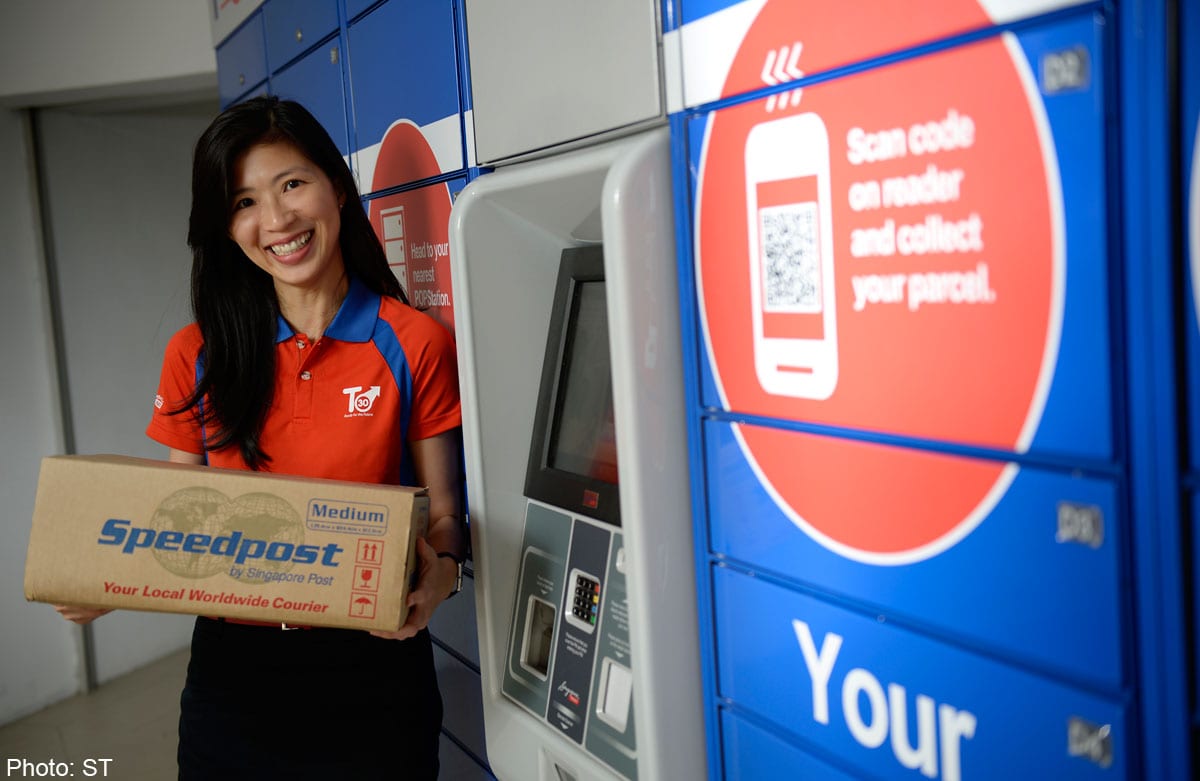
    Singapore Submit’s POPStation sensible lockers idea has gained a world accolade in Belgium.

    SingPost has rolled out a community of in extra of 100 POPStations which permit internet buyers to have items delivered to a set level accessible 24-seven, circumventing the have to be at house or office to obtain parcel deliveries.

    The idea was judged the most effective idea within the Retail Buyer Entry class on the 16th World Mail Award 2015. It’s the third consecutive annual honour on the awards – SingPost gained within the eCommerce class in 2014 and for Individuals Administration in 2013. It had beforehand gained the highest award for Mail High quality.

    The World Mail Awards, the annual “Oscars” of the mail and categorical business, recognise the achievements and greatest practices inside the postal and categorical sector. These awards are introduced to postal operators or service suppliers worldwide, which have been reviewed by a panel of judges comprising Common Postal Union (UPU) members, worldwide postal business leaders and customers.

    Dr Sascha Hower, group COO of SingPost stated it was encouraging to obtain the distinguished worldwide accolade.

    “It recognises our funding and pioneering efforts to innovate and supply an built-in retail platform. With our POPStations we at the moment are delivering a seamless and extra handy on-line buying expertise for shoppers. We need to make receiving parcels so simple as attainable and hopefully delight our clients within the course of. POPStations are a part of our effort to offer shoppers a multiplicity of touchpoints and enabling merchandise returns.”

    Lim Ho Kee, Chairman of SingPost, added: “This World Mail Award recognises our endless quest for innovation, productiveness and customer support to convey larger worth to SMEs and retail clients. We proceed to have grave considerations about mail income decline and encourage our individuals to grab alternatives and use IT to serve clients in new methods. Confronted with challenges like e-substitution and way of life modifications, SingPost is on a ‘burning platform’ and we have to rework and diversify our enterprise to stay related. Therefore, we launched into our transformation in 2003 after itemizing. SingPost’s core competency in final mile supply and trusted model present us a superb basis to develop the ecommerce logistics enterprise in Singapore and the area. The POPStation is one such instance the place we lead and innovate the native ecommerce panorama with an clever set-up for parcel supply and returns.”

    At POPStations, shoppers cannot solely obtain shipments, however simply organise returns of merchandise for trade, demonstrating, says SingPost, how on-line and mobility will help make their lives simpler.

    SingPost plans to increase the community to 200 inside the subsequent two to 3 years.

  • Bebelian flourishes on celebrity cast-offs

    Bebelian flourishes on celebrity cast-offs

    A unique Indonesian eCommerce venture is making money by selling local celebrities cast-offs to starry-eyed fans.

    And if the concept works in Indonesia, surely it’s a fit for other Asian markets, like Thailand and Korea, where celebrity-spotting is almost a national obsession.

    As TechInAsia.com reports, in an article written by Lina Noviandari. and translated from Indonesian,Bebelian founder Khairiyyah Sari was a former executive fashion and beauty editor at Indonesia’s Femina magazine. It was a role which kept her up to date – and in stock – with everything related to branded apparel and accessories, particularly handbags. Her work in the media also allowed her rare access to the nation’s exclusive pool of models, actresses, and celebrities who were deeply entrenched in the archipelago’s fast-moving fashion world.

    Having cultivated relationships with many socialites and famous women, those in Indonesia’s fashion and beauty industry came to endearingly know her by one name; Sari. In mid-2011, however, she resigned from her safe and cushy media job to chase down a daring eCommerce dream. Bebelian was born, with the vision to sell branded, fashionable apparel and accessories that were pre-owned by Indonesian celebrities.

    “On eBay, I found Hollywood celebrities putting their goods up to be auctioned. I then thought, Indonesia should have a place that sells items previously owned by celebrities. Because I knew a lot of them, I was sure they had a lot stuff that they rarely used. And certainly, there were many fans out there who wanted a piece of their style, right?”

    Realising she couldn’t do it alone, Sari invited her friend Dewi Rezer – an Indonesian model, TV presenter, and actress – to help develop the company. Now a two-woman operation, Bebelian had an even deeper network of celebs it could tap into for secondhand goods. Sari went right to work creating the site and populating it with content, while Rezer helped legitimise the business and build buzz in the right circles.

    As a fashion journalist, Sari already knew that people in Indonesia bought branded apparel that was endorsed or pre-owned by celebrities, but that there wasn’t a formal place where people were doing it.

    She also knew that there was no website that was specialising in pre-owned celebrity handbags. With this in mind, she decided to focus her site solely on handbags in order to capture an early niche audience.

    “Because I was a fashion journalist, the concept of an online store that I made didn’t seem too arbitrary. Each celebrity has to make a profile, so it’s sort of like a magazine. Complete profiles are linked with the celebrity’s own signature style, including handbags. Each bag is photographed in our studio and celebrities share tips on how to wear them.”

    Sari claims that apart from the potential earning power of Bebelian, the site also has a mission to provide a means for average consumers to get their hands on designer brands at affordable prices. According to her, buying a pre-owned, branded handbag from a celebrity has a better value proposition than buying a counterfeit one.

    However, when you look at the site, it’s plain to see that the prices are somewhere between what they’d be for counterfeit items versus real branded ones. So in that sense, shopping on Bebelian is still a step above buying fake branded items, but still not as expensive as picking something up from the Gucci store.

    On Bebelian, users can browse via brands, celebrities, price, or product. According to Sari, around 30 celebrities have signed up, and she says she’s been dividing her time between Bebelian and her own private consultancy. She declined to comment on Bebelian’s traction, including the number of transactions it has facilitated to date. However, Bebelian currently features brand names like Chanel, Gucci, Guess, and Louis Vuitton as well as famous local names such as Astrid Tiar, Sandra Dewi, Jill Gladys, and Edies Adelia.

    While Bebelian is a unique business model, it does see indirect competition in local site WokuWoku, an eCommerce firm that sells clothes and apparel from fashion lines owned by celebs. The primary difference is that Bebelian sells designer brands from the personal closets of celebrities, while WokuWoku deals in brands that are part of celebrity-made clothing lines.

    However, Sari says she doesn’t need to worry too much about competitors just yet, as Bebelian seems to be performing beyond her expectations.

    “The next obstacle we face is that our celebrities don’t have any more items they want to sell,” says Sari. “Because of this, we must always be looking for new celebrity partners to feature on Bebelian.”

  • Online shopping on the rise in Vietnam

    Online shopping on the rise in Vietnam

    Online shopping in Vietnam was continuing to increase and was well-positioned to hold the key to success for e-commerce in Vietnam, according to the MasterCard Survey on Online Shopping 2014.

    The MasterCard Survey is commissioned annually and was conducted online from October to December last year in 14 Asia-Pacific countries and 11 Middle Eastern and African countries with a minimum of 500 respondents per country.

    The number of Vietnamese people who shopped online in the last three months increased from 68.4 to 80.2 percent, recording the second highest growth rate (11.8 percent) in the Asia-Pacific region, the survey revealed.