Retail News CRM

Tag: online shopping

  • Online boom not deterring global retailers

    Online boom not deterring global retailers

    Global retailers are undeterred from expanding their bricks and mortar stores this year despite growing online sales, says a new report.

    In the seventh edition of How Active Are Retailers Globally?, real estate service company CBRE also says China remains the top target market of global retailers in Asia-Pacific. Its study covered more than 150 major international brands based in the Americas, Asia Pacific and EMEA.

    While European countries dominate the target destinations this year, China is the top target market in Asia-Pacific and the fourth most popular globally, with 27 per cent of retailers looking to expand there. This is followed by Hong Kong in sixth position (24 per cent), Japan seventh (22 per cent) and Singapore ninth (21 per cent).

    Globally, the top three were Germany (35 per cent), France (33 per cent) and the UK (29 per cent).
    China and Hong Kong maintained fourth and sixth place respectively, while Japan (seventh), Singapore (ninth) and Australia (11th) all rose higher in the rankings, up from 13th, 18th and 15th respectively.
    Most Asia-Pacific markets saw increased interest for this year compared with last, except for China and South Korea, which softened somewhat, says the report. Meanwhile, interest in Southeast Asia surged, with Malaysia (10 per cent), Indonesia (9 per cent ), Thailand (8 per cent), Vietnam (8 per cent) and The Philippines (8 per cent) all receiving more than double the interest they saw last year, when those markets achieved only between 1 and 3 per cent.

    When questioned about the risk factors facing them in the coming year, brands indicated that real estate cost escalation (56 per cent) and unclear economic prospects (42 per cent) continue to be at the forefront of their minds.
    “We’re seeing more of a challenging economic environment, and concerns such as high  operating costs and a lack of quality space mean retailers are somewhat more wary this year,” says CBRE head of research for Asia Pacific Dr Henry Chin.

    “However, even as markets such as China and Hong Kong are seeing a slowdown, we see increasing numbers of opportunistic retailers looking to enter markets like Hong Kong, supported by strong underlying consumer demand. Japan and Australia remain attractive, while Southeast Asia showed strong growth because of opportunities for retailers around an expanding middle class and stronger economic growth.”

    He says there are still opportunities for retailers to grow their business in Asia, as the region has four of the top 10 most popular destinations worldwide.
    “The goal now for all brick-and-mortar retailers is to build an engaging offer that encourages people to stay longer and spend more,” says CBRE senior director and head of retailer representation Joel Stephen.
    Of the brands surveyed, 83 per cent suggest their physical store expansion plans for this year will not be affected by the growth of eCommerce, and only 22 per cent see online retailing as a threat to their business.

    At the same time, retailers are cautiously optimistic about physical expansion. Of those questioned, 17 per cent have large-scale ambitions, many of them looking to open more than 40 stores this year (up from 9 per cent last year). Most retailers (67 per cent) are considering up to 20 stores.
    “A physical store in key locations is still critical to the strength of a brand’s image,” says Stephen. “Stores still need to create an emotional affinity with shoppers, and customers still feel a need to go into stores, to touch a product and enjoy the feel-good factor associated with a particular brand experience.

    “The store is integral to the shopping journey and can be used in a number of different ways, such as to click and collect, research of the product or brand, or to test the product. It isn’t solely about the transactional side.”

    In a new trend, a fifth of brands, largely from the Americas and EMEA, intend to expand into travel hubs such as airports and train stations this year to gain access to high footfall in busy locations. However, for Asia-Pacific retailers, shopping malls are still the most-preferred destination by far (nearly 90 per cent).
    While globally the key concern for brands in lease negotiations is “lease length”, Asia-Pacific retailers are most concerned with turnover rent clauses as well as changing consumer behaviour (40 per cent), which is higher than the global average (31 per cent).


  • China’s cross-border online retail shows strong progress

    China’s cross-border online retail shows strong progress

    China’s cross-border e-commerce market has shown a strong growth during the six-month period ending November 2015, according to research firm Mintel.

    Boosted by favourable government policies and an increasing Chinese propensity for foreign goods, many Chinese consumers are now interested in buying foreign products online. Mintel’s new report ‘Haitao Retailing’ reveals that almost 58 per cent consumers bought foreign products online from domestic shopping websites, with quality of products (63 per cent) and pricing (38 per cent) as the prime concerns when shopping for imported products online.

    The cross-border online shopping market value grew at a compound annual growth rate (CAGR) of 63.3 per cent in 2015, while the total online retail market during the same period saw 48.8 per cent CAGR growth.

    “The continued growth of online retail, backed by increased consumer interest in spending time online, especially in rural areas, combined with the government’s support of online sales and an uptake of m-commerce and online payment systems, indicate that online retail will continue strong growth in the near future. Indeed, the future outlook for ‘haitao’ shopping looks good. However, it is an increasingly competitive market. Brands need to stand out by offering something different. Chinese consumers want top quality, and they need to have that quality proven through good information and good service,” said Matthew Crabbe, APAC research director at Mintel.

    Comparing Chinese domestic and overseas online shopping websites, foreign sites are perceived by shoppers to do better in terms of product quality, while domestic websites do better in most other areas, such as good value for money spent and fast delivery.

    “Not all Chinese consumers feel the need to have foreign products or services. However, fashion, furniture, food and drinks are much more significant online shopping categories, representing opportunity for online retail market growth. And we are seeing there is another great opportunity for niche brands, with specialist products having the potential to make an initial market entry into China via overseas online retail channels,” added Crabbe.

    “Consumer attitudes to cross-border online shopping can be summarised with reputation, reviews and recommendations. Helpful advice and information about products, a good return policy and a variety of delivery options are important in building reputation. Good service and good products are the key areas where online retailers must learn to compete in the future,” Crabbe concluded. (NA)

  • Online shopping boom in Korea risks mall debt downgrades

    Online shopping boom in Korea risks mall debt downgrades

    South Koreans are spending record amounts shopping with their mobile devices, raising the risk of debt downgrades for retail giants still focused on mall traffic.

    The odds that the nation’s No 1 department store operator, Lotte Shopping Co, will miss debt payments in the coming 12 months doubled to 0.64 per cent from 0.29 per cent a year earlier, according to Bloomberg’s default-risk model that takes into account a company’s finances and stock moves. That suggests it merits a non-investment debt rating. Default risk using the model also climbed for Shinsegae Co, the third-ranked department store operator.

    Moody’s Investors Service and Fitch Ratings have both changed their outlook for Lotte Shopping’s score to negative from stable this month, following a cut in Shinsegae’s outlook to negative by Korea Investors Service last month. The nation’s mobile shopping transactions surged 64 per cent to a record 24.4 trillion won (S$28 billion) last year while sales at department stores dropped for a second straight year, according to Statistics Korea data.

    “We don’t expect a meaningful improvement in Lotte Shopping’s earnings this year,” said Hong Kong- based senior analyst at Moody’s, Wan Hee Yoo.

    Lotte Shopping expects sales in its overseas business to grow this year and it also seeks to increase domestic sales by linking its online and off-line businesses, said its spokesman on Wednesday.

    Shinsegae has been making efforts to reduce its debt ratio since last year, including by selling shares of Samsung Life Insurance Co and issuing perpetual bonds, said its spokesman on Wednesday.

    The spread on Shinsegae’s dollar notes due in 2045 rose to 185 basis points on Feb 23, the highest since its issue in May, showed Bloomberg-compiled data. Lotte Shopping’s 2017 bond spread has fallen 14 basis points this year to 130.

    The nation’s online shopping market is forecast to grow to more than 100 trillion won by 2019, with purchases on mobiles making up about 75 per cent, said Korea Ratings last month, citing Bain & Co’s projection.

    Total transactions on the Internet increased 19 per cent to 53.9 trillion won last year, according to Statistics Korea data.

    South Korea’s smartphone penetration rate is the world’s fourth highest at 83 per cent as of end-March, according to a KT Economics & Management Research Lab report released in July.

  • Thailand gains DHL eCommerce

    Thailand gains DHL eCommerce

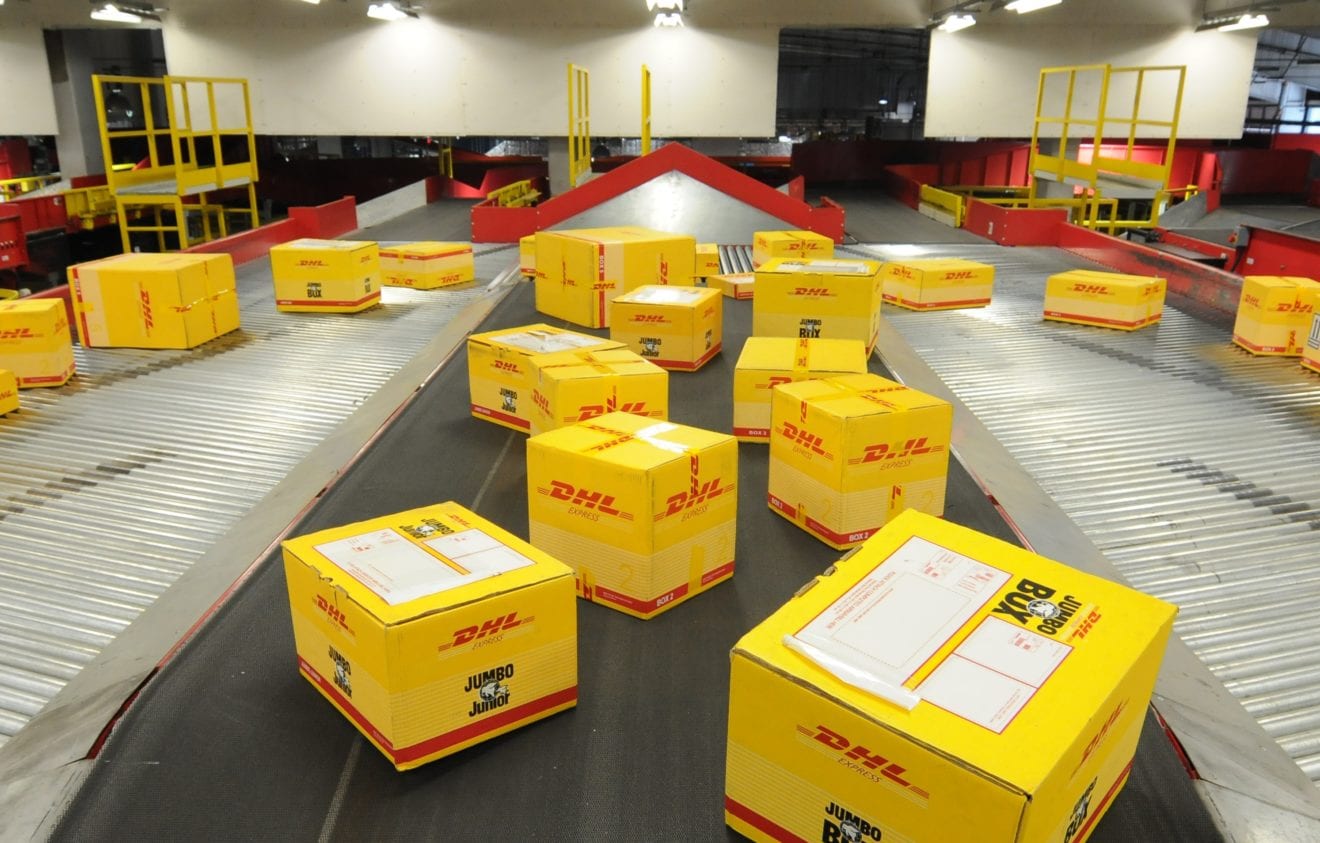
    Thailand has been identified as a key market in Southeast Asia for the launch of the DHL eCommerce domestic delivery service.

    The end-to-end service for Thai eCommerce merchants offers next-day delivery to key urban centres with an easy-to-use portal for preparing shipments and full tracking visibility for consumers. It has been introduced as Thailand’s eCommerce market gathers strength.

    DHL eCommerce, a division of global logistics company Deutsche Post DHL Group, says it aims to enable a better eCommerce experience for both consumers and merchants through efficient logistics and a seamless online shopping experience.

    Major additions will be made to DHL’s delivery infrastructure in the country, including a 3000 sqm central distribution centre in Bangkok and a network of more than 20 depots throughout the nation to ensure full coverage.

    DHL plans to more than double the number of depots in Thailand by next year, and expand its fleet, primarily using two-wheel vehicles to deal with the traffic in major cities.

    DHL eCommerce’s fleet of vehicles will provide next-day delivery to all urban areas, and a two- to three-day delivery to other locations. All merchants have access to cash on delivery (COD) with daily remittance and access to a multilingual call centre.

    Launching in Thailand is seen by the company as a showcase for Strategy 2020, the corporate strategy of Deutsche Post DHL Group, which has renamed its mail division as “Post – eCommerce – Parcel”. DHL has been in Thailand since 1973 with its other business units – DHL Express, DHL Global Forwarding and DHL Supply Chain.

    “The Thai eCommerce market is expected to more than triple in size to EUR 3.6 billion ($3.94 billion) between now and 2020, and with this investment we are well positioned to support the growth of eCommerce businesses in Thailand,” says DHL eCommerce CEO Thomas Kipp.

    “We see major strategic opportunities for eCommerce growth in Thailand, particularly with the ASEAN Economic Community, which is expected to increase the movement of goods within the region.

    “Despite eCommerce already being a billion-dollar sector with extremely rapid adoption, Thailand’s share of the market is still relatively low compared to other high-growth economies,” says DHL eCommerce Asia Pacific CEO Malcolm Monteiro. “Only 1.7 per cent of total sales in Thailand are from eCommerce, compared to more than 10 per cent in China.

    “Thailand is ranked as one of our top-priority markets in South-east Asia: its expected annual market growth of more than 20 per cent (from 2014 to 2020) is likely to be largely driven by significant numbers of SMEs beginning to extend their business models into online marketplaces.”

    DHL eCommerce Thailand MD Kiattichai Pitpreecha says businesses need logistics services that keep up with extremely rapid changes in consumer expectations.

    “This makes the need for a tailored eCommerce delivery service greater than ever before so merchants, especially SMEs, can focus on their core business and grow faster.”

    Monteiro says the company’s success in India and China have proven that customer service bolstered by robust and scalable end-to-end delivery networks are essential for winning eCommerce market share.

  • Criteo notes eCommerce spike

    Criteo notes eCommerce spike

    In the two weeks leading up to the Chinese New Year, eCommerce sales in Asia grew by 40 per cent with 25 per cent more consumers shopping online.

    Three in 10 transactions were completed on a mobile device, according to performance marketing technology company Criteo in Hong Kong. Its findings are based on an analysis of 174 million online transactions in Hong Kong, Malaysia, Singapore, Taiwan and Vietnam.

    “Because of the traditional practice of wearing new clothes to symbolise a new beginning, consumers are doing a tremendous amount of online shopping two weeks before Chinese New Year,” says Criteo South-east Asia/Hong Kong/India/Taiwan MD Yuko Saito. “Based on 2015 data, sales on mobile devices in particular have hit record numbers.”

    In its eCommerce Industry Outlook 2016, Criteo cites three trends impacting Asian shoppers during the Chinese New Year season…

    Smartphone shopping will keep gaining ground: Smartphones are the first point of internet access or brand interaction for many consumers. In South-east Asia, Hong Kong, India and Taiwan, on aggregate, more than 45 per cent of online transactions are happening on mobile devices, compared to 29 per cent in the second quarter of last year. Indonesia was the highest at 56 per cent, followed by Singapore at 45 per cent.

    Retailers will see a high web influence on their in-store sales: Most consumers are researching online before or while visiting a store. According to Google, 80 per cent of 10 shoppers use a smartphone inside the store to help them with product research and price comparisons. Criteo says retailers can acquire a better view of customer behaviour by connecting with them via branded apps or beacon technology, before matching each customer’s email ID with loyalty programs at in-store POS terminals.

    Instant delivery services will become common: Order fulfilment will be a big focus for retailers this year, with many offering delivery options to match Amazon’s Prime Now service. Both online and “click-and-brick” retailers will be trying this strategy through specialised third-party eCommerce logistics providers. Faster delivery at lower charges will also drive growth of cross-border shopping.

    “During special occasions like Chinese New Year, we observe instances of intensive, last-minute shopping, where consumers take less time to consider a purchase and require products to be delivered on short notice for personal use or gift-giving,” says Saito. “Taking a three pronged approach – engaging consumers on the mobile web or on mobile apps, leveraging consumers’ web-browsing data to deliver personalised in-store and mobile shopping experiences, and investing in instant delivery services will be crucial to increasing sales conversions.”

  • Online shopping is killing department stores in Singapore

    Online shopping is killing department stores in Singapore

    Even grocery items are being bought online now.The rise of e-commerce is sounding a death knell for Singapore’s once-ubiquitous department stores and gadget shops, according to a report by property consultancy group JLL.

    The number of shoppers buying groceries and computer equipment rose around 70% in the last two years, while over 60% of shoppers already buy some clothing or footwear online. The report said that shoppers are buying lower value goods online and higher value goods over $500 in a physical store.

    “We expect online sales of groceries and electronic goods to grow exponentially in the next three years,” JLL said.

    As a result, department stores, supermarkets and houseware shops have reduced in size over the past few years, particularly in suburban malls. In contrast, food and beverage, fashion, beauty and health trades have taken up more space in the last seven years.

    “As shoppers tend to buy lower value goods online, malls are likely to attract higher-priced fashion and beauty brands, even in the suburbs. We expect to see electronics and grocery stores cutting back further in the next three years as more shoppers buy these goods online,” JLL said.

    Latest data from the InfoComm Development Authority (IDA) showed that about 1.44 million Singapore residents shopped online in 2014, 30% higher than in 2012.

    The sharp increase came from shoppers above 35 years old, as those in this group that used portable devices to access the internet rose 50% over two years. Over 70 per cent of those below 35 years old already shop online in 2012.

  • Smartphones outpace tablets in Asian eCommerce

    Smartphones outpace tablets in Asian eCommerce

    For the first time, 34 per cent of browser-based online transactions globally are now made on a mobile device, compared to slightly more than 30 per cent last quarter.

    And smartphones are starting to outpace tablets.

    These were key findings of the fourth quarter edition of the Mobile Payments Index by Global payments technology company Adyen, which tracks mobile payment data from browser-based transactions across its client base and monitors Asian eCommerce shopping patterns.

    It also found that many consumers in Asia are increasingly using mobile devices to shop online. This is being driven particularly by such major payments methods as Alipay, JCB and UnionPay. JCB had the highest share (54 per cent) of mobile payments on the Adjen platform, up from 47 per cent the previous quarter. Alipay increased to 44 per cent (up from 35 per cent) while UnionPay reached 31 per cent (from 23 per cent).

    “The checkout stage of the shopper journey is not the end, but the beginning of an on-going relationship with the consumer,” says Adyen Asia Pacific president Warren Hayashi. “Merchants with a frictionless mobile checkout experience are driving repeat traffic, especially in Asia.”

    For the first time, the index shows that smartphones have overtaken tablets as the preferred device for online shopping – 17.5 per cent on smartphone against 16 per cent on tablet, compared to 14 per cent and 17 per cent respectively the previous quarter.

    When it comes to mobile payments globally, the trend to use smartphones rather than tablets continues for the 10th consecutive quarter. Last quarter this share was up 2 per cent to 68 per cent on smartphone versus 32 per cent on tablet.

    Smartphone use far outweighed tablet in Asia, with 29.5 per cent of online payments on a smartphone compared to 4.5 per cent on a tablet.

    In terms of average transaction value, iPad led the way for the first time at $107, edging out not just smartphones but also desktop/laptop, the traditional leader (at $106). Following were Android tablets at $86, iPhone at $83 then Android smartphones at $73.

    Adyen has been tracking the evolution of mobile payments since June 2013. The index is based on its global browser-based mobile payment transaction data. It does not track in-app mobile payments. With its headquarters in Amsterdam and San Francisco, Adyen serves more than 4500 businesses, customers including Airbnb, Booking.com, Crocs, Dropbox, Facebook, KLM, Mango, Netflix, Spotify and Yelp.

  • Pos Indonesia eyes eCommerce boom

    Pos Indonesia eyes eCommerce boom

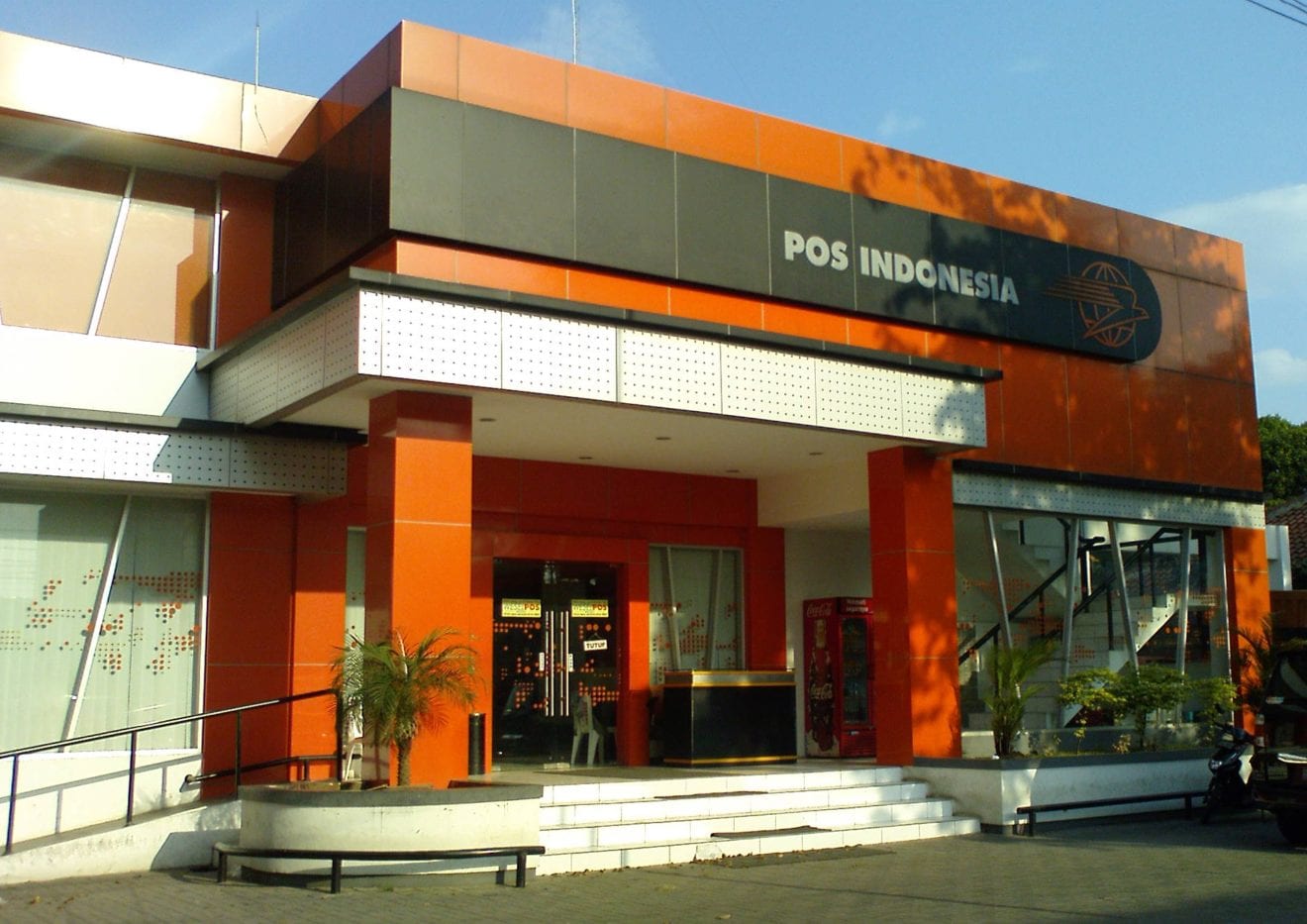
    Indonesia’s national postal service, Pos Indonesia, is mulling a spin-off its logistics arm in 2019 an IPO to capitalise on the online shopping boom.

    Pos Indonesia is aiming for Rp 11 trillion ($796 million) in revenue within the next two years, according to its director of technology and financial services, Indyruwani Asikin Natanegara. One third of this would come from its logistics arm, Pos Logistik Indonesia.

    This would more than double Pos Indonesia’s estimated revenue of about Rp 4 trillion last year, and be a nearly eightfold increase (about Rp 500 billion) for Pos Logistik Indonesia.

    Established four years ago, Pos Logistik Indonesia may make its trading debut before its holding company. It is something Pos Indonesia has been discussing for three years. With a network of 4367 offices and more than 28,000 agents, Pos Indonesia has established ties with such eCommerce companies as MatahariMall and Zalora Indonesia, in providing pickup and delivery services.

    Pos Logistik Indonesia’s business solutions director Yan Hendry Jauwena says the idea is to provide logistics for eCommerce companies. It has formed a partnership with Singapore-based technology firm Anchanto, which will be offering its services for warehousing and inventory, processing orders and delivery.

  • Online Shoppers Rose in China, Supported Alibaba’s Revenue Growth

    Online Shoppers Rose in China, Supported Alibaba’s Revenue Growth

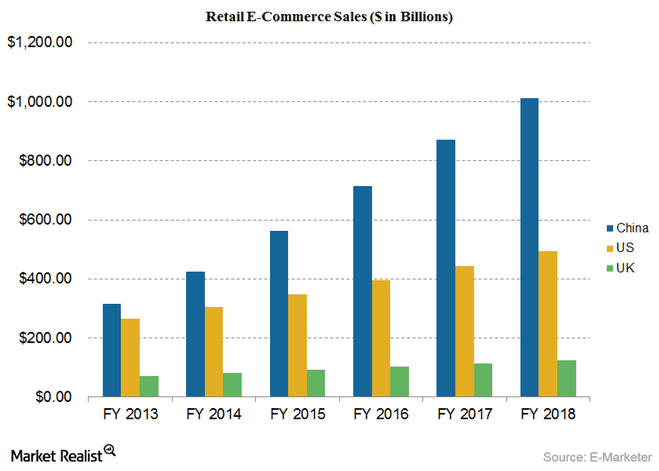
    According to eMarketer, China and the US accounted for ~55% of the global Internet retail sales in fiscal 2014. It also mentioned that China and the United Kingdom have a higher proportion of “online-to-total retail sales compared to the US.” It’s important to note that ~27.5% of China’s population bought goods and services online in fiscal 2014 while 10% of the total retail transactions were through the online mode.

    In comparison, 73% of the United Kingdom’s population made online transactions. E-Commerce accounted for 13% of the overall retail sales in fiscal 2014. While the United Kingdom is positioned eighth in total retail sales, it’s third in global online retail sales.

    part2

    Alibaba, Amazon, and eBay will look to capitalize on the huge potential of rising online sales. This could be positive for their revenue and bottom line.

    Online shoppers rose in China

    According to eMarketer, there were 148 million online shoppers in China in 2010. The shoppers accounted for 11% of the population and 32% of the total Internet users in the country. By the end of fiscal 2013, the number of online shoppers in China grew to 302 million. The shoppers accounted for 22% of the population and almost 49% of total Internet users in the country. By the end of fiscal 2020, the online shoppers will likely to grow to 700 million. Alibaba saw its revenue rise from $1.8 billion in 3Q13 to $3.5 billion in 3Q15.

    Amazon is part of the iShares U.S. Consumer Services ETF (IYC) and the First Trust Dow Jones Internet IndexSM Fund (FDN). It accounts for 6.80% and 11% of the ETFs, respectively.

  • Chinese shoppers feel safer online

    Consumers across Southeast Asia and Greater China feel safer paying in a brick and mortar environment as opposed to online; sole exception is China

    According to the inaugural MasterCard Safety and Security Index, consumers across Southeast Asia and Greater China cited identity theft and ATM-related fraud as the top two security concerns when it comes to electronic payments.

    Some 42 per cent of consumers in Southeast Asia (Indonesia, Malaysia, Philippines, Singapore Thailand, and Vietnam) were most concerned with ATM-related fraud such as a stolen card, card cloning or skimming. In the Greater China markets (China, Hong Kong and Taiwan), this figure was 31 per cent.

    But the biggest surprise was in confidence in shopping online. The Index showed that in general, consumers across Southeast Asia, and the markets of Taiwan and Hong Kong still feel safer paying in a bricks and mortar environment than buying online. China differed, being the only market where consumers felt paying online was safer than in a physical store; even more so than in Singapore.

    Almost every consumer polled in the Greater China markets had made an online payment in the past year. Consumers in China (62 per cent) particularly favored the use of digital wallets in online electronic payments over those in Hong Kong (14 per cent) and Taiwan (29 per cent).

    Consumers across Southeast Asia (35 per cent) and Greater China (32 per cent) were almost as equally concerned about identity theft in relation to data breaches. This includes personal data such as bank details, personal IDs, addresses, and signatures that are stolen or compromised through websites. In both regions however, it appears that these concerns do not directly stem from consumers’ own personal experiences but rather, as a result of the perceived severity of fraud based on what was reported in the media.

    MasterCard chart1

    Meanwhile, the Index also reinforced that banks continue to play a critical role in ensuring payment safety and security for consumers in Southeast Asia. This is both, because of the high levels of trust consumers place in banks as well as the reliance that consumers have on banks to help them resolve issues that crop up in this area.  Banks are often the first line of defense and recourse for the affected consumer – nearly half of all consumers in Southeast Asia who experienced ATM fraud first approached their card-issuing banks for advice.

    “The fact that most cardholders have a primary relationship with their banks, has an obvious and deep-rooted correlation to their sentiment, around who they trust most when it comes to ensuring the safety and security of electronic payments,” said Ari Sarker, oo-president, Asia/Pacific, with MasterCard.

    “This was emphatically reflected in the feedback from all the markets in Southeast Asia and Greater China. However, in Singapore in particular, in addition to banks, consumers also placed significant trust in the government, which is a natural outcome given the country’s strong regulatory environment and overall reputation around safety and security.”

    None of the respondents surveyed in Southeast Asia placed any trust in local websites, suggesting that there is still a lot of work to be done by local eCommerce merchants to ensure that they meet global security standards for payments and build consumer confidence on this front.

    In Greater China, aside from banks and governments, merchants were also seen to have a growing responsibility in ensuring payment safety and security, with 28 per cent of consumers in these markets going to merchants as their first recourse in seeking resolution for payment safety and security issues. Furthermore, merchants in these markets were instrumental in solving 40 per cent of all online electronic payment disputes.

    These and other key findings of the MasterCard Safety and Security Index will be discussed at the MasterCard Global Risk Leadership conference in Singapore on August 26 – 27. The 20th edition of this conference will gather global payment risk leaders to share best practices in fighting fraud together, as an industry. The conference demonstrates MasterCard’s commitment in helping partners and customers fight fraud using the latest tools, processes, and technologies so there is no one weak link in the payments ecosystem.

    The survey was carried out across in six markets in Southeast Asia (Indonesia, Malaysia, Philippines, Singapore, Thailand, and Vietnam) as well as three markets in Greater China (China, Hong Kong, and Taiwan). A total of 6600 consumers and 100 merchants were polled online and face-to-face between January and May 2015 on questions relating to the payments security landscape, payments in brick and mortar and online, safety and security payment concerns and experience with payment fraud, among others.

  • Now, you can shop on Twitter

    Now, you can shop on Twitter

    Twitter has announced that the company is launching a product and place pages that allows users to discover and purchase items within the service.

    According to the Verge, the new pages will organise related tweets about products and brands on dedicated pages.

    A product page will let people see others’ tweets about that product, prices, and, sometimes, a buy button.

    The company is also rolling out what it’s calling Collections, a way for brands and celebrities to curate products and recommend them to followers.

    This is the second new feature Twitter has unveiled this week after announcing Project Lightning, a news platform that would allow users to follow events instead of people.

  • Facebook, Twitter to drive online shopping growth

    Facebook, Twitter to drive online shopping growth

    New data from Juniper Research predicts global eCommerce sales will reach $1.7 trillion this year – up more than 17 per cent on last year.

    And while recent growth has been buoyed by expansion of public Wi-Fi networks and 4G, the next round of growth will be driven by social media companies creating direct sales platforms.

    The new research, Mobile & Online Purchases: Cards, Carrier Billing & Third Party Payment Platforms 2015-2020 concludes that Twitter, Facebook, Pinterest and Instagram have already launched ‘buy’ buttons on their mobile apps.

    “Such players are also likely to enhance their sales prospects through strategic retailer partnerships, with Twitter already enabling users to link their accounts to Amazon,” the report said.

    The research also finds that online retailers are increasingly seeking to reduce time-to-consumer by launching same-day delivery, while ‘bricks and mortar’ stores now widely offered next-day in-store collection – often charging a premium for this option.

    But Juniper cautions that retailers need to deliver a consistency of message, branding and shopping experience across all channels.

    “Integration between in-store and online is critical if retailers want to maximise the extent to which they can identify a unique individual’s omnichannel shopping habits,” the report said.

    Author Dr Windsor Holden said the key is to ensure consumers are allowed to choose their own path to purchase rather than have it effectively mandated by channel limitations.

    The report also concludes that smartphones will account for more than 40 per cent of online transactions by 2020.

    “While carrier billing should provide content providers with a key mechanism for monetising digital content, its use for buying physical goods is likely to be limited by comparatively higher share of revenues demanded by network operators and billing platforms.”

  • Alibaba’s chairman tells US businesses: ‘You can sell almost anything’ online in China

    Alibaba’s chairman tells US businesses: ‘You can sell almost anything’ online in China

    Jack Ma, chairman of China’s dominant e-commerce company, says Alibaba can help U.S. businesses sell to the more than 500 million consumers expected to make up China’s middle class by 2025.

    Alibaba Group doesn’t want to compete with Amazon.com Inc. for sales inside the United States—rather, the Chinese e-commerce giant wants to help small and medium-sized U.S. businesses sell online in China, Alibaba executive chairman Jack Ma said today in Chicago.

    “We are the e-commerce enabler,” Ma says. “We do not buy and sell like Amazon because we think that SMB’s already know how to sell easily and effectively. We help others do e-commerce, find customers, help with payment and help with logistics.”

    Ma is making a tour of the U.S., following a similar one to Europe last week, seeking to introduce a company that is mainly known in the West for its record-breaking $25 billion stock offering on the New York Stock Exchange in September.

    Ma spoke today with Kenneth Chenault, CEO of American Express, at the Chicago Millennium Knickerbocker Hotel today. No partnership between American Express and Alibaba was announced, although Ma did say “[Alibaba] should leverage and work with global companies like American Express.”

    Ma explained that Alibaba is already helping small U.S. businesses sell to China, and he emphasized the opportunity represented by China’s growing middle class, which he said will number more than 500 million by 2025, Ma said. In 2014, the value of purchases consumers and businesses made on Alibaba’s sites totaled $390 billion. And the 10 million mostly Chinese small and midsized business that sell on Alibaba’s marketplaces, particularly the Taobao and Tmall retail shopping portals, accounted for 95% of those transactions, Ma said. In the next five years, Ma predicts Alibaba’s transaction volume will reach $1 trillion. In 10 years, he hopes 40% of sales will come from businesses outside of China.

    “When you have 120 million people shopping on our site every day, you can sell almost anything,” he said.

    Because China does not have the extensive bricks-and-mortar retail infrastructure of the United States, Chinese consumers rapidly moved to shopping online, Ma said. E-commerce is expected to make up 24.2% of Chinese total consumption by 2020, Alibaba says. As an example of the opportunities open to foreign companies, Ma pointed out that Chinese consumers bought 300,000 “German lake crabs” in one day last year on Alibaba’s site. Farmers from the Pacific Northwest sold 600 tons of cherries through Alibaba last year, after selling 180 tons in 2013, Ma wrote in a column published this week in the Wall Street Journal.

    Ma said that Chinese consumers love American products, and that imports represent a big part of the continued growth of not just Alibaba but also China. His trip to the U.S. follows a recent visit to Europe, in the hopes of enticing foreign companies to sell on Alibaba sites. Ma said his goal is to and turn Alibaba into the largest import platform in the world.

    “In the next 20 years, China will grow to be the largest importer country in the world,” Ma says. “But, Chinese resources like the water, soil and air could never support such a huge demand. I think if China keeps exporting we will never see the blue sky in China. We have to leverage global resources to serve the 1.3 billion people.”

    While Ma downplayed suggestions Alibaba intends to compete with U.S. e-retailers, it has been investing in the United States. That includes taking stakes in Snapchat, a mobile image sharing app; TangoMe Inc., a video call app maker; Quixey Inc., a mobile search provider; and ride-hailing service Lyft Inc.

    Last year, the company also launched 11Main.com, a shopping portal for boutique U.S. retailers.

  • Alibaba chairman: No, seriously, we’re not competing in the US

    Alibaba chairman: No, seriously, we’re not competing in the US

    Ever since Wall Street’s interest in Chinese e-commerce giant Alibaba reached a fever pitch last year, investors and analysts have focused on one major question: When will the company expand into the US and take on Amazon and eBay?

    Jack Ma, Alibaba’s charismatic founder and executive chairman, visited New York this week to try to dispel that notion.

    “When are you going to come to invade America?” Ma joked, during a Tuesday speech before the historic Economic Club of New York at the Waldorf Astoria’s Grand Ballroom. Instead, he countered, “The strategy for us is helping small business in America go to China, sell their products to China.”

    While that pitch to help small businesses sounds positive and uncontroversial, US onlookers and competitors could be excused for not believing Ma. The US retail market remains the largest in the world — with China coming in second — so it’s not a stretch to think Alibaba’s long-term plans could eventually include coming to America. That means Amazon, eBay and others may someday be facing a major, new competitor on their shores and US consumers will get to know the name Alibaba.

    For now, the company has been positioning itself as a partner for US businesses, hoping it can act as a bridge for them to reach the Chinese market and become a more influential global retail player along the way. To do that, though, Alibaba needs to build trust with US retailers and not appear as a rival.

    “I think a lot of this is time frames,” said Scot Wingo, executive chairman of ChannelAdvisor, which provides research and other tools for online retailers. “I think right now [China is] definitely their priority. I think two years from now I’d be shocked if they didn’t have a more direct US presence.”

    Alibaba’s focus on small US businesses makes sense in the short-term, Wingo said, since many retailers using Alibaba’s websites have told his company they don’t have enough inventory of Western goods to meet the surging demand of their Chinese customers. ChannelAdvisor is a partner with Alibaba’s Tmall Global, which helps import products to China.

    Today, Alibaba makes nearly all its revenue in China and has little exposure to the US. The company opened online retail site 11 Main in the US last year and has a handful of investments in US businesses. While that’s not nearly enough to interest most US customers, Wall Street last year swooned for Alibaba — the largest e-commerce company in China — when the firm raised $25 billion on the New York Stock Exchange, pulling off the biggest initial public offering ever.

    Ma doesn’t plan to stop there, saying his goal is to make his company bigger than Walmart and eventually generate annual gross merchandise volume — the total value of goods sold on Alibaba’s websites — of $1 trillion. To get there, though, Ma and Alibaba will likely need more partners.

    “We did not come here to compete,” Ma said Tuesday. “We come here to bring the small business.”

  • Singaporean retailers thrive on online market

    Singaporean retailers thrive on online market

    A study by eBay shows that Singapore’s tech savvy retail exporters, who use the company’s online market place, sell to an average 41 international markets.

    eBay defines retail exporters as those sellers on its site who garner US$10,000 in sales to global customers (that is buyers outside of Singapore).

    According to an eBay spokesman, Singaporean retail exporters have been experiencing solid growth on the back of a revitalised US dollar. In South-east Asia, Singapore is ranked second in terms of reach behind Thailand. Interestingly, Singapore’s ranking is five destinations higher than US retail exporters.

    Jason Lee, director, eBay South-east Asia, noted that the US is the top trade corridor for Singaporean retail exporters.

    “An exciting trend for Singapore businesses seeking new revenue streams is the speed in which entrepreneurs are able to become a retail exporter, with 22 per cent of Singaporean retail exporters on eBay hitting the US$10,000 sales mark in the past year alone,” he added.

    The top three categories that Singaporean retail exporters sell on eBay are jewellery and watches, cell phones and accessories and clothes, shoes and accessories.