Tag: online shopping

  • E-commerce platform JD introduces reusable packaging

    E-commerce platform JD introduces reusable packaging

    E-commerce platform JD has launched a reusable packaging initiative to promote sustainable consumption. The new program offers JD’s customers the option of ordering reusable packaging for their small and medium-sized parcels, returning the green boxes to delivery personnel after receiving their order. The firm estimates the program can save RMB32.5 million (US$4.68 million) per year if 10 per cent of orders use the new packaging.

    Customers who choose the packaging are rewarded with JD’s “Jingdou” loyalty points, which can be exchanged for products on JD.

    The service, which kicked off in Beijing, Shanghai, Guangzhou and Shenzhen, will expand to Chengdu and five other cities by the end of this month, and will cover 20 cities by the end of the year.

    JD Logistics’ head of planning and development Bing Fu said: “JD.com is always exploring ways to reduce e-commerce waste through green logistics. By using this green packaging, and taking part in our other innovative recycling programs, JD’s customers can enjoy the convenience of e-commerce while knowing that their purchases have involved minimal carbon emissions.”

    By deploying green boxes, JD expects to reduce the number of boxes used throughout the supply chain by 10 billion by 2020. The company has also set the target for 80 per cent of packaging materials to be recyclable; over 50 per cent of plastic packages to be replaced by biodegradable material; and 100 per cent of logistics packaging to be composed of recyclable or reusable materials.

    Meanwhile, JD introduced a fleet of hydrogen energy delivery trucks to greater Shanghai earlier this year, marking the first significant commercial deployment of hydrogen-powered vehicles for logistics in China as well as the latest expansion of JD’s goal to make the ‘last mile’ of the distribution process carbon-free. In early June, the company unveiled a fleet of 50 solar-powered delivery vehicles in Beijing.

  • Online jewellery brand Melorra aims Rs 40 cr revenue this fiscal

    Online jewellery brand Melorra aims Rs 40 cr revenue this fiscal

    Online jewellery startup Melorra aims nearly five times jump in its revenue at Rs 40 crore in the current fiscal on bullish demand from non-metro cities, Saroja Yeramilli, Founder and Chief Executive said Tuesday. According to a report: The company, which sells contemporary lightweight jewellery in gold, diamond and coloured stones, had clocked a revenue of Rs 8.5 crore in the first year (2017-18) of its business, she added.

    “Much of the demand is coming from non-metro cities. We are getting orders from smaller cities and adding 100 new cities for delivery every month. We expect our revenue to touch Rs 40 crore this fiscal,” Yeramilli said.

    With rise in Internet and smart phones users, the company expects revenue to touch Rs 100 crore mark in the next fiscal and start making profits from 2021 onwards, she said.

    The company’s unique selling point is affordable rates, modern designs and quality of gold and diamonds from recognised agencies, she added.

    That apart, the Bengaluru-based company does not carry any inventory as it makes gold jewellery on order and delivers to customers with a return policy in 30 days and lifetime exchange of jewellery at prevailing rates of gold.

    On investment plans, Yeramilli, who had once headed sales division at Tata group jewellery brand Tanishq, said the jewellery start-up has already raised US$ 12 million from a venture capitalist, out of which US$ 8 million has been spent on the business.

    “We still have funds. We will invest that and later look for more funds. Funding has not been a problem. Investors are keen to invest in our company,” she further said.

    Asked if the company would go offline, Yeramilli said, “There are no plans to set up retail outlets. Melorra is an internet brand and it will remain like that.”

    With 100 employees recruited at present, the company plans to expand its marketing and technology division to cater to the growing online customers, she added.

  • Stocking up on Digitalization to Increase Share-of-Basket

    Stocking up on Digitalization to Increase Share-of-Basket

    With the rise of e-Commerce, Asian retailers are under tremendous pressure to continuously push traditional boundaries and embark on digital transformation to engage consumers. Keeping up with the latest trends in providing the best consumer experience have retailers looking to tech innovations, particularly digital technologies, to play a key role in capturing and keeping customers’ attention and loyalty.

    Technologies such as the cloud, Internet of Things (IoT), mobility solutions, and augmented reality (AR) are driving customer-facing innovations such as digital marketing, smart shopping carts, couponing, and mobile apps – that bring people into the store and keep them coming back. Cloud applications also make it easier for store associates and corporate staffers alike to collaborate and take care of back-office needs.

    The reality is that retailers need to embrace digital transformation and use technology in innovative ways to enhance the customer experience if they want to remain competitive.

    Technology Challenges

    However, rapid adoption of digital in retail not only improves outcomes but ignites new challenges for IT administrators in retail organizations. Among the challenges are how to:

    • Support increased customer engagement with in-store technologies that have high-bandwidth demands
    • Support increasing use of applications in the cloud with a resilient and secure network
    • Ensure connectivity and provide secure access for point-of-sale (POS) applications and electronic payment transactions
    • Ensure performance for real-time applications such as voice, video, and unified communications

    Taking on one of these efforts in the past may have required every resource, but now all of these must be accomplished by the same IT staff.  Also, these changes must be deployed across hundreds and even thousands of store locations spanning vast geographical regions.

    Yet the connective element that brings everything together for retailers –  existing networks are now too complex, too expensive, and frankly, too outdated to support the challenges and opportunities that come from digital transformation. A new approach to the retail network is required.

    With a Virtual Cloud Network, retailers can create an end-to-end software-based network architecture that delivers services to applications and data wherever they are located at global scale from edge to edge, with consistent, pervasive connectivity, and security.

    Faster service delivery on the cloud

    Alfamart in Indonesia is an example of a retailer that embarked on digital transformation by adopting cloud and mobility solutions, and reaped the benefits of a modernized, connected business network.

    Faced with a vast network of over 10,300 minimarts spread across the Indonesian archipelago and basic internet infrastructure in many far-flung areas, it was difficult for Alfamart to convey information in a timely manner across its network.

    The slow flow of information impeded the business’ ability to make critical decisions in a timely manner,  resulting in them not being able to react quickly enough to customer feedback or market trends, and affected overall competitiveness.

    Alfamart decided to connect all of its store employees and partners with a bring your own device (BYOD) strategy and an enterprise mobility management platform over the cloud.

    All store employees are now equipped with the most up-to-date product information, prices and stock level at their fingertips, enabling them to act quickly to meet market trends, and manage peaks in demand for the fast-moving perishable goods they provide.

    This has improved their speed-to-market, reduced training costs by 20 per cent, enhanced mobility across device and platforms, and improved internal communications between management and employees. Customer satisfaction levels have also gone up.

    Keeping systems up and goods in stock at all times

    City Mart in Myanmar is another retailer which benefited from modernizing its legacy IT infrastructure by adopting virtualization. Lengthy downtimes were a common occurrence under their old IT system, which affected their supply chain and resulted in unfulfilled customer orders, negatively impacting revenues.

    The supermarket network implemented a software-defined IT infrastructure and automated certain IT processes, which not only eliminated server downtime but also cut operational expenses by half. Predictive analytics and smart alerts also helped improve the system performance.

    With a new inventory management system, City Mart is now able to gain visibility of their stock across their entire network of 180 stores, whether on storeshelves or in the warehouse. This enabled them to better understand changing consumer demand patterns across different stores, ensure that goods are in stock at all times, and build stronger relations with suppliers.

    Ultimately, the virtualized IT infrastructure supports City Mart’s expanding business, enabling the retailer to meet the needs of Myanmar’s growing consumer class.

    Networking for Retail 2020

    The future of networking is software, and the network of the future is the Virtual Cloud Network. Virtual Cloud Networks allow retailers to create a digital business fabric for connecting and securing applications, data, and users across the entire network in a hyper-distributed world. In this way, retailers can simplify networking and wide area network management, optimize cloud access from all locations, assure high performance for even the most demanding applications, and enforce security and compliance across the network in every store location.
  • JD China Will Launch Flagship U.S. Store on Google This Year

    JD China Will Launch Flagship U.S. Store on Google This Year

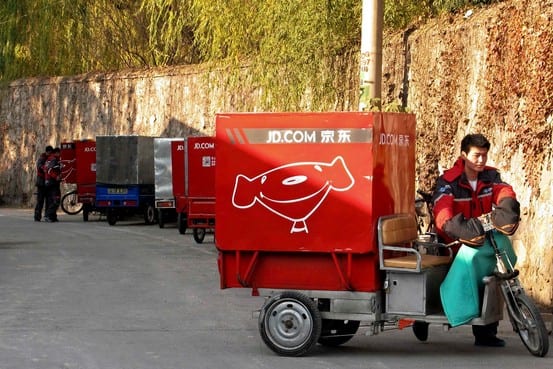
    Chinese e-commerce platform JD is preparing to launch a flagship US store on Google. The move will allow JD, the second largest online retailer in China, to sell directly to American consumers by the end of the year, despite the emergence of potential new trade restrictions between the US and China.

    Google, which has been making moves to build a strong presence in e-commerce via its planned Google Shopping platform, purchased a US$550 million shareholding in JD this year. JD meanwhile is eyeing global markets as consumption slows in its home market. It is already selling in the US through partner and major investor Walmart.

    JD Logistics’s director of strategy Bao Yan said: “When Google Shopping launches, JD will have a flagship store. We are shipping from US fulfillment centers to US end-customers.”

    JD operates warehouse and delivery services in Los Angeles and has plans to expand its US-based facilities with several new fulfillment centres, ahead of opening its store on Google.

    Google, moving to compete with Amazon, will be responsible for payment and order processing for the enterprise.

  • Shopee becomes top e-commerce in Vietnam in Q3

    Shopee becomes top e-commerce in Vietnam in Q3

    Shopee has become the leading Vietnam e-commerce market player, followed by Lazada and Tiki. The report published by Iprice Insight, ranks the top 50 Vietnam e-commerce market players based on their average quarterly traffic, mobile application ranking, social media followers and number of staff, using data collected in July.

    The report shows that during the quarter, Shopee had a monthly average traffic of 34.5 million visitors while Lazada, which had topped the list since the second quarter of last year, achieved 30.2 million.

    Other players in the Top 5 included local company Tiki, with 29.4 million visitors a month, Sendo with 20.7 million, and Adayroi with 5.3 million.

    All of the top four platforms have foreign investment.

    Iprice predicts significant changes during the next quarter when the platforms offer more promotions to stimulate shopping as year-end approaches.

    The Vietnam e-commerce market has been growing fiercely, with revenue forecast to reach US$10 billion by 2022.

  • Castore Hong Kong prepares for debut next month

    Castore Hong Kong prepares for debut next month

    Castore Hong Kong is set to launch next month. The British sportswear brand will launch websites in Hong Kong, South Korea, Singapore and Japan, and will sell its men’s sportswear range in Hong Kong through local partner Harvey Nichols.

    Harvey Nichols merchandising manager, menswear Marco Lau said Castore creates cutting-edge fitness apparel for athletes who demand both function and style.

    “The multi-purpose use of Castore kit, from outdoor running to indoor gym training, appeals to the Hong Kong consumer and we have no doubt the brand will be a great success.”

    Castore’s head of Asia, David Wakely, said Asia offers a huge opportunity for Castore.

    “The brand has been incredibly well received to date by customers across the region and we are very excited to continue our growth going forward.”

    Co-founder Tom Beahon said the brand’s customers in Asia tend to be professionals, either locals or expats, who take their fitness very seriously.

    “So the demographic fit is perfect for us. We see huge potential among the residents and the millions of tourists who visit Hong Kong and are actively looking at locations to open a standalone Castore Hong Kong store.

    “Sales in Asia are growing at 400 per cent a year and are on track to account for 40 per cent of international sales in the next 12 months.”

  • Tmall’s “See Now, BuyNow” Show Kicks Off 2018 11.11 Global Shopping Festival

    Tmall’s “See Now, BuyNow” Show Kicks Off 2018 11.11 Global Shopping Festival

    Tmall, the largest B2C ecommerce platform for global and domestic brands and retailers in China, hosted its “See Now, Buy Now” Tmall Collection Fashion Show during the weekend in Beijing, kicking off the month-long lead-up celebration to Alibaba Group’s 2018 11.11 Global Shopping Festival.

    This year – the festival’s 10th anniversary – its fashion show added a new interactive element. In addition to popular “See Now” and “Buy Now” features that allow viewers to purchase items shown on the runway instantly from their mobile phones, this year’s fashion show also introduced an innovative feature, “Play Now”. “Play Now” gives viewers the chance to vote for their favorite outfits to create a trend report that would provide insights and instant feedback to participating brands.

    “Tmall Collection is our annual extravaganza to showcase the hottest trends in fashion. We created the ‘See Now, Buy Now’ concept two years ago, and we are excited to boost consumer engagement to a new level with the ‘Play Now’ feature, enabling viewers to share their views with brands real-time,” said Jessica Liu, President of Tmall Fashion and Luxury.  “The ‘See Now, Buy Now’ show provides a powerful sales channel for the world’s leading brands and also has the potential to reshape the fashion industry with the interactive component tailored for the always-online Chinese millennials.”

    The four-hour “See Now, Buy Now” show featured an impressive lineup of more than 60 international and domestic brands showcasing their latest collections, including Estée Lauder, Levi’s, Adidas, Guess, I.T, M.A.C.., G-Star Raw, and Swatch. More top luxury brands participated in the event than ever before, including Stella McCartney, Burberry, MCM, La Perla, Giuseppe Zanotti, and Stuart Weitzman.

    To celebrate the 10th anniversary of the 11.11 Global Shopping Festival, the fashion show also featured a special segment highlighting crossover products that are specifically designed for the Festival. Celebrities participating in the show this year included American fashion designers Anna Sui and Jason Wu, American singer Jaden Smith, and Chinese singer Chris Lee.

    The live runway show had attracted over 57 million online viewership, more than tripling that of last year. It was broadcast live on 10 platforms, including the Taobao app, Alibaba’s video platform Youku, social media platform Weibo, and short video app Tik Tok.

  • 7-Eleven Outlets In Singapore Are Now Lazada Collection Points

    7-Eleven Outlets In Singapore Are Now Lazada Collection Points

    Lazada and Ninja Van have teamed up with the Singapore 7-Eleven convenience store chain to allow online shoppers to designate any of the nearly 350 stores island-wide as collection points. The collaboration will offer the largest network of collection points around Singapore. The new service debuted at 159 7-Eleven stores this week, with a progressive rollout planned for the rest of the store network by the end of the year.

    Lazada and last-mile logistics provider Ninja Van say the new service eliminates the need for a purchaser to ensure someone is home to receive goods bought online. They can nominate any participating Singapore 7-Eleven store as their delivery point upon checkout.

    “More than 35 per cent of Singaporean households have only one or two residents, with close to 25,000 new dual or single person households forming just between 2016 and last year,” said Crispian Leong, Singapore 7-Eleven head of marketing.

    “Most are working during the day, and many may not find it convenient to receive parcels at their office. With close to 350 participating stores islandwide, we are excited that we can partner with Lazada and Ninja Van to offer this added convenience to consumers’ daily lives and online shopping habits.”

    Ray Chou, country head of Ninja Van Singapore, said the problem will address the high number of failed deliveries its partners encounter, “which is disruptive not only for our customers, but for sellers and delivery companies as well”.

    Users of the service will enjoy free delivery, as opposed to S$1.49 for normal and S$2.99 for express drop-off to their homes.

    Pierre de Bellescize, CEO at Lazada eLogistics Singapore, said partnering with 7-Eleven and Ninja Van will bolster the click-and-collect options the company already offers with SingPost’s PopStations, SPH Buzz Convenience Stores and Parcel Santa Lockers located in Condominiums and others.

  • Flipkart corners more than 50 pc share in India festive sale: RedSeer Consulting

    Flipkart corners more than 50 pc share in India festive sale: RedSeer Consulting

    Increased buying in smartphones and fashion verticals helped Walmart-backed Flipkart corner over 50 percent share during the first leg of the festive sale, according to research firm RedSeer Consulting. As per RedSeer’s latest report, Flipkart had a 51 percent share, while Amazon India had 32 percent share of the festive sale from October 9-14.

    “Flipkart accounted for more than half of GMV for the entire industry. Between Flipkart and Amazon, the share was 62-38. Higher share for Flipkart was driven by higher sales in both mobiles and fashion verticals,” RedSeer said.

    An Amazon spokesperson termed the report as ‘speculative’ that ‘lack robust and credible methodology’.

    “We received an overwhelming response to the Great Indian festival, with first 36 hours nearly surpassing the entire first wave last year and the entire wave growing by 96 percent versus last year…the festive season so far has exceeded our most aggressive plans,” the spokesperson said.

    Other players like Snapdeal, Paytm Mall and ShopClues also ran their festive offers and accounted for 17 percent share of the sales.

    Flipkart in a statement said the company “pushed the boundaries on many fronts and hit some of our biggest-ever numbers during its Big Billion Days (BBD).

    “We maintained a clear leadership in deep-penetrated and high ASP categories,” it added.

    As per the RedSeer report, the fashion and smartphone verticals grew by 78 percent and 70 percent, respectively.

    However, consumer electronics grew by only 45 percent despite large investments by both players in supply chain and affordability initiatives like debit card EMIs, it added.

    RedSeer said its report is based on interview with experts from supply chain, banking ecosystem and brands, seller views, customer surveys and other research.

    The report said Day 2 of the five-day sale was the biggest in terms of gross merchandise value (GMV) as it saw the launch of multiple new exclusives in mobile phones and offers on other platforms as well.

    Post second day, the growth of GMV stalled a bit with last three days accounting for only 42 percent of sales compared to 60 percent in the first two days, it added.

  • ZALORA nabs Myntra CMO Gunjan Soni as new CEO

    ZALORA nabs Myntra CMO Gunjan Soni as new CEO

    Global Fashion Group has chosen the head of Jabong India as the new Zalora CEO. Gunjan Soni will over the helm of the Southeast Asian e-commerce portal early next year after she completes her combined tenure as chief marketing officer with India’s largest fashion e-commerce business, Myntra, and the Jabong role.

    Soni has more than 13 years of leadership experience in marketing, strategy and operations and a passion for building new-age consumer businesses.

    “It is truly a huge privilege to lead Zalora, which is already the leading fashion and sports destination, at a time when Southeast Asian markets are poised for increasing fashion and e-commerce consumption,” she said in a statement.

    “When I see Zalora, I see a company with limitless potential and ability to shape the future of fashion commerce in one of the most exciting markets globally. This makes it both exciting and humbling to take on this role.”

    At Myntra, Soni was instrumental in positioning the brand as a leader in fashion and lifestyle and leading the turnaround of the Jabong business post acquisition.

    Prior to joining Myntra, the next Zalora CEO was executive VP for strategy & CEO office with Star India. She also spent a large part of her career at McKinsey where she was a partner, working across multiple consumer sectors and geographies including the UK, Singapore and Bhutan.

    She is a recognised leader in business having featured in Spencer Stuart-Economic Times young leaders 40 under 40 list, Fortune India 40 under 40, and named one of the most influential women leaders in media.

    Patrick Schmidt, Co-CEO of Global Fashion Group, Soni’s experience in leading operations, strategy and marketing in fashion e-commerce and her strong leadership skills will be instrumental in strengthening Zalora’s position as market leader in Southeast Asia’s e-fashion space.

    “She has a deep and broad understanding of the complexities of e-commerce and has contributed to building one of the world’s biggest fashion e-commerce companies.”

  • The 15 hottest online luxury brands in 2018

    The 15 hottest online luxury brands in 2018

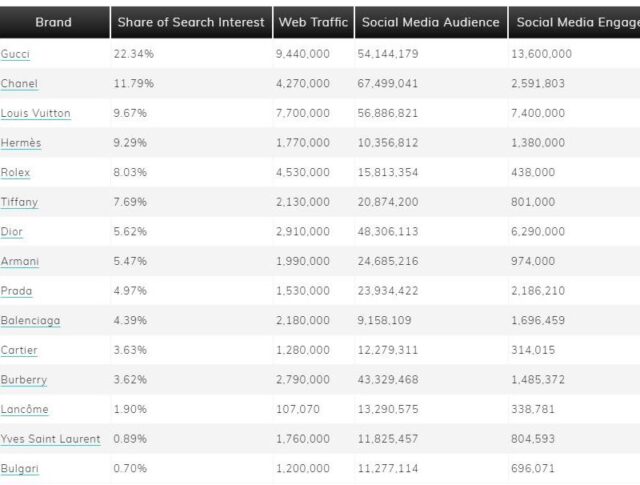
    Some brands have embraced digital better than others, as evidenced by their popularity online. According to a new report by Luxe Digital, the top 15 most popular luxury brands online are particularly successful at building online awareness but also at forging deep emotional connections with their audience—particularly young affluent consumers.

    The ranking provides a good gauge of the sales potential of the brands for this coming year-end.

    It’s also a great source of inspiration and best practices for luxury leaders. By exploring how the top high-end brands are performing online, one can understand the reasons for their popularity and how their approach could be replicated.

    Gucci is leading the 2018 ranking, followed by French houses Chanel and Louis Vuitton.

    Interestingly, it is Italian fashion brand Balenciaga that saw the most impressive growth thanks to its fresh take on luxury streetwear.

    The Direct-to-Consumer approach emerges as a winning strategy for luxury

    The ranking is largely dominated by fashion brands, although Rolex and Tiffany made it to the top 10.

    It is worth noticing that Lancôme is the only beauty brand to appear in the list, finishing at the 13th position.

    A noticeable trend is the Direct-to-Consumer retail model which is increasingly more adopted by luxury brands. The DTC approach emerges as a great way for high-end brands to control their brand identity online and own their customers’ data.

    Influencer marketing is also playing a key role in 2018. Virtually every brand in the top 15 has collaborated with social media influencers to shape the conversations online and drive brand discovery amongst untapped audiences.

    For luxury fashion specifically, high-end streetwear is clearly making the buzz this year.

    Other noticeable trends for 2018 include more interest in sustainable practices and social causes. Natural cosmetics, natural and vegan beauty products, in particular, are also generating a lot of online interest.

    The rising share of affluent Millennials and Gen Z consumers

    These trends are mainly driven by the growing portion of more socially-conscious, affluent Millennials and Generation Z consumers.

    This shift in consumers’ values and preferences combined with the disruptive impact of new technologies are challenging the traditional notions of luxury.

    As the sophisticated younger generations become important luxury shoppers, modern luxury brands are evolving their offerings to appeal to their specific tastes.

    Luxury brands are also adapting their marketing strategy to offer a seamless shopping experience both online and offline in line with the younger affluent consumers’ growing expectations.

    Conscious of the essential role that new technologies play in driving their narrative, luxury leaders are finally embracing digital technologies.

    For brands, it is clear that the ability or inability to pivot to this new reality will continue to widen the gap between the successfully agile luxury brands and the slow adopters.

  • Purchases made online with phones hit record in July

    Purchases made online with phones hit record in July

    Purchases made using the internet and mobile devices in Korea reached an all-time high in July, government data showed Wednesday, demonstrating the popularity of smartphones, fast delivery and convenient payment options offered to local shoppers.

    The total value of transactions made with computers, smartphones and tablets reached a record 9.45 trillion won ($8.45 billion) in July, up 22.7 percent, or 1.75 trillion won, from a year earlier, according to the data from Statistics Korea.

    The sharp rise was attributed to increased demand for electronics, leisure goods, daily necessities and food amid sweltering weather and the vacation season, the agency said.

    The total value of mobile transactions soared 33.5 percent to a record 5.92 trillion won, accounting for a record 62.6 percent of all online purchases in July.

    Mobile purchases in Korea have been on the rise for years as devices expand their presence in the world’s most wired country and rapidly replace computers as the means of conducting online transactions.

  • Analysing the Increased Online Shopping Consumption During Ramadan 2018

    Analysing the Increased Online Shopping Consumption During Ramadan 2018

    The month of Ramadan is considered as the most sacred period for millions of Muslims in Malaysia & Indonesia. As such, a huge number of people observing the religious period would shift their daily routine to focus on spirituality & contribute to charitable initiatives. This also shifts the way consumers shop in a very significant manner as well.

    Just a few weeks into Ramadan, online shopping consumption increased greatly during the fasting month. This was evident as iPrice Group, a price aggregator platform for hundreds of online merchants in Indonesia & Malaysia experienced double-digits growth in online sessions. Undertaking this study, there are unique consumer insights that only occurs during the month of Ramadan.

    Online Shopping at the Wee Hours of the Morning

    While many Malaysians & Indonesians are awake in the wee hours of the morning for Sahur (pre-dawn meal), they are more likely to shop online as well. Analysis suggests that online traffic at 5:00am increased by 105% in Malaysia & 345% in Indonesia when compared to the same time prior Ramadan. The increase was much higher in Indonesia as the country has the largest Muslim population in the world. This is a continuous trend as seen in our study last year in both Malaysia & Indonesia.

    In Malaysia, the increase in online traffic was much higher when compared to our research last year, where we only saw a 90% increase in online traffic at 5:00am. Indicating an increased interest in online products this year as compared to 2017.

    Evident in both countries was that online traffic during Ramadan was significantly higher when compared to the previous period. Overall online traffic was 11% higher in Malaysia & 30 percent higher in Indonesia. In addition to this, online traffic in both countries experienced a dip in online traffic at 7:00pm in Malaysia & 6:00pm in Indonesia as many prepare to break-fast (Iftar). Online traffic decreased 9% in Malaysia & 4% decrease in Indonesia at these periods. After Terawih prayers online traffic in both countries would resume, reaching its peak at 10:00pm.

    Search Trends for Fashion Products During Ramadan

    Fashion products are among the most sought-after items during Ramadan as millions of Malaysians & Indonesians prepare for the Hari Raya Aidilfitri celebrations. Using Google Trends, we saw that keywords such as “Baju Raya” & “Baju Raya 2018” was among the most popular keywords associated with “Raya” (which is closely associated with the Aidilfitri celebrations) in Malaysia.

    In the country, local brands have been actively showcasing their 2018 Raya collection & deals through various advertising, social media, & marketing campaigns across the country. The three most searched local fashion eCommerce brands in Malaysia during Ramadan were Naelofar Hijab, Fashion Valet & Muslimah Clothing. Towards the end of May 2018, Naelofar Hijab launched the “Shine On” collection which is their #naelofaraya2018 campaign. At this same period, Naelofar Hijab garnered a high volume of search interest between 23 – 30 May2018 indicating a successful campaign that caught the attention of many Malaysians.

    Close in fourth place was Siti Khadijah which garnered a high volume of search interest from Malaysians as well. Siti Khadijah specialises in prayer outfits specifically for women known as telekung. As such, the high level of interest for the eCommerce was no coincidence because many women are dedicating their time to pray during Ramadan.

    In Indonesia, there was high search volume for “gamis” which is a long dress worn by Muslim women along with keywords such as “hijab” & “baju muslim”. These keywords indicate that many Indonesians were looking for inspiration or sources for clothing suitable for their religion activities during the month of Ramadan. In addition to this, there was a high level of interest for “Baju Koko”, which is a fashionable traditional top for men most popularly worn during the Aidilfitri celebrations.

    Other Unique Search Trends Prior Aidilfitri

    Utilising Google Trends, there is also a high search interest for airline ticket promotions in Malaysia & Indonesia before Ramadan. This is in line with local trends since many will be travelling back to their hometown prior Aidilfitri celebrations. Search interest for airline tickets began during the second half of May 2018 which takes place a month before the Aidilfitri celebrations on 15th of June.

    In Malaysia, the most popular keywords & brands associated with “promotion” were “Airasia”, ”Malindo Air” &”Malaysia Airlines”. In Indonesia, inhabitants located in Sumatera, Kalimantan & Sulawesi were most interested in airline ticket promotions as compared to other states. This indicates that inhabitants in these regions were more likely to travel to the Java Islands or to other parts of the country for Aidilfitri.

    Other than airline tickets, the second most popular keyword used in Malaysia were related to groceries & merchandise deals. During Ramadan, there is a high demand for Raya goods such as biscuits, traditional delicacies, & other food stuff. Since these items are usually available at major supermarkets & stores many Malaysians are on the lookout for promotions by major retailers in order to maximise their spending. The top brands associated with the keyword “promotion” were:

    • Aeon
    • Giant
    • Tesco
    • Aeon Big
    • Econsave
    • Mydin
  • Online sales bring cheers to online retailers

    Online sales bring cheers to online retailers

    To technology, retailers have and are moving out from brick-and-mortar stores to join the cyber world. As a result, street retail sales are accelerating on the Internet, offering shoppers better deals because they do not have to worry about the overhead expenses which traditional stores have to deal with.

    Christy Ng Sdn Bhd founder Christy Ng, who started her business in her mother’s living room years back, now owns five brick-and-mortar stores that delivers to 30 different countries.

    She decided to open her own physical store after her loyal customers, who rather try out the shoes before buying them, nudged her into it.

    “During the recent MyCybersale blow-out frenzy which ran from Oct 9 to 13 last year, we achieved 10-fold more sales than our physical stores,” she said.

    “We also witnessed a 35% increase in sales, specifically during the Alibaba Single’s Day 11.11 and 12.12 mega sale bash.”

    She added that 60% of her customer base comes from the online store, whereas the remaining 40% of customer base are from our physical outlets.

    MyCybersale is a five-day online sales festival organised by the National ICT Association of Malaysia along with the Malaysia Digital Economy Corp.

    MyCybersale 2017 managed to rack in a gross merchandise value (GMV) of RM311 million, exceeding the RM300 million target set for the year.

    RM39 million of the RM311 million GMV were derived from international shoppers which surpassed the export revenue target of RM20 million.

    It was a phenomenal growth of over 254% from the 2016 export revenue of RM11 million.

    Bagman Corp Sdn Bhd group CEO Datuk Liew said his online retail business also witnessed some positive numbers during the online mega sale frenzy.

    “Bagman didn’t do all that well during last year’s MyCybersale. However, during the 11.11 and 12.12 deals, we saw a 20%-30% increase in sales.

    “It is an improvement from the previous year and I believe online retail is the future,” Liew said.

    Liew, who used to sell his designed bags in major marketplaces, however, added that it is hard to do branding on those marketplaces since shoppers mainly go on these sites to search for “affordable” things.

    Previously reported that ShopBack Malaysia country GM Alvin Gill revealed the average spending per customer surged more than threefold during the recent the 12.12 online shopping celebration compared to the Single’s Day 11.11.

    “The average spending per customer during the 12.12 was RM485, whereas for 11.11 it was US$76 (RM302.04).

    “This is due to the increase in travel bookings made for the year-end holidays along with Christmas gift purchases, as well as apparels purchases for the New Year,” said Gill.

    ShopBack Malaysia collaborated with more than 30 online partners during 12.12, among them were Lazada, Zalora, 11street as well as Booking.com.

  • Singapore online grocery market to triple by 2020

    Singapore online grocery market to triple by 2020

    The Singapore online grocery market is set to more than triple in size over the next three years, according to research house IGD.

    The global organisation expects sales will rise from the current S$130 million (US$91 million) to S$500 million (US$350 million) by 2020.

    At the end of 2016, IGD valued online grocery to have a 1.2 per cent share of the Singaporean grocery market. Reflecting rapidly changing shopper habits in the region and increased investment in the online channel from retailers and suppliers, IGD is further forecasting online to take a 4 per cent share of Singapore’s grocery market by 2020, with a compound annual growth rate of 39 per cent.

    Revealing the figures at this week’s IGD RedMart Trade Briefing, Nick Miles, IGD’s head of Asia-Pacific, said Singapore is hailing a new era of digital grocery retailing, driven by the entry of RedMart in 2011, Giant and Sheng Siong launching online grocery in 2013 and plenty of smaller start-up businesses also looking to grab a slice of the action.

    “Shopper habits are changing rapidly in Southeast Asia and in a compact city such as Singapore, with its relatively affluent population, big expat community and high penetration of internet and smartphone usage, there are huge opportunities for online grocery to meet these evolving needs. To make the most of this opportunity, retailers and suppliers must work together to ensure they really understand online shoppers and can tailor experiences and products to suit their personal preferences.”

    Miles says retailers are already clearly looking to improve the overall online experience, by getting the basics of search functions, favourites, images and information right for shoppers.

    “At the same time, they’ll be aiming to make delivery options as convenient as possible, whether that’s through shorter timespan delivery slots or greater choice of click and collect points throughout the region. Our UK data shows that 80 per cent of shoppers cite convenience as their number-one reason for shopping online, and we would anticipate Singaporean shoppers to have a very similar mindset when heading online for their groceries.

    “We also expect online grocery retailers in the region to encourage shopper loyalty through personalised offers and products, plus subscription models and delivery saver passes,” said Miles.

    “On top of that, shoppers in the region are increasingly connected via mobile, so ensuring a seamless shopping experience no matter what device they are using will be critical. Coupled with an increased focus on using innovations such as voice-activated technology, virtual reality and robotics, we predict huge opportunities for those retailers and suppliers who really invest in making the online grocery channel work for them in Singapore.”