Tag: Online

  • US shoes-from-plastic brand begins Outlet rollout

    US shoes-from-plastic brand begins Outlet rollout

    Online shoes-from-plastic brand Rothy’s is opening its first physical stores in four key US locations.

    The brand creates women’s shoes from recycled materials, including plastic bottles, and has a burgeoning following in the territory. Its new stores will open in downtown Manhattan, Los Angeles, Boston and Washington DC.

    A further five locations are planned to open in the US next year. To date Rothy’s has operated just one store – in its home city of San Francisco. But it has sold online across the US and internationally.

    The shoes are all flats with knitted materials, retailing from $125–165. The popularity of the footwear has rested on the Rothy’s marketing savvy and advertising investment on social media. The firm has thus far raised $42 million and earnt $140 million in revenue last year. It has recycled around 32 million plastic bottles.

  • Omega China makes E-commerce debut

    Omega China makes E-commerce debut

    Swiss timepiece maker Omega has launched its first e-commerce initiative in China.

    Omega China has opened a new pop-up store in the Tmall Luxury Pavilion, an online platform for premium brands under Alibaba Group.

    Pre-sales for Omega’s new Seamaster Aqua Terra Beijing 2022 limited-edition wristwatch will be exclusively available on the pop-up site between June 15 and August 7. The watch will be available in physical stores later on. Just 2,022 watches have been made to mark Beijing’s upcoming Winter Olympics.

    The Pavilion has recently overhauled its site with more personalised offers and recommendations, introducing a brand-generated content feed and online magazine.

    “We want to step up our offerings in terms of creative experiences, trending product feeds and style tips from fashion editors to help young users find items and brands they love,” said Tmall Luxury Pavilion head Lili Chen. “The Pavilion revamp enhances the discovery journey and shopping experience for our customers, while helping luxury brands better express their brand vision, aesthetics and new creations.”

    Omega joins 133 brands on Tmall’s Luxury Pavilion, including rival brands Tag Heuer and Zenith, along with Versace, Stella McCartney, Moschino, and others.

  • Amazon Fashion drops first influencer collection

    Amazon Fashion drops first influencer collection

    Amazon Fashion has just released the first collection from an influencer as part of its new shopping experience, The Drop.

    For the next 30 hours, customers will be able to purchase pieces made on-demand from the collection designed by influencer Paola Alberdi via the Amazon app or mobile browser. The Drop collections are available in more than 100 countries and regions.

    Fashionistas are encouraged to sign up for Amazon text alerts, as the next Drop influencer collaboration could be released at any time. Other influencers slated to design future collections include Emi Suzuki, Sierra Furtado, Leonie Hanne and Patricia Bright.

    “Influencers are able to turn their creativity and style into beautifully designed collections that capture the latest street style trends from around the world,” said a statement from Amazon.

    “Amazon Fashion is excited to enable influencers to be designers and bring fresh Fashion assortments directly to customers via The Drop.”

    Amazon Fashion is also offering Staples By The Drop, wardrobe staple pieces to complement the influencer collections.

    “I am beyond grateful to Amazon for entrusting me to be the first influencer to launch The Drop, their innovative new shopping experience. I have worked hard for many years to create a brand that is true to myself and did the same with this collection,” said Alberdi.

    “Fashion can be so expensive but my belief is that it should not have to be expensive to feel beautiful. The primary goal of my collection is simply to help women feel good about themselves. I’m so excited to share these pieces with the world!”

    Other retail brands have been tapping into the power of influencers and collaborating with them on collections for some time, such as Nordstrom, which is currently selling the Cupcakes and Cashmere range from fashion blogger and designer, Emily Schuman.

    When the department store engaged with influencer Arielle Charna in 2017, her collection reportedly brought in $1 million in sales in less than 24 hours, according to an article from Fashionista.

  • Ikea Thailand opens full E-commerce store

    Ikea Thailand opens full E-commerce store

    After two years of planning, furniture and homewares retailer believes it can match a physical store experience.

    Ikea Thailand has launched an online store, with a view to matching the journey and impression customers experience at a physical Ikea shop.

    “We see the potential – it is a potential in Thailand for Ikea,” said deputy retail manager for Ikea Thailand, Singapore and the Philippines, Lacia Sherlock. “We have only been accessible within Bangkok so far, and now we will be accessible for people from across the country.

    “The delivery prices need to be affordable and all the services need to be accessible for consumers living outside of Bangkok, so that they are able to get the assembly or whatever they need.”

    According to Sherlock, the new e-commerce platform, which is already available in Malaysia and Singapore, now covers the whole of Thailand. It took about two years to develop based on studies of market demand and building the necessary infrastructure.

    “We are pleased to now be able to provide this access to Thais. We have been wanting to do this for a long time, along with providing them with a superior experience and inspiration through both of our two Bangkok stores,” said Sherlock.

    Ikea is aiming to hit 17,000 online orders this year within the territory.

  • Online retail sales slows down last Month

    Online retail sales slows down last Month

    Online retail sales fell 3.8 per cent month on month in April, after a less than stellar March, according to the National Australia Bank’s monthly Online Retail Sales Index.

    The result is consistent with a general slowdown in retail observed by NAB, while the result itself is up 1.7 per cent on a year on year basis.

    “This month, both online retail and broader cashless retail series indicated very weak retail conditions,” NAB chief economist Alan Oster said.

    “While year-on-year growth in online sales has also slowed considerably in recent months, these comparisons are made to a period of elevated sales in 2018, with major new merchants to Australia, and also pre-GST exemption effects.”

    While all categories suffered a contraction in sales during April, games and toys suffered least with only a 0.2 per cent reduction in sales, while takeaway food fell 8.6 per cent – the steepest drop.

    International retailers outperformed domestic retailers on a monthly basis, with international retail enjoying a 0.7 per cent increase in sales, compared to the 4.4 per cent fall in domestic trading.

    However, NAB identifies a considerable weakness in international online sales on a year-on-year basis, most likely owing to the change in how GST is calculated and charged.

    “Tasmania, with about 2 per cent of online sales, was weakest in April after leading growth in March,” Oster said.

    “New South Wales, Victoria and Queensland represent over three quarters of the online market in Australia by sales value. Of these larger sales states, Queensland was strongest over the year.”

  • Online liquor sales boom in Vietnam

    Online liquor sales boom in Vietnam

    Vietnam has removed a proposed decree to prohibit online liquor sales, accepting that it goes against international trends. The bill, proposed by the Ministry of Health last year, would have prohibited online sales of beverages with an alcohol content of more than 15 percent. But legislators got into a heated debate over this regulation, with critics saying that it would go against international trends and challenge e-commerce development.

    The National Assembly (NA) Committee for Social Affairs on Thursday said it has removed the decree after listening to legislators’ views.

    Some new changes have been made in the latest version of the bill. The advertisement for beverages with less than 15 percent of the alcohol content will now be allowed on TV and radio.

    However, these advertisements must not be carried between 7-8 p.m. every day.

    The bill is set to be discussed and voted on at the end of the ongoing National Assembly session.

    Alcohol, especially beer, is widely consumed in Vietnam. Data collected by the Ministry of Health shows Vietnamese citizens consumed 305 million liters of liquor and 4.1 billion liters of beer in 2017, making it the biggest alcohol consumer in Southeast Asia and third biggest in Asia after Japan and China.

  • Indian grocery chains merging to create nation wide network

    Indian grocery chains merging to create nation wide network

    Two regional Indian grocery retail chains are effectively merging, creating a national player.

    Spencer’s Retail, part of RP Sanjiv Goenka Group, says it will pay US$42.76 million to acquire upmarket grocery chain Nature’s Basket from Godrej Industries.

    The deal will give Spencer’s access to the western part of India through 36 stores of Nature’s Basket in Mumbai, Pune and Bengaluru, according to Shashwat Goenka, head of RPG. It will also strengthen the company’s omnichannel capability.

    Tanya Dubash, executive director and chief brand officer at Godrej Group, said the sale would unlock “the immense potential of the Nature’s Basket brand” allowing it to grow faster.

    “We have passed on the torch to owners who have prioritised retail in their portfolio strategy and have the relevant ecosystems to take the business to the next level,” she said.

    Nature’s Basket was launched in 2005.

    Goenka said the Nature’s Basket stores are located in prime residential locations, have a high sales throughput per square feet, and will add to the top line of Spencer‘s grocery portfolio.

    “Nature’s Basket has a strong portfolio of private-label brands which has huge traction with its consumers. We believe there is huge potential to expand this to Spencer’s stores. It also has a strong e-commerce presence, and we believe that fits in well with our omni-channel strategy.”

    He said both chains were positioned as experiential grocery retailers and there were many synergies in the acquisition.

  • Uniqlo shoppers Details Leaked Online

    Uniqlo shoppers Details Leaked Online

    Uniqlo parent Fast Retailing announced hackers may have gained access to personal information of 461,091 accounts registered on the company’s Japanese shopping websites.

    The retailer said in a statement Monday the hackers may have accessed customers’ personal information, purchase history and partial credit card numbers of some of the users of its Uniqlo Japan and GU Japan online stores from April 23 to May 10 by means of list type account hacking.

    List type account hacking is when user IDs and passwords are potentially leaked from other services or sites.

    The company said it is still investigating the breach and added the number of incidents and circumstances may change during the course of the investigation.

    In the meantime, the Japanese retailer advised its online store’s customers, the number of which the company has not disclosed, to use unique passwords and to avoid using passwords used from other websites to lower the chances of hackers accessing their accounts.

    “Fast Retailing sincerely apologizes for the trouble and concern this has caused to its customers and all others involved,” the company said.

    “Going forward, the company will further strengthen its security measures and take steps to ensure safety, in order to prevent similar incidents in the future.”

    The retailer said information that was potentially accessed includes:

    • Customer name (last name and first name)
    • The customer address (postal code, address, and apartment number)
    • Customer phone number, mobile phone number, email address, gender, date of birth, purchase history, and clothing measurements
    • Receiver name (last name and first name), address, and phone number
    • Customer partial credit card information (cardholder name, expiration date, and a portion of credit card number). The credit card numbers potentially accessed are hidden, other than the first four and last four digits. In addition, the CVV number (credit card security code) is not displayed or stored.

    In its announcement, Fast Retailing said it has identified the origin of the communication from which the unauthorized logins were attempted and has blocked access. The company added it is strengthening monitoring of other access points.

    The Japanese retailer said it has already disabled the passwords for the 461,091 user IDs that were compromised and is sending individual e-mails to each person affected, requesting that they reset their password.

    Fast Retailing has also filed a report of damages regarding the unauthorized logins with the Tokyo Metropolitan Police.

    Online sales made up 9.9 percent of Uniqlo sales in Japan and 20 percent in China in the company’s first-half report. The company said overall online sales rose 30.3 percent in that report.

  • Google Translate is getting an Important Update

    Google Translate is getting an Important Update

    Google Translate’s camera translation feature sounds very futuristic on paper, but in practice—so far, at least—it’s been more of a proof of concept. It’s still usable and gets the job done, but it’s far from polished and intuitive to interact with. In fact, one of the biggest hurdles of using camera translations is the fact that you need to pick the languages before initiating the camera, as there is no automatic language detection built in. This can get annoying, especially since there’s no way to change the source and target languages while looking through the viewfinder.

    All of this is soon going to change, however, and for the better. The lines of code in the latest version of Google Translate hint at a big upgrade coming to the app in the near future. Various suspected improvements include “better translation quality” and “more languages supported,” but the most important one, perhaps, is the automatic language detection that’s coming to camera translations.

    Currently, users need to pre-select their desired source and target language, initiate the camera, snap a picture, and highlight the text they want to be translated. In the future, however, this process will be more streamlined. First off, Translate will be able to automatically detect the source language as soon as you point the camera at a text, and you’ll have the ability to select the target language. Second, Google is working on an “Instant” augmented reality feature that will translate any texts immediately and display them as though they were written in the target language while you’re still looking through the viewfinder. Now that’s more like the future of seamless translation that Google has been promising for years!

    The new camera features are apparently present in Google Translate version 5.29, though they haven’t been enabled yet. This likely means that they’re dependent on a server-side switch on Google’s part. Expect them to go live in the coming weeks or months.

  • JJJ Superstore opens at M3 Shopping Mall in Malaysia

    JJJ Superstore opens at M3 Shopping Mall in Malaysia

    Bok Marketing will open its fourth preloved goods superstore Jalan Jalan Japan (JJJ Superstore) at M3 Shopping Mall in Gombak Kuala Lumpur.

    The phrase “Jalan Jalan” in the name means “going for a walk” in Malay.

    All goods sold in the store are “pre-loved” and imported from Japan. Items are sold under three categories: “Preloved in Japan” (indicating good quality); “Hargagiler” (meaning “crazy low price”); and “Large Stock” (indicating “treasure hunting” shopping).

    Bok is a subsidiary of Bookoff, which operates more than 800 preloved goods stores in Japan – purchasing more than 400 million items from customers every year for resale.

    Each JJJ Superstore stocks around 200,000 SKU under a wide range of categories, including its latest range of traditional Japanese kimonos.

    The firm plans to open JJJ Superstores all over Malaysia.

  • AllGoods marketplace reaches 1 million listings

    AllGoods marketplace reaches 1 million listings

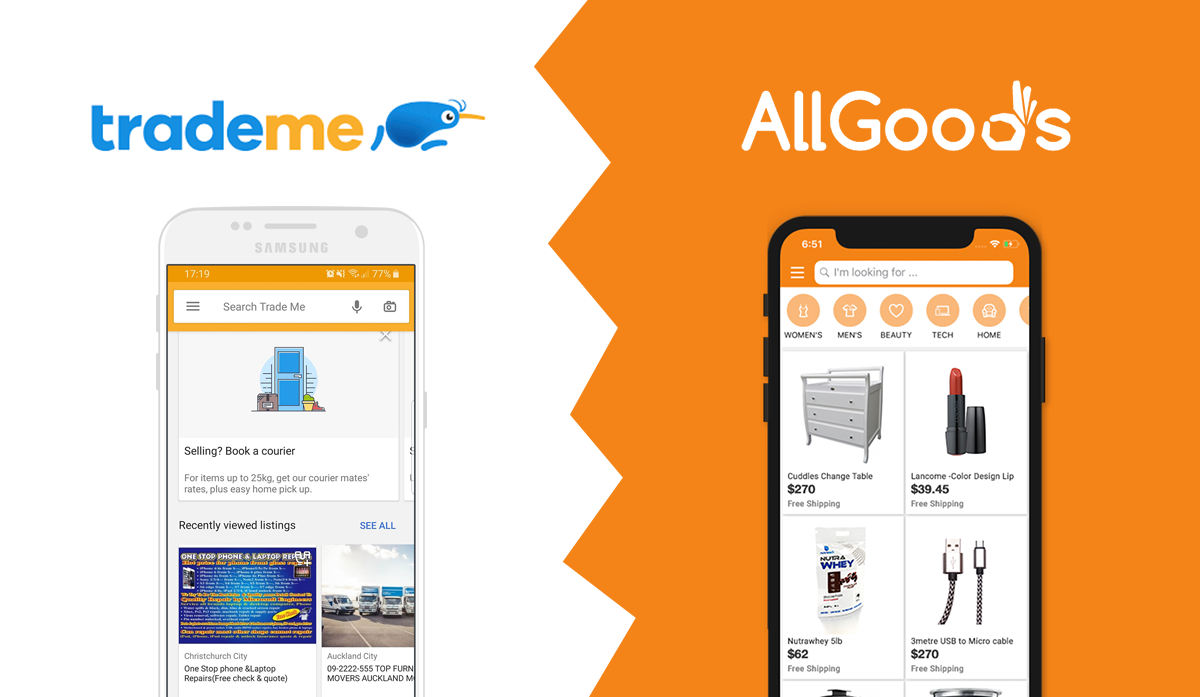
    AllGoods, a free marketplace for Kiwi buyers and sellers, has announced it has reached its one-millionth listing, 12 months after launching.

    The TradeMe competitor said it has maintained steady growth over the past few months. Its app has also become the top New Zealand shopping app since it was released late last year, it said.

    “We’ve worked extremely hard over the past year to get where we are today,” said Levi Fawcett, AllGoods CEO. “We’ve talked with thousands of our users to make sure the platform provides a truly amazing buying and selling experience. Plus, it’s free.”

    The Christchurch-based startup said it already supports over 700 New Zealand businesses who sell through the online website and app. The company said it is their vision to use e-commerce as a sustainable means to support local businesses and give back to the community.

    “We’re offering a fresh spin on the classic online marketplace and while we have only just begun this journey, we look forward to the years to come,” Fawcett said.

    With Trade Me’s recent sale to British equity firm Apax Partners, AllGoods is now considered the largest Kiwi-owned marketplace in New Zealand.

    In October last year, AllGoods launched a new app for iOS and Android mobile devices.

    Features of the new app include easy listings and browsing, allowing users to post items in less than 30 seconds, and a built-in chat tab to get faster answers to questions on the site.

    “The team has tried to keep the platform as easy to use as possible, for both the everyday Kiwi and the average New Zealand business,” Fawcett said. “I think this has been fundamental to our success.”

  • Boomtime ahead for chatbots in E-commerce

    Boomtime ahead for chatbots in E-commerce

    New data from Juniper Research predicts consumer interaction with chatbots in retail will reach 22 billion by 2023.

    The figure represents a sharp increase over an estimated 2.6 billion interactions this year.

    According to the new research report “AI in Retail: Segment Analysis, Vendor Positioning & Market Forecasts 2019-2023”, chatbots in retail will enable effectively automated customer interactions for both online and offline vendors.

    A crucial enabler of this development will be improvements in NLP (Natural Language Processing), which will dramatically reduce the failure rate of chatbot interactions, by making them more natural and valuable for customers.

    Juniper anticipates that retailers who do not adopt chatbots will face strong challenges from more technologically-adept disruptors, who will use chatbots as an extension to the crucial omnichannel retail experience.

    The research also found that chatbots used for customer service have a strong potential to reduce costs; with deployments realizing annual savings for retailers of US$439 million globally by 2023, up from just $7 million this year.

    These potential savings will act as a key “pull” factor, given the margin pressure that many retailers are presently feeling.

    “By embracing automated customer service with chatbots, retailers can act in a more flexible and efficient way,” explained research author Nick Maynard. “The wider retail market means that chatbots are no longer a luxury, they are essential.”

    Meanwhile, sales resulting from interaction with chatbots in retail will reach $112 billion by 2023, up from $7.3 billion this year; representing an annual growth rate of 98 percent.

    The research found these sales will largely be a result of migration from other channels, rather than a new revenue stream. Accordingly, the research emphasized that while retailers must adopt chatbots for ease of use (and to reduce consumer churn), their return on investment will come from efficiencies, rather than new income.

  • Online food store Grain Expanding Rapidly

    Online food store Grain Expanding Rapidly

    Singapore-based online food store Grain has raised US$10 million in series B funding. The cash will be used to accelerate growth in Singapore, and expand into Thailand.

    To do that, the company will be cooperating with Thailand’s Boonrawd Brewery group’s subsidiary Singha Corporation.

    Singha will help Grain gain clearer insights into the target audience in Bangkok, and develop better products and services.

    “Grain will work with Singha by using Singha’s extensive F&B network across the country, including logistics and distribution, to bring delightful innovations to consumers,” said Bhurit Bhirombhakdi, chairman of the executive board at Singha Ventures.

    The collaboration between the two companies aims to help online food store Grain expand in Southeast Asia and realize its regional vision.

    “We want to disrupt the F&B landscape and evolve with consumer preferences, but also have solid fundamentals,” said Yi Sung Yong, Grain’s co-founder and CEO.

  • EBay still dominates online shopping in Australia

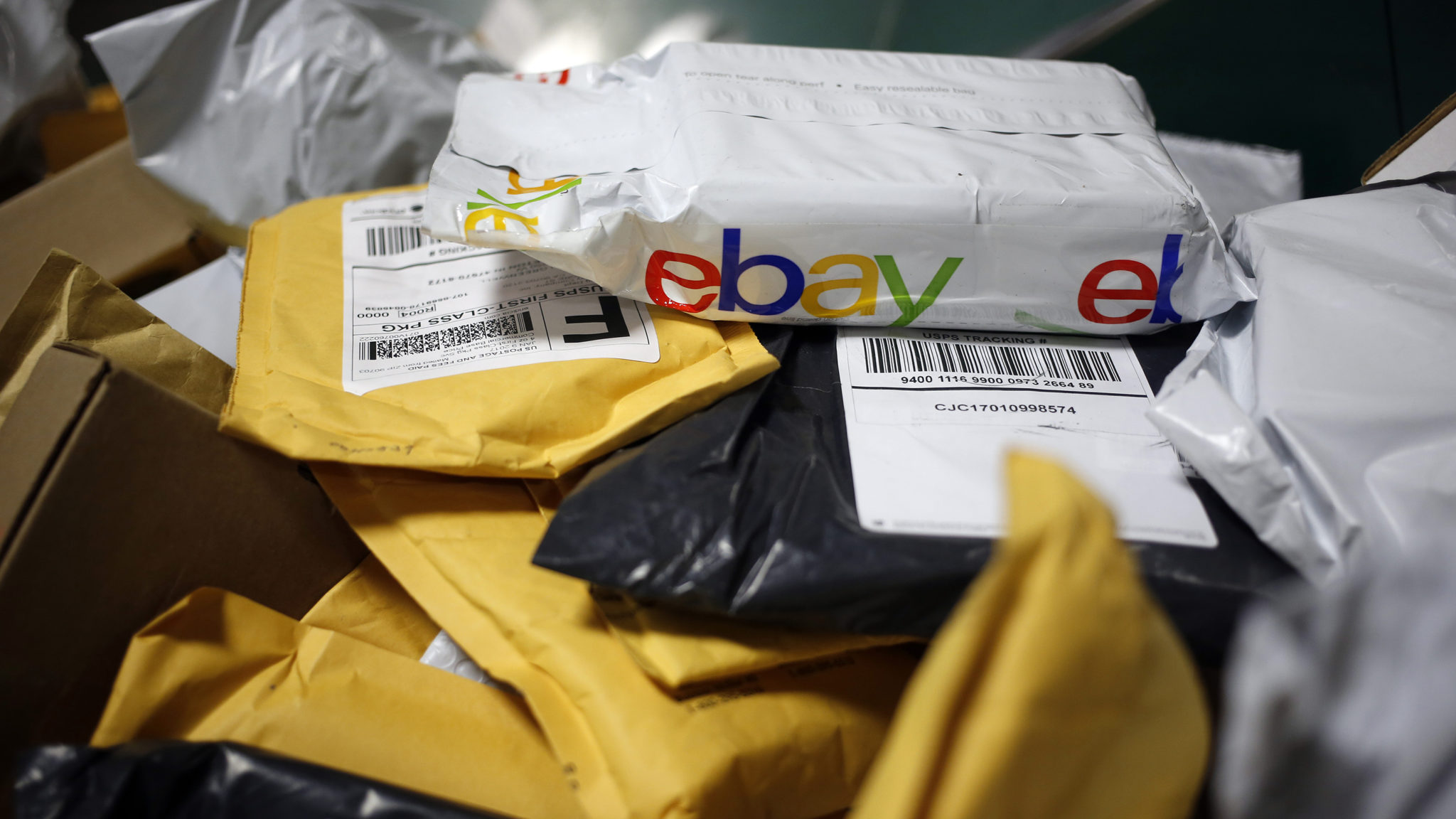
    EBay still dominates online shopping in Australia

    Australian consumers largely prefer to use international online marketplaces, despite increasing investment by local retailers in the space, according to new data from discounts platform CupoNation.

    According to the data, four out of the top five most visited retail websites in Australia were dominated by international and domestic offers by US-based retailers eBay and Amazon.

    EBay Australia was the most used retail website in Australia during the period between January and March 2019, with 194.9 million users, while its global site brought in another 36.6 million users.

    Amazon’s global site outpaced its local offering, with the US site enjoying 58.1 million users in Australia over the period, compared with 35.5 million who utilised the Australian variant.

    Sitting in between these four online-only offerings, hardware chain Bunnings brought in the most users of any Australian-owned retailer – with 41.26 million users utilising its online platform, 65 per cent of which utilised mobile to do so.

    “We want to rush slowly into this,” Bunnings managing director Michael Schneider previously told, regarding the hardware chain’s comparatively late adoption of online retail.

    “There’s no hard date or obligation… We just want to be a great place customers choose to shop at, and we recognise that customers have more choice than ever before, but selling online is just one string in a bow.”

    The next most visited websites were Woolworths, which saw 33.7 million users over the period, Coles, which saw 22.5 million, Jb Hi-Fi (29.1 million), Kmart (22.4 million), and Kogan (20.9 million).

    CupoNation collected this data through SimilarWeb and Alexa tools, compiling traffic information from the period between January and March 2019. The number of visits represented in the data is not tied to unique users, meaning a user can have use a site multiple times and it will count as multiple visits.

  • E-commerce to reach tipping point by 2030

    E-commerce to reach tipping point by 2030

    Almost half (49 percent) of Australian businesses expect online operations to reach parity with bricks-and-mortar retail sales by 2030, according to new research by Australia Post. Rebecca Burrows, Australia Post general manager of segment development and marketing, noted that consumer habits have changed significantly over the past few years.

    “People want an in-store experience, but in the comfort of their own living room – they want to see, touch and try,” she said.

    “Leading retailers are also embracing mobile commerce and voice-activated shopping. It is those in tune with customers and willing to embrace the latest online technology trends that will have the winning strategy.”

    Burrow noted that technology trends, such as augmented reality, artificial intelligence-driven personalization, and biometric payments, are beginning to bridge the gap between online and offline retail, and are shaping the way customers shop.

    Changing consumer trends are not simply relegated to the use of technology, however, with the rise of subscription service also having made a significant impact on the way a retailer offers its service to customers.

    According to a recent survey by Harris Poll, on behalf of subscription management platform provider Zuora, Australians now average 2. 5 subscription services – with Zuora vice-president Iman Ghosdosi calling it the “end of ownership.”

    Fashion-tech company GlamCorner tapped into this phenomenon last year, with the launch of a monthly subscription box that gives customers access to three pieces of designer clothing each month for formal occasions, workwear or everyday wear.

    “The service is growing at an exponential rate,” GlamCorner co-founder and CEO Dean Jones said, “contributing significantly to the 30 tonnes of clothing we process each month.”

    “As a result, our customers are telling us their wardrobes are shrinking, while they still have a fresh new look every day.”

    Australia Post surveyed almost 1000 small to medium sized Australian business across retail, manufacturing, logistics, financial services, education, health, and utilities.