Tag: Oppo

  • Oppo Outpaces Samsung: Next Flagship Phone May Introduce Game-Changing Qi2 Magnetic Wireless Charging

    Oppo Outpaces Samsung: Next Flagship Phone May Introduce Game-Changing Qi2 Magnetic Wireless Charging

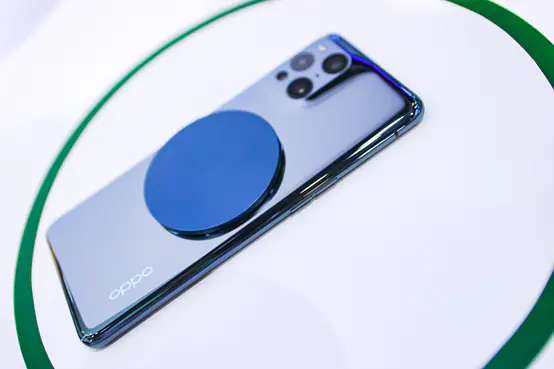
    Wireless charging continues to be a topic of contention for modern smartphone users. The feature provides the convenience of powering up your device without the need for cables. However, past experiences have proven to be less than satisfactory. This started to shift with the introduction of Apple’s MagSafe, leading to the development of Qi2. The latter is anticipated to gain more widespread acceptance in the near future.

    Potential Adoption of Qi2 by Oppo

    The launch of the Oppo Find X10 series is anticipated to be months away, but initial whispers about the device have begun to circulate. Speculation suggests that the new smartphone may incorporate magnetic wireless charging. The exact features are not clear at this time, but there is a possibility that the device could support Qi2 upon its launch in the latter half of 2026.

    Assuming these rumors hold true, Oppo will be the first Chinese smartphone manufacturer to incorporate magnets into their device. This will enable the Find X10 series to be compatible with the magnetic accessories that are part of Apple’s MagSafe and Google’s Pixelsnap ecosystem. However, there is still uncertainty as to whether the devices will support the latest Qi2.2 standard.

    Missed Opportunity by Samsung

    Apple and Google are currently the only major brands that offer smartphones equipped with built-in magnets. Samsung had been rumored to include native Qi2 support in their upcoming flagship, the Galaxy S26 Ultra. Despite this, recent leaks of potential official cases for the device suggest that there will not be integrated magnets.

    Apple stands as a pioneer in terms of magnetic wireless charging, having introduced MagSafe with the iPhone 12 series. Google has followed suit, launching its Pixelsnap system with the Pixel 10 series. However, no other major brand currently supports built-in magnetic charging.

    Samsung’s Galaxy S25 series and the Galaxy Z Fold 7, Galaxy Z Flip 7, and Galaxy Z Flip 7 FE are all Qi2-Ready. This means that users can purchase a Qi2-Ready case for these devices and take advantage of the improved charging speeds provided by the magnets in the case.

    The Oppo Find X9 series, which includes the Find X9 Pro and the upcoming Find X9 Ultra, support wireless charging. However, they do not have magnets and are not Qi2-Ready. Despite this, the Find X9 Pro outperforms the wireless charging speeds of the Galaxy S25 by offering 50W wireless charging, as opposed to Samsung’s 15W.

    While Oppo is not available in the US, OnePlus, another brand under the same company, is sold stateside. If past trends hold, we may see features from the Find X series make their way to OnePlus devices. This could be a major selling point for a brand that has been struggling recently.

    Questions & Answers

    What is the expected feature of the Oppo Find X10 series?
    The Oppo Find X10 series may include magnetic wireless charging, potentially supporting Qi2.

    Which major brands currently offer smartphones with built-in magnets?
    Currently, only Apple and Google offer smartphones with built-in magnets.

    Do the Oppo Find X9 series devices support wireless charging?
    Yes, the Oppo Find X9 series devices do support wireless charging, but they do not have built-in magnets, nor are they Qi2-Ready.
  • Oppo details AI pivot that brings innovative features to all phones

    Oppo details AI pivot that brings innovative features to all phones

    Oppo will be democratizing the access to the most suitable device to take advantage of the AI era – the phone – by bringing its productivity and creativity features downmarket to virtually all of its handsets.

    The company behind the excellent Find X7 Ultra and foldable Find N3 phones used the festivities around its sponsorship of the UEFA Champions League and its Bouissia Dortmund – Real Madrid final to present its vision for artificial intelligence that it simply calls the AI Phone.

    However, the abovementioned flagships won’t be the only ones getting Oppo’s AI Summary, real-time Translation, or the popular AI Eraser function, which removes unwanted objects and areas in your photo with the flick of a finger.

    In fact, Oppo plans to release a coordinated set of AI features created in a partnership with juggernauts like Google, Microsoft, or MediaTek, by year’s end. These, however, won’t be reserved only for Oppo’s flagship Find- and N-series, but will trickle down to the Reno midrangers and even to the budget A- and F-series.

    According to Billy Zhang, Oppo’s President of Overseas Marketing, Sales and Services during the dedicated presentation at London’s beautiful Renaissance St. Pancras:

    OPPO is bringing generative AI to all product lines for the first time in the industry. By the end of this year, we expect to bring generative AI features to about 50 million users. That is 50 million people that may get their first glimpse of an AI-induced function or feature on their Oppo phone, no matter its price range, and the best that the industry can offer at that, like chatbots, large language models, and productivity or entertainment suites.

    Alongside its own innovation, OPPO is working closely with other industry leaders to bring better AI phone experiences based on an on-device and cloud Hybrid AI Architecture. In partnership with Google, OPPO’s Reno12 series and the next-generation Find X Flagship will feature the Google Gemini family LLMs, bringing OPPO users even more innovative and convenient AI features such as AI Toolbox including AI Writer and AI Recording Summary features. In collaboration with MediaTek, both parties are tuning chips to enhance chip storage and computational efficiency on future OPPO flagship models. And through its partnership with Microsoft, the next-generation OPPO phones will be equipped with Microsoft capabilities to bring a more efficient, accurate, and natural voice and text conversion experience and improved connectivity between desktop AI and phones.

  • OPPO to exit France as distributor ceases operation

    OPPO to exit France as distributor ceases operation

    2023 has been a steep slalom for OPPO in Europe. In late March there were rumors that OPPO will leave four EU states, then the company denied this. Some four months later, OPPO might be leaving France for real.

    A report from SamMobile references an article from French outlet Frandroid: Yang Technology, the exclusive distributor of OPPO in France, announced that “it will cease its activities”.

    Earlier this year tipster Max Jambor tweeted that both OPPO and OnePlus are to withdraw from the following European countries: Netherlands, France, UK and Germany. An immediately issued statement by a OnePlus official refuted the tipster’s info and noted that “OPPO and OnePlus are committed to all the existing European markets”.

    Then came May, when it was reported that the German OPPO website was still live, but had turned into a ‘ghost town’ with no new posts, information or updates. That’s on par with the fact that the OnePlus 11 did not launch in Germany because of a patent dispute between Nokia and OnePlus.

    The beef between OPPO and Nokia was taken to court, where the Chinese brand actually won. A judge in the Paris Court of Justice has ruled that Nokia’s patents are considered “invalid” due to a “lack of novelty”. The trial at first instance has been won by OPPO, but most probably Nokia will appeal this Paris decision. Nevertheless, OPPO has decided to take a step back and apparently cut ties with France, while staying ‘on hold’ in Germany.

    It’s been awfully quiet on OPPO’s social media in France and their Instagram account. The brand used to share a minimum of three posts per week, but for the last 9 weeks, the sum is… zero. Social media activity is not a serious activity criterion, but it’s not to be underestimated in light of recent events

    This new state of affairs means that it will soon no longer be possible for people in France to buy OPPO smartphones straight from the official distributor, but instead will have to rely on resellers. However, there’s a statement from OPPO that their users in France will be able to access after-sales services and receive future OS updates.

  • Samsung dominates global Android market this month

    Samsung dominates global Android market this month

    Worldwide, most people have an Android phone in their hands. According to Statcounter, Android has a 71.3% global share of the smartphone pie this month compared to 71.1% for the same month a year ago. And while more than one billion Android phones were shipped last year, there are a total of 2.8 billion active Android users. Based on a report from SportsLens.com, 7.4% of those handsets are Samsung Galaxy models.
    It probably doesn’t come as a surprise that the Galaxy brand is the world’s most popular line of Android phones. After all, Samsung ships the largest number of smartphones each and every year. Samsung’s Android market dominance was probably one reason why LG dropped out of the business. What about HTC? Let’s say that its problems were from choices that the company made itself along with Samsung’s popularity.
    AppBrain data shows Samsung is responsible for a 34.6% market share of the global Android market this month. Behind the South Korean manufacturer is Xiaomi with a respectable 14.3% followed by Oppo’s 10.3% share. Vivo (9.8%) and Huawei (6.7%) round out the top five. As recently as 2019, Huawei was the second largest smartphone company in the world with a 17.6% share of the global market trailing only Samsung’s 21.8%.

    But in both 2019 and 2020, the U.S. made life difficult for the company by blocking it from obtaining supplies from its U.S. supply chain and preventing the company from obtaining chips produced by foundries using American technology. The company ended up selling off its Honor sub-unit, developing its own HarmonyOS to replace the Google Mobile Services version of Android, and is using Snapdragon 8+ Gen 1 chips designed to work with 4G LTE only.

    So what is the most popular Android device worldwide for the first half of the current month? That would be the mid-range Samsung Galaxy A12 with a 2.1% slice of the Android pie so far this month. The Samsung A21s follow that model with a 1% share, and the Galaxy A10s also with a 1% share. These phones all are part of the mid-range Galaxy A line which includes large screens, viable cameras, and large batteries.
    For example, the Galaxy A12 features a 6.5-inch LCD display with an HD+ resolution of 720 x 1600. It is powered by the 12nm MediaTek Helio P35 and includes 4GB of memory with 64GB of storage (48.2GB available to the user). There is a 1TB capacity microSD slot for additional storage and on the back is a quad-camera setup consisting of a primary 48MP snapper (f/2.0), a 5MP ultra-wide camera, a 2MP Macro camera for close-ups, and a 2MP depth sensor. There is an 8MP front-facing camera for selfies and video chats.
    And it is not surprising, considering it’s a Galaxy A device, that the Galaxy A12 sports a 5000mAh battery that charges up to 15W. Considering that the display is HD+, the battery life on this device should be tremendous.
    Samsung is the leader when it comes to the foldable phone market. Last year, the Galaxy Z Flip 3 was the most popular handset in this category. Earlier this year, the company released the Galaxy Z Fold 4 (which opens to reveal a 7.6-inch tablet-sized display), and the Galaxy Z Flip 4 (a clamshell that flips open to produce a 6.7-inch display).
    It should be noted that while worldwide Android’s market share is about 71%, in countries such as Brazil, India, Indonesia, Turkey, and Vietnam, Android enjoys 85% of the market. As for iOS, its global market share is around 28% leaving it flat on an annual basis. But the longer-term trend seems to favor Apple. Over the last five years, Android’s share of the global market slipped by 1.8 percentage points while iOS has seen an improvement of 8 percentage points over the same time span.


  • Oppo plans to show off two AR glasses next month in California

    Oppo plans to show off two AR glasses next month in California

    Oppo, the Chinese phone manufacturer, is one of the brands under BBK Electronics’ umbrella along with OnePlus, Realme, Vivo, and iQOO. OnePlus ships its phones inside the U.S. while the other brands do not. Even Oppo, the fourth largest smartphone brand in the world after Samsung, Apple, and Xiaomi does not ship its handsets to the states although this might change.

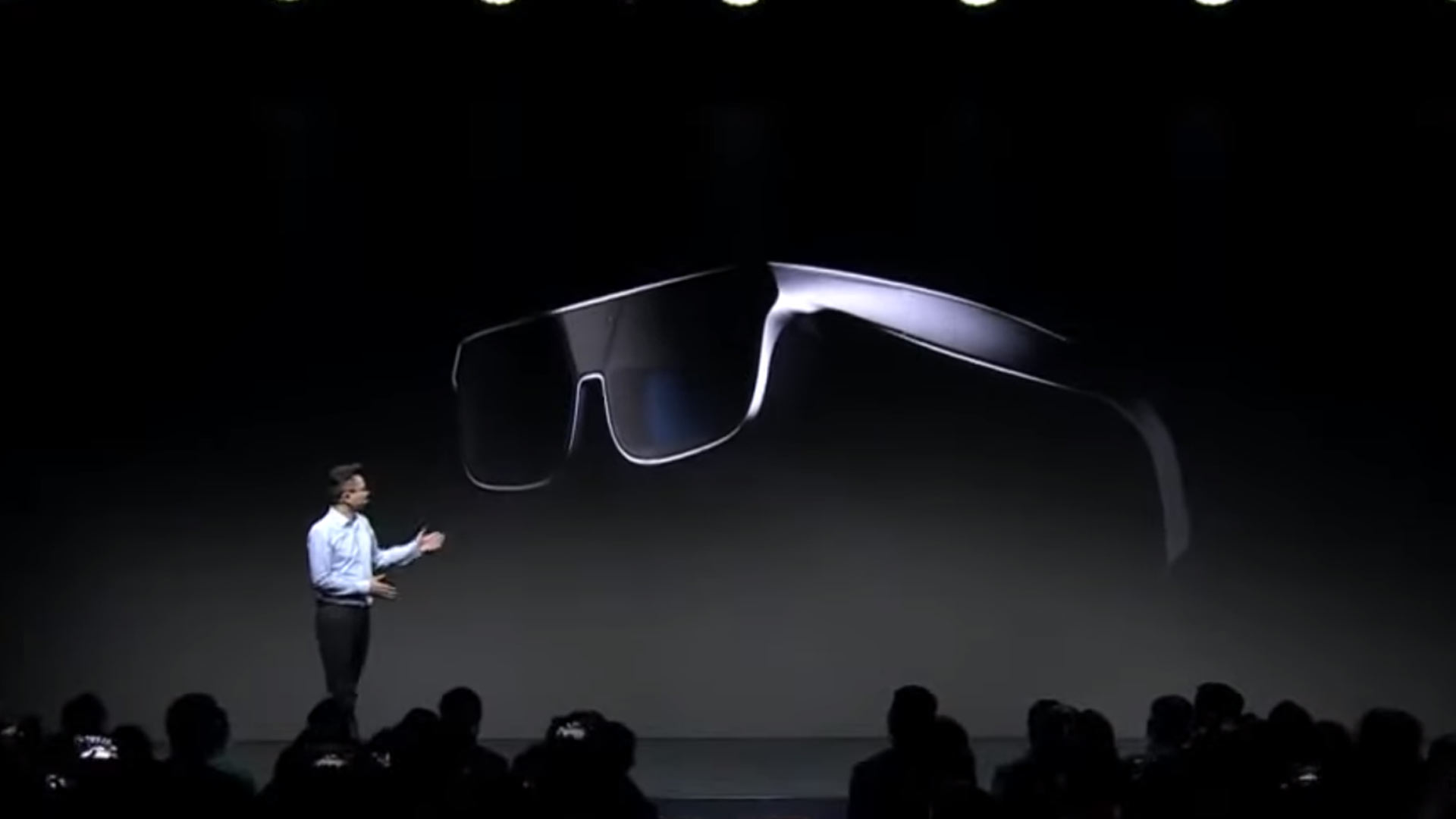
    Last week, Oppo announced that it would show off its Augmented Reality (AR) glasses (the OPPO Air Glass and OPPO AR Glass) at Augmented World Expo USA 2022. he event will take place June 1-3 in Santa Clara, California. Oppo announced Air Glass in China last December and the device was released this past January.

    Unlike most AR Glasses, the Air Glass is a monocle with a single ear frame and displays data sourced from an Oppo phone with an average brightness of 400 nits. That is brighter than the typical 1000 nits (1200 nits maximum) found on the iPhone 13 Pro Max. A small coffee bean-sized Spark Micro Projector projects images onto the microLED lens.
    The Oppo Air Glass is powered by the same Snapdragon 4100 chip used on some Wear OS smartwatches such as the TicWatch Pro 3. The Snapdragon 4100+ was found in last September’s Fossil Gen 6.
    The Oppo AR Glass is a more traditionally designed device with two lenses. The device offers real-time language translation and 3D depth mapping. To use tracked air gestures with the Oppo Air Glass or the Oppo AR Glass, the user must have an Oppo handset and the Oppo Watch 2 nearby.
    Since Oppo doesn’t sell its handsets in North America, what is the game plan here? One possibility is that the company is looking to bring its products to North America (after all, its OnePlus sub-unit does). In February 2019, Oppo made some noise about selling its phones in the states. However, there was one market that the company wanted to crack first.
    At the time, Oppo’s Alen Wu, head of overseas business,  said through an interpreter that before setting off for America, the company would need to solidify its position in Europe. Another possibility is that Oppo is showing off its AR glasses in North America to attract more developers for the devices before releasing the pair in Europe where the company does sell phones.
    Another thing to consider is that Oppo uses Snapdragon Spaces, which is an open mixed-reality (XR) platform that allows firms to develop AR apps without having the basic tools needed to do so. Since the platform uses Qualcomm’s mobile hardware, in theory, Oppo’s Air Glass and AR Glass could work on non-Oppo manufactured Android devices powered by Snapdragon chips.
    Yi Xu, Director of XR Technology at Oppo says, “Our belief that AR can be used to create a new digital world entirely based on the real world has been the driving force behind our investment and R&D in AR technologies, including the development of fundamental technology, applications, user interfaces and ecosystems,”
    Augmented Reality. also known as AR, superimposes data over a real-world image. For example, Google Maps’ Live View uses the rear camera system on your phone to show a real-life view of the area right in front of you. Giant arrows are superimposed on the screen to show you which way to walk to reach your destination. Live View will also show off certain landmarks that you happen to be near.
    Among other Chinese firms that don’t sell their handsets in the U.S., or are banned from doing so, Xiaomi has talked in the past about eventually selling its phones in the states. Currently, it does offer its power bank and the Mi Band fitness tracker to be offered in the U.S. In 2016, former Googler Hugo Barra, working for Xiaomi at the time, said that the firm would be coming to the U.S. in the “near future.”
    Unless Barra confused the U.S. with India, his comment-at least as far as handsets are concerned-never came true.
  • Oppo is reportedly prepping a clamshell foldable

    Oppo is reportedly prepping a clamshell foldable

    Earlier this year Oppo released the Find N foldable handset with a 7.1-inch internal display and a crease that isn’t as easy to spot as the one on other foldables. The 5.45-inch cover screen has a shorter and wider 18:9 aspect ratio than the taller and thinner 25:9 aspect ratio found on the Galaxy Z Fold 3’s cover screen.

    Oppo and Samsung are the only two phone manufacturers that use ultrathin glass (UTG) for their foldable phones. The UTG weighs in at just 0.03mm thick which allowed it to bend more than 200,000 times without any issues in pre-production testing.

    Back in January, a secret file found in the Android 12L Beta revealed that the measurements of the Google Pixel Fold’s internal display won’t be as large as the size of the Samsung Galaxy Z Fold 3’s internal screen as originally thought. And a report from DSCC display analyst Ross Young that we told you about on Tuesday uses rumored measurements to conclude that that the foldable Pixel’s internal display could be shorter but wider than the Galaxy Z Fold 4’s internal screen.
    Once again, this would seem to indicate that the Pixel Fold’s display will be similar to the tablet-sized screen belonging to the Oppo Find N. Almost exactly a year ago to the day, we told you that Oppo was reportedly working on a Galaxy Z Flip challenger with a clamshell design. Today, we have some more information about this phone, which would also take on the Huawei P50 Pocket.
    The rumor mill has Oppo’s foldable clamshell coming in at the equivalent of $756 compared to price tags of approximately $1,000 for the  Huwaei P50 Pocket and a rumored $1,000 for the Galaxy Z Flip 4.
    One of the smartphone brands under the BBK Electronics corporate umbrella along with OnePlus, Realme, Vivo, and iOOO, Oppo’s strategy is to differentiate its foldables from Sammy’s models by giving them a smaller footprint and a smaller price tag.
    While we don’t have any leaked specs for Oppo’s rumored flipper to pass along, we can refresh your memory to remind you that the Galaxy Z Flip 3 opens to reveal a 6.7-inch display with a 1080 x 2636 resolution and features a 120Hz refresh rate. There is a small 1.9-inch external display for notifications, messages, and alerts.
    Unlike the Oppo Find N, which turns from a smartphone into a tablet, the clamshell starts out as a pocketable device that flips open to become a large-screened handset. Plus, whenever you end a call with someone you’re not fond of, you can give your phone a satisfying slam that indicates the end of that connection (telephonically and otherwise).
  • Oppo’s first ever Android tablet leaks once again

    Oppo’s first ever Android tablet leaks once again

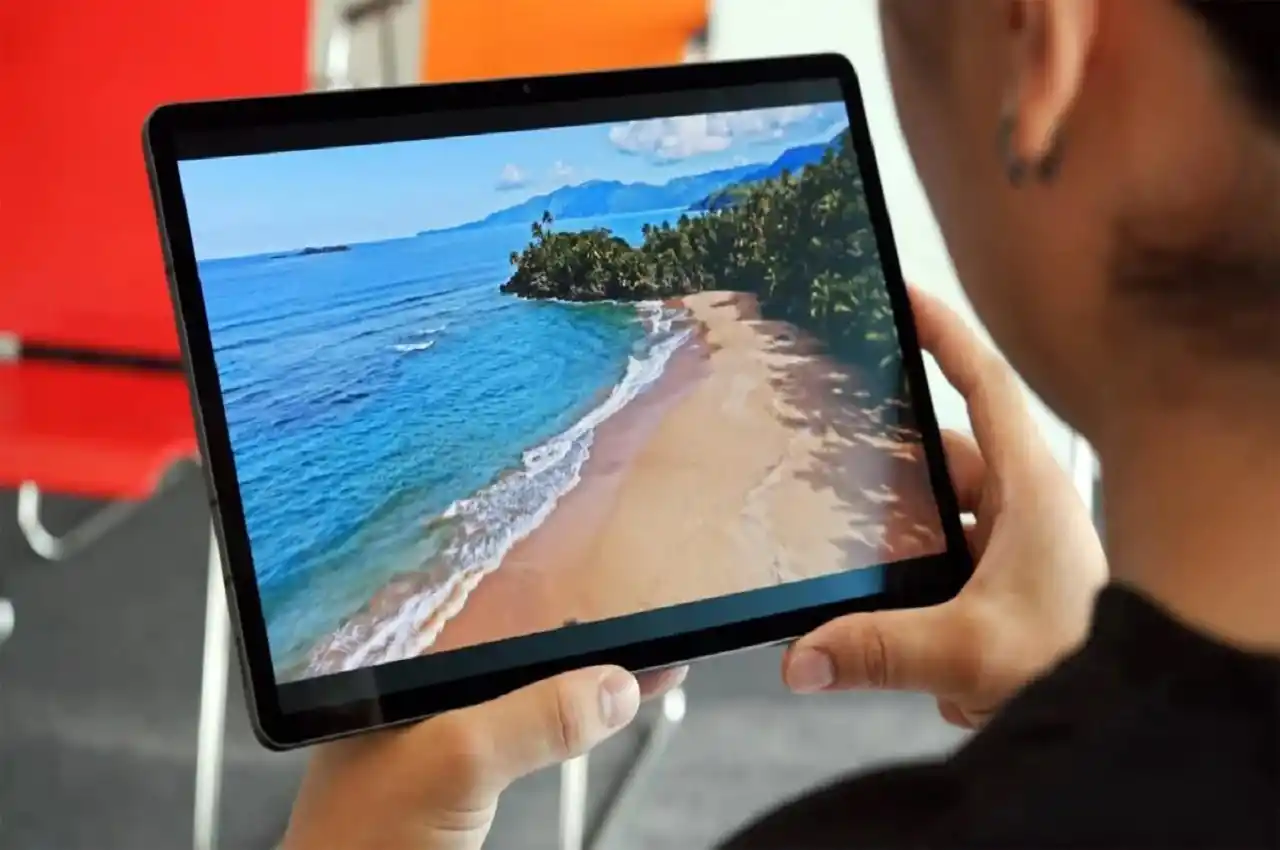
    Following rumors about OnePlus’ first Android tablet, sister company Oppo seems to have similar plans. Although nothing official has been announced yet, Oppo’s tablet has been recently spotted on Geekbench benchmark database.

    The listing uncovered by MySmartPrice reveals some of the tablet’s features like processor, memory and operating system, but the rest of the specs sheet remains a mystery. Apparently, Oppo has decided to pack a very powerful Qualcomm Snapdragon 870 processor inside its upcoming tablet.

    Tablets typically come in more than one version, so depending on the amount of memory/storage and type of connectivity, we might have more than one Oppo tablets, but we do know that at least one model will come with 6GB RAM.

    Unfortunately, the listing reveals the tablet runs Android 11, a real downside for such a powerful tablet. We’re really hoping Oppo will have a change of heart and ship its first ever tablet with Android 12 instead of an older version.

    The new Geekbench listing adds new information to a previous rumor that claims Oppo’s tablet will feature an LCD display with 120Hz refresh rate. The same report mentions a 13-megapixel main camera and a secondary 8-megapixel selfie snapper. Oppo’s Android tablet is expected to be initially launched in China, followed by a release in India in the first half of the year.

  • Oppo will be the next brand to copy Apple’s MagSafe charger

    Oppo will be the next brand to copy Apple’s MagSafe charger

    Demonstrated at the Smart China Expo 2021, Oppo’s magnetic wireless charging system is called MagVOOC and consists of two adapters, one of which supports 20W speeds while the other supports 40W charging.

    The 40W charger resembles a typical wireless charging stand. If you don’t have a compatible MagVOOC smartphone from Oppo, it’ll work over the Qi charging standard at speeds of up to 15W.

    The smaller 20W charger, on the other hand, looks a lot like Apple’s MagSafe charger. Like the bigger charger, it supports Qi charging too, though this time speeds are limited to 10W.

    In addition to those products, Oppo showcased a dedicated 20W MagVOOC Power Bank that includes a 4,500mAh battery. Again, it includes Qi charging support with the aim of being compatible with wireless earphones and smartwatches.

    It’s unclear when Oppo will release its newly announced MagVOOC products to the public, but if the brand is already willing to demonstrate them in full, a launch shouldn’t be too far off.

  • Nokia suing Oppo over patent infringement in several countries

    Nokia suing Oppo over patent infringement in several countries

    Nokia, just like other big companies in the telecom industry, is very protective when it comes to its own patents. The Finnish company signed licensing agreements with many companies that use its patents and sued those that used them without permission.

    The most recent on the list of companies that have just got sued by Nokia is Oppo. Nokia has decided to file lawsuits against Oppo for patent infringement in four countries: England, France, Germany, and India.

    The reason behind Nokia’s action is that Oppo refused to renew the licensing agreement that allows the use of certain patents, which the Chinese company signed back in 2018. FOSS Patents reports that Nokia is using the same legal teams that won the previous company’s patent enforcement campaign against Lenovo and Daimler, so this might be a quick battle.

    According to a statement offered by Nokia, there have been negotiations between the two companies, but Oppo decided to go on its own and rejected all offers.

    We have been negotiating the renewal of our patent licensing agreement with Oppo but unfortunately, they have rejected our fair and reasonable offers. Litigation is always our last resort and we have offered to enter into independent and neutral arbitration to amicably resolve the matter. We still believe this would be the most constructive way forward.

    This can probably end only two ways: either Nokia wins and Oppo pays, or Oppo agrees to sign another multi-year licensing agreement. Without dismissing Oppo’s chances to win the case, Nokia’s expertise in defending its patent portfolio recommends it as the sure winner, but surprises can happen.

  • Oppo may enter the gaming smartphone market

    Oppo may enter the gaming smartphone market

    Asian handset manufacturers like to be in the front lines when it comes to new technology, so it’s no wonder that many of them have already jumped on the mobile gaming bandwagon. What’s surprising is that there are still brands that haven’t yet entered the gaming smartphone market, even though it’s still considered a niche category.

    In any case, we’ve just learned that at least one of the companies that hasn’t yet launched a gaming smartphone is about to join the fray, Oppo. The Chinese company is working on a gaming smartphone that strongly resembles the Asus ROG Phone 5.

    The phone was spotted on the European Union Intellectual Property Office (EUIPO), but apart from some renders, there’s really no information about the unannounced gaming smartphone.

    On the bright side, the pictures reveal quite a few things about the phone, such as the quad-camera setup, the bezel-less display, and the 3.5mm audio jack at the bottom. Although these images prove that the phone exists (even if just as a project), it’s not 100% certain that Oppo will go ahead with the launch. Time will tell whether or not Oppo will pick up the pace and join other brands that have already launched at least one gaming smartphone, such as Asus, Lenovo, Razer and Xiaomi.

  • VinSmart produces smartphones for US mobile service provider

    VinSmart produces smartphones for US mobile service provider

    VinSmart, a subsidiary of Vietnam’s largest listed company Vingroup, has received a contract manufacturing order for two million smartphones from a major U.S. carrier.

    Le Thi Thu Thuy, general director of VinSmart, without identifying the U.S. company, said Thursday at a press conference that the first consignment was sent a month ago. The phones carry the American service provider’s logo.

    “This is an important step in understanding the U.S. market… before taking Vsmart phones there in future,” Thuy said.

    The U.S. company has such stringent standards that despite having a team in Vietnam to supervise the VinSmart factory 24/7, it still thoroughly inspects the phones once they reach the U.S.

    The contract is for four models, all of them supporting 4G.

    A confidentiality agreement prohibits VinSmart from disclosing the name of its partner.

    VinSmart has a plant for manufacturing 125 million phones, IoT devices, and other smart devices per year at the Hoa Lac Hi-Tech Park in Hanoi.

    The brand is currently sold in three countries, Russia, Myanmar, and Spain, but the company expects to sell its Aris 5G in the U.S. by next year.

    VinSmart had a 16.7 percent market share in the first quarter and surpassed Apple to become the third-largest smartphone brand in Vietnam behind Samsung and China’s Oppo.

  • Seven more Oppo flagship stores planned for SE Asia

    Seven more Oppo flagship stores planned for SE Asia

    Six more Oppo flagship stores are planned across Southeast Asia by next year as the Chinese smartphone brand ramps up its brand profile in the region.

    The company says it will open stores in Thailand, Malaysia, Indonesia, Vietnam, Taiwan, and the Philippines, in addition to its newly opened super flagship store at the Emquartier shopping mall in Bangkok.

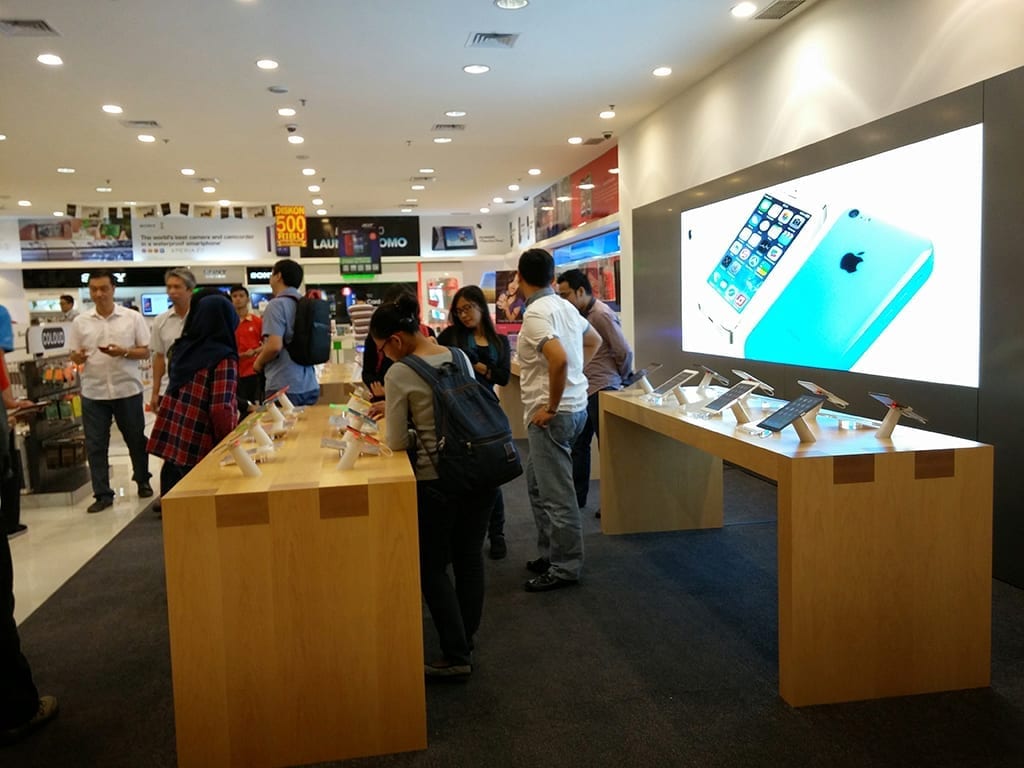
    The brand describes its Oppo flagships as spaces where it can interact more with customers and showcase futuristic products with IoT, AR and 5G experiences including smart wearables and cloud gaming.

    The brand says it has been generating sales through more than 52,000 retail points and 44,000 sales representatives for the past decade. But now it is entering a new era in which it aims to upgrade the overall consumer in-store experience, hence the Oppo flagship openings.

    “Oppo is now already one of the top players in the region. It is important that we continue to evolve with consumers and the industry in order to stay competitive,” says Oppo Asia Pacific president Jimmy Yi.

    “The next frontier of our strategy is strengthening the premium experience and continue to innovate consumer experiences both offline and online,” he added.

  • Oppo Thailand opens Bangkok flagship Store

    Oppo Thailand opens Bangkok flagship Store

    Consumer electronics firm Oppo Thailand has opened a flagship at the Emquartier Mall in Bangkok

    The store was launched by Oppo Thailand executive VP Khun Chanon Chirayakul and The Emporium Group senior VP Manathet Annawat, who announced the brand’s intentions to penetrate a more premium market with higher levels of experience and service.

    The store offers a superior retail experience heavy on IoT and 5G innovations and a premium aesthetic interior design, allowing customers to experience interactions ranging from big-screen to smartphone-screen scale technologies. Drones, cameras, Bluetooth speakers, wireless headphones, flash chargers, AR/VR smartwear and robots make up part of the product range on offer.

    The Oppo Thailand Super Flagship offers exclusive services to users with a one-hour repair service, software upgrades and delivery service for customers.

  • Oppo India opens first flagship store in Hyderabad

    Oppo India opens first flagship store in Hyderabad

    Oppo India has launched its first premium flagship in South Asia at Sharath Capital Mall in Kondapur.

    The opening coincides with the release of the brand’s new Reno series phone model.

    The new venue has been designed to engage customers while encouraging them to explore and appreciate the craftsmanship and technological features of Oppo’s product range. According to product manager Jithin Abraham, it is divided into different areas that respectively deal with Indian culture and heritage, Oppo’s evolution in the mobile market, the brand’s technologies, and other consumer experiences.

  • Oppo makes official the latest replacement for the notch

    Oppo makes official the latest replacement for the notch

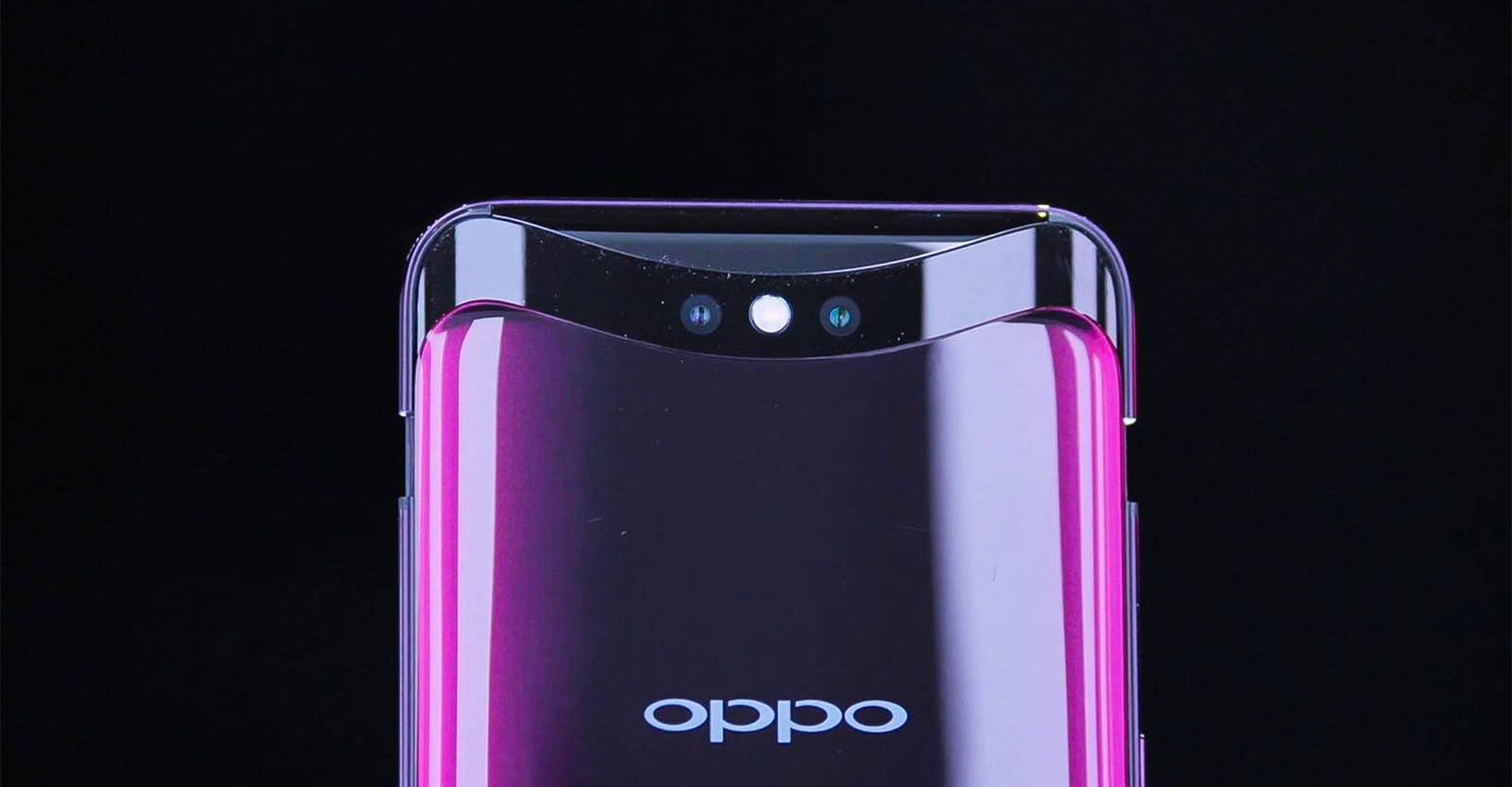
    With the unveiling today of the Oppo Reno, we got to see the latest attempt by a manufacturer to replace the notch. The ultimate goal, of course, is to give the consumer a device that carries a high-screen-to-body ratio. The wedge is motorized and contains the front-facing selfie camera and the flash for both front and back cameras. There are two versions of the device, which we get to in a moment.
    The standard version of the Oppo Reno sports a 6.4-inch OLED display carrying a 1080p FHD+ resolution and is powered by the Snapdragon 710 Mobile Platform. The device carries 6GB or 8GB of memory. The microSD slot offers as much as 256GB of additional storage, and the handset comes with a dual-camera setup (48MP + 5MP depth sensor) on back. A 5x hybrid zoom is available. The selfie snapper that resides on the wedge weighs in at 16MP, and the lights are kept on by the 3765mAh battery that is included with the phone. The battery can be rapidly charged at 18W.
    For those looking for a wedge phone with higher-end specs, Oppo is offering the Reno 10x Zoom Edition. This model features a 6.6-inch OLED panel with a 1080p FHD+ resolution and is equipped with Qualcomm’s latest and greatest Snapdragon 855 Mobile Platform under the hood. 6 or 8GB of memory is inside, and this unit comes with the same capacity microSD slot as found on the standard model.
    This version of the Reno sports a triple-camera setup (48MP primary + 8MP super wide-angle + 13MP periscopic zoom) that together offers 10x hybrid zoom and OSI. The 16MP front-facing selfie camera appears on the pop-up wedge. Speaking of the wedge, it allows the Reno to feature a screen-to-body-ratio of 93.1%. The Oppo Reno 10x Zoom Edition comes with a larger 4,065mAh battery, which uses VOOC 3.0 to charge 23.8% faster than the previous version of the rapid charging system. The phone also features an in-display fingerprint scanner
    The wedge has been designed to last over five years as long as you open it no more than 100 times a day. And thanks to a sensor built into the phone, if the device should fall with the wedge open, the part will automatically close right away. That’s a feature that could be used to protect other parts of a phone, including the screen, in the future.
    The standard Oppo Reno is offered in Pink, Gradient Purple, Black, and Blue, and is priced at the equivalent of $450 USD for the model with 6GB memory and 128GB of storage. The Reno 10x Zoom Edition is available in Gradient Blue and Black and costs the equivalent of $600 USD for the version carrying 6GB of memory and 128GB of storage. The unit equipped with 8GB of memory and 256GB of storage will run you about $710 USD based on today’s foreign exchange rates. More information about pricing will be revealed on April 24th at the Reno’s European unveiling in Zurich.
    Meanwhile, there will be a 5G version of the Oppo Reno. The device was used by carrier Swisscom today to show off its 5G network and hit a peak download speed of 1.86Gbps. The device will be offered next month by Swisscom, priced at the equivalent of $1,000 USD. Based on the Reno 10x Zoom Edition, the phone is powered by the Snapdragon 855 Mobile Platform and is equipped with a 4065mAh battery.