Retail News CRM

Tag: Pakistan

  • Game-Changing Telenor Pakistan Sale Complete: PTCL Takes Reigns in Boost to Telecom Sector

    Game-Changing Telenor Pakistan Sale Complete: PTCL Takes Reigns in Boost to Telecom Sector

    The Telenor Group, a leading global telecommunications company, recently finalized its sale of Telenor Pakistan to Pakistan Telecommunication Company Limited (PTCL), a member of the international technology conglomerate e&. The transaction, first announced on December 14, 2023, saw Telenor Pakistan valued at NOK 5.3 billion on a cash-and-debt-free basis. The completion of the transaction certifies this valuation, reaching NOK 5.4 billion when factoring in currency rates from September, subject to any final adjustments to be made at year’s end.

    An Overview of the Transaction

    In addition to the finalized sale, Telenor has also acknowledged receipt of NOK 0.9 billion in cash flow from Telenor Pakistan since the announcement of the transaction. For the past two decades, Telenor Pakistan has been a crucial player in providing digital services and connectivity to over 40 million customers. A significant achievement for the company is its introduction of 4G technology in regions that had previously been underserved, thereby promoting digital inclusion throughout Pakistan.

    Telenor Pakistan’s array of products and services have played a significant role in boosting key economic sectors in Pakistan. These sectors span agriculture, banking, and technology freelancing communities. A noteworthy aspect of the company’s journey has been its commitment to empowering local communities through initiatives focused on promoting safe internet use, digital skills, and mobile identity, thereby encouraging responsible connectivity and digital inclusion across the nation.

    Leadership Remarks on the Sale

    Benedicte Schilbred Fasmer, CEO of Telenor Group, commented on the transaction’s completion:

    “Finalizing this transaction signifies Telenor Group’s strategic emphasis on being an active owner of top market positions in Asia, while simultaneously facilitating consolidation and innovation in Pakistan’s telecom sector. As we conclude this sale today, I extend my heartfelt gratitude to our customers, partners, and, particularly, our workers who have been integral to this remarkable journey. Your unwavering support and faith in our mission have brought about transformative changes in Pakistan’s economy and society.”

    Jon Omund Revhaug, Head of Telenor Asia, also expressed his sentiments:

    “Our Telenor Pakistan team members have proven themselves to be genuine trailblazers. Their resilience, innovation, and unwavering commitment have not only propelled the company’s growth but have also had a profound impact on millions of Pakistanis nationwide. Your invaluable contributions have positioned Telenor Pakistan as a model of progress and inclusion. As you embark on this new chapter, your legacy will continue to inspire and shape the future of Pakistan’s digital society.”

    In conclusion, Telenor Group extends its appreciation to the more than 40 million customers of Telenor Pakistan, the partners who collaborated to deliver services, and the employees whose commitment and innovative ideas have shaped the company’s impressive legacy.

    Questions & Answers

    What was the valuation of Telenor Pakistan at the time of the sale?
    The company was valued at NOK 5.3 billion on a cash-and-debt-free basis.

    What has been Telenor Pakistan’s impact on the country’s digital inclusion?
    Telenor Pakistan has provided essential connectivity and digital services to over 40 million customers. This includes bringing 4G technology to underserved areas, thereby promoting digital inclusion throughout Pakistan.

    What sectors has Telenor Pakistan influenced?
    Telenor Pakistan’s products and services have boosted key economic sectors in Pakistan, such as agriculture, banking, and the technology freelancing communities.


  • New Tax Measures Trigger 300% Price Surge On Chinese E-commerce Platform In Pakistan

    New Tax Measures Trigger 300% Price Surge On Chinese E-commerce Platform In Pakistan

    Prices on the Chinese e-commerce platform, Temu, have dramatically surged in Pakistan, with increases reaching up to 300% in some cases. This substantial escalation has been reported by customers over the past week, marking a significant shift in the online shopping landscape.

    New Taxes Imposed

    These price spikes appear to be occurring in the wake of new tax measures instituted by the government. The administration last month implemented new taxes specifically targeting online sellers. These levies extend to platforms such as Temu and AliExpress, among others.

    While the companies haven’t issued an official statement providing the reasons behind the price alterations, a spokesperson for Temu pointed to external policy shifts and escalating operational costs across numerous sectors as the primary catalysts for the increases. The spokesperson stated, “We remain committed to providing access to quality products at affordable prices, while fully complying with local requirements.”

    Digital Presence Proceeds Tax Act

    The government disclosed last month that a 5% tax would be put on all goods sold in Pakistan by foreign digital platforms that lack a physical presence in the country. This initiative is part of the Digital Presence Proceeds Tax Act. The goal of this tax is ostensibly to create a more equitable commercial environment. It is said to target online platforms such as Facebook, Google, Spotify and Netflix, in addition to select local online sellers.

    Further, online retail platforms are now also responsible for paying the standard 18% sales tax applicable to local businesses in Pakistan. The government’s rationale for these tax hikes is to equalize conditions for Pakistani businesses that are already subject to both the 18% sales tax and an income tax of up to 35%.

    Concerns Over Impact

    While the government’s intent might be to create a fairer marketplace, experts have voiced concerns over the potential harm the digital tax could inflict on Pakistan’s burgeoning e-commerce market.

    Questions & Answers

    What are the new tax measures impacting e-commerce in Pakistan?
    Last month, the government introduced a 5% tax on all goods sold in Pakistan by foreign digital platforms. These platforms are also expected to pay the 18% sales tax applicable to local businesses.

    What is the rationale for these new taxes?
    The government’s intent with these tax hikes is to create a level playing field for local Pakistani businesses already paying an 18% sales tax and an income tax of up to 35%.

    What are the potential consequences of the new digital tax?
    While the intention is to foster a more equitable commercial environment, experts have raised concerns that the digital tax could harm Pakistan’s rapidly growing e-commerce market.

  • Temu’s Price Surge: 300% Increase Fuels Controversy Over New Tax in Pakistan

    Temu’s Price Surge: 300% Increase Fuels Controversy Over New Tax in Pakistan

    In a significant shift, Temu, a rising star in the Chinese e-commerce sector, has jacked up prices for Pakistani consumers by as much as 300%. This steep increase comes on the heels of the Pakistani government’s recent decision to impose new taxes on online sellers, a move that has sent ripples across the country’s digital marketplace.

    Industry analysts are concerned that these tax measures could dampen consumer spending and stifle the burgeoning digital economy in Pakistan. With prices soaring, one has to wonder if shoppers still have the appetite for online bargains, or if they’ll be forced back to traditional markets — a twist that would surely turn the tables on the e-commerce revolution.

    As online platforms like Temu adapt to this fiscal landscape, consumers find themselves at a crossroads. The new tax burdens could hinder the growth of digital commerce just when it was beginning to flourish, raising questions about the long-term implications for businesses and buyers alike.

    Questions & Answers

    How has Temu’s pricing policy changed in Pakistan?
    Temu has increased prices for its products in Pakistan by up to 300%, attributed to the government’s new taxes on online sellers.

    What impact might these tax measures have on consumers?
    Experts believe that the new tax measures could negatively affect consumer spending and slow the growth of Pakistan’s digital economy.

    Are there concerns about the future of e-commerce in Pakistan?
    Yes, there are significant concerns that the tax increases could stifle the rapid growth of digital commerce, limiting options for consumers and affecting overall market dynamics.

  • Papa John’s launches in Cambodia

    Papa John’s launches in Cambodia

    US pizza chain Papa John’s is launching in Cambodia with 15 restaurants scheduled to open during the next three years. The company opened its flagship store in Phnom Penh last month.

    “Papa John’s Cambodia team is truly passionate about pizza,” said Peter Xu, Papa John’s Cambodia franchisee.

    “With our ‘Better ingredients – Better pizza’ promise, we look forward to providing local pizza lovers with quality products and outstanding services.”

    Xu also owns a Papa John’s franchise in New York and other business ventures in Cambodia.

    Jack Swaysland, Papa John’s COO, international, said that following a record year of sales and growth, Papa John’s is well-positioned to accelerate international development, a key pillar for the brand’s long-term growth.

    Papa John’s has restaurants in 48 countries, with the latest new openings in France, Spain, Tunisia, Iraq, the Netherlands, Morocco, Kazakhstan, Kyrgyzstan, Poland, the Bahamas, Pakistan, and Portugal. The company is eyeing expansion in Brazil, Japan, and Southeast Asia.

  • Foodpanda to drive Covid-19 vaccination awareness campaign across Asia

    Foodpanda to drive Covid-19 vaccination awareness campaign across Asia

    Food and grocery delivery service Foodpanda has launched a Covid-19 vaccination awareness campaign across Asia in the lead-up to WHO’s World Immunisation Week. The campaign, which aims to reach more than 10 million people across Asia, will include a series of content across digital and social media channels, providing information and resources on local vaccination programs.

    It will be rolled out in phases across Singapore, Malaysia, Thailand, Hong Kong, Cambodia, Japan, Bangladesh, Pakistan, and the Philippines.

    “The region’s battle with Covid-19 is ongoing, and we have to stay vigilant on keeping our ecosystem safe,” said Jakob Angele, CEO of Foodpanda. “Leveraging existing channels with our network of riders, merchants, employees and customers, we can raise greater awareness around fighting misinformation and share information around local vaccination programs so that our entire delivery ecosystem can be informed and mobilized.”

    Besides its social media campaign, Foodpanda will also join hands with local authorities to support vaccination programs in Singapore, Cambodia, and the Philippines.

    “We will continuously explore ways to play a part in the fight against Covid-19.”

  • Advancing digital education in Asia Pacific

    Advancing digital education in Asia Pacific

    The current digital transformation has brought about sweeping change that not only affects the political and economic sectors of a country but most importantly, introduced a number of important social changes as well triggered by the growth of knowledge in the information and communications technologies (ICT); namely in the field of education.

    As we have seen, education in the 21st century is incomparable to previous generations and is unlike anything we have seen before. The topic of education has been a nuanced one in Asia Pacific, which is one of the fastest developing regions in the world. Despite their similarities, many countries in the region have vastly different socio-economic and cultural landscapes that contribute significantly to each of its society’s pursuit of knowledge. With 45% of the world’s youth calling Asia Pacific home, it’s a sad reality to know that many young people in the region are struggling to find a balance between what they are being taught in schools and the whirlwind digital ecosystem that they are expected to traverse once they graduate.

    Furthermore, the fact that many young people living in the region’s developing countries have no access to educational resources, let alone the ability to secure employment, has not only widened the disparities between rural and urban areas but also exacerbated underlying issues like socio-economic inequality and social exclusion amongst youth.

    In this situation, various questions arise; will digital education be able to bridge this gap? Would students be able to reconcile their current learning strategies with the ever-evolving, fast-paced digital technologies outside the classroom? What should we do as a society to ensure that no one gets left behind?

    One of the methods proposed by institutional stakeholders would be to take advantage of the rapidly growing and increasingly tech-savvy mobile technology subscriber base in Asia Pacific. With almost half of the population already having access to mobile devices, a number which is expected to rise exponentially by 2020, it is absolutely crucial that higher education institutions and relevant government bodies seize the opportunity to leverage the versatility of mobile technology to boost educational reform and provision in areas where it is most needed. Mobile technology like smartphones, laptops, tablets, and others offer a more customizable and flexible form of learning for students, regardless of their location.

    An analysis of case studies discussed in the book “Mobile Learning in Higher Education in the Asia Pacific Region: Harnessing Trends and Challenging Orthodoxies” highlighted the sustainable utilization of mobile learning strategies within the Asia Pacific region. In Japan for example, a mobile app known as SCROLL aims at linking learning in formal and informal environments to enhance opportunities for students to engage in informal learning. This allowed users to record everyday learning experiences with their smartphones and, if they chose to do so, share these experiences with other learners. The initiative was implemented in various communities and universities across Japan; with new configurations constantly being added to further improve and refine the system.

    In South Korea, a pilot project employing the use of mobile instant messaging (MIM) was conducted to alleviate social and cultural challenges faced by international exchange students when it came to learning the Korean language and conversing with Korean speakers. The interesting aspect of this experience is that users are able to facilitate language contact with each other in other locations around the world and do not necessarily need to be sitting next to each other. This allows international students learning Korean to combine MIM texts and visual tools in order to grasp the language skills in a short amount of time.

    In addition to mobile technology education, another mode of digital learning has also surfaced and gained traction in the region in recent years. Massive open online courses or MOOCs enable greater participation and the ability to address common issues prevalent in education such as inequity and inefficiency. Although MOOCs in the US are spearheading the digital education revolution, the ones in Asia Pacific are not far behind; with homegrown MOOCs thriving in countries like the Philippines, China, Malaysia and India. Many of these initiatives can be seen predominantly in a higher education setting like India’s Delhi University and the University of the Philippines’ Open University’s MODeL, to name a few.

    Considering that MOOCs is a relatively new system, there is still much to be done in terms of research and availability of resources. Due to this, several overriding issues have surfaced such as low completion rates as well as language barriers; as most lessons are conducted in English and inadequate learning support in developing countries. Even with these inevitable teething problems, MOOCs have facilitated greater access to education, but it is only a matter of time that we would be able to see if marginalized groups that deal with the issues mentioned above are also allowed access to this method of learning without being left behind by the strong current of rapid digitization.

    Intelligent tutoring systems (ITS), on the other hand, are computer-based learning environments that employ AI to give students a customized educational experience. This system not only provides students with a personalized mode of study but also uses hints and remediation, cognitive and metacognitive scaffolding, effective support, and alternative teaching approaches as tools to engage with students and fuel motivation. One of the major factors for ITS’ popularity is its ability to be deployed in situations where there is a lack of adequately trained educators. Although some ITS activity has been documented in developing countries in Asia Pacific, with a specific focus on cultural factors, mobile gadgets, and language support, most of the research has been done in developed nations like Singapore, South Korea, Taiwan, Japan and Hong Kong.

    Clearly, there is still a lot to be done in terms of evolving the digital education scene in Asia Pacific to make it accessible and adaptable to all communities across the region. In cases like these, it is important that the governments of these countries work closely with non-governmental organizations and tech support groups to build infrastructure that will allow for the continuous sharing of knowledge on a digital platform that is not only user-friendly but is considerate of cultural boundaries and regional and socio-economic factors.

  • A long road ahead for young Pakistani tech innovators

    A long road ahead for young Pakistani tech innovators

    Omar Majid Warraich knew his idea could help thousands earn more from their crops, but the problem was he did not know how to execute it.

    “As a start-up, you tend to need advice about the dos and don’ts, when to pitch an idea, what to pitch to investors, apply for grants, get the loans,” he told AFP.

    The co-founder of Agrim@art is one of Pakistan’s start-up success stories — his platform has more than 700 registered and verified farmers and a $100,000 grant from Karandaaz, an investment platform sponsored by the Bill and Melinda Gates Foundation.

    Officially launched in August last year, Agrim@art reported sales worth 5.5 million rupees ($36,000) in its first three months, and predict they will have 2 000 farmers working with them by March 2020.

    Like tech entrepreneurs around the world, Warraich turned to a start-up incubator for help getting his idea off the ground -the National Incubation Center (NIC), a public-private partnership based in Lahore.

    The challenges he faced are not uncommon in Pakistan, where the education system is weak, and the economy is faltering.

    Some 64 percent of Pakistanis are under the age of 30, and youth unemployment stood at six percent in 2019, according to a report commissioned by the UN.

    Incubation centers fostering innovation and entrepreneurship in the tech sector are “the solution”, believes Faisal Sherjan, program director at NIC.

    Its hub, with its colorful walls, state of the art labs and quirky furniture, is far removed from the daily grind of the heaving, traffic-choked, polluted city of 11 million.

    Teams there have six months to set up their businesses while utilizing its facilities, which include Facebook’s newly installed VR lab to a host of business workshops.

    There are supervisors and mentors to help entrepreneurs navigate Pakistan’s daunting business environment.

    There have been some homegrown tech hits: Bykea, a motorbike-hailing app, raised more than $7 million in 2019 and is expected to raise another $15 million in the first quarter of 2020.

    The country has both a huge talent pool and a huge market, offering the “right mix” for investors, says Khurram Zafar, director of Karandaaz and 47 ventures, a fund that only invests in Pakistan.

    But there are concerns about how tech start-ups can successfully navigate a messy business environment.

    Pakistan was still ranked a dismal 122 out of 137 on the Global Entrepreneurship Index in 2018, and 108th on the World Bank’s ease-of-doing-business list.

    Kalsoom Lakhani, founder and CEO of the fund Invest2Innovate (i2i), cited the “bureaucratic headaches”, “the difficulty of bringing money into the country and the impossibility of getting it out”, and the “very debilitating” taxation, as key issues.

    Bribery and corruption are widespread, while government efforts to tackle graft have resulted in an unfriendly regulatory environment “towards investors and entrepreneurs alike”, i2i said in a 2019 report on Pakistan’s start-up ecosystem.

    The government is enthusiastic about start-ups and has launched incubators in dozens of universities and tech schools, which it hopes will help develop the sector.

    Global tech giants are also taking an interest. Ride-hailing app Uber has partnered with a government fund to bring its #UberPitch to Pakistan, where budding businesses are given a chance to present their ideas, while Google and Facebook have awarded grants to start-ups featured on Pakistani reality show Idea Croron Ka (Million Dollar Idea).

    But, compared to countries such as neighboring India, investment has been slow to come, making it hard for start-ups to grow beyond their incubation period.

    Many tech entrepreneurs are out of touch with the realities of Pakistan and the unique needs of consumers there, said Maryam Mohiddin Ahmed, co-author of a report on Pakistani start-ups entitled “Beyond the Buzz”.

    “We don’t need people to get our emails to arrive faster but our crops to grow better. If a large chunk of the population is not being served by innovations, then what is the point of innovating?” she added.

    What Pakistan needs is more “game-changing startups” on a human and environmental level, she argued.

    But despite the challenges, there is room for optimism.

    With Pakistan’s young population rapidly digitizing, “never have the opportunities for social, economic and political progress been so great”, the UNDP stated.

  • Fat Brands opens five Restaurants in Pakistan

    Fat Brands opens five Restaurants in Pakistan

    Fast-food franchise owner Fat Brands has developed five co-branded Fatburger and Buffalo’s Express concepts in Pakistan.

    In partnership with local operator Crescent Star Foods, the co-branded restaurants will increase the brand’s presence in Pakistan to six restaurants.

    “Our partners and friends at Crescent Star Foods not only know the business, but they know and care about the people of Pakistan,” said Fat Brands CEO Andy Wiederhorn. “We couldn’t be more thrilled to work with them to bring our delicious, homemade burgers and wings to Pakistan residents and visitors.”

    Fat Brands strategically acquires, markets and develops fast casual and casual dining restaurant concepts around the world. The company currently owns eight restaurant brands and franchises more than 400 units worldwide.

  • Telenor Pakistan gets ready to bring 5G to Pakistan

    Telenor Pakistan gets ready to bring 5G to Pakistan

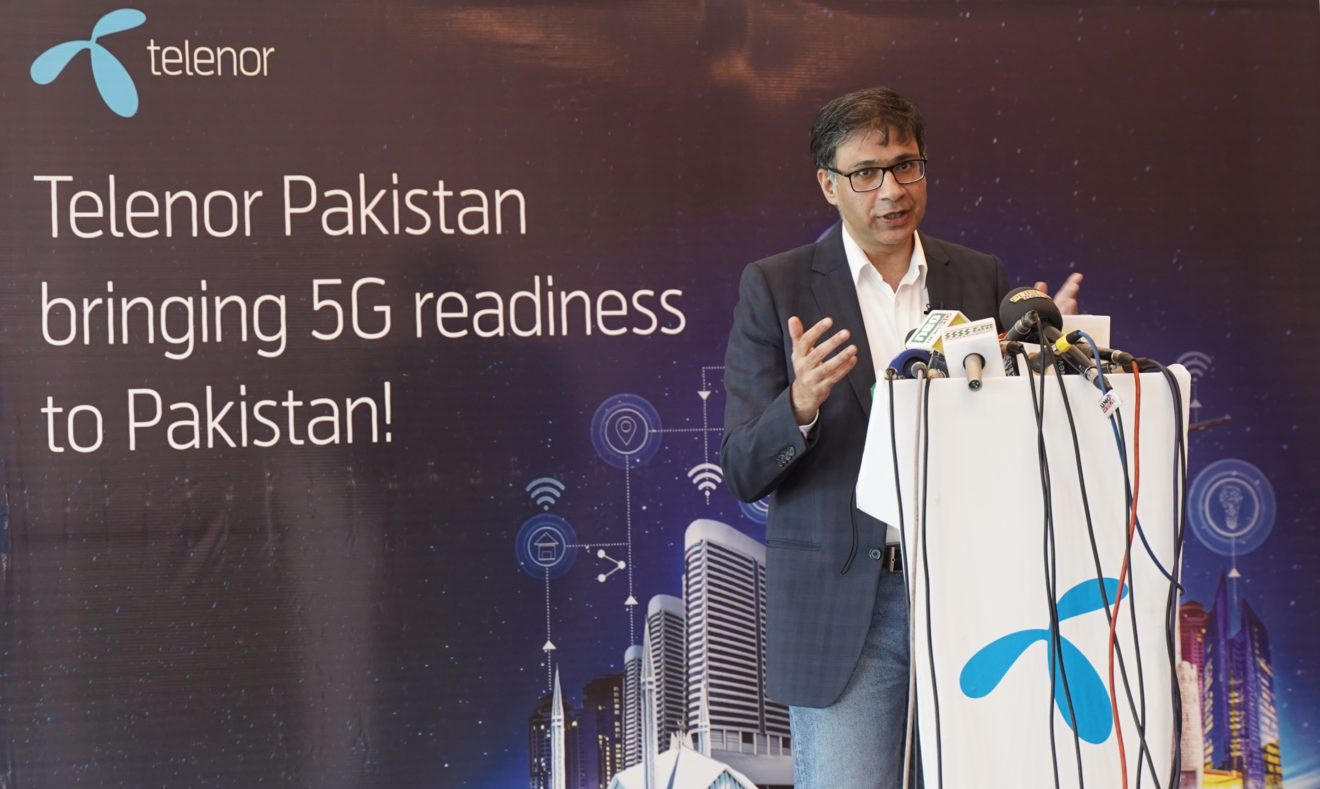
    Taking another stride towards network transformation and digitalization, Telenor Pakistan and its network partners have geared up to make the network 5G ready to pass on the benefits of this transformative technology to the people of Pakistan in the coming years.

    5G is the fifth-generation cellular network technology that offers faster data transfer speeds and enables advanced solutions such as smart homes, smart cities, autonomous driving, automated emergency services, remote medical diagnosis, smart manufacturing, cloud gaming, and enhanced content & media experiences to name a few.

    The development cements and once again demonstrates Telenor Pakistan’s position as the frontrunner of innovation and digital transformation in the country. Today, the company has the country’s first and only 4.5G network and takes the lead with such industry-first initiatives as IoT, Cloud Services, and overall digital ecosystem development comprising innovative solutions for gaming, entertainment, and 3G/4G devices portfolio, etc.

    Telenor Pakistan took the first step towards 5G enablement last year by beginning the evolution of its network core from legacy architecture to state-of-the-art virtualized hybrid core, taking the lead towards 5G readiness. The latest development takes Telenor Pakistan one step closer to the successful launch of end-to-end 5G trials to demonstrate the potential of futuristic technologies and solutions for socioeconomic advancement.

    “As Pakistan gears up for future technologies that will be integrated into governance, businesses and people’s lives, the role of 5G becomes imperative,” said Irfan Wahab Khan, Chief Executive Officer Telenor Pakistan and Head of Telenor Emerging Asia Cluster, while sharing his thoughts on the development. “With this latest step towards digitalization and network transformation, Telenor Pakistan is opening up new possibilities for millions of Pakistanis who will be the actual winners in the development. We look forward to continued government support as a digitalization partner for adequate spectrum allocation for adoption and penetration of 5G over the next few years.”

    “Staying devoted to our vision of empowering the people, we have made use of innovative technologies to bring them newer and better opportunities,” said Bilal Kazmi, Chief Marketing Officer, Telenor Pakistan while speaking to the media at Telenor Pakistan Headquarters. “We are happy to further our goals of communications innovation and digitalization across sectors, which is exactly what this development aims for. We will continue to play our part to leverage technology as the greatest equalizer and enhance the ecosystem that we set out to build years ago through network transformation and expansion, data solutions, content services and introduction of affordable devices.”

    Telenor Pakistan, driven by its vision of empowering societies, continues to take groundbreaking initiatives to lead Pakistan towards a digital economy. Connectivity and data being the enablers that empower people, the company believes that connecting people to what matters most to them is truly realized only if it continues to innovate and impact millions of lives.

  • Irfan Wahab Khan at MWC Shanghai 2019

    Irfan Wahab Khan at MWC Shanghai 2019

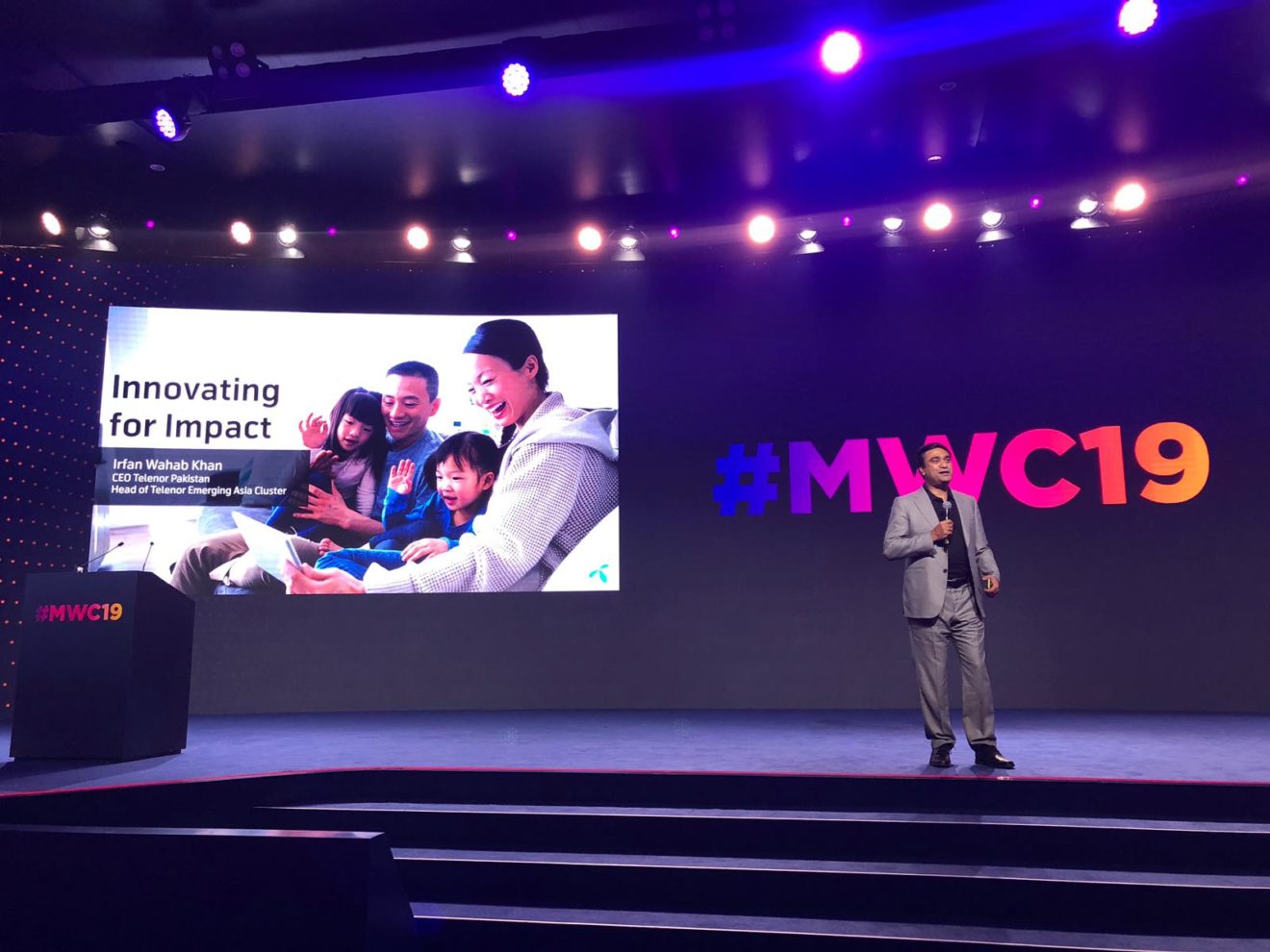
    Telecommunications has accelerated development of key sectors, spurring economic growth and opening countless avenues to empower individuals and societies, said Irfan Wahab Khan, Head of Telenor Group’s Emerging Asia Cluster and CEO of Telenor Pakistan, at the Mobile World Congress (MWC) in Shanghai. His keynote at MWC, ‘Pioneers of Intelligent Connectivity’, also shed light on how intelligent connectivity and Telenor Group’s disruptive innovation are transforming lives of millions, enabling basic civic rights through mobile birth registration and equipping the unbanked with mobile financial services, among others.

    MWC Shanghai 2019 highlighted how ICT-powered solutions and services are creating strong socioeconomic impact. Irfan highlighted the advent of the Asian Century and role of Telenor Group in transforming health, financial services and agriculture in Asia. In particular, he listed innovative mobile-based solutions like Bangladesh’s ‘Tonic’, Myanmar’s ‘WaveMoney’, and Thailand’s ‘Smart Farmer’, which are providing a myriad of digital health services, safe money transfers, and IoT farming solutions respectively to millions of people.

    In addition, he shared how Telenor Group is using big data to help predict outbreak of chronic diseases like dengue in Pakistan and malaria in Bangladesh. The partnership between Telenor Microfinance Bank in Pakistan with its Malaysian counterpart Valyou has also introduced Pakistan’s first blockchain-based cross-border remittance service, powered by industry-leading blockchain technology developed by Alipay of the Ant Financial Services Group.

    “Mobile connectivity and the internet are the greatest equalisers of our day. They impact nearly every aspect of life today, driving social interactions and creating new business opportunities. Through the power of connectivity, Telenor Group has been connecting people to what matters most for the past 160 years. We will continue to do so through disruptive innovation that empowers societies and improve lives, in order to secure a better future for all,” said Irfan.

    MWC Shanghai 2019 is focusing on technologies of the future that include 5G, IoT, AI, big data, blockchain and beyond. The event features the most influential and industry dominating companies and organizations coming together to explore the depths of Intelligent Connectivity. Through the MWC19 Shanghai platform, leading companies take charge of industry-focused discussions, influence the future of connectivity, and unveil new intelligently connected technologies. In addition to his keynote and other MWC engagements, Irfan is also set to hold meetings with global tech leaders, partners and innovators in technology to explore opportunities through the technology-driven ecosystem.

  • PTA lays out mobile license renewal terms

    PTA lays out mobile license renewal terms

    The Pakistan Telecommunications Authority has laid out the terms of the renewal of the mobile licenses of mobile operators Jazz, Telenor Pakistan and China Mobile Pakistan.

    Under the terms set by the government, a renewal price for the spectrum included in the licenses will be set at $39.5 million per MHz for 900-MHz spectrum and $29.5 million per MHz for 1800-MHz spectrum. This is based on benchmarks set during spectrum auctions in 2016 and 2017.

    Operators will be able to choose to pay 100% of the renewal fees upfront, or 50% upfront with the remainder in five annual installments. The upfront payment will be due on June 25.

    The renewed licenses will have a tenure of 15 years and will have technology-neutral terms as well as provisions for spectrum sharing or trading. Operators will need to comply with certain terms and conditions related to coverage, quality of service and other matters.

    China Mobile Pakistan will be provided with options to replace its 900-MHz spectrum that is subject to cross-border interference, the PTA said. If these options are not accepted, the allocation shall be dealt with without any compensation in the form of additional frequency assignments

  • Unilever and Telenor Pakistan partner to enhance digital inclusion in Pakistan

    Unilever and Telenor Pakistan partner to enhance digital inclusion in Pakistan

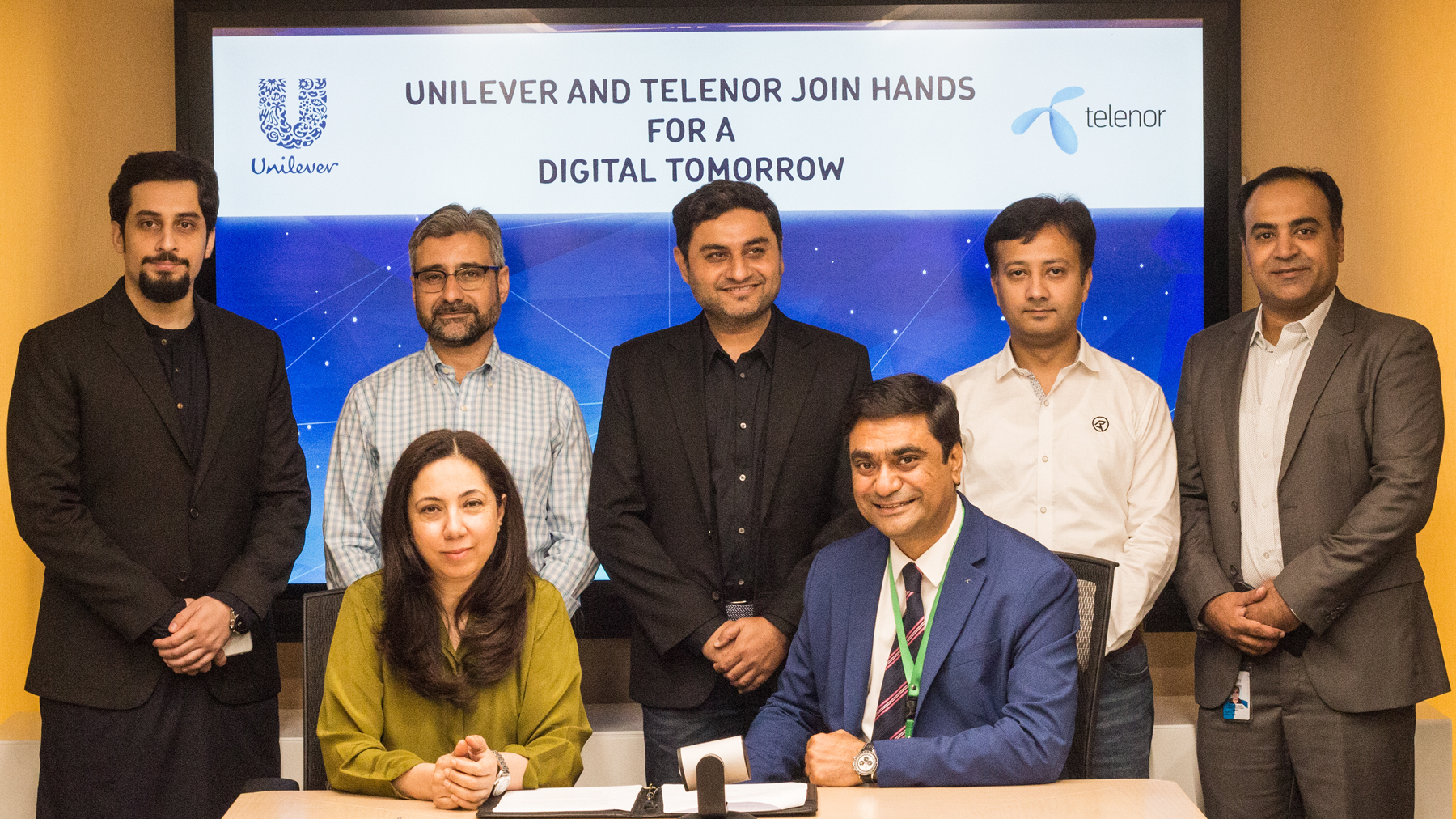
    Unilever has joined hands with Telenor Pakistan to enable digital and financial inclusion in Pakistan through mainstream access to  digitalized retail services, digital financial solutions, digital products and skill enhancement across Pakistan.

    Through this collaboration, both companies will integrate their expertise in the telecom and consumer goods industries to build a digitally inclusive ecosystem. This partnership aims to reimagine how business should be run, harnessing the power of technology and big data to bring convenience and security for retailers and create seamlessly integrated shopping experience for consumers. Together, the two companies aim to introduce cashless payment models, transform small and medium retailers access to financial capital, identify and generate livelihood and elevate standard of living in less accessible and remote areas. As socially responsible organizations, both Unilever and Telenor Pakistan have also committed to building a platform to bring differently abled workforce into mainstream roles and to promote a more diverse and inclusive workforce.

    Shazia Syed, Chairperson & CEO, Unilever Pakistan, highlighted, “The merger of our expertise promises a highly disruptive and scalable approach for the accelerated digitization of Pakistan. In line with the government’s vision for a more digital economy, we aim to empower all those who are part of our value chain, including distributors, sellers, consumers and ultimately the larger communities that we work in.”

    Irfan Wahab Khan, Head of Emerging Asia & CEO Telenor Pakistan, added, “As country’s leading digital services provider, Telenor Pakistan is fully geared to impact and transform various sectors of economy and empower the masses. Through our partnerships with Unilever, we aim to bring together our respective strategic advantages to lay the ground for a digitally and socially inclusive Pakistan, which is in line with our purpose of connecting people to what matters most to them.  We believe in the value of collaborative business models which is instrumental for the rapid adoption of innovative technologies and a faster shift towards a digitally-enabled national infrastructure to cater to those needs.

    Amir Paracha, Vice President Customer Development, Unilever Pakistan, concluded: “Our goal is to create smarter end-to-end digitally enabled retail ecosystem that has the potential to reshape the way businesses operate within the country. The success of this collaboration could propel Pakistan at par with global standards with regards to digital adoption.

    Sardar Abubakr, Chief Digital and Strategy Officer, Telenor Pakistan added “In today’s age, there is a need to look outside our traditional lens when we think of partnerships – real disruption for customer benefit often takes place when like-minded yet different industries come together and leverage unique skill sets and competencies for empowering society – which is precisely Telenor and Unilever’s aim with this partnership’.


  • Telenor Pakistan and Alibaba Cloud come together to provide cloud-based services

    Telenor Pakistan and Alibaba Cloud come together to provide cloud-based services

    Telenor Pakistan, the country’s leading telecom and digital services provider has partnered with Alibaba Cloud, the cloud computing arm of Alibaba Group, to become the authorized distributor of Alibaba Cloud products and services in Pakistan.

    The signing took place at Telenor Pakistan headquarters ‘345’ where Dr. Alex Li, General Manager, South Asia of Alibaba Cloud and Sardar Mohammad Abubakr, Chief Digital & Strategy Officer at Telenor Pakistan, sealed the partnership.

    Through the partnership, Telenor Pakistan will be selling Alibaba Cloud’s suite of business solutions to local enterprises across the country. The collaboration will allow customer organizations to protect their business critical applications and data with world-class security as they choose to migrate to Alibaba Cloud.

    In today’s increasingly digital world and exploding data needs, organizations are fast moving to cloud services instead of buying and managing physical servers to have their data management and security needs met. Processing data in the cloud also means that as the business grows, it can keep up with increased traffic.

    Alibaba Cloud provides cloud computing products in computing, database management, networking, security, and storage that can be deployed globally. The service delivers superior results in all product capabilities ranging from computing, user & network management, and security & compliance to scaling, developer services, enterprise integration and management tools.

    Telenor Pakistan’s partnership with Alibaba Cloud will provide a gateway to facilitate the cloud market in the country and in a fast evolving landscape, enable businesses to robustly manage their data management and digital transformation needs” said Sardar Mohammad Abubakr, Chief Digital & Strategy Officer at Telenor Pakistan.

    “We are happy to partner with one of Pakistan’s top digital service providers for distribution of our suite of cloud products and services in the country,” said Dr. Alex Li, General Manager, South Asia of Alibaba Cloud. The partnership will further our vision of fostering the development of cloud market in Pakistan and help the country move faster towards its digital transformation goals,” he added.

    Through this partnership Telenor Pakistan will be providing Alibaba Cloud’s services exclusively to its business customers to further their scale, accuracy in analytics and business security.


    # # #


    Press Contact

    Anam Abbas

    Corporate Communications, Telenor Pakistan

    [email protected]


    About Telenor Pakistan

    Telenor Pakistan is 100% owned by Telenor Group and has a footprint spanning throughout the country. With a subscriber base of over 44 Million, it is the second largest mobile operator in Pakistan. Telenor launched its operations in Pakistan in 2005 and has a workforce of over 1,600 employees. For more information, please visit: www.telenor.com.pk


    About Alibaba Cloud

    Established in 2009, Alibaba Cloud (www.alibabacloud.com), the cloud computing arm of Alibaba Group, is among the world’s top three IaaS providers, according to Gartner, and the largest provider of public cloud services in China, according to IDC. Alibaba Cloud provides a comprehensive suite of cloud computing services to businesses worldwide, including merchants doing business on Alibaba Group marketplaces, start-ups, corporations and government organizations. Alibaba Cloud is the official Cloud Services Partner of the International Olympic Committee.


  • Telenor Pakistan CEO to lead Telenor Group’s Emerging Asia Cluster

    Telenor Pakistan CEO to lead Telenor Group’s Emerging Asia Cluster

    Telenor Group today announced that effective 1 April, 2019, Irfan Khan, CEO of Telenor Pakistan, will assume additional leadership role as Telenor Group Executive Vice President and Cluster Head for Emerging Asia, joining Telenor Group’s Executive Management Team.

    “Irfan Khan is a valued leader within Telenor Group and has an accomplished history at Telenor Pakistan. I am pleased that he will take lead over our important growth markets in the Emerging Asia Cluster, in addition to retaining his role as Chief Executive Officer of Telenor Pakistan,” says Sigve Brekke, President and CEO of Telenor Group. “I am confident that Irfan will continue to lead our dedicated and talented teams to success, connecting the cluster’s more than 130 million customers with services that matter to them and creating value for our shareholders. I’d like to also thank Irfan’s predecessor in this role, Petter-Børre Furberg, for his leadership and achievements across our Asia region over the last several years.”

    In becoming Head of Telenor Group’s Emerging Asia Cluster, Irfan Khan will join Telenor Group’s Executive Management Team and will report directly to Telenor Group President and CEO, Sigve Brekke. Petter-Børre Furberg will become CEO of Telenor Norway and step out of Telenor Group’s Executive Management.

    Irfan Wahab Khan was appointed Chief Executive Officer of Telenor Pakistan on 1 August 2016. He had served in the position of Deputy CEO and Chief Marketing Officer (CMO) of Telenor Pakistan since April 2013. He has been with Telenor for 14 years and was the first employee in Telenor Pakistan when he started as Executive Vice President and Head of Corporate Affairs Division in 2004. Since then he has served in various positions within Telenor Group both in Asia and Europe, including Vice President Devices and Vice President – Head of Asia Distribution. Mr. Khan is also a Board Member of Telenor Microfinance Bank.

  • Pakistan To Start Proton Car Production

    Pakistan To Start Proton Car Production

    A joint venture between Malaysia’s Proton Motors and Pakistan’s Al-Haj group will begin producing cars from June, officials said on Friday at a ceremony in Islamabad unveiling a series of business accords between the two countries.

    The Proton joint venture, first agreed last year, was the centerpiece of a series of agreements signed during a visit of Malaysian Prime Minister Mahathir Mohamad. Pakistani officials said the deals would total around $800-900 million.

    “These partnerships are just the beginning and I look forward to more and more partnerships,” Board of Investment chairman Haroon Sharif said at the signing ceremony, at which Mahathir presented Pakistani Prime Minister Imran Khan with a symbolic car key.

    The Proton plant, near the southern port city of Karachi, is the latest in a series of assembly deals set up in Pakistan by international auto makers including Volkswagen AG and Hyundai Motors.

    “We were told that the first Proton which will be assembled here will be on the roads next June in Pakistan,” Sharif said.

    The deals come as Pakistan steps up efforts to attract foreign investment. The country is struggling with a ballooning current account deficit and a balance of payments squeeze that has forced it into bailout talks with the International Monetary Fund.

    In recent months, it has signed multibillion dollar credit and investment deals with countries including Saudi Arabia and the United Arab Emirates. It is also a central part of China’s vast Belt and Road Initiative through the $60 billion China Pakistan Economic Corridor.

    As well as the Proton accord, Malaysia’s Edotco Group signed agreements in the telecoms sector with local units of China Mobile and Telenor, as well as local mobile group Jazz.

    Other deals included a halal meat agreement signed by the foods unit of Pakistan’s Fauji Foundation conglomerate and a $20 million venture capital agreement between Pakistan’s Fatima Ventures and Gobi Partners of Malaysia.