Retail News CRM

Tag: palm oil

  • Malaysia’s Strategic Moves to Regain Palm Oil Dominance in China Amid Market Challenges

    Malaysia’s Strategic Moves to Regain Palm Oil Dominance in China Amid Market Challenges

    Malaysia is taking proactive measures to reclaim its portion of China’s palm oil market, following a precipitous drop of almost 39% in export volumes year-on-year in the first ten months of 2025.

    Factors Influencing the Decline

    According to Malaysia’s Plantation and Commodities Minister, Datuk Seri Johari Abdul Ghani, this dramatic decrease can be attributed in part to logistics issues and a surge in palm oil prices. The latter has overtaken the costs of soybean oil, making soybean oil more attractive to Chinese buyers.

    Chinese Market Significance

    China holds a pivotal role as a strategic market for Malaysia, having consistently been one of the leading destinations for Malaysian palm oil exports for over a decade. Ghani remarked that the steep decrease points to deeper problems, extending beyond simply competitiveness and logistics. The issues also involve pricing dynamics and market positioning.

    Transparent Export Policies

    Ghani underscored that Malaysia remains committed to maintaining clear and predictable export policies. This approach is designed to ensure that the nation’s activities do not interfere with the interests of its key trading partners.

    Promoting Continuous Dialogue

    In addition, Malaysia is open to ongoing discussions to better synchronize expectations regarding pricing trends, market developments, and long-term supply planning, the minister added.

    Questions & Answers

    What has caused the drop in Malaysia’s palm oil exports to China?
    The drop in exports has primarily been attributed to two factors: challenges in logistics and a rise in palm oil prices, which have made soybean oil a more attractive choice for Chinese buyers.

    Why is the Chinese market significant to Malaysia?
    China is a key and strategic market for Malaysia, consistently standing as one of the top destinations for Malaysian palm oil exports for over a decade.

    How does Malaysia plan to address the current challenges and regain its market share?
    Malaysia intends to maintain transparent and predictable export policies and is open to continuous dialogue on pricing trends, market developments, and long-term supply planning to better align expectations.
  • Sunbutter Skincare becomes world’s first certified palm oil-free sunscreen

    Sunbutter Skincare becomes world’s first certified palm oil-free sunscreen

    The innovators behind Australia’s first reef safe sunscreen is packaged in reusable and recyclable tins and Australia’s first vegan surf zinc, SunButter Skincare, have announced they will become the first sunscreen company in the world to be certified palm oil free.

    Working closely with International Palm Oil Free Certification Trademark (POFCAP) SunButter has removed palm oil from its supply chain ensuring none of the ingredients used in any of its sunscreen or skincare products is derived from palm oil.

    “At SunButter we’re all about protecting people and the planet and if we’re including palm oil as an ingredient then we’re not protecting the planet, we wanted to make sure we live up to our ethos and mantra,” said SunButter Skincare Founders Sacha Guggenheimer and Tom Hiney.

    Typically, consumers won’t see ‘palm oil’ listed as an ingredient on the back of their sunscreen bottle, it’s usually hidden behind the name caprylic/capric triglyceride, cetostearyl alcohol, glycerin and glyceryl caprylate.

    “Sadly, it’s super complicated, because palm oil and palm oil derivatives are disguised under hundreds of different names,” said Hiney.

    To complicate things further, finding transparency when it comes to supply chains is difficult and this might partly explain why no Australian company is currently able to say that their sunscreen is certified as free of palm oil.

    “It’s really about encouraging brands to go palm oil free and support other palm oil free brands, we’ve been fortunate enough to go to Sumatra and see the devastating effects palm oil plantations have on the planet from deforestation and the disruption of soil carbon to the decimation of local animal populations, so talking about this certification is a great exercise in raising awareness about the use of palm oil in the cosmetic industry,” said Guggenheimer

    SunButter encourages consumers to do their research, looking for items with a ‘palm oil free’ logo from the POFCAP, Orangutan Alliance, Go Palm Oil Free or POI Approved, which means they’re certified (rather than just labelled as ‘palm oil free’ by the company, which can be inaccurate and misleading).

    “While the palm oil issue is a big one, there is a string of organisations doing really good work to get us back on the right path, and it’s important that we take personal responsibility and become more conscious in our buying habits as the less demand there is for products containing palm oil, the fewer products “While the palm oil issue is a big one, there is a string of organisations doing really good work to get us back on the right path, and it’s important that we take personal responsibility and become more conscious in our buying habits as the less demand there is for products containing palm oil, the fewer products containing palm oil there’ll be on the market.” said Hiney.

  • Amazon to let Whole Foods customers pay by palm print

    Amazon to let Whole Foods customers pay by palm print

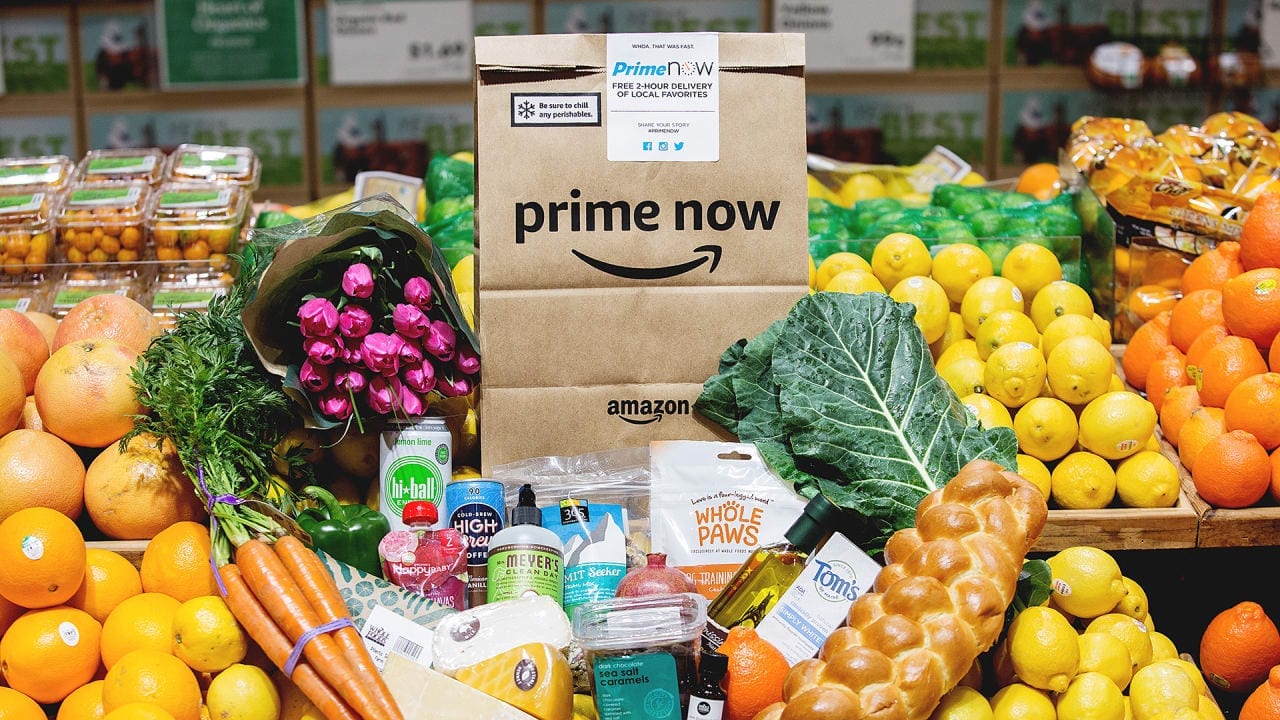
    Amazon will let customers pay for their groceries at Whole Foods locations in Seattle with a swipe of their palms. The online shopping giant, which acquired Whole Foods in 2017, is rolling out pay-by-palm technology at some grocery stores near Amazon’s headquarters to make paying quicker and more convenient.

    The technology, called Amazon One, lets shoppers scan the palm of their hand and connect it to a credit card or Amazon account.

    After the initial setup, which Amazon claims take less than a minute, shoppers can scan their hand at the register to pay for groceries without having to open their wallets.

    Amazon first launched the technology late last year and at the time said the technology could be used at stadiums, office buildings and other retailers.

    So far, Amazon hasn´t announced any takers. The technology has been put into use in several of its cashier-less stores and Amazon said it has signed up thousands of users, but didn´t provide a specific number.

    Arun Rajan, senior vice president of technology and chief technology officer at Whole Foods, said the company is always looking to innovate.

    ‘At Whole Foods Market, we’re always looking for new and innovative ways to improve the shopping experience for our customers,’ he said.

    ‘We’re starting with an initial store at Madison Broadway in Seattle and look forward to hearing what customers think as we expand this option to additional stores over time.’

    Privacy experts have warned against the use by companies of biometric data, such as face or palm scans, because of the risk of it being hacked and stolen.

    Reuben Binns, an associate professor focusing on data protection at the University of Oxford, said last year that the technology raises privacy concerns since it is kept in the cloud which could make it accessible to hackers and the government.

    ‘The advantage is that it’s on you all the time, this isn’t something you can lose, but that’s also a disadvantage because you can never change it,’ says Binns.

    ‘You can never change your palm like you change your password or other identification tokens.’

    Amazon said it keeps the palm images in a secure part of its cloud and doesn´t store the information on the Amazon One device. The company said shoppers can also ask for their information to be deleted at any time.

    People walk out of an Amazon Go store, in Seattle. Amazon said Wednesday that it is rolling out its pay-by-palm technology to some of its Whole Foods supermarkets

    A Whole Foods store in Amazon’s hometown of Seattle started using the technology on Wednesday. Seven additional Whole Foods locations in the area will have it installed in the coming months.

    Whole Foods is headquartered in Austin, Texas. It was not immediately clear if locations in Texas will receive the rollout.

    Amazon declined to say if or when other locations might get it. There are about 500 Whole Foods stores across the country.

    The move shows how Amazon is bringing some of the technology already in use at its namesake brick-and-mortar Go and Books stores to the high-priced grocery chains.

    The deployment stops short of introducing Amazon’s cashier-less technology at Whole Foods, which critics have said would result in job cuts.

    Amazon One still requires scanning items at checkout, and the company said it will not impact jobs at Whole Foods.

    According to the Amazon One website, ‘no two palms are alike’ which means it ‘can’t be used by anyone but you.’

    ‘One reason was that palm recognition is considered more private than some biometric alternatives because you can’t determine a person’s identity by looking at an image of their palm,’ the website reads.

    However, fingerprints, also long believed to be unique to individuals, have recently come under fire in the criminal justice system.

    Judge Louis Pollack made headlines with a ruling fingerprint identification was not a legitimate form of scientific evidence in the January 2002 court case of United States v. Llera Plaza.

    Amazon also announced that starting this week, customers in Tulsa, Oklahoma, ‘will see local deliveries made in electric vehicles.’

  • Malaysian supermarket stops selling products labelled ‘palm-oil free’

    Malaysian supermarket stops selling products labelled ‘palm-oil free’

    Mydin, Malaysia’s largest supermarket chain, has announced plans to de-stock any products promoted as “palm-oil free” in a move aimed at discrediting the environmental movement.

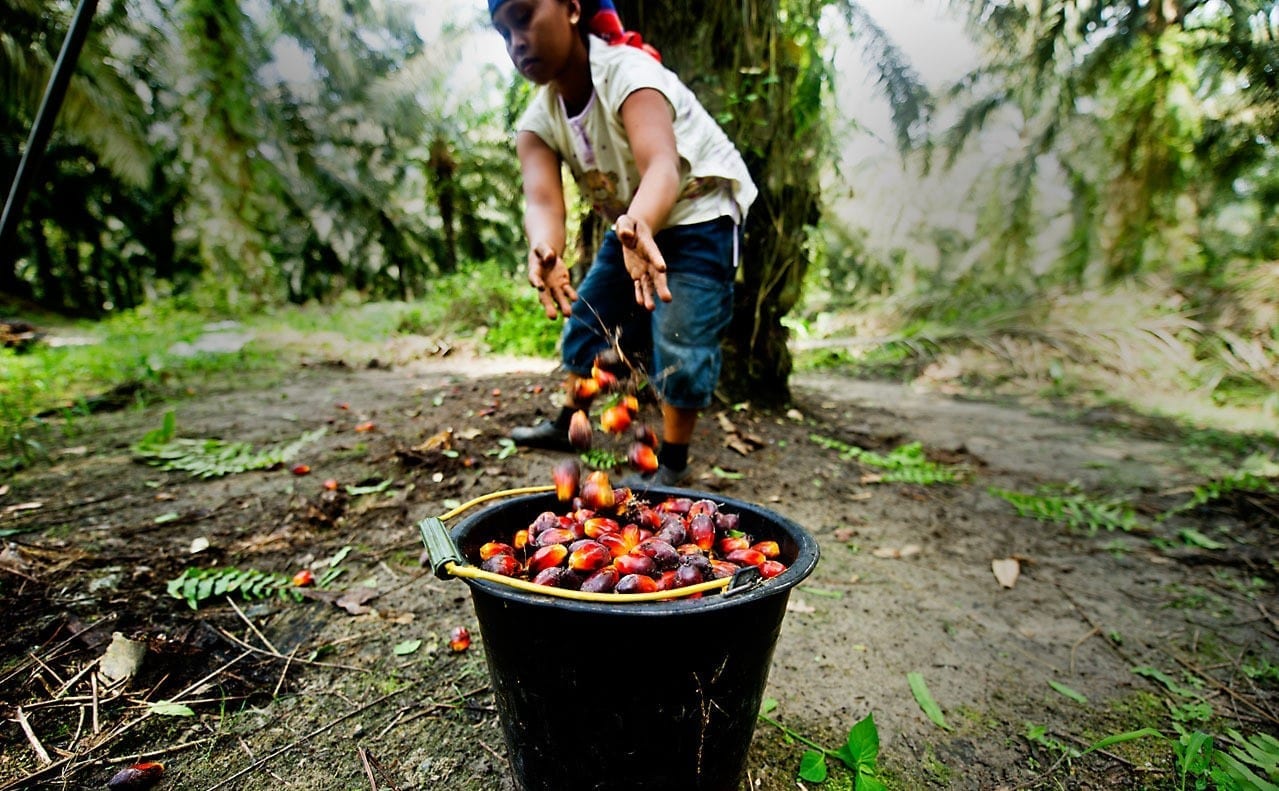
    The expansion of palm-oil plantations – the majority of which are located in Malaysia and Indonesia – has led to substantial deforestation of the native habitats of the three surviving species of orangutans, one of which – the Sumatran – is on the list of endangered species.

    In 1992, the Malaysia government pledged to limit the expansion of palm oil plantations – which typically are planted on land where natural forests have been cleared. Now the government is actively promoting the use of palm oil to boost the nation’s exports of the product, apparently no longer concerned about its environmental impact.

    In July, the Malaysian government promised action against an international school for spreading “anti-palm oil propaganda” and Teresa Kok, Malaysia’s minister of primary industries, this week praised Mydin’s move to ban products promoted as palm-oil free. She said she hoped other retailers would follow Mydin’s example.

    This year, the European Union passed an act to phase out palm oil from renewable fuel by 2030 due to deforestation concerns.

    Malaysia and Indonesia account for about 85 percent of the world’s palm-oil production, of which about 70 percent is used in foods. Manufacturers use palm oil because it is inexpensive compared to alternatives – and because it has a high saturation when used in frying.

    According to The Edge, the Malaysian government is considering a law banning all products flaunting non-use of the oil.

    Ameer Ali Mydin, MD of Mydin Mohamed Holdings, told a press conference that his stores removed all anti-palm products on Wednesday.

    “We must support palm oil,” he said, along with taking steps to counter-marketing and branding exercises that people do that discourage consumers to buy palm oil.

    “By labeling something that there is no palm oil, you’re actually telling people that palm oil is bad for you.”

    Of course, Mydin’s comment is complete nonsense. The reason marketers promote their products as not containing palm oil is to allow consumers to make an informed choice on whether they should buy the product, based on their concerns for the environment, specifically endangered orangutans. It has nothing to do with consumers’ health.

    Indonesia’s government has also reportedly told some retailers in Jakarta not to stock products with ‘palm-oil free’ labels.

  • Palm oil prices to remain steady in 2019: MPOC

    Palm oil prices to remain steady in 2019: MPOC

    Malaysian palm oil prices are set to hold steady in 2019 at an average of RM2,303 a tonne, according to estimates by the Malaysian Palm Oil Council (MPOC), while global output of the tropical oil is expected to rise by 3 million tonnes. “Global palm oil production is projected to be 72 million tonnes, with Malaysia and Indonesia as leading producers,“ the MPOC said in an online conference presentation.

    Rising production could cap recent price gains for palm oil, which has been recovering after touching a 3-year low last November at RM1,940 a tonne.

    Benchmark palm oil was trading at RM2,281 a tonne. The tropical oil averaged RM2,308 last year, according to Refinitiv Eikon data.

    MPOC, Malaysia’s key marketing agency for palm oil, also estimated that Malaysian output would rise to 20.2 million tonnes in 2019 and pegged Indonesian production at 42.8 million tonnes.

    Malaysia produced 19.5 million tonnes of palm oil last year, while Indonesia’s 2018 output stood at 42 million tonnes, based on estimates by the Indonesia Palm Oil Association.

    Malaysian palm oil output is expected to rise as newly replanted areas start to mature, but the increase will be marginal due to ageing trees and a possible El Nino in 2019 that will curb production, the MPOC said in its presentation.

    “Indonesian production is forecast to reach a record high of 42.8 million tonnes in 2019 due to improving weather conditions as well as newly maturing areas,“ it added.

    Palm oil exports in 2019 are also expected to increase in 2019, in line with an expected rise in demand from key importer India due to its declining domestic oilseed production.

    “India is expected to increase its (vegetable oil) imports by 500,000 tonnes, reaching 15.15 million tonnes, out of which palm oil will account about 10 million tonnes,“ said the MPOC presentation.

    Industry regulator the Malaysian Palm Oil Board forecast Malaysia’s a slight rise in production to 20.3 million tonnes this year due to favourable weather conditions and an expansion in oil palm matured area, according to an online presentation.

    It estimated Malaysia’s 2019 exports at 17.2 million tonnes, up from 16.5 million tonnes last year, due to “expected stronger palm oil demand from major markets.”

  • Malaysia to double palm oil used in transport biodiesel to 20%: Minister

    Malaysia to double palm oil used in transport biodiesel to 20%: Minister

    Malaysia aims to double the palm oil content in biodiesel used for the transport sector to 20% next year, as Southeast Asia’s third-largest economy looks to cut record stockpiles and boost prices, a government minister said. The government will also raise the palm oil content in biofuel for the industrial sector to 10% next year from a 7% quota being rolled out this July, Primary Industries Minister Teresa Kok said, speaking at a conference.

    Malaysia’s palm oil inventories fell to 3.001 million tonnes in January on increasing demand and falling production, but that was still near the two-decade high of 3.22 million tonnes recorded a month earlier.

    The increases in the amount of palm oil mandated for biodiesel – known as B20 for transport and B10 for industrial use – should lift use of the vegetable oil in biofuels to 1.3 million tonnes annually, the minister said.

    Kok said her ministry has submitted a proposal to the cabinet to set up a biofuel stabilisation fund to manage the price of biofuels, a similar mechanism to the export levy fund imposed by fellow palm oil producer Indonesia.

    “What if the palm oil price is high and the diesel price has gone up a lot? That would be costly for the public to use biodiesel, so we need to stabilise the price so biofuel will be more attractive to consumers,“ Kok said.

    “I have suggested (a stabilisation fund) in cabinet meeting before but we still need to have deeper discussion with other ministries.”

    Top palm producer and exporter Indonesia began collecting levies from palm exporters in 2015 to help finance the development of its palm-based biodiesel programme, as well as funding other palm oil agenda, such as replanting.

    However, Indonesia’s government temporarily removed the levy in November after a sharp drop in prices hit farmers.

  • Palm falls as data shows slower exports

    Palm falls as data shows slower exports

    Malaysian palm oil futures fell last week, after data from a cargo surveyor showed exports grew more slowly than expected in January. The benchmark palm oil contract for April delivery on Bursa Malaysia Derivatives Exchange dropped 0.2% to RM2,299 a tonne. Trading volumes stood at 24,751 lots of 25 tonnes each.

    “The export numbers released are below yesterday’s (Wednesday’s) market rumour. The ringgit’s strength also pushed the market lower,” a Kuala Lumpur-based trader said, adding that the coming long holiday weekend should prompt traders to cover short positions. “That should limit any big sell-offs,” the trader said.

    Cargo surveyor Intertek Testing Services said yesterday exports of Malaysian palm oil products for January rose 14.7%, while independent inspection company AmSpec Agri Malaysia reported a 15.5% increase.

    Palm oil may slide into a range of RM2,256-RM2,274 per tonne, as its correction from the Jan 28 high of RM2,333 looks incomplete, Wang Tao, a Reuters market analyst for commodities and energy technicals said.

  • Sime Darby Plantation, Salcra ink MoU to uplift Sarawak’s palm oil industry

    Sime Darby Plantation, Salcra ink MoU to uplift Sarawak’s palm oil industry

    Sime Darby Plantation Bhd (SDP) and Sarawak Land Consolidation and Rehabilitation Authority (Salcra) have signed a memorandum of understanding (MoU) to form a collaborative framework to establish, strengthen and encourage synergistic commercial cooperation along the palm oil value chain. The collaboration aims to uplift Sarawak’s palm oil industry standards in terms of operational efficiency and productivity through best agronomic practices, SDP said in a statement yesterday.

    It is also intended to inculcate and enhance sustainability awareness for higher operational performance and bottom-line achievement.

    Under the MOU, both parties intend to combine their resources and expertise to jointly collaborate, evaluate and research on matters relating to the palm value chain and related agronomic inputs.

    These include in the areas of agricultural materials such as oil palm seedlings and saplings, management, consultancy services and training, consultancy services, as well as laboratory analytical services.

    The MoU also includes any other activities that are mutually beneficial to the parties such as logistics and activities connected to rubber plantation and other agricultural businesses.

  • Malaysia reviewing palm oil export duties

    Malaysia reviewing palm oil export duties

    Malaysia, the world’s second-largest palm oil producer, is reviewing the duty structure for its exports of the edible oil, according to its minister in charge of agriculture produced for export, to boost demand and reduce burgeoning stockpiles.

    “We are currently reviewing our present export duty structure to ensure a level playing field in the market,” said Primary Industries Minister Teresa Kok in an emailed response today to questions submitted earlier by Reuters.

    Palm oil producers in Southeast Asia have been grappling with slow exports as demand has waned on weaker currencies and higher import taxes. The demand slump has caused inventories in Malaysia to build to their highest in nearly 18 years while stockpiles in Indonesia, the world’s biggest palm producer, have also climbed.

    Palm oil prices fell to their lowest in three years earlier this month amid the demand slump, and were down 0.9% at RM2,108 a tonne today morning.

    Despite Malaysia cutting its export tax on crude palm oil to zero since September, industry participants say Indonesian palm is still more competitive as the country’s producers have sharply discounted their prices, causing Malaysia to actually increase imports from Indonesia. Production costs in Indonesia are also typically less than in Malaysia.

    Earlier this month, Indonesia also eased its rules on palm oil levies and derivative products to boost its exports.

    To counter the Indonesian import, Kok said the government is “currently encouraging our companies to use domestically produced palm oil to reduce the stockpile.”

    “By reducing imports, we could see a significant reduction in palm oil stocks in Malaysia and this would boost prices.”

    Prices next year are expected to be supported by demand from traditional markets as they replenish stocks, said Kok, adding that the implementation of a higher biodiesel mandate in 2019 will also help palm prices.

    Malaysia will raise the minimum bio-content in biodiesel to 10% for the transport sector and 7% for the industrial sector.

    Kok also said she expected production “in the region of 20 million tonnes” in 2019. The government last month forecast output of 20.5 million tonnes for 2019 and 19.8 million tonnes for this year.

  • Sabah to produce more sustainable palm oil

    Sabah to produce more sustainable palm oil

    Deputy Chief Minister of Sabah Datuk Seri Wilfred Madius Tangau said during his closing address at the 16th Annual Roundtable of Sustainable Palm Oil Conference today, the state is committed to having more palm oil produce to achieve both the Roundtable of the Sustainable Palm Oil (RSPO) and the local Malaysian Sustainable Palm Oil (MSPO), concurrently.

    In 2017, Sabah produced more than 5.2 million metric tons (MT) of crude palm oil (CPO) accounting for more than 30% of total Malaysian palm oil produced.

    Between January and October this year, Sabah produced some 1.55 million MT of CPO of which 28% were certified.

    About 400,000ha of plantations are RSPO certified, of which 3,960ha belonged to smallholders. Sabah has some 623 small players.

    “Therefore Sabah can play an important role in the sustainable palm oil industry. Sabah is one of the largest producer of RSPO certified palm oil,” said Tangau.

    On assisting smallholders in the state, he said while incentives such as grants for planting comes from the federal government, land titles fall under the state government’s purview.

    On the government’s move to make MSPO certification mandatory by end of 2019, Tangau welcomed the move.

    “We will assist in whatever (way) we can. I’m happy the federal government is spending money to do that, but whether we achieve that target, is another story,” he added.

    Sabah saw an economic growth of 8% last year and palm oil has played a part in it. Tangau said one of the biggest challenge in this country is the high dependence on foreign labour as it is difficult to get locals to work in plantations.

    The state government is also looking towards stepping up downstream activities instead of just being active exporters of CPO.

    On another note, RSPO co-chairman Datuk Carl Bek-Nielsen said the challenge lies on bridging the gap between supply and demand of sustainable palm oil as the uptake for certified palm oil globally stood only at 65%.

    “This is as disappointing as wet gunpowder and it sends a discouraging, hypocritical message of “do as I say but not as I do. And I will be clear, the growers expect action and whilst the grower fraternity has just shown a willingness to change, to innovate, to now halt deforestation, to now stop any new plantings on peat soils, they also expect that the NGOs, CGM, retailers alike, including the Secretariat of RSPO now direct just as much attention and energy towards improving uptake and not just pursuing higher standards for the growers,” he said in his closing remark.

  • Indonesia Will Not Cut Export Levy on Palm Oil: Minister

    Indonesia Will Not Cut Export Levy on Palm Oil: Minister

    Indonesia has decided not to make any changes to export levies on palm oil, Coordinating Economic Affairs Minister Darmin Nasution said on Thursday. “Even though we have had discussions on the issue, we prefer not to change the policy on this area. There is no change,” Darmin said at a press briefing in Kuala Lumpur.

    “In the long term, I cannot confirm, but in the short term there is no change,” he said.

    Darmin said at an industry conference in Bali last week that Indonesia was considering a move to reduce the levy.

    Indonesia, the world’s top producer and exporter of the edible oil, currently slaps a levy of $50 per metric ton on crude palm oil, and a range of $20-$40 for refined palm products.

    The Indonesian Palm Oil Association (Gapki) said last month that it had proposed cutting the palm oil export levy by $20 per ton until prices of the vegetable oil reach $700 per ton.

    The government’s reference price for crude palm oil has stayed below $750 per ton for over a year.

    Speaking in Kuala Lumpur, Darmin said Indonesia decided against the cut in export levy as such a move would result in lower prices that would benefit consuming countries, not exporters.

    The minister has in the past said Indonesia was considering reducing the levy to boost exports, which would then reduce stockpiles, but he said on Thursday that this would be achieved by boosting the use of biodiesel.

    “Our policy is to increase the utilization of biodiesel, so of course, it takes time but I believe the result will be there in six months,” Darmin said.

  • Indonesia Gov’t Considers Reducing Its Levy on Palm Oil Exports

    Indonesia Gov’t Considers Reducing Its Levy on Palm Oil Exports

    The government is considering reducing its levy on palm oil exports, Coordinating Economic Affairs Minister Darmin Nasution said on Thursday, as the country pushes to maintain its position in international markets for the commodity.

    Speaking at an industry conference in Bali, the minister said an “adjustment” to the levy was among steps to be taken by the government, although he later said that this was still being discussed.

    “We don’t have final position yet,” Darmin said on the sidelines of the event. “We have to calculate that carefully. We don’t want lowering it only to result in lower prices.”

    Indonesia, the world’s top producer of the commodity, currently imposes a levy of up to $50 per metric ton on various palm oil products.

    The Indonesian Palm Oil Association (Gapki) said last week that it had proposed cutting the palm oil export levy by $20 per ton until prices of the vegetable oil reach $700 per ton.

    The government’s reference price for crude palm oil has stayed below $750 per ton for over a year.

    Darmin said the government would discuss the levy adjustment intensively over the next two months, hoping to reach a decision around year-end.

  • Weakening Rupiah Sees Calls for Gov’t to Scrap Palm Oil Export Tax

    Weakening Rupiah Sees Calls for Gov’t to Scrap Palm Oil Export Tax

    A lawmaker and an industry analyst have called on the government to scrap its export tax on crude palm oil to help improve the competitiveness of the sector and boost exports, amid a weakening rupiah.

    Since 2015, the  Indonesian Oil Palm Estate Fund (BPDPKS), which is tasked with strengthening and promoting sustainable practices in the industry, has been imposing a $50 per ton export levy on crude palm oil and $30 per ton levy on crude palm oil derivative products when prices drop below $750.

    The levies were imposed to encourage local producers to sell more of their products at home and to incentivize local biodiesel producers. However, palm oil producers have complained about this policy since the start, as it burdens those seeking to export their products, which is more beneficial during a stronger dollar.

    “Under this condition, the government needs to be flexible in imposing some policies. It should consider scrapping the export tax … to help us to achieve a trade surplus,” said Eriko Sotarduga, a member of House of Representatives Commission VI, which oversees trade, industry and business competition.

    The rupiah strengthened to 14,825 to the dollar on Friday from 14,840 previously, according to data. It has fallen by 8.5 percent so far this year. Indonesia’s trade balance returned to a $1.72 billion surplus in August after recording its first deficit in 19 months in July.

    Eriko said amid the current low price of crude palm oil, scrapping export levies could help producers to expand the market, because they have been struggling to compete with other vegetable oils.

    Meanwhile, Bungaran Saragih, an advisor at the Palm Oil Agribusiness Strategic Policy Institute, said the government must provide the industry with its full support, given the fact that the industry sustains millions of people, with about 40 percent of the country’s production coming from smallholders.

    “Nowadays, palm oil is the best commodity” to support the nation’s economy and currency. Therefore, it deserves some incentives, he said.

    The government has been very careful in dealing with the sector as the commodity is the biggest foreign-exchange contributor.

    Palm oil exports reached their highest value ever last year at $23 billion, which was a 26 percent increase from 2016.

    However, the current administration is also cautious about issuing new permits to producers. President Joko “Jokowi” Widodo ordered a review of existing permits on Wednesday, amid growing concern over deforestation in the country.

    As reported earlier this week, environmental activist group Greenpeace International accused 25 palm oil producers, supplying some of the world’s most renowned brands, of contributing to massive forest destruction.

  • Indonesia Imposes Three-Year Moratorium on New Palm Oil Plantation Licenses

    Indonesia Imposes Three-Year Moratorium on New Palm Oil Plantation Licenses

    President Joko “Jokowi” Widodo signed a moratorium on new oil palm plantation permits on Wednesday (19/09) and ordered a review of existing permits amid growing concern over deforestation in the country.

    The instruction, which is set to remain in place for three years, applies to new and submitted requests, as well as those approved but do not yet include set boundaries and those inside natural forests.

    Jokowi initially promised to issue the moratorium on April 2016, after months of forest fires and haze, which affected Indonesia and neighboring Malaysia and Singapore.

    He ordered ministers and regional governments to improve the management and productivity of sustainable oil palm plantations as part of efforts to preserve the environment, as laid out in a 2018 presidential instruction on license suspension and evaluation of oil palm plantations.

    In a report published earlier this week, Greenpeace International said 25 palm oil producers supplying some of the world’s largest brands, including Unilever, Mondelez and L’Oréal, have destroyed more than 130,000 hectares of natural forest in Indonesia since 2015.

    The Indonesian Forum for the Environment (Walhi) welcomed the long-awaited signing of the document and pointed to several issues the government still has to watch out for, including law enforcement against companies violating existing regulations.

    Walhi, the oldest environmental advocacy group in Indonesia, added that the wellbeing of oil palm farmers must also be considered as part of efforts to boost productivity of plantations.

    “In the long-term, this moratorium should ideally be in place for 25 years … because in our view, environmental recovery takes a long time,” the group said in a statement.

    It added that the license evaluation process must form an inseparable part of the president’s flagship land reform program.

    Meanwhile, the Indonesian Palm Oil Association (Gapki) said it supports government efforts to make palm oil sustainable and improve productivity in the sector.

    “However, because the presidential instruction was just issued recently, Gapki needs to study the document and coordinate with relevant ministries to avoid multiple interpretations and disincentives in the palm oil industry,” Gapki spokesman Tofan Mahdi said.

    Indonesia is the world’s largest palm oil producer. The country exports of the commodity reached its highest ever value last year at $23 billion, which was a 26 percent increase from 2016.

  • Gov’t Raids Miner Suspected of Destroying Orangutan Habitat in West Kalimantan

    Gov’t Raids Miner Suspected of Destroying Orangutan Habitat in West Kalimantan

    Nickel miner Laman Mining is suspected of illegal bauxite mining operations, disrupting orangutan habitat in West Kalimantan’s Tulak River forest.

    The Ministry of Environment and Forestry raided the company’s sites in Puring and Kempapakon on Aug. 20, finding seven heavy-duty vehicles for excavation.

    Laman Mining claimed the areas were included in its mining business permit (IUP). According to forest maps, however, Puring and Kempapak belong to the Tulak River convertible production forest area, to which Laman has no rights. Convertible production forests are forested areas that the government can designate for a limited use such as farming.

    The Tulak River forest area is also Palung Mountain National Park’s buffer zone as well as orangutan habitat, neither of which should be disrupted.

    “This is an extraordinary evil,” Rasio Ridho Sani, the ministry’s director of law enforcement, said in a statement on Sunday.

    The ministry is questioning Laman’s directors and commissioners.

    “We are also investigating the possibility that money laundering was involved in this illegal mining operation,” Rasio said.

    Under a 2013 law on prevention of forest destruction, the company’s officials may face between eight and 20 years in prison, if convicted, while the company may face a fine of Rp 20 billion ($1.37 million) to Rp 50 billion.