Retail News CRM

Tag: palm oil

  • Indonesia Oil Palm Estate Fund Adequate to Support B20 Biodiesel Policy

    Indonesia Oil Palm Estate Fund Adequate to Support B20 Biodiesel Policy

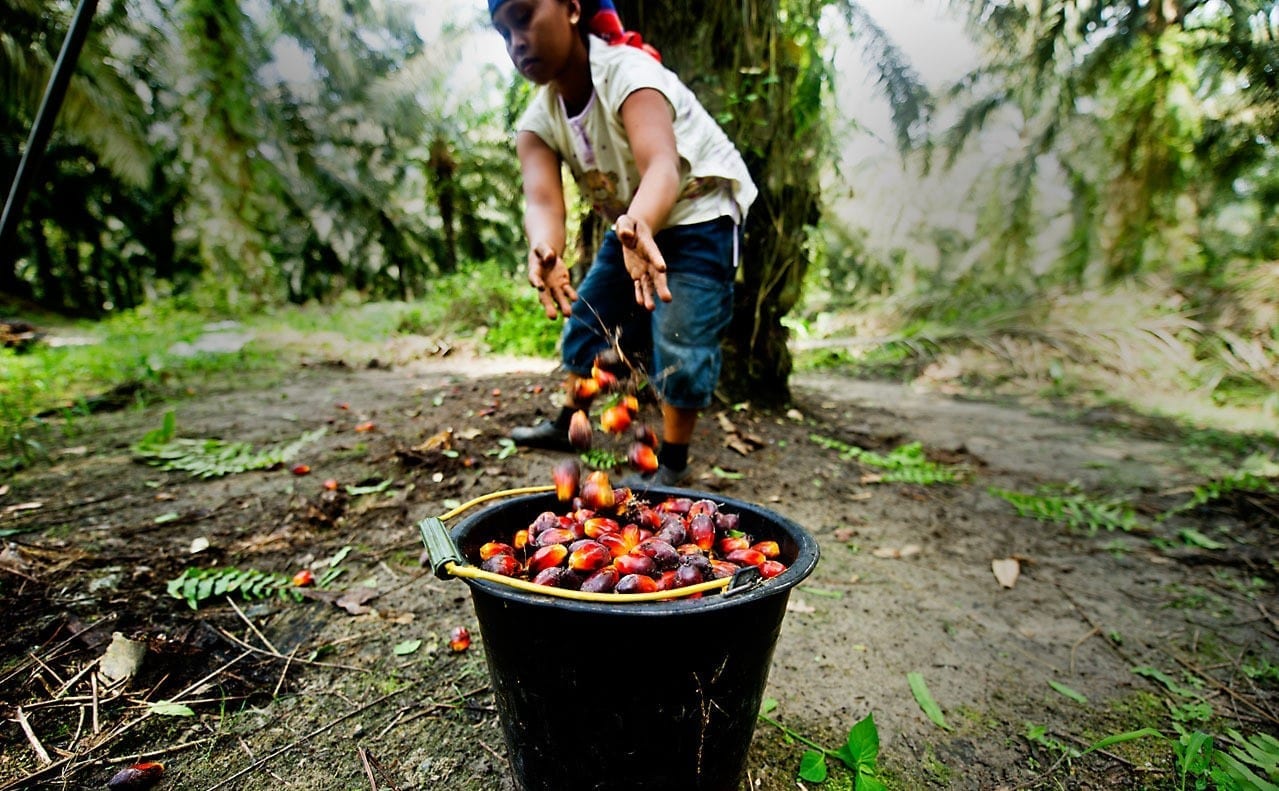
    The Indonesia Oil Palm Estate Fund is confident that it can shoulder additional subsidies paid out to producers under the government’s new biodiesel policy for the rest of the year.

    The government will require all diesel engines in the country to run on B20, or diesel containing 20 percent biofuel derived from palm oil, from next month to reduce imports. It implemented the policy to reduce the country’s current-account deficit, which grew to 3 percent of gross domestic product in the second quarter of this year – a level the central bank believes is undermining economic stability.

    But the policy will also swell the subsidies paid to 19 biofuel producers, including Wilmar and the Sinar Mas Group. The fund, also known as BPDPKS, estimates that the policy would double biofuel demand in the second half of this year to 2.1 million kiloliters.

    The fund will need around Rp 9.8 trillion ($672 million) in total to subsidize the production of 3.2 million kiloliters of biofuel for the entire year.

    “[The fund] should be enough,” BPDPKS president director Dono Boestami said on Monday (20/08).

    He said the fund has collected Rp 6.4 trillion from the palm oil export levy in the first half of 2018, which is nearly 60 percent of this year’s Rp 10.9 trillion target, most of which is used as incentives to support renewable energy production.

    “We have prepared funds to expand B20 mandatory biodiesel [production], which is expected to absorb the excess supply of palm products in the market,” Dono said.

    Palm oil production has been on the rise over the past few years, and reached a record 42 million metric tons last year, representing a 115 percent increase from 2010. Palm oil production in the first half of 2018 rose to 22.3 million tons from 18.5 million tons last year.

    But palm oil exports have declined 6 percent to 14.16 million tons in the first half of 2018 due to the imposition of higher import tariffs by some of the biggest importers, such as India and the European Union.

    The fund was established in July 2015 to manage the income derived from levies on companies that export palm oil commodities to ensure the industry remains sustainable. Some of the funds are used to subsidize biodiesel, which currently costs more to produce than petroleum diesel. Biodiesel must be sold at more than Rp 9,000 a liter to cover production costs, while petroleum diesel currently costs Rp 5,150 a liter.

    The BPDPKS has disbursed Rp 4.4 trillion in the first six months of this year, most which was used to subsidize biodiesel production. The remainder was used for the development of the country’s palm oil industry, such as plantation rejuvenation, farmer training, research and promotion.

    Rp 288 billion was spent on the rejuvenation of 5,384 plantations covering a total area of 12,063 hectares as of June, much less than the government’s full-year target of 180,000 hectares.

    Dono said the main obstacles involve getting recommendations from the Ministry of Agriculture to restore plantations and legal verification of business licenses and land ownership.

    The BPDPKS has also funded 118 studies by 37 universities and institutions, which resulted in 101 scientific publications and three books.
  • New Biodiesel Recipe Can Cut Indonesia’s Fuel Imports

    New Biodiesel Recipe Can Cut Indonesia’s Fuel Imports

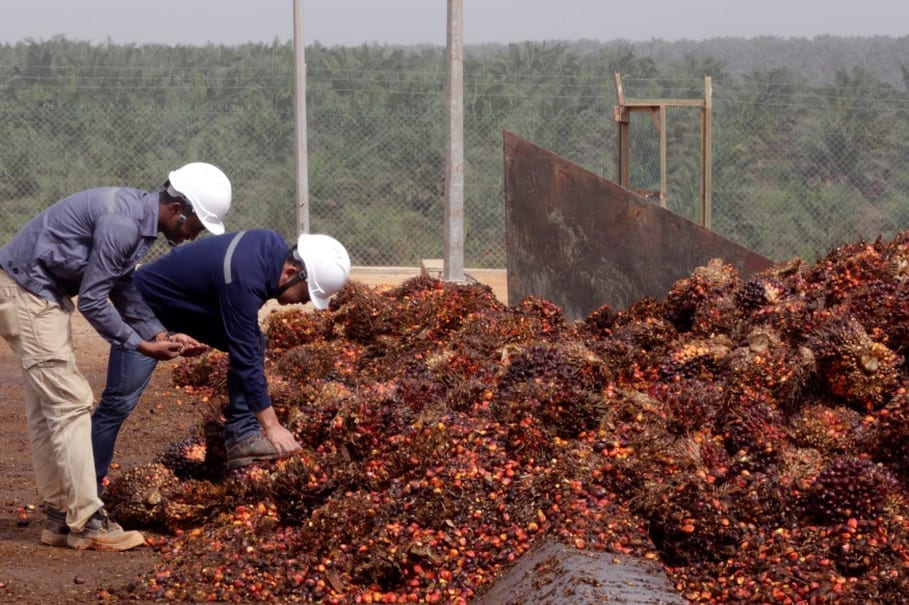
    Indonesia, the world’s biggest palm oil producer, is offering incentives to developers of a new 100 percent palm oil-based “green diesel,” which the net oil importer hopes can replace costly fuel imports within three years, Industry Minister Airlangga Hartarto said.

    Biodiesel for land transportation in Indonesia currently consists of a 20 percent bio component that is mixed with petroleum diesel. That component is expected to be raised to 30 percent in 2020.

    In Indonesia, the bio portion of biodiesel is made with fatty acid methyl esters (FAME) from palm oil, but efforts to increase FAME concentrations in biodiesel have faced resistance from regulators as well as the automotive and oil industries.

    While biodiesel can cut fuel costs and reduce emissions, higher blends of FAME require special handling and equipment as the fuel has a solvent effect that can corrode engine seals and gasket materials, and it can solidify at cold temperatures.

    But according to Airlangga, Indonesia has found a new way to produce biodiesel that is not based on FAME that can avoid these problems.

    “We already have a prototype and in three years we will be ready to produce it,” he said last week.

    “Green diesel” made completely from palm oil has “the same specifications as petrol” and is compliant with the Euro IV emissions standard, said Airlangga, who chairs Indonesia’s second-biggest political party, Golkar.

    A biorefinery owned by Elevance Renewable Sciences and Wilmar International is currently producing “green diesel” in a pilot project, and has been given a corporate tax discount to develop full-scale output, Airlangga said.

    Modifications to engines and machinery “wouldn’t be needed because its specifications are the same as [B20] biodiesel,” he added. “It’s actually better than conventional fuel.”

    According to Lila Harsyah Bakhtiar, an official at the Industry Ministry, green diesel is made using hydrotreated vegetable oil, a technology that is expensive to develop but which could avoid disruptions to automakers who were “angry” over repeated changes to the FAME-based biodiesel mix.

    Elevance and Wilmar did not reply to requests for comments.

    According to its website, Elevance uses a patented process at its refinery in Gresik, East Java, to produce 180,000 metric tons of modified triglyceride, unsaturated methyl esters and olefins per year.

    Indonesia’s biodiesel program was already reducing Indonesia’s fuel import demand by $21 million per day, Airlangga said, adding that green diesel can “help [improve] our trade balance, and strengthen the rupiah while creating jobs.”

    Southeast Asia’s largest economy is among the region’s most vulnerable to external factors due to its sizeable current account deficit and its large fuel imports.

    Because of that, the rupiah has been among the hardest hit this year as investors have sold emerging market assets.

    Indonesia has been pushing increases in domestic palm oil consumption to cushion a possible slowdown in export demand. The European Union last month agreed to phase out the use of palm oil in transport fuels from 2030 because of deforestation concerns.

    The Indonesian Automotive Industry Association (Gaikindo) has previously said increasing biodiesel blends can increase fuel consumption and may lead to engines overheating.

    The minister asserted that green diesel generated 90 percent fewer emissions than conventional fossil fuels.

    However, a 2015 study funded by the European Commission found that among vegetable oils, palm and soybean oils generated the highest indirect greenhouse gas emissions because of deforestation and the drainage of peatlands associated with their cultivation.

    Indonesia is expected to consume between 3.2 million and 3.3 million kiloliters of FAME this year, below an earlier target of 3.5 million kiloliters, according to the Indonesia Estate Crop Fund.

    The Indonesia Biofuel Producers Association (Aprobi) expects unblended biodiesel exports to reach 800,000 kiloliters this year.

  • Palm Oil From Indonesia’s Shrinking Forests Taints Global Brands

    Palm Oil From Indonesia’s Shrinking Forests Taints Global Brands

    Palm oil sourced from illegally cleared rainforest areas in Indonesia has flowed through traders to major consumer goods brands despite widespread commitments to cease purchases of non-sustainable oil, a new report says.

    Palm oil companies Royal Golden Eagle (RGE), Wilmar, Musim Mas Group and Golden Agri Resources sold oil from 21 “tainted” mills to more than a dozen global brands including Nestlé and Unilever, according to the report by Eyes on the Forest (EoF), a coalition of environmental nongovernmental organizations, including WWF Indonesia.

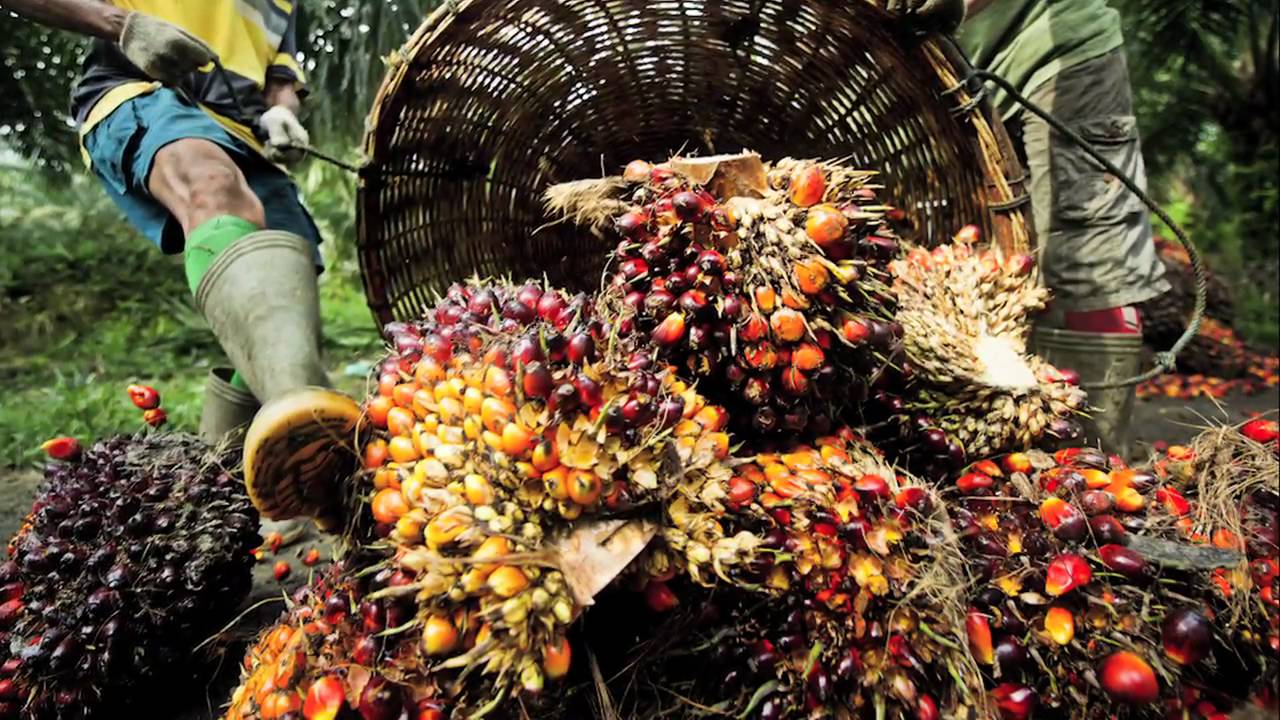
    In spot checks since 2011, EoF used GPS tracking to follow trucks carrying palm oil fruit, known as fresh fruit bunches, to mills from plantations within Tesso Nilo National Park and the Bukit Tigapuluh protected forest areas in central Sumatra.

    “All companies bought directly or indirectly from at least some of the 21 implicated mills,” according to the report, which calls for traceability on palm oil to be improved and to be extended to plantations that supply mills.

    Forest cover on Sumatra Island, home to endangered tigers, orangutans and elephants, had declined by more than half to 11 million hectares in 2016 from the 25 million hectares it had in 1985, as palm oil and other plantations have expanded and encroached on protected areas.

    Nestlé said in an emailed response it was “committed to tackling” deforestation. A company spokeswoman said the firm was working with partners to transform the palm oil industry “further down the supply chain.”

    Unilever said by email it publicly disclosed suppliers and mill details and was committed to increasing traceability in the palm oil supply chain “and to working with our suppliers and partners to resolve issues.”

    Unilever also said it was examining “details behind the investigation to determine the right approach and next steps.”

    Environment Ministry spokesman Djati Witjaksono Hadi said smallholders, “not companies,” owned plantations in national parks.

    Hadi referred further questions on the mills to the ministries of agriculture and industry, which did not immediately respond to requests for comment.

    Similar issues were highlighted in earlier EoF reports including in 2016, but a lack of strict supervision by traders has led to more forest clearing and illegally grown palm oil entering global supply chains despite their commitments to improve traceability and stop deforestation, the report said.

    Traceability

    “We acknowledge that it’s really challenging to get traceability beyond the mill and going right down to the plantation source,” Elizabeth Clarke, WWF global palm oil lead said. “But it’s absolutely paramount that they do this.”

    Among those mentioned in the report, Wilmar International was accused of buying palm oil from Citra Riau Sarana (CRS) whose three mills were found to have bought fresh fruit bunches from Tesso Nilo in 2011, 2012, 2015 and 2017, even though Wilmar sold its 95 percent stake in CRS in 2014.

    “Whatever action they’ve been taking, it hasn’t fixed that particular mill, and this is what we’re asking these particular individuals to do,” the WWF’s Clarke said.

    Responding to the report, Wilmar said it had “continued to engage with CRS and to monitor their traceability system” from 2014. “While there was progress made on traceability, we have stopped purchasing from them since June 2018 for other reasons,” Wilmar said in an emailed statement.

    But Wilmar said it had not received “a clear confirmation from the authorities which companies are illegal in the landscape” despite making a request to the Environment Ministry.

    CRS could not immediately be reached by phone for comment.

    Sime Darby Plantation, also named in the report, said it had 94 percent visibility of its supply chain “which provides key customers access to traceability information that can help them make informed choices about the palm oil products that they purchase.”

    It also said it was working with nongovernmental organizations to eradicate deforestation for the remaining 6 percent.

    Daniel A. Prakarsa, head of downstream sustainability at Sinar Mas Agribusiness and Food, a subsidiary of Golden Agri, said the company considered 39 percent of its output to be fully traceable, and was targeting full traceability from the 427 mills of its suppliers by 2020.

    “Our policy is to help suppliers to comply. Not just [saying] ‘this is our standard, you must comply, otherwise we stop [buying],’” he said.

    Musim Mas Group did not immediately respond to a written request for comment. On its website, the group says it is working with smallholders and other stakeholders along the supply chain to achieve sustainable palm oil production.

    Clarke from the WWF said trading firms “need to make it very clear to the mills that they won’t buy from them until they can provide assurance that it is 100 percent legal.”

  • European Union ‘open to palm oil’

    European Union ‘open to palm oil’

    The European market is open to palm oil and there is no ban on the commodity, said Ambassador and Head of European Union Delegation to Malaysia, Maria Castillo Fernandez.

    Clarifying the stance of Europe on palm oil, she said there is a discussion in the region to reduce the use of biofuels in order to reach the European Union’s goal of achieving 32% renewable energy target by 2030.

    She clarified that palm oil has not been singled out as this extends to all types of biofuels.

    “There is no singling out on palm oil. It’s all crops (and) it’s on biodiesel that doesn’t mean you are banning anything but you will have to use less biodiesel coming from all the crops for your renewable energy target,” she explained.

    On how this will come to play, she said that will depend on the adoption of the delegated act next year.

    Europe is the second largest market for Malaysian produced palm oil.

    Fernandez reiterated that Malaysia’s trade relations is not just limited to palm oil, as the EU is Malaysia’s third largest trading partner.

  • Palm falls on weak export demand

    Palm falls on weak export demand

    Malaysian palm oil futures fell at the midday break today, as weak export demand and losses in US soyoil weighed.

    The benchmark palm oil contract for September delivery on the Bursa Malaysia Derivatives Exchange was down 0.8% at RM2,266 per tonne, its sharpest intraday loss since June 19.

    Palm gained in the previous session, snapping four consecutive days of losses. It is down nearly 7% so far this month.

    Trading volumes stood at 19,531 lots of 25 tonnes each at noon.

    “The market is lacking demand, this is the primary cause of price declines,” said a Kuala Lumpur based trader.

    “Exports have been bad since the export tax was reinstated, and Indonesian prices are more competitive than ours,” added the trader, referring to Malaysia’s tax on crude palm oil exports.

    Malaysia resumed export taxes on crude palm oil in May, after suspending it for four months at the start of the year to increase demand and boost prices. It announced a 5% rate for the month of July.

    Exports of palm oil and related products from the world’s second largest producer declined 12.5% from June 1-25, reported inspection company AmSpec Agri Malaysia today, versus the corresponding period in May.

    Palm’s decline could also be due to weakness in US soyoil on the Chicago Board Of Trade, another trader said. The Chicago July soybean oil contract was last down 0.2% today.

  • French farmers block access to 13 refineries in palm oil biofuels protest

    French farmers block access to 13 refineries in palm oil biofuels protest

    Dozens of French farmers blocked access to 13 refineries across the country today to protest against plans to import palm oil for use in biofuels, a move they denounce as unfair competition which jeopardises their livelihood.

    Energy giant Total wants to import up to 300,000 tons a year of palm oil, which environmental advocates say has caused massive deforestation chiefly in Southeast Asia.

    French rapeseed and sunflower growers, who say they will lose out due to Total’s imports, accuse foreign palm oil producers of failing to respect the regulatory requirements European producers must follow.

    Farmers parked tractors in front of refinery gates while dumping piles of haystacks, dirt, manure and potatoes.

    “France imports several products that don’t respect the rules applied to French farmers. It concerns South American meat and Spanish wine as well as palm oil,” said Damien Greffon, who leads the FRSEA farmers’ union in the Paris region.

    The protests are a sign of growing anger in France’s farming communities which have so far not mobilised in large numbers against the government of President Emmanuel Macron since his election.

    Public sector workers and railway staff have held regular demonstrations and strikes against the pro-business reforms introduced by the new centrist government since May 2017.

    The farmers’ protests began late Sunday and have been called for three days because “dialogue has broken down” with the government, Greffon said.

    Agriculture Minister Stephane Travert said today that the government would not back down, adding that he would meet soon with unions as well as biofuels producers to discuss supplies and pricing.

  • Indonesia Considers Stopping Palm Oil Exports to the EU

    Indonesia Considers Stopping Palm Oil Exports to the EU

    Indonesia is preparing for a worst-case scenario should the European Parliament’s draft of a ban on the use of palm oil in biofuels get approved by the European Commission and European Council.

    In January, members of the European Parliament voted in favor to phase out the use of biofuels made from palm oil by 2021 to fulfill the EU’s Renewable Energy Directive, which aims to reach a renewable energy target of 27 percent by 2030, including in transport fuels.

    A decision on whether the ban will be legally imposed in all EU country members will be made in 2019. If approved, Indonesia and Malaysia, who together produce nearly 90 percent of the world’s palm oil, will suffer a hard blow.

    “There’s an [ongoing] study about stopping exports to the European Union altogether. When it’s done, Indonesia can see that palm oil trade with them is risky. The study is to eradicate that risk once and for all,” Mahendra Siregar, executive director of the Council of Palm Oil Producing Countries, said in a discussion hosted by the Jakarta Foreign Correspondents Club (JFCC) on Friday (25/05).

    The council has commissioned several research institutions and universities to help produce its research, which is expected to be completed by the end of the year at the latest.

    Palm oil is a key source of revenue for Indonesia — the world’s biggest palm oil producer — accounting for about 14 percent of the country’s total exports.

    The EU is the second largest export market for Indonesian palm oil, importing around 5 million tons of the key Nutella ingredient each year. According to Ministry of Trade data, the EU has always been in the top two destinations for palm oil, along with India, since the 1990s.

    Purbaya Yudhi Sadewa, deputy minister of coordinating maritime sovereignty at the Coordinating Ministry of Maritime Affairs, said the EU must address trade barriers that discriminate against palm oil for the matter to be solved quickly.

    “Our goal is not to force the European Union to use palm oil, but we demand fair treatment for palm oil with other vegetable oils,” Purbaya said, adding that the EU now seems to solely target palm oil.

    “If the European Union has shown that they are not discriminatory towards palm oil, then we will gladly comply to their policy,” he said.

    The EU has insisted that it has no intention of building trade barriers against Indonesian palm oil and will address all drivers of deforestation, including soy, cocoa and coffee, but it has so far only proposed to ban palm oil imports.

    “The way I see it there is a [business] competition as they [EU country members] produce rapeseed oil which is expensive, while our palm oil is cheaper,” Trade Minister Enggartiasto Lukita said last month.

    According to a study by the Malaysia Palm Oil Council, oil palms occupy 9.2 million hectares of agricultural land and produces 31.8 percent of global oils, while soybean and rapeseed crops require 10 times this amount of land to produce similar yields.

    “This is an unhealthy competition … If it [palm oil] is disturbed, then we will also disturb the EU,” Enggartiasto said, adding that the ministry plans to ban fisheries from the EU if the draft is approved.

    Deforestation

    Vincent Guerend, EU Ambassador to Indonesia and Brunei Darussalam, however, said the union is considering to progressively replace food-based biofuels by more advanced ones, such as electricity, to prevent land-use changes affecting peatlands and tree cover.

    “The EU was the one to promote biofuel as renewable over 10 years ago. But because EU is such a big market, it has some very strong pull effects—negative effects to be exact,” Vincent said.

    According to Vincent, food prices are rising due to increasing land use for palm plantation that reduces available land for food crops. The expansion also contributes to deforestation, threatening species including elephants and orangutans.

    Data from the Central Statistics Agency (BPS) shows that land used for palm plantation rose from only 4 million hectares in 2000 to 11.9 million hectares in 2017. That figure is predicted to increase to 13 million hectares by 2020.

    A research study by the European Commission also shows that greenhouse gas emissions from biodiesel are more than three times higher than those from conventional diesel engines, when indirect effects are considered.

    New Markets

    Indonesia shipped out the highest value of palm oil ever in 2017, contributing to the year’s $12 billion trade surplus.

    According to BPS, palm oil exports and its derivative products reached $23 billion, up 26 percent from $18 billion in the previous year. The increase was in line with higher sales in non-traditional markets, according to a report by the Indonesian Palm Oil Association (Gapki) released in January.

    The export volume of palm oil to Africa countries jumped nearly 50 percent to 2.3 million tons in 2017 from 1.5 million, while exports to Middle Eastern countries also increased by 7 percent to 2.1 million tons from 1.9 million, the report showed.

    China — facing a threat of declining edible oil supply in trade wars with the United States — has also promised to increase palm oil imports from Indonesia by up to 500,000 tons per year. China bought 3.73 million tons of Indonesian CPO last year, from 3.23 million tons in 2016.

    “When we talk about the importance and significance of the EU on palm oil, this is the reality, which means the worst scenario can lead to a situation that palm oil can live without the EU. The question is of course whether the EU can live without palm oil,” Mahendra said.

  • Lower palm prices pull Malaysia Boustead Plantations’ Q1 profit down 82.2%

    Lower palm prices pull Malaysia Boustead Plantations’ Q1 profit down 82.2%

    Boustead Plantations Bhd saw its net profit slump 82.2% to RM5.26 million for the first quarter ended March 31, 2018 compared with RM29.56 million in the previous corresponding period, dragged by lower prices of palm products.

    Revenue also fell 18.2% to RM154.6 million from RM189.02 million.

    Boustead Plantations has proposed to declare an interim dividend of 2.5 sen per share for the quarter under review.

    The group said in a filing with the stock exchange that the average crude palm oil (CPO) selling price was at RM2,491 per metric tonne (MT), 21% lower compared with RM3,166 per MT in the same quarter last year, while average palm kernel oil price declined 32% to RM2,188 per MT.

    Fresh fruit bunches (FFB) production for the quarter increased 8% to 226,323 MT, largely due to improved yields post El-Nino. Average oil extraction rate was slightly lower 20.5%.

    Boustead Plantations vice chairman Tan Sri Lodin Wok Kamaruddin said the year ahead is expected to see an increasing supply of alternative vegetable oils, putting pressure on demand for CPO and leading to increased palm oil inventories.

    “However, the CPO market could benefit from the likelihood of higher tariffs by China on US soybean as well as the European Union’s removal of anti-dumping duty on Indonesian biodiesel.”

    At the midday break, Boustead Plantations shares fell 1 sen or 0.7% to RM1.35 on some 992,600 shares done.

  • Palm oil prices in Kuala Lumpur drop to six-week low

    Palm oil prices in Kuala Lumpur drop to six-week low

    Malaysian palm oil futures declined today, as traders feared the prospect of cancelled shipments to India and after forecasts made at an industry conference in Kuala Lumpur.

    The benchmark palm oil contract for May delivery on the Bursa Malaysia Derivatives Exchange was down 1.4% at RM2,443 per tonne by the close of trade.

    Trading volumes stood at 33,814 lots of 25 tonnes each at the end of the trading day.

    The vegetable oil earlier traded within a narrow price range, with industry participants eyeing forecasts from a two-day palm industry conference, a trader in Kuala Lumpur said.

    Leading industry analyst Dorab Mistry said on Tuesday he expects Malaysian palm oil futures to climb to RM2,700 a tonne by June, up nearly 10% from now.

    Malaysian crude palm oil futures are seen rising to RM2,600 a tonne before falling back to RM2,300 by July, said analyst James Fry.

    Meanwhile, analyst Thomas Mielke said today he expects Indonesian crude palm oil prices to average US$630 (RM2,457) a tonne from April to September, below current levels.

    The two countries count for nearly 90% of global palm oil output.

    Malaysia’s benchmark contract in Malaysia was hovering not far off Monday’s one-month low, which followed India’s decision to raise the import tax on palm oil to the highest level in more than a decade.

    Buyers in India, the world’s top vegetable oil importer, are now seeking to cancel up to 100,000 tonnes of crude palm oil cargoes due to the higher costs of imports, according to three trade sources.

    India tax import policy would have big short-term impact on palm demand, the Kuala Lumpur-based trader said, but he expected demand to be supported by China.

    “China is pointing toward higher demand for soybeans, which would benefit our palm oil,” the trader said.

    Another trader added overall market sentiment was weak, and which weighed on prices in the second half of trade.

    Palm oil prices are affected by movements in rival edible oils as they compete for a share in the global vegetable oils market.

    The Chicago Board of Trade’s May soybean oil contract was down 0.5%, while the May soybean oil on China’s Dalian Commodity Exchange fell 1.5%.

    From a technical viewpoint, a break below RM2,471 could cause a loss to RM2,418-RM2,448, said Wang Tao, a Reuters market analyst for commodities and energy technicals.

  • Unilever Lays Bare Palm Oil Supply Chain in Rare Industry Move

    Unilever Lays Bare Palm Oil Supply Chain in Rare Industry Move

    Consumer goods giant Unilever said on Friday (16/02) it had laid bare its entire palm oil supply chain, including all the suppliers and mills it sources from, to boost transparency in a rare industry move.

    Unilever said it was the first consumer goods company to publish such details, having disclosed the location of more than 1,400 mills and over 300 direct suppliers of the oil used in products from snacks and soaps to cosmetics and biofuels.

    The $62 billion palm oil industry has been plagued by concerns about deforestation and human rights abuses in countries such as Indonesia, the world’s biggest producer.

    Marc Engel, Unilever’s chief supply chain officer, said the company hoped sharing the information would be the start of a new industry-wide movement toward supply chain transparency.

    “Unilever believes that complete transparency is needed for radical transformation,” Engel said in a statement posted on Unilever’s website.

    “This is a big step toward greater transparency, but we know there is more work to be done to achieve a truly sustainable palm oil industry and we will continue our efforts to make this a reality.”

    Unilever said transparency and the ability to trace palm oil are vital in addressing deforestation and human rights abuses.

    Palm oil supply chains are complex as the fruit changes hands many times from farmers to agents before it reaches a mill. It is then transported via traders to refineries for further processing, when it enters a company’s supply chain.

    Over the past decade, consumer activist groups have pressed big palm oil buyers such as PepsiCo, Unilever and Nestle with supermarket boycotts and other protests over palm oil’s perceived links to deforestation and human rights abuses.

    PepsiCo last month suspended procurement from a palm oil supplier over claims of labour abuses on its Indonesian plantations.

  • Further steps needed to thwart EU’s move to ban palm oil in biofuels

    Further steps needed to thwart EU’s move to ban palm oil in biofuels

    More engagements, consultations and follow-up actions are needed to remove the European Union’s (EU) threat to ban palm oil use in biofuels, said industry veteran Tan Sri Dr Yusof Basiron.

    The former Malaysian Palm Oil Council CEO said Malaysia’s stance was still not being heeded by the EU Parliament, despite various talks and engagements being undertaken and conducted at the government-to-government level.

    “There have been clear statements by the governments of major palm oil-producing countries to oppose the ban and even those hinting at possible trade actions or retaliation, including consulting the World Trade Organisation, to deter the EU from implementing the discriminatory ban on palm oil for biofuels,” he said.

    Yusof said the MPOC and the Malaysian Palm Oil Board representative offices in the EU recognised the need to counter the ban when the threat first emerged.

    As a result, many initiatives had been taken, including continuous talks with the EU countries, to oppose the proposed ban by the trading bloc.

    The EU Parliament voted on Jan 17, 2018, to ban palm oil-based biofuels by 2021, while other vegetable oil-based biofuels such as those from soya oil and rapeseed oil can continue to be used until 2030.

    Spain was the latest EU country to speak out against the resolution after France, Sweden, the United Kingdom (Conservative MPs who are part of the governing party of Prime Minister Theresa May), Germany and the Netherlands.

    Yusof said palm oil-producing countries had reacted to this singling out of palm biofuels for the ban as a trade discrimination that would affect the imports into the EU, because locally-produced soya and rapeseed oils were not similarly subjected to the ban.

    “There are also Members of the European Parliament (MEPs) who are sympathetic to maintaining good trade relations with palm oil-producing countries.

    “This is reflected in an amendment submitted by 57 MEPs to drop the ban on palm biofuels. Nevertheless, 492 MEPs voted in favour of the ban, although the number was far less than the 640 who had voted for it in April 2017,” he said.

    However, he said, it was common for the EU Parliament to vote based on popularity trends, knowing that the next round of scrutiny for approving the Renewable Energy Directive (RED) Bill would be done at the tripartite meeting or trilogue, where the council would discuss and recommend the final version of the RED Bill.

    The trilogue to be held soon will consist of government representatives of EU member countries, the Commission and Parliament.

    “It is already envisaged that the Council and Commission, being technically competent with the legal, economic and scientific ramifications of the proposed discriminatory ban on palm oil, are not supportive of the ban.

    “We are hopeful that any future ban on the use of biofuels to be approved in the RED Bill will not be discriminatory towards palm oil,” Yusof said.

  • Felcra Malaysia wants to export palm oil to Middle East, Africa

    Felcra Malaysia wants to export palm oil to Middle East, Africa

    Felcra Bhd is planning to forge collaborations with international companies for the purpose of exporting palm oil to countries in the Middle East and Africa, said its CEO, Datuk Zulkarnain Md Eusope.

    To increase the agency’s revenue, he said, it must not focus on specific countries only in exporting the commodity.

    “The Chinese government through its ambassador has stated the country’s commitment to import palm oil even if the European Union (EU) countries do not want to buy palm oil from Malaysia.

    “We must diversify our efforts (to increase revenue) following the palm oil issue with the EU,” Zulkarnain said.

    He was speaking to reporters after attending the Perak Region Felcra Employees Aspiration 2018 ceremony with Perak government leaders, which was officiated by State Rural Development, Agriculture, Plantation, Information and Human Capital Development Committee chairman, Datuk Saarani Mohamad, here today.

    Further information on the plan would be announced later after the negotiation process with the companies were concluded, said Zulkarnain.

    In another development, he said Felcra would establish a research and development centre in plantation, agricultural and food sectors, to be located in Felcra Nasaruddin Belia near Parit here.

  • PepsiCo Cuts Ties With Indofood’s Palm Oil Unit Over Labor Abuse Claims

    PepsiCo Cuts Ties With Indofood’s Palm Oil Unit Over Labor Abuse Claims

    Food and beverage giant PepsiCo has suspended procurement from a palm oil supplier over claims of labor abuses on its Indonesian plantations, a move hailed by campaigners on Wednesday (24/01).

    A 2016 probe by several campaign groups alleged there were child labor and worker exploitation, such as low wages and hazardous working conditions, on Indonesian plantations operated by Singapore-listed Indofood Agri Resources (IndoAgri).

    Although IndoAgri has taken action to address the complaints, PepsiCo said it decided to suspend ties “pending further progress and visibility around the issues” after it looked into the allegations.

    “PepsiCo is very concerned about the allegations that our policies and commitments on palm oil, forestry stewardship and human rights are not being met,” it said in a statement.

    Neither IndoAgri nor its parent company, Indofood, were immediately available to comment. IndoAgri said on its website that it has a sustainable palm oil policy which ensures human rights are respected.

    Businesses are facing increasing pressure from governments and consumers to disclose what actions they are taking to ensure their supply chains are free from modern-day slavery.

    Indonesia is the world’s largest palm oil producer but it has been regularly linked to the destruction of rainforests and wildlife habitats, as well as displacement of indigenous communities.

    IndoAgri is a subsidiary of Indonesian food manufacturer Indofood, which produces PepsiCo’s snacks in Indonesia under a joint venture partnership. The joint venture sourced palm oil from IndoAgri.

    The investigation was carried out by San Francisco-based Rainforest Action Network (RAN), Indonesian labor rights group OPPUK and Washington-based International Labor Rights Forum.

    “After years of denial, PepsiCo has admitted to the high risks associated with its palm oil supply chain and business partner,” RAN campaigner Robin Averbeck said in a statement.

    Palm oil, used in soap, cosmetics and food spreads, has been one of the fastest expanding crops in the last few decades.g

  • Greenpeace Claims HSBC Helped Financing Deforestation

    Greenpeace Claims HSBC Helped Financing Deforestation

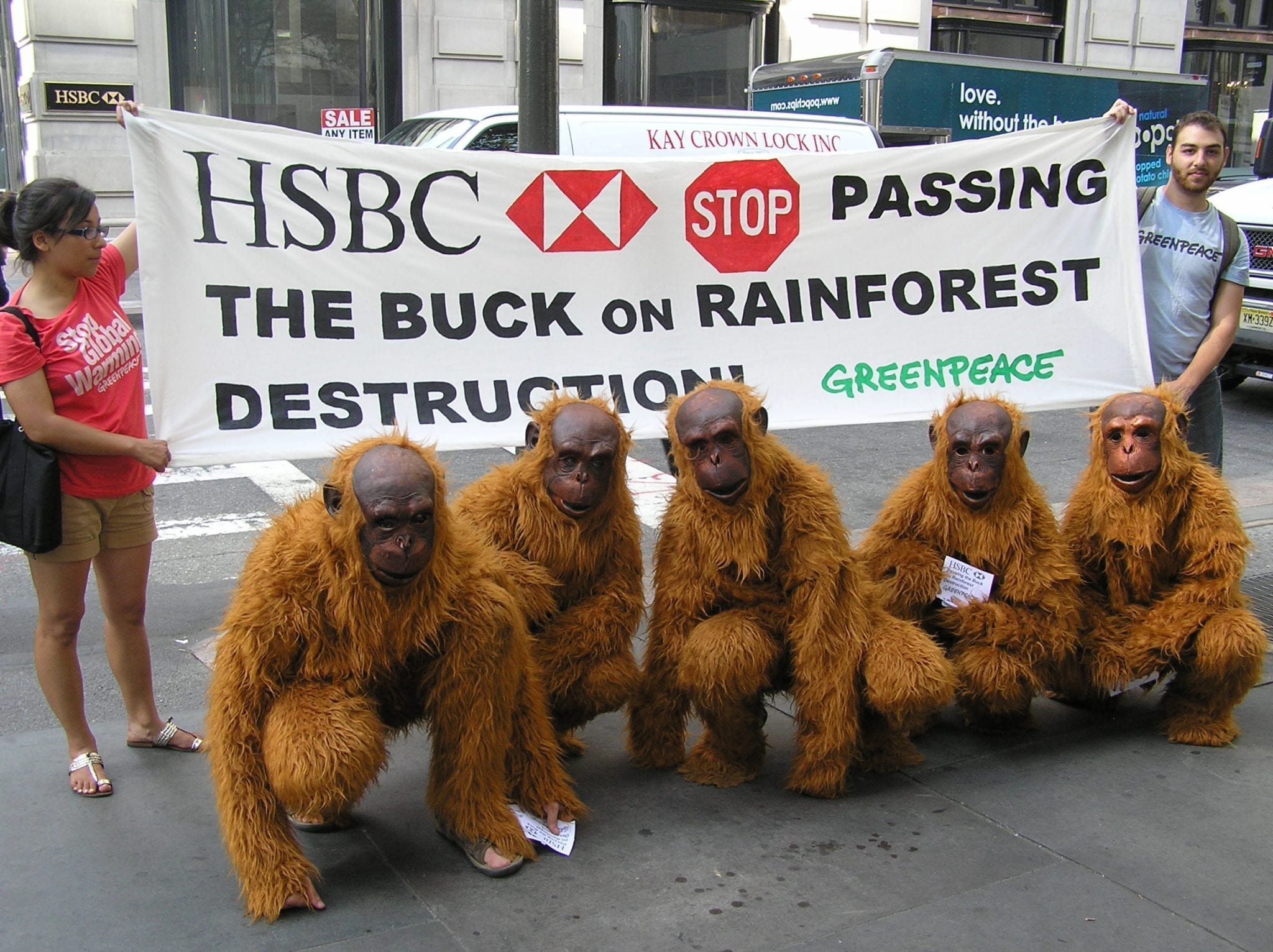
    Greenpeace International launched a new report on Tuesday, January 17, 2017, accusing British HSBC of supporting deforestation. The report stated that British HSBC provided financial services to palm oil companies that are causing rainforest destruction and human rights abuses in Indonesia.

    The report titled “Dirty Bankers: How HSBC is financing forest destruction for palm oil“, claimed that HSBC has been involved in arranging US$16.3 billion of loans and credit facilities to six palm oil firms. In addition, the is also said to have raised US$2 billion bonds for these firms.

    The palm oil companies listed in the report are Malaysian firm IOI; Indonesian Bumitama Agri and Salim Group; Singapore incorporated Goodhope Asia; Hong Kong-based and Singapore-listed Noble Group; and Korea’s Posco Daewoo Corporation.

    Greenpeace argued that HSBC has violated its policies of responsible lending by helping to finance the above-mentioned companies.

    Annisa Rahmawati, Greenpeace Southeast Asia senior campaigner said that although HSBC claimed to be a respectable bank with responsible policies on deforestation, “somehow these fine words get forgotten when it’s time to sign the contracts.”

    Not only HSBC, the report also listed several other banks claimed to be related to case studies in the report, including Japan’s Sumitomo and Tokyo Mitsubishi banks; Singaporean bank DBS; and the Australia and New Zealand Banking Group (ANZ).

    Despite the heavy criticism, the report did acknowledge HSBC as a “relatively progressive” bank that has shown a willingness to engage with criticism, and noted that the bank has a responsibility to set high standards for the rest of the sector.

  • Indonesia sees jump in October palm oil exports

    Indonesia sees jump in October palm oil exports

    Indonesia saw the exports of its palm oil products, which include crude palm oil (CPO), biodiesel and oleochemical, increase by 34 percent month-on-month to 2.45 million tons in October, thanks to rising demand from major export destinations.

    In September, the world’s largest producer of palm oil shipped 1.89 million tons of products overseas.

    Indonesian Palm Oil Producers Association (GAPKI) executive director Fadhil Hasan said exports to India had increased by 31.64 percent month-on-month (mom) in October to 608,510 tons, while exports to China were slightly up by 2.17 percent to 316,450 tons.

    Exports to the European Union (EU) market, meanwhile, increased by 75.51 percent mom to 380,150 tons, not long after France revoked their CPO multiple taxes plan.

    “The traders took the chance to buy at cheaper prices, as they were anticipating a possible price hike in November amid increasing demand ahead of Christmas and New Year,” Fadhil said in a statement on Wednesday.