Retail News CRM

Tag: parkson

  • Parkson Retail Asia books lower net profit amid weak consumer spending

    Parkson Retail Asia books lower net profit amid weak consumer spending

    Parkson Retail Asia booked a lower net profit last year with two fewer stores and weak consumer spending.

    The department store chain’s net profit fell 8.5 percent to S$26.3 million (US$19.6 million), while revenue fell 4 percent to S$221.6 million (US 165 million).

    The company ended the year with 37 stores, down from 39 in the prior year.

    Its gross sales proceeds from continuing operations slid 9.1 percent to S$535.7 million (US$398.8 million) as total merchandise sales and consultancy/management service fees fell 9.2 percent and 0.7 percent, respectively.

    Meanwhile, rental income grew 5.5 percent to S$1.6 million (US$1.2 million), and food and beverage increased 6.2 percent to S$2.2 million (US$1.6 million).

  • Parkson to give up on full-scale stores in Vietnam

    Parkson to give up on full-scale stores in Vietnam

    Malaysian department-store operator Parkson is to quit operating full-scale stores in Vietnam after years of losses. At one stage the company had 10 stores in the country and was confident of long-term success given it was the first overseas department-store brand to enter the market.

    This week, Singapore-listed Parkson Retail Asia announced that subject to shareholder approval, it will sell the Parkson TD Plaza Shopping Centre it anchors in the northern port city of Haiphong for US$10 million, representing a $500,000 loss on book value, but a $500,000 premium on local valuation. Parkson’s Vietnam operations are owned by Parkson Haiphong, a wholly-owned subsidiary of Parkson Retail Asia, which is two-thirds owned by Parkson Holdings of Malaysia. The purchaser is local company Thuy Dong Construction Trading.

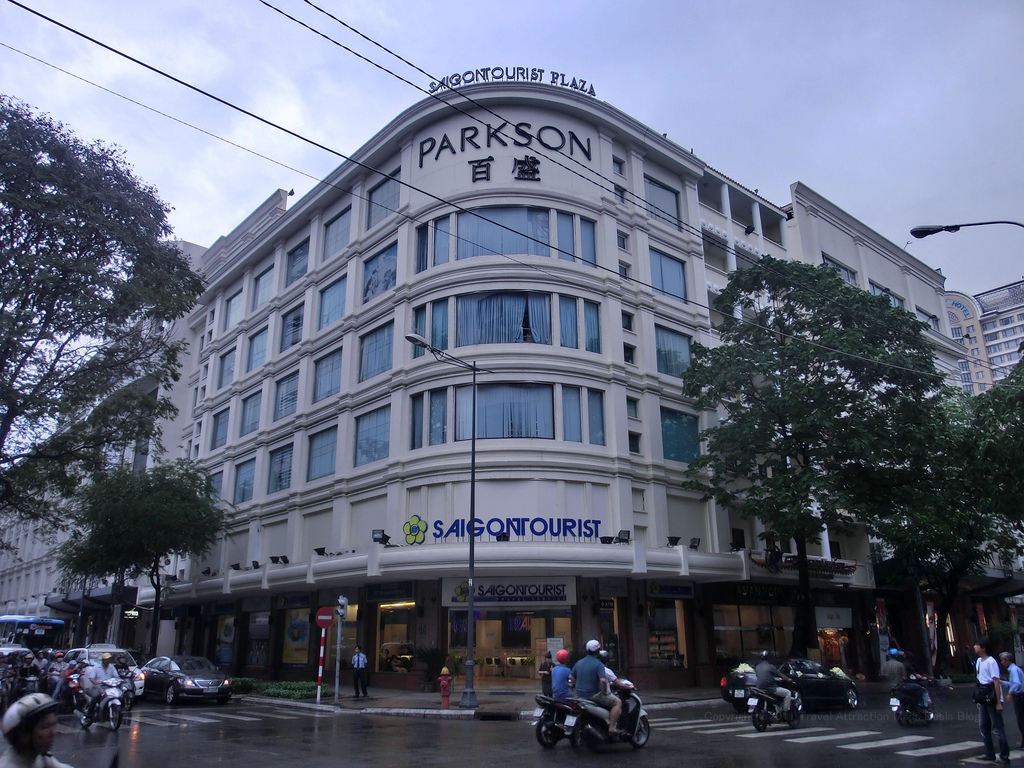
    The disposal leaves just one property remaining in downtown Ho Chi Minh City, (pictured above), which used to house the brand’s flagship in the country. A large part of that store has since been leased out to Uniqlo and another Japanese retailer, Muji, is believed to be currently fitting out at least part of the remaining space.

    “Following the completion of the disposal of the [Haiphong] property, Parkson Vietnam will only continue its business of operating and managing the store in Ho Chi Minh City, and will cease to operate any Parkson brand department store on the property.”

    The way this statement is worded, it suggests that the company will no longer operate a department store in Ho Chi Minh City and by converting such large parts of the building into space leased to other retailers, it would appear the strategy is to morph into a property manager.

    However, local Vietnamese media are reporting the store will reopen this Friday, July 31, but only take up the ground floor, a compact area which previously housed only a beauty zone and a large part of which has been taken over by Uniqlo.

    Parkson Vietnam began renovating its six-story Ho Chi Minh City store in the Saigon Tourist Plaza building in April of last year. In recent months, a billboard has been placed on the remaining front of part of the building saying it will reopen soon.

    At the time the refurbishment was announced, the company said the aim was to deliver a new shopping experience featuring modern facilities, and a higher standard of service for shoppers. But it appears as if almost all the categories it once sold will be stripped out leaving just a beauty offer.

    Parkson said the new store design concept “will turn the store into an all-in-one destination that offers a combination of shopping, food & beverage, and entertainment” (translated).

    It appears that Parkson has finally admitted defeat in a market where it moved rapidly into neighborhoods with relatively low incomes, selling products that could be obtained cheaper elsewhere, and with archaic customer-service systems. One example was if a customer wanted to buy a set of towels from one concession, they had to walk to the opposite end of the floor and pay for them before being allowed back to browse other items on an adjacent display. Buying multiple items – as customers of a department store often to – required an endless series of return route marches, escorted by store staff, to a cashier’s counter, multiple debit-card transactions and multiple shopping bags – yet all transactions were processed by Parkson itself who would later reimburse concessions for goods purchased.

    In October 2018, Parkson Vietnam announced its fifth store closure, in the affluent expatriate suburb of An Phu. Three more followed before this week’s Haiphong announcement.

  • Parkson to exit MyTown Shopping Centre in February

    Parkson to exit MyTown Shopping Centre in February

    Malaysian department store chain Parkson will close its outlet in MyTown Shopping Centre, Cheras next month.

    The closure will come fast on the heels of recent shut-downs of Parkson stores at Suria KLCC and M Square Mall in Puchong, and occurs less than three years after the 150,000sqft store started trading.

    “The retail market is very dynamic,” said a Parkson spokesperson in a statement to The Edge Markets. “Store opening and closing is part and parcel of doing business. In Malaysia, shopping malls are mushrooming everywhere and the demographics are ever changing.

    “The retail scene is increasingly competitive; when sales do not meet expectations, we have to cut losses and move on. Similarly, shopper demographics are constantly evolving.”

    The chain has closed several stores over the past two years within its Malaysian market, including stores at Megamall Kuantan, Melaka Mall, Maju Junction and Sungei Wang. It has also closed most of its Vietnam stores.

  • Parkson closes Puchong store after just 18 months

    Parkson closes Puchong store after just 18 months

    Malaysian department store operator Parkson has closed its store in Puchong just 18 months after it opened.

    The closure follows its exit from Suria KLCC in downtown Kuala Lumpur after 20 years.

    A Parkson spokesperson said the Puchong store had not met sales expectations.

    “The retail market is very dynamic. Store openings and closures are part and parcel of our business. In Malaysia, shopping malls are mushrooming everywhere and the demographics are ever-changing. Understandably, we are always cautious and selective when choosing new store locations. However when sales do not meet expectations, we have to cut losses and move on,” the spokesman said.

    The Parkson Puchong store was located in M Square Mall at Millenia City. It opened in January last year, with 32,516sqm of retail space.

    While store closures appear to be an ongoing story within Parkson – it has shuttered multiple stores in Vietnam as well during the last two years – there are some positives to be taken from the company’s recent results. In the nine months to March 31, the company achieved sales growth above 5 percent – double the rate of Malaysia’s department-store sector, according to Malaysia Retailers Association data.

    Despite store closures, revenue in the March quarter rose by 2 percent year on year to RM788 million (US$187 million).

    Parkson currently operates 43 stores, one more than it had in 2015 but two fewer than in 2017.

  • Parkson Holdings Extends Store Lease in China

    Parkson Holdings Extends Store Lease in China

    Parkson Holdings’ Beijing operation Parkson Retail Development (PRD) has extended a department store lease in the city until the end of 2021.

    PRD’s Hong Kong-based owner PRGL announced in a stock exchange filing in Hong Kong the firm has signed a new lease agreement for a 189sqm area from the China National Arts and Crafts Group in Beijing’s Fuxingmen. It has agreed to pay a quarterly rental of RMB2.5 million (US$361,800).

    The group has been conducting retail activities at the site for 20 years and this lease follows renewals of seven other leases in the same building back in February. In total, Parkson leases 23,887sqm in other areas of the museum from the same landlord for terms extending as far as the end of November 2028.

    A statement from PRGL said the operation has brought stable revenue in the past, and that the new lease brings continuity to the group’s retail efforts in a location familiar to its long-term customers.

  • Parkson Retail to open store above Chinese railway station

    Parkson Retail to open store above Chinese railway station

    Parkson Retail Group is preparing to occupy a complex above Nanjing Railway Station in Chinese Jiangxi.

    The group, a Hong Kong-listed firm controlled by Malaysian Parkson Holdings Bhd, won its US$6.1 million bid for the tenancy of buildings above the Bayi Guan Station of the Nanchang Rail Transit Line 1 in the city.

    The 12-year tenancy will allow a 42,903sqm retail space for the firm, although no formal agreement on the tenancy has been signed as of yet.

    A statement from the firm read: “The tenancy, if materialised, may constitute a discloseable transaction for PRGL,” given its alignment with the firm’s development strategy for the province.

  • Parkson Vietnam Restyles Its Ho Chi Minh City flagship

    Parkson Vietnam Restyles Its Ho Chi Minh City flagship

    Parkson Vietnam has kicked off the renovation of its six-story Saigon Tourist Plaza flagship in downtown Ho Chi Minh City.

    Located on Le Thanh Ton, refurbishment of the first Parkson Vietnam store will be implemented progressively, floor by floor.

    During the project, the Parkson store will remain partially open for business.

    The company says the renovation will deliver a new look, new shopping experience featuring modern facilities, and a higher standard of service for shoppers.

    It says the new store design concept will turn the store into an all-in-one destination that offers a combination of shopping, food & beverage, and entertainment.

    New brands in fashion, beauty and lifestyle will be added.

    Ready to welcome Uniqlo?

    The first flagship store of Uniqlo Vietnam will be located in the revamped store.

    The Japanese fast-fashion retailer is reportedly set to occupy three levels of the building, facing the H&M store at Vincom on Dong Khoi Street.

    Uniqlo Vietnam will open doors sometime between September and November this year.

    The renovation of the Parkson Saigon Tourist store is understandable as the building is old and has been poorly managed for a long time.

    If the Japanese fast-fashion brand is really opening its first store there, it should rapidly increase traffic to the building.

    After 14 years of operation, Parkson Vietnam has closed five stores, including the last one in Hanoi.

    It now manages five stores, with three in Ho Chi Minh City, and one each in Hai Phong and Danang.

  • Parkson Retail Asia continues drowning

    Parkson Retail Asia continues drowning

    Struggling department store operator Parkson Retail Asia has hinted it may close further stores as it posted yet another loss. For the first quarter of the new trading year, the Singapore headquartered company lost S$11.1 million, a slight improvement on the $12.9 million of a year ago.

    Last full trading year, the company lost $40.1 million for the full year.

    In a statement, the company said it would will continue to prioritise on enhancing product offerings “as well as on optimising both our operational efficiency and network of stores,” suggesting further exits, most likely in Vietnam where it has just five stores remaining from a peak of 10 and continues to lose money.

    Parkson credited the reduced loss on an improved performance of the Malaysian and Indonesian store networks, together with the effect of the closure of seven loss-making stores last financial year.

    Group sales rose 1.7 per cent to $92.6 million.

    On Friday the company announced the immediate resignation of its CFO Chia Cang Yang, with immediate effect. CEO Michael Remsen will oversee financial matters until a replacement is recruited.

  • Malaysia’s Parkson may close fifth Vietnam mall

    Malaysia’s Parkson may close fifth Vietnam mall

    Malaysia’s Parkson is apparently shutting down its fifth mall in Vietnam after suffering serious losses in recent years. Although the company has not made any official announcement, its name-board has been taken down from the Cantavil An Phu builing in Ho Chi Minh City’s District 2.

    If it shuts down, it would be the second outlet in HCMC that the company is downing the shutters on this year, following Parkson Flemington in District 11, and would bring the number of Parkson stores in Vietnam down to five, of which three are in HCMC, one in northern Hai Phong City and one in central Da Nang City.

    Previously, the firm had shut down its two outlets in Hanoi.

    Parkson, the first international mall to open in HCMC, has been reporting losses in recent years. Among its four markets – Malaysia, Indonesia, Myanmar and Vietnam, the last mentioned has been the worst performer in the fourth quarter of the fiscal year ending June 30, according to a report by Parkson Retail Asia.

    Vietnam had a negative growth of -14.6 percent in the fourth quarter and -8.3 percent in the fiscal year ending June 30 this year, it said.

    “The operating environment in Vietnam remains challenging amidst a crowded retail scene, wherein intensive promotional activities had to be carried out to capture sales,” the report said.

    Vu Vinh Phu, former chairman of the Hanoi Supermarket Association, said that Parkson was able to operate well when it first came to Vietnam more than 10 years ago as the number of competing malls then in the country was low.

    But market has become much more competitive now, with many new malls offering more than just a shopping experience, making them a place for entertainment and food, Phu told local media.

    Even though Parkson is one of the earliest comers, without a change in strategy, it will have to leave Vietnam sooner or later, he added.

    Parkson, a premium retail group from Malaysia, entered Vietnam in 2005 and developed a premium shopping mall chain in the big cities of HCMC, Hanoi, Hai Phong and Da Nang.

    It was touted as one of the highest-potential players in the retail market, planning to open 2-3 malls a year in Vietnam’s big cities.

    The entrance of other foreign companies like Thailand’s Central Group, South Korea’s Lotte and Japan’s Aeon as well as Vietnamese firms like Vingroup, Bitexco and Sun Group has changed things.

    Japanese retailer Aeon owns a mall in Hanoi’s Long Bien District and has another one in Ha Dong District under construction. It is planning other malls in Hai Phong and HCMC.

    Vietnam’s Sun Group opened the Sun Plaza mall in April and is building another one in Hanoi.

    Vietnam was one of 30 countries with the most vibrant retail market in the world, with retail sales of $129 billion last year, an 11 percent growth over the previous year, according to the Ministry of Industry and Trade.

  • Parkson Asia profit slumps as Vietnam gives disappointing number

    Parkson Asia profit slumps as Vietnam gives disappointing number

    Vietnam operations continue to be at the bleeding edge of Parkson Retail Asia’s ongoing losses.

    The company’s full-year results show declining same-store sales in its department stores in all four markets, with Vietnam the worst performing market. Sales fell 14.6 per cent in the last quarter and by 8.3 per cent over the full year. Sales in Myanmar and Indonesia both fell by 3.8 per cent and in the home Malaysia market by 1.5 per cent.

    Parkson Retail Asia finished the financial year with a pre-tax loss of S$17.6 million for the last quarter and of $40.1 million for the full year. It said that with the exclusion of a gain on the disposal of a subsidiary and allowances for doubtful debts, the reversal of impairments relating to closed stores, the group’s operational pre-tax loss would have been $29.9 million for the year.

    “This reflects the challenging operating environments encountered by the group as evidenced by the overall negative same-store sales growth, while new stores and ventures might require longer gestation period given the aforementioned backdrop.

    “We have been taking active measures in monitoring and assessing the viability of stores and ventures. With ongoing measures in place to rebuild top-line growth and monitor expenditures, coupled with the discontinuance of underperforming stores and ventures this year, the group expects its performance will show improvement in the coming financial year.”

    Addressing the Vietnam problems, the company said the operating environment there remains challenging amidst a crowded retail scene, and “intensive promotional activities had to be carried out to capture sales”.

    It said Indonesia’s sales were impacted by the downsizing of a store in Jakarta, as well as the aftermath of a volcanic eruption in Bali. Excluding those effects, Indonesia would have recorded a lower drop of 2.4 per cent for the year.

    The Myanmar operations were impacted by the closure of the first store at FMI Centre in January last year, with the replacement at Junction Square, Yangon, opening two months later.

    Throughout the network, “against the backdrop of competitive operating environments, we continue to take active measures in monitoring and assessing the viability of our stores and ventures,” the company said.

    While the group added four new stores (including one managed store) to its network, it also took steps to exit seven underperforming stores (including one managed) during the year.

    The company also closed its theme park and education centre operations to curb further losses, and exited its interest in the LOL-branded retail chain.

  • Positive performance for Parkson Retail China

    Positive performance for Parkson Retail China

    Parkson Retail China has been able to parlay a string of modest first-quarter increases into an 181.7 per cent boost in operating profit.

    Same-store sales for the quarter, to the end of March, grew by 1.7 per cent; total operating revenues rose 2.9 per cent to RMB1.2 billion (US$187.7 million) while merchandise gross margin increased by 0.2 points to 15.7 per cent.

    Its operating profit jumped to RMB87.9 million, despite a 1.9 per cent drop in gross sales proceeds to RMB4.3 billion. The group attributes the decline mainly to the closure of six
    underperforming stores last year as part of its continuing effort to optimise.

    However, the 1.7 per cent rebound in same-store sales was encouraging following the 2.2 per cent drop in the same period 12 months earlier.

    Strong direct sales in the cosmetics and accessories category saw total operating revenues jump by 2.9 per cent to RMB1.2 billion.

    At the end of March, the group ran and managed a diverse range of retail formats including 44 department stores, a shopping mall, two Parkson Newcore Citymalls, supermarkets, fashion and F&B outlets in more than 30 major cities across China.

  • Parkson Holdings’s second-quarter looks bad

    Parkson Holdings’s second-quarter looks bad

    Despite slight revenue growth, Parkson Holdings’ retailing division ended its second quarter with a loss.

    For the first half, its interim financial report shows there was 3 per cent growth in revenue to RM1.9 billion (US$485.9 million) with an operating loss of RM9 million.

    For the second quarter, to the end of December, the department store group’s revenue grew by 16 per cent to RM1 billion, mainly from higher consumer spending for year-end festivities and holiday seasons. The higher revenue coupled with continued business efficiencies enabled the group to move out of the red with an operating profit of RM27 million.

    After accounting for impairment losses of RM36 million, the group had a loss before tax of RM3 million for the quarter.

    Performance by location:

    Malaysia

    Parkson Malaysia had 4 per cent revenue growth to RM505 million for the six months thanks to the contribution of new stores. However, same-store sales shrank 4 per cent, attributed mainly to the absence of Hari Raya buying following a shift in the festive calendar. This meant the operating loss of RM20 million was higher than a year ago.

    Parkson Malaysia had 45 stores at the end of December after opening two stores and closing two underperforming stores.

    China

    Parkson China, the major contributor of the group’s retail business, had encouraging returns from its transformation strategies, says the company. Same-store sales growth was 3 per cent and 2 per cent respectively for the quarter and year to date, with revenue increasing by 4 per cent to RM1.3 billion for the first half.

    This enabled Parkson China to report an operating profit of RM32 million against a loss of RM85 million a year earlier.

    At the end of December, the group had a network of 48 stores in 30 cities.

    Myanmar/Vietnam

    Same-store sales growth for Parkson Vietnam sagged 5 per cent for the first half amid intense competition, while the contribution of the Myanmar business remained negligible.

    The group had six stores in Vietnam and one in Myanmar at the reporting date. However, the group is about to close its fourth location in Vietnam, Parkson Flemington in Ho Chi Minh City.

    This follows the closure of Parkson Keangnam (Hanoi) in 2015, and Parkson Paragon (Ho Chi Minh City) and Parkson Viet Tower (Hanoi) the following year.

    Indonesia

    Same-store sales were also negative for the first half in Indonesia, falling 8 per cent with revenue lower at RM86 million, largely impacted by the absence of festive spending following the shift in the Lebaran celebration. There was an operating loss of RM13 million.

    Following the closure of two stores in Jakarta during the first half, the group ended the year with 15 outlets in Indonesia.

  • Parkson Retail Asia 1Q Net Loss Widens On Year As Sales Decline

    Parkson Retail Asia 1Q Net Loss Widens On Year As Sales Decline

    Parkson Retail Asia has had a lacklustre start to its fiscal year, its unaudited first-quarter figures show.

    Gross sales proceeds fell by 8.3 per cent year on year to S$202.4 million (US$148.9 million) for the quarter.

    Total merchandise sales generated $198.1 million, with concessionaire sales contributing 74.2 per cent, down from 77.9 per cent for the same period last year, and direct sales contributing the balance of 25.8 per cent.

    Attributable net losses to the owners of the company for the period, to September 30, reached $12.9 million. The group also had net current liabilities of $67.9 million at the end of September, the result of investments in new stores and ventures yet to reach optimal level. This was an increase of 22.5 per cent from its June 30 position.

    Same-store sales in Indonesia and Malaysia were impacted during the quarter by the absence of Lebaran/Hari Raya festival buying following a shift in the calendar.

    Malaysia remained challenging, with the country’s consumer sentiment index, at 77.1, continuing to register below the 100-point confidence threshold for the 13th consecutive quarter.

    Consumer spending appears to have also softened in Indonesia, where retail spending has been declining, while Parkson’s same-store sales in Vietnam dropped by 7.8 per cent. This is attributed to the “fading of novelty effects” arising from the entry into the market of such international players as H&M, Takashimaya and Zara.

    “Competition in Vietnam’s retail market remained intense,” says Parkson.

    In Myanmar, the group closed its store at FMI Centre, Yangon, in January with a new store at Junction Square in the city opening two months later.

    Parkson says its performance in the next quarter is expected to benefit from year-end school holidays and festive buying. However, it expects challenges with fragile consumer sentiment and stiff competition.

  • Breaking Down The Technical Indicators For Parkson Retail Asia Limited

    Breaking Down The Technical Indicators For Parkson Retail Asia Limited

    Parkson Retail Asia Limited (O9E.SI)’s moving averages reveal that the Tenkan line of the shares are below the Kijun-Sen line, indicating potential downward momentum building in the bearish chart.  Parkson Retail Asia Limited moved -0.001 in the most recent session and touched 0.078 on a recent tick.

    The Tenkan-Sen is generally used in combination with the Kijun-Sen to create predications of future momentum. A buy signal is created when the Tenkan-sen line moves above the Kijun-Sen, while a sell signal is created when the Tenkan-Sen line moves below the Kijun-Sen line.

    Many technical traders use the Tenkan-Sen as a tool for predicting levels where the price of the asset will find short-term support.

    When reading Ichimoku Kinko Hyo charts, investors should note that the Tenkan-Sen line leads the Kijun-Sen, and tracks price with more sensitivity because it covers a shorter period of time. When the Tenkan-Sen line crosses and moves above the Kijun-Sen line, this is generally considered a bullish signal. Alternatively, when the Tenkan-Sen line crosses below the Kijun-Sen line, it is considered a bearish signal.

    The tenkan sen/kijun sen cross is one of the most traditional trading strategies within the Ichimoku Kinko Hyo system. The signal for this strategy is given when the tenkan sen crosses over the kijun sen. If the tenkan sen crosses above the kijun sen, then it is a bullish signal. Likewise, if the tenkan sen crosses below the kijun sen, then that is a bearish signal. Like all strategies within the Ichimoku system, the tenkan sen/kijun sen cross needs to be viewed in terms of the bigger Ichimoku picture before making any trading decisions, as this will give the strategy the best chances of success. In general, the tenkan sen/kijun sen strategy can be classified into three (3) major classifications: strong, neutral and weak.

    Conducting further technical review, shares of Parkson Retail Asia Limited have a 200-day moving average of 0.10. The 50-day is 0.08, and the 7-day is sitting at 0.08. Using a wider time frame to assess the moving average such as the 200-day, may help block out the noise and chaos that is often caused by daily price fluctuations. In some cases, MA’s may be used as strong reference points for spotting support and resistance levels. Employing the use of the moving average for technical equity analysis is still highly popular among traders and investors. The moving average can be used as a reference point to assist with the discovery of buying and selling opportunities.

    Investors have the ability to approach the stock market from various angles. This may include using technical analysis, fundamental analysis, or a combination or the two. Investors watching the technical levels may be trying to chart patterns and discover trends in stock price movement. Investors tracking the fundamentals may be looking closely at many different factors. They may be focused on industry performance, earnings estimates, dividend payouts, and other factors. They might also be studying how the company is run, and trying to figure out the true value of the firm. Keeping track of all the data may seem overwhelming, but it may help give a needed boost to the portfolio.

    Parkson Retail Asia Limited’s Williams Percent Range or 14 day Williams %R currently sits at -100.00. The Williams %R oscillates in a range from 0 to -100. A reading between 0 and -20 would point to an overbought situation. A reading from -80 to -100 would signal an oversold situation. The Williams %R was developed by Larry Williams. This is a momentum indicator that is the inverse of the Fast Stochastic Oscillator.

    Parkson Retail Asia Limited currently has a 14-day Commodity Channel Index (CCI) of -67.38. Active investors may choose to use this technical indicator as a stock evaluation tool. Used as a coincident indicator, the CCI reading above +100 would reflect strong price action which may signal an uptrend. On the flip side, a reading below -100 may signal a downtrend reflecting weak price action. Using the CCI as a leading indicator, technical analysts may use a +100 reading as an overbought signal and a -100 reading as an oversold indicator, suggesting a trend reversal.

    Currently, the 14-day ADX for Parkson Retail Asia Limited is sitting at 26.66. Generally speaking, an ADX value from 0-25 would indicate an absent or weak trend. A value of 25-50 would support a strong trend. A value of 50-75 would identify a very strong trend, and a value of 75-100 would lead to an extremely strong trend. ADX is used to gauge trend strength but not trend direction. Traders often add the Plus Directional Indicator (+DI) and Minus Directional Indicator (-DI) to identify the direction of a trend.

    The RSI, or Relative Strength Index, is a widely used technical momentum indicator that compares price movement over time. The RSI was created by J. Welles Wilder who was striving to measure whether or not a stock was overbought or oversold. The RSI may be useful for spotting abnormal price activity and volatility. The RSI oscillates on a scale from 0 to 100. The normal reading of a stock will fall in the range of 30 to 70. A reading over 70 would indicate that the stock is overbought, and possibly overvalued. A reading under 30 may indicate that the stock is oversold, and possibly undervalued. After a recent check, the 14-day RSI is currently at 42.31, the 7-day stands at 37.98, and the 3-day is sitting at 26.04.

  • Sales rebound as Parkson Retail transformation plan pays off

    Sales rebound as Parkson Retail transformation plan pays off

    With a rebound in same-store sales, lifestyle retailer Parkson Retail Group had a 1.9 per cent increase in half-year operating revenue to RMB2.3 billion (US$ 344.9 million).

    The figures reflect the impact of the transformation plan under which the company is redefining its image and spinning categories off into stand-alone concepts.

    Second-quarter same-store sales grew by 2.4 per cent, following a 2.2 per cent drop in the first quarter, according to its unaudited interim results.

    Total operating revenue for the half-year rose by 1.9 per cent to RMB2.3 billion, leading to an operating profit of RMB70.6 million – an increase of RMB122 million from a loss of RMB51.4 million for the same period last year.

    Total merchandise sales totalled about RMB6.5 billion while concessionaire sales contributed about 84.8 per cent. Direct sales contributed the balance of 15.2 per cent.

    The cosmetics and accessories category became the biggest contributor (46.2 per cent) to first-half sales, with the previous leader, fashion and apparel, contributing about 45.1 per cent. Groceries and perishables contributed about 5.4 per cent, while household and electrical about 3.2 per cent.

    Total operating revenues of the group increased 1.9 per cent to RMB2.3 billion, mainly attributable to a RMB14.2 million boost in rental income from the Qingdao Lion Mall, plus a RMB19.3 million tax refund.

    Business revitalised

    Parkson says its business was revitalised during the period thanks to progress with its transformation plans. While China’s economy was stable, the retail market was still challenging and competitive but with positive signs of a rebound.

    There was a 4.3 per cent decline in total gross sales proceeds at RMB8.1 billion, including value-added tax. This was mainly attributable to four stores being closed during the half.

    “Over the past few years, the Chinese retail market has seen an unprecedented evolution,” says Parkson. This presented one of its most challenging periods.

    “We came to China with a department store concept 23 years ago to serve the Chinese middle class which was looking for quality products. Today, we are still serving the fast-growing Chinese middle class, whose focus has shifted to comfort and healthier lifestyles. To ensure we continue to realise our mission, we have made every effort to evolve and adjust by launching multiple retail formats, improving our merchandise and service portfolio, and enhancing our operations and portfolio management.

    “We have refined specific business unit operations, identifying cosmetics, F&B and supermarkets as key units to be developed as standalone businesses. These units can run both within our network of department stores and outside the Parkson ecosystem.

    “A good example is Parkson Beauty, which we will launch as a specialty standalone concept store in Changsha International Financial Square, Hunan province. This concept was specifically designed to target customers who prefer to shop offline and enjoy lifestyle experiences with fashionable products and personalised services. Parkson Beauty will showcase our cosmetics brands and help us to capitalise on the segment’s growth. It is one of the most resilient retail segments against market headwind.”

    Move into malls

    The group launched Qingdao Lion Mall last year, marking its move into the shopping mall segment. The mall offers more than 200 brands with Parkson’s department store, a supermarket, fashion labels and F&B. “There is high occupancy, an excellent tenant mix, innovative marketing campaigns and efficient management.”

    Meanwhile, the group has been contacted by commercial property developers with the first managed shopping mall expected to open this year.

    In May, the group launched its second Parkson Newcore Citymall, in Nanchang, following the success of the Shanghai Newcore Citymall and extending its partnership with E-Land Group to offer Korean-themed merchandise and lifestyle elements. “This off-price city-mall format is an example of our efforts to attract young and fashionable consumers, with more Citymall concept stores to be launched.”

    The group’s first gourmet supermarket, the Parkson Supermarket, was launched in the Qingdao
    Lion Mall in September last year. “This Parkson-branded standalone supermarket offers a broad variety of premium local and imported products, and caters for emerging middle-class and family consumers who are looking for quality lifestyle choices.”

    A third supermarket will be launched before year’s end.

    “In the F&B segment, our strategy is to build a brand, gain recognition then incorporate it with our other retail formats to create synergy. The third Hogan Bakery outlet was opened in Shanghai Parkson after gaining popularity, and the group will speed up expansion of this brand, opening more stores in Shanghai and expanding to other provinces.”

    Department stores will also open in Changsha and Chenzhou this year.