Retail News CRM

Tag: passengers

  • Q2 2026 Sees 17.2 Million Passengers at Changi Airport Despite Slight Decline in Passenger Traffic

    Q2 2026 Sees 17.2 Million Passengers at Changi Airport Despite Slight Decline in Passenger Traffic

    In the second quarter of 2026, Singapore’s Changi Airport recorded 17.2 million passenger movements, representing a slight 1.5% decline compared to the same period in the previous year. Despite this, the airport saw a 0.4% increase in passenger traffic in the first half of the year.

    Quarterly Performance Indicators

    Within the quarter, there were 92,400 aircraft movements, including both landings and takeoffs, which marks a 1.3% decrease from the same period last year. The total aircraft movements for the first half of the year equaled 188,000, on par with the numbers from the previous year.

    Traffic to and from Europe and the Southwest Pacific went up by 8.7% and 3.0% respectively due to airlines increasing their capacity on these routes to streamline their operations. However, the challenging business environment, characterized by high jet fuel costs and fuel supply constraints, led to reduced services, particularly on Southeast Asian routes, which saw a 5.0% decrease in traffic.

    The top five passenger markets for Changi Airport in this quarter were China, Indonesia, Australia, Malaysia, and India. Despite the overall decline, Vietnam and China experienced robust growth, with year-on-year increases of 18.5% and 8.3% respectively. Japan also saw a steady growth of 7.0%.

    In the second quarter, Changi Airport handled 567,000 tonnes of airfreight throughput, a 9.8% increase from the same period in the previous year. This strong performance was driven by growth in all cargo flows, particularly in AI-related semiconductor and electronics shipments. The top five air cargo markets were China, the United States, Australia, Hong Kong, and India.

    Looking Forward

    Mr. Lim Ching Kiat, Executive Vice President for Air Hub and Cargo Development at Changi Airport Group, noted that although airlines continue to adjust their services due to changing operating conditions, the sustained demand for travel is encouraging, particularly to and from Europe and Northeast Asia.

    Changi Airport expanded its connectivity in the second quarter, with the introduction of new passenger and cargo services. China Eastern started services to Dalian in April, while Scoot added services to Belitung and Pontianak in Indonesia in May and June respectively. The airport also welcomed two new passenger airlines, Shanghai Airlines and Oman Air.

    On the cargo front, Tianjin Air Cargo began operations between Singapore and Haikou in June, becoming Changi Airport’s newest cargo operator.

    Questions & Answers

    What was the total number of passenger movements recorded at Changi Airport in the second quarter of 2026?
    Changi Airport recorded 17.2 million passenger movements in the second quarter of 2026.

    How did aircraft movements in the first half of 2026 compare to the same period in the previous year?
    The total number of aircraft movements in the first half of 2026 was 188,000, similar to the same period in the previous year.

    Which were the top five passenger markets for Changi Airport in the second quarter of 2026?
    The top five passenger markets were China, Indonesia, Australia, Malaysia, and India.
  • Singapore’s Changi Airport Shatters Record with 58 Million Passengers in 2025: A Post-Pandemic Travel Triumph!

    Singapore’s Changi Airport Shatters Record with 58 Million Passengers in 2025: A Post-Pandemic Travel Triumph!

    Changi Airport has continued to demonstrate its resilience and recovery from the pandemic-era downturn, with a recorded 5.8 million passengers in October. This figure represents an increase of 3.4% compared with the same period in the previous year and is one of the airport’s most successful months since the full resumption of global travel.

    Robust Passenger Numbers

    Data released by the Changi Airport Group (CAG) on November 21 revealed that the airport successfully handled 57.9 million passengers in the first ten months of 2025. This record surpasses the 56.2 million and 55.5 million passengers recorded over the same period in 2019 and last year, respectively.

    Predictions that passenger traffic in 2025 would surpass pre-pandemic levels have been validated by these statistics.

    Consistent Aircraft Movements

    Aircraft movements have also shown consistent resilience. In October alone, there were 31,200 takeoffs and landings, mirroring figures from the previous year. Cumulatively, the first ten months of this year have seen a total of 310,000 aircraft movements, outpacing the 302,000 recorded in 2024.

    Rapid Network Expansion

    Changi’s success is bolstered by its rapid network expansion. On October 9, Chinese airline, Loong Air, initiated a thrice-weekly service to Zhangjiajie, increasing the number of Chinese cities Changi services to 35. From December 8, Batik Air Malaysia will start offering daily flights to Ipoh, Penang, and Subang. To cater to the growing demand, Batik Air Indonesia and Thai Lion Air will shift operations to Terminal 4.

    Budget airline company, Scoot, will also contribute to Changi’s growth, with new flights to Labuan Bajo, Medan, Palembang, and Semarang set to launch from December through February.

    Currently, around 100 airlines operate approximately 7,000 weekly flights at Changi, connecting Singapore to over 160 cities globally. With the completion of the massive Terminal 5 project in the mid-2030s, the airport aims to extend its connections to over 200 cities.

    Solid Cargo Volumes

    Cargo volumes at Changi have been consistent, with 182,000 tonnes of air freight handled in October, showing an increase from the 178,000 tonnes recorded a year earlier.

    Questions & Answers

    What are the recorded passenger numbers at Changi Airport for October?
    Changi Airport recorded 5.8 million passengers in October.

    What is the significant addition to Changi’s network in October?
    Chinese airline, Loong Air, launched a thrice-weekly service to Zhangjiajie in October, raising the number of Chinese cities served to 35.

    What are Changi Airport’s plans for the near future?
    Changi Airport plans to expand its network, aiming to connect to over 200 cities globally by the mid-2030s with the completion of Terminal 5.

  • Vietnam’s Auto Association Alerts: Proposed Fuel Standard Could Eliminate 96% of Cars by 2030!

    Vietnam’s Auto Association Alerts: Proposed Fuel Standard Could Eliminate 96% of Cars by 2030!

    In a significant move for the automotive sector, the Ministry of Construction is inviting input from various agencies regarding a bold proposal to mandate that all passenger cars achieve a fuel efficiency of 4.83 liters per 100 kilometers by 2030. This regulation notably exempts electric vehicles, allowing them to steer clear of stringent fuel efficiency requirements.

    Fuel Consumption Credits as a Safety Net

    Under this proposed regulation, manufacturers unable to meet the efficiency standard will have the option to purchase fuel consumption credits from those who do. This system mirrors the carbon credit trading mechanisms found globally, suggesting a creative approach to encouraging fuel efficiency.

    Manufacturers Urged to Innovate

    The message is clear: manufacturers are encouraged to innovate by upgrading technology, phasing out fuel-hungry vehicles, and expanding their lineup of fuel-efficient models. Failure to comply after a three-year grace period could lead to the discontinuation of production or importation until a viable alternative plan is conceived.

    Industry Concerns About Stringent Standards

    However, not everyone is on board with this aggressive approach. The Vietnam Automobile Manufacturers Association (VAMA), representing 17 manufacturers, has labeled the proposed efficiency threshold as “too strict.” They warn that a staggering 96% of gasoline vehicles and 14% of hybrid models would not meet these ambitious requirements. For example, Toyota’s widely popular Vios would fall short at 5.08 liters per 100 kilometers in its most efficient variant, while the Yaris Cross Hybrid performs admirably at 3.56 to 3.8 liters per 100 kilometers.

    A Shift Towards Electrification

    VAMA argues that to meet the proposed standards while sustaining current sales volumes, the industry would need to boost the share of electrified vehicles nearly tenfold over the next five years. Given the current limitations in charging infrastructure and consumer hesitance toward electric vehicles, this target may be a bit like trying to fit a square peg into a round hole.

    A Compromise on Fuel Efficiency Targets

    In light of these challenges, VAMA has suggested a more gradual approach. Their alternative proposal recommends achieving fuel efficiency targets of 6.7 liters per 100 kilometers by 2027, 6.5 by 2028, 6.3 by 2029, and finally reaching 6 liters in 2030. This roadmap would involve a 34% reduction in gasoline vehicle production, alongside a dramatic 366% increase in electric vehicle sales — a far more feasible scenario, according to industry leaders.

    Questions & Answers

    What is the proposed fuel efficiency target for passenger cars by 2030?
    The proposed target is 4.83 liters per 100 kilometers for all passenger cars by 2030.

    How will manufacturers who fail to meet the efficiency standards be penalized?
    Manufacturers who do not meet the standards after three years may have to halt production or importation until they establish an appropriate alternative plan.

    What alternative targets has VAMA suggested instead of the initial proposal?
    VAMA suggests a more realistic gradual approach: 6.7 liters per 100 kilometers in 2027, 6.5 in 2028, 6.3 in 2029, and 6 liters in 2030.

  • AirAsia Malaysia starts flying again, passengers need to bring own masks

    AirAsia Malaysia starts flying again, passengers need to bring own masks

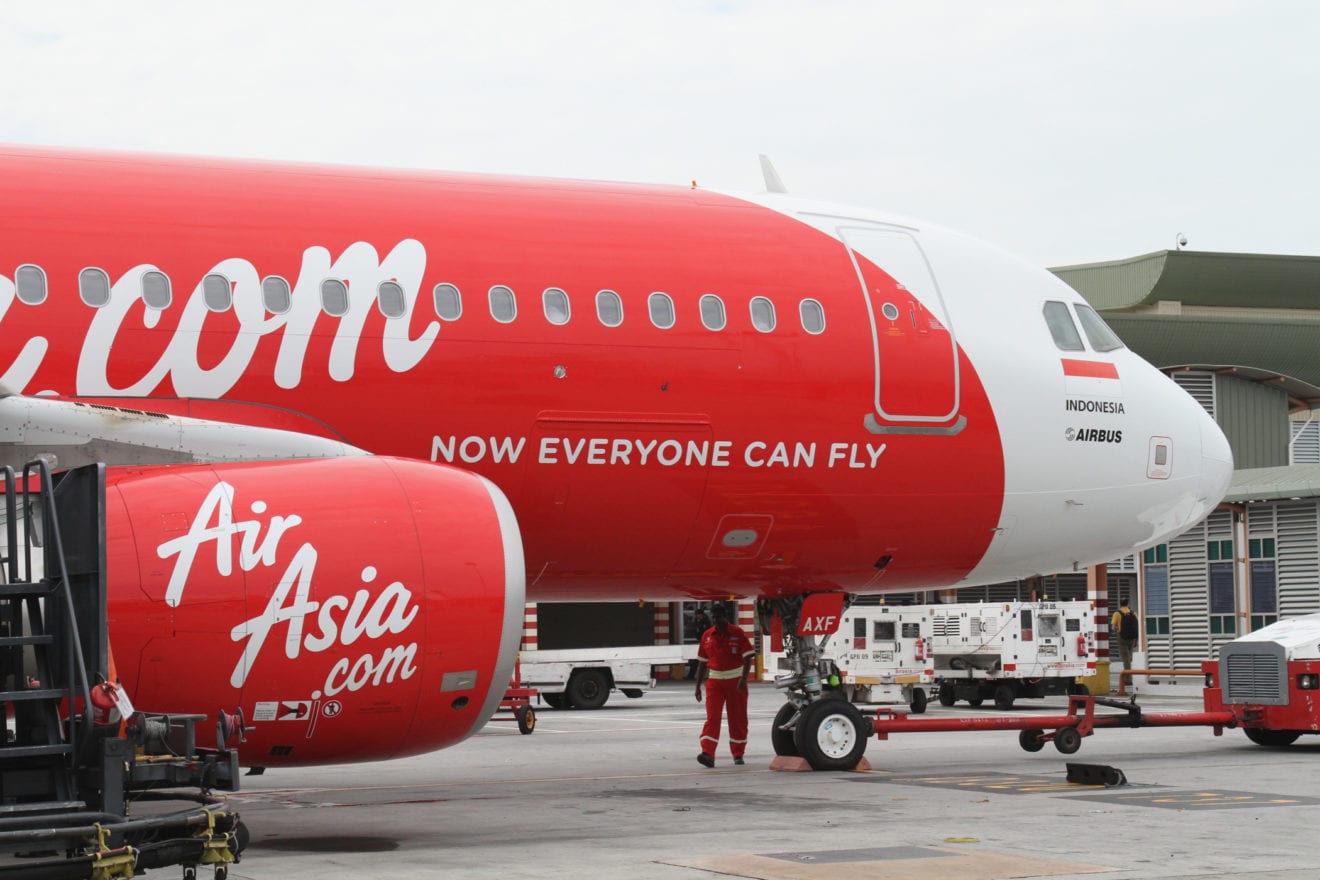
    AirAsia returns to the skies with domestic flights in Malaysia starting today (April 29), but passengers will need to follow Covid-19 safety measures.

    Each passenger will need to bring their own mask and wear it properly before, during and after the flight, including during check-in and bag collection. Any guest without a mask will be denied boarding.

    AirAsia chief safety officer Captain Ling Liong Tien said the carrier is stepping up all precautionary measures to ensure a safe journey.

    “First and foremost, it is your responsibility to ensure that you are eligible to travel, be it international or domestic, before booking a flight.

    “We kindly ask that you observe the universally recommended protective precautionary measures, including practicing high personal hygiene, ” he said in a statement.

    Other Covid-19 safety measures include a baggage allowance of only one piece (instead of the usual two), not exceeding 7kg, and earlier arrival at the airport – at least three hours – before departure.

    AirAsia Group president (Airlines) Bo Lingam said the carrier has undertaken a thorough review of guest handling procedures both on the ground and onboard in light of the Covid-19 pandemic.

    “We have been working closely with the airport authorities to ensure that all relevant precautionary measures are in place to ensure a safe, pleasant and comfortable journey for everyone,” he said in a statement.

    Bo added that AirAsia will adhere to guidance from the World Health Organisation (WHO) and International Civil Aviation Organisation (ICAO) to ensure “the highest standards of compliance and conformance”.

    The resumption of services will initially be for key selected domestic routes, which will increase gradually to include international destinations around the network, once the situation improves and governments lift borders and travel restrictions.

    AirAsia also recently made news when reports surfaced of the carrier introducing a new personal protective equipment (PPE) for its cabin crew.

    When contacted, an AirAsia spokesperson said the matter is still being reviewed.

    “AirAsia Philippines initiated a trial run of a customised PPE design. It was first used in a recent recovery flight and a further assessment of the design is underway.

    “The customised PPE is still being reviewed,” the spokesperson said.

  • Volkswagen Passenger Cars Global Sales Remain Flat In 2019

    Volkswagen Passenger Cars Global Sales Remain Flat In 2019

    Volkswagen passenger cars have recorded a sales growth of 0.5 per cent in 2019 selling 62,78,300 units worldwide as compared to 62,44,900 units it sold in the previous year. Volkswagens have been quite in demand in Brazil last year which has lead the growth chart at 16.7 percent selling 391,800 units as compared to 335,800 units which were sold in 2018.

    Sales in the entire South American region (including Brazil) went up by 3.7 percent at 491,500 units against 474,000 units which were sold in 2018. The European market recorded an uptick of 0.9 percent at 17,63,800 units as compared to 17,47,900 units in 2018.

    Sales in Western Europe were up by 1.8 percent at 14,96,200 units as compared to 14,69,200 units sold in the previous year. However, Central and Easter Europe were down by 4 percent at 267,600 units as compared to 278,700 units sold a year ago.

    North American region recorded a 1.6 percent year-on-year (YoY) decline in sales at 564,900 units as compared to 573,800 units sold in the previous year. The Asia-Pacific region, which is Volkwagen’s largest market, saw sales rising 0.8 percent at 33,12,500 units as compared to 32,87,100 units sold in 2018.

    Chief Operating Officer Ralf Brandstatter said, “2019 was an important year for the Volkswagen brand. With the ID.3 and Golf 8, we have successfully presented groundbreaking new products and consistently focused on earnings power.

    The digital transformation roadmap which we have agreed with the employee representatives and is now to be implemented will also make a key contribution to improving efficiency and safeguarding the future. We will continue to work on costs in a disciplined way so that we can make the necessary investments for the future. Thanks to fantastic team performance, we have exceeded the high delivery level of 2018 despite a difficult market environment.”

    Volkswagen electrified vehicles have also been quite in demand in 2019. The German carmaker has seen demand for electrified vehicles going up by 60 percent in 2019 selling over 80,000 units. More than half of electrified vehicles sold were all-electric cars while remaining were plug-in hybrid models. The Volkswagen Group is driving forward with the transformation to e-mobility and announced that it will be producing battery-powered vehicles in 16 locations around the globe by the end of 2022.

    It will be launching 34 new models worldwide in 2020 and this includes 12 SUVs and 8 electric or hybrid vehicles and will be investing 20 Billion Euros, a major part of which will go in electric mobility.

  • AirAsia named top airline by passenger growth

    AirAsia named top airline by passenger growth

    AirAsia has been named the Top Airline by Absolute Passenger Growth (Southeast Asia) at Singapore’s Changi Airline Awards 2019 recently.

    This is in recognition of its 4.1 per cent increase in passengers carried to and from Singapore to 4.5 million pax recorded in 2018, up from 4.3 million pax the year before, the low-cost carrier said in a statement today.

    It said AirAsia was also adjudged as having the third-highest airline passenger movements overall in 2018, together with Singapore Airlines Group, Jetstar, Cathay Pacific Airways and Lion Group.

    AirAsia Singapore chief executive officer Logan Velaitham said together with Changi Airport Group (CAG), AirAsia has grown Singapore into its third-largest hub, with around 40 flights per day from cities in Malaysia, Indonesia, Thailand and the Philippines.

    “As the largest foreign carrier operating into Singapore, we will continue to link new cities and give travellers here more options,” AirAsia said.

    In support of CAG’s growth plans, AirAsia launched its first international route from Ipoh to Singapore in 2018, it said.

    The Changi Airline Awards, now in its 14th year, recognises airlines for their contributions to strengthening and growing Singapore as an aviation hub.

  • Cebu Pacific income down 50.6% in 2018

    Cebu Pacific income down 50.6% in 2018

    The operator of budget carrier Cebu Pacific saw earnings dip by 50.6 percent last year amid challenges such as the closure of a popular tourist destination, rising fuel prices and increased competition.

    In a statement, Gokongwei-owned Cebu Air Inc. said profits fell to P3.9 billion from P7.9 billion a year earlier even as revenues climbed 9 percent to P74.1 billion from P68.03 billion.

    Passenger revenues, in particular, hit P54.3 billion, 9 percent higher than the P49.93 billion recorded in 2017. The listed airline carried 20.3 million passengers last year, up 3 percent from 2017’s 19.7 million.

    The cargo business also witnessed double-digit growth at 19 percent, the firm said.

    “The growth in CEB’s (Cebu Air’s stock symbol) 2018 business came amidst a challenging environment with high fuel prices, a volatile Philippine peso, rising interest rates, increased competition, the six-month closure of Boracay, and operational limitations in the country’s key airports,” the firm said.

    Michael Ivan Shau, Cebu Pacific chief operations officer, said the carrier expected to bounce back due to fleet and network expansions.

    “2019 is definitely the year we accelerate our growth,” Shau said in a statement.

  • AirAsia carried 16% more passengers in 2018

    AirAsia carried 16% more passengers in 2018

    AirAsia Group Bhd Consolidated AOCs carried a total of 12.1 million passengers in the fourth quarter ended Dec 31, 2018 (4Q18), reflecting a 16% growth from 10.4 million passengers carried a year ago. During the quarter, load factor was 4 percentage points lower at 84% from 88% a year ago, due to significant increase in capacity, which rose 21% to 14.3 million from 11.9 million a year ago.

    The group said in a statement that its available seat kilometres (ASK) grew 14% year-on-year, in line with the group’s strategy to grow its market share.

    For the full financial year ended Dec 31, 2018 (FY18), the group carried a total of 44.4 million, an increase of 14% from 39.0 million passengers carried a year ago.

    Capacity grew 18% to 52.5 million from 44.4 million a year ago while load factor fell 3 percentage points to 85% from 88% a year ago. ASK for the period grew 14%.

    The consolidated AOCs refers to AOCs whose financial and operational results are consolidated for financial reporting purposes, namely the Malaysian, Indonesian and Philippines AOCs.

    In 4Q18, Malaysia AirAsia carried a total of 8.5 million passengers, reflecting a 9% increase from 7.7 million passengers carried a year ago. Load factor fell 5 percentage points to 84% from 89% a year ago.

    The Malaysian operations saw a 16% increase in capacity to 10.2 million from 8.8 million a year ago while ASK rose 9% year-on-year.

    For FY18, Malaysia AirAsia carried 32.3 million passengers, 11% higher than 29.1 million passengers carried a year ago while load factor fell 4 percentage points to 85% from 89% a year ago.

    Capacity grew 16% to 38.0 million from 32.8 million a year ago while ASK rose 12% year-on-year.

    Overall, the group carried a total of 74.8 million passengers in FY18, which is an increase of 14% year-on-year. This includes all operations in Malaysia, Indonesia, Philippines, Thailand, India and Japan.

    The group also expanded its capacity during the year, with ASK up by 15% and load factor of 85%. The group’s total fleet size closed at 224.

  • Senai Airport Malaysia records 13% passenger growth in 2018

    Senai Airport Malaysia records 13% passenger growth in 2018

    Senai International Airport handled 3.52 million passengers last year, a 13% increase from the number of passengers recorded in 2017. Md Derick Basir, CEO of Senai Airport Terminal Services Sdn Bhd (SATSSB), the airport operator, said growth was mainly driven by domestic passengers with an increase of 234,650 passengers while international passenger traffic rose by 37% to 600,000 in 2018.

    “Growth was fuelled by the southern region’s rigorous economic activities, escalating demand for business and corporate travel, as well as the leisure sector,” he said in a statement.

    Commercial aircraft movement grew 8% with a total of 32,574 landings and takeoffs compared with 2017.

    “The rise in total passenger traffic in 2018 was mainly attributed by the introduction of new routes including Seoul by Jin Air, Sanya and Haikou by Malindo Air, as well as Alor Star and Ipoh by AirAsia.

    “In addition, the increase in flight frequencies to existing sectors such as Kuala Lumpur, Penang, Kota Kinabalu, Langkawi and Bangkok had also contributed to the growth,” he said.

    Md Derick added that SATSSB had also collaborated with industry players including tourism bodies and airlines to promote Johor as a destination, ultimately to encourage the demand for more air connectivity.

    “For 2019, Senai International Airport aims to handle 3.76 million passengers,” he added.

  • AirAsia targets 100 million passengers in 2019

    AirAsia targets 100 million passengers in 2019

    AirAsia Group is out to monetise its digital businesses and broaden the group’s digital footprint this year but has no plan to open more new airlines over the next three years. The airline wants to focus on growing its existing business especially in Indonesia and Philippines. “As 2019 approaches I would like to confirm that AirAsia will not be opening up any more new airlines for the next 3 years,’’ AirAsia Group chief executive officer Tan Sri Tony Fernandes (pic) said in his series of posts on Twitter yesterday.

    He added that “after Vietnam, we will focus on what we have. Focus this year is to make Indonesia and Philippines very profitable.’’

    There is where “all the major population and growing economies (are), coupled with two great countries (India and China) to enable us to cover the world,’’ he added.

    Fernandes added that he was confident the airline’s operations in India and Japan would be profitable in 2021.

    This year Fernandes is hoping that his airline group would be able to carry over 100 million passengers.

    When contacted he merely said it is “around there”.

    In the first nine months of 2018, the airline group carried 61.4 million passengers across its network. The target set for 2018 was 90 million passengers.

    “We are on track to achieve a group load factor target of 85%,’’ Fernandes had said earlier.

    With fuel prices falling, the airline also expects to maintain its cost this year and hopefully offers more low fares to travellers. It was reported that AirAsia group has hedged 48% for Brent at US$67.24 bbl for the first quarter (1Q19) and 27% for 2Q19 at US$65.40 bbl to manage volatility of fuel prices.

    Turning to the digital side of the business, Fernandes said in a tweet “this is the year people will begin to see our strength in digital’’.

    He would not go into details but earlier he has been talking about the BigPay app, which is a digital alternative to bank accounts and it comes with a card that allows users to use and spend it anywhere in the world.

    AirAsia Group has in mid-December completed the transfer of its non-digital businesses to Redbeat Ventures, its wholly owned subsidiary. The digital-related services include AirAsia BIG Loyalty, BigPay, travel360, ROKKI, Ourshop, RedCargo Logistics, RedBox Logistics, Vidi and RedTix.

    That is the first step towards monetising the digital business and allow AirAsia to broaden the digital footprint.

    In an announcement to Bursa Malaysia earlier, AirAsia deputy group CEO (digital, transformation and corporate services) Aireen Omar said that by placing the digital assets under Redbeat Ventures, they hope to more effectively expand and monetise the digital businesses and broaden AirAsia’s digital footprint.

    The vision for Redbeat Ventures was to connect with the start-up community globally through collaboration to foster entrepreneurship and stimulate market-driven innovation that would benefit not just AirAsia’s ecosystem but help lead the digital economy and lifestyle in Asean.

    Redbeat Ventures will work with tech start-ups and look out for investment opportunities in the high-tech and digital space to remain competitive and relevant in these rapidly changing commercial and technological environments.


  • Korean passengers break record in November

    Korean passengers break record in November

    Korea’s air passenger traffic reached a new record for November on the back of the rise in the number of Chinese tourists and increased overseas travel demand, government data showed Tuesday. The number of air passengers came to 9.57 million last month, up 5.6 percent from a year earlier, making it a new record for November, according to a tally from the Ministry of Land, Infrastructure and Transport.

    The ministry attributed the surge to the return of Chinese visitors and the steady increase in overseas travel demand.

    Passenger traffic on Chinese routes spiked 24 percent to 1.32 million, slightly lower than the same month in 2016, when a row between the two countries over the U.S. Terminal High Altitude Area Defense (Thaad) missile system had yet to emerge.

    China banned the sale of group travel packages to South Korea in March 2017 due to a diplomatic row with Seoul over the deployment of a Thaad battery in Korea. China has since partially lifted the ban.

    International air passenger traffic rose 8.8 percent on year to a record 7.01 million last month, while domestic passenger traffic dropped 2.5 percent to 2.56 million, according to the ministry.

  • Vietnamese carriers get busy with early holiday plans

    Vietnamese carriers get busy with early holiday plans

    With six weeks to go for Tet, the Lunar New Year festival, Vietnamese carriers are bracing for the upsurge in demand. Jetstar Pacific, the low-cost arm of flag carrier Vietnam Airlines, announced Tuesday that it would increase the number seats on local routes by 80,000.

    It has also opened a new route from Hanoi to the southern city of Can Tho to meet travel demand between the two destinations before and after the Tet holiday, which falls February 2-10 next year.

    Earlier, the carrier had announced plans to operate 3,210 flights, or 600,000 seats, to serve customers for the Tet holiday.

    Vietnamese people traditionally move from the cities to their hometowns and villages all over the country to reunite with their families before the Lunar Near Year begins.

    State-owned Vietnam Airlines has also raised its number of seats from January 20 to February 19 to 1.4 million, 100,000 higher than the same period last year. This involves an addition of 566 more flights, to serve customers in Tet.

    The flag carrier has also announced that it will open a new route from Ho Chi Minh City to the new Van Don International Airport near Ha Long Bay in Quang Ninh Province. It will start operating one flight a day between the two destinations starting December 30.

    About 90 percent of flights between Ho Chi Minh City and Hanoi, central cities of Vinh and Da Nang have already been booked, a Vietnam Airlines representative said.

    As there are signs of the demand increasing further, the largest airline in the country by passengers carried plans to open another 56,000 seats in the next few days.

    Many VietJet Air agents have confirmed that VietJet has opened ticket sales from Ho Chi Minh City to Van Don Airport in Quang Ninh Province starting January 20. The Van Don International Airport, the first private airport in the country, is set to open for business on December 25, 2018.

    Dinh Viet Thang, head of the Civil Aviation Administration of Vietnam (CAAV), said at a conference last month that the number of airplanes will increase by 32 to 180 to meet the high travel demand around Tet time. This means that the transport capability of the Vietnamese aviation sector will increase by 20 percent, he added.

    The number of air passengers for the upcoming New Year’s Eve and Tet holidays is expected to increase by 11 percent year-on-year, according to the Civil Aviation Administration of Vietnam (CAAV).

    It also says that local airlines have registered to increase the number of flights by 2,611 to 19 airports for Tet. The number of passengers during the holiday is expected to increase by around 280,000 over normal days.

    The highest holiday surge in the number of passengers will be seen on the HCMC-Hanoi route, which will have 519 additional flights, or 20 percent of the total increase. The corresponding numbers for the HCMC-Da Nang route will be 354 flights and 14 percent; HCMC-Vinh, 306 flights and 12 percent; and Hanoi-Phu Quoc, 24 flights and one percent.

    Vietnamese carriers have served almost 45.1 million passengers in the country in the first 11 months of this year, up 11.9 percent from a year ago, according to the General Statistics Office.

  • Air Asia X‘s Direct Flights from Bali Reduce Passengers Going through KL

    Air Asia X‘s Direct Flights from Bali Reduce Passengers Going through KL

    he number of tourists from China and India has seen huge improvements after e-visa services were made available, said Tourism Malaysia chairman Datuk Dr Siew Ka Wei.

    According to Siew in a statement, between March 2016 and April 2017, total of 284,606 and 323,173 Chinese tourists have applied for e-visa (electronic visa) and eNTRI (Electronic Travel Registration and Information), respectively. As for India, its tourists’ visas application also shot up by 91.1 per cent from 36,442 approved in March to 69,635 visas approved in April.

    “Following the green light from Prime Minister Datuk Seri Najib Razak to approve e-visa applications for multiple entries, the Home Affairs Ministry is working on the final details of the two-week multiple entry visa-free visit to Malaysia, which will boost this number even further.

    “In addition, they are also allowed to transit in Malaysia without a visa, on specific terms and conditions. “This improved facility is expected to help attract larger numbers of tourists from China and India to Malaysia who are looking for a holiday experience that offers diversity at an affordable price,” he said.

    He added that Chinese and Indian nationals can now apply for e-visa, eNTRI or VOA (Visa on Arrival), depending on the purpose of their visit to Malaysia. “These improvements have come at an opportune time to encourage more Chinese and Indian tourists to visit Malaysia.

    “Considering that visa arrangements are critical for the convenience of travellers, these facilities are expected to ease travel preparations, especially since it has the following features, namely online application system, faster processing time and reasonable fees,” he added.

    Meanwhile, Malaysian Association of Tours and Travel Agents (Matta) Inbound and Domestic vice president Datuk KL Tan said the number of tourists from China and India saw a drop lately due to aggressive promotions from neighbouring countries such as Indonesia, Thailand and Singapore.

    “These countries have increased their promotions and are targeting the Chinese and Indian tourists. “Indian tourists have dropped significantly as more countries such as Indonesia had extended free visa on arrival to Indian nationals. Thailand too had extended a similar policy until end of this year.

    “Their airlines have started to fly direct. Air Asia X Indonesia started direct flights from Bali to Mumbai and Bali to Kochi. These have reduced chances of passengers going through Kuala Lumpur,” said Tan.

    Tan added that most country’s tourist market have dropped especially in the ASEAN region.“Foreign tourists’ arrival such as those from Singapore, Thailand, Brunei and Indonesia has seen a decrease.“But for long haul markets, we are quite dependent on Chinese tourists.”

    He however applauded the improvements made by the government saying that an increase of visitors from any country is always good. “But India visitors dropped 35.1 per cent during the first quarter in 2017 compared to 11.6 per cent for whole of last year.

    “The visa fee is slightly on the high side. We would like to see for the government’s review on the visa fees, especially for India. “If everything goes right, we could get six million Chinese visitors and 1.5 million from India by 2020. Growth from the nine ASEAN nations will be steady, rising to 23.5 million by 2020 and the rest of the world, five million,” Tan said.

  • AirAsia 1Q passengers top 15m

    AirAsia 1Q passengers top 15m

    AirAsia Bhd reported a 9% increase in the number of passengers carried at 15.23 million in the first quarter ended March 31, 2017 (1Q17) from 13.94 million a year earlier as the budget airline’s capacity and load factor rose.

    In a statement late yesterday, AirAsia said capacity rose 5% to 17.13 million seats from 16.29 million. The number of passengers carried and capacity translated into a higher load factor at 89% versus 86%, according to AirAsia.

    “In 1Q17, the group posted load factor of 89%, up three percentage points from the same period last year. The total number of passengers carried increased 9% year-on-year to 15.23 million, well ahead of the 5% increase in seat capacity.

    “At the end of the quarter under review, the group’s total fleet size stood at 176 aircraft (180 including two A320 aircraft novated from MAA (Malaysia AirAsia) to Asia Aviation Capital and subsequently leased to a third party airline and two A320 aircraft delivered to AirAsia Japan but yet to commence operations),” AirAsia said.

  • GMR Hyderabad Airport Offers ‘Mumbai Central’ delivering the Authentic Street Food from Mumbai

    GMR Hyderabad Airport Offers ‘Mumbai Central’ delivering the Authentic Street Food from Mumbai

    GMR Hyderabad International Airport (GHIAL), which operates Hyderabad Airport today announced the opening of ‘Mumbai Central’ near EAT at Hyderabad food court at the domestic departures Security Hold Area (SHA) of the airport. With the opening of its outlet at Hyderabad Airport, ‘Mumbai Central’ takes a maiden venture into airport Food & Beverage segment.

    Mumbai Central offers a live counter with a menu distinct from other outlets. It brings to the platter the popular west costal cuisine of India including some of the mouthwatering popular street food from the heart of Mumbai to the passengers flying from Hyderabad Airport. Now the travelers in love with the authentic and popular street food from Mumbai, could savour it when at Hyderabad Airport.

    Mumbai Central has been appealing to the travellers throughout the day, allowing them to relax, enjoy their meal and time at the airport. Mumbai Central brings the bustle of the Mumbai street food culture to Hyderabad Airport, offering high quality, authentic and famous Mumbai delicacies. Offering a quick serve world of cuisine, Mumbai Central is focused on directly triggering the customers appetite and to introduce the beauty of fast and fresh cooking; a lot of food is made and finished in the front of the customers.

    A wealth of fresh ingredients and spices adds spontaneous bursts of tasteful experience and stimulates the senses at every step of the way. Diners can order from the digital menus featuring daily specials, which are updated regularly to continuously delight the customers. Strongly promoting the traditional emphasis on healthy eating, balanced meals and fresh food, Mumbai Central uses the freshest of ingredients for recipes, flavors and spices, developed and preserved for many generations.