Retail News CRM

Tag: people

  • Meta Tests Monthly Message Caps On Whatsapp To Curb Spamming

    Meta Tests Monthly Message Caps On Whatsapp To Curb Spamming

    Meta is planning on introducing a message limit for both individual users and businesses on its platform, WhatsApp. This move is designed to deter messages being sent en masse to unknown contacts without eliciting a response.

    Details of the New Limit

    The tech giant’s new strategy is to implement a monthly cap on the number of messages that can be sent without receiving a reply. All the messages dispatched on the platform will count towards this proposed limit. The exact number constituting the monthly cap remains undisclosed with Meta confirming that it is still in the process of testing various thresholds.

    In the upcoming weeks, the company plans to initiate trials of these new restrictions in multiple countries, although the specifics have yet to be determined.

    User Notifications and Alerts

    WhatsApp will proactively alert users who are nearing the set limit through a pop-up notification. This alert will indicate the remaining number of messages that can be sent before the limit is reached, thus enabling users to manage their activity and avoid being completely barred from sending messages.

    Impact on the Average User

    Meta assures that the average user will not be impacted by this new measure. The company explains that the limits are primarily intended to combat spam and will therefore not affect most users. As long as users are not excessively sending messages to a wide range of contacts, they are expected to remain unaffected by this change.

    This is not the first instance of WhatsApp taking measures to combat spam. Previous features introduced by the company were aimed at enabling users to easily exit unfamiliar group chats, block messages directly from the lock screen, and entirely block messages from unknown users.

    Curbing the Spread of Spam

    While Meta acknowledges that the new message limit will not entirely resolve the issue of spam on WhatsApp, it believes that it will effectively curtail its proliferation. The company is optimistic that this measure will deter spammers who indiscriminately send messages to random WhatsApp numbers, thereby making the process of spamming more challenging.

    Questions & Answers

    What is the new limit that Meta is introducing on WhatsApp?
    Meta is implementing a monthly cap on the number of messages that can be sent on WhatsApp without receiving a reply. The exact number constituting this limit is still being tested.

    How will users know if they are approaching the message limit?
    WhatsApp will alert users nearing the set limit through a pop-up notification. This will indicate the number of messages remaining before the limit is reached.

    Will the average user be affected by this new limit?
    According to Meta, most users will not be affected by this new measure as it is primarily being introduced to combat spam. If users are not excessively sending messages to a wide range of contacts, they are likely to remain unaffected.

  • What Are People Buying on Amazon Right Now?

    What Are People Buying on Amazon Right Now?

    Amazon is the world’s largest retailer – online, offline, or otherwise. That means by studying the popular site’s revenue and sales statistics, you can get a pretty good feel for the larger global shopping trends. And here’s what’s most interesting: The hot product categories and trends tend to change on a yearly basis.

    In this article, we’ll take a deep dive into the biggest shopping trends on Amazon, focusing on the most popular product categories and what experts predict will be the next hot items.

    Amazon Shopping Statistics and Trends

    Did you know that shoppers spent a collective $513 billion on Amazon in 2022? That amounts to a jaw-dropping $977,898 per minute.

    Overall, Amazon’s revenue grew by 9.4 percent year-over-year in 2022, while 59.3 percent of Americans now have a Prime membership.

    In total, Amazon is believed to own 7.34 percent of the total U.S. retail market (and a whopping 37.8 percent of the total ecommerce market).

    To get an idea of how much product Amazon is moving, consider that net sales surpassed the $149 billion mark for Q4 2022 alone. 

    Unbeknownst to most people, 15.6 percent of Amazon’s sales revenue actually comes from Amazon Web Services, the company’s B2B service platform. 

    Beauty and Grooming

    The beauty and grooming category has always been popular, and it remains a top seller on Amazon. Consumers are increasingly interested in natural and organic products, with the demand for sustainable and ethical options growing. Skincare products, especially anti-aging products, are a significant trend, and hair care products are also in demand.

    According to Amazon’s 2021 Beauty Trends Report, top products in this category include collagen peptides, hyaluronic acid serums, and retinol creams. Korean skincare products, including sheet masks and essences, continue to be popular, with sales increasing by 85 percent.

    Sport and Fitness

    The COVID-19 pandemic has caused a surge in demand for home fitness equipment and products that can help individuals maintain an active lifestyle while practicing social distancing. As a result, the sport and fitness category has seen significant growth on Amazon.

    Yoga mats, resistance bands, and dumbbells have all seen an increase in sales, and fitness trackers and smartwatches remain popular. Health supplements, including vitamins and protein powders, are also in demand.

    Home and Kitchen

    As more people spend time at home, the home and kitchen category has seen significant growth on Amazon. Consumers are investing in products that make their homes more comfortable and functional, such as air purifiers and smart home devices.

    Cookware and kitchen gadgets are also in demand, with sales of instant pots and air fryers increasing. Sustainable home products, including reusable food wraps and bamboo utensils, are also popular.

    Toys

    The toy category is always a popular one on Amazon, especially during the holiday season. Electronic toys, including drones and remote-control cars, remain a significant trend, and board games and puzzles have also seen an increase in sales.

    STEM toys, which help children develop skills in science, technology, engineering, and math, are also in demand. Educational toys, such as science kits and building sets, have seen significant growth in sales.

    Electronics

    The electronics category is vast and includes everything from smartphones to headphones. Wireless earbuds, smartwatches, and laptops are all in demand, and gaming laptops have seen a significant increase in sales.

    Smart home devices, including voice-controlled speakers and security cameras, remain popular, and sales of 4K televisions continue to increase. As remote work and online learning become more prevalent, sales of webcams and monitors have also seen a surge.

    Fashion

    Amazon has made significant strides in the fashion industry, and the category is now a top seller on the site. Consumers are increasingly interested in sustainable and ethical fashion, and the demand for eco-friendly clothing is growing.

    Athletic wear and comfortable loungewear have seen significant growth, as more people work from home. Accessories, including jewelry and handbags, remain popular, and sales of face masks have also seen a surge.

    Tap Into the Power of Amazon

    The beauty of Amazon is that it’s set up for third-party sellers to thrive. In fact, third-party sellers account for 350 million of the nearly 362 million items listed on the site. So if you’re looking to take advantage of these trends, there’s never been a better time!


  • Starbucks China opens First Signing Coffee Store in Guangdong

    Starbucks China opens First Signing Coffee Store in Guangdong

    Starbucks China has opened its first Signing Store, staffed entirely by deaf or hearing-impaired people.

    The store is in Guangzhou, in Guangdong Province which is home to about 4 percent of China’s deaf population. It is Starbucks’ third Signing Store, following outlets in Washington DC and Malaysia.

    Sign language symbols are printed on umbrellas in front of the store, and there are indicators throughout the store. Deaf baristas will wear aprons with the word “Starbucks” embroidered in sign language.

    The store is equipped with a customized ordering system. Customers and partners will be able to communicate using notepads and two-way digital displays. For customers new to sign language, there will be a dedicated area for customers to write down their orders on an electronic board and wireless vibrating pagers will notify customers when their orders are ready.

    The cafe also features exclusive artwork and unique merchandise designed by deaf artists.

    The initiative aims to offer employment and career-advancement opportunities for the deaf and hard-of-hearing community as well as “a welcoming hub for those passionate about improving accessibility and experiences for all”. It is located near the Guangdong Disabled Association and Guangdong Deaf People Association.

    “Starbucks is committed to creating equal opportunities for everyone, as well as a unique third-place experience that addresses a wide range of community needs,” said Belinda Wong, CEO of Starbucks China. “The new Signing Store is an example of how we are building inclusive environments and careers for our partners.”

    Store staff, who have been recruited from across China, are fluent in Chinese sign language.

    To create an inclusive environment and encourage customers to learn more about the deaf community, the store will also offer sign-language lessons and coffee workshops in sign language.

    “The Guangdong Deaf People Association is proud to partner with Starbucks to provide training and opportunities for the deaf and hard of hearing community,” said Yitao Fan, vice chairman, China’s Deaf People Association and president of Guangdong Deaf People Association. “Thanks to Starbucks, deaf partners are empowered to develop their careers in a vibrant and supportive environment, while the store provides a strong platform to drive societal awareness around deaf culture and the needs of the community.”

  • Apple appoints former Microsoft executive

    Apple appoints former Microsoft executive

    Apple has appointed Microsoft’s former Corporate Vice President Sam Jadallah to lead the “Home” products category at Apple. Even though Apple has not officially announced the appointment, Jadallah updated his LinkedIn bio to read – “Working on Home at Apple”, reflecting his new role with the iPhone-maker. However, along with Apple, Jadallah has also been tight-lipped over his hiring by the company.

    After Microsoft, Jadallah ran a smart lock start-up called ‘Otto’ that shut down in January 2018.

    “Hiring Jadallah is the latest signal that Apple plans to get serious about its own efforts in the ‘Home’ category,” the report said.

    Apple has a range of “Home’ products including HomeKit — its software service that connects with a variety of third-party products; and HomePod — a smart speaker for the home with voice recognition and music.

    Currently, Apple’s HomePod constitutes a small share of the home products market as compared to Amazon’s Echo and Google Home.

    Recently, Apple acquired a voicetech start-up called Pullstring to strengthen Siri against Amazon’s Alexa.

    “That purchase could help the smartphone-maker become the centre of a connected living room,” the report added.

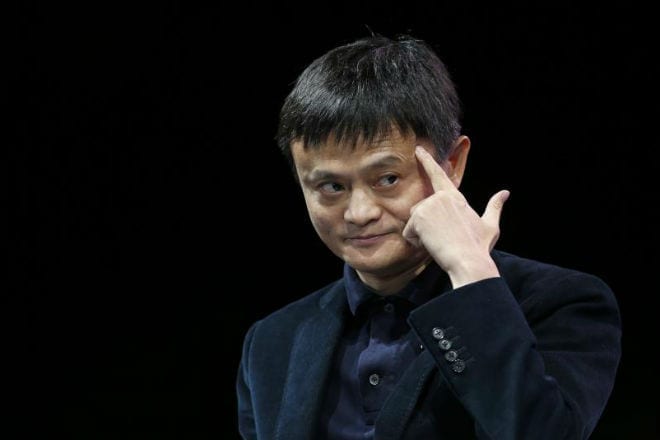
  • The Africa Netpreneur Prize Initiative by jack Ma Foundation calls for applications in March

    The Africa Netpreneur Prize Initiative by jack Ma Foundation calls for applications in March

    The Africa Netpreneur Prize Initiative (ANPI) will officially call for applications starting from the 27th of March 2019. The ANPI is a US$10 million Prize competition for African entrepreneurs, founded by the Jack Ma Foundation. Each year for the next ten years, the Prize will host a pitch competition in Africa where ten finalists from across the continent will compete for US$1 million in total prize money.

    The Prize, which is supported by its continental partner Nailab, is focused on empowering a new generation of entrepreneurs, with a focus on small businesses, grassroots communities and women-founded enterprises.

    “The Netpreneur Prize Initiative has brought together a strong ecosystem of players to support both technology-driven and traditional businesses. We look forward to unveiling the full slate of regional partners and to receiving applications from promising African entrepreneurs in the coming weeks,” said Sam Gichuru, Founder and CEO, Nailab.

    All ten finalists will receive grant funding from the Jack Ma Foundation, as well as access to the Netpreneur community of African business leaders to leverage the community’s shared expertise, best practices, and resources.

    “By 2030, we hope to identify and shine a spotlight on 100 African entrepreneur heroes who will inspire the continent. From day one, our approach has been community-based and focused on inclusiveness; to be truly for Africans and by Africans. To realize these goals, we are excited to work with Nailab as our implementing partner in Africa and multiple African partners across to continent.”

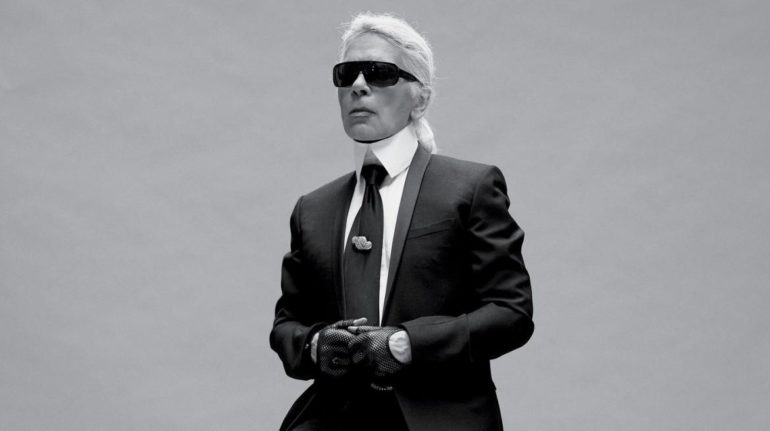
  • Karl Lagerfeld dies at 85

    Karl Lagerfeld dies at 85

    Karl Lagerfeld, arguably the world’s most iconic designer and undoubtedly the most prolific, has died in Paris. He was 85. In a seven-decade career as fashion’s ultimate free agent, Lagerfeld created collections simultaneously for the celebrated houses of Chanel and Fendi, in addition to his signature label, at a pace without rival in the luxury industry.

    Virginie Viard, director of Chanel’s design studio and Lagerfeld’s closest collaborator for more than 30 years, will take the creative reins at the storied brand’s fashion business. A succession plan has yet to be announced at Fendi.

    For Lagerfeld, to design was to breathe, “so if I can’t breathe, I’m in trouble,” he often quipped to journalists who were astonished by his inexhaustible work ethic and his insistence that he would never retire.

    In fact, his creative output seemed only to become more bountiful in his golden years, a period during which his extravagant runway productions at the Grand Palais in Paris achieved a staggering level of theatrical opulence. At a cost of millions of dollars per season, the events surpassed the mundane boundaries of a fashion show to become something more like large-scale performance art — media spectacles where Lagerfeld, as both gifted designer and visual provocateur, could best demonstrate his ability to interweave the superficialities of fashion with matters of great depth, while also parading seemingly endless ways to keep Chanel’s classic tweeds looking modern and fresh.

    His Autumn/Winter 2017 collection featured a 115-foot-tall mechanical rocket ship that simulated blast off. For Fall 2014, he built a Chanel shopping centre, its superstore-like aisles bursting with more than 500 different products that included a Chanel-logo chainsaw, doormats, candy, and ketchup. For Fall 2010, he imported enough snow and ice from Sweden to create a 265-ton indoor iceberg. Backdrops of a man-made beach with rippling waves (Spring 2019), a scale rendering of the Eiffel Tower (Fall 2017 Couture), a French brasserie with uniformed bartenders (Fall 2015) and an enormous model of a passenger ship (Cruise 2019) suggested no idea was too fantastical, nor expense too decadent.

    His incredible longevity and success as a designer, and, following his logic, the fortunes of the companies for which he worked, owed at least partly to Lagerfeld’s intentional detachment from the business side of fashion. He claimed never to discuss sales figures or budgets with management. “I am a hired gun, even in my own business,” he said in a BBC interview, noting that his contracts with Chanel and Fendi allowed him to do whatever he wanted on the side. “I work my own marionette in a way, my own puppet,” he told The New York Times. “It’s something I control.” That extraordinarily rare freedom from the restraints of financial responsibility enabled him to continually make clothes that inspired consumers to dream.

    “We created a product nobody needs, but people want,” he said. “If you need an ugly old car, it can wait, but if you want a new fashion item, it cannot wait.”

    As designers half his age complained of burnout from fashion’s maddening pace, Lagerfeld made himself even busier by dabbling in a constant stream of publishing, photography, film and design projects, including a rule-breaking “fast fashion” collaboration with the mass retailer H&M in 2004 that predated the industry obsession with disruption by more than a decade. Ignoring the traditional expectations of a luxury player, he also designed hotel rooms, video games, motorcycle helmets, a BMW, and a cosmetics range inspired by his also-famous cat, Choupette, and directed an ad campaign for Magnum ice cream bars that featured a life size sculpture of model Baptiste Giabiconi rendered in chocolate. More than most of his sober-minded peers at fashion’s pinnacle, he relished his iconic status both within the industry and in popular culture. Despite all this extra-curricular output, though, he was driven by one thing in fashion, he said, which was to make his designs better than they were the season before.

    As most profiles of Lagerfeld have noted, another thing that drove him was a desire to know everything. He filled his numerous homes, in Paris, Biarritz, and Saint-Tropez among others, with stacks of history books and biographies, iPods loaded with various types of music, and museum-worthy collections of artwork and furniture that he would, unceremoniously, dispose of every few years, once a new period or style captured his attention. With his vast memory and a rapid-fire way of working and speaking, he could summon details and themes on command, exploit them ruthlessly in a collection, and then immediately move on to the next thing. He once said he had a “Google mind.”

    “Whatever it is, good or bad, it influences fashion,” Lagerfeld said. “You can see that in fashion quicker than in any other thing going on. Fashion is something that reflects our lives and times with the shortest release, because, cars, design and architecture take years to realise.”

    Lagerfeld was, in many ways, a self-drawn caricature of what a powerful designer should look and sound like, a stylistic god who was worldly and intellectual, commanding and capricious. His bitchy quips (“sweatpants are a sign of defeat,” “trendy is the last stage before tacky,” “I think tattoos are horrible — it’s like living in a Pucci dress full-time,” and many, many nasty digs at celebrities he considered fat or unattractive) became as much a part of the Lagerfeld mystique as were his signature white powdered ponytail and dark sunglasses, or his habit of drinking only Coca-Cola (later, Diet Coke or Coke Zero). But his penchant for flamboyance, combined with occasionally reckless comments in recent years, also resulted in backlash for Chanel. His critiques of Angela Merkel drew particular outrage, as when he evoked the Holocaust on a French talk show in 2017 while protesting Germany’s open-door policy toward Muslim refugees fleeing the Syrian civil war. In any event, there had never been any serious repercussions for the designer nor attempts to unseat him, likely as a result of his outsize stature in the industry and his long history of accomplishments.

    He was best known for his work, since 1983, as artistic director at Chanel, which became one of the most profitable and admired luxury brands in the world under his tenure. While the company remains privately held by brothers Alain and Gérard Wertheimer, Chanel took the unusual step of releasing its annual results for the first time last year, stating its sales of $9.6 billion were larger than those of Gucci and approaching those of Louis Vuitton. Chanel’s sales for 2017 were up 11 percent, driving operating profit of $2.69 billion. Chanel said it had decided to reveal its financial strength in response to speculation that the company could be a takeover target, and to demonstrate it was determined to remain independent.

    When Lagerfeld was first approached by the Wertheimer family, which had created the Chanel fragrance business and its blockbuster No. 5 scent in the 1920s, and took control the fashion house after World War II, it had been more than a decade since the death of its founder, Gabrielle “Coco” Chanel. Chanel’s hallmark tweed bouclé jackets and dresses, once viewed as liberating, by then seemed old-fashioned and bourgeois, and the company was in need of new direction. Lagerfeld was already well-known for the soft and poetic party dresses he had been making at Chloé in the 1970s, which was during the dynamic growth of European ready-to-wear movement for easy-to-wear and less precious clothes. At the same time, Lagerfeld, since he first arrived in Paris, had harboured a burning desire to work in high fashion as a couturier, and Chanel’s established atelier offered that chance.

    “People tend to forget that once upon a time, Chanel was old hat,” Lagerfeld said. “It was only Parisian doctors’ wives who still wore it.” But it was Lagerfeld’s belief that the image could be changed with a sense of humour and a lack of nostalgia, in order to make customers forget everything that had come before.

    “Because fashion is about today,” Lagerfeld said in a 2007 New Yorker profile. “You can take an idea from the past, but, if you do it the way it was, no one wants it.”

    Lagerfeld described his first collections for Chanel as reflecting a modern and “chic-sexy” approach, with longer and thinner proportions, unlike Coco’s boxy-proportioned precedent. For his spring 1984 ready-to-wear show, he re-imagined classic suits and dresses with matching hats — all in denim, and for fall that year he added a hockey uniform worn with pearls and a skiing outfit in gaudy, glittering silver and red. His transformation of the brand would combine elements of the alluring (softly tailored pantsuits and charming white camellias affixed to tweed suits) with the shocking (oversize logos, micro-miniskirts, sequinned running shoes, heels moulded to look like pistols). The phenomenal transformation of Chanel became an industry model for how to turn an aging fashion house into a status symbol as its sales continued to soar. Lagerfeld’s role was so secure there he was contractually considered its “designer for life.”

    “Why should I stop working?” he mused to anyone who dared broach the subject of retirement. “If I do, I’ll die and it’ll be all finished.”

    Karl Lagerfeld was born Karl-Otto Lagerfeldt in Germany, and raised in the countryside near Hamburg, on Sept. 10, 1933, according to most recent biographies and some of his relatives, although Lagerfeld had for many years claimed he had been born in 1938 or 1935. In her 2006 book, “The Beautiful Fall,” which chronicled the heady decadence of fashion in the 1970s, the writer Alicia Drake argued that Lagerfeld had inflated many details of his childhood as part of a self-invention as a German aristocrat upon his arrival in the Paris demimonde. Lagerfeld sued the writer for invasion of privacy, but his case was thrown out of court.

    Lagerfeld, who changed the spelling of his name for commercial reasons, himself frequently joked about the discrepancy of his age, saying his mother, Elisabeth, a trim, stylish violinist who was highly critical of her son in his childhood, had chosen the date because it was easier to write. (As recently as 2013, Lagerfeld told Paris Match that he was born in 1935.) Further confusing matters, his father, Christian Ludwig Otto Lagerfeldt, was the wealthy managing director of a company that distributed condensed milk from the United States, and had moved the family to the countryside to shelter them from the hardships of the war years under Hitler, leaving little reliable evidence from the early years of Karl, an older sister, Martha Christiane, and a half-sister, Thea, from Lagerfeldt’s previous marriage.

    In the end, Lagerfeld described his childhood as a misery. He was a gifted scholar and loved to sketch, thinking he would pursue a career in illustration, but he had few friends and his mother often complained about his looks, telling him he should not smoke because his hands were unattractive, and that his nose was so large he should order curtains for his nostrils. Nevertheless, his parents supported his artistic ambition and sent him to Paris, where Lagerfeld found immediate success in fashion. In 1954, he won a design contest, called the International Woolmark Prize, based on the sketch of a coat he submitted that was produced for the competition by the designer Pierre Balmain. Of particular note, a young Yves Saint Laurent also won that year in the dress category, foreshadowing what would become a lifelong rivalry between the two designers.

    In their younger years, Lagerfeld and Saint Laurent were close friends. Whereas Saint Laurent was the tortured, fragile artiste who ascended to the coveted role of couturier at Christian Dior following Dior’s sudden death in 1957, Lagerfeld was a pragmatic mercenary. After working for three years for Balmain, who had hired him as an assistant, Lagerfeld designed collections for Patou, Chloé, Krizia, Charles Jourdan, Mario Valentino, and, beginning in 1965, Fendi, the Italian fur company where he contributed designs for an astounding 50 years. Fendi’s sales were estimated by analysts at $1.3 billion in 2017, while the company, acquired by LVMH in 2001, has experienced a major street style moment over the last year with its logo-driven FF Reloaded collection. (In January, Silvia Venturini Fendi, creative director of accessories and menswear, paid tribute to Lagerfeld’s contributions to the house with a fall men’s collection inspired by him, including styles he designed.)

    By the 1980s, Lagerfeld was widely known to the public, even as he was just beginning to design under his own name (Saint Laurent had started a signature company that popularised the French concept of ready-to-wear in the 1960s). Lagerfeld’s own label, called at different times Lagerfeld Gallery or Karl Lagerfeld Paris, has existed on and off as a licensing venture through various partnerships, including a high-profile venture with Tommy Hilfiger in 2004 and most recently with G-III Apparel Group in the United States since 2016, though it has always been perceived as a side project for the designer.

    Still, Lagerfeld was the more disciplined of the two when it came to image and self-control; he was cast as an aristocratic German designer in one of Andy Warhol’s more obscure films, the 1973 “L’Amour,” playing up his persona as the ringleader in the absurdist circus of fashion. His personal iconography included tightly fitted blazers over starched white shirts with startlingly tall collars, and skinny jeans – a complete look he perfected in the 1990s, only after undertaking a dramatic diet. He said he lost 92 pounds in order to fit into the prevailing silhouette of the day, a modern rock-and-roll style orchestrated by Hedi Slimane, who was then at Dior Homme. Lagerfeld became so recognisable for this look that he started using his own likeness as a logo on T-shirts, handbags and furry key chains for Fendi.

    While his competition with Saint Laurent intensified throughout their lives, until Saint Laurent’s death in 2008, Lagerfeld’s ultimate success with Chanel gave him immense confidence and enabled him to pursue opportunities that no other designer would dare touch. His 2004 collection for the Swedish retailer H&M was especially risky, given the fate of other luxury brands like Halston that had lost their credibility after making a mass play. Lagerfeld described the one-off collaboration, which included slim blazers and T-shirts emblazoned with a cartoon logo of his face, as “mass elitism, which has long been my dream… It’s the future of modernity.”

    The collection was an enormous hit, selling out in many markets, unleashing all manner of unorthodox designer crossovers to follow, and further fuelling Lagerfeld’s fame. He was also the subject of at least three documentaries, “Lagerfeld Confidential” (2007), “Un Roi seul” (2007), and “Karl Lagerfeld se dessine” (2013), and several books, including a compilation of his quotations, “The World According to Karl,” from Flammarion (2013), and “The Karl Lagerfeld Diet,” a weight-loss book he published with his physician, Jean-Claude Houdret (2002). For many years, Lagerfeld ran his own publishing imprint, 7L, photographed his own advertising campaigns, and directed short films that imagined the life of Coco Chanel and highlighted connections from Chanel’s history to his own work.

    At Chanel, Lagerfeld was given the artistic license and financial resources to acquire the best talent, including his longtime collaborators Virginie Viard, the creative studio director and tipped as a likely internal candidate to succeed him as Chanel’s designer, and Eric Pfrunder, Chanel’s director of image. At Lagerfeld’s urging, the company also embarked on a campaign to acquire many specialised French craft ateliers, like Lesage for embroidery, Lemarié for feathers and artificial flowers, Maison Michel for millinery, and Causse for glove making. Those resources were celebrated with lavish Métiers d’Art fashion shows held in far-flung destinations, including in Edinburgh, Shanghai, Hamburg, and most recently at the Metropolitan Museum of Art in New York City in December, while Chanel’s cruise collections have been staged from Dubai to Havana, Cuba, reflecting Lagerfeld’s approach to making Chanel’s interlocking “CC” mark recognisable around the world.

    “Logos are the Esperanto of marketing, luxury, and business today,” he said.

    Lagerfeld often said that his only love in life was his work. But he showed his softer side near the end of his life by casting his godson, Hudson Kroenig, the older son of the model Brad Kroenig, in his runway shows. He also gleefully promoted his lavishly spoiled cat, a gift from Kroenig, in interviews and on social media. He once said he wished he could marry Choupette, in what was presumably a humorous jab at his own cartoon-like image.

    “There is no secret to life,” Lagerfeld said. “The only secret is work. Get your act together, and also, perhaps, have a decent life. Don’t drink. Don’t smoke. Don’t take drugs. All that helps.”

  • Pandora appoints Alexander Lacik as chief executive officer

    Pandora appoints Alexander Lacik as chief executive officer

    The Board of Directors of Pandora has appointed Alexander Lacik as President and Chief Executive Officer. Mr. Lacik’s strong track-record as a consumer marketer and brand architect will help drive the execution of Programme now and assert Pandora’s position as the world’s largest jewellery brand. He will join Pandora as soon as possible.

    Alexander Lacik (54) brings international experience from growth and brand building in global consumer companies. He joins Pandora from the position as CEO of Britax Ltd., a world leader in child safety products. Prior to this, he was President of North America at RB (Reckitt Benckiser) from 2013-2017 and has held key management positions with the leading global consumer goods company since 2004. Previously, Lacik held positions in sales and marketing with Procter & Gamble from 1992 to 2004.

    At RB, Lacik contributed significantly to the company’s growth turnaround in a competitive global consumer business where brand distinction and brand equity are critical components. He successfully drove strategic brand positioning and above market growth in the group’s largest region with more than USD 3.5 billion in revenue and a full value chain. Lacik has lived and worked in five countries and managed businesses in regions across the world, covering manufacturing, product development, sales, marketing, and retail partnering.

    Peder Tuborgh, Chairman of the Board of Directors says: “I am delighted that we have secured Alexander Lacik as CEO of Pandora. Alexander is a strong match for our recently announced strategic direction and will be instrumental in executing Programme NOW. Alexander is a brilliant marketer and brand architect and has throughout his career shown himself as a great leader and a highly effective executor. His skills and experience will be key to revitalising the Pandora brand.”

    “I am honoured and excited to join Pandora. Pandora is an incredible company that has grown to be the world’s largest jewellery brand at unprecedented speed. I am encouraged by the current direction with a strong focus on brand reignition to restore growth. These are business aspects that I am particularly passionate about, and I look forward to joining and supporting the management team in the execution of Programme NOW”, says Alexander Lacik.

    Following the appointment, The Executive Management team of Pandora will consist of Alexander Lacik (CEO), Anders Boyer (CFO) and Jeremy Schwartz (COO). Until Lacik joins, the joint leadership of Anders Boyer and Jeremy Schwartz will continue unchanged.

  • Farfetch announces the first chief fashion officer

    Farfetch announces the first chief fashion officer

    The close relationship between luxury e-tailer Farfetch and Browns, the physical store that it acquired back in 2015, has become even closer with Browns’ CEO Holli Rogers having taken up a new role at the parent company. Rogers will stay on as the senior manager at Browns but has also become chief fashion officer at Farfetch, which will see her working closely with the e-tailer’s marketing, styling and VM teams “to ensure the company’s fashion approach is incorporated into the DNA of the overall customer experience of the brand”.

    Rogers, who was formerly Net-a-Porter fashion director, has had an impressive career at the cutting edge of both luxury physical retail and high-end e-tail. She has also worked at Neiman Marcus and Chanel.

    Farfetch CEO and founder José Neves said she “could bring her unique experience to the broader Farfetch business at an executive level. [Her] reputation, high regard among fashion CEOs, influencers and the wider industry, her relationships and her incredible aesthetic will be a huge benefit to Farfetch.”

    It is clear that she’s highly regarded at the company after having overseen a number of success for Browns from the opening of the Browns East location to the revamped visual image, launching collaborations at home and abroad and continuing to nurture new names.

  • First Vietnamese to enter 200 richest people in the world list

    First Vietnamese to enter 200 richest people in the world list

    Pham Nhat Vuong is the first Vietnamese to enter the list of the world’s 200 wealthiest people. He has an estimated worth of $7.5 billion. Vuong, who heads the Vingroup conglomerate, is 198th on the real time billionaires ranking updated by Forbes magazine on Saturday. His net worth has increased by $3.2 billion over last year when he topped Forbes’s list of four Vietnamese billionaires.

    A 13 percent increase in the value of Vingroup’s shares in the first week after Vietnam’s stock market reopened following a 9-day Tet (Lunar New Year Festival) break has been a factor in boosting Vuong’s net worth and catapulting him into the top 200 list.

    Price of Vingroup’s share (VIC) stood at VND112,000 ($4.82) at the end of the trading session last Friday.

    Vingroup, one of Vietnam’s largest real estate conglomerates, has been expanding rapidly into retail, logistics, agriculture, education and healthcare sectors. Vuong was first mentioned as a billionaire on the Forbes list in 2013 with a net worth of $1.5 billion, ranking 974th richest in the world.

    Nguyen Thi Phuong Thao, the other Vietnamese billionaire and owner of budget carrier Vietjet, is 1,014th on the Forbes list of global billionaires with assets worth around $2.3 billion.

    Topping the Forbes list was Amazon founder Jeff Bezos, who became world’s first centi-billionaire with a net worth of $133 billion, up $21 billion from 2018. Bill Gates, Microsoft’s co-founder, was in second place with a net worth of $97 billion.

  • Apple appoints new retail head to ramp up sales

    Apple appoints new retail head to ramp up sales

    In an effort to ramp up slow iPhone sales amid sluggish smartphone market, Apple on Wednesday appointed a new head of global retail and online stores. Deirdre O’Brien will take over as Senior Vice President of Retail and People, reporting to CEO Tim Cook, the company said in a statement. “For more than three decades, she has helped keep Apple focused on serving customers and enriching lives,” said Cook.

    “I am thrilled to work alongside Deirdre in her new role, and I know our 70,000 retail employees will be, too,” he added.

    After five years, current retail head Angela Ahrendts plans to depart Apple in April for “personal and professional pursuits”.

    O’Brien will continue to lead the People team, overseeing all People-related functions, including talent development and Apple University, recruiting, employee relations and experience, business partnership, benefits, compensation, and inclusion and diversity.

    “I am looking forward to this journey, and to continuing the important work of the People team in supporting all of Apple’s amazing employees,” said O’Brien.

    Despite slow iPhone sales, Apple posted $84.3 billion in revenue for the first quarter of its fiscal 2019 — a decline of 5 per cent from the year-ago quarter — while revenue from its other products and services grew 19 per cent.

    Apple operates 35 online stores and 506 retail stores in five continents.

    In the first quarter of its fiscal 2019, revenue from iPhone declined 15 per cent from the prior year.

    Cook said that there are several factors why iPhone sales are not picking up in the emerging markets.

    “The customers are holding on to their older iPhones a bit longer than in the past.

    “When you pair this with the macroeconomic factors, particularly in emerging markets, it resulted in iPhone revenue that was down 15 per cent from last year,” Cook told analysts.

    The Apple CEO said foreign exchange is another key factor behind the slow iPhone sales. “The relative strength of the US dollar has made our products more expensive in many parts of the world,” he added.

  • New shopping ambassadors at Hong Kong International Airport

    New shopping ambassadors at Hong Kong International Airport

    Shopping for travelers will be even easier at Hong Kong International Airport (HKIA) with the introduction of Airport Shopping Ambassadors. The Airport Shopping Ambassadors are stationed at key locations within the airport’s retail areas. They are well acknowledged on shopping and dining offerings at HKIA, providing a friendly and personalized service to travelers. The ambassadors can provide helpful advice or last-minute shopping recommendations, as well as hot-picks, latest promotions and dining options from a wide range of global and local cuisine.

    Travelers can also receive personalised shopping and dining itineraries online, simply by filling in the Airport Shopping Ambassadors enquiry page on HKIA’s website https://www.hongkongairport.com. After completing the online request section, together with flight schedule and other information, travelers will be able to receive the ambassadors’ recommendations within 48 hours.

    HKIA is an international and regional aviation hub connecting about 220 destinations around the world, including 50 Mainland cities. HKIA achieved record-breaking passenger throughput of 74.7 million in 2018.

  • Li & Fung appoints Joseph Phi as new group president

    Li & Fung appoints Joseph Phi as new group president

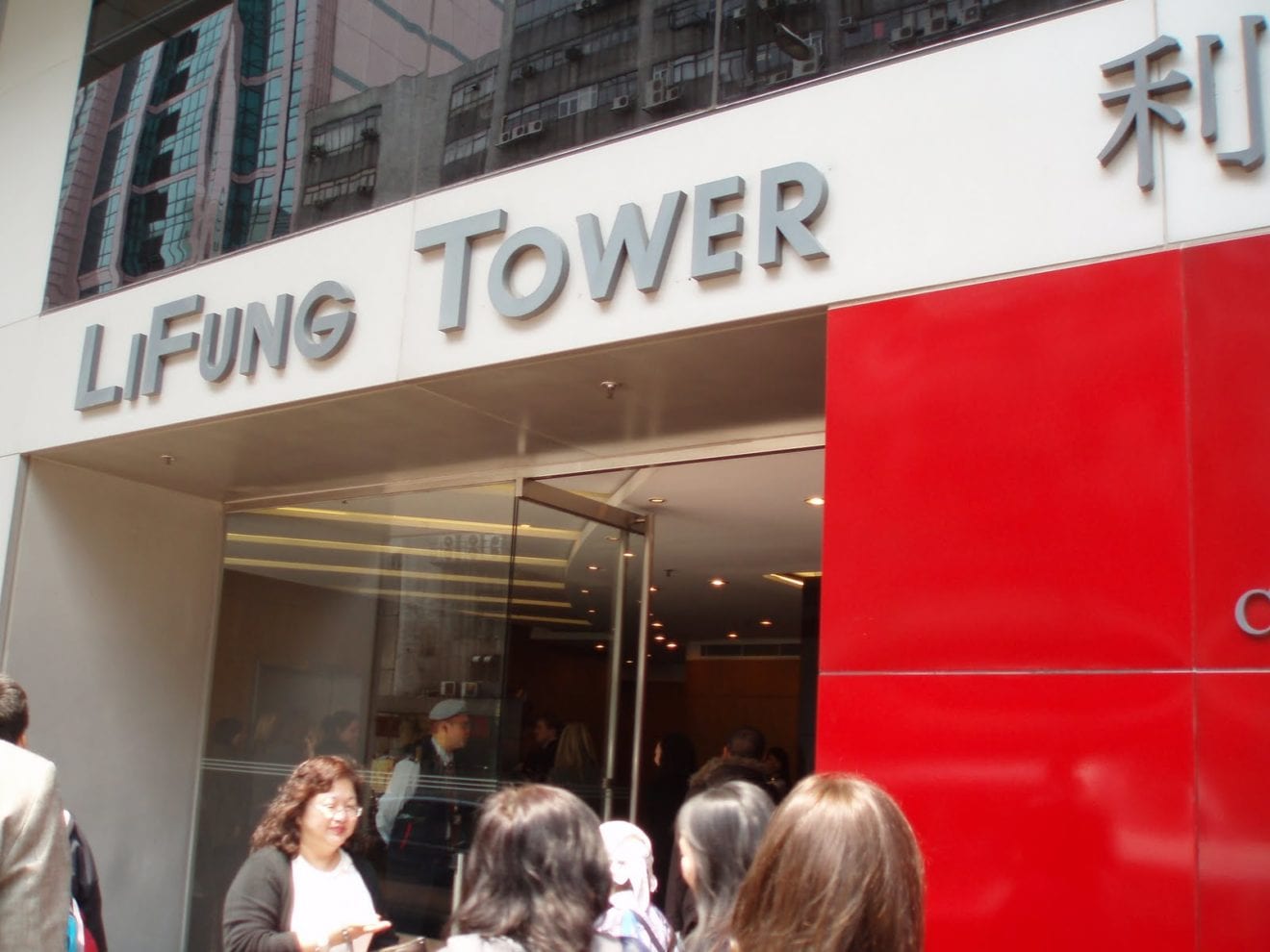
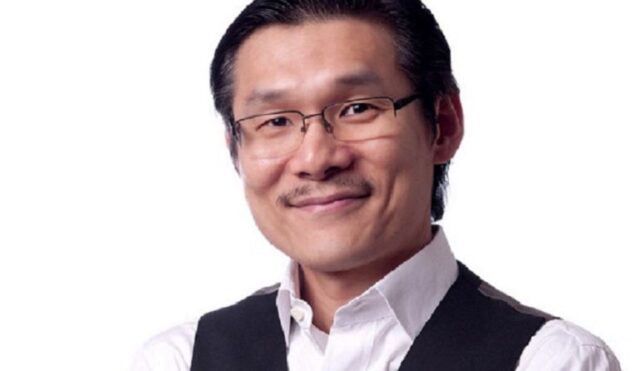
    Li & Fung has appointed Joseph Phi as the company’s Group President. As Group President, Joseph will lead the company’s Supply Chain Solutions operating groups, including Business Development. He will continue as President, LF Logistics and to serve on the Board of Directors of Li & Fung. He will report to Spencer Fung, Group CEO.

    Joseph has a strong track record at tLFhe company having organically grown its logistics business over the past decade. He has nearly 20 years’ experience with the company and is well positioned to assume this important leadership role.

    Joseph joined Li & Fung in 1999 and was previously executive director of Integrated Distribution Services Group Limited from 2004 until its acquisition by Li & Fung in 2011. He is Chairman of GS1 Hong Kong and a Director of its Management Board and is a Member of Supply Chain 50.

    He is an advisory committee member of Hong Kong Trade Development Council’s Logistics Services and honorary advisor of the Asian Logistics and Maritime Conference. He also serves as an advisory committee member of Eye Fund, a charitable institution in HK.

    Joseph graduated magna cum laude from the University of The Philippines (UP) with a Bachelor of Science degree in Industrial Engineering and attained a Master of Business Administration degree with top honors also from the same university.

    He is a 2011 recipient of UP College of Business Administration Distinguished Alumnus Award and 2013 recipient of UP Industrial Engineering Alumni Award and UP Alumni Engineers Global Achievement Award for Logistics. Between 2014 and 2018, he was an Adjunct Professor in the School of Business and Management at The Hong Kong University of Science and Technology.

    Joseph takes over from Marc Compagnon, who served as Group President and Executive Director of Li & Fung Limited from July 2014 and has moved to the Fung Group as Senior Advisor while remaining on the Board of Li & Fung Limited as a Non-Executive Director.

    Fung Group is the major shareholder of Li & Fung, whose core businesses operate across the entire global supply chain for consumer goods including sourcing, logistics, distribution and retail.

    Spencer Fung, CEO of Li & Fung said, “Our goal is to build the supply chain of the future to help our customers navigate the digital economy and to improve the lives of one billion people in the supply chain, and I am confident Joseph is the right person to build on the solid foundation that Marc has built and to take this to the next stage of development.”

  • Deciem skincare firm founder passed away

    Deciem skincare firm founder passed away

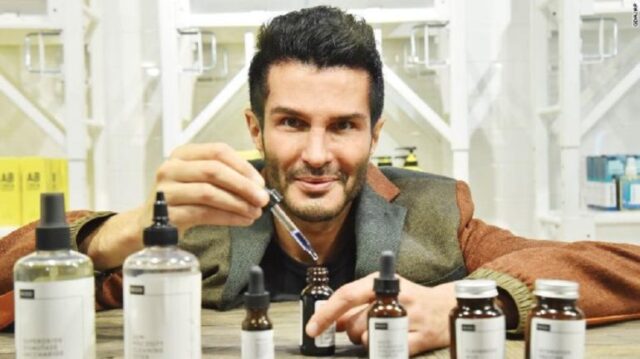
    Brandon Truaxe, the founder of Canadian skincare company Deciem, has died at the age of 40, the firm announced in an Instagram post. Truaxe launched the brand, best known for its affordable skincare line The Ordinary, in Toronto in 2013. Since then it has since expanded worldwide, with stores in the US, the UK, South Korea, Australia, Mexico and the Netherlands.

    “Brandon, our founder and friend. You touched our hearts, inspired our minds and made us believe that anything is possible,” a Monday post on Deciem’s Instagram reads.

    CIUDAD DE M?????????XICO, marzo 30 (EL UNIVERSAL).- Brandon Truaxe, joven creador del concepto, recibi?????????? a decenas de invitados en este nuevo espacio, donde las personas podr?????????n solicitar asesor??????????a sobre los tratamientos m?????????s efectivos para mejorar el estado del cutis y otras zonas del cuerpo. Foto: Agencia EL UNIVERSAL (GDA via AP Images)

    “Thank you for every laugh, every learning and every moment of your genius. Whilst we can’t imagine a world without you, we promise to take care of each other and will work hard to continue your vision. May you finally be at peace.”

    The Estée Lauder Companies, an investor in Deciem since 2017, said in a statement: “Truaxe was a true genius, and we are incredibly saddened by the news of his passing … he positively impacted millions of people around the world with his creativity, brilliance and innovation. This is a profound loss for us all.”

    Truaxe was removed as co-CEO of Deciem in October 2018 following a lawsuit brought by Estée Lauder, after his posts on the company’s social media accounts became increasingly erratic.

    “Brandon will always be the founder of Deciem,” the company posted on Instagram in October. “We will take the passion and values he has instilled within us as we continue to grow the brands we have created with transparency, integrity, authenticity, function and design.”

  • Indonesian Conglomerate Passes Away at 98

    Indonesian Conglomerate Passes Away at 98

    Eka Tjipta Widjaja, founder of the Sinar Mas Group, one of Indonesia’s largest conglomerates, passed away on Saturday, one month short of his 98th birthday. Eka, born Oei Ek Tjhong in Quanzhou in China’s Fujian Province on Feb. 27, 1921, was known as a tough and proven entrepreneur, which saw him become one of Indonesia’s richest tycoons, despite his humble origins.

    “He will be buried in his family’s cemetery in Marga Mulya village, Karawang district, West Java,” Sinar Mas managing director Gandi Sulistiyanto Soeherman said in a statement on Sunday.

    Eka passed away at his home in Menteng, Central Jakarta, at 7.43 p.m. His body was taken to the Gatot Soebroto Army Hospital in Senen, Central Jakarta, for a funeral service.

    Gandi said colleagues, relatives and friends were expected to express their condolences on Sunday, starting from 7 p.m., after the funeral service.

    The statement did not specify the cause of death, but Gandi mentioned in another statement to local media that Eka’s health had been deteriorating due to his advanced age.

    Eka’s family controls a widely diversified business through the Sinar Mas Group, which he founded in 1962. The group’s interests span palm oil, pulp and paper, real estate, financial services, agribusiness, telecommunications and mining, represented by various entities listed on the Indonesian and Singaporean stock exchanges.

    GlobeAsia’s 2018 Rich List estimated Eka’s net worth at $13.9 billion.

    Moved to Indonesia

    Eka and his mother migrated to Indonesia in 1931, during the Dutch colonial era, to join his father who had already settled in Makassar, South Sulawesi. There he helped his father run a small shop.

    Eka, who according to his biography only had an elementary school education, became a door-to-door salesman, peddling various goods, including candies, biscuits and various products from his father’s shop.

    He experienced both success and failure in various businesses, which included sales of coconut oil, biscuits and sesame oil, during the Japanese occupation, the early period of Indonesia’s independence and the rule of the country’s first two presidents, Sukarno and Suharto.

    King of Copra

    His business empire started in 1955 when he became a copra trader in North Sulawesi, which earned him the title, “king of copra.”

    Through the Sinar Mas Group, which he founded in 1968, Eka managed to expand his business into various areas, including banking, vegetable oil and real estate. He became well known after the establishment in 1969 of Bitung Manado Oil, which catered to up to 50 percent of demand in the Indonesian cooking oil market at the time.

    In 1972, Eka acquired caustic soda producer Tjiwi Kimia, which he transformed into the Sinar Mas Group’s first pulp and paper manufacturer. In the same year, he started Duta Pertiwi, a property developer and real estate business, and 10 years later, Sinar Mas Multiartha, an integrated financial services company.

    The group started operating its own industrial forest in 1986 through Sinar Mas Forestry, while it also has interests in communications and technology, including mobile phone operator Smartfren.

    Eka overcame many downturns during his nine decades in business, with the largest being the $14 billion default by his crown jewel, Asia Pulp and Paper, due to the 1998 Asian financial crisis. The crisis also forced him to relinquish control of many of his businesses to the government, including his flagship lender, Bank Internasional Indonesia, now known as Maybank Indonesia.

    However, Eka bounced back and his Singapore-listed Golden-Agri Resources has since become the world’s second-largest palm oil producer.

    “Despite only having completed elementary school, there was no hope or ambition too high for him,” Gandi said in the statement. “The philosophy of being honest, credible and responsible, toward family, work and social affairs, became his life’s compass.”

    The tycoon spent millions in scholarships to Indonesian students over the past decade through the Eka Tjipta Foundation and also distributed necessities to disaster-affected areas across the archipelago.

    The patriarch is survived by six children and dozens of grandchildren, who now run the family businesses.

  • J.Crew Chairman Mickey Drexler Steps Down

    J.Crew Chairman Mickey Drexler Steps Down

    J.Crew chairman and former-chief executive Millard “Mickey” Drexler has stepped down from his position to focus on other interests, including the development of investment business Dexler Ventures, LLC. Chad Leat has been elected as chairman effective immediately. Drexler is set to continue to serve as a strategic advisor to the company’s board and CEO.

    Drexler said it had been a privilege to spend 15 years with the business, and he was thankful to have been a part of its evolution throughout the years.

    “I look forward to working with the Office of the CEO and the board as a strategic advisor to help support J.Crew’s long term success,” Drexler said in an announcement to investors.

    Leat is a former vice-chairman of global banking at Citigroup and holds nearly three decades of markets and banking experience, having led numerous successful and profitable businesses at Citigroup.

    “I am honored to serve has the next chairman of J.Crew,” Leat said.

    “As chairman, my priorities will be to ensure that the J.Crew brand moves quickly to capitalise on recent momentum and to support Madewell’s growth towards becoming a one billion dollar brand, while also working with the board to identify strong, permanent leadership to guide the Company in its next chapter.”

    Drexler’s departure follows the exit of chief executive James Brett and chief marketing officer Vanessa Holden in November 2018. Brett had been in the position for 16 months, while Holden had been with J.Crew for one year.Adtech Ad

    Brett’s exit left the brand leaderless at a pivotal moment, according to GlobalRetail Data managing director Neil Saunders, who noted that the suddenness of the exit suggested a disagreement over how to develop the brand moving forward, and that the brand’s management had been an issue since before

    “If the departure of Jim Brett hails the return to these unrealistic attitudes, J.Crew is going to slip back and undo all of the progress made to date. Given the precariousness of its financial position, this is a mistake it cannot afford to make,” Saunders said.